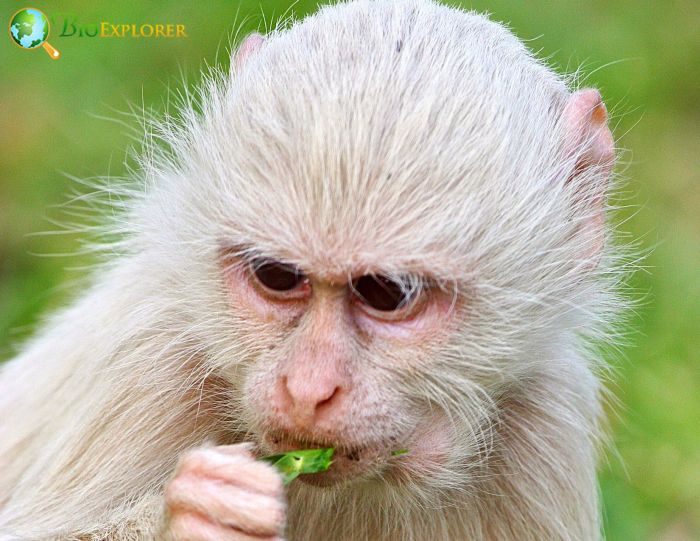
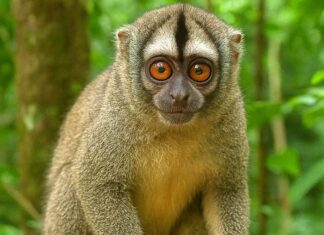
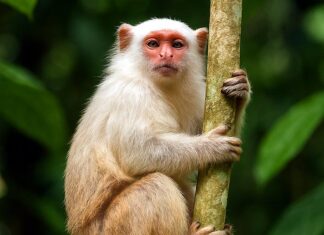
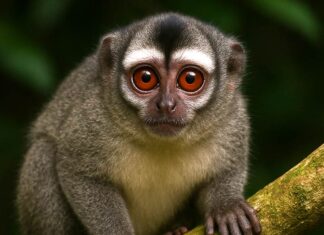
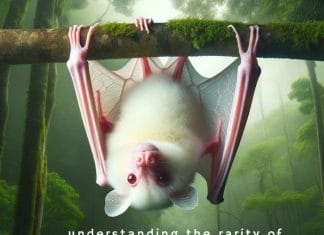
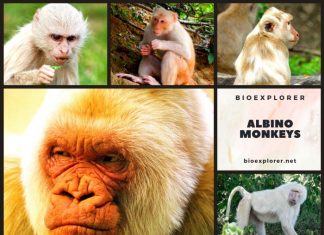
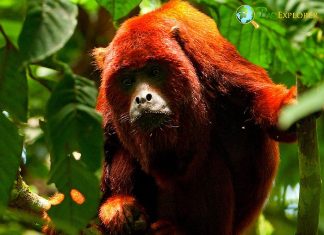
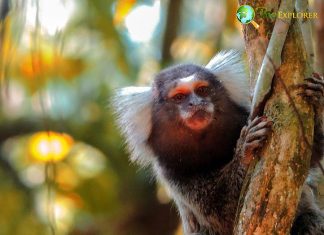
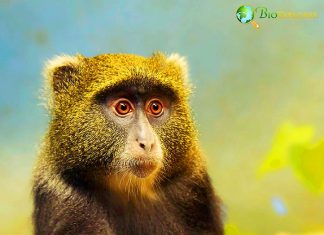
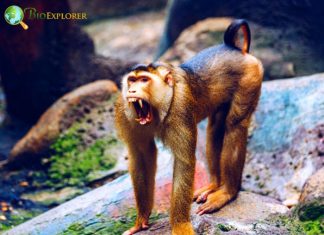
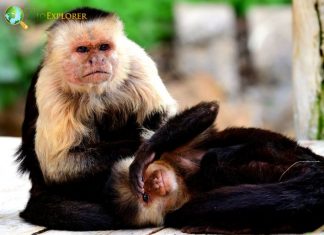
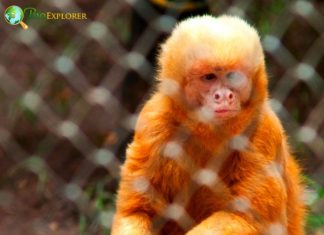
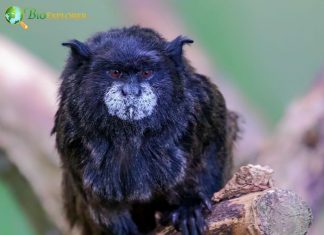
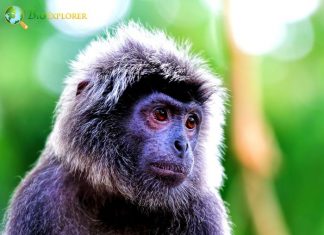
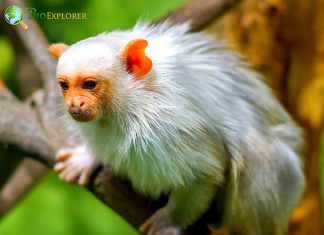
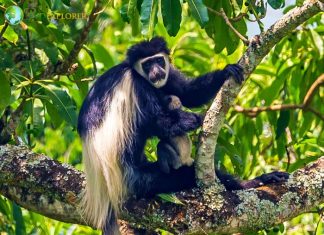
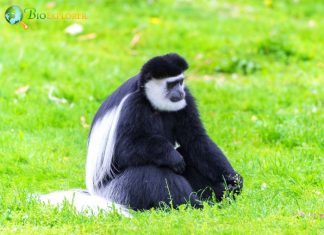
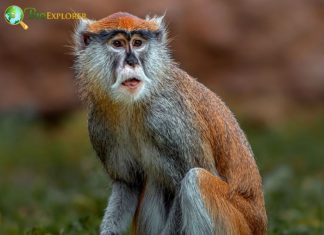
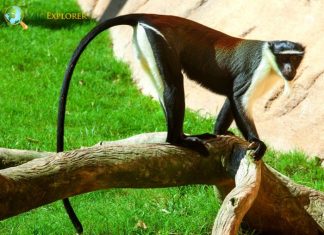
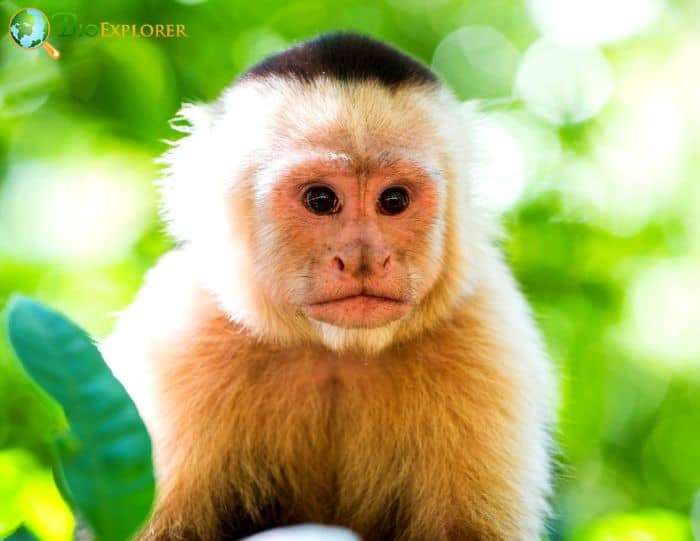
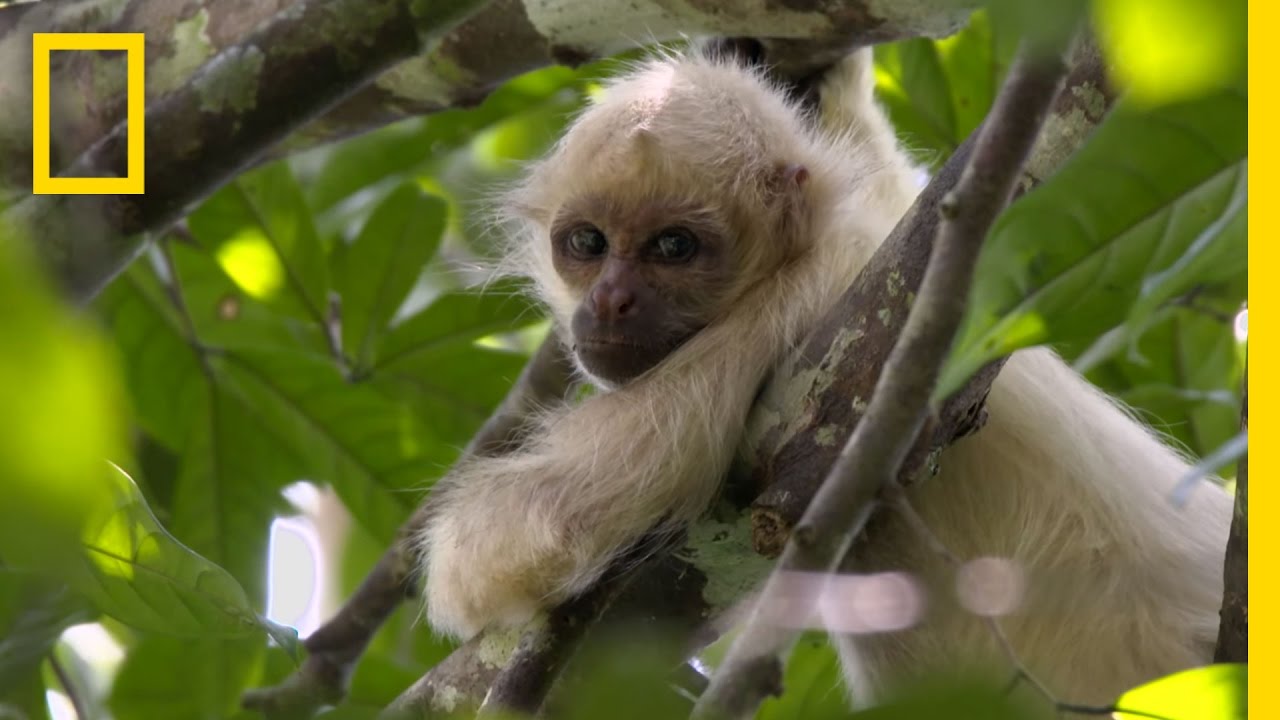
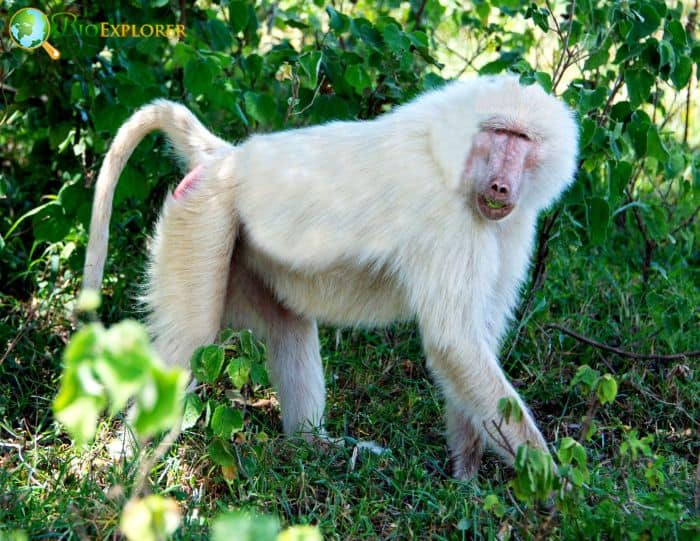
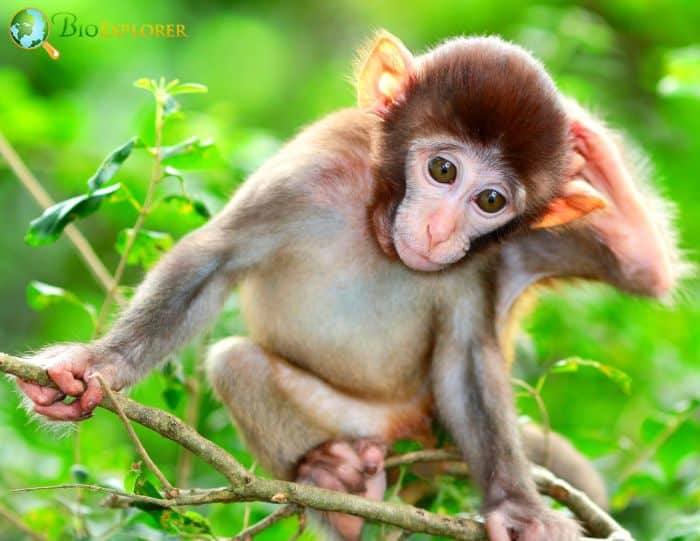
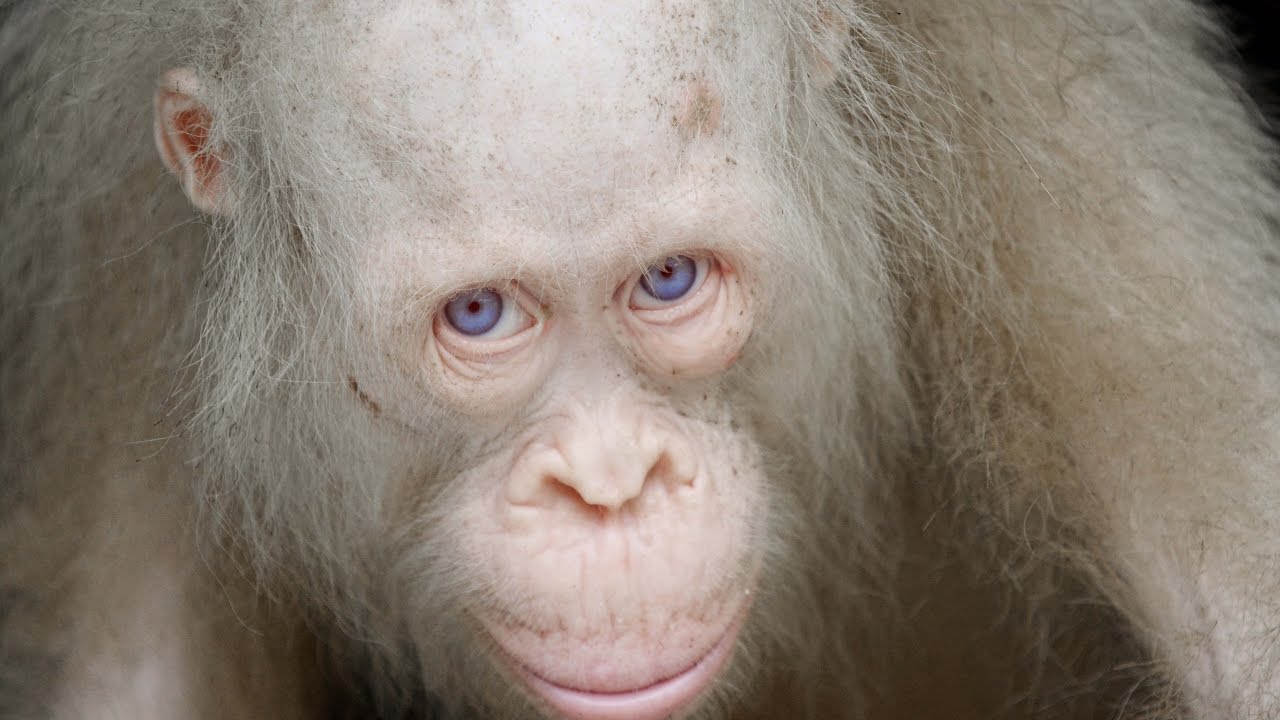
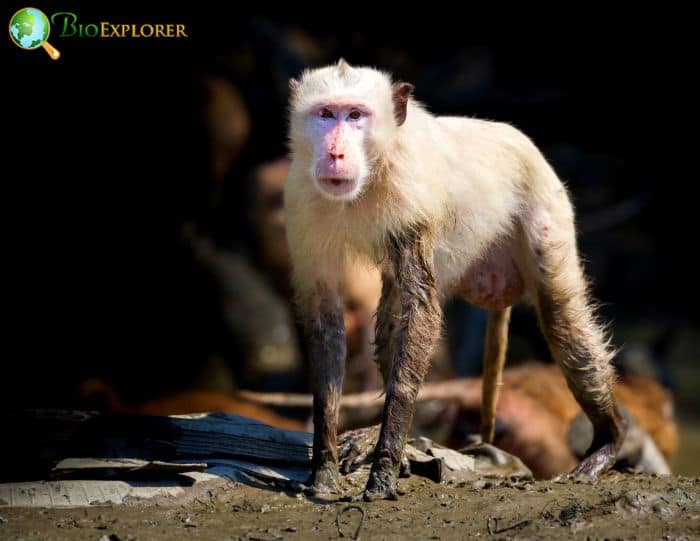
In the vast and vibrant tapestry of the animal kingdom, a unique thread weaves a captivating narrative of nature’s diversity: the albino monkeys. These extraordinary creatures, marked by their lack of pigmentation, defy the standard hues of their species and stand out with their striking white coats and light-colored eyes.
As fascinating as they are rare, albino monkeys serve as a poignant reminder of the countless genetic variations and survival adaptations that underlie the rich biodiversity of our world.
The following exploration into the lives of these unique primates offers an insightful look at their unique physiology, challenging survival strategies, and the mesmerizing tales that their existence conjures in various human cultures.
Understanding Albinism in Monkeys
Albinism, a rare genetic anomaly observed in monkeys, is also noted across other species, including humans. Here we delineate the key attributes of this condition in monkeys:
Albinism results in a distinct lack of pigmentation in the monkeys’ skin, hair, and eyes, giving them a uniquely pale or white appearance.
Though scarce in primates, albinism poses substantial challenges, such as impaired vision, heightened susceptibility to dermal ailments and sunburn, and increased difficulty in food acquisition and threat evasion[1].
Focused molecular studies on rhesus monkeys have identified a specific point mutation as the causal factor for the albino phenotype.
For disease mechanism and therapeutic development studies[3], certain models of rhesus macaques exhibiting spontaneous oculocutaneous albinism have been utilized.
Due to their conspicuous appearance, albino monkeys face an elevated risk of predation and a higher probability of developing sunburn and skin cancer.
Globally, the rarity of albino monkeys underscores their uniqueness in the broader primate population.
Documented cases of complete albinism are rare, such as a female juvenile Central American spider monkey from Eastern Honduras[4].
Albinism, while infrequent in monkeys, imposes considerable challenges, including vision impairment, vulnerability to skin ailments and sunburn, and difficulty in food acquisition and threat evasion. The global population of albino monkeys remains sparse, emphasizing their exceptional nature.
There are 32 living porcupine species, in two families that evolved quills separately. This guide covers every one, with photos, sizes, ranges, conservation status, and the facts that set each species apart.
Albinism functions as an autosomal recessive genetic condition. For a monkey to exhibit albinism, it necessitates the inheritance of two copies of the affected gene, each contributed by a parent. When a monkey inherits a single copy of this gene, it becomes a carrier for the condition. However, the traits of albinism remain unexpressed[5].
The genetic underpinnings of albinism can be traced back to specific genes that regulate the synthesis and distribution of melanin – a pigment responsible for skin, hair, and eye coloring. Consequently, mutations within these genes lead to decreased or absent melanin production, manifesting in albinism.
Albinism is linked to several genes, with the specific type of albinism dictated by which gene has been mutated. As an example, mutations in the TYR gene result in oculocutaneous albinism type 1 (OCA1), which is commonly observed in humans and animals, monkeys included. OCA1 leads to an exhibition of white or exceedingly light hair and skin, along with blue eyes at birth, which might undergo slight darkening as age progresses.
Contrarily, the mutation of the OCA2 gene results in oculocutaneous albinism type 2 (OCA2), wherein melanin levels are somewhat higher, causing light yellow to brown hair and skin and eyes that range from light blue to brown.
Investigating the genetic foundation of albinism in monkeys aids in diagnosing and managing this condition. It furnishes critical insights into genetic functionalities and hereditary patterns. This understanding also underscores the imperative role of genetic diversity and targeted conservation initiatives in ensuring these exceptional organisms’ sustained health and survival.
There are 32 living porcupine species, in two families that evolved quills separately. This guide covers every one, with photos, sizes, ranges, conservation status, and the facts that set each species apart.
An ibis finds much of its food by touch, using sensory pits at the tip of its long curved bill to detect prey it cannot see. There are 29 living ibis species across 12 genera, on every continent except Antarctica. This guide covers all 29 with a photograph, range and size for each, plus the extinct Reunion Ibis that science filed as a dodo for 150 years.
Otters handle their prey underwater with their forepaws, which almost no other carnivore does. There are 14 living species in 7 genera, ranging from one the size of a house cat to one longer than a person is tall. This guide covers every one, with pictures, sizes, ranges and conservation status.
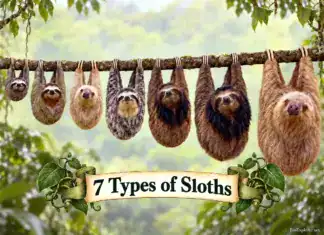
There are 7 living species of sloths, and the count changed in 2022 when a name proposed 172 years earlier was finally accepted. This guide covers every species with photos, sizes and ranges, explains why “two-toed” is the wrong name, and looks at whether an eighth species is coming.
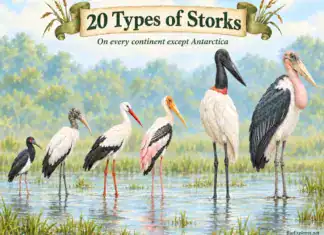
There are 20 living species of storks, and they live on every continent except Antarctica. This guide covers every one, with pictures, sizes, ranges, and the 2026 delisting of the only stork that nests in the United States.
There are 25 living species of armadillos, and all of them live in the Americas. This guide covers every one, with pictures, sizes, ranges, and the 2024 study that gave the US armadillo a new name.
Explore maternal mitochondrial DNA inheritance with a simplified sampling model. Enter maternal heteroplasmy, a comparison value, and a model bottleneck size to calculate the probability that modeled offspring heteroplasmy exceeds your chosen value. Educational only, not a clinical disease-risk estimate.
Calculate Y-linked (holandric) inheritance probabilities for sons, daughters, and families with up to 20 children. Set the genetic father's variant status, compare random-sex and specified-sex outcomes, and explore worked examples, AZF microdeletion notes, and a family-history helper.
Normalize calcium-imaging fluorescence traces with the Delta F over F0 Calculator. Choose an F0 baseline, apply optional background subtraction, detect bleach drift, visualize results, and download per-frame ΔF/F0 data as CSV.
Convert developmental stages across human, mouse, rat, chick, zebrafish, and Xenopus using morphology-first alignment clusters. No proportional scaling.
Compute powder mass, dissolution water, pH, and final concentrations for 29 commercial cell culture media catalogs. Two modes for premix plus supplements or scratch prep.
Classify plant leaf economics strategy from SLA, LDMC, and leaf nitrogen. Get the LES score, trait cluster, leaf mass per area, and leaf lifespan estimate.
Free Annexin V/PI apoptosis calculator. Enter quadrant percentages from flow cytometry to get viable, early apoptotic, late apoptotic, and necrotic percentages plus the induction delta.
Free interactive botany and plant biology calculators. Leaf trait measurement, seed viability testing, and the FvCB model of C3 photosynthesis in your browser.
Farquhar photosynthesis simulator with Bernacchi 2001 temperature response. Compute Ac, Aj, Ap rates and plot A vs Ci curves for C3 plants at any leaf temperature and PPFD.
Use this seed germination calculator for paper towel tests, viability rate, 95% confidence interval, species days, temperature, and storage-adjusted viability.
Free mutation-selection balance calculator for population genetics. Enter mutation rate, selection, and dominance. Returns equilibrium allele frequency and mutational load.
Explore free interactive genetics calculators and analyzers for students and teachers, covering inheritance, population genetics, and statistical testing with no installation required.
Use this Hardy-Weinberg calculator to predict genotype frequencies from allele frequencies or derive p and q from observed counts. Includes carrier frequency.
Use this chi-square calculator to test observed offspring counts against expected Mendelian ratios. Includes critical values, p-value range, and interpretation.
Use this epistasis calculator to predict dihybrid cross ratios for recessive, dominant, duplicate recessive, and duplicate dominant modes. Includes presets for Labrador coat, squash, and sweet pea color.
Use this X-linked Punnett square calculator to predict offspring genotypes and phenotypes for sex-linked crosses. It includes examples for hemophilia, Duchenne muscular dystrophy, red-green color blindness, and X-linked dominant inheritance.
Use this pedigree analyzer to identify the most likely inheritance pattern in a family tree, with templates for autosomal dominant, autosomal recessive, X-linked dominant, and X-linked recessive, plus explanations and example pedigrees.
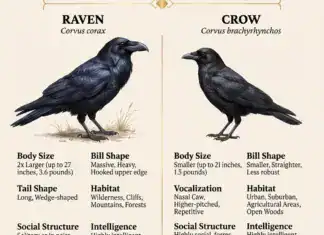
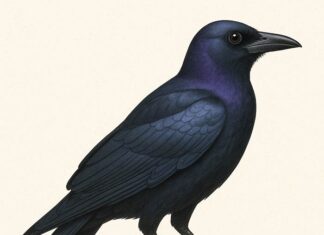
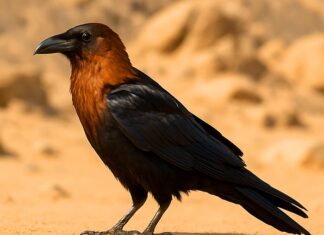
Ravens and crows belong to the same genus, Corvus, but ravens are larger, have a wedge-shaped tail, a deeply curved bill, and shaggy throat hackles that crows lack. In flight, ravens soar on flat wings while crows flap steadily. Their calls differ completely: crows produce a sharp nasal caw while ravens give a deep hollow cronk.
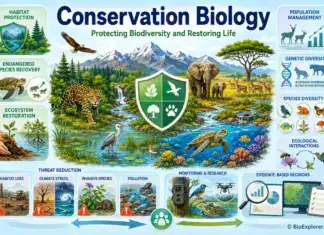
Conservation biology begins where biological knowledge has to guide a real decision: protect a habitat, recover a species, restore a damaged ecosystem, reduce a threat, manage a population, or decide what evidence is strong enough to act before more biodiversity is lost. It is the scientific field focused on understanding, protecting, and restoring biodiversity. That…
Use this Punnett square calculator to predict offspring genotype and phenotype probabilities for monohybrid and dihybrid crosses, with examples, practice problems, and clear explanations.
shares Facebook Twitter Pinterest Reddit Never miss a BioExplorer story Pick BioExplorer as a preferred source. Our articles will show up first for you in Google Search and News. Add BioExplorer on Google →
shares Facebook Twitter Pinterest Reddit Never miss a BioExplorer story Pick BioExplorer as a preferred source. Our articles will show up first for you in Google Search and News. Add BioExplorer on Google →
shares Facebook Twitter Pinterest Reddit Never miss a BioExplorer story Pick BioExplorer as a preferred source. Our articles will show up first for you in Google Search and News. Add BioExplorer on Google →
shares Facebook Twitter Pinterest Reddit Never miss a BioExplorer story Pick BioExplorer as a preferred source. Our articles will show up first for you in Google Search and News. Add BioExplorer on Google →
shares Facebook Twitter Pinterest Reddit Never miss a BioExplorer story Pick BioExplorer as a preferred source. Our articles will show up first for you in Google Search and News. Add BioExplorer on Google →
shares Facebook Twitter Pinterest Reddit Never miss a BioExplorer story Pick BioExplorer as a preferred source. Our articles will show up first for you in Google Search and News. Add BioExplorer on Google →
shares Facebook Twitter Pinterest Reddit Never miss a BioExplorer story Pick BioExplorer as a preferred source. Our articles will show up first for you in Google Search and News. Add BioExplorer on Google →
shares Facebook Twitter Pinterest Reddit Never miss a BioExplorer story Pick BioExplorer as a preferred source. Our articles will show up first for you in Google Search and News. Add BioExplorer on Google →
shares Facebook Twitter Pinterest Reddit Never miss a BioExplorer story Pick BioExplorer as a preferred source. Our articles will show up first for you in Google Search and News. Add BioExplorer on Google →
shares Facebook Twitter Pinterest Reddit Never miss a BioExplorer story Pick BioExplorer as a preferred source. Our articles will show up first for you in Google Search and News. Add BioExplorer on Google →
shares Facebook Twitter Pinterest Reddit Never miss a BioExplorer story Pick BioExplorer as a preferred source. Our articles will show up first for you in Google Search and News. Add BioExplorer on Google →
shares Facebook Twitter Pinterest Reddit Never miss a BioExplorer story Pick BioExplorer as a preferred source. Our articles will show up first for you in Google Search and News. Add BioExplorer on Google →
shares Facebook Twitter Pinterest Reddit Never miss a BioExplorer story Pick BioExplorer as a preferred source. Our articles will show up first for you in Google Search and News. Add BioExplorer on Google →
shares Facebook Twitter Pinterest Reddit Never miss a BioExplorer story Pick BioExplorer as a preferred source. Our articles will show up first for you in Google Search and News. Add BioExplorer on Google →
shares Facebook Twitter Pinterest Reddit Never miss a BioExplorer story Pick BioExplorer as a preferred source. Our articles will show up first for you in Google Search and News. Add BioExplorer on Google →
shares Facebook Twitter Pinterest Reddit Never miss a BioExplorer story Pick BioExplorer as a preferred source. Our articles will show up first for you in Google Search and News. Add BioExplorer on Google →
shares Facebook Twitter Pinterest Reddit Never miss a BioExplorer story Pick BioExplorer as a preferred source. Our articles will show up first for you in Google Search and News. Add BioExplorer on Google →
shares Facebook Twitter Pinterest Reddit Never miss a BioExplorer story Pick BioExplorer as a preferred source. Our articles will show up first for you in Google Search and News. Add BioExplorer on Google →
shares Facebook Twitter Pinterest Reddit Never miss a BioExplorer story Pick BioExplorer as a preferred source. Our articles will show up first for you in Google Search and News. Add BioExplorer on Google →
shares Facebook Twitter Pinterest Reddit Never miss a BioExplorer story Pick BioExplorer as a preferred source. Our articles will show up first for you in Google Search and News. Add BioExplorer on Google →
shares Facebook Twitter Pinterest Reddit Never miss a BioExplorer story Pick BioExplorer as a preferred source. Our articles will show up first for you in Google Search and News. Add BioExplorer on Google →
shares Facebook Twitter Pinterest Reddit Never miss a BioExplorer story Pick BioExplorer as a preferred source. Our articles will show up first for you in Google Search and News. Add BioExplorer on Google →
shares Facebook Twitter Pinterest Reddit Never miss a BioExplorer story Pick BioExplorer as a preferred source. Our articles will show up first for you in Google Search and News. Add BioExplorer on Google →
shares Facebook Twitter Pinterest Reddit Never miss a BioExplorer story Pick BioExplorer as a preferred source. Our articles will show up first for you in Google Search and News. Add BioExplorer on Google →
shares Facebook Twitter Pinterest Reddit Never miss a BioExplorer story Pick BioExplorer as a preferred source. Our articles will show up first for you in Google Search and News. Add BioExplorer on Google →
shares Facebook Twitter Pinterest Reddit Never miss a BioExplorer story Pick BioExplorer as a preferred source. Our articles will show up first for you in Google Search and News. Add BioExplorer on Google →
shares Facebook Twitter Pinterest Reddit Never miss a BioExplorer story Pick BioExplorer as a preferred source. Our articles will show up first for you in Google Search and News. Add BioExplorer on Google →
shares Facebook Twitter Pinterest Reddit Never miss a BioExplorer story Pick BioExplorer as a preferred source. Our articles will show up first for you in Google Search and News. Add BioExplorer on Google →
shares Facebook Twitter Pinterest Reddit Never miss a BioExplorer story Pick BioExplorer as a preferred source. Our articles will show up first for you in Google Search and News. Add BioExplorer on Google →
shares Facebook Twitter Pinterest Reddit Never miss a BioExplorer story Pick BioExplorer as a preferred source. Our articles will show up first for you in Google Search and News. Add BioExplorer on Google →
shares Facebook Twitter Pinterest Reddit Never miss a BioExplorer story Pick BioExplorer as a preferred source. Our articles will show up first for you in Google Search and News. Add BioExplorer on Google →
shares Facebook Twitter Pinterest Reddit Never miss a BioExplorer story Pick BioExplorer as a preferred source. Our articles will show up first for you in Google Search and News. Add BioExplorer on Google →
shares Facebook Twitter Pinterest Reddit Never miss a BioExplorer story Pick BioExplorer as a preferred source. Our articles will show up first for you in Google Search and News. Add BioExplorer on Google →
shares Facebook Twitter Pinterest Reddit Never miss a BioExplorer story Pick BioExplorer as a preferred source. Our articles will show up first for you in Google Search and News. Add BioExplorer on Google →
shares Facebook Twitter Pinterest Reddit Never miss a BioExplorer story Pick BioExplorer as a preferred source. Our articles will show up first for you in Google Search and News. Add BioExplorer on Google →
shares Facebook Twitter Pinterest Reddit Never miss a BioExplorer story Pick BioExplorer as a preferred source. Our articles will show up first for you in Google Search and News. Add BioExplorer on Google →
shares Facebook Twitter Pinterest Reddit Never miss a BioExplorer story Pick BioExplorer as a preferred source. Our articles will show up first for you in Google Search and News. Add BioExplorer on Google →
shares Facebook Twitter Pinterest Reddit Never miss a BioExplorer story Pick BioExplorer as a preferred source. Our articles will show up first for you in Google Search and News. Add BioExplorer on Google →
shares Facebook Twitter Pinterest Reddit Never miss a BioExplorer story Pick BioExplorer as a preferred source. Our articles will show up first for you in Google Search and News. Add BioExplorer on Google →
shares Facebook Twitter Pinterest Reddit Never miss a BioExplorer story Pick BioExplorer as a preferred source. Our articles will show up first for you in Google Search and News. Add BioExplorer on Google →
shares Facebook Twitter Pinterest Reddit Never miss a BioExplorer story Pick BioExplorer as a preferred source. Our articles will show up first for you in Google Search and News. Add BioExplorer on Google →
shares Facebook Twitter Pinterest Reddit Never miss a BioExplorer story Pick BioExplorer as a preferred source. Our articles will show up first for you in Google Search and News. Add BioExplorer on Google →
shares Facebook Twitter Pinterest Reddit Never miss a BioExplorer story Pick BioExplorer as a preferred source. Our articles will show up first for you in Google Search and News. Add BioExplorer on Google →
shares Facebook Twitter Pinterest Reddit Never miss a BioExplorer story Pick BioExplorer as a preferred source. Our articles will show up first for you in Google Search and News. Add BioExplorer on Google →
shares Facebook Twitter Pinterest Reddit Never miss a BioExplorer story Pick BioExplorer as a preferred source. Our articles will show up first for you in Google Search and News. Add BioExplorer on Google →
shares Facebook Twitter Pinterest Reddit Never miss a BioExplorer story Pick BioExplorer as a preferred source. Our articles will show up first for you in Google Search and News. Add BioExplorer on Google →
shares Facebook Twitter Pinterest Reddit Never miss a BioExplorer story Pick BioExplorer as a preferred source. Our articles will show up first for you in Google Search and News. Add BioExplorer on Google →
shares Facebook Twitter Pinterest Reddit Never miss a BioExplorer story Pick BioExplorer as a preferred source. Our articles will show up first for you in Google Search and News. Add BioExplorer on Google →
shares Facebook Twitter Pinterest Reddit Never miss a BioExplorer story Pick BioExplorer as a preferred source. Our articles will show up first for you in Google Search and News. Add BioExplorer on Google →
shares Facebook Twitter Pinterest Reddit Never miss a BioExplorer story Pick BioExplorer as a preferred source. Our articles will show up first for you in Google Search and News. Add BioExplorer on Google →
shares Facebook Twitter Pinterest Reddit Never miss a BioExplorer story Pick BioExplorer as a preferred source. Our articles will show up first for you in Google Search and News. Add BioExplorer on Google →
shares Facebook Twitter Pinterest Reddit Never miss a BioExplorer story Pick BioExplorer as a preferred source. Our articles will show up first for you in Google Search and News. Add BioExplorer on Google →
shares Facebook Twitter Pinterest Reddit Never miss a BioExplorer story Pick BioExplorer as a preferred source. Our articles will show up first for you in Google Search and News. Add BioExplorer on Google →
shares Facebook Twitter Pinterest Reddit Never miss a BioExplorer story Pick BioExplorer as a preferred source. Our articles will show up first for you in Google Search and News. Add BioExplorer on Google →
shares Facebook Twitter Pinterest Reddit Never miss a BioExplorer story Pick BioExplorer as a preferred source. Our articles will show up first for you in Google Search and News. Add BioExplorer on Google →
shares Facebook Twitter Pinterest Reddit Never miss a BioExplorer story Pick BioExplorer as a preferred source. Our articles will show up first for you in Google Search and News. Add BioExplorer on Google →
shares Facebook Twitter Pinterest Reddit Never miss a BioExplorer story Pick BioExplorer as a preferred source. Our articles will show up first for you in Google Search and News. Add BioExplorer on Google →
shares Facebook Twitter Pinterest Reddit Never miss a BioExplorer story Pick BioExplorer as a preferred source. Our articles will show up first for you in Google Search and News. Add BioExplorer on Google →
shares Facebook Twitter Pinterest Reddit Never miss a BioExplorer story Pick BioExplorer as a preferred source. Our articles will show up first for you in Google Search and News. Add BioExplorer on Google →
shares Facebook Twitter Pinterest Reddit Never miss a BioExplorer story Pick BioExplorer as a preferred source. Our articles will show up first for you in Google Search and News. Add BioExplorer on Google →
shares Facebook Twitter Pinterest Reddit Never miss a BioExplorer story Pick BioExplorer as a preferred source. Our articles will show up first for you in Google Search and News. Add BioExplorer on Google →
shares Facebook Twitter Pinterest Reddit Never miss a BioExplorer story Pick BioExplorer as a preferred source. Our articles will show up first for you in Google Search and News. Add BioExplorer on Google →
shares Facebook Twitter Pinterest Reddit Never miss a BioExplorer story Pick BioExplorer as a preferred source. Our articles will show up first for you in Google Search and News. Add BioExplorer on Google →
shares Facebook Twitter Pinterest Reddit Never miss a BioExplorer story Pick BioExplorer as a preferred source. Our articles will show up first for you in Google Search and News. Add BioExplorer on Google →
shares Facebook Twitter Pinterest Reddit Never miss a BioExplorer story Pick BioExplorer as a preferred source. Our articles will show up first for you in Google Search and News. Add BioExplorer on Google →
shares Facebook Twitter Pinterest Reddit Never miss a BioExplorer story Pick BioExplorer as a preferred source. Our articles will show up first for you in Google Search and News. Add BioExplorer on Google →
shares Facebook Twitter Pinterest Reddit Never miss a BioExplorer story Pick BioExplorer as a preferred source. Our articles will show up first for you in Google Search and News. Add BioExplorer on Google →
shares Facebook Twitter Pinterest Reddit Never miss a BioExplorer story Pick BioExplorer as a preferred source. Our articles will show up first for you in Google Search and News. Add BioExplorer on Google →
shares Facebook Twitter Pinterest Reddit Never miss a BioExplorer story Pick BioExplorer as a preferred source. Our articles will show up first for you in Google Search and News. Add BioExplorer on Google →
shares Facebook Twitter Pinterest Reddit Never miss a BioExplorer story Pick BioExplorer as a preferred source. Our articles will show up first for you in Google Search and News. Add BioExplorer on Google →
shares Facebook Twitter Pinterest Reddit Never miss a BioExplorer story Pick BioExplorer as a preferred source. Our articles will show up first for you in Google Search and News. Add BioExplorer on Google →
shares Facebook Twitter Pinterest Reddit Never miss a BioExplorer story Pick BioExplorer as a preferred source. Our articles will show up first for you in Google Search and News. Add BioExplorer on Google →
shares Facebook Twitter Pinterest Reddit Never miss a BioExplorer story Pick BioExplorer as a preferred source. Our articles will show up first for you in Google Search and News. Add BioExplorer on Google →
shares Facebook Twitter Pinterest Reddit Never miss a BioExplorer story Pick BioExplorer as a preferred source. Our articles will show up first for you in Google Search and News. Add BioExplorer on Google →
shares Facebook Twitter Pinterest Reddit Never miss a BioExplorer story Pick BioExplorer as a preferred source. Our articles will show up first for you in Google Search and News. Add BioExplorer on Google →
shares Facebook Twitter Pinterest Reddit Never miss a BioExplorer story Pick BioExplorer as a preferred source. Our articles will show up first for you in Google Search and News. Add BioExplorer on Google →
shares Facebook Twitter Pinterest Reddit Never miss a BioExplorer story Pick BioExplorer as a preferred source. Our articles will show up first for you in Google Search and News. Add BioExplorer on Google →
shares Facebook Twitter Pinterest Reddit Never miss a BioExplorer story Pick BioExplorer as a preferred source. Our articles will show up first for you in Google Search and News. Add BioExplorer on Google →
shares Facebook Twitter Pinterest Reddit Never miss a BioExplorer story Pick BioExplorer as a preferred source. Our articles will show up first for you in Google Search and News. Add BioExplorer on Google →
shares Facebook Twitter Pinterest Reddit Never miss a BioExplorer story Pick BioExplorer as a preferred source. Our articles will show up first for you in Google Search and News. Add BioExplorer on Google →
shares Facebook Twitter Pinterest Reddit Never miss a BioExplorer story Pick BioExplorer as a preferred source. Our articles will show up first for you in Google Search and News. Add BioExplorer on Google →
shares Facebook Twitter Pinterest Reddit Never miss a BioExplorer story Pick BioExplorer as a preferred source. Our articles will show up first for you in Google Search and News. Add BioExplorer on Google →
shares Facebook Twitter Pinterest Reddit Never miss a BioExplorer story Pick BioExplorer as a preferred source. Our articles will show up first for you in Google Search and News. Add BioExplorer on Google →
shares Facebook Twitter Pinterest Reddit Never miss a BioExplorer story Pick BioExplorer as a preferred source. Our articles will show up first for you in Google Search and News. Add BioExplorer on Google →
shares Facebook Twitter Pinterest Reddit Never miss a BioExplorer story Pick BioExplorer as a preferred source. Our articles will show up first for you in Google Search and News. Add BioExplorer on Google →
shares Facebook Twitter Pinterest Reddit Never miss a BioExplorer story Pick BioExplorer as a preferred source. Our articles will show up first for you in Google Search and News. Add BioExplorer on Google →
shares Facebook Twitter Pinterest Reddit Never miss a BioExplorer story Pick BioExplorer as a preferred source. Our articles will show up first for you in Google Search and News. Add BioExplorer on Google →
shares Facebook Twitter Pinterest Reddit Never miss a BioExplorer story Pick BioExplorer as a preferred source. Our articles will show up first for you in Google Search and News. Add BioExplorer on Google →
shares Facebook Twitter Pinterest Reddit Never miss a BioExplorer story Pick BioExplorer as a preferred source. Our articles will show up first for you in Google Search and News. Add BioExplorer on Google →
shares Facebook Twitter Pinterest Reddit Never miss a BioExplorer story Pick BioExplorer as a preferred source. Our articles will show up first for you in Google Search and News. Add BioExplorer on Google →
shares Facebook Twitter Pinterest Reddit Never miss a BioExplorer story Pick BioExplorer as a preferred source. Our articles will show up first for you in Google Search and News. Add BioExplorer on Google →
shares Facebook Twitter Pinterest Reddit Never miss a BioExplorer story Pick BioExplorer as a preferred source. Our articles will show up first for you in Google Search and News. Add BioExplorer on Google →
shares Facebook Twitter Pinterest Reddit Never miss a BioExplorer story Pick BioExplorer as a preferred source. Our articles will show up first for you in Google Search and News. Add BioExplorer on Google →
shares Facebook Twitter Pinterest Reddit Never miss a BioExplorer story Pick BioExplorer as a preferred source. Our articles will show up first for you in Google Search and News. Add BioExplorer on Google →
shares Facebook Twitter Pinterest Reddit Never miss a BioExplorer story Pick BioExplorer as a preferred source. Our articles will show up first for you in Google Search and News. Add BioExplorer on Google →
shares Facebook Twitter Pinterest Reddit Never miss a BioExplorer story Pick BioExplorer as a preferred source. Our articles will show up first for you in Google Search and News. Add BioExplorer on Google →
shares Facebook Twitter Pinterest Reddit Never miss a BioExplorer story Pick BioExplorer as a preferred source. Our articles will show up first for you in Google Search and News. Add BioExplorer on Google →
shares Facebook Twitter Pinterest Reddit Never miss a BioExplorer story Pick BioExplorer as a preferred source. Our articles will show up first for you in Google Search and News. Add BioExplorer on Google →
shares Facebook Twitter Pinterest Reddit Never miss a BioExplorer story Pick BioExplorer as a preferred source. Our articles will show up first for you in Google Search and News. Add BioExplorer on Google →
shares Facebook Twitter Pinterest Reddit Never miss a BioExplorer story Pick BioExplorer as a preferred source. Our articles will show up first for you in Google Search and News. Add BioExplorer on Google →
shares Facebook Twitter Pinterest Reddit Never miss a BioExplorer story Pick BioExplorer as a preferred source. Our articles will show up first for you in Google Search and News. Add BioExplorer on Google →
shares Facebook Twitter Pinterest Reddit Never miss a BioExplorer story Pick BioExplorer as a preferred source. Our articles will show up first for you in Google Search and News. Add BioExplorer on Google →
shares Facebook Twitter Pinterest Reddit Never miss a BioExplorer story Pick BioExplorer as a preferred source. Our articles will show up first for you in Google Search and News. Add BioExplorer on Google →
shares Facebook Twitter Pinterest Reddit Never miss a BioExplorer story Pick BioExplorer as a preferred source. Our articles will show up first for you in Google Search and News. Add BioExplorer on Google →
shares Facebook Twitter Pinterest Reddit Never miss a BioExplorer story Pick BioExplorer as a preferred source. Our articles will show up first for you in Google Search and News. Add BioExplorer on Google →
shares Facebook Twitter Pinterest Reddit Never miss a BioExplorer story Pick BioExplorer as a preferred source. Our articles will show up first for you in Google Search and News. Add BioExplorer on Google →
shares Facebook Twitter Pinterest Reddit Never miss a BioExplorer story Pick BioExplorer as a preferred source. Our articles will show up first for you in Google Search and News. Add BioExplorer on Google →
shares Facebook Twitter Pinterest Reddit Never miss a BioExplorer story Pick BioExplorer as a preferred source. Our articles will show up first for you in Google Search and News. Add BioExplorer on Google →
shares Facebook Twitter Pinterest Reddit Never miss a BioExplorer story Pick BioExplorer as a preferred source. Our articles will show up first for you in Google Search and News. Add BioExplorer on Google →
shares Facebook Twitter Pinterest Reddit Never miss a BioExplorer story Pick BioExplorer as a preferred source. Our articles will show up first for you in Google Search and News. Add BioExplorer on Google →
shares Facebook Twitter Pinterest Reddit Never miss a BioExplorer story Pick BioExplorer as a preferred source. Our articles will show up first for you in Google Search and News. Add BioExplorer on Google →
shares Facebook Twitter Pinterest Reddit Never miss a BioExplorer story Pick BioExplorer as a preferred source. Our articles will show up first for you in Google Search and News. Add BioExplorer on Google →
shares Facebook Twitter Pinterest Reddit Never miss a BioExplorer story Pick BioExplorer as a preferred source. Our articles will show up first for you in Google Search and News. Add BioExplorer on Google →
shares Facebook Twitter Pinterest Reddit Never miss a BioExplorer story Pick BioExplorer as a preferred source. Our articles will show up first for you in Google Search and News. Add BioExplorer on Google →
shares Facebook Twitter Pinterest Reddit Never miss a BioExplorer story Pick BioExplorer as a preferred source. Our articles will show up first for you in Google Search and News. Add BioExplorer on Google →
shares Facebook Twitter Pinterest Reddit Never miss a BioExplorer story Pick BioExplorer as a preferred source. Our articles will show up first for you in Google Search and News. Add BioExplorer on Google →
shares Facebook Twitter Pinterest Reddit Never miss a BioExplorer story Pick BioExplorer as a preferred source. Our articles will show up first for you in Google Search and News. Add BioExplorer on Google →
shares Facebook Twitter Pinterest Reddit Never miss a BioExplorer story Pick BioExplorer as a preferred source. Our articles will show up first for you in Google Search and News. Add BioExplorer on Google →
shares Facebook Twitter Pinterest Reddit Never miss a BioExplorer story Pick BioExplorer as a preferred source. Our articles will show up first for you in Google Search and News. Add BioExplorer on Google →
shares Facebook Twitter Pinterest Reddit Never miss a BioExplorer story Pick BioExplorer as a preferred source. Our articles will show up first for you in Google Search and News. Add BioExplorer on Google →
shares Facebook Twitter Pinterest Reddit Never miss a BioExplorer story Pick BioExplorer as a preferred source. Our articles will show up first for you in Google Search and News. Add BioExplorer on Google →
shares Facebook Twitter Pinterest Reddit Never miss a BioExplorer story Pick BioExplorer as a preferred source. Our articles will show up first for you in Google Search and News. Add BioExplorer on Google →
shares Facebook Twitter Pinterest Reddit Never miss a BioExplorer story Pick BioExplorer as a preferred source. Our articles will show up first for you in Google Search and News. Add BioExplorer on Google →
shares Facebook Twitter Pinterest Reddit Never miss a BioExplorer story Pick BioExplorer as a preferred source. Our articles will show up first for you in Google Search and News. Add BioExplorer on Google →
shares Facebook Twitter Pinterest Reddit Never miss a BioExplorer story Pick BioExplorer as a preferred source. Our articles will show up first for you in Google Search and News. Add BioExplorer on Google →
shares Facebook Twitter Pinterest Reddit Never miss a BioExplorer story Pick BioExplorer as a preferred source. Our articles will show up first for you in Google Search and News. Add BioExplorer on Google →
shares Facebook Twitter Pinterest Reddit Never miss a BioExplorer story Pick BioExplorer as a preferred source. Our articles will show up first for you in Google Search and News. Add BioExplorer on Google →
shares Facebook Twitter Pinterest Reddit Never miss a BioExplorer story Pick BioExplorer as a preferred source. Our articles will show up first for you in Google Search and News. Add BioExplorer on Google →
shares Facebook Twitter Pinterest Reddit Never miss a BioExplorer story Pick BioExplorer as a preferred source. Our articles will show up first for you in Google Search and News. Add BioExplorer on Google →
shares Facebook Twitter Pinterest Reddit Never miss a BioExplorer story Pick BioExplorer as a preferred source. Our articles will show up first for you in Google Search and News. Add BioExplorer on Google →
shares Facebook Twitter Pinterest Reddit Never miss a BioExplorer story Pick BioExplorer as a preferred source. Our articles will show up first for you in Google Search and News. Add BioExplorer on Google →
shares Facebook Twitter Pinterest Reddit Never miss a BioExplorer story Pick BioExplorer as a preferred source. Our articles will show up first for you in Google Search and News. Add BioExplorer on Google →
shares Facebook Twitter Pinterest Reddit Never miss a BioExplorer story Pick BioExplorer as a preferred source. Our articles will show up first for you in Google Search and News. Add BioExplorer on Google →
shares Facebook Twitter Pinterest Reddit Never miss a BioExplorer story Pick BioExplorer as a preferred source. Our articles will show up first for you in Google Search and News. Add BioExplorer on Google →
shares Facebook Twitter Pinterest Reddit Never miss a BioExplorer story Pick BioExplorer as a preferred source. Our articles will show up first for you in Google Search and News. Add BioExplorer on Google →
shares Facebook Twitter Pinterest Reddit Never miss a BioExplorer story Pick BioExplorer as a preferred source. Our articles will show up first for you in Google Search and News. Add BioExplorer on Google →
shares Facebook Twitter Pinterest Reddit Never miss a BioExplorer story Pick BioExplorer as a preferred source. Our articles will show up first for you in Google Search and News. Add BioExplorer on Google →
shares Facebook Twitter Pinterest Reddit Never miss a BioExplorer story Pick BioExplorer as a preferred source. Our articles will show up first for you in Google Search and News. Add BioExplorer on Google →
shares Facebook Twitter Pinterest Reddit Never miss a BioExplorer story Pick BioExplorer as a preferred source. Our articles will show up first for you in Google Search and News. Add BioExplorer on Google →
shares Facebook Twitter Pinterest Reddit Never miss a BioExplorer story Pick BioExplorer as a preferred source. Our articles will show up first for you in Google Search and News. Add BioExplorer on Google →
shares Facebook Twitter Pinterest Reddit Never miss a BioExplorer story Pick BioExplorer as a preferred source. Our articles will show up first for you in Google Search and News. Add BioExplorer on Google →
shares Facebook Twitter Pinterest Reddit Never miss a BioExplorer story Pick BioExplorer as a preferred source. Our articles will show up first for you in Google Search and News. Add BioExplorer on Google →
shares Facebook Twitter Pinterest Reddit Never miss a BioExplorer story Pick BioExplorer as a preferred source. Our articles will show up first for you in Google Search and News. Add BioExplorer on Google →
shares Facebook Twitter Pinterest Reddit Never miss a BioExplorer story Pick BioExplorer as a preferred source. Our articles will show up first for you in Google Search and News. Add BioExplorer on Google →
shares Facebook Twitter Pinterest Reddit Never miss a BioExplorer story Pick BioExplorer as a preferred source. Our articles will show up first for you in Google Search and News. Add BioExplorer on Google →
shares Facebook Twitter Pinterest Reddit Never miss a BioExplorer story Pick BioExplorer as a preferred source. Our articles will show up first for you in Google Search and News. Add BioExplorer on Google →
shares Facebook Twitter Pinterest Reddit Never miss a BioExplorer story Pick BioExplorer as a preferred source. Our articles will show up first for you in Google Search and News. Add BioExplorer on Google →
shares Facebook Twitter Pinterest Reddit Never miss a BioExplorer story Pick BioExplorer as a preferred source. Our articles will show up first for you in Google Search and News. Add BioExplorer on Google →
shares Facebook Twitter Pinterest Reddit Never miss a BioExplorer story Pick BioExplorer as a preferred source. Our articles will show up first for you in Google Search and News. Add BioExplorer on Google →
shares Facebook Twitter Pinterest Reddit Never miss a BioExplorer story Pick BioExplorer as a preferred source. Our articles will show up first for you in Google Search and News. Add BioExplorer on Google →
shares Facebook Twitter Pinterest Reddit Never miss a BioExplorer story Pick BioExplorer as a preferred source. Our articles will show up first for you in Google Search and News. Add BioExplorer on Google →
shares Facebook Twitter Pinterest Reddit Never miss a BioExplorer story Pick BioExplorer as a preferred source. Our articles will show up first for you in Google Search and News. Add BioExplorer on Google →
shares Facebook Twitter Pinterest Reddit Never miss a BioExplorer story Pick BioExplorer as a preferred source. Our articles will show up first for you in Google Search and News. Add BioExplorer on Google →
shares Facebook Twitter Pinterest Reddit Never miss a BioExplorer story Pick BioExplorer as a preferred source. Our articles will show up first for you in Google Search and News. Add BioExplorer on Google →
shares Facebook Twitter Pinterest Reddit Never miss a BioExplorer story Pick BioExplorer as a preferred source. Our articles will show up first for you in Google Search and News. Add BioExplorer on Google →
shares Facebook Twitter Pinterest Reddit Never miss a BioExplorer story Pick BioExplorer as a preferred source. Our articles will show up first for you in Google Search and News. Add BioExplorer on Google →
shares Facebook Twitter Pinterest Reddit Never miss a BioExplorer story Pick BioExplorer as a preferred source. Our articles will show up first for you in Google Search and News. Add BioExplorer on Google →
shares Facebook Twitter Pinterest Reddit Never miss a BioExplorer story Pick BioExplorer as a preferred source. Our articles will show up first for you in Google Search and News. Add BioExplorer on Google →
shares Facebook Twitter Pinterest Reddit Never miss a BioExplorer story Pick BioExplorer as a preferred source. Our articles will show up first for you in Google Search and News. Add BioExplorer on Google →
shares Facebook Twitter Pinterest Reddit Never miss a BioExplorer story Pick BioExplorer as a preferred source. Our articles will show up first for you in Google Search and News. Add BioExplorer on Google →
shares Facebook Twitter Pinterest Reddit Never miss a BioExplorer story Pick BioExplorer as a preferred source. Our articles will show up first for you in Google Search and News. Add BioExplorer on Google →
shares Facebook Twitter Pinterest Reddit Never miss a BioExplorer story Pick BioExplorer as a preferred source. Our articles will show up first for you in Google Search and News. Add BioExplorer on Google →
shares Facebook Twitter Pinterest Reddit Never miss a BioExplorer story Pick BioExplorer as a preferred source. Our articles will show up first for you in Google Search and News. Add BioExplorer on Google →
shares Facebook Twitter Pinterest Reddit Never miss a BioExplorer story Pick BioExplorer as a preferred source. Our articles will show up first for you in Google Search and News. Add BioExplorer on Google →
shares Facebook Twitter Pinterest Reddit Never miss a BioExplorer story Pick BioExplorer as a preferred source. Our articles will show up first for you in Google Search and News. Add BioExplorer on Google →
shares Facebook Twitter Pinterest Reddit Never miss a BioExplorer story Pick BioExplorer as a preferred source. Our articles will show up first for you in Google Search and News. Add BioExplorer on Google →
shares Facebook Twitter Pinterest Reddit Never miss a BioExplorer story Pick BioExplorer as a preferred source. Our articles will show up first for you in Google Search and News. Add BioExplorer on Google →
shares Facebook Twitter Pinterest Reddit Never miss a BioExplorer story Pick BioExplorer as a preferred source. Our articles will show up first for you in Google Search and News. Add BioExplorer on Google →
shares Facebook Twitter Pinterest Reddit Never miss a BioExplorer story Pick BioExplorer as a preferred source. Our articles will show up first for you in Google Search and News. Add BioExplorer on Google →
shares Facebook Twitter Pinterest Reddit Never miss a BioExplorer story Pick BioExplorer as a preferred source. Our articles will show up first for you in Google Search and News. Add BioExplorer on Google →
shares Facebook Twitter Pinterest Reddit Never miss a BioExplorer story Pick BioExplorer as a preferred source. Our articles will show up first for you in Google Search and News. Add BioExplorer on Google →
shares Facebook Twitter Pinterest Reddit Never miss a BioExplorer story Pick BioExplorer as a preferred source. Our articles will show up first for you in Google Search and News. Add BioExplorer on Google →
shares Facebook Twitter Pinterest Reddit Never miss a BioExplorer story Pick BioExplorer as a preferred source. Our articles will show up first for you in Google Search and News. Add BioExplorer on Google →
shares Facebook Twitter Pinterest Reddit Never miss a BioExplorer story Pick BioExplorer as a preferred source. Our articles will show up first for you in Google Search and News. Add BioExplorer on Google →
shares Facebook Twitter Pinterest Reddit Never miss a BioExplorer story Pick BioExplorer as a preferred source. Our articles will show up first for you in Google Search and News. Add BioExplorer on Google →
shares Facebook Twitter Pinterest Reddit Never miss a BioExplorer story Pick BioExplorer as a preferred source. Our articles will show up first for you in Google Search and News. Add BioExplorer on Google →
shares Facebook Twitter Pinterest Reddit Never miss a BioExplorer story Pick BioExplorer as a preferred source. Our articles will show up first for you in Google Search and News. Add BioExplorer on Google →
shares Facebook Twitter Pinterest Reddit Never miss a BioExplorer story Pick BioExplorer as a preferred source. Our articles will show up first for you in Google Search and News. Add BioExplorer on Google →
shares Facebook Twitter Pinterest Reddit Never miss a BioExplorer story Pick BioExplorer as a preferred source. Our articles will show up first for you in Google Search and News. Add BioExplorer on Google →
shares Facebook Twitter Pinterest Reddit Never miss a BioExplorer story Pick BioExplorer as a preferred source. Our articles will show up first for you in Google Search and News. Add BioExplorer on Google →
shares Facebook Twitter Pinterest Reddit Never miss a BioExplorer story Pick BioExplorer as a preferred source. Our articles will show up first for you in Google Search and News. Add BioExplorer on Google →
shares Facebook Twitter Pinterest Reddit Never miss a BioExplorer story Pick BioExplorer as a preferred source. Our articles will show up first for you in Google Search and News. Add BioExplorer on Google →
shares Facebook Twitter Pinterest Reddit Never miss a BioExplorer story Pick BioExplorer as a preferred source. Our articles will show up first for you in Google Search and News. Add BioExplorer on Google →
shares Facebook Twitter Pinterest Reddit Never miss a BioExplorer story Pick BioExplorer as a preferred source. Our articles will show up first for you in Google Search and News. Add BioExplorer on Google →
shares Facebook Twitter Pinterest Reddit Never miss a BioExplorer story Pick BioExplorer as a preferred source. Our articles will show up first for you in Google Search and News. Add BioExplorer on Google →
shares Facebook Twitter Pinterest Reddit Never miss a BioExplorer story Pick BioExplorer as a preferred source. Our articles will show up first for you in Google Search and News. Add BioExplorer on Google →
shares Facebook Twitter Pinterest Reddit Never miss a BioExplorer story Pick BioExplorer as a preferred source. Our articles will show up first for you in Google Search and News. Add BioExplorer on Google →
shares Facebook Twitter Pinterest Reddit Never miss a BioExplorer story Pick BioExplorer as a preferred source. Our articles will show up first for you in Google Search and News. Add BioExplorer on Google →
shares Facebook Twitter Pinterest Reddit Never miss a BioExplorer story Pick BioExplorer as a preferred source. Our articles will show up first for you in Google Search and News. Add BioExplorer on Google →
shares Facebook Twitter Pinterest Reddit Never miss a BioExplorer story Pick BioExplorer as a preferred source. Our articles will show up first for you in Google Search and News. Add BioExplorer on Google →
shares Facebook Twitter Pinterest Reddit Never miss a BioExplorer story Pick BioExplorer as a preferred source. Our articles will show up first for you in Google Search and News. Add BioExplorer on Google →
shares Facebook Twitter Pinterest Reddit Never miss a BioExplorer story Pick BioExplorer as a preferred source. Our articles will show up first for you in Google Search and News. Add BioExplorer on Google →
shares Facebook Twitter Pinterest Reddit Never miss a BioExplorer story Pick BioExplorer as a preferred source. Our articles will show up first for you in Google Search and News. Add BioExplorer on Google →
shares Facebook Twitter Pinterest Reddit Never miss a BioExplorer story Pick BioExplorer as a preferred source. Our articles will show up first for you in Google Search and News. Add BioExplorer on Google →
shares Facebook Twitter Pinterest Reddit Never miss a BioExplorer story Pick BioExplorer as a preferred source. Our articles will show up first for you in Google Search and News. Add BioExplorer on Google →
shares Facebook Twitter Pinterest Reddit Never miss a BioExplorer story Pick BioExplorer as a preferred source. Our articles will show up first for you in Google Search and News. Add BioExplorer on Google →
shares Facebook Twitter Pinterest Reddit Never miss a BioExplorer story Pick BioExplorer as a preferred source. Our articles will show up first for you in Google Search and News. Add BioExplorer on Google →
shares Facebook Twitter Pinterest Reddit Never miss a BioExplorer story Pick BioExplorer as a preferred source. Our articles will show up first for you in Google Search and News. Add BioExplorer on Google →
shares Facebook Twitter Pinterest Reddit Never miss a BioExplorer story Pick BioExplorer as a preferred source. Our articles will show up first for you in Google Search and News. Add BioExplorer on Google →
shares Facebook Twitter Pinterest Reddit Never miss a BioExplorer story Pick BioExplorer as a preferred source. Our articles will show up first for you in Google Search and News. Add BioExplorer on Google →
shares Facebook Twitter Pinterest Reddit Never miss a BioExplorer story Pick BioExplorer as a preferred source. Our articles will show up first for you in Google Search and News. Add BioExplorer on Google →
shares Facebook Twitter Pinterest Reddit Never miss a BioExplorer story Pick BioExplorer as a preferred source. Our articles will show up first for you in Google Search and News. Add BioExplorer on Google →
shares Facebook Twitter Pinterest Reddit Never miss a BioExplorer story Pick BioExplorer as a preferred source. Our articles will show up first for you in Google Search and News. Add BioExplorer on Google →
shares Facebook Twitter Pinterest Reddit Never miss a BioExplorer story Pick BioExplorer as a preferred source. Our articles will show up first for you in Google Search and News. Add BioExplorer on Google →
shares Facebook Twitter Pinterest Reddit Never miss a BioExplorer story Pick BioExplorer as a preferred source. Our articles will show up first for you in Google Search and News. Add BioExplorer on Google →
shares Facebook Twitter Pinterest Reddit Never miss a BioExplorer story Pick BioExplorer as a preferred source. Our articles will show up first for you in Google Search and News. Add BioExplorer on Google →
shares Facebook Twitter Pinterest Reddit Never miss a BioExplorer story Pick BioExplorer as a preferred source. Our articles will show up first for you in Google Search and News. Add BioExplorer on Google →
shares Facebook Twitter Pinterest Reddit Never miss a BioExplorer story Pick BioExplorer as a preferred source. Our articles will show up first for you in Google Search and News. Add BioExplorer on Google →
shares Facebook Twitter Pinterest Reddit Never miss a BioExplorer story Pick BioExplorer as a preferred source. Our articles will show up first for you in Google Search and News. Add BioExplorer on Google →
shares Facebook Twitter Pinterest Reddit Never miss a BioExplorer story Pick BioExplorer as a preferred source. Our articles will show up first for you in Google Search and News. Add BioExplorer on Google →
shares Facebook Twitter Pinterest Reddit Never miss a BioExplorer story Pick BioExplorer as a preferred source. Our articles will show up first for you in Google Search and News. Add BioExplorer on Google →
shares Facebook Twitter Pinterest Reddit Never miss a BioExplorer story Pick BioExplorer as a preferred source. Our articles will show up first for you in Google Search and News. Add BioExplorer on Google →
shares Facebook Twitter Pinterest Reddit Never miss a BioExplorer story Pick BioExplorer as a preferred source. Our articles will show up first for you in Google Search and News. Add BioExplorer on Google →
shares Facebook Twitter Pinterest Reddit Never miss a BioExplorer story Pick BioExplorer as a preferred source. Our articles will show up first for you in Google Search and News. Add BioExplorer on Google →
shares Facebook Twitter Pinterest Reddit Never miss a BioExplorer story Pick BioExplorer as a preferred source. Our articles will show up first for you in Google Search and News. Add BioExplorer on Google →
shares Facebook Twitter Pinterest Reddit Never miss a BioExplorer story Pick BioExplorer as a preferred source. Our articles will show up first for you in Google Search and News. Add BioExplorer on Google →
shares Facebook Twitter Pinterest Reddit Never miss a BioExplorer story Pick BioExplorer as a preferred source. Our articles will show up first for you in Google Search and News. Add BioExplorer on Google →
shares Facebook Twitter Pinterest Reddit Never miss a BioExplorer story Pick BioExplorer as a preferred source. Our articles will show up first for you in Google Search and News. Add BioExplorer on Google →
shares Facebook Twitter Pinterest Reddit Never miss a BioExplorer story Pick BioExplorer as a preferred source. Our articles will show up first for you in Google Search and News. Add BioExplorer on Google →
shares Facebook Twitter Pinterest Reddit Never miss a BioExplorer story Pick BioExplorer as a preferred source. Our articles will show up first for you in Google Search and News. Add BioExplorer on Google →
shares Facebook Twitter Pinterest Reddit Never miss a BioExplorer story Pick BioExplorer as a preferred source. Our articles will show up first for you in Google Search and News. Add BioExplorer on Google →
shares Facebook Twitter Pinterest Reddit Never miss a BioExplorer story Pick BioExplorer as a preferred source. Our articles will show up first for you in Google Search and News. Add BioExplorer on Google →
shares Facebook Twitter Pinterest Reddit Never miss a BioExplorer story Pick BioExplorer as a preferred source. Our articles will show up first for you in Google Search and News. Add BioExplorer on Google →
shares Facebook Twitter Pinterest Reddit Never miss a BioExplorer story Pick BioExplorer as a preferred source. Our articles will show up first for you in Google Search and News. Add BioExplorer on Google →
shares Facebook Twitter Pinterest Reddit Never miss a BioExplorer story Pick BioExplorer as a preferred source. Our articles will show up first for you in Google Search and News. Add BioExplorer on Google →
shares Facebook Twitter Pinterest Reddit Never miss a BioExplorer story Pick BioExplorer as a preferred source. Our articles will show up first for you in Google Search and News. Add BioExplorer on Google →
shares Facebook Twitter Pinterest Reddit Never miss a BioExplorer story Pick BioExplorer as a preferred source. Our articles will show up first for you in Google Search and News. Add BioExplorer on Google →
shares Facebook Twitter Pinterest Reddit Never miss a BioExplorer story Pick BioExplorer as a preferred source. Our articles will show up first for you in Google Search and News. Add BioExplorer on Google →
shares Facebook Twitter Pinterest Reddit Never miss a BioExplorer story Pick BioExplorer as a preferred source. Our articles will show up first for you in Google Search and News. Add BioExplorer on Google →
shares Facebook Twitter Pinterest Reddit Never miss a BioExplorer story Pick BioExplorer as a preferred source. Our articles will show up first for you in Google Search and News. Add BioExplorer on Google →
shares Facebook Twitter Pinterest Reddit Never miss a BioExplorer story Pick BioExplorer as a preferred source. Our articles will show up first for you in Google Search and News. Add BioExplorer on Google →
shares Facebook Twitter Pinterest Reddit Never miss a BioExplorer story Pick BioExplorer as a preferred source. Our articles will show up first for you in Google Search and News. Add BioExplorer on Google →
shares Facebook Twitter Pinterest Reddit Never miss a BioExplorer story Pick BioExplorer as a preferred source. Our articles will show up first for you in Google Search and News. Add BioExplorer on Google →
shares Facebook Twitter Pinterest Reddit Never miss a BioExplorer story Pick BioExplorer as a preferred source. Our articles will show up first for you in Google Search and News. Add BioExplorer on Google →
shares Facebook Twitter Pinterest Reddit Never miss a BioExplorer story Pick BioExplorer as a preferred source. Our articles will show up first for you in Google Search and News. Add BioExplorer on Google →
shares Facebook Twitter Pinterest Reddit Never miss a BioExplorer story Pick BioExplorer as a preferred source. Our articles will show up first for you in Google Search and News. Add BioExplorer on Google →
shares Facebook Twitter Pinterest Reddit Never miss a BioExplorer story Pick BioExplorer as a preferred source. Our articles will show up first for you in Google Search and News. Add BioExplorer on Google →
shares Facebook Twitter Pinterest Reddit Never miss a BioExplorer story Pick BioExplorer as a preferred source. Our articles will show up first for you in Google Search and News. Add BioExplorer on Google →
shares Facebook Twitter Pinterest Reddit Never miss a BioExplorer story Pick BioExplorer as a preferred source. Our articles will show up first for you in Google Search and News. Add BioExplorer on Google →
shares Facebook Twitter Pinterest Reddit Never miss a BioExplorer story Pick BioExplorer as a preferred source. Our articles will show up first for you in Google Search and News. Add BioExplorer on Google →
shares Facebook Twitter Pinterest Reddit Never miss a BioExplorer story Pick BioExplorer as a preferred source. Our articles will show up first for you in Google Search and News. Add BioExplorer on Google →
shares Facebook Twitter Pinterest Reddit Never miss a BioExplorer story Pick BioExplorer as a preferred source. Our articles will show up first for you in Google Search and News. Add BioExplorer on Google →
shares Facebook Twitter Pinterest Reddit Never miss a BioExplorer story Pick BioExplorer as a preferred source. Our articles will show up first for you in Google Search and News. Add BioExplorer on Google →
shares Facebook Twitter Pinterest Reddit Never miss a BioExplorer story Pick BioExplorer as a preferred source. Our articles will show up first for you in Google Search and News. Add BioExplorer on Google →
shares Facebook Twitter Pinterest Reddit Never miss a BioExplorer story Pick BioExplorer as a preferred source. Our articles will show up first for you in Google Search and News. Add BioExplorer on Google →
shares Facebook Twitter Pinterest Reddit Never miss a BioExplorer story Pick BioExplorer as a preferred source. Our articles will show up first for you in Google Search and News. Add BioExplorer on Google →
shares Facebook Twitter Pinterest Reddit Never miss a BioExplorer story Pick BioExplorer as a preferred source. Our articles will show up first for you in Google Search and News. Add BioExplorer on Google →
shares Facebook Twitter Pinterest Reddit Never miss a BioExplorer story Pick BioExplorer as a preferred source. Our articles will show up first for you in Google Search and News. Add BioExplorer on Google →
shares Facebook Twitter Pinterest Reddit Never miss a BioExplorer story Pick BioExplorer as a preferred source. Our articles will show up first for you in Google Search and News. Add BioExplorer on Google →
shares Facebook Twitter Pinterest Reddit Never miss a BioExplorer story Pick BioExplorer as a preferred source. Our articles will show up first for you in Google Search and News. Add BioExplorer on Google →
shares Facebook Twitter Pinterest Reddit Never miss a BioExplorer story Pick BioExplorer as a preferred source. Our articles will show up first for you in Google Search and News. Add BioExplorer on Google →
shares Facebook Twitter Pinterest Reddit Never miss a BioExplorer story Pick BioExplorer as a preferred source. Our articles will show up first for you in Google Search and News. Add BioExplorer on Google →
shares Facebook Twitter Pinterest Reddit Never miss a BioExplorer story Pick BioExplorer as a preferred source. Our articles will show up first for you in Google Search and News. Add BioExplorer on Google →
shares Facebook Twitter Pinterest Reddit Never miss a BioExplorer story Pick BioExplorer as a preferred source. Our articles will show up first for you in Google Search and News. Add BioExplorer on Google →
shares Facebook Twitter Pinterest Reddit Never miss a BioExplorer story Pick BioExplorer as a preferred source. Our articles will show up first for you in Google Search and News. Add BioExplorer on Google →
shares Facebook Twitter Pinterest Reddit Never miss a BioExplorer story Pick BioExplorer as a preferred source. Our articles will show up first for you in Google Search and News. Add BioExplorer on Google →
shares Facebook Twitter Pinterest Reddit Never miss a BioExplorer story Pick BioExplorer as a preferred source. Our articles will show up first for you in Google Search and News. Add BioExplorer on Google →
shares Facebook Twitter Pinterest Reddit Never miss a BioExplorer story Pick BioExplorer as a preferred source. Our articles will show up first for you in Google Search and News. Add BioExplorer on Google →
shares Facebook Twitter Pinterest Reddit Never miss a BioExplorer story Pick BioExplorer as a preferred source. Our articles will show up first for you in Google Search and News. Add BioExplorer on Google →
shares Facebook Twitter Pinterest Reddit Never miss a BioExplorer story Pick BioExplorer as a preferred source. Our articles will show up first for you in Google Search and News. Add BioExplorer on Google →
shares Facebook Twitter Pinterest Reddit Never miss a BioExplorer story Pick BioExplorer as a preferred source. Our articles will show up first for you in Google Search and News. Add BioExplorer on Google →
shares Facebook Twitter Pinterest Reddit Never miss a BioExplorer story Pick BioExplorer as a preferred source. Our articles will show up first for you in Google Search and News. Add BioExplorer on Google →
shares Facebook Twitter Pinterest Reddit Never miss a BioExplorer story Pick BioExplorer as a preferred source. Our articles will show up first for you in Google Search and News. Add BioExplorer on Google →
shares Facebook Twitter Pinterest Reddit Never miss a BioExplorer story Pick BioExplorer as a preferred source. Our articles will show up first for you in Google Search and News. Add BioExplorer on Google →
shares Facebook Twitter Pinterest Reddit Never miss a BioExplorer story Pick BioExplorer as a preferred source. Our articles will show up first for you in Google Search and News. Add BioExplorer on Google →
shares Facebook Twitter Pinterest Reddit Never miss a BioExplorer story Pick BioExplorer as a preferred source. Our articles will show up first for you in Google Search and News. Add BioExplorer on Google →
shares Facebook Twitter Pinterest Reddit Never miss a BioExplorer story Pick BioExplorer as a preferred source. Our articles will show up first for you in Google Search and News. Add BioExplorer on Google →
shares Facebook Twitter Pinterest Reddit Never miss a BioExplorer story Pick BioExplorer as a preferred source. Our articles will show up first for you in Google Search and News. Add BioExplorer on Google →
shares Facebook Twitter Pinterest Reddit Never miss a BioExplorer story Pick BioExplorer as a preferred source. Our articles will show up first for you in Google Search and News. Add BioExplorer on Google →
shares Facebook Twitter Pinterest Reddit Never miss a BioExplorer story Pick BioExplorer as a preferred source. Our articles will show up first for you in Google Search and News. Add BioExplorer on Google →
shares Facebook Twitter Pinterest Reddit Never miss a BioExplorer story Pick BioExplorer as a preferred source. Our articles will show up first for you in Google Search and News. Add BioExplorer on Google →
shares Facebook Twitter Pinterest Reddit Never miss a BioExplorer story Pick BioExplorer as a preferred source. Our articles will show up first for you in Google Search and News. Add BioExplorer on Google →
shares Facebook Twitter Pinterest Reddit Never miss a BioExplorer story Pick BioExplorer as a preferred source. Our articles will show up first for you in Google Search and News. Add BioExplorer on Google →
shares Facebook Twitter Pinterest Reddit Never miss a BioExplorer story Pick BioExplorer as a preferred source. Our articles will show up first for you in Google Search and News. Add BioExplorer on Google →
shares Facebook Twitter Pinterest Reddit Never miss a BioExplorer story Pick BioExplorer as a preferred source. Our articles will show up first for you in Google Search and News. Add BioExplorer on Google →
shares Facebook Twitter Pinterest Reddit Never miss a BioExplorer story Pick BioExplorer as a preferred source. Our articles will show up first for you in Google Search and News. Add BioExplorer on Google →
shares Facebook Twitter Pinterest Reddit Never miss a BioExplorer story Pick BioExplorer as a preferred source. Our articles will show up first for you in Google Search and News. Add BioExplorer on Google →
shares Facebook Twitter Pinterest Reddit Never miss a BioExplorer story Pick BioExplorer as a preferred source. Our articles will show up first for you in Google Search and News. Add BioExplorer on Google →
shares Facebook Twitter Pinterest Reddit Never miss a BioExplorer story Pick BioExplorer as a preferred source. Our articles will show up first for you in Google Search and News. Add BioExplorer on Google →
shares Facebook Twitter Pinterest Reddit Never miss a BioExplorer story Pick BioExplorer as a preferred source. Our articles will show up first for you in Google Search and News. Add BioExplorer on Google →
shares Facebook Twitter Pinterest Reddit Never miss a BioExplorer story Pick BioExplorer as a preferred source. Our articles will show up first for you in Google Search and News. Add BioExplorer on Google →
shares Facebook Twitter Pinterest Reddit Never miss a BioExplorer story Pick BioExplorer as a preferred source. Our articles will show up first for you in Google Search and News. Add BioExplorer on Google →
shares Facebook Twitter Pinterest Reddit Never miss a BioExplorer story Pick BioExplorer as a preferred source. Our articles will show up first for you in Google Search and News. Add BioExplorer on Google →
shares Facebook Twitter Pinterest Reddit Never miss a BioExplorer story Pick BioExplorer as a preferred source. Our articles will show up first for you in Google Search and News. Add BioExplorer on Google →
shares Facebook Twitter Pinterest Reddit Never miss a BioExplorer story Pick BioExplorer as a preferred source. Our articles will show up first for you in Google Search and News. Add BioExplorer on Google →
shares Facebook Twitter Pinterest Reddit Never miss a BioExplorer story Pick BioExplorer as a preferred source. Our articles will show up first for you in Google Search and News. Add BioExplorer on Google →
shares Facebook Twitter Pinterest Reddit Never miss a BioExplorer story Pick BioExplorer as a preferred source. Our articles will show up first for you in Google Search and News. Add BioExplorer on Google →
shares Facebook Twitter Pinterest Reddit Never miss a BioExplorer story Pick BioExplorer as a preferred source. Our articles will show up first for you in Google Search and News. Add BioExplorer on Google →
shares Facebook Twitter Pinterest Reddit Never miss a BioExplorer story Pick BioExplorer as a preferred source. Our articles will show up first for you in Google Search and News. Add BioExplorer on Google →
shares Facebook Twitter Pinterest Reddit Never miss a BioExplorer story Pick BioExplorer as a preferred source. Our articles will show up first for you in Google Search and News. Add BioExplorer on Google →
shares Facebook Twitter Pinterest Reddit Never miss a BioExplorer story Pick BioExplorer as a preferred source. Our articles will show up first for you in Google Search and News. Add BioExplorer on Google →
shares Facebook Twitter Pinterest Reddit Never miss a BioExplorer story Pick BioExplorer as a preferred source. Our articles will show up first for you in Google Search and News. Add BioExplorer on Google →
shares Facebook Twitter Pinterest Reddit Never miss a BioExplorer story Pick BioExplorer as a preferred source. Our articles will show up first for you in Google Search and News. Add BioExplorer on Google →
shares Facebook Twitter Pinterest Reddit Never miss a BioExplorer story Pick BioExplorer as a preferred source. Our articles will show up first for you in Google Search and News. Add BioExplorer on Google →
shares Facebook Twitter Pinterest Reddit Never miss a BioExplorer story Pick BioExplorer as a preferred source. Our articles will show up first for you in Google Search and News. Add BioExplorer on Google →
shares Facebook Twitter Pinterest Reddit Never miss a BioExplorer story Pick BioExplorer as a preferred source. Our articles will show up first for you in Google Search and News. Add BioExplorer on Google →
shares Facebook Twitter Pinterest Reddit Never miss a BioExplorer story Pick BioExplorer as a preferred source. Our articles will show up first for you in Google Search and News. Add BioExplorer on Google →
shares Facebook Twitter Pinterest Reddit Never miss a BioExplorer story Pick BioExplorer as a preferred source. Our articles will show up first for you in Google Search and News. Add BioExplorer on Google →
shares Facebook Twitter Pinterest Reddit Never miss a BioExplorer story Pick BioExplorer as a preferred source. Our articles will show up first for you in Google Search and News. Add BioExplorer on Google →
shares Facebook Twitter Pinterest Reddit Never miss a BioExplorer story Pick BioExplorer as a preferred source. Our articles will show up first for you in Google Search and News. Add BioExplorer on Google →
shares Facebook Twitter Pinterest Reddit Never miss a BioExplorer story Pick BioExplorer as a preferred source. Our articles will show up first for you in Google Search and News. Add BioExplorer on Google →
shares Facebook Twitter Pinterest Reddit Never miss a BioExplorer story Pick BioExplorer as a preferred source. Our articles will show up first for you in Google Search and News. Add BioExplorer on Google →
shares Facebook Twitter Pinterest Reddit Never miss a BioExplorer story Pick BioExplorer as a preferred source. Our articles will show up first for you in Google Search and News. Add BioExplorer on Google →
shares Facebook Twitter Pinterest Reddit Never miss a BioExplorer story Pick BioExplorer as a preferred source. Our articles will show up first for you in Google Search and News. Add BioExplorer on Google →
shares Facebook Twitter Pinterest Reddit Never miss a BioExplorer story Pick BioExplorer as a preferred source. Our articles will show up first for you in Google Search and News. Add BioExplorer on Google →
shares Facebook Twitter Pinterest Reddit Never miss a BioExplorer story Pick BioExplorer as a preferred source. Our articles will show up first for you in Google Search and News. Add BioExplorer on Google →
shares Facebook Twitter Pinterest Reddit Never miss a BioExplorer story Pick BioExplorer as a preferred source. Our articles will show up first for you in Google Search and News. Add BioExplorer on Google →
shares Facebook Twitter Pinterest Reddit Never miss a BioExplorer story Pick BioExplorer as a preferred source. Our articles will show up first for you in Google Search and News. Add BioExplorer on Google →
shares Facebook Twitter Pinterest Reddit Never miss a BioExplorer story Pick BioExplorer as a preferred source. Our articles will show up first for you in Google Search and News. Add BioExplorer on Google →
shares Facebook Twitter Pinterest Reddit Never miss a BioExplorer story Pick BioExplorer as a preferred source. Our articles will show up first for you in Google Search and News. Add BioExplorer on Google →
shares Facebook Twitter Pinterest Reddit Never miss a BioExplorer story Pick BioExplorer as a preferred source. Our articles will show up first for you in Google Search and News. Add BioExplorer on Google →
shares Facebook Twitter Pinterest Reddit Never miss a BioExplorer story Pick BioExplorer as a preferred source. Our articles will show up first for you in Google Search and News. Add BioExplorer on Google →
shares Facebook Twitter Pinterest Reddit Never miss a BioExplorer story Pick BioExplorer as a preferred source. Our articles will show up first for you in Google Search and News. Add BioExplorer on Google →
shares Facebook Twitter Pinterest Reddit Never miss a BioExplorer story Pick BioExplorer as a preferred source. Our articles will show up first for you in Google Search and News. Add BioExplorer on Google →
shares Facebook Twitter Pinterest Reddit Never miss a BioExplorer story Pick BioExplorer as a preferred source. Our articles will show up first for you in Google Search and News. Add BioExplorer on Google →
shares Facebook Twitter Pinterest Reddit Never miss a BioExplorer story Pick BioExplorer as a preferred source. Our articles will show up first for you in Google Search and News. Add BioExplorer on Google →
shares Facebook Twitter Pinterest Reddit Never miss a BioExplorer story Pick BioExplorer as a preferred source. Our articles will show up first for you in Google Search and News. Add BioExplorer on Google →
shares Facebook Twitter Pinterest Reddit Never miss a BioExplorer story Pick BioExplorer as a preferred source. Our articles will show up first for you in Google Search and News. Add BioExplorer on Google →
shares Facebook Twitter Pinterest Reddit Never miss a BioExplorer story Pick BioExplorer as a preferred source. Our articles will show up first for you in Google Search and News. Add BioExplorer on Google →
shares Facebook Twitter Pinterest Reddit Never miss a BioExplorer story Pick BioExplorer as a preferred source. Our articles will show up first for you in Google Search and News. Add BioExplorer on Google →
shares Facebook Twitter Pinterest Reddit Never miss a BioExplorer story Pick BioExplorer as a preferred source. Our articles will show up first for you in Google Search and News. Add BioExplorer on Google →
shares Facebook Twitter Pinterest Reddit Never miss a BioExplorer story Pick BioExplorer as a preferred source. Our articles will show up first for you in Google Search and News. Add BioExplorer on Google →
shares Facebook Twitter Pinterest Reddit Never miss a BioExplorer story Pick BioExplorer as a preferred source. Our articles will show up first for you in Google Search and News. Add BioExplorer on Google →
shares Facebook Twitter Pinterest Reddit Never miss a BioExplorer story Pick BioExplorer as a preferred source. Our articles will show up first for you in Google Search and News. Add BioExplorer on Google →
shares Facebook Twitter Pinterest Reddit Never miss a BioExplorer story Pick BioExplorer as a preferred source. Our articles will show up first for you in Google Search and News. Add BioExplorer on Google →
shares Facebook Twitter Pinterest Reddit Never miss a BioExplorer story Pick BioExplorer as a preferred source. Our articles will show up first for you in Google Search and News. Add BioExplorer on Google →
shares Facebook Twitter Pinterest Reddit Never miss a BioExplorer story Pick BioExplorer as a preferred source. Our articles will show up first for you in Google Search and News. Add BioExplorer on Google →
shares Facebook Twitter Pinterest Reddit Never miss a BioExplorer story Pick BioExplorer as a preferred source. Our articles will show up first for you in Google Search and News. Add BioExplorer on Google →
shares Facebook Twitter Pinterest Reddit Never miss a BioExplorer story Pick BioExplorer as a preferred source. Our articles will show up first for you in Google Search and News. Add BioExplorer on Google →
shares Facebook Twitter Pinterest Reddit Never miss a BioExplorer story Pick BioExplorer as a preferred source. Our articles will show up first for you in Google Search and News. Add BioExplorer on Google →
shares Facebook Twitter Pinterest Reddit Never miss a BioExplorer story Pick BioExplorer as a preferred source. Our articles will show up first for you in Google Search and News. Add BioExplorer on Google →
Explore our biology glossary to find clear definitions for important biology terms, from DNA and cell membrane to photosynthesis, natural selection, and bacteria. With more than 1,870 entries across 15 life science domains, this resource organizes biology vocabulary by subject and starting letter so students, teachers, and curious readers can quickly locate a definition or…
BioExplorer has been an independent biology reference since 1999. In that time our content has been cited in peer-reviewed journals on PubMed Central, referenced by Oxford University Press in Annals of Botany, used as a source by The Washington Post, and cited in academic books published by Springer Nature, Taylor and Francis, and Oxford University…
BioExplorer takes accuracy seriously. When errors occur, we correct them promptly and transparently. This page describes how we handle corrections, updates, and reader-reported inaccuracies. Our Commitment We believe in transparent correction rather than silent editing. When a published article contains a factual error, we correct it, note what changed, and update the article’s timestamp. We…
BioExplorer has published independent biology reference content since 1999. Our editorial standards define how every article on this site is produced from initial research to final publication and ongoing updates. These standards apply to all content published under the BioExplorer name, regardless of topic or format. Who We Are BioExplorer is an independent biology reference…
Scientific accuracy is the foundation of BioExplorer’s credibility. We have been cited in peer-reviewed journals indexed on PubMed Central, referenced by Oxford University Press, and used as a source by The Washington Post and CBS News precisely because readers and researchers trust the accuracy of our content. This page describes exactly how we verify the…
Accipitriformes are an order of birds of prey that includes hawks, eagles, and ospreys. This hub page explains their evolution, shared traits, families, and ecological importance.
Accipitriformes are daytime birds of prey that evolved into powerful hunters through millions of years of adaptation. This guide explores their ancient origins, evolutionary traits, major families, hunting tools, global spread, and how modern challenges continue to shape hawks, eagles, and ospreys today.
Explore the main branches of genetics, including classical genetics, molecular genetics, genomics, population genetics, epigenetics, and genetic engineering.
All 69 eagle species alive today plus the two we lost, with scientific names, IUCN status and a cited source for every figure. Checked against IOC 2026.
Discover the world of monkey-eating eagles, powerful raptors like the Philippine, Harpy, and Crested Eagles, built to hunt primates in dense rainforests.
The Southern Patas Monkey (Erythrocebus baumstarki), native to Tanzania, is a critically endangered primate known for its speed, elusive nature, and striking coloration. Once widespread, its population now teeters between 100–200 individuals due to habitat loss and human threats. Inhabiting open acacia woodlands, these ground-dwelling monkeys play a vital ecological role in seed dispersal and insect control. Conservation efforts are urgently needed to protect this rare species and restore its shrinking habitat range.
The gray-handed night monkey (Aotus griseimembra) is a small, nocturnal primate native to Colombia, Venezuela, and Panama. Known for its large owl-like eyes and gray limbs, this tree-dwelling monkey thrives in rainforest canopies and plays a vital role as a seed disperser. Monogamous and family-oriented, it relies on both parents—especially the father—for infant care. Though adaptable, habitat loss, hunting, and the pet trade threaten its survival, earning it a Vulnerable status on the IUCN Red List. Conservation efforts are crucial to preserve this unique night-dweller and its forest ecosystem.
Schneider's marmoset (Mico schneideri) is a tiny Amazonian monkey discovered only in 2021. Endemic to Brazil's Mato Grosso forests, it lives in one of the most threatened rainforest regions. With a diet of fruits, insects, and flowers, it plays key ecological roles. Social and territorial, this marmoset breeds within tight-knit groups. Unfortunately, rampant deforestation threatens its survival. Urgent conservation is needed to protect this rare species and the rapidly vanishing habitat it calls home.
The gray-bellied night monkey (Aotus lemurinus) is a rare nocturnal primate found in the cloud forests of Colombia and Ecuador. Recognizable by its red eyes, gray underbelly, and woolly coat, it thrives in dense canopies where it feeds on fruits, insects, and nectar. Its nocturnal habits reduce competition and help it evade predators like owls and snakes. As both seed disperser and prey, it plays a key ecological role—yet habitat loss continues to threaten its survival.
Nuttall’s woodpecker (Picoides nuttallii) is a small, striking bird found primarily in California and northern Baja California. It thrives in oak woodlands, riparian corridors, and even suburban areas with mature trees. Males sport a red crown patch, while both sexes show black-and-white barring that blends into tree bark. This non-migratory woodpecker feeds mainly on ants and beetles, using its strong bill and long tongue to forage under bark. Monogamous pairs raise chicks in tree cavities, and their old nests offer shelter to other wildlife, making them key contributors to healthy forest ecosystems.
The flammulated owl (Psiloscops flammeolus) is a small, nocturnal bird native to western North America, renowned for its flame-marked plumage and soft, deep calls. Favoring mature coniferous forests, this elusive owl nests in tree cavities and feeds almost exclusively on insects like moths and beetles. Despite its broad range, it remains hard to spot due to its camouflaged appearance and secretive habits. As a key insect predator and indicator of healthy forests, the flammulated owl plays an essential role in maintaining ecological balance across its habitat.
The violet crow (Corvus violaceus) is a medium-sized, glossy black bird with a distinctive purplish sheen, found only on Seram Island in Indonesia. Formerly a subspecies of the slender-billed crow, it is now recognized as a unique species. Adapted to tropical forests, plantations, and farmland, the violet crow is omnivorous and exhibits solitary or small-group foraging behavior. Its stable population and ecological role in seed dispersal and pest control make it vital to Seram's biodiversity. With striking plumage and limited range, it captivates ornithologists and conservationists alike.
The brown-necked raven (Corvus ruficollis) is a clever, desert-adapted corvid found across North Africa, the Middle East, and parts of Asia. Recognized by its glossy black body and brown-tinged neck, this bird thrives in arid habitats, from rocky outcrops to human-altered landscapes. An opportunistic omnivore, it feeds on insects, carrion, fruit, and even trash. Known for its intelligence, aerial acrobatics, and cooperative behavior, the raven plays a crucial ecological role as a scavenger and predator. Its adaptability ensures resilience amid shifting environmental conditions.
The thick-billed raven is Africa's largest corvid, native to the highlands of Ethiopia, Eritrea, and Somalia. Known for its massive white-patched bill and glossy black plumage with a white nape, this intelligent bird thrives in both wild and urban settings. Its diet includes carrion, seeds, and small animals, showcasing its adaptability. Thick-billed ravens are monogamous, nest on cliffs or tall trees, and play vital ecological roles as scavengers and predators. Their vocal variety, tool use, and social foraging highlight their complex behavior in highland ecosystems.
The white-necked raven is a large, intelligent bird native to the highlands of eastern and southern Africa. Recognizable by its white nape and glossy black plumage, this adaptable corvid thrives in mountainous terrain, open savannas, and even urban settings. It feeds on everything from insects and carrion to human scraps, often displaying clever foraging tactics like dropping nuts on rocks. Monogamous pairs build sturdy nests on cliffs or tall trees. As both scavenger and predator, it plays a vital ecological role while showcasing striking social and problem-solving behaviors.
The Cape crow is a glossy black, intelligent bird native to eastern and southern Africa. Known for its large curved bill and deep “krrah” call, this corvid thrives in open grasslands, savannas, and farmlands. It plays a vital role in the ecosystem as both a predator and scavenger, helping control pests and recycle nutrients. Though sometimes viewed as a pest, it demonstrates advanced problem-solving, tool use, and social intelligence, making it a fascinating species among Africa's many types of birds.
The Chihuahuan raven (Corvus cryptoleucus) is an intelligent desert-dwelling bird found in the southwestern U.S. and Mexico. Slightly smaller than the common raven, it features all-black plumage and hidden white neck feathers. Adapted to arid grasslands and scrub, it thrives as both a predator and scavenger. Known for its deep “kraaa” call and playful flight displays, this raven plays a vital ecological role and demonstrates impressive social behavior and adaptability in harsh environments.
The Torresian crow (Corvus orru) is a smart, adaptable bird native to northern and western Australia, as well as nearby regions in Papua New Guinea and Indonesia. Known for its glossy black feathers and white eyes, it thrives in rainforests, farmlands, and cities. An opportunistic omnivore, it feeds on everything from insects to carrion. Remarkably, it has learned to eat toxic cane toads safely—a skill passed down culturally within crow populations.
Discover the top 15 Mexican birds, from vibrant quetzals to rare doves. Learn where to find Mexico's most colorful and unique bird species across forests, coasts, and mountains.
Colorful Butterflies: These incredible insects come in a myriad of colors, patterns, and sizes, each one more stunning than the last. Explore 25 of the most spectacular and colorful butterfly species from around the globe.
Wolves are classified under a broad taxonomic family referred to as Canidae. Explore what do wolves eat, their diet by types, when do they eat, how much they eat and what eats them.
Florida Birds: Because of its unique geographic location and suitable tropical climate, the state of Florida is home to some of the most awesome birds ever discovered. Here, we explore the top ten most spectacular birds of Florida, which are native to the state of Florida, from Scrub-Yay to Killdeer and much more.
Monkeys are divided into two groups; the Old World and New World monkeys. Explore what do monkeys eat, monkeys diet by types and what eats monkeys here.
Among all biomes, tropical rainforests are considered to have the highest biodiversity. The rainforest is divided into 4 layers: the emergent layer, the canopy layer, the understory, and the forest floor. These layers host several species of tropical animals and tropical plants. Explore the layers of the rainforest here.
Chinchillas are attractive little rodents famed for the fluffy appearance that sets them apart from other animals. What do Chinchillas eat, diet patterns & more.
Koalas are iconic marsupials spotting black oval noses and round ears. Explore what do koalas eat, their diet plan, what eats koalas, & animal food chain.
Ferrets are small furry mammals with long tails and a pear-shaped physique. Explore what do ferrets eat, ferrets diet by types, and what eats ferrets & more.
Catfish are unique looking fish notable for their barbells which give the impression of a cat’s whiskers. Explore what do catfish eat & their diet by types.
Opossums are marsupials, endemic to the Americas. Explore what do opossums eat, opossums diet by types, what eats opossums, hunting patterns, and more.
Birds in Order Falconiformes are highly efficient deadly predators. A perfect prominent example of this order is Falcons. Explore the characteristics & species here.
Owls are described as raptors because of their sharp claws and beaks. Explore what do owls eat, owls diet by different types, what eats owls, how often do owls eat & more.
Explore what do crows eat by their types and what eats crows. Crows diet may include small mammals, fishes, amphibians, reptiles, insects, seeds, nuts, & more.
Oregon is notable for its diverse habitats, including alpine meadows, rainforests, pine forests and more. Find top 10 birds of Oregon including its state bird (Western Meadowlark).
The black colobus, also known as satanic black colobus, is a species of Old-World monkey in the Colobus genus. The black colobus is the oldest of the 5 recognized species in the genus Colobus and is said to have diverged 3 to 4 million years ago.
The gray-cheeked mangabey (Lophocebus albigena), also called the white-cheeked mangabey, is an Old World monkey found in the forests of central Africa. Gray-cheeked mangabeys belong to the same family (Cercopithecinae) and phylum (Papionini) as mandrills, macaques, and baboons.
The olive colobus (Procolobus verus), also called the Van Beneden’s colobus or green colobus is a primate species in the Cercopithecidae family. It is the smallest specimen of all the Colobine monkeys. It is rarely seen in its natural habitat due to its secretive nature and cryptic coloration.
The Preuss’s monkey (Allochrocebus preussi) also called the Preuss’s guenon is a diurnal primate that inhabits terrestrial montane forests (up to 2,500 meters) in eastern Nigeria, western Cameroon, and Bioko in Equatorial Guinea.
The Red-mantled saddleback tamarin (Leontocebus lagonotus) is a species of saddleback tamarin, a species of small South American monkey. The Red-mantled saddle-back tamarin lives in Peru and Ecuador, and its type locality is in Peru, near the confluence of the Amazon and Napo.
The Common Grackle is a large, long-tailed blackbird with striking iridescent plumage-males shimmer with purple, green, or blue gloss, while females are duller and browner. Found across eastern North America, grackles thrive in a wide range of habitats, from wetlands and fields to suburbs and city parks. Highly social, they often gather in massive flocks outside the breeding season. Their varied diet includes insects, seeds, grains, and even small animals. Grackles are known for their harsh, rusty-gate calls, and their communal roosts can number in the millions.
The Black-billed Magpie is a striking, medium-sized bird with a long iridescent tail, black head and back, and bold white patches on its wings and belly. Found in western North America, it thrives in open habitats like meadows, grasslands, and near human settlements. Magpies are highly social and intelligent, often seen in noisy flocks and known for their complex social displays. They build large, domed nests and mate for life. Notably, magpies sometimes gather around deceased companions in a behavior likened to a "funeral." Black-billed Magpies can recognize themselves in mirrors, a rare trait among birds.
The Pied Crow is a striking black-and-white corvid native to sub-Saharan Africa and nearby islands. Easily recognized by its glossy black head, wings, and tail contrasted with a broad white chest and belly, it is slightly larger than the Carrion Crow and has a robust, slightly hooked bill. Highly adaptable, Pied Crows thrive in open savannas, grasslands, farmlands, and urban areas, often seen in pairs or small groups but sometimes gathering in large flocks. Exceptionally intelligent, they use tools, cache food, and mimic sounds. Their omnivorous diet includes insects, small animals, fruit, carrion, and human scraps.
The Great-tailed Grackle is a large, striking blackbird known for its glossy, iridescent males with long, keel-shaped tails and bright yellow eyes. Females are noticeably smaller and brown with darker wings and tails. Native to the Americas, these highly social birds thrive in open areas near water, including farmland, city parks, and suburban lawns, and have rapidly expanded their range across North America in recent decades.
Great-tailed Grackles are famous for their raucous flocks and wide variety of vocalizations, from whistles to harsh rattles. They are highly flexible and persistent problem-solvers, able to adapt quickly to new environments and even solve complex puzzles.
The European Starling is a medium-sized, black songbird with short, triangular wings, a short tail, and striking iridescent plumage speckled with white, especially in winter. During breeding season, adults display a yellow bill and a purple-green sheen. Native to Europe, Asia, and North Africa, starlings were introduced to North America in the 1890s and now number over 200 million. Highly social, they form enormous flocks and perform mesmerizing aerial displays called murmurations. Starlings are accomplished mimics, able to imitate other birds and even human sounds. They are aggressive cavity nesters, often outcompeting native species for nesting sites.
Explore the world of the Eastern White Pine, a majestic tree with a rich history and diverse uses. Learn about its characteristics, its role in the ecosystem, and how to care for it. Discover why the Eastern White Pine is more than just a tree; it’s a symbol of resilience and a testament to nature’s bounty.
The Hawaiian Crow, or ʻAlalā, is a critically endangered bird endemic to Hawaii, now extinct in the wild but surviving in captive breeding programs. About 19–20 inches (48–50 cm) long, it sports soft, brownish-black plumage, a thick bill, and bristly throat feathers. ʻAlalā once inhabited dry and mesic forests on the slopes of Mauna Loa and Hualālai, playing a vital role in seed dispersal and pest control. Highly intelligent, Hawaiian Crows use sticks as tools-a rare trait among birds-and have a complex repertoire of over 20 vocalizations. In Hawaiian culture, the ʻAlalā is revered as an 'aumakua, or family guardian spirit.
Rare genetic variants, albino crows reveal key insights into pigmentation, survival, and biodiversity despite the challenges posed by their bright white plumage that lacks the species’ typical protective camouflage.
At present, Ohio has 5 distinct geographical regions from Lake & Till Plains to Appalachian Plateau and Bluegrass Region. Find 15 Best Birds of Ohio here.
Red monkeys include over 50 species of primates from Asia, Africa and the Americas that exhibit signature red coloration on their fur, skin or body parts adapted for forest camouflage and heat regulation while also communicating social moods.
Spider monkeys comprise 7 New World primate species adept at brachiating through Central and South American rainforest canopies, endangered due to habitat destruction. Their spindly prehensile tails, flexible shoulder joints, hook-like fingers and fusion-fission social groups represent unique adaptations for foraging canopy fruits.
The eastern lesser bamboo lemur (Hapalemur griseus) is a small, endangered rainforest primate found only in Madagascar. This unique species has adapted to specialize in a toxic bamboo diet other animals cannot consume. Yet habitat loss and hunting have left remaining populations highly vulnerable.
Explore the overview of 26 must-see top Washington Birds species including facts on goldfinches, owls, hawks, finches and more. This comprehensive guide will help with identification of birds of Washington.
Biological magnification is the increase in a chemical’s concentration at each step up a food chain. This guide covers the definition, how it differs from bioaccumulation, the traits that make a chemical magnify, and documented cases from DDT in bald eagles to mercury in fish. Every figure is sourced to EPA, FDA, USGS and USFWS data.
A sourced guide to rainforest animals: how many species live there, which forest layer each occupies, the adaptations behind them, and the species found in every major rainforest region.
The Red-billed Oxpecker is a medium-sized, olive-brown bird easily recognized by its vivid red bill and yellow eye-ring. Native to the savannas of sub-Saharan Africa, it forms a remarkable mutualistic relationship with large mammals like buffalo, giraffe, and rhino, feeding on ticks and other parasites from their skin. Specialized claws and stiff tail feathers help it cling to moving hosts. Highly social, oxpeckers communicate with sharp, hissing calls and may even alert hosts to predators. Their diet also includes earwax and blood from wounds, sparking debate over whether they are always helpful. Nests are built in tree cavities lined with animal hair.
Rainforests grow on every continent except Antarctica, and nobody keeps an official count of them. This guide explains what a rainforest is, how it differs from a jungle, where the main regions are, and which 18 rainforests are worth knowing.
The Crowned Eagle, also known as the African Crowned Eagle, is a powerful raptor native to sub-Saharan Africa, favoring dense forests and woodlands. Recognizable by its striking dark crest and intense yellow eyes, this eagle boasts a wingspan of 5–6 feet and is considered Africa's most powerful eagle pound for pound. Its massive talons and strong legs allow it to hunt large prey, primarily monkeys, small antelope, and hyraxes, though it occasionally takes birds and reptiles. Crowned Eagles build enormous nests high in emergent trees, sometimes reusing them for over a decade. Their courtship includes dramatic aerial displays and prey offerings.
Explore the 25 rare birds in the world, including the Kakapo and Philippine Eagle, with stunning visuals, unique facts, and their incredible rare bird habitats.
Eagles are powerful birds with sharp beaks. Explore what do eagles eat, detailed eagles diet by types, how do eagles hunt, how often eagles eat & more here.
Chameleons are unique animals considered to have originated from old-world lizards. Learn what chameleons eat by their types, how often & what eats them.
Toads are notable for their dry, bumpy skin with glands located behind their eyes. Explore what do toads eat, toads diet by types, what eats toads & more.
Learn what do frogs eat in detail by types, how do frogs hunt, what eats frogs, and more. These amphibians diet consists of insects, earthworms & spiders.
All lizards belong to the reptiles family in the animal kingdom. Explore what do lizards eat, lizard diet by types, what eats lizards and all related topics.
Squirrels are in the same family as marmots, prairie dogs, and chipmunks. Explore what do squirrels eat, squirrel’s diet by types, what eats squirrels & more.
After rodents, bats are the 2nd most popular mammal species. Explore what do bats eat, when do bats eat, bats diet by types, what eats bats & how bats hunt.
Kangaroos are marsupials that can only be found in Australia. Kangaroos are mostly herbivores. Explore what do kangaroos eat in detail by their types & more.
Sloths are arboreal creatures commonly found in South & Central America. Explore what do sloths eat, diet by types, how often, how much, & what eats sloths.
The Hamlyn’s monkey (Cercopithecus hamlyni), also called the owl-faced monkey, is an Old World monkey inhabiting the Congo’s bamboo and primary rain forests. Hamlyn’s monkeys have unique feet and hands in elongated phalanges.
The black-faced lion tamarin, also known as superagüi lion tamarin, is a small New-World primate in the Callitrichidae family. Black-faced lion tamarins are diurnal and seek refuge in hollows or tree holes at night.
The brown-mantled tamarin also called the Spix’s saddleback tamarin, is a species of saddleback tamarin native to South America. The species are considered “phyletic dwarfs,” meaning their small size is linked to their evolutionary development.
The expressive face of Dent’s mona monkey is characterized by golden eyes; a flat, long, dark nose; and a pink chin and mouth. Dent mona monkeys are often found in the company of other primate species.
Learn about the endangered scimitar-horned oryx, a striking Saharan antelope brought to extinction in the wild by 2000. Discover how urgent conservation efforts and captive breeding programs for this iconic desert-adapted Oryx dammah species have kept its future hopes alive against the odds.
Weighing just over an ounce, Berthe’s mouse lemur is the world’s smallest primate. Endemic to dwindling western Madagascar forests, this nocturnal insectivore faces grave threats from deforestation and predation despite recent habitat protections. Learn surprising facts about its characteristics, behavior, endangered status, and the conservation efforts crucial to saving this tiny species.
The coldest areas on Earth, such as regions close to the North Pole and the South Pole, have unique features. Here are the top 18 tundra animal adaptations.
Peacocks are flashy birds renowned for their colorful tail plumage. Explore what do peacocks eat, their diet by types, and what eats peacocks & more here.
Among reptiles, the leopard gecko is perhaps one of the most popular. This is the first-ever species of lizard to be domesticated. Learn all about leopard gecko here including appearance, diet, habitat, reproduction and ecological importance.
Uncover 25+ fun facts about black leopards! Discover why these elusive melanistic felines are so special, learn about their unique adaptations, and explore the myths and realities surrounding these beautiful creatures.
Tricyrtis affinis is a perennial Japanese plant of the Liliaceae. This species is endemic to Japan and can grow to a height of 30-60 cm. The flowers of Tricyrtis affinis are white with purple spots. The flowers have six free tepals in two whorls. Tricyrtis is a symbol of fertility.
Dodecatheon media, a shooting star, is a very popular native North American wildflower, commonly found in open woods, prairies, meadows, rocky wooded slopes, and bluff ledges. The shooting star is a plant species in the Primulaceae (primrose) family. There are more than 17 species in the Dodecatheon genus.
Jack-in-the-Pulpit (Arisaema triphyllum) is a charming wildflower native to midwestern and eastern North America but easily grown in shady gardens elsewhere. The flower comes in purple, greenish-white, and green shades. Its bloom forms a club-shaped cluster of scarlet or red berries in autumn.
The lotus (Nelumbo nucifera) is an emergent aquatic plant that grows with its roots at the bottom of the water source and its flowers and leaves on its surface. The lotus, sometimes mistakenly referred to as a water lily, is available in shades from bright pink to white. The plant has 2 round leaves that typically float on the water.
The Lady’s Slipper (Cypripedium species) is a perennial wildflower of the Orchidaceae (orchid) family indigenous to North America. Presently 52 species are recognized in the Cypripedium genus. Lady’s Slippers are available in three different color arrangements: yellow, pink and white, and the rare plain white.
Passionflowers are a genus of around 500 species characterized by a characteristic pattern of radiant filaments and tiered structures. Passionflowers are around 3 inches in diameter and are usually white, pink, blue, purple, red, or multi-colored.
The Bird of Paradise is also known as a crane flower because it looks like a graceful bird with a long neck. There are about 5 different species of this plant. Its brightly colored flowers and long stem look like a bird with a tuft of brightly colored flowers and a pointed beak on its head.
Clarkia amoena, also known as the satin flower, is native to western North America from central California to British Columbia. The four-petalled flowers (2 to 3-inches in diameter) are red, pink, or lavender, sometimes with a spot or blotch at each petal’s base.
Hellebore is so pretty and straightforward that it has a place in almost any landscape. Its exquisite cup- or saucer-shaped blooms in white (sometimes speckled), maroon, yellow, or pink remain on the plant for many months, even after the petals have dropped.
White Trillium is a perennial herb that belongs to the family Melanthiaceae. This species is native to Eastern North America and can grow to 1 to 1.5 feet. Trillium grandiflorum is used in a study to determine the negative impact of deer on the herb population.
Gazania is an annual and perennial plant known for its extreme tolerance to heat and drought. The flowers of this species are orange with black eyes at the base and orange-brown discs. Hybrid varieties come in various additional hues, including shades of white, bronze, orange, or yellow.
Columbine, also known as Aquilegia and Grandmother’s Cape, is a genus of around 60 to 70 species of grassland perennial plants native to temperate climates in North America, Europe, and Asia. Columbine is a common garden flower in many colors, including purple, pink, white, red, and yellow.
Discover 25 stunning bicolor flowers, from rare orchids to common garden favorites. Learn about their habitats, care tips, and unique features in this guide.
Cattleya orchids display a fantastic look that several plant lovers could not resist. Cattleya belongs to a genus of Cattleya spp. in the family Orchidaceae. There are currently 35 natural hybrids and 46 recognized species of the genus Cattleya. These orchids are native to the tropics like South and Central America. The blooms can reach a diameter of 8 inches, with colors ranging from white to blue, yellow, red, purple, and orange.
Dendrobium orchids (Dendrobium spp.) are among the most popular orchid species among hobbyist growers and orchid lovers. Grown primarily as an ornamental houseplant or for their flowers, these striking beauties produce delicate and showy blooms in various colors, including pink, purple, green, and creamy white.
Phalaenopsis is a genus of approximately 45 species of primarily epiphytic orchids native to Southeast Asia, southern China, and India. The conspicuous, flattened blooms (each 3 to 6 inches wide) appear in long sprays on arched stems in various colors, including pinkish-purple, yellow, cream, pale yellow, and white.
Cymbidium, commonly called boat orchid, is a genus of about 70 species of tropical and subtropical orchids in the Orchidaceae (orchid) family. Cymbidium orchids are available in colors including green, cream, yellow, burgundy, red, brown, apricot, orange, pink, and white.
Pleurothallis is a genus in the family Orchidaceae (orchids) native to America’s temperate and tropical regions. Several species are called bonnet orchids and are cultivated for their showy hooded flowers. The blossoms can have a delicate or thick structure; cymes can be single or multi-flowered, very long to short. Currently, more than 1000 species of flowering plants are described.
The Bulbophyllum genus consists of mainly lithophytic and epiphytic orchids in the Orchidaceae family. Bulbophyllum orchids are found in various habitats in most of the world’s warmer regions, including Latin America, South Asia, Africa, the West Indies, and several islands in the Pacific and Indian Oceans. The flowers are scented with small green, brown, or yellow petals.
Cattleya orchids have a fantastic appearance that many plant lovers could not resist. The blooms are showy, prominent, fragrant, and come in various color patterns and colors. There are currently 35 natural hybrids and 46 recognized species of the genus Cattleya. These orchids are native to the tropics such as South and Central America.
Butterfly orchid is a common name for numerous species of orchid, including the genera Platanthera and Psychopsis. Some are grown as ornamental plants because of their attractive flowers. Well-known species are the small white-flowered orchid (Platanthera bifolia) and the large butterfly orchid (Platanthera chlorantha) with larger greenish-white blooms.
Explore the top 26 unique Hawaiian flowers exclusive to Hawaii’s archipelago. Dive into the world of these beautiful species, their interesting facts, and their significance in Hawaii’s ecosystem.
Asparagales is a monophyletic order that contains many species, including important crop plants such as Allium and Asparagus. This order has 29 families and closer to 50k flowering plants. Popular flower species in this order are day-lily, irises and lilioid monocots.
Galega officinalis, also known as Goat’s rue or galega, professor weed, Italian fitch, or French lilac, is an herbaceous plant of the Fabaceae (legume) family. The white to pinkish- lilac flowers give way to pods containing 2 to 6 kidney-shaped seeds.
Discover 25 stunning colorful orchids, from vibrant blues to fiery reds. Explore their unique features, habitats, and the vital role of color in orchid ecology.
Explore the enchanting world of biennial flowers. Learn about their unique two-year life cycle, popular varieties for growing these spectacular blooms in your garden. Explore how foxgloves, hollyhocks, and other biennials can transform your landscape with patience-rewarding beauty.
Learn about alfalfa (Medicago sativa), its flower characteristics, cultivation practices, environmental benefits, and economic importance in this comprehensive guide.
Discover the August Lily (Hosta plantaginea): a perennial with fragrant white flowers, medicinal properties, and ecological benefits, perfect for shaded gardens and borders.
Explore the enchanting Bluebell flower (Hyacinthoides non-scripta), its vibrant violet-blue blooms, ecological significance, different types of bluebells and fun facts in this comprehensive guide.
Perennial flowers are long-lasting, low-maintenance garden gems that return yearly with beautiful blooms. Discover their characteristics and different types to create a vibrant, self-sustaining floral paradise.
Explore 28 major insect orders under the class Insecta (diverse group of arthropods).Insects play vital roles in ecosystems, from pollination and decomposition to serving as food for other animals.
There are many kinds of poisonous caterpillars; several caterpillars develop chemical warfare – they become poisonous. Here are 15 species of poisonous caterpillars from around the world.
Discover the vibrant world of Azaleas in our comprehensive guide. Learn about different types, ideal planting conditions, care tips, and how to handle common pests and diseases. Perfect your green thumb with our step-by-step guide to planting and propagating these stunning shrubs.
Discover the top 66+ yellow flowers to brighten your garden. From sunflowers to daffodils, learn about their care, symbolism, and how to create a stunning display.
Zingiberales’ order comprises several species of great economic importance, like the banana and the ginger. Members have almost restricted distribution to tropical regions. Zingiberales species have ptyxis, large flowers, attractive colors, and inferior ovaries. Banana, Bird-of-paradise, Orchidantha, ginger, costus, and Canna lily are examples of Zingiberales order.
The Desert Sand Verbena is a native species of the southwestern United States and Northern Mexico, growing in the sandy areas of the desert. The flowers are trumpet-shaped. The flowers are fragrant with 5 lobes.
From exquisite blooms to exotic plants, our guide to America’s top 15 botanical gardens promises enchanting adventures. Don’t miss out on these beautiful, botanical must-sees!
The magnificent bugloss (Echium vulgare) is indeed an insect magnet with its imposing size of about 40 inches (one meter). Its blue blossoms attract countless butterflies, beetles, bumblebees, and bees. Also known as Blueweed, Bugloss is a species of plant in the Boraginaceae (borage) family.
In 2022 paves the way towards discoveries in ecological consequences influenced by genetic factors, climate change in marine habitat, coral reefs and plants having great adaptability to climate change, and the necessity towards conservation of biodiversity.
Unlock the hidden secrets of your June birth flowers! Discover the symbolism behind roses and Honeysuckle, and delve into their rich history and fun facts here.
Discover the hidden secrets of 43 types of blue flowers in our captivating blog post. Explore the rarity of natural blue pigments in flowers and symbolism and meanings of blue flowers.
Saxifragales is a morphologically diverse dicotyledonous order of flowering plants worldwide. Saxifragales plants have hypanthium, glandular leaf teeth, serrate lamina margins, free petals, and small seeds. Most Saxifragales flowers are radially symmetrical and bisexual. The example species of Saxifragales are the Irish rose, campfire plant, and gum vine.
Cosmos are annual flowering plants native to Mexico, characterized by brightly colored, daisy-like blooms borne on long, slender stems. Cosmos is a species of flowering plant in the Asteraceae (sunflower) family native to the meadowland and scrubland of Mexico, where most species are found.
Hymenoxys lemmonii is a perennial herb of the Asterceae family. The plant can grow to a height of 15-20 inches. The plants of the genus Hymenoxys contain sesquiterpene lactone hymenoxon, which is toxic to sheep.
Liliales is the lily order of monocotyledonous flowering plants. Members of this order involve herbaceous plants, shrubs, and lianas. Liliales flowers are distributed worldwide but common in the subtropical and temperate regions. Lanzhou Lily, Chilean Bellflower, Katakuri/Trout Lily, and Wood’s bunchflower are some of the Liliales example species.
Dipsacales is a eudicotyledonous order of flowering species. Members of Dipsacales show characteristics like pubescent stems, flowers mostly in cymes, and 4-5 floral parts. The Dipsacales flowers are primarily bisexual and are pollinated by insects and/or birds. Honeysuckle, Seven-son flower, Alpine valerian, Mountain snowberry and Japanese snowball flowers are examples of Dipsacales.
Native to Africa, Asia, Europe, and the Caucasus, Scabiosa includes around 70 species of small annual and perennial herbaceous plants that belong to the Caprifoliaceae (honeysuckle) family. These plants are mainly recognized by their unique appearance and genus name.
Loved by butterflies, gardening enthusiasts, and florists, this remarkable flower Monte Cassino spotlights delicate clear white clouds of dainty daisies with a yellow center that hovers over neatly trimmed small green leaves that form a sturdy, bushy clump. The florets on the central disc are generally yellow, surrounded by thong-shaped ligulate florets in white, purple, blue, or pink shades.
Malpighiales order is a large group with species primarily distributed in tropical regions. The members of Malpighiales often have toothed and stipulate leaves, 10 free stamens, 3-5 fused carpels, a nectary, superior ovaries, and typically endospermous seeds. Most Malpighiales flowers consist of 5 sepals and 5 petals. The violets, flax, passion flowers, euphorbias, and mangroves are some of the notable species of Malpighiales.
Caryophyllales is a large and diverse order of dicotyledonous flowering plants. Members under Caryophyllales are distributed on all the continents and are notable for their morphological uniqueness and ecophysiological adaptations. The flower species of carnation, four o'clock, and cactus belong to Caryophyllales and offer great beneficial use.
Shadow, a timid highland insectivore, the Elfin Woods Warbler (Setophaga angelae), narrowly targets mature humid dwarf forest strangely resembling this tiny bird’s stunted, wind-sculpted features. Understand why accelerated warming and upslope development threaten to erase prime island refugia critical to this range-restricted species’ survival.
Discover the fascinating meanings behind September birth flowers, the Aster and Morning Glory. Learn about their origins, special meanings, and cultural importance for an enlightening read.
Discover the stunning beauty of different types of lilies. From oriental hybrids to unique lily species, learn about the diverse world of lily varieties.
Discover the enchanting world of Holly flowers with our comprehensive guide. Explore their vibrant beauty today from 21 notable Holly varieties from history to cultivation.
Are you looking for cute purple flowers to plant in your garden, or want to learn about them from a botany perspective? Here are the 50+ top pretty purple flowers and their names.
Texas is a large state with its own floristic region, having more than 5,000 species of native flowering plants. Because of its diverse landforms, Texas offers many famous blooms for visitors and residents. Explore the top 25 Texas flowers and their characteristics.
Alismatales are an order of aquatic flowering plants, including some well-known species such as the water arum (Calla palustris), Nymphoides peltata, and Japanese water shield (Brasenia schreberi). They are sometimes known as the watermints.
Globeflowers (Trollius europaeus) look awesome next to streams, ponds, and lakes like ranunculus on steroids. These flowers are easy to grow and produce numerous blooms in early summer and late spring. It exhibits yellow spherical flowers from late spring to early summer on sparse-stemmed leaves that grow up to 18-24″ in height.
Proteales is a part of peripheral eudicots classified together only recently. The Proteales flowers are small or large and unisexual or bisexual. The American lotus, the Indian lotus, the London plane tree, Wagon tree and large-nut sugar bush are examples of Proteales.
This article explores the top 21 black flowers, delving into their unique characteristics, growing requirements, and fascinating facts. Each of these varieties, from the classic Black Dahlia to the exotic Black Bat Flower, has a story to tell.
Order Zygophyllales contains herbs, shrubs, trees, and hemiparasites (rare) limited to tropical or temperate dry or saline regions. The members of the Zygophyllales often have swollen nodes and opposite, resinous, and stipulate leaves. The Zygophyllales flowers are bisexual, with often 5 sepals, 5 petals, 10 stamens, 5 carpels, and a superior ovary. The creosote bush, chaparral, Verawood, and the rhatany are known examples of the Zygophyllales order.
Order Vahliales are erect, branched herbs distributed in Africa and Madagascar to India. The Vahliales plants have simple, opposite, exstipulate leaves, bisexual and paired flowers, pentamerous floral parts, an inferior ovary, and numerous seeds. The Vahliales order only has a sole family, 1 genus, and 5 species.
Ranunculales is the order of angiosperms with a worldwide distribution, which are peripheral eudicots with spiral leaves, three openings (colpi) in the pollen, and spectacular floral diversity. The buttercup, Barberry, Moonseed, Chocolate vine and poppy flowers are the famous example species of Ranunculales.
Laurales is an order of flowering plants composing trees, shrubs, herbs, and vines. This order comprises seven families. Laurales species are used for lumber, medicinal extracts, essential oils, and ornamentals. Examples include Avocado, Bay Laurel, Limoncillo, Negramina, Grease Nut, Carolina Allspice & more.
Order Fagales also called the beech order, comprises dicotyledonous woody flowering plants. Example plants include Quercus (oak), Fagus (beech), Castanea (chestnut), Juglans (walnut), Carya illinoinensis (pecan), Nothofagus, and cobnuts.
The Cucurbitales are an order of flowering plants listed in the rosid group of dicotyledons. The order consists of shrubs, trees, herbs, and climbers including Begonia, Cucumber, and Squash blossoms.
Arecales, the palm order, is one of the most recognizable and significant orders of flowering plants in the tropics and subtropics. A few include the coconut palm (Cocos nucifera), African oil palm (Elaeis guineensis), sago palm (Metroxylon sagu), and date palm (Phoenix dactylifera).
Amborellales plant order is represented by 1 species, in 1 genus and 1 family. Amborella trichopoda is the only flower species under the family Amborellaceae. Explore distribution, characteristics, flower structure, and species details here.
Asterales is a dicotyledonous order of flowering plants that holds ten percent of the angiosperm species diversity. Common sunflower, common daisy, Toropapa, Hydrangea, Bogbean, Water snowflake, and Cobalt mound are some of the beautiful flowers in Asterales.
The tansy (Tanacetum vulgare) is a perennial herbaceous plant of the Tanacetum genus in the Asteraceae family, native to temperate areas of Asia and Europe. Tansy is a flowering plant with finely serrated compound leaves and yellow button-shaped flowers.
Solidago, commonly known as goldenrod, is a genus of approximately 100 to 120 species of flowering plants in the Asteraceae family. They are mainly native to North America, including Mexico; some species are native to Eurasia and South America.
Potentilla anserine, also known as silverweed, goosegrass, or silverweed cinquefoil, is a prostrate perennial herb in the Rosaceae (rose) family. Silverweed is the only plant in the Potentilla genus with pinnate compound leaves and individual flowers on separate stems.
Sanvitalia procumbens is a cheery Mexican annual with blossoms like miniature zinnias. It is an ideal choice for containers and hanging baskets. Sanvitalia procumbens is a carpet-forming annual that usually grows up to 6-inches tall. It has a frosty summer bloom of a miniature sunflower in ¾ inches diameter with yellow to orange-yellow stripes and dark purple-brown central discs
The Salix genus’s trees, shrubs, and willows in the Salicaceae family are mainly native to northern temperate zones. The Salix genus includes about 400 species of deciduous shrubs and trees.
Rue (Ruta graveolens), also known as herb-of-grace, is a type of Ruta cultivated as an herbaceous and ornamental plant. It is endemic to the Balkan Peninsula. In general, the rue is expected to bloom between June and October. The small, hermaphroditic, yellow flowers create a loose veil of golden corymbs.
Ranunculus japonicas is a perennial herb of the family Ranunculaceae. It is a wild grass native to Japan. Ranunculus flowers add beauty and vibrancy to any garden. These perennial herbaceous plants, best known for their fragile rose-shaped petals, produce long-lasting cut flowers.
Adonis vernalis, commonly known as pheasant’s eye features upright, columnar, branching, leafy stems that average 8 to 24 inches tall. The typical width of the plant is 6 to 12 inches. The blooms are small and resemble buttercups, varying in color from yellow, orange, scarlet, or purple.
Pansy is one of the first heralds of spring in gardens, but its ability to thrive in cold climates makes it a staple for fall planting and garden beds. Garden pansy (Viola × wittrockiana) is a large-flowered hybrid plant grown as a garden flower.
Nemesia is delicate subshrubs, annuals, and perennials primarily native to South Africa. This charming plant has been gaining popularity lately for a good reason. The flower colors include blue, brown, red, pink, cream, orange, yellow, and sometimes two-tone (different colored lower and upper lips).
A mistletoe is a large group of plants that parasitize the above-ground parts of shrubs and trees. Mistletoe is a perennial flowering plant with specialized roots that can penetrate the host plant, from where it receives nutrients and water. The oak mistletoe revered by the Germans and Celts is the Viscum album (European Mistletoe), which produces yellow flowers and sticky white berries.
Maple is the common name for all members of the Acer flower genus, a group of around 132 primarily deciduous tree and shrub species. Most maples originate from Asia, but some species are also found in Europe, North Africa, and North America. Typically, Maple flowers are red, orange, green, or yellow.
Sophora chrysophylla, also known as mamane, is a species of flowering plant in the Fabaceae (bean and pea) family native to Hawaii. There are around 50 species in the Sophora genus, with mamane being the only representative on the Islands of Hawai. The yellow flowers are produced in spring and winter.
The laurel (Laurus nobilis) is one of the most emblematic trees in history. Hailing from the Mediterranean region, it is a famous symbol of stateliness and strength. The small inconspicuous flowers are greenish-white or yellowish in color.
Lady’s Bedstraw (Galium verum), also known as the yellow bedstraw and cheese rennet, is a somewhat herbaceous rhizomatous perennial in the Rubiaceae family. In summer (July to September), four-petaled, bright yellow, fragrant flowers bloom in clustered, dense panicles.
Laburnum is a deciduous plant that belongs to the Fabaceae (pea) family. There are 2 species of laburnum that are indigenous to southern and central Europe. It’s perhaps best known for its lush and showy spring blooms, with yellow flowers in dense, drooping, wisteria-like clusters (up to 4-8 inches long.)
Chrysanthemum indicum is a perennial Japanese herb that can grow to 1-3 feet at maturity. Indian Chrysanthemum has over 10,000 varieties. The flowers are single and intensely fragrant. Chrysanthemum indicum is approved by NASA as a houseplant that can reduce air pollution.
Kerria japonica, also known as Japan rose or Japanese kerria, is a small ornamental shrub in the Rosaceae family native to Korea, Japan, and China. The flowers are a brilliant golden yellow with 5 petals, similar to the old-fashioned rose.
Hypericum Berries are very variable and occur as shrubs, trees, perennials, and annuals. Hypericum is a genus of plants in the Hypericaceae family. Hypericum berries are available in various colors, including red, pink, green, and white. It has bright yellow five-petalled flowers with prominent stamens that bloom in midsummer.
Sunflower is the common name of one of the plants in the Helianthus genus in the flowering Asteraceae family (known as the asters, daisies, or sunflower family). The inflorescence is a large disc with a 10 to 30 cm diameter and consists of 16 to 30 golden yellow florets.
Hazelnut (Corylus avellana), commonly referred to as cobnut or European filbert, is a deciduous, multi-stem, brush-like sucker shrub that usually reaches a height of 12 to 20 feet. The pale gray-yellow, somewhat conspicuous male flowers appear on hanging, stalk-less catkins (2 to 3 cm long). The inconspicuous female blooms with red stigmas flower above the male catkins.
Also known as yellow chamomile, the Golden Marguerite (Anthemis tinctoria) is a species of field chamomile (Anthemis) in the Asteraceae (sunflower) family. There are about a hundred species in the Anthemis genus. The cup-shaped flowers, primarily golden yellow, with hemispherical heads, appear from June to August.
Genista spp., also known as Cape broom, Montpellier broom, or French broom, is a perennial woody shrub. The yellow-flowered shrub is native to the Mediterranean. The small yellow flowers (less than half an inch) resemble peas and are grouped in 4 to 10.
The Fig Marigold (Carpobrotus edulis), native to South Africa, is a semi-hardy perennial from the Aizoaceae family, one of 30 species in the Carpobrotus genus. The large, conspicuous yellow flowers (7 to 8.5 cm wide) stand individually at the end of short side branches (i.e., individually and at the end of side branches).
Fernleaf Yarrow is an especially richly decorated, tiny, bright, long-lived golden flowering plant which is a representative of the yarrow genus (Achillea). This particular species of the genus Achillea is among the tallest and is related to Achillea millefolium (Common Yarrow).
Fennel (Foeniculum vulgare) is a culinary herb that is widely used around the world. During the flowering period, it produces yellow blooms that grow in double umbels. Usually, fennel plants bloom between early July and late September.
Pachypodium namaquanum is a sought-after popular succulent of the Apocynaceae family. These Namib desert flowers are large succulents from Northern Cape and southern Namibia. Elephant trucks are also called “halfmens” because they appear half Tree and half-human.
Elastic Momordica is an annual, climbing, or extensive perennial, monoecious herbaceous plant, 2 to 3 meters tall. It can be slightly hairy or hairless. The golden-yellow flowers are erect individually in the axils of the upper leaves on stems 2-10 cm long.
Dusty Miller (Jacobaea maritima) is a garden staple and will possibly never go outdated. With its lacy texture and showy silver leaves, this plant looks gorgeous during the growing season. The flowers are yellow and reach full bloom in midsummer, the flowering time. Once the flowers are fully grown, they are very noticeable.
Dock is a perennial herb with a hard, reddish, unbranched stem that reaches 1 to 3 feet in height. The leaves of the Dock plant are alternate, ovate to lanceolate, and 30 centimeters long. The flowers are small, greenish, and 5mm wide and bloom from June to October.
Dead Nettle is among the most famous wild herbaceous plants and is known for its sweet flowers. Originally, The Dead nettle is a perennial grass of 30-50 cm in height. It is native to Europe, China, Korea, and Japan. The most popular variety of dead Nettle has white flowers, but those with reddish and yellowish flowers.
Known for its flowers that bloom in a single day, Daylily (Hemerocallis spp.) has always been a favorite of many flower growers and gardeners worldwide. These attractive reddish-yellow, orange, or yellow flowering plants are often called the perfect perennials for many reasons.
Although Dandelion (Taraxacum offinale) is native to Asia and Europe, it is so hardy that it grows in all 50 states of the United States and most provinces of Canada and Mexico. The yellow flowers are up to 2 inches wide and have small, modified leaves known as bracts at their base.
Daffodils herald spring and the awakening of nature with their trumpet-shaped blooms. They are among the few plant species that can successfully grow in snow. Daffodils are typically golden in color. However, there are new varieties of daffodils in pink, green, orange, yellow, and white.
The creeping lettuce is a flowering plant of the Asteraceae family. It is a widespread species in Japan. Being perennial, this plant grows to 0.2 meters by 0.5 meters. Ixeris stolonifera prefers moist soil and grows well in semi-shade or no shade.
Bidens cosmoides, commonly called Cosmosflower beggarticks, is a species of flowering plant in the Asteraceae (sunflower) family. There are about 19 species in the Bidens genus.
Coltsfoot (Tussilago farfara) is a perennial herb in the Asteraceae (sunflower) family native to North Africa, Europe, and parts of Asia. Coltsfoot is the only recognized species in the Tussilago genus. The bright yellow flowers appear in early spring before the leaves appear.
The Cinquefoil, also known as widdy, golden hardhack, FiveFingers, and yellow rose, is among the most widely cultivated landscape shrubs. The saucer-shaped flowers are available in shades of red, orange, pink, yellow, or white.
Paeonia lactiflora is a flowering plant that can grow 20-28 inches tall. The Chinese Peony is a perennial herb of the family Paeoniaceae. Peony is named after Paeon, the Greek god of medicine and healing.
The great diversity of Celosia in tropical Africa indicates an origin in this region. Celosia includes around 50 species. Few flowers are as showy as Celosia.Celosia is characterized by its purpleor bright redflowers.
Carex is a large genus of over 2,000 species of herbaceous plants in the Cyperaceae family. All Carex species have cool seasons and grow most actively in spring and fall. Carex flowers bloom in yellow, red, brown, and green.
Calibrachoa is sometimes seen adorning cascading planters or hanging baskets and other containers, a hardy, and delicate flower. It’s not the most popular choice in terms of formal arrangements and bouquets. Still, when presented as a potted plant, Calibrachoa is a flower with deep symbolism for its recipient.
The California Poppy (Eschscholtzia californica) became California’s official state flower on March 2, 1903. The four-petal desert flowers, borne on stems 8 to 12 inches (20 to 30 cm) long, are typically cream, orange, or pale yellow. Still, cultivars are white and in a variety of pinks and reds.
Also known as Gold bloom, Bull’s Eyes, Holligold, and the pot of Marigold, Calendula is a radiant face among flower spirits that bloom all summer. Calendula plant is a genus of around 15 species in the Asteraceae family native to the Mediterranean, Central Europe, and Asia
Brittlebush is a common desert shrub under the family Asteraceae. The plant can grow up to 1-5 feet tall and 4 feet wide. Research showed that the Encelia farinosa intrinsic water-use efficiency manifested strong responses to climate change.
Black-eyed Susan flowers (Rudbeckia hirta) originate from North America and are the most well-known wildflowers cultivated today. Black-eyed Susan flowers are available in orange-yellow, gold, red, and bronze and bloom from June through October. There are more than 40 different species of black-eyed Susans.
Billy buttons, a perennial herb native to New Zealand and Australia, have many names, including drumsticks, woolly heads, Billy balls, and Craspedia, all of which refer to the plant’s original appearance. The genus belongs to the Asteraceae family and includes around 23 species.
Bighead Knapweed flower features a beautiful, showy yellow thread-like bloom, but make no mistake – the Bighead Knapweed is very invasive. It also features a large taproot that becomes more resilient with age. The leaves are lanceolate and 10 to 30 inches long with slightly pointed ends.
Artemisia is a large and diverse genus of aromatic, mostly perennial shrubs and herbs of the Asteraceae (daisy) family, characterized by alternating leaves and small inflorescence. All have alternate leaves, tubular yellow flowers, and small flower heads, which appear as hanging, racemose, paniculate, or capitate inflorescences, rarely individually.
Adonis ramose is an herbaceous Japanese plant with a height of 15-40 cm. It is a native flower in Japan. They are commonly used for groundcover, understory, or border. Amur Adonis is planted for good luck.
Ambrosia flowers were well-known in both Victorian floral language and ancient Greek myth. Most species of Ambrosia are native to North America, including the most common ones. Ambrosia is an entire genus of related plants, also commonly referred to as ragweeds.
Erythronium americanum is a perennial herb that belongs to the family Liliaceae. This species is a native range of Eastern North America. The common name of Adder’s Tongue is given because of the shape of the flowering shoot.
Acacia flowers are one of the most incredible treats of Australia, eye-opening and sensual as they bathe the savannah in color. Commonly known as embers, Wattles, Wattleseed, and Pigface, the tree and flower have spread widely.
Candytuft, also known as Iberis, is a genus of around 50 species in the Brassicaceae family native to Europe and Asia. Candytuft has dark green foliages and small but showy flowers. The plant can reach heights between 15 cm and 30 cm.
Dutchman’s Breeches (Dicentra cucullaria) is a graceful and easily recognizable wildflower in spring often found on gorges, valleys, ledges, slopes, rock forests, forest floors, and streams throughout most of the United States. It features deeply incised grayish-green fern foliage and clusters of waxy white flowers (rarely pink).
As a plant that symbolizes high mountains, the edelweiss has many admirers. We appreciate its tender beauty and the myths that surround it. The alpine edelweiss is the sole representative of the 40 known species of edelweiss found in the mountains of Asia and Central Europe. The delicate, vivid white flowers of this plant are legendary.
This suckering shrub, native to Korea, Japan, China, and Eastern Siberia, is known as the False Spiraea (Sorbaria sorbifolia) because of the similarity of its white pyramidal flower panicles to those of Spiraea (steeplebush). The flowers are conspicuous racemes of small white flowers in dense cone-shaped panicles 4-10 inches long.
Foxtail fern is a hardy and easily recognizable perennial herb that grows in many indoor containers and gardens. Foxtail fern has a tall, fuzzy, loop-like appearance. It produces small white flowers followed by vibrant red fruits in summer.
The gas plant is an old-school classic; the gas plant is an erect, clumping perennial that blooms with small pink or white flowers from late spring to early summer. The flowers (pink or white) and leaves emit a powerful aromatic vapor that can ignite, hence the names of Burning Bush and gas plant.
Hedera helix, commonly known as English ivy, is an aggressive, vigorous, fast-growing enduring perennial primarily cultivated as a trailing ground cover or climbing plant. On the contrary, they form round – greenish umbrella-like clumps – white flowers in early autumn.
Browallia earns its common names sapphire flower and amethyst flower for its bright, star-shaped blue flowers that stand out like jewels against the bright green leaves of the plant. The oval, pale green leaves are up to 3-inches long. It produces bright blue, purple, or white flowers and thrives in shaded or partially shaded locations.
Magnoliales is the oldest flowering order that existed before bees were evolved. Angiosperms in this order comprise 6 families, 128 genera, and approximately 3,140 species. Nutmeg, Lancewood, Magnolia grandiflora, charismatic Michelia champaca, and Degeneria roseiflora (endemic to Fiji) are some of the examples of Magnoliales order.
Nigella sativa, also known as kalonji, nigella, or black cumin, is an annual plant in the Ranunculaceae family native to western Asia (Iraq, Iran, and Turkey) and Eastern Europe (Romania, Bulgaria, and Cyprus). The light blue or white flowers have 5 petals, many stamens, and 5 or 6 oblong, fused carpels.
Coral bells (Heuchera Americana) are the world’s perennial coleus. First, these plants came in soft colors with small, insignificant flowers. Now they are available in a wide range of colors, with some varieties explicitly cultivated for their flower masses. The small, greenish-white flowers in airy, open panicles are borne on slender, thread-like stems extending well above the mound of leaves, typically 18-24 inches high in late spring and early summer.
Trientalis borealis is a star-shaped perennial wild-flowering plant native to the North American forests that bloom from May to June. Each stem has a whorl of 5 to 9 lance-shaped leaves at its end, with 1 or 2 white, green, or brown flowers on smaller stems extending from the center of the whorl.
Meadowsweet (Filipendula ulmaria) was well-known to druids and healers in ancient times. The ancient Teutons used this herb to flavor their famous mead (honey/met). The cream or white flowers are arranged in an umbel shape and usually comprise 5 to 6 petals. What is striking is the flowers’ sweet and strong aroma, which becomes more intense on hot nights.
Ming fern (Asparagus retrofractus), also known as a zigzag shrub, pom-pom asparagus fern, and Ming asparagus fern, is an evergreen herbaceous perennial shrub that generally grows 6 to 8 feet tall. The small, scented white flowers with 6 petals in open axillary umbels bloom from spring to early summer.
One of the most beautiful but notably underused natives of early summer/late spring is the Mock Orange, Philadelphus lewisii. The flower gets its common name from the delicious orange scent that makes it alluring to humans and bees. Blooming for several weeks from late May/early June, the branches are covered in many snow-white flowers consisting mainly of four light yellow petals in the middle.
As a harbinger of spring, the pasque flowers (Pulsatilla vulgaris) begin to appear before the plant’s fern-like, feathery foliage has fully developed. The flowers are usually purple, but some cultivars also have red, pink, or white flowers.
Clary sage originates from the Mediterranean region (North Africa, Central Asia, and southern Europe). The genus Salvia contains around 960 different species of woody and herbaceous plants in the Lamiaceae (mint) family. The flower stalks appear in the second year and reach a height of 3-4″, crowned with flower heads small, double-lipped, tubular, lilac to creamy white flowers.
Malvales is a medium-sized order, commonly called the Hibiscus or mallow order, mainly consisting of woody plants that feature showy five-petaled flowers with an epicalyx. The order comprises 10 families, 338 genera, and around 6,000 species. Gossypium, Edgeworthia, Daphne, Gnidia, and Chinese Hibiscus are flowers in Malvales.
From culinary to medicinal uses, sage has long been an herb garden staple. Sage is most commonly cultivated for its flavor, but it’s also a relatively perennial and hardy plant in the garden. Garden sage is a medium-sized perennial shrub typically grows to between 15 to 24 inches (40 and 60 cm) in height.
Celastrales are trees and shrubs mainly distributed throughout the tropics and subtropics. Order Celastrales members are primarily distributed throughout the tropics and subtropics.
Dasypogogonales is an order of flowering plants comprising shrubs and herbs with paleotropical and Australian distribution. Members of the Dasypogonales mostly have spiral, simple, and sessile leaves, bisexual flowers, and perianth consisting of tepals. Order Dasypogonales is placed under Commelinids. It only has 1 direct family, Dasypogonaceae, with 4 genera.
Metteniusales are trees, shrubs, or lianas with chiefly tropical distribution. Metteniusales is an order of flowering plants with only 1 family, 11 genera, and 55 species. Metteniusaceae is the only family of Metteniusales. The members are found in the tropical regions of the Old World, Mexico, Central America, and the West Indies.
Stephanotis is a genus of the Apocynaceae (dogbane milkweed) that contains around 15 species of climbing plants native to Madagascar and Southeast Asia. Stephanotis plants are cultivated for fragrant, waxy, tubular, generally white flowers. The leaves are opposite, oval to elliptical, and leathery.
Eulychnia iquiquensis is treelike cactus of the Order Caryophyllales. It is endemic to the northern part of the Atacama Desert. The genus name Eulychnia is derived from the Greek words (eu and lychnos). Its English translation is “beautiful lamp”.
Mallow belongs to the large family of Malvaceae plants, which includes hibiscus, okra, and cotton. The flowers are single or in clusters in the leaf axils, which bloom from early summer to late autumn. They have five petals and are lilac, pinkish, or white flowers with an average width of 1 to 1.5 cm.
Discover the hidden symbolism behind April’s birth flowers – daisies and sweet peas. Explore their significance (symbolism & meaning) in this captivating read.
Unveil the significance of May birth flowers! Discover the hidden meanings and symbolism behind Lily of the Valley and Hawthorn in this insightful blog post.
The Matsumoto aster (aka Japanese Aster), part of the Chinese aster series, is native to East Asia and is a much sought-after and admired flower. The Matsumoto aster flaunts its always yellow inner flowers by surrounding them with red, purple, lavender, pink, or white flowers, to name a few.
Blood Root (Sanguinaria canadensis), a member of the Papaveraceae (poppy) family, is more tender and beautiful than its general name suggests. The leaf unfolds when flowering. Each pedicel produces single white flower 2-inches wide, 8 to 10 petals, 1.5-inches in diameter, with numerous yellow stamens in the center.
Despite their namesake, these majestic bell-shaped greens are native to the Turkey, Syria, and Caucasus regions. They have a scent that many people cannot really describe. The thing about the Bells of Ireland is that they can get so tall.
Discover the captivating world of the top 85+ white flowers, from the iconic Lily of the Valley to the lesser-known Snowball Viburnum. Explore their enchanting beauty, rich symbolism, and fascinating scientific facts in this comprehensive guide.
A comprehensive guide to the Galápagos marine iguana (Amblyrhynchus cristatus) – the world’s only seagoing lizard. Learn all about their taxonomy, adaptations for life in coastal habitats, feeding behaviors, social dynamics, threats to survival, and conservation status of this iconic species endemic to the Galápagos Islands of Ecuador.
Explore 3 different types of amphibians in the animal kingdom. Learn 9 key features of amphibians including cold-blooded, dual-life, permeable skin and more.
Flightless Birds: Insight into how birds adapted over time to live grounded lives. This article explores major flightless species – from giant moas to tiny kiwis and curious penguins – examining how isolation and lack of predators drove anatomical changes forfeiting skies for land locomotion mastery.
Albino Bats – Discover the genetic causes, physical traits, geographic hot-spots, and conservation efforts surrounding these rare pigment-less morphs that persist in tropical caves and forests through 60 global cases across 11 families.
Birds of Africa: Home to over 2,000 bird species, the African continent boasts some of the most spectacular avian diversity on Earth. From tiny sunbirds to massive ostrich, dazzling birds occupy every habitat across Africa’s vast landscapes. Explore the top African birds here.
Learn all about the vibrant, social Senegal parrot (Poicephalus senegalus), a popular West African parrot species that thrives in captivity when well-trained. Get information on taxonomy, physical features, reproduction, behavior, communication style, and fun facts.
The Greater Antillean Grackle is a glossy black songbird native to the Caribbean's Greater Antilles, including Cuba, Jamaica, Hispaniola, and Puerto Rico. Males reach about 27 cm (11 in) with a distinctive keel-shaped, “rudder-like” tail, while females are slightly smaller and less glossy. Its most striking feature is its bright yellow eye, the only non-black part of its body. These bold, noisy black birds thrive in open habitats near humans-towns, farms, mangroves, and pastures-and often form large, social flocks. Opportunistic eaters, they consume insects, fruit, seeds, small animals, and even human scraps.
The Puerto Rican Bullfinch, or comeñame, is a stocky, black songbird with bright orange patches above the eyes, around the throat, and under the tail. Endemic to Puerto Rico, it inhabits dense forests and coffee plantations, foraging for fruit, seeds, insects, and spiders. Measuring 17–19 cm, it's often heard before seen, thanks to its loud whistles and trills. Nests are spherical with a side entrance, usually placed low in trees or shrubs; clutches contain two to three greenish eggs.
Trail a voiceful rainforest insectivore, the Puerto Rican Tanager (Nesospingus speculiferus), through remote protected sanctuaries sustaining this species’ specialized cloud forest niche now endangered by climate change and urban encroachment. Understand why this blue-hooded songster’s reliance on undisturbed canopy cover makes conservation of prime breeding grounds an emergency for securing its future.
Check the brilliant hues of Puerto Rico’s unofficial national bird, the Puerto Rican Spindalis (Spindalis portoricensis), flickering like an island flag across forests and farms where this frugivore finds refuge. Understand how although adaptable to human-altered areas, habitat integrity is still paramount to enduring conservation for this vivid and voiceful endemic songster.
Preview a dry forest specialist, Adelaide’s Warbler (Setophaga Adelaide), whose preference for subtropical habitats, unlike mainland wood-warbler relatives, heightens both its inherent vulnerability and importance as a Puerto Rican endemic. Explore integrated conservation solutions that sustain warbler populations while supporting continued agricultural heritage across this region.
The Yellow-shouldered Blackbird is a glossy black songbird with a distinctive yellow patch on its “shoulders” outlined by a narrow white margin. Endemic and endangered in Puerto Rico, it inhabits mangroves, arid scrublands, and coastal forests. Males and females look alike, though males are slightly larger. These birds are primarily insectivorous but also eat some plant material, like cactus fruits. Nests are built in tree cavities, palm fronds, or cliff crevices, often in small colonies. Habitat loss and nest parasitism threaten the species. Their bright yellow epaulets set them apart from the similar red-winged blackbird.
The Puerto Rican Oriole is a striking black songbird with bold yellow patches on its lower belly and shoulders. Endemic to Puerto Rico, it inhabits forests, mangroves, plantations, and especially areas with palm trees, where it weaves hanging basket nests beneath palm leaves. Both sexes look alike and sing, producing complex songs made of up to 27 different notes. Omnivorous, it forages for insects, fruit, lizards, nuts, and grains in dense vegetation. Family groups often remain together after breeding. Threats include habitat loss and nest parasitism by shiny cowbirds, but the species is still classified as Least Concern.
Preview a gleaming rainforest gem, the Puerto Rican Euphonia finch, recently proven genetically distinct from its Hispaniolan counterpart. Understand how substantiating this brilliant blue and yellow species as an endemic taxon underscores Puerto Rico’s precious biodiversity. Explore outstanding questions about diet, breeding ecology, habitat range and conservation status needing research to inform appropriate protections.
Follow the Puerto Rican Vireo’s (Vireo latimeri) melodious voice echoing across lush rainforest canopies, where this prime songster and insect-hunter is now increasingly challenged by hostile cowbird invaders. Learn specific conservation actions to secure this species’ specialized nesting requirements and protect fruit sources supplementing its distinctive territorial songs.
The Puerto Rican Woodpecker is the only woodpecker endemic to Puerto Rico, easily recognized by its glossy black body, bright red throat and breast, and a white band across the forehead. Males are slightly larger and have more vivid red coloring than females. This species thrives in forests, mangroves, coffee plantations, parks, and gardens across the main island, feeding mainly on insects but also enjoying fruit and occasionally small vertebrates. Its loud “wek-wek-wek” call is a common sound in Puerto Rican woodlands. Old nest cavities are often reused by other native birds.
Marvel at Puerto Rico’s tiniest rainforest resident, the diminutive 11-cm Puerto Rican Tody (Todus mexicanus), using masterful maneuverability to exploit dense broadleaf cover when hunting aerial and leaf-lurking insects. Trace survival adaptations from lower metabolic rates to intricate nest tunnel construction to clutch production aligned with seasonal food availability.
Discover a versatile nocturnal raptor, the Puerto Rican Owl (Gymnasio nudipes), stealthily ruling the island’s forests and urban areas under cover of night. Follow its prowess capturing large insects and small vertebrates to sustain viable populations. Understand how this savvy Screech owl’s adaptability across wooded to developed areas enables its continued success.
Uncover the mysteries of an expertly camouflaged rainforest bird, the Puerto Rican Lizard Cuckoo, capable of vanishing before your eyes after beckoning you with its eerie yet alluring calls. Understand how mature broadleaf cover supports this specialist predator, efficiently capturing frogs, lizards, and insects high in the canopy to sustain its cryptic existence.
Follow a tiny metallic-hued hovercraft nimbly navigating the maze of mangroves, forests, and gardens spanning Puerto Rico. Well-adapted to myriad nesting sites, this Emerald hummingbird flits freely, relying on a diverse nectar supply to counter any migration need. Learn how keeping multiple doors open through habitat connectivity sustains this abundantly welcome wildcard across the island.
Marvel at Puerto Rico’s smallest avian pollinator, the iridescent emerald Green Mango hummingbird, fueled by nectar, sustaining its mobility through lush mountain rainforests and coffee plantations. Trace its role in carrying pollen through unbroken floral corridors rich in fruiting trees. Understand this diminutive species’ undisrupted pathway reliance on habitat connectivity to counter migration needs.
Rediscover a ghostly lost species – the Puerto Rican Nightjar – emerging phantom-like from rapidly vanishing subtropical dry forests still echoed by its mysterious calls. Learn about the nocturnal insectivore’s distinctions, specialized habitat needs, threats from encroaching human activity, and why protecting this specialized niche remains essential to ensure the shy bird’s continued existence.
Birds of Puerto Rico: Explore Puerto Rico’s 18 uniquely evolved rainforest birds, from the Amazon parrot to the tiny Elfin Woods Warbler, facing threats from climate change and habitat loss while struggling to adapt niches vanishing through deforestation and development.
Follow the extraordinary story of the Puerto Rican Amazon. Once abundant across mountain forests, this vivid parrot now relies on dedicated conservation to defy extinction odds. Learn about its distinctive red-crowned green plumage, role dispersing seeds, the intensive recovery effort when just 13 birds remained in 1975, and why protecting precious habitat remains key to overcoming threats for this critically endangered species.
The fabulously playful Mimidae family of Mimids – the mockingbirds, catbirds, thrashers & tremblers of the Americas – is overviewed with facts on evolution, vocal mimicry abilities, behavior, life histories and cultural symbolism of these often supremely talented songsters.
Gibraltar's iconic Barbary macaques have roamed here 300+ years now, delighting visitors. Explore the history of Gibraltar monkeys on the Rock, their social behavior, role as a conservation priority species with ties to Britain's fate.
Learn about the endangered crowned lemur (Eulemur coronatus) – this medium-sized rainforest-dwelling primate from N. Madagascar has dense black & white fur and a distinctive orange arrowhead crown marking on its forehead.
Learn about the endangered mongoose lemur (Eulemur mongoz), a small Madagascar primate with red beards and bushy tails. Get fascinating facts on their rainforest habits, unique behaviors, seed dispersal ecology, and major threats driving their worrying decline.
Discover the mysterious blue-eyed black lemur, a rare primate found only in the tropical forests of northwestern Madagascar. With striking blue eyes and mostly black fur, they are agile tree-dwellers feeding on fruits, leaves, and insects. Read about their lifestyle, endangered status, and the threats they face.
Explore all about the magnificent yet critically endangered golden bamboo lemur of Madagascar. This unique primate depends almost entirely on giant bamboo for food and shelter. Read about their adaptations, ecology, reproduction, conservation efforts, and threats facing their fragile habitat.
From the lush Amazon rainforests to the arid caatinga scrubs of northeastern Brazil, miniature marmoset monkeys swing through diverse New World landscapes. Explore all 24 species of marmoset monkeys here.
Yellow Monkeys: Monkeys exhibit a dazzling array of fur colors and patterns, but a select group stands out for their unique yellowish hues blending into tropical forest backdrops. Yellow monkeys include both New World primates like spider monkeys and capuchins and Old World species such as macaques, langurs and gibbons.
Lemurs, Madagascar’s charismatic primates, are a window into evolutionary wonder. Found only on this island, they’re a diverse bunch, ranging from the tiny mouse lemur to the large indri. Explore all types of lemurs here.
Explore the world of Goodman’s Mouse Lemur (Microcebus lehilahytsara), a unique Madagascar primate, revealing its survival strategies, social behaviors, and conservation needs.
The Corvidae family, renowned for its intelligence and adaptability, includes crows, ravens, rooks, jackdaws, magpies and jays. Within this family, the genus Corvus encompasses the true crows, a group of 49 recognized species found on every continent except South America and Antarctica.
This Genetics news highlights the discoveries and innovations in Genetics in 2021. It emphasizes the genetic basis of various diseases and illnesses, including schizophrenia, aortic aneurysms, liver cancer, and other lifestyle diseases, the genetic basis of embryonic stem cell development and more. Explore top 15 Genetics news of 2021.
Explore the intriguing world of Albino Ferrets – their unique genetics, characteristics, care needs, and challenges in the wild. Uncover the joy of owning one!
Albino monkeys, also known as monkeys with albinism, lack pigmentation in their skin, hair, and eyes. Discover more about these unique creatures and their genetic condition.
Albino deer are extremely rare and fascinating genetic anomalies. This in-depth guide covers what albino deer are, why they’re white, where they’re found, major challenges they face, controversies surrounding them, seeing them in zoos, and reasons we find these mystical-looking white deer so captivating.
Learn about the Cassin’s Finch, a unique songbird of western North American mountain forests. This adaptable finch has complex songs, nomadic habits, and thrives across diverse coniferous habitats. Gain insights into this little-known species’ ecology and importance.
The Yellow-winged Blackbird is a striking, stocky bird found in wetlands and reed beds across South America. Males are glossy black with bold yellow shoulder patches that are most visible in flight, while females are brown and streaked with a pale eyebrow. These blackbirds are rarely far from water, often forming small flocks and breeding colonially in reeds. They forage mainly on the ground for seeds, fruits, and insects, sometimes following livestock or farm machinery to catch disturbed prey. Fun fact: males perform acrobatic display flights and flocks will mob predators to drive them away.
With their large, bell-shaped flowers, Canterbury Bells are a pleasant addition to cottage gardens and natural plantations. Canterbury bells (Campanula medium) originate from southern Europe but have been present in many gardens since the 16th century.
Symphytum officinale, commonly known as comfrey, boneset, or knitbone, is a large, bulbous, thick, tufted perennial (up to 3′ tall and 2.5′ wide). The tubular, flower-like snowdrops, white to purple to pink, appear in pendulous clusters from mid-spring to early summer.
Commonly known as the blue balloon flower, Japanese snowdrop, Chinese snowdrop, Chinese bellflower, and Korean snowdrop, the Balloon Flower is a flowering perennial in the Campanulaceae family, including lobelia and wood hyacinth, and is the only member of the genus Platycodon.
The Dame’s Rocket (Hesperis matronalis) is worth growing just for its delightful aroma. This herbaceous plant also offers striking sturdy flowers. It has loose terminal clusters of 4-petalled white, pink, or lavender flowers bloom in early summer and late spring.
Diascia sometimes referred to as Twinspur, is loved for its luscious spring blooms in a range of cute colors, including white, orange, coral, lavender, and pink. A small nestled plant that looks fabulous in front of flower beds and garden edges. During flowering, a racemose apical inflorescence is formed, consisting of salmon, purple, white, orange, pink, or other colored flowers.
With its natural beauty, the Maiden Pink (Dianthus deltoides) conquers heather and stone gardens. It belongs to the Caryophyllaceae (carnation) family and is widespread in Asia and Europe. Each radially symmetrical flower consists of 5 toothed petals approximately 1 centimeter long, magenta-red to pink in color.
Red Ribbons (Clarkia concinna) are a species of flowering plants in the Onagraceae (evening primrose) family. It is native to California, where it is found in the northern coastal ranges from Humboldt County to Santa Clara County and in the foothills of Sierra.
Myrtales, the myrtle order, are trees, shrubs, herbs, and lianas primarily distributed in the tropics and warmer regions worldwide. Myrtales members have phloem tissue on each xylem side, 4 or 5 sepals, 4 or 5 petals, mostly bisexual flowers, and often non-endospermic seeds. Known species of Myrtales are myrtles, evening primroses, Fuschia, and Eucalyptus.
Ericales is comprised many economically important flowering plants like Brazil nuts, kiwifruit, and primrose. Ericales is very diverse, involving chiefly trees and terrestrial shrubs that are cosmopolitan in distribution. Some families of Ericales possess the ability for aluminum accumulation. Hardy kiwi, Orange jewelweed, wand plant, lama tree, and Octotillo flowers are some examples of Ericales.
With over 400 species to select from, these cheerful spring plants are available in a rainbow of colors. As you can imagine, the flowers’ shapes, sizes, and colors vary. The common primrose (Primula vulgaris) is a species in the Primulaceae family native to northwestern Africa, southern and western Europe, and parts of southwestern Asia.
Japanese Primrose is called sakurasou in Japan because it resembles Sakura, the flowering cherry tree. The leaves of the Japanese Primrose possess a rosette arrangement. The hairy petiole measures 1.4-4.7 inches in length. It signifies first Love, youthful Love, and longing in Japan.
Explore the mesmerizing world of Narcissus Flowers with our detailed guide. Dive into the top 25 daffodil varieties, from the classic Trumpet to the exotic Pheasant’s Eye.
Narcissus poeticus is a flowering plant of the order Asparagales. This species is native to Central and Southern Europe. The Wild Narcissus plant is toxic. The most poisonous parts are the bulbs.
Also known as the sweet pea flower, Lathyrus odoratus is an annual flowering plant cultivated for its attractive and fragrant flowers. You can sometimes see them nicely arranged in bouquets or adding a nice splash of color to home gardens. Plant species have purple flowers, but many varieties now offer a variety of additional flower colors, including white, lavender, blue, red, pink, and bicolor.
The cheery Shasta daisy (Leucanthemum x superbum) is a perennial classic. It resembles the well-known roadside daisies but has larger, sturdier flowers. These daisies return like clockwork every spring or early summer and bloom until early fall.
Rhodanthe chlorocephala is a species of daisy native to Australia and belongs to the Asteraceae family. The Everlasting Daisies can be dried and will last for a long time. This is done by hanging the flowers upside down after the cutting. This is best done when the flowers first open.
For an eye-catching show in cooler weather, plant the Marguerite daisy (Argyranthemum frutescens). Sometimes confused with Shasta daisies, the daisy is quite shrubby and mounded. The deeply incised dark green foliage is aromatic when pressed. White, yellow, and pink varieties are available, some with blue-green foliage and/or double flowers.
Daisies exude innocence, joy, and freshness. They are among the most famous flowers in the world, where they embellish cultivated landscapes and wild fields. They are available in many colors, including blue, red, pink, and white. Daisies are perennials that grow to a height of about 6 inches.
Japanese Andromeda is a plant native to Japan that can grow up to 1.5 to 4 m. It is a slow-growing shrub or tree under Ericaceae. The flowers are showy, and flower buds are bead-like in white. Some cultivars include a pink and deep rose.
Convallaria majalis (Lily of the valley) is a fragrant perennial herbaceous plant. The only species of the genus Convallaria from the Asparagaceae (asparagus) family. Convallaria majalis is a perennial rhizome herb that typically forms a ground cover that extends indefinitely up to 8-12 inches high.
Hedysarum coronarium, commonly known as sulla clover, sulla, or French honeysuckle, is a perennial or biennial herbaceous plant that generally grows up to 3 feet tall is equal in width. The bright red, extremely fragrant, pea-like flowers bloom from the end of spring to the beginning of summer in dense axillary clusters on upright flower stalks.
Symphoricarpos, commonly called snowberry, ghost berry, or waxberry is a genus of around 15 species of deciduous shrubs in the Caprifoliaceae (honeysuckle) family. The flowers are small, pink to greenish-white, in most species in small clusters of 5 to 15 together, in some individually or in pairs.
Teasel (Dipsacus spp.) is a genus of plants from the Caprifoliaceae (honeysuckle) family. Members of this genus are typically known as teazle or teazle. The flowers are white, purple, lavender, or dark pink. Dipsacus species are endemic to North Africa, Asia, and Europe. The genus name Dipsacus is a Greek word meaning thirst.
Japanese Honeysuckle (Lonicera japonica) is sinuous and fragrant forest anesthesia. Flowering occurs from late spring to early summer, when conspicuous, tubular, fragrant, whitish-pink blooms develop in the leaf axils. As they age, the flowers turn creamy yellow.
Dog rose (Rosa canina) is a species of wild rose that belongs to the Rosaceae family. The Dog rose name is not intended to reduce its size or compare it to standard garden roses. The flowers range from white-pink to deep pink and pale pink. It has mainly five petals, and the stem is dotted with small pointed thorns.
Rosales is commonly called the rose order that contains dicotyledonous flowering plants. Explore their characteristics, families, distribution, and example species. Apart from a wide variety of roses, other products of Rosales include apples, cherries, peaches, plums, pears, raspberries, strawberries, and figs.
The beach rose is a deciduous Japanese shrub with a multi-stem. It is native to Japan and is widely used as an ornamental plant. The beautiful beach rose is pollinated by insects and birds. Rosa rugosa is a strong symbol of Love and adoration.
The Desert rose plant is an evergreen, deciduous shrub of the Gentianales order. Desert roses can grow from 3.3 to 9.8 ft. It is a trendy ornamental plant with plumeria-like flowers.
Loved by many, the rose (Rosa spp.) is a popular garden flower. Its features, including its precious fragrance and shape, make it easy to recognize. Roses have been grown for millennia and have a long history that goes back thousands of years.
Euryale ferox is a species of water lily found in Asia. The Prickly Water Lily is a perennial plant in the order of Nymhaeales. The seeds of the Prickly Water Lily are used in Chinese traditional medicine. A study showed that extracts from Euryale ferox manifest antioxidant activity.
Order Nymphaeales is composed of water lily flowers. It contains 3 families (Hydatellaceae, Cabombaceae, and Nymphaceae). The example flower species include Europian white water lily, Dotleaf water lily, Blue lotus, Amazon water lily, Fanwort, Green Cobomba, and more.
Delphinium is a famous ornamental plant that adds height and a pop of color to commercial and home gardens. Usually, its flowers come in gorgeous shades of blue and purple. Still, other cultivars showcase more yellow, red, white, or pink.
The Silk tassel order, Garryales are trees or shrubs distributed in North America and Asia. The members of the Garryales have opposite and exstipulate leaves, distinct male and female plants aggregated in catkins, usually sepaline perianth, and endospermic seeds. The larkspur, Japanese laurel, and silk tassels are the example species of the Garryales order.
Delphinium bicolor is a perennial plant of the Buttercup (Ranunculaceae) family. The stems of the Little Larkspur have a height of 4-24 inches. The Little Larkspur plants can absorb toxic substances, like herbicides, pesticides, and pollutants.
As a classic cottage garden staple, the bleeding-heart plant (Lamprocapnos spectabilis) has been a favorite in many perennial gardens for a long. The Lamprocapnos genus includes around 8 flowering plants. The slanted, swollen, cordate rose-pink blooms with protruding white central petals start to bloom in spring before the emergence of the leaves.
Anyone with a sunny and dry spot on their property could consider planting the native Hawaiian plant known as Pua Kala (Argemone glauca). The genus has about 30 members and belongs to the plant family Papaveraceae (poppy family).
The Shirley poppy is the name of a group of annual ornamental varieties from the Papaver rhoeas (European wild poppy). There are more than 120 species of poppies in the genus Papaver of the Papaveraceae family. The Shirley Poppy was first produced in 1880 by Reverend William Wilks, pastor of the Shirley parish in England.
The Poppy is a flowering herbaceous plant of the Papaveroideae subfamily in the Papaveraceae family. Papaver somniferum is the source of narcotic opium, which contains potent medicinal alkaloids and has been used as an analgesic and medicinal and recreational anesthetic since ancient times.
Gladiolus (plural Gladioli) belongs to a genus of around 260 bulbous plants primarily native to South Africa but found in East Africa, Northwest Africa, the Arabian Peninsula, and the Mediterranean. There is a wide variety of floral colors, including green, lavender, pink, red, orange, yellow, cream, and white.
Miniature Gladiolus (Gladiolus nanus) is sometimes referred to as dwarf Gladiolus. It is actually a smaller growing variety than the more popular varieties. Miniature Gladiolus produces fantastic two-tone spikes of pink flowers with a hint of white on its throat.
Gladiolus palustris is a perennial herb of the Iridaceae family and is native to Central and NW Europe. This species can grow to a height of 12-24 inches. The genus Gladiolus is a Latin word that means “a sword”. The specific name palustris is a Latin word that means “growing in marshes” the plant’s environment.
Nature is practical and alive throughout the day. Moonflowers (Ipomoea alba) are nocturnal flowers and are best enjoyed by night owls and nightwalkers. The leaves are whole or 3-lobed, 5 to 15 cm long, with a stem 5 to 20 cm long. The fragrant flowers are pink or white and large, 8 to 14 cm in diameter.
Trichosanthes is a perennial vine native to Japan. These thread-like flowers are aromatic and bloom from summer to early fall. The Trichosanthes cucumerina tangled with other plants or trees.
Thunbergie has been called “the most gorgeous vine in the world” by some. This blooming, twisted vine looks like morning glory from a distance, and the flowers are similar up close. Thunbergia grandiflora is a vine in the Acanthaceae family. There are 100 to 150 species of flowering plants in the Thunbergia genus.
Ipomoea belongs to a family of flowering plants known as Morning Glory, which are unruly vines, deeply rooted in Mexico’s flora. They have blue, purple, lavender, or pink flowers that fade at night and open every morning.
Solanales or the potato/nightshade order of the flowers belong to the core asterid clade, manifesting a global distribution. The plants of Solanales possess root stalks or tubers, simple, alternate, and exstipulate leaves, showy flowers, and typically 5-merous floral parts. The Solanales plants are monoecious, andromonoecious, or dioecious. Example species under Solanales order involve the highly cultivated flora of morning glory, potato, eggplant, and tomato.
Japanese morning glory is a climber plant with 5 meters. It has been a widely cultivated ornamental garden plant. In addition, growing Ipomoea nil is part of the curriculum of Japanese elementary students.
Give your landscape a glorious late-season color with Helenium, a light-demanding perennial that offers long-lasting blooms from mid to late summer to fall every year. It features daisy-like flower clusters (2-inches in diameter) with distinctive pale yellow wedge-shaped rays and dome-shaped, dull yellow central discs.
Callistephus chinensis, commonly known as the China aster and annual aster, is a popular annual plant that produces conspicuous, 3 to 5 inches diameter flowers from early summer through fall. The colors of the cultivars include shades ranging from white to pink, yellow, purple, red, and blue.
Symphyotricum oblongifolium is a perennial plant of the Asteraceae family. The Aromatic Aster can grow to a height of 1-2 feet. Aromatic Asters are low-growing. Their stems are stiff, compact, and compact. When the plant’s stems are crushed, it gives off a balsam-like fragrance.
Marigold (Tagetes erecta), known in Mexico as Cempasúchil, holds immense cultural significance. Its vibrant orange and yellow blooms are central to Día de los Muertos (Day of the Dead) celebrations, where the flowers are used to decorate altars and graves.
While many flowering shrubs (Camellia japonica) peak in Summer, the Camellia flower is endemic to Japan and it is unique because it mainly blooms in early spring and late winter. There are nearly 300 species of Camellia, the color of which includes white, pink, and red.
Peony is a Japanese easy-care flowering plant in the genus Paeonia of the Paeoniaceae family. The genus consists of approximately 32 species of wild peonies primarily native to Europe, Asia, and western North America. The flowers range in color from pink and purple to red, yellow, or white. The flowers bloom from late spring to early summer.
Paeonia officinalis is a perennial herb native to the mountainous regions of Southern Europe. The Common Peony plants belong to the order Saxifragales and the family Paeoniaceae. The genus Paeonia comes from the Greek name Paeon meaning a god's physician.
Thread-like flowers are a relatively new trend, and they’re coming in droves. From thread-like chrysanthemums to thread-like lavender, the variety is endless. Thread-shaped flowers are a fantastic way to add flair to your everyday florals without going overboard with color and design.
Mums are available in various flower colors, including red, orange, pink, yellow, white, salmon, cream, burgundy, and bi-colors. Mums are the Chrysanthemum genus flowering plants in the Asteraceae family, native to northeastern Europe and eastern Asia. There are 40 known species and thousands of cultivars of chrysanthemums.
Explore 2022’s top genetics breakthroughs: AI in gut gene research, zebrafish atlas, NAFLD insights, longevity studies, and more in this comprehensive Genetics News of 2022 overview.
The Black Vulture is a large, stocky bird with sooty black plumage, a bare black head, and striking white patches near the wingtips. Found year-round in the eastern and southern U.S. through Central and South America, it thrives in open areas, woodlands, and even around towns. Black Vultures are highly social, often roosting and foraging in large flocks. They feed mainly on carrion, using keen eyesight to locate food, and sometimes follow Turkey Vultures to carcasses. Black Vultures mate for life, care for their young for months, and help clean the environment by consuming dead animals.
Dive into the world of ‘W’ flowers: from Water Lily to Wisteria and more. Discover their beauty, fragrances, and significance in gardens and ecosystems.
Discover how marine biologists unlock the mysteries of aquatic life and protect our oceans’ delicate ecosystems. Immerse yourself in this captivating field today!
The Gentianales (Gentians) is an order of flowering plants involving herbs, shrubs, undershrubs, lianas, and small trees primarily distributed worldwide. Plants of Gentianales mostly have opposite leaves, interpetiolar stipules, bisexual flowers, mostly fused sepals and petals, 4-5 stamens, and 2 carpels. Important species under Gentianales are coffee, periwinkle, oleander, and gentian.
Fabales is an order of dicotyledonous flowering plants belonging to the Rosid I group of the core eudicots. The order is divided into 4 families called Fabaceae, Polygalaceae, Quillajaceae, and Surianaceae. Soybeans (Glycine max), Garden peas (Pisum sativum), Peanuts (Arachis hypogaea), and Alfalfa (Medicago sativa) are some of the plants classified under this order.
The plant order Commelinales is a highly diverse group of APG IV classification systems. The most common and useful plants which represent the value of Commelinales are its ornamental plants which are primarily grown in houses and outdoors. Spiderworts, Bloodworts, Blumes, Frogmouth, Wolly waterlilies, and Pickerel-weed Plants are some of the examples in Commelinales order.
Lamiales is an ordering of flowering plants with most members found worldwide. The species of the Lamiales usually have opposite leaves, bilaterally symmetrical and often bilabiate corolla, five petals fused into a tube, four or fewer fertile stamens, and a superior ovary with fused carpels. The mints, olive, bladderworts, and plantain are plants under the Lamiales order.
Boraginales is an order of flowering plants consisting of herbs, shrubs, or trees worldwide. The forget-me-nots, comfrey, and borage are ornamental plants under Boraginales. Boraginaceae (120 genera and 2000 species) are found in temperate and tropical regions.
Honesty is a large, hairy biennial plant native to western Asia and southeastern Europe. Honesty’s purple flower clusters make their spring debut and add color as soon as the spring bulbs fade. Honesty is a biennial herb in the Brassicaceae (mustard) family.
Known for its lush foliage and beautiful flowers, Hortensia is the epitome of the summer months. With the common name hydrangea, Hortensia is a genus of more than 75 species of flowering plants native to the Americas and Asia. The flower color ranges from blue to pink, through all shades of lavender, purple to violet, as well as white and green.
Holly (Ilex aquifolium) has established itself as a staple in holiday décor for several reasons. This evergreen tree is easy to incorporate into any aspect of your décor. Holly is dioecious, which means that female and male flowers are found on different trees. The flowers are white with 4 petals.
Wildflowers are flowering plants that grow and bloom naturally in the wild. With their vibrant colors and sweet fragrances, these wildflowers provide beauty and so much life to the habitat where they thrive. The variety of wildflowers is impressive, providing many colors, sizes, and types.
Carnations were originally peach and pale pink in color. Still, the flowers are now available in various hues, including shades of green, purple, white, red, and yellow. The carnation is revered for many reasons, three of which are its disheveled appearance, its clove smell, and its incredibly long flowering period.
Veronica, also known as Speedwell, is an easy-to-grow, carefree perennial with long spikes of tiny white, pink, blue, or purple petals. With around 500 species, Veronica is the largest genus in the Plantaginaceae family of flowering plants. The precise origin of this plant cannot be exactly determined.
Known as “Queen of the Shrubs”, lilac is one of the most challenging and most fragrant flowering shrubs in many gardens today. You may recognize them as a flower in your grandmother’s garden. Its stem flowers are usually available in white, blue, purple, and pink colors, adding height and softness to any garden.
Dive into the vibrant world of hibiscus! Explore 25+ stunning varieties, from rare native species to popular garden favorites. Learn about their unique characteristics, care tips, and fascinating facts. Perfect for gardeners and flower enthusiasts alike. Discover the beauty and diversity of these tropical treasures!
Commonly known as the African lily (or the lily of the Nile in Britain) and the flower of love, the Agapanthus is native to southern Africa. It grows mainly in shady areas where it’s protected from the heat of the African sun.
Hepatica is a genus of the Ranunculaceae family indigenous to regions in the Northern Hemisphere. This genus comprises around 7 species of herbaceous plants. This spring-flowering perennial is also known as liverwort or liverleaf. The ½-1-inch-wide flowers have numerous elongated blue, purple, lavender, pink, or white sepals (no petals) surrounding many central stamens with yellowish anther tips.
Colorful lobelias are an excellent choice for garden design around streams and ponds, anywhere the soil is constantly moist. The plant produces showy flower spikes in all shades of white, blue, red, and pink. The two upper lobes can be upright, while the three lower lobes can be extended.
Bachelor’s button is quite large, reaching up to 35 inches, and can sometimes be seen adorning grassy alleys and medians. These flowers are usually blue, but you’ll also see colors like pink, lavender, white, and even black.
Queen Anne’s lace flower looks like lace, and the flower often has a single purple dot in the center. Daucus carota is a biennial herb that belongs to the Apiaceae (carrot) family and is native to Southwest Asia and Europe. The genus includes about 47 species.
Forget-Me-Not (Myosotis sylvatica – State Flower of Alaska) is a perennial plant native to the provinces and northwestern states of Canada and the United States. The radially symmetrical blooms are light blue with vibrant yellow centers. They are usually arranged in rounded and divergent racemes along the branch.
Star-shaped flowers are bilaterally symmetrical flowers. Being exotic and funky, they can be an excellent addition to any garden. The starry flowers come in many colors, including red, yellow, pink, white, and orange. Here is a collection of all star-shaped flowers.
The bell-shaped flowers are trendy because they are known for their beauty, colors, and variations. Featuring green, blue, purple, white, pink, and many colors, these bell-resembling flowers are used for many purposes such as decoration, using it in weddings, making wreaths, and lovely gifts.
Are you wondering about the special flower for those born in December? Look no further. This article reveals that December has two birth flowers: Holly and Narcissus (Paperwhite), each with unique symbolism.
Explore the Rufous Hornero, South America’s avian marvel. Dive into its unique habits, cultural significance, and conservation efforts. A birdwatcher’s delight!
This series of evolutionary biology news of 2022 gives us a detailed overview of the recent development in this field. Commencing with the evolution of plant colonization on land, the new approach of Neo Darwinism gained importance and more.
The prokaryotic kingdom consists of unicellular microscopic microorganisms called bacteria. Bacteria are simple single-celled organisms that lack chlorophyll pigments. The rigidity of its cell wall determines the shape of a bacterium. Explore 13 different shapes of bacteria here.
Botany News of 2022: Explore the latest advancements in plant science, including methane emissions by trees, epigenetic changes, wearable sensors for transpiration detection, and more.
The 2022 biotechnological innovations paved the way for stem cell therapies, cannabinoid trichomes’ roles in plant defense mechanisms, inventory methods to utilize human waste, the role of quick mRNA vaccines and more.
Biochemistry News of 2022: This series of biochemistry news gives us a detailed account of the recent development in this field, including two proteins (Elastase and histone H2A) in defense against COVID-19 and more.
Anatomy/Physiology News of 2022: Discover breakthroughs in organ transplant technology, multi-organ chips, Alzheimer’s research, X-ray immunotherapy, astronauts’ brain studies, and more.
This cell biology news of 2022 series gives a detailed overview of the recent advancements (chromosomal segregation machinery, tiny chemical PROTAC targets cMyc and EZH2 in cancer cells and more).
Discover the diverse types of trees, from deciduous to evergreen. Enjoy vivid pictures, and learn their roles in ecosystems and their conservation efforts.
In the heart of the night, when the world seems to hold its breath, the Great Eared Nightjar takes flight. This nocturnal bird, known scientifically as Lyncornis macrotis, is a captivating creature that has long intrigued ornithologists and nature enthusiasts.
The Yellow-billed Magpie is a striking, large black-and-white bird with shimmering blue-green wings and tail, and a distinctive bright yellow bill and eye ring. Endemic to California's Central Valley and nearby foothills, it thrives in open oak woodlands, farmlands, and orchards.
The Northwestern Crow is a mid-sized, all-black bird native to the Pacific coast from southern Alaska to northern Washington. It thrives in coastal habitats, intertidal zones, forest edges, and even urban areas, often foraging on beaches for clams, invertebrates, eggs, and carrion. Known for their intelligence, these crows use tools-dropping clams on rocks to break them open-and perform aerial acrobatics. They are highly social, forming large flocks in winter and engaging in noisy mobbing of predators. Northwestern Crows mate for life, nest in trees or shrubs, and young remain dependent on parents for several weeks.
The Hooded Crow is a medium-sized, two-toned corvid with a pale grey body and contrasting black head, wings, tail, and thigh feathers. Found across northern and eastern Europe and parts of the Middle East, it adapts well to woodlands, farmland, coasts, and cities. Hooded Crows are highly intelligent, known for using tools and dropping shells or nuts from heights to crack them open. Their omnivorous diet includes insects, small animals, grains, carrion, and human scraps. Hooded Crows often pair for life, and their harsh “kraa” call is a familiar sound in their range.
The Fish Crow is a medium-sized, all-black bird with a subtle green-purple sheen, nearly identical in appearance to the American Crow but best distinguished by its nasal “uh-uh” call. Native to the eastern United States, Fish Crows are most often found near water-coasts, rivers, lakes, and marshes-but have expanded inland along river systems. Highly adaptable, they thrive in urban, suburban, and agricultural areas. Omnivorous and opportunistic,
Fish Crows eat everything from carrion and garbage to bird eggs, fruit, and small animals. These black birds often cache surplus food and are known for mobbing predators in groups.
The Sooty Tern is a large, striking seabird with black upperparts, white underparts, a white forehead, and a deeply forked tail. Found across tropical oceans worldwide, it spends most of its life at sea, sometimes remaining airborne for 3 to 10 years without landing, as it cannot float due to a lack of waterproofing oil in its feathers. Sooty Terns feed by skimming fish and squid from the ocean's surface and rarely come to land except to breed in dense colonies on remote islands. Their loud, piercing calls and aerial courtship displays are characteristic of their nesting grounds.
The Carrion Crow is a medium-sized, glossy black bird native to Europe and Asia, recognized for its deep, guttural "kraa" call and solitary habits. Adaptable to a wide range of habitats-including woodlands, farmland, moors, coastal cliffs, and urban areas-it often perches in high places to survey its surroundings. Highly intelligent, Carrion Crows use tools, recognize human faces, and even cooperate with each other to hunt or defend territory. Their diet is varied, consisting of carrion, insects, seeds, fruit, and small animals. Offspring from previous years sometimes help parents feed new chicks.
The Black Scoter is a chunky sea duck, with males easily recognized by their all-black plumage and a distinctive swollen yellow knob at the base of the bill. Females are dark brown with pale cheeks and throat. They breed in remote northern lakes and wetlands, mostly in Alaska and northern Canada, and winter along both Atlantic and Pacific coasts of North America. Black Scoters dive for food, feeding mainly on aquatic insects in freshwater and mollusks like clams and mussels in marine habitats. Black Scoters are monogamous, and their winter flocks can number in the thousands.
The Anhinga, also called the "snake bird" for its long, slender neck, is a large, mostly black water bird with a pointed yellow bill and silvery wing patches. Males have darker, glossy plumage, while females show a paler head and neck. Found in freshwater swamps, lakes, marshes, and slow-moving rivers from the southeastern U.S. to South America, Anhingas are expert divers, swimming underwater with only their head and neck exposed. Unlike most birds, they lack waterproofing oils, so they must spread their wings to dry after diving. Anhingas spear fish with their sharp bills and swallow them headfirst.
The Little Cormorant is a compact, all-black waterbird, typically 50–55 cm long, found across the Indian subcontinent and Southeast Asia. In breeding season, adults have glossy black plumage, sometimes with white facial spots and a small crest; in non-breeding season, plumage is browner with a white throat patch. This species thrives in wetlands, lakes, rivers, and estuaries, where it's often seen diving for fish-its main food. Little Cormorants are highly social, roosting and nesting in colonies, sometimes alongside herons and egrets. After diving, Little Cormorants often perch with wings spread to dry.
The Pelagic Cormorant is the smallest and most slender cormorant along the Pacific Coast, recognized by its long, thin neck and all-black plumage, with breeding adults showing white flank patches and short crests on the crown. Found from Alaska to Baja California and the Asian Pacific coast, it inhabits rocky shorelines, bays, and coastal cliffs, rarely venturing far from land. This species dives to depths over 130 feet to catch small fish and invertebrates, often foraging alone. Nests are built on narrow cliff ledges and reused for years.
The Great Cormorant is a large, heavyset waterbird with glossy black plumage, a thick neck, and a stout, hooked bill. Adults display a yellow throat patch and, during breeding season, develop white thigh patches and short white plumes on the head and neck. Found across Europe, Asia, Africa, and coastal North America, they inhabit rocky sea coasts, islands, and large inland lakes and rivers. Great Cormorants are expert divers, propelling themselves underwater with their feet to catch fish. After diving, they're often seen perched with wings spread to dry. They nest in dense colonies, sometimes numbering thousands of pairs.
The Double-Crested Cormorant is a large, black waterbird with a long neck and orange-yellow facial skin. During breeding season, adults display two curly black or white crests on their heads. Found across North America in both freshwater and coastal habitats, they are highly adaptable, nesting in trees, on the ground, or even on artificial structures. These social birds often gather in colonies and are expert divers, feeding mainly on fish but also taking insects, crustaceans, and amphibians. After diving, cormorants are often seen perched with wings outstretched to dry, as their feathers are not fully waterproof.
Brandt's Cormorant is a large, black seabird found along the Pacific coast from Alaska to Baja California. It is recognized by its thick neck, long body, and, during breeding season, a striking cobalt-blue throat patch and wispy white facial plumes. These dark-feathered birds nest in colonies on rocky islands and coastal cliffs, often building large nests from seaweed and debris. Brandt's Cormorants are excellent divers, capable of reaching depths over 200 feet to catch fish such as anchovies and herring. These black birds often forage in groups, working together to herd schools of fish for easier hunting.
The American Crow is a large, glossy black bird recognized by its distinctive "caw" and confident walk. Common throughout North America, it thrives in a variety of habitats including forests, fields, towns, and cities. These birds are highly social, often living in family groups and gathering in large communal roosts during winter. American Crows are omnivorous and opportunistic, eating insects, seeds, small animals, carrion, and human food scraps. Notably intelligent, they are skilled problem solvers and quick learners. American Crows are curious, cooperative breeders, and adapt well to both urban and rural environments.
The Rook is a large, sociable black bird native to Europe and Asia, easily recognized by its bare, pale-grey face and cone-shaped head. It forms noisy colonies called rookeries, nesting high in tall trees near farmland, villages, or parks. Rooks forage in flocks, probing fields for grubs, worms, seeds, and grain, but also eat insects, small mammals, and carrion. Highly intelligent, they use tools and have excellent memories. Unlike crows, adult rooks show a whitish patch at the bill's base. Some rookeries have been used for over a century.
Discover the top 30+ black birds’ mesmerizing beauty, unique behaviors, and fascinating facts. Dive into a symphony of wings and feathers as we explore these captivating dark birds shedding light on their mysterious allure.
The Eurasian Jackdaw is a small, social member of the crow family, instantly recognized by its charcoal-black plumage, silvery-gray nape, and striking pale eyes. Native to Europe, western Asia, and North Africa, it thrives in a variety of habitats, from woodlands and farmland to cities and coastal cliffs. Jackdaws are highly gregarious, often seen in flocks performing acrobatic flights or gathering at communal roosts. They nest in cavities, chimneys, or cliffs and are known for their intelligence and curiosity, sometimes collecting shiny objects. Their varied diet includes insects, seeds, fruit, carrion, and even human refuse.
The Common Raven is one of the largest and most widespread black songbirds, easily recognized by its all-black plumage, thick neck, shaggy throat feathers, and wedge-shaped tail. Found across the Northern Hemisphere, it thrives in diverse habitats-from forests and mountains to deserts and coastlines, and even near human settlements. Ravens are highly intelligent, known for problem-solving, tool use, and playful behaviors like aerial acrobatics and object games. They are omnivorous, eating everything from carrion and small animals to grains and human food scraps. Ravens can mimic sounds, including human speech, and often cache food for later use.
Discover the vibrant world of Astilbes, perennial flowering plants that thrive in the shade. Learn about their unique characteristics, astilbe varieties, care tips, and how they can add a touch of elegance and color to your garden.
Explore the diverse world of Costa Rica’s monkeys in our comprehensive guide. Learn about the four unique species, their habitats, threats, and conservation efforts. Discover tips for monkey spotting during your visit to this biodiversity hotspot.
Explore the unique world of Mexico’s endemic primates, the Mexican Spider Monkey and the Mexican Howler Monkey. Learn about their habitats, behaviors, cultural significance, and conservation efforts to protect these endangered species.
Biology, in the simplest terms, is defined as the study of living organisms. The top 27 biology movies showcase biological concepts and other related scientific fields. Now, who says that you cannot learn while having fun simultaneously?
While it is known that humans have developed brains, here are 10 animals with the best sensors (seeing, smelling, hearing, tasting, and feeling) and the corresponding anatomical structures that allow them to have so.
Phlox drummondii is a showy annual flowering plant under the order Ericales. The Drummond's Phlox can grow to 6-12 inches. Drummonds Phlox is considered one of Texas' most beautiful wildflowers. In addition, it has been valued as an "exotic" cultivated garden flower in Europe for nearly 150 years.
Gloriosa superba is a climbing herb that belongs to the order Liliales. It can grow to a height of 1 meter. The plant is considered a danger to livestock because it has poisonous properties. All parts of G. superba are toxic, especially the tubers. This may cause fatality when eaten.
Leonatis ocymifolia is a flowering shrub of the family Lamiaceae. It is a hairy shrub that can grow to 1-2 meters high. The Wild Dagga plants have medicinal value. They are used by different tribal groups for the treatment of aches and pains during the flu.
Dicentra canadensis is a perennial herb with blue-gray and fernlike foliage. This species belongs to the family Fumeriaceae. The squirrel corns are natives to the east of North America. All parts of the Squirrel Corn plant are toxic only in large quantities. However, it can also cause skin rashes.
Wahlenbergia gloriosa is a perennial herb from the Family Campanulaceae. The leaves of the Royal Bluebell are small, opposite, and dark green. Leaves have oblong wavy edges that become broad towards the apex.
Ceratotheca triloba is an annual plant that belongs to the family Pedaliaceae. They can grow to a height of 1.5 to 2 meters. Ceratotheca triloba is the only species of the genus Ceratothica that is found in South Africa.
Vanda sanderiana is an endemic orchid growing wild only in the rainforests of the Philippines. However, it is now grown and cultivated all over the world. This plant belongs under the order Asparagales. The Waling-Waling orchid was discovered in 1882.
Ptilotus exaltatus is an annual herb endemic to Australia. This plant is a member of the order Caryophyllales. Ptilotus has about 100 species. All of the species, except 1, are endemic to Australia. For example, the beautiful colored flowered P. exaltatus is native to Australia.
Claytonia virginica is a perennial herb under the order Caryophyllales. This species is a trailing plant that can grow to 2-16 inches. Claytonia virginica has medicinal value. This plant has been used medicinally by the Iroquois for children suffering from convulsions.
Aloe arboresens is a perennial succulent of the order Asparagales. It can grow to a height of 2-3 meters. The bitter juice of the Aloe arborescens has medicinal uses. For example, the burn victims of WWII were treated with the concoctions of Aloe.
Cantua buxifolia is an evergreen shrub of the order Ericales. This plant can grow to a height of 13 feet and is a native of the high valleys of the Yungas and Andes mountains in western South America.
Lechenaultia macrantha is a small herbaceous plant from the Goodeniaceae family. It usually grows 150 mm or less. The Wreath Lechenaulta flowers, when viewed from above, show an attractive wreath-like form.
The 2021 discoveries in Immunology showcase the recent developments and their relevance during the upsurge of COVID-19 cases. This treatise describes the development of immunology as a scientific discipline focused on its foundation. Let us glance at these 2021 research outcomes from a broader perspective.
Frugivore monkeys thrive mostly on raw fruits or succulent fruit-like produce of plants such as roots, shoots, nuts, and seeds. About 7 monkey species and 1 ape within the primate order consume fruit as their primary diet. Frugivores are highly reliant on the abundance and nutritional composition of fruits.
Omnivore monkeys have the ability to feed and survive on plant and animal matter. These monkeys obtain energy and nutrients by extracting carbohydrates, protein, fat, and fiber from these organic matters. These monkeys are the largest number of species (216 monkey types) by population within the omnivorous diet category.
Herbivorous monkeys dine solely on plant matters, including leaves, fruits, stems, nuts, and flowers. Here is the full listing of all herbivore Old-world and New-world monkeys (133 kinds of monkeys), including Bolivian Red Howler, Atlantic Titi, Javan Surili, Mount Kilimanjaro Guereza, and more.
Carnivorous monkeys strictly dine on animal matters, including birds, insects, other monkey species, and small mammals. Explore all carnivore monkeys here.
Green Monkeys are available in different fur/skin colors. Explore all types of green monkeys, including Hamlyn's Monkey, Olive Baboon, Malbrouck, and more.
These 2021 biotechnological events provide us with a thorough understanding of our most recent developments in the fields of Synthetic Biology, Stem cell and Tissue engineering research, Genome editing and decoding the entire human transcriptomics, Construction of cell-free vaccine, and various other wonders.
Top botany news of 2021 give us a deep insight into our latest advancement in botany and plant science related to the evolutionary aspect, conservation of endemic species, global warming, and the mechanism to fight against them.
This series of 2021 ecology news gives us a detailed overview of the recent development in this field. Commencing with climate change, global warming, alternative ways for renewable energy resources, the role played by scavengers in our society, and other global aspects of management and nature-dependent climate solutions.
Explore all monkeys from the world of primates that start with the letter W, including Wolf's Mona Monkey, White-headed Langur, West Javan Langur, White-bellied Spider Monkey, and more.
Explore all monkeys from the world of primates that start with the letter V, including Vervet Monkey, Vanzolini's Bald-faced Saki, Variegated Spider Monkey, Vieira's Titi, and more.
Explore all monkeys from the world of primates that start with the letter U, including Ulindi River Red Colobus, Udzungwa Red Colobus, Ursine Colobus, Urubamba Brown Titi, and more.
Explore all monkeys from the world of primates that start with the letter T, including the Tibetan Macaque, Tufted Gray Langur, Tonkean Macaque, Tana River Red Colobus, and more.
Explore all monkeys from the world of primates that start with the letter S, including the Siberut Macaque, Santarem Marmoset, Spix's Red-handed Howler, Siberut Langur, and more.
Explore all monkeys from the world of primates that start with the letter R, including Rio Mayo Titi, Red-mantled Saddle-Back Tamarin, Red-bellied Titi, Rondon's Marmoset, Rhesus Macaque, and more.
Explore all monkeys from the world of primates that start with the letter P, including Prince Bernhard's Titi, Peruvian Yellow-tailed Woolly Monkey, Parecis Titi, Panamanian Night Monkey, and more.
Explore all monkeys from the world of primates that start with the letter O, including Ornate Titi, Oustalet's Red Colobus, Olive Colobus, Olive Baboon, and more.
Explore all monkeys from the world of primates that start with the letter N, including Neblina Uakari, Nancy Ma's Night Monkey, Niger Delta Red Colobus, Northern Muriqui, and more.
Explore all monkeys from the world of primates that start with the letter M, including Munduruku Marmoset, Milton's Titi, Mount Kilimanjaro Guereza, Miss Waldron's Red Colobus, and more.
Explore all monkeys from the world of primates that start with the letter L, including Lucifer Titi, Lake Baptista Titi, Lomami Red Colobus, Laotian Langur, and more.
Explore all monkeys from the world of primates that start with the letter K, including Kaapori Capuchin, King Colobus, Kashmir Gray Langur, Kinda Baboon, and more.
Explore all monkeys from the world of primates that start with the letter I, including Isabel's Saki, Illiger's Saddle-Back Tamarin, Indochinese Black Langur, and more.
Explore all monkeys from the world of primates that start with the letter H, including Hoffmann's Titi, Hose's Langur, Highland Mangabey, Heck's Macaque, Humboldt's Woolly Monkey, and more.
Explore all monkeys from the world of primates that start with the letter G, including Gray-Shanked Douc Langur, Golden-faced Saki, Geoffroy's Saddleback Tamarin, Germain's Langur, and more.
Explore all types of monkeys from the world of monkeys that start with the letter E, including Equatorial Saki, Ecuadorian Capuchin, Eastern Pygmy Marmoset, East Sumatran Banded Langur, and more.
Explore all monkeys from the world of monkeys that start with the letter C, including Cruz Lima's Saddleback Tamarin, Collared Titi, Chacoan Titi Monkey, Chacma Baboon, and more.
Explore all monkeys from the world of primates that start with the letter B, including Black titi, Burnished Saki, Buffy-headed Marmoset, Bolivian Red Howler, and more.
These topics focus on the discoveries and developments in Microbiology in 2021. Research and developments on various topics, such as engineered bacteria, oil-degrading bacteria, and symbiotic relationship between root colonizing bacteria and host plants, have been included here.
The Siberut macaque (Macaca siberu) is an endangered macaque species native to the island of Siberut in Indonesia. It was previously thought to be conspecific with the Pagai Island macaque (Macaca pagensis), which is paler overall, but this arrangement was polyphyletic.
The gray-shanked douc langur (Pygathrix cinerea) is a species of douc endemic to the Vietnamese provinces of Gia Lai, Quảng Ngãi, Kon Tum, Bình Định, and Quảng Nam. Genetically, Gray-shanked douc langurs are similar to Red-shanked douc langurs (Pygathrix nemaeus).
Nancy Ma’s Night Monkey (Aotus nancymaae) is a species of night monkey from South America. Nancy Ma’s night monkeys are social. They form small groups of 2 to 5 individuals, all directly related to each other.
The Munduruku marmoset (Mico munduruku) is a marmoset native to Brazil. It is only found in the southern Amazon over an area of about 120,000 km square, from the right bank of the Jamanxim River below the mouth of the Novo River to the mouth of the Tapajós River.
The Mottle-faced tamarin (Saguinus inustus) is endemic to South America. The Mottle-Faced tamarin monkey gets its name from its mottled face, which means their faces have spots.
Mittermeier’s Tapajós Saki (Pithecia mittermeieri) is a disputed species of saki monkey, a type of New World monkey. Populations of this species were previously classified as Tapajós River saki (Pithecia irrorata). Still, a 2014 study described these populations as a separate species, Pithecia mittermeieri, based on their distinctive fur.
Milton’s titi (Plecturocebus miltoni) also called the fire-tailed titi monkey, is a species of titi, a type of New World monkey from the Amazon rainforest of southern Brazil.
Miller’s Saki (Pithecia milleri), also called Miller’s monk saki, is a species of the saki family, a type of New World monkey. Miller’s sakis are diurnal and quadrupedal leapers. They usually move on all fours but can be seen swinging bipedally on large branches before leaping to another tree.
The Maués marmoset (Mico mauesi) is a marmoset native to Brazil. It is only found on the western bank of the Maués Açu River in the state of Amazonas. Maués marmosets are arboreal and diurnal, spending most of their lives in trees.
Martin’s tamarin (Saguinus martinsi) or Martin’s ochraceous bare-faced tamarin, is native to Brazil. These tamarins are distinguished from other New World monkeys by their small size and modified claws instead of nails on all digits except the big toe.
The Marca marmoset (Mico marcai) is a native endemic to the Amazon in the Aripuanã-Manicoré interfluvium of Brazil. Marca marmosets that submit to a dominant individual show this by baring their teeth and laying their ears flat.
The Río Mayo titi (Plecturocebus oenanthe), also known as the San Martín titi, is native to the San Martín region of Peru and is considered Peru’s most endangered primate. Río Mayo titis have been described as somewhat temperamental and hesitant and don’t tend to be inquisitive.
The Río Cesar white-fronted capuchin (Cebus cesarae) is a gracile capuchin monkey native to the Cesar River Valley in northern Colombia. Like other monkeys of the genus Cebus, the Río Cesar white-fronted capuchin is named after the order of the Friar Capuchins because the crests of these friars closely resemble the coloring of the monkey’s head.
The Rio Beni tití is a New World monkey species belonging to the genus Callicebus of the family Pitheciidae. It is native to Bolivia and is found mainly in the eastern parts of Bolivia in the upper basins of the Mamoré and Grande rivers.
The Rio Acari marmoset (Mico acariensis) is endemic to Brazil. It was first described in the year 2000. These Brazilian monkeys use their specialized claws to forcefully grip tree trunks and gnaw small holes in the bark with their lower incisors and canines.
The white-nosed saki (Chiropotes albinasus) is bearded, a New World monkey species native to the Amazon rainforest of south-central Brazil. White-nosed sakis are sometimes found in large social groups of 18-30 individuals. Their main reason for traveling is the food search.
The red-handed howler monkey (Alouatta belzebul) is an endangered species of howler monkey, a New World species. Red-handed howler monkeys are diurnal, although they spend most of the day (up to 80%) sleeping on tree branches with members of their squad.
White-tailed titi monkeys, also called red titi monkeys or red-crowned titis and not to be confused with coppery titi (Callicebus cupreus), also commonly known as red titi, are endemic to the dense rainforest and gallery forests of Peru and Ecuador.
The Red-bellied titi (Plecturocebus moloch) is a marmoset species of New World monkey native to Brazil. It lives in thickets and forests. Like other titis, red-bellied titi is territorial and emits vocal cries to mark its territory and scare other animals.
The Red-chested mustached tamarin (Saguinus labiatus), also known as Red-bellied Tamarin, is a tamarin that lives in the Amazon region of Brazil, Peru, and Bolivia. The red belly of these New World monkeys is their most striking external feature.
The white-footed tamarin (Saguinus leucopus), the silvery-brown bare-faced tamarin, is native to Colombia. It is silvery brown with pale stripes and reddish underparts. It closely resembles the cotton-tipped tamarin from which it is separated by the Atrato River.
The Sierra de Perijá white-fronted capuchin monkey (Cebus leucocephalus) is a species of gracile capuchin monkey native to Venezuela and Colombia. The Sierra de Perijá white-fronted capuchin range is restricted to northwestern Venezuela and northern Colombia forests.
The shock-headed capuchin (Cebus cuscinus) is a gracile capuchin monkey native to Peru and Bolivia. This New-world monkey was previously classified as a subspecies of the Humboldt’s capuchin (Cebus albifrons), but in 2013 Rylands and Mittermeier raised it to a separate species, following genetic studies done by Boubli et al. in 2012, and Lynch Alfaro et al. in 2010.
The Satéré marmoset (Mico saterei) is native to Brazil and its genus is characterized by claw-like nails rather than the flat nails of other primates, long lower incisors, a specialized caecum, and squirrel-like movements in trees.
The Santarem marmoset (Mico humeralifer), also called the black-and-white tassel marmoset, is a marmoset native to the Amazon and Pará states of Brazil. Santarem marmosets make long cries with their rapidly vibrating tongue, designed to sound like a cricket, and shorter chirps.
The Santa Marta white-fronted capuchin (Cebus malitiosus) is a species of gracile capuchin monkey native to Colombia. The Santa Marta white-fronted capuchin range is restricted to forests near northern Colombia’s northwestern base of the Sierra de Santa Marta.
The Ryland’s Bald-Faced Saki (Pithecia rylandsi) is a controversial species of saki monkey, a New World monkey species. It is one of the largest sakis. This South American monkey was named after Brazilian primatologist Anthony Rylands, a former professor of vertebrate zoology at the Federal University of Minas Gerais and founding editor of the journal Neotropical Primates.
Rondon’s Marmoset (Mico rondoni), also called the Rondônia marmoset, is a small species of monkey in the Callitrichidae family found in the southwestern Amazon of Brazil. Rondon’s marmoset was only described in 2010, and its name refers to the famous Amazon explorer Cândido Rondon.
Lucifer Titi (Cheracebus lucifer) is a species of Titi, a New World monkey endemic to South America. It is found in Peru, Ecuador, Colombia, and Brazil. This yellow-handed Titi was described as Callicebus lucifer in 1914.
The Wied’s marmoset (Callithrix kuhlii), also called the Wied’s black-tufted-ear marmoset, is a New World monkey that lives in the tropical and subtropical forests of eastern Brazil. Unlike other common marmosets, Wied’s marmosets live in groups consisting of 4 or 5 females and 2 or 3 males (plus juveniles).
The white-eared Titi, Plecturocebus donacophilus, also known as the Bolivian gray Titi or Bolivian Titi, is a marmoset species, a New World monkey endemic to eastern Bolivia and a region of western Brazil.
The Black Titi (Cheracebus lugens) is a species of Titi, a New World monkey endemic to South America. It is found in Venezuela, Colombia, and Brazil. It is also known as White-chested Titi.
The white-cheeked spider monkey (Ateles marginatus), also known as the white-whiskered spider monkey, is a New World monkey native to the Amazon Basin of central Brazil.
The Weeping capuchin, also known as the chestnut capuchin and chestnut weeper capuchin (Cebus castaneus), is a capuchin monkey endemic to northeastern Brazil, southern Guyana, French Guiana, and Suriname. This primate is also known as Wedge-capped capuchin.
The Weddell’s saddle-back tamarin (Leontocebus weddelli) is a species of saddle-back tamarin, a species of small South American monkey. Weddell’s saddle-back tamarins are tree dwellers. As such, they are phenomenal climbers with sharp claws that allow them to cling to the sides of trees.
The Vieira’s titi monkey (Plecturocebus vieirai) is a species of Titi, a New World monkey species native to north-central Brazil. They have bright reddish-brown faces with yellowish cheek hairs.
The Variegated spider monkey or brown spider monkey (Ateles hybridus) is an endangered species of spider monkey, a species of New World monkey endemic to the forests of northwestern Venezuela and northern Colombia.
The Varied white-fronted capuchin (Cebus versicolor) is a species of gracile capuchin monkey endemic to Colombia. The Varied white-fronted capuchin lives in the lowland rainforests and palm swamps of the Magdalena River Valley in northern Colombia.
Vanzolini’s Bald-Faced Saki (Pithecia vanzolinii) is a species of saki monkey, a species of New World monkey. Vanzolini’s bald-faced saki monkey was first cataloged by naturalist Alfonso Ollala in 1936. His account describes a monkey with a long, fluffy tail and golden fur on its limbs.
Uta Hick’s Bearded Saki (Chiropotes utahicki) is an endangered species of bearded saki, a New World monkey species. It was named after Uta Hick, a German primatologist who cared for bearded sakis at Cologne Zoo.
The Urubamba brown titi (Plecturocebus urubambensis) is a species of Titi, a New World monkey native to Peru. This species is found east of the Tambo River and west of the Urubamba, Manú, and Madre de Dios rivers.
The Ursine howler (Alouatta arctoidea) is a species of howler monkey endemic to Venezuela and possibly Colombia. These howlers are famous for their “morning chorus”.
Toppin’s Titi (Plecturocebus toppini) is a species of Titi, a species of New World monkey endemic to Bolivia, Peru, and Brazil. It got its name from Captain Toppin, who collected the type specimen of this species near the Tahuamanu River in Peru.
Stephen Nash’s Titi (Plecturocebus stephennashi), also known as Stephen Nash’s monkey or Nash’s Titi, is a species of Titi in the family Pitheciidae. This Brazilian monkey was discovered by Marc van Roosmalen in 2001 when local fishermen brought specimens to his breeding center. It was officially described in 2002.
Spix’s White-fronted Capuchin (Cebus unicolor) is a species of a gracile capuchin monkey. The species is widespread in the upper Amazon basin in Peru and Brazil. It is also present in northern Bolivia. According to the genetic studies by Boubli et al., Ryland and Mittermeier elevated it to a distinct species.
Spix’s Red-Handed Howler (Alouatta discolor) is a species of howler monkey endemic to the southeastern Amazon in Brazil. Spix’s Red-headed Howler is currently on the International Union for Conservation of Nature’s Endangered Species List based on a population decline of more than 30% over the last 3 generations, mainly due to habitat loss.
The bearded sakis or cuxiús are five species of New World monkeys classified in the genus Chiropotes. Bearded saki shows slight sexual dimorphism: males are usually taller and have longer, more prominent beards than females.
Prince Bernhard’s Titi (Plecturocebus bernhardi) is a species of titi in the subfamily Callicebinae. It is a species of New World monkey native to Brazil. The species is named after Prince Bernhard of the Netherlands, a naturalist who established the Order of the Golden Ark to honor conservationists worldwide.
Pissinatti’s Sakior or Pissinatti’s bald-faced saki (Pithecia pissinattii), is a controversial species of saki monkey, a New World monkey. This species is named after Alcides Pissinatti, a Brazilian veterinarian who pioneered the breeding of endangered Brazilian primates.
The Peruvian yellow-tailed woolly monkey (Lagothrix flavicauda), also called the yellow-tailed woolly monkey, is a New World monkey native to Peru. Peruvian yellow-tailed woolly monkey is among the rarest Neotropical primates and one of the largest mammals endemic to Peru.
The Peruvian white-fronted capuchin or Marañón white-fronted capuchin (Cebus yuracus) is a species of gracile capuchin monkey native to the upper Amazon basin. Peruvian white-fronted capuchin monkeys live in multi-male, multi-female groups of 5 to 18 individuals, with approximately equal numbers of males and females.
The Parecis titi (Plecturocebus parecis) is a species of titi, a New World monkey native to Brazil. The range of the new species is in the deforestation arc of the Amazon, where large tracts of forest are being destroyed for timber, settlements, and industrial agriculture.
The Panamanian white-faced capuchin (Cebus mimic), also called the Panamanian white-headed capuchin or the Central American white-faced capuchin is a mid-sized New World monkey in the Cebidae family. Native to Central American forests, the Panamanian white-faced capuchin is vital to rainforest ecology for its role in seed and pollen dispersal.
The Panamanian night monkey or Chocoan night monkey (Aotus zonalis) is a species of night monkey formerly considered a subspecies of the grey-bellied night monkey in the Aotidae family. Panamanian night monkeys are sympatric with other species. They do not compete for resources with other animals in their range due to their alternate schedules.
The ornate titi (Plecturocebus ornatus) is a species of titi and the smallest member of the Pitheciidae family, including the uakari and saki monkeys. Ornate titis have a monogamous mating system. A couple has a strong bond and stays together for years.
The Ollala Brothers’ titi (Plecturocebus olallae) is a marmoset species of New World monkeys native to Bolivia. Like all Neotropical primates (except Aotus), the Ollala brothers’ titi monkeys are highly diurnal.
The Neblina uakari (Cacajao hosomi), black-headed uakari, is a recently described monkey species from the extreme northwest of the Brazilian Amazon and adjacent southern Venezuela. Neblina uakari’s English name refers to the Pico da Neblina, which marks its known distribution approximate center.
The Maranhão red-handed howler (Alouatta ululata) is native to forests (e.g., Babaçu forests) in the northeastern Brazilian states of Piauí, Maranhão, and Ceará. Red-handed howler monkeys are among the least studied species of all howler monkeys.
The Madidi titi also called the Golden Palace monkey, is a titi, a New World species of monkey discovered in 2004 in Madidi National Park in western Bolivia. The species got its name, Golden Palace, from an online casino after an auction.
Lesson’s Saddle-Back Tamarin (Leontocebus fuscus) is a small New-world monkey endemic to South America. Its type locality is in Colombia, on the plains of Mocoa, Putumayo, between the Caquetá River and the Putumayo River.
The Lake Baptista titi, Plecturocebus baptista, is a species of titi, a New World monkey native to Brazil. Lake Baptista Titi was initially described as Callicebus baptista in 1939.
The Kaapori capuchin (Cebus kaapori) also known as Ka’apor Capuchin, is a capuchin monkey native to Brazil. Previously considered a subspecies of the wedge-capped capuchin monkey (Cebus olivaceus), it was elevated to species status recently.
The red-headed titi (Cheracebus regulus) (also known as Juruá Collared Titi) is a marmoset species of New World monkey endemic to Brazil. Red-headed titi monkeys are diurnal and arboreal, waking up and sleeping with the sun.
Isabel’s Saki (Pithecia isabela) is a New World monkey species, native to a small part of northern Peru. The species was named in honor of Isabel Godin des Odonais, an 18th-century Ecuadorian noblewoman who traveled across South America to find her husband.
(Leontocebus illigeri) is a species of saddleback tamarin, a type of small monkey native to South America. Illiger’s saddleback tamarin is native to the Peruvian Amazon, and its type locality is in Loreto, Peru, on the left bank of the lower Ucayali River.
Hoffmann’s Titi (Plecturocebus hoffmannsi) is a New World primate native to Brazil. It was described as Callicebus hoffmannsi in 1908. These primates have small to medium-sized bodies. Hoffmann’s titis are known to live in small, pair-bonded, and territorial groups and are considered monogamous by most biologists.
The Hershkovitz marmoset (Mico intermedia), also called the Aripuanã marmoset, is endemic to the Amazon rainforest of south-central Brazil. The common name references Philip Hershkovitz, an American zoologist.
The hairy saki (Pithecia hirsuta) is a species of saki monkey, a New World primate species. The species was identified by Johann Baptist von Spix in 1823 but later merged with the Mönk saki (P. monachus). Then, a 2014 study revived it as a separate species due to differences in fur coloration.
The Guyanan red howler monkey (Alouatta macconnelli) also known as Guianan Red Howler, is a New World monkey native to Guyana, Suriname, Trinidad, Venezuela, and Brazil. Each troop has a hierarchy consisting of a single dominant alpha male, sometimes with 1 or 2 subadult males. The rests are females and their young.
The red-backed bearded saki (Chiropotes chiropotes), also known as Guianan Bearded Saki, is a New World monkey native to South America. They live in groups of about 40 members of both sexes, sometimes separated into groups when traveling or foraging, their primary occupation.
Gray’s Bald-faced Saki (Pithecia irrorata), also known as Rio Tapajós saki, is a New World monkey native to South America. These monkeys are renowned for being reclusive because they avoid humans and quiet nature.
The white marmoset (Mico leucippe), also called the golden-white bare-eared marmoset, is an endangered marmoset native to the Amazon rainforest of Pará, Brazil.
The golden-mantled tamarin (Leontocebus tripartius) is native to South America. The golden-mantled tamarin is an arboreal, diurnal species that leaps and walks quadrupedally through the undergrowth.
The golden-faced saki (Pithecia chrysocephala) is a New World monkey found on the northern side of the Amazon on both sides of the Rio Negro in Brazil. This species was previously classified as a subspecies of white-faced saki (Pithecia pithecia) but was upgraded to full species status in 2014.
The golden angwantibo is a strepsirrhine primate of the Lorisidae family. Bärenmaki, meaning “lemur bear,” is the German name for the golden angwantibo due to its bear-like appearance. However, we see no resemblance.
The gold-and-white marmoset, also called the golden-white tassel-ear marmoset, is a species of marmoset, a tiny monkey native to the Amazon rainforest in the eastern Amazonas state of Brazil.
Geoffroy’s Saddleback Tamarin is a saddled tamarin, a species of small monkey native to South America. Geoffroy’s saddleback tamarins often associate and form mixed groups with mustached tamarins (Saguinus mystax). Both species often perch in the same tree, responding to each other’s alarm calls.
The Equatorial Saki, also known as the red-bearded Saki, is a species of saki monkey and New World monkey. They are most common in riparian, seasonally flooded, and swampy forests but have also been seen in terra firme forests.
The Emilia’s marmoset also called the Snethlage’s marmoset, is a marmoset native to Brazil. The species is named after Emilie Snethlage, a German-born Brazilian ornithologist.
The Ecuadorian capuchin, also known as the Ecuadorian white-fronted capuchin, is a species of a graceful capuchin monkey in the Cebidae family. The highest-ranking female dominates all group members except the highest-ranking male.
The Ecuadorian squirrel monkey is a species of the squirrel monkey. Although it occasionally ventures to the ground to play or feed, the Ecuadorian squirrel monkey is strictly an arboreal primate.
The eastern pygmy marmoset is a species of marmoset, a tiny New World monkey found in the southwestern Amazon rainforest. Notably, at just over 100 grams (3.5 ounces), the eastern pygmy marmoset is the smallest monkey and among the smallest primates in the world.
The Eastern black-handed marmoset (Saguinus ursulus) is a species of marmoset native to Brazil. These tamarins are mainly covered in jet-black fur, with only a small area around the nose and eyes and most hairless ears.
The Cruz Lima saddleback tamarin is a species of saddleback tamarin, a small monkey native to South America. The Cruz Lima saddleback tamarins were formerly thought to be a subspecies of the brown-mantled tamarin (Leontocebus fuscicollis).
Collins’ Squirrel Monkey is a species of squirrel monkey endemic to Brazil. Until a genetic study by Jessica Lynch Alfaro et al. raised them to the species category, Collins’ squirrel monkey had been considered a subspecies of the squirrel monkey (Saimiri sciureus).
The collared titi, also called the widow monkey, or yellow-handed monkey inhabits the lush rainforests of the Amazon and is typically found south of Río Negro and north of Río Solimões. Titi monkeys are often known to “duet” with each other, either between an adult female and an adult male, an adult female and her son, or an adult male and his daughter.
or Coimbra titi is a species of titi, a New World primate native to the forests of the Brazilian states of Sergipe and Bahia. It is named in honor of Adelmar F. Coimbra-Filho, founder and former director of the Rio de Janeiro Primate Center, for his Brazilian biology and primatology work.
The coastal black-handed titi is another species of titi, a New World primate native to the Atlantic Forest of northeastern Brazil. Coastal black-handed Titi monkeys vocalize synchronously early in the morning, possibly to announce their presence in their territory.
The chestnut-bellied titi monkey is a New World primate species native to Brazil. The Chestnut-bellied Titi monkeys live in family groups consisting of father, mother, and baby monkeys ranging in size from three to seven with other affiliates.
The Chacoan Titi Monkey is a species of titi (also called White-coated Titi), a type of New World monkey native to South America. These diurnal monkeys are stealthy and hard to spot as they navigate the canopy. They move between branches and trees by walking or jumping on four limbs.
Cazuza’s Saki is native to northwestern Brazil. Populations of this species were previously classified as Rio Tapajós saki (Pithecia irrorata). Still, a 2014 study found that these populations had a pelage distinct from all other species in the genus and were therefore considered their own species, Pithecia cazuzai.
The caquetá titi also called the bushy-bearded titi or red-bearded titi, is a species of titi monkey native to Colombia in the Caquetá region. Dr. Marta Bueno, Thomas Defler, and their student Javier García of the National University of Colombia are credited with the 2008 discovery of the Caquetá-Titi monkey.
The Burnished saki is a species of saki monkey, a species of New World monkey. It is located in central Peru and a small part of adjacent Brazil. The species was described by Johann Baptist von Spix in 1823 but was later merged with the monk saki (Pythecia monachus).
The buffy-tufted marmoset, also called the white-eared marmoset or buffy-tufted-ear marmoset is a New World monkey living in the forests of the Atlantic coast of southeastern Brazil. Unlike most marmoset monkeys, buffy-tufted-ear marmosets are mainly insectivorous, although their diet is generally carnivorous.
The buffy-headed marmoset is a rare species of marmoset native to the tropical rainforests of southeastern Brazil. These miniature and shy monkeys are mostly tree dwellers, crawling on 4 legs (quadrupeds) from tree to tree with jerky, squirrel-like movements.
The white-footed Saki, also called the white Saki or buff saki, is a species of saki monkey, a New World species native to western Brazil. They hang from branches and hold on with their hind legs while eating seeds and fruits.
Brumback’s Night Monkey is a nocturnal monkey species found in Colombia. Still, recently, it has been argued that it should be considered a separate species. The species is named in honor of the American naturalist and physician Roger Brumback.
The brown-backed bearded Saki is one of 5 species of bearded Saki, a New World monkey species. Bearded sakis have a unique appearance. They are born with prehensile tails, which they retain for the first two months of their life. This allows them to cling to their mother’s body. After this time, the tail becomes non-prehensile.
The brown titi is another species of titi, a New World monkey native to South America. It was initially described in 1842 as Callicebus brunneus and transferred to the new genus Plecturocebus in 2016.
The brown weeper capuchin, or Venezuelan brown capuchin, is a species of graceful capuchin monkey native to Venezuela. Unlike spider monkeys, brown weeper capuchin monkeys can’t hang by their tails because they cannot support their body weight.
The Bolivian red howler monkey is a New-World monkey species native to neotropical South America. The Bolivian red howlers live in groups of 1 to 3 males and 2 to 7 females. Males in bachelor groups try to dominate the female group by wrestling the lead male.
The blond capuchin monkey is one of the capuchin monkeys native to northeastern Brazil. These Blonde monkeys get their name from the distinctive golden-blond fur on their bodies. Like other primate species, the blond capuchin is threatened by poaching and trapping for the illegal pet trade.
The black-mantled tamarin is a saddleback tamarin native to northwestern Amazonia in far western Brazil, eastern Ecuador, southeastern Colombia, and northeastern Peru. Leontocebus nigricollis live in small multi-male and multi-female social groups of 4 to 12 and occupy 30 to 50 hectares.
The black-headed night monkey is a nocturnal monkey species native to South America. The monkeys are small primates about the size of a small squirrel. The black-headed night monkeys in Peru have mainly inhabited degraded areas.
The black-headed marmoset is a species of marmoset native to Brazil. It inhabits tropical rainforests, mainly second growth and fringes. Black-headed marmoset lives in large family groups of 4 to 15 individuals. Typically, only one female per group breeds during any given breeding season.
The Colombian Black-handed titi is a species of titi, a New World primate native to Colombia. The Colombian black-handed titi is a diurnal and arboreal monkey that prefers to live in dense forests near water.
The black-fronted titi is a New-World monkey native to Brazil. Black-fronted titi monkeys have short faces, fluffy bodies, long legs, and long fluffy tails. The black-fronted titi monkey is listed as Near Threatened by the IUCN due to extensive habitat loss and fragmentation in the remnant Atlantic Forest in southeastern Brazil.
The Roosmalens dwarf marmoset, also called the black-crowned pygmy marmoset or black-crowned dwarf marmoset, is a New-World monkey endemic to the Amazon rainforest.
Also called the golden-backed black uakari, golden-backed uakari, and Homboldt’s black-headed uakari, the black uakari, is a species native to southwestern Venezuela, southeastern Colombia, and northwestern Brazil. The face of Cacajao melanocephalus is black and bare, hence the common name “black uakari” or “black-faced uakari”. The hands and lower limbs are black too.
Barbara Brown’s titi also known as the northern Bahian blond titi or blond titi monkey, is a New World monkey species. Barbara Brown’s titi is named in honor of Barbara Elaine Russell Brown, a zoologist.
The Atlantic titi, also known as the masked titi, inhabits the rainforests of the Atlantic coast of Brazil east of the Andes in the states of Bahia, Espírito Santo, northwest of Minas Gerais, north of Rio de Janeiro, and São Paulo. This species, found nowhere else in the world, inhabit the tropical forests of Brazil’s Atlantic coast east of the Andes.
The Ashy black titi is a species initially described in 1823 as Callicebus cinerascens. Ashy black titi monkeys live in small families comprising a monogamous pair and their young. Adult males tend to carry their infants unless the mother is nursing.
The Alta Floresta titi is a distinct but unnamed form of titi (Plecturocebus) rediscovered in 2019 in Chapada dos Parecis, a plateau in the far south of the Brazilian state of Rondônia. This species lives exclusively between the Teles-Pires and Juruena rivers in Mato Grosso.
The Tonkin snub-nosed monkey, also known as the Dollman’s snub-nosed monkey (Rhinopithecus avunculus), is a slender-bodied Old World arboreal monkey native to northern Vietnam.
The sun-tailed monkey (Allocrocebus solatus) is among the most understudied primates in its habitat. Discovered as a new species in 1988, it is classified as a guenon, a member of the Cercopithecus genus, but later moved to the Allochrocebus genus.
(Cercopithecus sclateri), also called the Sclater monkey and Nigerian monkey is an Old-World monkey. Sclater’s guenon is an Old-World monkey first described by Reginald Innes Pocock in 1940 and named for zoologist and ornithologist Philip Sclater.
The red-bellied monkey (Cercopithecus erythrogaster), also called the red-bellied guenon or white-throated guenon is a diurnal primate living in the trees of tropical rainforests or tropical areas in Benin and Nigeria. The red-bellied monkey was once considered extinct due to constant hunting for fur on its unique red belly and white front legs.
The Natuna Island Surili (Presbytis natunae) is a primate species in the Cercopithecidae family. The species is native to the Indonesian island of Natuna Besar. The species is native to the Indonesian island of Natuna Besar.
The Myanmar snub-nosed monkey or black snub-nosed monkey (Rhinopithecus strykeri) is an endangered Colobino monkey species discovered in northern Burma (Myanmar) in 2010. These Asian primates’ tails are relatively long, usually around 1.4 times their body length.
The lesula (Cercopithecus lomamiensis) is a species of Old-World monkey occurring in the Lomami Basin of the Congo. This monkey is described as having human eyes and a blue bottom.
The grizzled surili (Presbytis comata) is a threatened species of Old World monkey native to the western half of Java, Indonesia, a biodiversity hotspot. The grizzled surili engages in 3 to 4 foraging and feeding fights throughout the day.
The greater spot-nosed monkey (Cercopithecus nictitans), also called the greater white-nosed monkey, putty-nosed monkey, and white-nosed guenons, is among the smallest Old-World monkeys. Great spot-nosed monkeys have a polygamous mating system in which a resident adult male coexists with multiple adult females and their young.
The gray snub-nosed monkey (Rhinopithecus brelichi), also called Guizhou golden monkey, Brelich’s snub-nosed monkey, and Guizhou snub-nosed monkey is a species of primate in the Cercopithecidae family. The confirmed range of the gray snub-nosed monkey is endemic to China (Fanjingshan National Nature Reserve in Wuling Mountains of Guizhou Province).
The Hose’s langur (Presbytis hosei) is a primate species in the Cercopithecidae family native to the island of Borneo, which includes Brunei, Kalimantan (Indonesia), and eastern Malaysia. The species was first identified in 1985 in Sangkulirang Peninsula and Kutai National Park in East Kalimantan, Indonesia.
The Dryas monkey, also called the Salonga monkey, Inoko, or Ekele is a little-known Old World primate only found in the Congo Basin and restricted to the Congo River’s left bank. Unlike guenon monkeys, which make loud leaps and resounding calls, dryas monkeys move silently.
The Blue Nile patas monkey, also known as Heuglin’s patas monkey, is an Old-World monkey endemic to Africa along the Blue Nile Valley in Sudan, Ethiopia, and possibly South Sudan. Blue Nile patas monkeys are one of the fastest land monkeys, reaching speeds of around 34 miles per hour.
One of three species of Douc langur (the gray-footed and the red-footed are the other two), the black-shanked douc langur is only found in southwestern Vietnam and eastern Cambodia, inhabiting primary monsoon forests as well as secondary and tropical forests.
Here are the types of white monkeys from both Old-world and New-world types. Some of these monkeys typically have other fur color coats, such as black or orange, to make them appear very colorful.
The Mount Kilimanjaro guereza (Colobus caudatus) is one of the 7 subspecies of the mantled guereza. It is found in Kenya and Tanzania in the forests surrounding Mount Meru and Mount Kilimanjaro.
The mantled guereza (Colobus guereza), also known as the guereza, Abyssinian black-and-white colobus, or eastern black-and-white colobus, is a black-and-white colobus, a species of Old World monkey. The mantled guerezas are typically diurnal.
The red-eared guenon (Cercopithecus erythrotis), also called the russet-eared guenon or red-eared monkey is endemic to the tropical and subtropical lowland rainforests of Nigeria, Equatorial Guinea, and Cameroon.
Roloway monkeys (Cercopithecus roloway), also called Roloway guenons, are Old World monkeys native to Ghana and the Ivory Coast. Roloway monkeys resemble Diana monkeys in appearance, a species with which they were once confused.
The tantalus monkey (Chlorocebus tantalus) is an Old World monkey endemic to Africa, ranging from Ghana to Sudan. It was initially described as a subspecies of Grivet (Chlorocebus aethiops). Tantalus monkeys are very similar to vervet monkeys but are smaller in size.
The kipunji (Rungwecebus kipunji), also called the highland mangabey, is an Old World monkey inhabiting the upland forests of Tanzania. Kipunji is active during the day and mostly confine their activity to trees and rarely reach the ground.
Sanje mangabey, also called the Sanje crested mangabey and Sanje River mangabey, are Old World monkeys endemic to Tanzania, a sovereign state in East Africa. Some Sanje mangabeys prefer their own company to that of others and live alone.
Tana River Mangabeys are medium-sized monkeys with long, light gray hair covering most of their bodies. Tana River Mangabeys are highly social animals, living in multi-female social groups averaging 27 individuals in size.
Cercocebus atys lunulatus now Cercocebus lunulatus, is commonly known as the white-naped, white-headed, or white-necked mangabey (confusing with the collared mangabey). These mangabeys can also distinguish between fruiting and non-fruiting trees and are more likely to approach fruiting trees.
The white-thighed colobus (Colobus vellerosus), also known as ursine colobus, white-thighed black-and-white colobus, and Geoffroy’s black-and-white colobus, is a species of primate in the Cercopithecidae family.
The Ulindi River red colobus (Piliocolobus lulindicus) is native to the Democratic Republic of the Congo. This Red Colobus species is named after the Ulindi River.
The Thollon’s red colobus (Piliocolobus tholloni), also called the Tshuapa red colobus, is native to the Democratic Republic of the Congo and the Lower Republic of the Congo. It was recognized as a separate species by Dandelot in 1974, followed by Groves in 2001.
The Tana River red colobus (Piliocolobus rufomitratus), also called the eastern red colobus, is a critically endangered primate species in the Cercopithecidae family. The Tana River red colobus monkeys are the only one of 18 species of red colobus that do not live in the tropical rainforest.
The Semliki red colobus (Piliocolobus semlikiensis) is native to central Africa. The Semliki red colobus lives in the ironwood forest of the northeastern Democratic Republic of the Congo between the Rwenzori Mountains and the Semliki River valley.
Albinism, while rare, has been identified in various monkey species, giving rise to visually distinct and intriguing animals marked by their characteristic pale or white appearance. The following narrative delves into some of the primate species known to exhibit albinism:
Albino Orangutans
Albinism in orangutans, typically recognized by their reddish-brown fur, is uncommon. Alba, a rescued female Bornean orangutan in Indonesia, is a notable example. “Alba,” translating to “white” in Latin and “dawn” in Spanish, is presently considered the solitary instance of an albino orangutan globally[6].
The phenomenon of albinism in gorillas is highly unusual. Snowflake[7], a Western lowland gorilla resident of Barcelona Zoo, is arguably the most renowned albino gorilla. Snowflake’s albinism, a product of inbreeding, distinguished him until his demise in 2003. His white fur and pinkish eyes made him appealing, and his existence has substantially advanced our comprehension of albinism in primates.
There are 32 living porcupine species, in two families that evolved quills separately. This guide covers every one, with photos, sizes, ranges, conservation status, and the facts that set each species apart.
An ibis finds much of its food by touch, using sensory pits at the tip of its long curved bill to detect prey it cannot see. There are 29 living ibis species across 12 genera, on every continent except Antarctica. This guide covers all 29 with a photograph, range and size for each, plus the extinct Reunion Ibis that science filed as a dodo for 150 years.
Otters handle their prey underwater with their forepaws, which almost no other carnivore does. There are 14 living species in 7 genera, ranging from one the size of a house cat to one longer than a person is tall. This guide covers every one, with pictures, sizes, ranges and conservation status.
There are 7 living species of sloths, and the count changed in 2022 when a name proposed 172 years earlier was finally accepted. This guide covers every species with photos, sizes and ranges, explains why “two-toed” is the wrong name, and looks at whether an eighth species is coming.
There are 20 living species of storks, and they live on every continent except Antarctica. This guide covers every one, with pictures, sizes, ranges, and the 2026 delisting of the only stork that nests in the United States.
There are 25 living species of armadillos, and all of them live in the Americas. This guide covers every one, with pictures, sizes, ranges, and the 2024 study that gave the US armadillo a new name.
Explore maternal mitochondrial DNA inheritance with a simplified sampling model. Enter maternal heteroplasmy, a comparison value, and a model bottleneck size to calculate the probability that modeled offspring heteroplasmy exceeds your chosen value. Educational only, not a clinical disease-risk estimate.
Calculate Y-linked (holandric) inheritance probabilities for sons, daughters, and families with up to 20 children. Set the genetic father's variant status, compare random-sex and specified-sex outcomes, and explore worked examples, AZF microdeletion notes, and a family-history helper.
Normalize calcium-imaging fluorescence traces with the Delta F over F0 Calculator. Choose an F0 baseline, apply optional background subtraction, detect bleach drift, visualize results, and download per-frame ΔF/F0 data as CSV.
Convert developmental stages across human, mouse, rat, chick, zebrafish, and Xenopus using morphology-first alignment clusters. No proportional scaling.
Compute powder mass, dissolution water, pH, and final concentrations for 29 commercial cell culture media catalogs. Two modes for premix plus supplements or scratch prep.
Classify plant leaf economics strategy from SLA, LDMC, and leaf nitrogen. Get the LES score, trait cluster, leaf mass per area, and leaf lifespan estimate.
Free Annexin V/PI apoptosis calculator. Enter quadrant percentages from flow cytometry to get viable, early apoptotic, late apoptotic, and necrotic percentages plus the induction delta.
Free interactive botany and plant biology calculators. Leaf trait measurement, seed viability testing, and the FvCB model of C3 photosynthesis in your browser.
Farquhar photosynthesis simulator with Bernacchi 2001 temperature response. Compute Ac, Aj, Ap rates and plot A vs Ci curves for C3 plants at any leaf temperature and PPFD.
Use this seed germination calculator for paper towel tests, viability rate, 95% confidence interval, species days, temperature, and storage-adjusted viability.
Free mutation-selection balance calculator for population genetics. Enter mutation rate, selection, and dominance. Returns equilibrium allele frequency and mutational load.
Explore free interactive genetics calculators and analyzers for students and teachers, covering inheritance, population genetics, and statistical testing with no installation required.
Use this Hardy-Weinberg calculator to predict genotype frequencies from allele frequencies or derive p and q from observed counts. Includes carrier frequency.
Use this chi-square calculator to test observed offspring counts against expected Mendelian ratios. Includes critical values, p-value range, and interpretation.
Use this epistasis calculator to predict dihybrid cross ratios for recessive, dominant, duplicate recessive, and duplicate dominant modes. Includes presets for Labrador coat, squash, and sweet pea color.
Use this X-linked Punnett square calculator to predict offspring genotypes and phenotypes for sex-linked crosses. It includes examples for hemophilia, Duchenne muscular dystrophy, red-green color blindness, and X-linked dominant inheritance.
Use this pedigree analyzer to identify the most likely inheritance pattern in a family tree, with templates for autosomal dominant, autosomal recessive, X-linked dominant, and X-linked recessive, plus explanations and example pedigrees.
Ravens and crows belong to the same genus, Corvus, but ravens are larger, have a wedge-shaped tail, a deeply curved bill, and shaggy throat hackles that crows lack. In flight, ravens soar on flat wings while crows flap steadily. Their calls differ completely: crows produce a sharp nasal caw while ravens give a deep hollow cronk.
Conservation biology begins where biological knowledge has to guide a real decision: protect a habitat, recover a species, restore a damaged ecosystem, reduce a threat, manage a population, or decide what evidence is strong enough to act before more biodiversity is lost. It is the scientific field focused on understanding, protecting, and restoring biodiversity. That…
Use this Punnett square calculator to predict offspring genotype and phenotype probabilities for monohybrid and dihybrid crosses, with examples, practice problems, and clear explanations.
shares Facebook Twitter Pinterest Reddit Never miss a BioExplorer story Pick BioExplorer as a preferred source. Our articles will show up first for you in Google Search and News. Add BioExplorer on Google →
shares Facebook Twitter Pinterest Reddit Never miss a BioExplorer story Pick BioExplorer as a preferred source. Our articles will show up first for you in Google Search and News. Add BioExplorer on Google →
shares Facebook Twitter Pinterest Reddit Never miss a BioExplorer story Pick BioExplorer as a preferred source. Our articles will show up first for you in Google Search and News. Add BioExplorer on Google →
shares Facebook Twitter Pinterest Reddit Never miss a BioExplorer story Pick BioExplorer as a preferred source. Our articles will show up first for you in Google Search and News. Add BioExplorer on Google →
shares Facebook Twitter Pinterest Reddit Never miss a BioExplorer story Pick BioExplorer as a preferred source. Our articles will show up first for you in Google Search and News. Add BioExplorer on Google →
shares Facebook Twitter Pinterest Reddit Never miss a BioExplorer story Pick BioExplorer as a preferred source. Our articles will show up first for you in Google Search and News. Add BioExplorer on Google →
shares Facebook Twitter Pinterest Reddit Never miss a BioExplorer story Pick BioExplorer as a preferred source. Our articles will show up first for you in Google Search and News. Add BioExplorer on Google →
shares Facebook Twitter Pinterest Reddit Never miss a BioExplorer story Pick BioExplorer as a preferred source. Our articles will show up first for you in Google Search and News. Add BioExplorer on Google →
shares Facebook Twitter Pinterest Reddit Never miss a BioExplorer story Pick BioExplorer as a preferred source. Our articles will show up first for you in Google Search and News. Add BioExplorer on Google →
shares Facebook Twitter Pinterest Reddit Never miss a BioExplorer story Pick BioExplorer as a preferred source. Our articles will show up first for you in Google Search and News. Add BioExplorer on Google →
shares Facebook Twitter Pinterest Reddit Never miss a BioExplorer story Pick BioExplorer as a preferred source. Our articles will show up first for you in Google Search and News. Add BioExplorer on Google →
shares Facebook Twitter Pinterest Reddit Never miss a BioExplorer story Pick BioExplorer as a preferred source. Our articles will show up first for you in Google Search and News. Add BioExplorer on Google →
shares Facebook Twitter Pinterest Reddit Never miss a BioExplorer story Pick BioExplorer as a preferred source. Our articles will show up first for you in Google Search and News. Add BioExplorer on Google →
shares Facebook Twitter Pinterest Reddit Never miss a BioExplorer story Pick BioExplorer as a preferred source. Our articles will show up first for you in Google Search and News. Add BioExplorer on Google →
shares Facebook Twitter Pinterest Reddit Never miss a BioExplorer story Pick BioExplorer as a preferred source. Our articles will show up first for you in Google Search and News. Add BioExplorer on Google →
shares Facebook Twitter Pinterest Reddit Never miss a BioExplorer story Pick BioExplorer as a preferred source. Our articles will show up first for you in Google Search and News. Add BioExplorer on Google →
shares Facebook Twitter Pinterest Reddit Never miss a BioExplorer story Pick BioExplorer as a preferred source. Our articles will show up first for you in Google Search and News. Add BioExplorer on Google →
shares Facebook Twitter Pinterest Reddit Never miss a BioExplorer story Pick BioExplorer as a preferred source. Our articles will show up first for you in Google Search and News. Add BioExplorer on Google →
shares Facebook Twitter Pinterest Reddit Never miss a BioExplorer story Pick BioExplorer as a preferred source. Our articles will show up first for you in Google Search and News. Add BioExplorer on Google →
shares Facebook Twitter Pinterest Reddit Never miss a BioExplorer story Pick BioExplorer as a preferred source. Our articles will show up first for you in Google Search and News. Add BioExplorer on Google →
shares Facebook Twitter Pinterest Reddit Never miss a BioExplorer story Pick BioExplorer as a preferred source. Our articles will show up first for you in Google Search and News. Add BioExplorer on Google →
shares Facebook Twitter Pinterest Reddit Never miss a BioExplorer story Pick BioExplorer as a preferred source. Our articles will show up first for you in Google Search and News. Add BioExplorer on Google →
shares Facebook Twitter Pinterest Reddit Never miss a BioExplorer story Pick BioExplorer as a preferred source. Our articles will show up first for you in Google Search and News. Add BioExplorer on Google →
shares Facebook Twitter Pinterest Reddit Never miss a BioExplorer story Pick BioExplorer as a preferred source. Our articles will show up first for you in Google Search and News. Add BioExplorer on Google →
shares Facebook Twitter Pinterest Reddit Never miss a BioExplorer story Pick BioExplorer as a preferred source. Our articles will show up first for you in Google Search and News. Add BioExplorer on Google →
shares Facebook Twitter Pinterest Reddit Never miss a BioExplorer story Pick BioExplorer as a preferred source. Our articles will show up first for you in Google Search and News. Add BioExplorer on Google →
shares Facebook Twitter Pinterest Reddit Never miss a BioExplorer story Pick BioExplorer as a preferred source. Our articles will show up first for you in Google Search and News. Add BioExplorer on Google →
shares Facebook Twitter Pinterest Reddit Never miss a BioExplorer story Pick BioExplorer as a preferred source. Our articles will show up first for you in Google Search and News. Add BioExplorer on Google →
shares Facebook Twitter Pinterest Reddit Never miss a BioExplorer story Pick BioExplorer as a preferred source. Our articles will show up first for you in Google Search and News. Add BioExplorer on Google →
shares Facebook Twitter Pinterest Reddit Never miss a BioExplorer story Pick BioExplorer as a preferred source. Our articles will show up first for you in Google Search and News. Add BioExplorer on Google →
shares Facebook Twitter Pinterest Reddit Never miss a BioExplorer story Pick BioExplorer as a preferred source. Our articles will show up first for you in Google Search and News. Add BioExplorer on Google →
shares Facebook Twitter Pinterest Reddit Never miss a BioExplorer story Pick BioExplorer as a preferred source. Our articles will show up first for you in Google Search and News. Add BioExplorer on Google →
shares Facebook Twitter Pinterest Reddit Never miss a BioExplorer story Pick BioExplorer as a preferred source. Our articles will show up first for you in Google Search and News. Add BioExplorer on Google →
shares Facebook Twitter Pinterest Reddit Never miss a BioExplorer story Pick BioExplorer as a preferred source. Our articles will show up first for you in Google Search and News. Add BioExplorer on Google →
shares Facebook Twitter Pinterest Reddit Never miss a BioExplorer story Pick BioExplorer as a preferred source. Our articles will show up first for you in Google Search and News. Add BioExplorer on Google →
shares Facebook Twitter Pinterest Reddit Never miss a BioExplorer story Pick BioExplorer as a preferred source. Our articles will show up first for you in Google Search and News. Add BioExplorer on Google →
shares Facebook Twitter Pinterest Reddit Never miss a BioExplorer story Pick BioExplorer as a preferred source. Our articles will show up first for you in Google Search and News. Add BioExplorer on Google →
shares Facebook Twitter Pinterest Reddit Never miss a BioExplorer story Pick BioExplorer as a preferred source. Our articles will show up first for you in Google Search and News. Add BioExplorer on Google →
shares Facebook Twitter Pinterest Reddit Never miss a BioExplorer story Pick BioExplorer as a preferred source. Our articles will show up first for you in Google Search and News. Add BioExplorer on Google →
shares Facebook Twitter Pinterest Reddit Never miss a BioExplorer story Pick BioExplorer as a preferred source. Our articles will show up first for you in Google Search and News. Add BioExplorer on Google →
shares Facebook Twitter Pinterest Reddit Never miss a BioExplorer story Pick BioExplorer as a preferred source. Our articles will show up first for you in Google Search and News. Add BioExplorer on Google →
shares Facebook Twitter Pinterest Reddit Never miss a BioExplorer story Pick BioExplorer as a preferred source. Our articles will show up first for you in Google Search and News. Add BioExplorer on Google →
shares Facebook Twitter Pinterest Reddit Never miss a BioExplorer story Pick BioExplorer as a preferred source. Our articles will show up first for you in Google Search and News. Add BioExplorer on Google →
shares Facebook Twitter Pinterest Reddit Never miss a BioExplorer story Pick BioExplorer as a preferred source. Our articles will show up first for you in Google Search and News. Add BioExplorer on Google →
shares Facebook Twitter Pinterest Reddit Never miss a BioExplorer story Pick BioExplorer as a preferred source. Our articles will show up first for you in Google Search and News. Add BioExplorer on Google →
shares Facebook Twitter Pinterest Reddit Never miss a BioExplorer story Pick BioExplorer as a preferred source. Our articles will show up first for you in Google Search and News. Add BioExplorer on Google →
shares Facebook Twitter Pinterest Reddit Never miss a BioExplorer story Pick BioExplorer as a preferred source. Our articles will show up first for you in Google Search and News. Add BioExplorer on Google →
shares Facebook Twitter Pinterest Reddit Never miss a BioExplorer story Pick BioExplorer as a preferred source. Our articles will show up first for you in Google Search and News. Add BioExplorer on Google →
shares Facebook Twitter Pinterest Reddit Never miss a BioExplorer story Pick BioExplorer as a preferred source. Our articles will show up first for you in Google Search and News. Add BioExplorer on Google →
shares Facebook Twitter Pinterest Reddit Never miss a BioExplorer story Pick BioExplorer as a preferred source. Our articles will show up first for you in Google Search and News. Add BioExplorer on Google →
shares Facebook Twitter Pinterest Reddit Never miss a BioExplorer story Pick BioExplorer as a preferred source. Our articles will show up first for you in Google Search and News. Add BioExplorer on Google →
shares Facebook Twitter Pinterest Reddit Never miss a BioExplorer story Pick BioExplorer as a preferred source. Our articles will show up first for you in Google Search and News. Add BioExplorer on Google →
shares Facebook Twitter Pinterest Reddit Never miss a BioExplorer story Pick BioExplorer as a preferred source. Our articles will show up first for you in Google Search and News. Add BioExplorer on Google →
shares Facebook Twitter Pinterest Reddit Never miss a BioExplorer story Pick BioExplorer as a preferred source. Our articles will show up first for you in Google Search and News. Add BioExplorer on Google →
shares Facebook Twitter Pinterest Reddit Never miss a BioExplorer story Pick BioExplorer as a preferred source. Our articles will show up first for you in Google Search and News. Add BioExplorer on Google →
shares Facebook Twitter Pinterest Reddit Never miss a BioExplorer story Pick BioExplorer as a preferred source. Our articles will show up first for you in Google Search and News. Add BioExplorer on Google →
shares Facebook Twitter Pinterest Reddit Never miss a BioExplorer story Pick BioExplorer as a preferred source. Our articles will show up first for you in Google Search and News. Add BioExplorer on Google →
shares Facebook Twitter Pinterest Reddit Never miss a BioExplorer story Pick BioExplorer as a preferred source. Our articles will show up first for you in Google Search and News. Add BioExplorer on Google →
shares Facebook Twitter Pinterest Reddit Never miss a BioExplorer story Pick BioExplorer as a preferred source. Our articles will show up first for you in Google Search and News. Add BioExplorer on Google →
shares Facebook Twitter Pinterest Reddit Never miss a BioExplorer story Pick BioExplorer as a preferred source. Our articles will show up first for you in Google Search and News. Add BioExplorer on Google →
shares Facebook Twitter Pinterest Reddit Never miss a BioExplorer story Pick BioExplorer as a preferred source. Our articles will show up first for you in Google Search and News. Add BioExplorer on Google →
shares Facebook Twitter Pinterest Reddit Never miss a BioExplorer story Pick BioExplorer as a preferred source. Our articles will show up first for you in Google Search and News. Add BioExplorer on Google →
shares Facebook Twitter Pinterest Reddit Never miss a BioExplorer story Pick BioExplorer as a preferred source. Our articles will show up first for you in Google Search and News. Add BioExplorer on Google →
shares Facebook Twitter Pinterest Reddit Never miss a BioExplorer story Pick BioExplorer as a preferred source. Our articles will show up first for you in Google Search and News. Add BioExplorer on Google →
shares Facebook Twitter Pinterest Reddit Never miss a BioExplorer story Pick BioExplorer as a preferred source. Our articles will show up first for you in Google Search and News. Add BioExplorer on Google →
shares Facebook Twitter Pinterest Reddit Never miss a BioExplorer story Pick BioExplorer as a preferred source. Our articles will show up first for you in Google Search and News. Add BioExplorer on Google →
shares Facebook Twitter Pinterest Reddit Never miss a BioExplorer story Pick BioExplorer as a preferred source. Our articles will show up first for you in Google Search and News. Add BioExplorer on Google →
shares Facebook Twitter Pinterest Reddit Never miss a BioExplorer story Pick BioExplorer as a preferred source. Our articles will show up first for you in Google Search and News. Add BioExplorer on Google →
shares Facebook Twitter Pinterest Reddit Never miss a BioExplorer story Pick BioExplorer as a preferred source. Our articles will show up first for you in Google Search and News. Add BioExplorer on Google →
shares Facebook Twitter Pinterest Reddit Never miss a BioExplorer story Pick BioExplorer as a preferred source. Our articles will show up first for you in Google Search and News. Add BioExplorer on Google →
shares Facebook Twitter Pinterest Reddit Never miss a BioExplorer story Pick BioExplorer as a preferred source. Our articles will show up first for you in Google Search and News. Add BioExplorer on Google →
shares Facebook Twitter Pinterest Reddit Never miss a BioExplorer story Pick BioExplorer as a preferred source. Our articles will show up first for you in Google Search and News. Add BioExplorer on Google →
shares Facebook Twitter Pinterest Reddit Never miss a BioExplorer story Pick BioExplorer as a preferred source. Our articles will show up first for you in Google Search and News. Add BioExplorer on Google →
shares Facebook Twitter Pinterest Reddit Never miss a BioExplorer story Pick BioExplorer as a preferred source. Our articles will show up first for you in Google Search and News. Add BioExplorer on Google →
shares Facebook Twitter Pinterest Reddit Never miss a BioExplorer story Pick BioExplorer as a preferred source. Our articles will show up first for you in Google Search and News. Add BioExplorer on Google →
shares Facebook Twitter Pinterest Reddit Never miss a BioExplorer story Pick BioExplorer as a preferred source. Our articles will show up first for you in Google Search and News. Add BioExplorer on Google →
shares Facebook Twitter Pinterest Reddit Never miss a BioExplorer story Pick BioExplorer as a preferred source. Our articles will show up first for you in Google Search and News. Add BioExplorer on Google →
shares Facebook Twitter Pinterest Reddit Never miss a BioExplorer story Pick BioExplorer as a preferred source. Our articles will show up first for you in Google Search and News. Add BioExplorer on Google →
shares Facebook Twitter Pinterest Reddit Never miss a BioExplorer story Pick BioExplorer as a preferred source. Our articles will show up first for you in Google Search and News. Add BioExplorer on Google →
shares Facebook Twitter Pinterest Reddit Never miss a BioExplorer story Pick BioExplorer as a preferred source. Our articles will show up first for you in Google Search and News. Add BioExplorer on Google →
shares Facebook Twitter Pinterest Reddit Never miss a BioExplorer story Pick BioExplorer as a preferred source. Our articles will show up first for you in Google Search and News. Add BioExplorer on Google →
shares Facebook Twitter Pinterest Reddit Never miss a BioExplorer story Pick BioExplorer as a preferred source. Our articles will show up first for you in Google Search and News. Add BioExplorer on Google →
shares Facebook Twitter Pinterest Reddit Never miss a BioExplorer story Pick BioExplorer as a preferred source. Our articles will show up first for you in Google Search and News. Add BioExplorer on Google →
shares Facebook Twitter Pinterest Reddit Never miss a BioExplorer story Pick BioExplorer as a preferred source. Our articles will show up first for you in Google Search and News. Add BioExplorer on Google →
shares Facebook Twitter Pinterest Reddit Never miss a BioExplorer story Pick BioExplorer as a preferred source. Our articles will show up first for you in Google Search and News. Add BioExplorer on Google →
shares Facebook Twitter Pinterest Reddit Never miss a BioExplorer story Pick BioExplorer as a preferred source. Our articles will show up first for you in Google Search and News. Add BioExplorer on Google →
shares Facebook Twitter Pinterest Reddit Never miss a BioExplorer story Pick BioExplorer as a preferred source. Our articles will show up first for you in Google Search and News. Add BioExplorer on Google →
shares Facebook Twitter Pinterest Reddit Never miss a BioExplorer story Pick BioExplorer as a preferred source. Our articles will show up first for you in Google Search and News. Add BioExplorer on Google →
shares Facebook Twitter Pinterest Reddit Never miss a BioExplorer story Pick BioExplorer as a preferred source. Our articles will show up first for you in Google Search and News. Add BioExplorer on Google →
shares Facebook Twitter Pinterest Reddit Never miss a BioExplorer story Pick BioExplorer as a preferred source. Our articles will show up first for you in Google Search and News. Add BioExplorer on Google →
shares Facebook Twitter Pinterest Reddit Never miss a BioExplorer story Pick BioExplorer as a preferred source. Our articles will show up first for you in Google Search and News. Add BioExplorer on Google →
shares Facebook Twitter Pinterest Reddit Never miss a BioExplorer story Pick BioExplorer as a preferred source. Our articles will show up first for you in Google Search and News. Add BioExplorer on Google →
shares Facebook Twitter Pinterest Reddit Never miss a BioExplorer story Pick BioExplorer as a preferred source. Our articles will show up first for you in Google Search and News. Add BioExplorer on Google →
shares Facebook Twitter Pinterest Reddit Never miss a BioExplorer story Pick BioExplorer as a preferred source. Our articles will show up first for you in Google Search and News. Add BioExplorer on Google →
shares Facebook Twitter Pinterest Reddit Never miss a BioExplorer story Pick BioExplorer as a preferred source. Our articles will show up first for you in Google Search and News. Add BioExplorer on Google →
shares Facebook Twitter Pinterest Reddit Never miss a BioExplorer story Pick BioExplorer as a preferred source. Our articles will show up first for you in Google Search and News. Add BioExplorer on Google →
shares Facebook Twitter Pinterest Reddit Never miss a BioExplorer story Pick BioExplorer as a preferred source. Our articles will show up first for you in Google Search and News. Add BioExplorer on Google →
shares Facebook Twitter Pinterest Reddit Never miss a BioExplorer story Pick BioExplorer as a preferred source. Our articles will show up first for you in Google Search and News. Add BioExplorer on Google →
shares Facebook Twitter Pinterest Reddit Never miss a BioExplorer story Pick BioExplorer as a preferred source. Our articles will show up first for you in Google Search and News. Add BioExplorer on Google →
shares Facebook Twitter Pinterest Reddit Never miss a BioExplorer story Pick BioExplorer as a preferred source. Our articles will show up first for you in Google Search and News. Add BioExplorer on Google →
shares Facebook Twitter Pinterest Reddit Never miss a BioExplorer story Pick BioExplorer as a preferred source. Our articles will show up first for you in Google Search and News. Add BioExplorer on Google →
shares Facebook Twitter Pinterest Reddit Never miss a BioExplorer story Pick BioExplorer as a preferred source. Our articles will show up first for you in Google Search and News. Add BioExplorer on Google →
shares Facebook Twitter Pinterest Reddit Never miss a BioExplorer story Pick BioExplorer as a preferred source. Our articles will show up first for you in Google Search and News. Add BioExplorer on Google →
shares Facebook Twitter Pinterest Reddit Never miss a BioExplorer story Pick BioExplorer as a preferred source. Our articles will show up first for you in Google Search and News. Add BioExplorer on Google →
shares Facebook Twitter Pinterest Reddit Never miss a BioExplorer story Pick BioExplorer as a preferred source. Our articles will show up first for you in Google Search and News. Add BioExplorer on Google →
shares Facebook Twitter Pinterest Reddit Never miss a BioExplorer story Pick BioExplorer as a preferred source. Our articles will show up first for you in Google Search and News. Add BioExplorer on Google →
shares Facebook Twitter Pinterest Reddit Never miss a BioExplorer story Pick BioExplorer as a preferred source. Our articles will show up first for you in Google Search and News. Add BioExplorer on Google →
shares Facebook Twitter Pinterest Reddit Never miss a BioExplorer story Pick BioExplorer as a preferred source. Our articles will show up first for you in Google Search and News. Add BioExplorer on Google →
shares Facebook Twitter Pinterest Reddit Never miss a BioExplorer story Pick BioExplorer as a preferred source. Our articles will show up first for you in Google Search and News. Add BioExplorer on Google →
shares Facebook Twitter Pinterest Reddit Never miss a BioExplorer story Pick BioExplorer as a preferred source. Our articles will show up first for you in Google Search and News. Add BioExplorer on Google →
shares Facebook Twitter Pinterest Reddit Never miss a BioExplorer story Pick BioExplorer as a preferred source. Our articles will show up first for you in Google Search and News. Add BioExplorer on Google →
shares Facebook Twitter Pinterest Reddit Never miss a BioExplorer story Pick BioExplorer as a preferred source. Our articles will show up first for you in Google Search and News. Add BioExplorer on Google →
shares Facebook Twitter Pinterest Reddit Never miss a BioExplorer story Pick BioExplorer as a preferred source. Our articles will show up first for you in Google Search and News. Add BioExplorer on Google →
shares Facebook Twitter Pinterest Reddit Never miss a BioExplorer story Pick BioExplorer as a preferred source. Our articles will show up first for you in Google Search and News. Add BioExplorer on Google →
shares Facebook Twitter Pinterest Reddit Never miss a BioExplorer story Pick BioExplorer as a preferred source. Our articles will show up first for you in Google Search and News. Add BioExplorer on Google →
shares Facebook Twitter Pinterest Reddit Never miss a BioExplorer story Pick BioExplorer as a preferred source. Our articles will show up first for you in Google Search and News. Add BioExplorer on Google →
shares Facebook Twitter Pinterest Reddit Never miss a BioExplorer story Pick BioExplorer as a preferred source. Our articles will show up first for you in Google Search and News. Add BioExplorer on Google →
shares Facebook Twitter Pinterest Reddit Never miss a BioExplorer story Pick BioExplorer as a preferred source. Our articles will show up first for you in Google Search and News. Add BioExplorer on Google →
shares Facebook Twitter Pinterest Reddit Never miss a BioExplorer story Pick BioExplorer as a preferred source. Our articles will show up first for you in Google Search and News. Add BioExplorer on Google →
shares Facebook Twitter Pinterest Reddit Never miss a BioExplorer story Pick BioExplorer as a preferred source. Our articles will show up first for you in Google Search and News. Add BioExplorer on Google →
shares Facebook Twitter Pinterest Reddit Never miss a BioExplorer story Pick BioExplorer as a preferred source. Our articles will show up first for you in Google Search and News. Add BioExplorer on Google →
shares Facebook Twitter Pinterest Reddit Never miss a BioExplorer story Pick BioExplorer as a preferred source. Our articles will show up first for you in Google Search and News. Add BioExplorer on Google →
shares Facebook Twitter Pinterest Reddit Never miss a BioExplorer story Pick BioExplorer as a preferred source. Our articles will show up first for you in Google Search and News. Add BioExplorer on Google →
shares Facebook Twitter Pinterest Reddit Never miss a BioExplorer story Pick BioExplorer as a preferred source. Our articles will show up first for you in Google Search and News. Add BioExplorer on Google →
shares Facebook Twitter Pinterest Reddit Never miss a BioExplorer story Pick BioExplorer as a preferred source. Our articles will show up first for you in Google Search and News. Add BioExplorer on Google →
shares Facebook Twitter Pinterest Reddit Never miss a BioExplorer story Pick BioExplorer as a preferred source. Our articles will show up first for you in Google Search and News. Add BioExplorer on Google →
shares Facebook Twitter Pinterest Reddit Never miss a BioExplorer story Pick BioExplorer as a preferred source. Our articles will show up first for you in Google Search and News. Add BioExplorer on Google →
shares Facebook Twitter Pinterest Reddit Never miss a BioExplorer story Pick BioExplorer as a preferred source. Our articles will show up first for you in Google Search and News. Add BioExplorer on Google →
shares Facebook Twitter Pinterest Reddit Never miss a BioExplorer story Pick BioExplorer as a preferred source. Our articles will show up first for you in Google Search and News. Add BioExplorer on Google →
shares Facebook Twitter Pinterest Reddit Never miss a BioExplorer story Pick BioExplorer as a preferred source. Our articles will show up first for you in Google Search and News. Add BioExplorer on Google →
shares Facebook Twitter Pinterest Reddit Never miss a BioExplorer story Pick BioExplorer as a preferred source. Our articles will show up first for you in Google Search and News. Add BioExplorer on Google →
shares Facebook Twitter Pinterest Reddit Never miss a BioExplorer story Pick BioExplorer as a preferred source. Our articles will show up first for you in Google Search and News. Add BioExplorer on Google →
shares Facebook Twitter Pinterest Reddit Never miss a BioExplorer story Pick BioExplorer as a preferred source. Our articles will show up first for you in Google Search and News. Add BioExplorer on Google →
shares Facebook Twitter Pinterest Reddit Never miss a BioExplorer story Pick BioExplorer as a preferred source. Our articles will show up first for you in Google Search and News. Add BioExplorer on Google →
shares Facebook Twitter Pinterest Reddit Never miss a BioExplorer story Pick BioExplorer as a preferred source. Our articles will show up first for you in Google Search and News. Add BioExplorer on Google →
shares Facebook Twitter Pinterest Reddit Never miss a BioExplorer story Pick BioExplorer as a preferred source. Our articles will show up first for you in Google Search and News. Add BioExplorer on Google →
shares Facebook Twitter Pinterest Reddit Never miss a BioExplorer story Pick BioExplorer as a preferred source. Our articles will show up first for you in Google Search and News. Add BioExplorer on Google →
shares Facebook Twitter Pinterest Reddit Never miss a BioExplorer story Pick BioExplorer as a preferred source. Our articles will show up first for you in Google Search and News. Add BioExplorer on Google →
shares Facebook Twitter Pinterest Reddit Never miss a BioExplorer story Pick BioExplorer as a preferred source. Our articles will show up first for you in Google Search and News. Add BioExplorer on Google →
shares Facebook Twitter Pinterest Reddit Never miss a BioExplorer story Pick BioExplorer as a preferred source. Our articles will show up first for you in Google Search and News. Add BioExplorer on Google →
shares Facebook Twitter Pinterest Reddit Never miss a BioExplorer story Pick BioExplorer as a preferred source. Our articles will show up first for you in Google Search and News. Add BioExplorer on Google →
shares Facebook Twitter Pinterest Reddit Never miss a BioExplorer story Pick BioExplorer as a preferred source. Our articles will show up first for you in Google Search and News. Add BioExplorer on Google →
shares Facebook Twitter Pinterest Reddit Never miss a BioExplorer story Pick BioExplorer as a preferred source. Our articles will show up first for you in Google Search and News. Add BioExplorer on Google →
shares Facebook Twitter Pinterest Reddit Never miss a BioExplorer story Pick BioExplorer as a preferred source. Our articles will show up first for you in Google Search and News. Add BioExplorer on Google →
shares Facebook Twitter Pinterest Reddit Never miss a BioExplorer story Pick BioExplorer as a preferred source. Our articles will show up first for you in Google Search and News. Add BioExplorer on Google →
shares Facebook Twitter Pinterest Reddit Never miss a BioExplorer story Pick BioExplorer as a preferred source. Our articles will show up first for you in Google Search and News. Add BioExplorer on Google →
shares Facebook Twitter Pinterest Reddit Never miss a BioExplorer story Pick BioExplorer as a preferred source. Our articles will show up first for you in Google Search and News. Add BioExplorer on Google →
shares Facebook Twitter Pinterest Reddit Never miss a BioExplorer story Pick BioExplorer as a preferred source. Our articles will show up first for you in Google Search and News. Add BioExplorer on Google →
shares Facebook Twitter Pinterest Reddit Never miss a BioExplorer story Pick BioExplorer as a preferred source. Our articles will show up first for you in Google Search and News. Add BioExplorer on Google →
shares Facebook Twitter Pinterest Reddit Never miss a BioExplorer story Pick BioExplorer as a preferred source. Our articles will show up first for you in Google Search and News. Add BioExplorer on Google →
shares Facebook Twitter Pinterest Reddit Never miss a BioExplorer story Pick BioExplorer as a preferred source. Our articles will show up first for you in Google Search and News. Add BioExplorer on Google →
shares Facebook Twitter Pinterest Reddit Never miss a BioExplorer story Pick BioExplorer as a preferred source. Our articles will show up first for you in Google Search and News. Add BioExplorer on Google →
shares Facebook Twitter Pinterest Reddit Never miss a BioExplorer story Pick BioExplorer as a preferred source. Our articles will show up first for you in Google Search and News. Add BioExplorer on Google →
shares Facebook Twitter Pinterest Reddit Never miss a BioExplorer story Pick BioExplorer as a preferred source. Our articles will show up first for you in Google Search and News. Add BioExplorer on Google →
shares Facebook Twitter Pinterest Reddit Never miss a BioExplorer story Pick BioExplorer as a preferred source. Our articles will show up first for you in Google Search and News. Add BioExplorer on Google →
shares Facebook Twitter Pinterest Reddit Never miss a BioExplorer story Pick BioExplorer as a preferred source. Our articles will show up first for you in Google Search and News. Add BioExplorer on Google →
shares Facebook Twitter Pinterest Reddit Never miss a BioExplorer story Pick BioExplorer as a preferred source. Our articles will show up first for you in Google Search and News. Add BioExplorer on Google →
shares Facebook Twitter Pinterest Reddit Never miss a BioExplorer story Pick BioExplorer as a preferred source. Our articles will show up first for you in Google Search and News. Add BioExplorer on Google →
shares Facebook Twitter Pinterest Reddit Never miss a BioExplorer story Pick BioExplorer as a preferred source. Our articles will show up first for you in Google Search and News. Add BioExplorer on Google →
shares Facebook Twitter Pinterest Reddit Never miss a BioExplorer story Pick BioExplorer as a preferred source. Our articles will show up first for you in Google Search and News. Add BioExplorer on Google →
shares Facebook Twitter Pinterest Reddit Never miss a BioExplorer story Pick BioExplorer as a preferred source. Our articles will show up first for you in Google Search and News. Add BioExplorer on Google →
shares Facebook Twitter Pinterest Reddit Never miss a BioExplorer story Pick BioExplorer as a preferred source. Our articles will show up first for you in Google Search and News. Add BioExplorer on Google →
shares Facebook Twitter Pinterest Reddit Never miss a BioExplorer story Pick BioExplorer as a preferred source. Our articles will show up first for you in Google Search and News. Add BioExplorer on Google →
shares Facebook Twitter Pinterest Reddit Never miss a BioExplorer story Pick BioExplorer as a preferred source. Our articles will show up first for you in Google Search and News. Add BioExplorer on Google →
shares Facebook Twitter Pinterest Reddit Never miss a BioExplorer story Pick BioExplorer as a preferred source. Our articles will show up first for you in Google Search and News. Add BioExplorer on Google →
shares Facebook Twitter Pinterest Reddit Never miss a BioExplorer story Pick BioExplorer as a preferred source. Our articles will show up first for you in Google Search and News. Add BioExplorer on Google →
shares Facebook Twitter Pinterest Reddit Never miss a BioExplorer story Pick BioExplorer as a preferred source. Our articles will show up first for you in Google Search and News. Add BioExplorer on Google →
shares Facebook Twitter Pinterest Reddit Never miss a BioExplorer story Pick BioExplorer as a preferred source. Our articles will show up first for you in Google Search and News. Add BioExplorer on Google →
shares Facebook Twitter Pinterest Reddit Never miss a BioExplorer story Pick BioExplorer as a preferred source. Our articles will show up first for you in Google Search and News. Add BioExplorer on Google →
shares Facebook Twitter Pinterest Reddit Never miss a BioExplorer story Pick BioExplorer as a preferred source. Our articles will show up first for you in Google Search and News. Add BioExplorer on Google →
shares Facebook Twitter Pinterest Reddit Never miss a BioExplorer story Pick BioExplorer as a preferred source. Our articles will show up first for you in Google Search and News. Add BioExplorer on Google →
shares Facebook Twitter Pinterest Reddit Never miss a BioExplorer story Pick BioExplorer as a preferred source. Our articles will show up first for you in Google Search and News. Add BioExplorer on Google →
shares Facebook Twitter Pinterest Reddit Never miss a BioExplorer story Pick BioExplorer as a preferred source. Our articles will show up first for you in Google Search and News. Add BioExplorer on Google →
shares Facebook Twitter Pinterest Reddit Never miss a BioExplorer story Pick BioExplorer as a preferred source. Our articles will show up first for you in Google Search and News. Add BioExplorer on Google →
shares Facebook Twitter Pinterest Reddit Never miss a BioExplorer story Pick BioExplorer as a preferred source. Our articles will show up first for you in Google Search and News. Add BioExplorer on Google →
shares Facebook Twitter Pinterest Reddit Never miss a BioExplorer story Pick BioExplorer as a preferred source. Our articles will show up first for you in Google Search and News. Add BioExplorer on Google →
shares Facebook Twitter Pinterest Reddit Never miss a BioExplorer story Pick BioExplorer as a preferred source. Our articles will show up first for you in Google Search and News. Add BioExplorer on Google →
shares Facebook Twitter Pinterest Reddit Never miss a BioExplorer story Pick BioExplorer as a preferred source. Our articles will show up first for you in Google Search and News. Add BioExplorer on Google →
shares Facebook Twitter Pinterest Reddit Never miss a BioExplorer story Pick BioExplorer as a preferred source. Our articles will show up first for you in Google Search and News. Add BioExplorer on Google →
shares Facebook Twitter Pinterest Reddit Never miss a BioExplorer story Pick BioExplorer as a preferred source. Our articles will show up first for you in Google Search and News. Add BioExplorer on Google →
shares Facebook Twitter Pinterest Reddit Never miss a BioExplorer story Pick BioExplorer as a preferred source. Our articles will show up first for you in Google Search and News. Add BioExplorer on Google →
shares Facebook Twitter Pinterest Reddit Never miss a BioExplorer story Pick BioExplorer as a preferred source. Our articles will show up first for you in Google Search and News. Add BioExplorer on Google →
shares Facebook Twitter Pinterest Reddit Never miss a BioExplorer story Pick BioExplorer as a preferred source. Our articles will show up first for you in Google Search and News. Add BioExplorer on Google →
shares Facebook Twitter Pinterest Reddit Never miss a BioExplorer story Pick BioExplorer as a preferred source. Our articles will show up first for you in Google Search and News. Add BioExplorer on Google →
shares Facebook Twitter Pinterest Reddit Never miss a BioExplorer story Pick BioExplorer as a preferred source. Our articles will show up first for you in Google Search and News. Add BioExplorer on Google →
shares Facebook Twitter Pinterest Reddit Never miss a BioExplorer story Pick BioExplorer as a preferred source. Our articles will show up first for you in Google Search and News. Add BioExplorer on Google →
shares Facebook Twitter Pinterest Reddit Never miss a BioExplorer story Pick BioExplorer as a preferred source. Our articles will show up first for you in Google Search and News. Add BioExplorer on Google →
shares Facebook Twitter Pinterest Reddit Never miss a BioExplorer story Pick BioExplorer as a preferred source. Our articles will show up first for you in Google Search and News. Add BioExplorer on Google →
shares Facebook Twitter Pinterest Reddit Never miss a BioExplorer story Pick BioExplorer as a preferred source. Our articles will show up first for you in Google Search and News. Add BioExplorer on Google →
shares Facebook Twitter Pinterest Reddit Never miss a BioExplorer story Pick BioExplorer as a preferred source. Our articles will show up first for you in Google Search and News. Add BioExplorer on Google →
shares Facebook Twitter Pinterest Reddit Never miss a BioExplorer story Pick BioExplorer as a preferred source. Our articles will show up first for you in Google Search and News. Add BioExplorer on Google →
shares Facebook Twitter Pinterest Reddit Never miss a BioExplorer story Pick BioExplorer as a preferred source. Our articles will show up first for you in Google Search and News. Add BioExplorer on Google →
shares Facebook Twitter Pinterest Reddit Never miss a BioExplorer story Pick BioExplorer as a preferred source. Our articles will show up first for you in Google Search and News. Add BioExplorer on Google →
shares Facebook Twitter Pinterest Reddit Never miss a BioExplorer story Pick BioExplorer as a preferred source. Our articles will show up first for you in Google Search and News. Add BioExplorer on Google →
shares Facebook Twitter Pinterest Reddit Never miss a BioExplorer story Pick BioExplorer as a preferred source. Our articles will show up first for you in Google Search and News. Add BioExplorer on Google →
shares Facebook Twitter Pinterest Reddit Never miss a BioExplorer story Pick BioExplorer as a preferred source. Our articles will show up first for you in Google Search and News. Add BioExplorer on Google →
shares Facebook Twitter Pinterest Reddit Never miss a BioExplorer story Pick BioExplorer as a preferred source. Our articles will show up first for you in Google Search and News. Add BioExplorer on Google →
shares Facebook Twitter Pinterest Reddit Never miss a BioExplorer story Pick BioExplorer as a preferred source. Our articles will show up first for you in Google Search and News. Add BioExplorer on Google →
shares Facebook Twitter Pinterest Reddit Never miss a BioExplorer story Pick BioExplorer as a preferred source. Our articles will show up first for you in Google Search and News. Add BioExplorer on Google →
shares Facebook Twitter Pinterest Reddit Never miss a BioExplorer story Pick BioExplorer as a preferred source. Our articles will show up first for you in Google Search and News. Add BioExplorer on Google →
shares Facebook Twitter Pinterest Reddit Never miss a BioExplorer story Pick BioExplorer as a preferred source. Our articles will show up first for you in Google Search and News. Add BioExplorer on Google →
shares Facebook Twitter Pinterest Reddit Never miss a BioExplorer story Pick BioExplorer as a preferred source. Our articles will show up first for you in Google Search and News. Add BioExplorer on Google →
shares Facebook Twitter Pinterest Reddit Never miss a BioExplorer story Pick BioExplorer as a preferred source. Our articles will show up first for you in Google Search and News. Add BioExplorer on Google →
shares Facebook Twitter Pinterest Reddit Never miss a BioExplorer story Pick BioExplorer as a preferred source. Our articles will show up first for you in Google Search and News. Add BioExplorer on Google →
shares Facebook Twitter Pinterest Reddit Never miss a BioExplorer story Pick BioExplorer as a preferred source. Our articles will show up first for you in Google Search and News. Add BioExplorer on Google →
shares Facebook Twitter Pinterest Reddit Never miss a BioExplorer story Pick BioExplorer as a preferred source. Our articles will show up first for you in Google Search and News. Add BioExplorer on Google →
shares Facebook Twitter Pinterest Reddit Never miss a BioExplorer story Pick BioExplorer as a preferred source. Our articles will show up first for you in Google Search and News. Add BioExplorer on Google →
shares Facebook Twitter Pinterest Reddit Never miss a BioExplorer story Pick BioExplorer as a preferred source. Our articles will show up first for you in Google Search and News. Add BioExplorer on Google →
shares Facebook Twitter Pinterest Reddit Never miss a BioExplorer story Pick BioExplorer as a preferred source. Our articles will show up first for you in Google Search and News. Add BioExplorer on Google →
shares Facebook Twitter Pinterest Reddit Never miss a BioExplorer story Pick BioExplorer as a preferred source. Our articles will show up first for you in Google Search and News. Add BioExplorer on Google →
shares Facebook Twitter Pinterest Reddit Never miss a BioExplorer story Pick BioExplorer as a preferred source. Our articles will show up first for you in Google Search and News. Add BioExplorer on Google →
shares Facebook Twitter Pinterest Reddit Never miss a BioExplorer story Pick BioExplorer as a preferred source. Our articles will show up first for you in Google Search and News. Add BioExplorer on Google →
shares Facebook Twitter Pinterest Reddit Never miss a BioExplorer story Pick BioExplorer as a preferred source. Our articles will show up first for you in Google Search and News. Add BioExplorer on Google →
shares Facebook Twitter Pinterest Reddit Never miss a BioExplorer story Pick BioExplorer as a preferred source. Our articles will show up first for you in Google Search and News. Add BioExplorer on Google →
shares Facebook Twitter Pinterest Reddit Never miss a BioExplorer story Pick BioExplorer as a preferred source. Our articles will show up first for you in Google Search and News. Add BioExplorer on Google →
shares Facebook Twitter Pinterest Reddit Never miss a BioExplorer story Pick BioExplorer as a preferred source. Our articles will show up first for you in Google Search and News. Add BioExplorer on Google →
shares Facebook Twitter Pinterest Reddit Never miss a BioExplorer story Pick BioExplorer as a preferred source. Our articles will show up first for you in Google Search and News. Add BioExplorer on Google →
shares Facebook Twitter Pinterest Reddit Never miss a BioExplorer story Pick BioExplorer as a preferred source. Our articles will show up first for you in Google Search and News. Add BioExplorer on Google →
shares Facebook Twitter Pinterest Reddit Never miss a BioExplorer story Pick BioExplorer as a preferred source. Our articles will show up first for you in Google Search and News. Add BioExplorer on Google →
shares Facebook Twitter Pinterest Reddit Never miss a BioExplorer story Pick BioExplorer as a preferred source. Our articles will show up first for you in Google Search and News. Add BioExplorer on Google →
shares Facebook Twitter Pinterest Reddit Never miss a BioExplorer story Pick BioExplorer as a preferred source. Our articles will show up first for you in Google Search and News. Add BioExplorer on Google →
shares Facebook Twitter Pinterest Reddit Never miss a BioExplorer story Pick BioExplorer as a preferred source. Our articles will show up first for you in Google Search and News. Add BioExplorer on Google →
shares Facebook Twitter Pinterest Reddit Never miss a BioExplorer story Pick BioExplorer as a preferred source. Our articles will show up first for you in Google Search and News. Add BioExplorer on Google →
shares Facebook Twitter Pinterest Reddit Never miss a BioExplorer story Pick BioExplorer as a preferred source. Our articles will show up first for you in Google Search and News. Add BioExplorer on Google →
shares Facebook Twitter Pinterest Reddit Never miss a BioExplorer story Pick BioExplorer as a preferred source. Our articles will show up first for you in Google Search and News. Add BioExplorer on Google →
shares Facebook Twitter Pinterest Reddit Never miss a BioExplorer story Pick BioExplorer as a preferred source. Our articles will show up first for you in Google Search and News. Add BioExplorer on Google →
shares Facebook Twitter Pinterest Reddit Never miss a BioExplorer story Pick BioExplorer as a preferred source. Our articles will show up first for you in Google Search and News. Add BioExplorer on Google →
shares Facebook Twitter Pinterest Reddit Never miss a BioExplorer story Pick BioExplorer as a preferred source. Our articles will show up first for you in Google Search and News. Add BioExplorer on Google →
shares Facebook Twitter Pinterest Reddit Never miss a BioExplorer story Pick BioExplorer as a preferred source. Our articles will show up first for you in Google Search and News. Add BioExplorer on Google →
shares Facebook Twitter Pinterest Reddit Never miss a BioExplorer story Pick BioExplorer as a preferred source. Our articles will show up first for you in Google Search and News. Add BioExplorer on Google →
shares Facebook Twitter Pinterest Reddit Never miss a BioExplorer story Pick BioExplorer as a preferred source. Our articles will show up first for you in Google Search and News. Add BioExplorer on Google →
shares Facebook Twitter Pinterest Reddit Never miss a BioExplorer story Pick BioExplorer as a preferred source. Our articles will show up first for you in Google Search and News. Add BioExplorer on Google →
shares Facebook Twitter Pinterest Reddit Never miss a BioExplorer story Pick BioExplorer as a preferred source. Our articles will show up first for you in Google Search and News. Add BioExplorer on Google →
shares Facebook Twitter Pinterest Reddit Never miss a BioExplorer story Pick BioExplorer as a preferred source. Our articles will show up first for you in Google Search and News. Add BioExplorer on Google →
shares Facebook Twitter Pinterest Reddit Never miss a BioExplorer story Pick BioExplorer as a preferred source. Our articles will show up first for you in Google Search and News. Add BioExplorer on Google →
shares Facebook Twitter Pinterest Reddit Never miss a BioExplorer story Pick BioExplorer as a preferred source. Our articles will show up first for you in Google Search and News. Add BioExplorer on Google →
shares Facebook Twitter Pinterest Reddit Never miss a BioExplorer story Pick BioExplorer as a preferred source. Our articles will show up first for you in Google Search and News. Add BioExplorer on Google →
shares Facebook Twitter Pinterest Reddit Never miss a BioExplorer story Pick BioExplorer as a preferred source. Our articles will show up first for you in Google Search and News. Add BioExplorer on Google →
shares Facebook Twitter Pinterest Reddit Never miss a BioExplorer story Pick BioExplorer as a preferred source. Our articles will show up first for you in Google Search and News. Add BioExplorer on Google →
shares Facebook Twitter Pinterest Reddit Never miss a BioExplorer story Pick BioExplorer as a preferred source. Our articles will show up first for you in Google Search and News. Add BioExplorer on Google →
shares Facebook Twitter Pinterest Reddit Never miss a BioExplorer story Pick BioExplorer as a preferred source. Our articles will show up first for you in Google Search and News. Add BioExplorer on Google →
shares Facebook Twitter Pinterest Reddit Never miss a BioExplorer story Pick BioExplorer as a preferred source. Our articles will show up first for you in Google Search and News. Add BioExplorer on Google →
shares Facebook Twitter Pinterest Reddit Never miss a BioExplorer story Pick BioExplorer as a preferred source. Our articles will show up first for you in Google Search and News. Add BioExplorer on Google →
shares Facebook Twitter Pinterest Reddit Never miss a BioExplorer story Pick BioExplorer as a preferred source. Our articles will show up first for you in Google Search and News. Add BioExplorer on Google →
shares Facebook Twitter Pinterest Reddit Never miss a BioExplorer story Pick BioExplorer as a preferred source. Our articles will show up first for you in Google Search and News. Add BioExplorer on Google →
shares Facebook Twitter Pinterest Reddit Never miss a BioExplorer story Pick BioExplorer as a preferred source. Our articles will show up first for you in Google Search and News. Add BioExplorer on Google →
shares Facebook Twitter Pinterest Reddit Never miss a BioExplorer story Pick BioExplorer as a preferred source. Our articles will show up first for you in Google Search and News. Add BioExplorer on Google →
shares Facebook Twitter Pinterest Reddit Never miss a BioExplorer story Pick BioExplorer as a preferred source. Our articles will show up first for you in Google Search and News. Add BioExplorer on Google →
shares Facebook Twitter Pinterest Reddit Never miss a BioExplorer story Pick BioExplorer as a preferred source. Our articles will show up first for you in Google Search and News. Add BioExplorer on Google →
shares Facebook Twitter Pinterest Reddit Never miss a BioExplorer story Pick BioExplorer as a preferred source. Our articles will show up first for you in Google Search and News. Add BioExplorer on Google →
shares Facebook Twitter Pinterest Reddit Never miss a BioExplorer story Pick BioExplorer as a preferred source. Our articles will show up first for you in Google Search and News. Add BioExplorer on Google →
shares Facebook Twitter Pinterest Reddit Never miss a BioExplorer story Pick BioExplorer as a preferred source. Our articles will show up first for you in Google Search and News. Add BioExplorer on Google →
shares Facebook Twitter Pinterest Reddit Never miss a BioExplorer story Pick BioExplorer as a preferred source. Our articles will show up first for you in Google Search and News. Add BioExplorer on Google →
shares Facebook Twitter Pinterest Reddit Never miss a BioExplorer story Pick BioExplorer as a preferred source. Our articles will show up first for you in Google Search and News. Add BioExplorer on Google →
shares Facebook Twitter Pinterest Reddit Never miss a BioExplorer story Pick BioExplorer as a preferred source. Our articles will show up first for you in Google Search and News. Add BioExplorer on Google →
shares Facebook Twitter Pinterest Reddit Never miss a BioExplorer story Pick BioExplorer as a preferred source. Our articles will show up first for you in Google Search and News. Add BioExplorer on Google →
shares Facebook Twitter Pinterest Reddit Never miss a BioExplorer story Pick BioExplorer as a preferred source. Our articles will show up first for you in Google Search and News. Add BioExplorer on Google →
shares Facebook Twitter Pinterest Reddit Never miss a BioExplorer story Pick BioExplorer as a preferred source. Our articles will show up first for you in Google Search and News. Add BioExplorer on Google →
shares Facebook Twitter Pinterest Reddit Never miss a BioExplorer story Pick BioExplorer as a preferred source. Our articles will show up first for you in Google Search and News. Add BioExplorer on Google →
shares Facebook Twitter Pinterest Reddit Never miss a BioExplorer story Pick BioExplorer as a preferred source. Our articles will show up first for you in Google Search and News. Add BioExplorer on Google →
shares Facebook Twitter Pinterest Reddit Never miss a BioExplorer story Pick BioExplorer as a preferred source. Our articles will show up first for you in Google Search and News. Add BioExplorer on Google →
shares Facebook Twitter Pinterest Reddit Never miss a BioExplorer story Pick BioExplorer as a preferred source. Our articles will show up first for you in Google Search and News. Add BioExplorer on Google →
shares Facebook Twitter Pinterest Reddit Never miss a BioExplorer story Pick BioExplorer as a preferred source. Our articles will show up first for you in Google Search and News. Add BioExplorer on Google →
shares Facebook Twitter Pinterest Reddit Never miss a BioExplorer story Pick BioExplorer as a preferred source. Our articles will show up first for you in Google Search and News. Add BioExplorer on Google →
shares Facebook Twitter Pinterest Reddit Never miss a BioExplorer story Pick BioExplorer as a preferred source. Our articles will show up first for you in Google Search and News. Add BioExplorer on Google →
shares Facebook Twitter Pinterest Reddit Never miss a BioExplorer story Pick BioExplorer as a preferred source. Our articles will show up first for you in Google Search and News. Add BioExplorer on Google →
shares Facebook Twitter Pinterest Reddit Never miss a BioExplorer story Pick BioExplorer as a preferred source. Our articles will show up first for you in Google Search and News. Add BioExplorer on Google →
shares Facebook Twitter Pinterest Reddit Never miss a BioExplorer story Pick BioExplorer as a preferred source. Our articles will show up first for you in Google Search and News. Add BioExplorer on Google →
shares Facebook Twitter Pinterest Reddit Never miss a BioExplorer story Pick BioExplorer as a preferred source. Our articles will show up first for you in Google Search and News. Add BioExplorer on Google →
shares Facebook Twitter Pinterest Reddit Never miss a BioExplorer story Pick BioExplorer as a preferred source. Our articles will show up first for you in Google Search and News. Add BioExplorer on Google →
shares Facebook Twitter Pinterest Reddit Never miss a BioExplorer story Pick BioExplorer as a preferred source. Our articles will show up first for you in Google Search and News. Add BioExplorer on Google →
shares Facebook Twitter Pinterest Reddit Never miss a BioExplorer story Pick BioExplorer as a preferred source. Our articles will show up first for you in Google Search and News. Add BioExplorer on Google →
shares Facebook Twitter Pinterest Reddit Never miss a BioExplorer story Pick BioExplorer as a preferred source. Our articles will show up first for you in Google Search and News. Add BioExplorer on Google →
shares Facebook Twitter Pinterest Reddit Never miss a BioExplorer story Pick BioExplorer as a preferred source. Our articles will show up first for you in Google Search and News. Add BioExplorer on Google →
shares Facebook Twitter Pinterest Reddit Never miss a BioExplorer story Pick BioExplorer as a preferred source. Our articles will show up first for you in Google Search and News. Add BioExplorer on Google →
shares Facebook Twitter Pinterest Reddit Never miss a BioExplorer story Pick BioExplorer as a preferred source. Our articles will show up first for you in Google Search and News. Add BioExplorer on Google →
shares Facebook Twitter Pinterest Reddit Never miss a BioExplorer story Pick BioExplorer as a preferred source. Our articles will show up first for you in Google Search and News. Add BioExplorer on Google →
shares Facebook Twitter Pinterest Reddit Never miss a BioExplorer story Pick BioExplorer as a preferred source. Our articles will show up first for you in Google Search and News. Add BioExplorer on Google →
shares Facebook Twitter Pinterest Reddit Never miss a BioExplorer story Pick BioExplorer as a preferred source. Our articles will show up first for you in Google Search and News. Add BioExplorer on Google →
shares Facebook Twitter Pinterest Reddit Never miss a BioExplorer story Pick BioExplorer as a preferred source. Our articles will show up first for you in Google Search and News. Add BioExplorer on Google →
shares Facebook Twitter Pinterest Reddit Never miss a BioExplorer story Pick BioExplorer as a preferred source. Our articles will show up first for you in Google Search and News. Add BioExplorer on Google →
shares Facebook Twitter Pinterest Reddit Never miss a BioExplorer story Pick BioExplorer as a preferred source. Our articles will show up first for you in Google Search and News. Add BioExplorer on Google →
shares Facebook Twitter Pinterest Reddit Never miss a BioExplorer story Pick BioExplorer as a preferred source. Our articles will show up first for you in Google Search and News. Add BioExplorer on Google →
shares Facebook Twitter Pinterest Reddit Never miss a BioExplorer story Pick BioExplorer as a preferred source. Our articles will show up first for you in Google Search and News. Add BioExplorer on Google →
shares Facebook Twitter Pinterest Reddit Never miss a BioExplorer story Pick BioExplorer as a preferred source. Our articles will show up first for you in Google Search and News. Add BioExplorer on Google →
shares Facebook Twitter Pinterest Reddit Never miss a BioExplorer story Pick BioExplorer as a preferred source. Our articles will show up first for you in Google Search and News. Add BioExplorer on Google →
shares Facebook Twitter Pinterest Reddit Never miss a BioExplorer story Pick BioExplorer as a preferred source. Our articles will show up first for you in Google Search and News. Add BioExplorer on Google →
shares Facebook Twitter Pinterest Reddit Never miss a BioExplorer story Pick BioExplorer as a preferred source. Our articles will show up first for you in Google Search and News. Add BioExplorer on Google →
shares Facebook Twitter Pinterest Reddit Never miss a BioExplorer story Pick BioExplorer as a preferred source. Our articles will show up first for you in Google Search and News. Add BioExplorer on Google →
shares Facebook Twitter Pinterest Reddit Never miss a BioExplorer story Pick BioExplorer as a preferred source. Our articles will show up first for you in Google Search and News. Add BioExplorer on Google →
shares Facebook Twitter Pinterest Reddit Never miss a BioExplorer story Pick BioExplorer as a preferred source. Our articles will show up first for you in Google Search and News. Add BioExplorer on Google →
shares Facebook Twitter Pinterest Reddit Never miss a BioExplorer story Pick BioExplorer as a preferred source. Our articles will show up first for you in Google Search and News. Add BioExplorer on Google →
shares Facebook Twitter Pinterest Reddit Never miss a BioExplorer story Pick BioExplorer as a preferred source. Our articles will show up first for you in Google Search and News. Add BioExplorer on Google →
shares Facebook Twitter Pinterest Reddit Never miss a BioExplorer story Pick BioExplorer as a preferred source. Our articles will show up first for you in Google Search and News. Add BioExplorer on Google →
shares Facebook Twitter Pinterest Reddit Never miss a BioExplorer story Pick BioExplorer as a preferred source. Our articles will show up first for you in Google Search and News. Add BioExplorer on Google →
shares Facebook Twitter Pinterest Reddit Never miss a BioExplorer story Pick BioExplorer as a preferred source. Our articles will show up first for you in Google Search and News. Add BioExplorer on Google →
shares Facebook Twitter Pinterest Reddit Never miss a BioExplorer story Pick BioExplorer as a preferred source. Our articles will show up first for you in Google Search and News. Add BioExplorer on Google →
shares Facebook Twitter Pinterest Reddit Never miss a BioExplorer story Pick BioExplorer as a preferred source. Our articles will show up first for you in Google Search and News. Add BioExplorer on Google →
shares Facebook Twitter Pinterest Reddit Never miss a BioExplorer story Pick BioExplorer as a preferred source. Our articles will show up first for you in Google Search and News. Add BioExplorer on Google →
shares Facebook Twitter Pinterest Reddit Never miss a BioExplorer story Pick BioExplorer as a preferred source. Our articles will show up first for you in Google Search and News. Add BioExplorer on Google →
shares Facebook Twitter Pinterest Reddit Never miss a BioExplorer story Pick BioExplorer as a preferred source. Our articles will show up first for you in Google Search and News. Add BioExplorer on Google →
shares Facebook Twitter Pinterest Reddit Never miss a BioExplorer story Pick BioExplorer as a preferred source. Our articles will show up first for you in Google Search and News. Add BioExplorer on Google →
shares Facebook Twitter Pinterest Reddit Never miss a BioExplorer story Pick BioExplorer as a preferred source. Our articles will show up first for you in Google Search and News. Add BioExplorer on Google →
shares Facebook Twitter Pinterest Reddit Never miss a BioExplorer story Pick BioExplorer as a preferred source. Our articles will show up first for you in Google Search and News. Add BioExplorer on Google →
shares Facebook Twitter Pinterest Reddit Never miss a BioExplorer story Pick BioExplorer as a preferred source. Our articles will show up first for you in Google Search and News. Add BioExplorer on Google →
shares Facebook Twitter Pinterest Reddit Never miss a BioExplorer story Pick BioExplorer as a preferred source. Our articles will show up first for you in Google Search and News. Add BioExplorer on Google →
shares Facebook Twitter Pinterest Reddit Never miss a BioExplorer story Pick BioExplorer as a preferred source. Our articles will show up first for you in Google Search and News. Add BioExplorer on Google →
shares Facebook Twitter Pinterest Reddit Never miss a BioExplorer story Pick BioExplorer as a preferred source. Our articles will show up first for you in Google Search and News. Add BioExplorer on Google →
shares Facebook Twitter Pinterest Reddit Never miss a BioExplorer story Pick BioExplorer as a preferred source. Our articles will show up first for you in Google Search and News. Add BioExplorer on Google →
shares Facebook Twitter Pinterest Reddit Never miss a BioExplorer story Pick BioExplorer as a preferred source. Our articles will show up first for you in Google Search and News. Add BioExplorer on Google →
shares Facebook Twitter Pinterest Reddit Never miss a BioExplorer story Pick BioExplorer as a preferred source. Our articles will show up first for you in Google Search and News. Add BioExplorer on Google →
shares Facebook Twitter Pinterest Reddit Never miss a BioExplorer story Pick BioExplorer as a preferred source. Our articles will show up first for you in Google Search and News. Add BioExplorer on Google →
shares Facebook Twitter Pinterest Reddit Never miss a BioExplorer story Pick BioExplorer as a preferred source. Our articles will show up first for you in Google Search and News. Add BioExplorer on Google →
shares Facebook Twitter Pinterest Reddit Never miss a BioExplorer story Pick BioExplorer as a preferred source. Our articles will show up first for you in Google Search and News. Add BioExplorer on Google →
shares Facebook Twitter Pinterest Reddit Never miss a BioExplorer story Pick BioExplorer as a preferred source. Our articles will show up first for you in Google Search and News. Add BioExplorer on Google →
shares Facebook Twitter Pinterest Reddit Never miss a BioExplorer story Pick BioExplorer as a preferred source. Our articles will show up first for you in Google Search and News. Add BioExplorer on Google →
shares Facebook Twitter Pinterest Reddit Never miss a BioExplorer story Pick BioExplorer as a preferred source. Our articles will show up first for you in Google Search and News. Add BioExplorer on Google →
shares Facebook Twitter Pinterest Reddit Never miss a BioExplorer story Pick BioExplorer as a preferred source. Our articles will show up first for you in Google Search and News. Add BioExplorer on Google →
shares Facebook Twitter Pinterest Reddit Never miss a BioExplorer story Pick BioExplorer as a preferred source. Our articles will show up first for you in Google Search and News. Add BioExplorer on Google →
shares Facebook Twitter Pinterest Reddit Never miss a BioExplorer story Pick BioExplorer as a preferred source. Our articles will show up first for you in Google Search and News. Add BioExplorer on Google →
shares Facebook Twitter Pinterest Reddit Never miss a BioExplorer story Pick BioExplorer as a preferred source. Our articles will show up first for you in Google Search and News. Add BioExplorer on Google →
shares Facebook Twitter Pinterest Reddit Never miss a BioExplorer story Pick BioExplorer as a preferred source. Our articles will show up first for you in Google Search and News. Add BioExplorer on Google →
shares Facebook Twitter Pinterest Reddit Never miss a BioExplorer story Pick BioExplorer as a preferred source. Our articles will show up first for you in Google Search and News. Add BioExplorer on Google →
shares Facebook Twitter Pinterest Reddit Never miss a BioExplorer story Pick BioExplorer as a preferred source. Our articles will show up first for you in Google Search and News. Add BioExplorer on Google →
shares Facebook Twitter Pinterest Reddit Never miss a BioExplorer story Pick BioExplorer as a preferred source. Our articles will show up first for you in Google Search and News. Add BioExplorer on Google →
shares Facebook Twitter Pinterest Reddit Never miss a BioExplorer story Pick BioExplorer as a preferred source. Our articles will show up first for you in Google Search and News. Add BioExplorer on Google →
shares Facebook Twitter Pinterest Reddit Never miss a BioExplorer story Pick BioExplorer as a preferred source. Our articles will show up first for you in Google Search and News. Add BioExplorer on Google →
shares Facebook Twitter Pinterest Reddit Never miss a BioExplorer story Pick BioExplorer as a preferred source. Our articles will show up first for you in Google Search and News. Add BioExplorer on Google →
shares Facebook Twitter Pinterest Reddit Never miss a BioExplorer story Pick BioExplorer as a preferred source. Our articles will show up first for you in Google Search and News. Add BioExplorer on Google →
shares Facebook Twitter Pinterest Reddit Never miss a BioExplorer story Pick BioExplorer as a preferred source. Our articles will show up first for you in Google Search and News. Add BioExplorer on Google →
shares Facebook Twitter Pinterest Reddit Never miss a BioExplorer story Pick BioExplorer as a preferred source. Our articles will show up first for you in Google Search and News. Add BioExplorer on Google →
Explore our biology glossary to find clear definitions for important biology terms, from DNA and cell membrane to photosynthesis, natural selection, and bacteria. With more than 1,870 entries across 15 life science domains, this resource organizes biology vocabulary by subject and starting letter so students, teachers, and curious readers can quickly locate a definition or…
BioExplorer has been an independent biology reference since 1999. In that time our content has been cited in peer-reviewed journals on PubMed Central, referenced by Oxford University Press in Annals of Botany, used as a source by The Washington Post, and cited in academic books published by Springer Nature, Taylor and Francis, and Oxford University…
BioExplorer takes accuracy seriously. When errors occur, we correct them promptly and transparently. This page describes how we handle corrections, updates, and reader-reported inaccuracies. Our Commitment We believe in transparent correction rather than silent editing. When a published article contains a factual error, we correct it, note what changed, and update the article’s timestamp. We…
BioExplorer has published independent biology reference content since 1999. Our editorial standards define how every article on this site is produced from initial research to final publication and ongoing updates. These standards apply to all content published under the BioExplorer name, regardless of topic or format. Who We Are BioExplorer is an independent biology reference…
Scientific accuracy is the foundation of BioExplorer’s credibility. We have been cited in peer-reviewed journals indexed on PubMed Central, referenced by Oxford University Press, and used as a source by The Washington Post and CBS News precisely because readers and researchers trust the accuracy of our content. This page describes exactly how we verify the…
Accipitriformes are an order of birds of prey that includes hawks, eagles, and ospreys. This hub page explains their evolution, shared traits, families, and ecological importance.
Accipitriformes are daytime birds of prey that evolved into powerful hunters through millions of years of adaptation. This guide explores their ancient origins, evolutionary traits, major families, hunting tools, global spread, and how modern challenges continue to shape hawks, eagles, and ospreys today.
Explore the main branches of genetics, including classical genetics, molecular genetics, genomics, population genetics, epigenetics, and genetic engineering.
All 69 eagle species alive today plus the two we lost, with scientific names, IUCN status and a cited source for every figure. Checked against IOC 2026.
Discover the world of monkey-eating eagles, powerful raptors like the Philippine, Harpy, and Crested Eagles, built to hunt primates in dense rainforests.
The Southern Patas Monkey (Erythrocebus baumstarki), native to Tanzania, is a critically endangered primate known for its speed, elusive nature, and striking coloration. Once widespread, its population now teeters between 100–200 individuals due to habitat loss and human threats. Inhabiting open acacia woodlands, these ground-dwelling monkeys play a vital ecological role in seed dispersal and insect control. Conservation efforts are urgently needed to protect this rare species and restore its shrinking habitat range.
The gray-handed night monkey (Aotus griseimembra) is a small, nocturnal primate native to Colombia, Venezuela, and Panama. Known for its large owl-like eyes and gray limbs, this tree-dwelling monkey thrives in rainforest canopies and plays a vital role as a seed disperser. Monogamous and family-oriented, it relies on both parents—especially the father—for infant care. Though adaptable, habitat loss, hunting, and the pet trade threaten its survival, earning it a Vulnerable status on the IUCN Red List. Conservation efforts are crucial to preserve this unique night-dweller and its forest ecosystem.
Schneider's marmoset (Mico schneideri) is a tiny Amazonian monkey discovered only in 2021. Endemic to Brazil's Mato Grosso forests, it lives in one of the most threatened rainforest regions. With a diet of fruits, insects, and flowers, it plays key ecological roles. Social and territorial, this marmoset breeds within tight-knit groups. Unfortunately, rampant deforestation threatens its survival. Urgent conservation is needed to protect this rare species and the rapidly vanishing habitat it calls home.
The gray-bellied night monkey (Aotus lemurinus) is a rare nocturnal primate found in the cloud forests of Colombia and Ecuador. Recognizable by its red eyes, gray underbelly, and woolly coat, it thrives in dense canopies where it feeds on fruits, insects, and nectar. Its nocturnal habits reduce competition and help it evade predators like owls and snakes. As both seed disperser and prey, it plays a key ecological role—yet habitat loss continues to threaten its survival.
Nuttall’s woodpecker (Picoides nuttallii) is a small, striking bird found primarily in California and northern Baja California. It thrives in oak woodlands, riparian corridors, and even suburban areas with mature trees. Males sport a red crown patch, while both sexes show black-and-white barring that blends into tree bark. This non-migratory woodpecker feeds mainly on ants and beetles, using its strong bill and long tongue to forage under bark. Monogamous pairs raise chicks in tree cavities, and their old nests offer shelter to other wildlife, making them key contributors to healthy forest ecosystems.
The flammulated owl (Psiloscops flammeolus) is a small, nocturnal bird native to western North America, renowned for its flame-marked plumage and soft, deep calls. Favoring mature coniferous forests, this elusive owl nests in tree cavities and feeds almost exclusively on insects like moths and beetles. Despite its broad range, it remains hard to spot due to its camouflaged appearance and secretive habits. As a key insect predator and indicator of healthy forests, the flammulated owl plays an essential role in maintaining ecological balance across its habitat.
The violet crow (Corvus violaceus) is a medium-sized, glossy black bird with a distinctive purplish sheen, found only on Seram Island in Indonesia. Formerly a subspecies of the slender-billed crow, it is now recognized as a unique species. Adapted to tropical forests, plantations, and farmland, the violet crow is omnivorous and exhibits solitary or small-group foraging behavior. Its stable population and ecological role in seed dispersal and pest control make it vital to Seram's biodiversity. With striking plumage and limited range, it captivates ornithologists and conservationists alike.
The brown-necked raven (Corvus ruficollis) is a clever, desert-adapted corvid found across North Africa, the Middle East, and parts of Asia. Recognized by its glossy black body and brown-tinged neck, this bird thrives in arid habitats, from rocky outcrops to human-altered landscapes. An opportunistic omnivore, it feeds on insects, carrion, fruit, and even trash. Known for its intelligence, aerial acrobatics, and cooperative behavior, the raven plays a crucial ecological role as a scavenger and predator. Its adaptability ensures resilience amid shifting environmental conditions.
The thick-billed raven is Africa's largest corvid, native to the highlands of Ethiopia, Eritrea, and Somalia. Known for its massive white-patched bill and glossy black plumage with a white nape, this intelligent bird thrives in both wild and urban settings. Its diet includes carrion, seeds, and small animals, showcasing its adaptability. Thick-billed ravens are monogamous, nest on cliffs or tall trees, and play vital ecological roles as scavengers and predators. Their vocal variety, tool use, and social foraging highlight their complex behavior in highland ecosystems.
The white-necked raven is a large, intelligent bird native to the highlands of eastern and southern Africa. Recognizable by its white nape and glossy black plumage, this adaptable corvid thrives in mountainous terrain, open savannas, and even urban settings. It feeds on everything from insects and carrion to human scraps, often displaying clever foraging tactics like dropping nuts on rocks. Monogamous pairs build sturdy nests on cliffs or tall trees. As both scavenger and predator, it plays a vital ecological role while showcasing striking social and problem-solving behaviors.
The Cape crow is a glossy black, intelligent bird native to eastern and southern Africa. Known for its large curved bill and deep “krrah” call, this corvid thrives in open grasslands, savannas, and farmlands. It plays a vital role in the ecosystem as both a predator and scavenger, helping control pests and recycle nutrients. Though sometimes viewed as a pest, it demonstrates advanced problem-solving, tool use, and social intelligence, making it a fascinating species among Africa's many types of birds.
The Chihuahuan raven (Corvus cryptoleucus) is an intelligent desert-dwelling bird found in the southwestern U.S. and Mexico. Slightly smaller than the common raven, it features all-black plumage and hidden white neck feathers. Adapted to arid grasslands and scrub, it thrives as both a predator and scavenger. Known for its deep “kraaa” call and playful flight displays, this raven plays a vital ecological role and demonstrates impressive social behavior and adaptability in harsh environments.
The Torresian crow (Corvus orru) is a smart, adaptable bird native to northern and western Australia, as well as nearby regions in Papua New Guinea and Indonesia. Known for its glossy black feathers and white eyes, it thrives in rainforests, farmlands, and cities. An opportunistic omnivore, it feeds on everything from insects to carrion. Remarkably, it has learned to eat toxic cane toads safely—a skill passed down culturally within crow populations.
Discover the top 15 Mexican birds, from vibrant quetzals to rare doves. Learn where to find Mexico's most colorful and unique bird species across forests, coasts, and mountains.
Colorful Butterflies: These incredible insects come in a myriad of colors, patterns, and sizes, each one more stunning than the last. Explore 25 of the most spectacular and colorful butterfly species from around the globe.
Wolves are classified under a broad taxonomic family referred to as Canidae. Explore what do wolves eat, their diet by types, when do they eat, how much they eat and what eats them.
Florida Birds: Because of its unique geographic location and suitable tropical climate, the state of Florida is home to some of the most awesome birds ever discovered. Here, we explore the top ten most spectacular birds of Florida, which are native to the state of Florida, from Scrub-Yay to Killdeer and much more.
Monkeys are divided into two groups; the Old World and New World monkeys. Explore what do monkeys eat, monkeys diet by types and what eats monkeys here.
Among all biomes, tropical rainforests are considered to have the highest biodiversity. The rainforest is divided into 4 layers: the emergent layer, the canopy layer, the understory, and the forest floor. These layers host several species of tropical animals and tropical plants. Explore the layers of the rainforest here.
Chinchillas are attractive little rodents famed for the fluffy appearance that sets them apart from other animals. What do Chinchillas eat, diet patterns & more.
Koalas are iconic marsupials spotting black oval noses and round ears. Explore what do koalas eat, their diet plan, what eats koalas, & animal food chain.
Ferrets are small furry mammals with long tails and a pear-shaped physique. Explore what do ferrets eat, ferrets diet by types, and what eats ferrets & more.
Catfish are unique looking fish notable for their barbells which give the impression of a cat’s whiskers. Explore what do catfish eat & their diet by types.
Opossums are marsupials, endemic to the Americas. Explore what do opossums eat, opossums diet by types, what eats opossums, hunting patterns, and more.
Birds in Order Falconiformes are highly efficient deadly predators. A perfect prominent example of this order is Falcons. Explore the characteristics & species here.
Owls are described as raptors because of their sharp claws and beaks. Explore what do owls eat, owls diet by different types, what eats owls, how often do owls eat & more.
Explore what do crows eat by their types and what eats crows. Crows diet may include small mammals, fishes, amphibians, reptiles, insects, seeds, nuts, & more.
Oregon is notable for its diverse habitats, including alpine meadows, rainforests, pine forests and more. Find top 10 birds of Oregon including its state bird (Western Meadowlark).
The black colobus, also known as satanic black colobus, is a species of Old-World monkey in the Colobus genus. The black colobus is the oldest of the 5 recognized species in the genus Colobus and is said to have diverged 3 to 4 million years ago.
The gray-cheeked mangabey (Lophocebus albigena), also called the white-cheeked mangabey, is an Old World monkey found in the forests of central Africa. Gray-cheeked mangabeys belong to the same family (Cercopithecinae) and phylum (Papionini) as mandrills, macaques, and baboons.
The olive colobus (Procolobus verus), also called the Van Beneden’s colobus or green colobus is a primate species in the Cercopithecidae family. It is the smallest specimen of all the Colobine monkeys. It is rarely seen in its natural habitat due to its secretive nature and cryptic coloration.
The Preuss’s monkey (Allochrocebus preussi) also called the Preuss’s guenon is a diurnal primate that inhabits terrestrial montane forests (up to 2,500 meters) in eastern Nigeria, western Cameroon, and Bioko in Equatorial Guinea.
The Red-mantled saddleback tamarin (Leontocebus lagonotus) is a species of saddleback tamarin, a species of small South American monkey. The Red-mantled saddle-back tamarin lives in Peru and Ecuador, and its type locality is in Peru, near the confluence of the Amazon and Napo.
The Common Grackle is a large, long-tailed blackbird with striking iridescent plumage-males shimmer with purple, green, or blue gloss, while females are duller and browner. Found across eastern North America, grackles thrive in a wide range of habitats, from wetlands and fields to suburbs and city parks. Highly social, they often gather in massive flocks outside the breeding season. Their varied diet includes insects, seeds, grains, and even small animals. Grackles are known for their harsh, rusty-gate calls, and their communal roosts can number in the millions.
The Black-billed Magpie is a striking, medium-sized bird with a long iridescent tail, black head and back, and bold white patches on its wings and belly. Found in western North America, it thrives in open habitats like meadows, grasslands, and near human settlements. Magpies are highly social and intelligent, often seen in noisy flocks and known for their complex social displays. They build large, domed nests and mate for life. Notably, magpies sometimes gather around deceased companions in a behavior likened to a "funeral." Black-billed Magpies can recognize themselves in mirrors, a rare trait among birds.
The Pied Crow is a striking black-and-white corvid native to sub-Saharan Africa and nearby islands. Easily recognized by its glossy black head, wings, and tail contrasted with a broad white chest and belly, it is slightly larger than the Carrion Crow and has a robust, slightly hooked bill. Highly adaptable, Pied Crows thrive in open savannas, grasslands, farmlands, and urban areas, often seen in pairs or small groups but sometimes gathering in large flocks. Exceptionally intelligent, they use tools, cache food, and mimic sounds. Their omnivorous diet includes insects, small animals, fruit, carrion, and human scraps.
The Great-tailed Grackle is a large, striking blackbird known for its glossy, iridescent males with long, keel-shaped tails and bright yellow eyes. Females are noticeably smaller and brown with darker wings and tails. Native to the Americas, these highly social birds thrive in open areas near water, including farmland, city parks, and suburban lawns, and have rapidly expanded their range across North America in recent decades.
Great-tailed Grackles are famous for their raucous flocks and wide variety of vocalizations, from whistles to harsh rattles. They are highly flexible and persistent problem-solvers, able to adapt quickly to new environments and even solve complex puzzles.
The European Starling is a medium-sized, black songbird with short, triangular wings, a short tail, and striking iridescent plumage speckled with white, especially in winter. During breeding season, adults display a yellow bill and a purple-green sheen. Native to Europe, Asia, and North Africa, starlings were introduced to North America in the 1890s and now number over 200 million. Highly social, they form enormous flocks and perform mesmerizing aerial displays called murmurations. Starlings are accomplished mimics, able to imitate other birds and even human sounds. They are aggressive cavity nesters, often outcompeting native species for nesting sites.
Explore the world of the Eastern White Pine, a majestic tree with a rich history and diverse uses. Learn about its characteristics, its role in the ecosystem, and how to care for it. Discover why the Eastern White Pine is more than just a tree; it’s a symbol of resilience and a testament to nature’s bounty.
The Hawaiian Crow, or ʻAlalā, is a critically endangered bird endemic to Hawaii, now extinct in the wild but surviving in captive breeding programs. About 19–20 inches (48–50 cm) long, it sports soft, brownish-black plumage, a thick bill, and bristly throat feathers. ʻAlalā once inhabited dry and mesic forests on the slopes of Mauna Loa and Hualālai, playing a vital role in seed dispersal and pest control. Highly intelligent, Hawaiian Crows use sticks as tools-a rare trait among birds-and have a complex repertoire of over 20 vocalizations. In Hawaiian culture, the ʻAlalā is revered as an 'aumakua, or family guardian spirit.
Rare genetic variants, albino crows reveal key insights into pigmentation, survival, and biodiversity despite the challenges posed by their bright white plumage that lacks the species’ typical protective camouflage.
At present, Ohio has 5 distinct geographical regions from Lake & Till Plains to Appalachian Plateau and Bluegrass Region. Find 15 Best Birds of Ohio here.
Red monkeys include over 50 species of primates from Asia, Africa and the Americas that exhibit signature red coloration on their fur, skin or body parts adapted for forest camouflage and heat regulation while also communicating social moods.
Spider monkeys comprise 7 New World primate species adept at brachiating through Central and South American rainforest canopies, endangered due to habitat destruction. Their spindly prehensile tails, flexible shoulder joints, hook-like fingers and fusion-fission social groups represent unique adaptations for foraging canopy fruits.
The eastern lesser bamboo lemur (Hapalemur griseus) is a small, endangered rainforest primate found only in Madagascar. This unique species has adapted to specialize in a toxic bamboo diet other animals cannot consume. Yet habitat loss and hunting have left remaining populations highly vulnerable.
Explore the overview of 26 must-see top Washington Birds species including facts on goldfinches, owls, hawks, finches and more. This comprehensive guide will help with identification of birds of Washington.
Biological magnification is the increase in a chemical’s concentration at each step up a food chain. This guide covers the definition, how it differs from bioaccumulation, the traits that make a chemical magnify, and documented cases from DDT in bald eagles to mercury in fish. Every figure is sourced to EPA, FDA, USGS and USFWS data.
A sourced guide to rainforest animals: how many species live there, which forest layer each occupies, the adaptations behind them, and the species found in every major rainforest region.
The Red-billed Oxpecker is a medium-sized, olive-brown bird easily recognized by its vivid red bill and yellow eye-ring. Native to the savannas of sub-Saharan Africa, it forms a remarkable mutualistic relationship with large mammals like buffalo, giraffe, and rhino, feeding on ticks and other parasites from their skin. Specialized claws and stiff tail feathers help it cling to moving hosts. Highly social, oxpeckers communicate with sharp, hissing calls and may even alert hosts to predators. Their diet also includes earwax and blood from wounds, sparking debate over whether they are always helpful. Nests are built in tree cavities lined with animal hair.
Rainforests grow on every continent except Antarctica, and nobody keeps an official count of them. This guide explains what a rainforest is, how it differs from a jungle, where the main regions are, and which 18 rainforests are worth knowing.
The Crowned Eagle, also known as the African Crowned Eagle, is a powerful raptor native to sub-Saharan Africa, favoring dense forests and woodlands. Recognizable by its striking dark crest and intense yellow eyes, this eagle boasts a wingspan of 5–6 feet and is considered Africa's most powerful eagle pound for pound. Its massive talons and strong legs allow it to hunt large prey, primarily monkeys, small antelope, and hyraxes, though it occasionally takes birds and reptiles. Crowned Eagles build enormous nests high in emergent trees, sometimes reusing them for over a decade. Their courtship includes dramatic aerial displays and prey offerings.
Explore the 25 rare birds in the world, including the Kakapo and Philippine Eagle, with stunning visuals, unique facts, and their incredible rare bird habitats.
Eagles are powerful birds with sharp beaks. Explore what do eagles eat, detailed eagles diet by types, how do eagles hunt, how often eagles eat & more here.
Chameleons are unique animals considered to have originated from old-world lizards. Learn what chameleons eat by their types, how often & what eats them.
Toads are notable for their dry, bumpy skin with glands located behind their eyes. Explore what do toads eat, toads diet by types, what eats toads & more.
Learn what do frogs eat in detail by types, how do frogs hunt, what eats frogs, and more. These amphibians diet consists of insects, earthworms & spiders.
All lizards belong to the reptiles family in the animal kingdom. Explore what do lizards eat, lizard diet by types, what eats lizards and all related topics.
Squirrels are in the same family as marmots, prairie dogs, and chipmunks. Explore what do squirrels eat, squirrel’s diet by types, what eats squirrels & more.
After rodents, bats are the 2nd most popular mammal species. Explore what do bats eat, when do bats eat, bats diet by types, what eats bats & how bats hunt.
Kangaroos are marsupials that can only be found in Australia. Kangaroos are mostly herbivores. Explore what do kangaroos eat in detail by their types & more.
Sloths are arboreal creatures commonly found in South & Central America. Explore what do sloths eat, diet by types, how often, how much, & what eats sloths.
The Hamlyn’s monkey (Cercopithecus hamlyni), also called the owl-faced monkey, is an Old World monkey inhabiting the Congo’s bamboo and primary rain forests. Hamlyn’s monkeys have unique feet and hands in elongated phalanges.
The black-faced lion tamarin, also known as superagüi lion tamarin, is a small New-World primate in the Callitrichidae family. Black-faced lion tamarins are diurnal and seek refuge in hollows or tree holes at night.
The brown-mantled tamarin also called the Spix’s saddleback tamarin, is a species of saddleback tamarin native to South America. The species are considered “phyletic dwarfs,” meaning their small size is linked to their evolutionary development.
The expressive face of Dent’s mona monkey is characterized by golden eyes; a flat, long, dark nose; and a pink chin and mouth. Dent mona monkeys are often found in the company of other primate species.
Learn about the endangered scimitar-horned oryx, a striking Saharan antelope brought to extinction in the wild by 2000. Discover how urgent conservation efforts and captive breeding programs for this iconic desert-adapted Oryx dammah species have kept its future hopes alive against the odds.
Weighing just over an ounce, Berthe’s mouse lemur is the world’s smallest primate. Endemic to dwindling western Madagascar forests, this nocturnal insectivore faces grave threats from deforestation and predation despite recent habitat protections. Learn surprising facts about its characteristics, behavior, endangered status, and the conservation efforts crucial to saving this tiny species.
The coldest areas on Earth, such as regions close to the North Pole and the South Pole, have unique features. Here are the top 18 tundra animal adaptations.
Peacocks are flashy birds renowned for their colorful tail plumage. Explore what do peacocks eat, their diet by types, and what eats peacocks & more here.
Among reptiles, the leopard gecko is perhaps one of the most popular. This is the first-ever species of lizard to be domesticated. Learn all about leopard gecko here including appearance, diet, habitat, reproduction and ecological importance.
Uncover 25+ fun facts about black leopards! Discover why these elusive melanistic felines are so special, learn about their unique adaptations, and explore the myths and realities surrounding these beautiful creatures.
Tricyrtis affinis is a perennial Japanese plant of the Liliaceae. This species is endemic to Japan and can grow to a height of 30-60 cm. The flowers of Tricyrtis affinis are white with purple spots. The flowers have six free tepals in two whorls. Tricyrtis is a symbol of fertility.
Dodecatheon media, a shooting star, is a very popular native North American wildflower, commonly found in open woods, prairies, meadows, rocky wooded slopes, and bluff ledges. The shooting star is a plant species in the Primulaceae (primrose) family. There are more than 17 species in the Dodecatheon genus.
Jack-in-the-Pulpit (Arisaema triphyllum) is a charming wildflower native to midwestern and eastern North America but easily grown in shady gardens elsewhere. The flower comes in purple, greenish-white, and green shades. Its bloom forms a club-shaped cluster of scarlet or red berries in autumn.
The lotus (Nelumbo nucifera) is an emergent aquatic plant that grows with its roots at the bottom of the water source and its flowers and leaves on its surface. The lotus, sometimes mistakenly referred to as a water lily, is available in shades from bright pink to white. The plant has 2 round leaves that typically float on the water.
The Lady’s Slipper (Cypripedium species) is a perennial wildflower of the Orchidaceae (orchid) family indigenous to North America. Presently 52 species are recognized in the Cypripedium genus. Lady’s Slippers are available in three different color arrangements: yellow, pink and white, and the rare plain white.
Passionflowers are a genus of around 500 species characterized by a characteristic pattern of radiant filaments and tiered structures. Passionflowers are around 3 inches in diameter and are usually white, pink, blue, purple, red, or multi-colored.
The Bird of Paradise is also known as a crane flower because it looks like a graceful bird with a long neck. There are about 5 different species of this plant. Its brightly colored flowers and long stem look like a bird with a tuft of brightly colored flowers and a pointed beak on its head.
Clarkia amoena, also known as the satin flower, is native to western North America from central California to British Columbia. The four-petalled flowers (2 to 3-inches in diameter) are red, pink, or lavender, sometimes with a spot or blotch at each petal’s base.
Hellebore is so pretty and straightforward that it has a place in almost any landscape. Its exquisite cup- or saucer-shaped blooms in white (sometimes speckled), maroon, yellow, or pink remain on the plant for many months, even after the petals have dropped.
White Trillium is a perennial herb that belongs to the family Melanthiaceae. This species is native to Eastern North America and can grow to 1 to 1.5 feet. Trillium grandiflorum is used in a study to determine the negative impact of deer on the herb population.
Gazania is an annual and perennial plant known for its extreme tolerance to heat and drought. The flowers of this species are orange with black eyes at the base and orange-brown discs. Hybrid varieties come in various additional hues, including shades of white, bronze, orange, or yellow.
Columbine, also known as Aquilegia and Grandmother’s Cape, is a genus of around 60 to 70 species of grassland perennial plants native to temperate climates in North America, Europe, and Asia. Columbine is a common garden flower in many colors, including purple, pink, white, red, and yellow.
Discover 25 stunning bicolor flowers, from rare orchids to common garden favorites. Learn about their habitats, care tips, and unique features in this guide.
Cattleya orchids display a fantastic look that several plant lovers could not resist. Cattleya belongs to a genus of Cattleya spp. in the family Orchidaceae. There are currently 35 natural hybrids and 46 recognized species of the genus Cattleya. These orchids are native to the tropics like South and Central America. The blooms can reach a diameter of 8 inches, with colors ranging from white to blue, yellow, red, purple, and orange.
Dendrobium orchids (Dendrobium spp.) are among the most popular orchid species among hobbyist growers and orchid lovers. Grown primarily as an ornamental houseplant or for their flowers, these striking beauties produce delicate and showy blooms in various colors, including pink, purple, green, and creamy white.
Phalaenopsis is a genus of approximately 45 species of primarily epiphytic orchids native to Southeast Asia, southern China, and India. The conspicuous, flattened blooms (each 3 to 6 inches wide) appear in long sprays on arched stems in various colors, including pinkish-purple, yellow, cream, pale yellow, and white.
Cymbidium, commonly called boat orchid, is a genus of about 70 species of tropical and subtropical orchids in the Orchidaceae (orchid) family. Cymbidium orchids are available in colors including green, cream, yellow, burgundy, red, brown, apricot, orange, pink, and white.
Pleurothallis is a genus in the family Orchidaceae (orchids) native to America’s temperate and tropical regions. Several species are called bonnet orchids and are cultivated for their showy hooded flowers. The blossoms can have a delicate or thick structure; cymes can be single or multi-flowered, very long to short. Currently, more than 1000 species of flowering plants are described.
The Bulbophyllum genus consists of mainly lithophytic and epiphytic orchids in the Orchidaceae family. Bulbophyllum orchids are found in various habitats in most of the world’s warmer regions, including Latin America, South Asia, Africa, the West Indies, and several islands in the Pacific and Indian Oceans. The flowers are scented with small green, brown, or yellow petals.
Cattleya orchids have a fantastic appearance that many plant lovers could not resist. The blooms are showy, prominent, fragrant, and come in various color patterns and colors. There are currently 35 natural hybrids and 46 recognized species of the genus Cattleya. These orchids are native to the tropics such as South and Central America.
Butterfly orchid is a common name for numerous species of orchid, including the genera Platanthera and Psychopsis. Some are grown as ornamental plants because of their attractive flowers. Well-known species are the small white-flowered orchid (Platanthera bifolia) and the large butterfly orchid (Platanthera chlorantha) with larger greenish-white blooms.
Explore the top 26 unique Hawaiian flowers exclusive to Hawaii’s archipelago. Dive into the world of these beautiful species, their interesting facts, and their significance in Hawaii’s ecosystem.
Asparagales is a monophyletic order that contains many species, including important crop plants such as Allium and Asparagus. This order has 29 families and closer to 50k flowering plants. Popular flower species in this order are day-lily, irises and lilioid monocots.
Galega officinalis, also known as Goat’s rue or galega, professor weed, Italian fitch, or French lilac, is an herbaceous plant of the Fabaceae (legume) family. The white to pinkish- lilac flowers give way to pods containing 2 to 6 kidney-shaped seeds.
Discover 25 stunning colorful orchids, from vibrant blues to fiery reds. Explore their unique features, habitats, and the vital role of color in orchid ecology.
Explore the enchanting world of biennial flowers. Learn about their unique two-year life cycle, popular varieties for growing these spectacular blooms in your garden. Explore how foxgloves, hollyhocks, and other biennials can transform your landscape with patience-rewarding beauty.
Learn about alfalfa (Medicago sativa), its flower characteristics, cultivation practices, environmental benefits, and economic importance in this comprehensive guide.
Discover the August Lily (Hosta plantaginea): a perennial with fragrant white flowers, medicinal properties, and ecological benefits, perfect for shaded gardens and borders.
Explore the enchanting Bluebell flower (Hyacinthoides non-scripta), its vibrant violet-blue blooms, ecological significance, different types of bluebells and fun facts in this comprehensive guide.
Perennial flowers are long-lasting, low-maintenance garden gems that return yearly with beautiful blooms. Discover their characteristics and different types to create a vibrant, self-sustaining floral paradise.
Explore 28 major insect orders under the class Insecta (diverse group of arthropods).Insects play vital roles in ecosystems, from pollination and decomposition to serving as food for other animals.
There are many kinds of poisonous caterpillars; several caterpillars develop chemical warfare – they become poisonous. Here are 15 species of poisonous caterpillars from around the world.
Discover the vibrant world of Azaleas in our comprehensive guide. Learn about different types, ideal planting conditions, care tips, and how to handle common pests and diseases. Perfect your green thumb with our step-by-step guide to planting and propagating these stunning shrubs.
Discover the top 66+ yellow flowers to brighten your garden. From sunflowers to daffodils, learn about their care, symbolism, and how to create a stunning display.
Zingiberales’ order comprises several species of great economic importance, like the banana and the ginger. Members have almost restricted distribution to tropical regions. Zingiberales species have ptyxis, large flowers, attractive colors, and inferior ovaries. Banana, Bird-of-paradise, Orchidantha, ginger, costus, and Canna lily are examples of Zingiberales order.
The Desert Sand Verbena is a native species of the southwestern United States and Northern Mexico, growing in the sandy areas of the desert. The flowers are trumpet-shaped. The flowers are fragrant with 5 lobes.
From exquisite blooms to exotic plants, our guide to America’s top 15 botanical gardens promises enchanting adventures. Don’t miss out on these beautiful, botanical must-sees!
The magnificent bugloss (Echium vulgare) is indeed an insect magnet with its imposing size of about 40 inches (one meter). Its blue blossoms attract countless butterflies, beetles, bumblebees, and bees. Also known as Blueweed, Bugloss is a species of plant in the Boraginaceae (borage) family.
In 2022 paves the way towards discoveries in ecological consequences influenced by genetic factors, climate change in marine habitat, coral reefs and plants having great adaptability to climate change, and the necessity towards conservation of biodiversity.
Unlock the hidden secrets of your June birth flowers! Discover the symbolism behind roses and Honeysuckle, and delve into their rich history and fun facts here.
Discover the hidden secrets of 43 types of blue flowers in our captivating blog post. Explore the rarity of natural blue pigments in flowers and symbolism and meanings of blue flowers.
Saxifragales is a morphologically diverse dicotyledonous order of flowering plants worldwide. Saxifragales plants have hypanthium, glandular leaf teeth, serrate lamina margins, free petals, and small seeds. Most Saxifragales flowers are radially symmetrical and bisexual. The example species of Saxifragales are the Irish rose, campfire plant, and gum vine.
Cosmos are annual flowering plants native to Mexico, characterized by brightly colored, daisy-like blooms borne on long, slender stems. Cosmos is a species of flowering plant in the Asteraceae (sunflower) family native to the meadowland and scrubland of Mexico, where most species are found.
Hymenoxys lemmonii is a perennial herb of the Asterceae family. The plant can grow to a height of 15-20 inches. The plants of the genus Hymenoxys contain sesquiterpene lactone hymenoxon, which is toxic to sheep.
Liliales is the lily order of monocotyledonous flowering plants. Members of this order involve herbaceous plants, shrubs, and lianas. Liliales flowers are distributed worldwide but common in the subtropical and temperate regions. Lanzhou Lily, Chilean Bellflower, Katakuri/Trout Lily, and Wood’s bunchflower are some of the Liliales example species.
Dipsacales is a eudicotyledonous order of flowering species. Members of Dipsacales show characteristics like pubescent stems, flowers mostly in cymes, and 4-5 floral parts. The Dipsacales flowers are primarily bisexual and are pollinated by insects and/or birds. Honeysuckle, Seven-son flower, Alpine valerian, Mountain snowberry and Japanese snowball flowers are examples of Dipsacales.
Native to Africa, Asia, Europe, and the Caucasus, Scabiosa includes around 70 species of small annual and perennial herbaceous plants that belong to the Caprifoliaceae (honeysuckle) family. These plants are mainly recognized by their unique appearance and genus name.
Loved by butterflies, gardening enthusiasts, and florists, this remarkable flower Monte Cassino spotlights delicate clear white clouds of dainty daisies with a yellow center that hovers over neatly trimmed small green leaves that form a sturdy, bushy clump. The florets on the central disc are generally yellow, surrounded by thong-shaped ligulate florets in white, purple, blue, or pink shades.
Malpighiales order is a large group with species primarily distributed in tropical regions. The members of Malpighiales often have toothed and stipulate leaves, 10 free stamens, 3-5 fused carpels, a nectary, superior ovaries, and typically endospermous seeds. Most Malpighiales flowers consist of 5 sepals and 5 petals. The violets, flax, passion flowers, euphorbias, and mangroves are some of the notable species of Malpighiales.
Caryophyllales is a large and diverse order of dicotyledonous flowering plants. Members under Caryophyllales are distributed on all the continents and are notable for their morphological uniqueness and ecophysiological adaptations. The flower species of carnation, four o'clock, and cactus belong to Caryophyllales and offer great beneficial use.
Shadow, a timid highland insectivore, the Elfin Woods Warbler (Setophaga angelae), narrowly targets mature humid dwarf forest strangely resembling this tiny bird’s stunted, wind-sculpted features. Understand why accelerated warming and upslope development threaten to erase prime island refugia critical to this range-restricted species’ survival.
Discover the fascinating meanings behind September birth flowers, the Aster and Morning Glory. Learn about their origins, special meanings, and cultural importance for an enlightening read.
Discover the stunning beauty of different types of lilies. From oriental hybrids to unique lily species, learn about the diverse world of lily varieties.
Discover the enchanting world of Holly flowers with our comprehensive guide. Explore their vibrant beauty today from 21 notable Holly varieties from history to cultivation.
Are you looking for cute purple flowers to plant in your garden, or want to learn about them from a botany perspective? Here are the 50+ top pretty purple flowers and their names.
Texas is a large state with its own floristic region, having more than 5,000 species of native flowering plants. Because of its diverse landforms, Texas offers many famous blooms for visitors and residents. Explore the top 25 Texas flowers and their characteristics.
Alismatales are an order of aquatic flowering plants, including some well-known species such as the water arum (Calla palustris), Nymphoides peltata, and Japanese water shield (Brasenia schreberi). They are sometimes known as the watermints.
Globeflowers (Trollius europaeus) look awesome next to streams, ponds, and lakes like ranunculus on steroids. These flowers are easy to grow and produce numerous blooms in early summer and late spring. It exhibits yellow spherical flowers from late spring to early summer on sparse-stemmed leaves that grow up to 18-24″ in height.
Proteales is a part of peripheral eudicots classified together only recently. The Proteales flowers are small or large and unisexual or bisexual. The American lotus, the Indian lotus, the London plane tree, Wagon tree and large-nut sugar bush are examples of Proteales.
This article explores the top 21 black flowers, delving into their unique characteristics, growing requirements, and fascinating facts. Each of these varieties, from the classic Black Dahlia to the exotic Black Bat Flower, has a story to tell.
Order Zygophyllales contains herbs, shrubs, trees, and hemiparasites (rare) limited to tropical or temperate dry or saline regions. The members of the Zygophyllales often have swollen nodes and opposite, resinous, and stipulate leaves. The Zygophyllales flowers are bisexual, with often 5 sepals, 5 petals, 10 stamens, 5 carpels, and a superior ovary. The creosote bush, chaparral, Verawood, and the rhatany are known examples of the Zygophyllales order.
Order Vahliales are erect, branched herbs distributed in Africa and Madagascar to India. The Vahliales plants have simple, opposite, exstipulate leaves, bisexual and paired flowers, pentamerous floral parts, an inferior ovary, and numerous seeds. The Vahliales order only has a sole family, 1 genus, and 5 species.
Ranunculales is the order of angiosperms with a worldwide distribution, which are peripheral eudicots with spiral leaves, three openings (colpi) in the pollen, and spectacular floral diversity. The buttercup, Barberry, Moonseed, Chocolate vine and poppy flowers are the famous example species of Ranunculales.
Laurales is an order of flowering plants composing trees, shrubs, herbs, and vines. This order comprises seven families. Laurales species are used for lumber, medicinal extracts, essential oils, and ornamentals. Examples include Avocado, Bay Laurel, Limoncillo, Negramina, Grease Nut, Carolina Allspice & more.
Order Fagales also called the beech order, comprises dicotyledonous woody flowering plants. Example plants include Quercus (oak), Fagus (beech), Castanea (chestnut), Juglans (walnut), Carya illinoinensis (pecan), Nothofagus, and cobnuts.
The Cucurbitales are an order of flowering plants listed in the rosid group of dicotyledons. The order consists of shrubs, trees, herbs, and climbers including Begonia, Cucumber, and Squash blossoms.
Arecales, the palm order, is one of the most recognizable and significant orders of flowering plants in the tropics and subtropics. A few include the coconut palm (Cocos nucifera), African oil palm (Elaeis guineensis), sago palm (Metroxylon sagu), and date palm (Phoenix dactylifera).
Amborellales plant order is represented by 1 species, in 1 genus and 1 family. Amborella trichopoda is the only flower species under the family Amborellaceae. Explore distribution, characteristics, flower structure, and species details here.
Asterales is a dicotyledonous order of flowering plants that holds ten percent of the angiosperm species diversity. Common sunflower, common daisy, Toropapa, Hydrangea, Bogbean, Water snowflake, and Cobalt mound are some of the beautiful flowers in Asterales.
The tansy (Tanacetum vulgare) is a perennial herbaceous plant of the Tanacetum genus in the Asteraceae family, native to temperate areas of Asia and Europe. Tansy is a flowering plant with finely serrated compound leaves and yellow button-shaped flowers.
Solidago, commonly known as goldenrod, is a genus of approximately 100 to 120 species of flowering plants in the Asteraceae family. They are mainly native to North America, including Mexico; some species are native to Eurasia and South America.
Potentilla anserine, also known as silverweed, goosegrass, or silverweed cinquefoil, is a prostrate perennial herb in the Rosaceae (rose) family. Silverweed is the only plant in the Potentilla genus with pinnate compound leaves and individual flowers on separate stems.
Sanvitalia procumbens is a cheery Mexican annual with blossoms like miniature zinnias. It is an ideal choice for containers and hanging baskets. Sanvitalia procumbens is a carpet-forming annual that usually grows up to 6-inches tall. It has a frosty summer bloom of a miniature sunflower in ¾ inches diameter with yellow to orange-yellow stripes and dark purple-brown central discs
The Salix genus’s trees, shrubs, and willows in the Salicaceae family are mainly native to northern temperate zones. The Salix genus includes about 400 species of deciduous shrubs and trees.
Rue (Ruta graveolens), also known as herb-of-grace, is a type of Ruta cultivated as an herbaceous and ornamental plant. It is endemic to the Balkan Peninsula. In general, the rue is expected to bloom between June and October. The small, hermaphroditic, yellow flowers create a loose veil of golden corymbs.
Ranunculus japonicas is a perennial herb of the family Ranunculaceae. It is a wild grass native to Japan. Ranunculus flowers add beauty and vibrancy to any garden. These perennial herbaceous plants, best known for their fragile rose-shaped petals, produce long-lasting cut flowers.
Adonis vernalis, commonly known as pheasant’s eye features upright, columnar, branching, leafy stems that average 8 to 24 inches tall. The typical width of the plant is 6 to 12 inches. The blooms are small and resemble buttercups, varying in color from yellow, orange, scarlet, or purple.
Pansy is one of the first heralds of spring in gardens, but its ability to thrive in cold climates makes it a staple for fall planting and garden beds. Garden pansy (Viola × wittrockiana) is a large-flowered hybrid plant grown as a garden flower.
Nemesia is delicate subshrubs, annuals, and perennials primarily native to South Africa. This charming plant has been gaining popularity lately for a good reason. The flower colors include blue, brown, red, pink, cream, orange, yellow, and sometimes two-tone (different colored lower and upper lips).
A mistletoe is a large group of plants that parasitize the above-ground parts of shrubs and trees. Mistletoe is a perennial flowering plant with specialized roots that can penetrate the host plant, from where it receives nutrients and water. The oak mistletoe revered by the Germans and Celts is the Viscum album (European Mistletoe), which produces yellow flowers and sticky white berries.
Maple is the common name for all members of the Acer flower genus, a group of around 132 primarily deciduous tree and shrub species. Most maples originate from Asia, but some species are also found in Europe, North Africa, and North America. Typically, Maple flowers are red, orange, green, or yellow.
Sophora chrysophylla, also known as mamane, is a species of flowering plant in the Fabaceae (bean and pea) family native to Hawaii. There are around 50 species in the Sophora genus, with mamane being the only representative on the Islands of Hawai. The yellow flowers are produced in spring and winter.
The laurel (Laurus nobilis) is one of the most emblematic trees in history. Hailing from the Mediterranean region, it is a famous symbol of stateliness and strength. The small inconspicuous flowers are greenish-white or yellowish in color.
Lady’s Bedstraw (Galium verum), also known as the yellow bedstraw and cheese rennet, is a somewhat herbaceous rhizomatous perennial in the Rubiaceae family. In summer (July to September), four-petaled, bright yellow, fragrant flowers bloom in clustered, dense panicles.
Laburnum is a deciduous plant that belongs to the Fabaceae (pea) family. There are 2 species of laburnum that are indigenous to southern and central Europe. It’s perhaps best known for its lush and showy spring blooms, with yellow flowers in dense, drooping, wisteria-like clusters (up to 4-8 inches long.)
Chrysanthemum indicum is a perennial Japanese herb that can grow to 1-3 feet at maturity. Indian Chrysanthemum has over 10,000 varieties. The flowers are single and intensely fragrant. Chrysanthemum indicum is approved by NASA as a houseplant that can reduce air pollution.
Kerria japonica, also known as Japan rose or Japanese kerria, is a small ornamental shrub in the Rosaceae family native to Korea, Japan, and China. The flowers are a brilliant golden yellow with 5 petals, similar to the old-fashioned rose.
Hypericum Berries are very variable and occur as shrubs, trees, perennials, and annuals. Hypericum is a genus of plants in the Hypericaceae family. Hypericum berries are available in various colors, including red, pink, green, and white. It has bright yellow five-petalled flowers with prominent stamens that bloom in midsummer.
Sunflower is the common name of one of the plants in the Helianthus genus in the flowering Asteraceae family (known as the asters, daisies, or sunflower family). The inflorescence is a large disc with a 10 to 30 cm diameter and consists of 16 to 30 golden yellow florets.
Hazelnut (Corylus avellana), commonly referred to as cobnut or European filbert, is a deciduous, multi-stem, brush-like sucker shrub that usually reaches a height of 12 to 20 feet. The pale gray-yellow, somewhat conspicuous male flowers appear on hanging, stalk-less catkins (2 to 3 cm long). The inconspicuous female blooms with red stigmas flower above the male catkins.
Also known as yellow chamomile, the Golden Marguerite (Anthemis tinctoria) is a species of field chamomile (Anthemis) in the Asteraceae (sunflower) family. There are about a hundred species in the Anthemis genus. The cup-shaped flowers, primarily golden yellow, with hemispherical heads, appear from June to August.
Genista spp., also known as Cape broom, Montpellier broom, or French broom, is a perennial woody shrub. The yellow-flowered shrub is native to the Mediterranean. The small yellow flowers (less than half an inch) resemble peas and are grouped in 4 to 10.
The Fig Marigold (Carpobrotus edulis), native to South Africa, is a semi-hardy perennial from the Aizoaceae family, one of 30 species in the Carpobrotus genus. The large, conspicuous yellow flowers (7 to 8.5 cm wide) stand individually at the end of short side branches (i.e., individually and at the end of side branches).
Fernleaf Yarrow is an especially richly decorated, tiny, bright, long-lived golden flowering plant which is a representative of the yarrow genus (Achillea). This particular species of the genus Achillea is among the tallest and is related to Achillea millefolium (Common Yarrow).
Fennel (Foeniculum vulgare) is a culinary herb that is widely used around the world. During the flowering period, it produces yellow blooms that grow in double umbels. Usually, fennel plants bloom between early July and late September.
Pachypodium namaquanum is a sought-after popular succulent of the Apocynaceae family. These Namib desert flowers are large succulents from Northern Cape and southern Namibia. Elephant trucks are also called “halfmens” because they appear half Tree and half-human.
Elastic Momordica is an annual, climbing, or extensive perennial, monoecious herbaceous plant, 2 to 3 meters tall. It can be slightly hairy or hairless. The golden-yellow flowers are erect individually in the axils of the upper leaves on stems 2-10 cm long.
Dusty Miller (Jacobaea maritima) is a garden staple and will possibly never go outdated. With its lacy texture and showy silver leaves, this plant looks gorgeous during the growing season. The flowers are yellow and reach full bloom in midsummer, the flowering time. Once the flowers are fully grown, they are very noticeable.
Dock is a perennial herb with a hard, reddish, unbranched stem that reaches 1 to 3 feet in height. The leaves of the Dock plant are alternate, ovate to lanceolate, and 30 centimeters long. The flowers are small, greenish, and 5mm wide and bloom from June to October.
Dead Nettle is among the most famous wild herbaceous plants and is known for its sweet flowers. Originally, The Dead nettle is a perennial grass of 30-50 cm in height. It is native to Europe, China, Korea, and Japan. The most popular variety of dead Nettle has white flowers, but those with reddish and yellowish flowers.
Known for its flowers that bloom in a single day, Daylily (Hemerocallis spp.) has always been a favorite of many flower growers and gardeners worldwide. These attractive reddish-yellow, orange, or yellow flowering plants are often called the perfect perennials for many reasons.
Although Dandelion (Taraxacum offinale) is native to Asia and Europe, it is so hardy that it grows in all 50 states of the United States and most provinces of Canada and Mexico. The yellow flowers are up to 2 inches wide and have small, modified leaves known as bracts at their base.
Daffodils herald spring and the awakening of nature with their trumpet-shaped blooms. They are among the few plant species that can successfully grow in snow. Daffodils are typically golden in color. However, there are new varieties of daffodils in pink, green, orange, yellow, and white.
The creeping lettuce is a flowering plant of the Asteraceae family. It is a widespread species in Japan. Being perennial, this plant grows to 0.2 meters by 0.5 meters. Ixeris stolonifera prefers moist soil and grows well in semi-shade or no shade.
Bidens cosmoides, commonly called Cosmosflower beggarticks, is a species of flowering plant in the Asteraceae (sunflower) family. There are about 19 species in the Bidens genus.
Coltsfoot (Tussilago farfara) is a perennial herb in the Asteraceae (sunflower) family native to North Africa, Europe, and parts of Asia. Coltsfoot is the only recognized species in the Tussilago genus. The bright yellow flowers appear in early spring before the leaves appear.
The Cinquefoil, also known as widdy, golden hardhack, FiveFingers, and yellow rose, is among the most widely cultivated landscape shrubs. The saucer-shaped flowers are available in shades of red, orange, pink, yellow, or white.
Paeonia lactiflora is a flowering plant that can grow 20-28 inches tall. The Chinese Peony is a perennial herb of the family Paeoniaceae. Peony is named after Paeon, the Greek god of medicine and healing.
The great diversity of Celosia in tropical Africa indicates an origin in this region. Celosia includes around 50 species. Few flowers are as showy as Celosia.Celosia is characterized by its purpleor bright redflowers.
Carex is a large genus of over 2,000 species of herbaceous plants in the Cyperaceae family. All Carex species have cool seasons and grow most actively in spring and fall. Carex flowers bloom in yellow, red, brown, and green.
Calibrachoa is sometimes seen adorning cascading planters or hanging baskets and other containers, a hardy, and delicate flower. It’s not the most popular choice in terms of formal arrangements and bouquets. Still, when presented as a potted plant, Calibrachoa is a flower with deep symbolism for its recipient.
The California Poppy (Eschscholtzia californica) became California’s official state flower on March 2, 1903. The four-petal desert flowers, borne on stems 8 to 12 inches (20 to 30 cm) long, are typically cream, orange, or pale yellow. Still, cultivars are white and in a variety of pinks and reds.
Also known as Gold bloom, Bull’s Eyes, Holligold, and the pot of Marigold, Calendula is a radiant face among flower spirits that bloom all summer. Calendula plant is a genus of around 15 species in the Asteraceae family native to the Mediterranean, Central Europe, and Asia
Brittlebush is a common desert shrub under the family Asteraceae. The plant can grow up to 1-5 feet tall and 4 feet wide. Research showed that the Encelia farinosa intrinsic water-use efficiency manifested strong responses to climate change.
Black-eyed Susan flowers (Rudbeckia hirta) originate from North America and are the most well-known wildflowers cultivated today. Black-eyed Susan flowers are available in orange-yellow, gold, red, and bronze and bloom from June through October. There are more than 40 different species of black-eyed Susans.
Billy buttons, a perennial herb native to New Zealand and Australia, have many names, including drumsticks, woolly heads, Billy balls, and Craspedia, all of which refer to the plant’s original appearance. The genus belongs to the Asteraceae family and includes around 23 species.
Bighead Knapweed flower features a beautiful, showy yellow thread-like bloom, but make no mistake – the Bighead Knapweed is very invasive. It also features a large taproot that becomes more resilient with age. The leaves are lanceolate and 10 to 30 inches long with slightly pointed ends.
Artemisia is a large and diverse genus of aromatic, mostly perennial shrubs and herbs of the Asteraceae (daisy) family, characterized by alternating leaves and small inflorescence. All have alternate leaves, tubular yellow flowers, and small flower heads, which appear as hanging, racemose, paniculate, or capitate inflorescences, rarely individually.
Adonis ramose is an herbaceous Japanese plant with a height of 15-40 cm. It is a native flower in Japan. They are commonly used for groundcover, understory, or border. Amur Adonis is planted for good luck.
Ambrosia flowers were well-known in both Victorian floral language and ancient Greek myth. Most species of Ambrosia are native to North America, including the most common ones. Ambrosia is an entire genus of related plants, also commonly referred to as ragweeds.
Erythronium americanum is a perennial herb that belongs to the family Liliaceae. This species is a native range of Eastern North America. The common name of Adder’s Tongue is given because of the shape of the flowering shoot.
Acacia flowers are one of the most incredible treats of Australia, eye-opening and sensual as they bathe the savannah in color. Commonly known as embers, Wattles, Wattleseed, and Pigface, the tree and flower have spread widely.
Candytuft, also known as Iberis, is a genus of around 50 species in the Brassicaceae family native to Europe and Asia. Candytuft has dark green foliages and small but showy flowers. The plant can reach heights between 15 cm and 30 cm.
Dutchman’s Breeches (Dicentra cucullaria) is a graceful and easily recognizable wildflower in spring often found on gorges, valleys, ledges, slopes, rock forests, forest floors, and streams throughout most of the United States. It features deeply incised grayish-green fern foliage and clusters of waxy white flowers (rarely pink).
As a plant that symbolizes high mountains, the edelweiss has many admirers. We appreciate its tender beauty and the myths that surround it. The alpine edelweiss is the sole representative of the 40 known species of edelweiss found in the mountains of Asia and Central Europe. The delicate, vivid white flowers of this plant are legendary.
This suckering shrub, native to Korea, Japan, China, and Eastern Siberia, is known as the False Spiraea (Sorbaria sorbifolia) because of the similarity of its white pyramidal flower panicles to those of Spiraea (steeplebush). The flowers are conspicuous racemes of small white flowers in dense cone-shaped panicles 4-10 inches long.
Foxtail fern is a hardy and easily recognizable perennial herb that grows in many indoor containers and gardens. Foxtail fern has a tall, fuzzy, loop-like appearance. It produces small white flowers followed by vibrant red fruits in summer.
The gas plant is an old-school classic; the gas plant is an erect, clumping perennial that blooms with small pink or white flowers from late spring to early summer. The flowers (pink or white) and leaves emit a powerful aromatic vapor that can ignite, hence the names of Burning Bush and gas plant.
Hedera helix, commonly known as English ivy, is an aggressive, vigorous, fast-growing enduring perennial primarily cultivated as a trailing ground cover or climbing plant. On the contrary, they form round – greenish umbrella-like clumps – white flowers in early autumn.
Browallia earns its common names sapphire flower and amethyst flower for its bright, star-shaped blue flowers that stand out like jewels against the bright green leaves of the plant. The oval, pale green leaves are up to 3-inches long. It produces bright blue, purple, or white flowers and thrives in shaded or partially shaded locations.
Magnoliales is the oldest flowering order that existed before bees were evolved. Angiosperms in this order comprise 6 families, 128 genera, and approximately 3,140 species. Nutmeg, Lancewood, Magnolia grandiflora, charismatic Michelia champaca, and Degeneria roseiflora (endemic to Fiji) are some of the examples of Magnoliales order.
Nigella sativa, also known as kalonji, nigella, or black cumin, is an annual plant in the Ranunculaceae family native to western Asia (Iraq, Iran, and Turkey) and Eastern Europe (Romania, Bulgaria, and Cyprus). The light blue or white flowers have 5 petals, many stamens, and 5 or 6 oblong, fused carpels.
Coral bells (Heuchera Americana) are the world’s perennial coleus. First, these plants came in soft colors with small, insignificant flowers. Now they are available in a wide range of colors, with some varieties explicitly cultivated for their flower masses. The small, greenish-white flowers in airy, open panicles are borne on slender, thread-like stems extending well above the mound of leaves, typically 18-24 inches high in late spring and early summer.
Trientalis borealis is a star-shaped perennial wild-flowering plant native to the North American forests that bloom from May to June. Each stem has a whorl of 5 to 9 lance-shaped leaves at its end, with 1 or 2 white, green, or brown flowers on smaller stems extending from the center of the whorl.
Meadowsweet (Filipendula ulmaria) was well-known to druids and healers in ancient times. The ancient Teutons used this herb to flavor their famous mead (honey/met). The cream or white flowers are arranged in an umbel shape and usually comprise 5 to 6 petals. What is striking is the flowers’ sweet and strong aroma, which becomes more intense on hot nights.
Ming fern (Asparagus retrofractus), also known as a zigzag shrub, pom-pom asparagus fern, and Ming asparagus fern, is an evergreen herbaceous perennial shrub that generally grows 6 to 8 feet tall. The small, scented white flowers with 6 petals in open axillary umbels bloom from spring to early summer.
One of the most beautiful but notably underused natives of early summer/late spring is the Mock Orange, Philadelphus lewisii. The flower gets its common name from the delicious orange scent that makes it alluring to humans and bees. Blooming for several weeks from late May/early June, the branches are covered in many snow-white flowers consisting mainly of four light yellow petals in the middle.
As a harbinger of spring, the pasque flowers (Pulsatilla vulgaris) begin to appear before the plant’s fern-like, feathery foliage has fully developed. The flowers are usually purple, but some cultivars also have red, pink, or white flowers.
Clary sage originates from the Mediterranean region (North Africa, Central Asia, and southern Europe). The genus Salvia contains around 960 different species of woody and herbaceous plants in the Lamiaceae (mint) family. The flower stalks appear in the second year and reach a height of 3-4″, crowned with flower heads small, double-lipped, tubular, lilac to creamy white flowers.
Malvales is a medium-sized order, commonly called the Hibiscus or mallow order, mainly consisting of woody plants that feature showy five-petaled flowers with an epicalyx. The order comprises 10 families, 338 genera, and around 6,000 species. Gossypium, Edgeworthia, Daphne, Gnidia, and Chinese Hibiscus are flowers in Malvales.
From culinary to medicinal uses, sage has long been an herb garden staple. Sage is most commonly cultivated for its flavor, but it’s also a relatively perennial and hardy plant in the garden. Garden sage is a medium-sized perennial shrub typically grows to between 15 to 24 inches (40 and 60 cm) in height.
Celastrales are trees and shrubs mainly distributed throughout the tropics and subtropics. Order Celastrales members are primarily distributed throughout the tropics and subtropics.
Dasypogogonales is an order of flowering plants comprising shrubs and herbs with paleotropical and Australian distribution. Members of the Dasypogonales mostly have spiral, simple, and sessile leaves, bisexual flowers, and perianth consisting of tepals. Order Dasypogonales is placed under Commelinids. It only has 1 direct family, Dasypogonaceae, with 4 genera.
Metteniusales are trees, shrubs, or lianas with chiefly tropical distribution. Metteniusales is an order of flowering plants with only 1 family, 11 genera, and 55 species. Metteniusaceae is the only family of Metteniusales. The members are found in the tropical regions of the Old World, Mexico, Central America, and the West Indies.
Stephanotis is a genus of the Apocynaceae (dogbane milkweed) that contains around 15 species of climbing plants native to Madagascar and Southeast Asia. Stephanotis plants are cultivated for fragrant, waxy, tubular, generally white flowers. The leaves are opposite, oval to elliptical, and leathery.
Eulychnia iquiquensis is treelike cactus of the Order Caryophyllales. It is endemic to the northern part of the Atacama Desert. The genus name Eulychnia is derived from the Greek words (eu and lychnos). Its English translation is “beautiful lamp”.
Mallow belongs to the large family of Malvaceae plants, which includes hibiscus, okra, and cotton. The flowers are single or in clusters in the leaf axils, which bloom from early summer to late autumn. They have five petals and are lilac, pinkish, or white flowers with an average width of 1 to 1.5 cm.
Discover the hidden symbolism behind April’s birth flowers – daisies and sweet peas. Explore their significance (symbolism & meaning) in this captivating read.
Unveil the significance of May birth flowers! Discover the hidden meanings and symbolism behind Lily of the Valley and Hawthorn in this insightful blog post.
The Matsumoto aster (aka Japanese Aster), part of the Chinese aster series, is native to East Asia and is a much sought-after and admired flower. The Matsumoto aster flaunts its always yellow inner flowers by surrounding them with red, purple, lavender, pink, or white flowers, to name a few.
Blood Root (Sanguinaria canadensis), a member of the Papaveraceae (poppy) family, is more tender and beautiful than its general name suggests. The leaf unfolds when flowering. Each pedicel produces single white flower 2-inches wide, 8 to 10 petals, 1.5-inches in diameter, with numerous yellow stamens in the center.
Despite their namesake, these majestic bell-shaped greens are native to the Turkey, Syria, and Caucasus regions. They have a scent that many people cannot really describe. The thing about the Bells of Ireland is that they can get so tall.
Discover the captivating world of the top 85+ white flowers, from the iconic Lily of the Valley to the lesser-known Snowball Viburnum. Explore their enchanting beauty, rich symbolism, and fascinating scientific facts in this comprehensive guide.
A comprehensive guide to the Galápagos marine iguana (Amblyrhynchus cristatus) – the world’s only seagoing lizard. Learn all about their taxonomy, adaptations for life in coastal habitats, feeding behaviors, social dynamics, threats to survival, and conservation status of this iconic species endemic to the Galápagos Islands of Ecuador.
Explore 3 different types of amphibians in the animal kingdom. Learn 9 key features of amphibians including cold-blooded, dual-life, permeable skin and more.
Flightless Birds: Insight into how birds adapted over time to live grounded lives. This article explores major flightless species – from giant moas to tiny kiwis and curious penguins – examining how isolation and lack of predators drove anatomical changes forfeiting skies for land locomotion mastery.
Albino Bats – Discover the genetic causes, physical traits, geographic hot-spots, and conservation efforts surrounding these rare pigment-less morphs that persist in tropical caves and forests through 60 global cases across 11 families.
Birds of Africa: Home to over 2,000 bird species, the African continent boasts some of the most spectacular avian diversity on Earth. From tiny sunbirds to massive ostrich, dazzling birds occupy every habitat across Africa’s vast landscapes. Explore the top African birds here.
Learn all about the vibrant, social Senegal parrot (Poicephalus senegalus), a popular West African parrot species that thrives in captivity when well-trained. Get information on taxonomy, physical features, reproduction, behavior, communication style, and fun facts.
The Greater Antillean Grackle is a glossy black songbird native to the Caribbean's Greater Antilles, including Cuba, Jamaica, Hispaniola, and Puerto Rico. Males reach about 27 cm (11 in) with a distinctive keel-shaped, “rudder-like” tail, while females are slightly smaller and less glossy. Its most striking feature is its bright yellow eye, the only non-black part of its body. These bold, noisy black birds thrive in open habitats near humans-towns, farms, mangroves, and pastures-and often form large, social flocks. Opportunistic eaters, they consume insects, fruit, seeds, small animals, and even human scraps.
The Puerto Rican Bullfinch, or comeñame, is a stocky, black songbird with bright orange patches above the eyes, around the throat, and under the tail. Endemic to Puerto Rico, it inhabits dense forests and coffee plantations, foraging for fruit, seeds, insects, and spiders. Measuring 17–19 cm, it's often heard before seen, thanks to its loud whistles and trills. Nests are spherical with a side entrance, usually placed low in trees or shrubs; clutches contain two to three greenish eggs.
Trail a voiceful rainforest insectivore, the Puerto Rican Tanager (Nesospingus speculiferus), through remote protected sanctuaries sustaining this species’ specialized cloud forest niche now endangered by climate change and urban encroachment. Understand why this blue-hooded songster’s reliance on undisturbed canopy cover makes conservation of prime breeding grounds an emergency for securing its future.
Check the brilliant hues of Puerto Rico’s unofficial national bird, the Puerto Rican Spindalis (Spindalis portoricensis), flickering like an island flag across forests and farms where this frugivore finds refuge. Understand how although adaptable to human-altered areas, habitat integrity is still paramount to enduring conservation for this vivid and voiceful endemic songster.
Preview a dry forest specialist, Adelaide’s Warbler (Setophaga Adelaide), whose preference for subtropical habitats, unlike mainland wood-warbler relatives, heightens both its inherent vulnerability and importance as a Puerto Rican endemic. Explore integrated conservation solutions that sustain warbler populations while supporting continued agricultural heritage across this region.
The Yellow-shouldered Blackbird is a glossy black songbird with a distinctive yellow patch on its “shoulders” outlined by a narrow white margin. Endemic and endangered in Puerto Rico, it inhabits mangroves, arid scrublands, and coastal forests. Males and females look alike, though males are slightly larger. These birds are primarily insectivorous but also eat some plant material, like cactus fruits. Nests are built in tree cavities, palm fronds, or cliff crevices, often in small colonies. Habitat loss and nest parasitism threaten the species. Their bright yellow epaulets set them apart from the similar red-winged blackbird.
The Puerto Rican Oriole is a striking black songbird with bold yellow patches on its lower belly and shoulders. Endemic to Puerto Rico, it inhabits forests, mangroves, plantations, and especially areas with palm trees, where it weaves hanging basket nests beneath palm leaves. Both sexes look alike and sing, producing complex songs made of up to 27 different notes. Omnivorous, it forages for insects, fruit, lizards, nuts, and grains in dense vegetation. Family groups often remain together after breeding. Threats include habitat loss and nest parasitism by shiny cowbirds, but the species is still classified as Least Concern.
Preview a gleaming rainforest gem, the Puerto Rican Euphonia finch, recently proven genetically distinct from its Hispaniolan counterpart. Understand how substantiating this brilliant blue and yellow species as an endemic taxon underscores Puerto Rico’s precious biodiversity. Explore outstanding questions about diet, breeding ecology, habitat range and conservation status needing research to inform appropriate protections.
Follow the Puerto Rican Vireo’s (Vireo latimeri) melodious voice echoing across lush rainforest canopies, where this prime songster and insect-hunter is now increasingly challenged by hostile cowbird invaders. Learn specific conservation actions to secure this species’ specialized nesting requirements and protect fruit sources supplementing its distinctive territorial songs.
The Puerto Rican Woodpecker is the only woodpecker endemic to Puerto Rico, easily recognized by its glossy black body, bright red throat and breast, and a white band across the forehead. Males are slightly larger and have more vivid red coloring than females. This species thrives in forests, mangroves, coffee plantations, parks, and gardens across the main island, feeding mainly on insects but also enjoying fruit and occasionally small vertebrates. Its loud “wek-wek-wek” call is a common sound in Puerto Rican woodlands. Old nest cavities are often reused by other native birds.
Marvel at Puerto Rico’s tiniest rainforest resident, the diminutive 11-cm Puerto Rican Tody (Todus mexicanus), using masterful maneuverability to exploit dense broadleaf cover when hunting aerial and leaf-lurking insects. Trace survival adaptations from lower metabolic rates to intricate nest tunnel construction to clutch production aligned with seasonal food availability.
Discover a versatile nocturnal raptor, the Puerto Rican Owl (Gymnasio nudipes), stealthily ruling the island’s forests and urban areas under cover of night. Follow its prowess capturing large insects and small vertebrates to sustain viable populations. Understand how this savvy Screech owl’s adaptability across wooded to developed areas enables its continued success.
Uncover the mysteries of an expertly camouflaged rainforest bird, the Puerto Rican Lizard Cuckoo, capable of vanishing before your eyes after beckoning you with its eerie yet alluring calls. Understand how mature broadleaf cover supports this specialist predator, efficiently capturing frogs, lizards, and insects high in the canopy to sustain its cryptic existence.
Follow a tiny metallic-hued hovercraft nimbly navigating the maze of mangroves, forests, and gardens spanning Puerto Rico. Well-adapted to myriad nesting sites, this Emerald hummingbird flits freely, relying on a diverse nectar supply to counter any migration need. Learn how keeping multiple doors open through habitat connectivity sustains this abundantly welcome wildcard across the island.
Marvel at Puerto Rico’s smallest avian pollinator, the iridescent emerald Green Mango hummingbird, fueled by nectar, sustaining its mobility through lush mountain rainforests and coffee plantations. Trace its role in carrying pollen through unbroken floral corridors rich in fruiting trees. Understand this diminutive species’ undisrupted pathway reliance on habitat connectivity to counter migration needs.
Rediscover a ghostly lost species – the Puerto Rican Nightjar – emerging phantom-like from rapidly vanishing subtropical dry forests still echoed by its mysterious calls. Learn about the nocturnal insectivore’s distinctions, specialized habitat needs, threats from encroaching human activity, and why protecting this specialized niche remains essential to ensure the shy bird’s continued existence.
Birds of Puerto Rico: Explore Puerto Rico’s 18 uniquely evolved rainforest birds, from the Amazon parrot to the tiny Elfin Woods Warbler, facing threats from climate change and habitat loss while struggling to adapt niches vanishing through deforestation and development.
Follow the extraordinary story of the Puerto Rican Amazon. Once abundant across mountain forests, this vivid parrot now relies on dedicated conservation to defy extinction odds. Learn about its distinctive red-crowned green plumage, role dispersing seeds, the intensive recovery effort when just 13 birds remained in 1975, and why protecting precious habitat remains key to overcoming threats for this critically endangered species.
The fabulously playful Mimidae family of Mimids – the mockingbirds, catbirds, thrashers & tremblers of the Americas – is overviewed with facts on evolution, vocal mimicry abilities, behavior, life histories and cultural symbolism of these often supremely talented songsters.
Gibraltar's iconic Barbary macaques have roamed here 300+ years now, delighting visitors. Explore the history of Gibraltar monkeys on the Rock, their social behavior, role as a conservation priority species with ties to Britain's fate.
Learn about the endangered crowned lemur (Eulemur coronatus) – this medium-sized rainforest-dwelling primate from N. Madagascar has dense black & white fur and a distinctive orange arrowhead crown marking on its forehead.
Learn about the endangered mongoose lemur (Eulemur mongoz), a small Madagascar primate with red beards and bushy tails. Get fascinating facts on their rainforest habits, unique behaviors, seed dispersal ecology, and major threats driving their worrying decline.
Discover the mysterious blue-eyed black lemur, a rare primate found only in the tropical forests of northwestern Madagascar. With striking blue eyes and mostly black fur, they are agile tree-dwellers feeding on fruits, leaves, and insects. Read about their lifestyle, endangered status, and the threats they face.
Explore all about the magnificent yet critically endangered golden bamboo lemur of Madagascar. This unique primate depends almost entirely on giant bamboo for food and shelter. Read about their adaptations, ecology, reproduction, conservation efforts, and threats facing their fragile habitat.
From the lush Amazon rainforests to the arid caatinga scrubs of northeastern Brazil, miniature marmoset monkeys swing through diverse New World landscapes. Explore all 24 species of marmoset monkeys here.
Yellow Monkeys: Monkeys exhibit a dazzling array of fur colors and patterns, but a select group stands out for their unique yellowish hues blending into tropical forest backdrops. Yellow monkeys include both New World primates like spider monkeys and capuchins and Old World species such as macaques, langurs and gibbons.
Lemurs, Madagascar’s charismatic primates, are a window into evolutionary wonder. Found only on this island, they’re a diverse bunch, ranging from the tiny mouse lemur to the large indri. Explore all types of lemurs here.
Explore the world of Goodman’s Mouse Lemur (Microcebus lehilahytsara), a unique Madagascar primate, revealing its survival strategies, social behaviors, and conservation needs.
The Corvidae family, renowned for its intelligence and adaptability, includes crows, ravens, rooks, jackdaws, magpies and jays. Within this family, the genus Corvus encompasses the true crows, a group of 49 recognized species found on every continent except South America and Antarctica.
This Genetics news highlights the discoveries and innovations in Genetics in 2021. It emphasizes the genetic basis of various diseases and illnesses, including schizophrenia, aortic aneurysms, liver cancer, and other lifestyle diseases, the genetic basis of embryonic stem cell development and more. Explore top 15 Genetics news of 2021.
Explore the intriguing world of Albino Ferrets – their unique genetics, characteristics, care needs, and challenges in the wild. Uncover the joy of owning one!
Albino monkeys, also known as monkeys with albinism, lack pigmentation in their skin, hair, and eyes. Discover more about these unique creatures and their genetic condition.
Albino deer are extremely rare and fascinating genetic anomalies. This in-depth guide covers what albino deer are, why they’re white, where they’re found, major challenges they face, controversies surrounding them, seeing them in zoos, and reasons we find these mystical-looking white deer so captivating.
Learn about the Cassin’s Finch, a unique songbird of western North American mountain forests. This adaptable finch has complex songs, nomadic habits, and thrives across diverse coniferous habitats. Gain insights into this little-known species’ ecology and importance.
The Yellow-winged Blackbird is a striking, stocky bird found in wetlands and reed beds across South America. Males are glossy black with bold yellow shoulder patches that are most visible in flight, while females are brown and streaked with a pale eyebrow. These blackbirds are rarely far from water, often forming small flocks and breeding colonially in reeds. They forage mainly on the ground for seeds, fruits, and insects, sometimes following livestock or farm machinery to catch disturbed prey. Fun fact: males perform acrobatic display flights and flocks will mob predators to drive them away.
With their large, bell-shaped flowers, Canterbury Bells are a pleasant addition to cottage gardens and natural plantations. Canterbury bells (Campanula medium) originate from southern Europe but have been present in many gardens since the 16th century.
Symphytum officinale, commonly known as comfrey, boneset, or knitbone, is a large, bulbous, thick, tufted perennial (up to 3′ tall and 2.5′ wide). The tubular, flower-like snowdrops, white to purple to pink, appear in pendulous clusters from mid-spring to early summer.
Commonly known as the blue balloon flower, Japanese snowdrop, Chinese snowdrop, Chinese bellflower, and Korean snowdrop, the Balloon Flower is a flowering perennial in the Campanulaceae family, including lobelia and wood hyacinth, and is the only member of the genus Platycodon.
The Dame’s Rocket (Hesperis matronalis) is worth growing just for its delightful aroma. This herbaceous plant also offers striking sturdy flowers. It has loose terminal clusters of 4-petalled white, pink, or lavender flowers bloom in early summer and late spring.
Diascia sometimes referred to as Twinspur, is loved for its luscious spring blooms in a range of cute colors, including white, orange, coral, lavender, and pink. A small nestled plant that looks fabulous in front of flower beds and garden edges. During flowering, a racemose apical inflorescence is formed, consisting of salmon, purple, white, orange, pink, or other colored flowers.
With its natural beauty, the Maiden Pink (Dianthus deltoides) conquers heather and stone gardens. It belongs to the Caryophyllaceae (carnation) family and is widespread in Asia and Europe. Each radially symmetrical flower consists of 5 toothed petals approximately 1 centimeter long, magenta-red to pink in color.
Red Ribbons (Clarkia concinna) are a species of flowering plants in the Onagraceae (evening primrose) family. It is native to California, where it is found in the northern coastal ranges from Humboldt County to Santa Clara County and in the foothills of Sierra.
Myrtales, the myrtle order, are trees, shrubs, herbs, and lianas primarily distributed in the tropics and warmer regions worldwide. Myrtales members have phloem tissue on each xylem side, 4 or 5 sepals, 4 or 5 petals, mostly bisexual flowers, and often non-endospermic seeds. Known species of Myrtales are myrtles, evening primroses, Fuschia, and Eucalyptus.
Ericales is comprised many economically important flowering plants like Brazil nuts, kiwifruit, and primrose. Ericales is very diverse, involving chiefly trees and terrestrial shrubs that are cosmopolitan in distribution. Some families of Ericales possess the ability for aluminum accumulation. Hardy kiwi, Orange jewelweed, wand plant, lama tree, and Octotillo flowers are some examples of Ericales.
With over 400 species to select from, these cheerful spring plants are available in a rainbow of colors. As you can imagine, the flowers’ shapes, sizes, and colors vary. The common primrose (Primula vulgaris) is a species in the Primulaceae family native to northwestern Africa, southern and western Europe, and parts of southwestern Asia.
Japanese Primrose is called sakurasou in Japan because it resembles Sakura, the flowering cherry tree. The leaves of the Japanese Primrose possess a rosette arrangement. The hairy petiole measures 1.4-4.7 inches in length. It signifies first Love, youthful Love, and longing in Japan.
Explore the mesmerizing world of Narcissus Flowers with our detailed guide. Dive into the top 25 daffodil varieties, from the classic Trumpet to the exotic Pheasant’s Eye.
Narcissus poeticus is a flowering plant of the order Asparagales. This species is native to Central and Southern Europe. The Wild Narcissus plant is toxic. The most poisonous parts are the bulbs.
Also known as the sweet pea flower, Lathyrus odoratus is an annual flowering plant cultivated for its attractive and fragrant flowers. You can sometimes see them nicely arranged in bouquets or adding a nice splash of color to home gardens. Plant species have purple flowers, but many varieties now offer a variety of additional flower colors, including white, lavender, blue, red, pink, and bicolor.
The cheery Shasta daisy (Leucanthemum x superbum) is a perennial classic. It resembles the well-known roadside daisies but has larger, sturdier flowers. These daisies return like clockwork every spring or early summer and bloom until early fall.
Rhodanthe chlorocephala is a species of daisy native to Australia and belongs to the Asteraceae family. The Everlasting Daisies can be dried and will last for a long time. This is done by hanging the flowers upside down after the cutting. This is best done when the flowers first open.
For an eye-catching show in cooler weather, plant the Marguerite daisy (Argyranthemum frutescens). Sometimes confused with Shasta daisies, the daisy is quite shrubby and mounded. The deeply incised dark green foliage is aromatic when pressed. White, yellow, and pink varieties are available, some with blue-green foliage and/or double flowers.
Daisies exude innocence, joy, and freshness. They are among the most famous flowers in the world, where they embellish cultivated landscapes and wild fields. They are available in many colors, including blue, red, pink, and white. Daisies are perennials that grow to a height of about 6 inches.
Japanese Andromeda is a plant native to Japan that can grow up to 1.5 to 4 m. It is a slow-growing shrub or tree under Ericaceae. The flowers are showy, and flower buds are bead-like in white. Some cultivars include a pink and deep rose.
Convallaria majalis (Lily of the valley) is a fragrant perennial herbaceous plant. The only species of the genus Convallaria from the Asparagaceae (asparagus) family. Convallaria majalis is a perennial rhizome herb that typically forms a ground cover that extends indefinitely up to 8-12 inches high.
Hedysarum coronarium, commonly known as sulla clover, sulla, or French honeysuckle, is a perennial or biennial herbaceous plant that generally grows up to 3 feet tall is equal in width. The bright red, extremely fragrant, pea-like flowers bloom from the end of spring to the beginning of summer in dense axillary clusters on upright flower stalks.
Symphoricarpos, commonly called snowberry, ghost berry, or waxberry is a genus of around 15 species of deciduous shrubs in the Caprifoliaceae (honeysuckle) family. The flowers are small, pink to greenish-white, in most species in small clusters of 5 to 15 together, in some individually or in pairs.
Teasel (Dipsacus spp.) is a genus of plants from the Caprifoliaceae (honeysuckle) family. Members of this genus are typically known as teazle or teazle. The flowers are white, purple, lavender, or dark pink. Dipsacus species are endemic to North Africa, Asia, and Europe. The genus name Dipsacus is a Greek word meaning thirst.
Japanese Honeysuckle (Lonicera japonica) is sinuous and fragrant forest anesthesia. Flowering occurs from late spring to early summer, when conspicuous, tubular, fragrant, whitish-pink blooms develop in the leaf axils. As they age, the flowers turn creamy yellow.
Dog rose (Rosa canina) is a species of wild rose that belongs to the Rosaceae family. The Dog rose name is not intended to reduce its size or compare it to standard garden roses. The flowers range from white-pink to deep pink and pale pink. It has mainly five petals, and the stem is dotted with small pointed thorns.
Rosales is commonly called the rose order that contains dicotyledonous flowering plants. Explore their characteristics, families, distribution, and example species. Apart from a wide variety of roses, other products of Rosales include apples, cherries, peaches, plums, pears, raspberries, strawberries, and figs.
The beach rose is a deciduous Japanese shrub with a multi-stem. It is native to Japan and is widely used as an ornamental plant. The beautiful beach rose is pollinated by insects and birds. Rosa rugosa is a strong symbol of Love and adoration.
The Desert rose plant is an evergreen, deciduous shrub of the Gentianales order. Desert roses can grow from 3.3 to 9.8 ft. It is a trendy ornamental plant with plumeria-like flowers.
Loved by many, the rose (Rosa spp.) is a popular garden flower. Its features, including its precious fragrance and shape, make it easy to recognize. Roses have been grown for millennia and have a long history that goes back thousands of years.
Euryale ferox is a species of water lily found in Asia. The Prickly Water Lily is a perennial plant in the order of Nymhaeales. The seeds of the Prickly Water Lily are used in Chinese traditional medicine. A study showed that extracts from Euryale ferox manifest antioxidant activity.
Order Nymphaeales is composed of water lily flowers. It contains 3 families (Hydatellaceae, Cabombaceae, and Nymphaceae). The example flower species include Europian white water lily, Dotleaf water lily, Blue lotus, Amazon water lily, Fanwort, Green Cobomba, and more.
Delphinium is a famous ornamental plant that adds height and a pop of color to commercial and home gardens. Usually, its flowers come in gorgeous shades of blue and purple. Still, other cultivars showcase more yellow, red, white, or pink.
The Silk tassel order, Garryales are trees or shrubs distributed in North America and Asia. The members of the Garryales have opposite and exstipulate leaves, distinct male and female plants aggregated in catkins, usually sepaline perianth, and endospermic seeds. The larkspur, Japanese laurel, and silk tassels are the example species of the Garryales order.
Delphinium bicolor is a perennial plant of the Buttercup (Ranunculaceae) family. The stems of the Little Larkspur have a height of 4-24 inches. The Little Larkspur plants can absorb toxic substances, like herbicides, pesticides, and pollutants.
As a classic cottage garden staple, the bleeding-heart plant (Lamprocapnos spectabilis) has been a favorite in many perennial gardens for a long. The Lamprocapnos genus includes around 8 flowering plants. The slanted, swollen, cordate rose-pink blooms with protruding white central petals start to bloom in spring before the emergence of the leaves.
Anyone with a sunny and dry spot on their property could consider planting the native Hawaiian plant known as Pua Kala (Argemone glauca). The genus has about 30 members and belongs to the plant family Papaveraceae (poppy family).
The Shirley poppy is the name of a group of annual ornamental varieties from the Papaver rhoeas (European wild poppy). There are more than 120 species of poppies in the genus Papaver of the Papaveraceae family. The Shirley Poppy was first produced in 1880 by Reverend William Wilks, pastor of the Shirley parish in England.
The Poppy is a flowering herbaceous plant of the Papaveroideae subfamily in the Papaveraceae family. Papaver somniferum is the source of narcotic opium, which contains potent medicinal alkaloids and has been used as an analgesic and medicinal and recreational anesthetic since ancient times.
Gladiolus (plural Gladioli) belongs to a genus of around 260 bulbous plants primarily native to South Africa but found in East Africa, Northwest Africa, the Arabian Peninsula, and the Mediterranean. There is a wide variety of floral colors, including green, lavender, pink, red, orange, yellow, cream, and white.
Miniature Gladiolus (Gladiolus nanus) is sometimes referred to as dwarf Gladiolus. It is actually a smaller growing variety than the more popular varieties. Miniature Gladiolus produces fantastic two-tone spikes of pink flowers with a hint of white on its throat.
Gladiolus palustris is a perennial herb of the Iridaceae family and is native to Central and NW Europe. This species can grow to a height of 12-24 inches. The genus Gladiolus is a Latin word that means “a sword”. The specific name palustris is a Latin word that means “growing in marshes” the plant’s environment.
Nature is practical and alive throughout the day. Moonflowers (Ipomoea alba) are nocturnal flowers and are best enjoyed by night owls and nightwalkers. The leaves are whole or 3-lobed, 5 to 15 cm long, with a stem 5 to 20 cm long. The fragrant flowers are pink or white and large, 8 to 14 cm in diameter.
Trichosanthes is a perennial vine native to Japan. These thread-like flowers are aromatic and bloom from summer to early fall. The Trichosanthes cucumerina tangled with other plants or trees.
Thunbergie has been called “the most gorgeous vine in the world” by some. This blooming, twisted vine looks like morning glory from a distance, and the flowers are similar up close. Thunbergia grandiflora is a vine in the Acanthaceae family. There are 100 to 150 species of flowering plants in the Thunbergia genus.
Ipomoea belongs to a family of flowering plants known as Morning Glory, which are unruly vines, deeply rooted in Mexico’s flora. They have blue, purple, lavender, or pink flowers that fade at night and open every morning.
Solanales or the potato/nightshade order of the flowers belong to the core asterid clade, manifesting a global distribution. The plants of Solanales possess root stalks or tubers, simple, alternate, and exstipulate leaves, showy flowers, and typically 5-merous floral parts. The Solanales plants are monoecious, andromonoecious, or dioecious. Example species under Solanales order involve the highly cultivated flora of morning glory, potato, eggplant, and tomato.
Japanese morning glory is a climber plant with 5 meters. It has been a widely cultivated ornamental garden plant. In addition, growing Ipomoea nil is part of the curriculum of Japanese elementary students.
Give your landscape a glorious late-season color with Helenium, a light-demanding perennial that offers long-lasting blooms from mid to late summer to fall every year. It features daisy-like flower clusters (2-inches in diameter) with distinctive pale yellow wedge-shaped rays and dome-shaped, dull yellow central discs.
Callistephus chinensis, commonly known as the China aster and annual aster, is a popular annual plant that produces conspicuous, 3 to 5 inches diameter flowers from early summer through fall. The colors of the cultivars include shades ranging from white to pink, yellow, purple, red, and blue.
Symphyotricum oblongifolium is a perennial plant of the Asteraceae family. The Aromatic Aster can grow to a height of 1-2 feet. Aromatic Asters are low-growing. Their stems are stiff, compact, and compact. When the plant’s stems are crushed, it gives off a balsam-like fragrance.
Marigold (Tagetes erecta), known in Mexico as Cempasúchil, holds immense cultural significance. Its vibrant orange and yellow blooms are central to Día de los Muertos (Day of the Dead) celebrations, where the flowers are used to decorate altars and graves.
While many flowering shrubs (Camellia japonica) peak in Summer, the Camellia flower is endemic to Japan and it is unique because it mainly blooms in early spring and late winter. There are nearly 300 species of Camellia, the color of which includes white, pink, and red.
Peony is a Japanese easy-care flowering plant in the genus Paeonia of the Paeoniaceae family. The genus consists of approximately 32 species of wild peonies primarily native to Europe, Asia, and western North America. The flowers range in color from pink and purple to red, yellow, or white. The flowers bloom from late spring to early summer.
Paeonia officinalis is a perennial herb native to the mountainous regions of Southern Europe. The Common Peony plants belong to the order Saxifragales and the family Paeoniaceae. The genus Paeonia comes from the Greek name Paeon meaning a god's physician.
Thread-like flowers are a relatively new trend, and they’re coming in droves. From thread-like chrysanthemums to thread-like lavender, the variety is endless. Thread-shaped flowers are a fantastic way to add flair to your everyday florals without going overboard with color and design.
Mums are available in various flower colors, including red, orange, pink, yellow, white, salmon, cream, burgundy, and bi-colors. Mums are the Chrysanthemum genus flowering plants in the Asteraceae family, native to northeastern Europe and eastern Asia. There are 40 known species and thousands of cultivars of chrysanthemums.
Explore 2022’s top genetics breakthroughs: AI in gut gene research, zebrafish atlas, NAFLD insights, longevity studies, and more in this comprehensive Genetics News of 2022 overview.
The Black Vulture is a large, stocky bird with sooty black plumage, a bare black head, and striking white patches near the wingtips. Found year-round in the eastern and southern U.S. through Central and South America, it thrives in open areas, woodlands, and even around towns. Black Vultures are highly social, often roosting and foraging in large flocks. They feed mainly on carrion, using keen eyesight to locate food, and sometimes follow Turkey Vultures to carcasses. Black Vultures mate for life, care for their young for months, and help clean the environment by consuming dead animals.
Dive into the world of ‘W’ flowers: from Water Lily to Wisteria and more. Discover their beauty, fragrances, and significance in gardens and ecosystems.
Discover how marine biologists unlock the mysteries of aquatic life and protect our oceans’ delicate ecosystems. Immerse yourself in this captivating field today!
The Gentianales (Gentians) is an order of flowering plants involving herbs, shrubs, undershrubs, lianas, and small trees primarily distributed worldwide. Plants of Gentianales mostly have opposite leaves, interpetiolar stipules, bisexual flowers, mostly fused sepals and petals, 4-5 stamens, and 2 carpels. Important species under Gentianales are coffee, periwinkle, oleander, and gentian.
Fabales is an order of dicotyledonous flowering plants belonging to the Rosid I group of the core eudicots. The order is divided into 4 families called Fabaceae, Polygalaceae, Quillajaceae, and Surianaceae. Soybeans (Glycine max), Garden peas (Pisum sativum), Peanuts (Arachis hypogaea), and Alfalfa (Medicago sativa) are some of the plants classified under this order.
The plant order Commelinales is a highly diverse group of APG IV classification systems. The most common and useful plants which represent the value of Commelinales are its ornamental plants which are primarily grown in houses and outdoors. Spiderworts, Bloodworts, Blumes, Frogmouth, Wolly waterlilies, and Pickerel-weed Plants are some of the examples in Commelinales order.
Lamiales is an ordering of flowering plants with most members found worldwide. The species of the Lamiales usually have opposite leaves, bilaterally symmetrical and often bilabiate corolla, five petals fused into a tube, four or fewer fertile stamens, and a superior ovary with fused carpels. The mints, olive, bladderworts, and plantain are plants under the Lamiales order.
Boraginales is an order of flowering plants consisting of herbs, shrubs, or trees worldwide. The forget-me-nots, comfrey, and borage are ornamental plants under Boraginales. Boraginaceae (120 genera and 2000 species) are found in temperate and tropical regions.
Honesty is a large, hairy biennial plant native to western Asia and southeastern Europe. Honesty’s purple flower clusters make their spring debut and add color as soon as the spring bulbs fade. Honesty is a biennial herb in the Brassicaceae (mustard) family.
Known for its lush foliage and beautiful flowers, Hortensia is the epitome of the summer months. With the common name hydrangea, Hortensia is a genus of more than 75 species of flowering plants native to the Americas and Asia. The flower color ranges from blue to pink, through all shades of lavender, purple to violet, as well as white and green.
Holly (Ilex aquifolium) has established itself as a staple in holiday décor for several reasons. This evergreen tree is easy to incorporate into any aspect of your décor. Holly is dioecious, which means that female and male flowers are found on different trees. The flowers are white with 4 petals.
Wildflowers are flowering plants that grow and bloom naturally in the wild. With their vibrant colors and sweet fragrances, these wildflowers provide beauty and so much life to the habitat where they thrive. The variety of wildflowers is impressive, providing many colors, sizes, and types.
Carnations were originally peach and pale pink in color. Still, the flowers are now available in various hues, including shades of green, purple, white, red, and yellow. The carnation is revered for many reasons, three of which are its disheveled appearance, its clove smell, and its incredibly long flowering period.
Veronica, also known as Speedwell, is an easy-to-grow, carefree perennial with long spikes of tiny white, pink, blue, or purple petals. With around 500 species, Veronica is the largest genus in the Plantaginaceae family of flowering plants. The precise origin of this plant cannot be exactly determined.
Known as “Queen of the Shrubs”, lilac is one of the most challenging and most fragrant flowering shrubs in many gardens today. You may recognize them as a flower in your grandmother’s garden. Its stem flowers are usually available in white, blue, purple, and pink colors, adding height and softness to any garden.
Dive into the vibrant world of hibiscus! Explore 25+ stunning varieties, from rare native species to popular garden favorites. Learn about their unique characteristics, care tips, and fascinating facts. Perfect for gardeners and flower enthusiasts alike. Discover the beauty and diversity of these tropical treasures!
Commonly known as the African lily (or the lily of the Nile in Britain) and the flower of love, the Agapanthus is native to southern Africa. It grows mainly in shady areas where it’s protected from the heat of the African sun.
Hepatica is a genus of the Ranunculaceae family indigenous to regions in the Northern Hemisphere. This genus comprises around 7 species of herbaceous plants. This spring-flowering perennial is also known as liverwort or liverleaf. The ½-1-inch-wide flowers have numerous elongated blue, purple, lavender, pink, or white sepals (no petals) surrounding many central stamens with yellowish anther tips.
Colorful lobelias are an excellent choice for garden design around streams and ponds, anywhere the soil is constantly moist. The plant produces showy flower spikes in all shades of white, blue, red, and pink. The two upper lobes can be upright, while the three lower lobes can be extended.
Bachelor’s button is quite large, reaching up to 35 inches, and can sometimes be seen adorning grassy alleys and medians. These flowers are usually blue, but you’ll also see colors like pink, lavender, white, and even black.
Queen Anne’s lace flower looks like lace, and the flower often has a single purple dot in the center. Daucus carota is a biennial herb that belongs to the Apiaceae (carrot) family and is native to Southwest Asia and Europe. The genus includes about 47 species.
Forget-Me-Not (Myosotis sylvatica – State Flower of Alaska) is a perennial plant native to the provinces and northwestern states of Canada and the United States. The radially symmetrical blooms are light blue with vibrant yellow centers. They are usually arranged in rounded and divergent racemes along the branch.
Star-shaped flowers are bilaterally symmetrical flowers. Being exotic and funky, they can be an excellent addition to any garden. The starry flowers come in many colors, including red, yellow, pink, white, and orange. Here is a collection of all star-shaped flowers.
The bell-shaped flowers are trendy because they are known for their beauty, colors, and variations. Featuring green, blue, purple, white, pink, and many colors, these bell-resembling flowers are used for many purposes such as decoration, using it in weddings, making wreaths, and lovely gifts.
Are you wondering about the special flower for those born in December? Look no further. This article reveals that December has two birth flowers: Holly and Narcissus (Paperwhite), each with unique symbolism.
Explore the Rufous Hornero, South America’s avian marvel. Dive into its unique habits, cultural significance, and conservation efforts. A birdwatcher’s delight!
This series of evolutionary biology news of 2022 gives us a detailed overview of the recent development in this field. Commencing with the evolution of plant colonization on land, the new approach of Neo Darwinism gained importance and more.
The prokaryotic kingdom consists of unicellular microscopic microorganisms called bacteria. Bacteria are simple single-celled organisms that lack chlorophyll pigments. The rigidity of its cell wall determines the shape of a bacterium. Explore 13 different shapes of bacteria here.
Botany News of 2022: Explore the latest advancements in plant science, including methane emissions by trees, epigenetic changes, wearable sensors for transpiration detection, and more.
The 2022 biotechnological innovations paved the way for stem cell therapies, cannabinoid trichomes’ roles in plant defense mechanisms, inventory methods to utilize human waste, the role of quick mRNA vaccines and more.
Biochemistry News of 2022: This series of biochemistry news gives us a detailed account of the recent development in this field, including two proteins (Elastase and histone H2A) in defense against COVID-19 and more.
Anatomy/Physiology News of 2022: Discover breakthroughs in organ transplant technology, multi-organ chips, Alzheimer’s research, X-ray immunotherapy, astronauts’ brain studies, and more.
This cell biology news of 2022 series gives a detailed overview of the recent advancements (chromosomal segregation machinery, tiny chemical PROTAC targets cMyc and EZH2 in cancer cells and more).
Discover the diverse types of trees, from deciduous to evergreen. Enjoy vivid pictures, and learn their roles in ecosystems and their conservation efforts.
In the heart of the night, when the world seems to hold its breath, the Great Eared Nightjar takes flight. This nocturnal bird, known scientifically as Lyncornis macrotis, is a captivating creature that has long intrigued ornithologists and nature enthusiasts.
The Yellow-billed Magpie is a striking, large black-and-white bird with shimmering blue-green wings and tail, and a distinctive bright yellow bill and eye ring. Endemic to California's Central Valley and nearby foothills, it thrives in open oak woodlands, farmlands, and orchards.
The Northwestern Crow is a mid-sized, all-black bird native to the Pacific coast from southern Alaska to northern Washington. It thrives in coastal habitats, intertidal zones, forest edges, and even urban areas, often foraging on beaches for clams, invertebrates, eggs, and carrion. Known for their intelligence, these crows use tools-dropping clams on rocks to break them open-and perform aerial acrobatics. They are highly social, forming large flocks in winter and engaging in noisy mobbing of predators. Northwestern Crows mate for life, nest in trees or shrubs, and young remain dependent on parents for several weeks.
The Hooded Crow is a medium-sized, two-toned corvid with a pale grey body and contrasting black head, wings, tail, and thigh feathers. Found across northern and eastern Europe and parts of the Middle East, it adapts well to woodlands, farmland, coasts, and cities. Hooded Crows are highly intelligent, known for using tools and dropping shells or nuts from heights to crack them open. Their omnivorous diet includes insects, small animals, grains, carrion, and human scraps. Hooded Crows often pair for life, and their harsh “kraa” call is a familiar sound in their range.
The Fish Crow is a medium-sized, all-black bird with a subtle green-purple sheen, nearly identical in appearance to the American Crow but best distinguished by its nasal “uh-uh” call. Native to the eastern United States, Fish Crows are most often found near water-coasts, rivers, lakes, and marshes-but have expanded inland along river systems. Highly adaptable, they thrive in urban, suburban, and agricultural areas. Omnivorous and opportunistic,
Fish Crows eat everything from carrion and garbage to bird eggs, fruit, and small animals. These black birds often cache surplus food and are known for mobbing predators in groups.
The Sooty Tern is a large, striking seabird with black upperparts, white underparts, a white forehead, and a deeply forked tail. Found across tropical oceans worldwide, it spends most of its life at sea, sometimes remaining airborne for 3 to 10 years without landing, as it cannot float due to a lack of waterproofing oil in its feathers. Sooty Terns feed by skimming fish and squid from the ocean's surface and rarely come to land except to breed in dense colonies on remote islands. Their loud, piercing calls and aerial courtship displays are characteristic of their nesting grounds.
The Carrion Crow is a medium-sized, glossy black bird native to Europe and Asia, recognized for its deep, guttural "kraa" call and solitary habits. Adaptable to a wide range of habitats-including woodlands, farmland, moors, coastal cliffs, and urban areas-it often perches in high places to survey its surroundings. Highly intelligent, Carrion Crows use tools, recognize human faces, and even cooperate with each other to hunt or defend territory. Their diet is varied, consisting of carrion, insects, seeds, fruit, and small animals. Offspring from previous years sometimes help parents feed new chicks.
The Black Scoter is a chunky sea duck, with males easily recognized by their all-black plumage and a distinctive swollen yellow knob at the base of the bill. Females are dark brown with pale cheeks and throat. They breed in remote northern lakes and wetlands, mostly in Alaska and northern Canada, and winter along both Atlantic and Pacific coasts of North America. Black Scoters dive for food, feeding mainly on aquatic insects in freshwater and mollusks like clams and mussels in marine habitats. Black Scoters are monogamous, and their winter flocks can number in the thousands.
The Anhinga, also called the "snake bird" for its long, slender neck, is a large, mostly black water bird with a pointed yellow bill and silvery wing patches. Males have darker, glossy plumage, while females show a paler head and neck. Found in freshwater swamps, lakes, marshes, and slow-moving rivers from the southeastern U.S. to South America, Anhingas are expert divers, swimming underwater with only their head and neck exposed. Unlike most birds, they lack waterproofing oils, so they must spread their wings to dry after diving. Anhingas spear fish with their sharp bills and swallow them headfirst.
The Little Cormorant is a compact, all-black waterbird, typically 50–55 cm long, found across the Indian subcontinent and Southeast Asia. In breeding season, adults have glossy black plumage, sometimes with white facial spots and a small crest; in non-breeding season, plumage is browner with a white throat patch. This species thrives in wetlands, lakes, rivers, and estuaries, where it's often seen diving for fish-its main food. Little Cormorants are highly social, roosting and nesting in colonies, sometimes alongside herons and egrets. After diving, Little Cormorants often perch with wings spread to dry.
The Pelagic Cormorant is the smallest and most slender cormorant along the Pacific Coast, recognized by its long, thin neck and all-black plumage, with breeding adults showing white flank patches and short crests on the crown. Found from Alaska to Baja California and the Asian Pacific coast, it inhabits rocky shorelines, bays, and coastal cliffs, rarely venturing far from land. This species dives to depths over 130 feet to catch small fish and invertebrates, often foraging alone. Nests are built on narrow cliff ledges and reused for years.
The Great Cormorant is a large, heavyset waterbird with glossy black plumage, a thick neck, and a stout, hooked bill. Adults display a yellow throat patch and, during breeding season, develop white thigh patches and short white plumes on the head and neck. Found across Europe, Asia, Africa, and coastal North America, they inhabit rocky sea coasts, islands, and large inland lakes and rivers. Great Cormorants are expert divers, propelling themselves underwater with their feet to catch fish. After diving, they're often seen perched with wings spread to dry. They nest in dense colonies, sometimes numbering thousands of pairs.
The Double-Crested Cormorant is a large, black waterbird with a long neck and orange-yellow facial skin. During breeding season, adults display two curly black or white crests on their heads. Found across North America in both freshwater and coastal habitats, they are highly adaptable, nesting in trees, on the ground, or even on artificial structures. These social birds often gather in colonies and are expert divers, feeding mainly on fish but also taking insects, crustaceans, and amphibians. After diving, cormorants are often seen perched with wings outstretched to dry, as their feathers are not fully waterproof.
Brandt's Cormorant is a large, black seabird found along the Pacific coast from Alaska to Baja California. It is recognized by its thick neck, long body, and, during breeding season, a striking cobalt-blue throat patch and wispy white facial plumes. These dark-feathered birds nest in colonies on rocky islands and coastal cliffs, often building large nests from seaweed and debris. Brandt's Cormorants are excellent divers, capable of reaching depths over 200 feet to catch fish such as anchovies and herring. These black birds often forage in groups, working together to herd schools of fish for easier hunting.
The American Crow is a large, glossy black bird recognized by its distinctive "caw" and confident walk. Common throughout North America, it thrives in a variety of habitats including forests, fields, towns, and cities. These birds are highly social, often living in family groups and gathering in large communal roosts during winter. American Crows are omnivorous and opportunistic, eating insects, seeds, small animals, carrion, and human food scraps. Notably intelligent, they are skilled problem solvers and quick learners. American Crows are curious, cooperative breeders, and adapt well to both urban and rural environments.
The Rook is a large, sociable black bird native to Europe and Asia, easily recognized by its bare, pale-grey face and cone-shaped head. It forms noisy colonies called rookeries, nesting high in tall trees near farmland, villages, or parks. Rooks forage in flocks, probing fields for grubs, worms, seeds, and grain, but also eat insects, small mammals, and carrion. Highly intelligent, they use tools and have excellent memories. Unlike crows, adult rooks show a whitish patch at the bill's base. Some rookeries have been used for over a century.
Discover the top 30+ black birds’ mesmerizing beauty, unique behaviors, and fascinating facts. Dive into a symphony of wings and feathers as we explore these captivating dark birds shedding light on their mysterious allure.
The Eurasian Jackdaw is a small, social member of the crow family, instantly recognized by its charcoal-black plumage, silvery-gray nape, and striking pale eyes. Native to Europe, western Asia, and North Africa, it thrives in a variety of habitats, from woodlands and farmland to cities and coastal cliffs. Jackdaws are highly gregarious, often seen in flocks performing acrobatic flights or gathering at communal roosts. They nest in cavities, chimneys, or cliffs and are known for their intelligence and curiosity, sometimes collecting shiny objects. Their varied diet includes insects, seeds, fruit, carrion, and even human refuse.
The Common Raven is one of the largest and most widespread black songbirds, easily recognized by its all-black plumage, thick neck, shaggy throat feathers, and wedge-shaped tail. Found across the Northern Hemisphere, it thrives in diverse habitats-from forests and mountains to deserts and coastlines, and even near human settlements. Ravens are highly intelligent, known for problem-solving, tool use, and playful behaviors like aerial acrobatics and object games. They are omnivorous, eating everything from carrion and small animals to grains and human food scraps. Ravens can mimic sounds, including human speech, and often cache food for later use.
Discover the vibrant world of Astilbes, perennial flowering plants that thrive in the shade. Learn about their unique characteristics, astilbe varieties, care tips, and how they can add a touch of elegance and color to your garden.
Explore the diverse world of Costa Rica’s monkeys in our comprehensive guide. Learn about the four unique species, their habitats, threats, and conservation efforts. Discover tips for monkey spotting during your visit to this biodiversity hotspot.
Explore the unique world of Mexico’s endemic primates, the Mexican Spider Monkey and the Mexican Howler Monkey. Learn about their habitats, behaviors, cultural significance, and conservation efforts to protect these endangered species.
Biology, in the simplest terms, is defined as the study of living organisms. The top 27 biology movies showcase biological concepts and other related scientific fields. Now, who says that you cannot learn while having fun simultaneously?
While it is known that humans have developed brains, here are 10 animals with the best sensors (seeing, smelling, hearing, tasting, and feeling) and the corresponding anatomical structures that allow them to have so.
Phlox drummondii is a showy annual flowering plant under the order Ericales. The Drummond's Phlox can grow to 6-12 inches. Drummonds Phlox is considered one of Texas' most beautiful wildflowers. In addition, it has been valued as an "exotic" cultivated garden flower in Europe for nearly 150 years.
Gloriosa superba is a climbing herb that belongs to the order Liliales. It can grow to a height of 1 meter. The plant is considered a danger to livestock because it has poisonous properties. All parts of G. superba are toxic, especially the tubers. This may cause fatality when eaten.
Leonatis ocymifolia is a flowering shrub of the family Lamiaceae. It is a hairy shrub that can grow to 1-2 meters high. The Wild Dagga plants have medicinal value. They are used by different tribal groups for the treatment of aches and pains during the flu.
Dicentra canadensis is a perennial herb with blue-gray and fernlike foliage. This species belongs to the family Fumeriaceae. The squirrel corns are natives to the east of North America. All parts of the Squirrel Corn plant are toxic only in large quantities. However, it can also cause skin rashes.
Wahlenbergia gloriosa is a perennial herb from the Family Campanulaceae. The leaves of the Royal Bluebell are small, opposite, and dark green. Leaves have oblong wavy edges that become broad towards the apex.
Ceratotheca triloba is an annual plant that belongs to the family Pedaliaceae. They can grow to a height of 1.5 to 2 meters. Ceratotheca triloba is the only species of the genus Ceratothica that is found in South Africa.
Vanda sanderiana is an endemic orchid growing wild only in the rainforests of the Philippines. However, it is now grown and cultivated all over the world. This plant belongs under the order Asparagales. The Waling-Waling orchid was discovered in 1882.
Ptilotus exaltatus is an annual herb endemic to Australia. This plant is a member of the order Caryophyllales. Ptilotus has about 100 species. All of the species, except 1, are endemic to Australia. For example, the beautiful colored flowered P. exaltatus is native to Australia.
Claytonia virginica is a perennial herb under the order Caryophyllales. This species is a trailing plant that can grow to 2-16 inches. Claytonia virginica has medicinal value. This plant has been used medicinally by the Iroquois for children suffering from convulsions.
Aloe arboresens is a perennial succulent of the order Asparagales. It can grow to a height of 2-3 meters. The bitter juice of the Aloe arborescens has medicinal uses. For example, the burn victims of WWII were treated with the concoctions of Aloe.
Cantua buxifolia is an evergreen shrub of the order Ericales. This plant can grow to a height of 13 feet and is a native of the high valleys of the Yungas and Andes mountains in western South America.
Lechenaultia macrantha is a small herbaceous plant from the Goodeniaceae family. It usually grows 150 mm or less. The Wreath Lechenaulta flowers, when viewed from above, show an attractive wreath-like form.
The 2021 discoveries in Immunology showcase the recent developments and their relevance during the upsurge of COVID-19 cases. This treatise describes the development of immunology as a scientific discipline focused on its foundation. Let us glance at these 2021 research outcomes from a broader perspective.
Frugivore monkeys thrive mostly on raw fruits or succulent fruit-like produce of plants such as roots, shoots, nuts, and seeds. About 7 monkey species and 1 ape within the primate order consume fruit as their primary diet. Frugivores are highly reliant on the abundance and nutritional composition of fruits.
Omnivore monkeys have the ability to feed and survive on plant and animal matter. These monkeys obtain energy and nutrients by extracting carbohydrates, protein, fat, and fiber from these organic matters. These monkeys are the largest number of species (216 monkey types) by population within the omnivorous diet category.
Herbivorous monkeys dine solely on plant matters, including leaves, fruits, stems, nuts, and flowers. Here is the full listing of all herbivore Old-world and New-world monkeys (133 kinds of monkeys), including Bolivian Red Howler, Atlantic Titi, Javan Surili, Mount Kilimanjaro Guereza, and more.
Carnivorous monkeys strictly dine on animal matters, including birds, insects, other monkey species, and small mammals. Explore all carnivore monkeys here.
Green Monkeys are available in different fur/skin colors. Explore all types of green monkeys, including Hamlyn's Monkey, Olive Baboon, Malbrouck, and more.
These 2021 biotechnological events provide us with a thorough understanding of our most recent developments in the fields of Synthetic Biology, Stem cell and Tissue engineering research, Genome editing and decoding the entire human transcriptomics, Construction of cell-free vaccine, and various other wonders.
Top botany news of 2021 give us a deep insight into our latest advancement in botany and plant science related to the evolutionary aspect, conservation of endemic species, global warming, and the mechanism to fight against them.
This series of 2021 ecology news gives us a detailed overview of the recent development in this field. Commencing with climate change, global warming, alternative ways for renewable energy resources, the role played by scavengers in our society, and other global aspects of management and nature-dependent climate solutions.
Explore all monkeys from the world of primates that start with the letter W, including Wolf's Mona Monkey, White-headed Langur, West Javan Langur, White-bellied Spider Monkey, and more.
Explore all monkeys from the world of primates that start with the letter V, including Vervet Monkey, Vanzolini's Bald-faced Saki, Variegated Spider Monkey, Vieira's Titi, and more.
Explore all monkeys from the world of primates that start with the letter U, including Ulindi River Red Colobus, Udzungwa Red Colobus, Ursine Colobus, Urubamba Brown Titi, and more.
Explore all monkeys from the world of primates that start with the letter T, including the Tibetan Macaque, Tufted Gray Langur, Tonkean Macaque, Tana River Red Colobus, and more.
Explore all monkeys from the world of primates that start with the letter S, including the Siberut Macaque, Santarem Marmoset, Spix's Red-handed Howler, Siberut Langur, and more.
Explore all monkeys from the world of primates that start with the letter R, including Rio Mayo Titi, Red-mantled Saddle-Back Tamarin, Red-bellied Titi, Rondon's Marmoset, Rhesus Macaque, and more.
Explore all monkeys from the world of primates that start with the letter P, including Prince Bernhard's Titi, Peruvian Yellow-tailed Woolly Monkey, Parecis Titi, Panamanian Night Monkey, and more.
Explore all monkeys from the world of primates that start with the letter O, including Ornate Titi, Oustalet's Red Colobus, Olive Colobus, Olive Baboon, and more.
Explore all monkeys from the world of primates that start with the letter N, including Neblina Uakari, Nancy Ma's Night Monkey, Niger Delta Red Colobus, Northern Muriqui, and more.
Explore all monkeys from the world of primates that start with the letter M, including Munduruku Marmoset, Milton's Titi, Mount Kilimanjaro Guereza, Miss Waldron's Red Colobus, and more.
Explore all monkeys from the world of primates that start with the letter L, including Lucifer Titi, Lake Baptista Titi, Lomami Red Colobus, Laotian Langur, and more.
Explore all monkeys from the world of primates that start with the letter K, including Kaapori Capuchin, King Colobus, Kashmir Gray Langur, Kinda Baboon, and more.
Explore all monkeys from the world of primates that start with the letter I, including Isabel's Saki, Illiger's Saddle-Back Tamarin, Indochinese Black Langur, and more.
Explore all monkeys from the world of primates that start with the letter H, including Hoffmann's Titi, Hose's Langur, Highland Mangabey, Heck's Macaque, Humboldt's Woolly Monkey, and more.
Explore all monkeys from the world of primates that start with the letter G, including Gray-Shanked Douc Langur, Golden-faced Saki, Geoffroy's Saddleback Tamarin, Germain's Langur, and more.
Explore all types of monkeys from the world of monkeys that start with the letter E, including Equatorial Saki, Ecuadorian Capuchin, Eastern Pygmy Marmoset, East Sumatran Banded Langur, and more.
Explore all monkeys from the world of monkeys that start with the letter C, including Cruz Lima's Saddleback Tamarin, Collared Titi, Chacoan Titi Monkey, Chacma Baboon, and more.
Explore all monkeys from the world of primates that start with the letter B, including Black titi, Burnished Saki, Buffy-headed Marmoset, Bolivian Red Howler, and more.
These topics focus on the discoveries and developments in Microbiology in 2021. Research and developments on various topics, such as engineered bacteria, oil-degrading bacteria, and symbiotic relationship between root colonizing bacteria and host plants, have been included here.
The Siberut macaque (Macaca siberu) is an endangered macaque species native to the island of Siberut in Indonesia. It was previously thought to be conspecific with the Pagai Island macaque (Macaca pagensis), which is paler overall, but this arrangement was polyphyletic.
The gray-shanked douc langur (Pygathrix cinerea) is a species of douc endemic to the Vietnamese provinces of Gia Lai, Quảng Ngãi, Kon Tum, Bình Định, and Quảng Nam. Genetically, Gray-shanked douc langurs are similar to Red-shanked douc langurs (Pygathrix nemaeus).
Nancy Ma’s Night Monkey (Aotus nancymaae) is a species of night monkey from South America. Nancy Ma’s night monkeys are social. They form small groups of 2 to 5 individuals, all directly related to each other.
The Munduruku marmoset (Mico munduruku) is a marmoset native to Brazil. It is only found in the southern Amazon over an area of about 120,000 km square, from the right bank of the Jamanxim River below the mouth of the Novo River to the mouth of the Tapajós River.
The Mottle-faced tamarin (Saguinus inustus) is endemic to South America. The Mottle-Faced tamarin monkey gets its name from its mottled face, which means their faces have spots.
Mittermeier’s Tapajós Saki (Pithecia mittermeieri) is a disputed species of saki monkey, a type of New World monkey. Populations of this species were previously classified as Tapajós River saki (Pithecia irrorata). Still, a 2014 study described these populations as a separate species, Pithecia mittermeieri, based on their distinctive fur.
Milton’s titi (Plecturocebus miltoni) also called the fire-tailed titi monkey, is a species of titi, a type of New World monkey from the Amazon rainforest of southern Brazil.
Miller’s Saki (Pithecia milleri), also called Miller’s monk saki, is a species of the saki family, a type of New World monkey. Miller’s sakis are diurnal and quadrupedal leapers. They usually move on all fours but can be seen swinging bipedally on large branches before leaping to another tree.
The Maués marmoset (Mico mauesi) is a marmoset native to Brazil. It is only found on the western bank of the Maués Açu River in the state of Amazonas. Maués marmosets are arboreal and diurnal, spending most of their lives in trees.
Martin’s tamarin (Saguinus martinsi) or Martin’s ochraceous bare-faced tamarin, is native to Brazil. These tamarins are distinguished from other New World monkeys by their small size and modified claws instead of nails on all digits except the big toe.
The Marca marmoset (Mico marcai) is a native endemic to the Amazon in the Aripuanã-Manicoré interfluvium of Brazil. Marca marmosets that submit to a dominant individual show this by baring their teeth and laying their ears flat.
The Río Mayo titi (Plecturocebus oenanthe), also known as the San Martín titi, is native to the San Martín region of Peru and is considered Peru’s most endangered primate. Río Mayo titis have been described as somewhat temperamental and hesitant and don’t tend to be inquisitive.
The Río Cesar white-fronted capuchin (Cebus cesarae) is a gracile capuchin monkey native to the Cesar River Valley in northern Colombia. Like other monkeys of the genus Cebus, the Río Cesar white-fronted capuchin is named after the order of the Friar Capuchins because the crests of these friars closely resemble the coloring of the monkey’s head.
The Rio Beni tití is a New World monkey species belonging to the genus Callicebus of the family Pitheciidae. It is native to Bolivia and is found mainly in the eastern parts of Bolivia in the upper basins of the Mamoré and Grande rivers.
The Rio Acari marmoset (Mico acariensis) is endemic to Brazil. It was first described in the year 2000. These Brazilian monkeys use their specialized claws to forcefully grip tree trunks and gnaw small holes in the bark with their lower incisors and canines.
The white-nosed saki (Chiropotes albinasus) is bearded, a New World monkey species native to the Amazon rainforest of south-central Brazil. White-nosed sakis are sometimes found in large social groups of 18-30 individuals. Their main reason for traveling is the food search.
The red-handed howler monkey (Alouatta belzebul) is an endangered species of howler monkey, a New World species. Red-handed howler monkeys are diurnal, although they spend most of the day (up to 80%) sleeping on tree branches with members of their squad.
White-tailed titi monkeys, also called red titi monkeys or red-crowned titis and not to be confused with coppery titi (Callicebus cupreus), also commonly known as red titi, are endemic to the dense rainforest and gallery forests of Peru and Ecuador.
The Red-bellied titi (Plecturocebus moloch) is a marmoset species of New World monkey native to Brazil. It lives in thickets and forests. Like other titis, red-bellied titi is territorial and emits vocal cries to mark its territory and scare other animals.
The Red-chested mustached tamarin (Saguinus labiatus), also known as Red-bellied Tamarin, is a tamarin that lives in the Amazon region of Brazil, Peru, and Bolivia. The red belly of these New World monkeys is their most striking external feature.
The white-footed tamarin (Saguinus leucopus), the silvery-brown bare-faced tamarin, is native to Colombia. It is silvery brown with pale stripes and reddish underparts. It closely resembles the cotton-tipped tamarin from which it is separated by the Atrato River.
The Sierra de Perijá white-fronted capuchin monkey (Cebus leucocephalus) is a species of gracile capuchin monkey native to Venezuela and Colombia. The Sierra de Perijá white-fronted capuchin range is restricted to northwestern Venezuela and northern Colombia forests.
The shock-headed capuchin (Cebus cuscinus) is a gracile capuchin monkey native to Peru and Bolivia. This New-world monkey was previously classified as a subspecies of the Humboldt’s capuchin (Cebus albifrons), but in 2013 Rylands and Mittermeier raised it to a separate species, following genetic studies done by Boubli et al. in 2012, and Lynch Alfaro et al. in 2010.
The Satéré marmoset (Mico saterei) is native to Brazil and its genus is characterized by claw-like nails rather than the flat nails of other primates, long lower incisors, a specialized caecum, and squirrel-like movements in trees.
The Santarem marmoset (Mico humeralifer), also called the black-and-white tassel marmoset, is a marmoset native to the Amazon and Pará states of Brazil. Santarem marmosets make long cries with their rapidly vibrating tongue, designed to sound like a cricket, and shorter chirps.
The Santa Marta white-fronted capuchin (Cebus malitiosus) is a species of gracile capuchin monkey native to Colombia. The Santa Marta white-fronted capuchin range is restricted to forests near northern Colombia’s northwestern base of the Sierra de Santa Marta.
The Ryland’s Bald-Faced Saki (Pithecia rylandsi) is a controversial species of saki monkey, a New World monkey species. It is one of the largest sakis. This South American monkey was named after Brazilian primatologist Anthony Rylands, a former professor of vertebrate zoology at the Federal University of Minas Gerais and founding editor of the journal Neotropical Primates.
Rondon’s Marmoset (Mico rondoni), also called the Rondônia marmoset, is a small species of monkey in the Callitrichidae family found in the southwestern Amazon of Brazil. Rondon’s marmoset was only described in 2010, and its name refers to the famous Amazon explorer Cândido Rondon.
Lucifer Titi (Cheracebus lucifer) is a species of Titi, a New World monkey endemic to South America. It is found in Peru, Ecuador, Colombia, and Brazil. This yellow-handed Titi was described as Callicebus lucifer in 1914.
The Wied’s marmoset (Callithrix kuhlii), also called the Wied’s black-tufted-ear marmoset, is a New World monkey that lives in the tropical and subtropical forests of eastern Brazil. Unlike other common marmosets, Wied’s marmosets live in groups consisting of 4 or 5 females and 2 or 3 males (plus juveniles).
The white-eared Titi, Plecturocebus donacophilus, also known as the Bolivian gray Titi or Bolivian Titi, is a marmoset species, a New World monkey endemic to eastern Bolivia and a region of western Brazil.
The Black Titi (Cheracebus lugens) is a species of Titi, a New World monkey endemic to South America. It is found in Venezuela, Colombia, and Brazil. It is also known as White-chested Titi.
The white-cheeked spider monkey (Ateles marginatus), also known as the white-whiskered spider monkey, is a New World monkey native to the Amazon Basin of central Brazil.
The Weeping capuchin, also known as the chestnut capuchin and chestnut weeper capuchin (Cebus castaneus), is a capuchin monkey endemic to northeastern Brazil, southern Guyana, French Guiana, and Suriname. This primate is also known as Wedge-capped capuchin.
The Weddell’s saddle-back tamarin (Leontocebus weddelli) is a species of saddle-back tamarin, a species of small South American monkey. Weddell’s saddle-back tamarins are tree dwellers. As such, they are phenomenal climbers with sharp claws that allow them to cling to the sides of trees.
The Vieira’s titi monkey (Plecturocebus vieirai) is a species of Titi, a New World monkey species native to north-central Brazil. They have bright reddish-brown faces with yellowish cheek hairs.
The Variegated spider monkey or brown spider monkey (Ateles hybridus) is an endangered species of spider monkey, a species of New World monkey endemic to the forests of northwestern Venezuela and northern Colombia.
The Varied white-fronted capuchin (Cebus versicolor) is a species of gracile capuchin monkey endemic to Colombia. The Varied white-fronted capuchin lives in the lowland rainforests and palm swamps of the Magdalena River Valley in northern Colombia.
Vanzolini’s Bald-Faced Saki (Pithecia vanzolinii) is a species of saki monkey, a species of New World monkey. Vanzolini’s bald-faced saki monkey was first cataloged by naturalist Alfonso Ollala in 1936. His account describes a monkey with a long, fluffy tail and golden fur on its limbs.
Uta Hick’s Bearded Saki (Chiropotes utahicki) is an endangered species of bearded saki, a New World monkey species. It was named after Uta Hick, a German primatologist who cared for bearded sakis at Cologne Zoo.
The Urubamba brown titi (Plecturocebus urubambensis) is a species of Titi, a New World monkey native to Peru. This species is found east of the Tambo River and west of the Urubamba, Manú, and Madre de Dios rivers.
The Ursine howler (Alouatta arctoidea) is a species of howler monkey endemic to Venezuela and possibly Colombia. These howlers are famous for their “morning chorus”.
Toppin’s Titi (Plecturocebus toppini) is a species of Titi, a species of New World monkey endemic to Bolivia, Peru, and Brazil. It got its name from Captain Toppin, who collected the type specimen of this species near the Tahuamanu River in Peru.
Stephen Nash’s Titi (Plecturocebus stephennashi), also known as Stephen Nash’s monkey or Nash’s Titi, is a species of Titi in the family Pitheciidae. This Brazilian monkey was discovered by Marc van Roosmalen in 2001 when local fishermen brought specimens to his breeding center. It was officially described in 2002.
Spix’s White-fronted Capuchin (Cebus unicolor) is a species of a gracile capuchin monkey. The species is widespread in the upper Amazon basin in Peru and Brazil. It is also present in northern Bolivia. According to the genetic studies by Boubli et al., Ryland and Mittermeier elevated it to a distinct species.
Spix’s Red-Handed Howler (Alouatta discolor) is a species of howler monkey endemic to the southeastern Amazon in Brazil. Spix’s Red-headed Howler is currently on the International Union for Conservation of Nature’s Endangered Species List based on a population decline of more than 30% over the last 3 generations, mainly due to habitat loss.
The bearded sakis or cuxiús are five species of New World monkeys classified in the genus Chiropotes. Bearded saki shows slight sexual dimorphism: males are usually taller and have longer, more prominent beards than females.
Prince Bernhard’s Titi (Plecturocebus bernhardi) is a species of titi in the subfamily Callicebinae. It is a species of New World monkey native to Brazil. The species is named after Prince Bernhard of the Netherlands, a naturalist who established the Order of the Golden Ark to honor conservationists worldwide.
Pissinatti’s Sakior or Pissinatti’s bald-faced saki (Pithecia pissinattii), is a controversial species of saki monkey, a New World monkey. This species is named after Alcides Pissinatti, a Brazilian veterinarian who pioneered the breeding of endangered Brazilian primates.
The Peruvian yellow-tailed woolly monkey (Lagothrix flavicauda), also called the yellow-tailed woolly monkey, is a New World monkey native to Peru. Peruvian yellow-tailed woolly monkey is among the rarest Neotropical primates and one of the largest mammals endemic to Peru.
The Peruvian white-fronted capuchin or Marañón white-fronted capuchin (Cebus yuracus) is a species of gracile capuchin monkey native to the upper Amazon basin. Peruvian white-fronted capuchin monkeys live in multi-male, multi-female groups of 5 to 18 individuals, with approximately equal numbers of males and females.
The Parecis titi (Plecturocebus parecis) is a species of titi, a New World monkey native to Brazil. The range of the new species is in the deforestation arc of the Amazon, where large tracts of forest are being destroyed for timber, settlements, and industrial agriculture.
The Panamanian white-faced capuchin (Cebus mimic), also called the Panamanian white-headed capuchin or the Central American white-faced capuchin is a mid-sized New World monkey in the Cebidae family. Native to Central American forests, the Panamanian white-faced capuchin is vital to rainforest ecology for its role in seed and pollen dispersal.
The Panamanian night monkey or Chocoan night monkey (Aotus zonalis) is a species of night monkey formerly considered a subspecies of the grey-bellied night monkey in the Aotidae family. Panamanian night monkeys are sympatric with other species. They do not compete for resources with other animals in their range due to their alternate schedules.
The ornate titi (Plecturocebus ornatus) is a species of titi and the smallest member of the Pitheciidae family, including the uakari and saki monkeys. Ornate titis have a monogamous mating system. A couple has a strong bond and stays together for years.
The Ollala Brothers’ titi (Plecturocebus olallae) is a marmoset species of New World monkeys native to Bolivia. Like all Neotropical primates (except Aotus), the Ollala brothers’ titi monkeys are highly diurnal.
The Neblina uakari (Cacajao hosomi), black-headed uakari, is a recently described monkey species from the extreme northwest of the Brazilian Amazon and adjacent southern Venezuela. Neblina uakari’s English name refers to the Pico da Neblina, which marks its known distribution approximate center.
The Maranhão red-handed howler (Alouatta ululata) is native to forests (e.g., Babaçu forests) in the northeastern Brazilian states of Piauí, Maranhão, and Ceará. Red-handed howler monkeys are among the least studied species of all howler monkeys.
The Madidi titi also called the Golden Palace monkey, is a titi, a New World species of monkey discovered in 2004 in Madidi National Park in western Bolivia. The species got its name, Golden Palace, from an online casino after an auction.
Lesson’s Saddle-Back Tamarin (Leontocebus fuscus) is a small New-world monkey endemic to South America. Its type locality is in Colombia, on the plains of Mocoa, Putumayo, between the Caquetá River and the Putumayo River.
The Lake Baptista titi, Plecturocebus baptista, is a species of titi, a New World monkey native to Brazil. Lake Baptista Titi was initially described as Callicebus baptista in 1939.
The Kaapori capuchin (Cebus kaapori) also known as Ka’apor Capuchin, is a capuchin monkey native to Brazil. Previously considered a subspecies of the wedge-capped capuchin monkey (Cebus olivaceus), it was elevated to species status recently.
The red-headed titi (Cheracebus regulus) (also known as Juruá Collared Titi) is a marmoset species of New World monkey endemic to Brazil. Red-headed titi monkeys are diurnal and arboreal, waking up and sleeping with the sun.
Isabel’s Saki (Pithecia isabela) is a New World monkey species, native to a small part of northern Peru. The species was named in honor of Isabel Godin des Odonais, an 18th-century Ecuadorian noblewoman who traveled across South America to find her husband.
(Leontocebus illigeri) is a species of saddleback tamarin, a type of small monkey native to South America. Illiger’s saddleback tamarin is native to the Peruvian Amazon, and its type locality is in Loreto, Peru, on the left bank of the lower Ucayali River.
Hoffmann’s Titi (Plecturocebus hoffmannsi) is a New World primate native to Brazil. It was described as Callicebus hoffmannsi in 1908. These primates have small to medium-sized bodies. Hoffmann’s titis are known to live in small, pair-bonded, and territorial groups and are considered monogamous by most biologists.
The Hershkovitz marmoset (Mico intermedia), also called the Aripuanã marmoset, is endemic to the Amazon rainforest of south-central Brazil. The common name references Philip Hershkovitz, an American zoologist.
The hairy saki (Pithecia hirsuta) is a species of saki monkey, a New World primate species. The species was identified by Johann Baptist von Spix in 1823 but later merged with the Mönk saki (P. monachus). Then, a 2014 study revived it as a separate species due to differences in fur coloration.
The Guyanan red howler monkey (Alouatta macconnelli) also known as Guianan Red Howler, is a New World monkey native to Guyana, Suriname, Trinidad, Venezuela, and Brazil. Each troop has a hierarchy consisting of a single dominant alpha male, sometimes with 1 or 2 subadult males. The rests are females and their young.
The red-backed bearded saki (Chiropotes chiropotes), also known as Guianan Bearded Saki, is a New World monkey native to South America. They live in groups of about 40 members of both sexes, sometimes separated into groups when traveling or foraging, their primary occupation.
Gray’s Bald-faced Saki (Pithecia irrorata), also known as Rio Tapajós saki, is a New World monkey native to South America. These monkeys are renowned for being reclusive because they avoid humans and quiet nature.
The white marmoset (Mico leucippe), also called the golden-white bare-eared marmoset, is an endangered marmoset native to the Amazon rainforest of Pará, Brazil.
The golden-mantled tamarin (Leontocebus tripartius) is native to South America. The golden-mantled tamarin is an arboreal, diurnal species that leaps and walks quadrupedally through the undergrowth.
The golden-faced saki (Pithecia chrysocephala) is a New World monkey found on the northern side of the Amazon on both sides of the Rio Negro in Brazil. This species was previously classified as a subspecies of white-faced saki (Pithecia pithecia) but was upgraded to full species status in 2014.
The golden angwantibo is a strepsirrhine primate of the Lorisidae family. Bärenmaki, meaning “lemur bear,” is the German name for the golden angwantibo due to its bear-like appearance. However, we see no resemblance.
The gold-and-white marmoset, also called the golden-white tassel-ear marmoset, is a species of marmoset, a tiny monkey native to the Amazon rainforest in the eastern Amazonas state of Brazil.
Geoffroy’s Saddleback Tamarin is a saddled tamarin, a species of small monkey native to South America. Geoffroy’s saddleback tamarins often associate and form mixed groups with mustached tamarins (Saguinus mystax). Both species often perch in the same tree, responding to each other’s alarm calls.
The Equatorial Saki, also known as the red-bearded Saki, is a species of saki monkey and New World monkey. They are most common in riparian, seasonally flooded, and swampy forests but have also been seen in terra firme forests.
The Emilia’s marmoset also called the Snethlage’s marmoset, is a marmoset native to Brazil. The species is named after Emilie Snethlage, a German-born Brazilian ornithologist.
The Ecuadorian capuchin, also known as the Ecuadorian white-fronted capuchin, is a species of a graceful capuchin monkey in the Cebidae family. The highest-ranking female dominates all group members except the highest-ranking male.
The Ecuadorian squirrel monkey is a species of the squirrel monkey. Although it occasionally ventures to the ground to play or feed, the Ecuadorian squirrel monkey is strictly an arboreal primate.
The eastern pygmy marmoset is a species of marmoset, a tiny New World monkey found in the southwestern Amazon rainforest. Notably, at just over 100 grams (3.5 ounces), the eastern pygmy marmoset is the smallest monkey and among the smallest primates in the world.
The Eastern black-handed marmoset (Saguinus ursulus) is a species of marmoset native to Brazil. These tamarins are mainly covered in jet-black fur, with only a small area around the nose and eyes and most hairless ears.
The Cruz Lima saddleback tamarin is a species of saddleback tamarin, a small monkey native to South America. The Cruz Lima saddleback tamarins were formerly thought to be a subspecies of the brown-mantled tamarin (Leontocebus fuscicollis).
Collins’ Squirrel Monkey is a species of squirrel monkey endemic to Brazil. Until a genetic study by Jessica Lynch Alfaro et al. raised them to the species category, Collins’ squirrel monkey had been considered a subspecies of the squirrel monkey (Saimiri sciureus).
The collared titi, also called the widow monkey, or yellow-handed monkey inhabits the lush rainforests of the Amazon and is typically found south of Río Negro and north of Río Solimões. Titi monkeys are often known to “duet” with each other, either between an adult female and an adult male, an adult female and her son, or an adult male and his daughter.
or Coimbra titi is a species of titi, a New World primate native to the forests of the Brazilian states of Sergipe and Bahia. It is named in honor of Adelmar F. Coimbra-Filho, founder and former director of the Rio de Janeiro Primate Center, for his Brazilian biology and primatology work.
The coastal black-handed titi is another species of titi, a New World primate native to the Atlantic Forest of northeastern Brazil. Coastal black-handed Titi monkeys vocalize synchronously early in the morning, possibly to announce their presence in their territory.
The chestnut-bellied titi monkey is a New World primate species native to Brazil. The Chestnut-bellied Titi monkeys live in family groups consisting of father, mother, and baby monkeys ranging in size from three to seven with other affiliates.
The Chacoan Titi Monkey is a species of titi (also called White-coated Titi), a type of New World monkey native to South America. These diurnal monkeys are stealthy and hard to spot as they navigate the canopy. They move between branches and trees by walking or jumping on four limbs.
Cazuza’s Saki is native to northwestern Brazil. Populations of this species were previously classified as Rio Tapajós saki (Pithecia irrorata). Still, a 2014 study found that these populations had a pelage distinct from all other species in the genus and were therefore considered their own species, Pithecia cazuzai.
The caquetá titi also called the bushy-bearded titi or red-bearded titi, is a species of titi monkey native to Colombia in the Caquetá region. Dr. Marta Bueno, Thomas Defler, and their student Javier García of the National University of Colombia are credited with the 2008 discovery of the Caquetá-Titi monkey.
The Burnished saki is a species of saki monkey, a species of New World monkey. It is located in central Peru and a small part of adjacent Brazil. The species was described by Johann Baptist von Spix in 1823 but was later merged with the monk saki (Pythecia monachus).
The buffy-tufted marmoset, also called the white-eared marmoset or buffy-tufted-ear marmoset is a New World monkey living in the forests of the Atlantic coast of southeastern Brazil. Unlike most marmoset monkeys, buffy-tufted-ear marmosets are mainly insectivorous, although their diet is generally carnivorous.
The buffy-headed marmoset is a rare species of marmoset native to the tropical rainforests of southeastern Brazil. These miniature and shy monkeys are mostly tree dwellers, crawling on 4 legs (quadrupeds) from tree to tree with jerky, squirrel-like movements.
The white-footed Saki, also called the white Saki or buff saki, is a species of saki monkey, a New World species native to western Brazil. They hang from branches and hold on with their hind legs while eating seeds and fruits.
Brumback’s Night Monkey is a nocturnal monkey species found in Colombia. Still, recently, it has been argued that it should be considered a separate species. The species is named in honor of the American naturalist and physician Roger Brumback.
The brown-backed bearded Saki is one of 5 species of bearded Saki, a New World monkey species. Bearded sakis have a unique appearance. They are born with prehensile tails, which they retain for the first two months of their life. This allows them to cling to their mother’s body. After this time, the tail becomes non-prehensile.
The brown titi is another species of titi, a New World monkey native to South America. It was initially described in 1842 as Callicebus brunneus and transferred to the new genus Plecturocebus in 2016.
The brown weeper capuchin, or Venezuelan brown capuchin, is a species of graceful capuchin monkey native to Venezuela. Unlike spider monkeys, brown weeper capuchin monkeys can’t hang by their tails because they cannot support their body weight.
The Bolivian red howler monkey is a New-World monkey species native to neotropical South America. The Bolivian red howlers live in groups of 1 to 3 males and 2 to 7 females. Males in bachelor groups try to dominate the female group by wrestling the lead male.
The blond capuchin monkey is one of the capuchin monkeys native to northeastern Brazil. These Blonde monkeys get their name from the distinctive golden-blond fur on their bodies. Like other primate species, the blond capuchin is threatened by poaching and trapping for the illegal pet trade.
The black-mantled tamarin is a saddleback tamarin native to northwestern Amazonia in far western Brazil, eastern Ecuador, southeastern Colombia, and northeastern Peru. Leontocebus nigricollis live in small multi-male and multi-female social groups of 4 to 12 and occupy 30 to 50 hectares.
The black-headed night monkey is a nocturnal monkey species native to South America. The monkeys are small primates about the size of a small squirrel. The black-headed night monkeys in Peru have mainly inhabited degraded areas.
The black-headed marmoset is a species of marmoset native to Brazil. It inhabits tropical rainforests, mainly second growth and fringes. Black-headed marmoset lives in large family groups of 4 to 15 individuals. Typically, only one female per group breeds during any given breeding season.
The Colombian Black-handed titi is a species of titi, a New World primate native to Colombia. The Colombian black-handed titi is a diurnal and arboreal monkey that prefers to live in dense forests near water.
The black-fronted titi is a New-World monkey native to Brazil. Black-fronted titi monkeys have short faces, fluffy bodies, long legs, and long fluffy tails. The black-fronted titi monkey is listed as Near Threatened by the IUCN due to extensive habitat loss and fragmentation in the remnant Atlantic Forest in southeastern Brazil.
The Roosmalens dwarf marmoset, also called the black-crowned pygmy marmoset or black-crowned dwarf marmoset, is a New-World monkey endemic to the Amazon rainforest.
Also called the golden-backed black uakari, golden-backed uakari, and Homboldt’s black-headed uakari, the black uakari, is a species native to southwestern Venezuela, southeastern Colombia, and northwestern Brazil. The face of Cacajao melanocephalus is black and bare, hence the common name “black uakari” or “black-faced uakari”. The hands and lower limbs are black too.
Barbara Brown’s titi also known as the northern Bahian blond titi or blond titi monkey, is a New World monkey species. Barbara Brown’s titi is named in honor of Barbara Elaine Russell Brown, a zoologist.
The Atlantic titi, also known as the masked titi, inhabits the rainforests of the Atlantic coast of Brazil east of the Andes in the states of Bahia, Espírito Santo, northwest of Minas Gerais, north of Rio de Janeiro, and São Paulo. This species, found nowhere else in the world, inhabit the tropical forests of Brazil’s Atlantic coast east of the Andes.
The Ashy black titi is a species initially described in 1823 as Callicebus cinerascens. Ashy black titi monkeys live in small families comprising a monogamous pair and their young. Adult males tend to carry their infants unless the mother is nursing.
The Alta Floresta titi is a distinct but unnamed form of titi (Plecturocebus) rediscovered in 2019 in Chapada dos Parecis, a plateau in the far south of the Brazilian state of Rondônia. This species lives exclusively between the Teles-Pires and Juruena rivers in Mato Grosso.
The Tonkin snub-nosed monkey, also known as the Dollman’s snub-nosed monkey (Rhinopithecus avunculus), is a slender-bodied Old World arboreal monkey native to northern Vietnam.
The sun-tailed monkey (Allocrocebus solatus) is among the most understudied primates in its habitat. Discovered as a new species in 1988, it is classified as a guenon, a member of the Cercopithecus genus, but later moved to the Allochrocebus genus.
(Cercopithecus sclateri), also called the Sclater monkey and Nigerian monkey is an Old-World monkey. Sclater’s guenon is an Old-World monkey first described by Reginald Innes Pocock in 1940 and named for zoologist and ornithologist Philip Sclater.
The red-bellied monkey (Cercopithecus erythrogaster), also called the red-bellied guenon or white-throated guenon is a diurnal primate living in the trees of tropical rainforests or tropical areas in Benin and Nigeria. The red-bellied monkey was once considered extinct due to constant hunting for fur on its unique red belly and white front legs.
The Natuna Island Surili (Presbytis natunae) is a primate species in the Cercopithecidae family. The species is native to the Indonesian island of Natuna Besar. The species is native to the Indonesian island of Natuna Besar.
The Myanmar snub-nosed monkey or black snub-nosed monkey (Rhinopithecus strykeri) is an endangered Colobino monkey species discovered in northern Burma (Myanmar) in 2010. These Asian primates’ tails are relatively long, usually around 1.4 times their body length.
The lesula (Cercopithecus lomamiensis) is a species of Old-World monkey occurring in the Lomami Basin of the Congo. This monkey is described as having human eyes and a blue bottom.
The grizzled surili (Presbytis comata) is a threatened species of Old World monkey native to the western half of Java, Indonesia, a biodiversity hotspot. The grizzled surili engages in 3 to 4 foraging and feeding fights throughout the day.
The greater spot-nosed monkey (Cercopithecus nictitans), also called the greater white-nosed monkey, putty-nosed monkey, and white-nosed guenons, is among the smallest Old-World monkeys. Great spot-nosed monkeys have a polygamous mating system in which a resident adult male coexists with multiple adult females and their young.
The gray snub-nosed monkey (Rhinopithecus brelichi), also called Guizhou golden monkey, Brelich’s snub-nosed monkey, and Guizhou snub-nosed monkey is a species of primate in the Cercopithecidae family. The confirmed range of the gray snub-nosed monkey is endemic to China (Fanjingshan National Nature Reserve in Wuling Mountains of Guizhou Province).
The Hose’s langur (Presbytis hosei) is a primate species in the Cercopithecidae family native to the island of Borneo, which includes Brunei, Kalimantan (Indonesia), and eastern Malaysia. The species was first identified in 1985 in Sangkulirang Peninsula and Kutai National Park in East Kalimantan, Indonesia.
The Dryas monkey, also called the Salonga monkey, Inoko, or Ekele is a little-known Old World primate only found in the Congo Basin and restricted to the Congo River’s left bank. Unlike guenon monkeys, which make loud leaps and resounding calls, dryas monkeys move silently.
The Blue Nile patas monkey, also known as Heuglin’s patas monkey, is an Old-World monkey endemic to Africa along the Blue Nile Valley in Sudan, Ethiopia, and possibly South Sudan. Blue Nile patas monkeys are one of the fastest land monkeys, reaching speeds of around 34 miles per hour.
One of three species of Douc langur (the gray-footed and the red-footed are the other two), the black-shanked douc langur is only found in southwestern Vietnam and eastern Cambodia, inhabiting primary monsoon forests as well as secondary and tropical forests.
Here are the types of white monkeys from both Old-world and New-world types. Some of these monkeys typically have other fur color coats, such as black or orange, to make them appear very colorful.
The Mount Kilimanjaro guereza (Colobus caudatus) is one of the 7 subspecies of the mantled guereza. It is found in Kenya and Tanzania in the forests surrounding Mount Meru and Mount Kilimanjaro.
The mantled guereza (Colobus guereza), also known as the guereza, Abyssinian black-and-white colobus, or eastern black-and-white colobus, is a black-and-white colobus, a species of Old World monkey. The mantled guerezas are typically diurnal.
The red-eared guenon (Cercopithecus erythrotis), also called the russet-eared guenon or red-eared monkey is endemic to the tropical and subtropical lowland rainforests of Nigeria, Equatorial Guinea, and Cameroon.
Roloway monkeys (Cercopithecus roloway), also called Roloway guenons, are Old World monkeys native to Ghana and the Ivory Coast. Roloway monkeys resemble Diana monkeys in appearance, a species with which they were once confused.
The tantalus monkey (Chlorocebus tantalus) is an Old World monkey endemic to Africa, ranging from Ghana to Sudan. It was initially described as a subspecies of Grivet (Chlorocebus aethiops). Tantalus monkeys are very similar to vervet monkeys but are smaller in size.
The kipunji (Rungwecebus kipunji), also called the highland mangabey, is an Old World monkey inhabiting the upland forests of Tanzania. Kipunji is active during the day and mostly confine their activity to trees and rarely reach the ground.
Sanje mangabey, also called the Sanje crested mangabey and Sanje River mangabey, are Old World monkeys endemic to Tanzania, a sovereign state in East Africa. Some Sanje mangabeys prefer their own company to that of others and live alone.
Tana River Mangabeys are medium-sized monkeys with long, light gray hair covering most of their bodies. Tana River Mangabeys are highly social animals, living in multi-female social groups averaging 27 individuals in size.
Cercocebus atys lunulatus now Cercocebus lunulatus, is commonly known as the white-naped, white-headed, or white-necked mangabey (confusing with the collared mangabey). These mangabeys can also distinguish between fruiting and non-fruiting trees and are more likely to approach fruiting trees.
The white-thighed colobus (Colobus vellerosus), also known as ursine colobus, white-thighed black-and-white colobus, and Geoffroy’s black-and-white colobus, is a species of primate in the Cercopithecidae family.
The Ulindi River red colobus (Piliocolobus lulindicus) is native to the Democratic Republic of the Congo. This Red Colobus species is named after the Ulindi River.
The Thollon’s red colobus (Piliocolobus tholloni), also called the Tshuapa red colobus, is native to the Democratic Republic of the Congo and the Lower Republic of the Congo. It was recognized as a separate species by Dandelot in 1974, followed by Groves in 2001.
The Tana River red colobus (Piliocolobus rufomitratus), also called the eastern red colobus, is a critically endangered primate species in the Cercopithecidae family. The Tana River red colobus monkeys are the only one of 18 species of red colobus that do not live in the tropical rainforest.
The Semliki red colobus (Piliocolobus semlikiensis) is native to central Africa. The Semliki red colobus lives in the ironwood forest of the northeastern Democratic Republic of the Congo between the Rwenzori Mountains and the Semliki River valley.
Though rare, albinism has been recorded in Capuchin monkeys, recognized for their intellectual capabilities and frequent usage in research and as service animals. An albino Capuchin would exhibit white or lightly colored fur, skin, and red or pink eyes. The impact of albinism on their social interactions with other Capuchins is potentially noteworthy, given these monkeys’ dependence on visual cues.
There are 32 living porcupine species, in two families that evolved quills separately. This guide covers every one, with photos, sizes, ranges, conservation status, and the facts that set each species apart.
An ibis finds much of its food by touch, using sensory pits at the tip of its long curved bill to detect prey it cannot see. There are 29 living ibis species across 12 genera, on every continent except Antarctica. This guide covers all 29 with a photograph, range and size for each, plus the extinct Reunion Ibis that science filed as a dodo for 150 years.
Otters handle their prey underwater with their forepaws, which almost no other carnivore does. There are 14 living species in 7 genera, ranging from one the size of a house cat to one longer than a person is tall. This guide covers every one, with pictures, sizes, ranges and conservation status.
There are 7 living species of sloths, and the count changed in 2022 when a name proposed 172 years earlier was finally accepted. This guide covers every species with photos, sizes and ranges, explains why “two-toed” is the wrong name, and looks at whether an eighth species is coming.
There are 20 living species of storks, and they live on every continent except Antarctica. This guide covers every one, with pictures, sizes, ranges, and the 2026 delisting of the only stork that nests in the United States.
There are 25 living species of armadillos, and all of them live in the Americas. This guide covers every one, with pictures, sizes, ranges, and the 2024 study that gave the US armadillo a new name.
Explore maternal mitochondrial DNA inheritance with a simplified sampling model. Enter maternal heteroplasmy, a comparison value, and a model bottleneck size to calculate the probability that modeled offspring heteroplasmy exceeds your chosen value. Educational only, not a clinical disease-risk estimate.
Calculate Y-linked (holandric) inheritance probabilities for sons, daughters, and families with up to 20 children. Set the genetic father's variant status, compare random-sex and specified-sex outcomes, and explore worked examples, AZF microdeletion notes, and a family-history helper.
Normalize calcium-imaging fluorescence traces with the Delta F over F0 Calculator. Choose an F0 baseline, apply optional background subtraction, detect bleach drift, visualize results, and download per-frame ΔF/F0 data as CSV.
Convert developmental stages across human, mouse, rat, chick, zebrafish, and Xenopus using morphology-first alignment clusters. No proportional scaling.
Compute powder mass, dissolution water, pH, and final concentrations for 29 commercial cell culture media catalogs. Two modes for premix plus supplements or scratch prep.
Classify plant leaf economics strategy from SLA, LDMC, and leaf nitrogen. Get the LES score, trait cluster, leaf mass per area, and leaf lifespan estimate.
Free Annexin V/PI apoptosis calculator. Enter quadrant percentages from flow cytometry to get viable, early apoptotic, late apoptotic, and necrotic percentages plus the induction delta.
Free interactive botany and plant biology calculators. Leaf trait measurement, seed viability testing, and the FvCB model of C3 photosynthesis in your browser.
Farquhar photosynthesis simulator with Bernacchi 2001 temperature response. Compute Ac, Aj, Ap rates and plot A vs Ci curves for C3 plants at any leaf temperature and PPFD.
Use this seed germination calculator for paper towel tests, viability rate, 95% confidence interval, species days, temperature, and storage-adjusted viability.
Free mutation-selection balance calculator for population genetics. Enter mutation rate, selection, and dominance. Returns equilibrium allele frequency and mutational load.
Explore free interactive genetics calculators and analyzers for students and teachers, covering inheritance, population genetics, and statistical testing with no installation required.
Use this Hardy-Weinberg calculator to predict genotype frequencies from allele frequencies or derive p and q from observed counts. Includes carrier frequency.
Use this chi-square calculator to test observed offspring counts against expected Mendelian ratios. Includes critical values, p-value range, and interpretation.
Use this epistasis calculator to predict dihybrid cross ratios for recessive, dominant, duplicate recessive, and duplicate dominant modes. Includes presets for Labrador coat, squash, and sweet pea color.
Use this X-linked Punnett square calculator to predict offspring genotypes and phenotypes for sex-linked crosses. It includes examples for hemophilia, Duchenne muscular dystrophy, red-green color blindness, and X-linked dominant inheritance.
Use this pedigree analyzer to identify the most likely inheritance pattern in a family tree, with templates for autosomal dominant, autosomal recessive, X-linked dominant, and X-linked recessive, plus explanations and example pedigrees.
Ravens and crows belong to the same genus, Corvus, but ravens are larger, have a wedge-shaped tail, a deeply curved bill, and shaggy throat hackles that crows lack. In flight, ravens soar on flat wings while crows flap steadily. Their calls differ completely: crows produce a sharp nasal caw while ravens give a deep hollow cronk.
Conservation biology begins where biological knowledge has to guide a real decision: protect a habitat, recover a species, restore a damaged ecosystem, reduce a threat, manage a population, or decide what evidence is strong enough to act before more biodiversity is lost. It is the scientific field focused on understanding, protecting, and restoring biodiversity. That…
Use this Punnett square calculator to predict offspring genotype and phenotype probabilities for monohybrid and dihybrid crosses, with examples, practice problems, and clear explanations.
shares Facebook Twitter Pinterest Reddit Never miss a BioExplorer story Pick BioExplorer as a preferred source. Our articles will show up first for you in Google Search and News. Add BioExplorer on Google →
shares Facebook Twitter Pinterest Reddit Never miss a BioExplorer story Pick BioExplorer as a preferred source. Our articles will show up first for you in Google Search and News. Add BioExplorer on Google →
shares Facebook Twitter Pinterest Reddit Never miss a BioExplorer story Pick BioExplorer as a preferred source. Our articles will show up first for you in Google Search and News. Add BioExplorer on Google →
shares Facebook Twitter Pinterest Reddit Never miss a BioExplorer story Pick BioExplorer as a preferred source. Our articles will show up first for you in Google Search and News. Add BioExplorer on Google →
shares Facebook Twitter Pinterest Reddit Never miss a BioExplorer story Pick BioExplorer as a preferred source. Our articles will show up first for you in Google Search and News. Add BioExplorer on Google →
shares Facebook Twitter Pinterest Reddit Never miss a BioExplorer story Pick BioExplorer as a preferred source. Our articles will show up first for you in Google Search and News. Add BioExplorer on Google →
shares Facebook Twitter Pinterest Reddit Never miss a BioExplorer story Pick BioExplorer as a preferred source. Our articles will show up first for you in Google Search and News. Add BioExplorer on Google →
shares Facebook Twitter Pinterest Reddit Never miss a BioExplorer story Pick BioExplorer as a preferred source. Our articles will show up first for you in Google Search and News. Add BioExplorer on Google →
shares Facebook Twitter Pinterest Reddit Never miss a BioExplorer story Pick BioExplorer as a preferred source. Our articles will show up first for you in Google Search and News. Add BioExplorer on Google →
shares Facebook Twitter Pinterest Reddit Never miss a BioExplorer story Pick BioExplorer as a preferred source. Our articles will show up first for you in Google Search and News. Add BioExplorer on Google →
shares Facebook Twitter Pinterest Reddit Never miss a BioExplorer story Pick BioExplorer as a preferred source. Our articles will show up first for you in Google Search and News. Add BioExplorer on Google →
shares Facebook Twitter Pinterest Reddit Never miss a BioExplorer story Pick BioExplorer as a preferred source. Our articles will show up first for you in Google Search and News. Add BioExplorer on Google →
shares Facebook Twitter Pinterest Reddit Never miss a BioExplorer story Pick BioExplorer as a preferred source. Our articles will show up first for you in Google Search and News. Add BioExplorer on Google →
shares Facebook Twitter Pinterest Reddit Never miss a BioExplorer story Pick BioExplorer as a preferred source. Our articles will show up first for you in Google Search and News. Add BioExplorer on Google →
shares Facebook Twitter Pinterest Reddit Never miss a BioExplorer story Pick BioExplorer as a preferred source. Our articles will show up first for you in Google Search and News. Add BioExplorer on Google →
shares Facebook Twitter Pinterest Reddit Never miss a BioExplorer story Pick BioExplorer as a preferred source. Our articles will show up first for you in Google Search and News. Add BioExplorer on Google →
shares Facebook Twitter Pinterest Reddit Never miss a BioExplorer story Pick BioExplorer as a preferred source. Our articles will show up first for you in Google Search and News. Add BioExplorer on Google →
shares Facebook Twitter Pinterest Reddit Never miss a BioExplorer story Pick BioExplorer as a preferred source. Our articles will show up first for you in Google Search and News. Add BioExplorer on Google →
shares Facebook Twitter Pinterest Reddit Never miss a BioExplorer story Pick BioExplorer as a preferred source. Our articles will show up first for you in Google Search and News. Add BioExplorer on Google →
shares Facebook Twitter Pinterest Reddit Never miss a BioExplorer story Pick BioExplorer as a preferred source. Our articles will show up first for you in Google Search and News. Add BioExplorer on Google →
shares Facebook Twitter Pinterest Reddit Never miss a BioExplorer story Pick BioExplorer as a preferred source. Our articles will show up first for you in Google Search and News. Add BioExplorer on Google →
shares Facebook Twitter Pinterest Reddit Never miss a BioExplorer story Pick BioExplorer as a preferred source. Our articles will show up first for you in Google Search and News. Add BioExplorer on Google →
shares Facebook Twitter Pinterest Reddit Never miss a BioExplorer story Pick BioExplorer as a preferred source. Our articles will show up first for you in Google Search and News. Add BioExplorer on Google →
shares Facebook Twitter Pinterest Reddit Never miss a BioExplorer story Pick BioExplorer as a preferred source. Our articles will show up first for you in Google Search and News. Add BioExplorer on Google →
shares Facebook Twitter Pinterest Reddit Never miss a BioExplorer story Pick BioExplorer as a preferred source. Our articles will show up first for you in Google Search and News. Add BioExplorer on Google →
shares Facebook Twitter Pinterest Reddit Never miss a BioExplorer story Pick BioExplorer as a preferred source. Our articles will show up first for you in Google Search and News. Add BioExplorer on Google →
shares Facebook Twitter Pinterest Reddit Never miss a BioExplorer story Pick BioExplorer as a preferred source. Our articles will show up first for you in Google Search and News. Add BioExplorer on Google →
shares Facebook Twitter Pinterest Reddit Never miss a BioExplorer story Pick BioExplorer as a preferred source. Our articles will show up first for you in Google Search and News. Add BioExplorer on Google →
shares Facebook Twitter Pinterest Reddit Never miss a BioExplorer story Pick BioExplorer as a preferred source. Our articles will show up first for you in Google Search and News. Add BioExplorer on Google →
shares Facebook Twitter Pinterest Reddit Never miss a BioExplorer story Pick BioExplorer as a preferred source. Our articles will show up first for you in Google Search and News. Add BioExplorer on Google →
shares Facebook Twitter Pinterest Reddit Never miss a BioExplorer story Pick BioExplorer as a preferred source. Our articles will show up first for you in Google Search and News. Add BioExplorer on Google →
shares Facebook Twitter Pinterest Reddit Never miss a BioExplorer story Pick BioExplorer as a preferred source. Our articles will show up first for you in Google Search and News. Add BioExplorer on Google →
shares Facebook Twitter Pinterest Reddit Never miss a BioExplorer story Pick BioExplorer as a preferred source. Our articles will show up first for you in Google Search and News. Add BioExplorer on Google →
shares Facebook Twitter Pinterest Reddit Never miss a BioExplorer story Pick BioExplorer as a preferred source. Our articles will show up first for you in Google Search and News. Add BioExplorer on Google →
shares Facebook Twitter Pinterest Reddit Never miss a BioExplorer story Pick BioExplorer as a preferred source. Our articles will show up first for you in Google Search and News. Add BioExplorer on Google →
shares Facebook Twitter Pinterest Reddit Never miss a BioExplorer story Pick BioExplorer as a preferred source. Our articles will show up first for you in Google Search and News. Add BioExplorer on Google →
shares Facebook Twitter Pinterest Reddit Never miss a BioExplorer story Pick BioExplorer as a preferred source. Our articles will show up first for you in Google Search and News. Add BioExplorer on Google →
shares Facebook Twitter Pinterest Reddit Never miss a BioExplorer story Pick BioExplorer as a preferred source. Our articles will show up first for you in Google Search and News. Add BioExplorer on Google →
shares Facebook Twitter Pinterest Reddit Never miss a BioExplorer story Pick BioExplorer as a preferred source. Our articles will show up first for you in Google Search and News. Add BioExplorer on Google →
shares Facebook Twitter Pinterest Reddit Never miss a BioExplorer story Pick BioExplorer as a preferred source. Our articles will show up first for you in Google Search and News. Add BioExplorer on Google →
shares Facebook Twitter Pinterest Reddit Never miss a BioExplorer story Pick BioExplorer as a preferred source. Our articles will show up first for you in Google Search and News. Add BioExplorer on Google →
shares Facebook Twitter Pinterest Reddit Never miss a BioExplorer story Pick BioExplorer as a preferred source. Our articles will show up first for you in Google Search and News. Add BioExplorer on Google →
shares Facebook Twitter Pinterest Reddit Never miss a BioExplorer story Pick BioExplorer as a preferred source. Our articles will show up first for you in Google Search and News. Add BioExplorer on Google →
shares Facebook Twitter Pinterest Reddit Never miss a BioExplorer story Pick BioExplorer as a preferred source. Our articles will show up first for you in Google Search and News. Add BioExplorer on Google →
shares Facebook Twitter Pinterest Reddit Never miss a BioExplorer story Pick BioExplorer as a preferred source. Our articles will show up first for you in Google Search and News. Add BioExplorer on Google →
shares Facebook Twitter Pinterest Reddit Never miss a BioExplorer story Pick BioExplorer as a preferred source. Our articles will show up first for you in Google Search and News. Add BioExplorer on Google →
shares Facebook Twitter Pinterest Reddit Never miss a BioExplorer story Pick BioExplorer as a preferred source. Our articles will show up first for you in Google Search and News. Add BioExplorer on Google →
shares Facebook Twitter Pinterest Reddit Never miss a BioExplorer story Pick BioExplorer as a preferred source. Our articles will show up first for you in Google Search and News. Add BioExplorer on Google →
shares Facebook Twitter Pinterest Reddit Never miss a BioExplorer story Pick BioExplorer as a preferred source. Our articles will show up first for you in Google Search and News. Add BioExplorer on Google →
shares Facebook Twitter Pinterest Reddit Never miss a BioExplorer story Pick BioExplorer as a preferred source. Our articles will show up first for you in Google Search and News. Add BioExplorer on Google →
shares Facebook Twitter Pinterest Reddit Never miss a BioExplorer story Pick BioExplorer as a preferred source. Our articles will show up first for you in Google Search and News. Add BioExplorer on Google →
shares Facebook Twitter Pinterest Reddit Never miss a BioExplorer story Pick BioExplorer as a preferred source. Our articles will show up first for you in Google Search and News. Add BioExplorer on Google →
shares Facebook Twitter Pinterest Reddit Never miss a BioExplorer story Pick BioExplorer as a preferred source. Our articles will show up first for you in Google Search and News. Add BioExplorer on Google →
shares Facebook Twitter Pinterest Reddit Never miss a BioExplorer story Pick BioExplorer as a preferred source. Our articles will show up first for you in Google Search and News. Add BioExplorer on Google →
shares Facebook Twitter Pinterest Reddit Never miss a BioExplorer story Pick BioExplorer as a preferred source. Our articles will show up first for you in Google Search and News. Add BioExplorer on Google →
shares Facebook Twitter Pinterest Reddit Never miss a BioExplorer story Pick BioExplorer as a preferred source. Our articles will show up first for you in Google Search and News. Add BioExplorer on Google →
shares Facebook Twitter Pinterest Reddit Never miss a BioExplorer story Pick BioExplorer as a preferred source. Our articles will show up first for you in Google Search and News. Add BioExplorer on Google →
shares Facebook Twitter Pinterest Reddit Never miss a BioExplorer story Pick BioExplorer as a preferred source. Our articles will show up first for you in Google Search and News. Add BioExplorer on Google →
shares Facebook Twitter Pinterest Reddit Never miss a BioExplorer story Pick BioExplorer as a preferred source. Our articles will show up first for you in Google Search and News. Add BioExplorer on Google →
shares Facebook Twitter Pinterest Reddit Never miss a BioExplorer story Pick BioExplorer as a preferred source. Our articles will show up first for you in Google Search and News. Add BioExplorer on Google →
shares Facebook Twitter Pinterest Reddit Never miss a BioExplorer story Pick BioExplorer as a preferred source. Our articles will show up first for you in Google Search and News. Add BioExplorer on Google →
shares Facebook Twitter Pinterest Reddit Never miss a BioExplorer story Pick BioExplorer as a preferred source. Our articles will show up first for you in Google Search and News. Add BioExplorer on Google →
shares Facebook Twitter Pinterest Reddit Never miss a BioExplorer story Pick BioExplorer as a preferred source. Our articles will show up first for you in Google Search and News. Add BioExplorer on Google →
shares Facebook Twitter Pinterest Reddit Never miss a BioExplorer story Pick BioExplorer as a preferred source. Our articles will show up first for you in Google Search and News. Add BioExplorer on Google →
shares Facebook Twitter Pinterest Reddit Never miss a BioExplorer story Pick BioExplorer as a preferred source. Our articles will show up first for you in Google Search and News. Add BioExplorer on Google →
shares Facebook Twitter Pinterest Reddit Never miss a BioExplorer story Pick BioExplorer as a preferred source. Our articles will show up first for you in Google Search and News. Add BioExplorer on Google →
shares Facebook Twitter Pinterest Reddit Never miss a BioExplorer story Pick BioExplorer as a preferred source. Our articles will show up first for you in Google Search and News. Add BioExplorer on Google →
shares Facebook Twitter Pinterest Reddit Never miss a BioExplorer story Pick BioExplorer as a preferred source. Our articles will show up first for you in Google Search and News. Add BioExplorer on Google →
shares Facebook Twitter Pinterest Reddit Never miss a BioExplorer story Pick BioExplorer as a preferred source. Our articles will show up first for you in Google Search and News. Add BioExplorer on Google →
shares Facebook Twitter Pinterest Reddit Never miss a BioExplorer story Pick BioExplorer as a preferred source. Our articles will show up first for you in Google Search and News. Add BioExplorer on Google →
shares Facebook Twitter Pinterest Reddit Never miss a BioExplorer story Pick BioExplorer as a preferred source. Our articles will show up first for you in Google Search and News. Add BioExplorer on Google →
shares Facebook Twitter Pinterest Reddit Never miss a BioExplorer story Pick BioExplorer as a preferred source. Our articles will show up first for you in Google Search and News. Add BioExplorer on Google →
shares Facebook Twitter Pinterest Reddit Never miss a BioExplorer story Pick BioExplorer as a preferred source. Our articles will show up first for you in Google Search and News. Add BioExplorer on Google →
shares Facebook Twitter Pinterest Reddit Never miss a BioExplorer story Pick BioExplorer as a preferred source. Our articles will show up first for you in Google Search and News. Add BioExplorer on Google →
shares Facebook Twitter Pinterest Reddit Never miss a BioExplorer story Pick BioExplorer as a preferred source. Our articles will show up first for you in Google Search and News. Add BioExplorer on Google →
shares Facebook Twitter Pinterest Reddit Never miss a BioExplorer story Pick BioExplorer as a preferred source. Our articles will show up first for you in Google Search and News. Add BioExplorer on Google →
shares Facebook Twitter Pinterest Reddit Never miss a BioExplorer story Pick BioExplorer as a preferred source. Our articles will show up first for you in Google Search and News. Add BioExplorer on Google →
shares Facebook Twitter Pinterest Reddit Never miss a BioExplorer story Pick BioExplorer as a preferred source. Our articles will show up first for you in Google Search and News. Add BioExplorer on Google →
shares Facebook Twitter Pinterest Reddit Never miss a BioExplorer story Pick BioExplorer as a preferred source. Our articles will show up first for you in Google Search and News. Add BioExplorer on Google →
shares Facebook Twitter Pinterest Reddit Never miss a BioExplorer story Pick BioExplorer as a preferred source. Our articles will show up first for you in Google Search and News. Add BioExplorer on Google →
shares Facebook Twitter Pinterest Reddit Never miss a BioExplorer story Pick BioExplorer as a preferred source. Our articles will show up first for you in Google Search and News. Add BioExplorer on Google →
shares Facebook Twitter Pinterest Reddit Never miss a BioExplorer story Pick BioExplorer as a preferred source. Our articles will show up first for you in Google Search and News. Add BioExplorer on Google →
shares Facebook Twitter Pinterest Reddit Never miss a BioExplorer story Pick BioExplorer as a preferred source. Our articles will show up first for you in Google Search and News. Add BioExplorer on Google →
shares Facebook Twitter Pinterest Reddit Never miss a BioExplorer story Pick BioExplorer as a preferred source. Our articles will show up first for you in Google Search and News. Add BioExplorer on Google →
shares Facebook Twitter Pinterest Reddit Never miss a BioExplorer story Pick BioExplorer as a preferred source. Our articles will show up first for you in Google Search and News. Add BioExplorer on Google →
shares Facebook Twitter Pinterest Reddit Never miss a BioExplorer story Pick BioExplorer as a preferred source. Our articles will show up first for you in Google Search and News. Add BioExplorer on Google →
shares Facebook Twitter Pinterest Reddit Never miss a BioExplorer story Pick BioExplorer as a preferred source. Our articles will show up first for you in Google Search and News. Add BioExplorer on Google →
shares Facebook Twitter Pinterest Reddit Never miss a BioExplorer story Pick BioExplorer as a preferred source. Our articles will show up first for you in Google Search and News. Add BioExplorer on Google →
shares Facebook Twitter Pinterest Reddit Never miss a BioExplorer story Pick BioExplorer as a preferred source. Our articles will show up first for you in Google Search and News. Add BioExplorer on Google →
shares Facebook Twitter Pinterest Reddit Never miss a BioExplorer story Pick BioExplorer as a preferred source. Our articles will show up first for you in Google Search and News. Add BioExplorer on Google →
shares Facebook Twitter Pinterest Reddit Never miss a BioExplorer story Pick BioExplorer as a preferred source. Our articles will show up first for you in Google Search and News. Add BioExplorer on Google →
shares Facebook Twitter Pinterest Reddit Never miss a BioExplorer story Pick BioExplorer as a preferred source. Our articles will show up first for you in Google Search and News. Add BioExplorer on Google →
shares Facebook Twitter Pinterest Reddit Never miss a BioExplorer story Pick BioExplorer as a preferred source. Our articles will show up first for you in Google Search and News. Add BioExplorer on Google →
shares Facebook Twitter Pinterest Reddit Never miss a BioExplorer story Pick BioExplorer as a preferred source. Our articles will show up first for you in Google Search and News. Add BioExplorer on Google →
shares Facebook Twitter Pinterest Reddit Never miss a BioExplorer story Pick BioExplorer as a preferred source. Our articles will show up first for you in Google Search and News. Add BioExplorer on Google →
shares Facebook Twitter Pinterest Reddit Never miss a BioExplorer story Pick BioExplorer as a preferred source. Our articles will show up first for you in Google Search and News. Add BioExplorer on Google →
shares Facebook Twitter Pinterest Reddit Never miss a BioExplorer story Pick BioExplorer as a preferred source. Our articles will show up first for you in Google Search and News. Add BioExplorer on Google →
shares Facebook Twitter Pinterest Reddit Never miss a BioExplorer story Pick BioExplorer as a preferred source. Our articles will show up first for you in Google Search and News. Add BioExplorer on Google →
shares Facebook Twitter Pinterest Reddit Never miss a BioExplorer story Pick BioExplorer as a preferred source. Our articles will show up first for you in Google Search and News. Add BioExplorer on Google →
shares Facebook Twitter Pinterest Reddit Never miss a BioExplorer story Pick BioExplorer as a preferred source. Our articles will show up first for you in Google Search and News. Add BioExplorer on Google →
shares Facebook Twitter Pinterest Reddit Never miss a BioExplorer story Pick BioExplorer as a preferred source. Our articles will show up first for you in Google Search and News. Add BioExplorer on Google →
shares Facebook Twitter Pinterest Reddit Never miss a BioExplorer story Pick BioExplorer as a preferred source. Our articles will show up first for you in Google Search and News. Add BioExplorer on Google →
shares Facebook Twitter Pinterest Reddit Never miss a BioExplorer story Pick BioExplorer as a preferred source. Our articles will show up first for you in Google Search and News. Add BioExplorer on Google →
shares Facebook Twitter Pinterest Reddit Never miss a BioExplorer story Pick BioExplorer as a preferred source. Our articles will show up first for you in Google Search and News. Add BioExplorer on Google →
shares Facebook Twitter Pinterest Reddit Never miss a BioExplorer story Pick BioExplorer as a preferred source. Our articles will show up first for you in Google Search and News. Add BioExplorer on Google →
shares Facebook Twitter Pinterest Reddit Never miss a BioExplorer story Pick BioExplorer as a preferred source. Our articles will show up first for you in Google Search and News. Add BioExplorer on Google →
shares Facebook Twitter Pinterest Reddit Never miss a BioExplorer story Pick BioExplorer as a preferred source. Our articles will show up first for you in Google Search and News. Add BioExplorer on Google →
shares Facebook Twitter Pinterest Reddit Never miss a BioExplorer story Pick BioExplorer as a preferred source. Our articles will show up first for you in Google Search and News. Add BioExplorer on Google →
shares Facebook Twitter Pinterest Reddit Never miss a BioExplorer story Pick BioExplorer as a preferred source. Our articles will show up first for you in Google Search and News. Add BioExplorer on Google →
shares Facebook Twitter Pinterest Reddit Never miss a BioExplorer story Pick BioExplorer as a preferred source. Our articles will show up first for you in Google Search and News. Add BioExplorer on Google →
shares Facebook Twitter Pinterest Reddit Never miss a BioExplorer story Pick BioExplorer as a preferred source. Our articles will show up first for you in Google Search and News. Add BioExplorer on Google →
shares Facebook Twitter Pinterest Reddit Never miss a BioExplorer story Pick BioExplorer as a preferred source. Our articles will show up first for you in Google Search and News. Add BioExplorer on Google →
shares Facebook Twitter Pinterest Reddit Never miss a BioExplorer story Pick BioExplorer as a preferred source. Our articles will show up first for you in Google Search and News. Add BioExplorer on Google →
shares Facebook Twitter Pinterest Reddit Never miss a BioExplorer story Pick BioExplorer as a preferred source. Our articles will show up first for you in Google Search and News. Add BioExplorer on Google →
shares Facebook Twitter Pinterest Reddit Never miss a BioExplorer story Pick BioExplorer as a preferred source. Our articles will show up first for you in Google Search and News. Add BioExplorer on Google →
shares Facebook Twitter Pinterest Reddit Never miss a BioExplorer story Pick BioExplorer as a preferred source. Our articles will show up first for you in Google Search and News. Add BioExplorer on Google →
shares Facebook Twitter Pinterest Reddit Never miss a BioExplorer story Pick BioExplorer as a preferred source. Our articles will show up first for you in Google Search and News. Add BioExplorer on Google →
shares Facebook Twitter Pinterest Reddit Never miss a BioExplorer story Pick BioExplorer as a preferred source. Our articles will show up first for you in Google Search and News. Add BioExplorer on Google →
shares Facebook Twitter Pinterest Reddit Never miss a BioExplorer story Pick BioExplorer as a preferred source. Our articles will show up first for you in Google Search and News. Add BioExplorer on Google →
shares Facebook Twitter Pinterest Reddit Never miss a BioExplorer story Pick BioExplorer as a preferred source. Our articles will show up first for you in Google Search and News. Add BioExplorer on Google →
shares Facebook Twitter Pinterest Reddit Never miss a BioExplorer story Pick BioExplorer as a preferred source. Our articles will show up first for you in Google Search and News. Add BioExplorer on Google →
shares Facebook Twitter Pinterest Reddit Never miss a BioExplorer story Pick BioExplorer as a preferred source. Our articles will show up first for you in Google Search and News. Add BioExplorer on Google →
shares Facebook Twitter Pinterest Reddit Never miss a BioExplorer story Pick BioExplorer as a preferred source. Our articles will show up first for you in Google Search and News. Add BioExplorer on Google →
shares Facebook Twitter Pinterest Reddit Never miss a BioExplorer story Pick BioExplorer as a preferred source. Our articles will show up first for you in Google Search and News. Add BioExplorer on Google →
shares Facebook Twitter Pinterest Reddit Never miss a BioExplorer story Pick BioExplorer as a preferred source. Our articles will show up first for you in Google Search and News. Add BioExplorer on Google →
shares Facebook Twitter Pinterest Reddit Never miss a BioExplorer story Pick BioExplorer as a preferred source. Our articles will show up first for you in Google Search and News. Add BioExplorer on Google →
shares Facebook Twitter Pinterest Reddit Never miss a BioExplorer story Pick BioExplorer as a preferred source. Our articles will show up first for you in Google Search and News. Add BioExplorer on Google →
shares Facebook Twitter Pinterest Reddit Never miss a BioExplorer story Pick BioExplorer as a preferred source. Our articles will show up first for you in Google Search and News. Add BioExplorer on Google →
shares Facebook Twitter Pinterest Reddit Never miss a BioExplorer story Pick BioExplorer as a preferred source. Our articles will show up first for you in Google Search and News. Add BioExplorer on Google →
shares Facebook Twitter Pinterest Reddit Never miss a BioExplorer story Pick BioExplorer as a preferred source. Our articles will show up first for you in Google Search and News. Add BioExplorer on Google →
shares Facebook Twitter Pinterest Reddit Never miss a BioExplorer story Pick BioExplorer as a preferred source. Our articles will show up first for you in Google Search and News. Add BioExplorer on Google →
shares Facebook Twitter Pinterest Reddit Never miss a BioExplorer story Pick BioExplorer as a preferred source. Our articles will show up first for you in Google Search and News. Add BioExplorer on Google →
shares Facebook Twitter Pinterest Reddit Never miss a BioExplorer story Pick BioExplorer as a preferred source. Our articles will show up first for you in Google Search and News. Add BioExplorer on Google →
shares Facebook Twitter Pinterest Reddit Never miss a BioExplorer story Pick BioExplorer as a preferred source. Our articles will show up first for you in Google Search and News. Add BioExplorer on Google →
shares Facebook Twitter Pinterest Reddit Never miss a BioExplorer story Pick BioExplorer as a preferred source. Our articles will show up first for you in Google Search and News. Add BioExplorer on Google →
shares Facebook Twitter Pinterest Reddit Never miss a BioExplorer story Pick BioExplorer as a preferred source. Our articles will show up first for you in Google Search and News. Add BioExplorer on Google →
shares Facebook Twitter Pinterest Reddit Never miss a BioExplorer story Pick BioExplorer as a preferred source. Our articles will show up first for you in Google Search and News. Add BioExplorer on Google →
shares Facebook Twitter Pinterest Reddit Never miss a BioExplorer story Pick BioExplorer as a preferred source. Our articles will show up first for you in Google Search and News. Add BioExplorer on Google →
shares Facebook Twitter Pinterest Reddit Never miss a BioExplorer story Pick BioExplorer as a preferred source. Our articles will show up first for you in Google Search and News. Add BioExplorer on Google →
shares Facebook Twitter Pinterest Reddit Never miss a BioExplorer story Pick BioExplorer as a preferred source. Our articles will show up first for you in Google Search and News. Add BioExplorer on Google →
shares Facebook Twitter Pinterest Reddit Never miss a BioExplorer story Pick BioExplorer as a preferred source. Our articles will show up first for you in Google Search and News. Add BioExplorer on Google →
shares Facebook Twitter Pinterest Reddit Never miss a BioExplorer story Pick BioExplorer as a preferred source. Our articles will show up first for you in Google Search and News. Add BioExplorer on Google →
shares Facebook Twitter Pinterest Reddit Never miss a BioExplorer story Pick BioExplorer as a preferred source. Our articles will show up first for you in Google Search and News. Add BioExplorer on Google →
shares Facebook Twitter Pinterest Reddit Never miss a BioExplorer story Pick BioExplorer as a preferred source. Our articles will show up first for you in Google Search and News. Add BioExplorer on Google →
shares Facebook Twitter Pinterest Reddit Never miss a BioExplorer story Pick BioExplorer as a preferred source. Our articles will show up first for you in Google Search and News. Add BioExplorer on Google →
shares Facebook Twitter Pinterest Reddit Never miss a BioExplorer story Pick BioExplorer as a preferred source. Our articles will show up first for you in Google Search and News. Add BioExplorer on Google →
shares Facebook Twitter Pinterest Reddit Never miss a BioExplorer story Pick BioExplorer as a preferred source. Our articles will show up first for you in Google Search and News. Add BioExplorer on Google →
shares Facebook Twitter Pinterest Reddit Never miss a BioExplorer story Pick BioExplorer as a preferred source. Our articles will show up first for you in Google Search and News. Add BioExplorer on Google →
shares Facebook Twitter Pinterest Reddit Never miss a BioExplorer story Pick BioExplorer as a preferred source. Our articles will show up first for you in Google Search and News. Add BioExplorer on Google →
shares Facebook Twitter Pinterest Reddit Never miss a BioExplorer story Pick BioExplorer as a preferred source. Our articles will show up first for you in Google Search and News. Add BioExplorer on Google →
shares Facebook Twitter Pinterest Reddit Never miss a BioExplorer story Pick BioExplorer as a preferred source. Our articles will show up first for you in Google Search and News. Add BioExplorer on Google →
shares Facebook Twitter Pinterest Reddit Never miss a BioExplorer story Pick BioExplorer as a preferred source. Our articles will show up first for you in Google Search and News. Add BioExplorer on Google →
shares Facebook Twitter Pinterest Reddit Never miss a BioExplorer story Pick BioExplorer as a preferred source. Our articles will show up first for you in Google Search and News. Add BioExplorer on Google →
shares Facebook Twitter Pinterest Reddit Never miss a BioExplorer story Pick BioExplorer as a preferred source. Our articles will show up first for you in Google Search and News. Add BioExplorer on Google →
shares Facebook Twitter Pinterest Reddit Never miss a BioExplorer story Pick BioExplorer as a preferred source. Our articles will show up first for you in Google Search and News. Add BioExplorer on Google →
shares Facebook Twitter Pinterest Reddit Never miss a BioExplorer story Pick BioExplorer as a preferred source. Our articles will show up first for you in Google Search and News. Add BioExplorer on Google →
shares Facebook Twitter Pinterest Reddit Never miss a BioExplorer story Pick BioExplorer as a preferred source. Our articles will show up first for you in Google Search and News. Add BioExplorer on Google →
shares Facebook Twitter Pinterest Reddit Never miss a BioExplorer story Pick BioExplorer as a preferred source. Our articles will show up first for you in Google Search and News. Add BioExplorer on Google →
shares Facebook Twitter Pinterest Reddit Never miss a BioExplorer story Pick BioExplorer as a preferred source. Our articles will show up first for you in Google Search and News. Add BioExplorer on Google →
shares Facebook Twitter Pinterest Reddit Never miss a BioExplorer story Pick BioExplorer as a preferred source. Our articles will show up first for you in Google Search and News. Add BioExplorer on Google →
shares Facebook Twitter Pinterest Reddit Never miss a BioExplorer story Pick BioExplorer as a preferred source. Our articles will show up first for you in Google Search and News. Add BioExplorer on Google →
shares Facebook Twitter Pinterest Reddit Never miss a BioExplorer story Pick BioExplorer as a preferred source. Our articles will show up first for you in Google Search and News. Add BioExplorer on Google →
shares Facebook Twitter Pinterest Reddit Never miss a BioExplorer story Pick BioExplorer as a preferred source. Our articles will show up first for you in Google Search and News. Add BioExplorer on Google →
shares Facebook Twitter Pinterest Reddit Never miss a BioExplorer story Pick BioExplorer as a preferred source. Our articles will show up first for you in Google Search and News. Add BioExplorer on Google →
shares Facebook Twitter Pinterest Reddit Never miss a BioExplorer story Pick BioExplorer as a preferred source. Our articles will show up first for you in Google Search and News. Add BioExplorer on Google →
shares Facebook Twitter Pinterest Reddit Never miss a BioExplorer story Pick BioExplorer as a preferred source. Our articles will show up first for you in Google Search and News. Add BioExplorer on Google →
shares Facebook Twitter Pinterest Reddit Never miss a BioExplorer story Pick BioExplorer as a preferred source. Our articles will show up first for you in Google Search and News. Add BioExplorer on Google →
shares Facebook Twitter Pinterest Reddit Never miss a BioExplorer story Pick BioExplorer as a preferred source. Our articles will show up first for you in Google Search and News. Add BioExplorer on Google →
shares Facebook Twitter Pinterest Reddit Never miss a BioExplorer story Pick BioExplorer as a preferred source. Our articles will show up first for you in Google Search and News. Add BioExplorer on Google →
shares Facebook Twitter Pinterest Reddit Never miss a BioExplorer story Pick BioExplorer as a preferred source. Our articles will show up first for you in Google Search and News. Add BioExplorer on Google →
shares Facebook Twitter Pinterest Reddit Never miss a BioExplorer story Pick BioExplorer as a preferred source. Our articles will show up first for you in Google Search and News. Add BioExplorer on Google →
shares Facebook Twitter Pinterest Reddit Never miss a BioExplorer story Pick BioExplorer as a preferred source. Our articles will show up first for you in Google Search and News. Add BioExplorer on Google →
shares Facebook Twitter Pinterest Reddit Never miss a BioExplorer story Pick BioExplorer as a preferred source. Our articles will show up first for you in Google Search and News. Add BioExplorer on Google →
shares Facebook Twitter Pinterest Reddit Never miss a BioExplorer story Pick BioExplorer as a preferred source. Our articles will show up first for you in Google Search and News. Add BioExplorer on Google →
shares Facebook Twitter Pinterest Reddit Never miss a BioExplorer story Pick BioExplorer as a preferred source. Our articles will show up first for you in Google Search and News. Add BioExplorer on Google →
shares Facebook Twitter Pinterest Reddit Never miss a BioExplorer story Pick BioExplorer as a preferred source. Our articles will show up first for you in Google Search and News. Add BioExplorer on Google →
shares Facebook Twitter Pinterest Reddit Never miss a BioExplorer story Pick BioExplorer as a preferred source. Our articles will show up first for you in Google Search and News. Add BioExplorer on Google →
shares Facebook Twitter Pinterest Reddit Never miss a BioExplorer story Pick BioExplorer as a preferred source. Our articles will show up first for you in Google Search and News. Add BioExplorer on Google →
shares Facebook Twitter Pinterest Reddit Never miss a BioExplorer story Pick BioExplorer as a preferred source. Our articles will show up first for you in Google Search and News. Add BioExplorer on Google →
shares Facebook Twitter Pinterest Reddit Never miss a BioExplorer story Pick BioExplorer as a preferred source. Our articles will show up first for you in Google Search and News. Add BioExplorer on Google →
shares Facebook Twitter Pinterest Reddit Never miss a BioExplorer story Pick BioExplorer as a preferred source. Our articles will show up first for you in Google Search and News. Add BioExplorer on Google →
shares Facebook Twitter Pinterest Reddit Never miss a BioExplorer story Pick BioExplorer as a preferred source. Our articles will show up first for you in Google Search and News. Add BioExplorer on Google →
shares Facebook Twitter Pinterest Reddit Never miss a BioExplorer story Pick BioExplorer as a preferred source. Our articles will show up first for you in Google Search and News. Add BioExplorer on Google →
shares Facebook Twitter Pinterest Reddit Never miss a BioExplorer story Pick BioExplorer as a preferred source. Our articles will show up first for you in Google Search and News. Add BioExplorer on Google →
shares Facebook Twitter Pinterest Reddit Never miss a BioExplorer story Pick BioExplorer as a preferred source. Our articles will show up first for you in Google Search and News. Add BioExplorer on Google →
shares Facebook Twitter Pinterest Reddit Never miss a BioExplorer story Pick BioExplorer as a preferred source. Our articles will show up first for you in Google Search and News. Add BioExplorer on Google →
shares Facebook Twitter Pinterest Reddit Never miss a BioExplorer story Pick BioExplorer as a preferred source. Our articles will show up first for you in Google Search and News. Add BioExplorer on Google →
shares Facebook Twitter Pinterest Reddit Never miss a BioExplorer story Pick BioExplorer as a preferred source. Our articles will show up first for you in Google Search and News. Add BioExplorer on Google →
shares Facebook Twitter Pinterest Reddit Never miss a BioExplorer story Pick BioExplorer as a preferred source. Our articles will show up first for you in Google Search and News. Add BioExplorer on Google →
shares Facebook Twitter Pinterest Reddit Never miss a BioExplorer story Pick BioExplorer as a preferred source. Our articles will show up first for you in Google Search and News. Add BioExplorer on Google →
shares Facebook Twitter Pinterest Reddit Never miss a BioExplorer story Pick BioExplorer as a preferred source. Our articles will show up first for you in Google Search and News. Add BioExplorer on Google →
shares Facebook Twitter Pinterest Reddit Never miss a BioExplorer story Pick BioExplorer as a preferred source. Our articles will show up first for you in Google Search and News. Add BioExplorer on Google →
shares Facebook Twitter Pinterest Reddit Never miss a BioExplorer story Pick BioExplorer as a preferred source. Our articles will show up first for you in Google Search and News. Add BioExplorer on Google →
shares Facebook Twitter Pinterest Reddit Never miss a BioExplorer story Pick BioExplorer as a preferred source. Our articles will show up first for you in Google Search and News. Add BioExplorer on Google →
shares Facebook Twitter Pinterest Reddit Never miss a BioExplorer story Pick BioExplorer as a preferred source. Our articles will show up first for you in Google Search and News. Add BioExplorer on Google →
shares Facebook Twitter Pinterest Reddit Never miss a BioExplorer story Pick BioExplorer as a preferred source. Our articles will show up first for you in Google Search and News. Add BioExplorer on Google →
shares Facebook Twitter Pinterest Reddit Never miss a BioExplorer story Pick BioExplorer as a preferred source. Our articles will show up first for you in Google Search and News. Add BioExplorer on Google →
shares Facebook Twitter Pinterest Reddit Never miss a BioExplorer story Pick BioExplorer as a preferred source. Our articles will show up first for you in Google Search and News. Add BioExplorer on Google →
shares Facebook Twitter Pinterest Reddit Never miss a BioExplorer story Pick BioExplorer as a preferred source. Our articles will show up first for you in Google Search and News. Add BioExplorer on Google →
shares Facebook Twitter Pinterest Reddit Never miss a BioExplorer story Pick BioExplorer as a preferred source. Our articles will show up first for you in Google Search and News. Add BioExplorer on Google →
shares Facebook Twitter Pinterest Reddit Never miss a BioExplorer story Pick BioExplorer as a preferred source. Our articles will show up first for you in Google Search and News. Add BioExplorer on Google →
shares Facebook Twitter Pinterest Reddit Never miss a BioExplorer story Pick BioExplorer as a preferred source. Our articles will show up first for you in Google Search and News. Add BioExplorer on Google →
shares Facebook Twitter Pinterest Reddit Never miss a BioExplorer story Pick BioExplorer as a preferred source. Our articles will show up first for you in Google Search and News. Add BioExplorer on Google →
shares Facebook Twitter Pinterest Reddit Never miss a BioExplorer story Pick BioExplorer as a preferred source. Our articles will show up first for you in Google Search and News. Add BioExplorer on Google →
shares Facebook Twitter Pinterest Reddit Never miss a BioExplorer story Pick BioExplorer as a preferred source. Our articles will show up first for you in Google Search and News. Add BioExplorer on Google →
shares Facebook Twitter Pinterest Reddit Never miss a BioExplorer story Pick BioExplorer as a preferred source. Our articles will show up first for you in Google Search and News. Add BioExplorer on Google →
shares Facebook Twitter Pinterest Reddit Never miss a BioExplorer story Pick BioExplorer as a preferred source. Our articles will show up first for you in Google Search and News. Add BioExplorer on Google →
shares Facebook Twitter Pinterest Reddit Never miss a BioExplorer story Pick BioExplorer as a preferred source. Our articles will show up first for you in Google Search and News. Add BioExplorer on Google →
shares Facebook Twitter Pinterest Reddit Never miss a BioExplorer story Pick BioExplorer as a preferred source. Our articles will show up first for you in Google Search and News. Add BioExplorer on Google →
shares Facebook Twitter Pinterest Reddit Never miss a BioExplorer story Pick BioExplorer as a preferred source. Our articles will show up first for you in Google Search and News. Add BioExplorer on Google →
shares Facebook Twitter Pinterest Reddit Never miss a BioExplorer story Pick BioExplorer as a preferred source. Our articles will show up first for you in Google Search and News. Add BioExplorer on Google →
shares Facebook Twitter Pinterest Reddit Never miss a BioExplorer story Pick BioExplorer as a preferred source. Our articles will show up first for you in Google Search and News. Add BioExplorer on Google →
shares Facebook Twitter Pinterest Reddit Never miss a BioExplorer story Pick BioExplorer as a preferred source. Our articles will show up first for you in Google Search and News. Add BioExplorer on Google →
shares Facebook Twitter Pinterest Reddit Never miss a BioExplorer story Pick BioExplorer as a preferred source. Our articles will show up first for you in Google Search and News. Add BioExplorer on Google →
shares Facebook Twitter Pinterest Reddit Never miss a BioExplorer story Pick BioExplorer as a preferred source. Our articles will show up first for you in Google Search and News. Add BioExplorer on Google →
shares Facebook Twitter Pinterest Reddit Never miss a BioExplorer story Pick BioExplorer as a preferred source. Our articles will show up first for you in Google Search and News. Add BioExplorer on Google →
shares Facebook Twitter Pinterest Reddit Never miss a BioExplorer story Pick BioExplorer as a preferred source. Our articles will show up first for you in Google Search and News. Add BioExplorer on Google →
shares Facebook Twitter Pinterest Reddit Never miss a BioExplorer story Pick BioExplorer as a preferred source. Our articles will show up first for you in Google Search and News. Add BioExplorer on Google →
shares Facebook Twitter Pinterest Reddit Never miss a BioExplorer story Pick BioExplorer as a preferred source. Our articles will show up first for you in Google Search and News. Add BioExplorer on Google →
shares Facebook Twitter Pinterest Reddit Never miss a BioExplorer story Pick BioExplorer as a preferred source. Our articles will show up first for you in Google Search and News. Add BioExplorer on Google →
shares Facebook Twitter Pinterest Reddit Never miss a BioExplorer story Pick BioExplorer as a preferred source. Our articles will show up first for you in Google Search and News. Add BioExplorer on Google →
shares Facebook Twitter Pinterest Reddit Never miss a BioExplorer story Pick BioExplorer as a preferred source. Our articles will show up first for you in Google Search and News. Add BioExplorer on Google →
shares Facebook Twitter Pinterest Reddit Never miss a BioExplorer story Pick BioExplorer as a preferred source. Our articles will show up first for you in Google Search and News. Add BioExplorer on Google →
shares Facebook Twitter Pinterest Reddit Never miss a BioExplorer story Pick BioExplorer as a preferred source. Our articles will show up first for you in Google Search and News. Add BioExplorer on Google →
shares Facebook Twitter Pinterest Reddit Never miss a BioExplorer story Pick BioExplorer as a preferred source. Our articles will show up first for you in Google Search and News. Add BioExplorer on Google →
shares Facebook Twitter Pinterest Reddit Never miss a BioExplorer story Pick BioExplorer as a preferred source. Our articles will show up first for you in Google Search and News. Add BioExplorer on Google →
shares Facebook Twitter Pinterest Reddit Never miss a BioExplorer story Pick BioExplorer as a preferred source. Our articles will show up first for you in Google Search and News. Add BioExplorer on Google →
shares Facebook Twitter Pinterest Reddit Never miss a BioExplorer story Pick BioExplorer as a preferred source. Our articles will show up first for you in Google Search and News. Add BioExplorer on Google →
shares Facebook Twitter Pinterest Reddit Never miss a BioExplorer story Pick BioExplorer as a preferred source. Our articles will show up first for you in Google Search and News. Add BioExplorer on Google →
shares Facebook Twitter Pinterest Reddit Never miss a BioExplorer story Pick BioExplorer as a preferred source. Our articles will show up first for you in Google Search and News. Add BioExplorer on Google →
shares Facebook Twitter Pinterest Reddit Never miss a BioExplorer story Pick BioExplorer as a preferred source. Our articles will show up first for you in Google Search and News. Add BioExplorer on Google →
shares Facebook Twitter Pinterest Reddit Never miss a BioExplorer story Pick BioExplorer as a preferred source. Our articles will show up first for you in Google Search and News. Add BioExplorer on Google →
shares Facebook Twitter Pinterest Reddit Never miss a BioExplorer story Pick BioExplorer as a preferred source. Our articles will show up first for you in Google Search and News. Add BioExplorer on Google →
shares Facebook Twitter Pinterest Reddit Never miss a BioExplorer story Pick BioExplorer as a preferred source. Our articles will show up first for you in Google Search and News. Add BioExplorer on Google →
shares Facebook Twitter Pinterest Reddit Never miss a BioExplorer story Pick BioExplorer as a preferred source. Our articles will show up first for you in Google Search and News. Add BioExplorer on Google →
shares Facebook Twitter Pinterest Reddit Never miss a BioExplorer story Pick BioExplorer as a preferred source. Our articles will show up first for you in Google Search and News. Add BioExplorer on Google →
shares Facebook Twitter Pinterest Reddit Never miss a BioExplorer story Pick BioExplorer as a preferred source. Our articles will show up first for you in Google Search and News. Add BioExplorer on Google →
shares Facebook Twitter Pinterest Reddit Never miss a BioExplorer story Pick BioExplorer as a preferred source. Our articles will show up first for you in Google Search and News. Add BioExplorer on Google →
shares Facebook Twitter Pinterest Reddit Never miss a BioExplorer story Pick BioExplorer as a preferred source. Our articles will show up first for you in Google Search and News. Add BioExplorer on Google →
shares Facebook Twitter Pinterest Reddit Never miss a BioExplorer story Pick BioExplorer as a preferred source. Our articles will show up first for you in Google Search and News. Add BioExplorer on Google →
shares Facebook Twitter Pinterest Reddit Never miss a BioExplorer story Pick BioExplorer as a preferred source. Our articles will show up first for you in Google Search and News. Add BioExplorer on Google →
shares Facebook Twitter Pinterest Reddit Never miss a BioExplorer story Pick BioExplorer as a preferred source. Our articles will show up first for you in Google Search and News. Add BioExplorer on Google →
shares Facebook Twitter Pinterest Reddit Never miss a BioExplorer story Pick BioExplorer as a preferred source. Our articles will show up first for you in Google Search and News. Add BioExplorer on Google →
shares Facebook Twitter Pinterest Reddit Never miss a BioExplorer story Pick BioExplorer as a preferred source. Our articles will show up first for you in Google Search and News. Add BioExplorer on Google →
shares Facebook Twitter Pinterest Reddit Never miss a BioExplorer story Pick BioExplorer as a preferred source. Our articles will show up first for you in Google Search and News. Add BioExplorer on Google →
shares Facebook Twitter Pinterest Reddit Never miss a BioExplorer story Pick BioExplorer as a preferred source. Our articles will show up first for you in Google Search and News. Add BioExplorer on Google →
shares Facebook Twitter Pinterest Reddit Never miss a BioExplorer story Pick BioExplorer as a preferred source. Our articles will show up first for you in Google Search and News. Add BioExplorer on Google →
shares Facebook Twitter Pinterest Reddit Never miss a BioExplorer story Pick BioExplorer as a preferred source. Our articles will show up first for you in Google Search and News. Add BioExplorer on Google →
shares Facebook Twitter Pinterest Reddit Never miss a BioExplorer story Pick BioExplorer as a preferred source. Our articles will show up first for you in Google Search and News. Add BioExplorer on Google →
shares Facebook Twitter Pinterest Reddit Never miss a BioExplorer story Pick BioExplorer as a preferred source. Our articles will show up first for you in Google Search and News. Add BioExplorer on Google →
shares Facebook Twitter Pinterest Reddit Never miss a BioExplorer story Pick BioExplorer as a preferred source. Our articles will show up first for you in Google Search and News. Add BioExplorer on Google →
shares Facebook Twitter Pinterest Reddit Never miss a BioExplorer story Pick BioExplorer as a preferred source. Our articles will show up first for you in Google Search and News. Add BioExplorer on Google →
shares Facebook Twitter Pinterest Reddit Never miss a BioExplorer story Pick BioExplorer as a preferred source. Our articles will show up first for you in Google Search and News. Add BioExplorer on Google →
shares Facebook Twitter Pinterest Reddit Never miss a BioExplorer story Pick BioExplorer as a preferred source. Our articles will show up first for you in Google Search and News. Add BioExplorer on Google →
shares Facebook Twitter Pinterest Reddit Never miss a BioExplorer story Pick BioExplorer as a preferred source. Our articles will show up first for you in Google Search and News. Add BioExplorer on Google →
shares Facebook Twitter Pinterest Reddit Never miss a BioExplorer story Pick BioExplorer as a preferred source. Our articles will show up first for you in Google Search and News. Add BioExplorer on Google →
shares Facebook Twitter Pinterest Reddit Never miss a BioExplorer story Pick BioExplorer as a preferred source. Our articles will show up first for you in Google Search and News. Add BioExplorer on Google →
shares Facebook Twitter Pinterest Reddit Never miss a BioExplorer story Pick BioExplorer as a preferred source. Our articles will show up first for you in Google Search and News. Add BioExplorer on Google →
shares Facebook Twitter Pinterest Reddit Never miss a BioExplorer story Pick BioExplorer as a preferred source. Our articles will show up first for you in Google Search and News. Add BioExplorer on Google →
shares Facebook Twitter Pinterest Reddit Never miss a BioExplorer story Pick BioExplorer as a preferred source. Our articles will show up first for you in Google Search and News. Add BioExplorer on Google →
shares Facebook Twitter Pinterest Reddit Never miss a BioExplorer story Pick BioExplorer as a preferred source. Our articles will show up first for you in Google Search and News. Add BioExplorer on Google →
shares Facebook Twitter Pinterest Reddit Never miss a BioExplorer story Pick BioExplorer as a preferred source. Our articles will show up first for you in Google Search and News. Add BioExplorer on Google →
shares Facebook Twitter Pinterest Reddit Never miss a BioExplorer story Pick BioExplorer as a preferred source. Our articles will show up first for you in Google Search and News. Add BioExplorer on Google →
shares Facebook Twitter Pinterest Reddit Never miss a BioExplorer story Pick BioExplorer as a preferred source. Our articles will show up first for you in Google Search and News. Add BioExplorer on Google →
shares Facebook Twitter Pinterest Reddit Never miss a BioExplorer story Pick BioExplorer as a preferred source. Our articles will show up first for you in Google Search and News. Add BioExplorer on Google →
shares Facebook Twitter Pinterest Reddit Never miss a BioExplorer story Pick BioExplorer as a preferred source. Our articles will show up first for you in Google Search and News. Add BioExplorer on Google →
shares Facebook Twitter Pinterest Reddit Never miss a BioExplorer story Pick BioExplorer as a preferred source. Our articles will show up first for you in Google Search and News. Add BioExplorer on Google →
shares Facebook Twitter Pinterest Reddit Never miss a BioExplorer story Pick BioExplorer as a preferred source. Our articles will show up first for you in Google Search and News. Add BioExplorer on Google →
shares Facebook Twitter Pinterest Reddit Never miss a BioExplorer story Pick BioExplorer as a preferred source. Our articles will show up first for you in Google Search and News. Add BioExplorer on Google →
shares Facebook Twitter Pinterest Reddit Never miss a BioExplorer story Pick BioExplorer as a preferred source. Our articles will show up first for you in Google Search and News. Add BioExplorer on Google →
shares Facebook Twitter Pinterest Reddit Never miss a BioExplorer story Pick BioExplorer as a preferred source. Our articles will show up first for you in Google Search and News. Add BioExplorer on Google →
shares Facebook Twitter Pinterest Reddit Never miss a BioExplorer story Pick BioExplorer as a preferred source. Our articles will show up first for you in Google Search and News. Add BioExplorer on Google →
shares Facebook Twitter Pinterest Reddit Never miss a BioExplorer story Pick BioExplorer as a preferred source. Our articles will show up first for you in Google Search and News. Add BioExplorer on Google →
shares Facebook Twitter Pinterest Reddit Never miss a BioExplorer story Pick BioExplorer as a preferred source. Our articles will show up first for you in Google Search and News. Add BioExplorer on Google →
shares Facebook Twitter Pinterest Reddit Never miss a BioExplorer story Pick BioExplorer as a preferred source. Our articles will show up first for you in Google Search and News. Add BioExplorer on Google →
shares Facebook Twitter Pinterest Reddit Never miss a BioExplorer story Pick BioExplorer as a preferred source. Our articles will show up first for you in Google Search and News. Add BioExplorer on Google →
shares Facebook Twitter Pinterest Reddit Never miss a BioExplorer story Pick BioExplorer as a preferred source. Our articles will show up first for you in Google Search and News. Add BioExplorer on Google →
shares Facebook Twitter Pinterest Reddit Never miss a BioExplorer story Pick BioExplorer as a preferred source. Our articles will show up first for you in Google Search and News. Add BioExplorer on Google →
shares Facebook Twitter Pinterest Reddit Never miss a BioExplorer story Pick BioExplorer as a preferred source. Our articles will show up first for you in Google Search and News. Add BioExplorer on Google →
shares Facebook Twitter Pinterest Reddit Never miss a BioExplorer story Pick BioExplorer as a preferred source. Our articles will show up first for you in Google Search and News. Add BioExplorer on Google →
shares Facebook Twitter Pinterest Reddit Never miss a BioExplorer story Pick BioExplorer as a preferred source. Our articles will show up first for you in Google Search and News. Add BioExplorer on Google →
shares Facebook Twitter Pinterest Reddit Never miss a BioExplorer story Pick BioExplorer as a preferred source. Our articles will show up first for you in Google Search and News. Add BioExplorer on Google →
shares Facebook Twitter Pinterest Reddit Never miss a BioExplorer story Pick BioExplorer as a preferred source. Our articles will show up first for you in Google Search and News. Add BioExplorer on Google →
shares Facebook Twitter Pinterest Reddit Never miss a BioExplorer story Pick BioExplorer as a preferred source. Our articles will show up first for you in Google Search and News. Add BioExplorer on Google →
shares Facebook Twitter Pinterest Reddit Never miss a BioExplorer story Pick BioExplorer as a preferred source. Our articles will show up first for you in Google Search and News. Add BioExplorer on Google →
shares Facebook Twitter Pinterest Reddit Never miss a BioExplorer story Pick BioExplorer as a preferred source. Our articles will show up first for you in Google Search and News. Add BioExplorer on Google →
shares Facebook Twitter Pinterest Reddit Never miss a BioExplorer story Pick BioExplorer as a preferred source. Our articles will show up first for you in Google Search and News. Add BioExplorer on Google →
shares Facebook Twitter Pinterest Reddit Never miss a BioExplorer story Pick BioExplorer as a preferred source. Our articles will show up first for you in Google Search and News. Add BioExplorer on Google →
shares Facebook Twitter Pinterest Reddit Never miss a BioExplorer story Pick BioExplorer as a preferred source. Our articles will show up first for you in Google Search and News. Add BioExplorer on Google →
shares Facebook Twitter Pinterest Reddit Never miss a BioExplorer story Pick BioExplorer as a preferred source. Our articles will show up first for you in Google Search and News. Add BioExplorer on Google →
shares Facebook Twitter Pinterest Reddit Never miss a BioExplorer story Pick BioExplorer as a preferred source. Our articles will show up first for you in Google Search and News. Add BioExplorer on Google →
shares Facebook Twitter Pinterest Reddit Never miss a BioExplorer story Pick BioExplorer as a preferred source. Our articles will show up first for you in Google Search and News. Add BioExplorer on Google →
shares Facebook Twitter Pinterest Reddit Never miss a BioExplorer story Pick BioExplorer as a preferred source. Our articles will show up first for you in Google Search and News. Add BioExplorer on Google →
shares Facebook Twitter Pinterest Reddit Never miss a BioExplorer story Pick BioExplorer as a preferred source. Our articles will show up first for you in Google Search and News. Add BioExplorer on Google →
shares Facebook Twitter Pinterest Reddit Never miss a BioExplorer story Pick BioExplorer as a preferred source. Our articles will show up first for you in Google Search and News. Add BioExplorer on Google →
shares Facebook Twitter Pinterest Reddit Never miss a BioExplorer story Pick BioExplorer as a preferred source. Our articles will show up first for you in Google Search and News. Add BioExplorer on Google →
shares Facebook Twitter Pinterest Reddit Never miss a BioExplorer story Pick BioExplorer as a preferred source. Our articles will show up first for you in Google Search and News. Add BioExplorer on Google →
shares Facebook Twitter Pinterest Reddit Never miss a BioExplorer story Pick BioExplorer as a preferred source. Our articles will show up first for you in Google Search and News. Add BioExplorer on Google →
shares Facebook Twitter Pinterest Reddit Never miss a BioExplorer story Pick BioExplorer as a preferred source. Our articles will show up first for you in Google Search and News. Add BioExplorer on Google →
shares Facebook Twitter Pinterest Reddit Never miss a BioExplorer story Pick BioExplorer as a preferred source. Our articles will show up first for you in Google Search and News. Add BioExplorer on Google →
shares Facebook Twitter Pinterest Reddit Never miss a BioExplorer story Pick BioExplorer as a preferred source. Our articles will show up first for you in Google Search and News. Add BioExplorer on Google →
shares Facebook Twitter Pinterest Reddit Never miss a BioExplorer story Pick BioExplorer as a preferred source. Our articles will show up first for you in Google Search and News. Add BioExplorer on Google →
shares Facebook Twitter Pinterest Reddit Never miss a BioExplorer story Pick BioExplorer as a preferred source. Our articles will show up first for you in Google Search and News. Add BioExplorer on Google →
shares Facebook Twitter Pinterest Reddit Never miss a BioExplorer story Pick BioExplorer as a preferred source. Our articles will show up first for you in Google Search and News. Add BioExplorer on Google →
shares Facebook Twitter Pinterest Reddit Never miss a BioExplorer story Pick BioExplorer as a preferred source. Our articles will show up first for you in Google Search and News. Add BioExplorer on Google →
shares Facebook Twitter Pinterest Reddit Never miss a BioExplorer story Pick BioExplorer as a preferred source. Our articles will show up first for you in Google Search and News. Add BioExplorer on Google →
shares Facebook Twitter Pinterest Reddit Never miss a BioExplorer story Pick BioExplorer as a preferred source. Our articles will show up first for you in Google Search and News. Add BioExplorer on Google →
shares Facebook Twitter Pinterest Reddit Never miss a BioExplorer story Pick BioExplorer as a preferred source. Our articles will show up first for you in Google Search and News. Add BioExplorer on Google →
shares Facebook Twitter Pinterest Reddit Never miss a BioExplorer story Pick BioExplorer as a preferred source. Our articles will show up first for you in Google Search and News. Add BioExplorer on Google →
shares Facebook Twitter Pinterest Reddit Never miss a BioExplorer story Pick BioExplorer as a preferred source. Our articles will show up first for you in Google Search and News. Add BioExplorer on Google →
shares Facebook Twitter Pinterest Reddit Never miss a BioExplorer story Pick BioExplorer as a preferred source. Our articles will show up first for you in Google Search and News. Add BioExplorer on Google →
shares Facebook Twitter Pinterest Reddit Never miss a BioExplorer story Pick BioExplorer as a preferred source. Our articles will show up first for you in Google Search and News. Add BioExplorer on Google →
shares Facebook Twitter Pinterest Reddit Never miss a BioExplorer story Pick BioExplorer as a preferred source. Our articles will show up first for you in Google Search and News. Add BioExplorer on Google →
shares Facebook Twitter Pinterest Reddit Never miss a BioExplorer story Pick BioExplorer as a preferred source. Our articles will show up first for you in Google Search and News. Add BioExplorer on Google →
shares Facebook Twitter Pinterest Reddit Never miss a BioExplorer story Pick BioExplorer as a preferred source. Our articles will show up first for you in Google Search and News. Add BioExplorer on Google →
shares Facebook Twitter Pinterest Reddit Never miss a BioExplorer story Pick BioExplorer as a preferred source. Our articles will show up first for you in Google Search and News. Add BioExplorer on Google →
shares Facebook Twitter Pinterest Reddit Never miss a BioExplorer story Pick BioExplorer as a preferred source. Our articles will show up first for you in Google Search and News. Add BioExplorer on Google →
shares Facebook Twitter Pinterest Reddit Never miss a BioExplorer story Pick BioExplorer as a preferred source. Our articles will show up first for you in Google Search and News. Add BioExplorer on Google →
shares Facebook Twitter Pinterest Reddit Never miss a BioExplorer story Pick BioExplorer as a preferred source. Our articles will show up first for you in Google Search and News. Add BioExplorer on Google →
shares Facebook Twitter Pinterest Reddit Never miss a BioExplorer story Pick BioExplorer as a preferred source. Our articles will show up first for you in Google Search and News. Add BioExplorer on Google →
shares Facebook Twitter Pinterest Reddit Never miss a BioExplorer story Pick BioExplorer as a preferred source. Our articles will show up first for you in Google Search and News. Add BioExplorer on Google →
shares Facebook Twitter Pinterest Reddit Never miss a BioExplorer story Pick BioExplorer as a preferred source. Our articles will show up first for you in Google Search and News. Add BioExplorer on Google →
shares Facebook Twitter Pinterest Reddit Never miss a BioExplorer story Pick BioExplorer as a preferred source. Our articles will show up first for you in Google Search and News. Add BioExplorer on Google →
shares Facebook Twitter Pinterest Reddit Never miss a BioExplorer story Pick BioExplorer as a preferred source. Our articles will show up first for you in Google Search and News. Add BioExplorer on Google →
shares Facebook Twitter Pinterest Reddit Never miss a BioExplorer story Pick BioExplorer as a preferred source. Our articles will show up first for you in Google Search and News. Add BioExplorer on Google →
shares Facebook Twitter Pinterest Reddit Never miss a BioExplorer story Pick BioExplorer as a preferred source. Our articles will show up first for you in Google Search and News. Add BioExplorer on Google →
shares Facebook Twitter Pinterest Reddit Never miss a BioExplorer story Pick BioExplorer as a preferred source. Our articles will show up first for you in Google Search and News. Add BioExplorer on Google →
shares Facebook Twitter Pinterest Reddit Never miss a BioExplorer story Pick BioExplorer as a preferred source. Our articles will show up first for you in Google Search and News. Add BioExplorer on Google →
shares Facebook Twitter Pinterest Reddit Never miss a BioExplorer story Pick BioExplorer as a preferred source. Our articles will show up first for you in Google Search and News. Add BioExplorer on Google →
shares Facebook Twitter Pinterest Reddit Never miss a BioExplorer story Pick BioExplorer as a preferred source. Our articles will show up first for you in Google Search and News. Add BioExplorer on Google →
shares Facebook Twitter Pinterest Reddit Never miss a BioExplorer story Pick BioExplorer as a preferred source. Our articles will show up first for you in Google Search and News. Add BioExplorer on Google →
Explore our biology glossary to find clear definitions for important biology terms, from DNA and cell membrane to photosynthesis, natural selection, and bacteria. With more than 1,870 entries across 15 life science domains, this resource organizes biology vocabulary by subject and starting letter so students, teachers, and curious readers can quickly locate a definition or…
BioExplorer has been an independent biology reference since 1999. In that time our content has been cited in peer-reviewed journals on PubMed Central, referenced by Oxford University Press in Annals of Botany, used as a source by The Washington Post, and cited in academic books published by Springer Nature, Taylor and Francis, and Oxford University…
BioExplorer takes accuracy seriously. When errors occur, we correct them promptly and transparently. This page describes how we handle corrections, updates, and reader-reported inaccuracies. Our Commitment We believe in transparent correction rather than silent editing. When a published article contains a factual error, we correct it, note what changed, and update the article’s timestamp. We…
BioExplorer has published independent biology reference content since 1999. Our editorial standards define how every article on this site is produced from initial research to final publication and ongoing updates. These standards apply to all content published under the BioExplorer name, regardless of topic or format. Who We Are BioExplorer is an independent biology reference…
Scientific accuracy is the foundation of BioExplorer’s credibility. We have been cited in peer-reviewed journals indexed on PubMed Central, referenced by Oxford University Press, and used as a source by The Washington Post and CBS News precisely because readers and researchers trust the accuracy of our content. This page describes exactly how we verify the…
Accipitriformes are an order of birds of prey that includes hawks, eagles, and ospreys. This hub page explains their evolution, shared traits, families, and ecological importance.
Accipitriformes are daytime birds of prey that evolved into powerful hunters through millions of years of adaptation. This guide explores their ancient origins, evolutionary traits, major families, hunting tools, global spread, and how modern challenges continue to shape hawks, eagles, and ospreys today.
Explore the main branches of genetics, including classical genetics, molecular genetics, genomics, population genetics, epigenetics, and genetic engineering.
All 69 eagle species alive today plus the two we lost, with scientific names, IUCN status and a cited source for every figure. Checked against IOC 2026.
Discover the world of monkey-eating eagles, powerful raptors like the Philippine, Harpy, and Crested Eagles, built to hunt primates in dense rainforests.
The Southern Patas Monkey (Erythrocebus baumstarki), native to Tanzania, is a critically endangered primate known for its speed, elusive nature, and striking coloration. Once widespread, its population now teeters between 100–200 individuals due to habitat loss and human threats. Inhabiting open acacia woodlands, these ground-dwelling monkeys play a vital ecological role in seed dispersal and insect control. Conservation efforts are urgently needed to protect this rare species and restore its shrinking habitat range.
The gray-handed night monkey (Aotus griseimembra) is a small, nocturnal primate native to Colombia, Venezuela, and Panama. Known for its large owl-like eyes and gray limbs, this tree-dwelling monkey thrives in rainforest canopies and plays a vital role as a seed disperser. Monogamous and family-oriented, it relies on both parents—especially the father—for infant care. Though adaptable, habitat loss, hunting, and the pet trade threaten its survival, earning it a Vulnerable status on the IUCN Red List. Conservation efforts are crucial to preserve this unique night-dweller and its forest ecosystem.
Schneider's marmoset (Mico schneideri) is a tiny Amazonian monkey discovered only in 2021. Endemic to Brazil's Mato Grosso forests, it lives in one of the most threatened rainforest regions. With a diet of fruits, insects, and flowers, it plays key ecological roles. Social and territorial, this marmoset breeds within tight-knit groups. Unfortunately, rampant deforestation threatens its survival. Urgent conservation is needed to protect this rare species and the rapidly vanishing habitat it calls home.
The gray-bellied night monkey (Aotus lemurinus) is a rare nocturnal primate found in the cloud forests of Colombia and Ecuador. Recognizable by its red eyes, gray underbelly, and woolly coat, it thrives in dense canopies where it feeds on fruits, insects, and nectar. Its nocturnal habits reduce competition and help it evade predators like owls and snakes. As both seed disperser and prey, it plays a key ecological role—yet habitat loss continues to threaten its survival.
Nuttall’s woodpecker (Picoides nuttallii) is a small, striking bird found primarily in California and northern Baja California. It thrives in oak woodlands, riparian corridors, and even suburban areas with mature trees. Males sport a red crown patch, while both sexes show black-and-white barring that blends into tree bark. This non-migratory woodpecker feeds mainly on ants and beetles, using its strong bill and long tongue to forage under bark. Monogamous pairs raise chicks in tree cavities, and their old nests offer shelter to other wildlife, making them key contributors to healthy forest ecosystems.
The flammulated owl (Psiloscops flammeolus) is a small, nocturnal bird native to western North America, renowned for its flame-marked plumage and soft, deep calls. Favoring mature coniferous forests, this elusive owl nests in tree cavities and feeds almost exclusively on insects like moths and beetles. Despite its broad range, it remains hard to spot due to its camouflaged appearance and secretive habits. As a key insect predator and indicator of healthy forests, the flammulated owl plays an essential role in maintaining ecological balance across its habitat.
The violet crow (Corvus violaceus) is a medium-sized, glossy black bird with a distinctive purplish sheen, found only on Seram Island in Indonesia. Formerly a subspecies of the slender-billed crow, it is now recognized as a unique species. Adapted to tropical forests, plantations, and farmland, the violet crow is omnivorous and exhibits solitary or small-group foraging behavior. Its stable population and ecological role in seed dispersal and pest control make it vital to Seram's biodiversity. With striking plumage and limited range, it captivates ornithologists and conservationists alike.
The brown-necked raven (Corvus ruficollis) is a clever, desert-adapted corvid found across North Africa, the Middle East, and parts of Asia. Recognized by its glossy black body and brown-tinged neck, this bird thrives in arid habitats, from rocky outcrops to human-altered landscapes. An opportunistic omnivore, it feeds on insects, carrion, fruit, and even trash. Known for its intelligence, aerial acrobatics, and cooperative behavior, the raven plays a crucial ecological role as a scavenger and predator. Its adaptability ensures resilience amid shifting environmental conditions.
The thick-billed raven is Africa's largest corvid, native to the highlands of Ethiopia, Eritrea, and Somalia. Known for its massive white-patched bill and glossy black plumage with a white nape, this intelligent bird thrives in both wild and urban settings. Its diet includes carrion, seeds, and small animals, showcasing its adaptability. Thick-billed ravens are monogamous, nest on cliffs or tall trees, and play vital ecological roles as scavengers and predators. Their vocal variety, tool use, and social foraging highlight their complex behavior in highland ecosystems.
The white-necked raven is a large, intelligent bird native to the highlands of eastern and southern Africa. Recognizable by its white nape and glossy black plumage, this adaptable corvid thrives in mountainous terrain, open savannas, and even urban settings. It feeds on everything from insects and carrion to human scraps, often displaying clever foraging tactics like dropping nuts on rocks. Monogamous pairs build sturdy nests on cliffs or tall trees. As both scavenger and predator, it plays a vital ecological role while showcasing striking social and problem-solving behaviors.
The Cape crow is a glossy black, intelligent bird native to eastern and southern Africa. Known for its large curved bill and deep “krrah” call, this corvid thrives in open grasslands, savannas, and farmlands. It plays a vital role in the ecosystem as both a predator and scavenger, helping control pests and recycle nutrients. Though sometimes viewed as a pest, it demonstrates advanced problem-solving, tool use, and social intelligence, making it a fascinating species among Africa's many types of birds.
The Chihuahuan raven (Corvus cryptoleucus) is an intelligent desert-dwelling bird found in the southwestern U.S. and Mexico. Slightly smaller than the common raven, it features all-black plumage and hidden white neck feathers. Adapted to arid grasslands and scrub, it thrives as both a predator and scavenger. Known for its deep “kraaa” call and playful flight displays, this raven plays a vital ecological role and demonstrates impressive social behavior and adaptability in harsh environments.
The Torresian crow (Corvus orru) is a smart, adaptable bird native to northern and western Australia, as well as nearby regions in Papua New Guinea and Indonesia. Known for its glossy black feathers and white eyes, it thrives in rainforests, farmlands, and cities. An opportunistic omnivore, it feeds on everything from insects to carrion. Remarkably, it has learned to eat toxic cane toads safely—a skill passed down culturally within crow populations.
Discover the top 15 Mexican birds, from vibrant quetzals to rare doves. Learn where to find Mexico's most colorful and unique bird species across forests, coasts, and mountains.
Colorful Butterflies: These incredible insects come in a myriad of colors, patterns, and sizes, each one more stunning than the last. Explore 25 of the most spectacular and colorful butterfly species from around the globe.
Wolves are classified under a broad taxonomic family referred to as Canidae. Explore what do wolves eat, their diet by types, when do they eat, how much they eat and what eats them.
Florida Birds: Because of its unique geographic location and suitable tropical climate, the state of Florida is home to some of the most awesome birds ever discovered. Here, we explore the top ten most spectacular birds of Florida, which are native to the state of Florida, from Scrub-Yay to Killdeer and much more.
Monkeys are divided into two groups; the Old World and New World monkeys. Explore what do monkeys eat, monkeys diet by types and what eats monkeys here.
Among all biomes, tropical rainforests are considered to have the highest biodiversity. The rainforest is divided into 4 layers: the emergent layer, the canopy layer, the understory, and the forest floor. These layers host several species of tropical animals and tropical plants. Explore the layers of the rainforest here.
Chinchillas are attractive little rodents famed for the fluffy appearance that sets them apart from other animals. What do Chinchillas eat, diet patterns & more.
Koalas are iconic marsupials spotting black oval noses and round ears. Explore what do koalas eat, their diet plan, what eats koalas, & animal food chain.
Ferrets are small furry mammals with long tails and a pear-shaped physique. Explore what do ferrets eat, ferrets diet by types, and what eats ferrets & more.
Catfish are unique looking fish notable for their barbells which give the impression of a cat’s whiskers. Explore what do catfish eat & their diet by types.
Opossums are marsupials, endemic to the Americas. Explore what do opossums eat, opossums diet by types, what eats opossums, hunting patterns, and more.
Birds in Order Falconiformes are highly efficient deadly predators. A perfect prominent example of this order is Falcons. Explore the characteristics & species here.
Owls are described as raptors because of their sharp claws and beaks. Explore what do owls eat, owls diet by different types, what eats owls, how often do owls eat & more.
Explore what do crows eat by their types and what eats crows. Crows diet may include small mammals, fishes, amphibians, reptiles, insects, seeds, nuts, & more.
Oregon is notable for its diverse habitats, including alpine meadows, rainforests, pine forests and more. Find top 10 birds of Oregon including its state bird (Western Meadowlark).
The black colobus, also known as satanic black colobus, is a species of Old-World monkey in the Colobus genus. The black colobus is the oldest of the 5 recognized species in the genus Colobus and is said to have diverged 3 to 4 million years ago.
The gray-cheeked mangabey (Lophocebus albigena), also called the white-cheeked mangabey, is an Old World monkey found in the forests of central Africa. Gray-cheeked mangabeys belong to the same family (Cercopithecinae) and phylum (Papionini) as mandrills, macaques, and baboons.
The olive colobus (Procolobus verus), also called the Van Beneden’s colobus or green colobus is a primate species in the Cercopithecidae family. It is the smallest specimen of all the Colobine monkeys. It is rarely seen in its natural habitat due to its secretive nature and cryptic coloration.
The Preuss’s monkey (Allochrocebus preussi) also called the Preuss’s guenon is a diurnal primate that inhabits terrestrial montane forests (up to 2,500 meters) in eastern Nigeria, western Cameroon, and Bioko in Equatorial Guinea.
The Red-mantled saddleback tamarin (Leontocebus lagonotus) is a species of saddleback tamarin, a species of small South American monkey. The Red-mantled saddle-back tamarin lives in Peru and Ecuador, and its type locality is in Peru, near the confluence of the Amazon and Napo.
The Common Grackle is a large, long-tailed blackbird with striking iridescent plumage-males shimmer with purple, green, or blue gloss, while females are duller and browner. Found across eastern North America, grackles thrive in a wide range of habitats, from wetlands and fields to suburbs and city parks. Highly social, they often gather in massive flocks outside the breeding season. Their varied diet includes insects, seeds, grains, and even small animals. Grackles are known for their harsh, rusty-gate calls, and their communal roosts can number in the millions.
The Black-billed Magpie is a striking, medium-sized bird with a long iridescent tail, black head and back, and bold white patches on its wings and belly. Found in western North America, it thrives in open habitats like meadows, grasslands, and near human settlements. Magpies are highly social and intelligent, often seen in noisy flocks and known for their complex social displays. They build large, domed nests and mate for life. Notably, magpies sometimes gather around deceased companions in a behavior likened to a "funeral." Black-billed Magpies can recognize themselves in mirrors, a rare trait among birds.
The Pied Crow is a striking black-and-white corvid native to sub-Saharan Africa and nearby islands. Easily recognized by its glossy black head, wings, and tail contrasted with a broad white chest and belly, it is slightly larger than the Carrion Crow and has a robust, slightly hooked bill. Highly adaptable, Pied Crows thrive in open savannas, grasslands, farmlands, and urban areas, often seen in pairs or small groups but sometimes gathering in large flocks. Exceptionally intelligent, they use tools, cache food, and mimic sounds. Their omnivorous diet includes insects, small animals, fruit, carrion, and human scraps.
The Great-tailed Grackle is a large, striking blackbird known for its glossy, iridescent males with long, keel-shaped tails and bright yellow eyes. Females are noticeably smaller and brown with darker wings and tails. Native to the Americas, these highly social birds thrive in open areas near water, including farmland, city parks, and suburban lawns, and have rapidly expanded their range across North America in recent decades.
Great-tailed Grackles are famous for their raucous flocks and wide variety of vocalizations, from whistles to harsh rattles. They are highly flexible and persistent problem-solvers, able to adapt quickly to new environments and even solve complex puzzles.
The European Starling is a medium-sized, black songbird with short, triangular wings, a short tail, and striking iridescent plumage speckled with white, especially in winter. During breeding season, adults display a yellow bill and a purple-green sheen. Native to Europe, Asia, and North Africa, starlings were introduced to North America in the 1890s and now number over 200 million. Highly social, they form enormous flocks and perform mesmerizing aerial displays called murmurations. Starlings are accomplished mimics, able to imitate other birds and even human sounds. They are aggressive cavity nesters, often outcompeting native species for nesting sites.
Explore the world of the Eastern White Pine, a majestic tree with a rich history and diverse uses. Learn about its characteristics, its role in the ecosystem, and how to care for it. Discover why the Eastern White Pine is more than just a tree; it’s a symbol of resilience and a testament to nature’s bounty.
The Hawaiian Crow, or ʻAlalā, is a critically endangered bird endemic to Hawaii, now extinct in the wild but surviving in captive breeding programs. About 19–20 inches (48–50 cm) long, it sports soft, brownish-black plumage, a thick bill, and bristly throat feathers. ʻAlalā once inhabited dry and mesic forests on the slopes of Mauna Loa and Hualālai, playing a vital role in seed dispersal and pest control. Highly intelligent, Hawaiian Crows use sticks as tools-a rare trait among birds-and have a complex repertoire of over 20 vocalizations. In Hawaiian culture, the ʻAlalā is revered as an 'aumakua, or family guardian spirit.
Rare genetic variants, albino crows reveal key insights into pigmentation, survival, and biodiversity despite the challenges posed by their bright white plumage that lacks the species’ typical protective camouflage.
At present, Ohio has 5 distinct geographical regions from Lake & Till Plains to Appalachian Plateau and Bluegrass Region. Find 15 Best Birds of Ohio here.
Red monkeys include over 50 species of primates from Asia, Africa and the Americas that exhibit signature red coloration on their fur, skin or body parts adapted for forest camouflage and heat regulation while also communicating social moods.
Spider monkeys comprise 7 New World primate species adept at brachiating through Central and South American rainforest canopies, endangered due to habitat destruction. Their spindly prehensile tails, flexible shoulder joints, hook-like fingers and fusion-fission social groups represent unique adaptations for foraging canopy fruits.
The eastern lesser bamboo lemur (Hapalemur griseus) is a small, endangered rainforest primate found only in Madagascar. This unique species has adapted to specialize in a toxic bamboo diet other animals cannot consume. Yet habitat loss and hunting have left remaining populations highly vulnerable.
Explore the overview of 26 must-see top Washington Birds species including facts on goldfinches, owls, hawks, finches and more. This comprehensive guide will help with identification of birds of Washington.
Biological magnification is the increase in a chemical’s concentration at each step up a food chain. This guide covers the definition, how it differs from bioaccumulation, the traits that make a chemical magnify, and documented cases from DDT in bald eagles to mercury in fish. Every figure is sourced to EPA, FDA, USGS and USFWS data.
A sourced guide to rainforest animals: how many species live there, which forest layer each occupies, the adaptations behind them, and the species found in every major rainforest region.
The Red-billed Oxpecker is a medium-sized, olive-brown bird easily recognized by its vivid red bill and yellow eye-ring. Native to the savannas of sub-Saharan Africa, it forms a remarkable mutualistic relationship with large mammals like buffalo, giraffe, and rhino, feeding on ticks and other parasites from their skin. Specialized claws and stiff tail feathers help it cling to moving hosts. Highly social, oxpeckers communicate with sharp, hissing calls and may even alert hosts to predators. Their diet also includes earwax and blood from wounds, sparking debate over whether they are always helpful. Nests are built in tree cavities lined with animal hair.
Rainforests grow on every continent except Antarctica, and nobody keeps an official count of them. This guide explains what a rainforest is, how it differs from a jungle, where the main regions are, and which 18 rainforests are worth knowing.
The Crowned Eagle, also known as the African Crowned Eagle, is a powerful raptor native to sub-Saharan Africa, favoring dense forests and woodlands. Recognizable by its striking dark crest and intense yellow eyes, this eagle boasts a wingspan of 5–6 feet and is considered Africa's most powerful eagle pound for pound. Its massive talons and strong legs allow it to hunt large prey, primarily monkeys, small antelope, and hyraxes, though it occasionally takes birds and reptiles. Crowned Eagles build enormous nests high in emergent trees, sometimes reusing them for over a decade. Their courtship includes dramatic aerial displays and prey offerings.
Explore the 25 rare birds in the world, including the Kakapo and Philippine Eagle, with stunning visuals, unique facts, and their incredible rare bird habitats.
Eagles are powerful birds with sharp beaks. Explore what do eagles eat, detailed eagles diet by types, how do eagles hunt, how often eagles eat & more here.
Chameleons are unique animals considered to have originated from old-world lizards. Learn what chameleons eat by their types, how often & what eats them.
Toads are notable for their dry, bumpy skin with glands located behind their eyes. Explore what do toads eat, toads diet by types, what eats toads & more.
Learn what do frogs eat in detail by types, how do frogs hunt, what eats frogs, and more. These amphibians diet consists of insects, earthworms & spiders.
All lizards belong to the reptiles family in the animal kingdom. Explore what do lizards eat, lizard diet by types, what eats lizards and all related topics.
Squirrels are in the same family as marmots, prairie dogs, and chipmunks. Explore what do squirrels eat, squirrel’s diet by types, what eats squirrels & more.
After rodents, bats are the 2nd most popular mammal species. Explore what do bats eat, when do bats eat, bats diet by types, what eats bats & how bats hunt.
Kangaroos are marsupials that can only be found in Australia. Kangaroos are mostly herbivores. Explore what do kangaroos eat in detail by their types & more.
Sloths are arboreal creatures commonly found in South & Central America. Explore what do sloths eat, diet by types, how often, how much, & what eats sloths.
The Hamlyn’s monkey (Cercopithecus hamlyni), also called the owl-faced monkey, is an Old World monkey inhabiting the Congo’s bamboo and primary rain forests. Hamlyn’s monkeys have unique feet and hands in elongated phalanges.
The black-faced lion tamarin, also known as superagüi lion tamarin, is a small New-World primate in the Callitrichidae family. Black-faced lion tamarins are diurnal and seek refuge in hollows or tree holes at night.
The brown-mantled tamarin also called the Spix’s saddleback tamarin, is a species of saddleback tamarin native to South America. The species are considered “phyletic dwarfs,” meaning their small size is linked to their evolutionary development.
The expressive face of Dent’s mona monkey is characterized by golden eyes; a flat, long, dark nose; and a pink chin and mouth. Dent mona monkeys are often found in the company of other primate species.
Learn about the endangered scimitar-horned oryx, a striking Saharan antelope brought to extinction in the wild by 2000. Discover how urgent conservation efforts and captive breeding programs for this iconic desert-adapted Oryx dammah species have kept its future hopes alive against the odds.
Weighing just over an ounce, Berthe’s mouse lemur is the world’s smallest primate. Endemic to dwindling western Madagascar forests, this nocturnal insectivore faces grave threats from deforestation and predation despite recent habitat protections. Learn surprising facts about its characteristics, behavior, endangered status, and the conservation efforts crucial to saving this tiny species.
The coldest areas on Earth, such as regions close to the North Pole and the South Pole, have unique features. Here are the top 18 tundra animal adaptations.
Peacocks are flashy birds renowned for their colorful tail plumage. Explore what do peacocks eat, their diet by types, and what eats peacocks & more here.
Among reptiles, the leopard gecko is perhaps one of the most popular. This is the first-ever species of lizard to be domesticated. Learn all about leopard gecko here including appearance, diet, habitat, reproduction and ecological importance.
Uncover 25+ fun facts about black leopards! Discover why these elusive melanistic felines are so special, learn about their unique adaptations, and explore the myths and realities surrounding these beautiful creatures.
Tricyrtis affinis is a perennial Japanese plant of the Liliaceae. This species is endemic to Japan and can grow to a height of 30-60 cm. The flowers of Tricyrtis affinis are white with purple spots. The flowers have six free tepals in two whorls. Tricyrtis is a symbol of fertility.
Dodecatheon media, a shooting star, is a very popular native North American wildflower, commonly found in open woods, prairies, meadows, rocky wooded slopes, and bluff ledges. The shooting star is a plant species in the Primulaceae (primrose) family. There are more than 17 species in the Dodecatheon genus.
Jack-in-the-Pulpit (Arisaema triphyllum) is a charming wildflower native to midwestern and eastern North America but easily grown in shady gardens elsewhere. The flower comes in purple, greenish-white, and green shades. Its bloom forms a club-shaped cluster of scarlet or red berries in autumn.
The lotus (Nelumbo nucifera) is an emergent aquatic plant that grows with its roots at the bottom of the water source and its flowers and leaves on its surface. The lotus, sometimes mistakenly referred to as a water lily, is available in shades from bright pink to white. The plant has 2 round leaves that typically float on the water.
The Lady’s Slipper (Cypripedium species) is a perennial wildflower of the Orchidaceae (orchid) family indigenous to North America. Presently 52 species are recognized in the Cypripedium genus. Lady’s Slippers are available in three different color arrangements: yellow, pink and white, and the rare plain white.
Passionflowers are a genus of around 500 species characterized by a characteristic pattern of radiant filaments and tiered structures. Passionflowers are around 3 inches in diameter and are usually white, pink, blue, purple, red, or multi-colored.
The Bird of Paradise is also known as a crane flower because it looks like a graceful bird with a long neck. There are about 5 different species of this plant. Its brightly colored flowers and long stem look like a bird with a tuft of brightly colored flowers and a pointed beak on its head.
Clarkia amoena, also known as the satin flower, is native to western North America from central California to British Columbia. The four-petalled flowers (2 to 3-inches in diameter) are red, pink, or lavender, sometimes with a spot or blotch at each petal’s base.
Hellebore is so pretty and straightforward that it has a place in almost any landscape. Its exquisite cup- or saucer-shaped blooms in white (sometimes speckled), maroon, yellow, or pink remain on the plant for many months, even after the petals have dropped.
White Trillium is a perennial herb that belongs to the family Melanthiaceae. This species is native to Eastern North America and can grow to 1 to 1.5 feet. Trillium grandiflorum is used in a study to determine the negative impact of deer on the herb population.
Gazania is an annual and perennial plant known for its extreme tolerance to heat and drought. The flowers of this species are orange with black eyes at the base and orange-brown discs. Hybrid varieties come in various additional hues, including shades of white, bronze, orange, or yellow.
Columbine, also known as Aquilegia and Grandmother’s Cape, is a genus of around 60 to 70 species of grassland perennial plants native to temperate climates in North America, Europe, and Asia. Columbine is a common garden flower in many colors, including purple, pink, white, red, and yellow.
Discover 25 stunning bicolor flowers, from rare orchids to common garden favorites. Learn about their habitats, care tips, and unique features in this guide.
Cattleya orchids display a fantastic look that several plant lovers could not resist. Cattleya belongs to a genus of Cattleya spp. in the family Orchidaceae. There are currently 35 natural hybrids and 46 recognized species of the genus Cattleya. These orchids are native to the tropics like South and Central America. The blooms can reach a diameter of 8 inches, with colors ranging from white to blue, yellow, red, purple, and orange.
Dendrobium orchids (Dendrobium spp.) are among the most popular orchid species among hobbyist growers and orchid lovers. Grown primarily as an ornamental houseplant or for their flowers, these striking beauties produce delicate and showy blooms in various colors, including pink, purple, green, and creamy white.
Phalaenopsis is a genus of approximately 45 species of primarily epiphytic orchids native to Southeast Asia, southern China, and India. The conspicuous, flattened blooms (each 3 to 6 inches wide) appear in long sprays on arched stems in various colors, including pinkish-purple, yellow, cream, pale yellow, and white.
Cymbidium, commonly called boat orchid, is a genus of about 70 species of tropical and subtropical orchids in the Orchidaceae (orchid) family. Cymbidium orchids are available in colors including green, cream, yellow, burgundy, red, brown, apricot, orange, pink, and white.
Pleurothallis is a genus in the family Orchidaceae (orchids) native to America’s temperate and tropical regions. Several species are called bonnet orchids and are cultivated for their showy hooded flowers. The blossoms can have a delicate or thick structure; cymes can be single or multi-flowered, very long to short. Currently, more than 1000 species of flowering plants are described.
The Bulbophyllum genus consists of mainly lithophytic and epiphytic orchids in the Orchidaceae family. Bulbophyllum orchids are found in various habitats in most of the world’s warmer regions, including Latin America, South Asia, Africa, the West Indies, and several islands in the Pacific and Indian Oceans. The flowers are scented with small green, brown, or yellow petals.
Cattleya orchids have a fantastic appearance that many plant lovers could not resist. The blooms are showy, prominent, fragrant, and come in various color patterns and colors. There are currently 35 natural hybrids and 46 recognized species of the genus Cattleya. These orchids are native to the tropics such as South and Central America.
Butterfly orchid is a common name for numerous species of orchid, including the genera Platanthera and Psychopsis. Some are grown as ornamental plants because of their attractive flowers. Well-known species are the small white-flowered orchid (Platanthera bifolia) and the large butterfly orchid (Platanthera chlorantha) with larger greenish-white blooms.
Explore the top 26 unique Hawaiian flowers exclusive to Hawaii’s archipelago. Dive into the world of these beautiful species, their interesting facts, and their significance in Hawaii’s ecosystem.
Asparagales is a monophyletic order that contains many species, including important crop plants such as Allium and Asparagus. This order has 29 families and closer to 50k flowering plants. Popular flower species in this order are day-lily, irises and lilioid monocots.
Galega officinalis, also known as Goat’s rue or galega, professor weed, Italian fitch, or French lilac, is an herbaceous plant of the Fabaceae (legume) family. The white to pinkish- lilac flowers give way to pods containing 2 to 6 kidney-shaped seeds.
Discover 25 stunning colorful orchids, from vibrant blues to fiery reds. Explore their unique features, habitats, and the vital role of color in orchid ecology.
Explore the enchanting world of biennial flowers. Learn about their unique two-year life cycle, popular varieties for growing these spectacular blooms in your garden. Explore how foxgloves, hollyhocks, and other biennials can transform your landscape with patience-rewarding beauty.
Learn about alfalfa (Medicago sativa), its flower characteristics, cultivation practices, environmental benefits, and economic importance in this comprehensive guide.
Discover the August Lily (Hosta plantaginea): a perennial with fragrant white flowers, medicinal properties, and ecological benefits, perfect for shaded gardens and borders.
Explore the enchanting Bluebell flower (Hyacinthoides non-scripta), its vibrant violet-blue blooms, ecological significance, different types of bluebells and fun facts in this comprehensive guide.
Perennial flowers are long-lasting, low-maintenance garden gems that return yearly with beautiful blooms. Discover their characteristics and different types to create a vibrant, self-sustaining floral paradise.
Explore 28 major insect orders under the class Insecta (diverse group of arthropods).Insects play vital roles in ecosystems, from pollination and decomposition to serving as food for other animals.
There are many kinds of poisonous caterpillars; several caterpillars develop chemical warfare – they become poisonous. Here are 15 species of poisonous caterpillars from around the world.
Discover the vibrant world of Azaleas in our comprehensive guide. Learn about different types, ideal planting conditions, care tips, and how to handle common pests and diseases. Perfect your green thumb with our step-by-step guide to planting and propagating these stunning shrubs.
Discover the top 66+ yellow flowers to brighten your garden. From sunflowers to daffodils, learn about their care, symbolism, and how to create a stunning display.
Zingiberales’ order comprises several species of great economic importance, like the banana and the ginger. Members have almost restricted distribution to tropical regions. Zingiberales species have ptyxis, large flowers, attractive colors, and inferior ovaries. Banana, Bird-of-paradise, Orchidantha, ginger, costus, and Canna lily are examples of Zingiberales order.
The Desert Sand Verbena is a native species of the southwestern United States and Northern Mexico, growing in the sandy areas of the desert. The flowers are trumpet-shaped. The flowers are fragrant with 5 lobes.
From exquisite blooms to exotic plants, our guide to America’s top 15 botanical gardens promises enchanting adventures. Don’t miss out on these beautiful, botanical must-sees!
The magnificent bugloss (Echium vulgare) is indeed an insect magnet with its imposing size of about 40 inches (one meter). Its blue blossoms attract countless butterflies, beetles, bumblebees, and bees. Also known as Blueweed, Bugloss is a species of plant in the Boraginaceae (borage) family.
In 2022 paves the way towards discoveries in ecological consequences influenced by genetic factors, climate change in marine habitat, coral reefs and plants having great adaptability to climate change, and the necessity towards conservation of biodiversity.
Unlock the hidden secrets of your June birth flowers! Discover the symbolism behind roses and Honeysuckle, and delve into their rich history and fun facts here.
Discover the hidden secrets of 43 types of blue flowers in our captivating blog post. Explore the rarity of natural blue pigments in flowers and symbolism and meanings of blue flowers.
Saxifragales is a morphologically diverse dicotyledonous order of flowering plants worldwide. Saxifragales plants have hypanthium, glandular leaf teeth, serrate lamina margins, free petals, and small seeds. Most Saxifragales flowers are radially symmetrical and bisexual. The example species of Saxifragales are the Irish rose, campfire plant, and gum vine.
Cosmos are annual flowering plants native to Mexico, characterized by brightly colored, daisy-like blooms borne on long, slender stems. Cosmos is a species of flowering plant in the Asteraceae (sunflower) family native to the meadowland and scrubland of Mexico, where most species are found.
Hymenoxys lemmonii is a perennial herb of the Asterceae family. The plant can grow to a height of 15-20 inches. The plants of the genus Hymenoxys contain sesquiterpene lactone hymenoxon, which is toxic to sheep.
Liliales is the lily order of monocotyledonous flowering plants. Members of this order involve herbaceous plants, shrubs, and lianas. Liliales flowers are distributed worldwide but common in the subtropical and temperate regions. Lanzhou Lily, Chilean Bellflower, Katakuri/Trout Lily, and Wood’s bunchflower are some of the Liliales example species.
Dipsacales is a eudicotyledonous order of flowering species. Members of Dipsacales show characteristics like pubescent stems, flowers mostly in cymes, and 4-5 floral parts. The Dipsacales flowers are primarily bisexual and are pollinated by insects and/or birds. Honeysuckle, Seven-son flower, Alpine valerian, Mountain snowberry and Japanese snowball flowers are examples of Dipsacales.
Native to Africa, Asia, Europe, and the Caucasus, Scabiosa includes around 70 species of small annual and perennial herbaceous plants that belong to the Caprifoliaceae (honeysuckle) family. These plants are mainly recognized by their unique appearance and genus name.
Loved by butterflies, gardening enthusiasts, and florists, this remarkable flower Monte Cassino spotlights delicate clear white clouds of dainty daisies with a yellow center that hovers over neatly trimmed small green leaves that form a sturdy, bushy clump. The florets on the central disc are generally yellow, surrounded by thong-shaped ligulate florets in white, purple, blue, or pink shades.
Malpighiales order is a large group with species primarily distributed in tropical regions. The members of Malpighiales often have toothed and stipulate leaves, 10 free stamens, 3-5 fused carpels, a nectary, superior ovaries, and typically endospermous seeds. Most Malpighiales flowers consist of 5 sepals and 5 petals. The violets, flax, passion flowers, euphorbias, and mangroves are some of the notable species of Malpighiales.
Caryophyllales is a large and diverse order of dicotyledonous flowering plants. Members under Caryophyllales are distributed on all the continents and are notable for their morphological uniqueness and ecophysiological adaptations. The flower species of carnation, four o'clock, and cactus belong to Caryophyllales and offer great beneficial use.
Shadow, a timid highland insectivore, the Elfin Woods Warbler (Setophaga angelae), narrowly targets mature humid dwarf forest strangely resembling this tiny bird’s stunted, wind-sculpted features. Understand why accelerated warming and upslope development threaten to erase prime island refugia critical to this range-restricted species’ survival.
Discover the fascinating meanings behind September birth flowers, the Aster and Morning Glory. Learn about their origins, special meanings, and cultural importance for an enlightening read.
Discover the stunning beauty of different types of lilies. From oriental hybrids to unique lily species, learn about the diverse world of lily varieties.
Discover the enchanting world of Holly flowers with our comprehensive guide. Explore their vibrant beauty today from 21 notable Holly varieties from history to cultivation.
Are you looking for cute purple flowers to plant in your garden, or want to learn about them from a botany perspective? Here are the 50+ top pretty purple flowers and their names.
Texas is a large state with its own floristic region, having more than 5,000 species of native flowering plants. Because of its diverse landforms, Texas offers many famous blooms for visitors and residents. Explore the top 25 Texas flowers and their characteristics.
Alismatales are an order of aquatic flowering plants, including some well-known species such as the water arum (Calla palustris), Nymphoides peltata, and Japanese water shield (Brasenia schreberi). They are sometimes known as the watermints.
Globeflowers (Trollius europaeus) look awesome next to streams, ponds, and lakes like ranunculus on steroids. These flowers are easy to grow and produce numerous blooms in early summer and late spring. It exhibits yellow spherical flowers from late spring to early summer on sparse-stemmed leaves that grow up to 18-24″ in height.
Proteales is a part of peripheral eudicots classified together only recently. The Proteales flowers are small or large and unisexual or bisexual. The American lotus, the Indian lotus, the London plane tree, Wagon tree and large-nut sugar bush are examples of Proteales.
This article explores the top 21 black flowers, delving into their unique characteristics, growing requirements, and fascinating facts. Each of these varieties, from the classic Black Dahlia to the exotic Black Bat Flower, has a story to tell.
Order Zygophyllales contains herbs, shrubs, trees, and hemiparasites (rare) limited to tropical or temperate dry or saline regions. The members of the Zygophyllales often have swollen nodes and opposite, resinous, and stipulate leaves. The Zygophyllales flowers are bisexual, with often 5 sepals, 5 petals, 10 stamens, 5 carpels, and a superior ovary. The creosote bush, chaparral, Verawood, and the rhatany are known examples of the Zygophyllales order.
Order Vahliales are erect, branched herbs distributed in Africa and Madagascar to India. The Vahliales plants have simple, opposite, exstipulate leaves, bisexual and paired flowers, pentamerous floral parts, an inferior ovary, and numerous seeds. The Vahliales order only has a sole family, 1 genus, and 5 species.
Ranunculales is the order of angiosperms with a worldwide distribution, which are peripheral eudicots with spiral leaves, three openings (colpi) in the pollen, and spectacular floral diversity. The buttercup, Barberry, Moonseed, Chocolate vine and poppy flowers are the famous example species of Ranunculales.
Laurales is an order of flowering plants composing trees, shrubs, herbs, and vines. This order comprises seven families. Laurales species are used for lumber, medicinal extracts, essential oils, and ornamentals. Examples include Avocado, Bay Laurel, Limoncillo, Negramina, Grease Nut, Carolina Allspice & more.
Order Fagales also called the beech order, comprises dicotyledonous woody flowering plants. Example plants include Quercus (oak), Fagus (beech), Castanea (chestnut), Juglans (walnut), Carya illinoinensis (pecan), Nothofagus, and cobnuts.
The Cucurbitales are an order of flowering plants listed in the rosid group of dicotyledons. The order consists of shrubs, trees, herbs, and climbers including Begonia, Cucumber, and Squash blossoms.
Arecales, the palm order, is one of the most recognizable and significant orders of flowering plants in the tropics and subtropics. A few include the coconut palm (Cocos nucifera), African oil palm (Elaeis guineensis), sago palm (Metroxylon sagu), and date palm (Phoenix dactylifera).
Amborellales plant order is represented by 1 species, in 1 genus and 1 family. Amborella trichopoda is the only flower species under the family Amborellaceae. Explore distribution, characteristics, flower structure, and species details here.
Asterales is a dicotyledonous order of flowering plants that holds ten percent of the angiosperm species diversity. Common sunflower, common daisy, Toropapa, Hydrangea, Bogbean, Water snowflake, and Cobalt mound are some of the beautiful flowers in Asterales.
The tansy (Tanacetum vulgare) is a perennial herbaceous plant of the Tanacetum genus in the Asteraceae family, native to temperate areas of Asia and Europe. Tansy is a flowering plant with finely serrated compound leaves and yellow button-shaped flowers.
Solidago, commonly known as goldenrod, is a genus of approximately 100 to 120 species of flowering plants in the Asteraceae family. They are mainly native to North America, including Mexico; some species are native to Eurasia and South America.
Potentilla anserine, also known as silverweed, goosegrass, or silverweed cinquefoil, is a prostrate perennial herb in the Rosaceae (rose) family. Silverweed is the only plant in the Potentilla genus with pinnate compound leaves and individual flowers on separate stems.
Sanvitalia procumbens is a cheery Mexican annual with blossoms like miniature zinnias. It is an ideal choice for containers and hanging baskets. Sanvitalia procumbens is a carpet-forming annual that usually grows up to 6-inches tall. It has a frosty summer bloom of a miniature sunflower in ¾ inches diameter with yellow to orange-yellow stripes and dark purple-brown central discs
The Salix genus’s trees, shrubs, and willows in the Salicaceae family are mainly native to northern temperate zones. The Salix genus includes about 400 species of deciduous shrubs and trees.
Rue (Ruta graveolens), also known as herb-of-grace, is a type of Ruta cultivated as an herbaceous and ornamental plant. It is endemic to the Balkan Peninsula. In general, the rue is expected to bloom between June and October. The small, hermaphroditic, yellow flowers create a loose veil of golden corymbs.
Ranunculus japonicas is a perennial herb of the family Ranunculaceae. It is a wild grass native to Japan. Ranunculus flowers add beauty and vibrancy to any garden. These perennial herbaceous plants, best known for their fragile rose-shaped petals, produce long-lasting cut flowers.
Adonis vernalis, commonly known as pheasant’s eye features upright, columnar, branching, leafy stems that average 8 to 24 inches tall. The typical width of the plant is 6 to 12 inches. The blooms are small and resemble buttercups, varying in color from yellow, orange, scarlet, or purple.
Pansy is one of the first heralds of spring in gardens, but its ability to thrive in cold climates makes it a staple for fall planting and garden beds. Garden pansy (Viola × wittrockiana) is a large-flowered hybrid plant grown as a garden flower.
Nemesia is delicate subshrubs, annuals, and perennials primarily native to South Africa. This charming plant has been gaining popularity lately for a good reason. The flower colors include blue, brown, red, pink, cream, orange, yellow, and sometimes two-tone (different colored lower and upper lips).
A mistletoe is a large group of plants that parasitize the above-ground parts of shrubs and trees. Mistletoe is a perennial flowering plant with specialized roots that can penetrate the host plant, from where it receives nutrients and water. The oak mistletoe revered by the Germans and Celts is the Viscum album (European Mistletoe), which produces yellow flowers and sticky white berries.
Maple is the common name for all members of the Acer flower genus, a group of around 132 primarily deciduous tree and shrub species. Most maples originate from Asia, but some species are also found in Europe, North Africa, and North America. Typically, Maple flowers are red, orange, green, or yellow.
Sophora chrysophylla, also known as mamane, is a species of flowering plant in the Fabaceae (bean and pea) family native to Hawaii. There are around 50 species in the Sophora genus, with mamane being the only representative on the Islands of Hawai. The yellow flowers are produced in spring and winter.
The laurel (Laurus nobilis) is one of the most emblematic trees in history. Hailing from the Mediterranean region, it is a famous symbol of stateliness and strength. The small inconspicuous flowers are greenish-white or yellowish in color.
Lady’s Bedstraw (Galium verum), also known as the yellow bedstraw and cheese rennet, is a somewhat herbaceous rhizomatous perennial in the Rubiaceae family. In summer (July to September), four-petaled, bright yellow, fragrant flowers bloom in clustered, dense panicles.
Laburnum is a deciduous plant that belongs to the Fabaceae (pea) family. There are 2 species of laburnum that are indigenous to southern and central Europe. It’s perhaps best known for its lush and showy spring blooms, with yellow flowers in dense, drooping, wisteria-like clusters (up to 4-8 inches long.)
Chrysanthemum indicum is a perennial Japanese herb that can grow to 1-3 feet at maturity. Indian Chrysanthemum has over 10,000 varieties. The flowers are single and intensely fragrant. Chrysanthemum indicum is approved by NASA as a houseplant that can reduce air pollution.
Kerria japonica, also known as Japan rose or Japanese kerria, is a small ornamental shrub in the Rosaceae family native to Korea, Japan, and China. The flowers are a brilliant golden yellow with 5 petals, similar to the old-fashioned rose.
Hypericum Berries are very variable and occur as shrubs, trees, perennials, and annuals. Hypericum is a genus of plants in the Hypericaceae family. Hypericum berries are available in various colors, including red, pink, green, and white. It has bright yellow five-petalled flowers with prominent stamens that bloom in midsummer.
Sunflower is the common name of one of the plants in the Helianthus genus in the flowering Asteraceae family (known as the asters, daisies, or sunflower family). The inflorescence is a large disc with a 10 to 30 cm diameter and consists of 16 to 30 golden yellow florets.
Hazelnut (Corylus avellana), commonly referred to as cobnut or European filbert, is a deciduous, multi-stem, brush-like sucker shrub that usually reaches a height of 12 to 20 feet. The pale gray-yellow, somewhat conspicuous male flowers appear on hanging, stalk-less catkins (2 to 3 cm long). The inconspicuous female blooms with red stigmas flower above the male catkins.
Also known as yellow chamomile, the Golden Marguerite (Anthemis tinctoria) is a species of field chamomile (Anthemis) in the Asteraceae (sunflower) family. There are about a hundred species in the Anthemis genus. The cup-shaped flowers, primarily golden yellow, with hemispherical heads, appear from June to August.
Genista spp., also known as Cape broom, Montpellier broom, or French broom, is a perennial woody shrub. The yellow-flowered shrub is native to the Mediterranean. The small yellow flowers (less than half an inch) resemble peas and are grouped in 4 to 10.
The Fig Marigold (Carpobrotus edulis), native to South Africa, is a semi-hardy perennial from the Aizoaceae family, one of 30 species in the Carpobrotus genus. The large, conspicuous yellow flowers (7 to 8.5 cm wide) stand individually at the end of short side branches (i.e., individually and at the end of side branches).
Fernleaf Yarrow is an especially richly decorated, tiny, bright, long-lived golden flowering plant which is a representative of the yarrow genus (Achillea). This particular species of the genus Achillea is among the tallest and is related to Achillea millefolium (Common Yarrow).
Fennel (Foeniculum vulgare) is a culinary herb that is widely used around the world. During the flowering period, it produces yellow blooms that grow in double umbels. Usually, fennel plants bloom between early July and late September.
Pachypodium namaquanum is a sought-after popular succulent of the Apocynaceae family. These Namib desert flowers are large succulents from Northern Cape and southern Namibia. Elephant trucks are also called “halfmens” because they appear half Tree and half-human.
Elastic Momordica is an annual, climbing, or extensive perennial, monoecious herbaceous plant, 2 to 3 meters tall. It can be slightly hairy or hairless. The golden-yellow flowers are erect individually in the axils of the upper leaves on stems 2-10 cm long.
Dusty Miller (Jacobaea maritima) is a garden staple and will possibly never go outdated. With its lacy texture and showy silver leaves, this plant looks gorgeous during the growing season. The flowers are yellow and reach full bloom in midsummer, the flowering time. Once the flowers are fully grown, they are very noticeable.
Dock is a perennial herb with a hard, reddish, unbranched stem that reaches 1 to 3 feet in height. The leaves of the Dock plant are alternate, ovate to lanceolate, and 30 centimeters long. The flowers are small, greenish, and 5mm wide and bloom from June to October.
Dead Nettle is among the most famous wild herbaceous plants and is known for its sweet flowers. Originally, The Dead nettle is a perennial grass of 30-50 cm in height. It is native to Europe, China, Korea, and Japan. The most popular variety of dead Nettle has white flowers, but those with reddish and yellowish flowers.
Known for its flowers that bloom in a single day, Daylily (Hemerocallis spp.) has always been a favorite of many flower growers and gardeners worldwide. These attractive reddish-yellow, orange, or yellow flowering plants are often called the perfect perennials for many reasons.
Although Dandelion (Taraxacum offinale) is native to Asia and Europe, it is so hardy that it grows in all 50 states of the United States and most provinces of Canada and Mexico. The yellow flowers are up to 2 inches wide and have small, modified leaves known as bracts at their base.
Daffodils herald spring and the awakening of nature with their trumpet-shaped blooms. They are among the few plant species that can successfully grow in snow. Daffodils are typically golden in color. However, there are new varieties of daffodils in pink, green, orange, yellow, and white.
The creeping lettuce is a flowering plant of the Asteraceae family. It is a widespread species in Japan. Being perennial, this plant grows to 0.2 meters by 0.5 meters. Ixeris stolonifera prefers moist soil and grows well in semi-shade or no shade.
Bidens cosmoides, commonly called Cosmosflower beggarticks, is a species of flowering plant in the Asteraceae (sunflower) family. There are about 19 species in the Bidens genus.
Coltsfoot (Tussilago farfara) is a perennial herb in the Asteraceae (sunflower) family native to North Africa, Europe, and parts of Asia. Coltsfoot is the only recognized species in the Tussilago genus. The bright yellow flowers appear in early spring before the leaves appear.
The Cinquefoil, also known as widdy, golden hardhack, FiveFingers, and yellow rose, is among the most widely cultivated landscape shrubs. The saucer-shaped flowers are available in shades of red, orange, pink, yellow, or white.
Paeonia lactiflora is a flowering plant that can grow 20-28 inches tall. The Chinese Peony is a perennial herb of the family Paeoniaceae. Peony is named after Paeon, the Greek god of medicine and healing.
The great diversity of Celosia in tropical Africa indicates an origin in this region. Celosia includes around 50 species. Few flowers are as showy as Celosia.Celosia is characterized by its purpleor bright redflowers.
Carex is a large genus of over 2,000 species of herbaceous plants in the Cyperaceae family. All Carex species have cool seasons and grow most actively in spring and fall. Carex flowers bloom in yellow, red, brown, and green.
Calibrachoa is sometimes seen adorning cascading planters or hanging baskets and other containers, a hardy, and delicate flower. It’s not the most popular choice in terms of formal arrangements and bouquets. Still, when presented as a potted plant, Calibrachoa is a flower with deep symbolism for its recipient.
The California Poppy (Eschscholtzia californica) became California’s official state flower on March 2, 1903. The four-petal desert flowers, borne on stems 8 to 12 inches (20 to 30 cm) long, are typically cream, orange, or pale yellow. Still, cultivars are white and in a variety of pinks and reds.
Also known as Gold bloom, Bull’s Eyes, Holligold, and the pot of Marigold, Calendula is a radiant face among flower spirits that bloom all summer. Calendula plant is a genus of around 15 species in the Asteraceae family native to the Mediterranean, Central Europe, and Asia
Brittlebush is a common desert shrub under the family Asteraceae. The plant can grow up to 1-5 feet tall and 4 feet wide. Research showed that the Encelia farinosa intrinsic water-use efficiency manifested strong responses to climate change.
Black-eyed Susan flowers (Rudbeckia hirta) originate from North America and are the most well-known wildflowers cultivated today. Black-eyed Susan flowers are available in orange-yellow, gold, red, and bronze and bloom from June through October. There are more than 40 different species of black-eyed Susans.
Billy buttons, a perennial herb native to New Zealand and Australia, have many names, including drumsticks, woolly heads, Billy balls, and Craspedia, all of which refer to the plant’s original appearance. The genus belongs to the Asteraceae family and includes around 23 species.
Bighead Knapweed flower features a beautiful, showy yellow thread-like bloom, but make no mistake – the Bighead Knapweed is very invasive. It also features a large taproot that becomes more resilient with age. The leaves are lanceolate and 10 to 30 inches long with slightly pointed ends.
Artemisia is a large and diverse genus of aromatic, mostly perennial shrubs and herbs of the Asteraceae (daisy) family, characterized by alternating leaves and small inflorescence. All have alternate leaves, tubular yellow flowers, and small flower heads, which appear as hanging, racemose, paniculate, or capitate inflorescences, rarely individually.
Adonis ramose is an herbaceous Japanese plant with a height of 15-40 cm. It is a native flower in Japan. They are commonly used for groundcover, understory, or border. Amur Adonis is planted for good luck.
Ambrosia flowers were well-known in both Victorian floral language and ancient Greek myth. Most species of Ambrosia are native to North America, including the most common ones. Ambrosia is an entire genus of related plants, also commonly referred to as ragweeds.
Erythronium americanum is a perennial herb that belongs to the family Liliaceae. This species is a native range of Eastern North America. The common name of Adder’s Tongue is given because of the shape of the flowering shoot.
Acacia flowers are one of the most incredible treats of Australia, eye-opening and sensual as they bathe the savannah in color. Commonly known as embers, Wattles, Wattleseed, and Pigface, the tree and flower have spread widely.
Candytuft, also known as Iberis, is a genus of around 50 species in the Brassicaceae family native to Europe and Asia. Candytuft has dark green foliages and small but showy flowers. The plant can reach heights between 15 cm and 30 cm.
Dutchman’s Breeches (Dicentra cucullaria) is a graceful and easily recognizable wildflower in spring often found on gorges, valleys, ledges, slopes, rock forests, forest floors, and streams throughout most of the United States. It features deeply incised grayish-green fern foliage and clusters of waxy white flowers (rarely pink).
As a plant that symbolizes high mountains, the edelweiss has many admirers. We appreciate its tender beauty and the myths that surround it. The alpine edelweiss is the sole representative of the 40 known species of edelweiss found in the mountains of Asia and Central Europe. The delicate, vivid white flowers of this plant are legendary.
This suckering shrub, native to Korea, Japan, China, and Eastern Siberia, is known as the False Spiraea (Sorbaria sorbifolia) because of the similarity of its white pyramidal flower panicles to those of Spiraea (steeplebush). The flowers are conspicuous racemes of small white flowers in dense cone-shaped panicles 4-10 inches long.
Foxtail fern is a hardy and easily recognizable perennial herb that grows in many indoor containers and gardens. Foxtail fern has a tall, fuzzy, loop-like appearance. It produces small white flowers followed by vibrant red fruits in summer.
The gas plant is an old-school classic; the gas plant is an erect, clumping perennial that blooms with small pink or white flowers from late spring to early summer. The flowers (pink or white) and leaves emit a powerful aromatic vapor that can ignite, hence the names of Burning Bush and gas plant.
Hedera helix, commonly known as English ivy, is an aggressive, vigorous, fast-growing enduring perennial primarily cultivated as a trailing ground cover or climbing plant. On the contrary, they form round – greenish umbrella-like clumps – white flowers in early autumn.
Browallia earns its common names sapphire flower and amethyst flower for its bright, star-shaped blue flowers that stand out like jewels against the bright green leaves of the plant. The oval, pale green leaves are up to 3-inches long. It produces bright blue, purple, or white flowers and thrives in shaded or partially shaded locations.
Magnoliales is the oldest flowering order that existed before bees were evolved. Angiosperms in this order comprise 6 families, 128 genera, and approximately 3,140 species. Nutmeg, Lancewood, Magnolia grandiflora, charismatic Michelia champaca, and Degeneria roseiflora (endemic to Fiji) are some of the examples of Magnoliales order.
Nigella sativa, also known as kalonji, nigella, or black cumin, is an annual plant in the Ranunculaceae family native to western Asia (Iraq, Iran, and Turkey) and Eastern Europe (Romania, Bulgaria, and Cyprus). The light blue or white flowers have 5 petals, many stamens, and 5 or 6 oblong, fused carpels.
Coral bells (Heuchera Americana) are the world’s perennial coleus. First, these plants came in soft colors with small, insignificant flowers. Now they are available in a wide range of colors, with some varieties explicitly cultivated for their flower masses. The small, greenish-white flowers in airy, open panicles are borne on slender, thread-like stems extending well above the mound of leaves, typically 18-24 inches high in late spring and early summer.
Trientalis borealis is a star-shaped perennial wild-flowering plant native to the North American forests that bloom from May to June. Each stem has a whorl of 5 to 9 lance-shaped leaves at its end, with 1 or 2 white, green, or brown flowers on smaller stems extending from the center of the whorl.
Meadowsweet (Filipendula ulmaria) was well-known to druids and healers in ancient times. The ancient Teutons used this herb to flavor their famous mead (honey/met). The cream or white flowers are arranged in an umbel shape and usually comprise 5 to 6 petals. What is striking is the flowers’ sweet and strong aroma, which becomes more intense on hot nights.
Ming fern (Asparagus retrofractus), also known as a zigzag shrub, pom-pom asparagus fern, and Ming asparagus fern, is an evergreen herbaceous perennial shrub that generally grows 6 to 8 feet tall. The small, scented white flowers with 6 petals in open axillary umbels bloom from spring to early summer.
One of the most beautiful but notably underused natives of early summer/late spring is the Mock Orange, Philadelphus lewisii. The flower gets its common name from the delicious orange scent that makes it alluring to humans and bees. Blooming for several weeks from late May/early June, the branches are covered in many snow-white flowers consisting mainly of four light yellow petals in the middle.
As a harbinger of spring, the pasque flowers (Pulsatilla vulgaris) begin to appear before the plant’s fern-like, feathery foliage has fully developed. The flowers are usually purple, but some cultivars also have red, pink, or white flowers.
Clary sage originates from the Mediterranean region (North Africa, Central Asia, and southern Europe). The genus Salvia contains around 960 different species of woody and herbaceous plants in the Lamiaceae (mint) family. The flower stalks appear in the second year and reach a height of 3-4″, crowned with flower heads small, double-lipped, tubular, lilac to creamy white flowers.
Malvales is a medium-sized order, commonly called the Hibiscus or mallow order, mainly consisting of woody plants that feature showy five-petaled flowers with an epicalyx. The order comprises 10 families, 338 genera, and around 6,000 species. Gossypium, Edgeworthia, Daphne, Gnidia, and Chinese Hibiscus are flowers in Malvales.
From culinary to medicinal uses, sage has long been an herb garden staple. Sage is most commonly cultivated for its flavor, but it’s also a relatively perennial and hardy plant in the garden. Garden sage is a medium-sized perennial shrub typically grows to between 15 to 24 inches (40 and 60 cm) in height.
Celastrales are trees and shrubs mainly distributed throughout the tropics and subtropics. Order Celastrales members are primarily distributed throughout the tropics and subtropics.
Dasypogogonales is an order of flowering plants comprising shrubs and herbs with paleotropical and Australian distribution. Members of the Dasypogonales mostly have spiral, simple, and sessile leaves, bisexual flowers, and perianth consisting of tepals. Order Dasypogonales is placed under Commelinids. It only has 1 direct family, Dasypogonaceae, with 4 genera.
Metteniusales are trees, shrubs, or lianas with chiefly tropical distribution. Metteniusales is an order of flowering plants with only 1 family, 11 genera, and 55 species. Metteniusaceae is the only family of Metteniusales. The members are found in the tropical regions of the Old World, Mexico, Central America, and the West Indies.
Stephanotis is a genus of the Apocynaceae (dogbane milkweed) that contains around 15 species of climbing plants native to Madagascar and Southeast Asia. Stephanotis plants are cultivated for fragrant, waxy, tubular, generally white flowers. The leaves are opposite, oval to elliptical, and leathery.
Eulychnia iquiquensis is treelike cactus of the Order Caryophyllales. It is endemic to the northern part of the Atacama Desert. The genus name Eulychnia is derived from the Greek words (eu and lychnos). Its English translation is “beautiful lamp”.
Mallow belongs to the large family of Malvaceae plants, which includes hibiscus, okra, and cotton. The flowers are single or in clusters in the leaf axils, which bloom from early summer to late autumn. They have five petals and are lilac, pinkish, or white flowers with an average width of 1 to 1.5 cm.
Discover the hidden symbolism behind April’s birth flowers – daisies and sweet peas. Explore their significance (symbolism & meaning) in this captivating read.
Unveil the significance of May birth flowers! Discover the hidden meanings and symbolism behind Lily of the Valley and Hawthorn in this insightful blog post.
The Matsumoto aster (aka Japanese Aster), part of the Chinese aster series, is native to East Asia and is a much sought-after and admired flower. The Matsumoto aster flaunts its always yellow inner flowers by surrounding them with red, purple, lavender, pink, or white flowers, to name a few.
Blood Root (Sanguinaria canadensis), a member of the Papaveraceae (poppy) family, is more tender and beautiful than its general name suggests. The leaf unfolds when flowering. Each pedicel produces single white flower 2-inches wide, 8 to 10 petals, 1.5-inches in diameter, with numerous yellow stamens in the center.
Despite their namesake, these majestic bell-shaped greens are native to the Turkey, Syria, and Caucasus regions. They have a scent that many people cannot really describe. The thing about the Bells of Ireland is that they can get so tall.
Discover the captivating world of the top 85+ white flowers, from the iconic Lily of the Valley to the lesser-known Snowball Viburnum. Explore their enchanting beauty, rich symbolism, and fascinating scientific facts in this comprehensive guide.
A comprehensive guide to the Galápagos marine iguana (Amblyrhynchus cristatus) – the world’s only seagoing lizard. Learn all about their taxonomy, adaptations for life in coastal habitats, feeding behaviors, social dynamics, threats to survival, and conservation status of this iconic species endemic to the Galápagos Islands of Ecuador.
Explore 3 different types of amphibians in the animal kingdom. Learn 9 key features of amphibians including cold-blooded, dual-life, permeable skin and more.
Flightless Birds: Insight into how birds adapted over time to live grounded lives. This article explores major flightless species – from giant moas to tiny kiwis and curious penguins – examining how isolation and lack of predators drove anatomical changes forfeiting skies for land locomotion mastery.
Albino Bats – Discover the genetic causes, physical traits, geographic hot-spots, and conservation efforts surrounding these rare pigment-less morphs that persist in tropical caves and forests through 60 global cases across 11 families.
Birds of Africa: Home to over 2,000 bird species, the African continent boasts some of the most spectacular avian diversity on Earth. From tiny sunbirds to massive ostrich, dazzling birds occupy every habitat across Africa’s vast landscapes. Explore the top African birds here.
Learn all about the vibrant, social Senegal parrot (Poicephalus senegalus), a popular West African parrot species that thrives in captivity when well-trained. Get information on taxonomy, physical features, reproduction, behavior, communication style, and fun facts.
The Greater Antillean Grackle is a glossy black songbird native to the Caribbean's Greater Antilles, including Cuba, Jamaica, Hispaniola, and Puerto Rico. Males reach about 27 cm (11 in) with a distinctive keel-shaped, “rudder-like” tail, while females are slightly smaller and less glossy. Its most striking feature is its bright yellow eye, the only non-black part of its body. These bold, noisy black birds thrive in open habitats near humans-towns, farms, mangroves, and pastures-and often form large, social flocks. Opportunistic eaters, they consume insects, fruit, seeds, small animals, and even human scraps.
The Puerto Rican Bullfinch, or comeñame, is a stocky, black songbird with bright orange patches above the eyes, around the throat, and under the tail. Endemic to Puerto Rico, it inhabits dense forests and coffee plantations, foraging for fruit, seeds, insects, and spiders. Measuring 17–19 cm, it's often heard before seen, thanks to its loud whistles and trills. Nests are spherical with a side entrance, usually placed low in trees or shrubs; clutches contain two to three greenish eggs.
Trail a voiceful rainforest insectivore, the Puerto Rican Tanager (Nesospingus speculiferus), through remote protected sanctuaries sustaining this species’ specialized cloud forest niche now endangered by climate change and urban encroachment. Understand why this blue-hooded songster’s reliance on undisturbed canopy cover makes conservation of prime breeding grounds an emergency for securing its future.
Check the brilliant hues of Puerto Rico’s unofficial national bird, the Puerto Rican Spindalis (Spindalis portoricensis), flickering like an island flag across forests and farms where this frugivore finds refuge. Understand how although adaptable to human-altered areas, habitat integrity is still paramount to enduring conservation for this vivid and voiceful endemic songster.
Preview a dry forest specialist, Adelaide’s Warbler (Setophaga Adelaide), whose preference for subtropical habitats, unlike mainland wood-warbler relatives, heightens both its inherent vulnerability and importance as a Puerto Rican endemic. Explore integrated conservation solutions that sustain warbler populations while supporting continued agricultural heritage across this region.
The Yellow-shouldered Blackbird is a glossy black songbird with a distinctive yellow patch on its “shoulders” outlined by a narrow white margin. Endemic and endangered in Puerto Rico, it inhabits mangroves, arid scrublands, and coastal forests. Males and females look alike, though males are slightly larger. These birds are primarily insectivorous but also eat some plant material, like cactus fruits. Nests are built in tree cavities, palm fronds, or cliff crevices, often in small colonies. Habitat loss and nest parasitism threaten the species. Their bright yellow epaulets set them apart from the similar red-winged blackbird.
The Puerto Rican Oriole is a striking black songbird with bold yellow patches on its lower belly and shoulders. Endemic to Puerto Rico, it inhabits forests, mangroves, plantations, and especially areas with palm trees, where it weaves hanging basket nests beneath palm leaves. Both sexes look alike and sing, producing complex songs made of up to 27 different notes. Omnivorous, it forages for insects, fruit, lizards, nuts, and grains in dense vegetation. Family groups often remain together after breeding. Threats include habitat loss and nest parasitism by shiny cowbirds, but the species is still classified as Least Concern.
Preview a gleaming rainforest gem, the Puerto Rican Euphonia finch, recently proven genetically distinct from its Hispaniolan counterpart. Understand how substantiating this brilliant blue and yellow species as an endemic taxon underscores Puerto Rico’s precious biodiversity. Explore outstanding questions about diet, breeding ecology, habitat range and conservation status needing research to inform appropriate protections.
Follow the Puerto Rican Vireo’s (Vireo latimeri) melodious voice echoing across lush rainforest canopies, where this prime songster and insect-hunter is now increasingly challenged by hostile cowbird invaders. Learn specific conservation actions to secure this species’ specialized nesting requirements and protect fruit sources supplementing its distinctive territorial songs.
The Puerto Rican Woodpecker is the only woodpecker endemic to Puerto Rico, easily recognized by its glossy black body, bright red throat and breast, and a white band across the forehead. Males are slightly larger and have more vivid red coloring than females. This species thrives in forests, mangroves, coffee plantations, parks, and gardens across the main island, feeding mainly on insects but also enjoying fruit and occasionally small vertebrates. Its loud “wek-wek-wek” call is a common sound in Puerto Rican woodlands. Old nest cavities are often reused by other native birds.
Marvel at Puerto Rico’s tiniest rainforest resident, the diminutive 11-cm Puerto Rican Tody (Todus mexicanus), using masterful maneuverability to exploit dense broadleaf cover when hunting aerial and leaf-lurking insects. Trace survival adaptations from lower metabolic rates to intricate nest tunnel construction to clutch production aligned with seasonal food availability.
Discover a versatile nocturnal raptor, the Puerto Rican Owl (Gymnasio nudipes), stealthily ruling the island’s forests and urban areas under cover of night. Follow its prowess capturing large insects and small vertebrates to sustain viable populations. Understand how this savvy Screech owl’s adaptability across wooded to developed areas enables its continued success.
Uncover the mysteries of an expertly camouflaged rainforest bird, the Puerto Rican Lizard Cuckoo, capable of vanishing before your eyes after beckoning you with its eerie yet alluring calls. Understand how mature broadleaf cover supports this specialist predator, efficiently capturing frogs, lizards, and insects high in the canopy to sustain its cryptic existence.
Follow a tiny metallic-hued hovercraft nimbly navigating the maze of mangroves, forests, and gardens spanning Puerto Rico. Well-adapted to myriad nesting sites, this Emerald hummingbird flits freely, relying on a diverse nectar supply to counter any migration need. Learn how keeping multiple doors open through habitat connectivity sustains this abundantly welcome wildcard across the island.
Marvel at Puerto Rico’s smallest avian pollinator, the iridescent emerald Green Mango hummingbird, fueled by nectar, sustaining its mobility through lush mountain rainforests and coffee plantations. Trace its role in carrying pollen through unbroken floral corridors rich in fruiting trees. Understand this diminutive species’ undisrupted pathway reliance on habitat connectivity to counter migration needs.
Rediscover a ghostly lost species – the Puerto Rican Nightjar – emerging phantom-like from rapidly vanishing subtropical dry forests still echoed by its mysterious calls. Learn about the nocturnal insectivore’s distinctions, specialized habitat needs, threats from encroaching human activity, and why protecting this specialized niche remains essential to ensure the shy bird’s continued existence.
Birds of Puerto Rico: Explore Puerto Rico’s 18 uniquely evolved rainforest birds, from the Amazon parrot to the tiny Elfin Woods Warbler, facing threats from climate change and habitat loss while struggling to adapt niches vanishing through deforestation and development.
Follow the extraordinary story of the Puerto Rican Amazon. Once abundant across mountain forests, this vivid parrot now relies on dedicated conservation to defy extinction odds. Learn about its distinctive red-crowned green plumage, role dispersing seeds, the intensive recovery effort when just 13 birds remained in 1975, and why protecting precious habitat remains key to overcoming threats for this critically endangered species.
The fabulously playful Mimidae family of Mimids – the mockingbirds, catbirds, thrashers & tremblers of the Americas – is overviewed with facts on evolution, vocal mimicry abilities, behavior, life histories and cultural symbolism of these often supremely talented songsters.
Gibraltar's iconic Barbary macaques have roamed here 300+ years now, delighting visitors. Explore the history of Gibraltar monkeys on the Rock, their social behavior, role as a conservation priority species with ties to Britain's fate.
Learn about the endangered crowned lemur (Eulemur coronatus) – this medium-sized rainforest-dwelling primate from N. Madagascar has dense black & white fur and a distinctive orange arrowhead crown marking on its forehead.
Learn about the endangered mongoose lemur (Eulemur mongoz), a small Madagascar primate with red beards and bushy tails. Get fascinating facts on their rainforest habits, unique behaviors, seed dispersal ecology, and major threats driving their worrying decline.
Discover the mysterious blue-eyed black lemur, a rare primate found only in the tropical forests of northwestern Madagascar. With striking blue eyes and mostly black fur, they are agile tree-dwellers feeding on fruits, leaves, and insects. Read about their lifestyle, endangered status, and the threats they face.
Explore all about the magnificent yet critically endangered golden bamboo lemur of Madagascar. This unique primate depends almost entirely on giant bamboo for food and shelter. Read about their adaptations, ecology, reproduction, conservation efforts, and threats facing their fragile habitat.
From the lush Amazon rainforests to the arid caatinga scrubs of northeastern Brazil, miniature marmoset monkeys swing through diverse New World landscapes. Explore all 24 species of marmoset monkeys here.
Yellow Monkeys: Monkeys exhibit a dazzling array of fur colors and patterns, but a select group stands out for their unique yellowish hues blending into tropical forest backdrops. Yellow monkeys include both New World primates like spider monkeys and capuchins and Old World species such as macaques, langurs and gibbons.
Lemurs, Madagascar’s charismatic primates, are a window into evolutionary wonder. Found only on this island, they’re a diverse bunch, ranging from the tiny mouse lemur to the large indri. Explore all types of lemurs here.
Explore the world of Goodman’s Mouse Lemur (Microcebus lehilahytsara), a unique Madagascar primate, revealing its survival strategies, social behaviors, and conservation needs.
The Corvidae family, renowned for its intelligence and adaptability, includes crows, ravens, rooks, jackdaws, magpies and jays. Within this family, the genus Corvus encompasses the true crows, a group of 49 recognized species found on every continent except South America and Antarctica.
This Genetics news highlights the discoveries and innovations in Genetics in 2021. It emphasizes the genetic basis of various diseases and illnesses, including schizophrenia, aortic aneurysms, liver cancer, and other lifestyle diseases, the genetic basis of embryonic stem cell development and more. Explore top 15 Genetics news of 2021.
Explore the intriguing world of Albino Ferrets – their unique genetics, characteristics, care needs, and challenges in the wild. Uncover the joy of owning one!
Albino monkeys, also known as monkeys with albinism, lack pigmentation in their skin, hair, and eyes. Discover more about these unique creatures and their genetic condition.
Albino deer are extremely rare and fascinating genetic anomalies. This in-depth guide covers what albino deer are, why they’re white, where they’re found, major challenges they face, controversies surrounding them, seeing them in zoos, and reasons we find these mystical-looking white deer so captivating.
Learn about the Cassin’s Finch, a unique songbird of western North American mountain forests. This adaptable finch has complex songs, nomadic habits, and thrives across diverse coniferous habitats. Gain insights into this little-known species’ ecology and importance.
The Yellow-winged Blackbird is a striking, stocky bird found in wetlands and reed beds across South America. Males are glossy black with bold yellow shoulder patches that are most visible in flight, while females are brown and streaked with a pale eyebrow. These blackbirds are rarely far from water, often forming small flocks and breeding colonially in reeds. They forage mainly on the ground for seeds, fruits, and insects, sometimes following livestock or farm machinery to catch disturbed prey. Fun fact: males perform acrobatic display flights and flocks will mob predators to drive them away.
With their large, bell-shaped flowers, Canterbury Bells are a pleasant addition to cottage gardens and natural plantations. Canterbury bells (Campanula medium) originate from southern Europe but have been present in many gardens since the 16th century.
Symphytum officinale, commonly known as comfrey, boneset, or knitbone, is a large, bulbous, thick, tufted perennial (up to 3′ tall and 2.5′ wide). The tubular, flower-like snowdrops, white to purple to pink, appear in pendulous clusters from mid-spring to early summer.
Commonly known as the blue balloon flower, Japanese snowdrop, Chinese snowdrop, Chinese bellflower, and Korean snowdrop, the Balloon Flower is a flowering perennial in the Campanulaceae family, including lobelia and wood hyacinth, and is the only member of the genus Platycodon.
The Dame’s Rocket (Hesperis matronalis) is worth growing just for its delightful aroma. This herbaceous plant also offers striking sturdy flowers. It has loose terminal clusters of 4-petalled white, pink, or lavender flowers bloom in early summer and late spring.
Diascia sometimes referred to as Twinspur, is loved for its luscious spring blooms in a range of cute colors, including white, orange, coral, lavender, and pink. A small nestled plant that looks fabulous in front of flower beds and garden edges. During flowering, a racemose apical inflorescence is formed, consisting of salmon, purple, white, orange, pink, or other colored flowers.
With its natural beauty, the Maiden Pink (Dianthus deltoides) conquers heather and stone gardens. It belongs to the Caryophyllaceae (carnation) family and is widespread in Asia and Europe. Each radially symmetrical flower consists of 5 toothed petals approximately 1 centimeter long, magenta-red to pink in color.
Red Ribbons (Clarkia concinna) are a species of flowering plants in the Onagraceae (evening primrose) family. It is native to California, where it is found in the northern coastal ranges from Humboldt County to Santa Clara County and in the foothills of Sierra.
Myrtales, the myrtle order, are trees, shrubs, herbs, and lianas primarily distributed in the tropics and warmer regions worldwide. Myrtales members have phloem tissue on each xylem side, 4 or 5 sepals, 4 or 5 petals, mostly bisexual flowers, and often non-endospermic seeds. Known species of Myrtales are myrtles, evening primroses, Fuschia, and Eucalyptus.
Ericales is comprised many economically important flowering plants like Brazil nuts, kiwifruit, and primrose. Ericales is very diverse, involving chiefly trees and terrestrial shrubs that are cosmopolitan in distribution. Some families of Ericales possess the ability for aluminum accumulation. Hardy kiwi, Orange jewelweed, wand plant, lama tree, and Octotillo flowers are some examples of Ericales.
With over 400 species to select from, these cheerful spring plants are available in a rainbow of colors. As you can imagine, the flowers’ shapes, sizes, and colors vary. The common primrose (Primula vulgaris) is a species in the Primulaceae family native to northwestern Africa, southern and western Europe, and parts of southwestern Asia.
Japanese Primrose is called sakurasou in Japan because it resembles Sakura, the flowering cherry tree. The leaves of the Japanese Primrose possess a rosette arrangement. The hairy petiole measures 1.4-4.7 inches in length. It signifies first Love, youthful Love, and longing in Japan.
Explore the mesmerizing world of Narcissus Flowers with our detailed guide. Dive into the top 25 daffodil varieties, from the classic Trumpet to the exotic Pheasant’s Eye.
Narcissus poeticus is a flowering plant of the order Asparagales. This species is native to Central and Southern Europe. The Wild Narcissus plant is toxic. The most poisonous parts are the bulbs.
Also known as the sweet pea flower, Lathyrus odoratus is an annual flowering plant cultivated for its attractive and fragrant flowers. You can sometimes see them nicely arranged in bouquets or adding a nice splash of color to home gardens. Plant species have purple flowers, but many varieties now offer a variety of additional flower colors, including white, lavender, blue, red, pink, and bicolor.
The cheery Shasta daisy (Leucanthemum x superbum) is a perennial classic. It resembles the well-known roadside daisies but has larger, sturdier flowers. These daisies return like clockwork every spring or early summer and bloom until early fall.
Rhodanthe chlorocephala is a species of daisy native to Australia and belongs to the Asteraceae family. The Everlasting Daisies can be dried and will last for a long time. This is done by hanging the flowers upside down after the cutting. This is best done when the flowers first open.
For an eye-catching show in cooler weather, plant the Marguerite daisy (Argyranthemum frutescens). Sometimes confused with Shasta daisies, the daisy is quite shrubby and mounded. The deeply incised dark green foliage is aromatic when pressed. White, yellow, and pink varieties are available, some with blue-green foliage and/or double flowers.
Daisies exude innocence, joy, and freshness. They are among the most famous flowers in the world, where they embellish cultivated landscapes and wild fields. They are available in many colors, including blue, red, pink, and white. Daisies are perennials that grow to a height of about 6 inches.
Japanese Andromeda is a plant native to Japan that can grow up to 1.5 to 4 m. It is a slow-growing shrub or tree under Ericaceae. The flowers are showy, and flower buds are bead-like in white. Some cultivars include a pink and deep rose.
Convallaria majalis (Lily of the valley) is a fragrant perennial herbaceous plant. The only species of the genus Convallaria from the Asparagaceae (asparagus) family. Convallaria majalis is a perennial rhizome herb that typically forms a ground cover that extends indefinitely up to 8-12 inches high.
Hedysarum coronarium, commonly known as sulla clover, sulla, or French honeysuckle, is a perennial or biennial herbaceous plant that generally grows up to 3 feet tall is equal in width. The bright red, extremely fragrant, pea-like flowers bloom from the end of spring to the beginning of summer in dense axillary clusters on upright flower stalks.
Symphoricarpos, commonly called snowberry, ghost berry, or waxberry is a genus of around 15 species of deciduous shrubs in the Caprifoliaceae (honeysuckle) family. The flowers are small, pink to greenish-white, in most species in small clusters of 5 to 15 together, in some individually or in pairs.
Teasel (Dipsacus spp.) is a genus of plants from the Caprifoliaceae (honeysuckle) family. Members of this genus are typically known as teazle or teazle. The flowers are white, purple, lavender, or dark pink. Dipsacus species are endemic to North Africa, Asia, and Europe. The genus name Dipsacus is a Greek word meaning thirst.
Japanese Honeysuckle (Lonicera japonica) is sinuous and fragrant forest anesthesia. Flowering occurs from late spring to early summer, when conspicuous, tubular, fragrant, whitish-pink blooms develop in the leaf axils. As they age, the flowers turn creamy yellow.
Dog rose (Rosa canina) is a species of wild rose that belongs to the Rosaceae family. The Dog rose name is not intended to reduce its size or compare it to standard garden roses. The flowers range from white-pink to deep pink and pale pink. It has mainly five petals, and the stem is dotted with small pointed thorns.
Rosales is commonly called the rose order that contains dicotyledonous flowering plants. Explore their characteristics, families, distribution, and example species. Apart from a wide variety of roses, other products of Rosales include apples, cherries, peaches, plums, pears, raspberries, strawberries, and figs.
The beach rose is a deciduous Japanese shrub with a multi-stem. It is native to Japan and is widely used as an ornamental plant. The beautiful beach rose is pollinated by insects and birds. Rosa rugosa is a strong symbol of Love and adoration.
The Desert rose plant is an evergreen, deciduous shrub of the Gentianales order. Desert roses can grow from 3.3 to 9.8 ft. It is a trendy ornamental plant with plumeria-like flowers.
Loved by many, the rose (Rosa spp.) is a popular garden flower. Its features, including its precious fragrance and shape, make it easy to recognize. Roses have been grown for millennia and have a long history that goes back thousands of years.
Euryale ferox is a species of water lily found in Asia. The Prickly Water Lily is a perennial plant in the order of Nymhaeales. The seeds of the Prickly Water Lily are used in Chinese traditional medicine. A study showed that extracts from Euryale ferox manifest antioxidant activity.
Order Nymphaeales is composed of water lily flowers. It contains 3 families (Hydatellaceae, Cabombaceae, and Nymphaceae). The example flower species include Europian white water lily, Dotleaf water lily, Blue lotus, Amazon water lily, Fanwort, Green Cobomba, and more.
Delphinium is a famous ornamental plant that adds height and a pop of color to commercial and home gardens. Usually, its flowers come in gorgeous shades of blue and purple. Still, other cultivars showcase more yellow, red, white, or pink.
The Silk tassel order, Garryales are trees or shrubs distributed in North America and Asia. The members of the Garryales have opposite and exstipulate leaves, distinct male and female plants aggregated in catkins, usually sepaline perianth, and endospermic seeds. The larkspur, Japanese laurel, and silk tassels are the example species of the Garryales order.
Delphinium bicolor is a perennial plant of the Buttercup (Ranunculaceae) family. The stems of the Little Larkspur have a height of 4-24 inches. The Little Larkspur plants can absorb toxic substances, like herbicides, pesticides, and pollutants.
As a classic cottage garden staple, the bleeding-heart plant (Lamprocapnos spectabilis) has been a favorite in many perennial gardens for a long. The Lamprocapnos genus includes around 8 flowering plants. The slanted, swollen, cordate rose-pink blooms with protruding white central petals start to bloom in spring before the emergence of the leaves.
Anyone with a sunny and dry spot on their property could consider planting the native Hawaiian plant known as Pua Kala (Argemone glauca). The genus has about 30 members and belongs to the plant family Papaveraceae (poppy family).
The Shirley poppy is the name of a group of annual ornamental varieties from the Papaver rhoeas (European wild poppy). There are more than 120 species of poppies in the genus Papaver of the Papaveraceae family. The Shirley Poppy was first produced in 1880 by Reverend William Wilks, pastor of the Shirley parish in England.
The Poppy is a flowering herbaceous plant of the Papaveroideae subfamily in the Papaveraceae family. Papaver somniferum is the source of narcotic opium, which contains potent medicinal alkaloids and has been used as an analgesic and medicinal and recreational anesthetic since ancient times.
Gladiolus (plural Gladioli) belongs to a genus of around 260 bulbous plants primarily native to South Africa but found in East Africa, Northwest Africa, the Arabian Peninsula, and the Mediterranean. There is a wide variety of floral colors, including green, lavender, pink, red, orange, yellow, cream, and white.
Miniature Gladiolus (Gladiolus nanus) is sometimes referred to as dwarf Gladiolus. It is actually a smaller growing variety than the more popular varieties. Miniature Gladiolus produces fantastic two-tone spikes of pink flowers with a hint of white on its throat.
Gladiolus palustris is a perennial herb of the Iridaceae family and is native to Central and NW Europe. This species can grow to a height of 12-24 inches. The genus Gladiolus is a Latin word that means “a sword”. The specific name palustris is a Latin word that means “growing in marshes” the plant’s environment.
Nature is practical and alive throughout the day. Moonflowers (Ipomoea alba) are nocturnal flowers and are best enjoyed by night owls and nightwalkers. The leaves are whole or 3-lobed, 5 to 15 cm long, with a stem 5 to 20 cm long. The fragrant flowers are pink or white and large, 8 to 14 cm in diameter.
Trichosanthes is a perennial vine native to Japan. These thread-like flowers are aromatic and bloom from summer to early fall. The Trichosanthes cucumerina tangled with other plants or trees.
Thunbergie has been called “the most gorgeous vine in the world” by some. This blooming, twisted vine looks like morning glory from a distance, and the flowers are similar up close. Thunbergia grandiflora is a vine in the Acanthaceae family. There are 100 to 150 species of flowering plants in the Thunbergia genus.
Ipomoea belongs to a family of flowering plants known as Morning Glory, which are unruly vines, deeply rooted in Mexico’s flora. They have blue, purple, lavender, or pink flowers that fade at night and open every morning.
Solanales or the potato/nightshade order of the flowers belong to the core asterid clade, manifesting a global distribution. The plants of Solanales possess root stalks or tubers, simple, alternate, and exstipulate leaves, showy flowers, and typically 5-merous floral parts. The Solanales plants are monoecious, andromonoecious, or dioecious. Example species under Solanales order involve the highly cultivated flora of morning glory, potato, eggplant, and tomato.
Japanese morning glory is a climber plant with 5 meters. It has been a widely cultivated ornamental garden plant. In addition, growing Ipomoea nil is part of the curriculum of Japanese elementary students.
Give your landscape a glorious late-season color with Helenium, a light-demanding perennial that offers long-lasting blooms from mid to late summer to fall every year. It features daisy-like flower clusters (2-inches in diameter) with distinctive pale yellow wedge-shaped rays and dome-shaped, dull yellow central discs.
Callistephus chinensis, commonly known as the China aster and annual aster, is a popular annual plant that produces conspicuous, 3 to 5 inches diameter flowers from early summer through fall. The colors of the cultivars include shades ranging from white to pink, yellow, purple, red, and blue.
Symphyotricum oblongifolium is a perennial plant of the Asteraceae family. The Aromatic Aster can grow to a height of 1-2 feet. Aromatic Asters are low-growing. Their stems are stiff, compact, and compact. When the plant’s stems are crushed, it gives off a balsam-like fragrance.
Marigold (Tagetes erecta), known in Mexico as Cempasúchil, holds immense cultural significance. Its vibrant orange and yellow blooms are central to Día de los Muertos (Day of the Dead) celebrations, where the flowers are used to decorate altars and graves.
While many flowering shrubs (Camellia japonica) peak in Summer, the Camellia flower is endemic to Japan and it is unique because it mainly blooms in early spring and late winter. There are nearly 300 species of Camellia, the color of which includes white, pink, and red.
Peony is a Japanese easy-care flowering plant in the genus Paeonia of the Paeoniaceae family. The genus consists of approximately 32 species of wild peonies primarily native to Europe, Asia, and western North America. The flowers range in color from pink and purple to red, yellow, or white. The flowers bloom from late spring to early summer.
Paeonia officinalis is a perennial herb native to the mountainous regions of Southern Europe. The Common Peony plants belong to the order Saxifragales and the family Paeoniaceae. The genus Paeonia comes from the Greek name Paeon meaning a god's physician.
Thread-like flowers are a relatively new trend, and they’re coming in droves. From thread-like chrysanthemums to thread-like lavender, the variety is endless. Thread-shaped flowers are a fantastic way to add flair to your everyday florals without going overboard with color and design.
Mums are available in various flower colors, including red, orange, pink, yellow, white, salmon, cream, burgundy, and bi-colors. Mums are the Chrysanthemum genus flowering plants in the Asteraceae family, native to northeastern Europe and eastern Asia. There are 40 known species and thousands of cultivars of chrysanthemums.
Explore 2022’s top genetics breakthroughs: AI in gut gene research, zebrafish atlas, NAFLD insights, longevity studies, and more in this comprehensive Genetics News of 2022 overview.
The Black Vulture is a large, stocky bird with sooty black plumage, a bare black head, and striking white patches near the wingtips. Found year-round in the eastern and southern U.S. through Central and South America, it thrives in open areas, woodlands, and even around towns. Black Vultures are highly social, often roosting and foraging in large flocks. They feed mainly on carrion, using keen eyesight to locate food, and sometimes follow Turkey Vultures to carcasses. Black Vultures mate for life, care for their young for months, and help clean the environment by consuming dead animals.
Dive into the world of ‘W’ flowers: from Water Lily to Wisteria and more. Discover their beauty, fragrances, and significance in gardens and ecosystems.
Discover how marine biologists unlock the mysteries of aquatic life and protect our oceans’ delicate ecosystems. Immerse yourself in this captivating field today!
The Gentianales (Gentians) is an order of flowering plants involving herbs, shrubs, undershrubs, lianas, and small trees primarily distributed worldwide. Plants of Gentianales mostly have opposite leaves, interpetiolar stipules, bisexual flowers, mostly fused sepals and petals, 4-5 stamens, and 2 carpels. Important species under Gentianales are coffee, periwinkle, oleander, and gentian.
Fabales is an order of dicotyledonous flowering plants belonging to the Rosid I group of the core eudicots. The order is divided into 4 families called Fabaceae, Polygalaceae, Quillajaceae, and Surianaceae. Soybeans (Glycine max), Garden peas (Pisum sativum), Peanuts (Arachis hypogaea), and Alfalfa (Medicago sativa) are some of the plants classified under this order.
The plant order Commelinales is a highly diverse group of APG IV classification systems. The most common and useful plants which represent the value of Commelinales are its ornamental plants which are primarily grown in houses and outdoors. Spiderworts, Bloodworts, Blumes, Frogmouth, Wolly waterlilies, and Pickerel-weed Plants are some of the examples in Commelinales order.
Lamiales is an ordering of flowering plants with most members found worldwide. The species of the Lamiales usually have opposite leaves, bilaterally symmetrical and often bilabiate corolla, five petals fused into a tube, four or fewer fertile stamens, and a superior ovary with fused carpels. The mints, olive, bladderworts, and plantain are plants under the Lamiales order.
Boraginales is an order of flowering plants consisting of herbs, shrubs, or trees worldwide. The forget-me-nots, comfrey, and borage are ornamental plants under Boraginales. Boraginaceae (120 genera and 2000 species) are found in temperate and tropical regions.
Honesty is a large, hairy biennial plant native to western Asia and southeastern Europe. Honesty’s purple flower clusters make their spring debut and add color as soon as the spring bulbs fade. Honesty is a biennial herb in the Brassicaceae (mustard) family.
Known for its lush foliage and beautiful flowers, Hortensia is the epitome of the summer months. With the common name hydrangea, Hortensia is a genus of more than 75 species of flowering plants native to the Americas and Asia. The flower color ranges from blue to pink, through all shades of lavender, purple to violet, as well as white and green.
Holly (Ilex aquifolium) has established itself as a staple in holiday décor for several reasons. This evergreen tree is easy to incorporate into any aspect of your décor. Holly is dioecious, which means that female and male flowers are found on different trees. The flowers are white with 4 petals.
Wildflowers are flowering plants that grow and bloom naturally in the wild. With their vibrant colors and sweet fragrances, these wildflowers provide beauty and so much life to the habitat where they thrive. The variety of wildflowers is impressive, providing many colors, sizes, and types.
Carnations were originally peach and pale pink in color. Still, the flowers are now available in various hues, including shades of green, purple, white, red, and yellow. The carnation is revered for many reasons, three of which are its disheveled appearance, its clove smell, and its incredibly long flowering period.
Veronica, also known as Speedwell, is an easy-to-grow, carefree perennial with long spikes of tiny white, pink, blue, or purple petals. With around 500 species, Veronica is the largest genus in the Plantaginaceae family of flowering plants. The precise origin of this plant cannot be exactly determined.
Known as “Queen of the Shrubs”, lilac is one of the most challenging and most fragrant flowering shrubs in many gardens today. You may recognize them as a flower in your grandmother’s garden. Its stem flowers are usually available in white, blue, purple, and pink colors, adding height and softness to any garden.
Dive into the vibrant world of hibiscus! Explore 25+ stunning varieties, from rare native species to popular garden favorites. Learn about their unique characteristics, care tips, and fascinating facts. Perfect for gardeners and flower enthusiasts alike. Discover the beauty and diversity of these tropical treasures!
Commonly known as the African lily (or the lily of the Nile in Britain) and the flower of love, the Agapanthus is native to southern Africa. It grows mainly in shady areas where it’s protected from the heat of the African sun.
Hepatica is a genus of the Ranunculaceae family indigenous to regions in the Northern Hemisphere. This genus comprises around 7 species of herbaceous plants. This spring-flowering perennial is also known as liverwort or liverleaf. The ½-1-inch-wide flowers have numerous elongated blue, purple, lavender, pink, or white sepals (no petals) surrounding many central stamens with yellowish anther tips.
Colorful lobelias are an excellent choice for garden design around streams and ponds, anywhere the soil is constantly moist. The plant produces showy flower spikes in all shades of white, blue, red, and pink. The two upper lobes can be upright, while the three lower lobes can be extended.
Bachelor’s button is quite large, reaching up to 35 inches, and can sometimes be seen adorning grassy alleys and medians. These flowers are usually blue, but you’ll also see colors like pink, lavender, white, and even black.
Queen Anne’s lace flower looks like lace, and the flower often has a single purple dot in the center. Daucus carota is a biennial herb that belongs to the Apiaceae (carrot) family and is native to Southwest Asia and Europe. The genus includes about 47 species.
Forget-Me-Not (Myosotis sylvatica – State Flower of Alaska) is a perennial plant native to the provinces and northwestern states of Canada and the United States. The radially symmetrical blooms are light blue with vibrant yellow centers. They are usually arranged in rounded and divergent racemes along the branch.
Star-shaped flowers are bilaterally symmetrical flowers. Being exotic and funky, they can be an excellent addition to any garden. The starry flowers come in many colors, including red, yellow, pink, white, and orange. Here is a collection of all star-shaped flowers.
The bell-shaped flowers are trendy because they are known for their beauty, colors, and variations. Featuring green, blue, purple, white, pink, and many colors, these bell-resembling flowers are used for many purposes such as decoration, using it in weddings, making wreaths, and lovely gifts.
Are you wondering about the special flower for those born in December? Look no further. This article reveals that December has two birth flowers: Holly and Narcissus (Paperwhite), each with unique symbolism.
Explore the Rufous Hornero, South America’s avian marvel. Dive into its unique habits, cultural significance, and conservation efforts. A birdwatcher’s delight!
This series of evolutionary biology news of 2022 gives us a detailed overview of the recent development in this field. Commencing with the evolution of plant colonization on land, the new approach of Neo Darwinism gained importance and more.
The prokaryotic kingdom consists of unicellular microscopic microorganisms called bacteria. Bacteria are simple single-celled organisms that lack chlorophyll pigments. The rigidity of its cell wall determines the shape of a bacterium. Explore 13 different shapes of bacteria here.
Botany News of 2022: Explore the latest advancements in plant science, including methane emissions by trees, epigenetic changes, wearable sensors for transpiration detection, and more.
The 2022 biotechnological innovations paved the way for stem cell therapies, cannabinoid trichomes’ roles in plant defense mechanisms, inventory methods to utilize human waste, the role of quick mRNA vaccines and more.
Biochemistry News of 2022: This series of biochemistry news gives us a detailed account of the recent development in this field, including two proteins (Elastase and histone H2A) in defense against COVID-19 and more.
Anatomy/Physiology News of 2022: Discover breakthroughs in organ transplant technology, multi-organ chips, Alzheimer’s research, X-ray immunotherapy, astronauts’ brain studies, and more.
This cell biology news of 2022 series gives a detailed overview of the recent advancements (chromosomal segregation machinery, tiny chemical PROTAC targets cMyc and EZH2 in cancer cells and more).
Discover the diverse types of trees, from deciduous to evergreen. Enjoy vivid pictures, and learn their roles in ecosystems and their conservation efforts.
In the heart of the night, when the world seems to hold its breath, the Great Eared Nightjar takes flight. This nocturnal bird, known scientifically as Lyncornis macrotis, is a captivating creature that has long intrigued ornithologists and nature enthusiasts.
The Yellow-billed Magpie is a striking, large black-and-white bird with shimmering blue-green wings and tail, and a distinctive bright yellow bill and eye ring. Endemic to California's Central Valley and nearby foothills, it thrives in open oak woodlands, farmlands, and orchards.
The Northwestern Crow is a mid-sized, all-black bird native to the Pacific coast from southern Alaska to northern Washington. It thrives in coastal habitats, intertidal zones, forest edges, and even urban areas, often foraging on beaches for clams, invertebrates, eggs, and carrion. Known for their intelligence, these crows use tools-dropping clams on rocks to break them open-and perform aerial acrobatics. They are highly social, forming large flocks in winter and engaging in noisy mobbing of predators. Northwestern Crows mate for life, nest in trees or shrubs, and young remain dependent on parents for several weeks.
The Hooded Crow is a medium-sized, two-toned corvid with a pale grey body and contrasting black head, wings, tail, and thigh feathers. Found across northern and eastern Europe and parts of the Middle East, it adapts well to woodlands, farmland, coasts, and cities. Hooded Crows are highly intelligent, known for using tools and dropping shells or nuts from heights to crack them open. Their omnivorous diet includes insects, small animals, grains, carrion, and human scraps. Hooded Crows often pair for life, and their harsh “kraa” call is a familiar sound in their range.
The Fish Crow is a medium-sized, all-black bird with a subtle green-purple sheen, nearly identical in appearance to the American Crow but best distinguished by its nasal “uh-uh” call. Native to the eastern United States, Fish Crows are most often found near water-coasts, rivers, lakes, and marshes-but have expanded inland along river systems. Highly adaptable, they thrive in urban, suburban, and agricultural areas. Omnivorous and opportunistic,
Fish Crows eat everything from carrion and garbage to bird eggs, fruit, and small animals. These black birds often cache surplus food and are known for mobbing predators in groups.
The Sooty Tern is a large, striking seabird with black upperparts, white underparts, a white forehead, and a deeply forked tail. Found across tropical oceans worldwide, it spends most of its life at sea, sometimes remaining airborne for 3 to 10 years without landing, as it cannot float due to a lack of waterproofing oil in its feathers. Sooty Terns feed by skimming fish and squid from the ocean's surface and rarely come to land except to breed in dense colonies on remote islands. Their loud, piercing calls and aerial courtship displays are characteristic of their nesting grounds.
The Carrion Crow is a medium-sized, glossy black bird native to Europe and Asia, recognized for its deep, guttural "kraa" call and solitary habits. Adaptable to a wide range of habitats-including woodlands, farmland, moors, coastal cliffs, and urban areas-it often perches in high places to survey its surroundings. Highly intelligent, Carrion Crows use tools, recognize human faces, and even cooperate with each other to hunt or defend territory. Their diet is varied, consisting of carrion, insects, seeds, fruit, and small animals. Offspring from previous years sometimes help parents feed new chicks.
The Black Scoter is a chunky sea duck, with males easily recognized by their all-black plumage and a distinctive swollen yellow knob at the base of the bill. Females are dark brown with pale cheeks and throat. They breed in remote northern lakes and wetlands, mostly in Alaska and northern Canada, and winter along both Atlantic and Pacific coasts of North America. Black Scoters dive for food, feeding mainly on aquatic insects in freshwater and mollusks like clams and mussels in marine habitats. Black Scoters are monogamous, and their winter flocks can number in the thousands.
The Anhinga, also called the "snake bird" for its long, slender neck, is a large, mostly black water bird with a pointed yellow bill and silvery wing patches. Males have darker, glossy plumage, while females show a paler head and neck. Found in freshwater swamps, lakes, marshes, and slow-moving rivers from the southeastern U.S. to South America, Anhingas are expert divers, swimming underwater with only their head and neck exposed. Unlike most birds, they lack waterproofing oils, so they must spread their wings to dry after diving. Anhingas spear fish with their sharp bills and swallow them headfirst.
The Little Cormorant is a compact, all-black waterbird, typically 50–55 cm long, found across the Indian subcontinent and Southeast Asia. In breeding season, adults have glossy black plumage, sometimes with white facial spots and a small crest; in non-breeding season, plumage is browner with a white throat patch. This species thrives in wetlands, lakes, rivers, and estuaries, where it's often seen diving for fish-its main food. Little Cormorants are highly social, roosting and nesting in colonies, sometimes alongside herons and egrets. After diving, Little Cormorants often perch with wings spread to dry.
The Pelagic Cormorant is the smallest and most slender cormorant along the Pacific Coast, recognized by its long, thin neck and all-black plumage, with breeding adults showing white flank patches and short crests on the crown. Found from Alaska to Baja California and the Asian Pacific coast, it inhabits rocky shorelines, bays, and coastal cliffs, rarely venturing far from land. This species dives to depths over 130 feet to catch small fish and invertebrates, often foraging alone. Nests are built on narrow cliff ledges and reused for years.
The Great Cormorant is a large, heavyset waterbird with glossy black plumage, a thick neck, and a stout, hooked bill. Adults display a yellow throat patch and, during breeding season, develop white thigh patches and short white plumes on the head and neck. Found across Europe, Asia, Africa, and coastal North America, they inhabit rocky sea coasts, islands, and large inland lakes and rivers. Great Cormorants are expert divers, propelling themselves underwater with their feet to catch fish. After diving, they're often seen perched with wings spread to dry. They nest in dense colonies, sometimes numbering thousands of pairs.
The Double-Crested Cormorant is a large, black waterbird with a long neck and orange-yellow facial skin. During breeding season, adults display two curly black or white crests on their heads. Found across North America in both freshwater and coastal habitats, they are highly adaptable, nesting in trees, on the ground, or even on artificial structures. These social birds often gather in colonies and are expert divers, feeding mainly on fish but also taking insects, crustaceans, and amphibians. After diving, cormorants are often seen perched with wings outstretched to dry, as their feathers are not fully waterproof.
Brandt's Cormorant is a large, black seabird found along the Pacific coast from Alaska to Baja California. It is recognized by its thick neck, long body, and, during breeding season, a striking cobalt-blue throat patch and wispy white facial plumes. These dark-feathered birds nest in colonies on rocky islands and coastal cliffs, often building large nests from seaweed and debris. Brandt's Cormorants are excellent divers, capable of reaching depths over 200 feet to catch fish such as anchovies and herring. These black birds often forage in groups, working together to herd schools of fish for easier hunting.
The American Crow is a large, glossy black bird recognized by its distinctive "caw" and confident walk. Common throughout North America, it thrives in a variety of habitats including forests, fields, towns, and cities. These birds are highly social, often living in family groups and gathering in large communal roosts during winter. American Crows are omnivorous and opportunistic, eating insects, seeds, small animals, carrion, and human food scraps. Notably intelligent, they are skilled problem solvers and quick learners. American Crows are curious, cooperative breeders, and adapt well to both urban and rural environments.
The Rook is a large, sociable black bird native to Europe and Asia, easily recognized by its bare, pale-grey face and cone-shaped head. It forms noisy colonies called rookeries, nesting high in tall trees near farmland, villages, or parks. Rooks forage in flocks, probing fields for grubs, worms, seeds, and grain, but also eat insects, small mammals, and carrion. Highly intelligent, they use tools and have excellent memories. Unlike crows, adult rooks show a whitish patch at the bill's base. Some rookeries have been used for over a century.
Discover the top 30+ black birds’ mesmerizing beauty, unique behaviors, and fascinating facts. Dive into a symphony of wings and feathers as we explore these captivating dark birds shedding light on their mysterious allure.
The Eurasian Jackdaw is a small, social member of the crow family, instantly recognized by its charcoal-black plumage, silvery-gray nape, and striking pale eyes. Native to Europe, western Asia, and North Africa, it thrives in a variety of habitats, from woodlands and farmland to cities and coastal cliffs. Jackdaws are highly gregarious, often seen in flocks performing acrobatic flights or gathering at communal roosts. They nest in cavities, chimneys, or cliffs and are known for their intelligence and curiosity, sometimes collecting shiny objects. Their varied diet includes insects, seeds, fruit, carrion, and even human refuse.
The Common Raven is one of the largest and most widespread black songbirds, easily recognized by its all-black plumage, thick neck, shaggy throat feathers, and wedge-shaped tail. Found across the Northern Hemisphere, it thrives in diverse habitats-from forests and mountains to deserts and coastlines, and even near human settlements. Ravens are highly intelligent, known for problem-solving, tool use, and playful behaviors like aerial acrobatics and object games. They are omnivorous, eating everything from carrion and small animals to grains and human food scraps. Ravens can mimic sounds, including human speech, and often cache food for later use.
Discover the vibrant world of Astilbes, perennial flowering plants that thrive in the shade. Learn about their unique characteristics, astilbe varieties, care tips, and how they can add a touch of elegance and color to your garden.
Explore the diverse world of Costa Rica’s monkeys in our comprehensive guide. Learn about the four unique species, their habitats, threats, and conservation efforts. Discover tips for monkey spotting during your visit to this biodiversity hotspot.
Explore the unique world of Mexico’s endemic primates, the Mexican Spider Monkey and the Mexican Howler Monkey. Learn about their habitats, behaviors, cultural significance, and conservation efforts to protect these endangered species.
Biology, in the simplest terms, is defined as the study of living organisms. The top 27 biology movies showcase biological concepts and other related scientific fields. Now, who says that you cannot learn while having fun simultaneously?
While it is known that humans have developed brains, here are 10 animals with the best sensors (seeing, smelling, hearing, tasting, and feeling) and the corresponding anatomical structures that allow them to have so.
Phlox drummondii is a showy annual flowering plant under the order Ericales. The Drummond's Phlox can grow to 6-12 inches. Drummonds Phlox is considered one of Texas' most beautiful wildflowers. In addition, it has been valued as an "exotic" cultivated garden flower in Europe for nearly 150 years.
Gloriosa superba is a climbing herb that belongs to the order Liliales. It can grow to a height of 1 meter. The plant is considered a danger to livestock because it has poisonous properties. All parts of G. superba are toxic, especially the tubers. This may cause fatality when eaten.
Leonatis ocymifolia is a flowering shrub of the family Lamiaceae. It is a hairy shrub that can grow to 1-2 meters high. The Wild Dagga plants have medicinal value. They are used by different tribal groups for the treatment of aches and pains during the flu.
Dicentra canadensis is a perennial herb with blue-gray and fernlike foliage. This species belongs to the family Fumeriaceae. The squirrel corns are natives to the east of North America. All parts of the Squirrel Corn plant are toxic only in large quantities. However, it can also cause skin rashes.
Wahlenbergia gloriosa is a perennial herb from the Family Campanulaceae. The leaves of the Royal Bluebell are small, opposite, and dark green. Leaves have oblong wavy edges that become broad towards the apex.
Ceratotheca triloba is an annual plant that belongs to the family Pedaliaceae. They can grow to a height of 1.5 to 2 meters. Ceratotheca triloba is the only species of the genus Ceratothica that is found in South Africa.
Vanda sanderiana is an endemic orchid growing wild only in the rainforests of the Philippines. However, it is now grown and cultivated all over the world. This plant belongs under the order Asparagales. The Waling-Waling orchid was discovered in 1882.
Ptilotus exaltatus is an annual herb endemic to Australia. This plant is a member of the order Caryophyllales. Ptilotus has about 100 species. All of the species, except 1, are endemic to Australia. For example, the beautiful colored flowered P. exaltatus is native to Australia.
Claytonia virginica is a perennial herb under the order Caryophyllales. This species is a trailing plant that can grow to 2-16 inches. Claytonia virginica has medicinal value. This plant has been used medicinally by the Iroquois for children suffering from convulsions.
Aloe arboresens is a perennial succulent of the order Asparagales. It can grow to a height of 2-3 meters. The bitter juice of the Aloe arborescens has medicinal uses. For example, the burn victims of WWII were treated with the concoctions of Aloe.
Cantua buxifolia is an evergreen shrub of the order Ericales. This plant can grow to a height of 13 feet and is a native of the high valleys of the Yungas and Andes mountains in western South America.
Lechenaultia macrantha is a small herbaceous plant from the Goodeniaceae family. It usually grows 150 mm or less. The Wreath Lechenaulta flowers, when viewed from above, show an attractive wreath-like form.
The 2021 discoveries in Immunology showcase the recent developments and their relevance during the upsurge of COVID-19 cases. This treatise describes the development of immunology as a scientific discipline focused on its foundation. Let us glance at these 2021 research outcomes from a broader perspective.
Frugivore monkeys thrive mostly on raw fruits or succulent fruit-like produce of plants such as roots, shoots, nuts, and seeds. About 7 monkey species and 1 ape within the primate order consume fruit as their primary diet. Frugivores are highly reliant on the abundance and nutritional composition of fruits.
Omnivore monkeys have the ability to feed and survive on plant and animal matter. These monkeys obtain energy and nutrients by extracting carbohydrates, protein, fat, and fiber from these organic matters. These monkeys are the largest number of species (216 monkey types) by population within the omnivorous diet category.
Herbivorous monkeys dine solely on plant matters, including leaves, fruits, stems, nuts, and flowers. Here is the full listing of all herbivore Old-world and New-world monkeys (133 kinds of monkeys), including Bolivian Red Howler, Atlantic Titi, Javan Surili, Mount Kilimanjaro Guereza, and more.
Carnivorous monkeys strictly dine on animal matters, including birds, insects, other monkey species, and small mammals. Explore all carnivore monkeys here.
Green Monkeys are available in different fur/skin colors. Explore all types of green monkeys, including Hamlyn's Monkey, Olive Baboon, Malbrouck, and more.
These 2021 biotechnological events provide us with a thorough understanding of our most recent developments in the fields of Synthetic Biology, Stem cell and Tissue engineering research, Genome editing and decoding the entire human transcriptomics, Construction of cell-free vaccine, and various other wonders.
Top botany news of 2021 give us a deep insight into our latest advancement in botany and plant science related to the evolutionary aspect, conservation of endemic species, global warming, and the mechanism to fight against them.
This series of 2021 ecology news gives us a detailed overview of the recent development in this field. Commencing with climate change, global warming, alternative ways for renewable energy resources, the role played by scavengers in our society, and other global aspects of management and nature-dependent climate solutions.
Explore all monkeys from the world of primates that start with the letter W, including Wolf's Mona Monkey, White-headed Langur, West Javan Langur, White-bellied Spider Monkey, and more.
Explore all monkeys from the world of primates that start with the letter V, including Vervet Monkey, Vanzolini's Bald-faced Saki, Variegated Spider Monkey, Vieira's Titi, and more.
Explore all monkeys from the world of primates that start with the letter U, including Ulindi River Red Colobus, Udzungwa Red Colobus, Ursine Colobus, Urubamba Brown Titi, and more.
Explore all monkeys from the world of primates that start with the letter T, including the Tibetan Macaque, Tufted Gray Langur, Tonkean Macaque, Tana River Red Colobus, and more.
Explore all monkeys from the world of primates that start with the letter S, including the Siberut Macaque, Santarem Marmoset, Spix's Red-handed Howler, Siberut Langur, and more.
Explore all monkeys from the world of primates that start with the letter R, including Rio Mayo Titi, Red-mantled Saddle-Back Tamarin, Red-bellied Titi, Rondon's Marmoset, Rhesus Macaque, and more.
Explore all monkeys from the world of primates that start with the letter P, including Prince Bernhard's Titi, Peruvian Yellow-tailed Woolly Monkey, Parecis Titi, Panamanian Night Monkey, and more.
Explore all monkeys from the world of primates that start with the letter O, including Ornate Titi, Oustalet's Red Colobus, Olive Colobus, Olive Baboon, and more.
Explore all monkeys from the world of primates that start with the letter N, including Neblina Uakari, Nancy Ma's Night Monkey, Niger Delta Red Colobus, Northern Muriqui, and more.
Explore all monkeys from the world of primates that start with the letter M, including Munduruku Marmoset, Milton's Titi, Mount Kilimanjaro Guereza, Miss Waldron's Red Colobus, and more.
Explore all monkeys from the world of primates that start with the letter L, including Lucifer Titi, Lake Baptista Titi, Lomami Red Colobus, Laotian Langur, and more.
Explore all monkeys from the world of primates that start with the letter K, including Kaapori Capuchin, King Colobus, Kashmir Gray Langur, Kinda Baboon, and more.
Explore all monkeys from the world of primates that start with the letter I, including Isabel's Saki, Illiger's Saddle-Back Tamarin, Indochinese Black Langur, and more.
Explore all monkeys from the world of primates that start with the letter H, including Hoffmann's Titi, Hose's Langur, Highland Mangabey, Heck's Macaque, Humboldt's Woolly Monkey, and more.
Explore all monkeys from the world of primates that start with the letter G, including Gray-Shanked Douc Langur, Golden-faced Saki, Geoffroy's Saddleback Tamarin, Germain's Langur, and more.
Explore all types of monkeys from the world of monkeys that start with the letter E, including Equatorial Saki, Ecuadorian Capuchin, Eastern Pygmy Marmoset, East Sumatran Banded Langur, and more.
Explore all monkeys from the world of monkeys that start with the letter C, including Cruz Lima's Saddleback Tamarin, Collared Titi, Chacoan Titi Monkey, Chacma Baboon, and more.
Explore all monkeys from the world of primates that start with the letter B, including Black titi, Burnished Saki, Buffy-headed Marmoset, Bolivian Red Howler, and more.
These topics focus on the discoveries and developments in Microbiology in 2021. Research and developments on various topics, such as engineered bacteria, oil-degrading bacteria, and symbiotic relationship between root colonizing bacteria and host plants, have been included here.
The Siberut macaque (Macaca siberu) is an endangered macaque species native to the island of Siberut in Indonesia. It was previously thought to be conspecific with the Pagai Island macaque (Macaca pagensis), which is paler overall, but this arrangement was polyphyletic.
The gray-shanked douc langur (Pygathrix cinerea) is a species of douc endemic to the Vietnamese provinces of Gia Lai, Quảng Ngãi, Kon Tum, Bình Định, and Quảng Nam. Genetically, Gray-shanked douc langurs are similar to Red-shanked douc langurs (Pygathrix nemaeus).
Nancy Ma’s Night Monkey (Aotus nancymaae) is a species of night monkey from South America. Nancy Ma’s night monkeys are social. They form small groups of 2 to 5 individuals, all directly related to each other.
The Munduruku marmoset (Mico munduruku) is a marmoset native to Brazil. It is only found in the southern Amazon over an area of about 120,000 km square, from the right bank of the Jamanxim River below the mouth of the Novo River to the mouth of the Tapajós River.
The Mottle-faced tamarin (Saguinus inustus) is endemic to South America. The Mottle-Faced tamarin monkey gets its name from its mottled face, which means their faces have spots.
Mittermeier’s Tapajós Saki (Pithecia mittermeieri) is a disputed species of saki monkey, a type of New World monkey. Populations of this species were previously classified as Tapajós River saki (Pithecia irrorata). Still, a 2014 study described these populations as a separate species, Pithecia mittermeieri, based on their distinctive fur.
Milton’s titi (Plecturocebus miltoni) also called the fire-tailed titi monkey, is a species of titi, a type of New World monkey from the Amazon rainforest of southern Brazil.
Miller’s Saki (Pithecia milleri), also called Miller’s monk saki, is a species of the saki family, a type of New World monkey. Miller’s sakis are diurnal and quadrupedal leapers. They usually move on all fours but can be seen swinging bipedally on large branches before leaping to another tree.
The Maués marmoset (Mico mauesi) is a marmoset native to Brazil. It is only found on the western bank of the Maués Açu River in the state of Amazonas. Maués marmosets are arboreal and diurnal, spending most of their lives in trees.
Martin’s tamarin (Saguinus martinsi) or Martin’s ochraceous bare-faced tamarin, is native to Brazil. These tamarins are distinguished from other New World monkeys by their small size and modified claws instead of nails on all digits except the big toe.
The Marca marmoset (Mico marcai) is a native endemic to the Amazon in the Aripuanã-Manicoré interfluvium of Brazil. Marca marmosets that submit to a dominant individual show this by baring their teeth and laying their ears flat.
The Río Mayo titi (Plecturocebus oenanthe), also known as the San Martín titi, is native to the San Martín region of Peru and is considered Peru’s most endangered primate. Río Mayo titis have been described as somewhat temperamental and hesitant and don’t tend to be inquisitive.
The Río Cesar white-fronted capuchin (Cebus cesarae) is a gracile capuchin monkey native to the Cesar River Valley in northern Colombia. Like other monkeys of the genus Cebus, the Río Cesar white-fronted capuchin is named after the order of the Friar Capuchins because the crests of these friars closely resemble the coloring of the monkey’s head.
The Rio Beni tití is a New World monkey species belonging to the genus Callicebus of the family Pitheciidae. It is native to Bolivia and is found mainly in the eastern parts of Bolivia in the upper basins of the Mamoré and Grande rivers.
The Rio Acari marmoset (Mico acariensis) is endemic to Brazil. It was first described in the year 2000. These Brazilian monkeys use their specialized claws to forcefully grip tree trunks and gnaw small holes in the bark with their lower incisors and canines.
The white-nosed saki (Chiropotes albinasus) is bearded, a New World monkey species native to the Amazon rainforest of south-central Brazil. White-nosed sakis are sometimes found in large social groups of 18-30 individuals. Their main reason for traveling is the food search.
The red-handed howler monkey (Alouatta belzebul) is an endangered species of howler monkey, a New World species. Red-handed howler monkeys are diurnal, although they spend most of the day (up to 80%) sleeping on tree branches with members of their squad.
White-tailed titi monkeys, also called red titi monkeys or red-crowned titis and not to be confused with coppery titi (Callicebus cupreus), also commonly known as red titi, are endemic to the dense rainforest and gallery forests of Peru and Ecuador.
The Red-bellied titi (Plecturocebus moloch) is a marmoset species of New World monkey native to Brazil. It lives in thickets and forests. Like other titis, red-bellied titi is territorial and emits vocal cries to mark its territory and scare other animals.
The Red-chested mustached tamarin (Saguinus labiatus), also known as Red-bellied Tamarin, is a tamarin that lives in the Amazon region of Brazil, Peru, and Bolivia. The red belly of these New World monkeys is their most striking external feature.
The white-footed tamarin (Saguinus leucopus), the silvery-brown bare-faced tamarin, is native to Colombia. It is silvery brown with pale stripes and reddish underparts. It closely resembles the cotton-tipped tamarin from which it is separated by the Atrato River.
The Sierra de Perijá white-fronted capuchin monkey (Cebus leucocephalus) is a species of gracile capuchin monkey native to Venezuela and Colombia. The Sierra de Perijá white-fronted capuchin range is restricted to northwestern Venezuela and northern Colombia forests.
The shock-headed capuchin (Cebus cuscinus) is a gracile capuchin monkey native to Peru and Bolivia. This New-world monkey was previously classified as a subspecies of the Humboldt’s capuchin (Cebus albifrons), but in 2013 Rylands and Mittermeier raised it to a separate species, following genetic studies done by Boubli et al. in 2012, and Lynch Alfaro et al. in 2010.
The Satéré marmoset (Mico saterei) is native to Brazil and its genus is characterized by claw-like nails rather than the flat nails of other primates, long lower incisors, a specialized caecum, and squirrel-like movements in trees.
The Santarem marmoset (Mico humeralifer), also called the black-and-white tassel marmoset, is a marmoset native to the Amazon and Pará states of Brazil. Santarem marmosets make long cries with their rapidly vibrating tongue, designed to sound like a cricket, and shorter chirps.
The Santa Marta white-fronted capuchin (Cebus malitiosus) is a species of gracile capuchin monkey native to Colombia. The Santa Marta white-fronted capuchin range is restricted to forests near northern Colombia’s northwestern base of the Sierra de Santa Marta.
The Ryland’s Bald-Faced Saki (Pithecia rylandsi) is a controversial species of saki monkey, a New World monkey species. It is one of the largest sakis. This South American monkey was named after Brazilian primatologist Anthony Rylands, a former professor of vertebrate zoology at the Federal University of Minas Gerais and founding editor of the journal Neotropical Primates.
Rondon’s Marmoset (Mico rondoni), also called the Rondônia marmoset, is a small species of monkey in the Callitrichidae family found in the southwestern Amazon of Brazil. Rondon’s marmoset was only described in 2010, and its name refers to the famous Amazon explorer Cândido Rondon.
Lucifer Titi (Cheracebus lucifer) is a species of Titi, a New World monkey endemic to South America. It is found in Peru, Ecuador, Colombia, and Brazil. This yellow-handed Titi was described as Callicebus lucifer in 1914.
The Wied’s marmoset (Callithrix kuhlii), also called the Wied’s black-tufted-ear marmoset, is a New World monkey that lives in the tropical and subtropical forests of eastern Brazil. Unlike other common marmosets, Wied’s marmosets live in groups consisting of 4 or 5 females and 2 or 3 males (plus juveniles).
The white-eared Titi, Plecturocebus donacophilus, also known as the Bolivian gray Titi or Bolivian Titi, is a marmoset species, a New World monkey endemic to eastern Bolivia and a region of western Brazil.
The Black Titi (Cheracebus lugens) is a species of Titi, a New World monkey endemic to South America. It is found in Venezuela, Colombia, and Brazil. It is also known as White-chested Titi.
The white-cheeked spider monkey (Ateles marginatus), also known as the white-whiskered spider monkey, is a New World monkey native to the Amazon Basin of central Brazil.
The Weeping capuchin, also known as the chestnut capuchin and chestnut weeper capuchin (Cebus castaneus), is a capuchin monkey endemic to northeastern Brazil, southern Guyana, French Guiana, and Suriname. This primate is also known as Wedge-capped capuchin.
The Weddell’s saddle-back tamarin (Leontocebus weddelli) is a species of saddle-back tamarin, a species of small South American monkey. Weddell’s saddle-back tamarins are tree dwellers. As such, they are phenomenal climbers with sharp claws that allow them to cling to the sides of trees.
The Vieira’s titi monkey (Plecturocebus vieirai) is a species of Titi, a New World monkey species native to north-central Brazil. They have bright reddish-brown faces with yellowish cheek hairs.
The Variegated spider monkey or brown spider monkey (Ateles hybridus) is an endangered species of spider monkey, a species of New World monkey endemic to the forests of northwestern Venezuela and northern Colombia.
The Varied white-fronted capuchin (Cebus versicolor) is a species of gracile capuchin monkey endemic to Colombia. The Varied white-fronted capuchin lives in the lowland rainforests and palm swamps of the Magdalena River Valley in northern Colombia.
Vanzolini’s Bald-Faced Saki (Pithecia vanzolinii) is a species of saki monkey, a species of New World monkey. Vanzolini’s bald-faced saki monkey was first cataloged by naturalist Alfonso Ollala in 1936. His account describes a monkey with a long, fluffy tail and golden fur on its limbs.
Uta Hick’s Bearded Saki (Chiropotes utahicki) is an endangered species of bearded saki, a New World monkey species. It was named after Uta Hick, a German primatologist who cared for bearded sakis at Cologne Zoo.
The Urubamba brown titi (Plecturocebus urubambensis) is a species of Titi, a New World monkey native to Peru. This species is found east of the Tambo River and west of the Urubamba, Manú, and Madre de Dios rivers.
The Ursine howler (Alouatta arctoidea) is a species of howler monkey endemic to Venezuela and possibly Colombia. These howlers are famous for their “morning chorus”.
Toppin’s Titi (Plecturocebus toppini) is a species of Titi, a species of New World monkey endemic to Bolivia, Peru, and Brazil. It got its name from Captain Toppin, who collected the type specimen of this species near the Tahuamanu River in Peru.
Stephen Nash’s Titi (Plecturocebus stephennashi), also known as Stephen Nash’s monkey or Nash’s Titi, is a species of Titi in the family Pitheciidae. This Brazilian monkey was discovered by Marc van Roosmalen in 2001 when local fishermen brought specimens to his breeding center. It was officially described in 2002.
Spix’s White-fronted Capuchin (Cebus unicolor) is a species of a gracile capuchin monkey. The species is widespread in the upper Amazon basin in Peru and Brazil. It is also present in northern Bolivia. According to the genetic studies by Boubli et al., Ryland and Mittermeier elevated it to a distinct species.
Spix’s Red-Handed Howler (Alouatta discolor) is a species of howler monkey endemic to the southeastern Amazon in Brazil. Spix’s Red-headed Howler is currently on the International Union for Conservation of Nature’s Endangered Species List based on a population decline of more than 30% over the last 3 generations, mainly due to habitat loss.
The bearded sakis or cuxiús are five species of New World monkeys classified in the genus Chiropotes. Bearded saki shows slight sexual dimorphism: males are usually taller and have longer, more prominent beards than females.
Prince Bernhard’s Titi (Plecturocebus bernhardi) is a species of titi in the subfamily Callicebinae. It is a species of New World monkey native to Brazil. The species is named after Prince Bernhard of the Netherlands, a naturalist who established the Order of the Golden Ark to honor conservationists worldwide.
Pissinatti’s Sakior or Pissinatti’s bald-faced saki (Pithecia pissinattii), is a controversial species of saki monkey, a New World monkey. This species is named after Alcides Pissinatti, a Brazilian veterinarian who pioneered the breeding of endangered Brazilian primates.
The Peruvian yellow-tailed woolly monkey (Lagothrix flavicauda), also called the yellow-tailed woolly monkey, is a New World monkey native to Peru. Peruvian yellow-tailed woolly monkey is among the rarest Neotropical primates and one of the largest mammals endemic to Peru.
The Peruvian white-fronted capuchin or Marañón white-fronted capuchin (Cebus yuracus) is a species of gracile capuchin monkey native to the upper Amazon basin. Peruvian white-fronted capuchin monkeys live in multi-male, multi-female groups of 5 to 18 individuals, with approximately equal numbers of males and females.
The Parecis titi (Plecturocebus parecis) is a species of titi, a New World monkey native to Brazil. The range of the new species is in the deforestation arc of the Amazon, where large tracts of forest are being destroyed for timber, settlements, and industrial agriculture.
The Panamanian white-faced capuchin (Cebus mimic), also called the Panamanian white-headed capuchin or the Central American white-faced capuchin is a mid-sized New World monkey in the Cebidae family. Native to Central American forests, the Panamanian white-faced capuchin is vital to rainforest ecology for its role in seed and pollen dispersal.
The Panamanian night monkey or Chocoan night monkey (Aotus zonalis) is a species of night monkey formerly considered a subspecies of the grey-bellied night monkey in the Aotidae family. Panamanian night monkeys are sympatric with other species. They do not compete for resources with other animals in their range due to their alternate schedules.
The ornate titi (Plecturocebus ornatus) is a species of titi and the smallest member of the Pitheciidae family, including the uakari and saki monkeys. Ornate titis have a monogamous mating system. A couple has a strong bond and stays together for years.
The Ollala Brothers’ titi (Plecturocebus olallae) is a marmoset species of New World monkeys native to Bolivia. Like all Neotropical primates (except Aotus), the Ollala brothers’ titi monkeys are highly diurnal.
The Neblina uakari (Cacajao hosomi), black-headed uakari, is a recently described monkey species from the extreme northwest of the Brazilian Amazon and adjacent southern Venezuela. Neblina uakari’s English name refers to the Pico da Neblina, which marks its known distribution approximate center.
The Maranhão red-handed howler (Alouatta ululata) is native to forests (e.g., Babaçu forests) in the northeastern Brazilian states of Piauí, Maranhão, and Ceará. Red-handed howler monkeys are among the least studied species of all howler monkeys.
The Madidi titi also called the Golden Palace monkey, is a titi, a New World species of monkey discovered in 2004 in Madidi National Park in western Bolivia. The species got its name, Golden Palace, from an online casino after an auction.
Lesson’s Saddle-Back Tamarin (Leontocebus fuscus) is a small New-world monkey endemic to South America. Its type locality is in Colombia, on the plains of Mocoa, Putumayo, between the Caquetá River and the Putumayo River.
The Lake Baptista titi, Plecturocebus baptista, is a species of titi, a New World monkey native to Brazil. Lake Baptista Titi was initially described as Callicebus baptista in 1939.
The Kaapori capuchin (Cebus kaapori) also known as Ka’apor Capuchin, is a capuchin monkey native to Brazil. Previously considered a subspecies of the wedge-capped capuchin monkey (Cebus olivaceus), it was elevated to species status recently.
The red-headed titi (Cheracebus regulus) (also known as Juruá Collared Titi) is a marmoset species of New World monkey endemic to Brazil. Red-headed titi monkeys are diurnal and arboreal, waking up and sleeping with the sun.
Isabel’s Saki (Pithecia isabela) is a New World monkey species, native to a small part of northern Peru. The species was named in honor of Isabel Godin des Odonais, an 18th-century Ecuadorian noblewoman who traveled across South America to find her husband.
(Leontocebus illigeri) is a species of saddleback tamarin, a type of small monkey native to South America. Illiger’s saddleback tamarin is native to the Peruvian Amazon, and its type locality is in Loreto, Peru, on the left bank of the lower Ucayali River.
Hoffmann’s Titi (Plecturocebus hoffmannsi) is a New World primate native to Brazil. It was described as Callicebus hoffmannsi in 1908. These primates have small to medium-sized bodies. Hoffmann’s titis are known to live in small, pair-bonded, and territorial groups and are considered monogamous by most biologists.
The Hershkovitz marmoset (Mico intermedia), also called the Aripuanã marmoset, is endemic to the Amazon rainforest of south-central Brazil. The common name references Philip Hershkovitz, an American zoologist.
The hairy saki (Pithecia hirsuta) is a species of saki monkey, a New World primate species. The species was identified by Johann Baptist von Spix in 1823 but later merged with the Mönk saki (P. monachus). Then, a 2014 study revived it as a separate species due to differences in fur coloration.
The Guyanan red howler monkey (Alouatta macconnelli) also known as Guianan Red Howler, is a New World monkey native to Guyana, Suriname, Trinidad, Venezuela, and Brazil. Each troop has a hierarchy consisting of a single dominant alpha male, sometimes with 1 or 2 subadult males. The rests are females and their young.
The red-backed bearded saki (Chiropotes chiropotes), also known as Guianan Bearded Saki, is a New World monkey native to South America. They live in groups of about 40 members of both sexes, sometimes separated into groups when traveling or foraging, their primary occupation.
Gray’s Bald-faced Saki (Pithecia irrorata), also known as Rio Tapajós saki, is a New World monkey native to South America. These monkeys are renowned for being reclusive because they avoid humans and quiet nature.
The white marmoset (Mico leucippe), also called the golden-white bare-eared marmoset, is an endangered marmoset native to the Amazon rainforest of Pará, Brazil.
The golden-mantled tamarin (Leontocebus tripartius) is native to South America. The golden-mantled tamarin is an arboreal, diurnal species that leaps and walks quadrupedally through the undergrowth.
The golden-faced saki (Pithecia chrysocephala) is a New World monkey found on the northern side of the Amazon on both sides of the Rio Negro in Brazil. This species was previously classified as a subspecies of white-faced saki (Pithecia pithecia) but was upgraded to full species status in 2014.
The golden angwantibo is a strepsirrhine primate of the Lorisidae family. Bärenmaki, meaning “lemur bear,” is the German name for the golden angwantibo due to its bear-like appearance. However, we see no resemblance.
The gold-and-white marmoset, also called the golden-white tassel-ear marmoset, is a species of marmoset, a tiny monkey native to the Amazon rainforest in the eastern Amazonas state of Brazil.
Geoffroy’s Saddleback Tamarin is a saddled tamarin, a species of small monkey native to South America. Geoffroy’s saddleback tamarins often associate and form mixed groups with mustached tamarins (Saguinus mystax). Both species often perch in the same tree, responding to each other’s alarm calls.
The Equatorial Saki, also known as the red-bearded Saki, is a species of saki monkey and New World monkey. They are most common in riparian, seasonally flooded, and swampy forests but have also been seen in terra firme forests.
The Emilia’s marmoset also called the Snethlage’s marmoset, is a marmoset native to Brazil. The species is named after Emilie Snethlage, a German-born Brazilian ornithologist.
The Ecuadorian capuchin, also known as the Ecuadorian white-fronted capuchin, is a species of a graceful capuchin monkey in the Cebidae family. The highest-ranking female dominates all group members except the highest-ranking male.
The Ecuadorian squirrel monkey is a species of the squirrel monkey. Although it occasionally ventures to the ground to play or feed, the Ecuadorian squirrel monkey is strictly an arboreal primate.
The eastern pygmy marmoset is a species of marmoset, a tiny New World monkey found in the southwestern Amazon rainforest. Notably, at just over 100 grams (3.5 ounces), the eastern pygmy marmoset is the smallest monkey and among the smallest primates in the world.
The Eastern black-handed marmoset (Saguinus ursulus) is a species of marmoset native to Brazil. These tamarins are mainly covered in jet-black fur, with only a small area around the nose and eyes and most hairless ears.
The Cruz Lima saddleback tamarin is a species of saddleback tamarin, a small monkey native to South America. The Cruz Lima saddleback tamarins were formerly thought to be a subspecies of the brown-mantled tamarin (Leontocebus fuscicollis).
Collins’ Squirrel Monkey is a species of squirrel monkey endemic to Brazil. Until a genetic study by Jessica Lynch Alfaro et al. raised them to the species category, Collins’ squirrel monkey had been considered a subspecies of the squirrel monkey (Saimiri sciureus).
The collared titi, also called the widow monkey, or yellow-handed monkey inhabits the lush rainforests of the Amazon and is typically found south of Río Negro and north of Río Solimões. Titi monkeys are often known to “duet” with each other, either between an adult female and an adult male, an adult female and her son, or an adult male and his daughter.
or Coimbra titi is a species of titi, a New World primate native to the forests of the Brazilian states of Sergipe and Bahia. It is named in honor of Adelmar F. Coimbra-Filho, founder and former director of the Rio de Janeiro Primate Center, for his Brazilian biology and primatology work.
The coastal black-handed titi is another species of titi, a New World primate native to the Atlantic Forest of northeastern Brazil. Coastal black-handed Titi monkeys vocalize synchronously early in the morning, possibly to announce their presence in their territory.
The chestnut-bellied titi monkey is a New World primate species native to Brazil. The Chestnut-bellied Titi monkeys live in family groups consisting of father, mother, and baby monkeys ranging in size from three to seven with other affiliates.
The Chacoan Titi Monkey is a species of titi (also called White-coated Titi), a type of New World monkey native to South America. These diurnal monkeys are stealthy and hard to spot as they navigate the canopy. They move between branches and trees by walking or jumping on four limbs.
Cazuza’s Saki is native to northwestern Brazil. Populations of this species were previously classified as Rio Tapajós saki (Pithecia irrorata). Still, a 2014 study found that these populations had a pelage distinct from all other species in the genus and were therefore considered their own species, Pithecia cazuzai.
The caquetá titi also called the bushy-bearded titi or red-bearded titi, is a species of titi monkey native to Colombia in the Caquetá region. Dr. Marta Bueno, Thomas Defler, and their student Javier García of the National University of Colombia are credited with the 2008 discovery of the Caquetá-Titi monkey.
The Burnished saki is a species of saki monkey, a species of New World monkey. It is located in central Peru and a small part of adjacent Brazil. The species was described by Johann Baptist von Spix in 1823 but was later merged with the monk saki (Pythecia monachus).
The buffy-tufted marmoset, also called the white-eared marmoset or buffy-tufted-ear marmoset is a New World monkey living in the forests of the Atlantic coast of southeastern Brazil. Unlike most marmoset monkeys, buffy-tufted-ear marmosets are mainly insectivorous, although their diet is generally carnivorous.
The buffy-headed marmoset is a rare species of marmoset native to the tropical rainforests of southeastern Brazil. These miniature and shy monkeys are mostly tree dwellers, crawling on 4 legs (quadrupeds) from tree to tree with jerky, squirrel-like movements.
The white-footed Saki, also called the white Saki or buff saki, is a species of saki monkey, a New World species native to western Brazil. They hang from branches and hold on with their hind legs while eating seeds and fruits.
Brumback’s Night Monkey is a nocturnal monkey species found in Colombia. Still, recently, it has been argued that it should be considered a separate species. The species is named in honor of the American naturalist and physician Roger Brumback.
The brown-backed bearded Saki is one of 5 species of bearded Saki, a New World monkey species. Bearded sakis have a unique appearance. They are born with prehensile tails, which they retain for the first two months of their life. This allows them to cling to their mother’s body. After this time, the tail becomes non-prehensile.
The brown titi is another species of titi, a New World monkey native to South America. It was initially described in 1842 as Callicebus brunneus and transferred to the new genus Plecturocebus in 2016.
The brown weeper capuchin, or Venezuelan brown capuchin, is a species of graceful capuchin monkey native to Venezuela. Unlike spider monkeys, brown weeper capuchin monkeys can’t hang by their tails because they cannot support their body weight.
The Bolivian red howler monkey is a New-World monkey species native to neotropical South America. The Bolivian red howlers live in groups of 1 to 3 males and 2 to 7 females. Males in bachelor groups try to dominate the female group by wrestling the lead male.
The blond capuchin monkey is one of the capuchin monkeys native to northeastern Brazil. These Blonde monkeys get their name from the distinctive golden-blond fur on their bodies. Like other primate species, the blond capuchin is threatened by poaching and trapping for the illegal pet trade.
The black-mantled tamarin is a saddleback tamarin native to northwestern Amazonia in far western Brazil, eastern Ecuador, southeastern Colombia, and northeastern Peru. Leontocebus nigricollis live in small multi-male and multi-female social groups of 4 to 12 and occupy 30 to 50 hectares.
The black-headed night monkey is a nocturnal monkey species native to South America. The monkeys are small primates about the size of a small squirrel. The black-headed night monkeys in Peru have mainly inhabited degraded areas.
The black-headed marmoset is a species of marmoset native to Brazil. It inhabits tropical rainforests, mainly second growth and fringes. Black-headed marmoset lives in large family groups of 4 to 15 individuals. Typically, only one female per group breeds during any given breeding season.
The Colombian Black-handed titi is a species of titi, a New World primate native to Colombia. The Colombian black-handed titi is a diurnal and arboreal monkey that prefers to live in dense forests near water.
The black-fronted titi is a New-World monkey native to Brazil. Black-fronted titi monkeys have short faces, fluffy bodies, long legs, and long fluffy tails. The black-fronted titi monkey is listed as Near Threatened by the IUCN due to extensive habitat loss and fragmentation in the remnant Atlantic Forest in southeastern Brazil.
The Roosmalens dwarf marmoset, also called the black-crowned pygmy marmoset or black-crowned dwarf marmoset, is a New-World monkey endemic to the Amazon rainforest.
Also called the golden-backed black uakari, golden-backed uakari, and Homboldt’s black-headed uakari, the black uakari, is a species native to southwestern Venezuela, southeastern Colombia, and northwestern Brazil. The face of Cacajao melanocephalus is black and bare, hence the common name “black uakari” or “black-faced uakari”. The hands and lower limbs are black too.
Barbara Brown’s titi also known as the northern Bahian blond titi or blond titi monkey, is a New World monkey species. Barbara Brown’s titi is named in honor of Barbara Elaine Russell Brown, a zoologist.
The Atlantic titi, also known as the masked titi, inhabits the rainforests of the Atlantic coast of Brazil east of the Andes in the states of Bahia, Espírito Santo, northwest of Minas Gerais, north of Rio de Janeiro, and São Paulo. This species, found nowhere else in the world, inhabit the tropical forests of Brazil’s Atlantic coast east of the Andes.
The Ashy black titi is a species initially described in 1823 as Callicebus cinerascens. Ashy black titi monkeys live in small families comprising a monogamous pair and their young. Adult males tend to carry their infants unless the mother is nursing.
The Alta Floresta titi is a distinct but unnamed form of titi (Plecturocebus) rediscovered in 2019 in Chapada dos Parecis, a plateau in the far south of the Brazilian state of Rondônia. This species lives exclusively between the Teles-Pires and Juruena rivers in Mato Grosso.
The Tonkin snub-nosed monkey, also known as the Dollman’s snub-nosed monkey (Rhinopithecus avunculus), is a slender-bodied Old World arboreal monkey native to northern Vietnam.
The sun-tailed monkey (Allocrocebus solatus) is among the most understudied primates in its habitat. Discovered as a new species in 1988, it is classified as a guenon, a member of the Cercopithecus genus, but later moved to the Allochrocebus genus.
(Cercopithecus sclateri), also called the Sclater monkey and Nigerian monkey is an Old-World monkey. Sclater’s guenon is an Old-World monkey first described by Reginald Innes Pocock in 1940 and named for zoologist and ornithologist Philip Sclater.
The red-bellied monkey (Cercopithecus erythrogaster), also called the red-bellied guenon or white-throated guenon is a diurnal primate living in the trees of tropical rainforests or tropical areas in Benin and Nigeria. The red-bellied monkey was once considered extinct due to constant hunting for fur on its unique red belly and white front legs.
The Natuna Island Surili (Presbytis natunae) is a primate species in the Cercopithecidae family. The species is native to the Indonesian island of Natuna Besar. The species is native to the Indonesian island of Natuna Besar.
The Myanmar snub-nosed monkey or black snub-nosed monkey (Rhinopithecus strykeri) is an endangered Colobino monkey species discovered in northern Burma (Myanmar) in 2010. These Asian primates’ tails are relatively long, usually around 1.4 times their body length.
The lesula (Cercopithecus lomamiensis) is a species of Old-World monkey occurring in the Lomami Basin of the Congo. This monkey is described as having human eyes and a blue bottom.
The grizzled surili (Presbytis comata) is a threatened species of Old World monkey native to the western half of Java, Indonesia, a biodiversity hotspot. The grizzled surili engages in 3 to 4 foraging and feeding fights throughout the day.
The greater spot-nosed monkey (Cercopithecus nictitans), also called the greater white-nosed monkey, putty-nosed monkey, and white-nosed guenons, is among the smallest Old-World monkeys. Great spot-nosed monkeys have a polygamous mating system in which a resident adult male coexists with multiple adult females and their young.
The gray snub-nosed monkey (Rhinopithecus brelichi), also called Guizhou golden monkey, Brelich’s snub-nosed monkey, and Guizhou snub-nosed monkey is a species of primate in the Cercopithecidae family. The confirmed range of the gray snub-nosed monkey is endemic to China (Fanjingshan National Nature Reserve in Wuling Mountains of Guizhou Province).
The Hose’s langur (Presbytis hosei) is a primate species in the Cercopithecidae family native to the island of Borneo, which includes Brunei, Kalimantan (Indonesia), and eastern Malaysia. The species was first identified in 1985 in Sangkulirang Peninsula and Kutai National Park in East Kalimantan, Indonesia.
The Dryas monkey, also called the Salonga monkey, Inoko, or Ekele is a little-known Old World primate only found in the Congo Basin and restricted to the Congo River’s left bank. Unlike guenon monkeys, which make loud leaps and resounding calls, dryas monkeys move silently.
The Blue Nile patas monkey, also known as Heuglin’s patas monkey, is an Old-World monkey endemic to Africa along the Blue Nile Valley in Sudan, Ethiopia, and possibly South Sudan. Blue Nile patas monkeys are one of the fastest land monkeys, reaching speeds of around 34 miles per hour.
One of three species of Douc langur (the gray-footed and the red-footed are the other two), the black-shanked douc langur is only found in southwestern Vietnam and eastern Cambodia, inhabiting primary monsoon forests as well as secondary and tropical forests.
Here are the types of white monkeys from both Old-world and New-world types. Some of these monkeys typically have other fur color coats, such as black or orange, to make them appear very colorful.
The Mount Kilimanjaro guereza (Colobus caudatus) is one of the 7 subspecies of the mantled guereza. It is found in Kenya and Tanzania in the forests surrounding Mount Meru and Mount Kilimanjaro.
The mantled guereza (Colobus guereza), also known as the guereza, Abyssinian black-and-white colobus, or eastern black-and-white colobus, is a black-and-white colobus, a species of Old World monkey. The mantled guerezas are typically diurnal.
The red-eared guenon (Cercopithecus erythrotis), also called the russet-eared guenon or red-eared monkey is endemic to the tropical and subtropical lowland rainforests of Nigeria, Equatorial Guinea, and Cameroon.
Roloway monkeys (Cercopithecus roloway), also called Roloway guenons, are Old World monkeys native to Ghana and the Ivory Coast. Roloway monkeys resemble Diana monkeys in appearance, a species with which they were once confused.
The tantalus monkey (Chlorocebus tantalus) is an Old World monkey endemic to Africa, ranging from Ghana to Sudan. It was initially described as a subspecies of Grivet (Chlorocebus aethiops). Tantalus monkeys are very similar to vervet monkeys but are smaller in size.
The kipunji (Rungwecebus kipunji), also called the highland mangabey, is an Old World monkey inhabiting the upland forests of Tanzania. Kipunji is active during the day and mostly confine their activity to trees and rarely reach the ground.
Sanje mangabey, also called the Sanje crested mangabey and Sanje River mangabey, are Old World monkeys endemic to Tanzania, a sovereign state in East Africa. Some Sanje mangabeys prefer their own company to that of others and live alone.
Tana River Mangabeys are medium-sized monkeys with long, light gray hair covering most of their bodies. Tana River Mangabeys are highly social animals, living in multi-female social groups averaging 27 individuals in size.
Cercocebus atys lunulatus now Cercocebus lunulatus, is commonly known as the white-naped, white-headed, or white-necked mangabey (confusing with the collared mangabey). These mangabeys can also distinguish between fruiting and non-fruiting trees and are more likely to approach fruiting trees.
The white-thighed colobus (Colobus vellerosus), also known as ursine colobus, white-thighed black-and-white colobus, and Geoffroy’s black-and-white colobus, is a species of primate in the Cercopithecidae family.
The Ulindi River red colobus (Piliocolobus lulindicus) is native to the Democratic Republic of the Congo. This Red Colobus species is named after the Ulindi River.
The Thollon’s red colobus (Piliocolobus tholloni), also called the Tshuapa red colobus, is native to the Democratic Republic of the Congo and the Lower Republic of the Congo. It was recognized as a separate species by Dandelot in 1974, followed by Groves in 2001.
The Tana River red colobus (Piliocolobus rufomitratus), also called the eastern red colobus, is a critically endangered primate species in the Cercopithecidae family. The Tana River red colobus monkeys are the only one of 18 species of red colobus that do not live in the tropical rainforest.
The Semliki red colobus (Piliocolobus semlikiensis) is native to central Africa. The Semliki red colobus lives in the ironwood forest of the northeastern Democratic Republic of the Congo between the Rwenzori Mountains and the Semliki River valley.
Instances of albinism have been observed in Spider monkeys, indigenous to Central and South America’s tropical forests. The stark contrast of an albino spider monkey against the green forest canopy can make them more visible to predators[8].
Albinism poses unique challenges and risks for each species, including heightened visibility to predators, increased susceptibility to sun-induced damage, and possible social exclusion.
Despite these hurdles, the mesmerizing beauty of these albino monkeys offers valuable insights into genetics and albinism, underlining the necessity of conservation initiatives to safeguard and research these rare creatures.
The Life of Albino Monkeys
The life of an Albino Monkey is marked by unique challenges and experiences, influenced significantly by their genetic condition.
Lifespan and Health Issues
Albino monkeys, on average, have a shorter life expectancy than their non-albino peers due primarily to health complications arising from albinism. The absence of melanin in their skin increases susceptibility to solar damage and, consequently, a heightened risk of skin malignancies.
Their sight often suffers since melanin is indispensable in developing both the retina and optic nerves. These health-related issues can notably diminish their quality of life and survival rates.
Social Behavior and Challenges
The behavioral dynamics of monkeys can also be influenced by albinism. Monkeys often rely on visual indicators as inherently social creatures during their interactions. The distinct appearance of albino monkeys may impact how they are perceived and interacted with by other monkeys, potentially resulting in social ostracism. However, this impact varies across different species and even amongst individual groups.
Predation and Survival
Albino monkeys confront notable adversities in a natural environment. Their lack of inherent camouflage accentuates their visibility to predators, escalating their risk of falling prey. Their compromised vision can further hamper their ability to source food and evade threats. Yet, despite these hurdles, instances of albino monkeys surviving and flourishing have been reported, attesting to their remarkable resilience and adaptability.
Within the confines of captivity, albino monkeys, shielded from predators, frequently become the focal point due to their distinctive physical attributes. This constant attention could induce stress and anxiety, impacting their health and well-being.
The existence of an albino monkey epitomizes the profound influence of genetics on an organism’s life journey. It further highlights the necessity for comprehensive understanding and proactive measures to cater to these animals’ singular requirements and challenges to safeguard their well-being and promote survival.
Albino Monkeys in Captivity
Albino monkeys in captivity, such as zoos and sanctuaries, receive special care to accommodate their unique needs and ensure their well-being.
Care for Albino Monkeys in Zoos and Sanctuaries
In zoos and sanctuaries, efforts are undertaken to create living conditions for albino monkeys that limit their exposure to direct sunlight, thereby diminishing the probability of skin-related harm. Routine health evaluations are conducted to watch for potential eyesight issues and skin disorders frequently linked to albinism.
An additional consideration is extended to their social integration needs to prevent isolation, a potential side effect of their unique physical features. Caretakers employ various enrichment activities to foster social engagement and mental invigoration.
There are 32 living porcupine species, in two families that evolved quills separately. This guide covers every one, with photos, sizes, ranges, conservation status, and the facts that set each species apart.
An ibis finds much of its food by touch, using sensory pits at the tip of its long curved bill to detect prey it cannot see. There are 29 living ibis species across 12 genera, on every continent except Antarctica. This guide covers all 29 with a photograph, range and size for each, plus the extinct Reunion Ibis that science filed as a dodo for 150 years.
Otters handle their prey underwater with their forepaws, which almost no other carnivore does. There are 14 living species in 7 genera, ranging from one the size of a house cat to one longer than a person is tall. This guide covers every one, with pictures, sizes, ranges and conservation status.
There are 7 living species of sloths, and the count changed in 2022 when a name proposed 172 years earlier was finally accepted. This guide covers every species with photos, sizes and ranges, explains why “two-toed” is the wrong name, and looks at whether an eighth species is coming.
There are 20 living species of storks, and they live on every continent except Antarctica. This guide covers every one, with pictures, sizes, ranges, and the 2026 delisting of the only stork that nests in the United States.
There are 25 living species of armadillos, and all of them live in the Americas. This guide covers every one, with pictures, sizes, ranges, and the 2024 study that gave the US armadillo a new name.
Explore maternal mitochondrial DNA inheritance with a simplified sampling model. Enter maternal heteroplasmy, a comparison value, and a model bottleneck size to calculate the probability that modeled offspring heteroplasmy exceeds your chosen value. Educational only, not a clinical disease-risk estimate.
Calculate Y-linked (holandric) inheritance probabilities for sons, daughters, and families with up to 20 children. Set the genetic father's variant status, compare random-sex and specified-sex outcomes, and explore worked examples, AZF microdeletion notes, and a family-history helper.
Normalize calcium-imaging fluorescence traces with the Delta F over F0 Calculator. Choose an F0 baseline, apply optional background subtraction, detect bleach drift, visualize results, and download per-frame ΔF/F0 data as CSV.
Convert developmental stages across human, mouse, rat, chick, zebrafish, and Xenopus using morphology-first alignment clusters. No proportional scaling.
Compute powder mass, dissolution water, pH, and final concentrations for 29 commercial cell culture media catalogs. Two modes for premix plus supplements or scratch prep.
Classify plant leaf economics strategy from SLA, LDMC, and leaf nitrogen. Get the LES score, trait cluster, leaf mass per area, and leaf lifespan estimate.
Free Annexin V/PI apoptosis calculator. Enter quadrant percentages from flow cytometry to get viable, early apoptotic, late apoptotic, and necrotic percentages plus the induction delta.
Free interactive botany and plant biology calculators. Leaf trait measurement, seed viability testing, and the FvCB model of C3 photosynthesis in your browser.
Farquhar photosynthesis simulator with Bernacchi 2001 temperature response. Compute Ac, Aj, Ap rates and plot A vs Ci curves for C3 plants at any leaf temperature and PPFD.
Use this seed germination calculator for paper towel tests, viability rate, 95% confidence interval, species days, temperature, and storage-adjusted viability.
Free mutation-selection balance calculator for population genetics. Enter mutation rate, selection, and dominance. Returns equilibrium allele frequency and mutational load.
Explore free interactive genetics calculators and analyzers for students and teachers, covering inheritance, population genetics, and statistical testing with no installation required.
Use this Hardy-Weinberg calculator to predict genotype frequencies from allele frequencies or derive p and q from observed counts. Includes carrier frequency.
Use this chi-square calculator to test observed offspring counts against expected Mendelian ratios. Includes critical values, p-value range, and interpretation.
Use this epistasis calculator to predict dihybrid cross ratios for recessive, dominant, duplicate recessive, and duplicate dominant modes. Includes presets for Labrador coat, squash, and sweet pea color.
Use this X-linked Punnett square calculator to predict offspring genotypes and phenotypes for sex-linked crosses. It includes examples for hemophilia, Duchenne muscular dystrophy, red-green color blindness, and X-linked dominant inheritance.
Use this pedigree analyzer to identify the most likely inheritance pattern in a family tree, with templates for autosomal dominant, autosomal recessive, X-linked dominant, and X-linked recessive, plus explanations and example pedigrees.
Ravens and crows belong to the same genus, Corvus, but ravens are larger, have a wedge-shaped tail, a deeply curved bill, and shaggy throat hackles that crows lack. In flight, ravens soar on flat wings while crows flap steadily. Their calls differ completely: crows produce a sharp nasal caw while ravens give a deep hollow cronk.
Conservation biology begins where biological knowledge has to guide a real decision: protect a habitat, recover a species, restore a damaged ecosystem, reduce a threat, manage a population, or decide what evidence is strong enough to act before more biodiversity is lost. It is the scientific field focused on understanding, protecting, and restoring biodiversity. That…
Use this Punnett square calculator to predict offspring genotype and phenotype probabilities for monohybrid and dihybrid crosses, with examples, practice problems, and clear explanations.
shares Facebook Twitter Pinterest Reddit Never miss a BioExplorer story Pick BioExplorer as a preferred source. Our articles will show up first for you in Google Search and News. Add BioExplorer on Google →
shares Facebook Twitter Pinterest Reddit Never miss a BioExplorer story Pick BioExplorer as a preferred source. Our articles will show up first for you in Google Search and News. Add BioExplorer on Google →
shares Facebook Twitter Pinterest Reddit Never miss a BioExplorer story Pick BioExplorer as a preferred source. Our articles will show up first for you in Google Search and News. Add BioExplorer on Google →
shares Facebook Twitter Pinterest Reddit Never miss a BioExplorer story Pick BioExplorer as a preferred source. Our articles will show up first for you in Google Search and News. Add BioExplorer on Google →
shares Facebook Twitter Pinterest Reddit Never miss a BioExplorer story Pick BioExplorer as a preferred source. Our articles will show up first for you in Google Search and News. Add BioExplorer on Google →
shares Facebook Twitter Pinterest Reddit Never miss a BioExplorer story Pick BioExplorer as a preferred source. Our articles will show up first for you in Google Search and News. Add BioExplorer on Google →
shares Facebook Twitter Pinterest Reddit Never miss a BioExplorer story Pick BioExplorer as a preferred source. Our articles will show up first for you in Google Search and News. Add BioExplorer on Google →
shares Facebook Twitter Pinterest Reddit Never miss a BioExplorer story Pick BioExplorer as a preferred source. Our articles will show up first for you in Google Search and News. Add BioExplorer on Google →
shares Facebook Twitter Pinterest Reddit Never miss a BioExplorer story Pick BioExplorer as a preferred source. Our articles will show up first for you in Google Search and News. Add BioExplorer on Google →
shares Facebook Twitter Pinterest Reddit Never miss a BioExplorer story Pick BioExplorer as a preferred source. Our articles will show up first for you in Google Search and News. Add BioExplorer on Google →
shares Facebook Twitter Pinterest Reddit Never miss a BioExplorer story Pick BioExplorer as a preferred source. Our articles will show up first for you in Google Search and News. Add BioExplorer on Google →
shares Facebook Twitter Pinterest Reddit Never miss a BioExplorer story Pick BioExplorer as a preferred source. Our articles will show up first for you in Google Search and News. Add BioExplorer on Google →
shares Facebook Twitter Pinterest Reddit Never miss a BioExplorer story Pick BioExplorer as a preferred source. Our articles will show up first for you in Google Search and News. Add BioExplorer on Google →
shares Facebook Twitter Pinterest Reddit Never miss a BioExplorer story Pick BioExplorer as a preferred source. Our articles will show up first for you in Google Search and News. Add BioExplorer on Google →
shares Facebook Twitter Pinterest Reddit Never miss a BioExplorer story Pick BioExplorer as a preferred source. Our articles will show up first for you in Google Search and News. Add BioExplorer on Google →
shares Facebook Twitter Pinterest Reddit Never miss a BioExplorer story Pick BioExplorer as a preferred source. Our articles will show up first for you in Google Search and News. Add BioExplorer on Google →
shares Facebook Twitter Pinterest Reddit Never miss a BioExplorer story Pick BioExplorer as a preferred source. Our articles will show up first for you in Google Search and News. Add BioExplorer on Google →
shares Facebook Twitter Pinterest Reddit Never miss a BioExplorer story Pick BioExplorer as a preferred source. Our articles will show up first for you in Google Search and News. Add BioExplorer on Google →
shares Facebook Twitter Pinterest Reddit Never miss a BioExplorer story Pick BioExplorer as a preferred source. Our articles will show up first for you in Google Search and News. Add BioExplorer on Google →
shares Facebook Twitter Pinterest Reddit Never miss a BioExplorer story Pick BioExplorer as a preferred source. Our articles will show up first for you in Google Search and News. Add BioExplorer on Google →
shares Facebook Twitter Pinterest Reddit Never miss a BioExplorer story Pick BioExplorer as a preferred source. Our articles will show up first for you in Google Search and News. Add BioExplorer on Google →
shares Facebook Twitter Pinterest Reddit Never miss a BioExplorer story Pick BioExplorer as a preferred source. Our articles will show up first for you in Google Search and News. Add BioExplorer on Google →
shares Facebook Twitter Pinterest Reddit Never miss a BioExplorer story Pick BioExplorer as a preferred source. Our articles will show up first for you in Google Search and News. Add BioExplorer on Google →
shares Facebook Twitter Pinterest Reddit Never miss a BioExplorer story Pick BioExplorer as a preferred source. Our articles will show up first for you in Google Search and News. Add BioExplorer on Google →
shares Facebook Twitter Pinterest Reddit Never miss a BioExplorer story Pick BioExplorer as a preferred source. Our articles will show up first for you in Google Search and News. Add BioExplorer on Google →
shares Facebook Twitter Pinterest Reddit Never miss a BioExplorer story Pick BioExplorer as a preferred source. Our articles will show up first for you in Google Search and News. Add BioExplorer on Google →
shares Facebook Twitter Pinterest Reddit Never miss a BioExplorer story Pick BioExplorer as a preferred source. Our articles will show up first for you in Google Search and News. Add BioExplorer on Google →
shares Facebook Twitter Pinterest Reddit Never miss a BioExplorer story Pick BioExplorer as a preferred source. Our articles will show up first for you in Google Search and News. Add BioExplorer on Google →
shares Facebook Twitter Pinterest Reddit Never miss a BioExplorer story Pick BioExplorer as a preferred source. Our articles will show up first for you in Google Search and News. Add BioExplorer on Google →
shares Facebook Twitter Pinterest Reddit Never miss a BioExplorer story Pick BioExplorer as a preferred source. Our articles will show up first for you in Google Search and News. Add BioExplorer on Google →
shares Facebook Twitter Pinterest Reddit Never miss a BioExplorer story Pick BioExplorer as a preferred source. Our articles will show up first for you in Google Search and News. Add BioExplorer on Google →
shares Facebook Twitter Pinterest Reddit Never miss a BioExplorer story Pick BioExplorer as a preferred source. Our articles will show up first for you in Google Search and News. Add BioExplorer on Google →
shares Facebook Twitter Pinterest Reddit Never miss a BioExplorer story Pick BioExplorer as a preferred source. Our articles will show up first for you in Google Search and News. Add BioExplorer on Google →
shares Facebook Twitter Pinterest Reddit Never miss a BioExplorer story Pick BioExplorer as a preferred source. Our articles will show up first for you in Google Search and News. Add BioExplorer on Google →
shares Facebook Twitter Pinterest Reddit Never miss a BioExplorer story Pick BioExplorer as a preferred source. Our articles will show up first for you in Google Search and News. Add BioExplorer on Google →
shares Facebook Twitter Pinterest Reddit Never miss a BioExplorer story Pick BioExplorer as a preferred source. Our articles will show up first for you in Google Search and News. Add BioExplorer on Google →
shares Facebook Twitter Pinterest Reddit Never miss a BioExplorer story Pick BioExplorer as a preferred source. Our articles will show up first for you in Google Search and News. Add BioExplorer on Google →
shares Facebook Twitter Pinterest Reddit Never miss a BioExplorer story Pick BioExplorer as a preferred source. Our articles will show up first for you in Google Search and News. Add BioExplorer on Google →
shares Facebook Twitter Pinterest Reddit Never miss a BioExplorer story Pick BioExplorer as a preferred source. Our articles will show up first for you in Google Search and News. Add BioExplorer on Google →
shares Facebook Twitter Pinterest Reddit Never miss a BioExplorer story Pick BioExplorer as a preferred source. Our articles will show up first for you in Google Search and News. Add BioExplorer on Google →
shares Facebook Twitter Pinterest Reddit Never miss a BioExplorer story Pick BioExplorer as a preferred source. Our articles will show up first for you in Google Search and News. Add BioExplorer on Google →
shares Facebook Twitter Pinterest Reddit Never miss a BioExplorer story Pick BioExplorer as a preferred source. Our articles will show up first for you in Google Search and News. Add BioExplorer on Google →
shares Facebook Twitter Pinterest Reddit Never miss a BioExplorer story Pick BioExplorer as a preferred source. Our articles will show up first for you in Google Search and News. Add BioExplorer on Google →
shares Facebook Twitter Pinterest Reddit Never miss a BioExplorer story Pick BioExplorer as a preferred source. Our articles will show up first for you in Google Search and News. Add BioExplorer on Google →
shares Facebook Twitter Pinterest Reddit Never miss a BioExplorer story Pick BioExplorer as a preferred source. Our articles will show up first for you in Google Search and News. Add BioExplorer on Google →
shares Facebook Twitter Pinterest Reddit Never miss a BioExplorer story Pick BioExplorer as a preferred source. Our articles will show up first for you in Google Search and News. Add BioExplorer on Google →
shares Facebook Twitter Pinterest Reddit Never miss a BioExplorer story Pick BioExplorer as a preferred source. Our articles will show up first for you in Google Search and News. Add BioExplorer on Google →
shares Facebook Twitter Pinterest Reddit Never miss a BioExplorer story Pick BioExplorer as a preferred source. Our articles will show up first for you in Google Search and News. Add BioExplorer on Google →
shares Facebook Twitter Pinterest Reddit Never miss a BioExplorer story Pick BioExplorer as a preferred source. Our articles will show up first for you in Google Search and News. Add BioExplorer on Google →
shares Facebook Twitter Pinterest Reddit Never miss a BioExplorer story Pick BioExplorer as a preferred source. Our articles will show up first for you in Google Search and News. Add BioExplorer on Google →
shares Facebook Twitter Pinterest Reddit Never miss a BioExplorer story Pick BioExplorer as a preferred source. Our articles will show up first for you in Google Search and News. Add BioExplorer on Google →
shares Facebook Twitter Pinterest Reddit Never miss a BioExplorer story Pick BioExplorer as a preferred source. Our articles will show up first for you in Google Search and News. Add BioExplorer on Google →
shares Facebook Twitter Pinterest Reddit Never miss a BioExplorer story Pick BioExplorer as a preferred source. Our articles will show up first for you in Google Search and News. Add BioExplorer on Google →
shares Facebook Twitter Pinterest Reddit Never miss a BioExplorer story Pick BioExplorer as a preferred source. Our articles will show up first for you in Google Search and News. Add BioExplorer on Google →
shares Facebook Twitter Pinterest Reddit Never miss a BioExplorer story Pick BioExplorer as a preferred source. Our articles will show up first for you in Google Search and News. Add BioExplorer on Google →
shares Facebook Twitter Pinterest Reddit Never miss a BioExplorer story Pick BioExplorer as a preferred source. Our articles will show up first for you in Google Search and News. Add BioExplorer on Google →
shares Facebook Twitter Pinterest Reddit Never miss a BioExplorer story Pick BioExplorer as a preferred source. Our articles will show up first for you in Google Search and News. Add BioExplorer on Google →
shares Facebook Twitter Pinterest Reddit Never miss a BioExplorer story Pick BioExplorer as a preferred source. Our articles will show up first for you in Google Search and News. Add BioExplorer on Google →
shares Facebook Twitter Pinterest Reddit Never miss a BioExplorer story Pick BioExplorer as a preferred source. Our articles will show up first for you in Google Search and News. Add BioExplorer on Google →
shares Facebook Twitter Pinterest Reddit Never miss a BioExplorer story Pick BioExplorer as a preferred source. Our articles will show up first for you in Google Search and News. Add BioExplorer on Google →
shares Facebook Twitter Pinterest Reddit Never miss a BioExplorer story Pick BioExplorer as a preferred source. Our articles will show up first for you in Google Search and News. Add BioExplorer on Google →
shares Facebook Twitter Pinterest Reddit Never miss a BioExplorer story Pick BioExplorer as a preferred source. Our articles will show up first for you in Google Search and News. Add BioExplorer on Google →
shares Facebook Twitter Pinterest Reddit Never miss a BioExplorer story Pick BioExplorer as a preferred source. Our articles will show up first for you in Google Search and News. Add BioExplorer on Google →
shares Facebook Twitter Pinterest Reddit Never miss a BioExplorer story Pick BioExplorer as a preferred source. Our articles will show up first for you in Google Search and News. Add BioExplorer on Google →
shares Facebook Twitter Pinterest Reddit Never miss a BioExplorer story Pick BioExplorer as a preferred source. Our articles will show up first for you in Google Search and News. Add BioExplorer on Google →
shares Facebook Twitter Pinterest Reddit Never miss a BioExplorer story Pick BioExplorer as a preferred source. Our articles will show up first for you in Google Search and News. Add BioExplorer on Google →
shares Facebook Twitter Pinterest Reddit Never miss a BioExplorer story Pick BioExplorer as a preferred source. Our articles will show up first for you in Google Search and News. Add BioExplorer on Google →
shares Facebook Twitter Pinterest Reddit Never miss a BioExplorer story Pick BioExplorer as a preferred source. Our articles will show up first for you in Google Search and News. Add BioExplorer on Google →
shares Facebook Twitter Pinterest Reddit Never miss a BioExplorer story Pick BioExplorer as a preferred source. Our articles will show up first for you in Google Search and News. Add BioExplorer on Google →
shares Facebook Twitter Pinterest Reddit Never miss a BioExplorer story Pick BioExplorer as a preferred source. Our articles will show up first for you in Google Search and News. Add BioExplorer on Google →
shares Facebook Twitter Pinterest Reddit Never miss a BioExplorer story Pick BioExplorer as a preferred source. Our articles will show up first for you in Google Search and News. Add BioExplorer on Google →
shares Facebook Twitter Pinterest Reddit Never miss a BioExplorer story Pick BioExplorer as a preferred source. Our articles will show up first for you in Google Search and News. Add BioExplorer on Google →
shares Facebook Twitter Pinterest Reddit Never miss a BioExplorer story Pick BioExplorer as a preferred source. Our articles will show up first for you in Google Search and News. Add BioExplorer on Google →
shares Facebook Twitter Pinterest Reddit Never miss a BioExplorer story Pick BioExplorer as a preferred source. Our articles will show up first for you in Google Search and News. Add BioExplorer on Google →
shares Facebook Twitter Pinterest Reddit Never miss a BioExplorer story Pick BioExplorer as a preferred source. Our articles will show up first for you in Google Search and News. Add BioExplorer on Google →
shares Facebook Twitter Pinterest Reddit Never miss a BioExplorer story Pick BioExplorer as a preferred source. Our articles will show up first for you in Google Search and News. Add BioExplorer on Google →
shares Facebook Twitter Pinterest Reddit Never miss a BioExplorer story Pick BioExplorer as a preferred source. Our articles will show up first for you in Google Search and News. Add BioExplorer on Google →
shares Facebook Twitter Pinterest Reddit Never miss a BioExplorer story Pick BioExplorer as a preferred source. Our articles will show up first for you in Google Search and News. Add BioExplorer on Google →
shares Facebook Twitter Pinterest Reddit Never miss a BioExplorer story Pick BioExplorer as a preferred source. Our articles will show up first for you in Google Search and News. Add BioExplorer on Google →
shares Facebook Twitter Pinterest Reddit Never miss a BioExplorer story Pick BioExplorer as a preferred source. Our articles will show up first for you in Google Search and News. Add BioExplorer on Google →
shares Facebook Twitter Pinterest Reddit Never miss a BioExplorer story Pick BioExplorer as a preferred source. Our articles will show up first for you in Google Search and News. Add BioExplorer on Google →
shares Facebook Twitter Pinterest Reddit Never miss a BioExplorer story Pick BioExplorer as a preferred source. Our articles will show up first for you in Google Search and News. Add BioExplorer on Google →
shares Facebook Twitter Pinterest Reddit Never miss a BioExplorer story Pick BioExplorer as a preferred source. Our articles will show up first for you in Google Search and News. Add BioExplorer on Google →
shares Facebook Twitter Pinterest Reddit Never miss a BioExplorer story Pick BioExplorer as a preferred source. Our articles will show up first for you in Google Search and News. Add BioExplorer on Google →
shares Facebook Twitter Pinterest Reddit Never miss a BioExplorer story Pick BioExplorer as a preferred source. Our articles will show up first for you in Google Search and News. Add BioExplorer on Google →
shares Facebook Twitter Pinterest Reddit Never miss a BioExplorer story Pick BioExplorer as a preferred source. Our articles will show up first for you in Google Search and News. Add BioExplorer on Google →
shares Facebook Twitter Pinterest Reddit Never miss a BioExplorer story Pick BioExplorer as a preferred source. Our articles will show up first for you in Google Search and News. Add BioExplorer on Google →
shares Facebook Twitter Pinterest Reddit Never miss a BioExplorer story Pick BioExplorer as a preferred source. Our articles will show up first for you in Google Search and News. Add BioExplorer on Google →
shares Facebook Twitter Pinterest Reddit Never miss a BioExplorer story Pick BioExplorer as a preferred source. Our articles will show up first for you in Google Search and News. Add BioExplorer on Google →
shares Facebook Twitter Pinterest Reddit Never miss a BioExplorer story Pick BioExplorer as a preferred source. Our articles will show up first for you in Google Search and News. Add BioExplorer on Google →
shares Facebook Twitter Pinterest Reddit Never miss a BioExplorer story Pick BioExplorer as a preferred source. Our articles will show up first for you in Google Search and News. Add BioExplorer on Google →
shares Facebook Twitter Pinterest Reddit Never miss a BioExplorer story Pick BioExplorer as a preferred source. Our articles will show up first for you in Google Search and News. Add BioExplorer on Google →
shares Facebook Twitter Pinterest Reddit Never miss a BioExplorer story Pick BioExplorer as a preferred source. Our articles will show up first for you in Google Search and News. Add BioExplorer on Google →
shares Facebook Twitter Pinterest Reddit Never miss a BioExplorer story Pick BioExplorer as a preferred source. Our articles will show up first for you in Google Search and News. Add BioExplorer on Google →
shares Facebook Twitter Pinterest Reddit Never miss a BioExplorer story Pick BioExplorer as a preferred source. Our articles will show up first for you in Google Search and News. Add BioExplorer on Google →
shares Facebook Twitter Pinterest Reddit Never miss a BioExplorer story Pick BioExplorer as a preferred source. Our articles will show up first for you in Google Search and News. Add BioExplorer on Google →
shares Facebook Twitter Pinterest Reddit Never miss a BioExplorer story Pick BioExplorer as a preferred source. Our articles will show up first for you in Google Search and News. Add BioExplorer on Google →
shares Facebook Twitter Pinterest Reddit Never miss a BioExplorer story Pick BioExplorer as a preferred source. Our articles will show up first for you in Google Search and News. Add BioExplorer on Google →
shares Facebook Twitter Pinterest Reddit Never miss a BioExplorer story Pick BioExplorer as a preferred source. Our articles will show up first for you in Google Search and News. Add BioExplorer on Google →
shares Facebook Twitter Pinterest Reddit Never miss a BioExplorer story Pick BioExplorer as a preferred source. Our articles will show up first for you in Google Search and News. Add BioExplorer on Google →
shares Facebook Twitter Pinterest Reddit Never miss a BioExplorer story Pick BioExplorer as a preferred source. Our articles will show up first for you in Google Search and News. Add BioExplorer on Google →
shares Facebook Twitter Pinterest Reddit Never miss a BioExplorer story Pick BioExplorer as a preferred source. Our articles will show up first for you in Google Search and News. Add BioExplorer on Google →
shares Facebook Twitter Pinterest Reddit Never miss a BioExplorer story Pick BioExplorer as a preferred source. Our articles will show up first for you in Google Search and News. Add BioExplorer on Google →
shares Facebook Twitter Pinterest Reddit Never miss a BioExplorer story Pick BioExplorer as a preferred source. Our articles will show up first for you in Google Search and News. Add BioExplorer on Google →
shares Facebook Twitter Pinterest Reddit Never miss a BioExplorer story Pick BioExplorer as a preferred source. Our articles will show up first for you in Google Search and News. Add BioExplorer on Google →
shares Facebook Twitter Pinterest Reddit Never miss a BioExplorer story Pick BioExplorer as a preferred source. Our articles will show up first for you in Google Search and News. Add BioExplorer on Google →
shares Facebook Twitter Pinterest Reddit Never miss a BioExplorer story Pick BioExplorer as a preferred source. Our articles will show up first for you in Google Search and News. Add BioExplorer on Google →
shares Facebook Twitter Pinterest Reddit Never miss a BioExplorer story Pick BioExplorer as a preferred source. Our articles will show up first for you in Google Search and News. Add BioExplorer on Google →
shares Facebook Twitter Pinterest Reddit Never miss a BioExplorer story Pick BioExplorer as a preferred source. Our articles will show up first for you in Google Search and News. Add BioExplorer on Google →
shares Facebook Twitter Pinterest Reddit Never miss a BioExplorer story Pick BioExplorer as a preferred source. Our articles will show up first for you in Google Search and News. Add BioExplorer on Google →
shares Facebook Twitter Pinterest Reddit Never miss a BioExplorer story Pick BioExplorer as a preferred source. Our articles will show up first for you in Google Search and News. Add BioExplorer on Google →
shares Facebook Twitter Pinterest Reddit Never miss a BioExplorer story Pick BioExplorer as a preferred source. Our articles will show up first for you in Google Search and News. Add BioExplorer on Google →
shares Facebook Twitter Pinterest Reddit Never miss a BioExplorer story Pick BioExplorer as a preferred source. Our articles will show up first for you in Google Search and News. Add BioExplorer on Google →
shares Facebook Twitter Pinterest Reddit Never miss a BioExplorer story Pick BioExplorer as a preferred source. Our articles will show up first for you in Google Search and News. Add BioExplorer on Google →
shares Facebook Twitter Pinterest Reddit Never miss a BioExplorer story Pick BioExplorer as a preferred source. Our articles will show up first for you in Google Search and News. Add BioExplorer on Google →
shares Facebook Twitter Pinterest Reddit Never miss a BioExplorer story Pick BioExplorer as a preferred source. Our articles will show up first for you in Google Search and News. Add BioExplorer on Google →
shares Facebook Twitter Pinterest Reddit Never miss a BioExplorer story Pick BioExplorer as a preferred source. Our articles will show up first for you in Google Search and News. Add BioExplorer on Google →
shares Facebook Twitter Pinterest Reddit Never miss a BioExplorer story Pick BioExplorer as a preferred source. Our articles will show up first for you in Google Search and News. Add BioExplorer on Google →
shares Facebook Twitter Pinterest Reddit Never miss a BioExplorer story Pick BioExplorer as a preferred source. Our articles will show up first for you in Google Search and News. Add BioExplorer on Google →
shares Facebook Twitter Pinterest Reddit Never miss a BioExplorer story Pick BioExplorer as a preferred source. Our articles will show up first for you in Google Search and News. Add BioExplorer on Google →
shares Facebook Twitter Pinterest Reddit Never miss a BioExplorer story Pick BioExplorer as a preferred source. Our articles will show up first for you in Google Search and News. Add BioExplorer on Google →
shares Facebook Twitter Pinterest Reddit Never miss a BioExplorer story Pick BioExplorer as a preferred source. Our articles will show up first for you in Google Search and News. Add BioExplorer on Google →
shares Facebook Twitter Pinterest Reddit Never miss a BioExplorer story Pick BioExplorer as a preferred source. Our articles will show up first for you in Google Search and News. Add BioExplorer on Google →
shares Facebook Twitter Pinterest Reddit Never miss a BioExplorer story Pick BioExplorer as a preferred source. Our articles will show up first for you in Google Search and News. Add BioExplorer on Google →
shares Facebook Twitter Pinterest Reddit Never miss a BioExplorer story Pick BioExplorer as a preferred source. Our articles will show up first for you in Google Search and News. Add BioExplorer on Google →
shares Facebook Twitter Pinterest Reddit Never miss a BioExplorer story Pick BioExplorer as a preferred source. Our articles will show up first for you in Google Search and News. Add BioExplorer on Google →
shares Facebook Twitter Pinterest Reddit Never miss a BioExplorer story Pick BioExplorer as a preferred source. Our articles will show up first for you in Google Search and News. Add BioExplorer on Google →
shares Facebook Twitter Pinterest Reddit Never miss a BioExplorer story Pick BioExplorer as a preferred source. Our articles will show up first for you in Google Search and News. Add BioExplorer on Google →
shares Facebook Twitter Pinterest Reddit Never miss a BioExplorer story Pick BioExplorer as a preferred source. Our articles will show up first for you in Google Search and News. Add BioExplorer on Google →
shares Facebook Twitter Pinterest Reddit Never miss a BioExplorer story Pick BioExplorer as a preferred source. Our articles will show up first for you in Google Search and News. Add BioExplorer on Google →
shares Facebook Twitter Pinterest Reddit Never miss a BioExplorer story Pick BioExplorer as a preferred source. Our articles will show up first for you in Google Search and News. Add BioExplorer on Google →
shares Facebook Twitter Pinterest Reddit Never miss a BioExplorer story Pick BioExplorer as a preferred source. Our articles will show up first for you in Google Search and News. Add BioExplorer on Google →
shares Facebook Twitter Pinterest Reddit Never miss a BioExplorer story Pick BioExplorer as a preferred source. Our articles will show up first for you in Google Search and News. Add BioExplorer on Google →
shares Facebook Twitter Pinterest Reddit Never miss a BioExplorer story Pick BioExplorer as a preferred source. Our articles will show up first for you in Google Search and News. Add BioExplorer on Google →
shares Facebook Twitter Pinterest Reddit Never miss a BioExplorer story Pick BioExplorer as a preferred source. Our articles will show up first for you in Google Search and News. Add BioExplorer on Google →
shares Facebook Twitter Pinterest Reddit Never miss a BioExplorer story Pick BioExplorer as a preferred source. Our articles will show up first for you in Google Search and News. Add BioExplorer on Google →
shares Facebook Twitter Pinterest Reddit Never miss a BioExplorer story Pick BioExplorer as a preferred source. Our articles will show up first for you in Google Search and News. Add BioExplorer on Google →
shares Facebook Twitter Pinterest Reddit Never miss a BioExplorer story Pick BioExplorer as a preferred source. Our articles will show up first for you in Google Search and News. Add BioExplorer on Google →
shares Facebook Twitter Pinterest Reddit Never miss a BioExplorer story Pick BioExplorer as a preferred source. Our articles will show up first for you in Google Search and News. Add BioExplorer on Google →
shares Facebook Twitter Pinterest Reddit Never miss a BioExplorer story Pick BioExplorer as a preferred source. Our articles will show up first for you in Google Search and News. Add BioExplorer on Google →
shares Facebook Twitter Pinterest Reddit Never miss a BioExplorer story Pick BioExplorer as a preferred source. Our articles will show up first for you in Google Search and News. Add BioExplorer on Google →
shares Facebook Twitter Pinterest Reddit Never miss a BioExplorer story Pick BioExplorer as a preferred source. Our articles will show up first for you in Google Search and News. Add BioExplorer on Google →
shares Facebook Twitter Pinterest Reddit Never miss a BioExplorer story Pick BioExplorer as a preferred source. Our articles will show up first for you in Google Search and News. Add BioExplorer on Google →
shares Facebook Twitter Pinterest Reddit Never miss a BioExplorer story Pick BioExplorer as a preferred source. Our articles will show up first for you in Google Search and News. Add BioExplorer on Google →
shares Facebook Twitter Pinterest Reddit Never miss a BioExplorer story Pick BioExplorer as a preferred source. Our articles will show up first for you in Google Search and News. Add BioExplorer on Google →
shares Facebook Twitter Pinterest Reddit Never miss a BioExplorer story Pick BioExplorer as a preferred source. Our articles will show up first for you in Google Search and News. Add BioExplorer on Google →
shares Facebook Twitter Pinterest Reddit Never miss a BioExplorer story Pick BioExplorer as a preferred source. Our articles will show up first for you in Google Search and News. Add BioExplorer on Google →
shares Facebook Twitter Pinterest Reddit Never miss a BioExplorer story Pick BioExplorer as a preferred source. Our articles will show up first for you in Google Search and News. Add BioExplorer on Google →
shares Facebook Twitter Pinterest Reddit Never miss a BioExplorer story Pick BioExplorer as a preferred source. Our articles will show up first for you in Google Search and News. Add BioExplorer on Google →
shares Facebook Twitter Pinterest Reddit Never miss a BioExplorer story Pick BioExplorer as a preferred source. Our articles will show up first for you in Google Search and News. Add BioExplorer on Google →
shares Facebook Twitter Pinterest Reddit Never miss a BioExplorer story Pick BioExplorer as a preferred source. Our articles will show up first for you in Google Search and News. Add BioExplorer on Google →
shares Facebook Twitter Pinterest Reddit Never miss a BioExplorer story Pick BioExplorer as a preferred source. Our articles will show up first for you in Google Search and News. Add BioExplorer on Google →
shares Facebook Twitter Pinterest Reddit Never miss a BioExplorer story Pick BioExplorer as a preferred source. Our articles will show up first for you in Google Search and News. Add BioExplorer on Google →
shares Facebook Twitter Pinterest Reddit Never miss a BioExplorer story Pick BioExplorer as a preferred source. Our articles will show up first for you in Google Search and News. Add BioExplorer on Google →
shares Facebook Twitter Pinterest Reddit Never miss a BioExplorer story Pick BioExplorer as a preferred source. Our articles will show up first for you in Google Search and News. Add BioExplorer on Google →
shares Facebook Twitter Pinterest Reddit Never miss a BioExplorer story Pick BioExplorer as a preferred source. Our articles will show up first for you in Google Search and News. Add BioExplorer on Google →
shares Facebook Twitter Pinterest Reddit Never miss a BioExplorer story Pick BioExplorer as a preferred source. Our articles will show up first for you in Google Search and News. Add BioExplorer on Google →
shares Facebook Twitter Pinterest Reddit Never miss a BioExplorer story Pick BioExplorer as a preferred source. Our articles will show up first for you in Google Search and News. Add BioExplorer on Google →
shares Facebook Twitter Pinterest Reddit Never miss a BioExplorer story Pick BioExplorer as a preferred source. Our articles will show up first for you in Google Search and News. Add BioExplorer on Google →
shares Facebook Twitter Pinterest Reddit Never miss a BioExplorer story Pick BioExplorer as a preferred source. Our articles will show up first for you in Google Search and News. Add BioExplorer on Google →
shares Facebook Twitter Pinterest Reddit Never miss a BioExplorer story Pick BioExplorer as a preferred source. Our articles will show up first for you in Google Search and News. Add BioExplorer on Google →
shares Facebook Twitter Pinterest Reddit Never miss a BioExplorer story Pick BioExplorer as a preferred source. Our articles will show up first for you in Google Search and News. Add BioExplorer on Google →
shares Facebook Twitter Pinterest Reddit Never miss a BioExplorer story Pick BioExplorer as a preferred source. Our articles will show up first for you in Google Search and News. Add BioExplorer on Google →
shares Facebook Twitter Pinterest Reddit Never miss a BioExplorer story Pick BioExplorer as a preferred source. Our articles will show up first for you in Google Search and News. Add BioExplorer on Google →
shares Facebook Twitter Pinterest Reddit Never miss a BioExplorer story Pick BioExplorer as a preferred source. Our articles will show up first for you in Google Search and News. Add BioExplorer on Google →
shares Facebook Twitter Pinterest Reddit Never miss a BioExplorer story Pick BioExplorer as a preferred source. Our articles will show up first for you in Google Search and News. Add BioExplorer on Google →
shares Facebook Twitter Pinterest Reddit Never miss a BioExplorer story Pick BioExplorer as a preferred source. Our articles will show up first for you in Google Search and News. Add BioExplorer on Google →
shares Facebook Twitter Pinterest Reddit Never miss a BioExplorer story Pick BioExplorer as a preferred source. Our articles will show up first for you in Google Search and News. Add BioExplorer on Google →
shares Facebook Twitter Pinterest Reddit Never miss a BioExplorer story Pick BioExplorer as a preferred source. Our articles will show up first for you in Google Search and News. Add BioExplorer on Google →
shares Facebook Twitter Pinterest Reddit Never miss a BioExplorer story Pick BioExplorer as a preferred source. Our articles will show up first for you in Google Search and News. Add BioExplorer on Google →
shares Facebook Twitter Pinterest Reddit Never miss a BioExplorer story Pick BioExplorer as a preferred source. Our articles will show up first for you in Google Search and News. Add BioExplorer on Google →
shares Facebook Twitter Pinterest Reddit Never miss a BioExplorer story Pick BioExplorer as a preferred source. Our articles will show up first for you in Google Search and News. Add BioExplorer on Google →
shares Facebook Twitter Pinterest Reddit Never miss a BioExplorer story Pick BioExplorer as a preferred source. Our articles will show up first for you in Google Search and News. Add BioExplorer on Google →
shares Facebook Twitter Pinterest Reddit Never miss a BioExplorer story Pick BioExplorer as a preferred source. Our articles will show up first for you in Google Search and News. Add BioExplorer on Google →
shares Facebook Twitter Pinterest Reddit Never miss a BioExplorer story Pick BioExplorer as a preferred source. Our articles will show up first for you in Google Search and News. Add BioExplorer on Google →
shares Facebook Twitter Pinterest Reddit Never miss a BioExplorer story Pick BioExplorer as a preferred source. Our articles will show up first for you in Google Search and News. Add BioExplorer on Google →
shares Facebook Twitter Pinterest Reddit Never miss a BioExplorer story Pick BioExplorer as a preferred source. Our articles will show up first for you in Google Search and News. Add BioExplorer on Google →
shares Facebook Twitter Pinterest Reddit Never miss a BioExplorer story Pick BioExplorer as a preferred source. Our articles will show up first for you in Google Search and News. Add BioExplorer on Google →
shares Facebook Twitter Pinterest Reddit Never miss a BioExplorer story Pick BioExplorer as a preferred source. Our articles will show up first for you in Google Search and News. Add BioExplorer on Google →
shares Facebook Twitter Pinterest Reddit Never miss a BioExplorer story Pick BioExplorer as a preferred source. Our articles will show up first for you in Google Search and News. Add BioExplorer on Google →
shares Facebook Twitter Pinterest Reddit Never miss a BioExplorer story Pick BioExplorer as a preferred source. Our articles will show up first for you in Google Search and News. Add BioExplorer on Google →
shares Facebook Twitter Pinterest Reddit Never miss a BioExplorer story Pick BioExplorer as a preferred source. Our articles will show up first for you in Google Search and News. Add BioExplorer on Google →
shares Facebook Twitter Pinterest Reddit Never miss a BioExplorer story Pick BioExplorer as a preferred source. Our articles will show up first for you in Google Search and News. Add BioExplorer on Google →
shares Facebook Twitter Pinterest Reddit Never miss a BioExplorer story Pick BioExplorer as a preferred source. Our articles will show up first for you in Google Search and News. Add BioExplorer on Google →
shares Facebook Twitter Pinterest Reddit Never miss a BioExplorer story Pick BioExplorer as a preferred source. Our articles will show up first for you in Google Search and News. Add BioExplorer on Google →
shares Facebook Twitter Pinterest Reddit Never miss a BioExplorer story Pick BioExplorer as a preferred source. Our articles will show up first for you in Google Search and News. Add BioExplorer on Google →
shares Facebook Twitter Pinterest Reddit Never miss a BioExplorer story Pick BioExplorer as a preferred source. Our articles will show up first for you in Google Search and News. Add BioExplorer on Google →
shares Facebook Twitter Pinterest Reddit Never miss a BioExplorer story Pick BioExplorer as a preferred source. Our articles will show up first for you in Google Search and News. Add BioExplorer on Google →
shares Facebook Twitter Pinterest Reddit Never miss a BioExplorer story Pick BioExplorer as a preferred source. Our articles will show up first for you in Google Search and News. Add BioExplorer on Google →
shares Facebook Twitter Pinterest Reddit Never miss a BioExplorer story Pick BioExplorer as a preferred source. Our articles will show up first for you in Google Search and News. Add BioExplorer on Google →
shares Facebook Twitter Pinterest Reddit Never miss a BioExplorer story Pick BioExplorer as a preferred source. Our articles will show up first for you in Google Search and News. Add BioExplorer on Google →
shares Facebook Twitter Pinterest Reddit Never miss a BioExplorer story Pick BioExplorer as a preferred source. Our articles will show up first for you in Google Search and News. Add BioExplorer on Google →
shares Facebook Twitter Pinterest Reddit Never miss a BioExplorer story Pick BioExplorer as a preferred source. Our articles will show up first for you in Google Search and News. Add BioExplorer on Google →
shares Facebook Twitter Pinterest Reddit Never miss a BioExplorer story Pick BioExplorer as a preferred source. Our articles will show up first for you in Google Search and News. Add BioExplorer on Google →
shares Facebook Twitter Pinterest Reddit Never miss a BioExplorer story Pick BioExplorer as a preferred source. Our articles will show up first for you in Google Search and News. Add BioExplorer on Google →
shares Facebook Twitter Pinterest Reddit Never miss a BioExplorer story Pick BioExplorer as a preferred source. Our articles will show up first for you in Google Search and News. Add BioExplorer on Google →
shares Facebook Twitter Pinterest Reddit Never miss a BioExplorer story Pick BioExplorer as a preferred source. Our articles will show up first for you in Google Search and News. Add BioExplorer on Google →
shares Facebook Twitter Pinterest Reddit Never miss a BioExplorer story Pick BioExplorer as a preferred source. Our articles will show up first for you in Google Search and News. Add BioExplorer on Google →
shares Facebook Twitter Pinterest Reddit Never miss a BioExplorer story Pick BioExplorer as a preferred source. Our articles will show up first for you in Google Search and News. Add BioExplorer on Google →
shares Facebook Twitter Pinterest Reddit Never miss a BioExplorer story Pick BioExplorer as a preferred source. Our articles will show up first for you in Google Search and News. Add BioExplorer on Google →
shares Facebook Twitter Pinterest Reddit Never miss a BioExplorer story Pick BioExplorer as a preferred source. Our articles will show up first for you in Google Search and News. Add BioExplorer on Google →
shares Facebook Twitter Pinterest Reddit Never miss a BioExplorer story Pick BioExplorer as a preferred source. Our articles will show up first for you in Google Search and News. Add BioExplorer on Google →
shares Facebook Twitter Pinterest Reddit Never miss a BioExplorer story Pick BioExplorer as a preferred source. Our articles will show up first for you in Google Search and News. Add BioExplorer on Google →
shares Facebook Twitter Pinterest Reddit Never miss a BioExplorer story Pick BioExplorer as a preferred source. Our articles will show up first for you in Google Search and News. Add BioExplorer on Google →
shares Facebook Twitter Pinterest Reddit Never miss a BioExplorer story Pick BioExplorer as a preferred source. Our articles will show up first for you in Google Search and News. Add BioExplorer on Google →
shares Facebook Twitter Pinterest Reddit Never miss a BioExplorer story Pick BioExplorer as a preferred source. Our articles will show up first for you in Google Search and News. Add BioExplorer on Google →
shares Facebook Twitter Pinterest Reddit Never miss a BioExplorer story Pick BioExplorer as a preferred source. Our articles will show up first for you in Google Search and News. Add BioExplorer on Google →
shares Facebook Twitter Pinterest Reddit Never miss a BioExplorer story Pick BioExplorer as a preferred source. Our articles will show up first for you in Google Search and News. Add BioExplorer on Google →
shares Facebook Twitter Pinterest Reddit Never miss a BioExplorer story Pick BioExplorer as a preferred source. Our articles will show up first for you in Google Search and News. Add BioExplorer on Google →
shares Facebook Twitter Pinterest Reddit Never miss a BioExplorer story Pick BioExplorer as a preferred source. Our articles will show up first for you in Google Search and News. Add BioExplorer on Google →
shares Facebook Twitter Pinterest Reddit Never miss a BioExplorer story Pick BioExplorer as a preferred source. Our articles will show up first for you in Google Search and News. Add BioExplorer on Google →
shares Facebook Twitter Pinterest Reddit Never miss a BioExplorer story Pick BioExplorer as a preferred source. Our articles will show up first for you in Google Search and News. Add BioExplorer on Google →
shares Facebook Twitter Pinterest Reddit Never miss a BioExplorer story Pick BioExplorer as a preferred source. Our articles will show up first for you in Google Search and News. Add BioExplorer on Google →
shares Facebook Twitter Pinterest Reddit Never miss a BioExplorer story Pick BioExplorer as a preferred source. Our articles will show up first for you in Google Search and News. Add BioExplorer on Google →
shares Facebook Twitter Pinterest Reddit Never miss a BioExplorer story Pick BioExplorer as a preferred source. Our articles will show up first for you in Google Search and News. Add BioExplorer on Google →
shares Facebook Twitter Pinterest Reddit Never miss a BioExplorer story Pick BioExplorer as a preferred source. Our articles will show up first for you in Google Search and News. Add BioExplorer on Google →
shares Facebook Twitter Pinterest Reddit Never miss a BioExplorer story Pick BioExplorer as a preferred source. Our articles will show up first for you in Google Search and News. Add BioExplorer on Google →
shares Facebook Twitter Pinterest Reddit Never miss a BioExplorer story Pick BioExplorer as a preferred source. Our articles will show up first for you in Google Search and News. Add BioExplorer on Google →
shares Facebook Twitter Pinterest Reddit Never miss a BioExplorer story Pick BioExplorer as a preferred source. Our articles will show up first for you in Google Search and News. Add BioExplorer on Google →
shares Facebook Twitter Pinterest Reddit Never miss a BioExplorer story Pick BioExplorer as a preferred source. Our articles will show up first for you in Google Search and News. Add BioExplorer on Google →
shares Facebook Twitter Pinterest Reddit Never miss a BioExplorer story Pick BioExplorer as a preferred source. Our articles will show up first for you in Google Search and News. Add BioExplorer on Google →
shares Facebook Twitter Pinterest Reddit Never miss a BioExplorer story Pick BioExplorer as a preferred source. Our articles will show up first for you in Google Search and News. Add BioExplorer on Google →
shares Facebook Twitter Pinterest Reddit Never miss a BioExplorer story Pick BioExplorer as a preferred source. Our articles will show up first for you in Google Search and News. Add BioExplorer on Google →
shares Facebook Twitter Pinterest Reddit Never miss a BioExplorer story Pick BioExplorer as a preferred source. Our articles will show up first for you in Google Search and News. Add BioExplorer on Google →
shares Facebook Twitter Pinterest Reddit Never miss a BioExplorer story Pick BioExplorer as a preferred source. Our articles will show up first for you in Google Search and News. Add BioExplorer on Google →
shares Facebook Twitter Pinterest Reddit Never miss a BioExplorer story Pick BioExplorer as a preferred source. Our articles will show up first for you in Google Search and News. Add BioExplorer on Google →
shares Facebook Twitter Pinterest Reddit Never miss a BioExplorer story Pick BioExplorer as a preferred source. Our articles will show up first for you in Google Search and News. Add BioExplorer on Google →
shares Facebook Twitter Pinterest Reddit Never miss a BioExplorer story Pick BioExplorer as a preferred source. Our articles will show up first for you in Google Search and News. Add BioExplorer on Google →
shares Facebook Twitter Pinterest Reddit Never miss a BioExplorer story Pick BioExplorer as a preferred source. Our articles will show up first for you in Google Search and News. Add BioExplorer on Google →
shares Facebook Twitter Pinterest Reddit Never miss a BioExplorer story Pick BioExplorer as a preferred source. Our articles will show up first for you in Google Search and News. Add BioExplorer on Google →
shares Facebook Twitter Pinterest Reddit Never miss a BioExplorer story Pick BioExplorer as a preferred source. Our articles will show up first for you in Google Search and News. Add BioExplorer on Google →
shares Facebook Twitter Pinterest Reddit Never miss a BioExplorer story Pick BioExplorer as a preferred source. Our articles will show up first for you in Google Search and News. Add BioExplorer on Google →
shares Facebook Twitter Pinterest Reddit Never miss a BioExplorer story Pick BioExplorer as a preferred source. Our articles will show up first for you in Google Search and News. Add BioExplorer on Google →
shares Facebook Twitter Pinterest Reddit Never miss a BioExplorer story Pick BioExplorer as a preferred source. Our articles will show up first for you in Google Search and News. Add BioExplorer on Google →
shares Facebook Twitter Pinterest Reddit Never miss a BioExplorer story Pick BioExplorer as a preferred source. Our articles will show up first for you in Google Search and News. Add BioExplorer on Google →
shares Facebook Twitter Pinterest Reddit Never miss a BioExplorer story Pick BioExplorer as a preferred source. Our articles will show up first for you in Google Search and News. Add BioExplorer on Google →
shares Facebook Twitter Pinterest Reddit Never miss a BioExplorer story Pick BioExplorer as a preferred source. Our articles will show up first for you in Google Search and News. Add BioExplorer on Google →
shares Facebook Twitter Pinterest Reddit Never miss a BioExplorer story Pick BioExplorer as a preferred source. Our articles will show up first for you in Google Search and News. Add BioExplorer on Google →
shares Facebook Twitter Pinterest Reddit Never miss a BioExplorer story Pick BioExplorer as a preferred source. Our articles will show up first for you in Google Search and News. Add BioExplorer on Google →
shares Facebook Twitter Pinterest Reddit Never miss a BioExplorer story Pick BioExplorer as a preferred source. Our articles will show up first for you in Google Search and News. Add BioExplorer on Google →
shares Facebook Twitter Pinterest Reddit Never miss a BioExplorer story Pick BioExplorer as a preferred source. Our articles will show up first for you in Google Search and News. Add BioExplorer on Google →
shares Facebook Twitter Pinterest Reddit Never miss a BioExplorer story Pick BioExplorer as a preferred source. Our articles will show up first for you in Google Search and News. Add BioExplorer on Google →
shares Facebook Twitter Pinterest Reddit Never miss a BioExplorer story Pick BioExplorer as a preferred source. Our articles will show up first for you in Google Search and News. Add BioExplorer on Google →
shares Facebook Twitter Pinterest Reddit Never miss a BioExplorer story Pick BioExplorer as a preferred source. Our articles will show up first for you in Google Search and News. Add BioExplorer on Google →
shares Facebook Twitter Pinterest Reddit Never miss a BioExplorer story Pick BioExplorer as a preferred source. Our articles will show up first for you in Google Search and News. Add BioExplorer on Google →
shares Facebook Twitter Pinterest Reddit Never miss a BioExplorer story Pick BioExplorer as a preferred source. Our articles will show up first for you in Google Search and News. Add BioExplorer on Google →
shares Facebook Twitter Pinterest Reddit Never miss a BioExplorer story Pick BioExplorer as a preferred source. Our articles will show up first for you in Google Search and News. Add BioExplorer on Google →
shares Facebook Twitter Pinterest Reddit Never miss a BioExplorer story Pick BioExplorer as a preferred source. Our articles will show up first for you in Google Search and News. Add BioExplorer on Google →
shares Facebook Twitter Pinterest Reddit Never miss a BioExplorer story Pick BioExplorer as a preferred source. Our articles will show up first for you in Google Search and News. Add BioExplorer on Google →
shares Facebook Twitter Pinterest Reddit Never miss a BioExplorer story Pick BioExplorer as a preferred source. Our articles will show up first for you in Google Search and News. Add BioExplorer on Google →
shares Facebook Twitter Pinterest Reddit Never miss a BioExplorer story Pick BioExplorer as a preferred source. Our articles will show up first for you in Google Search and News. Add BioExplorer on Google →
shares Facebook Twitter Pinterest Reddit Never miss a BioExplorer story Pick BioExplorer as a preferred source. Our articles will show up first for you in Google Search and News. Add BioExplorer on Google →
shares Facebook Twitter Pinterest Reddit Never miss a BioExplorer story Pick BioExplorer as a preferred source. Our articles will show up first for you in Google Search and News. Add BioExplorer on Google →
shares Facebook Twitter Pinterest Reddit Never miss a BioExplorer story Pick BioExplorer as a preferred source. Our articles will show up first for you in Google Search and News. Add BioExplorer on Google →
shares Facebook Twitter Pinterest Reddit Never miss a BioExplorer story Pick BioExplorer as a preferred source. Our articles will show up first for you in Google Search and News. Add BioExplorer on Google →
shares Facebook Twitter Pinterest Reddit Never miss a BioExplorer story Pick BioExplorer as a preferred source. Our articles will show up first for you in Google Search and News. Add BioExplorer on Google →
shares Facebook Twitter Pinterest Reddit Never miss a BioExplorer story Pick BioExplorer as a preferred source. Our articles will show up first for you in Google Search and News. Add BioExplorer on Google →
shares Facebook Twitter Pinterest Reddit Never miss a BioExplorer story Pick BioExplorer as a preferred source. Our articles will show up first for you in Google Search and News. Add BioExplorer on Google →
shares Facebook Twitter Pinterest Reddit Never miss a BioExplorer story Pick BioExplorer as a preferred source. Our articles will show up first for you in Google Search and News. Add BioExplorer on Google →
shares Facebook Twitter Pinterest Reddit Never miss a BioExplorer story Pick BioExplorer as a preferred source. Our articles will show up first for you in Google Search and News. Add BioExplorer on Google →
shares Facebook Twitter Pinterest Reddit Never miss a BioExplorer story Pick BioExplorer as a preferred source. Our articles will show up first for you in Google Search and News. Add BioExplorer on Google →
shares Facebook Twitter Pinterest Reddit Never miss a BioExplorer story Pick BioExplorer as a preferred source. Our articles will show up first for you in Google Search and News. Add BioExplorer on Google →
shares Facebook Twitter Pinterest Reddit Never miss a BioExplorer story Pick BioExplorer as a preferred source. Our articles will show up first for you in Google Search and News. Add BioExplorer on Google →
shares Facebook Twitter Pinterest Reddit Never miss a BioExplorer story Pick BioExplorer as a preferred source. Our articles will show up first for you in Google Search and News. Add BioExplorer on Google →
shares Facebook Twitter Pinterest Reddit Never miss a BioExplorer story Pick BioExplorer as a preferred source. Our articles will show up first for you in Google Search and News. Add BioExplorer on Google →
shares Facebook Twitter Pinterest Reddit Never miss a BioExplorer story Pick BioExplorer as a preferred source. Our articles will show up first for you in Google Search and News. Add BioExplorer on Google →
shares Facebook Twitter Pinterest Reddit Never miss a BioExplorer story Pick BioExplorer as a preferred source. Our articles will show up first for you in Google Search and News. Add BioExplorer on Google →
shares Facebook Twitter Pinterest Reddit Never miss a BioExplorer story Pick BioExplorer as a preferred source. Our articles will show up first for you in Google Search and News. Add BioExplorer on Google →
shares Facebook Twitter Pinterest Reddit Never miss a BioExplorer story Pick BioExplorer as a preferred source. Our articles will show up first for you in Google Search and News. Add BioExplorer on Google →
shares Facebook Twitter Pinterest Reddit Never miss a BioExplorer story Pick BioExplorer as a preferred source. Our articles will show up first for you in Google Search and News. Add BioExplorer on Google →
shares Facebook Twitter Pinterest Reddit Never miss a BioExplorer story Pick BioExplorer as a preferred source. Our articles will show up first for you in Google Search and News. Add BioExplorer on Google →
shares Facebook Twitter Pinterest Reddit Never miss a BioExplorer story Pick BioExplorer as a preferred source. Our articles will show up first for you in Google Search and News. Add BioExplorer on Google →
shares Facebook Twitter Pinterest Reddit Never miss a BioExplorer story Pick BioExplorer as a preferred source. Our articles will show up first for you in Google Search and News. Add BioExplorer on Google →
shares Facebook Twitter Pinterest Reddit Never miss a BioExplorer story Pick BioExplorer as a preferred source. Our articles will show up first for you in Google Search and News. Add BioExplorer on Google →
shares Facebook Twitter Pinterest Reddit Never miss a BioExplorer story Pick BioExplorer as a preferred source. Our articles will show up first for you in Google Search and News. Add BioExplorer on Google →
shares Facebook Twitter Pinterest Reddit Never miss a BioExplorer story Pick BioExplorer as a preferred source. Our articles will show up first for you in Google Search and News. Add BioExplorer on Google →
shares Facebook Twitter Pinterest Reddit Never miss a BioExplorer story Pick BioExplorer as a preferred source. Our articles will show up first for you in Google Search and News. Add BioExplorer on Google →
shares Facebook Twitter Pinterest Reddit Never miss a BioExplorer story Pick BioExplorer as a preferred source. Our articles will show up first for you in Google Search and News. Add BioExplorer on Google →
shares Facebook Twitter Pinterest Reddit Never miss a BioExplorer story Pick BioExplorer as a preferred source. Our articles will show up first for you in Google Search and News. Add BioExplorer on Google →
shares Facebook Twitter Pinterest Reddit Never miss a BioExplorer story Pick BioExplorer as a preferred source. Our articles will show up first for you in Google Search and News. Add BioExplorer on Google →
shares Facebook Twitter Pinterest Reddit Never miss a BioExplorer story Pick BioExplorer as a preferred source. Our articles will show up first for you in Google Search and News. Add BioExplorer on Google →
shares Facebook Twitter Pinterest Reddit Never miss a BioExplorer story Pick BioExplorer as a preferred source. Our articles will show up first for you in Google Search and News. Add BioExplorer on Google →
shares Facebook Twitter Pinterest Reddit Never miss a BioExplorer story Pick BioExplorer as a preferred source. Our articles will show up first for you in Google Search and News. Add BioExplorer on Google →
shares Facebook Twitter Pinterest Reddit Never miss a BioExplorer story Pick BioExplorer as a preferred source. Our articles will show up first for you in Google Search and News. Add BioExplorer on Google →
shares Facebook Twitter Pinterest Reddit Never miss a BioExplorer story Pick BioExplorer as a preferred source. Our articles will show up first for you in Google Search and News. Add BioExplorer on Google →
shares Facebook Twitter Pinterest Reddit Never miss a BioExplorer story Pick BioExplorer as a preferred source. Our articles will show up first for you in Google Search and News. Add BioExplorer on Google →
shares Facebook Twitter Pinterest Reddit Never miss a BioExplorer story Pick BioExplorer as a preferred source. Our articles will show up first for you in Google Search and News. Add BioExplorer on Google →
shares Facebook Twitter Pinterest Reddit Never miss a BioExplorer story Pick BioExplorer as a preferred source. Our articles will show up first for you in Google Search and News. Add BioExplorer on Google →
shares Facebook Twitter Pinterest Reddit Never miss a BioExplorer story Pick BioExplorer as a preferred source. Our articles will show up first for you in Google Search and News. Add BioExplorer on Google →
shares Facebook Twitter Pinterest Reddit Never miss a BioExplorer story Pick BioExplorer as a preferred source. Our articles will show up first for you in Google Search and News. Add BioExplorer on Google →
shares Facebook Twitter Pinterest Reddit Never miss a BioExplorer story Pick BioExplorer as a preferred source. Our articles will show up first for you in Google Search and News. Add BioExplorer on Google →
shares Facebook Twitter Pinterest Reddit Never miss a BioExplorer story Pick BioExplorer as a preferred source. Our articles will show up first for you in Google Search and News. Add BioExplorer on Google →
shares Facebook Twitter Pinterest Reddit Never miss a BioExplorer story Pick BioExplorer as a preferred source. Our articles will show up first for you in Google Search and News. Add BioExplorer on Google →
shares Facebook Twitter Pinterest Reddit Never miss a BioExplorer story Pick BioExplorer as a preferred source. Our articles will show up first for you in Google Search and News. Add BioExplorer on Google →
shares Facebook Twitter Pinterest Reddit Never miss a BioExplorer story Pick BioExplorer as a preferred source. Our articles will show up first for you in Google Search and News. Add BioExplorer on Google →
shares Facebook Twitter Pinterest Reddit Never miss a BioExplorer story Pick BioExplorer as a preferred source. Our articles will show up first for you in Google Search and News. Add BioExplorer on Google →
shares Facebook Twitter Pinterest Reddit Never miss a BioExplorer story Pick BioExplorer as a preferred source. Our articles will show up first for you in Google Search and News. Add BioExplorer on Google →
shares Facebook Twitter Pinterest Reddit Never miss a BioExplorer story Pick BioExplorer as a preferred source. Our articles will show up first for you in Google Search and News. Add BioExplorer on Google →
shares Facebook Twitter Pinterest Reddit Never miss a BioExplorer story Pick BioExplorer as a preferred source. Our articles will show up first for you in Google Search and News. Add BioExplorer on Google →
shares Facebook Twitter Pinterest Reddit Never miss a BioExplorer story Pick BioExplorer as a preferred source. Our articles will show up first for you in Google Search and News. Add BioExplorer on Google →
shares Facebook Twitter Pinterest Reddit Never miss a BioExplorer story Pick BioExplorer as a preferred source. Our articles will show up first for you in Google Search and News. Add BioExplorer on Google →
shares Facebook Twitter Pinterest Reddit Never miss a BioExplorer story Pick BioExplorer as a preferred source. Our articles will show up first for you in Google Search and News. Add BioExplorer on Google →
shares Facebook Twitter Pinterest Reddit Never miss a BioExplorer story Pick BioExplorer as a preferred source. Our articles will show up first for you in Google Search and News. Add BioExplorer on Google →
shares Facebook Twitter Pinterest Reddit Never miss a BioExplorer story Pick BioExplorer as a preferred source. Our articles will show up first for you in Google Search and News. Add BioExplorer on Google →
shares Facebook Twitter Pinterest Reddit Never miss a BioExplorer story Pick BioExplorer as a preferred source. Our articles will show up first for you in Google Search and News. Add BioExplorer on Google →
shares Facebook Twitter Pinterest Reddit Never miss a BioExplorer story Pick BioExplorer as a preferred source. Our articles will show up first for you in Google Search and News. Add BioExplorer on Google →
shares Facebook Twitter Pinterest Reddit Never miss a BioExplorer story Pick BioExplorer as a preferred source. Our articles will show up first for you in Google Search and News. Add BioExplorer on Google →
shares Facebook Twitter Pinterest Reddit Never miss a BioExplorer story Pick BioExplorer as a preferred source. Our articles will show up first for you in Google Search and News. Add BioExplorer on Google →
shares Facebook Twitter Pinterest Reddit Never miss a BioExplorer story Pick BioExplorer as a preferred source. Our articles will show up first for you in Google Search and News. Add BioExplorer on Google →
shares Facebook Twitter Pinterest Reddit Never miss a BioExplorer story Pick BioExplorer as a preferred source. Our articles will show up first for you in Google Search and News. Add BioExplorer on Google →
shares Facebook Twitter Pinterest Reddit Never miss a BioExplorer story Pick BioExplorer as a preferred source. Our articles will show up first for you in Google Search and News. Add BioExplorer on Google →
shares Facebook Twitter Pinterest Reddit Never miss a BioExplorer story Pick BioExplorer as a preferred source. Our articles will show up first for you in Google Search and News. Add BioExplorer on Google →
shares Facebook Twitter Pinterest Reddit Never miss a BioExplorer story Pick BioExplorer as a preferred source. Our articles will show up first for you in Google Search and News. Add BioExplorer on Google →
shares Facebook Twitter Pinterest Reddit Never miss a BioExplorer story Pick BioExplorer as a preferred source. Our articles will show up first for you in Google Search and News. Add BioExplorer on Google →
shares Facebook Twitter Pinterest Reddit Never miss a BioExplorer story Pick BioExplorer as a preferred source. Our articles will show up first for you in Google Search and News. Add BioExplorer on Google →
shares Facebook Twitter Pinterest Reddit Never miss a BioExplorer story Pick BioExplorer as a preferred source. Our articles will show up first for you in Google Search and News. Add BioExplorer on Google →
shares Facebook Twitter Pinterest Reddit Never miss a BioExplorer story Pick BioExplorer as a preferred source. Our articles will show up first for you in Google Search and News. Add BioExplorer on Google →
shares Facebook Twitter Pinterest Reddit Never miss a BioExplorer story Pick BioExplorer as a preferred source. Our articles will show up first for you in Google Search and News. Add BioExplorer on Google →
shares Facebook Twitter Pinterest Reddit Never miss a BioExplorer story Pick BioExplorer as a preferred source. Our articles will show up first for you in Google Search and News. Add BioExplorer on Google →
shares Facebook Twitter Pinterest Reddit Never miss a BioExplorer story Pick BioExplorer as a preferred source. Our articles will show up first for you in Google Search and News. Add BioExplorer on Google →
shares Facebook Twitter Pinterest Reddit Never miss a BioExplorer story Pick BioExplorer as a preferred source. Our articles will show up first for you in Google Search and News. Add BioExplorer on Google →
shares Facebook Twitter Pinterest Reddit Never miss a BioExplorer story Pick BioExplorer as a preferred source. Our articles will show up first for you in Google Search and News. Add BioExplorer on Google →
shares Facebook Twitter Pinterest Reddit Never miss a BioExplorer story Pick BioExplorer as a preferred source. Our articles will show up first for you in Google Search and News. Add BioExplorer on Google →
shares Facebook Twitter Pinterest Reddit Never miss a BioExplorer story Pick BioExplorer as a preferred source. Our articles will show up first for you in Google Search and News. Add BioExplorer on Google →
shares Facebook Twitter Pinterest Reddit Never miss a BioExplorer story Pick BioExplorer as a preferred source. Our articles will show up first for you in Google Search and News. Add BioExplorer on Google →
shares Facebook Twitter Pinterest Reddit Never miss a BioExplorer story Pick BioExplorer as a preferred source. Our articles will show up first for you in Google Search and News. Add BioExplorer on Google →
shares Facebook Twitter Pinterest Reddit Never miss a BioExplorer story Pick BioExplorer as a preferred source. Our articles will show up first for you in Google Search and News. Add BioExplorer on Google →
shares Facebook Twitter Pinterest Reddit Never miss a BioExplorer story Pick BioExplorer as a preferred source. Our articles will show up first for you in Google Search and News. Add BioExplorer on Google →
shares Facebook Twitter Pinterest Reddit Never miss a BioExplorer story Pick BioExplorer as a preferred source. Our articles will show up first for you in Google Search and News. Add BioExplorer on Google →
shares Facebook Twitter Pinterest Reddit Never miss a BioExplorer story Pick BioExplorer as a preferred source. Our articles will show up first for you in Google Search and News. Add BioExplorer on Google →
shares Facebook Twitter Pinterest Reddit Never miss a BioExplorer story Pick BioExplorer as a preferred source. Our articles will show up first for you in Google Search and News. Add BioExplorer on Google →
Explore our biology glossary to find clear definitions for important biology terms, from DNA and cell membrane to photosynthesis, natural selection, and bacteria. With more than 1,870 entries across 15 life science domains, this resource organizes biology vocabulary by subject and starting letter so students, teachers, and curious readers can quickly locate a definition or…
BioExplorer has been an independent biology reference since 1999. In that time our content has been cited in peer-reviewed journals on PubMed Central, referenced by Oxford University Press in Annals of Botany, used as a source by The Washington Post, and cited in academic books published by Springer Nature, Taylor and Francis, and Oxford University…
BioExplorer takes accuracy seriously. When errors occur, we correct them promptly and transparently. This page describes how we handle corrections, updates, and reader-reported inaccuracies. Our Commitment We believe in transparent correction rather than silent editing. When a published article contains a factual error, we correct it, note what changed, and update the article’s timestamp. We…
BioExplorer has published independent biology reference content since 1999. Our editorial standards define how every article on this site is produced from initial research to final publication and ongoing updates. These standards apply to all content published under the BioExplorer name, regardless of topic or format. Who We Are BioExplorer is an independent biology reference…
Scientific accuracy is the foundation of BioExplorer’s credibility. We have been cited in peer-reviewed journals indexed on PubMed Central, referenced by Oxford University Press, and used as a source by The Washington Post and CBS News precisely because readers and researchers trust the accuracy of our content. This page describes exactly how we verify the…
Accipitriformes are an order of birds of prey that includes hawks, eagles, and ospreys. This hub page explains their evolution, shared traits, families, and ecological importance.
Accipitriformes are daytime birds of prey that evolved into powerful hunters through millions of years of adaptation. This guide explores their ancient origins, evolutionary traits, major families, hunting tools, global spread, and how modern challenges continue to shape hawks, eagles, and ospreys today.
Explore the main branches of genetics, including classical genetics, molecular genetics, genomics, population genetics, epigenetics, and genetic engineering.
All 69 eagle species alive today plus the two we lost, with scientific names, IUCN status and a cited source for every figure. Checked against IOC 2026.
Discover the world of monkey-eating eagles, powerful raptors like the Philippine, Harpy, and Crested Eagles, built to hunt primates in dense rainforests.
The Southern Patas Monkey (Erythrocebus baumstarki), native to Tanzania, is a critically endangered primate known for its speed, elusive nature, and striking coloration. Once widespread, its population now teeters between 100–200 individuals due to habitat loss and human threats. Inhabiting open acacia woodlands, these ground-dwelling monkeys play a vital ecological role in seed dispersal and insect control. Conservation efforts are urgently needed to protect this rare species and restore its shrinking habitat range.
The gray-handed night monkey (Aotus griseimembra) is a small, nocturnal primate native to Colombia, Venezuela, and Panama. Known for its large owl-like eyes and gray limbs, this tree-dwelling monkey thrives in rainforest canopies and plays a vital role as a seed disperser. Monogamous and family-oriented, it relies on both parents—especially the father—for infant care. Though adaptable, habitat loss, hunting, and the pet trade threaten its survival, earning it a Vulnerable status on the IUCN Red List. Conservation efforts are crucial to preserve this unique night-dweller and its forest ecosystem.
Schneider's marmoset (Mico schneideri) is a tiny Amazonian monkey discovered only in 2021. Endemic to Brazil's Mato Grosso forests, it lives in one of the most threatened rainforest regions. With a diet of fruits, insects, and flowers, it plays key ecological roles. Social and territorial, this marmoset breeds within tight-knit groups. Unfortunately, rampant deforestation threatens its survival. Urgent conservation is needed to protect this rare species and the rapidly vanishing habitat it calls home.
The gray-bellied night monkey (Aotus lemurinus) is a rare nocturnal primate found in the cloud forests of Colombia and Ecuador. Recognizable by its red eyes, gray underbelly, and woolly coat, it thrives in dense canopies where it feeds on fruits, insects, and nectar. Its nocturnal habits reduce competition and help it evade predators like owls and snakes. As both seed disperser and prey, it plays a key ecological role—yet habitat loss continues to threaten its survival.
Nuttall’s woodpecker (Picoides nuttallii) is a small, striking bird found primarily in California and northern Baja California. It thrives in oak woodlands, riparian corridors, and even suburban areas with mature trees. Males sport a red crown patch, while both sexes show black-and-white barring that blends into tree bark. This non-migratory woodpecker feeds mainly on ants and beetles, using its strong bill and long tongue to forage under bark. Monogamous pairs raise chicks in tree cavities, and their old nests offer shelter to other wildlife, making them key contributors to healthy forest ecosystems.
The flammulated owl (Psiloscops flammeolus) is a small, nocturnal bird native to western North America, renowned for its flame-marked plumage and soft, deep calls. Favoring mature coniferous forests, this elusive owl nests in tree cavities and feeds almost exclusively on insects like moths and beetles. Despite its broad range, it remains hard to spot due to its camouflaged appearance and secretive habits. As a key insect predator and indicator of healthy forests, the flammulated owl plays an essential role in maintaining ecological balance across its habitat.
The violet crow (Corvus violaceus) is a medium-sized, glossy black bird with a distinctive purplish sheen, found only on Seram Island in Indonesia. Formerly a subspecies of the slender-billed crow, it is now recognized as a unique species. Adapted to tropical forests, plantations, and farmland, the violet crow is omnivorous and exhibits solitary or small-group foraging behavior. Its stable population and ecological role in seed dispersal and pest control make it vital to Seram's biodiversity. With striking plumage and limited range, it captivates ornithologists and conservationists alike.
The brown-necked raven (Corvus ruficollis) is a clever, desert-adapted corvid found across North Africa, the Middle East, and parts of Asia. Recognized by its glossy black body and brown-tinged neck, this bird thrives in arid habitats, from rocky outcrops to human-altered landscapes. An opportunistic omnivore, it feeds on insects, carrion, fruit, and even trash. Known for its intelligence, aerial acrobatics, and cooperative behavior, the raven plays a crucial ecological role as a scavenger and predator. Its adaptability ensures resilience amid shifting environmental conditions.
The thick-billed raven is Africa's largest corvid, native to the highlands of Ethiopia, Eritrea, and Somalia. Known for its massive white-patched bill and glossy black plumage with a white nape, this intelligent bird thrives in both wild and urban settings. Its diet includes carrion, seeds, and small animals, showcasing its adaptability. Thick-billed ravens are monogamous, nest on cliffs or tall trees, and play vital ecological roles as scavengers and predators. Their vocal variety, tool use, and social foraging highlight their complex behavior in highland ecosystems.
The white-necked raven is a large, intelligent bird native to the highlands of eastern and southern Africa. Recognizable by its white nape and glossy black plumage, this adaptable corvid thrives in mountainous terrain, open savannas, and even urban settings. It feeds on everything from insects and carrion to human scraps, often displaying clever foraging tactics like dropping nuts on rocks. Monogamous pairs build sturdy nests on cliffs or tall trees. As both scavenger and predator, it plays a vital ecological role while showcasing striking social and problem-solving behaviors.
The Cape crow is a glossy black, intelligent bird native to eastern and southern Africa. Known for its large curved bill and deep “krrah” call, this corvid thrives in open grasslands, savannas, and farmlands. It plays a vital role in the ecosystem as both a predator and scavenger, helping control pests and recycle nutrients. Though sometimes viewed as a pest, it demonstrates advanced problem-solving, tool use, and social intelligence, making it a fascinating species among Africa's many types of birds.
The Chihuahuan raven (Corvus cryptoleucus) is an intelligent desert-dwelling bird found in the southwestern U.S. and Mexico. Slightly smaller than the common raven, it features all-black plumage and hidden white neck feathers. Adapted to arid grasslands and scrub, it thrives as both a predator and scavenger. Known for its deep “kraaa” call and playful flight displays, this raven plays a vital ecological role and demonstrates impressive social behavior and adaptability in harsh environments.
The Torresian crow (Corvus orru) is a smart, adaptable bird native to northern and western Australia, as well as nearby regions in Papua New Guinea and Indonesia. Known for its glossy black feathers and white eyes, it thrives in rainforests, farmlands, and cities. An opportunistic omnivore, it feeds on everything from insects to carrion. Remarkably, it has learned to eat toxic cane toads safely—a skill passed down culturally within crow populations.
Discover the top 15 Mexican birds, from vibrant quetzals to rare doves. Learn where to find Mexico's most colorful and unique bird species across forests, coasts, and mountains.
Colorful Butterflies: These incredible insects come in a myriad of colors, patterns, and sizes, each one more stunning than the last. Explore 25 of the most spectacular and colorful butterfly species from around the globe.
Wolves are classified under a broad taxonomic family referred to as Canidae. Explore what do wolves eat, their diet by types, when do they eat, how much they eat and what eats them.
Florida Birds: Because of its unique geographic location and suitable tropical climate, the state of Florida is home to some of the most awesome birds ever discovered. Here, we explore the top ten most spectacular birds of Florida, which are native to the state of Florida, from Scrub-Yay to Killdeer and much more.
Monkeys are divided into two groups; the Old World and New World monkeys. Explore what do monkeys eat, monkeys diet by types and what eats monkeys here.
Among all biomes, tropical rainforests are considered to have the highest biodiversity. The rainforest is divided into 4 layers: the emergent layer, the canopy layer, the understory, and the forest floor. These layers host several species of tropical animals and tropical plants. Explore the layers of the rainforest here.
Chinchillas are attractive little rodents famed for the fluffy appearance that sets them apart from other animals. What do Chinchillas eat, diet patterns & more.
Koalas are iconic marsupials spotting black oval noses and round ears. Explore what do koalas eat, their diet plan, what eats koalas, & animal food chain.
Ferrets are small furry mammals with long tails and a pear-shaped physique. Explore what do ferrets eat, ferrets diet by types, and what eats ferrets & more.
Catfish are unique looking fish notable for their barbells which give the impression of a cat’s whiskers. Explore what do catfish eat & their diet by types.
Opossums are marsupials, endemic to the Americas. Explore what do opossums eat, opossums diet by types, what eats opossums, hunting patterns, and more.
Birds in Order Falconiformes are highly efficient deadly predators. A perfect prominent example of this order is Falcons. Explore the characteristics & species here.
Owls are described as raptors because of their sharp claws and beaks. Explore what do owls eat, owls diet by different types, what eats owls, how often do owls eat & more.
Explore what do crows eat by their types and what eats crows. Crows diet may include small mammals, fishes, amphibians, reptiles, insects, seeds, nuts, & more.
Oregon is notable for its diverse habitats, including alpine meadows, rainforests, pine forests and more. Find top 10 birds of Oregon including its state bird (Western Meadowlark).
The black colobus, also known as satanic black colobus, is a species of Old-World monkey in the Colobus genus. The black colobus is the oldest of the 5 recognized species in the genus Colobus and is said to have diverged 3 to 4 million years ago.
The gray-cheeked mangabey (Lophocebus albigena), also called the white-cheeked mangabey, is an Old World monkey found in the forests of central Africa. Gray-cheeked mangabeys belong to the same family (Cercopithecinae) and phylum (Papionini) as mandrills, macaques, and baboons.
The olive colobus (Procolobus verus), also called the Van Beneden’s colobus or green colobus is a primate species in the Cercopithecidae family. It is the smallest specimen of all the Colobine monkeys. It is rarely seen in its natural habitat due to its secretive nature and cryptic coloration.
The Preuss’s monkey (Allochrocebus preussi) also called the Preuss’s guenon is a diurnal primate that inhabits terrestrial montane forests (up to 2,500 meters) in eastern Nigeria, western Cameroon, and Bioko in Equatorial Guinea.
The Red-mantled saddleback tamarin (Leontocebus lagonotus) is a species of saddleback tamarin, a species of small South American monkey. The Red-mantled saddle-back tamarin lives in Peru and Ecuador, and its type locality is in Peru, near the confluence of the Amazon and Napo.
The Common Grackle is a large, long-tailed blackbird with striking iridescent plumage-males shimmer with purple, green, or blue gloss, while females are duller and browner. Found across eastern North America, grackles thrive in a wide range of habitats, from wetlands and fields to suburbs and city parks. Highly social, they often gather in massive flocks outside the breeding season. Their varied diet includes insects, seeds, grains, and even small animals. Grackles are known for their harsh, rusty-gate calls, and their communal roosts can number in the millions.
The Black-billed Magpie is a striking, medium-sized bird with a long iridescent tail, black head and back, and bold white patches on its wings and belly. Found in western North America, it thrives in open habitats like meadows, grasslands, and near human settlements. Magpies are highly social and intelligent, often seen in noisy flocks and known for their complex social displays. They build large, domed nests and mate for life. Notably, magpies sometimes gather around deceased companions in a behavior likened to a "funeral." Black-billed Magpies can recognize themselves in mirrors, a rare trait among birds.
The Pied Crow is a striking black-and-white corvid native to sub-Saharan Africa and nearby islands. Easily recognized by its glossy black head, wings, and tail contrasted with a broad white chest and belly, it is slightly larger than the Carrion Crow and has a robust, slightly hooked bill. Highly adaptable, Pied Crows thrive in open savannas, grasslands, farmlands, and urban areas, often seen in pairs or small groups but sometimes gathering in large flocks. Exceptionally intelligent, they use tools, cache food, and mimic sounds. Their omnivorous diet includes insects, small animals, fruit, carrion, and human scraps.
The Great-tailed Grackle is a large, striking blackbird known for its glossy, iridescent males with long, keel-shaped tails and bright yellow eyes. Females are noticeably smaller and brown with darker wings and tails. Native to the Americas, these highly social birds thrive in open areas near water, including farmland, city parks, and suburban lawns, and have rapidly expanded their range across North America in recent decades.
Great-tailed Grackles are famous for their raucous flocks and wide variety of vocalizations, from whistles to harsh rattles. They are highly flexible and persistent problem-solvers, able to adapt quickly to new environments and even solve complex puzzles.
The European Starling is a medium-sized, black songbird with short, triangular wings, a short tail, and striking iridescent plumage speckled with white, especially in winter. During breeding season, adults display a yellow bill and a purple-green sheen. Native to Europe, Asia, and North Africa, starlings were introduced to North America in the 1890s and now number over 200 million. Highly social, they form enormous flocks and perform mesmerizing aerial displays called murmurations. Starlings are accomplished mimics, able to imitate other birds and even human sounds. They are aggressive cavity nesters, often outcompeting native species for nesting sites.
Explore the world of the Eastern White Pine, a majestic tree with a rich history and diverse uses. Learn about its characteristics, its role in the ecosystem, and how to care for it. Discover why the Eastern White Pine is more than just a tree; it’s a symbol of resilience and a testament to nature’s bounty.
The Hawaiian Crow, or ʻAlalā, is a critically endangered bird endemic to Hawaii, now extinct in the wild but surviving in captive breeding programs. About 19–20 inches (48–50 cm) long, it sports soft, brownish-black plumage, a thick bill, and bristly throat feathers. ʻAlalā once inhabited dry and mesic forests on the slopes of Mauna Loa and Hualālai, playing a vital role in seed dispersal and pest control. Highly intelligent, Hawaiian Crows use sticks as tools-a rare trait among birds-and have a complex repertoire of over 20 vocalizations. In Hawaiian culture, the ʻAlalā is revered as an 'aumakua, or family guardian spirit.
Rare genetic variants, albino crows reveal key insights into pigmentation, survival, and biodiversity despite the challenges posed by their bright white plumage that lacks the species’ typical protective camouflage.
At present, Ohio has 5 distinct geographical regions from Lake & Till Plains to Appalachian Plateau and Bluegrass Region. Find 15 Best Birds of Ohio here.
Red monkeys include over 50 species of primates from Asia, Africa and the Americas that exhibit signature red coloration on their fur, skin or body parts adapted for forest camouflage and heat regulation while also communicating social moods.
Spider monkeys comprise 7 New World primate species adept at brachiating through Central and South American rainforest canopies, endangered due to habitat destruction. Their spindly prehensile tails, flexible shoulder joints, hook-like fingers and fusion-fission social groups represent unique adaptations for foraging canopy fruits.
The eastern lesser bamboo lemur (Hapalemur griseus) is a small, endangered rainforest primate found only in Madagascar. This unique species has adapted to specialize in a toxic bamboo diet other animals cannot consume. Yet habitat loss and hunting have left remaining populations highly vulnerable.
Explore the overview of 26 must-see top Washington Birds species including facts on goldfinches, owls, hawks, finches and more. This comprehensive guide will help with identification of birds of Washington.
Biological magnification is the increase in a chemical’s concentration at each step up a food chain. This guide covers the definition, how it differs from bioaccumulation, the traits that make a chemical magnify, and documented cases from DDT in bald eagles to mercury in fish. Every figure is sourced to EPA, FDA, USGS and USFWS data.
A sourced guide to rainforest animals: how many species live there, which forest layer each occupies, the adaptations behind them, and the species found in every major rainforest region.
The Red-billed Oxpecker is a medium-sized, olive-brown bird easily recognized by its vivid red bill and yellow eye-ring. Native to the savannas of sub-Saharan Africa, it forms a remarkable mutualistic relationship with large mammals like buffalo, giraffe, and rhino, feeding on ticks and other parasites from their skin. Specialized claws and stiff tail feathers help it cling to moving hosts. Highly social, oxpeckers communicate with sharp, hissing calls and may even alert hosts to predators. Their diet also includes earwax and blood from wounds, sparking debate over whether they are always helpful. Nests are built in tree cavities lined with animal hair.
Rainforests grow on every continent except Antarctica, and nobody keeps an official count of them. This guide explains what a rainforest is, how it differs from a jungle, where the main regions are, and which 18 rainforests are worth knowing.
The Crowned Eagle, also known as the African Crowned Eagle, is a powerful raptor native to sub-Saharan Africa, favoring dense forests and woodlands. Recognizable by its striking dark crest and intense yellow eyes, this eagle boasts a wingspan of 5–6 feet and is considered Africa's most powerful eagle pound for pound. Its massive talons and strong legs allow it to hunt large prey, primarily monkeys, small antelope, and hyraxes, though it occasionally takes birds and reptiles. Crowned Eagles build enormous nests high in emergent trees, sometimes reusing them for over a decade. Their courtship includes dramatic aerial displays and prey offerings.
Explore the 25 rare birds in the world, including the Kakapo and Philippine Eagle, with stunning visuals, unique facts, and their incredible rare bird habitats.
Eagles are powerful birds with sharp beaks. Explore what do eagles eat, detailed eagles diet by types, how do eagles hunt, how often eagles eat & more here.
Chameleons are unique animals considered to have originated from old-world lizards. Learn what chameleons eat by their types, how often & what eats them.
Toads are notable for their dry, bumpy skin with glands located behind their eyes. Explore what do toads eat, toads diet by types, what eats toads & more.
Learn what do frogs eat in detail by types, how do frogs hunt, what eats frogs, and more. These amphibians diet consists of insects, earthworms & spiders.
All lizards belong to the reptiles family in the animal kingdom. Explore what do lizards eat, lizard diet by types, what eats lizards and all related topics.
Squirrels are in the same family as marmots, prairie dogs, and chipmunks. Explore what do squirrels eat, squirrel’s diet by types, what eats squirrels & more.
After rodents, bats are the 2nd most popular mammal species. Explore what do bats eat, when do bats eat, bats diet by types, what eats bats & how bats hunt.
Kangaroos are marsupials that can only be found in Australia. Kangaroos are mostly herbivores. Explore what do kangaroos eat in detail by their types & more.
Sloths are arboreal creatures commonly found in South & Central America. Explore what do sloths eat, diet by types, how often, how much, & what eats sloths.
The Hamlyn’s monkey (Cercopithecus hamlyni), also called the owl-faced monkey, is an Old World monkey inhabiting the Congo’s bamboo and primary rain forests. Hamlyn’s monkeys have unique feet and hands in elongated phalanges.
The black-faced lion tamarin, also known as superagüi lion tamarin, is a small New-World primate in the Callitrichidae family. Black-faced lion tamarins are diurnal and seek refuge in hollows or tree holes at night.
The brown-mantled tamarin also called the Spix’s saddleback tamarin, is a species of saddleback tamarin native to South America. The species are considered “phyletic dwarfs,” meaning their small size is linked to their evolutionary development.
The expressive face of Dent’s mona monkey is characterized by golden eyes; a flat, long, dark nose; and a pink chin and mouth. Dent mona monkeys are often found in the company of other primate species.
Learn about the endangered scimitar-horned oryx, a striking Saharan antelope brought to extinction in the wild by 2000. Discover how urgent conservation efforts and captive breeding programs for this iconic desert-adapted Oryx dammah species have kept its future hopes alive against the odds.
Weighing just over an ounce, Berthe’s mouse lemur is the world’s smallest primate. Endemic to dwindling western Madagascar forests, this nocturnal insectivore faces grave threats from deforestation and predation despite recent habitat protections. Learn surprising facts about its characteristics, behavior, endangered status, and the conservation efforts crucial to saving this tiny species.
The coldest areas on Earth, such as regions close to the North Pole and the South Pole, have unique features. Here are the top 18 tundra animal adaptations.
Peacocks are flashy birds renowned for their colorful tail plumage. Explore what do peacocks eat, their diet by types, and what eats peacocks & more here.
Among reptiles, the leopard gecko is perhaps one of the most popular. This is the first-ever species of lizard to be domesticated. Learn all about leopard gecko here including appearance, diet, habitat, reproduction and ecological importance.
Uncover 25+ fun facts about black leopards! Discover why these elusive melanistic felines are so special, learn about their unique adaptations, and explore the myths and realities surrounding these beautiful creatures.
Tricyrtis affinis is a perennial Japanese plant of the Liliaceae. This species is endemic to Japan and can grow to a height of 30-60 cm. The flowers of Tricyrtis affinis are white with purple spots. The flowers have six free tepals in two whorls. Tricyrtis is a symbol of fertility.
Dodecatheon media, a shooting star, is a very popular native North American wildflower, commonly found in open woods, prairies, meadows, rocky wooded slopes, and bluff ledges. The shooting star is a plant species in the Primulaceae (primrose) family. There are more than 17 species in the Dodecatheon genus.
Jack-in-the-Pulpit (Arisaema triphyllum) is a charming wildflower native to midwestern and eastern North America but easily grown in shady gardens elsewhere. The flower comes in purple, greenish-white, and green shades. Its bloom forms a club-shaped cluster of scarlet or red berries in autumn.
The lotus (Nelumbo nucifera) is an emergent aquatic plant that grows with its roots at the bottom of the water source and its flowers and leaves on its surface. The lotus, sometimes mistakenly referred to as a water lily, is available in shades from bright pink to white. The plant has 2 round leaves that typically float on the water.
The Lady’s Slipper (Cypripedium species) is a perennial wildflower of the Orchidaceae (orchid) family indigenous to North America. Presently 52 species are recognized in the Cypripedium genus. Lady’s Slippers are available in three different color arrangements: yellow, pink and white, and the rare plain white.
Passionflowers are a genus of around 500 species characterized by a characteristic pattern of radiant filaments and tiered structures. Passionflowers are around 3 inches in diameter and are usually white, pink, blue, purple, red, or multi-colored.
The Bird of Paradise is also known as a crane flower because it looks like a graceful bird with a long neck. There are about 5 different species of this plant. Its brightly colored flowers and long stem look like a bird with a tuft of brightly colored flowers and a pointed beak on its head.
Clarkia amoena, also known as the satin flower, is native to western North America from central California to British Columbia. The four-petalled flowers (2 to 3-inches in diameter) are red, pink, or lavender, sometimes with a spot or blotch at each petal’s base.
Hellebore is so pretty and straightforward that it has a place in almost any landscape. Its exquisite cup- or saucer-shaped blooms in white (sometimes speckled), maroon, yellow, or pink remain on the plant for many months, even after the petals have dropped.
White Trillium is a perennial herb that belongs to the family Melanthiaceae. This species is native to Eastern North America and can grow to 1 to 1.5 feet. Trillium grandiflorum is used in a study to determine the negative impact of deer on the herb population.
Gazania is an annual and perennial plant known for its extreme tolerance to heat and drought. The flowers of this species are orange with black eyes at the base and orange-brown discs. Hybrid varieties come in various additional hues, including shades of white, bronze, orange, or yellow.
Columbine, also known as Aquilegia and Grandmother’s Cape, is a genus of around 60 to 70 species of grassland perennial plants native to temperate climates in North America, Europe, and Asia. Columbine is a common garden flower in many colors, including purple, pink, white, red, and yellow.
Discover 25 stunning bicolor flowers, from rare orchids to common garden favorites. Learn about their habitats, care tips, and unique features in this guide.
Cattleya orchids display a fantastic look that several plant lovers could not resist. Cattleya belongs to a genus of Cattleya spp. in the family Orchidaceae. There are currently 35 natural hybrids and 46 recognized species of the genus Cattleya. These orchids are native to the tropics like South and Central America. The blooms can reach a diameter of 8 inches, with colors ranging from white to blue, yellow, red, purple, and orange.
Dendrobium orchids (Dendrobium spp.) are among the most popular orchid species among hobbyist growers and orchid lovers. Grown primarily as an ornamental houseplant or for their flowers, these striking beauties produce delicate and showy blooms in various colors, including pink, purple, green, and creamy white.
Phalaenopsis is a genus of approximately 45 species of primarily epiphytic orchids native to Southeast Asia, southern China, and India. The conspicuous, flattened blooms (each 3 to 6 inches wide) appear in long sprays on arched stems in various colors, including pinkish-purple, yellow, cream, pale yellow, and white.
Cymbidium, commonly called boat orchid, is a genus of about 70 species of tropical and subtropical orchids in the Orchidaceae (orchid) family. Cymbidium orchids are available in colors including green, cream, yellow, burgundy, red, brown, apricot, orange, pink, and white.
Pleurothallis is a genus in the family Orchidaceae (orchids) native to America’s temperate and tropical regions. Several species are called bonnet orchids and are cultivated for their showy hooded flowers. The blossoms can have a delicate or thick structure; cymes can be single or multi-flowered, very long to short. Currently, more than 1000 species of flowering plants are described.
The Bulbophyllum genus consists of mainly lithophytic and epiphytic orchids in the Orchidaceae family. Bulbophyllum orchids are found in various habitats in most of the world’s warmer regions, including Latin America, South Asia, Africa, the West Indies, and several islands in the Pacific and Indian Oceans. The flowers are scented with small green, brown, or yellow petals.
Cattleya orchids have a fantastic appearance that many plant lovers could not resist. The blooms are showy, prominent, fragrant, and come in various color patterns and colors. There are currently 35 natural hybrids and 46 recognized species of the genus Cattleya. These orchids are native to the tropics such as South and Central America.
Butterfly orchid is a common name for numerous species of orchid, including the genera Platanthera and Psychopsis. Some are grown as ornamental plants because of their attractive flowers. Well-known species are the small white-flowered orchid (Platanthera bifolia) and the large butterfly orchid (Platanthera chlorantha) with larger greenish-white blooms.
Explore the top 26 unique Hawaiian flowers exclusive to Hawaii’s archipelago. Dive into the world of these beautiful species, their interesting facts, and their significance in Hawaii’s ecosystem.
Asparagales is a monophyletic order that contains many species, including important crop plants such as Allium and Asparagus. This order has 29 families and closer to 50k flowering plants. Popular flower species in this order are day-lily, irises and lilioid monocots.
Galega officinalis, also known as Goat’s rue or galega, professor weed, Italian fitch, or French lilac, is an herbaceous plant of the Fabaceae (legume) family. The white to pinkish- lilac flowers give way to pods containing 2 to 6 kidney-shaped seeds.
Discover 25 stunning colorful orchids, from vibrant blues to fiery reds. Explore their unique features, habitats, and the vital role of color in orchid ecology.
Explore the enchanting world of biennial flowers. Learn about their unique two-year life cycle, popular varieties for growing these spectacular blooms in your garden. Explore how foxgloves, hollyhocks, and other biennials can transform your landscape with patience-rewarding beauty.
Learn about alfalfa (Medicago sativa), its flower characteristics, cultivation practices, environmental benefits, and economic importance in this comprehensive guide.
Discover the August Lily (Hosta plantaginea): a perennial with fragrant white flowers, medicinal properties, and ecological benefits, perfect for shaded gardens and borders.
Explore the enchanting Bluebell flower (Hyacinthoides non-scripta), its vibrant violet-blue blooms, ecological significance, different types of bluebells and fun facts in this comprehensive guide.
Perennial flowers are long-lasting, low-maintenance garden gems that return yearly with beautiful blooms. Discover their characteristics and different types to create a vibrant, self-sustaining floral paradise.
Explore 28 major insect orders under the class Insecta (diverse group of arthropods).Insects play vital roles in ecosystems, from pollination and decomposition to serving as food for other animals.
There are many kinds of poisonous caterpillars; several caterpillars develop chemical warfare – they become poisonous. Here are 15 species of poisonous caterpillars from around the world.
Discover the vibrant world of Azaleas in our comprehensive guide. Learn about different types, ideal planting conditions, care tips, and how to handle common pests and diseases. Perfect your green thumb with our step-by-step guide to planting and propagating these stunning shrubs.
Discover the top 66+ yellow flowers to brighten your garden. From sunflowers to daffodils, learn about their care, symbolism, and how to create a stunning display.
Zingiberales’ order comprises several species of great economic importance, like the banana and the ginger. Members have almost restricted distribution to tropical regions. Zingiberales species have ptyxis, large flowers, attractive colors, and inferior ovaries. Banana, Bird-of-paradise, Orchidantha, ginger, costus, and Canna lily are examples of Zingiberales order.
The Desert Sand Verbena is a native species of the southwestern United States and Northern Mexico, growing in the sandy areas of the desert. The flowers are trumpet-shaped. The flowers are fragrant with 5 lobes.
From exquisite blooms to exotic plants, our guide to America’s top 15 botanical gardens promises enchanting adventures. Don’t miss out on these beautiful, botanical must-sees!
The magnificent bugloss (Echium vulgare) is indeed an insect magnet with its imposing size of about 40 inches (one meter). Its blue blossoms attract countless butterflies, beetles, bumblebees, and bees. Also known as Blueweed, Bugloss is a species of plant in the Boraginaceae (borage) family.
In 2022 paves the way towards discoveries in ecological consequences influenced by genetic factors, climate change in marine habitat, coral reefs and plants having great adaptability to climate change, and the necessity towards conservation of biodiversity.
Unlock the hidden secrets of your June birth flowers! Discover the symbolism behind roses and Honeysuckle, and delve into their rich history and fun facts here.
Discover the hidden secrets of 43 types of blue flowers in our captivating blog post. Explore the rarity of natural blue pigments in flowers and symbolism and meanings of blue flowers.
Saxifragales is a morphologically diverse dicotyledonous order of flowering plants worldwide. Saxifragales plants have hypanthium, glandular leaf teeth, serrate lamina margins, free petals, and small seeds. Most Saxifragales flowers are radially symmetrical and bisexual. The example species of Saxifragales are the Irish rose, campfire plant, and gum vine.
Cosmos are annual flowering plants native to Mexico, characterized by brightly colored, daisy-like blooms borne on long, slender stems. Cosmos is a species of flowering plant in the Asteraceae (sunflower) family native to the meadowland and scrubland of Mexico, where most species are found.
Hymenoxys lemmonii is a perennial herb of the Asterceae family. The plant can grow to a height of 15-20 inches. The plants of the genus Hymenoxys contain sesquiterpene lactone hymenoxon, which is toxic to sheep.
Liliales is the lily order of monocotyledonous flowering plants. Members of this order involve herbaceous plants, shrubs, and lianas. Liliales flowers are distributed worldwide but common in the subtropical and temperate regions. Lanzhou Lily, Chilean Bellflower, Katakuri/Trout Lily, and Wood’s bunchflower are some of the Liliales example species.
Dipsacales is a eudicotyledonous order of flowering species. Members of Dipsacales show characteristics like pubescent stems, flowers mostly in cymes, and 4-5 floral parts. The Dipsacales flowers are primarily bisexual and are pollinated by insects and/or birds. Honeysuckle, Seven-son flower, Alpine valerian, Mountain snowberry and Japanese snowball flowers are examples of Dipsacales.
Native to Africa, Asia, Europe, and the Caucasus, Scabiosa includes around 70 species of small annual and perennial herbaceous plants that belong to the Caprifoliaceae (honeysuckle) family. These plants are mainly recognized by their unique appearance and genus name.
Loved by butterflies, gardening enthusiasts, and florists, this remarkable flower Monte Cassino spotlights delicate clear white clouds of dainty daisies with a yellow center that hovers over neatly trimmed small green leaves that form a sturdy, bushy clump. The florets on the central disc are generally yellow, surrounded by thong-shaped ligulate florets in white, purple, blue, or pink shades.
Malpighiales order is a large group with species primarily distributed in tropical regions. The members of Malpighiales often have toothed and stipulate leaves, 10 free stamens, 3-5 fused carpels, a nectary, superior ovaries, and typically endospermous seeds. Most Malpighiales flowers consist of 5 sepals and 5 petals. The violets, flax, passion flowers, euphorbias, and mangroves are some of the notable species of Malpighiales.
Caryophyllales is a large and diverse order of dicotyledonous flowering plants. Members under Caryophyllales are distributed on all the continents and are notable for their morphological uniqueness and ecophysiological adaptations. The flower species of carnation, four o'clock, and cactus belong to Caryophyllales and offer great beneficial use.
Shadow, a timid highland insectivore, the Elfin Woods Warbler (Setophaga angelae), narrowly targets mature humid dwarf forest strangely resembling this tiny bird’s stunted, wind-sculpted features. Understand why accelerated warming and upslope development threaten to erase prime island refugia critical to this range-restricted species’ survival.
Discover the fascinating meanings behind September birth flowers, the Aster and Morning Glory. Learn about their origins, special meanings, and cultural importance for an enlightening read.
Discover the stunning beauty of different types of lilies. From oriental hybrids to unique lily species, learn about the diverse world of lily varieties.
Discover the enchanting world of Holly flowers with our comprehensive guide. Explore their vibrant beauty today from 21 notable Holly varieties from history to cultivation.
Are you looking for cute purple flowers to plant in your garden, or want to learn about them from a botany perspective? Here are the 50+ top pretty purple flowers and their names.
Texas is a large state with its own floristic region, having more than 5,000 species of native flowering plants. Because of its diverse landforms, Texas offers many famous blooms for visitors and residents. Explore the top 25 Texas flowers and their characteristics.
Alismatales are an order of aquatic flowering plants, including some well-known species such as the water arum (Calla palustris), Nymphoides peltata, and Japanese water shield (Brasenia schreberi). They are sometimes known as the watermints.
Globeflowers (Trollius europaeus) look awesome next to streams, ponds, and lakes like ranunculus on steroids. These flowers are easy to grow and produce numerous blooms in early summer and late spring. It exhibits yellow spherical flowers from late spring to early summer on sparse-stemmed leaves that grow up to 18-24″ in height.
Proteales is a part of peripheral eudicots classified together only recently. The Proteales flowers are small or large and unisexual or bisexual. The American lotus, the Indian lotus, the London plane tree, Wagon tree and large-nut sugar bush are examples of Proteales.
This article explores the top 21 black flowers, delving into their unique characteristics, growing requirements, and fascinating facts. Each of these varieties, from the classic Black Dahlia to the exotic Black Bat Flower, has a story to tell.
Order Zygophyllales contains herbs, shrubs, trees, and hemiparasites (rare) limited to tropical or temperate dry or saline regions. The members of the Zygophyllales often have swollen nodes and opposite, resinous, and stipulate leaves. The Zygophyllales flowers are bisexual, with often 5 sepals, 5 petals, 10 stamens, 5 carpels, and a superior ovary. The creosote bush, chaparral, Verawood, and the rhatany are known examples of the Zygophyllales order.
Order Vahliales are erect, branched herbs distributed in Africa and Madagascar to India. The Vahliales plants have simple, opposite, exstipulate leaves, bisexual and paired flowers, pentamerous floral parts, an inferior ovary, and numerous seeds. The Vahliales order only has a sole family, 1 genus, and 5 species.
Ranunculales is the order of angiosperms with a worldwide distribution, which are peripheral eudicots with spiral leaves, three openings (colpi) in the pollen, and spectacular floral diversity. The buttercup, Barberry, Moonseed, Chocolate vine and poppy flowers are the famous example species of Ranunculales.
Laurales is an order of flowering plants composing trees, shrubs, herbs, and vines. This order comprises seven families. Laurales species are used for lumber, medicinal extracts, essential oils, and ornamentals. Examples include Avocado, Bay Laurel, Limoncillo, Negramina, Grease Nut, Carolina Allspice & more.
Order Fagales also called the beech order, comprises dicotyledonous woody flowering plants. Example plants include Quercus (oak), Fagus (beech), Castanea (chestnut), Juglans (walnut), Carya illinoinensis (pecan), Nothofagus, and cobnuts.
The Cucurbitales are an order of flowering plants listed in the rosid group of dicotyledons. The order consists of shrubs, trees, herbs, and climbers including Begonia, Cucumber, and Squash blossoms.
Arecales, the palm order, is one of the most recognizable and significant orders of flowering plants in the tropics and subtropics. A few include the coconut palm (Cocos nucifera), African oil palm (Elaeis guineensis), sago palm (Metroxylon sagu), and date palm (Phoenix dactylifera).
Amborellales plant order is represented by 1 species, in 1 genus and 1 family. Amborella trichopoda is the only flower species under the family Amborellaceae. Explore distribution, characteristics, flower structure, and species details here.
Asterales is a dicotyledonous order of flowering plants that holds ten percent of the angiosperm species diversity. Common sunflower, common daisy, Toropapa, Hydrangea, Bogbean, Water snowflake, and Cobalt mound are some of the beautiful flowers in Asterales.
The tansy (Tanacetum vulgare) is a perennial herbaceous plant of the Tanacetum genus in the Asteraceae family, native to temperate areas of Asia and Europe. Tansy is a flowering plant with finely serrated compound leaves and yellow button-shaped flowers.
Solidago, commonly known as goldenrod, is a genus of approximately 100 to 120 species of flowering plants in the Asteraceae family. They are mainly native to North America, including Mexico; some species are native to Eurasia and South America.
Potentilla anserine, also known as silverweed, goosegrass, or silverweed cinquefoil, is a prostrate perennial herb in the Rosaceae (rose) family. Silverweed is the only plant in the Potentilla genus with pinnate compound leaves and individual flowers on separate stems.
Sanvitalia procumbens is a cheery Mexican annual with blossoms like miniature zinnias. It is an ideal choice for containers and hanging baskets. Sanvitalia procumbens is a carpet-forming annual that usually grows up to 6-inches tall. It has a frosty summer bloom of a miniature sunflower in ¾ inches diameter with yellow to orange-yellow stripes and dark purple-brown central discs
The Salix genus’s trees, shrubs, and willows in the Salicaceae family are mainly native to northern temperate zones. The Salix genus includes about 400 species of deciduous shrubs and trees.
Rue (Ruta graveolens), also known as herb-of-grace, is a type of Ruta cultivated as an herbaceous and ornamental plant. It is endemic to the Balkan Peninsula. In general, the rue is expected to bloom between June and October. The small, hermaphroditic, yellow flowers create a loose veil of golden corymbs.
Ranunculus japonicas is a perennial herb of the family Ranunculaceae. It is a wild grass native to Japan. Ranunculus flowers add beauty and vibrancy to any garden. These perennial herbaceous plants, best known for their fragile rose-shaped petals, produce long-lasting cut flowers.
Adonis vernalis, commonly known as pheasant’s eye features upright, columnar, branching, leafy stems that average 8 to 24 inches tall. The typical width of the plant is 6 to 12 inches. The blooms are small and resemble buttercups, varying in color from yellow, orange, scarlet, or purple.
Pansy is one of the first heralds of spring in gardens, but its ability to thrive in cold climates makes it a staple for fall planting and garden beds. Garden pansy (Viola × wittrockiana) is a large-flowered hybrid plant grown as a garden flower.
Nemesia is delicate subshrubs, annuals, and perennials primarily native to South Africa. This charming plant has been gaining popularity lately for a good reason. The flower colors include blue, brown, red, pink, cream, orange, yellow, and sometimes two-tone (different colored lower and upper lips).
A mistletoe is a large group of plants that parasitize the above-ground parts of shrubs and trees. Mistletoe is a perennial flowering plant with specialized roots that can penetrate the host plant, from where it receives nutrients and water. The oak mistletoe revered by the Germans and Celts is the Viscum album (European Mistletoe), which produces yellow flowers and sticky white berries.
Maple is the common name for all members of the Acer flower genus, a group of around 132 primarily deciduous tree and shrub species. Most maples originate from Asia, but some species are also found in Europe, North Africa, and North America. Typically, Maple flowers are red, orange, green, or yellow.
Sophora chrysophylla, also known as mamane, is a species of flowering plant in the Fabaceae (bean and pea) family native to Hawaii. There are around 50 species in the Sophora genus, with mamane being the only representative on the Islands of Hawai. The yellow flowers are produced in spring and winter.
The laurel (Laurus nobilis) is one of the most emblematic trees in history. Hailing from the Mediterranean region, it is a famous symbol of stateliness and strength. The small inconspicuous flowers are greenish-white or yellowish in color.
Lady’s Bedstraw (Galium verum), also known as the yellow bedstraw and cheese rennet, is a somewhat herbaceous rhizomatous perennial in the Rubiaceae family. In summer (July to September), four-petaled, bright yellow, fragrant flowers bloom in clustered, dense panicles.
Laburnum is a deciduous plant that belongs to the Fabaceae (pea) family. There are 2 species of laburnum that are indigenous to southern and central Europe. It’s perhaps best known for its lush and showy spring blooms, with yellow flowers in dense, drooping, wisteria-like clusters (up to 4-8 inches long.)
Chrysanthemum indicum is a perennial Japanese herb that can grow to 1-3 feet at maturity. Indian Chrysanthemum has over 10,000 varieties. The flowers are single and intensely fragrant. Chrysanthemum indicum is approved by NASA as a houseplant that can reduce air pollution.
Kerria japonica, also known as Japan rose or Japanese kerria, is a small ornamental shrub in the Rosaceae family native to Korea, Japan, and China. The flowers are a brilliant golden yellow with 5 petals, similar to the old-fashioned rose.
Hypericum Berries are very variable and occur as shrubs, trees, perennials, and annuals. Hypericum is a genus of plants in the Hypericaceae family. Hypericum berries are available in various colors, including red, pink, green, and white. It has bright yellow five-petalled flowers with prominent stamens that bloom in midsummer.
Sunflower is the common name of one of the plants in the Helianthus genus in the flowering Asteraceae family (known as the asters, daisies, or sunflower family). The inflorescence is a large disc with a 10 to 30 cm diameter and consists of 16 to 30 golden yellow florets.
Hazelnut (Corylus avellana), commonly referred to as cobnut or European filbert, is a deciduous, multi-stem, brush-like sucker shrub that usually reaches a height of 12 to 20 feet. The pale gray-yellow, somewhat conspicuous male flowers appear on hanging, stalk-less catkins (2 to 3 cm long). The inconspicuous female blooms with red stigmas flower above the male catkins.
Also known as yellow chamomile, the Golden Marguerite (Anthemis tinctoria) is a species of field chamomile (Anthemis) in the Asteraceae (sunflower) family. There are about a hundred species in the Anthemis genus. The cup-shaped flowers, primarily golden yellow, with hemispherical heads, appear from June to August.
Genista spp., also known as Cape broom, Montpellier broom, or French broom, is a perennial woody shrub. The yellow-flowered shrub is native to the Mediterranean. The small yellow flowers (less than half an inch) resemble peas and are grouped in 4 to 10.
The Fig Marigold (Carpobrotus edulis), native to South Africa, is a semi-hardy perennial from the Aizoaceae family, one of 30 species in the Carpobrotus genus. The large, conspicuous yellow flowers (7 to 8.5 cm wide) stand individually at the end of short side branches (i.e., individually and at the end of side branches).
Fernleaf Yarrow is an especially richly decorated, tiny, bright, long-lived golden flowering plant which is a representative of the yarrow genus (Achillea). This particular species of the genus Achillea is among the tallest and is related to Achillea millefolium (Common Yarrow).
Fennel (Foeniculum vulgare) is a culinary herb that is widely used around the world. During the flowering period, it produces yellow blooms that grow in double umbels. Usually, fennel plants bloom between early July and late September.
Pachypodium namaquanum is a sought-after popular succulent of the Apocynaceae family. These Namib desert flowers are large succulents from Northern Cape and southern Namibia. Elephant trucks are also called “halfmens” because they appear half Tree and half-human.
Elastic Momordica is an annual, climbing, or extensive perennial, monoecious herbaceous plant, 2 to 3 meters tall. It can be slightly hairy or hairless. The golden-yellow flowers are erect individually in the axils of the upper leaves on stems 2-10 cm long.
Dusty Miller (Jacobaea maritima) is a garden staple and will possibly never go outdated. With its lacy texture and showy silver leaves, this plant looks gorgeous during the growing season. The flowers are yellow and reach full bloom in midsummer, the flowering time. Once the flowers are fully grown, they are very noticeable.
Dock is a perennial herb with a hard, reddish, unbranched stem that reaches 1 to 3 feet in height. The leaves of the Dock plant are alternate, ovate to lanceolate, and 30 centimeters long. The flowers are small, greenish, and 5mm wide and bloom from June to October.
Dead Nettle is among the most famous wild herbaceous plants and is known for its sweet flowers. Originally, The Dead nettle is a perennial grass of 30-50 cm in height. It is native to Europe, China, Korea, and Japan. The most popular variety of dead Nettle has white flowers, but those with reddish and yellowish flowers.
Known for its flowers that bloom in a single day, Daylily (Hemerocallis spp.) has always been a favorite of many flower growers and gardeners worldwide. These attractive reddish-yellow, orange, or yellow flowering plants are often called the perfect perennials for many reasons.
Although Dandelion (Taraxacum offinale) is native to Asia and Europe, it is so hardy that it grows in all 50 states of the United States and most provinces of Canada and Mexico. The yellow flowers are up to 2 inches wide and have small, modified leaves known as bracts at their base.
Daffodils herald spring and the awakening of nature with their trumpet-shaped blooms. They are among the few plant species that can successfully grow in snow. Daffodils are typically golden in color. However, there are new varieties of daffodils in pink, green, orange, yellow, and white.
The creeping lettuce is a flowering plant of the Asteraceae family. It is a widespread species in Japan. Being perennial, this plant grows to 0.2 meters by 0.5 meters. Ixeris stolonifera prefers moist soil and grows well in semi-shade or no shade.
Bidens cosmoides, commonly called Cosmosflower beggarticks, is a species of flowering plant in the Asteraceae (sunflower) family. There are about 19 species in the Bidens genus.
Coltsfoot (Tussilago farfara) is a perennial herb in the Asteraceae (sunflower) family native to North Africa, Europe, and parts of Asia. Coltsfoot is the only recognized species in the Tussilago genus. The bright yellow flowers appear in early spring before the leaves appear.
The Cinquefoil, also known as widdy, golden hardhack, FiveFingers, and yellow rose, is among the most widely cultivated landscape shrubs. The saucer-shaped flowers are available in shades of red, orange, pink, yellow, or white.
Paeonia lactiflora is a flowering plant that can grow 20-28 inches tall. The Chinese Peony is a perennial herb of the family Paeoniaceae. Peony is named after Paeon, the Greek god of medicine and healing.
The great diversity of Celosia in tropical Africa indicates an origin in this region. Celosia includes around 50 species. Few flowers are as showy as Celosia.Celosia is characterized by its purpleor bright redflowers.
Carex is a large genus of over 2,000 species of herbaceous plants in the Cyperaceae family. All Carex species have cool seasons and grow most actively in spring and fall. Carex flowers bloom in yellow, red, brown, and green.
Calibrachoa is sometimes seen adorning cascading planters or hanging baskets and other containers, a hardy, and delicate flower. It’s not the most popular choice in terms of formal arrangements and bouquets. Still, when presented as a potted plant, Calibrachoa is a flower with deep symbolism for its recipient.
The California Poppy (Eschscholtzia californica) became California’s official state flower on March 2, 1903. The four-petal desert flowers, borne on stems 8 to 12 inches (20 to 30 cm) long, are typically cream, orange, or pale yellow. Still, cultivars are white and in a variety of pinks and reds.
Also known as Gold bloom, Bull’s Eyes, Holligold, and the pot of Marigold, Calendula is a radiant face among flower spirits that bloom all summer. Calendula plant is a genus of around 15 species in the Asteraceae family native to the Mediterranean, Central Europe, and Asia
Brittlebush is a common desert shrub under the family Asteraceae. The plant can grow up to 1-5 feet tall and 4 feet wide. Research showed that the Encelia farinosa intrinsic water-use efficiency manifested strong responses to climate change.
Black-eyed Susan flowers (Rudbeckia hirta) originate from North America and are the most well-known wildflowers cultivated today. Black-eyed Susan flowers are available in orange-yellow, gold, red, and bronze and bloom from June through October. There are more than 40 different species of black-eyed Susans.
Billy buttons, a perennial herb native to New Zealand and Australia, have many names, including drumsticks, woolly heads, Billy balls, and Craspedia, all of which refer to the plant’s original appearance. The genus belongs to the Asteraceae family and includes around 23 species.
Bighead Knapweed flower features a beautiful, showy yellow thread-like bloom, but make no mistake – the Bighead Knapweed is very invasive. It also features a large taproot that becomes more resilient with age. The leaves are lanceolate and 10 to 30 inches long with slightly pointed ends.
Artemisia is a large and diverse genus of aromatic, mostly perennial shrubs and herbs of the Asteraceae (daisy) family, characterized by alternating leaves and small inflorescence. All have alternate leaves, tubular yellow flowers, and small flower heads, which appear as hanging, racemose, paniculate, or capitate inflorescences, rarely individually.
Adonis ramose is an herbaceous Japanese plant with a height of 15-40 cm. It is a native flower in Japan. They are commonly used for groundcover, understory, or border. Amur Adonis is planted for good luck.
Ambrosia flowers were well-known in both Victorian floral language and ancient Greek myth. Most species of Ambrosia are native to North America, including the most common ones. Ambrosia is an entire genus of related plants, also commonly referred to as ragweeds.
Erythronium americanum is a perennial herb that belongs to the family Liliaceae. This species is a native range of Eastern North America. The common name of Adder’s Tongue is given because of the shape of the flowering shoot.
Acacia flowers are one of the most incredible treats of Australia, eye-opening and sensual as they bathe the savannah in color. Commonly known as embers, Wattles, Wattleseed, and Pigface, the tree and flower have spread widely.
Candytuft, also known as Iberis, is a genus of around 50 species in the Brassicaceae family native to Europe and Asia. Candytuft has dark green foliages and small but showy flowers. The plant can reach heights between 15 cm and 30 cm.
Dutchman’s Breeches (Dicentra cucullaria) is a graceful and easily recognizable wildflower in spring often found on gorges, valleys, ledges, slopes, rock forests, forest floors, and streams throughout most of the United States. It features deeply incised grayish-green fern foliage and clusters of waxy white flowers (rarely pink).
As a plant that symbolizes high mountains, the edelweiss has many admirers. We appreciate its tender beauty and the myths that surround it. The alpine edelweiss is the sole representative of the 40 known species of edelweiss found in the mountains of Asia and Central Europe. The delicate, vivid white flowers of this plant are legendary.
This suckering shrub, native to Korea, Japan, China, and Eastern Siberia, is known as the False Spiraea (Sorbaria sorbifolia) because of the similarity of its white pyramidal flower panicles to those of Spiraea (steeplebush). The flowers are conspicuous racemes of small white flowers in dense cone-shaped panicles 4-10 inches long.
Foxtail fern is a hardy and easily recognizable perennial herb that grows in many indoor containers and gardens. Foxtail fern has a tall, fuzzy, loop-like appearance. It produces small white flowers followed by vibrant red fruits in summer.
The gas plant is an old-school classic; the gas plant is an erect, clumping perennial that blooms with small pink or white flowers from late spring to early summer. The flowers (pink or white) and leaves emit a powerful aromatic vapor that can ignite, hence the names of Burning Bush and gas plant.
Hedera helix, commonly known as English ivy, is an aggressive, vigorous, fast-growing enduring perennial primarily cultivated as a trailing ground cover or climbing plant. On the contrary, they form round – greenish umbrella-like clumps – white flowers in early autumn.
Browallia earns its common names sapphire flower and amethyst flower for its bright, star-shaped blue flowers that stand out like jewels against the bright green leaves of the plant. The oval, pale green leaves are up to 3-inches long. It produces bright blue, purple, or white flowers and thrives in shaded or partially shaded locations.
Magnoliales is the oldest flowering order that existed before bees were evolved. Angiosperms in this order comprise 6 families, 128 genera, and approximately 3,140 species. Nutmeg, Lancewood, Magnolia grandiflora, charismatic Michelia champaca, and Degeneria roseiflora (endemic to Fiji) are some of the examples of Magnoliales order.
Nigella sativa, also known as kalonji, nigella, or black cumin, is an annual plant in the Ranunculaceae family native to western Asia (Iraq, Iran, and Turkey) and Eastern Europe (Romania, Bulgaria, and Cyprus). The light blue or white flowers have 5 petals, many stamens, and 5 or 6 oblong, fused carpels.
Coral bells (Heuchera Americana) are the world’s perennial coleus. First, these plants came in soft colors with small, insignificant flowers. Now they are available in a wide range of colors, with some varieties explicitly cultivated for their flower masses. The small, greenish-white flowers in airy, open panicles are borne on slender, thread-like stems extending well above the mound of leaves, typically 18-24 inches high in late spring and early summer.
Trientalis borealis is a star-shaped perennial wild-flowering plant native to the North American forests that bloom from May to June. Each stem has a whorl of 5 to 9 lance-shaped leaves at its end, with 1 or 2 white, green, or brown flowers on smaller stems extending from the center of the whorl.
Meadowsweet (Filipendula ulmaria) was well-known to druids and healers in ancient times. The ancient Teutons used this herb to flavor their famous mead (honey/met). The cream or white flowers are arranged in an umbel shape and usually comprise 5 to 6 petals. What is striking is the flowers’ sweet and strong aroma, which becomes more intense on hot nights.
Ming fern (Asparagus retrofractus), also known as a zigzag shrub, pom-pom asparagus fern, and Ming asparagus fern, is an evergreen herbaceous perennial shrub that generally grows 6 to 8 feet tall. The small, scented white flowers with 6 petals in open axillary umbels bloom from spring to early summer.
One of the most beautiful but notably underused natives of early summer/late spring is the Mock Orange, Philadelphus lewisii. The flower gets its common name from the delicious orange scent that makes it alluring to humans and bees. Blooming for several weeks from late May/early June, the branches are covered in many snow-white flowers consisting mainly of four light yellow petals in the middle.
As a harbinger of spring, the pasque flowers (Pulsatilla vulgaris) begin to appear before the plant’s fern-like, feathery foliage has fully developed. The flowers are usually purple, but some cultivars also have red, pink, or white flowers.
Clary sage originates from the Mediterranean region (North Africa, Central Asia, and southern Europe). The genus Salvia contains around 960 different species of woody and herbaceous plants in the Lamiaceae (mint) family. The flower stalks appear in the second year and reach a height of 3-4″, crowned with flower heads small, double-lipped, tubular, lilac to creamy white flowers.
Malvales is a medium-sized order, commonly called the Hibiscus or mallow order, mainly consisting of woody plants that feature showy five-petaled flowers with an epicalyx. The order comprises 10 families, 338 genera, and around 6,000 species. Gossypium, Edgeworthia, Daphne, Gnidia, and Chinese Hibiscus are flowers in Malvales.
From culinary to medicinal uses, sage has long been an herb garden staple. Sage is most commonly cultivated for its flavor, but it’s also a relatively perennial and hardy plant in the garden. Garden sage is a medium-sized perennial shrub typically grows to between 15 to 24 inches (40 and 60 cm) in height.
Celastrales are trees and shrubs mainly distributed throughout the tropics and subtropics. Order Celastrales members are primarily distributed throughout the tropics and subtropics.
Dasypogogonales is an order of flowering plants comprising shrubs and herbs with paleotropical and Australian distribution. Members of the Dasypogonales mostly have spiral, simple, and sessile leaves, bisexual flowers, and perianth consisting of tepals. Order Dasypogonales is placed under Commelinids. It only has 1 direct family, Dasypogonaceae, with 4 genera.
Metteniusales are trees, shrubs, or lianas with chiefly tropical distribution. Metteniusales is an order of flowering plants with only 1 family, 11 genera, and 55 species. Metteniusaceae is the only family of Metteniusales. The members are found in the tropical regions of the Old World, Mexico, Central America, and the West Indies.
Stephanotis is a genus of the Apocynaceae (dogbane milkweed) that contains around 15 species of climbing plants native to Madagascar and Southeast Asia. Stephanotis plants are cultivated for fragrant, waxy, tubular, generally white flowers. The leaves are opposite, oval to elliptical, and leathery.
Eulychnia iquiquensis is treelike cactus of the Order Caryophyllales. It is endemic to the northern part of the Atacama Desert. The genus name Eulychnia is derived from the Greek words (eu and lychnos). Its English translation is “beautiful lamp”.
Mallow belongs to the large family of Malvaceae plants, which includes hibiscus, okra, and cotton. The flowers are single or in clusters in the leaf axils, which bloom from early summer to late autumn. They have five petals and are lilac, pinkish, or white flowers with an average width of 1 to 1.5 cm.
Discover the hidden symbolism behind April’s birth flowers – daisies and sweet peas. Explore their significance (symbolism & meaning) in this captivating read.
Unveil the significance of May birth flowers! Discover the hidden meanings and symbolism behind Lily of the Valley and Hawthorn in this insightful blog post.
The Matsumoto aster (aka Japanese Aster), part of the Chinese aster series, is native to East Asia and is a much sought-after and admired flower. The Matsumoto aster flaunts its always yellow inner flowers by surrounding them with red, purple, lavender, pink, or white flowers, to name a few.
Blood Root (Sanguinaria canadensis), a member of the Papaveraceae (poppy) family, is more tender and beautiful than its general name suggests. The leaf unfolds when flowering. Each pedicel produces single white flower 2-inches wide, 8 to 10 petals, 1.5-inches in diameter, with numerous yellow stamens in the center.
Despite their namesake, these majestic bell-shaped greens are native to the Turkey, Syria, and Caucasus regions. They have a scent that many people cannot really describe. The thing about the Bells of Ireland is that they can get so tall.
Discover the captivating world of the top 85+ white flowers, from the iconic Lily of the Valley to the lesser-known Snowball Viburnum. Explore their enchanting beauty, rich symbolism, and fascinating scientific facts in this comprehensive guide.
A comprehensive guide to the Galápagos marine iguana (Amblyrhynchus cristatus) – the world’s only seagoing lizard. Learn all about their taxonomy, adaptations for life in coastal habitats, feeding behaviors, social dynamics, threats to survival, and conservation status of this iconic species endemic to the Galápagos Islands of Ecuador.
Explore 3 different types of amphibians in the animal kingdom. Learn 9 key features of amphibians including cold-blooded, dual-life, permeable skin and more.
Flightless Birds: Insight into how birds adapted over time to live grounded lives. This article explores major flightless species – from giant moas to tiny kiwis and curious penguins – examining how isolation and lack of predators drove anatomical changes forfeiting skies for land locomotion mastery.
Albino Bats – Discover the genetic causes, physical traits, geographic hot-spots, and conservation efforts surrounding these rare pigment-less morphs that persist in tropical caves and forests through 60 global cases across 11 families.
Birds of Africa: Home to over 2,000 bird species, the African continent boasts some of the most spectacular avian diversity on Earth. From tiny sunbirds to massive ostrich, dazzling birds occupy every habitat across Africa’s vast landscapes. Explore the top African birds here.
Learn all about the vibrant, social Senegal parrot (Poicephalus senegalus), a popular West African parrot species that thrives in captivity when well-trained. Get information on taxonomy, physical features, reproduction, behavior, communication style, and fun facts.
The Greater Antillean Grackle is a glossy black songbird native to the Caribbean's Greater Antilles, including Cuba, Jamaica, Hispaniola, and Puerto Rico. Males reach about 27 cm (11 in) with a distinctive keel-shaped, “rudder-like” tail, while females are slightly smaller and less glossy. Its most striking feature is its bright yellow eye, the only non-black part of its body. These bold, noisy black birds thrive in open habitats near humans-towns, farms, mangroves, and pastures-and often form large, social flocks. Opportunistic eaters, they consume insects, fruit, seeds, small animals, and even human scraps.
The Puerto Rican Bullfinch, or comeñame, is a stocky, black songbird with bright orange patches above the eyes, around the throat, and under the tail. Endemic to Puerto Rico, it inhabits dense forests and coffee plantations, foraging for fruit, seeds, insects, and spiders. Measuring 17–19 cm, it's often heard before seen, thanks to its loud whistles and trills. Nests are spherical with a side entrance, usually placed low in trees or shrubs; clutches contain two to three greenish eggs.
Trail a voiceful rainforest insectivore, the Puerto Rican Tanager (Nesospingus speculiferus), through remote protected sanctuaries sustaining this species’ specialized cloud forest niche now endangered by climate change and urban encroachment. Understand why this blue-hooded songster’s reliance on undisturbed canopy cover makes conservation of prime breeding grounds an emergency for securing its future.
Check the brilliant hues of Puerto Rico’s unofficial national bird, the Puerto Rican Spindalis (Spindalis portoricensis), flickering like an island flag across forests and farms where this frugivore finds refuge. Understand how although adaptable to human-altered areas, habitat integrity is still paramount to enduring conservation for this vivid and voiceful endemic songster.
Preview a dry forest specialist, Adelaide’s Warbler (Setophaga Adelaide), whose preference for subtropical habitats, unlike mainland wood-warbler relatives, heightens both its inherent vulnerability and importance as a Puerto Rican endemic. Explore integrated conservation solutions that sustain warbler populations while supporting continued agricultural heritage across this region.
The Yellow-shouldered Blackbird is a glossy black songbird with a distinctive yellow patch on its “shoulders” outlined by a narrow white margin. Endemic and endangered in Puerto Rico, it inhabits mangroves, arid scrublands, and coastal forests. Males and females look alike, though males are slightly larger. These birds are primarily insectivorous but also eat some plant material, like cactus fruits. Nests are built in tree cavities, palm fronds, or cliff crevices, often in small colonies. Habitat loss and nest parasitism threaten the species. Their bright yellow epaulets set them apart from the similar red-winged blackbird.
The Puerto Rican Oriole is a striking black songbird with bold yellow patches on its lower belly and shoulders. Endemic to Puerto Rico, it inhabits forests, mangroves, plantations, and especially areas with palm trees, where it weaves hanging basket nests beneath palm leaves. Both sexes look alike and sing, producing complex songs made of up to 27 different notes. Omnivorous, it forages for insects, fruit, lizards, nuts, and grains in dense vegetation. Family groups often remain together after breeding. Threats include habitat loss and nest parasitism by shiny cowbirds, but the species is still classified as Least Concern.
Preview a gleaming rainforest gem, the Puerto Rican Euphonia finch, recently proven genetically distinct from its Hispaniolan counterpart. Understand how substantiating this brilliant blue and yellow species as an endemic taxon underscores Puerto Rico’s precious biodiversity. Explore outstanding questions about diet, breeding ecology, habitat range and conservation status needing research to inform appropriate protections.
Follow the Puerto Rican Vireo’s (Vireo latimeri) melodious voice echoing across lush rainforest canopies, where this prime songster and insect-hunter is now increasingly challenged by hostile cowbird invaders. Learn specific conservation actions to secure this species’ specialized nesting requirements and protect fruit sources supplementing its distinctive territorial songs.
The Puerto Rican Woodpecker is the only woodpecker endemic to Puerto Rico, easily recognized by its glossy black body, bright red throat and breast, and a white band across the forehead. Males are slightly larger and have more vivid red coloring than females. This species thrives in forests, mangroves, coffee plantations, parks, and gardens across the main island, feeding mainly on insects but also enjoying fruit and occasionally small vertebrates. Its loud “wek-wek-wek” call is a common sound in Puerto Rican woodlands. Old nest cavities are often reused by other native birds.
Marvel at Puerto Rico’s tiniest rainforest resident, the diminutive 11-cm Puerto Rican Tody (Todus mexicanus), using masterful maneuverability to exploit dense broadleaf cover when hunting aerial and leaf-lurking insects. Trace survival adaptations from lower metabolic rates to intricate nest tunnel construction to clutch production aligned with seasonal food availability.
Discover a versatile nocturnal raptor, the Puerto Rican Owl (Gymnasio nudipes), stealthily ruling the island’s forests and urban areas under cover of night. Follow its prowess capturing large insects and small vertebrates to sustain viable populations. Understand how this savvy Screech owl’s adaptability across wooded to developed areas enables its continued success.
Uncover the mysteries of an expertly camouflaged rainforest bird, the Puerto Rican Lizard Cuckoo, capable of vanishing before your eyes after beckoning you with its eerie yet alluring calls. Understand how mature broadleaf cover supports this specialist predator, efficiently capturing frogs, lizards, and insects high in the canopy to sustain its cryptic existence.
Follow a tiny metallic-hued hovercraft nimbly navigating the maze of mangroves, forests, and gardens spanning Puerto Rico. Well-adapted to myriad nesting sites, this Emerald hummingbird flits freely, relying on a diverse nectar supply to counter any migration need. Learn how keeping multiple doors open through habitat connectivity sustains this abundantly welcome wildcard across the island.
Marvel at Puerto Rico’s smallest avian pollinator, the iridescent emerald Green Mango hummingbird, fueled by nectar, sustaining its mobility through lush mountain rainforests and coffee plantations. Trace its role in carrying pollen through unbroken floral corridors rich in fruiting trees. Understand this diminutive species’ undisrupted pathway reliance on habitat connectivity to counter migration needs.
Rediscover a ghostly lost species – the Puerto Rican Nightjar – emerging phantom-like from rapidly vanishing subtropical dry forests still echoed by its mysterious calls. Learn about the nocturnal insectivore’s distinctions, specialized habitat needs, threats from encroaching human activity, and why protecting this specialized niche remains essential to ensure the shy bird’s continued existence.
Birds of Puerto Rico: Explore Puerto Rico’s 18 uniquely evolved rainforest birds, from the Amazon parrot to the tiny Elfin Woods Warbler, facing threats from climate change and habitat loss while struggling to adapt niches vanishing through deforestation and development.
Follow the extraordinary story of the Puerto Rican Amazon. Once abundant across mountain forests, this vivid parrot now relies on dedicated conservation to defy extinction odds. Learn about its distinctive red-crowned green plumage, role dispersing seeds, the intensive recovery effort when just 13 birds remained in 1975, and why protecting precious habitat remains key to overcoming threats for this critically endangered species.
The fabulously playful Mimidae family of Mimids – the mockingbirds, catbirds, thrashers & tremblers of the Americas – is overviewed with facts on evolution, vocal mimicry abilities, behavior, life histories and cultural symbolism of these often supremely talented songsters.
Gibraltar's iconic Barbary macaques have roamed here 300+ years now, delighting visitors. Explore the history of Gibraltar monkeys on the Rock, their social behavior, role as a conservation priority species with ties to Britain's fate.
Learn about the endangered crowned lemur (Eulemur coronatus) – this medium-sized rainforest-dwelling primate from N. Madagascar has dense black & white fur and a distinctive orange arrowhead crown marking on its forehead.
Learn about the endangered mongoose lemur (Eulemur mongoz), a small Madagascar primate with red beards and bushy tails. Get fascinating facts on their rainforest habits, unique behaviors, seed dispersal ecology, and major threats driving their worrying decline.
Discover the mysterious blue-eyed black lemur, a rare primate found only in the tropical forests of northwestern Madagascar. With striking blue eyes and mostly black fur, they are agile tree-dwellers feeding on fruits, leaves, and insects. Read about their lifestyle, endangered status, and the threats they face.
Explore all about the magnificent yet critically endangered golden bamboo lemur of Madagascar. This unique primate depends almost entirely on giant bamboo for food and shelter. Read about their adaptations, ecology, reproduction, conservation efforts, and threats facing their fragile habitat.
From the lush Amazon rainforests to the arid caatinga scrubs of northeastern Brazil, miniature marmoset monkeys swing through diverse New World landscapes. Explore all 24 species of marmoset monkeys here.
Yellow Monkeys: Monkeys exhibit a dazzling array of fur colors and patterns, but a select group stands out for their unique yellowish hues blending into tropical forest backdrops. Yellow monkeys include both New World primates like spider monkeys and capuchins and Old World species such as macaques, langurs and gibbons.
Lemurs, Madagascar’s charismatic primates, are a window into evolutionary wonder. Found only on this island, they’re a diverse bunch, ranging from the tiny mouse lemur to the large indri. Explore all types of lemurs here.
Explore the world of Goodman’s Mouse Lemur (Microcebus lehilahytsara), a unique Madagascar primate, revealing its survival strategies, social behaviors, and conservation needs.
The Corvidae family, renowned for its intelligence and adaptability, includes crows, ravens, rooks, jackdaws, magpies and jays. Within this family, the genus Corvus encompasses the true crows, a group of 49 recognized species found on every continent except South America and Antarctica.
This Genetics news highlights the discoveries and innovations in Genetics in 2021. It emphasizes the genetic basis of various diseases and illnesses, including schizophrenia, aortic aneurysms, liver cancer, and other lifestyle diseases, the genetic basis of embryonic stem cell development and more. Explore top 15 Genetics news of 2021.
Explore the intriguing world of Albino Ferrets – their unique genetics, characteristics, care needs, and challenges in the wild. Uncover the joy of owning one!
Albino monkeys, also known as monkeys with albinism, lack pigmentation in their skin, hair, and eyes. Discover more about these unique creatures and their genetic condition.
Albino deer are extremely rare and fascinating genetic anomalies. This in-depth guide covers what albino deer are, why they’re white, where they’re found, major challenges they face, controversies surrounding them, seeing them in zoos, and reasons we find these mystical-looking white deer so captivating.
Learn about the Cassin’s Finch, a unique songbird of western North American mountain forests. This adaptable finch has complex songs, nomadic habits, and thrives across diverse coniferous habitats. Gain insights into this little-known species’ ecology and importance.
The Yellow-winged Blackbird is a striking, stocky bird found in wetlands and reed beds across South America. Males are glossy black with bold yellow shoulder patches that are most visible in flight, while females are brown and streaked with a pale eyebrow. These blackbirds are rarely far from water, often forming small flocks and breeding colonially in reeds. They forage mainly on the ground for seeds, fruits, and insects, sometimes following livestock or farm machinery to catch disturbed prey. Fun fact: males perform acrobatic display flights and flocks will mob predators to drive them away.
With their large, bell-shaped flowers, Canterbury Bells are a pleasant addition to cottage gardens and natural plantations. Canterbury bells (Campanula medium) originate from southern Europe but have been present in many gardens since the 16th century.
Symphytum officinale, commonly known as comfrey, boneset, or knitbone, is a large, bulbous, thick, tufted perennial (up to 3′ tall and 2.5′ wide). The tubular, flower-like snowdrops, white to purple to pink, appear in pendulous clusters from mid-spring to early summer.
Commonly known as the blue balloon flower, Japanese snowdrop, Chinese snowdrop, Chinese bellflower, and Korean snowdrop, the Balloon Flower is a flowering perennial in the Campanulaceae family, including lobelia and wood hyacinth, and is the only member of the genus Platycodon.
The Dame’s Rocket (Hesperis matronalis) is worth growing just for its delightful aroma. This herbaceous plant also offers striking sturdy flowers. It has loose terminal clusters of 4-petalled white, pink, or lavender flowers bloom in early summer and late spring.
Diascia sometimes referred to as Twinspur, is loved for its luscious spring blooms in a range of cute colors, including white, orange, coral, lavender, and pink. A small nestled plant that looks fabulous in front of flower beds and garden edges. During flowering, a racemose apical inflorescence is formed, consisting of salmon, purple, white, orange, pink, or other colored flowers.
With its natural beauty, the Maiden Pink (Dianthus deltoides) conquers heather and stone gardens. It belongs to the Caryophyllaceae (carnation) family and is widespread in Asia and Europe. Each radially symmetrical flower consists of 5 toothed petals approximately 1 centimeter long, magenta-red to pink in color.
Red Ribbons (Clarkia concinna) are a species of flowering plants in the Onagraceae (evening primrose) family. It is native to California, where it is found in the northern coastal ranges from Humboldt County to Santa Clara County and in the foothills of Sierra.
Myrtales, the myrtle order, are trees, shrubs, herbs, and lianas primarily distributed in the tropics and warmer regions worldwide. Myrtales members have phloem tissue on each xylem side, 4 or 5 sepals, 4 or 5 petals, mostly bisexual flowers, and often non-endospermic seeds. Known species of Myrtales are myrtles, evening primroses, Fuschia, and Eucalyptus.
Ericales is comprised many economically important flowering plants like Brazil nuts, kiwifruit, and primrose. Ericales is very diverse, involving chiefly trees and terrestrial shrubs that are cosmopolitan in distribution. Some families of Ericales possess the ability for aluminum accumulation. Hardy kiwi, Orange jewelweed, wand plant, lama tree, and Octotillo flowers are some examples of Ericales.
With over 400 species to select from, these cheerful spring plants are available in a rainbow of colors. As you can imagine, the flowers’ shapes, sizes, and colors vary. The common primrose (Primula vulgaris) is a species in the Primulaceae family native to northwestern Africa, southern and western Europe, and parts of southwestern Asia.
Japanese Primrose is called sakurasou in Japan because it resembles Sakura, the flowering cherry tree. The leaves of the Japanese Primrose possess a rosette arrangement. The hairy petiole measures 1.4-4.7 inches in length. It signifies first Love, youthful Love, and longing in Japan.
Explore the mesmerizing world of Narcissus Flowers with our detailed guide. Dive into the top 25 daffodil varieties, from the classic Trumpet to the exotic Pheasant’s Eye.
Narcissus poeticus is a flowering plant of the order Asparagales. This species is native to Central and Southern Europe. The Wild Narcissus plant is toxic. The most poisonous parts are the bulbs.
Also known as the sweet pea flower, Lathyrus odoratus is an annual flowering plant cultivated for its attractive and fragrant flowers. You can sometimes see them nicely arranged in bouquets or adding a nice splash of color to home gardens. Plant species have purple flowers, but many varieties now offer a variety of additional flower colors, including white, lavender, blue, red, pink, and bicolor.
The cheery Shasta daisy (Leucanthemum x superbum) is a perennial classic. It resembles the well-known roadside daisies but has larger, sturdier flowers. These daisies return like clockwork every spring or early summer and bloom until early fall.
Rhodanthe chlorocephala is a species of daisy native to Australia and belongs to the Asteraceae family. The Everlasting Daisies can be dried and will last for a long time. This is done by hanging the flowers upside down after the cutting. This is best done when the flowers first open.
For an eye-catching show in cooler weather, plant the Marguerite daisy (Argyranthemum frutescens). Sometimes confused with Shasta daisies, the daisy is quite shrubby and mounded. The deeply incised dark green foliage is aromatic when pressed. White, yellow, and pink varieties are available, some with blue-green foliage and/or double flowers.
Daisies exude innocence, joy, and freshness. They are among the most famous flowers in the world, where they embellish cultivated landscapes and wild fields. They are available in many colors, including blue, red, pink, and white. Daisies are perennials that grow to a height of about 6 inches.
Japanese Andromeda is a plant native to Japan that can grow up to 1.5 to 4 m. It is a slow-growing shrub or tree under Ericaceae. The flowers are showy, and flower buds are bead-like in white. Some cultivars include a pink and deep rose.
Convallaria majalis (Lily of the valley) is a fragrant perennial herbaceous plant. The only species of the genus Convallaria from the Asparagaceae (asparagus) family. Convallaria majalis is a perennial rhizome herb that typically forms a ground cover that extends indefinitely up to 8-12 inches high.
Hedysarum coronarium, commonly known as sulla clover, sulla, or French honeysuckle, is a perennial or biennial herbaceous plant that generally grows up to 3 feet tall is equal in width. The bright red, extremely fragrant, pea-like flowers bloom from the end of spring to the beginning of summer in dense axillary clusters on upright flower stalks.
Symphoricarpos, commonly called snowberry, ghost berry, or waxberry is a genus of around 15 species of deciduous shrubs in the Caprifoliaceae (honeysuckle) family. The flowers are small, pink to greenish-white, in most species in small clusters of 5 to 15 together, in some individually or in pairs.
Teasel (Dipsacus spp.) is a genus of plants from the Caprifoliaceae (honeysuckle) family. Members of this genus are typically known as teazle or teazle. The flowers are white, purple, lavender, or dark pink. Dipsacus species are endemic to North Africa, Asia, and Europe. The genus name Dipsacus is a Greek word meaning thirst.
Japanese Honeysuckle (Lonicera japonica) is sinuous and fragrant forest anesthesia. Flowering occurs from late spring to early summer, when conspicuous, tubular, fragrant, whitish-pink blooms develop in the leaf axils. As they age, the flowers turn creamy yellow.
Dog rose (Rosa canina) is a species of wild rose that belongs to the Rosaceae family. The Dog rose name is not intended to reduce its size or compare it to standard garden roses. The flowers range from white-pink to deep pink and pale pink. It has mainly five petals, and the stem is dotted with small pointed thorns.
Rosales is commonly called the rose order that contains dicotyledonous flowering plants. Explore their characteristics, families, distribution, and example species. Apart from a wide variety of roses, other products of Rosales include apples, cherries, peaches, plums, pears, raspberries, strawberries, and figs.
The beach rose is a deciduous Japanese shrub with a multi-stem. It is native to Japan and is widely used as an ornamental plant. The beautiful beach rose is pollinated by insects and birds. Rosa rugosa is a strong symbol of Love and adoration.
The Desert rose plant is an evergreen, deciduous shrub of the Gentianales order. Desert roses can grow from 3.3 to 9.8 ft. It is a trendy ornamental plant with plumeria-like flowers.
Loved by many, the rose (Rosa spp.) is a popular garden flower. Its features, including its precious fragrance and shape, make it easy to recognize. Roses have been grown for millennia and have a long history that goes back thousands of years.
Euryale ferox is a species of water lily found in Asia. The Prickly Water Lily is a perennial plant in the order of Nymhaeales. The seeds of the Prickly Water Lily are used in Chinese traditional medicine. A study showed that extracts from Euryale ferox manifest antioxidant activity.
Order Nymphaeales is composed of water lily flowers. It contains 3 families (Hydatellaceae, Cabombaceae, and Nymphaceae). The example flower species include Europian white water lily, Dotleaf water lily, Blue lotus, Amazon water lily, Fanwort, Green Cobomba, and more.
Delphinium is a famous ornamental plant that adds height and a pop of color to commercial and home gardens. Usually, its flowers come in gorgeous shades of blue and purple. Still, other cultivars showcase more yellow, red, white, or pink.
The Silk tassel order, Garryales are trees or shrubs distributed in North America and Asia. The members of the Garryales have opposite and exstipulate leaves, distinct male and female plants aggregated in catkins, usually sepaline perianth, and endospermic seeds. The larkspur, Japanese laurel, and silk tassels are the example species of the Garryales order.
Delphinium bicolor is a perennial plant of the Buttercup (Ranunculaceae) family. The stems of the Little Larkspur have a height of 4-24 inches. The Little Larkspur plants can absorb toxic substances, like herbicides, pesticides, and pollutants.
As a classic cottage garden staple, the bleeding-heart plant (Lamprocapnos spectabilis) has been a favorite in many perennial gardens for a long. The Lamprocapnos genus includes around 8 flowering plants. The slanted, swollen, cordate rose-pink blooms with protruding white central petals start to bloom in spring before the emergence of the leaves.
Anyone with a sunny and dry spot on their property could consider planting the native Hawaiian plant known as Pua Kala (Argemone glauca). The genus has about 30 members and belongs to the plant family Papaveraceae (poppy family).
The Shirley poppy is the name of a group of annual ornamental varieties from the Papaver rhoeas (European wild poppy). There are more than 120 species of poppies in the genus Papaver of the Papaveraceae family. The Shirley Poppy was first produced in 1880 by Reverend William Wilks, pastor of the Shirley parish in England.
The Poppy is a flowering herbaceous plant of the Papaveroideae subfamily in the Papaveraceae family. Papaver somniferum is the source of narcotic opium, which contains potent medicinal alkaloids and has been used as an analgesic and medicinal and recreational anesthetic since ancient times.
Gladiolus (plural Gladioli) belongs to a genus of around 260 bulbous plants primarily native to South Africa but found in East Africa, Northwest Africa, the Arabian Peninsula, and the Mediterranean. There is a wide variety of floral colors, including green, lavender, pink, red, orange, yellow, cream, and white.
Miniature Gladiolus (Gladiolus nanus) is sometimes referred to as dwarf Gladiolus. It is actually a smaller growing variety than the more popular varieties. Miniature Gladiolus produces fantastic two-tone spikes of pink flowers with a hint of white on its throat.
Gladiolus palustris is a perennial herb of the Iridaceae family and is native to Central and NW Europe. This species can grow to a height of 12-24 inches. The genus Gladiolus is a Latin word that means “a sword”. The specific name palustris is a Latin word that means “growing in marshes” the plant’s environment.
Nature is practical and alive throughout the day. Moonflowers (Ipomoea alba) are nocturnal flowers and are best enjoyed by night owls and nightwalkers. The leaves are whole or 3-lobed, 5 to 15 cm long, with a stem 5 to 20 cm long. The fragrant flowers are pink or white and large, 8 to 14 cm in diameter.
Trichosanthes is a perennial vine native to Japan. These thread-like flowers are aromatic and bloom from summer to early fall. The Trichosanthes cucumerina tangled with other plants or trees.
Thunbergie has been called “the most gorgeous vine in the world” by some. This blooming, twisted vine looks like morning glory from a distance, and the flowers are similar up close. Thunbergia grandiflora is a vine in the Acanthaceae family. There are 100 to 150 species of flowering plants in the Thunbergia genus.
Ipomoea belongs to a family of flowering plants known as Morning Glory, which are unruly vines, deeply rooted in Mexico’s flora. They have blue, purple, lavender, or pink flowers that fade at night and open every morning.
Solanales or the potato/nightshade order of the flowers belong to the core asterid clade, manifesting a global distribution. The plants of Solanales possess root stalks or tubers, simple, alternate, and exstipulate leaves, showy flowers, and typically 5-merous floral parts. The Solanales plants are monoecious, andromonoecious, or dioecious. Example species under Solanales order involve the highly cultivated flora of morning glory, potato, eggplant, and tomato.
Japanese morning glory is a climber plant with 5 meters. It has been a widely cultivated ornamental garden plant. In addition, growing Ipomoea nil is part of the curriculum of Japanese elementary students.
Give your landscape a glorious late-season color with Helenium, a light-demanding perennial that offers long-lasting blooms from mid to late summer to fall every year. It features daisy-like flower clusters (2-inches in diameter) with distinctive pale yellow wedge-shaped rays and dome-shaped, dull yellow central discs.
Callistephus chinensis, commonly known as the China aster and annual aster, is a popular annual plant that produces conspicuous, 3 to 5 inches diameter flowers from early summer through fall. The colors of the cultivars include shades ranging from white to pink, yellow, purple, red, and blue.
Symphyotricum oblongifolium is a perennial plant of the Asteraceae family. The Aromatic Aster can grow to a height of 1-2 feet. Aromatic Asters are low-growing. Their stems are stiff, compact, and compact. When the plant’s stems are crushed, it gives off a balsam-like fragrance.
Marigold (Tagetes erecta), known in Mexico as Cempasúchil, holds immense cultural significance. Its vibrant orange and yellow blooms are central to Día de los Muertos (Day of the Dead) celebrations, where the flowers are used to decorate altars and graves.
While many flowering shrubs (Camellia japonica) peak in Summer, the Camellia flower is endemic to Japan and it is unique because it mainly blooms in early spring and late winter. There are nearly 300 species of Camellia, the color of which includes white, pink, and red.
Peony is a Japanese easy-care flowering plant in the genus Paeonia of the Paeoniaceae family. The genus consists of approximately 32 species of wild peonies primarily native to Europe, Asia, and western North America. The flowers range in color from pink and purple to red, yellow, or white. The flowers bloom from late spring to early summer.
Paeonia officinalis is a perennial herb native to the mountainous regions of Southern Europe. The Common Peony plants belong to the order Saxifragales and the family Paeoniaceae. The genus Paeonia comes from the Greek name Paeon meaning a god's physician.
Thread-like flowers are a relatively new trend, and they’re coming in droves. From thread-like chrysanthemums to thread-like lavender, the variety is endless. Thread-shaped flowers are a fantastic way to add flair to your everyday florals without going overboard with color and design.
Mums are available in various flower colors, including red, orange, pink, yellow, white, salmon, cream, burgundy, and bi-colors. Mums are the Chrysanthemum genus flowering plants in the Asteraceae family, native to northeastern Europe and eastern Asia. There are 40 known species and thousands of cultivars of chrysanthemums.
Explore 2022’s top genetics breakthroughs: AI in gut gene research, zebrafish atlas, NAFLD insights, longevity studies, and more in this comprehensive Genetics News of 2022 overview.
The Black Vulture is a large, stocky bird with sooty black plumage, a bare black head, and striking white patches near the wingtips. Found year-round in the eastern and southern U.S. through Central and South America, it thrives in open areas, woodlands, and even around towns. Black Vultures are highly social, often roosting and foraging in large flocks. They feed mainly on carrion, using keen eyesight to locate food, and sometimes follow Turkey Vultures to carcasses. Black Vultures mate for life, care for their young for months, and help clean the environment by consuming dead animals.
Dive into the world of ‘W’ flowers: from Water Lily to Wisteria and more. Discover their beauty, fragrances, and significance in gardens and ecosystems.
Discover how marine biologists unlock the mysteries of aquatic life and protect our oceans’ delicate ecosystems. Immerse yourself in this captivating field today!
The Gentianales (Gentians) is an order of flowering plants involving herbs, shrubs, undershrubs, lianas, and small trees primarily distributed worldwide. Plants of Gentianales mostly have opposite leaves, interpetiolar stipules, bisexual flowers, mostly fused sepals and petals, 4-5 stamens, and 2 carpels. Important species under Gentianales are coffee, periwinkle, oleander, and gentian.
Fabales is an order of dicotyledonous flowering plants belonging to the Rosid I group of the core eudicots. The order is divided into 4 families called Fabaceae, Polygalaceae, Quillajaceae, and Surianaceae. Soybeans (Glycine max), Garden peas (Pisum sativum), Peanuts (Arachis hypogaea), and Alfalfa (Medicago sativa) are some of the plants classified under this order.
The plant order Commelinales is a highly diverse group of APG IV classification systems. The most common and useful plants which represent the value of Commelinales are its ornamental plants which are primarily grown in houses and outdoors. Spiderworts, Bloodworts, Blumes, Frogmouth, Wolly waterlilies, and Pickerel-weed Plants are some of the examples in Commelinales order.
Lamiales is an ordering of flowering plants with most members found worldwide. The species of the Lamiales usually have opposite leaves, bilaterally symmetrical and often bilabiate corolla, five petals fused into a tube, four or fewer fertile stamens, and a superior ovary with fused carpels. The mints, olive, bladderworts, and plantain are plants under the Lamiales order.
Boraginales is an order of flowering plants consisting of herbs, shrubs, or trees worldwide. The forget-me-nots, comfrey, and borage are ornamental plants under Boraginales. Boraginaceae (120 genera and 2000 species) are found in temperate and tropical regions.
Honesty is a large, hairy biennial plant native to western Asia and southeastern Europe. Honesty’s purple flower clusters make their spring debut and add color as soon as the spring bulbs fade. Honesty is a biennial herb in the Brassicaceae (mustard) family.
Known for its lush foliage and beautiful flowers, Hortensia is the epitome of the summer months. With the common name hydrangea, Hortensia is a genus of more than 75 species of flowering plants native to the Americas and Asia. The flower color ranges from blue to pink, through all shades of lavender, purple to violet, as well as white and green.
Holly (Ilex aquifolium) has established itself as a staple in holiday décor for several reasons. This evergreen tree is easy to incorporate into any aspect of your décor. Holly is dioecious, which means that female and male flowers are found on different trees. The flowers are white with 4 petals.
Wildflowers are flowering plants that grow and bloom naturally in the wild. With their vibrant colors and sweet fragrances, these wildflowers provide beauty and so much life to the habitat where they thrive. The variety of wildflowers is impressive, providing many colors, sizes, and types.
Carnations were originally peach and pale pink in color. Still, the flowers are now available in various hues, including shades of green, purple, white, red, and yellow. The carnation is revered for many reasons, three of which are its disheveled appearance, its clove smell, and its incredibly long flowering period.
Veronica, also known as Speedwell, is an easy-to-grow, carefree perennial with long spikes of tiny white, pink, blue, or purple petals. With around 500 species, Veronica is the largest genus in the Plantaginaceae family of flowering plants. The precise origin of this plant cannot be exactly determined.
Known as “Queen of the Shrubs”, lilac is one of the most challenging and most fragrant flowering shrubs in many gardens today. You may recognize them as a flower in your grandmother’s garden. Its stem flowers are usually available in white, blue, purple, and pink colors, adding height and softness to any garden.
Dive into the vibrant world of hibiscus! Explore 25+ stunning varieties, from rare native species to popular garden favorites. Learn about their unique characteristics, care tips, and fascinating facts. Perfect for gardeners and flower enthusiasts alike. Discover the beauty and diversity of these tropical treasures!
Commonly known as the African lily (or the lily of the Nile in Britain) and the flower of love, the Agapanthus is native to southern Africa. It grows mainly in shady areas where it’s protected from the heat of the African sun.
Hepatica is a genus of the Ranunculaceae family indigenous to regions in the Northern Hemisphere. This genus comprises around 7 species of herbaceous plants. This spring-flowering perennial is also known as liverwort or liverleaf. The ½-1-inch-wide flowers have numerous elongated blue, purple, lavender, pink, or white sepals (no petals) surrounding many central stamens with yellowish anther tips.
Colorful lobelias are an excellent choice for garden design around streams and ponds, anywhere the soil is constantly moist. The plant produces showy flower spikes in all shades of white, blue, red, and pink. The two upper lobes can be upright, while the three lower lobes can be extended.
Bachelor’s button is quite large, reaching up to 35 inches, and can sometimes be seen adorning grassy alleys and medians. These flowers are usually blue, but you’ll also see colors like pink, lavender, white, and even black.
Queen Anne’s lace flower looks like lace, and the flower often has a single purple dot in the center. Daucus carota is a biennial herb that belongs to the Apiaceae (carrot) family and is native to Southwest Asia and Europe. The genus includes about 47 species.
Forget-Me-Not (Myosotis sylvatica – State Flower of Alaska) is a perennial plant native to the provinces and northwestern states of Canada and the United States. The radially symmetrical blooms are light blue with vibrant yellow centers. They are usually arranged in rounded and divergent racemes along the branch.
Star-shaped flowers are bilaterally symmetrical flowers. Being exotic and funky, they can be an excellent addition to any garden. The starry flowers come in many colors, including red, yellow, pink, white, and orange. Here is a collection of all star-shaped flowers.
The bell-shaped flowers are trendy because they are known for their beauty, colors, and variations. Featuring green, blue, purple, white, pink, and many colors, these bell-resembling flowers are used for many purposes such as decoration, using it in weddings, making wreaths, and lovely gifts.
Are you wondering about the special flower for those born in December? Look no further. This article reveals that December has two birth flowers: Holly and Narcissus (Paperwhite), each with unique symbolism.
Explore the Rufous Hornero, South America’s avian marvel. Dive into its unique habits, cultural significance, and conservation efforts. A birdwatcher’s delight!
This series of evolutionary biology news of 2022 gives us a detailed overview of the recent development in this field. Commencing with the evolution of plant colonization on land, the new approach of Neo Darwinism gained importance and more.
The prokaryotic kingdom consists of unicellular microscopic microorganisms called bacteria. Bacteria are simple single-celled organisms that lack chlorophyll pigments. The rigidity of its cell wall determines the shape of a bacterium. Explore 13 different shapes of bacteria here.
Botany News of 2022: Explore the latest advancements in plant science, including methane emissions by trees, epigenetic changes, wearable sensors for transpiration detection, and more.
The 2022 biotechnological innovations paved the way for stem cell therapies, cannabinoid trichomes’ roles in plant defense mechanisms, inventory methods to utilize human waste, the role of quick mRNA vaccines and more.
Biochemistry News of 2022: This series of biochemistry news gives us a detailed account of the recent development in this field, including two proteins (Elastase and histone H2A) in defense against COVID-19 and more.
Anatomy/Physiology News of 2022: Discover breakthroughs in organ transplant technology, multi-organ chips, Alzheimer’s research, X-ray immunotherapy, astronauts’ brain studies, and more.
This cell biology news of 2022 series gives a detailed overview of the recent advancements (chromosomal segregation machinery, tiny chemical PROTAC targets cMyc and EZH2 in cancer cells and more).
Discover the diverse types of trees, from deciduous to evergreen. Enjoy vivid pictures, and learn their roles in ecosystems and their conservation efforts.
In the heart of the night, when the world seems to hold its breath, the Great Eared Nightjar takes flight. This nocturnal bird, known scientifically as Lyncornis macrotis, is a captivating creature that has long intrigued ornithologists and nature enthusiasts.
The Yellow-billed Magpie is a striking, large black-and-white bird with shimmering blue-green wings and tail, and a distinctive bright yellow bill and eye ring. Endemic to California's Central Valley and nearby foothills, it thrives in open oak woodlands, farmlands, and orchards.
The Northwestern Crow is a mid-sized, all-black bird native to the Pacific coast from southern Alaska to northern Washington. It thrives in coastal habitats, intertidal zones, forest edges, and even urban areas, often foraging on beaches for clams, invertebrates, eggs, and carrion. Known for their intelligence, these crows use tools-dropping clams on rocks to break them open-and perform aerial acrobatics. They are highly social, forming large flocks in winter and engaging in noisy mobbing of predators. Northwestern Crows mate for life, nest in trees or shrubs, and young remain dependent on parents for several weeks.
The Hooded Crow is a medium-sized, two-toned corvid with a pale grey body and contrasting black head, wings, tail, and thigh feathers. Found across northern and eastern Europe and parts of the Middle East, it adapts well to woodlands, farmland, coasts, and cities. Hooded Crows are highly intelligent, known for using tools and dropping shells or nuts from heights to crack them open. Their omnivorous diet includes insects, small animals, grains, carrion, and human scraps. Hooded Crows often pair for life, and their harsh “kraa” call is a familiar sound in their range.
The Fish Crow is a medium-sized, all-black bird with a subtle green-purple sheen, nearly identical in appearance to the American Crow but best distinguished by its nasal “uh-uh” call. Native to the eastern United States, Fish Crows are most often found near water-coasts, rivers, lakes, and marshes-but have expanded inland along river systems. Highly adaptable, they thrive in urban, suburban, and agricultural areas. Omnivorous and opportunistic,
Fish Crows eat everything from carrion and garbage to bird eggs, fruit, and small animals. These black birds often cache surplus food and are known for mobbing predators in groups.
The Sooty Tern is a large, striking seabird with black upperparts, white underparts, a white forehead, and a deeply forked tail. Found across tropical oceans worldwide, it spends most of its life at sea, sometimes remaining airborne for 3 to 10 years without landing, as it cannot float due to a lack of waterproofing oil in its feathers. Sooty Terns feed by skimming fish and squid from the ocean's surface and rarely come to land except to breed in dense colonies on remote islands. Their loud, piercing calls and aerial courtship displays are characteristic of their nesting grounds.
The Carrion Crow is a medium-sized, glossy black bird native to Europe and Asia, recognized for its deep, guttural "kraa" call and solitary habits. Adaptable to a wide range of habitats-including woodlands, farmland, moors, coastal cliffs, and urban areas-it often perches in high places to survey its surroundings. Highly intelligent, Carrion Crows use tools, recognize human faces, and even cooperate with each other to hunt or defend territory. Their diet is varied, consisting of carrion, insects, seeds, fruit, and small animals. Offspring from previous years sometimes help parents feed new chicks.
The Black Scoter is a chunky sea duck, with males easily recognized by their all-black plumage and a distinctive swollen yellow knob at the base of the bill. Females are dark brown with pale cheeks and throat. They breed in remote northern lakes and wetlands, mostly in Alaska and northern Canada, and winter along both Atlantic and Pacific coasts of North America. Black Scoters dive for food, feeding mainly on aquatic insects in freshwater and mollusks like clams and mussels in marine habitats. Black Scoters are monogamous, and their winter flocks can number in the thousands.
The Anhinga, also called the "snake bird" for its long, slender neck, is a large, mostly black water bird with a pointed yellow bill and silvery wing patches. Males have darker, glossy plumage, while females show a paler head and neck. Found in freshwater swamps, lakes, marshes, and slow-moving rivers from the southeastern U.S. to South America, Anhingas are expert divers, swimming underwater with only their head and neck exposed. Unlike most birds, they lack waterproofing oils, so they must spread their wings to dry after diving. Anhingas spear fish with their sharp bills and swallow them headfirst.
The Little Cormorant is a compact, all-black waterbird, typically 50–55 cm long, found across the Indian subcontinent and Southeast Asia. In breeding season, adults have glossy black plumage, sometimes with white facial spots and a small crest; in non-breeding season, plumage is browner with a white throat patch. This species thrives in wetlands, lakes, rivers, and estuaries, where it's often seen diving for fish-its main food. Little Cormorants are highly social, roosting and nesting in colonies, sometimes alongside herons and egrets. After diving, Little Cormorants often perch with wings spread to dry.
The Pelagic Cormorant is the smallest and most slender cormorant along the Pacific Coast, recognized by its long, thin neck and all-black plumage, with breeding adults showing white flank patches and short crests on the crown. Found from Alaska to Baja California and the Asian Pacific coast, it inhabits rocky shorelines, bays, and coastal cliffs, rarely venturing far from land. This species dives to depths over 130 feet to catch small fish and invertebrates, often foraging alone. Nests are built on narrow cliff ledges and reused for years.
The Great Cormorant is a large, heavyset waterbird with glossy black plumage, a thick neck, and a stout, hooked bill. Adults display a yellow throat patch and, during breeding season, develop white thigh patches and short white plumes on the head and neck. Found across Europe, Asia, Africa, and coastal North America, they inhabit rocky sea coasts, islands, and large inland lakes and rivers. Great Cormorants are expert divers, propelling themselves underwater with their feet to catch fish. After diving, they're often seen perched with wings spread to dry. They nest in dense colonies, sometimes numbering thousands of pairs.
The Double-Crested Cormorant is a large, black waterbird with a long neck and orange-yellow facial skin. During breeding season, adults display two curly black or white crests on their heads. Found across North America in both freshwater and coastal habitats, they are highly adaptable, nesting in trees, on the ground, or even on artificial structures. These social birds often gather in colonies and are expert divers, feeding mainly on fish but also taking insects, crustaceans, and amphibians. After diving, cormorants are often seen perched with wings outstretched to dry, as their feathers are not fully waterproof.
Brandt's Cormorant is a large, black seabird found along the Pacific coast from Alaska to Baja California. It is recognized by its thick neck, long body, and, during breeding season, a striking cobalt-blue throat patch and wispy white facial plumes. These dark-feathered birds nest in colonies on rocky islands and coastal cliffs, often building large nests from seaweed and debris. Brandt's Cormorants are excellent divers, capable of reaching depths over 200 feet to catch fish such as anchovies and herring. These black birds often forage in groups, working together to herd schools of fish for easier hunting.
The American Crow is a large, glossy black bird recognized by its distinctive "caw" and confident walk. Common throughout North America, it thrives in a variety of habitats including forests, fields, towns, and cities. These birds are highly social, often living in family groups and gathering in large communal roosts during winter. American Crows are omnivorous and opportunistic, eating insects, seeds, small animals, carrion, and human food scraps. Notably intelligent, they are skilled problem solvers and quick learners. American Crows are curious, cooperative breeders, and adapt well to both urban and rural environments.
The Rook is a large, sociable black bird native to Europe and Asia, easily recognized by its bare, pale-grey face and cone-shaped head. It forms noisy colonies called rookeries, nesting high in tall trees near farmland, villages, or parks. Rooks forage in flocks, probing fields for grubs, worms, seeds, and grain, but also eat insects, small mammals, and carrion. Highly intelligent, they use tools and have excellent memories. Unlike crows, adult rooks show a whitish patch at the bill's base. Some rookeries have been used for over a century.
Discover the top 30+ black birds’ mesmerizing beauty, unique behaviors, and fascinating facts. Dive into a symphony of wings and feathers as we explore these captivating dark birds shedding light on their mysterious allure.
The Eurasian Jackdaw is a small, social member of the crow family, instantly recognized by its charcoal-black plumage, silvery-gray nape, and striking pale eyes. Native to Europe, western Asia, and North Africa, it thrives in a variety of habitats, from woodlands and farmland to cities and coastal cliffs. Jackdaws are highly gregarious, often seen in flocks performing acrobatic flights or gathering at communal roosts. They nest in cavities, chimneys, or cliffs and are known for their intelligence and curiosity, sometimes collecting shiny objects. Their varied diet includes insects, seeds, fruit, carrion, and even human refuse.
The Common Raven is one of the largest and most widespread black songbirds, easily recognized by its all-black plumage, thick neck, shaggy throat feathers, and wedge-shaped tail. Found across the Northern Hemisphere, it thrives in diverse habitats-from forests and mountains to deserts and coastlines, and even near human settlements. Ravens are highly intelligent, known for problem-solving, tool use, and playful behaviors like aerial acrobatics and object games. They are omnivorous, eating everything from carrion and small animals to grains and human food scraps. Ravens can mimic sounds, including human speech, and often cache food for later use.
Discover the vibrant world of Astilbes, perennial flowering plants that thrive in the shade. Learn about their unique characteristics, astilbe varieties, care tips, and how they can add a touch of elegance and color to your garden.
Explore the diverse world of Costa Rica’s monkeys in our comprehensive guide. Learn about the four unique species, their habitats, threats, and conservation efforts. Discover tips for monkey spotting during your visit to this biodiversity hotspot.
Explore the unique world of Mexico’s endemic primates, the Mexican Spider Monkey and the Mexican Howler Monkey. Learn about their habitats, behaviors, cultural significance, and conservation efforts to protect these endangered species.
Biology, in the simplest terms, is defined as the study of living organisms. The top 27 biology movies showcase biological concepts and other related scientific fields. Now, who says that you cannot learn while having fun simultaneously?
While it is known that humans have developed brains, here are 10 animals with the best sensors (seeing, smelling, hearing, tasting, and feeling) and the corresponding anatomical structures that allow them to have so.
Phlox drummondii is a showy annual flowering plant under the order Ericales. The Drummond's Phlox can grow to 6-12 inches. Drummonds Phlox is considered one of Texas' most beautiful wildflowers. In addition, it has been valued as an "exotic" cultivated garden flower in Europe for nearly 150 years.
Gloriosa superba is a climbing herb that belongs to the order Liliales. It can grow to a height of 1 meter. The plant is considered a danger to livestock because it has poisonous properties. All parts of G. superba are toxic, especially the tubers. This may cause fatality when eaten.
Leonatis ocymifolia is a flowering shrub of the family Lamiaceae. It is a hairy shrub that can grow to 1-2 meters high. The Wild Dagga plants have medicinal value. They are used by different tribal groups for the treatment of aches and pains during the flu.
Dicentra canadensis is a perennial herb with blue-gray and fernlike foliage. This species belongs to the family Fumeriaceae. The squirrel corns are natives to the east of North America. All parts of the Squirrel Corn plant are toxic only in large quantities. However, it can also cause skin rashes.
Wahlenbergia gloriosa is a perennial herb from the Family Campanulaceae. The leaves of the Royal Bluebell are small, opposite, and dark green. Leaves have oblong wavy edges that become broad towards the apex.
Ceratotheca triloba is an annual plant that belongs to the family Pedaliaceae. They can grow to a height of 1.5 to 2 meters. Ceratotheca triloba is the only species of the genus Ceratothica that is found in South Africa.
Vanda sanderiana is an endemic orchid growing wild only in the rainforests of the Philippines. However, it is now grown and cultivated all over the world. This plant belongs under the order Asparagales. The Waling-Waling orchid was discovered in 1882.
Ptilotus exaltatus is an annual herb endemic to Australia. This plant is a member of the order Caryophyllales. Ptilotus has about 100 species. All of the species, except 1, are endemic to Australia. For example, the beautiful colored flowered P. exaltatus is native to Australia.
Claytonia virginica is a perennial herb under the order Caryophyllales. This species is a trailing plant that can grow to 2-16 inches. Claytonia virginica has medicinal value. This plant has been used medicinally by the Iroquois for children suffering from convulsions.
Aloe arboresens is a perennial succulent of the order Asparagales. It can grow to a height of 2-3 meters. The bitter juice of the Aloe arborescens has medicinal uses. For example, the burn victims of WWII were treated with the concoctions of Aloe.
Cantua buxifolia is an evergreen shrub of the order Ericales. This plant can grow to a height of 13 feet and is a native of the high valleys of the Yungas and Andes mountains in western South America.
Lechenaultia macrantha is a small herbaceous plant from the Goodeniaceae family. It usually grows 150 mm or less. The Wreath Lechenaulta flowers, when viewed from above, show an attractive wreath-like form.
The 2021 discoveries in Immunology showcase the recent developments and their relevance during the upsurge of COVID-19 cases. This treatise describes the development of immunology as a scientific discipline focused on its foundation. Let us glance at these 2021 research outcomes from a broader perspective.
Frugivore monkeys thrive mostly on raw fruits or succulent fruit-like produce of plants such as roots, shoots, nuts, and seeds. About 7 monkey species and 1 ape within the primate order consume fruit as their primary diet. Frugivores are highly reliant on the abundance and nutritional composition of fruits.
Omnivore monkeys have the ability to feed and survive on plant and animal matter. These monkeys obtain energy and nutrients by extracting carbohydrates, protein, fat, and fiber from these organic matters. These monkeys are the largest number of species (216 monkey types) by population within the omnivorous diet category.
Herbivorous monkeys dine solely on plant matters, including leaves, fruits, stems, nuts, and flowers. Here is the full listing of all herbivore Old-world and New-world monkeys (133 kinds of monkeys), including Bolivian Red Howler, Atlantic Titi, Javan Surili, Mount Kilimanjaro Guereza, and more.
Carnivorous monkeys strictly dine on animal matters, including birds, insects, other monkey species, and small mammals. Explore all carnivore monkeys here.
Green Monkeys are available in different fur/skin colors. Explore all types of green monkeys, including Hamlyn's Monkey, Olive Baboon, Malbrouck, and more.
These 2021 biotechnological events provide us with a thorough understanding of our most recent developments in the fields of Synthetic Biology, Stem cell and Tissue engineering research, Genome editing and decoding the entire human transcriptomics, Construction of cell-free vaccine, and various other wonders.
Top botany news of 2021 give us a deep insight into our latest advancement in botany and plant science related to the evolutionary aspect, conservation of endemic species, global warming, and the mechanism to fight against them.
This series of 2021 ecology news gives us a detailed overview of the recent development in this field. Commencing with climate change, global warming, alternative ways for renewable energy resources, the role played by scavengers in our society, and other global aspects of management and nature-dependent climate solutions.
Explore all monkeys from the world of primates that start with the letter W, including Wolf's Mona Monkey, White-headed Langur, West Javan Langur, White-bellied Spider Monkey, and more.
Explore all monkeys from the world of primates that start with the letter V, including Vervet Monkey, Vanzolini's Bald-faced Saki, Variegated Spider Monkey, Vieira's Titi, and more.
Explore all monkeys from the world of primates that start with the letter U, including Ulindi River Red Colobus, Udzungwa Red Colobus, Ursine Colobus, Urubamba Brown Titi, and more.
Explore all monkeys from the world of primates that start with the letter T, including the Tibetan Macaque, Tufted Gray Langur, Tonkean Macaque, Tana River Red Colobus, and more.
Explore all monkeys from the world of primates that start with the letter S, including the Siberut Macaque, Santarem Marmoset, Spix's Red-handed Howler, Siberut Langur, and more.
Explore all monkeys from the world of primates that start with the letter R, including Rio Mayo Titi, Red-mantled Saddle-Back Tamarin, Red-bellied Titi, Rondon's Marmoset, Rhesus Macaque, and more.
Explore all monkeys from the world of primates that start with the letter P, including Prince Bernhard's Titi, Peruvian Yellow-tailed Woolly Monkey, Parecis Titi, Panamanian Night Monkey, and more.
Explore all monkeys from the world of primates that start with the letter O, including Ornate Titi, Oustalet's Red Colobus, Olive Colobus, Olive Baboon, and more.
Explore all monkeys from the world of primates that start with the letter N, including Neblina Uakari, Nancy Ma's Night Monkey, Niger Delta Red Colobus, Northern Muriqui, and more.
Explore all monkeys from the world of primates that start with the letter M, including Munduruku Marmoset, Milton's Titi, Mount Kilimanjaro Guereza, Miss Waldron's Red Colobus, and more.
Explore all monkeys from the world of primates that start with the letter L, including Lucifer Titi, Lake Baptista Titi, Lomami Red Colobus, Laotian Langur, and more.
Explore all monkeys from the world of primates that start with the letter K, including Kaapori Capuchin, King Colobus, Kashmir Gray Langur, Kinda Baboon, and more.
Explore all monkeys from the world of primates that start with the letter I, including Isabel's Saki, Illiger's Saddle-Back Tamarin, Indochinese Black Langur, and more.
Explore all monkeys from the world of primates that start with the letter H, including Hoffmann's Titi, Hose's Langur, Highland Mangabey, Heck's Macaque, Humboldt's Woolly Monkey, and more.
Explore all monkeys from the world of primates that start with the letter G, including Gray-Shanked Douc Langur, Golden-faced Saki, Geoffroy's Saddleback Tamarin, Germain's Langur, and more.
Explore all types of monkeys from the world of monkeys that start with the letter E, including Equatorial Saki, Ecuadorian Capuchin, Eastern Pygmy Marmoset, East Sumatran Banded Langur, and more.
Explore all monkeys from the world of monkeys that start with the letter C, including Cruz Lima's Saddleback Tamarin, Collared Titi, Chacoan Titi Monkey, Chacma Baboon, and more.
Explore all monkeys from the world of primates that start with the letter B, including Black titi, Burnished Saki, Buffy-headed Marmoset, Bolivian Red Howler, and more.
These topics focus on the discoveries and developments in Microbiology in 2021. Research and developments on various topics, such as engineered bacteria, oil-degrading bacteria, and symbiotic relationship between root colonizing bacteria and host plants, have been included here.
The Siberut macaque (Macaca siberu) is an endangered macaque species native to the island of Siberut in Indonesia. It was previously thought to be conspecific with the Pagai Island macaque (Macaca pagensis), which is paler overall, but this arrangement was polyphyletic.
The gray-shanked douc langur (Pygathrix cinerea) is a species of douc endemic to the Vietnamese provinces of Gia Lai, Quảng Ngãi, Kon Tum, Bình Định, and Quảng Nam. Genetically, Gray-shanked douc langurs are similar to Red-shanked douc langurs (Pygathrix nemaeus).
Nancy Ma’s Night Monkey (Aotus nancymaae) is a species of night monkey from South America. Nancy Ma’s night monkeys are social. They form small groups of 2 to 5 individuals, all directly related to each other.
The Munduruku marmoset (Mico munduruku) is a marmoset native to Brazil. It is only found in the southern Amazon over an area of about 120,000 km square, from the right bank of the Jamanxim River below the mouth of the Novo River to the mouth of the Tapajós River.
The Mottle-faced tamarin (Saguinus inustus) is endemic to South America. The Mottle-Faced tamarin monkey gets its name from its mottled face, which means their faces have spots.
Mittermeier’s Tapajós Saki (Pithecia mittermeieri) is a disputed species of saki monkey, a type of New World monkey. Populations of this species were previously classified as Tapajós River saki (Pithecia irrorata). Still, a 2014 study described these populations as a separate species, Pithecia mittermeieri, based on their distinctive fur.
Milton’s titi (Plecturocebus miltoni) also called the fire-tailed titi monkey, is a species of titi, a type of New World monkey from the Amazon rainforest of southern Brazil.
Miller’s Saki (Pithecia milleri), also called Miller’s monk saki, is a species of the saki family, a type of New World monkey. Miller’s sakis are diurnal and quadrupedal leapers. They usually move on all fours but can be seen swinging bipedally on large branches before leaping to another tree.
The Maués marmoset (Mico mauesi) is a marmoset native to Brazil. It is only found on the western bank of the Maués Açu River in the state of Amazonas. Maués marmosets are arboreal and diurnal, spending most of their lives in trees.
Martin’s tamarin (Saguinus martinsi) or Martin’s ochraceous bare-faced tamarin, is native to Brazil. These tamarins are distinguished from other New World monkeys by their small size and modified claws instead of nails on all digits except the big toe.
The Marca marmoset (Mico marcai) is a native endemic to the Amazon in the Aripuanã-Manicoré interfluvium of Brazil. Marca marmosets that submit to a dominant individual show this by baring their teeth and laying their ears flat.
The Río Mayo titi (Plecturocebus oenanthe), also known as the San Martín titi, is native to the San Martín region of Peru and is considered Peru’s most endangered primate. Río Mayo titis have been described as somewhat temperamental and hesitant and don’t tend to be inquisitive.
The Río Cesar white-fronted capuchin (Cebus cesarae) is a gracile capuchin monkey native to the Cesar River Valley in northern Colombia. Like other monkeys of the genus Cebus, the Río Cesar white-fronted capuchin is named after the order of the Friar Capuchins because the crests of these friars closely resemble the coloring of the monkey’s head.
The Rio Beni tití is a New World monkey species belonging to the genus Callicebus of the family Pitheciidae. It is native to Bolivia and is found mainly in the eastern parts of Bolivia in the upper basins of the Mamoré and Grande rivers.
The Rio Acari marmoset (Mico acariensis) is endemic to Brazil. It was first described in the year 2000. These Brazilian monkeys use their specialized claws to forcefully grip tree trunks and gnaw small holes in the bark with their lower incisors and canines.
The white-nosed saki (Chiropotes albinasus) is bearded, a New World monkey species native to the Amazon rainforest of south-central Brazil. White-nosed sakis are sometimes found in large social groups of 18-30 individuals. Their main reason for traveling is the food search.
The red-handed howler monkey (Alouatta belzebul) is an endangered species of howler monkey, a New World species. Red-handed howler monkeys are diurnal, although they spend most of the day (up to 80%) sleeping on tree branches with members of their squad.
White-tailed titi monkeys, also called red titi monkeys or red-crowned titis and not to be confused with coppery titi (Callicebus cupreus), also commonly known as red titi, are endemic to the dense rainforest and gallery forests of Peru and Ecuador.
The Red-bellied titi (Plecturocebus moloch) is a marmoset species of New World monkey native to Brazil. It lives in thickets and forests. Like other titis, red-bellied titi is territorial and emits vocal cries to mark its territory and scare other animals.
The Red-chested mustached tamarin (Saguinus labiatus), also known as Red-bellied Tamarin, is a tamarin that lives in the Amazon region of Brazil, Peru, and Bolivia. The red belly of these New World monkeys is their most striking external feature.
The white-footed tamarin (Saguinus leucopus), the silvery-brown bare-faced tamarin, is native to Colombia. It is silvery brown with pale stripes and reddish underparts. It closely resembles the cotton-tipped tamarin from which it is separated by the Atrato River.
The Sierra de Perijá white-fronted capuchin monkey (Cebus leucocephalus) is a species of gracile capuchin monkey native to Venezuela and Colombia. The Sierra de Perijá white-fronted capuchin range is restricted to northwestern Venezuela and northern Colombia forests.
The shock-headed capuchin (Cebus cuscinus) is a gracile capuchin monkey native to Peru and Bolivia. This New-world monkey was previously classified as a subspecies of the Humboldt’s capuchin (Cebus albifrons), but in 2013 Rylands and Mittermeier raised it to a separate species, following genetic studies done by Boubli et al. in 2012, and Lynch Alfaro et al. in 2010.
The Satéré marmoset (Mico saterei) is native to Brazil and its genus is characterized by claw-like nails rather than the flat nails of other primates, long lower incisors, a specialized caecum, and squirrel-like movements in trees.
The Santarem marmoset (Mico humeralifer), also called the black-and-white tassel marmoset, is a marmoset native to the Amazon and Pará states of Brazil. Santarem marmosets make long cries with their rapidly vibrating tongue, designed to sound like a cricket, and shorter chirps.
The Santa Marta white-fronted capuchin (Cebus malitiosus) is a species of gracile capuchin monkey native to Colombia. The Santa Marta white-fronted capuchin range is restricted to forests near northern Colombia’s northwestern base of the Sierra de Santa Marta.
The Ryland’s Bald-Faced Saki (Pithecia rylandsi) is a controversial species of saki monkey, a New World monkey species. It is one of the largest sakis. This South American monkey was named after Brazilian primatologist Anthony Rylands, a former professor of vertebrate zoology at the Federal University of Minas Gerais and founding editor of the journal Neotropical Primates.
Rondon’s Marmoset (Mico rondoni), also called the Rondônia marmoset, is a small species of monkey in the Callitrichidae family found in the southwestern Amazon of Brazil. Rondon’s marmoset was only described in 2010, and its name refers to the famous Amazon explorer Cândido Rondon.
Lucifer Titi (Cheracebus lucifer) is a species of Titi, a New World monkey endemic to South America. It is found in Peru, Ecuador, Colombia, and Brazil. This yellow-handed Titi was described as Callicebus lucifer in 1914.
The Wied’s marmoset (Callithrix kuhlii), also called the Wied’s black-tufted-ear marmoset, is a New World monkey that lives in the tropical and subtropical forests of eastern Brazil. Unlike other common marmosets, Wied’s marmosets live in groups consisting of 4 or 5 females and 2 or 3 males (plus juveniles).
The white-eared Titi, Plecturocebus donacophilus, also known as the Bolivian gray Titi or Bolivian Titi, is a marmoset species, a New World monkey endemic to eastern Bolivia and a region of western Brazil.
The Black Titi (Cheracebus lugens) is a species of Titi, a New World monkey endemic to South America. It is found in Venezuela, Colombia, and Brazil. It is also known as White-chested Titi.
The white-cheeked spider monkey (Ateles marginatus), also known as the white-whiskered spider monkey, is a New World monkey native to the Amazon Basin of central Brazil.
The Weeping capuchin, also known as the chestnut capuchin and chestnut weeper capuchin (Cebus castaneus), is a capuchin monkey endemic to northeastern Brazil, southern Guyana, French Guiana, and Suriname. This primate is also known as Wedge-capped capuchin.
The Weddell’s saddle-back tamarin (Leontocebus weddelli) is a species of saddle-back tamarin, a species of small South American monkey. Weddell’s saddle-back tamarins are tree dwellers. As such, they are phenomenal climbers with sharp claws that allow them to cling to the sides of trees.
The Vieira’s titi monkey (Plecturocebus vieirai) is a species of Titi, a New World monkey species native to north-central Brazil. They have bright reddish-brown faces with yellowish cheek hairs.
The Variegated spider monkey or brown spider monkey (Ateles hybridus) is an endangered species of spider monkey, a species of New World monkey endemic to the forests of northwestern Venezuela and northern Colombia.
The Varied white-fronted capuchin (Cebus versicolor) is a species of gracile capuchin monkey endemic to Colombia. The Varied white-fronted capuchin lives in the lowland rainforests and palm swamps of the Magdalena River Valley in northern Colombia.
Vanzolini’s Bald-Faced Saki (Pithecia vanzolinii) is a species of saki monkey, a species of New World monkey. Vanzolini’s bald-faced saki monkey was first cataloged by naturalist Alfonso Ollala in 1936. His account describes a monkey with a long, fluffy tail and golden fur on its limbs.
Uta Hick’s Bearded Saki (Chiropotes utahicki) is an endangered species of bearded saki, a New World monkey species. It was named after Uta Hick, a German primatologist who cared for bearded sakis at Cologne Zoo.
The Urubamba brown titi (Plecturocebus urubambensis) is a species of Titi, a New World monkey native to Peru. This species is found east of the Tambo River and west of the Urubamba, Manú, and Madre de Dios rivers.
The Ursine howler (Alouatta arctoidea) is a species of howler monkey endemic to Venezuela and possibly Colombia. These howlers are famous for their “morning chorus”.
Toppin’s Titi (Plecturocebus toppini) is a species of Titi, a species of New World monkey endemic to Bolivia, Peru, and Brazil. It got its name from Captain Toppin, who collected the type specimen of this species near the Tahuamanu River in Peru.
Stephen Nash’s Titi (Plecturocebus stephennashi), also known as Stephen Nash’s monkey or Nash’s Titi, is a species of Titi in the family Pitheciidae. This Brazilian monkey was discovered by Marc van Roosmalen in 2001 when local fishermen brought specimens to his breeding center. It was officially described in 2002.
Spix’s White-fronted Capuchin (Cebus unicolor) is a species of a gracile capuchin monkey. The species is widespread in the upper Amazon basin in Peru and Brazil. It is also present in northern Bolivia. According to the genetic studies by Boubli et al., Ryland and Mittermeier elevated it to a distinct species.
Spix’s Red-Handed Howler (Alouatta discolor) is a species of howler monkey endemic to the southeastern Amazon in Brazil. Spix’s Red-headed Howler is currently on the International Union for Conservation of Nature’s Endangered Species List based on a population decline of more than 30% over the last 3 generations, mainly due to habitat loss.
The bearded sakis or cuxiús are five species of New World monkeys classified in the genus Chiropotes. Bearded saki shows slight sexual dimorphism: males are usually taller and have longer, more prominent beards than females.
Prince Bernhard’s Titi (Plecturocebus bernhardi) is a species of titi in the subfamily Callicebinae. It is a species of New World monkey native to Brazil. The species is named after Prince Bernhard of the Netherlands, a naturalist who established the Order of the Golden Ark to honor conservationists worldwide.
Pissinatti’s Sakior or Pissinatti’s bald-faced saki (Pithecia pissinattii), is a controversial species of saki monkey, a New World monkey. This species is named after Alcides Pissinatti, a Brazilian veterinarian who pioneered the breeding of endangered Brazilian primates.
The Peruvian yellow-tailed woolly monkey (Lagothrix flavicauda), also called the yellow-tailed woolly monkey, is a New World monkey native to Peru. Peruvian yellow-tailed woolly monkey is among the rarest Neotropical primates and one of the largest mammals endemic to Peru.
The Peruvian white-fronted capuchin or Marañón white-fronted capuchin (Cebus yuracus) is a species of gracile capuchin monkey native to the upper Amazon basin. Peruvian white-fronted capuchin monkeys live in multi-male, multi-female groups of 5 to 18 individuals, with approximately equal numbers of males and females.
The Parecis titi (Plecturocebus parecis) is a species of titi, a New World monkey native to Brazil. The range of the new species is in the deforestation arc of the Amazon, where large tracts of forest are being destroyed for timber, settlements, and industrial agriculture.
The Panamanian white-faced capuchin (Cebus mimic), also called the Panamanian white-headed capuchin or the Central American white-faced capuchin is a mid-sized New World monkey in the Cebidae family. Native to Central American forests, the Panamanian white-faced capuchin is vital to rainforest ecology for its role in seed and pollen dispersal.
The Panamanian night monkey or Chocoan night monkey (Aotus zonalis) is a species of night monkey formerly considered a subspecies of the grey-bellied night monkey in the Aotidae family. Panamanian night monkeys are sympatric with other species. They do not compete for resources with other animals in their range due to their alternate schedules.
The ornate titi (Plecturocebus ornatus) is a species of titi and the smallest member of the Pitheciidae family, including the uakari and saki monkeys. Ornate titis have a monogamous mating system. A couple has a strong bond and stays together for years.
The Ollala Brothers’ titi (Plecturocebus olallae) is a marmoset species of New World monkeys native to Bolivia. Like all Neotropical primates (except Aotus), the Ollala brothers’ titi monkeys are highly diurnal.
The Neblina uakari (Cacajao hosomi), black-headed uakari, is a recently described monkey species from the extreme northwest of the Brazilian Amazon and adjacent southern Venezuela. Neblina uakari’s English name refers to the Pico da Neblina, which marks its known distribution approximate center.
The Maranhão red-handed howler (Alouatta ululata) is native to forests (e.g., Babaçu forests) in the northeastern Brazilian states of Piauí, Maranhão, and Ceará. Red-handed howler monkeys are among the least studied species of all howler monkeys.
The Madidi titi also called the Golden Palace monkey, is a titi, a New World species of monkey discovered in 2004 in Madidi National Park in western Bolivia. The species got its name, Golden Palace, from an online casino after an auction.
Lesson’s Saddle-Back Tamarin (Leontocebus fuscus) is a small New-world monkey endemic to South America. Its type locality is in Colombia, on the plains of Mocoa, Putumayo, between the Caquetá River and the Putumayo River.
The Lake Baptista titi, Plecturocebus baptista, is a species of titi, a New World monkey native to Brazil. Lake Baptista Titi was initially described as Callicebus baptista in 1939.
The Kaapori capuchin (Cebus kaapori) also known as Ka’apor Capuchin, is a capuchin monkey native to Brazil. Previously considered a subspecies of the wedge-capped capuchin monkey (Cebus olivaceus), it was elevated to species status recently.
The red-headed titi (Cheracebus regulus) (also known as Juruá Collared Titi) is a marmoset species of New World monkey endemic to Brazil. Red-headed titi monkeys are diurnal and arboreal, waking up and sleeping with the sun.
Isabel’s Saki (Pithecia isabela) is a New World monkey species, native to a small part of northern Peru. The species was named in honor of Isabel Godin des Odonais, an 18th-century Ecuadorian noblewoman who traveled across South America to find her husband.
(Leontocebus illigeri) is a species of saddleback tamarin, a type of small monkey native to South America. Illiger’s saddleback tamarin is native to the Peruvian Amazon, and its type locality is in Loreto, Peru, on the left bank of the lower Ucayali River.
Hoffmann’s Titi (Plecturocebus hoffmannsi) is a New World primate native to Brazil. It was described as Callicebus hoffmannsi in 1908. These primates have small to medium-sized bodies. Hoffmann’s titis are known to live in small, pair-bonded, and territorial groups and are considered monogamous by most biologists.
The Hershkovitz marmoset (Mico intermedia), also called the Aripuanã marmoset, is endemic to the Amazon rainforest of south-central Brazil. The common name references Philip Hershkovitz, an American zoologist.
The hairy saki (Pithecia hirsuta) is a species of saki monkey, a New World primate species. The species was identified by Johann Baptist von Spix in 1823 but later merged with the Mönk saki (P. monachus). Then, a 2014 study revived it as a separate species due to differences in fur coloration.
The Guyanan red howler monkey (Alouatta macconnelli) also known as Guianan Red Howler, is a New World monkey native to Guyana, Suriname, Trinidad, Venezuela, and Brazil. Each troop has a hierarchy consisting of a single dominant alpha male, sometimes with 1 or 2 subadult males. The rests are females and their young.
The red-backed bearded saki (Chiropotes chiropotes), also known as Guianan Bearded Saki, is a New World monkey native to South America. They live in groups of about 40 members of both sexes, sometimes separated into groups when traveling or foraging, their primary occupation.
Gray’s Bald-faced Saki (Pithecia irrorata), also known as Rio Tapajós saki, is a New World monkey native to South America. These monkeys are renowned for being reclusive because they avoid humans and quiet nature.
The white marmoset (Mico leucippe), also called the golden-white bare-eared marmoset, is an endangered marmoset native to the Amazon rainforest of Pará, Brazil.
The golden-mantled tamarin (Leontocebus tripartius) is native to South America. The golden-mantled tamarin is an arboreal, diurnal species that leaps and walks quadrupedally through the undergrowth.
The golden-faced saki (Pithecia chrysocephala) is a New World monkey found on the northern side of the Amazon on both sides of the Rio Negro in Brazil. This species was previously classified as a subspecies of white-faced saki (Pithecia pithecia) but was upgraded to full species status in 2014.
The golden angwantibo is a strepsirrhine primate of the Lorisidae family. Bärenmaki, meaning “lemur bear,” is the German name for the golden angwantibo due to its bear-like appearance. However, we see no resemblance.
The gold-and-white marmoset, also called the golden-white tassel-ear marmoset, is a species of marmoset, a tiny monkey native to the Amazon rainforest in the eastern Amazonas state of Brazil.
Geoffroy’s Saddleback Tamarin is a saddled tamarin, a species of small monkey native to South America. Geoffroy’s saddleback tamarins often associate and form mixed groups with mustached tamarins (Saguinus mystax). Both species often perch in the same tree, responding to each other’s alarm calls.
The Equatorial Saki, also known as the red-bearded Saki, is a species of saki monkey and New World monkey. They are most common in riparian, seasonally flooded, and swampy forests but have also been seen in terra firme forests.
The Emilia’s marmoset also called the Snethlage’s marmoset, is a marmoset native to Brazil. The species is named after Emilie Snethlage, a German-born Brazilian ornithologist.
The Ecuadorian capuchin, also known as the Ecuadorian white-fronted capuchin, is a species of a graceful capuchin monkey in the Cebidae family. The highest-ranking female dominates all group members except the highest-ranking male.
The Ecuadorian squirrel monkey is a species of the squirrel monkey. Although it occasionally ventures to the ground to play or feed, the Ecuadorian squirrel monkey is strictly an arboreal primate.
The eastern pygmy marmoset is a species of marmoset, a tiny New World monkey found in the southwestern Amazon rainforest. Notably, at just over 100 grams (3.5 ounces), the eastern pygmy marmoset is the smallest monkey and among the smallest primates in the world.
The Eastern black-handed marmoset (Saguinus ursulus) is a species of marmoset native to Brazil. These tamarins are mainly covered in jet-black fur, with only a small area around the nose and eyes and most hairless ears.
The Cruz Lima saddleback tamarin is a species of saddleback tamarin, a small monkey native to South America. The Cruz Lima saddleback tamarins were formerly thought to be a subspecies of the brown-mantled tamarin (Leontocebus fuscicollis).
Collins’ Squirrel Monkey is a species of squirrel monkey endemic to Brazil. Until a genetic study by Jessica Lynch Alfaro et al. raised them to the species category, Collins’ squirrel monkey had been considered a subspecies of the squirrel monkey (Saimiri sciureus).
The collared titi, also called the widow monkey, or yellow-handed monkey inhabits the lush rainforests of the Amazon and is typically found south of Río Negro and north of Río Solimões. Titi monkeys are often known to “duet” with each other, either between an adult female and an adult male, an adult female and her son, or an adult male and his daughter.
or Coimbra titi is a species of titi, a New World primate native to the forests of the Brazilian states of Sergipe and Bahia. It is named in honor of Adelmar F. Coimbra-Filho, founder and former director of the Rio de Janeiro Primate Center, for his Brazilian biology and primatology work.
The coastal black-handed titi is another species of titi, a New World primate native to the Atlantic Forest of northeastern Brazil. Coastal black-handed Titi monkeys vocalize synchronously early in the morning, possibly to announce their presence in their territory.
The chestnut-bellied titi monkey is a New World primate species native to Brazil. The Chestnut-bellied Titi monkeys live in family groups consisting of father, mother, and baby monkeys ranging in size from three to seven with other affiliates.
The Chacoan Titi Monkey is a species of titi (also called White-coated Titi), a type of New World monkey native to South America. These diurnal monkeys are stealthy and hard to spot as they navigate the canopy. They move between branches and trees by walking or jumping on four limbs.
Cazuza’s Saki is native to northwestern Brazil. Populations of this species were previously classified as Rio Tapajós saki (Pithecia irrorata). Still, a 2014 study found that these populations had a pelage distinct from all other species in the genus and were therefore considered their own species, Pithecia cazuzai.
The caquetá titi also called the bushy-bearded titi or red-bearded titi, is a species of titi monkey native to Colombia in the Caquetá region. Dr. Marta Bueno, Thomas Defler, and their student Javier García of the National University of Colombia are credited with the 2008 discovery of the Caquetá-Titi monkey.
The Burnished saki is a species of saki monkey, a species of New World monkey. It is located in central Peru and a small part of adjacent Brazil. The species was described by Johann Baptist von Spix in 1823 but was later merged with the monk saki (Pythecia monachus).
The buffy-tufted marmoset, also called the white-eared marmoset or buffy-tufted-ear marmoset is a New World monkey living in the forests of the Atlantic coast of southeastern Brazil. Unlike most marmoset monkeys, buffy-tufted-ear marmosets are mainly insectivorous, although their diet is generally carnivorous.
The buffy-headed marmoset is a rare species of marmoset native to the tropical rainforests of southeastern Brazil. These miniature and shy monkeys are mostly tree dwellers, crawling on 4 legs (quadrupeds) from tree to tree with jerky, squirrel-like movements.
The white-footed Saki, also called the white Saki or buff saki, is a species of saki monkey, a New World species native to western Brazil. They hang from branches and hold on with their hind legs while eating seeds and fruits.
Brumback’s Night Monkey is a nocturnal monkey species found in Colombia. Still, recently, it has been argued that it should be considered a separate species. The species is named in honor of the American naturalist and physician Roger Brumback.
The brown-backed bearded Saki is one of 5 species of bearded Saki, a New World monkey species. Bearded sakis have a unique appearance. They are born with prehensile tails, which they retain for the first two months of their life. This allows them to cling to their mother’s body. After this time, the tail becomes non-prehensile.
The brown titi is another species of titi, a New World monkey native to South America. It was initially described in 1842 as Callicebus brunneus and transferred to the new genus Plecturocebus in 2016.
The brown weeper capuchin, or Venezuelan brown capuchin, is a species of graceful capuchin monkey native to Venezuela. Unlike spider monkeys, brown weeper capuchin monkeys can’t hang by their tails because they cannot support their body weight.
The Bolivian red howler monkey is a New-World monkey species native to neotropical South America. The Bolivian red howlers live in groups of 1 to 3 males and 2 to 7 females. Males in bachelor groups try to dominate the female group by wrestling the lead male.
The blond capuchin monkey is one of the capuchin monkeys native to northeastern Brazil. These Blonde monkeys get their name from the distinctive golden-blond fur on their bodies. Like other primate species, the blond capuchin is threatened by poaching and trapping for the illegal pet trade.
The black-mantled tamarin is a saddleback tamarin native to northwestern Amazonia in far western Brazil, eastern Ecuador, southeastern Colombia, and northeastern Peru. Leontocebus nigricollis live in small multi-male and multi-female social groups of 4 to 12 and occupy 30 to 50 hectares.
The black-headed night monkey is a nocturnal monkey species native to South America. The monkeys are small primates about the size of a small squirrel. The black-headed night monkeys in Peru have mainly inhabited degraded areas.
The black-headed marmoset is a species of marmoset native to Brazil. It inhabits tropical rainforests, mainly second growth and fringes. Black-headed marmoset lives in large family groups of 4 to 15 individuals. Typically, only one female per group breeds during any given breeding season.
The Colombian Black-handed titi is a species of titi, a New World primate native to Colombia. The Colombian black-handed titi is a diurnal and arboreal monkey that prefers to live in dense forests near water.
The black-fronted titi is a New-World monkey native to Brazil. Black-fronted titi monkeys have short faces, fluffy bodies, long legs, and long fluffy tails. The black-fronted titi monkey is listed as Near Threatened by the IUCN due to extensive habitat loss and fragmentation in the remnant Atlantic Forest in southeastern Brazil.
The Roosmalens dwarf marmoset, also called the black-crowned pygmy marmoset or black-crowned dwarf marmoset, is a New-World monkey endemic to the Amazon rainforest.
Also called the golden-backed black uakari, golden-backed uakari, and Homboldt’s black-headed uakari, the black uakari, is a species native to southwestern Venezuela, southeastern Colombia, and northwestern Brazil. The face of Cacajao melanocephalus is black and bare, hence the common name “black uakari” or “black-faced uakari”. The hands and lower limbs are black too.
Barbara Brown’s titi also known as the northern Bahian blond titi or blond titi monkey, is a New World monkey species. Barbara Brown’s titi is named in honor of Barbara Elaine Russell Brown, a zoologist.
The Atlantic titi, also known as the masked titi, inhabits the rainforests of the Atlantic coast of Brazil east of the Andes in the states of Bahia, Espírito Santo, northwest of Minas Gerais, north of Rio de Janeiro, and São Paulo. This species, found nowhere else in the world, inhabit the tropical forests of Brazil’s Atlantic coast east of the Andes.
The Ashy black titi is a species initially described in 1823 as Callicebus cinerascens. Ashy black titi monkeys live in small families comprising a monogamous pair and their young. Adult males tend to carry their infants unless the mother is nursing.
The Alta Floresta titi is a distinct but unnamed form of titi (Plecturocebus) rediscovered in 2019 in Chapada dos Parecis, a plateau in the far south of the Brazilian state of Rondônia. This species lives exclusively between the Teles-Pires and Juruena rivers in Mato Grosso.
The Tonkin snub-nosed monkey, also known as the Dollman’s snub-nosed monkey (Rhinopithecus avunculus), is a slender-bodied Old World arboreal monkey native to northern Vietnam.
The sun-tailed monkey (Allocrocebus solatus) is among the most understudied primates in its habitat. Discovered as a new species in 1988, it is classified as a guenon, a member of the Cercopithecus genus, but later moved to the Allochrocebus genus.
(Cercopithecus sclateri), also called the Sclater monkey and Nigerian monkey is an Old-World monkey. Sclater’s guenon is an Old-World monkey first described by Reginald Innes Pocock in 1940 and named for zoologist and ornithologist Philip Sclater.
The red-bellied monkey (Cercopithecus erythrogaster), also called the red-bellied guenon or white-throated guenon is a diurnal primate living in the trees of tropical rainforests or tropical areas in Benin and Nigeria. The red-bellied monkey was once considered extinct due to constant hunting for fur on its unique red belly and white front legs.
The Natuna Island Surili (Presbytis natunae) is a primate species in the Cercopithecidae family. The species is native to the Indonesian island of Natuna Besar. The species is native to the Indonesian island of Natuna Besar.
The Myanmar snub-nosed monkey or black snub-nosed monkey (Rhinopithecus strykeri) is an endangered Colobino monkey species discovered in northern Burma (Myanmar) in 2010. These Asian primates’ tails are relatively long, usually around 1.4 times their body length.
The lesula (Cercopithecus lomamiensis) is a species of Old-World monkey occurring in the Lomami Basin of the Congo. This monkey is described as having human eyes and a blue bottom.
The grizzled surili (Presbytis comata) is a threatened species of Old World monkey native to the western half of Java, Indonesia, a biodiversity hotspot. The grizzled surili engages in 3 to 4 foraging and feeding fights throughout the day.
The greater spot-nosed monkey (Cercopithecus nictitans), also called the greater white-nosed monkey, putty-nosed monkey, and white-nosed guenons, is among the smallest Old-World monkeys. Great spot-nosed monkeys have a polygamous mating system in which a resident adult male coexists with multiple adult females and their young.
The gray snub-nosed monkey (Rhinopithecus brelichi), also called Guizhou golden monkey, Brelich’s snub-nosed monkey, and Guizhou snub-nosed monkey is a species of primate in the Cercopithecidae family. The confirmed range of the gray snub-nosed monkey is endemic to China (Fanjingshan National Nature Reserve in Wuling Mountains of Guizhou Province).
The Hose’s langur (Presbytis hosei) is a primate species in the Cercopithecidae family native to the island of Borneo, which includes Brunei, Kalimantan (Indonesia), and eastern Malaysia. The species was first identified in 1985 in Sangkulirang Peninsula and Kutai National Park in East Kalimantan, Indonesia.
The Dryas monkey, also called the Salonga monkey, Inoko, or Ekele is a little-known Old World primate only found in the Congo Basin and restricted to the Congo River’s left bank. Unlike guenon monkeys, which make loud leaps and resounding calls, dryas monkeys move silently.
The Blue Nile patas monkey, also known as Heuglin’s patas monkey, is an Old-World monkey endemic to Africa along the Blue Nile Valley in Sudan, Ethiopia, and possibly South Sudan. Blue Nile patas monkeys are one of the fastest land monkeys, reaching speeds of around 34 miles per hour.
One of three species of Douc langur (the gray-footed and the red-footed are the other two), the black-shanked douc langur is only found in southwestern Vietnam and eastern Cambodia, inhabiting primary monsoon forests as well as secondary and tropical forests.
Here are the types of white monkeys from both Old-world and New-world types. Some of these monkeys typically have other fur color coats, such as black or orange, to make them appear very colorful.
The Mount Kilimanjaro guereza (Colobus caudatus) is one of the 7 subspecies of the mantled guereza. It is found in Kenya and Tanzania in the forests surrounding Mount Meru and Mount Kilimanjaro.
The mantled guereza (Colobus guereza), also known as the guereza, Abyssinian black-and-white colobus, or eastern black-and-white colobus, is a black-and-white colobus, a species of Old World monkey. The mantled guerezas are typically diurnal.
The red-eared guenon (Cercopithecus erythrotis), also called the russet-eared guenon or red-eared monkey is endemic to the tropical and subtropical lowland rainforests of Nigeria, Equatorial Guinea, and Cameroon.
Roloway monkeys (Cercopithecus roloway), also called Roloway guenons, are Old World monkeys native to Ghana and the Ivory Coast. Roloway monkeys resemble Diana monkeys in appearance, a species with which they were once confused.
The tantalus monkey (Chlorocebus tantalus) is an Old World monkey endemic to Africa, ranging from Ghana to Sudan. It was initially described as a subspecies of Grivet (Chlorocebus aethiops). Tantalus monkeys are very similar to vervet monkeys but are smaller in size.
The kipunji (Rungwecebus kipunji), also called the highland mangabey, is an Old World monkey inhabiting the upland forests of Tanzania. Kipunji is active during the day and mostly confine their activity to trees and rarely reach the ground.
Sanje mangabey, also called the Sanje crested mangabey and Sanje River mangabey, are Old World monkeys endemic to Tanzania, a sovereign state in East Africa. Some Sanje mangabeys prefer their own company to that of others and live alone.
Tana River Mangabeys are medium-sized monkeys with long, light gray hair covering most of their bodies. Tana River Mangabeys are highly social animals, living in multi-female social groups averaging 27 individuals in size.
Cercocebus atys lunulatus now Cercocebus lunulatus, is commonly known as the white-naped, white-headed, or white-necked mangabey (confusing with the collared mangabey). These mangabeys can also distinguish between fruiting and non-fruiting trees and are more likely to approach fruiting trees.
The white-thighed colobus (Colobus vellerosus), also known as ursine colobus, white-thighed black-and-white colobus, and Geoffroy’s black-and-white colobus, is a species of primate in the Cercopithecidae family.
The Ulindi River red colobus (Piliocolobus lulindicus) is native to the Democratic Republic of the Congo. This Red Colobus species is named after the Ulindi River.
The Thollon’s red colobus (Piliocolobus tholloni), also called the Tshuapa red colobus, is native to the Democratic Republic of the Congo and the Lower Republic of the Congo. It was recognized as a separate species by Dandelot in 1974, followed by Groves in 2001.
The Tana River red colobus (Piliocolobus rufomitratus), also called the eastern red colobus, is a critically endangered primate species in the Cercopithecidae family. The Tana River red colobus monkeys are the only one of 18 species of red colobus that do not live in the tropical rainforest.
The Semliki red colobus (Piliocolobus semlikiensis) is native to central Africa. The Semliki red colobus lives in the ironwood forest of the northeastern Democratic Republic of the Congo between the Rwenzori Mountains and the Semliki River valley.
Albino monkeys exhibit a diverse distribution across regions worldwide, contingent upon their respective species. Notably, albino orangutans have been documented in the lush rainforests of Borneo.
In contrast, sightings of albino gorillas have been noted in the forests of Central Africa. Albino capuchin and spider monkeys are indigenous to the tropical forests spanning Central and South America.
Challenges in Natural Habitats Within their natural habitats, albino monkeys face formidable challenges. Their lack of natural camouflage renders them more conspicuous to predators, elevating predation risk. Impaired vision can also impede their ability to secure sustenance and elude threats. Furthermore, their distinctive appearance can impact social interactions with fellow monkeys, potentially resulting in social exclusion.
The absence of melanin in their skin heightens their vulnerability to sun-induced damage, increasing their susceptibility to skin cancers. These health concerns and the augmented predation risk often contribute to a shortened lifespan for albino monkeys in their natural environments.
Conservation Endeavors Given the distinct challenges encountered by albino monkeys, conservation efforts assume critical significance. These initiatives encompass preserving their natural habitats, conducting research endeavors, and promoting public education to foster awareness about these amazing creatures and the imperative of their conservation.
Organizations such as the Borneo Orangutan Survival Foundation and numerous zoos and sanctuaries globally play instrumental roles in these conservation endeavors. These entities provide essential care for albino monkeys while undertaking research endeavors to enhance comprehension of these animals and contribute to their protection.
There are 32 living porcupine species, in two families that evolved quills separately. This guide covers every one, with photos, sizes, ranges, conservation status, and the facts that set each species apart.
An ibis finds much of its food by touch, using sensory pits at the tip of its long curved bill to detect prey it cannot see. There are 29 living ibis species across 12 genera, on every continent except Antarctica. This guide covers all 29 with a photograph, range and size for each, plus the extinct Reunion Ibis that science filed as a dodo for 150 years.
Otters handle their prey underwater with their forepaws, which almost no other carnivore does. There are 14 living species in 7 genera, ranging from one the size of a house cat to one longer than a person is tall. This guide covers every one, with pictures, sizes, ranges and conservation status.
There are 7 living species of sloths, and the count changed in 2022 when a name proposed 172 years earlier was finally accepted. This guide covers every species with photos, sizes and ranges, explains why “two-toed” is the wrong name, and looks at whether an eighth species is coming.
There are 20 living species of storks, and they live on every continent except Antarctica. This guide covers every one, with pictures, sizes, ranges, and the 2026 delisting of the only stork that nests in the United States.
There are 25 living species of armadillos, and all of them live in the Americas. This guide covers every one, with pictures, sizes, ranges, and the 2024 study that gave the US armadillo a new name.
Explore maternal mitochondrial DNA inheritance with a simplified sampling model. Enter maternal heteroplasmy, a comparison value, and a model bottleneck size to calculate the probability that modeled offspring heteroplasmy exceeds your chosen value. Educational only, not a clinical disease-risk estimate.
Calculate Y-linked (holandric) inheritance probabilities for sons, daughters, and families with up to 20 children. Set the genetic father's variant status, compare random-sex and specified-sex outcomes, and explore worked examples, AZF microdeletion notes, and a family-history helper.
Normalize calcium-imaging fluorescence traces with the Delta F over F0 Calculator. Choose an F0 baseline, apply optional background subtraction, detect bleach drift, visualize results, and download per-frame ΔF/F0 data as CSV.
Convert developmental stages across human, mouse, rat, chick, zebrafish, and Xenopus using morphology-first alignment clusters. No proportional scaling.
Compute powder mass, dissolution water, pH, and final concentrations for 29 commercial cell culture media catalogs. Two modes for premix plus supplements or scratch prep.
Classify plant leaf economics strategy from SLA, LDMC, and leaf nitrogen. Get the LES score, trait cluster, leaf mass per area, and leaf lifespan estimate.
Free Annexin V/PI apoptosis calculator. Enter quadrant percentages from flow cytometry to get viable, early apoptotic, late apoptotic, and necrotic percentages plus the induction delta.
Free interactive botany and plant biology calculators. Leaf trait measurement, seed viability testing, and the FvCB model of C3 photosynthesis in your browser.
Farquhar photosynthesis simulator with Bernacchi 2001 temperature response. Compute Ac, Aj, Ap rates and plot A vs Ci curves for C3 plants at any leaf temperature and PPFD.
Use this seed germination calculator for paper towel tests, viability rate, 95% confidence interval, species days, temperature, and storage-adjusted viability.
Free mutation-selection balance calculator for population genetics. Enter mutation rate, selection, and dominance. Returns equilibrium allele frequency and mutational load.
Explore free interactive genetics calculators and analyzers for students and teachers, covering inheritance, population genetics, and statistical testing with no installation required.
Use this Hardy-Weinberg calculator to predict genotype frequencies from allele frequencies or derive p and q from observed counts. Includes carrier frequency.
Use this chi-square calculator to test observed offspring counts against expected Mendelian ratios. Includes critical values, p-value range, and interpretation.
Use this epistasis calculator to predict dihybrid cross ratios for recessive, dominant, duplicate recessive, and duplicate dominant modes. Includes presets for Labrador coat, squash, and sweet pea color.
Use this X-linked Punnett square calculator to predict offspring genotypes and phenotypes for sex-linked crosses. It includes examples for hemophilia, Duchenne muscular dystrophy, red-green color blindness, and X-linked dominant inheritance.
Use this pedigree analyzer to identify the most likely inheritance pattern in a family tree, with templates for autosomal dominant, autosomal recessive, X-linked dominant, and X-linked recessive, plus explanations and example pedigrees.
Ravens and crows belong to the same genus, Corvus, but ravens are larger, have a wedge-shaped tail, a deeply curved bill, and shaggy throat hackles that crows lack. In flight, ravens soar on flat wings while crows flap steadily. Their calls differ completely: crows produce a sharp nasal caw while ravens give a deep hollow cronk.
Conservation biology begins where biological knowledge has to guide a real decision: protect a habitat, recover a species, restore a damaged ecosystem, reduce a threat, manage a population, or decide what evidence is strong enough to act before more biodiversity is lost. It is the scientific field focused on understanding, protecting, and restoring biodiversity. That…
Use this Punnett square calculator to predict offspring genotype and phenotype probabilities for monohybrid and dihybrid crosses, with examples, practice problems, and clear explanations.
shares Facebook Twitter Pinterest Reddit Never miss a BioExplorer story Pick BioExplorer as a preferred source. Our articles will show up first for you in Google Search and News. Add BioExplorer on Google →
shares Facebook Twitter Pinterest Reddit Never miss a BioExplorer story Pick BioExplorer as a preferred source. Our articles will show up first for you in Google Search and News. Add BioExplorer on Google →
shares Facebook Twitter Pinterest Reddit Never miss a BioExplorer story Pick BioExplorer as a preferred source. Our articles will show up first for you in Google Search and News. Add BioExplorer on Google →
shares Facebook Twitter Pinterest Reddit Never miss a BioExplorer story Pick BioExplorer as a preferred source. Our articles will show up first for you in Google Search and News. Add BioExplorer on Google →
shares Facebook Twitter Pinterest Reddit Never miss a BioExplorer story Pick BioExplorer as a preferred source. Our articles will show up first for you in Google Search and News. Add BioExplorer on Google →
shares Facebook Twitter Pinterest Reddit Never miss a BioExplorer story Pick BioExplorer as a preferred source. Our articles will show up first for you in Google Search and News. Add BioExplorer on Google →
shares Facebook Twitter Pinterest Reddit Never miss a BioExplorer story Pick BioExplorer as a preferred source. Our articles will show up first for you in Google Search and News. Add BioExplorer on Google →
shares Facebook Twitter Pinterest Reddit Never miss a BioExplorer story Pick BioExplorer as a preferred source. Our articles will show up first for you in Google Search and News. Add BioExplorer on Google →
shares Facebook Twitter Pinterest Reddit Never miss a BioExplorer story Pick BioExplorer as a preferred source. Our articles will show up first for you in Google Search and News. Add BioExplorer on Google →
shares Facebook Twitter Pinterest Reddit Never miss a BioExplorer story Pick BioExplorer as a preferred source. Our articles will show up first for you in Google Search and News. Add BioExplorer on Google →
shares Facebook Twitter Pinterest Reddit Never miss a BioExplorer story Pick BioExplorer as a preferred source. Our articles will show up first for you in Google Search and News. Add BioExplorer on Google →
shares Facebook Twitter Pinterest Reddit Never miss a BioExplorer story Pick BioExplorer as a preferred source. Our articles will show up first for you in Google Search and News. Add BioExplorer on Google →
shares Facebook Twitter Pinterest Reddit Never miss a BioExplorer story Pick BioExplorer as a preferred source. Our articles will show up first for you in Google Search and News. Add BioExplorer on Google →
shares Facebook Twitter Pinterest Reddit Never miss a BioExplorer story Pick BioExplorer as a preferred source. Our articles will show up first for you in Google Search and News. Add BioExplorer on Google →
shares Facebook Twitter Pinterest Reddit Never miss a BioExplorer story Pick BioExplorer as a preferred source. Our articles will show up first for you in Google Search and News. Add BioExplorer on Google →
shares Facebook Twitter Pinterest Reddit Never miss a BioExplorer story Pick BioExplorer as a preferred source. Our articles will show up first for you in Google Search and News. Add BioExplorer on Google →
shares Facebook Twitter Pinterest Reddit Never miss a BioExplorer story Pick BioExplorer as a preferred source. Our articles will show up first for you in Google Search and News. Add BioExplorer on Google →
shares Facebook Twitter Pinterest Reddit Never miss a BioExplorer story Pick BioExplorer as a preferred source. Our articles will show up first for you in Google Search and News. Add BioExplorer on Google →
shares Facebook Twitter Pinterest Reddit Never miss a BioExplorer story Pick BioExplorer as a preferred source. Our articles will show up first for you in Google Search and News. Add BioExplorer on Google →
shares Facebook Twitter Pinterest Reddit Never miss a BioExplorer story Pick BioExplorer as a preferred source. Our articles will show up first for you in Google Search and News. Add BioExplorer on Google →
shares Facebook Twitter Pinterest Reddit Never miss a BioExplorer story Pick BioExplorer as a preferred source. Our articles will show up first for you in Google Search and News. Add BioExplorer on Google →
shares Facebook Twitter Pinterest Reddit Never miss a BioExplorer story Pick BioExplorer as a preferred source. Our articles will show up first for you in Google Search and News. Add BioExplorer on Google →
shares Facebook Twitter Pinterest Reddit Never miss a BioExplorer story Pick BioExplorer as a preferred source. Our articles will show up first for you in Google Search and News. Add BioExplorer on Google →
shares Facebook Twitter Pinterest Reddit Never miss a BioExplorer story Pick BioExplorer as a preferred source. Our articles will show up first for you in Google Search and News. Add BioExplorer on Google →
shares Facebook Twitter Pinterest Reddit Never miss a BioExplorer story Pick BioExplorer as a preferred source. Our articles will show up first for you in Google Search and News. Add BioExplorer on Google →
shares Facebook Twitter Pinterest Reddit Never miss a BioExplorer story Pick BioExplorer as a preferred source. Our articles will show up first for you in Google Search and News. Add BioExplorer on Google →
shares Facebook Twitter Pinterest Reddit Never miss a BioExplorer story Pick BioExplorer as a preferred source. Our articles will show up first for you in Google Search and News. Add BioExplorer on Google →
shares Facebook Twitter Pinterest Reddit Never miss a BioExplorer story Pick BioExplorer as a preferred source. Our articles will show up first for you in Google Search and News. Add BioExplorer on Google →
shares Facebook Twitter Pinterest Reddit Never miss a BioExplorer story Pick BioExplorer as a preferred source. Our articles will show up first for you in Google Search and News. Add BioExplorer on Google →
shares Facebook Twitter Pinterest Reddit Never miss a BioExplorer story Pick BioExplorer as a preferred source. Our articles will show up first for you in Google Search and News. Add BioExplorer on Google →
shares Facebook Twitter Pinterest Reddit Never miss a BioExplorer story Pick BioExplorer as a preferred source. Our articles will show up first for you in Google Search and News. Add BioExplorer on Google →
shares Facebook Twitter Pinterest Reddit Never miss a BioExplorer story Pick BioExplorer as a preferred source. Our articles will show up first for you in Google Search and News. Add BioExplorer on Google →
shares Facebook Twitter Pinterest Reddit Never miss a BioExplorer story Pick BioExplorer as a preferred source. Our articles will show up first for you in Google Search and News. Add BioExplorer on Google →
shares Facebook Twitter Pinterest Reddit Never miss a BioExplorer story Pick BioExplorer as a preferred source. Our articles will show up first for you in Google Search and News. Add BioExplorer on Google →
shares Facebook Twitter Pinterest Reddit Never miss a BioExplorer story Pick BioExplorer as a preferred source. Our articles will show up first for you in Google Search and News. Add BioExplorer on Google →
shares Facebook Twitter Pinterest Reddit Never miss a BioExplorer story Pick BioExplorer as a preferred source. Our articles will show up first for you in Google Search and News. Add BioExplorer on Google →
shares Facebook Twitter Pinterest Reddit Never miss a BioExplorer story Pick BioExplorer as a preferred source. Our articles will show up first for you in Google Search and News. Add BioExplorer on Google →
shares Facebook Twitter Pinterest Reddit Never miss a BioExplorer story Pick BioExplorer as a preferred source. Our articles will show up first for you in Google Search and News. Add BioExplorer on Google →
shares Facebook Twitter Pinterest Reddit Never miss a BioExplorer story Pick BioExplorer as a preferred source. Our articles will show up first for you in Google Search and News. Add BioExplorer on Google →
shares Facebook Twitter Pinterest Reddit Never miss a BioExplorer story Pick BioExplorer as a preferred source. Our articles will show up first for you in Google Search and News. Add BioExplorer on Google →
shares Facebook Twitter Pinterest Reddit Never miss a BioExplorer story Pick BioExplorer as a preferred source. Our articles will show up first for you in Google Search and News. Add BioExplorer on Google →
shares Facebook Twitter Pinterest Reddit Never miss a BioExplorer story Pick BioExplorer as a preferred source. Our articles will show up first for you in Google Search and News. Add BioExplorer on Google →
shares Facebook Twitter Pinterest Reddit Never miss a BioExplorer story Pick BioExplorer as a preferred source. Our articles will show up first for you in Google Search and News. Add BioExplorer on Google →
shares Facebook Twitter Pinterest Reddit Never miss a BioExplorer story Pick BioExplorer as a preferred source. Our articles will show up first for you in Google Search and News. Add BioExplorer on Google →
shares Facebook Twitter Pinterest Reddit Never miss a BioExplorer story Pick BioExplorer as a preferred source. Our articles will show up first for you in Google Search and News. Add BioExplorer on Google →
shares Facebook Twitter Pinterest Reddit Never miss a BioExplorer story Pick BioExplorer as a preferred source. Our articles will show up first for you in Google Search and News. Add BioExplorer on Google →
shares Facebook Twitter Pinterest Reddit Never miss a BioExplorer story Pick BioExplorer as a preferred source. Our articles will show up first for you in Google Search and News. Add BioExplorer on Google →
shares Facebook Twitter Pinterest Reddit Never miss a BioExplorer story Pick BioExplorer as a preferred source. Our articles will show up first for you in Google Search and News. Add BioExplorer on Google →
shares Facebook Twitter Pinterest Reddit Never miss a BioExplorer story Pick BioExplorer as a preferred source. Our articles will show up first for you in Google Search and News. Add BioExplorer on Google →
shares Facebook Twitter Pinterest Reddit Never miss a BioExplorer story Pick BioExplorer as a preferred source. Our articles will show up first for you in Google Search and News. Add BioExplorer on Google →
shares Facebook Twitter Pinterest Reddit Never miss a BioExplorer story Pick BioExplorer as a preferred source. Our articles will show up first for you in Google Search and News. Add BioExplorer on Google →
shares Facebook Twitter Pinterest Reddit Never miss a BioExplorer story Pick BioExplorer as a preferred source. Our articles will show up first for you in Google Search and News. Add BioExplorer on Google →
shares Facebook Twitter Pinterest Reddit Never miss a BioExplorer story Pick BioExplorer as a preferred source. Our articles will show up first for you in Google Search and News. Add BioExplorer on Google →
shares Facebook Twitter Pinterest Reddit Never miss a BioExplorer story Pick BioExplorer as a preferred source. Our articles will show up first for you in Google Search and News. Add BioExplorer on Google →
shares Facebook Twitter Pinterest Reddit Never miss a BioExplorer story Pick BioExplorer as a preferred source. Our articles will show up first for you in Google Search and News. Add BioExplorer on Google →
shares Facebook Twitter Pinterest Reddit Never miss a BioExplorer story Pick BioExplorer as a preferred source. Our articles will show up first for you in Google Search and News. Add BioExplorer on Google →
shares Facebook Twitter Pinterest Reddit Never miss a BioExplorer story Pick BioExplorer as a preferred source. Our articles will show up first for you in Google Search and News. Add BioExplorer on Google →
shares Facebook Twitter Pinterest Reddit Never miss a BioExplorer story Pick BioExplorer as a preferred source. Our articles will show up first for you in Google Search and News. Add BioExplorer on Google →
shares Facebook Twitter Pinterest Reddit Never miss a BioExplorer story Pick BioExplorer as a preferred source. Our articles will show up first for you in Google Search and News. Add BioExplorer on Google →
shares Facebook Twitter Pinterest Reddit Never miss a BioExplorer story Pick BioExplorer as a preferred source. Our articles will show up first for you in Google Search and News. Add BioExplorer on Google →
shares Facebook Twitter Pinterest Reddit Never miss a BioExplorer story Pick BioExplorer as a preferred source. Our articles will show up first for you in Google Search and News. Add BioExplorer on Google →
shares Facebook Twitter Pinterest Reddit Never miss a BioExplorer story Pick BioExplorer as a preferred source. Our articles will show up first for you in Google Search and News. Add BioExplorer on Google →
shares Facebook Twitter Pinterest Reddit Never miss a BioExplorer story Pick BioExplorer as a preferred source. Our articles will show up first for you in Google Search and News. Add BioExplorer on Google →
shares Facebook Twitter Pinterest Reddit Never miss a BioExplorer story Pick BioExplorer as a preferred source. Our articles will show up first for you in Google Search and News. Add BioExplorer on Google →
shares Facebook Twitter Pinterest Reddit Never miss a BioExplorer story Pick BioExplorer as a preferred source. Our articles will show up first for you in Google Search and News. Add BioExplorer on Google →
shares Facebook Twitter Pinterest Reddit Never miss a BioExplorer story Pick BioExplorer as a preferred source. Our articles will show up first for you in Google Search and News. Add BioExplorer on Google →
shares Facebook Twitter Pinterest Reddit Never miss a BioExplorer story Pick BioExplorer as a preferred source. Our articles will show up first for you in Google Search and News. Add BioExplorer on Google →
shares Facebook Twitter Pinterest Reddit Never miss a BioExplorer story Pick BioExplorer as a preferred source. Our articles will show up first for you in Google Search and News. Add BioExplorer on Google →
shares Facebook Twitter Pinterest Reddit Never miss a BioExplorer story Pick BioExplorer as a preferred source. Our articles will show up first for you in Google Search and News. Add BioExplorer on Google →
shares Facebook Twitter Pinterest Reddit Never miss a BioExplorer story Pick BioExplorer as a preferred source. Our articles will show up first for you in Google Search and News. Add BioExplorer on Google →
shares Facebook Twitter Pinterest Reddit Never miss a BioExplorer story Pick BioExplorer as a preferred source. Our articles will show up first for you in Google Search and News. Add BioExplorer on Google →
shares Facebook Twitter Pinterest Reddit Never miss a BioExplorer story Pick BioExplorer as a preferred source. Our articles will show up first for you in Google Search and News. Add BioExplorer on Google →
shares Facebook Twitter Pinterest Reddit Never miss a BioExplorer story Pick BioExplorer as a preferred source. Our articles will show up first for you in Google Search and News. Add BioExplorer on Google →
shares Facebook Twitter Pinterest Reddit Never miss a BioExplorer story Pick BioExplorer as a preferred source. Our articles will show up first for you in Google Search and News. Add BioExplorer on Google →
shares Facebook Twitter Pinterest Reddit Never miss a BioExplorer story Pick BioExplorer as a preferred source. Our articles will show up first for you in Google Search and News. Add BioExplorer on Google →
shares Facebook Twitter Pinterest Reddit Never miss a BioExplorer story Pick BioExplorer as a preferred source. Our articles will show up first for you in Google Search and News. Add BioExplorer on Google →
shares Facebook Twitter Pinterest Reddit Never miss a BioExplorer story Pick BioExplorer as a preferred source. Our articles will show up first for you in Google Search and News. Add BioExplorer on Google →
shares Facebook Twitter Pinterest Reddit Never miss a BioExplorer story Pick BioExplorer as a preferred source. Our articles will show up first for you in Google Search and News. Add BioExplorer on Google →
shares Facebook Twitter Pinterest Reddit Never miss a BioExplorer story Pick BioExplorer as a preferred source. Our articles will show up first for you in Google Search and News. Add BioExplorer on Google →
shares Facebook Twitter Pinterest Reddit Never miss a BioExplorer story Pick BioExplorer as a preferred source. Our articles will show up first for you in Google Search and News. Add BioExplorer on Google →
shares Facebook Twitter Pinterest Reddit Never miss a BioExplorer story Pick BioExplorer as a preferred source. Our articles will show up first for you in Google Search and News. Add BioExplorer on Google →
shares Facebook Twitter Pinterest Reddit Never miss a BioExplorer story Pick BioExplorer as a preferred source. Our articles will show up first for you in Google Search and News. Add BioExplorer on Google →
shares Facebook Twitter Pinterest Reddit Never miss a BioExplorer story Pick BioExplorer as a preferred source. Our articles will show up first for you in Google Search and News. Add BioExplorer on Google →
shares Facebook Twitter Pinterest Reddit Never miss a BioExplorer story Pick BioExplorer as a preferred source. Our articles will show up first for you in Google Search and News. Add BioExplorer on Google →
shares Facebook Twitter Pinterest Reddit Never miss a BioExplorer story Pick BioExplorer as a preferred source. Our articles will show up first for you in Google Search and News. Add BioExplorer on Google →
shares Facebook Twitter Pinterest Reddit Never miss a BioExplorer story Pick BioExplorer as a preferred source. Our articles will show up first for you in Google Search and News. Add BioExplorer on Google →
shares Facebook Twitter Pinterest Reddit Never miss a BioExplorer story Pick BioExplorer as a preferred source. Our articles will show up first for you in Google Search and News. Add BioExplorer on Google →
shares Facebook Twitter Pinterest Reddit Never miss a BioExplorer story Pick BioExplorer as a preferred source. Our articles will show up first for you in Google Search and News. Add BioExplorer on Google →
shares Facebook Twitter Pinterest Reddit Never miss a BioExplorer story Pick BioExplorer as a preferred source. Our articles will show up first for you in Google Search and News. Add BioExplorer on Google →
shares Facebook Twitter Pinterest Reddit Never miss a BioExplorer story Pick BioExplorer as a preferred source. Our articles will show up first for you in Google Search and News. Add BioExplorer on Google →
shares Facebook Twitter Pinterest Reddit Never miss a BioExplorer story Pick BioExplorer as a preferred source. Our articles will show up first for you in Google Search and News. Add BioExplorer on Google →
shares Facebook Twitter Pinterest Reddit Never miss a BioExplorer story Pick BioExplorer as a preferred source. Our articles will show up first for you in Google Search and News. Add BioExplorer on Google →
shares Facebook Twitter Pinterest Reddit Never miss a BioExplorer story Pick BioExplorer as a preferred source. Our articles will show up first for you in Google Search and News. Add BioExplorer on Google →
shares Facebook Twitter Pinterest Reddit Never miss a BioExplorer story Pick BioExplorer as a preferred source. Our articles will show up first for you in Google Search and News. Add BioExplorer on Google →
shares Facebook Twitter Pinterest Reddit Never miss a BioExplorer story Pick BioExplorer as a preferred source. Our articles will show up first for you in Google Search and News. Add BioExplorer on Google →
shares Facebook Twitter Pinterest Reddit Never miss a BioExplorer story Pick BioExplorer as a preferred source. Our articles will show up first for you in Google Search and News. Add BioExplorer on Google →
shares Facebook Twitter Pinterest Reddit Never miss a BioExplorer story Pick BioExplorer as a preferred source. Our articles will show up first for you in Google Search and News. Add BioExplorer on Google →
shares Facebook Twitter Pinterest Reddit Never miss a BioExplorer story Pick BioExplorer as a preferred source. Our articles will show up first for you in Google Search and News. Add BioExplorer on Google →
shares Facebook Twitter Pinterest Reddit Never miss a BioExplorer story Pick BioExplorer as a preferred source. Our articles will show up first for you in Google Search and News. Add BioExplorer on Google →
shares Facebook Twitter Pinterest Reddit Never miss a BioExplorer story Pick BioExplorer as a preferred source. Our articles will show up first for you in Google Search and News. Add BioExplorer on Google →
shares Facebook Twitter Pinterest Reddit Never miss a BioExplorer story Pick BioExplorer as a preferred source. Our articles will show up first for you in Google Search and News. Add BioExplorer on Google →
shares Facebook Twitter Pinterest Reddit Never miss a BioExplorer story Pick BioExplorer as a preferred source. Our articles will show up first for you in Google Search and News. Add BioExplorer on Google →
shares Facebook Twitter Pinterest Reddit Never miss a BioExplorer story Pick BioExplorer as a preferred source. Our articles will show up first for you in Google Search and News. Add BioExplorer on Google →
shares Facebook Twitter Pinterest Reddit Never miss a BioExplorer story Pick BioExplorer as a preferred source. Our articles will show up first for you in Google Search and News. Add BioExplorer on Google →
shares Facebook Twitter Pinterest Reddit Never miss a BioExplorer story Pick BioExplorer as a preferred source. Our articles will show up first for you in Google Search and News. Add BioExplorer on Google →
shares Facebook Twitter Pinterest Reddit Never miss a BioExplorer story Pick BioExplorer as a preferred source. Our articles will show up first for you in Google Search and News. Add BioExplorer on Google →
shares Facebook Twitter Pinterest Reddit Never miss a BioExplorer story Pick BioExplorer as a preferred source. Our articles will show up first for you in Google Search and News. Add BioExplorer on Google →
shares Facebook Twitter Pinterest Reddit Never miss a BioExplorer story Pick BioExplorer as a preferred source. Our articles will show up first for you in Google Search and News. Add BioExplorer on Google →
shares Facebook Twitter Pinterest Reddit Never miss a BioExplorer story Pick BioExplorer as a preferred source. Our articles will show up first for you in Google Search and News. Add BioExplorer on Google →
shares Facebook Twitter Pinterest Reddit Never miss a BioExplorer story Pick BioExplorer as a preferred source. Our articles will show up first for you in Google Search and News. Add BioExplorer on Google →
shares Facebook Twitter Pinterest Reddit Never miss a BioExplorer story Pick BioExplorer as a preferred source. Our articles will show up first for you in Google Search and News. Add BioExplorer on Google →
shares Facebook Twitter Pinterest Reddit Never miss a BioExplorer story Pick BioExplorer as a preferred source. Our articles will show up first for you in Google Search and News. Add BioExplorer on Google →
shares Facebook Twitter Pinterest Reddit Never miss a BioExplorer story Pick BioExplorer as a preferred source. Our articles will show up first for you in Google Search and News. Add BioExplorer on Google →
shares Facebook Twitter Pinterest Reddit Never miss a BioExplorer story Pick BioExplorer as a preferred source. Our articles will show up first for you in Google Search and News. Add BioExplorer on Google →
shares Facebook Twitter Pinterest Reddit Never miss a BioExplorer story Pick BioExplorer as a preferred source. Our articles will show up first for you in Google Search and News. Add BioExplorer on Google →
shares Facebook Twitter Pinterest Reddit Never miss a BioExplorer story Pick BioExplorer as a preferred source. Our articles will show up first for you in Google Search and News. Add BioExplorer on Google →
shares Facebook Twitter Pinterest Reddit Never miss a BioExplorer story Pick BioExplorer as a preferred source. Our articles will show up first for you in Google Search and News. Add BioExplorer on Google →
shares Facebook Twitter Pinterest Reddit Never miss a BioExplorer story Pick BioExplorer as a preferred source. Our articles will show up first for you in Google Search and News. Add BioExplorer on Google →
shares Facebook Twitter Pinterest Reddit Never miss a BioExplorer story Pick BioExplorer as a preferred source. Our articles will show up first for you in Google Search and News. Add BioExplorer on Google →
shares Facebook Twitter Pinterest Reddit Never miss a BioExplorer story Pick BioExplorer as a preferred source. Our articles will show up first for you in Google Search and News. Add BioExplorer on Google →
shares Facebook Twitter Pinterest Reddit Never miss a BioExplorer story Pick BioExplorer as a preferred source. Our articles will show up first for you in Google Search and News. Add BioExplorer on Google →
shares Facebook Twitter Pinterest Reddit Never miss a BioExplorer story Pick BioExplorer as a preferred source. Our articles will show up first for you in Google Search and News. Add BioExplorer on Google →
shares Facebook Twitter Pinterest Reddit Never miss a BioExplorer story Pick BioExplorer as a preferred source. Our articles will show up first for you in Google Search and News. Add BioExplorer on Google →
shares Facebook Twitter Pinterest Reddit Never miss a BioExplorer story Pick BioExplorer as a preferred source. Our articles will show up first for you in Google Search and News. Add BioExplorer on Google →
shares Facebook Twitter Pinterest Reddit Never miss a BioExplorer story Pick BioExplorer as a preferred source. Our articles will show up first for you in Google Search and News. Add BioExplorer on Google →
shares Facebook Twitter Pinterest Reddit Never miss a BioExplorer story Pick BioExplorer as a preferred source. Our articles will show up first for you in Google Search and News. Add BioExplorer on Google →
shares Facebook Twitter Pinterest Reddit Never miss a BioExplorer story Pick BioExplorer as a preferred source. Our articles will show up first for you in Google Search and News. Add BioExplorer on Google →
shares Facebook Twitter Pinterest Reddit Never miss a BioExplorer story Pick BioExplorer as a preferred source. Our articles will show up first for you in Google Search and News. Add BioExplorer on Google →
shares Facebook Twitter Pinterest Reddit Never miss a BioExplorer story Pick BioExplorer as a preferred source. Our articles will show up first for you in Google Search and News. Add BioExplorer on Google →
shares Facebook Twitter Pinterest Reddit Never miss a BioExplorer story Pick BioExplorer as a preferred source. Our articles will show up first for you in Google Search and News. Add BioExplorer on Google →
shares Facebook Twitter Pinterest Reddit Never miss a BioExplorer story Pick BioExplorer as a preferred source. Our articles will show up first for you in Google Search and News. Add BioExplorer on Google →
shares Facebook Twitter Pinterest Reddit Never miss a BioExplorer story Pick BioExplorer as a preferred source. Our articles will show up first for you in Google Search and News. Add BioExplorer on Google →
shares Facebook Twitter Pinterest Reddit Never miss a BioExplorer story Pick BioExplorer as a preferred source. Our articles will show up first for you in Google Search and News. Add BioExplorer on Google →
shares Facebook Twitter Pinterest Reddit Never miss a BioExplorer story Pick BioExplorer as a preferred source. Our articles will show up first for you in Google Search and News. Add BioExplorer on Google →
shares Facebook Twitter Pinterest Reddit Never miss a BioExplorer story Pick BioExplorer as a preferred source. Our articles will show up first for you in Google Search and News. Add BioExplorer on Google →
shares Facebook Twitter Pinterest Reddit Never miss a BioExplorer story Pick BioExplorer as a preferred source. Our articles will show up first for you in Google Search and News. Add BioExplorer on Google →
shares Facebook Twitter Pinterest Reddit Never miss a BioExplorer story Pick BioExplorer as a preferred source. Our articles will show up first for you in Google Search and News. Add BioExplorer on Google →
shares Facebook Twitter Pinterest Reddit Never miss a BioExplorer story Pick BioExplorer as a preferred source. Our articles will show up first for you in Google Search and News. Add BioExplorer on Google →
shares Facebook Twitter Pinterest Reddit Never miss a BioExplorer story Pick BioExplorer as a preferred source. Our articles will show up first for you in Google Search and News. Add BioExplorer on Google →
shares Facebook Twitter Pinterest Reddit Never miss a BioExplorer story Pick BioExplorer as a preferred source. Our articles will show up first for you in Google Search and News. Add BioExplorer on Google →
shares Facebook Twitter Pinterest Reddit Never miss a BioExplorer story Pick BioExplorer as a preferred source. Our articles will show up first for you in Google Search and News. Add BioExplorer on Google →
shares Facebook Twitter Pinterest Reddit Never miss a BioExplorer story Pick BioExplorer as a preferred source. Our articles will show up first for you in Google Search and News. Add BioExplorer on Google →
shares Facebook Twitter Pinterest Reddit Never miss a BioExplorer story Pick BioExplorer as a preferred source. Our articles will show up first for you in Google Search and News. Add BioExplorer on Google →
shares Facebook Twitter Pinterest Reddit Never miss a BioExplorer story Pick BioExplorer as a preferred source. Our articles will show up first for you in Google Search and News. Add BioExplorer on Google →
shares Facebook Twitter Pinterest Reddit Never miss a BioExplorer story Pick BioExplorer as a preferred source. Our articles will show up first for you in Google Search and News. Add BioExplorer on Google →
shares Facebook Twitter Pinterest Reddit Never miss a BioExplorer story Pick BioExplorer as a preferred source. Our articles will show up first for you in Google Search and News. Add BioExplorer on Google →
shares Facebook Twitter Pinterest Reddit Never miss a BioExplorer story Pick BioExplorer as a preferred source. Our articles will show up first for you in Google Search and News. Add BioExplorer on Google →
shares Facebook Twitter Pinterest Reddit Never miss a BioExplorer story Pick BioExplorer as a preferred source. Our articles will show up first for you in Google Search and News. Add BioExplorer on Google →
shares Facebook Twitter Pinterest Reddit Never miss a BioExplorer story Pick BioExplorer as a preferred source. Our articles will show up first for you in Google Search and News. Add BioExplorer on Google →
shares Facebook Twitter Pinterest Reddit Never miss a BioExplorer story Pick BioExplorer as a preferred source. Our articles will show up first for you in Google Search and News. Add BioExplorer on Google →
shares Facebook Twitter Pinterest Reddit Never miss a BioExplorer story Pick BioExplorer as a preferred source. Our articles will show up first for you in Google Search and News. Add BioExplorer on Google →
shares Facebook Twitter Pinterest Reddit Never miss a BioExplorer story Pick BioExplorer as a preferred source. Our articles will show up first for you in Google Search and News. Add BioExplorer on Google →
shares Facebook Twitter Pinterest Reddit Never miss a BioExplorer story Pick BioExplorer as a preferred source. Our articles will show up first for you in Google Search and News. Add BioExplorer on Google →
shares Facebook Twitter Pinterest Reddit Never miss a BioExplorer story Pick BioExplorer as a preferred source. Our articles will show up first for you in Google Search and News. Add BioExplorer on Google →
shares Facebook Twitter Pinterest Reddit Never miss a BioExplorer story Pick BioExplorer as a preferred source. Our articles will show up first for you in Google Search and News. Add BioExplorer on Google →
shares Facebook Twitter Pinterest Reddit Never miss a BioExplorer story Pick BioExplorer as a preferred source. Our articles will show up first for you in Google Search and News. Add BioExplorer on Google →
shares Facebook Twitter Pinterest Reddit Never miss a BioExplorer story Pick BioExplorer as a preferred source. Our articles will show up first for you in Google Search and News. Add BioExplorer on Google →
shares Facebook Twitter Pinterest Reddit Never miss a BioExplorer story Pick BioExplorer as a preferred source. Our articles will show up first for you in Google Search and News. Add BioExplorer on Google →
shares Facebook Twitter Pinterest Reddit Never miss a BioExplorer story Pick BioExplorer as a preferred source. Our articles will show up first for you in Google Search and News. Add BioExplorer on Google →
shares Facebook Twitter Pinterest Reddit Never miss a BioExplorer story Pick BioExplorer as a preferred source. Our articles will show up first for you in Google Search and News. Add BioExplorer on Google →
shares Facebook Twitter Pinterest Reddit Never miss a BioExplorer story Pick BioExplorer as a preferred source. Our articles will show up first for you in Google Search and News. Add BioExplorer on Google →
shares Facebook Twitter Pinterest Reddit Never miss a BioExplorer story Pick BioExplorer as a preferred source. Our articles will show up first for you in Google Search and News. Add BioExplorer on Google →
shares Facebook Twitter Pinterest Reddit Never miss a BioExplorer story Pick BioExplorer as a preferred source. Our articles will show up first for you in Google Search and News. Add BioExplorer on Google →
shares Facebook Twitter Pinterest Reddit Never miss a BioExplorer story Pick BioExplorer as a preferred source. Our articles will show up first for you in Google Search and News. Add BioExplorer on Google →
shares Facebook Twitter Pinterest Reddit Never miss a BioExplorer story Pick BioExplorer as a preferred source. Our articles will show up first for you in Google Search and News. Add BioExplorer on Google →
shares Facebook Twitter Pinterest Reddit Never miss a BioExplorer story Pick BioExplorer as a preferred source. Our articles will show up first for you in Google Search and News. Add BioExplorer on Google →
shares Facebook Twitter Pinterest Reddit Never miss a BioExplorer story Pick BioExplorer as a preferred source. Our articles will show up first for you in Google Search and News. Add BioExplorer on Google →
shares Facebook Twitter Pinterest Reddit Never miss a BioExplorer story Pick BioExplorer as a preferred source. Our articles will show up first for you in Google Search and News. Add BioExplorer on Google →
shares Facebook Twitter Pinterest Reddit Never miss a BioExplorer story Pick BioExplorer as a preferred source. Our articles will show up first for you in Google Search and News. Add BioExplorer on Google →
shares Facebook Twitter Pinterest Reddit Never miss a BioExplorer story Pick BioExplorer as a preferred source. Our articles will show up first for you in Google Search and News. Add BioExplorer on Google →
shares Facebook Twitter Pinterest Reddit Never miss a BioExplorer story Pick BioExplorer as a preferred source. Our articles will show up first for you in Google Search and News. Add BioExplorer on Google →
shares Facebook Twitter Pinterest Reddit Never miss a BioExplorer story Pick BioExplorer as a preferred source. Our articles will show up first for you in Google Search and News. Add BioExplorer on Google →
shares Facebook Twitter Pinterest Reddit Never miss a BioExplorer story Pick BioExplorer as a preferred source. Our articles will show up first for you in Google Search and News. Add BioExplorer on Google →
shares Facebook Twitter Pinterest Reddit Never miss a BioExplorer story Pick BioExplorer as a preferred source. Our articles will show up first for you in Google Search and News. Add BioExplorer on Google →
shares Facebook Twitter Pinterest Reddit Never miss a BioExplorer story Pick BioExplorer as a preferred source. Our articles will show up first for you in Google Search and News. Add BioExplorer on Google →
shares Facebook Twitter Pinterest Reddit Never miss a BioExplorer story Pick BioExplorer as a preferred source. Our articles will show up first for you in Google Search and News. Add BioExplorer on Google →
shares Facebook Twitter Pinterest Reddit Never miss a BioExplorer story Pick BioExplorer as a preferred source. Our articles will show up first for you in Google Search and News. Add BioExplorer on Google →
shares Facebook Twitter Pinterest Reddit Never miss a BioExplorer story Pick BioExplorer as a preferred source. Our articles will show up first for you in Google Search and News. Add BioExplorer on Google →
shares Facebook Twitter Pinterest Reddit Never miss a BioExplorer story Pick BioExplorer as a preferred source. Our articles will show up first for you in Google Search and News. Add BioExplorer on Google →
shares Facebook Twitter Pinterest Reddit Never miss a BioExplorer story Pick BioExplorer as a preferred source. Our articles will show up first for you in Google Search and News. Add BioExplorer on Google →
shares Facebook Twitter Pinterest Reddit Never miss a BioExplorer story Pick BioExplorer as a preferred source. Our articles will show up first for you in Google Search and News. Add BioExplorer on Google →
shares Facebook Twitter Pinterest Reddit Never miss a BioExplorer story Pick BioExplorer as a preferred source. Our articles will show up first for you in Google Search and News. Add BioExplorer on Google →
shares Facebook Twitter Pinterest Reddit Never miss a BioExplorer story Pick BioExplorer as a preferred source. Our articles will show up first for you in Google Search and News. Add BioExplorer on Google →
shares Facebook Twitter Pinterest Reddit Never miss a BioExplorer story Pick BioExplorer as a preferred source. Our articles will show up first for you in Google Search and News. Add BioExplorer on Google →
shares Facebook Twitter Pinterest Reddit Never miss a BioExplorer story Pick BioExplorer as a preferred source. Our articles will show up first for you in Google Search and News. Add BioExplorer on Google →
shares Facebook Twitter Pinterest Reddit Never miss a BioExplorer story Pick BioExplorer as a preferred source. Our articles will show up first for you in Google Search and News. Add BioExplorer on Google →
shares Facebook Twitter Pinterest Reddit Never miss a BioExplorer story Pick BioExplorer as a preferred source. Our articles will show up first for you in Google Search and News. Add BioExplorer on Google →
shares Facebook Twitter Pinterest Reddit Never miss a BioExplorer story Pick BioExplorer as a preferred source. Our articles will show up first for you in Google Search and News. Add BioExplorer on Google →
shares Facebook Twitter Pinterest Reddit Never miss a BioExplorer story Pick BioExplorer as a preferred source. Our articles will show up first for you in Google Search and News. Add BioExplorer on Google →
shares Facebook Twitter Pinterest Reddit Never miss a BioExplorer story Pick BioExplorer as a preferred source. Our articles will show up first for you in Google Search and News. Add BioExplorer on Google →
shares Facebook Twitter Pinterest Reddit Never miss a BioExplorer story Pick BioExplorer as a preferred source. Our articles will show up first for you in Google Search and News. Add BioExplorer on Google →
shares Facebook Twitter Pinterest Reddit Never miss a BioExplorer story Pick BioExplorer as a preferred source. Our articles will show up first for you in Google Search and News. Add BioExplorer on Google →
shares Facebook Twitter Pinterest Reddit Never miss a BioExplorer story Pick BioExplorer as a preferred source. Our articles will show up first for you in Google Search and News. Add BioExplorer on Google →
shares Facebook Twitter Pinterest Reddit Never miss a BioExplorer story Pick BioExplorer as a preferred source. Our articles will show up first for you in Google Search and News. Add BioExplorer on Google →
shares Facebook Twitter Pinterest Reddit Never miss a BioExplorer story Pick BioExplorer as a preferred source. Our articles will show up first for you in Google Search and News. Add BioExplorer on Google →
shares Facebook Twitter Pinterest Reddit Never miss a BioExplorer story Pick BioExplorer as a preferred source. Our articles will show up first for you in Google Search and News. Add BioExplorer on Google →
shares Facebook Twitter Pinterest Reddit Never miss a BioExplorer story Pick BioExplorer as a preferred source. Our articles will show up first for you in Google Search and News. Add BioExplorer on Google →
shares Facebook Twitter Pinterest Reddit Never miss a BioExplorer story Pick BioExplorer as a preferred source. Our articles will show up first for you in Google Search and News. Add BioExplorer on Google →
shares Facebook Twitter Pinterest Reddit Never miss a BioExplorer story Pick BioExplorer as a preferred source. Our articles will show up first for you in Google Search and News. Add BioExplorer on Google →
shares Facebook Twitter Pinterest Reddit Never miss a BioExplorer story Pick BioExplorer as a preferred source. Our articles will show up first for you in Google Search and News. Add BioExplorer on Google →
shares Facebook Twitter Pinterest Reddit Never miss a BioExplorer story Pick BioExplorer as a preferred source. Our articles will show up first for you in Google Search and News. Add BioExplorer on Google →
shares Facebook Twitter Pinterest Reddit Never miss a BioExplorer story Pick BioExplorer as a preferred source. Our articles will show up first for you in Google Search and News. Add BioExplorer on Google →
shares Facebook Twitter Pinterest Reddit Never miss a BioExplorer story Pick BioExplorer as a preferred source. Our articles will show up first for you in Google Search and News. Add BioExplorer on Google →
shares Facebook Twitter Pinterest Reddit Never miss a BioExplorer story Pick BioExplorer as a preferred source. Our articles will show up first for you in Google Search and News. Add BioExplorer on Google →
shares Facebook Twitter Pinterest Reddit Never miss a BioExplorer story Pick BioExplorer as a preferred source. Our articles will show up first for you in Google Search and News. Add BioExplorer on Google →
shares Facebook Twitter Pinterest Reddit Never miss a BioExplorer story Pick BioExplorer as a preferred source. Our articles will show up first for you in Google Search and News. Add BioExplorer on Google →
shares Facebook Twitter Pinterest Reddit Never miss a BioExplorer story Pick BioExplorer as a preferred source. Our articles will show up first for you in Google Search and News. Add BioExplorer on Google →
shares Facebook Twitter Pinterest Reddit Never miss a BioExplorer story Pick BioExplorer as a preferred source. Our articles will show up first for you in Google Search and News. Add BioExplorer on Google →
shares Facebook Twitter Pinterest Reddit Never miss a BioExplorer story Pick BioExplorer as a preferred source. Our articles will show up first for you in Google Search and News. Add BioExplorer on Google →
shares Facebook Twitter Pinterest Reddit Never miss a BioExplorer story Pick BioExplorer as a preferred source. Our articles will show up first for you in Google Search and News. Add BioExplorer on Google →
shares Facebook Twitter Pinterest Reddit Never miss a BioExplorer story Pick BioExplorer as a preferred source. Our articles will show up first for you in Google Search and News. Add BioExplorer on Google →
shares Facebook Twitter Pinterest Reddit Never miss a BioExplorer story Pick BioExplorer as a preferred source. Our articles will show up first for you in Google Search and News. Add BioExplorer on Google →
shares Facebook Twitter Pinterest Reddit Never miss a BioExplorer story Pick BioExplorer as a preferred source. Our articles will show up first for you in Google Search and News. Add BioExplorer on Google →
shares Facebook Twitter Pinterest Reddit Never miss a BioExplorer story Pick BioExplorer as a preferred source. Our articles will show up first for you in Google Search and News. Add BioExplorer on Google →
shares Facebook Twitter Pinterest Reddit Never miss a BioExplorer story Pick BioExplorer as a preferred source. Our articles will show up first for you in Google Search and News. Add BioExplorer on Google →
shares Facebook Twitter Pinterest Reddit Never miss a BioExplorer story Pick BioExplorer as a preferred source. Our articles will show up first for you in Google Search and News. Add BioExplorer on Google →
shares Facebook Twitter Pinterest Reddit Never miss a BioExplorer story Pick BioExplorer as a preferred source. Our articles will show up first for you in Google Search and News. Add BioExplorer on Google →
shares Facebook Twitter Pinterest Reddit Never miss a BioExplorer story Pick BioExplorer as a preferred source. Our articles will show up first for you in Google Search and News. Add BioExplorer on Google →
shares Facebook Twitter Pinterest Reddit Never miss a BioExplorer story Pick BioExplorer as a preferred source. Our articles will show up first for you in Google Search and News. Add BioExplorer on Google →
shares Facebook Twitter Pinterest Reddit Never miss a BioExplorer story Pick BioExplorer as a preferred source. Our articles will show up first for you in Google Search and News. Add BioExplorer on Google →
shares Facebook Twitter Pinterest Reddit Never miss a BioExplorer story Pick BioExplorer as a preferred source. Our articles will show up first for you in Google Search and News. Add BioExplorer on Google →
shares Facebook Twitter Pinterest Reddit Never miss a BioExplorer story Pick BioExplorer as a preferred source. Our articles will show up first for you in Google Search and News. Add BioExplorer on Google →
shares Facebook Twitter Pinterest Reddit Never miss a BioExplorer story Pick BioExplorer as a preferred source. Our articles will show up first for you in Google Search and News. Add BioExplorer on Google →
shares Facebook Twitter Pinterest Reddit Never miss a BioExplorer story Pick BioExplorer as a preferred source. Our articles will show up first for you in Google Search and News. Add BioExplorer on Google →
shares Facebook Twitter Pinterest Reddit Never miss a BioExplorer story Pick BioExplorer as a preferred source. Our articles will show up first for you in Google Search and News. Add BioExplorer on Google →
shares Facebook Twitter Pinterest Reddit Never miss a BioExplorer story Pick BioExplorer as a preferred source. Our articles will show up first for you in Google Search and News. Add BioExplorer on Google →
shares Facebook Twitter Pinterest Reddit Never miss a BioExplorer story Pick BioExplorer as a preferred source. Our articles will show up first for you in Google Search and News. Add BioExplorer on Google →
shares Facebook Twitter Pinterest Reddit Never miss a BioExplorer story Pick BioExplorer as a preferred source. Our articles will show up first for you in Google Search and News. Add BioExplorer on Google →
shares Facebook Twitter Pinterest Reddit Never miss a BioExplorer story Pick BioExplorer as a preferred source. Our articles will show up first for you in Google Search and News. Add BioExplorer on Google →
shares Facebook Twitter Pinterest Reddit Never miss a BioExplorer story Pick BioExplorer as a preferred source. Our articles will show up first for you in Google Search and News. Add BioExplorer on Google →
shares Facebook Twitter Pinterest Reddit Never miss a BioExplorer story Pick BioExplorer as a preferred source. Our articles will show up first for you in Google Search and News. Add BioExplorer on Google →
shares Facebook Twitter Pinterest Reddit Never miss a BioExplorer story Pick BioExplorer as a preferred source. Our articles will show up first for you in Google Search and News. Add BioExplorer on Google →
shares Facebook Twitter Pinterest Reddit Never miss a BioExplorer story Pick BioExplorer as a preferred source. Our articles will show up first for you in Google Search and News. Add BioExplorer on Google →
shares Facebook Twitter Pinterest Reddit Never miss a BioExplorer story Pick BioExplorer as a preferred source. Our articles will show up first for you in Google Search and News. Add BioExplorer on Google →
shares Facebook Twitter Pinterest Reddit Never miss a BioExplorer story Pick BioExplorer as a preferred source. Our articles will show up first for you in Google Search and News. Add BioExplorer on Google →
shares Facebook Twitter Pinterest Reddit Never miss a BioExplorer story Pick BioExplorer as a preferred source. Our articles will show up first for you in Google Search and News. Add BioExplorer on Google →
shares Facebook Twitter Pinterest Reddit Never miss a BioExplorer story Pick BioExplorer as a preferred source. Our articles will show up first for you in Google Search and News. Add BioExplorer on Google →
shares Facebook Twitter Pinterest Reddit Never miss a BioExplorer story Pick BioExplorer as a preferred source. Our articles will show up first for you in Google Search and News. Add BioExplorer on Google →
shares Facebook Twitter Pinterest Reddit Never miss a BioExplorer story Pick BioExplorer as a preferred source. Our articles will show up first for you in Google Search and News. Add BioExplorer on Google →
shares Facebook Twitter Pinterest Reddit Never miss a BioExplorer story Pick BioExplorer as a preferred source. Our articles will show up first for you in Google Search and News. Add BioExplorer on Google →
shares Facebook Twitter Pinterest Reddit Never miss a BioExplorer story Pick BioExplorer as a preferred source. Our articles will show up first for you in Google Search and News. Add BioExplorer on Google →
shares Facebook Twitter Pinterest Reddit Never miss a BioExplorer story Pick BioExplorer as a preferred source. Our articles will show up first for you in Google Search and News. Add BioExplorer on Google →
shares Facebook Twitter Pinterest Reddit Never miss a BioExplorer story Pick BioExplorer as a preferred source. Our articles will show up first for you in Google Search and News. Add BioExplorer on Google →
shares Facebook Twitter Pinterest Reddit Never miss a BioExplorer story Pick BioExplorer as a preferred source. Our articles will show up first for you in Google Search and News. Add BioExplorer on Google →
shares Facebook Twitter Pinterest Reddit Never miss a BioExplorer story Pick BioExplorer as a preferred source. Our articles will show up first for you in Google Search and News. Add BioExplorer on Google →
shares Facebook Twitter Pinterest Reddit Never miss a BioExplorer story Pick BioExplorer as a preferred source. Our articles will show up first for you in Google Search and News. Add BioExplorer on Google →
shares Facebook Twitter Pinterest Reddit Never miss a BioExplorer story Pick BioExplorer as a preferred source. Our articles will show up first for you in Google Search and News. Add BioExplorer on Google →
shares Facebook Twitter Pinterest Reddit Never miss a BioExplorer story Pick BioExplorer as a preferred source. Our articles will show up first for you in Google Search and News. Add BioExplorer on Google →
shares Facebook Twitter Pinterest Reddit Never miss a BioExplorer story Pick BioExplorer as a preferred source. Our articles will show up first for you in Google Search and News. Add BioExplorer on Google →
shares Facebook Twitter Pinterest Reddit Never miss a BioExplorer story Pick BioExplorer as a preferred source. Our articles will show up first for you in Google Search and News. Add BioExplorer on Google →
shares Facebook Twitter Pinterest Reddit Never miss a BioExplorer story Pick BioExplorer as a preferred source. Our articles will show up first for you in Google Search and News. Add BioExplorer on Google →
shares Facebook Twitter Pinterest Reddit Never miss a BioExplorer story Pick BioExplorer as a preferred source. Our articles will show up first for you in Google Search and News. Add BioExplorer on Google →
shares Facebook Twitter Pinterest Reddit Never miss a BioExplorer story Pick BioExplorer as a preferred source. Our articles will show up first for you in Google Search and News. Add BioExplorer on Google →
shares Facebook Twitter Pinterest Reddit Never miss a BioExplorer story Pick BioExplorer as a preferred source. Our articles will show up first for you in Google Search and News. Add BioExplorer on Google →
shares Facebook Twitter Pinterest Reddit Never miss a BioExplorer story Pick BioExplorer as a preferred source. Our articles will show up first for you in Google Search and News. Add BioExplorer on Google →
shares Facebook Twitter Pinterest Reddit Never miss a BioExplorer story Pick BioExplorer as a preferred source. Our articles will show up first for you in Google Search and News. Add BioExplorer on Google →
shares Facebook Twitter Pinterest Reddit Never miss a BioExplorer story Pick BioExplorer as a preferred source. Our articles will show up first for you in Google Search and News. Add BioExplorer on Google →
shares Facebook Twitter Pinterest Reddit Never miss a BioExplorer story Pick BioExplorer as a preferred source. Our articles will show up first for you in Google Search and News. Add BioExplorer on Google →
shares Facebook Twitter Pinterest Reddit Never miss a BioExplorer story Pick BioExplorer as a preferred source. Our articles will show up first for you in Google Search and News. Add BioExplorer on Google →
shares Facebook Twitter Pinterest Reddit Never miss a BioExplorer story Pick BioExplorer as a preferred source. Our articles will show up first for you in Google Search and News. Add BioExplorer on Google →
shares Facebook Twitter Pinterest Reddit Never miss a BioExplorer story Pick BioExplorer as a preferred source. Our articles will show up first for you in Google Search and News. Add BioExplorer on Google →
shares Facebook Twitter Pinterest Reddit Never miss a BioExplorer story Pick BioExplorer as a preferred source. Our articles will show up first for you in Google Search and News. Add BioExplorer on Google →
shares Facebook Twitter Pinterest Reddit Never miss a BioExplorer story Pick BioExplorer as a preferred source. Our articles will show up first for you in Google Search and News. Add BioExplorer on Google →
shares Facebook Twitter Pinterest Reddit Never miss a BioExplorer story Pick BioExplorer as a preferred source. Our articles will show up first for you in Google Search and News. Add BioExplorer on Google →
shares Facebook Twitter Pinterest Reddit Never miss a BioExplorer story Pick BioExplorer as a preferred source. Our articles will show up first for you in Google Search and News. Add BioExplorer on Google →
shares Facebook Twitter Pinterest Reddit Never miss a BioExplorer story Pick BioExplorer as a preferred source. Our articles will show up first for you in Google Search and News. Add BioExplorer on Google →
shares Facebook Twitter Pinterest Reddit Never miss a BioExplorer story Pick BioExplorer as a preferred source. Our articles will show up first for you in Google Search and News. Add BioExplorer on Google →
shares Facebook Twitter Pinterest Reddit Never miss a BioExplorer story Pick BioExplorer as a preferred source. Our articles will show up first for you in Google Search and News. Add BioExplorer on Google →
shares Facebook Twitter Pinterest Reddit Never miss a BioExplorer story Pick BioExplorer as a preferred source. Our articles will show up first for you in Google Search and News. Add BioExplorer on Google →
shares Facebook Twitter Pinterest Reddit Never miss a BioExplorer story Pick BioExplorer as a preferred source. Our articles will show up first for you in Google Search and News. Add BioExplorer on Google →
shares Facebook Twitter Pinterest Reddit Never miss a BioExplorer story Pick BioExplorer as a preferred source. Our articles will show up first for you in Google Search and News. Add BioExplorer on Google →
shares Facebook Twitter Pinterest Reddit Never miss a BioExplorer story Pick BioExplorer as a preferred source. Our articles will show up first for you in Google Search and News. Add BioExplorer on Google →
shares Facebook Twitter Pinterest Reddit Never miss a BioExplorer story Pick BioExplorer as a preferred source. Our articles will show up first for you in Google Search and News. Add BioExplorer on Google →
shares Facebook Twitter Pinterest Reddit Never miss a BioExplorer story Pick BioExplorer as a preferred source. Our articles will show up first for you in Google Search and News. Add BioExplorer on Google →
shares Facebook Twitter Pinterest Reddit Never miss a BioExplorer story Pick BioExplorer as a preferred source. Our articles will show up first for you in Google Search and News. Add BioExplorer on Google →
shares Facebook Twitter Pinterest Reddit Never miss a BioExplorer story Pick BioExplorer as a preferred source. Our articles will show up first for you in Google Search and News. Add BioExplorer on Google →
shares Facebook Twitter Pinterest Reddit Never miss a BioExplorer story Pick BioExplorer as a preferred source. Our articles will show up first for you in Google Search and News. Add BioExplorer on Google →
shares Facebook Twitter Pinterest Reddit Never miss a BioExplorer story Pick BioExplorer as a preferred source. Our articles will show up first for you in Google Search and News. Add BioExplorer on Google →
shares Facebook Twitter Pinterest Reddit Never miss a BioExplorer story Pick BioExplorer as a preferred source. Our articles will show up first for you in Google Search and News. Add BioExplorer on Google →
shares Facebook Twitter Pinterest Reddit Never miss a BioExplorer story Pick BioExplorer as a preferred source. Our articles will show up first for you in Google Search and News. Add BioExplorer on Google →
shares Facebook Twitter Pinterest Reddit Never miss a BioExplorer story Pick BioExplorer as a preferred source. Our articles will show up first for you in Google Search and News. Add BioExplorer on Google →
shares Facebook Twitter Pinterest Reddit Never miss a BioExplorer story Pick BioExplorer as a preferred source. Our articles will show up first for you in Google Search and News. Add BioExplorer on Google →
shares Facebook Twitter Pinterest Reddit Never miss a BioExplorer story Pick BioExplorer as a preferred source. Our articles will show up first for you in Google Search and News. Add BioExplorer on Google →
shares Facebook Twitter Pinterest Reddit Never miss a BioExplorer story Pick BioExplorer as a preferred source. Our articles will show up first for you in Google Search and News. Add BioExplorer on Google →
shares Facebook Twitter Pinterest Reddit Never miss a BioExplorer story Pick BioExplorer as a preferred source. Our articles will show up first for you in Google Search and News. Add BioExplorer on Google →
shares Facebook Twitter Pinterest Reddit Never miss a BioExplorer story Pick BioExplorer as a preferred source. Our articles will show up first for you in Google Search and News. Add BioExplorer on Google →
shares Facebook Twitter Pinterest Reddit Never miss a BioExplorer story Pick BioExplorer as a preferred source. Our articles will show up first for you in Google Search and News. Add BioExplorer on Google →
shares Facebook Twitter Pinterest Reddit Never miss a BioExplorer story Pick BioExplorer as a preferred source. Our articles will show up first for you in Google Search and News. Add BioExplorer on Google →
shares Facebook Twitter Pinterest Reddit Never miss a BioExplorer story Pick BioExplorer as a preferred source. Our articles will show up first for you in Google Search and News. Add BioExplorer on Google →
shares Facebook Twitter Pinterest Reddit Never miss a BioExplorer story Pick BioExplorer as a preferred source. Our articles will show up first for you in Google Search and News. Add BioExplorer on Google →
shares Facebook Twitter Pinterest Reddit Never miss a BioExplorer story Pick BioExplorer as a preferred source. Our articles will show up first for you in Google Search and News. Add BioExplorer on Google →
shares Facebook Twitter Pinterest Reddit Never miss a BioExplorer story Pick BioExplorer as a preferred source. Our articles will show up first for you in Google Search and News. Add BioExplorer on Google →
shares Facebook Twitter Pinterest Reddit Never miss a BioExplorer story Pick BioExplorer as a preferred source. Our articles will show up first for you in Google Search and News. Add BioExplorer on Google →
shares Facebook Twitter Pinterest Reddit Never miss a BioExplorer story Pick BioExplorer as a preferred source. Our articles will show up first for you in Google Search and News. Add BioExplorer on Google →
shares Facebook Twitter Pinterest Reddit Never miss a BioExplorer story Pick BioExplorer as a preferred source. Our articles will show up first for you in Google Search and News. Add BioExplorer on Google →
shares Facebook Twitter Pinterest Reddit Never miss a BioExplorer story Pick BioExplorer as a preferred source. Our articles will show up first for you in Google Search and News. Add BioExplorer on Google →
shares Facebook Twitter Pinterest Reddit Never miss a BioExplorer story Pick BioExplorer as a preferred source. Our articles will show up first for you in Google Search and News. Add BioExplorer on Google →
shares Facebook Twitter Pinterest Reddit Never miss a BioExplorer story Pick BioExplorer as a preferred source. Our articles will show up first for you in Google Search and News. Add BioExplorer on Google →
shares Facebook Twitter Pinterest Reddit Never miss a BioExplorer story Pick BioExplorer as a preferred source. Our articles will show up first for you in Google Search and News. Add BioExplorer on Google →
shares Facebook Twitter Pinterest Reddit Never miss a BioExplorer story Pick BioExplorer as a preferred source. Our articles will show up first for you in Google Search and News. Add BioExplorer on Google →
shares Facebook Twitter Pinterest Reddit Never miss a BioExplorer story Pick BioExplorer as a preferred source. Our articles will show up first for you in Google Search and News. Add BioExplorer on Google →
shares Facebook Twitter Pinterest Reddit Never miss a BioExplorer story Pick BioExplorer as a preferred source. Our articles will show up first for you in Google Search and News. Add BioExplorer on Google →
shares Facebook Twitter Pinterest Reddit Never miss a BioExplorer story Pick BioExplorer as a preferred source. Our articles will show up first for you in Google Search and News. Add BioExplorer on Google →
shares Facebook Twitter Pinterest Reddit Never miss a BioExplorer story Pick BioExplorer as a preferred source. Our articles will show up first for you in Google Search and News. Add BioExplorer on Google →
shares Facebook Twitter Pinterest Reddit Never miss a BioExplorer story Pick BioExplorer as a preferred source. Our articles will show up first for you in Google Search and News. Add BioExplorer on Google →
shares Facebook Twitter Pinterest Reddit Never miss a BioExplorer story Pick BioExplorer as a preferred source. Our articles will show up first for you in Google Search and News. Add BioExplorer on Google →
shares Facebook Twitter Pinterest Reddit Never miss a BioExplorer story Pick BioExplorer as a preferred source. Our articles will show up first for you in Google Search and News. Add BioExplorer on Google →
shares Facebook Twitter Pinterest Reddit Never miss a BioExplorer story Pick BioExplorer as a preferred source. Our articles will show up first for you in Google Search and News. Add BioExplorer on Google →
shares Facebook Twitter Pinterest Reddit Never miss a BioExplorer story Pick BioExplorer as a preferred source. Our articles will show up first for you in Google Search and News. Add BioExplorer on Google →
shares Facebook Twitter Pinterest Reddit Never miss a BioExplorer story Pick BioExplorer as a preferred source. Our articles will show up first for you in Google Search and News. Add BioExplorer on Google →
shares Facebook Twitter Pinterest Reddit Never miss a BioExplorer story Pick BioExplorer as a preferred source. Our articles will show up first for you in Google Search and News. Add BioExplorer on Google →
shares Facebook Twitter Pinterest Reddit Never miss a BioExplorer story Pick BioExplorer as a preferred source. Our articles will show up first for you in Google Search and News. Add BioExplorer on Google →
shares Facebook Twitter Pinterest Reddit Never miss a BioExplorer story Pick BioExplorer as a preferred source. Our articles will show up first for you in Google Search and News. Add BioExplorer on Google →
shares Facebook Twitter Pinterest Reddit Never miss a BioExplorer story Pick BioExplorer as a preferred source. Our articles will show up first for you in Google Search and News. Add BioExplorer on Google →
shares Facebook Twitter Pinterest Reddit Never miss a BioExplorer story Pick BioExplorer as a preferred source. Our articles will show up first for you in Google Search and News. Add BioExplorer on Google →
shares Facebook Twitter Pinterest Reddit Never miss a BioExplorer story Pick BioExplorer as a preferred source. Our articles will show up first for you in Google Search and News. Add BioExplorer on Google →
shares Facebook Twitter Pinterest Reddit Never miss a BioExplorer story Pick BioExplorer as a preferred source. Our articles will show up first for you in Google Search and News. Add BioExplorer on Google →
shares Facebook Twitter Pinterest Reddit Never miss a BioExplorer story Pick BioExplorer as a preferred source. Our articles will show up first for you in Google Search and News. Add BioExplorer on Google →
shares Facebook Twitter Pinterest Reddit Never miss a BioExplorer story Pick BioExplorer as a preferred source. Our articles will show up first for you in Google Search and News. Add BioExplorer on Google →
shares Facebook Twitter Pinterest Reddit Never miss a BioExplorer story Pick BioExplorer as a preferred source. Our articles will show up first for you in Google Search and News. Add BioExplorer on Google →
shares Facebook Twitter Pinterest Reddit Never miss a BioExplorer story Pick BioExplorer as a preferred source. Our articles will show up first for you in Google Search and News. Add BioExplorer on Google →
shares Facebook Twitter Pinterest Reddit Never miss a BioExplorer story Pick BioExplorer as a preferred source. Our articles will show up first for you in Google Search and News. Add BioExplorer on Google →
shares Facebook Twitter Pinterest Reddit Never miss a BioExplorer story Pick BioExplorer as a preferred source. Our articles will show up first for you in Google Search and News. Add BioExplorer on Google →
shares Facebook Twitter Pinterest Reddit Never miss a BioExplorer story Pick BioExplorer as a preferred source. Our articles will show up first for you in Google Search and News. Add BioExplorer on Google →
shares Facebook Twitter Pinterest Reddit Never miss a BioExplorer story Pick BioExplorer as a preferred source. Our articles will show up first for you in Google Search and News. Add BioExplorer on Google →
shares Facebook Twitter Pinterest Reddit Never miss a BioExplorer story Pick BioExplorer as a preferred source. Our articles will show up first for you in Google Search and News. Add BioExplorer on Google →
shares Facebook Twitter Pinterest Reddit Never miss a BioExplorer story Pick BioExplorer as a preferred source. Our articles will show up first for you in Google Search and News. Add BioExplorer on Google →
shares Facebook Twitter Pinterest Reddit Never miss a BioExplorer story Pick BioExplorer as a preferred source. Our articles will show up first for you in Google Search and News. Add BioExplorer on Google →
shares Facebook Twitter Pinterest Reddit Never miss a BioExplorer story Pick BioExplorer as a preferred source. Our articles will show up first for you in Google Search and News. Add BioExplorer on Google →
shares Facebook Twitter Pinterest Reddit Never miss a BioExplorer story Pick BioExplorer as a preferred source. Our articles will show up first for you in Google Search and News. Add BioExplorer on Google →
shares Facebook Twitter Pinterest Reddit Never miss a BioExplorer story Pick BioExplorer as a preferred source. Our articles will show up first for you in Google Search and News. Add BioExplorer on Google →
Explore our biology glossary to find clear definitions for important biology terms, from DNA and cell membrane to photosynthesis, natural selection, and bacteria. With more than 1,870 entries across 15 life science domains, this resource organizes biology vocabulary by subject and starting letter so students, teachers, and curious readers can quickly locate a definition or…
BioExplorer has been an independent biology reference since 1999. In that time our content has been cited in peer-reviewed journals on PubMed Central, referenced by Oxford University Press in Annals of Botany, used as a source by The Washington Post, and cited in academic books published by Springer Nature, Taylor and Francis, and Oxford University…
BioExplorer takes accuracy seriously. When errors occur, we correct them promptly and transparently. This page describes how we handle corrections, updates, and reader-reported inaccuracies. Our Commitment We believe in transparent correction rather than silent editing. When a published article contains a factual error, we correct it, note what changed, and update the article’s timestamp. We…
BioExplorer has published independent biology reference content since 1999. Our editorial standards define how every article on this site is produced from initial research to final publication and ongoing updates. These standards apply to all content published under the BioExplorer name, regardless of topic or format. Who We Are BioExplorer is an independent biology reference…
Scientific accuracy is the foundation of BioExplorer’s credibility. We have been cited in peer-reviewed journals indexed on PubMed Central, referenced by Oxford University Press, and used as a source by The Washington Post and CBS News precisely because readers and researchers trust the accuracy of our content. This page describes exactly how we verify the…
Accipitriformes are an order of birds of prey that includes hawks, eagles, and ospreys. This hub page explains their evolution, shared traits, families, and ecological importance.
Accipitriformes are daytime birds of prey that evolved into powerful hunters through millions of years of adaptation. This guide explores their ancient origins, evolutionary traits, major families, hunting tools, global spread, and how modern challenges continue to shape hawks, eagles, and ospreys today.
Explore the main branches of genetics, including classical genetics, molecular genetics, genomics, population genetics, epigenetics, and genetic engineering.
All 69 eagle species alive today plus the two we lost, with scientific names, IUCN status and a cited source for every figure. Checked against IOC 2026.
Discover the world of monkey-eating eagles, powerful raptors like the Philippine, Harpy, and Crested Eagles, built to hunt primates in dense rainforests.
The Southern Patas Monkey (Erythrocebus baumstarki), native to Tanzania, is a critically endangered primate known for its speed, elusive nature, and striking coloration. Once widespread, its population now teeters between 100–200 individuals due to habitat loss and human threats. Inhabiting open acacia woodlands, these ground-dwelling monkeys play a vital ecological role in seed dispersal and insect control. Conservation efforts are urgently needed to protect this rare species and restore its shrinking habitat range.
The gray-handed night monkey (Aotus griseimembra) is a small, nocturnal primate native to Colombia, Venezuela, and Panama. Known for its large owl-like eyes and gray limbs, this tree-dwelling monkey thrives in rainforest canopies and plays a vital role as a seed disperser. Monogamous and family-oriented, it relies on both parents—especially the father—for infant care. Though adaptable, habitat loss, hunting, and the pet trade threaten its survival, earning it a Vulnerable status on the IUCN Red List. Conservation efforts are crucial to preserve this unique night-dweller and its forest ecosystem.
Schneider's marmoset (Mico schneideri) is a tiny Amazonian monkey discovered only in 2021. Endemic to Brazil's Mato Grosso forests, it lives in one of the most threatened rainforest regions. With a diet of fruits, insects, and flowers, it plays key ecological roles. Social and territorial, this marmoset breeds within tight-knit groups. Unfortunately, rampant deforestation threatens its survival. Urgent conservation is needed to protect this rare species and the rapidly vanishing habitat it calls home.
The gray-bellied night monkey (Aotus lemurinus) is a rare nocturnal primate found in the cloud forests of Colombia and Ecuador. Recognizable by its red eyes, gray underbelly, and woolly coat, it thrives in dense canopies where it feeds on fruits, insects, and nectar. Its nocturnal habits reduce competition and help it evade predators like owls and snakes. As both seed disperser and prey, it plays a key ecological role—yet habitat loss continues to threaten its survival.
Nuttall’s woodpecker (Picoides nuttallii) is a small, striking bird found primarily in California and northern Baja California. It thrives in oak woodlands, riparian corridors, and even suburban areas with mature trees. Males sport a red crown patch, while both sexes show black-and-white barring that blends into tree bark. This non-migratory woodpecker feeds mainly on ants and beetles, using its strong bill and long tongue to forage under bark. Monogamous pairs raise chicks in tree cavities, and their old nests offer shelter to other wildlife, making them key contributors to healthy forest ecosystems.
The flammulated owl (Psiloscops flammeolus) is a small, nocturnal bird native to western North America, renowned for its flame-marked plumage and soft, deep calls. Favoring mature coniferous forests, this elusive owl nests in tree cavities and feeds almost exclusively on insects like moths and beetles. Despite its broad range, it remains hard to spot due to its camouflaged appearance and secretive habits. As a key insect predator and indicator of healthy forests, the flammulated owl plays an essential role in maintaining ecological balance across its habitat.
The violet crow (Corvus violaceus) is a medium-sized, glossy black bird with a distinctive purplish sheen, found only on Seram Island in Indonesia. Formerly a subspecies of the slender-billed crow, it is now recognized as a unique species. Adapted to tropical forests, plantations, and farmland, the violet crow is omnivorous and exhibits solitary or small-group foraging behavior. Its stable population and ecological role in seed dispersal and pest control make it vital to Seram's biodiversity. With striking plumage and limited range, it captivates ornithologists and conservationists alike.
The brown-necked raven (Corvus ruficollis) is a clever, desert-adapted corvid found across North Africa, the Middle East, and parts of Asia. Recognized by its glossy black body and brown-tinged neck, this bird thrives in arid habitats, from rocky outcrops to human-altered landscapes. An opportunistic omnivore, it feeds on insects, carrion, fruit, and even trash. Known for its intelligence, aerial acrobatics, and cooperative behavior, the raven plays a crucial ecological role as a scavenger and predator. Its adaptability ensures resilience amid shifting environmental conditions.
The thick-billed raven is Africa's largest corvid, native to the highlands of Ethiopia, Eritrea, and Somalia. Known for its massive white-patched bill and glossy black plumage with a white nape, this intelligent bird thrives in both wild and urban settings. Its diet includes carrion, seeds, and small animals, showcasing its adaptability. Thick-billed ravens are monogamous, nest on cliffs or tall trees, and play vital ecological roles as scavengers and predators. Their vocal variety, tool use, and social foraging highlight their complex behavior in highland ecosystems.
The white-necked raven is a large, intelligent bird native to the highlands of eastern and southern Africa. Recognizable by its white nape and glossy black plumage, this adaptable corvid thrives in mountainous terrain, open savannas, and even urban settings. It feeds on everything from insects and carrion to human scraps, often displaying clever foraging tactics like dropping nuts on rocks. Monogamous pairs build sturdy nests on cliffs or tall trees. As both scavenger and predator, it plays a vital ecological role while showcasing striking social and problem-solving behaviors.
The Cape crow is a glossy black, intelligent bird native to eastern and southern Africa. Known for its large curved bill and deep “krrah” call, this corvid thrives in open grasslands, savannas, and farmlands. It plays a vital role in the ecosystem as both a predator and scavenger, helping control pests and recycle nutrients. Though sometimes viewed as a pest, it demonstrates advanced problem-solving, tool use, and social intelligence, making it a fascinating species among Africa's many types of birds.
The Chihuahuan raven (Corvus cryptoleucus) is an intelligent desert-dwelling bird found in the southwestern U.S. and Mexico. Slightly smaller than the common raven, it features all-black plumage and hidden white neck feathers. Adapted to arid grasslands and scrub, it thrives as both a predator and scavenger. Known for its deep “kraaa” call and playful flight displays, this raven plays a vital ecological role and demonstrates impressive social behavior and adaptability in harsh environments.
The Torresian crow (Corvus orru) is a smart, adaptable bird native to northern and western Australia, as well as nearby regions in Papua New Guinea and Indonesia. Known for its glossy black feathers and white eyes, it thrives in rainforests, farmlands, and cities. An opportunistic omnivore, it feeds on everything from insects to carrion. Remarkably, it has learned to eat toxic cane toads safely—a skill passed down culturally within crow populations.
Discover the top 15 Mexican birds, from vibrant quetzals to rare doves. Learn where to find Mexico's most colorful and unique bird species across forests, coasts, and mountains.
Colorful Butterflies: These incredible insects come in a myriad of colors, patterns, and sizes, each one more stunning than the last. Explore 25 of the most spectacular and colorful butterfly species from around the globe.
Wolves are classified under a broad taxonomic family referred to as Canidae. Explore what do wolves eat, their diet by types, when do they eat, how much they eat and what eats them.
Florida Birds: Because of its unique geographic location and suitable tropical climate, the state of Florida is home to some of the most awesome birds ever discovered. Here, we explore the top ten most spectacular birds of Florida, which are native to the state of Florida, from Scrub-Yay to Killdeer and much more.
Monkeys are divided into two groups; the Old World and New World monkeys. Explore what do monkeys eat, monkeys diet by types and what eats monkeys here.
Among all biomes, tropical rainforests are considered to have the highest biodiversity. The rainforest is divided into 4 layers: the emergent layer, the canopy layer, the understory, and the forest floor. These layers host several species of tropical animals and tropical plants. Explore the layers of the rainforest here.
Chinchillas are attractive little rodents famed for the fluffy appearance that sets them apart from other animals. What do Chinchillas eat, diet patterns & more.
Koalas are iconic marsupials spotting black oval noses and round ears. Explore what do koalas eat, their diet plan, what eats koalas, & animal food chain.
Ferrets are small furry mammals with long tails and a pear-shaped physique. Explore what do ferrets eat, ferrets diet by types, and what eats ferrets & more.
Catfish are unique looking fish notable for their barbells which give the impression of a cat’s whiskers. Explore what do catfish eat & their diet by types.
Opossums are marsupials, endemic to the Americas. Explore what do opossums eat, opossums diet by types, what eats opossums, hunting patterns, and more.
Birds in Order Falconiformes are highly efficient deadly predators. A perfect prominent example of this order is Falcons. Explore the characteristics & species here.
Owls are described as raptors because of their sharp claws and beaks. Explore what do owls eat, owls diet by different types, what eats owls, how often do owls eat & more.
Explore what do crows eat by their types and what eats crows. Crows diet may include small mammals, fishes, amphibians, reptiles, insects, seeds, nuts, & more.
Oregon is notable for its diverse habitats, including alpine meadows, rainforests, pine forests and more. Find top 10 birds of Oregon including its state bird (Western Meadowlark).
The black colobus, also known as satanic black colobus, is a species of Old-World monkey in the Colobus genus. The black colobus is the oldest of the 5 recognized species in the genus Colobus and is said to have diverged 3 to 4 million years ago.
The gray-cheeked mangabey (Lophocebus albigena), also called the white-cheeked mangabey, is an Old World monkey found in the forests of central Africa. Gray-cheeked mangabeys belong to the same family (Cercopithecinae) and phylum (Papionini) as mandrills, macaques, and baboons.
The olive colobus (Procolobus verus), also called the Van Beneden’s colobus or green colobus is a primate species in the Cercopithecidae family. It is the smallest specimen of all the Colobine monkeys. It is rarely seen in its natural habitat due to its secretive nature and cryptic coloration.
The Preuss’s monkey (Allochrocebus preussi) also called the Preuss’s guenon is a diurnal primate that inhabits terrestrial montane forests (up to 2,500 meters) in eastern Nigeria, western Cameroon, and Bioko in Equatorial Guinea.
The Red-mantled saddleback tamarin (Leontocebus lagonotus) is a species of saddleback tamarin, a species of small South American monkey. The Red-mantled saddle-back tamarin lives in Peru and Ecuador, and its type locality is in Peru, near the confluence of the Amazon and Napo.
The Common Grackle is a large, long-tailed blackbird with striking iridescent plumage-males shimmer with purple, green, or blue gloss, while females are duller and browner. Found across eastern North America, grackles thrive in a wide range of habitats, from wetlands and fields to suburbs and city parks. Highly social, they often gather in massive flocks outside the breeding season. Their varied diet includes insects, seeds, grains, and even small animals. Grackles are known for their harsh, rusty-gate calls, and their communal roosts can number in the millions.
The Black-billed Magpie is a striking, medium-sized bird with a long iridescent tail, black head and back, and bold white patches on its wings and belly. Found in western North America, it thrives in open habitats like meadows, grasslands, and near human settlements. Magpies are highly social and intelligent, often seen in noisy flocks and known for their complex social displays. They build large, domed nests and mate for life. Notably, magpies sometimes gather around deceased companions in a behavior likened to a "funeral." Black-billed Magpies can recognize themselves in mirrors, a rare trait among birds.
The Pied Crow is a striking black-and-white corvid native to sub-Saharan Africa and nearby islands. Easily recognized by its glossy black head, wings, and tail contrasted with a broad white chest and belly, it is slightly larger than the Carrion Crow and has a robust, slightly hooked bill. Highly adaptable, Pied Crows thrive in open savannas, grasslands, farmlands, and urban areas, often seen in pairs or small groups but sometimes gathering in large flocks. Exceptionally intelligent, they use tools, cache food, and mimic sounds. Their omnivorous diet includes insects, small animals, fruit, carrion, and human scraps.
The Great-tailed Grackle is a large, striking blackbird known for its glossy, iridescent males with long, keel-shaped tails and bright yellow eyes. Females are noticeably smaller and brown with darker wings and tails. Native to the Americas, these highly social birds thrive in open areas near water, including farmland, city parks, and suburban lawns, and have rapidly expanded their range across North America in recent decades.
Great-tailed Grackles are famous for their raucous flocks and wide variety of vocalizations, from whistles to harsh rattles. They are highly flexible and persistent problem-solvers, able to adapt quickly to new environments and even solve complex puzzles.
The European Starling is a medium-sized, black songbird with short, triangular wings, a short tail, and striking iridescent plumage speckled with white, especially in winter. During breeding season, adults display a yellow bill and a purple-green sheen. Native to Europe, Asia, and North Africa, starlings were introduced to North America in the 1890s and now number over 200 million. Highly social, they form enormous flocks and perform mesmerizing aerial displays called murmurations. Starlings are accomplished mimics, able to imitate other birds and even human sounds. They are aggressive cavity nesters, often outcompeting native species for nesting sites.
Explore the world of the Eastern White Pine, a majestic tree with a rich history and diverse uses. Learn about its characteristics, its role in the ecosystem, and how to care for it. Discover why the Eastern White Pine is more than just a tree; it’s a symbol of resilience and a testament to nature’s bounty.
The Hawaiian Crow, or ʻAlalā, is a critically endangered bird endemic to Hawaii, now extinct in the wild but surviving in captive breeding programs. About 19–20 inches (48–50 cm) long, it sports soft, brownish-black plumage, a thick bill, and bristly throat feathers. ʻAlalā once inhabited dry and mesic forests on the slopes of Mauna Loa and Hualālai, playing a vital role in seed dispersal and pest control. Highly intelligent, Hawaiian Crows use sticks as tools-a rare trait among birds-and have a complex repertoire of over 20 vocalizations. In Hawaiian culture, the ʻAlalā is revered as an 'aumakua, or family guardian spirit.
Rare genetic variants, albino crows reveal key insights into pigmentation, survival, and biodiversity despite the challenges posed by their bright white plumage that lacks the species’ typical protective camouflage.
At present, Ohio has 5 distinct geographical regions from Lake & Till Plains to Appalachian Plateau and Bluegrass Region. Find 15 Best Birds of Ohio here.
Red monkeys include over 50 species of primates from Asia, Africa and the Americas that exhibit signature red coloration on their fur, skin or body parts adapted for forest camouflage and heat regulation while also communicating social moods.
Spider monkeys comprise 7 New World primate species adept at brachiating through Central and South American rainforest canopies, endangered due to habitat destruction. Their spindly prehensile tails, flexible shoulder joints, hook-like fingers and fusion-fission social groups represent unique adaptations for foraging canopy fruits.
The eastern lesser bamboo lemur (Hapalemur griseus) is a small, endangered rainforest primate found only in Madagascar. This unique species has adapted to specialize in a toxic bamboo diet other animals cannot consume. Yet habitat loss and hunting have left remaining populations highly vulnerable.
Explore the overview of 26 must-see top Washington Birds species including facts on goldfinches, owls, hawks, finches and more. This comprehensive guide will help with identification of birds of Washington.
Biological magnification is the increase in a chemical’s concentration at each step up a food chain. This guide covers the definition, how it differs from bioaccumulation, the traits that make a chemical magnify, and documented cases from DDT in bald eagles to mercury in fish. Every figure is sourced to EPA, FDA, USGS and USFWS data.
A sourced guide to rainforest animals: how many species live there, which forest layer each occupies, the adaptations behind them, and the species found in every major rainforest region.
The Red-billed Oxpecker is a medium-sized, olive-brown bird easily recognized by its vivid red bill and yellow eye-ring. Native to the savannas of sub-Saharan Africa, it forms a remarkable mutualistic relationship with large mammals like buffalo, giraffe, and rhino, feeding on ticks and other parasites from their skin. Specialized claws and stiff tail feathers help it cling to moving hosts. Highly social, oxpeckers communicate with sharp, hissing calls and may even alert hosts to predators. Their diet also includes earwax and blood from wounds, sparking debate over whether they are always helpful. Nests are built in tree cavities lined with animal hair.
Rainforests grow on every continent except Antarctica, and nobody keeps an official count of them. This guide explains what a rainforest is, how it differs from a jungle, where the main regions are, and which 18 rainforests are worth knowing.
The Crowned Eagle, also known as the African Crowned Eagle, is a powerful raptor native to sub-Saharan Africa, favoring dense forests and woodlands. Recognizable by its striking dark crest and intense yellow eyes, this eagle boasts a wingspan of 5–6 feet and is considered Africa's most powerful eagle pound for pound. Its massive talons and strong legs allow it to hunt large prey, primarily monkeys, small antelope, and hyraxes, though it occasionally takes birds and reptiles. Crowned Eagles build enormous nests high in emergent trees, sometimes reusing them for over a decade. Their courtship includes dramatic aerial displays and prey offerings.
Explore the 25 rare birds in the world, including the Kakapo and Philippine Eagle, with stunning visuals, unique facts, and their incredible rare bird habitats.
Eagles are powerful birds with sharp beaks. Explore what do eagles eat, detailed eagles diet by types, how do eagles hunt, how often eagles eat & more here.
Chameleons are unique animals considered to have originated from old-world lizards. Learn what chameleons eat by their types, how often & what eats them.
Toads are notable for their dry, bumpy skin with glands located behind their eyes. Explore what do toads eat, toads diet by types, what eats toads & more.
Learn what do frogs eat in detail by types, how do frogs hunt, what eats frogs, and more. These amphibians diet consists of insects, earthworms & spiders.
All lizards belong to the reptiles family in the animal kingdom. Explore what do lizards eat, lizard diet by types, what eats lizards and all related topics.
Squirrels are in the same family as marmots, prairie dogs, and chipmunks. Explore what do squirrels eat, squirrel’s diet by types, what eats squirrels & more.
After rodents, bats are the 2nd most popular mammal species. Explore what do bats eat, when do bats eat, bats diet by types, what eats bats & how bats hunt.
Kangaroos are marsupials that can only be found in Australia. Kangaroos are mostly herbivores. Explore what do kangaroos eat in detail by their types & more.
Sloths are arboreal creatures commonly found in South & Central America. Explore what do sloths eat, diet by types, how often, how much, & what eats sloths.
The Hamlyn’s monkey (Cercopithecus hamlyni), also called the owl-faced monkey, is an Old World monkey inhabiting the Congo’s bamboo and primary rain forests. Hamlyn’s monkeys have unique feet and hands in elongated phalanges.
The black-faced lion tamarin, also known as superagüi lion tamarin, is a small New-World primate in the Callitrichidae family. Black-faced lion tamarins are diurnal and seek refuge in hollows or tree holes at night.
The brown-mantled tamarin also called the Spix’s saddleback tamarin, is a species of saddleback tamarin native to South America. The species are considered “phyletic dwarfs,” meaning their small size is linked to their evolutionary development.
The expressive face of Dent’s mona monkey is characterized by golden eyes; a flat, long, dark nose; and a pink chin and mouth. Dent mona monkeys are often found in the company of other primate species.
Learn about the endangered scimitar-horned oryx, a striking Saharan antelope brought to extinction in the wild by 2000. Discover how urgent conservation efforts and captive breeding programs for this iconic desert-adapted Oryx dammah species have kept its future hopes alive against the odds.
Weighing just over an ounce, Berthe’s mouse lemur is the world’s smallest primate. Endemic to dwindling western Madagascar forests, this nocturnal insectivore faces grave threats from deforestation and predation despite recent habitat protections. Learn surprising facts about its characteristics, behavior, endangered status, and the conservation efforts crucial to saving this tiny species.
The coldest areas on Earth, such as regions close to the North Pole and the South Pole, have unique features. Here are the top 18 tundra animal adaptations.
Peacocks are flashy birds renowned for their colorful tail plumage. Explore what do peacocks eat, their diet by types, and what eats peacocks & more here.
Among reptiles, the leopard gecko is perhaps one of the most popular. This is the first-ever species of lizard to be domesticated. Learn all about leopard gecko here including appearance, diet, habitat, reproduction and ecological importance.
Uncover 25+ fun facts about black leopards! Discover why these elusive melanistic felines are so special, learn about their unique adaptations, and explore the myths and realities surrounding these beautiful creatures.
Tricyrtis affinis is a perennial Japanese plant of the Liliaceae. This species is endemic to Japan and can grow to a height of 30-60 cm. The flowers of Tricyrtis affinis are white with purple spots. The flowers have six free tepals in two whorls. Tricyrtis is a symbol of fertility.
Dodecatheon media, a shooting star, is a very popular native North American wildflower, commonly found in open woods, prairies, meadows, rocky wooded slopes, and bluff ledges. The shooting star is a plant species in the Primulaceae (primrose) family. There are more than 17 species in the Dodecatheon genus.
Jack-in-the-Pulpit (Arisaema triphyllum) is a charming wildflower native to midwestern and eastern North America but easily grown in shady gardens elsewhere. The flower comes in purple, greenish-white, and green shades. Its bloom forms a club-shaped cluster of scarlet or red berries in autumn.
The lotus (Nelumbo nucifera) is an emergent aquatic plant that grows with its roots at the bottom of the water source and its flowers and leaves on its surface. The lotus, sometimes mistakenly referred to as a water lily, is available in shades from bright pink to white. The plant has 2 round leaves that typically float on the water.
The Lady’s Slipper (Cypripedium species) is a perennial wildflower of the Orchidaceae (orchid) family indigenous to North America. Presently 52 species are recognized in the Cypripedium genus. Lady’s Slippers are available in three different color arrangements: yellow, pink and white, and the rare plain white.
Passionflowers are a genus of around 500 species characterized by a characteristic pattern of radiant filaments and tiered structures. Passionflowers are around 3 inches in diameter and are usually white, pink, blue, purple, red, or multi-colored.
The Bird of Paradise is also known as a crane flower because it looks like a graceful bird with a long neck. There are about 5 different species of this plant. Its brightly colored flowers and long stem look like a bird with a tuft of brightly colored flowers and a pointed beak on its head.
Clarkia amoena, also known as the satin flower, is native to western North America from central California to British Columbia. The four-petalled flowers (2 to 3-inches in diameter) are red, pink, or lavender, sometimes with a spot or blotch at each petal’s base.
Hellebore is so pretty and straightforward that it has a place in almost any landscape. Its exquisite cup- or saucer-shaped blooms in white (sometimes speckled), maroon, yellow, or pink remain on the plant for many months, even after the petals have dropped.
White Trillium is a perennial herb that belongs to the family Melanthiaceae. This species is native to Eastern North America and can grow to 1 to 1.5 feet. Trillium grandiflorum is used in a study to determine the negative impact of deer on the herb population.
Gazania is an annual and perennial plant known for its extreme tolerance to heat and drought. The flowers of this species are orange with black eyes at the base and orange-brown discs. Hybrid varieties come in various additional hues, including shades of white, bronze, orange, or yellow.
Columbine, also known as Aquilegia and Grandmother’s Cape, is a genus of around 60 to 70 species of grassland perennial plants native to temperate climates in North America, Europe, and Asia. Columbine is a common garden flower in many colors, including purple, pink, white, red, and yellow.
Discover 25 stunning bicolor flowers, from rare orchids to common garden favorites. Learn about their habitats, care tips, and unique features in this guide.
Cattleya orchids display a fantastic look that several plant lovers could not resist. Cattleya belongs to a genus of Cattleya spp. in the family Orchidaceae. There are currently 35 natural hybrids and 46 recognized species of the genus Cattleya. These orchids are native to the tropics like South and Central America. The blooms can reach a diameter of 8 inches, with colors ranging from white to blue, yellow, red, purple, and orange.
Dendrobium orchids (Dendrobium spp.) are among the most popular orchid species among hobbyist growers and orchid lovers. Grown primarily as an ornamental houseplant or for their flowers, these striking beauties produce delicate and showy blooms in various colors, including pink, purple, green, and creamy white.
Phalaenopsis is a genus of approximately 45 species of primarily epiphytic orchids native to Southeast Asia, southern China, and India. The conspicuous, flattened blooms (each 3 to 6 inches wide) appear in long sprays on arched stems in various colors, including pinkish-purple, yellow, cream, pale yellow, and white.
Cymbidium, commonly called boat orchid, is a genus of about 70 species of tropical and subtropical orchids in the Orchidaceae (orchid) family. Cymbidium orchids are available in colors including green, cream, yellow, burgundy, red, brown, apricot, orange, pink, and white.
Pleurothallis is a genus in the family Orchidaceae (orchids) native to America’s temperate and tropical regions. Several species are called bonnet orchids and are cultivated for their showy hooded flowers. The blossoms can have a delicate or thick structure; cymes can be single or multi-flowered, very long to short. Currently, more than 1000 species of flowering plants are described.
The Bulbophyllum genus consists of mainly lithophytic and epiphytic orchids in the Orchidaceae family. Bulbophyllum orchids are found in various habitats in most of the world’s warmer regions, including Latin America, South Asia, Africa, the West Indies, and several islands in the Pacific and Indian Oceans. The flowers are scented with small green, brown, or yellow petals.
Cattleya orchids have a fantastic appearance that many plant lovers could not resist. The blooms are showy, prominent, fragrant, and come in various color patterns and colors. There are currently 35 natural hybrids and 46 recognized species of the genus Cattleya. These orchids are native to the tropics such as South and Central America.
Butterfly orchid is a common name for numerous species of orchid, including the genera Platanthera and Psychopsis. Some are grown as ornamental plants because of their attractive flowers. Well-known species are the small white-flowered orchid (Platanthera bifolia) and the large butterfly orchid (Platanthera chlorantha) with larger greenish-white blooms.
Explore the top 26 unique Hawaiian flowers exclusive to Hawaii’s archipelago. Dive into the world of these beautiful species, their interesting facts, and their significance in Hawaii’s ecosystem.
Asparagales is a monophyletic order that contains many species, including important crop plants such as Allium and Asparagus. This order has 29 families and closer to 50k flowering plants. Popular flower species in this order are day-lily, irises and lilioid monocots.
Galega officinalis, also known as Goat’s rue or galega, professor weed, Italian fitch, or French lilac, is an herbaceous plant of the Fabaceae (legume) family. The white to pinkish- lilac flowers give way to pods containing 2 to 6 kidney-shaped seeds.
Discover 25 stunning colorful orchids, from vibrant blues to fiery reds. Explore their unique features, habitats, and the vital role of color in orchid ecology.
Explore the enchanting world of biennial flowers. Learn about their unique two-year life cycle, popular varieties for growing these spectacular blooms in your garden. Explore how foxgloves, hollyhocks, and other biennials can transform your landscape with patience-rewarding beauty.
Learn about alfalfa (Medicago sativa), its flower characteristics, cultivation practices, environmental benefits, and economic importance in this comprehensive guide.
Discover the August Lily (Hosta plantaginea): a perennial with fragrant white flowers, medicinal properties, and ecological benefits, perfect for shaded gardens and borders.
Explore the enchanting Bluebell flower (Hyacinthoides non-scripta), its vibrant violet-blue blooms, ecological significance, different types of bluebells and fun facts in this comprehensive guide.
Perennial flowers are long-lasting, low-maintenance garden gems that return yearly with beautiful blooms. Discover their characteristics and different types to create a vibrant, self-sustaining floral paradise.
Explore 28 major insect orders under the class Insecta (diverse group of arthropods).Insects play vital roles in ecosystems, from pollination and decomposition to serving as food for other animals.
There are many kinds of poisonous caterpillars; several caterpillars develop chemical warfare – they become poisonous. Here are 15 species of poisonous caterpillars from around the world.
Discover the vibrant world of Azaleas in our comprehensive guide. Learn about different types, ideal planting conditions, care tips, and how to handle common pests and diseases. Perfect your green thumb with our step-by-step guide to planting and propagating these stunning shrubs.
Discover the top 66+ yellow flowers to brighten your garden. From sunflowers to daffodils, learn about their care, symbolism, and how to create a stunning display.
Zingiberales’ order comprises several species of great economic importance, like the banana and the ginger. Members have almost restricted distribution to tropical regions. Zingiberales species have ptyxis, large flowers, attractive colors, and inferior ovaries. Banana, Bird-of-paradise, Orchidantha, ginger, costus, and Canna lily are examples of Zingiberales order.
The Desert Sand Verbena is a native species of the southwestern United States and Northern Mexico, growing in the sandy areas of the desert. The flowers are trumpet-shaped. The flowers are fragrant with 5 lobes.
From exquisite blooms to exotic plants, our guide to America’s top 15 botanical gardens promises enchanting adventures. Don’t miss out on these beautiful, botanical must-sees!
The magnificent bugloss (Echium vulgare) is indeed an insect magnet with its imposing size of about 40 inches (one meter). Its blue blossoms attract countless butterflies, beetles, bumblebees, and bees. Also known as Blueweed, Bugloss is a species of plant in the Boraginaceae (borage) family.
In 2022 paves the way towards discoveries in ecological consequences influenced by genetic factors, climate change in marine habitat, coral reefs and plants having great adaptability to climate change, and the necessity towards conservation of biodiversity.
Unlock the hidden secrets of your June birth flowers! Discover the symbolism behind roses and Honeysuckle, and delve into their rich history and fun facts here.
Discover the hidden secrets of 43 types of blue flowers in our captivating blog post. Explore the rarity of natural blue pigments in flowers and symbolism and meanings of blue flowers.
Saxifragales is a morphologically diverse dicotyledonous order of flowering plants worldwide. Saxifragales plants have hypanthium, glandular leaf teeth, serrate lamina margins, free petals, and small seeds. Most Saxifragales flowers are radially symmetrical and bisexual. The example species of Saxifragales are the Irish rose, campfire plant, and gum vine.
Cosmos are annual flowering plants native to Mexico, characterized by brightly colored, daisy-like blooms borne on long, slender stems. Cosmos is a species of flowering plant in the Asteraceae (sunflower) family native to the meadowland and scrubland of Mexico, where most species are found.
Hymenoxys lemmonii is a perennial herb of the Asterceae family. The plant can grow to a height of 15-20 inches. The plants of the genus Hymenoxys contain sesquiterpene lactone hymenoxon, which is toxic to sheep.
Liliales is the lily order of monocotyledonous flowering plants. Members of this order involve herbaceous plants, shrubs, and lianas. Liliales flowers are distributed worldwide but common in the subtropical and temperate regions. Lanzhou Lily, Chilean Bellflower, Katakuri/Trout Lily, and Wood’s bunchflower are some of the Liliales example species.
Dipsacales is a eudicotyledonous order of flowering species. Members of Dipsacales show characteristics like pubescent stems, flowers mostly in cymes, and 4-5 floral parts. The Dipsacales flowers are primarily bisexual and are pollinated by insects and/or birds. Honeysuckle, Seven-son flower, Alpine valerian, Mountain snowberry and Japanese snowball flowers are examples of Dipsacales.
Native to Africa, Asia, Europe, and the Caucasus, Scabiosa includes around 70 species of small annual and perennial herbaceous plants that belong to the Caprifoliaceae (honeysuckle) family. These plants are mainly recognized by their unique appearance and genus name.
Loved by butterflies, gardening enthusiasts, and florists, this remarkable flower Monte Cassino spotlights delicate clear white clouds of dainty daisies with a yellow center that hovers over neatly trimmed small green leaves that form a sturdy, bushy clump. The florets on the central disc are generally yellow, surrounded by thong-shaped ligulate florets in white, purple, blue, or pink shades.
Malpighiales order is a large group with species primarily distributed in tropical regions. The members of Malpighiales often have toothed and stipulate leaves, 10 free stamens, 3-5 fused carpels, a nectary, superior ovaries, and typically endospermous seeds. Most Malpighiales flowers consist of 5 sepals and 5 petals. The violets, flax, passion flowers, euphorbias, and mangroves are some of the notable species of Malpighiales.
Caryophyllales is a large and diverse order of dicotyledonous flowering plants. Members under Caryophyllales are distributed on all the continents and are notable for their morphological uniqueness and ecophysiological adaptations. The flower species of carnation, four o'clock, and cactus belong to Caryophyllales and offer great beneficial use.
Shadow, a timid highland insectivore, the Elfin Woods Warbler (Setophaga angelae), narrowly targets mature humid dwarf forest strangely resembling this tiny bird’s stunted, wind-sculpted features. Understand why accelerated warming and upslope development threaten to erase prime island refugia critical to this range-restricted species’ survival.
Discover the fascinating meanings behind September birth flowers, the Aster and Morning Glory. Learn about their origins, special meanings, and cultural importance for an enlightening read.
Discover the stunning beauty of different types of lilies. From oriental hybrids to unique lily species, learn about the diverse world of lily varieties.
Discover the enchanting world of Holly flowers with our comprehensive guide. Explore their vibrant beauty today from 21 notable Holly varieties from history to cultivation.
Are you looking for cute purple flowers to plant in your garden, or want to learn about them from a botany perspective? Here are the 50+ top pretty purple flowers and their names.
Texas is a large state with its own floristic region, having more than 5,000 species of native flowering plants. Because of its diverse landforms, Texas offers many famous blooms for visitors and residents. Explore the top 25 Texas flowers and their characteristics.
Alismatales are an order of aquatic flowering plants, including some well-known species such as the water arum (Calla palustris), Nymphoides peltata, and Japanese water shield (Brasenia schreberi). They are sometimes known as the watermints.
Globeflowers (Trollius europaeus) look awesome next to streams, ponds, and lakes like ranunculus on steroids. These flowers are easy to grow and produce numerous blooms in early summer and late spring. It exhibits yellow spherical flowers from late spring to early summer on sparse-stemmed leaves that grow up to 18-24″ in height.
Proteales is a part of peripheral eudicots classified together only recently. The Proteales flowers are small or large and unisexual or bisexual. The American lotus, the Indian lotus, the London plane tree, Wagon tree and large-nut sugar bush are examples of Proteales.
This article explores the top 21 black flowers, delving into their unique characteristics, growing requirements, and fascinating facts. Each of these varieties, from the classic Black Dahlia to the exotic Black Bat Flower, has a story to tell.
Order Zygophyllales contains herbs, shrubs, trees, and hemiparasites (rare) limited to tropical or temperate dry or saline regions. The members of the Zygophyllales often have swollen nodes and opposite, resinous, and stipulate leaves. The Zygophyllales flowers are bisexual, with often 5 sepals, 5 petals, 10 stamens, 5 carpels, and a superior ovary. The creosote bush, chaparral, Verawood, and the rhatany are known examples of the Zygophyllales order.
Order Vahliales are erect, branched herbs distributed in Africa and Madagascar to India. The Vahliales plants have simple, opposite, exstipulate leaves, bisexual and paired flowers, pentamerous floral parts, an inferior ovary, and numerous seeds. The Vahliales order only has a sole family, 1 genus, and 5 species.
Ranunculales is the order of angiosperms with a worldwide distribution, which are peripheral eudicots with spiral leaves, three openings (colpi) in the pollen, and spectacular floral diversity. The buttercup, Barberry, Moonseed, Chocolate vine and poppy flowers are the famous example species of Ranunculales.
Laurales is an order of flowering plants composing trees, shrubs, herbs, and vines. This order comprises seven families. Laurales species are used for lumber, medicinal extracts, essential oils, and ornamentals. Examples include Avocado, Bay Laurel, Limoncillo, Negramina, Grease Nut, Carolina Allspice & more.
Order Fagales also called the beech order, comprises dicotyledonous woody flowering plants. Example plants include Quercus (oak), Fagus (beech), Castanea (chestnut), Juglans (walnut), Carya illinoinensis (pecan), Nothofagus, and cobnuts.
The Cucurbitales are an order of flowering plants listed in the rosid group of dicotyledons. The order consists of shrubs, trees, herbs, and climbers including Begonia, Cucumber, and Squash blossoms.
Arecales, the palm order, is one of the most recognizable and significant orders of flowering plants in the tropics and subtropics. A few include the coconut palm (Cocos nucifera), African oil palm (Elaeis guineensis), sago palm (Metroxylon sagu), and date palm (Phoenix dactylifera).
Amborellales plant order is represented by 1 species, in 1 genus and 1 family. Amborella trichopoda is the only flower species under the family Amborellaceae. Explore distribution, characteristics, flower structure, and species details here.
Asterales is a dicotyledonous order of flowering plants that holds ten percent of the angiosperm species diversity. Common sunflower, common daisy, Toropapa, Hydrangea, Bogbean, Water snowflake, and Cobalt mound are some of the beautiful flowers in Asterales.
The tansy (Tanacetum vulgare) is a perennial herbaceous plant of the Tanacetum genus in the Asteraceae family, native to temperate areas of Asia and Europe. Tansy is a flowering plant with finely serrated compound leaves and yellow button-shaped flowers.
Solidago, commonly known as goldenrod, is a genus of approximately 100 to 120 species of flowering plants in the Asteraceae family. They are mainly native to North America, including Mexico; some species are native to Eurasia and South America.
Potentilla anserine, also known as silverweed, goosegrass, or silverweed cinquefoil, is a prostrate perennial herb in the Rosaceae (rose) family. Silverweed is the only plant in the Potentilla genus with pinnate compound leaves and individual flowers on separate stems.
Sanvitalia procumbens is a cheery Mexican annual with blossoms like miniature zinnias. It is an ideal choice for containers and hanging baskets. Sanvitalia procumbens is a carpet-forming annual that usually grows up to 6-inches tall. It has a frosty summer bloom of a miniature sunflower in ¾ inches diameter with yellow to orange-yellow stripes and dark purple-brown central discs
The Salix genus’s trees, shrubs, and willows in the Salicaceae family are mainly native to northern temperate zones. The Salix genus includes about 400 species of deciduous shrubs and trees.
Rue (Ruta graveolens), also known as herb-of-grace, is a type of Ruta cultivated as an herbaceous and ornamental plant. It is endemic to the Balkan Peninsula. In general, the rue is expected to bloom between June and October. The small, hermaphroditic, yellow flowers create a loose veil of golden corymbs.
Ranunculus japonicas is a perennial herb of the family Ranunculaceae. It is a wild grass native to Japan. Ranunculus flowers add beauty and vibrancy to any garden. These perennial herbaceous plants, best known for their fragile rose-shaped petals, produce long-lasting cut flowers.
Adonis vernalis, commonly known as pheasant’s eye features upright, columnar, branching, leafy stems that average 8 to 24 inches tall. The typical width of the plant is 6 to 12 inches. The blooms are small and resemble buttercups, varying in color from yellow, orange, scarlet, or purple.
Pansy is one of the first heralds of spring in gardens, but its ability to thrive in cold climates makes it a staple for fall planting and garden beds. Garden pansy (Viola × wittrockiana) is a large-flowered hybrid plant grown as a garden flower.
Nemesia is delicate subshrubs, annuals, and perennials primarily native to South Africa. This charming plant has been gaining popularity lately for a good reason. The flower colors include blue, brown, red, pink, cream, orange, yellow, and sometimes two-tone (different colored lower and upper lips).
A mistletoe is a large group of plants that parasitize the above-ground parts of shrubs and trees. Mistletoe is a perennial flowering plant with specialized roots that can penetrate the host plant, from where it receives nutrients and water. The oak mistletoe revered by the Germans and Celts is the Viscum album (European Mistletoe), which produces yellow flowers and sticky white berries.
Maple is the common name for all members of the Acer flower genus, a group of around 132 primarily deciduous tree and shrub species. Most maples originate from Asia, but some species are also found in Europe, North Africa, and North America. Typically, Maple flowers are red, orange, green, or yellow.
Sophora chrysophylla, also known as mamane, is a species of flowering plant in the Fabaceae (bean and pea) family native to Hawaii. There are around 50 species in the Sophora genus, with mamane being the only representative on the Islands of Hawai. The yellow flowers are produced in spring and winter.
The laurel (Laurus nobilis) is one of the most emblematic trees in history. Hailing from the Mediterranean region, it is a famous symbol of stateliness and strength. The small inconspicuous flowers are greenish-white or yellowish in color.
Lady’s Bedstraw (Galium verum), also known as the yellow bedstraw and cheese rennet, is a somewhat herbaceous rhizomatous perennial in the Rubiaceae family. In summer (July to September), four-petaled, bright yellow, fragrant flowers bloom in clustered, dense panicles.
Laburnum is a deciduous plant that belongs to the Fabaceae (pea) family. There are 2 species of laburnum that are indigenous to southern and central Europe. It’s perhaps best known for its lush and showy spring blooms, with yellow flowers in dense, drooping, wisteria-like clusters (up to 4-8 inches long.)
Chrysanthemum indicum is a perennial Japanese herb that can grow to 1-3 feet at maturity. Indian Chrysanthemum has over 10,000 varieties. The flowers are single and intensely fragrant. Chrysanthemum indicum is approved by NASA as a houseplant that can reduce air pollution.
Kerria japonica, also known as Japan rose or Japanese kerria, is a small ornamental shrub in the Rosaceae family native to Korea, Japan, and China. The flowers are a brilliant golden yellow with 5 petals, similar to the old-fashioned rose.
Hypericum Berries are very variable and occur as shrubs, trees, perennials, and annuals. Hypericum is a genus of plants in the Hypericaceae family. Hypericum berries are available in various colors, including red, pink, green, and white. It has bright yellow five-petalled flowers with prominent stamens that bloom in midsummer.
Sunflower is the common name of one of the plants in the Helianthus genus in the flowering Asteraceae family (known as the asters, daisies, or sunflower family). The inflorescence is a large disc with a 10 to 30 cm diameter and consists of 16 to 30 golden yellow florets.
Hazelnut (Corylus avellana), commonly referred to as cobnut or European filbert, is a deciduous, multi-stem, brush-like sucker shrub that usually reaches a height of 12 to 20 feet. The pale gray-yellow, somewhat conspicuous male flowers appear on hanging, stalk-less catkins (2 to 3 cm long). The inconspicuous female blooms with red stigmas flower above the male catkins.
Also known as yellow chamomile, the Golden Marguerite (Anthemis tinctoria) is a species of field chamomile (Anthemis) in the Asteraceae (sunflower) family. There are about a hundred species in the Anthemis genus. The cup-shaped flowers, primarily golden yellow, with hemispherical heads, appear from June to August.
Genista spp., also known as Cape broom, Montpellier broom, or French broom, is a perennial woody shrub. The yellow-flowered shrub is native to the Mediterranean. The small yellow flowers (less than half an inch) resemble peas and are grouped in 4 to 10.
The Fig Marigold (Carpobrotus edulis), native to South Africa, is a semi-hardy perennial from the Aizoaceae family, one of 30 species in the Carpobrotus genus. The large, conspicuous yellow flowers (7 to 8.5 cm wide) stand individually at the end of short side branches (i.e., individually and at the end of side branches).
Fernleaf Yarrow is an especially richly decorated, tiny, bright, long-lived golden flowering plant which is a representative of the yarrow genus (Achillea). This particular species of the genus Achillea is among the tallest and is related to Achillea millefolium (Common Yarrow).
Fennel (Foeniculum vulgare) is a culinary herb that is widely used around the world. During the flowering period, it produces yellow blooms that grow in double umbels. Usually, fennel plants bloom between early July and late September.
Pachypodium namaquanum is a sought-after popular succulent of the Apocynaceae family. These Namib desert flowers are large succulents from Northern Cape and southern Namibia. Elephant trucks are also called “halfmens” because they appear half Tree and half-human.
Elastic Momordica is an annual, climbing, or extensive perennial, monoecious herbaceous plant, 2 to 3 meters tall. It can be slightly hairy or hairless. The golden-yellow flowers are erect individually in the axils of the upper leaves on stems 2-10 cm long.
Dusty Miller (Jacobaea maritima) is a garden staple and will possibly never go outdated. With its lacy texture and showy silver leaves, this plant looks gorgeous during the growing season. The flowers are yellow and reach full bloom in midsummer, the flowering time. Once the flowers are fully grown, they are very noticeable.
Dock is a perennial herb with a hard, reddish, unbranched stem that reaches 1 to 3 feet in height. The leaves of the Dock plant are alternate, ovate to lanceolate, and 30 centimeters long. The flowers are small, greenish, and 5mm wide and bloom from June to October.
Dead Nettle is among the most famous wild herbaceous plants and is known for its sweet flowers. Originally, The Dead nettle is a perennial grass of 30-50 cm in height. It is native to Europe, China, Korea, and Japan. The most popular variety of dead Nettle has white flowers, but those with reddish and yellowish flowers.
Known for its flowers that bloom in a single day, Daylily (Hemerocallis spp.) has always been a favorite of many flower growers and gardeners worldwide. These attractive reddish-yellow, orange, or yellow flowering plants are often called the perfect perennials for many reasons.
Although Dandelion (Taraxacum offinale) is native to Asia and Europe, it is so hardy that it grows in all 50 states of the United States and most provinces of Canada and Mexico. The yellow flowers are up to 2 inches wide and have small, modified leaves known as bracts at their base.
Daffodils herald spring and the awakening of nature with their trumpet-shaped blooms. They are among the few plant species that can successfully grow in snow. Daffodils are typically golden in color. However, there are new varieties of daffodils in pink, green, orange, yellow, and white.
The creeping lettuce is a flowering plant of the Asteraceae family. It is a widespread species in Japan. Being perennial, this plant grows to 0.2 meters by 0.5 meters. Ixeris stolonifera prefers moist soil and grows well in semi-shade or no shade.
Bidens cosmoides, commonly called Cosmosflower beggarticks, is a species of flowering plant in the Asteraceae (sunflower) family. There are about 19 species in the Bidens genus.
Coltsfoot (Tussilago farfara) is a perennial herb in the Asteraceae (sunflower) family native to North Africa, Europe, and parts of Asia. Coltsfoot is the only recognized species in the Tussilago genus. The bright yellow flowers appear in early spring before the leaves appear.
The Cinquefoil, also known as widdy, golden hardhack, FiveFingers, and yellow rose, is among the most widely cultivated landscape shrubs. The saucer-shaped flowers are available in shades of red, orange, pink, yellow, or white.
Paeonia lactiflora is a flowering plant that can grow 20-28 inches tall. The Chinese Peony is a perennial herb of the family Paeoniaceae. Peony is named after Paeon, the Greek god of medicine and healing.
The great diversity of Celosia in tropical Africa indicates an origin in this region. Celosia includes around 50 species. Few flowers are as showy as Celosia.Celosia is characterized by its purpleor bright redflowers.
Carex is a large genus of over 2,000 species of herbaceous plants in the Cyperaceae family. All Carex species have cool seasons and grow most actively in spring and fall. Carex flowers bloom in yellow, red, brown, and green.
Calibrachoa is sometimes seen adorning cascading planters or hanging baskets and other containers, a hardy, and delicate flower. It’s not the most popular choice in terms of formal arrangements and bouquets. Still, when presented as a potted plant, Calibrachoa is a flower with deep symbolism for its recipient.
The California Poppy (Eschscholtzia californica) became California’s official state flower on March 2, 1903. The four-petal desert flowers, borne on stems 8 to 12 inches (20 to 30 cm) long, are typically cream, orange, or pale yellow. Still, cultivars are white and in a variety of pinks and reds.
Also known as Gold bloom, Bull’s Eyes, Holligold, and the pot of Marigold, Calendula is a radiant face among flower spirits that bloom all summer. Calendula plant is a genus of around 15 species in the Asteraceae family native to the Mediterranean, Central Europe, and Asia
Brittlebush is a common desert shrub under the family Asteraceae. The plant can grow up to 1-5 feet tall and 4 feet wide. Research showed that the Encelia farinosa intrinsic water-use efficiency manifested strong responses to climate change.
Black-eyed Susan flowers (Rudbeckia hirta) originate from North America and are the most well-known wildflowers cultivated today. Black-eyed Susan flowers are available in orange-yellow, gold, red, and bronze and bloom from June through October. There are more than 40 different species of black-eyed Susans.
Billy buttons, a perennial herb native to New Zealand and Australia, have many names, including drumsticks, woolly heads, Billy balls, and Craspedia, all of which refer to the plant’s original appearance. The genus belongs to the Asteraceae family and includes around 23 species.
Bighead Knapweed flower features a beautiful, showy yellow thread-like bloom, but make no mistake – the Bighead Knapweed is very invasive. It also features a large taproot that becomes more resilient with age. The leaves are lanceolate and 10 to 30 inches long with slightly pointed ends.
Artemisia is a large and diverse genus of aromatic, mostly perennial shrubs and herbs of the Asteraceae (daisy) family, characterized by alternating leaves and small inflorescence. All have alternate leaves, tubular yellow flowers, and small flower heads, which appear as hanging, racemose, paniculate, or capitate inflorescences, rarely individually.
Adonis ramose is an herbaceous Japanese plant with a height of 15-40 cm. It is a native flower in Japan. They are commonly used for groundcover, understory, or border. Amur Adonis is planted for good luck.
Ambrosia flowers were well-known in both Victorian floral language and ancient Greek myth. Most species of Ambrosia are native to North America, including the most common ones. Ambrosia is an entire genus of related plants, also commonly referred to as ragweeds.
Erythronium americanum is a perennial herb that belongs to the family Liliaceae. This species is a native range of Eastern North America. The common name of Adder’s Tongue is given because of the shape of the flowering shoot.
Acacia flowers are one of the most incredible treats of Australia, eye-opening and sensual as they bathe the savannah in color. Commonly known as embers, Wattles, Wattleseed, and Pigface, the tree and flower have spread widely.
Candytuft, also known as Iberis, is a genus of around 50 species in the Brassicaceae family native to Europe and Asia. Candytuft has dark green foliages and small but showy flowers. The plant can reach heights between 15 cm and 30 cm.
Dutchman’s Breeches (Dicentra cucullaria) is a graceful and easily recognizable wildflower in spring often found on gorges, valleys, ledges, slopes, rock forests, forest floors, and streams throughout most of the United States. It features deeply incised grayish-green fern foliage and clusters of waxy white flowers (rarely pink).
As a plant that symbolizes high mountains, the edelweiss has many admirers. We appreciate its tender beauty and the myths that surround it. The alpine edelweiss is the sole representative of the 40 known species of edelweiss found in the mountains of Asia and Central Europe. The delicate, vivid white flowers of this plant are legendary.
This suckering shrub, native to Korea, Japan, China, and Eastern Siberia, is known as the False Spiraea (Sorbaria sorbifolia) because of the similarity of its white pyramidal flower panicles to those of Spiraea (steeplebush). The flowers are conspicuous racemes of small white flowers in dense cone-shaped panicles 4-10 inches long.
Foxtail fern is a hardy and easily recognizable perennial herb that grows in many indoor containers and gardens. Foxtail fern has a tall, fuzzy, loop-like appearance. It produces small white flowers followed by vibrant red fruits in summer.
The gas plant is an old-school classic; the gas plant is an erect, clumping perennial that blooms with small pink or white flowers from late spring to early summer. The flowers (pink or white) and leaves emit a powerful aromatic vapor that can ignite, hence the names of Burning Bush and gas plant.
Hedera helix, commonly known as English ivy, is an aggressive, vigorous, fast-growing enduring perennial primarily cultivated as a trailing ground cover or climbing plant. On the contrary, they form round – greenish umbrella-like clumps – white flowers in early autumn.
Browallia earns its common names sapphire flower and amethyst flower for its bright, star-shaped blue flowers that stand out like jewels against the bright green leaves of the plant. The oval, pale green leaves are up to 3-inches long. It produces bright blue, purple, or white flowers and thrives in shaded or partially shaded locations.
Magnoliales is the oldest flowering order that existed before bees were evolved. Angiosperms in this order comprise 6 families, 128 genera, and approximately 3,140 species. Nutmeg, Lancewood, Magnolia grandiflora, charismatic Michelia champaca, and Degeneria roseiflora (endemic to Fiji) are some of the examples of Magnoliales order.
Nigella sativa, also known as kalonji, nigella, or black cumin, is an annual plant in the Ranunculaceae family native to western Asia (Iraq, Iran, and Turkey) and Eastern Europe (Romania, Bulgaria, and Cyprus). The light blue or white flowers have 5 petals, many stamens, and 5 or 6 oblong, fused carpels.
Coral bells (Heuchera Americana) are the world’s perennial coleus. First, these plants came in soft colors with small, insignificant flowers. Now they are available in a wide range of colors, with some varieties explicitly cultivated for their flower masses. The small, greenish-white flowers in airy, open panicles are borne on slender, thread-like stems extending well above the mound of leaves, typically 18-24 inches high in late spring and early summer.
Trientalis borealis is a star-shaped perennial wild-flowering plant native to the North American forests that bloom from May to June. Each stem has a whorl of 5 to 9 lance-shaped leaves at its end, with 1 or 2 white, green, or brown flowers on smaller stems extending from the center of the whorl.
Meadowsweet (Filipendula ulmaria) was well-known to druids and healers in ancient times. The ancient Teutons used this herb to flavor their famous mead (honey/met). The cream or white flowers are arranged in an umbel shape and usually comprise 5 to 6 petals. What is striking is the flowers’ sweet and strong aroma, which becomes more intense on hot nights.
Ming fern (Asparagus retrofractus), also known as a zigzag shrub, pom-pom asparagus fern, and Ming asparagus fern, is an evergreen herbaceous perennial shrub that generally grows 6 to 8 feet tall. The small, scented white flowers with 6 petals in open axillary umbels bloom from spring to early summer.
One of the most beautiful but notably underused natives of early summer/late spring is the Mock Orange, Philadelphus lewisii. The flower gets its common name from the delicious orange scent that makes it alluring to humans and bees. Blooming for several weeks from late May/early June, the branches are covered in many snow-white flowers consisting mainly of four light yellow petals in the middle.
As a harbinger of spring, the pasque flowers (Pulsatilla vulgaris) begin to appear before the plant’s fern-like, feathery foliage has fully developed. The flowers are usually purple, but some cultivars also have red, pink, or white flowers.
Clary sage originates from the Mediterranean region (North Africa, Central Asia, and southern Europe). The genus Salvia contains around 960 different species of woody and herbaceous plants in the Lamiaceae (mint) family. The flower stalks appear in the second year and reach a height of 3-4″, crowned with flower heads small, double-lipped, tubular, lilac to creamy white flowers.
Malvales is a medium-sized order, commonly called the Hibiscus or mallow order, mainly consisting of woody plants that feature showy five-petaled flowers with an epicalyx. The order comprises 10 families, 338 genera, and around 6,000 species. Gossypium, Edgeworthia, Daphne, Gnidia, and Chinese Hibiscus are flowers in Malvales.
From culinary to medicinal uses, sage has long been an herb garden staple. Sage is most commonly cultivated for its flavor, but it’s also a relatively perennial and hardy plant in the garden. Garden sage is a medium-sized perennial shrub typically grows to between 15 to 24 inches (40 and 60 cm) in height.
Celastrales are trees and shrubs mainly distributed throughout the tropics and subtropics. Order Celastrales members are primarily distributed throughout the tropics and subtropics.
Dasypogogonales is an order of flowering plants comprising shrubs and herbs with paleotropical and Australian distribution. Members of the Dasypogonales mostly have spiral, simple, and sessile leaves, bisexual flowers, and perianth consisting of tepals. Order Dasypogonales is placed under Commelinids. It only has 1 direct family, Dasypogonaceae, with 4 genera.
Metteniusales are trees, shrubs, or lianas with chiefly tropical distribution. Metteniusales is an order of flowering plants with only 1 family, 11 genera, and 55 species. Metteniusaceae is the only family of Metteniusales. The members are found in the tropical regions of the Old World, Mexico, Central America, and the West Indies.
Stephanotis is a genus of the Apocynaceae (dogbane milkweed) that contains around 15 species of climbing plants native to Madagascar and Southeast Asia. Stephanotis plants are cultivated for fragrant, waxy, tubular, generally white flowers. The leaves are opposite, oval to elliptical, and leathery.
Eulychnia iquiquensis is treelike cactus of the Order Caryophyllales. It is endemic to the northern part of the Atacama Desert. The genus name Eulychnia is derived from the Greek words (eu and lychnos). Its English translation is “beautiful lamp”.
Mallow belongs to the large family of Malvaceae plants, which includes hibiscus, okra, and cotton. The flowers are single or in clusters in the leaf axils, which bloom from early summer to late autumn. They have five petals and are lilac, pinkish, or white flowers with an average width of 1 to 1.5 cm.
Discover the hidden symbolism behind April’s birth flowers – daisies and sweet peas. Explore their significance (symbolism & meaning) in this captivating read.
Unveil the significance of May birth flowers! Discover the hidden meanings and symbolism behind Lily of the Valley and Hawthorn in this insightful blog post.
The Matsumoto aster (aka Japanese Aster), part of the Chinese aster series, is native to East Asia and is a much sought-after and admired flower. The Matsumoto aster flaunts its always yellow inner flowers by surrounding them with red, purple, lavender, pink, or white flowers, to name a few.
Blood Root (Sanguinaria canadensis), a member of the Papaveraceae (poppy) family, is more tender and beautiful than its general name suggests. The leaf unfolds when flowering. Each pedicel produces single white flower 2-inches wide, 8 to 10 petals, 1.5-inches in diameter, with numerous yellow stamens in the center.
Despite their namesake, these majestic bell-shaped greens are native to the Turkey, Syria, and Caucasus regions. They have a scent that many people cannot really describe. The thing about the Bells of Ireland is that they can get so tall.
Discover the captivating world of the top 85+ white flowers, from the iconic Lily of the Valley to the lesser-known Snowball Viburnum. Explore their enchanting beauty, rich symbolism, and fascinating scientific facts in this comprehensive guide.
A comprehensive guide to the Galápagos marine iguana (Amblyrhynchus cristatus) – the world’s only seagoing lizard. Learn all about their taxonomy, adaptations for life in coastal habitats, feeding behaviors, social dynamics, threats to survival, and conservation status of this iconic species endemic to the Galápagos Islands of Ecuador.
Explore 3 different types of amphibians in the animal kingdom. Learn 9 key features of amphibians including cold-blooded, dual-life, permeable skin and more.
Flightless Birds: Insight into how birds adapted over time to live grounded lives. This article explores major flightless species – from giant moas to tiny kiwis and curious penguins – examining how isolation and lack of predators drove anatomical changes forfeiting skies for land locomotion mastery.
Albino Bats – Discover the genetic causes, physical traits, geographic hot-spots, and conservation efforts surrounding these rare pigment-less morphs that persist in tropical caves and forests through 60 global cases across 11 families.
Birds of Africa: Home to over 2,000 bird species, the African continent boasts some of the most spectacular avian diversity on Earth. From tiny sunbirds to massive ostrich, dazzling birds occupy every habitat across Africa’s vast landscapes. Explore the top African birds here.
Learn all about the vibrant, social Senegal parrot (Poicephalus senegalus), a popular West African parrot species that thrives in captivity when well-trained. Get information on taxonomy, physical features, reproduction, behavior, communication style, and fun facts.
The Greater Antillean Grackle is a glossy black songbird native to the Caribbean's Greater Antilles, including Cuba, Jamaica, Hispaniola, and Puerto Rico. Males reach about 27 cm (11 in) with a distinctive keel-shaped, “rudder-like” tail, while females are slightly smaller and less glossy. Its most striking feature is its bright yellow eye, the only non-black part of its body. These bold, noisy black birds thrive in open habitats near humans-towns, farms, mangroves, and pastures-and often form large, social flocks. Opportunistic eaters, they consume insects, fruit, seeds, small animals, and even human scraps.
The Puerto Rican Bullfinch, or comeñame, is a stocky, black songbird with bright orange patches above the eyes, around the throat, and under the tail. Endemic to Puerto Rico, it inhabits dense forests and coffee plantations, foraging for fruit, seeds, insects, and spiders. Measuring 17–19 cm, it's often heard before seen, thanks to its loud whistles and trills. Nests are spherical with a side entrance, usually placed low in trees or shrubs; clutches contain two to three greenish eggs.
Trail a voiceful rainforest insectivore, the Puerto Rican Tanager (Nesospingus speculiferus), through remote protected sanctuaries sustaining this species’ specialized cloud forest niche now endangered by climate change and urban encroachment. Understand why this blue-hooded songster’s reliance on undisturbed canopy cover makes conservation of prime breeding grounds an emergency for securing its future.
Check the brilliant hues of Puerto Rico’s unofficial national bird, the Puerto Rican Spindalis (Spindalis portoricensis), flickering like an island flag across forests and farms where this frugivore finds refuge. Understand how although adaptable to human-altered areas, habitat integrity is still paramount to enduring conservation for this vivid and voiceful endemic songster.
Preview a dry forest specialist, Adelaide’s Warbler (Setophaga Adelaide), whose preference for subtropical habitats, unlike mainland wood-warbler relatives, heightens both its inherent vulnerability and importance as a Puerto Rican endemic. Explore integrated conservation solutions that sustain warbler populations while supporting continued agricultural heritage across this region.
The Yellow-shouldered Blackbird is a glossy black songbird with a distinctive yellow patch on its “shoulders” outlined by a narrow white margin. Endemic and endangered in Puerto Rico, it inhabits mangroves, arid scrublands, and coastal forests. Males and females look alike, though males are slightly larger. These birds are primarily insectivorous but also eat some plant material, like cactus fruits. Nests are built in tree cavities, palm fronds, or cliff crevices, often in small colonies. Habitat loss and nest parasitism threaten the species. Their bright yellow epaulets set them apart from the similar red-winged blackbird.
The Puerto Rican Oriole is a striking black songbird with bold yellow patches on its lower belly and shoulders. Endemic to Puerto Rico, it inhabits forests, mangroves, plantations, and especially areas with palm trees, where it weaves hanging basket nests beneath palm leaves. Both sexes look alike and sing, producing complex songs made of up to 27 different notes. Omnivorous, it forages for insects, fruit, lizards, nuts, and grains in dense vegetation. Family groups often remain together after breeding. Threats include habitat loss and nest parasitism by shiny cowbirds, but the species is still classified as Least Concern.
Preview a gleaming rainforest gem, the Puerto Rican Euphonia finch, recently proven genetically distinct from its Hispaniolan counterpart. Understand how substantiating this brilliant blue and yellow species as an endemic taxon underscores Puerto Rico’s precious biodiversity. Explore outstanding questions about diet, breeding ecology, habitat range and conservation status needing research to inform appropriate protections.
Follow the Puerto Rican Vireo’s (Vireo latimeri) melodious voice echoing across lush rainforest canopies, where this prime songster and insect-hunter is now increasingly challenged by hostile cowbird invaders. Learn specific conservation actions to secure this species’ specialized nesting requirements and protect fruit sources supplementing its distinctive territorial songs.
The Puerto Rican Woodpecker is the only woodpecker endemic to Puerto Rico, easily recognized by its glossy black body, bright red throat and breast, and a white band across the forehead. Males are slightly larger and have more vivid red coloring than females. This species thrives in forests, mangroves, coffee plantations, parks, and gardens across the main island, feeding mainly on insects but also enjoying fruit and occasionally small vertebrates. Its loud “wek-wek-wek” call is a common sound in Puerto Rican woodlands. Old nest cavities are often reused by other native birds.
Marvel at Puerto Rico’s tiniest rainforest resident, the diminutive 11-cm Puerto Rican Tody (Todus mexicanus), using masterful maneuverability to exploit dense broadleaf cover when hunting aerial and leaf-lurking insects. Trace survival adaptations from lower metabolic rates to intricate nest tunnel construction to clutch production aligned with seasonal food availability.
Discover a versatile nocturnal raptor, the Puerto Rican Owl (Gymnasio nudipes), stealthily ruling the island’s forests and urban areas under cover of night. Follow its prowess capturing large insects and small vertebrates to sustain viable populations. Understand how this savvy Screech owl’s adaptability across wooded to developed areas enables its continued success.
Uncover the mysteries of an expertly camouflaged rainforest bird, the Puerto Rican Lizard Cuckoo, capable of vanishing before your eyes after beckoning you with its eerie yet alluring calls. Understand how mature broadleaf cover supports this specialist predator, efficiently capturing frogs, lizards, and insects high in the canopy to sustain its cryptic existence.
Follow a tiny metallic-hued hovercraft nimbly navigating the maze of mangroves, forests, and gardens spanning Puerto Rico. Well-adapted to myriad nesting sites, this Emerald hummingbird flits freely, relying on a diverse nectar supply to counter any migration need. Learn how keeping multiple doors open through habitat connectivity sustains this abundantly welcome wildcard across the island.
Marvel at Puerto Rico’s smallest avian pollinator, the iridescent emerald Green Mango hummingbird, fueled by nectar, sustaining its mobility through lush mountain rainforests and coffee plantations. Trace its role in carrying pollen through unbroken floral corridors rich in fruiting trees. Understand this diminutive species’ undisrupted pathway reliance on habitat connectivity to counter migration needs.
Rediscover a ghostly lost species – the Puerto Rican Nightjar – emerging phantom-like from rapidly vanishing subtropical dry forests still echoed by its mysterious calls. Learn about the nocturnal insectivore’s distinctions, specialized habitat needs, threats from encroaching human activity, and why protecting this specialized niche remains essential to ensure the shy bird’s continued existence.
Birds of Puerto Rico: Explore Puerto Rico’s 18 uniquely evolved rainforest birds, from the Amazon parrot to the tiny Elfin Woods Warbler, facing threats from climate change and habitat loss while struggling to adapt niches vanishing through deforestation and development.
Follow the extraordinary story of the Puerto Rican Amazon. Once abundant across mountain forests, this vivid parrot now relies on dedicated conservation to defy extinction odds. Learn about its distinctive red-crowned green plumage, role dispersing seeds, the intensive recovery effort when just 13 birds remained in 1975, and why protecting precious habitat remains key to overcoming threats for this critically endangered species.
The fabulously playful Mimidae family of Mimids – the mockingbirds, catbirds, thrashers & tremblers of the Americas – is overviewed with facts on evolution, vocal mimicry abilities, behavior, life histories and cultural symbolism of these often supremely talented songsters.
Gibraltar's iconic Barbary macaques have roamed here 300+ years now, delighting visitors. Explore the history of Gibraltar monkeys on the Rock, their social behavior, role as a conservation priority species with ties to Britain's fate.
Learn about the endangered crowned lemur (Eulemur coronatus) – this medium-sized rainforest-dwelling primate from N. Madagascar has dense black & white fur and a distinctive orange arrowhead crown marking on its forehead.
Learn about the endangered mongoose lemur (Eulemur mongoz), a small Madagascar primate with red beards and bushy tails. Get fascinating facts on their rainforest habits, unique behaviors, seed dispersal ecology, and major threats driving their worrying decline.
Discover the mysterious blue-eyed black lemur, a rare primate found only in the tropical forests of northwestern Madagascar. With striking blue eyes and mostly black fur, they are agile tree-dwellers feeding on fruits, leaves, and insects. Read about their lifestyle, endangered status, and the threats they face.
Explore all about the magnificent yet critically endangered golden bamboo lemur of Madagascar. This unique primate depends almost entirely on giant bamboo for food and shelter. Read about their adaptations, ecology, reproduction, conservation efforts, and threats facing their fragile habitat.
From the lush Amazon rainforests to the arid caatinga scrubs of northeastern Brazil, miniature marmoset monkeys swing through diverse New World landscapes. Explore all 24 species of marmoset monkeys here.
Yellow Monkeys: Monkeys exhibit a dazzling array of fur colors and patterns, but a select group stands out for their unique yellowish hues blending into tropical forest backdrops. Yellow monkeys include both New World primates like spider monkeys and capuchins and Old World species such as macaques, langurs and gibbons.
Lemurs, Madagascar’s charismatic primates, are a window into evolutionary wonder. Found only on this island, they’re a diverse bunch, ranging from the tiny mouse lemur to the large indri. Explore all types of lemurs here.
Explore the world of Goodman’s Mouse Lemur (Microcebus lehilahytsara), a unique Madagascar primate, revealing its survival strategies, social behaviors, and conservation needs.
The Corvidae family, renowned for its intelligence and adaptability, includes crows, ravens, rooks, jackdaws, magpies and jays. Within this family, the genus Corvus encompasses the true crows, a group of 49 recognized species found on every continent except South America and Antarctica.
This Genetics news highlights the discoveries and innovations in Genetics in 2021. It emphasizes the genetic basis of various diseases and illnesses, including schizophrenia, aortic aneurysms, liver cancer, and other lifestyle diseases, the genetic basis of embryonic stem cell development and more. Explore top 15 Genetics news of 2021.
Explore the intriguing world of Albino Ferrets – their unique genetics, characteristics, care needs, and challenges in the wild. Uncover the joy of owning one!
Albino monkeys, also known as monkeys with albinism, lack pigmentation in their skin, hair, and eyes. Discover more about these unique creatures and their genetic condition.
Albino deer are extremely rare and fascinating genetic anomalies. This in-depth guide covers what albino deer are, why they’re white, where they’re found, major challenges they face, controversies surrounding them, seeing them in zoos, and reasons we find these mystical-looking white deer so captivating.
Learn about the Cassin’s Finch, a unique songbird of western North American mountain forests. This adaptable finch has complex songs, nomadic habits, and thrives across diverse coniferous habitats. Gain insights into this little-known species’ ecology and importance.
The Yellow-winged Blackbird is a striking, stocky bird found in wetlands and reed beds across South America. Males are glossy black with bold yellow shoulder patches that are most visible in flight, while females are brown and streaked with a pale eyebrow. These blackbirds are rarely far from water, often forming small flocks and breeding colonially in reeds. They forage mainly on the ground for seeds, fruits, and insects, sometimes following livestock or farm machinery to catch disturbed prey. Fun fact: males perform acrobatic display flights and flocks will mob predators to drive them away.
With their large, bell-shaped flowers, Canterbury Bells are a pleasant addition to cottage gardens and natural plantations. Canterbury bells (Campanula medium) originate from southern Europe but have been present in many gardens since the 16th century.
Symphytum officinale, commonly known as comfrey, boneset, or knitbone, is a large, bulbous, thick, tufted perennial (up to 3′ tall and 2.5′ wide). The tubular, flower-like snowdrops, white to purple to pink, appear in pendulous clusters from mid-spring to early summer.
Commonly known as the blue balloon flower, Japanese snowdrop, Chinese snowdrop, Chinese bellflower, and Korean snowdrop, the Balloon Flower is a flowering perennial in the Campanulaceae family, including lobelia and wood hyacinth, and is the only member of the genus Platycodon.
The Dame’s Rocket (Hesperis matronalis) is worth growing just for its delightful aroma. This herbaceous plant also offers striking sturdy flowers. It has loose terminal clusters of 4-petalled white, pink, or lavender flowers bloom in early summer and late spring.
Diascia sometimes referred to as Twinspur, is loved for its luscious spring blooms in a range of cute colors, including white, orange, coral, lavender, and pink. A small nestled plant that looks fabulous in front of flower beds and garden edges. During flowering, a racemose apical inflorescence is formed, consisting of salmon, purple, white, orange, pink, or other colored flowers.
With its natural beauty, the Maiden Pink (Dianthus deltoides) conquers heather and stone gardens. It belongs to the Caryophyllaceae (carnation) family and is widespread in Asia and Europe. Each radially symmetrical flower consists of 5 toothed petals approximately 1 centimeter long, magenta-red to pink in color.
Red Ribbons (Clarkia concinna) are a species of flowering plants in the Onagraceae (evening primrose) family. It is native to California, where it is found in the northern coastal ranges from Humboldt County to Santa Clara County and in the foothills of Sierra.
Myrtales, the myrtle order, are trees, shrubs, herbs, and lianas primarily distributed in the tropics and warmer regions worldwide. Myrtales members have phloem tissue on each xylem side, 4 or 5 sepals, 4 or 5 petals, mostly bisexual flowers, and often non-endospermic seeds. Known species of Myrtales are myrtles, evening primroses, Fuschia, and Eucalyptus.
Ericales is comprised many economically important flowering plants like Brazil nuts, kiwifruit, and primrose. Ericales is very diverse, involving chiefly trees and terrestrial shrubs that are cosmopolitan in distribution. Some families of Ericales possess the ability for aluminum accumulation. Hardy kiwi, Orange jewelweed, wand plant, lama tree, and Octotillo flowers are some examples of Ericales.
With over 400 species to select from, these cheerful spring plants are available in a rainbow of colors. As you can imagine, the flowers’ shapes, sizes, and colors vary. The common primrose (Primula vulgaris) is a species in the Primulaceae family native to northwestern Africa, southern and western Europe, and parts of southwestern Asia.
Japanese Primrose is called sakurasou in Japan because it resembles Sakura, the flowering cherry tree. The leaves of the Japanese Primrose possess a rosette arrangement. The hairy petiole measures 1.4-4.7 inches in length. It signifies first Love, youthful Love, and longing in Japan.
Explore the mesmerizing world of Narcissus Flowers with our detailed guide. Dive into the top 25 daffodil varieties, from the classic Trumpet to the exotic Pheasant’s Eye.
Narcissus poeticus is a flowering plant of the order Asparagales. This species is native to Central and Southern Europe. The Wild Narcissus plant is toxic. The most poisonous parts are the bulbs.
Also known as the sweet pea flower, Lathyrus odoratus is an annual flowering plant cultivated for its attractive and fragrant flowers. You can sometimes see them nicely arranged in bouquets or adding a nice splash of color to home gardens. Plant species have purple flowers, but many varieties now offer a variety of additional flower colors, including white, lavender, blue, red, pink, and bicolor.
The cheery Shasta daisy (Leucanthemum x superbum) is a perennial classic. It resembles the well-known roadside daisies but has larger, sturdier flowers. These daisies return like clockwork every spring or early summer and bloom until early fall.
Rhodanthe chlorocephala is a species of daisy native to Australia and belongs to the Asteraceae family. The Everlasting Daisies can be dried and will last for a long time. This is done by hanging the flowers upside down after the cutting. This is best done when the flowers first open.
For an eye-catching show in cooler weather, plant the Marguerite daisy (Argyranthemum frutescens). Sometimes confused with Shasta daisies, the daisy is quite shrubby and mounded. The deeply incised dark green foliage is aromatic when pressed. White, yellow, and pink varieties are available, some with blue-green foliage and/or double flowers.
Daisies exude innocence, joy, and freshness. They are among the most famous flowers in the world, where they embellish cultivated landscapes and wild fields. They are available in many colors, including blue, red, pink, and white. Daisies are perennials that grow to a height of about 6 inches.
Japanese Andromeda is a plant native to Japan that can grow up to 1.5 to 4 m. It is a slow-growing shrub or tree under Ericaceae. The flowers are showy, and flower buds are bead-like in white. Some cultivars include a pink and deep rose.
Convallaria majalis (Lily of the valley) is a fragrant perennial herbaceous plant. The only species of the genus Convallaria from the Asparagaceae (asparagus) family. Convallaria majalis is a perennial rhizome herb that typically forms a ground cover that extends indefinitely up to 8-12 inches high.
Hedysarum coronarium, commonly known as sulla clover, sulla, or French honeysuckle, is a perennial or biennial herbaceous plant that generally grows up to 3 feet tall is equal in width. The bright red, extremely fragrant, pea-like flowers bloom from the end of spring to the beginning of summer in dense axillary clusters on upright flower stalks.
Symphoricarpos, commonly called snowberry, ghost berry, or waxberry is a genus of around 15 species of deciduous shrubs in the Caprifoliaceae (honeysuckle) family. The flowers are small, pink to greenish-white, in most species in small clusters of 5 to 15 together, in some individually or in pairs.
Teasel (Dipsacus spp.) is a genus of plants from the Caprifoliaceae (honeysuckle) family. Members of this genus are typically known as teazle or teazle. The flowers are white, purple, lavender, or dark pink. Dipsacus species are endemic to North Africa, Asia, and Europe. The genus name Dipsacus is a Greek word meaning thirst.
Japanese Honeysuckle (Lonicera japonica) is sinuous and fragrant forest anesthesia. Flowering occurs from late spring to early summer, when conspicuous, tubular, fragrant, whitish-pink blooms develop in the leaf axils. As they age, the flowers turn creamy yellow.
Dog rose (Rosa canina) is a species of wild rose that belongs to the Rosaceae family. The Dog rose name is not intended to reduce its size or compare it to standard garden roses. The flowers range from white-pink to deep pink and pale pink. It has mainly five petals, and the stem is dotted with small pointed thorns.
Rosales is commonly called the rose order that contains dicotyledonous flowering plants. Explore their characteristics, families, distribution, and example species. Apart from a wide variety of roses, other products of Rosales include apples, cherries, peaches, plums, pears, raspberries, strawberries, and figs.
The beach rose is a deciduous Japanese shrub with a multi-stem. It is native to Japan and is widely used as an ornamental plant. The beautiful beach rose is pollinated by insects and birds. Rosa rugosa is a strong symbol of Love and adoration.
The Desert rose plant is an evergreen, deciduous shrub of the Gentianales order. Desert roses can grow from 3.3 to 9.8 ft. It is a trendy ornamental plant with plumeria-like flowers.
Loved by many, the rose (Rosa spp.) is a popular garden flower. Its features, including its precious fragrance and shape, make it easy to recognize. Roses have been grown for millennia and have a long history that goes back thousands of years.
Euryale ferox is a species of water lily found in Asia. The Prickly Water Lily is a perennial plant in the order of Nymhaeales. The seeds of the Prickly Water Lily are used in Chinese traditional medicine. A study showed that extracts from Euryale ferox manifest antioxidant activity.
Order Nymphaeales is composed of water lily flowers. It contains 3 families (Hydatellaceae, Cabombaceae, and Nymphaceae). The example flower species include Europian white water lily, Dotleaf water lily, Blue lotus, Amazon water lily, Fanwort, Green Cobomba, and more.
Delphinium is a famous ornamental plant that adds height and a pop of color to commercial and home gardens. Usually, its flowers come in gorgeous shades of blue and purple. Still, other cultivars showcase more yellow, red, white, or pink.
The Silk tassel order, Garryales are trees or shrubs distributed in North America and Asia. The members of the Garryales have opposite and exstipulate leaves, distinct male and female plants aggregated in catkins, usually sepaline perianth, and endospermic seeds. The larkspur, Japanese laurel, and silk tassels are the example species of the Garryales order.
Delphinium bicolor is a perennial plant of the Buttercup (Ranunculaceae) family. The stems of the Little Larkspur have a height of 4-24 inches. The Little Larkspur plants can absorb toxic substances, like herbicides, pesticides, and pollutants.
As a classic cottage garden staple, the bleeding-heart plant (Lamprocapnos spectabilis) has been a favorite in many perennial gardens for a long. The Lamprocapnos genus includes around 8 flowering plants. The slanted, swollen, cordate rose-pink blooms with protruding white central petals start to bloom in spring before the emergence of the leaves.
Anyone with a sunny and dry spot on their property could consider planting the native Hawaiian plant known as Pua Kala (Argemone glauca). The genus has about 30 members and belongs to the plant family Papaveraceae (poppy family).
The Shirley poppy is the name of a group of annual ornamental varieties from the Papaver rhoeas (European wild poppy). There are more than 120 species of poppies in the genus Papaver of the Papaveraceae family. The Shirley Poppy was first produced in 1880 by Reverend William Wilks, pastor of the Shirley parish in England.
The Poppy is a flowering herbaceous plant of the Papaveroideae subfamily in the Papaveraceae family. Papaver somniferum is the source of narcotic opium, which contains potent medicinal alkaloids and has been used as an analgesic and medicinal and recreational anesthetic since ancient times.
Gladiolus (plural Gladioli) belongs to a genus of around 260 bulbous plants primarily native to South Africa but found in East Africa, Northwest Africa, the Arabian Peninsula, and the Mediterranean. There is a wide variety of floral colors, including green, lavender, pink, red, orange, yellow, cream, and white.
Miniature Gladiolus (Gladiolus nanus) is sometimes referred to as dwarf Gladiolus. It is actually a smaller growing variety than the more popular varieties. Miniature Gladiolus produces fantastic two-tone spikes of pink flowers with a hint of white on its throat.
Gladiolus palustris is a perennial herb of the Iridaceae family and is native to Central and NW Europe. This species can grow to a height of 12-24 inches. The genus Gladiolus is a Latin word that means “a sword”. The specific name palustris is a Latin word that means “growing in marshes” the plant’s environment.
Nature is practical and alive throughout the day. Moonflowers (Ipomoea alba) are nocturnal flowers and are best enjoyed by night owls and nightwalkers. The leaves are whole or 3-lobed, 5 to 15 cm long, with a stem 5 to 20 cm long. The fragrant flowers are pink or white and large, 8 to 14 cm in diameter.
Trichosanthes is a perennial vine native to Japan. These thread-like flowers are aromatic and bloom from summer to early fall. The Trichosanthes cucumerina tangled with other plants or trees.
Thunbergie has been called “the most gorgeous vine in the world” by some. This blooming, twisted vine looks like morning glory from a distance, and the flowers are similar up close. Thunbergia grandiflora is a vine in the Acanthaceae family. There are 100 to 150 species of flowering plants in the Thunbergia genus.
Ipomoea belongs to a family of flowering plants known as Morning Glory, which are unruly vines, deeply rooted in Mexico’s flora. They have blue, purple, lavender, or pink flowers that fade at night and open every morning.
Solanales or the potato/nightshade order of the flowers belong to the core asterid clade, manifesting a global distribution. The plants of Solanales possess root stalks or tubers, simple, alternate, and exstipulate leaves, showy flowers, and typically 5-merous floral parts. The Solanales plants are monoecious, andromonoecious, or dioecious. Example species under Solanales order involve the highly cultivated flora of morning glory, potato, eggplant, and tomato.
Japanese morning glory is a climber plant with 5 meters. It has been a widely cultivated ornamental garden plant. In addition, growing Ipomoea nil is part of the curriculum of Japanese elementary students.
Give your landscape a glorious late-season color with Helenium, a light-demanding perennial that offers long-lasting blooms from mid to late summer to fall every year. It features daisy-like flower clusters (2-inches in diameter) with distinctive pale yellow wedge-shaped rays and dome-shaped, dull yellow central discs.
Callistephus chinensis, commonly known as the China aster and annual aster, is a popular annual plant that produces conspicuous, 3 to 5 inches diameter flowers from early summer through fall. The colors of the cultivars include shades ranging from white to pink, yellow, purple, red, and blue.
Symphyotricum oblongifolium is a perennial plant of the Asteraceae family. The Aromatic Aster can grow to a height of 1-2 feet. Aromatic Asters are low-growing. Their stems are stiff, compact, and compact. When the plant’s stems are crushed, it gives off a balsam-like fragrance.
Marigold (Tagetes erecta), known in Mexico as Cempasúchil, holds immense cultural significance. Its vibrant orange and yellow blooms are central to Día de los Muertos (Day of the Dead) celebrations, where the flowers are used to decorate altars and graves.
While many flowering shrubs (Camellia japonica) peak in Summer, the Camellia flower is endemic to Japan and it is unique because it mainly blooms in early spring and late winter. There are nearly 300 species of Camellia, the color of which includes white, pink, and red.
Peony is a Japanese easy-care flowering plant in the genus Paeonia of the Paeoniaceae family. The genus consists of approximately 32 species of wild peonies primarily native to Europe, Asia, and western North America. The flowers range in color from pink and purple to red, yellow, or white. The flowers bloom from late spring to early summer.
Paeonia officinalis is a perennial herb native to the mountainous regions of Southern Europe. The Common Peony plants belong to the order Saxifragales and the family Paeoniaceae. The genus Paeonia comes from the Greek name Paeon meaning a god's physician.
Thread-like flowers are a relatively new trend, and they’re coming in droves. From thread-like chrysanthemums to thread-like lavender, the variety is endless. Thread-shaped flowers are a fantastic way to add flair to your everyday florals without going overboard with color and design.
Mums are available in various flower colors, including red, orange, pink, yellow, white, salmon, cream, burgundy, and bi-colors. Mums are the Chrysanthemum genus flowering plants in the Asteraceae family, native to northeastern Europe and eastern Asia. There are 40 known species and thousands of cultivars of chrysanthemums.
Explore 2022’s top genetics breakthroughs: AI in gut gene research, zebrafish atlas, NAFLD insights, longevity studies, and more in this comprehensive Genetics News of 2022 overview.
The Black Vulture is a large, stocky bird with sooty black plumage, a bare black head, and striking white patches near the wingtips. Found year-round in the eastern and southern U.S. through Central and South America, it thrives in open areas, woodlands, and even around towns. Black Vultures are highly social, often roosting and foraging in large flocks. They feed mainly on carrion, using keen eyesight to locate food, and sometimes follow Turkey Vultures to carcasses. Black Vultures mate for life, care for their young for months, and help clean the environment by consuming dead animals.
Dive into the world of ‘W’ flowers: from Water Lily to Wisteria and more. Discover their beauty, fragrances, and significance in gardens and ecosystems.
Discover how marine biologists unlock the mysteries of aquatic life and protect our oceans’ delicate ecosystems. Immerse yourself in this captivating field today!
The Gentianales (Gentians) is an order of flowering plants involving herbs, shrubs, undershrubs, lianas, and small trees primarily distributed worldwide. Plants of Gentianales mostly have opposite leaves, interpetiolar stipules, bisexual flowers, mostly fused sepals and petals, 4-5 stamens, and 2 carpels. Important species under Gentianales are coffee, periwinkle, oleander, and gentian.
Fabales is an order of dicotyledonous flowering plants belonging to the Rosid I group of the core eudicots. The order is divided into 4 families called Fabaceae, Polygalaceae, Quillajaceae, and Surianaceae. Soybeans (Glycine max), Garden peas (Pisum sativum), Peanuts (Arachis hypogaea), and Alfalfa (Medicago sativa) are some of the plants classified under this order.
The plant order Commelinales is a highly diverse group of APG IV classification systems. The most common and useful plants which represent the value of Commelinales are its ornamental plants which are primarily grown in houses and outdoors. Spiderworts, Bloodworts, Blumes, Frogmouth, Wolly waterlilies, and Pickerel-weed Plants are some of the examples in Commelinales order.
Lamiales is an ordering of flowering plants with most members found worldwide. The species of the Lamiales usually have opposite leaves, bilaterally symmetrical and often bilabiate corolla, five petals fused into a tube, four or fewer fertile stamens, and a superior ovary with fused carpels. The mints, olive, bladderworts, and plantain are plants under the Lamiales order.
Boraginales is an order of flowering plants consisting of herbs, shrubs, or trees worldwide. The forget-me-nots, comfrey, and borage are ornamental plants under Boraginales. Boraginaceae (120 genera and 2000 species) are found in temperate and tropical regions.
Honesty is a large, hairy biennial plant native to western Asia and southeastern Europe. Honesty’s purple flower clusters make their spring debut and add color as soon as the spring bulbs fade. Honesty is a biennial herb in the Brassicaceae (mustard) family.
Known for its lush foliage and beautiful flowers, Hortensia is the epitome of the summer months. With the common name hydrangea, Hortensia is a genus of more than 75 species of flowering plants native to the Americas and Asia. The flower color ranges from blue to pink, through all shades of lavender, purple to violet, as well as white and green.
Holly (Ilex aquifolium) has established itself as a staple in holiday décor for several reasons. This evergreen tree is easy to incorporate into any aspect of your décor. Holly is dioecious, which means that female and male flowers are found on different trees. The flowers are white with 4 petals.
Wildflowers are flowering plants that grow and bloom naturally in the wild. With their vibrant colors and sweet fragrances, these wildflowers provide beauty and so much life to the habitat where they thrive. The variety of wildflowers is impressive, providing many colors, sizes, and types.
Carnations were originally peach and pale pink in color. Still, the flowers are now available in various hues, including shades of green, purple, white, red, and yellow. The carnation is revered for many reasons, three of which are its disheveled appearance, its clove smell, and its incredibly long flowering period.
Veronica, also known as Speedwell, is an easy-to-grow, carefree perennial with long spikes of tiny white, pink, blue, or purple petals. With around 500 species, Veronica is the largest genus in the Plantaginaceae family of flowering plants. The precise origin of this plant cannot be exactly determined.
Known as “Queen of the Shrubs”, lilac is one of the most challenging and most fragrant flowering shrubs in many gardens today. You may recognize them as a flower in your grandmother’s garden. Its stem flowers are usually available in white, blue, purple, and pink colors, adding height and softness to any garden.
Dive into the vibrant world of hibiscus! Explore 25+ stunning varieties, from rare native species to popular garden favorites. Learn about their unique characteristics, care tips, and fascinating facts. Perfect for gardeners and flower enthusiasts alike. Discover the beauty and diversity of these tropical treasures!
Commonly known as the African lily (or the lily of the Nile in Britain) and the flower of love, the Agapanthus is native to southern Africa. It grows mainly in shady areas where it’s protected from the heat of the African sun.
Hepatica is a genus of the Ranunculaceae family indigenous to regions in the Northern Hemisphere. This genus comprises around 7 species of herbaceous plants. This spring-flowering perennial is also known as liverwort or liverleaf. The ½-1-inch-wide flowers have numerous elongated blue, purple, lavender, pink, or white sepals (no petals) surrounding many central stamens with yellowish anther tips.
Colorful lobelias are an excellent choice for garden design around streams and ponds, anywhere the soil is constantly moist. The plant produces showy flower spikes in all shades of white, blue, red, and pink. The two upper lobes can be upright, while the three lower lobes can be extended.
Bachelor’s button is quite large, reaching up to 35 inches, and can sometimes be seen adorning grassy alleys and medians. These flowers are usually blue, but you’ll also see colors like pink, lavender, white, and even black.
Queen Anne’s lace flower looks like lace, and the flower often has a single purple dot in the center. Daucus carota is a biennial herb that belongs to the Apiaceae (carrot) family and is native to Southwest Asia and Europe. The genus includes about 47 species.
Forget-Me-Not (Myosotis sylvatica – State Flower of Alaska) is a perennial plant native to the provinces and northwestern states of Canada and the United States. The radially symmetrical blooms are light blue with vibrant yellow centers. They are usually arranged in rounded and divergent racemes along the branch.
Star-shaped flowers are bilaterally symmetrical flowers. Being exotic and funky, they can be an excellent addition to any garden. The starry flowers come in many colors, including red, yellow, pink, white, and orange. Here is a collection of all star-shaped flowers.
The bell-shaped flowers are trendy because they are known for their beauty, colors, and variations. Featuring green, blue, purple, white, pink, and many colors, these bell-resembling flowers are used for many purposes such as decoration, using it in weddings, making wreaths, and lovely gifts.
Are you wondering about the special flower for those born in December? Look no further. This article reveals that December has two birth flowers: Holly and Narcissus (Paperwhite), each with unique symbolism.
Explore the Rufous Hornero, South America’s avian marvel. Dive into its unique habits, cultural significance, and conservation efforts. A birdwatcher’s delight!
This series of evolutionary biology news of 2022 gives us a detailed overview of the recent development in this field. Commencing with the evolution of plant colonization on land, the new approach of Neo Darwinism gained importance and more.
The prokaryotic kingdom consists of unicellular microscopic microorganisms called bacteria. Bacteria are simple single-celled organisms that lack chlorophyll pigments. The rigidity of its cell wall determines the shape of a bacterium. Explore 13 different shapes of bacteria here.
Botany News of 2022: Explore the latest advancements in plant science, including methane emissions by trees, epigenetic changes, wearable sensors for transpiration detection, and more.
The 2022 biotechnological innovations paved the way for stem cell therapies, cannabinoid trichomes’ roles in plant defense mechanisms, inventory methods to utilize human waste, the role of quick mRNA vaccines and more.
Biochemistry News of 2022: This series of biochemistry news gives us a detailed account of the recent development in this field, including two proteins (Elastase and histone H2A) in defense against COVID-19 and more.
Anatomy/Physiology News of 2022: Discover breakthroughs in organ transplant technology, multi-organ chips, Alzheimer’s research, X-ray immunotherapy, astronauts’ brain studies, and more.
This cell biology news of 2022 series gives a detailed overview of the recent advancements (chromosomal segregation machinery, tiny chemical PROTAC targets cMyc and EZH2 in cancer cells and more).
Discover the diverse types of trees, from deciduous to evergreen. Enjoy vivid pictures, and learn their roles in ecosystems and their conservation efforts.
In the heart of the night, when the world seems to hold its breath, the Great Eared Nightjar takes flight. This nocturnal bird, known scientifically as Lyncornis macrotis, is a captivating creature that has long intrigued ornithologists and nature enthusiasts.
The Yellow-billed Magpie is a striking, large black-and-white bird with shimmering blue-green wings and tail, and a distinctive bright yellow bill and eye ring. Endemic to California's Central Valley and nearby foothills, it thrives in open oak woodlands, farmlands, and orchards.
The Northwestern Crow is a mid-sized, all-black bird native to the Pacific coast from southern Alaska to northern Washington. It thrives in coastal habitats, intertidal zones, forest edges, and even urban areas, often foraging on beaches for clams, invertebrates, eggs, and carrion. Known for their intelligence, these crows use tools-dropping clams on rocks to break them open-and perform aerial acrobatics. They are highly social, forming large flocks in winter and engaging in noisy mobbing of predators. Northwestern Crows mate for life, nest in trees or shrubs, and young remain dependent on parents for several weeks.
The Hooded Crow is a medium-sized, two-toned corvid with a pale grey body and contrasting black head, wings, tail, and thigh feathers. Found across northern and eastern Europe and parts of the Middle East, it adapts well to woodlands, farmland, coasts, and cities. Hooded Crows are highly intelligent, known for using tools and dropping shells or nuts from heights to crack them open. Their omnivorous diet includes insects, small animals, grains, carrion, and human scraps. Hooded Crows often pair for life, and their harsh “kraa” call is a familiar sound in their range.
The Fish Crow is a medium-sized, all-black bird with a subtle green-purple sheen, nearly identical in appearance to the American Crow but best distinguished by its nasal “uh-uh” call. Native to the eastern United States, Fish Crows are most often found near water-coasts, rivers, lakes, and marshes-but have expanded inland along river systems. Highly adaptable, they thrive in urban, suburban, and agricultural areas. Omnivorous and opportunistic,
Fish Crows eat everything from carrion and garbage to bird eggs, fruit, and small animals. These black birds often cache surplus food and are known for mobbing predators in groups.
The Sooty Tern is a large, striking seabird with black upperparts, white underparts, a white forehead, and a deeply forked tail. Found across tropical oceans worldwide, it spends most of its life at sea, sometimes remaining airborne for 3 to 10 years without landing, as it cannot float due to a lack of waterproofing oil in its feathers. Sooty Terns feed by skimming fish and squid from the ocean's surface and rarely come to land except to breed in dense colonies on remote islands. Their loud, piercing calls and aerial courtship displays are characteristic of their nesting grounds.
The Carrion Crow is a medium-sized, glossy black bird native to Europe and Asia, recognized for its deep, guttural "kraa" call and solitary habits. Adaptable to a wide range of habitats-including woodlands, farmland, moors, coastal cliffs, and urban areas-it often perches in high places to survey its surroundings. Highly intelligent, Carrion Crows use tools, recognize human faces, and even cooperate with each other to hunt or defend territory. Their diet is varied, consisting of carrion, insects, seeds, fruit, and small animals. Offspring from previous years sometimes help parents feed new chicks.
The Black Scoter is a chunky sea duck, with males easily recognized by their all-black plumage and a distinctive swollen yellow knob at the base of the bill. Females are dark brown with pale cheeks and throat. They breed in remote northern lakes and wetlands, mostly in Alaska and northern Canada, and winter along both Atlantic and Pacific coasts of North America. Black Scoters dive for food, feeding mainly on aquatic insects in freshwater and mollusks like clams and mussels in marine habitats. Black Scoters are monogamous, and their winter flocks can number in the thousands.
The Anhinga, also called the "snake bird" for its long, slender neck, is a large, mostly black water bird with a pointed yellow bill and silvery wing patches. Males have darker, glossy plumage, while females show a paler head and neck. Found in freshwater swamps, lakes, marshes, and slow-moving rivers from the southeastern U.S. to South America, Anhingas are expert divers, swimming underwater with only their head and neck exposed. Unlike most birds, they lack waterproofing oils, so they must spread their wings to dry after diving. Anhingas spear fish with their sharp bills and swallow them headfirst.
The Little Cormorant is a compact, all-black waterbird, typically 50–55 cm long, found across the Indian subcontinent and Southeast Asia. In breeding season, adults have glossy black plumage, sometimes with white facial spots and a small crest; in non-breeding season, plumage is browner with a white throat patch. This species thrives in wetlands, lakes, rivers, and estuaries, where it's often seen diving for fish-its main food. Little Cormorants are highly social, roosting and nesting in colonies, sometimes alongside herons and egrets. After diving, Little Cormorants often perch with wings spread to dry.
The Pelagic Cormorant is the smallest and most slender cormorant along the Pacific Coast, recognized by its long, thin neck and all-black plumage, with breeding adults showing white flank patches and short crests on the crown. Found from Alaska to Baja California and the Asian Pacific coast, it inhabits rocky shorelines, bays, and coastal cliffs, rarely venturing far from land. This species dives to depths over 130 feet to catch small fish and invertebrates, often foraging alone. Nests are built on narrow cliff ledges and reused for years.
The Great Cormorant is a large, heavyset waterbird with glossy black plumage, a thick neck, and a stout, hooked bill. Adults display a yellow throat patch and, during breeding season, develop white thigh patches and short white plumes on the head and neck. Found across Europe, Asia, Africa, and coastal North America, they inhabit rocky sea coasts, islands, and large inland lakes and rivers. Great Cormorants are expert divers, propelling themselves underwater with their feet to catch fish. After diving, they're often seen perched with wings spread to dry. They nest in dense colonies, sometimes numbering thousands of pairs.
The Double-Crested Cormorant is a large, black waterbird with a long neck and orange-yellow facial skin. During breeding season, adults display two curly black or white crests on their heads. Found across North America in both freshwater and coastal habitats, they are highly adaptable, nesting in trees, on the ground, or even on artificial structures. These social birds often gather in colonies and are expert divers, feeding mainly on fish but also taking insects, crustaceans, and amphibians. After diving, cormorants are often seen perched with wings outstretched to dry, as their feathers are not fully waterproof.
Brandt's Cormorant is a large, black seabird found along the Pacific coast from Alaska to Baja California. It is recognized by its thick neck, long body, and, during breeding season, a striking cobalt-blue throat patch and wispy white facial plumes. These dark-feathered birds nest in colonies on rocky islands and coastal cliffs, often building large nests from seaweed and debris. Brandt's Cormorants are excellent divers, capable of reaching depths over 200 feet to catch fish such as anchovies and herring. These black birds often forage in groups, working together to herd schools of fish for easier hunting.
The American Crow is a large, glossy black bird recognized by its distinctive "caw" and confident walk. Common throughout North America, it thrives in a variety of habitats including forests, fields, towns, and cities. These birds are highly social, often living in family groups and gathering in large communal roosts during winter. American Crows are omnivorous and opportunistic, eating insects, seeds, small animals, carrion, and human food scraps. Notably intelligent, they are skilled problem solvers and quick learners. American Crows are curious, cooperative breeders, and adapt well to both urban and rural environments.
The Rook is a large, sociable black bird native to Europe and Asia, easily recognized by its bare, pale-grey face and cone-shaped head. It forms noisy colonies called rookeries, nesting high in tall trees near farmland, villages, or parks. Rooks forage in flocks, probing fields for grubs, worms, seeds, and grain, but also eat insects, small mammals, and carrion. Highly intelligent, they use tools and have excellent memories. Unlike crows, adult rooks show a whitish patch at the bill's base. Some rookeries have been used for over a century.
Discover the top 30+ black birds’ mesmerizing beauty, unique behaviors, and fascinating facts. Dive into a symphony of wings and feathers as we explore these captivating dark birds shedding light on their mysterious allure.
The Eurasian Jackdaw is a small, social member of the crow family, instantly recognized by its charcoal-black plumage, silvery-gray nape, and striking pale eyes. Native to Europe, western Asia, and North Africa, it thrives in a variety of habitats, from woodlands and farmland to cities and coastal cliffs. Jackdaws are highly gregarious, often seen in flocks performing acrobatic flights or gathering at communal roosts. They nest in cavities, chimneys, or cliffs and are known for their intelligence and curiosity, sometimes collecting shiny objects. Their varied diet includes insects, seeds, fruit, carrion, and even human refuse.
The Common Raven is one of the largest and most widespread black songbirds, easily recognized by its all-black plumage, thick neck, shaggy throat feathers, and wedge-shaped tail. Found across the Northern Hemisphere, it thrives in diverse habitats-from forests and mountains to deserts and coastlines, and even near human settlements. Ravens are highly intelligent, known for problem-solving, tool use, and playful behaviors like aerial acrobatics and object games. They are omnivorous, eating everything from carrion and small animals to grains and human food scraps. Ravens can mimic sounds, including human speech, and often cache food for later use.
Discover the vibrant world of Astilbes, perennial flowering plants that thrive in the shade. Learn about their unique characteristics, astilbe varieties, care tips, and how they can add a touch of elegance and color to your garden.
Explore the diverse world of Costa Rica’s monkeys in our comprehensive guide. Learn about the four unique species, their habitats, threats, and conservation efforts. Discover tips for monkey spotting during your visit to this biodiversity hotspot.
Explore the unique world of Mexico’s endemic primates, the Mexican Spider Monkey and the Mexican Howler Monkey. Learn about their habitats, behaviors, cultural significance, and conservation efforts to protect these endangered species.
Biology, in the simplest terms, is defined as the study of living organisms. The top 27 biology movies showcase biological concepts and other related scientific fields. Now, who says that you cannot learn while having fun simultaneously?
While it is known that humans have developed brains, here are 10 animals with the best sensors (seeing, smelling, hearing, tasting, and feeling) and the corresponding anatomical structures that allow them to have so.
Phlox drummondii is a showy annual flowering plant under the order Ericales. The Drummond's Phlox can grow to 6-12 inches. Drummonds Phlox is considered one of Texas' most beautiful wildflowers. In addition, it has been valued as an "exotic" cultivated garden flower in Europe for nearly 150 years.
Gloriosa superba is a climbing herb that belongs to the order Liliales. It can grow to a height of 1 meter. The plant is considered a danger to livestock because it has poisonous properties. All parts of G. superba are toxic, especially the tubers. This may cause fatality when eaten.
Leonatis ocymifolia is a flowering shrub of the family Lamiaceae. It is a hairy shrub that can grow to 1-2 meters high. The Wild Dagga plants have medicinal value. They are used by different tribal groups for the treatment of aches and pains during the flu.
Dicentra canadensis is a perennial herb with blue-gray and fernlike foliage. This species belongs to the family Fumeriaceae. The squirrel corns are natives to the east of North America. All parts of the Squirrel Corn plant are toxic only in large quantities. However, it can also cause skin rashes.
Wahlenbergia gloriosa is a perennial herb from the Family Campanulaceae. The leaves of the Royal Bluebell are small, opposite, and dark green. Leaves have oblong wavy edges that become broad towards the apex.
Ceratotheca triloba is an annual plant that belongs to the family Pedaliaceae. They can grow to a height of 1.5 to 2 meters. Ceratotheca triloba is the only species of the genus Ceratothica that is found in South Africa.
Vanda sanderiana is an endemic orchid growing wild only in the rainforests of the Philippines. However, it is now grown and cultivated all over the world. This plant belongs under the order Asparagales. The Waling-Waling orchid was discovered in 1882.
Ptilotus exaltatus is an annual herb endemic to Australia. This plant is a member of the order Caryophyllales. Ptilotus has about 100 species. All of the species, except 1, are endemic to Australia. For example, the beautiful colored flowered P. exaltatus is native to Australia.
Claytonia virginica is a perennial herb under the order Caryophyllales. This species is a trailing plant that can grow to 2-16 inches. Claytonia virginica has medicinal value. This plant has been used medicinally by the Iroquois for children suffering from convulsions.
Aloe arboresens is a perennial succulent of the order Asparagales. It can grow to a height of 2-3 meters. The bitter juice of the Aloe arborescens has medicinal uses. For example, the burn victims of WWII were treated with the concoctions of Aloe.
Cantua buxifolia is an evergreen shrub of the order Ericales. This plant can grow to a height of 13 feet and is a native of the high valleys of the Yungas and Andes mountains in western South America.
Lechenaultia macrantha is a small herbaceous plant from the Goodeniaceae family. It usually grows 150 mm or less. The Wreath Lechenaulta flowers, when viewed from above, show an attractive wreath-like form.
The 2021 discoveries in Immunology showcase the recent developments and their relevance during the upsurge of COVID-19 cases. This treatise describes the development of immunology as a scientific discipline focused on its foundation. Let us glance at these 2021 research outcomes from a broader perspective.
Frugivore monkeys thrive mostly on raw fruits or succulent fruit-like produce of plants such as roots, shoots, nuts, and seeds. About 7 monkey species and 1 ape within the primate order consume fruit as their primary diet. Frugivores are highly reliant on the abundance and nutritional composition of fruits.
Omnivore monkeys have the ability to feed and survive on plant and animal matter. These monkeys obtain energy and nutrients by extracting carbohydrates, protein, fat, and fiber from these organic matters. These monkeys are the largest number of species (216 monkey types) by population within the omnivorous diet category.
Herbivorous monkeys dine solely on plant matters, including leaves, fruits, stems, nuts, and flowers. Here is the full listing of all herbivore Old-world and New-world monkeys (133 kinds of monkeys), including Bolivian Red Howler, Atlantic Titi, Javan Surili, Mount Kilimanjaro Guereza, and more.
Carnivorous monkeys strictly dine on animal matters, including birds, insects, other monkey species, and small mammals. Explore all carnivore monkeys here.
Green Monkeys are available in different fur/skin colors. Explore all types of green monkeys, including Hamlyn's Monkey, Olive Baboon, Malbrouck, and more.
These 2021 biotechnological events provide us with a thorough understanding of our most recent developments in the fields of Synthetic Biology, Stem cell and Tissue engineering research, Genome editing and decoding the entire human transcriptomics, Construction of cell-free vaccine, and various other wonders.
Top botany news of 2021 give us a deep insight into our latest advancement in botany and plant science related to the evolutionary aspect, conservation of endemic species, global warming, and the mechanism to fight against them.
This series of 2021 ecology news gives us a detailed overview of the recent development in this field. Commencing with climate change, global warming, alternative ways for renewable energy resources, the role played by scavengers in our society, and other global aspects of management and nature-dependent climate solutions.
Explore all monkeys from the world of primates that start with the letter W, including Wolf's Mona Monkey, White-headed Langur, West Javan Langur, White-bellied Spider Monkey, and more.
Explore all monkeys from the world of primates that start with the letter V, including Vervet Monkey, Vanzolini's Bald-faced Saki, Variegated Spider Monkey, Vieira's Titi, and more.
Explore all monkeys from the world of primates that start with the letter U, including Ulindi River Red Colobus, Udzungwa Red Colobus, Ursine Colobus, Urubamba Brown Titi, and more.
Explore all monkeys from the world of primates that start with the letter T, including the Tibetan Macaque, Tufted Gray Langur, Tonkean Macaque, Tana River Red Colobus, and more.
Explore all monkeys from the world of primates that start with the letter S, including the Siberut Macaque, Santarem Marmoset, Spix's Red-handed Howler, Siberut Langur, and more.
Explore all monkeys from the world of primates that start with the letter R, including Rio Mayo Titi, Red-mantled Saddle-Back Tamarin, Red-bellied Titi, Rondon's Marmoset, Rhesus Macaque, and more.
Explore all monkeys from the world of primates that start with the letter P, including Prince Bernhard's Titi, Peruvian Yellow-tailed Woolly Monkey, Parecis Titi, Panamanian Night Monkey, and more.
Explore all monkeys from the world of primates that start with the letter O, including Ornate Titi, Oustalet's Red Colobus, Olive Colobus, Olive Baboon, and more.
Explore all monkeys from the world of primates that start with the letter N, including Neblina Uakari, Nancy Ma's Night Monkey, Niger Delta Red Colobus, Northern Muriqui, and more.
Explore all monkeys from the world of primates that start with the letter M, including Munduruku Marmoset, Milton's Titi, Mount Kilimanjaro Guereza, Miss Waldron's Red Colobus, and more.
Explore all monkeys from the world of primates that start with the letter L, including Lucifer Titi, Lake Baptista Titi, Lomami Red Colobus, Laotian Langur, and more.
Explore all monkeys from the world of primates that start with the letter K, including Kaapori Capuchin, King Colobus, Kashmir Gray Langur, Kinda Baboon, and more.
Explore all monkeys from the world of primates that start with the letter I, including Isabel's Saki, Illiger's Saddle-Back Tamarin, Indochinese Black Langur, and more.
Explore all monkeys from the world of primates that start with the letter H, including Hoffmann's Titi, Hose's Langur, Highland Mangabey, Heck's Macaque, Humboldt's Woolly Monkey, and more.
Explore all monkeys from the world of primates that start with the letter G, including Gray-Shanked Douc Langur, Golden-faced Saki, Geoffroy's Saddleback Tamarin, Germain's Langur, and more.
Explore all types of monkeys from the world of monkeys that start with the letter E, including Equatorial Saki, Ecuadorian Capuchin, Eastern Pygmy Marmoset, East Sumatran Banded Langur, and more.
Explore all monkeys from the world of monkeys that start with the letter C, including Cruz Lima's Saddleback Tamarin, Collared Titi, Chacoan Titi Monkey, Chacma Baboon, and more.
Explore all monkeys from the world of primates that start with the letter B, including Black titi, Burnished Saki, Buffy-headed Marmoset, Bolivian Red Howler, and more.
These topics focus on the discoveries and developments in Microbiology in 2021. Research and developments on various topics, such as engineered bacteria, oil-degrading bacteria, and symbiotic relationship between root colonizing bacteria and host plants, have been included here.
The Siberut macaque (Macaca siberu) is an endangered macaque species native to the island of Siberut in Indonesia. It was previously thought to be conspecific with the Pagai Island macaque (Macaca pagensis), which is paler overall, but this arrangement was polyphyletic.
The gray-shanked douc langur (Pygathrix cinerea) is a species of douc endemic to the Vietnamese provinces of Gia Lai, Quảng Ngãi, Kon Tum, Bình Định, and Quảng Nam. Genetically, Gray-shanked douc langurs are similar to Red-shanked douc langurs (Pygathrix nemaeus).
Nancy Ma’s Night Monkey (Aotus nancymaae) is a species of night monkey from South America. Nancy Ma’s night monkeys are social. They form small groups of 2 to 5 individuals, all directly related to each other.
The Munduruku marmoset (Mico munduruku) is a marmoset native to Brazil. It is only found in the southern Amazon over an area of about 120,000 km square, from the right bank of the Jamanxim River below the mouth of the Novo River to the mouth of the Tapajós River.
The Mottle-faced tamarin (Saguinus inustus) is endemic to South America. The Mottle-Faced tamarin monkey gets its name from its mottled face, which means their faces have spots.
Mittermeier’s Tapajós Saki (Pithecia mittermeieri) is a disputed species of saki monkey, a type of New World monkey. Populations of this species were previously classified as Tapajós River saki (Pithecia irrorata). Still, a 2014 study described these populations as a separate species, Pithecia mittermeieri, based on their distinctive fur.
Milton’s titi (Plecturocebus miltoni) also called the fire-tailed titi monkey, is a species of titi, a type of New World monkey from the Amazon rainforest of southern Brazil.
Miller’s Saki (Pithecia milleri), also called Miller’s monk saki, is a species of the saki family, a type of New World monkey. Miller’s sakis are diurnal and quadrupedal leapers. They usually move on all fours but can be seen swinging bipedally on large branches before leaping to another tree.
The Maués marmoset (Mico mauesi) is a marmoset native to Brazil. It is only found on the western bank of the Maués Açu River in the state of Amazonas. Maués marmosets are arboreal and diurnal, spending most of their lives in trees.
Martin’s tamarin (Saguinus martinsi) or Martin’s ochraceous bare-faced tamarin, is native to Brazil. These tamarins are distinguished from other New World monkeys by their small size and modified claws instead of nails on all digits except the big toe.
The Marca marmoset (Mico marcai) is a native endemic to the Amazon in the Aripuanã-Manicoré interfluvium of Brazil. Marca marmosets that submit to a dominant individual show this by baring their teeth and laying their ears flat.
The Río Mayo titi (Plecturocebus oenanthe), also known as the San Martín titi, is native to the San Martín region of Peru and is considered Peru’s most endangered primate. Río Mayo titis have been described as somewhat temperamental and hesitant and don’t tend to be inquisitive.
The Río Cesar white-fronted capuchin (Cebus cesarae) is a gracile capuchin monkey native to the Cesar River Valley in northern Colombia. Like other monkeys of the genus Cebus, the Río Cesar white-fronted capuchin is named after the order of the Friar Capuchins because the crests of these friars closely resemble the coloring of the monkey’s head.
The Rio Beni tití is a New World monkey species belonging to the genus Callicebus of the family Pitheciidae. It is native to Bolivia and is found mainly in the eastern parts of Bolivia in the upper basins of the Mamoré and Grande rivers.
The Rio Acari marmoset (Mico acariensis) is endemic to Brazil. It was first described in the year 2000. These Brazilian monkeys use their specialized claws to forcefully grip tree trunks and gnaw small holes in the bark with their lower incisors and canines.
The white-nosed saki (Chiropotes albinasus) is bearded, a New World monkey species native to the Amazon rainforest of south-central Brazil. White-nosed sakis are sometimes found in large social groups of 18-30 individuals. Their main reason for traveling is the food search.
The red-handed howler monkey (Alouatta belzebul) is an endangered species of howler monkey, a New World species. Red-handed howler monkeys are diurnal, although they spend most of the day (up to 80%) sleeping on tree branches with members of their squad.
White-tailed titi monkeys, also called red titi monkeys or red-crowned titis and not to be confused with coppery titi (Callicebus cupreus), also commonly known as red titi, are endemic to the dense rainforest and gallery forests of Peru and Ecuador.
The Red-bellied titi (Plecturocebus moloch) is a marmoset species of New World monkey native to Brazil. It lives in thickets and forests. Like other titis, red-bellied titi is territorial and emits vocal cries to mark its territory and scare other animals.
The Red-chested mustached tamarin (Saguinus labiatus), also known as Red-bellied Tamarin, is a tamarin that lives in the Amazon region of Brazil, Peru, and Bolivia. The red belly of these New World monkeys is their most striking external feature.
The white-footed tamarin (Saguinus leucopus), the silvery-brown bare-faced tamarin, is native to Colombia. It is silvery brown with pale stripes and reddish underparts. It closely resembles the cotton-tipped tamarin from which it is separated by the Atrato River.
The Sierra de Perijá white-fronted capuchin monkey (Cebus leucocephalus) is a species of gracile capuchin monkey native to Venezuela and Colombia. The Sierra de Perijá white-fronted capuchin range is restricted to northwestern Venezuela and northern Colombia forests.
The shock-headed capuchin (Cebus cuscinus) is a gracile capuchin monkey native to Peru and Bolivia. This New-world monkey was previously classified as a subspecies of the Humboldt’s capuchin (Cebus albifrons), but in 2013 Rylands and Mittermeier raised it to a separate species, following genetic studies done by Boubli et al. in 2012, and Lynch Alfaro et al. in 2010.
The Satéré marmoset (Mico saterei) is native to Brazil and its genus is characterized by claw-like nails rather than the flat nails of other primates, long lower incisors, a specialized caecum, and squirrel-like movements in trees.
The Santarem marmoset (Mico humeralifer), also called the black-and-white tassel marmoset, is a marmoset native to the Amazon and Pará states of Brazil. Santarem marmosets make long cries with their rapidly vibrating tongue, designed to sound like a cricket, and shorter chirps.
The Santa Marta white-fronted capuchin (Cebus malitiosus) is a species of gracile capuchin monkey native to Colombia. The Santa Marta white-fronted capuchin range is restricted to forests near northern Colombia’s northwestern base of the Sierra de Santa Marta.
The Ryland’s Bald-Faced Saki (Pithecia rylandsi) is a controversial species of saki monkey, a New World monkey species. It is one of the largest sakis. This South American monkey was named after Brazilian primatologist Anthony Rylands, a former professor of vertebrate zoology at the Federal University of Minas Gerais and founding editor of the journal Neotropical Primates.
Rondon’s Marmoset (Mico rondoni), also called the Rondônia marmoset, is a small species of monkey in the Callitrichidae family found in the southwestern Amazon of Brazil. Rondon’s marmoset was only described in 2010, and its name refers to the famous Amazon explorer Cândido Rondon.
Lucifer Titi (Cheracebus lucifer) is a species of Titi, a New World monkey endemic to South America. It is found in Peru, Ecuador, Colombia, and Brazil. This yellow-handed Titi was described as Callicebus lucifer in 1914.
The Wied’s marmoset (Callithrix kuhlii), also called the Wied’s black-tufted-ear marmoset, is a New World monkey that lives in the tropical and subtropical forests of eastern Brazil. Unlike other common marmosets, Wied’s marmosets live in groups consisting of 4 or 5 females and 2 or 3 males (plus juveniles).
The white-eared Titi, Plecturocebus donacophilus, also known as the Bolivian gray Titi or Bolivian Titi, is a marmoset species, a New World monkey endemic to eastern Bolivia and a region of western Brazil.
The Black Titi (Cheracebus lugens) is a species of Titi, a New World monkey endemic to South America. It is found in Venezuela, Colombia, and Brazil. It is also known as White-chested Titi.
The white-cheeked spider monkey (Ateles marginatus), also known as the white-whiskered spider monkey, is a New World monkey native to the Amazon Basin of central Brazil.
The Weeping capuchin, also known as the chestnut capuchin and chestnut weeper capuchin (Cebus castaneus), is a capuchin monkey endemic to northeastern Brazil, southern Guyana, French Guiana, and Suriname. This primate is also known as Wedge-capped capuchin.
The Weddell’s saddle-back tamarin (Leontocebus weddelli) is a species of saddle-back tamarin, a species of small South American monkey. Weddell’s saddle-back tamarins are tree dwellers. As such, they are phenomenal climbers with sharp claws that allow them to cling to the sides of trees.
The Vieira’s titi monkey (Plecturocebus vieirai) is a species of Titi, a New World monkey species native to north-central Brazil. They have bright reddish-brown faces with yellowish cheek hairs.
The Variegated spider monkey or brown spider monkey (Ateles hybridus) is an endangered species of spider monkey, a species of New World monkey endemic to the forests of northwestern Venezuela and northern Colombia.
The Varied white-fronted capuchin (Cebus versicolor) is a species of gracile capuchin monkey endemic to Colombia. The Varied white-fronted capuchin lives in the lowland rainforests and palm swamps of the Magdalena River Valley in northern Colombia.
Vanzolini’s Bald-Faced Saki (Pithecia vanzolinii) is a species of saki monkey, a species of New World monkey. Vanzolini’s bald-faced saki monkey was first cataloged by naturalist Alfonso Ollala in 1936. His account describes a monkey with a long, fluffy tail and golden fur on its limbs.
Uta Hick’s Bearded Saki (Chiropotes utahicki) is an endangered species of bearded saki, a New World monkey species. It was named after Uta Hick, a German primatologist who cared for bearded sakis at Cologne Zoo.
The Urubamba brown titi (Plecturocebus urubambensis) is a species of Titi, a New World monkey native to Peru. This species is found east of the Tambo River and west of the Urubamba, Manú, and Madre de Dios rivers.
The Ursine howler (Alouatta arctoidea) is a species of howler monkey endemic to Venezuela and possibly Colombia. These howlers are famous for their “morning chorus”.
Toppin’s Titi (Plecturocebus toppini) is a species of Titi, a species of New World monkey endemic to Bolivia, Peru, and Brazil. It got its name from Captain Toppin, who collected the type specimen of this species near the Tahuamanu River in Peru.
Stephen Nash’s Titi (Plecturocebus stephennashi), also known as Stephen Nash’s monkey or Nash’s Titi, is a species of Titi in the family Pitheciidae. This Brazilian monkey was discovered by Marc van Roosmalen in 2001 when local fishermen brought specimens to his breeding center. It was officially described in 2002.
Spix’s White-fronted Capuchin (Cebus unicolor) is a species of a gracile capuchin monkey. The species is widespread in the upper Amazon basin in Peru and Brazil. It is also present in northern Bolivia. According to the genetic studies by Boubli et al., Ryland and Mittermeier elevated it to a distinct species.
Spix’s Red-Handed Howler (Alouatta discolor) is a species of howler monkey endemic to the southeastern Amazon in Brazil. Spix’s Red-headed Howler is currently on the International Union for Conservation of Nature’s Endangered Species List based on a population decline of more than 30% over the last 3 generations, mainly due to habitat loss.
The bearded sakis or cuxiús are five species of New World monkeys classified in the genus Chiropotes. Bearded saki shows slight sexual dimorphism: males are usually taller and have longer, more prominent beards than females.
Prince Bernhard’s Titi (Plecturocebus bernhardi) is a species of titi in the subfamily Callicebinae. It is a species of New World monkey native to Brazil. The species is named after Prince Bernhard of the Netherlands, a naturalist who established the Order of the Golden Ark to honor conservationists worldwide.
Pissinatti’s Sakior or Pissinatti’s bald-faced saki (Pithecia pissinattii), is a controversial species of saki monkey, a New World monkey. This species is named after Alcides Pissinatti, a Brazilian veterinarian who pioneered the breeding of endangered Brazilian primates.
The Peruvian yellow-tailed woolly monkey (Lagothrix flavicauda), also called the yellow-tailed woolly monkey, is a New World monkey native to Peru. Peruvian yellow-tailed woolly monkey is among the rarest Neotropical primates and one of the largest mammals endemic to Peru.
The Peruvian white-fronted capuchin or Marañón white-fronted capuchin (Cebus yuracus) is a species of gracile capuchin monkey native to the upper Amazon basin. Peruvian white-fronted capuchin monkeys live in multi-male, multi-female groups of 5 to 18 individuals, with approximately equal numbers of males and females.
The Parecis titi (Plecturocebus parecis) is a species of titi, a New World monkey native to Brazil. The range of the new species is in the deforestation arc of the Amazon, where large tracts of forest are being destroyed for timber, settlements, and industrial agriculture.
The Panamanian white-faced capuchin (Cebus mimic), also called the Panamanian white-headed capuchin or the Central American white-faced capuchin is a mid-sized New World monkey in the Cebidae family. Native to Central American forests, the Panamanian white-faced capuchin is vital to rainforest ecology for its role in seed and pollen dispersal.
The Panamanian night monkey or Chocoan night monkey (Aotus zonalis) is a species of night monkey formerly considered a subspecies of the grey-bellied night monkey in the Aotidae family. Panamanian night monkeys are sympatric with other species. They do not compete for resources with other animals in their range due to their alternate schedules.
The ornate titi (Plecturocebus ornatus) is a species of titi and the smallest member of the Pitheciidae family, including the uakari and saki monkeys. Ornate titis have a monogamous mating system. A couple has a strong bond and stays together for years.
The Ollala Brothers’ titi (Plecturocebus olallae) is a marmoset species of New World monkeys native to Bolivia. Like all Neotropical primates (except Aotus), the Ollala brothers’ titi monkeys are highly diurnal.
The Neblina uakari (Cacajao hosomi), black-headed uakari, is a recently described monkey species from the extreme northwest of the Brazilian Amazon and adjacent southern Venezuela. Neblina uakari’s English name refers to the Pico da Neblina, which marks its known distribution approximate center.
The Maranhão red-handed howler (Alouatta ululata) is native to forests (e.g., Babaçu forests) in the northeastern Brazilian states of Piauí, Maranhão, and Ceará. Red-handed howler monkeys are among the least studied species of all howler monkeys.
The Madidi titi also called the Golden Palace monkey, is a titi, a New World species of monkey discovered in 2004 in Madidi National Park in western Bolivia. The species got its name, Golden Palace, from an online casino after an auction.
Lesson’s Saddle-Back Tamarin (Leontocebus fuscus) is a small New-world monkey endemic to South America. Its type locality is in Colombia, on the plains of Mocoa, Putumayo, between the Caquetá River and the Putumayo River.
The Lake Baptista titi, Plecturocebus baptista, is a species of titi, a New World monkey native to Brazil. Lake Baptista Titi was initially described as Callicebus baptista in 1939.
The Kaapori capuchin (Cebus kaapori) also known as Ka’apor Capuchin, is a capuchin monkey native to Brazil. Previously considered a subspecies of the wedge-capped capuchin monkey (Cebus olivaceus), it was elevated to species status recently.
The red-headed titi (Cheracebus regulus) (also known as Juruá Collared Titi) is a marmoset species of New World monkey endemic to Brazil. Red-headed titi monkeys are diurnal and arboreal, waking up and sleeping with the sun.
Isabel’s Saki (Pithecia isabela) is a New World monkey species, native to a small part of northern Peru. The species was named in honor of Isabel Godin des Odonais, an 18th-century Ecuadorian noblewoman who traveled across South America to find her husband.
(Leontocebus illigeri) is a species of saddleback tamarin, a type of small monkey native to South America. Illiger’s saddleback tamarin is native to the Peruvian Amazon, and its type locality is in Loreto, Peru, on the left bank of the lower Ucayali River.
Hoffmann’s Titi (Plecturocebus hoffmannsi) is a New World primate native to Brazil. It was described as Callicebus hoffmannsi in 1908. These primates have small to medium-sized bodies. Hoffmann’s titis are known to live in small, pair-bonded, and territorial groups and are considered monogamous by most biologists.
The Hershkovitz marmoset (Mico intermedia), also called the Aripuanã marmoset, is endemic to the Amazon rainforest of south-central Brazil. The common name references Philip Hershkovitz, an American zoologist.
The hairy saki (Pithecia hirsuta) is a species of saki monkey, a New World primate species. The species was identified by Johann Baptist von Spix in 1823 but later merged with the Mönk saki (P. monachus). Then, a 2014 study revived it as a separate species due to differences in fur coloration.
The Guyanan red howler monkey (Alouatta macconnelli) also known as Guianan Red Howler, is a New World monkey native to Guyana, Suriname, Trinidad, Venezuela, and Brazil. Each troop has a hierarchy consisting of a single dominant alpha male, sometimes with 1 or 2 subadult males. The rests are females and their young.
The red-backed bearded saki (Chiropotes chiropotes), also known as Guianan Bearded Saki, is a New World monkey native to South America. They live in groups of about 40 members of both sexes, sometimes separated into groups when traveling or foraging, their primary occupation.
Gray’s Bald-faced Saki (Pithecia irrorata), also known as Rio Tapajós saki, is a New World monkey native to South America. These monkeys are renowned for being reclusive because they avoid humans and quiet nature.
The white marmoset (Mico leucippe), also called the golden-white bare-eared marmoset, is an endangered marmoset native to the Amazon rainforest of Pará, Brazil.
The golden-mantled tamarin (Leontocebus tripartius) is native to South America. The golden-mantled tamarin is an arboreal, diurnal species that leaps and walks quadrupedally through the undergrowth.
The golden-faced saki (Pithecia chrysocephala) is a New World monkey found on the northern side of the Amazon on both sides of the Rio Negro in Brazil. This species was previously classified as a subspecies of white-faced saki (Pithecia pithecia) but was upgraded to full species status in 2014.
The golden angwantibo is a strepsirrhine primate of the Lorisidae family. Bärenmaki, meaning “lemur bear,” is the German name for the golden angwantibo due to its bear-like appearance. However, we see no resemblance.
The gold-and-white marmoset, also called the golden-white tassel-ear marmoset, is a species of marmoset, a tiny monkey native to the Amazon rainforest in the eastern Amazonas state of Brazil.
Geoffroy’s Saddleback Tamarin is a saddled tamarin, a species of small monkey native to South America. Geoffroy’s saddleback tamarins often associate and form mixed groups with mustached tamarins (Saguinus mystax). Both species often perch in the same tree, responding to each other’s alarm calls.
The Equatorial Saki, also known as the red-bearded Saki, is a species of saki monkey and New World monkey. They are most common in riparian, seasonally flooded, and swampy forests but have also been seen in terra firme forests.
The Emilia’s marmoset also called the Snethlage’s marmoset, is a marmoset native to Brazil. The species is named after Emilie Snethlage, a German-born Brazilian ornithologist.
The Ecuadorian capuchin, also known as the Ecuadorian white-fronted capuchin, is a species of a graceful capuchin monkey in the Cebidae family. The highest-ranking female dominates all group members except the highest-ranking male.
The Ecuadorian squirrel monkey is a species of the squirrel monkey. Although it occasionally ventures to the ground to play or feed, the Ecuadorian squirrel monkey is strictly an arboreal primate.
The eastern pygmy marmoset is a species of marmoset, a tiny New World monkey found in the southwestern Amazon rainforest. Notably, at just over 100 grams (3.5 ounces), the eastern pygmy marmoset is the smallest monkey and among the smallest primates in the world.
The Eastern black-handed marmoset (Saguinus ursulus) is a species of marmoset native to Brazil. These tamarins are mainly covered in jet-black fur, with only a small area around the nose and eyes and most hairless ears.
The Cruz Lima saddleback tamarin is a species of saddleback tamarin, a small monkey native to South America. The Cruz Lima saddleback tamarins were formerly thought to be a subspecies of the brown-mantled tamarin (Leontocebus fuscicollis).
Collins’ Squirrel Monkey is a species of squirrel monkey endemic to Brazil. Until a genetic study by Jessica Lynch Alfaro et al. raised them to the species category, Collins’ squirrel monkey had been considered a subspecies of the squirrel monkey (Saimiri sciureus).
The collared titi, also called the widow monkey, or yellow-handed monkey inhabits the lush rainforests of the Amazon and is typically found south of Río Negro and north of Río Solimões. Titi monkeys are often known to “duet” with each other, either between an adult female and an adult male, an adult female and her son, or an adult male and his daughter.
or Coimbra titi is a species of titi, a New World primate native to the forests of the Brazilian states of Sergipe and Bahia. It is named in honor of Adelmar F. Coimbra-Filho, founder and former director of the Rio de Janeiro Primate Center, for his Brazilian biology and primatology work.
The coastal black-handed titi is another species of titi, a New World primate native to the Atlantic Forest of northeastern Brazil. Coastal black-handed Titi monkeys vocalize synchronously early in the morning, possibly to announce their presence in their territory.
The chestnut-bellied titi monkey is a New World primate species native to Brazil. The Chestnut-bellied Titi monkeys live in family groups consisting of father, mother, and baby monkeys ranging in size from three to seven with other affiliates.
The Chacoan Titi Monkey is a species of titi (also called White-coated Titi), a type of New World monkey native to South America. These diurnal monkeys are stealthy and hard to spot as they navigate the canopy. They move between branches and trees by walking or jumping on four limbs.
Cazuza’s Saki is native to northwestern Brazil. Populations of this species were previously classified as Rio Tapajós saki (Pithecia irrorata). Still, a 2014 study found that these populations had a pelage distinct from all other species in the genus and were therefore considered their own species, Pithecia cazuzai.
The caquetá titi also called the bushy-bearded titi or red-bearded titi, is a species of titi monkey native to Colombia in the Caquetá region. Dr. Marta Bueno, Thomas Defler, and their student Javier García of the National University of Colombia are credited with the 2008 discovery of the Caquetá-Titi monkey.
The Burnished saki is a species of saki monkey, a species of New World monkey. It is located in central Peru and a small part of adjacent Brazil. The species was described by Johann Baptist von Spix in 1823 but was later merged with the monk saki (Pythecia monachus).
The buffy-tufted marmoset, also called the white-eared marmoset or buffy-tufted-ear marmoset is a New World monkey living in the forests of the Atlantic coast of southeastern Brazil. Unlike most marmoset monkeys, buffy-tufted-ear marmosets are mainly insectivorous, although their diet is generally carnivorous.
The buffy-headed marmoset is a rare species of marmoset native to the tropical rainforests of southeastern Brazil. These miniature and shy monkeys are mostly tree dwellers, crawling on 4 legs (quadrupeds) from tree to tree with jerky, squirrel-like movements.
The white-footed Saki, also called the white Saki or buff saki, is a species of saki monkey, a New World species native to western Brazil. They hang from branches and hold on with their hind legs while eating seeds and fruits.
Brumback’s Night Monkey is a nocturnal monkey species found in Colombia. Still, recently, it has been argued that it should be considered a separate species. The species is named in honor of the American naturalist and physician Roger Brumback.
The brown-backed bearded Saki is one of 5 species of bearded Saki, a New World monkey species. Bearded sakis have a unique appearance. They are born with prehensile tails, which they retain for the first two months of their life. This allows them to cling to their mother’s body. After this time, the tail becomes non-prehensile.
The brown titi is another species of titi, a New World monkey native to South America. It was initially described in 1842 as Callicebus brunneus and transferred to the new genus Plecturocebus in 2016.
The brown weeper capuchin, or Venezuelan brown capuchin, is a species of graceful capuchin monkey native to Venezuela. Unlike spider monkeys, brown weeper capuchin monkeys can’t hang by their tails because they cannot support their body weight.
The Bolivian red howler monkey is a New-World monkey species native to neotropical South America. The Bolivian red howlers live in groups of 1 to 3 males and 2 to 7 females. Males in bachelor groups try to dominate the female group by wrestling the lead male.
The blond capuchin monkey is one of the capuchin monkeys native to northeastern Brazil. These Blonde monkeys get their name from the distinctive golden-blond fur on their bodies. Like other primate species, the blond capuchin is threatened by poaching and trapping for the illegal pet trade.
The black-mantled tamarin is a saddleback tamarin native to northwestern Amazonia in far western Brazil, eastern Ecuador, southeastern Colombia, and northeastern Peru. Leontocebus nigricollis live in small multi-male and multi-female social groups of 4 to 12 and occupy 30 to 50 hectares.
The black-headed night monkey is a nocturnal monkey species native to South America. The monkeys are small primates about the size of a small squirrel. The black-headed night monkeys in Peru have mainly inhabited degraded areas.
The black-headed marmoset is a species of marmoset native to Brazil. It inhabits tropical rainforests, mainly second growth and fringes. Black-headed marmoset lives in large family groups of 4 to 15 individuals. Typically, only one female per group breeds during any given breeding season.
The Colombian Black-handed titi is a species of titi, a New World primate native to Colombia. The Colombian black-handed titi is a diurnal and arboreal monkey that prefers to live in dense forests near water.
The black-fronted titi is a New-World monkey native to Brazil. Black-fronted titi monkeys have short faces, fluffy bodies, long legs, and long fluffy tails. The black-fronted titi monkey is listed as Near Threatened by the IUCN due to extensive habitat loss and fragmentation in the remnant Atlantic Forest in southeastern Brazil.
The Roosmalens dwarf marmoset, also called the black-crowned pygmy marmoset or black-crowned dwarf marmoset, is a New-World monkey endemic to the Amazon rainforest.
Also called the golden-backed black uakari, golden-backed uakari, and Homboldt’s black-headed uakari, the black uakari, is a species native to southwestern Venezuela, southeastern Colombia, and northwestern Brazil. The face of Cacajao melanocephalus is black and bare, hence the common name “black uakari” or “black-faced uakari”. The hands and lower limbs are black too.
Barbara Brown’s titi also known as the northern Bahian blond titi or blond titi monkey, is a New World monkey species. Barbara Brown’s titi is named in honor of Barbara Elaine Russell Brown, a zoologist.
The Atlantic titi, also known as the masked titi, inhabits the rainforests of the Atlantic coast of Brazil east of the Andes in the states of Bahia, Espírito Santo, northwest of Minas Gerais, north of Rio de Janeiro, and São Paulo. This species, found nowhere else in the world, inhabit the tropical forests of Brazil’s Atlantic coast east of the Andes.
The Ashy black titi is a species initially described in 1823 as Callicebus cinerascens. Ashy black titi monkeys live in small families comprising a monogamous pair and their young. Adult males tend to carry their infants unless the mother is nursing.
The Alta Floresta titi is a distinct but unnamed form of titi (Plecturocebus) rediscovered in 2019 in Chapada dos Parecis, a plateau in the far south of the Brazilian state of Rondônia. This species lives exclusively between the Teles-Pires and Juruena rivers in Mato Grosso.
The Tonkin snub-nosed monkey, also known as the Dollman’s snub-nosed monkey (Rhinopithecus avunculus), is a slender-bodied Old World arboreal monkey native to northern Vietnam.
The sun-tailed monkey (Allocrocebus solatus) is among the most understudied primates in its habitat. Discovered as a new species in 1988, it is classified as a guenon, a member of the Cercopithecus genus, but later moved to the Allochrocebus genus.
(Cercopithecus sclateri), also called the Sclater monkey and Nigerian monkey is an Old-World monkey. Sclater’s guenon is an Old-World monkey first described by Reginald Innes Pocock in 1940 and named for zoologist and ornithologist Philip Sclater.
The red-bellied monkey (Cercopithecus erythrogaster), also called the red-bellied guenon or white-throated guenon is a diurnal primate living in the trees of tropical rainforests or tropical areas in Benin and Nigeria. The red-bellied monkey was once considered extinct due to constant hunting for fur on its unique red belly and white front legs.
The Natuna Island Surili (Presbytis natunae) is a primate species in the Cercopithecidae family. The species is native to the Indonesian island of Natuna Besar. The species is native to the Indonesian island of Natuna Besar.
The Myanmar snub-nosed monkey or black snub-nosed monkey (Rhinopithecus strykeri) is an endangered Colobino monkey species discovered in northern Burma (Myanmar) in 2010. These Asian primates’ tails are relatively long, usually around 1.4 times their body length.
The lesula (Cercopithecus lomamiensis) is a species of Old-World monkey occurring in the Lomami Basin of the Congo. This monkey is described as having human eyes and a blue bottom.
The grizzled surili (Presbytis comata) is a threatened species of Old World monkey native to the western half of Java, Indonesia, a biodiversity hotspot. The grizzled surili engages in 3 to 4 foraging and feeding fights throughout the day.
The greater spot-nosed monkey (Cercopithecus nictitans), also called the greater white-nosed monkey, putty-nosed monkey, and white-nosed guenons, is among the smallest Old-World monkeys. Great spot-nosed monkeys have a polygamous mating system in which a resident adult male coexists with multiple adult females and their young.
The gray snub-nosed monkey (Rhinopithecus brelichi), also called Guizhou golden monkey, Brelich’s snub-nosed monkey, and Guizhou snub-nosed monkey is a species of primate in the Cercopithecidae family. The confirmed range of the gray snub-nosed monkey is endemic to China (Fanjingshan National Nature Reserve in Wuling Mountains of Guizhou Province).
The Hose’s langur (Presbytis hosei) is a primate species in the Cercopithecidae family native to the island of Borneo, which includes Brunei, Kalimantan (Indonesia), and eastern Malaysia. The species was first identified in 1985 in Sangkulirang Peninsula and Kutai National Park in East Kalimantan, Indonesia.
The Dryas monkey, also called the Salonga monkey, Inoko, or Ekele is a little-known Old World primate only found in the Congo Basin and restricted to the Congo River’s left bank. Unlike guenon monkeys, which make loud leaps and resounding calls, dryas monkeys move silently.
The Blue Nile patas monkey, also known as Heuglin’s patas monkey, is an Old-World monkey endemic to Africa along the Blue Nile Valley in Sudan, Ethiopia, and possibly South Sudan. Blue Nile patas monkeys are one of the fastest land monkeys, reaching speeds of around 34 miles per hour.
One of three species of Douc langur (the gray-footed and the red-footed are the other two), the black-shanked douc langur is only found in southwestern Vietnam and eastern Cambodia, inhabiting primary monsoon forests as well as secondary and tropical forests.
Here are the types of white monkeys from both Old-world and New-world types. Some of these monkeys typically have other fur color coats, such as black or orange, to make them appear very colorful.
The Mount Kilimanjaro guereza (Colobus caudatus) is one of the 7 subspecies of the mantled guereza. It is found in Kenya and Tanzania in the forests surrounding Mount Meru and Mount Kilimanjaro.
The mantled guereza (Colobus guereza), also known as the guereza, Abyssinian black-and-white colobus, or eastern black-and-white colobus, is a black-and-white colobus, a species of Old World monkey. The mantled guerezas are typically diurnal.
The red-eared guenon (Cercopithecus erythrotis), also called the russet-eared guenon or red-eared monkey is endemic to the tropical and subtropical lowland rainforests of Nigeria, Equatorial Guinea, and Cameroon.
Roloway monkeys (Cercopithecus roloway), also called Roloway guenons, are Old World monkeys native to Ghana and the Ivory Coast. Roloway monkeys resemble Diana monkeys in appearance, a species with which they were once confused.
The tantalus monkey (Chlorocebus tantalus) is an Old World monkey endemic to Africa, ranging from Ghana to Sudan. It was initially described as a subspecies of Grivet (Chlorocebus aethiops). Tantalus monkeys are very similar to vervet monkeys but are smaller in size.
The kipunji (Rungwecebus kipunji), also called the highland mangabey, is an Old World monkey inhabiting the upland forests of Tanzania. Kipunji is active during the day and mostly confine their activity to trees and rarely reach the ground.
Sanje mangabey, also called the Sanje crested mangabey and Sanje River mangabey, are Old World monkeys endemic to Tanzania, a sovereign state in East Africa. Some Sanje mangabeys prefer their own company to that of others and live alone.
Tana River Mangabeys are medium-sized monkeys with long, light gray hair covering most of their bodies. Tana River Mangabeys are highly social animals, living in multi-female social groups averaging 27 individuals in size.
Cercocebus atys lunulatus now Cercocebus lunulatus, is commonly known as the white-naped, white-headed, or white-necked mangabey (confusing with the collared mangabey). These mangabeys can also distinguish between fruiting and non-fruiting trees and are more likely to approach fruiting trees.
The white-thighed colobus (Colobus vellerosus), also known as ursine colobus, white-thighed black-and-white colobus, and Geoffroy’s black-and-white colobus, is a species of primate in the Cercopithecidae family.
The Ulindi River red colobus (Piliocolobus lulindicus) is native to the Democratic Republic of the Congo. This Red Colobus species is named after the Ulindi River.
The Thollon’s red colobus (Piliocolobus tholloni), also called the Tshuapa red colobus, is native to the Democratic Republic of the Congo and the Lower Republic of the Congo. It was recognized as a separate species by Dandelot in 1974, followed by Groves in 2001.
The Tana River red colobus (Piliocolobus rufomitratus), also called the eastern red colobus, is a critically endangered primate species in the Cercopithecidae family. The Tana River red colobus monkeys are the only one of 18 species of red colobus that do not live in the tropical rainforest.
The Semliki red colobus (Piliocolobus semlikiensis) is native to central Africa. The Semliki red colobus lives in the ironwood forest of the northeastern Democratic Republic of the Congo between the Rwenzori Mountains and the Semliki River valley.
In this exploration of Albino Monkeys, we have examined their genetics, the impact of albinism on their lifespan and behavior, and the challenges they face in the wild and captivity. Albinism presents unique obstacles for these monkeys, including increased visibility to predators and potential social exclusion. However, they display resilience and adaptability in adverse circumstances.
The presence of albino monkeys emphasizes the need to understand and address the distinct needs of animals with genetic conditions, while conservation efforts are crucial for their well-being. Their existence illuminates the intricacies of nature and our responsibility to comprehend and protect it.
Cite this page
BioExplorer. (2026, September 30). Albino Monkeys. https://www.bioexplorer.net/animals/mammals/monkeys/albino/
Key References
[1] – “Vista de Albinism in a wild Caribbean night monkey (Aotus griseimembra) in a fragmented landscape in Colombia| Therya Notes”. Accessed July 02, 2023. Link.
[2] – “Molecular basis of albinism in the rhesus monkey – PubMed”. Accessed July 02, 2023. Link.
[3] – “Nonhuman Primate Model of Oculocutaneous Albinism with TYR and OCA2 Mutations – PMC”. Accessed July 02, 2023. Link.
[4] – “A CASE OF ALBINISM IN THE CENTRAL AMERICAN SPIDER MONKEY, Ateles geoffroyi, IN HONDURAS”. Accessed July 02, 2023. Link.
[5] – “Albinism – NHS”. Accessed July 02, 2023. Link.
[6] – “Alba The Albino Orangutan Is Now Free, Living In The Trees Again: NPR”. Accessed July 02, 2023. Link.
[7] – “Snowflake: The White Gorilla | Snowflake’s Legacy | Nature | PBS”. Accessed July 02, 2023. Link.
[8] – “A case of albinism in the Central American spider monkey, Ateles geoffroyi, in Honduras”. Accessed July 02, 2023. Link.
[9] – “Snowflake, the only known albino gorilla”. Accessed July 02, 2023. Link.