
Punnett Square Calculator
A Punnett square is a genetics chart used to predict the possible genotypes and phenotypes of offspring from a genetic cross. It shows how alleles from each parent can combine through gamete formation and fertilization.
How to Use the Punnett Square Calculator
- Select the number of traits in the cross.
- Enter the genotype of Parent 1 and Parent 2.
- Add trait labels if you want clearer phenotype results.
- Click Calculate to see the Punnett square, genotype ratio, phenotype ratio, and explanation.
Monohybrid Cross Calculator
A monohybrid cross follows one trait at a time. Examples include Aa × Aa, Aa × aa, and AA × aa. This is usually the first type of Punnett square students learn.
Dihybrid Cross Calculator
A dihybrid cross follows two traits at the same time, such as AaBb × AaBb. A classic 9:3:3:1 phenotype ratio appears only when both traits show complete dominance and assort independently.
Genotype vs Phenotype
A genotype is the allele combination an organism carries. A phenotype is the observable trait or characteristic produced by that genotype, often in combination with environmental influences. For example, Aa is a genotype, while the expressed dominant trait is the phenotype.
Dominant and Recessive Inheritance
A dominant allele can affect the phenotype when one copy is present. A recessive allele usually affects the phenotype only when two recessive copies are present. Dominant does not mean common, and recessive does not mean weak.
When Punnett Squares Are Most Useful
Punnett squares work best for simple Mendelian inheritance patterns. They are especially useful for learning about alleles, carriers, genotype ratios, phenotype ratios, and how traits can appear or remain hidden across generations.
Not sure if that trait in your family tree follows dominant or recessive inheritance? The Pedigree Analyzer maps it in seconds.
Limits of Punnett Squares
Real inheritance can be more complex than a basic Punnett square. Some traits involve incomplete dominance, codominance, multiple alleles, multiple genes, gene linkage, sex linkage, epistasis, environmental effects, or random developmental variation.
For Y-linked inheritance, use our Y-Linked Inheritance Calculator. It models variants outside the Y chromosome’s pseudoautosomal regions and compares inheritance outcomes for sons, daughters, and families with multiple children.
A standard Punnett square combines nuclear alleles contributed by two parents. Mitochondrial DNA follows a different maternal inheritance pattern and can involve heteroplasmy, the proportion of mtDNA carrying a particular variant. Use the Mitochondrial Inheritance Calculator to explore how maternal heteroplasmy and simplified bottleneck sampling can affect a modeled offspring outcome.
Related Genetics Resources
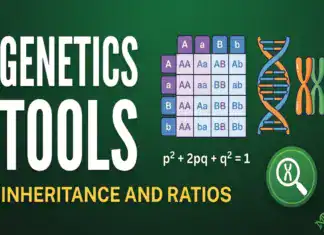
Genetics Calculators and Tools
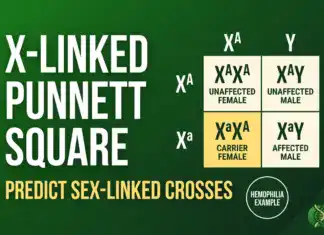
X-Linked Punnett Square Calculator
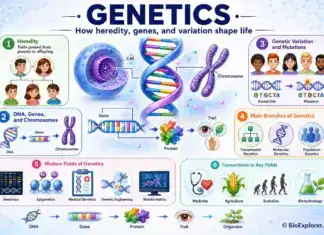
Branches of Genetics

Genetics Glossary
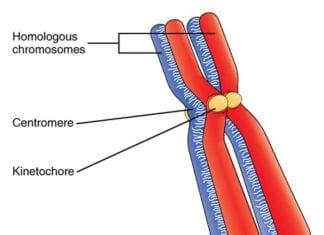
What Is A Homologous Chromosome?

What Is The Chromosome Theory Of Inheritance?

Overview of Chromosomal Mutations, Types & Examples
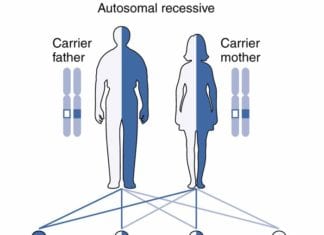
Autosomal Recessive Inheritance: Principles, Patterns, & Associated Disorders

The History of Genetics: A Complete Timeline from Ancient Greece to 2026
FAQs
A Punnett square calculator is an interactive genetics tool that predicts possible offspring genotypes and phenotypes from parent genotypes.
A monohybrid cross follows one trait at a time, such as Aa × Aa. It is often used to teach dominant and recessive inheritance.
A dihybrid cross follows two traits at the same time, such as AaBb × AaBb.
A genotype is the allele combination an organism carries. A phenotype is the observable trait or characteristic.
No. A Punnett square shows probabilities, not guaranteed outcomes for every child or offspring.
The 9:3:3:1 phenotype ratio appears when two traits show complete dominance and assort independently.
No. This calculator is designed for basic Mendelian crosses. Blood type, sex-linked traits, incomplete dominance, codominance, and polygenic traits need separate models.
Cite this page
BioExplorer. (2026, September 16). Punnett Square Calculator. https://www.bioexplorer.net/punnett-square-calculator/