
Types of Crows

There are 49 types of crows, and the genus that holds them, Corvus, also covers the ravens and the rooks. The wider crow family adds the jays, nutcrackers and the types of magpies. They occur on every continent except Antarctica and South America. The count is not fixed: it moves with genetic work rather than with discovery, and the Northwestern Crow was deleted from the list in 2020, absorbed into the American Crow after DNA showed no meaningful separation between them.
What draws research to the group is cognition. Rooks solve tool problems in captivity despite never using tools in the wild. New Caledonian Crows manufacture hooked tools and pass designs between populations. American Crows learn a specific human face and hold the grudge for years. Ravens maintain pair bonds researchers describe in terms normally reserved for primates.
This guide profiles all 49 types of crows recognized by the IOC World Bird List, with taxonomy, range, behavior, calls and conservation status for each, and the source for every claim linked beneath the entry it supports.
Crow Species Guide:

Types of Crows
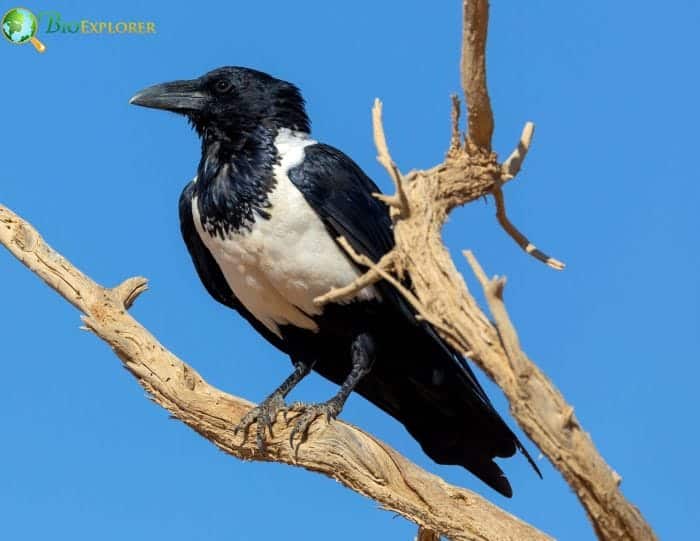
Pied Crow
| Kingdom | Order | Family | Genus | Species |
|---|---|---|---|---|
| Animalia | Passeriformes | Corvidae | Corvus | Corvus albus |
The pied crow (Corvus albus) is a medium-sized African corvid measuring 46-50 cm, with a black head and throat contrasting with a white breast and collar. No other African corvid shows as much white.
The pied crow occurs across sub-Saharan Africa, where its distribution closely follows human settlement. It is scarce or absent in the central and western forest blocks, and rainforest marks one edge of its range. The diet includes carrion, insects, small reptiles, grain and refuse.
Reported sightings in South Africa’s Karoo and Fynbos approximately doubled over a twenty-year period, and the range has extended into an area of high biodiversity. Infrastructure is the leading explanation: power lines and utility poles provide nest sites and perches in otherwise treeless country. As a generalist predator expanding into previously unoccupied habitat, the species has become a conservation concern for smaller birds within its new range.
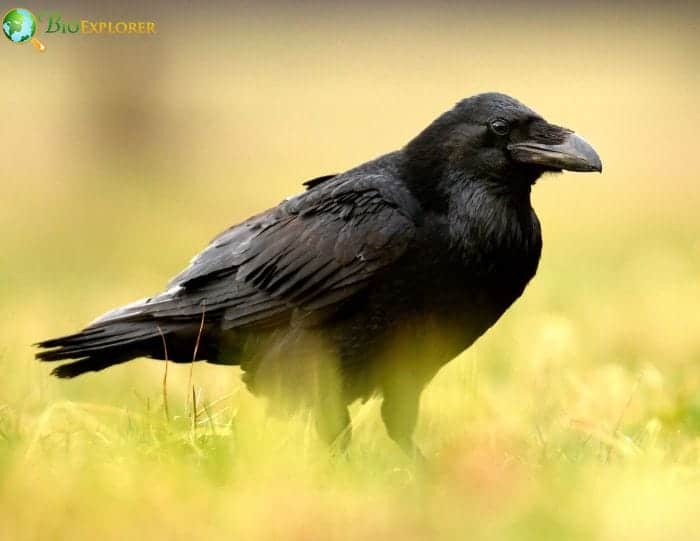
Common Raven
| Kingdom | Order | Family | Genus | Species |
|---|---|---|---|---|
| Animalia | Passeriformes | Corvidae | Corvus | Corvus corax |
The common raven (Corvus corax) has the widest distribution of any Corvus species, occupying most of the Northern Hemisphere from Arctic tundra to desert, and colonizing urban areas in recent decades. The diet ranges from fruit and insects to small mammals and carrion.
Reports of tool use require qualification. A 2023 review in Ethology catalogued the recorded instances and sorted raven tool behavior into eleven modes, four observed only in captivity and four only in the wild.
The species is long-term monogamous and territorial. Work published in Proceedings of the Royal Society B in 2025 found pair-bond strength to be consistent over time and related to partner responsiveness, with emotional contagion, in which one bird’s state shifts to match its partner’s, identified as part of the mechanism. Researchers commonly draw comparisons with primate social cognition.
Explore Raven vs Crow: Every Difference Explained with Facts!
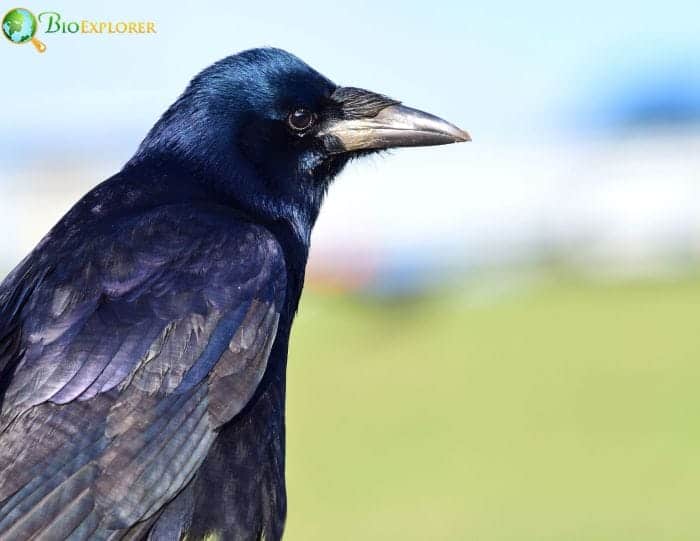
Rook
| Kingdom | Order | Family | Genus | Species |
|---|---|---|---|---|
| Animalia | Passeriformes | Corvidae | Corvus | Corvus frugilegus |
The rook (Corvus frugilegus) is identified by the bare pale skin at the base of the bill, a feature acquired by adults and absent in juveniles. It breeds colonially in rookeries across Europe and Asia, with nests concentrated in the crowns of tall trees, and forages on the ground for soil invertebrates and grain. Most populations are resident; northern birds move south in severe winters and join mixed flocks with other black birds.
Captive rooks display a range of physical problem-solving abilities. They bend hooks from straight wire to retrieve food from a tube, solve the Aesop’s fable task by dropping stones to raise a water level, using close to the minimum number required, and cooperate without training on an apparatus requiring two birds to pull opposite ends of a string simultaneously.
The species does not use tools in the wild. The 2009 PNAS study reporting these results argued that the capacity to represent tools may reflect general-purpose cognition rather than an adaptation for tool use.
Rooks have historically been treated as an agricultural pest, although the diet includes substantial numbers of insect crop pests.
House Crow

| Kingdom | Order | Family | Genus | Species |
|---|---|---|---|---|
| Animalia | Passeriformes | Corvidae | Corvus | Corvus splendens |
The house crow (Corvus splendens) is a slim corvid of 41-43 cm, glossy black on the head and breast with a grey collar across the nape and lower breast. The grey distinguishes it from the all-black Indian jungle crow, with which it often occurs. The call is a harsh kaaw-kaaw. Five subspecies are recognized.
It is native to the Indian subcontinent and adjacent coasts, and is a commensal species, rarely persisting away from towns, ports and refuse.
Ship-assisted spread over the last century has established breeding populations in 21 countries beyond the native range, with records reaching the Caribbean, the eastern United States and the European seaboard. It is the most heavily targeted corvid in the world and the only one subject to international eradication programs. Eradication on Socotra took fifteen years, concluding with the removal of the last thirteen birds in April 2009; 48,028 birds were destroyed at Salalah, Oman.
The only European colony, at Hoek van Holland, was culled following a 2013 court ruling, and no birds have been recorded in the Netherlands since 2018. The European Union listed the species as an invasive alien species of Union concern in 2016. It raids the nests of native birds, damages crops, and has been studied as a carrier of pathogenic viruses.
Sources 10
- Eradication of invasive House Crow from Socotra Island, Yemen (eScholarship)
- House Crow eradication measures, eThekwini Municipality, South Africa
- Further records and updates of range extension in House Crow
- SANBI species account
- CABI Compendium datasheet (doi:10.1079/cabicompendium.15463)
- Regulation (EU) 2016/1141, list of invasive alien species of Union concern
- IUCN Global Invasive Species Database
- Journal of Applied Animal Research: house crows as carriers of pathogenic viruses
- Scientific Reports 2025: genetic characterization and phylogeny of house crows
- Cornell Birds of the World: House Crow
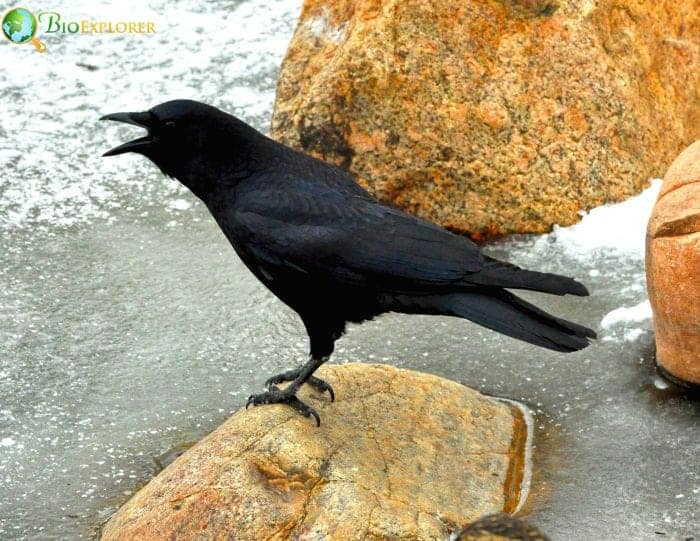
American Crow
| Kingdom | Order | Family | Genus | Species |
|---|---|---|---|---|
| Animalia | Passeriformes | Corvidae | Corvus | Corvus brachyrhynchos |
The American crow (Corvus brachyrhynchos) measures 40-50 cm, with the graduated tail accounting for close to half that length, and weighs 300-600 grams. Males average larger than females. A generalist occurring in both forest and urban environments, it shares habits and appearance with its Eurasian counterpart the carrion crow.
The species is an exceptionally susceptible host of West Nile virus. A marked population at Stillwater, Oklahoma, lost 46 of 120 birds within two months of the virus arriving in late summer 2002, and 72% of its members and 82% of its juveniles over that year. Because mortality is so high, changes in crow abundance track the spatial and temporal spread of the virus. Modeling has since identified the factors involved: denser populations declined more, populations in areas of high avian diversity declined less, and urban populations declined more than rural ones.
It provides the best-documented case of a wild animal recognizing individual humans. Crows captured by researchers wearing a particular mask continued to scold that mask for at least 2.7 years, and PET imaging has identified the brain regions involved.
Fish Crow
| Kingdom | Order | Family | Genus | Species |
|---|---|---|---|---|
| Animalia | Passeriformes | Corvidae | Corvus | Corvus ossifragus |
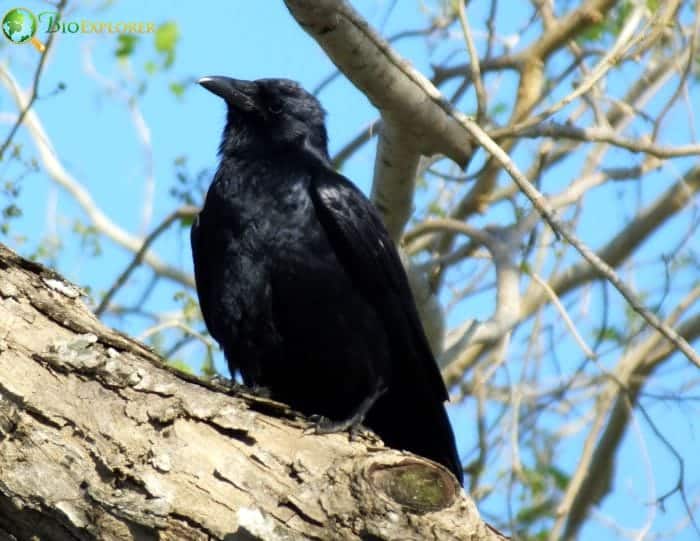
The fish crow (Corvus ossifragus) was named by Alexander Wilson in 1812 for its diet. At 247-320 grams it is smaller than the American crow, with which it overlaps along the eastern and southeastern coasts of the United States, and it keeps closer to wetlands, tidal rivers and coastline. The diet consists largely of crustaceans, fish and eggs, supplemented by fruit, reptiles, nestlings and human food waste.
The two species are near-identical in the hand and are separated in the field by voice: the fish crow gives a nasal two-note waw-waw or a rapid ark-ark-ark, where the American crow gives a clear caw. Researchers have used mitochondrial DNA analysis to separate specimens with confidence.
The species is markedly more resistant to West Nile virus. Under experimental infection, fish crows remained clinically normal while American crows died. Viral titres were approximately 3,000 times higher in American crow blood and 30,000 to 50,000 times higher in tissues including pancreas and small intestine. Antibody prevalence among wild birds in Georgia was 16.5% in fish crows against 5.7% in American crows.
Grey Crow
| Kingdom | Order | Family | Genus | Species |
|---|---|---|---|---|
| Animalia | Passeriformes | Corvidae | Corvus | Corvus tristis |
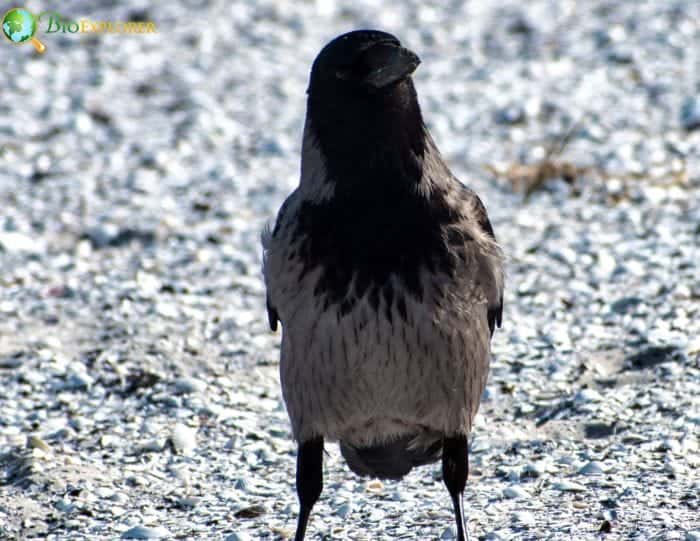
The grey crow (Corvus tristis), formerly known as the bare-faced crow, measures 42-45 cm. Adults carry a large patch of naked pinkish-white skin around the eye, and the tail feathers bleach unevenly with wear, producing a patchy, faded appearance.
Juveniles differ markedly from adults, being pale brown to cream overall with bluish-white eyes and a bill ranging from partly to entirely pinkish-white with a dark tip.
The species is endemic to New Guinea and its satellite islands, where it occupies lowland and hill forest canopy to around 1,350 m, often near rivers, and feeds on fruit and small animals.
Hooded Crow
| Kingdom | Order | Family | Genus | Species |
|---|---|---|---|---|
| Animalia | Passeriformes | Corvidae | Corvus | Corvus cornix |
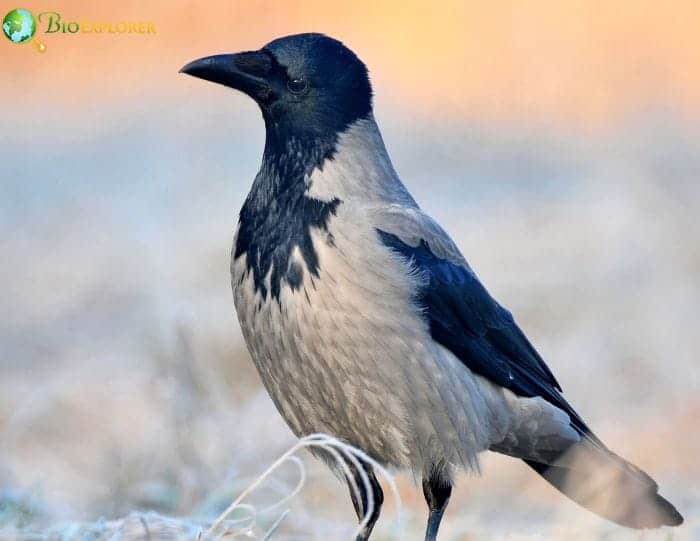
The hooded crow (Corvus cornix) measures 48-52 cm and is grey-bodied with a black head, wings and tail. It ranges from Western Europe to East Asia across forest, farmland, coast and urban habitats. Northern populations migrate; others hold territory year-round. Pairs nest in trees or on cliff ledges, and both adults feed the young.
It differs from the carrion crow across less than one percent of the genome. Two regions of major effect govern plumage color, the largest spanning about 2.8 million base pairs on chromosome 18.
The two forms meet along a contact zone running from Scotland through Denmark, Germany, the Czech Republic and Hungary into Italy, following the Elbe for much of its German course. The zone is only 20 to 50 km wide and has remained so despite hybrid offspring being fertile. Assortative mating maintains the separation: birds prefer partners of their own plumage type and minority-plumage individuals are socially marginalized, limiting crossbreeding without a genetic barrier. The case, published in Science in 2014, is a standard reference in speciation research.
New Caledonian Crow
| Kingdom | Order | Family | Genus | Species |
|---|---|---|---|---|
| Animalia | Passeriformes | Corvidae | Corvus | Corvus moneduloides |
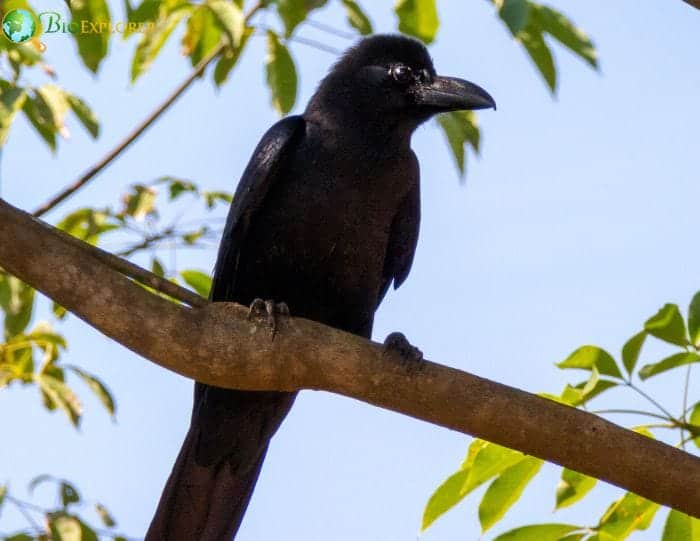
The New Caledonian crow (Corvus moneduloides) is endemic to New Caledonia. It uses tools to extract beetle larvae from decaying wood, and also feeds on snails, insects and seeds.
It manufactures two distinct hooked tool types. The first is a twig trimmed and bent into a hook; the second is cut from the barbed edge of a pandanus leaf in a stepped pattern sufficiently precise that individual birds can be identified from the leaf stubs they leave. The 1996 Nature paper describing this identified three features new to tool use in free-living non-humans: a high degree of standardization, discrete tool types, and the use of hooks.
Tool designs vary between sites on the island. These regional differences have been interpreted as cumulative cultural evolution, which would represent the clearest non-human case recorded, but the interpretation remains contested because the species does not appear to imitate. An alternative explanation is mental template matching, in which a bird forms an internal representation of a tool’s shape and reproduces it later without having observed the manufacturing process.
Carrion Crow
| Kingdom | Order | Family | Genus | Species |
|---|---|---|---|---|
| Animalia | Passeriformes | Corvidae | Corvus | Corvus corone |
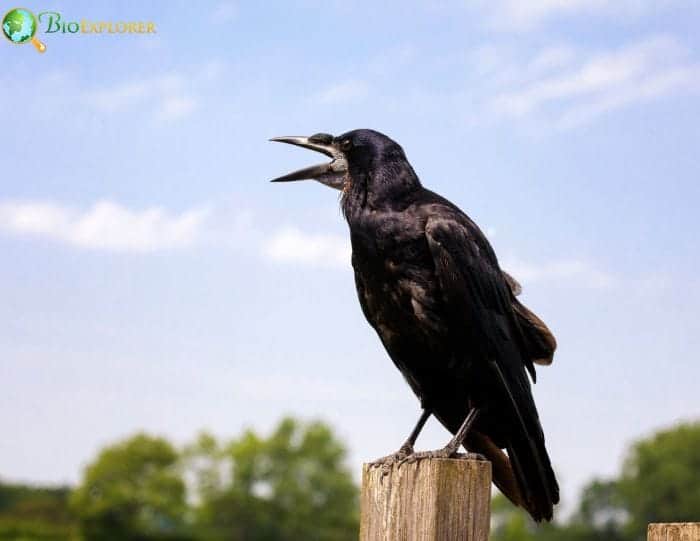
The carrion crow (Corvus corone) was described by Linnaeus in 1758. It measures 48-52 cm with an 84-100 cm wingspan and weighs 400-600 grams. Glossy black, it is distinguished from the rook by a heavier bill and the stiff bristles covering the nostrils. Juveniles are browner, with blue eyes.
The diet includes carrion, insects, grain, fruit and fish. Nests are built in tall trees and on cliffs, buildings and pylons, and the female incubates 3-4 blue or greenish brown-spotted eggs for 18-20 days. The species mobs predators in groups and defends food sources aggressively.
It can be trained to control the number of calls it produces. Work published in Science in 2024 trained birds on eight cues, four visual and four auditory, and found that they could match their vocal output to a number between one and four, an ability researchers compared to that of human toddlers before symbolic counting is acquired.
The supporting neuroscience is unusually well developed. Neurons in the nidopallium caudolaterale respond selectively to specific quantities, encode visual numerosity in birds never trained on numbers, represent zero as a quantity, and signal the number of actions the bird is about to perform.
Its relationship with the hooded crow is described in that entry.
Hawaiian Crow

| Kingdom | Order | Family | Genus | Species |
|---|---|---|---|---|
| Animalia | Passeriformes | Corvidae | Corvus | Corvus hawaiiensis |
The Hawaiian crow or ʻalalā (Corvus hawaiiensis) has soft brownish-black plumage with bristled throat feathers. It resembles a carrion crow apart from its rounded wings and thicker bill, and may live close to 30 years. It formerly occupied dry and mesic forest on Mauna Loa and Hualālai, where it dispersed the seeds of native plants. Introduced avian malaria and fowlpox, habitat loss and predation eliminated it from the wild.
The species is a habitual tool user. A 2016 study recorded ʻalalā using sticks and leaves to extract arthropods, doing so spontaneously and without social learning, making it one of only two corvids known for habitual tool use alongside the New Caledonian crow. The behavior was documented only after the species had left the wild.
Thirty birds were released at Puʻu Makaʻala on Hawaii Island between 2016 and 2020, but predation by the native ʻio and poor survival in later cohorts led to the program being paused and the survivors returned to captivity. In November 2024, five birds, two females and three males, were released on the slopes of Haleakalā on Maui, outside the range in which the species was last known wild. All five remained alive in 2026 and one pair has been recorded nest-building. The captive population has grown from fewer than 20 birds in the late 1990s to more than 110.
In Hawaiian tradition the ʻalalā guides souls to their departure point at Ka Lae.
White-necked Raven
| Kingdom | Order | Family | Genus | Species |
|---|---|---|---|---|
| Animalia | Passeriformes | Corvidae | Corvus | Corvus albicollis |
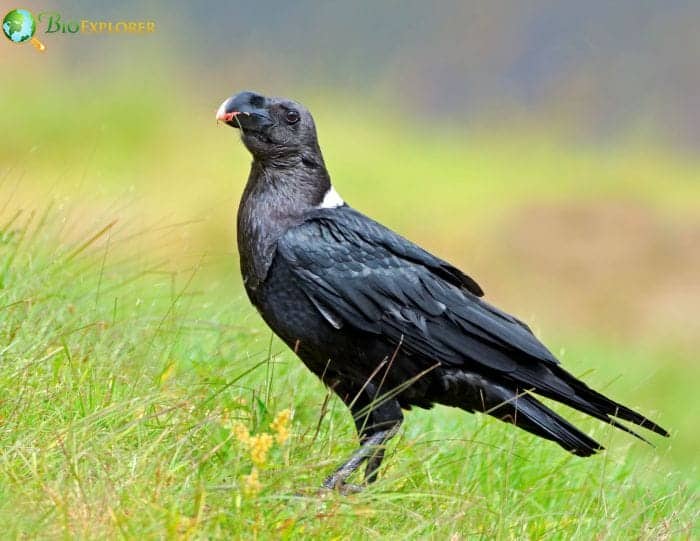
The white-necked raven (Corvus albicollis) is slightly smaller than the common raven, with a shorter tail, a deep and heavily arched bill tipped white, and a band of white feathers across the nape. It occupies mountainous country in eastern and southern Africa, nesting on ledges and in trees and laying 3-5 eggs. The diet includes fruit, grain, insects and carrion, and captive birds mimic sounds and speech readily.
It carries tortoises to a height of about 15 m and drops them onto rock before descending to feed, repeating the process if the shell remains intact.
The behavior has ecological consequences. Researchers investigating the scarcity of juveniles in Karoo dwarf tortoise populations have attributed it in part to sustained predation by white-necked ravens and pied crows, and have recovered smashed tortoise shells consistent with this.
Australian Raven
| Kingdom | Order | Family | Genus | Species |
|---|---|---|---|---|
| Animalia | Passeriformes | Corvidae | Corvus | Corvus coronoides |
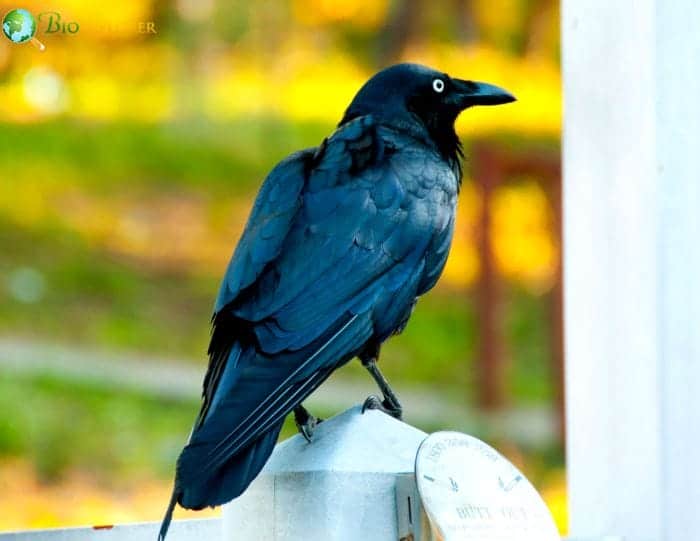
The Australian raven (Corvus coronoides) measures 46-53 cm and is the largest corvid across most of southern and northeastern Australia. The plumage is black with purple, blue and green iridescence, and the long throat hackles, which hang as a visible beard when the bird calls, distinguish it from the other four Australian Corvus species.
It occupies open woodland, farmland and urban areas, and is common in Sydney and Canberra. In eastern Australia it associates with sheep, taking afterbirth and carrion and occasionally attacking weak lambs, which has produced a long-standing conflict with graziers. Pairs hold permanent territories and bond for life, breeding from July to September in bowl-shaped nests placed high in trees.
The taxonomy of the Australian ravens is unsettled. A 2025 study in Emu reported unexpected hybridization and limited population structure across the Australian, Little and Forest Ravens, and described the boundaries between them as unresolved.
Chihuahuan Raven
| Kingdom | Order | Family | Genus | Species |
|---|---|---|---|---|
| Animalia | Passeriformes | Corvidae | Corvus | Corvus cryptoleucus |
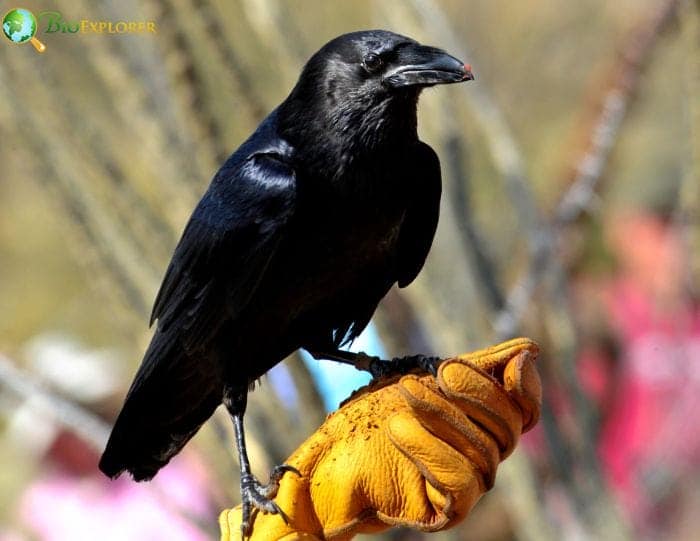
The Chihuahuan raven (Corvus cryptoleucus) measures 44-51 cm, closer in size to a carrion crow than to a common raven, with a purple-blue gloss in direct light. The specific name means hidden white and refers to the white bases of the neck feathers, which are visible only when wind lifts the plumage or the bird raises its feathers in social display.
A second distinguishing feature is the nasal bristles, which extend further along the bill than in any other Corvus. Size, bill length and voice also differ from the common raven, although the calls are similar and the Chihuahuan raven is higher pitched.
It occupies desert and arid grassland across Arizona, New Mexico, Texas and northern Mexico, feeds on grain, insects, reptiles and carrion, and often nests communally while defending a small area immediately around the nest.
Genetic work has not resolved its relationship with the common raven. Sequencing of the common raven mitogenome found deep lineages within corax and a paraphyletic relationship with cryptoleucus, indicating that the two species do not sort cleanly.
Little Crow

| Kingdom | Order | Family | Genus | Species |
|---|---|---|---|---|
| Animalia | Passeriformes | Corvidae | Corvus | Corvus bennetti |
The little crow (Corvus bennetti) measures 38-45 cm and is the smallest Australian crow, marginally shorter than the Torresian crow and with a slightly smaller bill. Like the Torresian crow it has white feather bases on the head and neck, visible only in strong wind, and the white iris typical of Australian Corvus.
It occupies the arid interior of western and central Australia, extending into small towns and cultivated land. Insects, cereal grain and seeds dominate the diet, and it scavenges considerably less than the Torresian crow. Calls range from a harsh raven-like caw to a barking hark-hark-hark.
It is the only Australian corvid known to line its nest with mud, and it nests in small loose colonies, which is unusual on a continent where most Corvus hold separate territories.
Thick-billed Raven
| Kingdom | Order | Family | Genus | Species |
|---|---|---|---|---|
| Animalia | Passeriformes | Corvidae | Corvus | Corvus crassirostris |
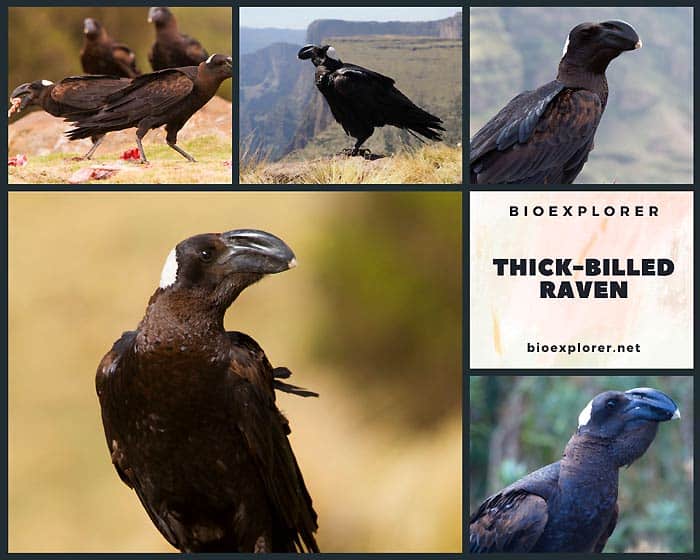
The thick-billed raven (Corvus crassirostris) averages 64 cm in length across a range of 60 to 70 cm, and weighs about 1.15 kg in females and 1.5 kg in males. These weights make it the heaviest living passerine of any family. On length it is comparable to the common raven rather than larger.
The bill is the defining feature: 8-9 cm long, laterally compressed, deeply arched, and black with a pale tip. A white patch sits on the nape, and the short neck feathers carry an oily brown sheen in place of the blue-black gloss usual in the genus.
The species occupies mountains and plateaus of the Horn of Africa in Eritrea, Ethiopia and Somalia, between roughly 1,500 and 3,400 m. It feeds on grubs, beetles, carrion and grain, nests on cliffs and in trees, and has a wide vocal repertoire that includes mimicry.
Large-billed Crow

| Kingdom | Order | Family | Genus | Species |
|---|---|---|---|---|
| Animalia | Passeriformes | Corvidae | Corvus | Corvus macrorhynchos |
The large-billed crow (Corvus macrorhynchos) is a large crow whose heavy arched bill causes it to be mistaken for a raven. Reported lengths range from about 46 to 59 cm across the subspecies. It occurs from northeast Asia west to Afghanistan, across woodland, farmland and dense urban areas.
The diet is close to unrestricted, from plant material to small vertebrates and refuse, and urban birds forage extensively on rubbish. Nests are usually placed in tall conifers such as fir or pine, with clutches of 3-5 eggs incubated for 17-19 days.
Nine subspecies are recognized, differing in size, bill shape, voice and genetics, and there is no settled agreement on how many represent separate species. The Indian jungle crow, Eastern jungle crow and Philippine jungle crow have all been separated from this complex, and further revision is expected.
On several islands the species is treated as a pest, both for crop damage and for its effect on smaller native birds.
Little Raven

| Kingdom | Order | Family | Genus | Species |
|---|---|---|---|---|
| Animalia | Passeriformes | Corvidae | Corvus | Corvus mellori |
The little raven (Corvus mellori) measures 48-50 cm and is entirely black, with an iris that shifts from blue-grey in nestlings to white in adults.
It occupies southeastern Australia from scrubland into the suburbs of Melbourne. Insects dominate the diet, supplemented opportunistically, and foraging birds have been recorded using tools. It is the most social of the Australian ravens, nesting in loose colonies with nests of sticks, bark, grass and wool placed close together, in contrast to the territorial Australian raven.
Gregory Mathews named the species in 1912, but it was not accepted as distinct from the Australian raven until 1967. The 2025 Emu study covering all three Australian ravens found unexpected hybridization and limited population structure between them, and left the taxonomy unresolved.
Forest Raven
| Kingdom | Order | Family | Genus | Species |
|---|---|---|---|---|
| Animalia | Passeriformes | Corvidae | Corvus | Corvus tasmanicus |
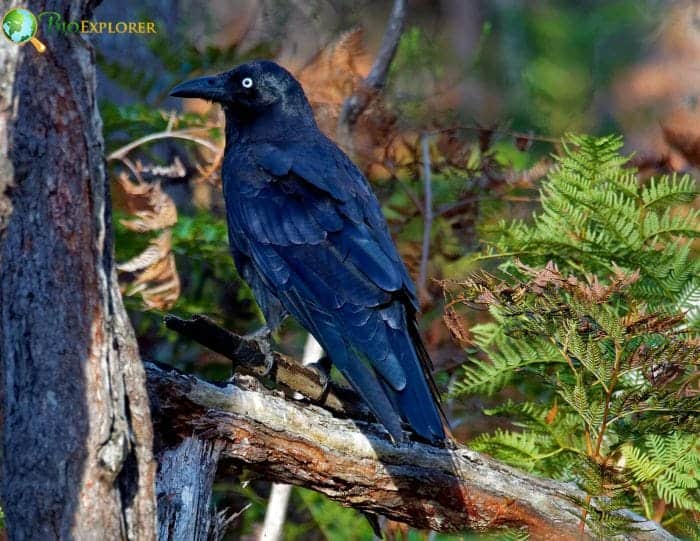
The forest raven (Corvus tasmanicus) is Australia’s largest raven, heavier-billed and shorter-tailed than the Australian raven, with a deep drawn-out call.
It is the only corvid in Tasmania, where it is common. On the mainland it survives as scattered populations in coastal Victoria and northern New South Wales, which are considerably more localized. Birds are usually seen in pairs or small flocks. The diet is opportunistic, covering insects, small mammals, carrion and human waste, and individuals have been recorded mimicking car alarms and other birds. Both parents provision young raised in nests high in tall trees.
Habitat clearing and disturbance at nest sites are the principal pressures on the mainland populations. The 2025 Emu analysis of the Australian ravens also covers this species, and its boundaries are under review.
Brown-necked Raven
| Kingdom | Order | Family | Genus | Species |
|---|---|---|---|---|
| Animalia | Passeriformes | Corvidae | Corvus | Corvus ruficollis |
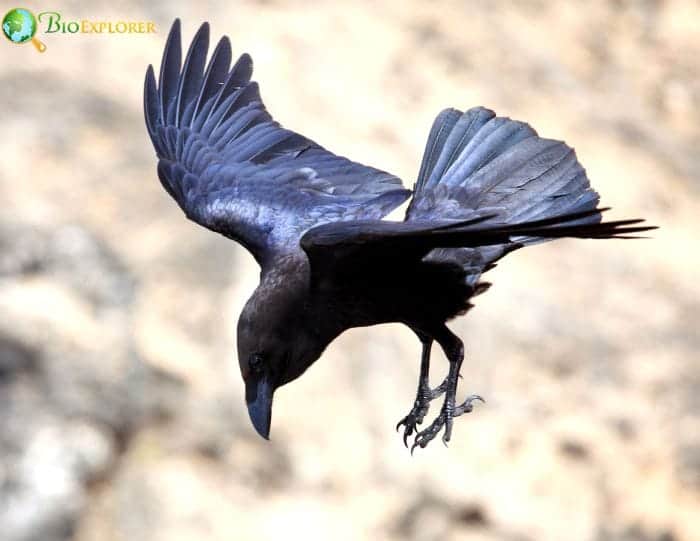
The brown-necked raven (Corvus ruficollis) measures 52-56 cm, intermediate between the common raven and the smaller desert corvids. The brown cast to the head and throat that gives the species its name is most visible in worn plumage; the remainder is black with a purple or blue gloss.
It ranges across North Africa, the Arabian Peninsula, the Middle East and southern Iran, concentrating at oases and palm groves where water and food are predictable. Nests are built in trees, on cliffs and on abandoned buildings. Clutches of 4-5 eggs are tended by both parents, hatching at 20-22 days and fledging at 42-45 days. Calls resemble those of the common raven at a higher pitch, and captive birds mimic speech, which is rarely reported in the wild.
A study of scavenging diet in the central Algerian Sahara documents how the species persists in a hyper-arid environment. Carrion, snakes, locusts and fish stranded along coastlines all appear in the record, and pairs have been observed hunting lizards cooperatively.
Fan-tailed Raven

| Kingdom | Order | Family | Genus | Species |
|---|---|---|---|---|
| Animalia | Passeriformes | Corvidae | Corvus | Corvus rhipidurus |
The fan-tailed raven (Corvus rhipidurus) is distinguished by its proportions. The tail is so short that the wings project beyond it when the bird is perched, and in flight the silhouette resembles a large bat or a vulture more than a typical corvid.
It occupies dry country and rocky terrain across eastern Africa and the Arabian Peninsula, extending into the Sahel, and soars considerably more than most Corvus species, using thermals along cliffs and escarpments.
Hartert described the species in 1918.
Northwestern Crow (not a species under IOC v15.2)
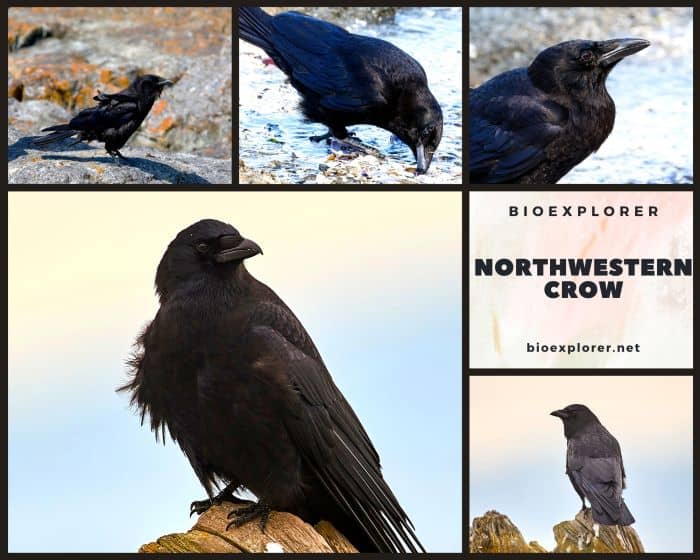
This bird is not counted among the species on this page. IOC synonymized Corvus caurinus with the American Crow and reclassified it as the subspecies Corvus brachyrhynchos caurinus. It is retained here as a note because the name is still in wide circulation and readers arrive looking for it.
See also: Former Corvus Species
The genomic study behind that decision found a hybrid zone more than 1,400 km wide, with nuclear DNA admixture spread across more than 900 km of western Washington and British Columbia. The hybrids were late-generation birds and backcrosses rather than first-generation crosses, meaning the two forms had been interbreeding for a long time. The study also found two distinct mitochondrial lineages, 1.1% divergent, dating to the late Pleistocene when glacial advances probably isolated crow populations in separate refugia. Two real evolutionary histories, thoroughly blended.
The merge is not universally accepted. A published reanalysis argued that hybridization is confined to coastal valleys where people live, that uninhabited fjords isolate much of the British Columbia coast from that contact, and that Corvus caurinus should be retained as a full species. Anyone treating the question as closed is ahead of the literature.
In the field the Northwestern crow keeps to beaches, estuaries and coastal towns from Alaska through British Columbia into Washington, though the difference is slight and overlapping. Foraging centers on the intertidal zone: clams dug out, crabs taken, fish caught in shallow water, supplemented with fruit, grain and refuse. Birds drop shellfish from height onto rock and adjust drop height to prey hardness.
Sources 4
Cape Crow
| Kingdom | Order | Family | Genus | Species |
|---|---|---|---|---|
| Animalia | Passeriformes | Corvidae | Corvus | Corvus capensis |
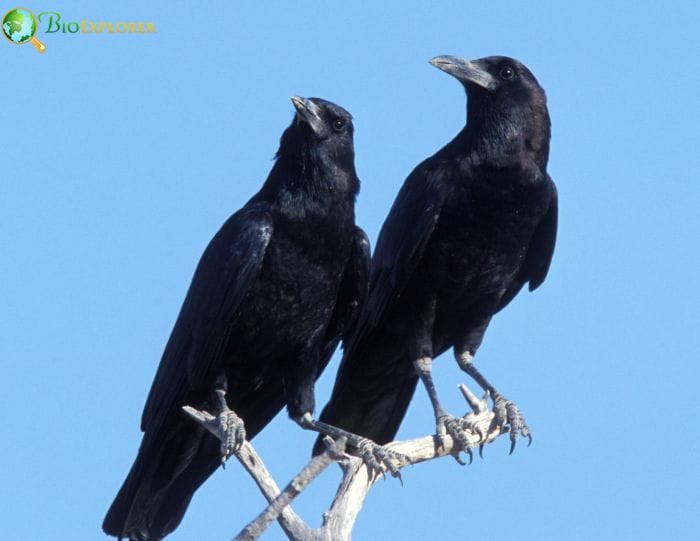
The Cape crow (Corvus capensis) reaches 48-50 cm and is entirely black with a faint purple gloss. Its bill is long and slender where most crow bills are heavy, adapted for probing soil and turning ground litter, and the species uses it to overturn mammal dung and take the insects beneath.
Two widely separated African populations exist, one extending from southern Africa north into Angola and Mozambique, the other from South Sudan through Kenya. Grain, seeds, insects and small reptiles make up the diet, and the species will kill vertebrate prey of moderate size.
Pairs build in the upper branches of tall trees. A study published in Ibis in 1952 recorded 3-4 eggs hatching at 18-19 days, with young fledging at around 38 days. The voice includes a harsh krrah krrah, a repeated kah-kah-kah, bubbling notes and mimicry.
Collared Crow
| Kingdom | Order | Family | Genus | Species |
|---|---|---|---|---|
| Animalia | Passeriformes | Corvidae | Corvus | Corvus torquatus |
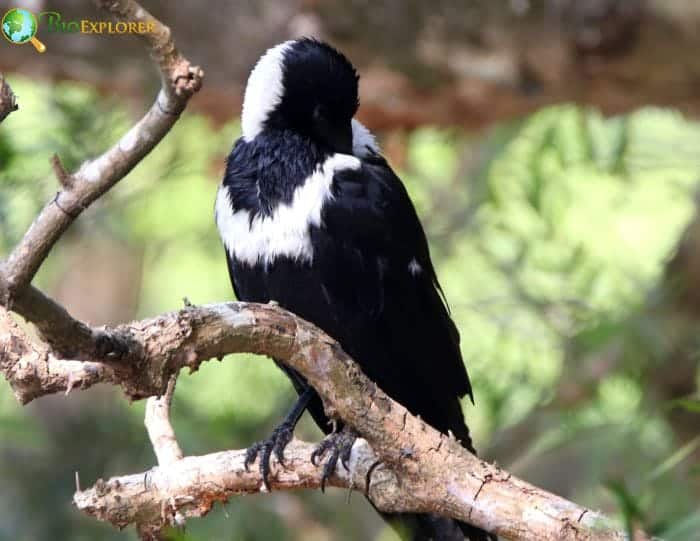
The collared crow (Corvus torquatus) measures 52-55 cm and carries a broad white band across the neck, upper back and breast, a pattern shared with no other Asian corvid. The call is a loud kaaar.
Unlike most crows it avoids urban areas, keeping to river plains, farmland and rice paddies across southern China and northern Vietnam, where it feeds on insects, molluscs, grain and small aquatic prey. The nest is placed on a tree branch, plastered with mud, and holds 3-4 eggs.
The population was formerly estimated at 15,000 to 30,000 birds. A review of modern records from China, Vietnam and Taiwan revised this to fewer than 2,000 and found the species absent from large areas of apparently suitable habitat. Field surveys in Guangdong between 2003 and 2014 indicated that BirdLife’s 2007 estimate had been flawed. The species was uplisted to Near Threatened in 2008 and to Vulnerable in 2018. Its wetland habitat has been drained, built on and agriculturally intensified across the whole of its range.
Brown-headed Crow

| Kingdom | Order | Family | Genus | Species |
|---|---|---|---|---|
| Animalia | Passeriformes | Corvidae | Corvus | Corvus fuscicapillus |
The brown-headed crow (Corvus fuscicapillus) has a brownish-black head and neck against glossy black plumage, and a heavy, strongly arched bill that differs in color between the sexes. It is a canopy bird, moving in pairs or small groups and feeding largely on fruit.
Its distribution is confined to western New Guinea, including the West Papuan islands of Waigeo and Gam, and the Aru Islands to the southwest. Logging and mining place pressure on the lowland forest it uses.
No ecological study of the species has been published. Population size, breeding biology and diet composition are effectively unrecorded.
Torresian Crow
| Kingdom | Order | Family | Genus | Species |
|---|---|---|---|---|
| Animalia | Passeriformes | Corvidae | Corvus | Corvus orru |
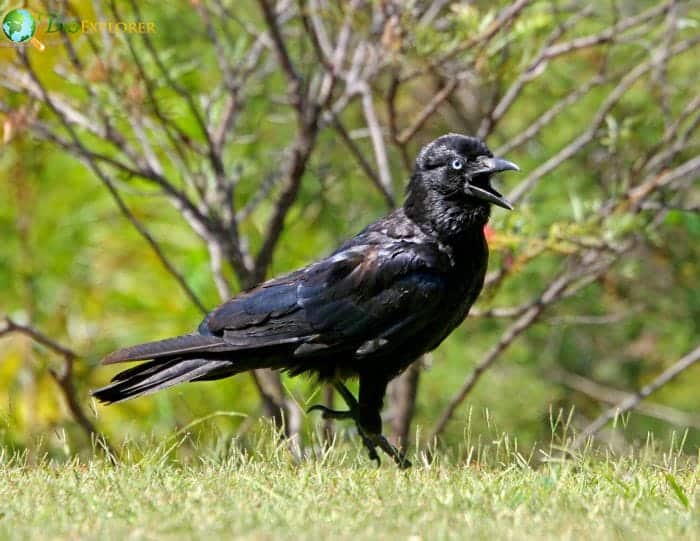
The Torresian crow (Corvus orru) occupies northern and western Australia together with adjacent islands of New Guinea and Indonesia. White eyes and white-based neck feathers identify it, and a heavier bill and slightly larger size separate it from the little crow. It occurs anywhere water is available, from tropical forest to city center, and its numbers have risen with agricultural and urban development. In farming districts it damages crops and is treated as a pest. It also takes food from larger birds in coordinated pairs.
The species has developed a technique for consuming cane toads, an invasive prey item whose parotoid glands are toxic to native predators. Birds flip the toad onto its back, repeating this if it attempts to escape, and consume only the internal organs, leaving the glands untouched.
Transmission is cultural rather than genetic. Documented in Australian Field Ornithology, the behavior appeared within two years of the toads’ arrival and is recorded across the East Kimberley within one to ten years of invasion, too rapidly to be explained by selection. It is now used as a case study in behavioral adaptation to invasive species.
Mariana Crow
| Kingdom | Order | Family | Genus | Species |
|---|---|---|---|---|
| Animalia | Passeriformes | Corvidae | Corvus | Corvus kubaryi |
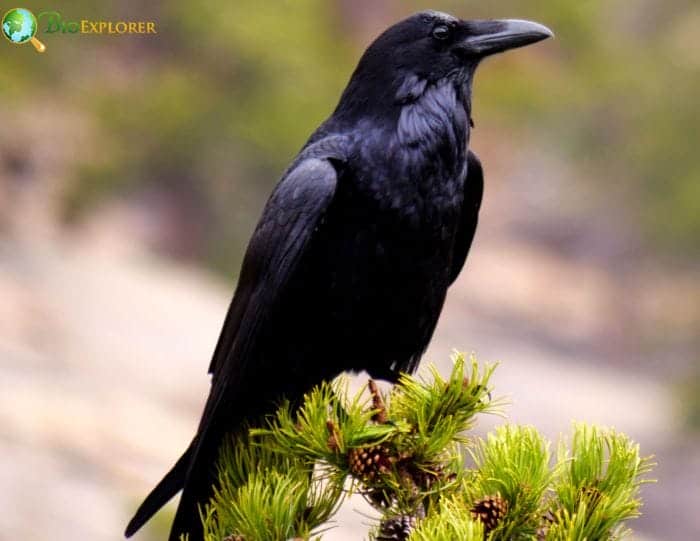
The Mariana crow (Corvus kubaryi), known in Chamorro as the åga, feeds on fruit, seeds, insects and lizards, nests in native limestone forest, and produces calls ranging from high caws to low guttural notes.
It is locally extinct on Guam, where brown tree snakes introduced accidentally after the Second World War eliminated it along with most of the island’s native forest birds. The remaining population is confined to Rota.
A 2019 population genomics study using blood samples from 78 Rota birds and five from Guam identified significant genetic structuring across the Rota population, an unexpected result given the island’s small size and the species’ flight capability. The same work recorded a historical low of fewer than 55 breeding pairs on Rota in 2013. Recovery work combines habitat protection with captive breeding and release, and has not yet reversed the decline.
Piping Crow
| Kingdom | Order | Family | Genus | Species |
|---|---|---|---|---|
| Animalia | Passeriformes | Corvidae | Corvus | Corvus typicus |
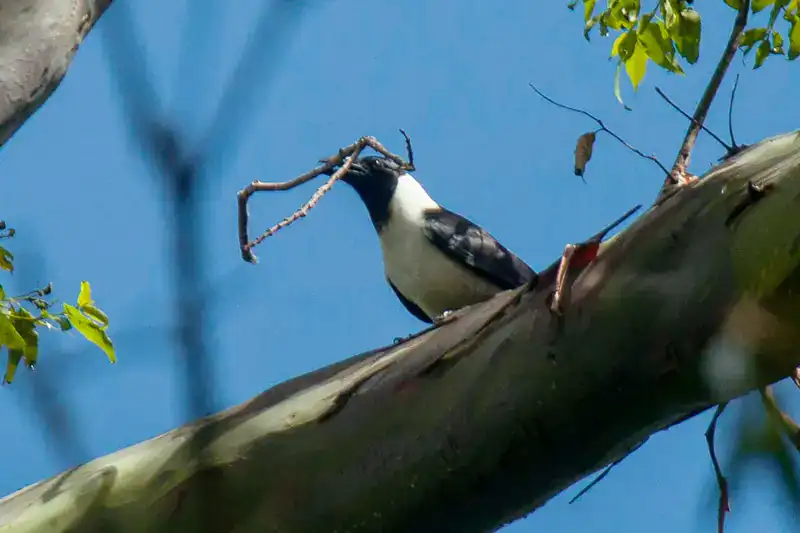
The piping crow (Corvus typicus) is endemic to Sulawesi and the neighboring islands of Buton, Muna and Kabaena. It is monotypic, with no recognized subspecies across that range.
It occurs in mangrove, lowland rainforest and montane forest up to about 1,000 m, and readily occupies cultivated land and the edges of settlements.
Genetic survey of museum specimens has found low variation within the species, which may reflect recent isolation across Sulawesi’s fragmented landmasses, although sampling is too limited to resolve population structure.
Violet Crow

| Kingdom | Order | Family | Genus | Species |
|---|---|---|---|---|
| Animalia | Passeriformes | Corvidae | Corvus | Corvus violaceus |
The violet crow (Corvus violaceus) of Seram, in the Indonesian Moluccas, has a black head, bluish-black body plumage and a shorter bill than its relatives.
Its taxonomic status is disputed. It was long treated as a form of the slender-billed crow, and some authorities retain it within that complex as Corvus [enca] violaceus, while others recognize it as a full species. It has not been separately assessed by the IUCN.
No field study has been published. Population size, breeding biology and its dependence on Seram’s remaining primary forest are all unrecorded.
White-billed Crow
| Kingdom | Order | Family | Genus | Species |
|---|---|---|---|---|
| Animalia | Passeriformes | Corvidae | Corvus | Corvus woodfordi |
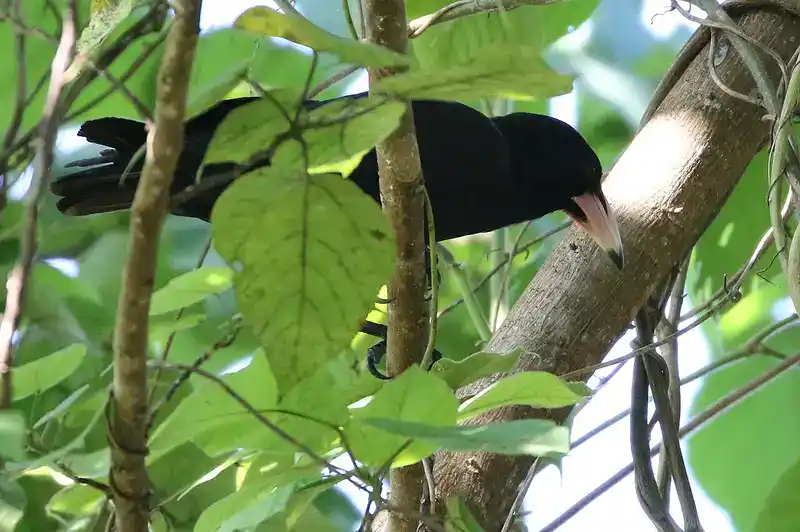
The white-billed crow (Corvus woodfordi) is stocky at 40-41 cm, with a deep curved ivory bill against black plumage, a greenish-purple gloss on the head, a purple sheen on the body, pale grey to white eyes and black legs.
Its entire range comprises three islands in the central Solomons: Choiseul, Isabel and Guadalcanal. Family groups forage through the forest canopy on insects and fruit, and the repeated ao ao ao call is heard considerably more often than the bird is seen.
Breeding biology and population size are undocumented.
Long-billed Crow
| Kingdom | Order | Family | Genus | Species |
|---|---|---|---|---|
| Animalia | Passeriformes | Corvidae | Corvus | Corvus validus |
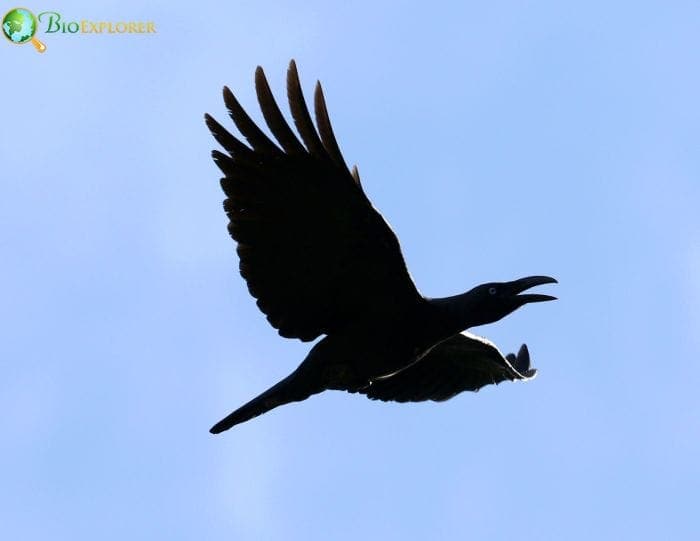
The long-billed crow (Corvus validus) is a large corvid of 45-53 cm, glossy black and white-eyed, with the elongated bill from which it takes its name. Its call is a repeated yelping cruk…cruk…cruk, closer in character to a small dog than to a typical crow.
It is endemic to the Northern Maluku Islands of Indonesia, principally Halmahera, Morotai and Obira, within a total range of roughly 25,700 square kilometers. It prefers primary forest but will use farmland and secondary growth.
Deforestation across its small island range led to an uplisting to Near Threatened in 2014, although a 2024 reassessment returned it to Least Concern.
Slender-billed Crow

| Kingdom | Order | Family | Genus | Species |
|---|---|---|---|---|
| Animalia | Passeriformes | Corvidae | Corvus | Corvus enca |
The slender-billed crow (Corvus enca), also known as the Sunda crow, is a black corvid of Southeast Asian forest and mangrove, occurring on Borneo, Sumatra, Java and the Malay Peninsula.
Its taxonomy has been revised repeatedly. The species was formerly held to include the violet crow of Seram and the Palawan crow of the Philippines; genetic analysis subsequently separated the Palawan crow, and the Samar crow was also split from it. The position of the violet crow remains disputed, with some authorities retaining it within the complex. Further revision is considered likely.
The lowland forest and mangrove habitat on which it depends is among the most rapidly declining in Asia.
Palawan Crow

| Kingdom | Order | Family | Genus | Species |
|---|---|---|---|---|
| Animalia | Passeriformes | Corvidae | Corvus | Corvus pusillus |
The Palawan crow (Corvus pusillus) is a small black corvid restricted to Palawan and its associated islands in the western Philippines.
It was separated from the slender-billed crow by the International Ornithologists’ Union on phylogenetic evidence and is now treated as a full species. Little has been published on it beyond the genetic case for its separation, a pattern common to the species split from that complex. It has not been separately assessed by the IUCN.
Samar Crow

| Kingdom | Order | Family | Genus | Species |
|---|---|---|---|---|
| Animalia | Passeriformes | Corvidae | Corvus | Corvus samarensis |
The Samar crow (Corvus samarensis), formerly known as the small crow, occurs in the central and southern Philippines.
It was formerly placed within Corvus enca and is now recognized by the IOC as a distinct species. The split rests on phylogenetic work rather than field study, no ecological account has been published, and the species has not been separately assessed by the IUCN.
Sulawesi Crow

| Kingdom | Order | Family | Genus | Species |
|---|---|---|---|---|
| Animalia | Passeriformes | Corvidae | Corvus | Corvus celebensis |
The Sulawesi crow (Corvus celebensis) is endemic to Sulawesi, and was separated from the slender-billed crow on vocal and genetic differences. It has not been separately assessed by the IUCN.
It shares the island with the piping crow, the more frequently reported of the two, making Sulawesi one of the few islands supporting two endemic Corvus species.
Jamaican Crow
| Kingdom | Order | Family | Genus | Species |
|---|---|---|---|---|
| Animalia | Passeriformes | Corvidae | Corvus | Corvus jamaicensis |
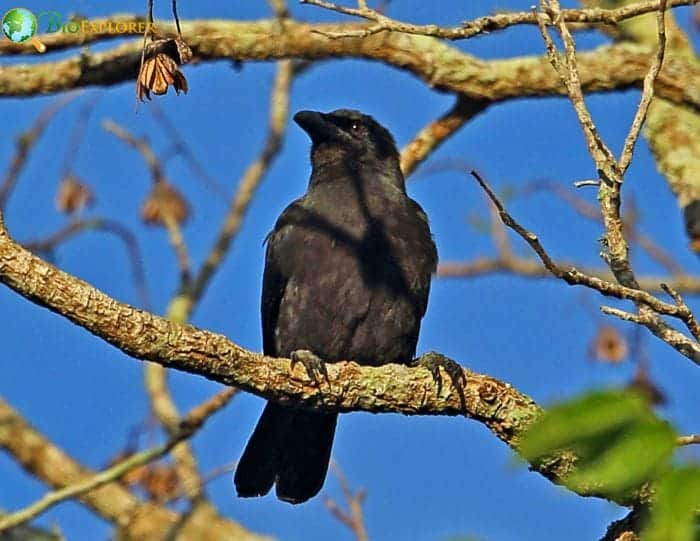
The Jamaican crow (Corvus jamaicensis) is small for a corvid at around 38 cm, sooty grey-brown rather than black, with darker grey facial patches and a pointed slate-grey bill. Its call is a rapid garbled chatter unlike that of any other bird on the island, interspersed with liquid burbling notes.
The diet includes fruit, invertebrates, juvenile lizards, and eggs and nestlings taken from the nests of other birds. Birds roost communally, a behavior documented in the Journal of Caribbean Ornithology.
Its closest relatives are the Cuban crow and the white-necked crow (Corvus leucognaphalus) of Hispaniola, and the three share sufficient morphology to be treated as a natural group. Clearance of Jamaica’s wet limestone forest has reduced its range.
Cuban Crow
| Kingdom | Order | Family | Genus | Species |
|---|---|---|---|---|
| Animalia | Passeriformes | Corvidae | Corvus | Corvus nasicus |
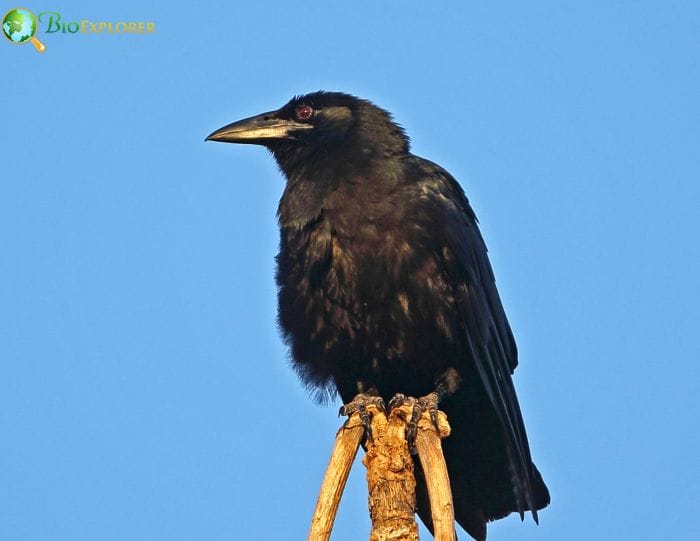
The Cuban crow (Corvus nasicus) measures 40-42 cm and has a long curved bill, black plumage with a bluish-purple sheen, and a patch of bare grey skin behind reddish-brown eyes. Its voice consists of bubbling, ringing and screeching notes, without the harsh caw characteristic of the family, and is often mistaken for that of a parrot.
It occurs in Cuba, using forest as well as farmland and village margins, and feeds on fruit, insects and human food waste.
Nests are placed high in trees and are rarely located, so breeding biology remains poorly described. Quaternary cave deposits in western Cuba have yielded fossil material of the species.
White-necked Crow

| Kingdom | Order | Family | Genus | Species |
|---|---|---|---|---|
| Animalia | Passeriformes | Corvidae | Corvus | Corvus leucognaphalus |
The white-necked crow (Corvus leucognaphalus) measures 42-46 cm and is the largest Caribbean corvid. It is now endemic to Hispaniola and its satellite islands, Île-à-Vache, Saona and possibly Gonâve, occupying a wide range of lowland habitat and extending beyond 2,500 m in the Dominican Republic. It remains reasonably widespread there but is uncommon across most of that range and scarcer in Haiti.
It was extirpated from Puerto Rico around the early 1960s and has not recolonized. Declines on Hispaniola have been recorded since the 1930s. Hunting for food, killing as a crop pest, and clearance of forest for timber and agriculture account for both the Puerto Rican extinction and the long contraction on Hispaniola. BirdLife ranks the species Vulnerable.
It is one of five West Indian Corvus species, alongside the Cuban, Jamaican, Cuban palm and Hispaniolan palm crows, and shares sufficient morphology with the first two to be treated as part of a natural group.
Hispaniolan Palm Crow

| Kingdom | Order | Family | Genus | Species |
|---|---|---|---|---|
| Animalia | Passeriformes | Corvidae | Corvus | Corvus palmarum |
The Hispaniolan palm crow (Corvus palmarum) is the larger of the two palm crows. Its range covers Hispaniola, including the country around Lake Enriquillo in the Dominican Republic, and it shares the island with the white-necked crow, the larger and more conspicuous of the two corvids present.
It was treated as conspecific with the Cuban palm crow until 2023, when the two were formally separated on differences in call, display, egg appearance and habitat preference. Sources following authorities that have not adopted the split record a single palm crow.
Sinaloa Crow
| Kingdom | Order | Family | Genus | Species |
|---|---|---|---|---|
| Animalia | Passeriformes | Corvidae | Corvus | Corvus sinaloae |
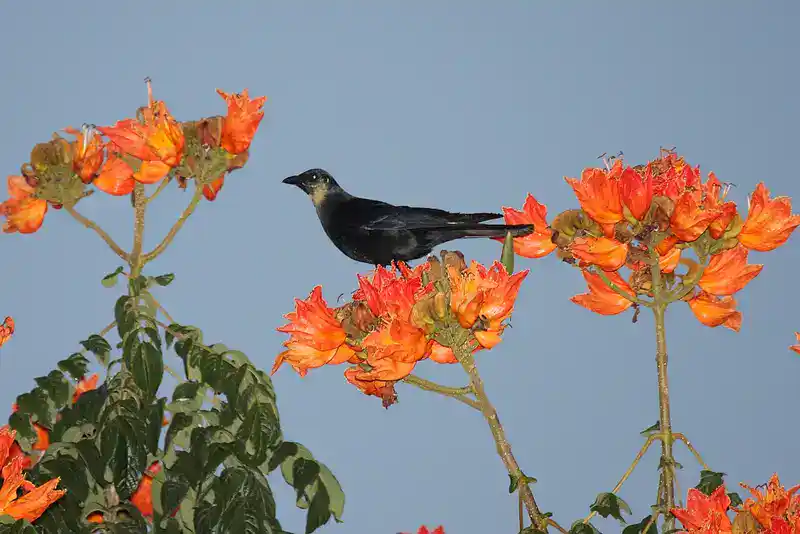
The Sinaloa crow (Corvus sinaloae) is a glossy black corvid of 34-38 cm, among the smallest members of the genus. It is visually identical to the Tamaulipas crow and is separated from it by voice and range, giving a high jay-like call rather than a caw and occupying the Pacific slope while the Tamaulipas crow occupies the Gulf coast.
Its range extends from Sonora south to Manzanillo, along riverbanks, coastline, open woodland and semi-desert, and it is common in coastal towns.
The diet includes shellfish, crabs, fruit, eggs and the nestlings of other birds. Nests are built in thorny trees or tall palms and resemble those of the American crow at reduced scale.
Tamaulipas Crow

| Kingdom | Order | Family | Genus | Species |
|---|---|---|---|---|
| Animalia | Passeriformes | Corvidae | Corvus | Corvus imparatus |
The Tamaulipas crow (Corvus imparatus) occupies northeastern Mexico. It is visually inseparable from the Sinaloa crow, and the two were formerly treated as one species before being split on voice and geography, the Sinaloa crow occupying the Pacific slope.
A population formerly extended into southern Texas but has since declined, and the species is now difficult to find north of the border.
Older sources refer to this species as the Mexican crow, a name not used by the IOC.
Bismarck Crow
| Kingdom | Order | Family | Genus | Species |
|---|---|---|---|---|
| Animalia | Passeriformes | Corvidae | Corvus | Corvus insularis |
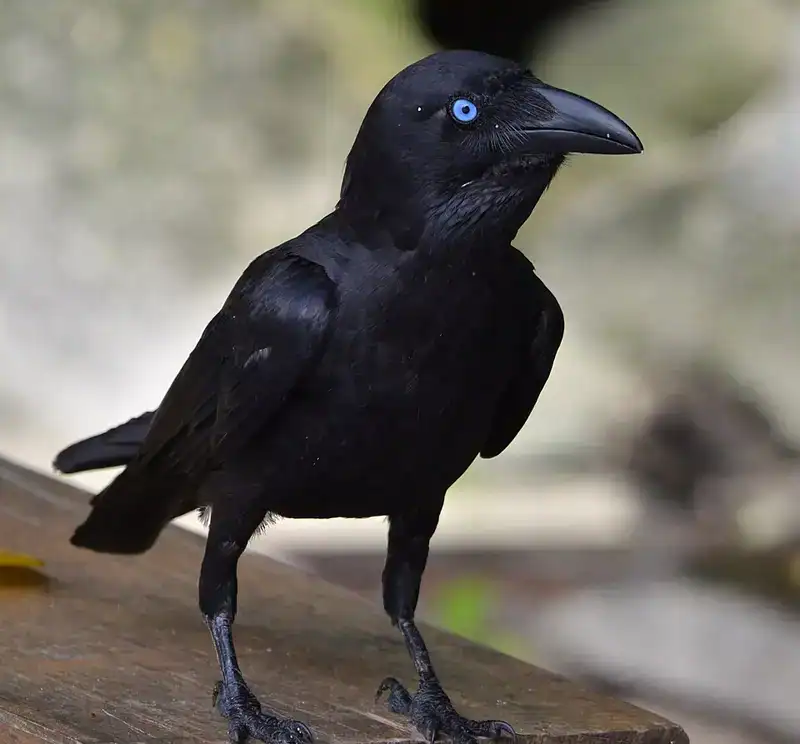
The Bismarck crow (Corvus insularis) is endemic to the Bismarck Archipelago of Papua New Guinea.
It was treated as a subspecies of the Torresian crow until a published case established full species status on morphological and vocal grounds. That case and the species’ distribution constitute essentially the entire published record; no ecological study has been carried out.
Bougainville Crow

| Kingdom | Order | Family | Genus | Species |
|---|---|---|---|---|
| Animalia | Passeriformes | Corvidae | Corvus | Corvus meeki |
The Bougainville crow (Corvus meeki) is heavyset at 41 cm, entirely black with a massive black bill, and is the only corvid on Bougainville Island. It occupies rainforest from the lowlands to about 1,600 m. Its range crosses an international boundary: Bougainville belongs to Papua New Guinea, but the species also occurs on the Shortland Islands in the Solomons.
Birds forage in small noisy groups through the canopy on insects, berries and fruit, including papaya taken from village gardens. Breeding is documented from a single female collected in breeding condition in September, which is the sole basis for the statement that the species nests during the austral spring.
Walter Rothschild described the species in 1904, naming it for Albert Stewart Meek, whose expeditions to New Guinea and the surrounding islands between 1894 and 1913 produced the first specimens. Logging is reducing the forest on which it depends.
Flores Crow
| Kingdom | Order | Family | Genus | Species |
|---|---|---|---|---|
| Animalia | Passeriformes | Corvidae | Corvus | Corvus florensis |
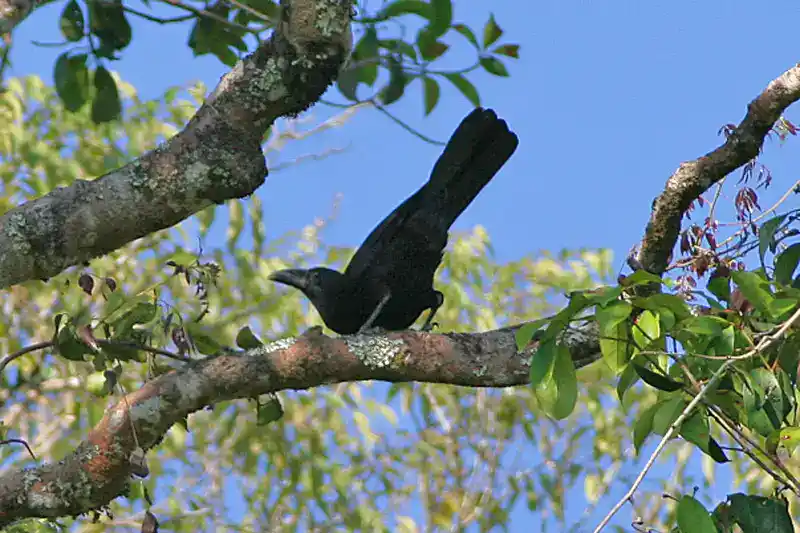
The Flores crow (Corvus florensis) is endemic to Flores, in the Lesser Sunda Islands of Indonesia, occupying dry monsoon forest and moister forest at low elevation.
It is classified as Endangered. Lowland forest on Flores has been extensively cleared for agriculture and the remaining habitat is fragmented. Protected areas cover only part of the species’ range, and the island offers no alternative habitat.
Sources 1
Somali Crow

| Kingdom | Order | Family | Genus | Species |
|---|---|---|---|---|
| Animalia | Passeriformes | Corvidae | Corvus | Corvus edithae |
The Somali crow (Corvus edithae), also known as the dwarf raven, is roughly the size of a carrion crow but with a longer bill and slightly brownish-black plumage. Its harsh caw is closer to that of a rook than a raven.
It occupies arid country in Somalia, Djibouti, northern Kenya and Ethiopia, building bulky nests in isolated trees and on utility poles, with clutches of 3-5 eggs laid in spring.
It was treated as a subspecies of the brown-necked raven until evidence supported its separation.
Speaking of Arid conditions, check out top desert birds here.
Eastern Jungle Crow
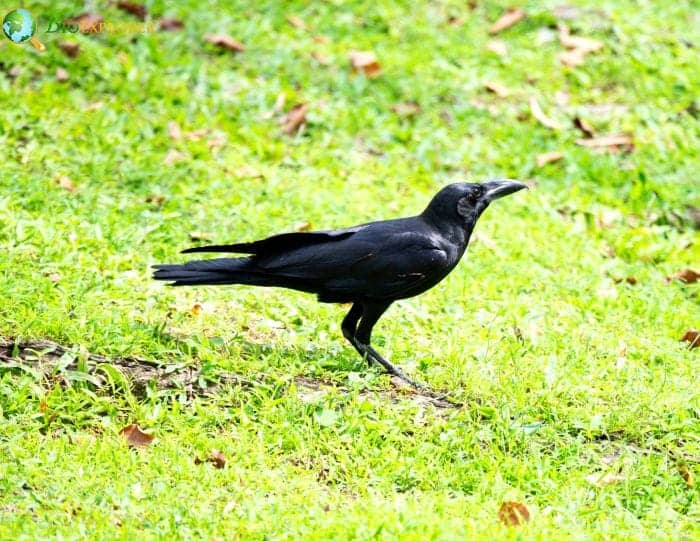
| Kingdom | Order | Family | Genus | Species |
|---|---|---|---|---|
| Animalia | Passeriformes | Corvidae | Corvus | Corvus levaillantii |
The Eastern jungle crow (Corvus levaillantii) ranges from eastern India and Bangladesh through Myanmar and Thailand into southern China.
It was separated from the large-billed crow complex on vocal and morphological grounds. Its ecology has not been studied independently of that complex, and published data on population, diet and breeding are minimal.
Sources 1
Indian Jungle Crow
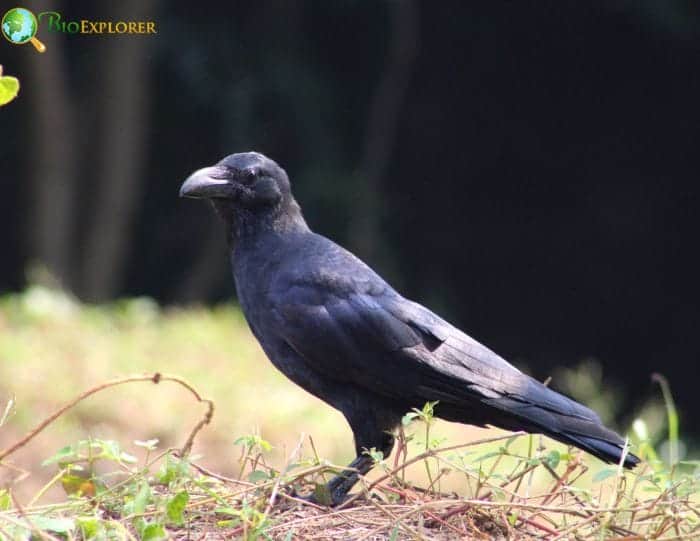
| Kingdom | Order | Family | Genus | Species |
|---|---|---|---|---|
| Animalia | Passeriformes | Corvidae | Corvus | Corvus culminatus |
The Indian jungle crow (Corvus culminatus) is entirely black, which distinguishes it from the house crow with its grey nape and breast. A rounded tail and a heavy bill with a straight rather than strongly curved culmen are further identifying features.
It occurs across peninsular India south of the Himalayas, singly, in pairs or in small flocks, forages opportunistically, and softens hard food in water before consuming it. Breeding pairs build high in large trees, laying 3-5 pale blue-green eggs. The Asian koel parasitizes these nests, leaving its eggs for the crow to raise.
The species was formerly grouped with the large-billed crow and was recognized as distinct on the basis of voice and morphology.
Banggai Crow
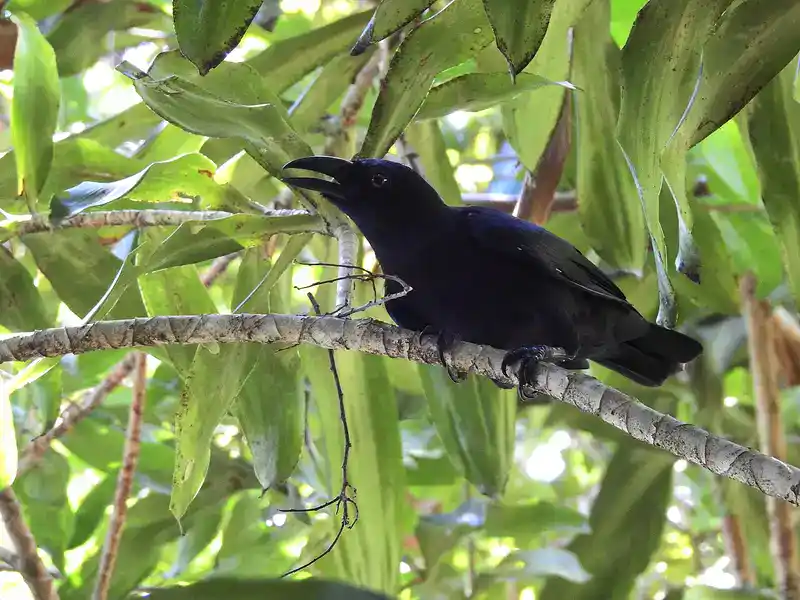
| Kingdom | Order | Family | Genus | Species |
|---|---|---|---|---|
| Animalia | Passeriformes | Corvidae | Corvus | Corvus unicolor |
The Banggai crow (Corvus unicolor) is confined to Peleng, in the Banggai Archipelago east of Sulawesi. Approximately 500 individuals are thought to remain.
The species was described in 1900 from two specimens and went unrecorded for more than a century. Searches began in 1991 and it was rediscovered in 2004. Two papers reporting the rediscovery, published in the Bulletin of the British Ornithologists’ Club, located a healthy population in Peleng’s montane west, principally between 500 and 900 m, and a second population in the lowlands of the island’s central isthmus. Its ecology closely resembles that of the piping crow, and the slender-billed crow, a potential competitor on the same island, appears to be separated from it by habitat and possibly altitude.
Logging has reduced the forest, and mining concessions proposed on Peleng have been suspended rather than cancelled. Local farmers kill the birds in the belief that they take poultry eggs. Community-led conservation work on the island is attempting to secure protected forest.
Cuban Palm Crow

| Kingdom | Order | Family | Genus | Species |
|---|---|---|---|---|
| Animalia | Passeriformes | Corvidae | Corvus | Corvus minutus |
The Cuban palm crow (Corvus minutus) is endemic to Cuba. Its habitat is palm savanna, and it persists in modified rural landscapes: cleared ground with stands of palms and other tall trees, valleys with scattered trees, and the edges of pine forest, almost always in the lowlands. Its local name, cao, derives from its repetitive call.
Formerly widespread across most of western and central Cuba, it has been reduced to two strongholds, in south-coastal Cienfuegos with southern Sancti Spíritus, and in south-central Camagüey. A third population in Pinar del Río was apparently extirpated in the 1980s. Cuba’s national Red Data Book treats the species as Endangered.
It was treated as conspecific with the Hispaniolan palm crow until 2023, when the two were formally split on differences in call, display, egg appearance and habitat preference.
Philippine Jungle Crow
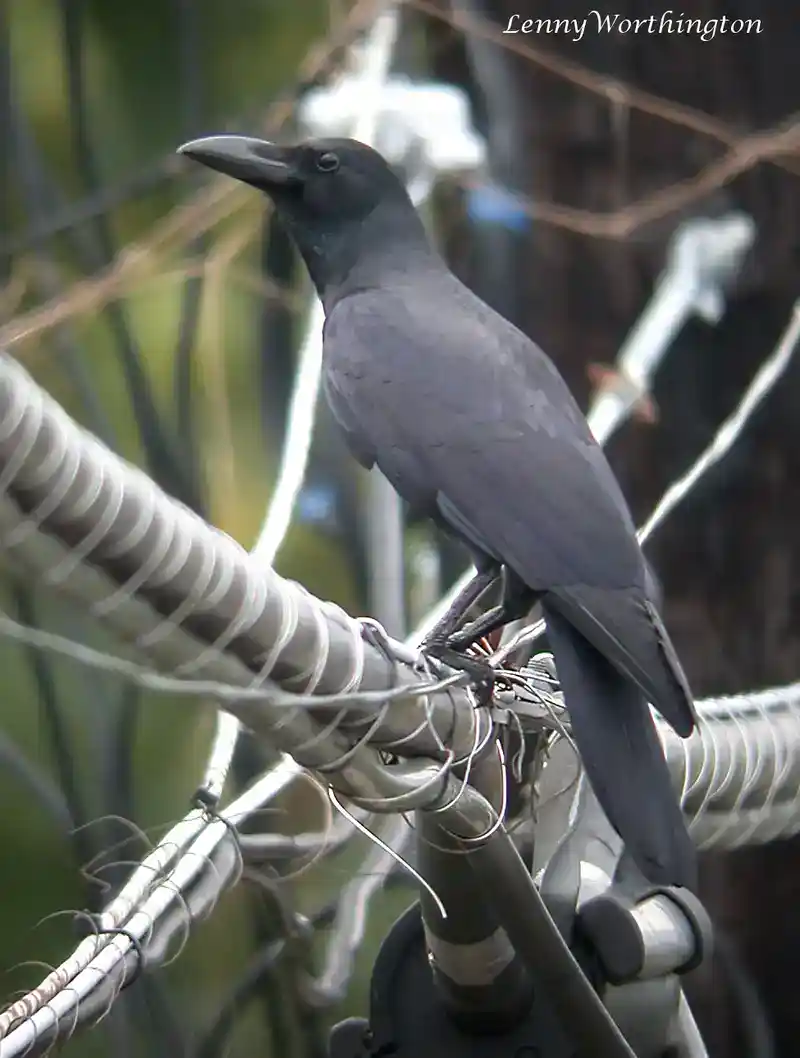
| Kingdom | Order | Family | Genus | Species |
|---|---|---|---|---|
| Animalia | Passeriformes | Corvidae | Corvus | Corvus philippinus |
The Philippine jungle crow (Corvus philippinus) is endemic to the Philippines, measuring 40-43 cm with black plumage that shows a purple or blue gloss in direct light.
It travels in vocal flocks with a broad call repertoire. Its omnivorous diet brings it into conflict with farmers, although the same habits make it an effective scavenger and a predator of agricultural pests.
It was separated from the large-billed crow complex. Philippine lowland forest continues to be cleared.
Albino Crow
| Kingdom | Order | Family | Genus | Species |
|---|---|---|---|---|
| Animalia | Passeriformes | Corvidae | Corvus | N/A |
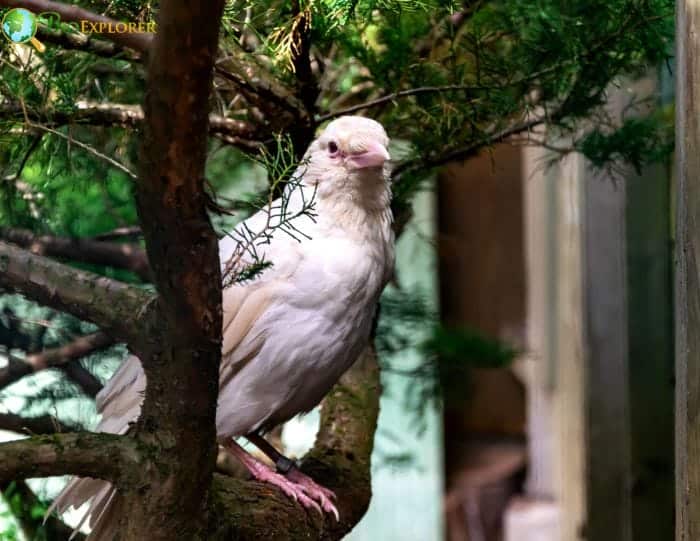
Albino crows do not constitute a species. Albinism is a recessive genetic condition that can occur in any of the species above.
A true albino produces no melanin. The plumage is white, the eyes appear red or pink because blood vessels are visible through an unpigmented iris, and the bill and feet are pink. Melanin also stiffens and strengthens feathers, so albino plumage wears more rapidly than normal plumage.
Vision is impaired and the loss of camouflage makes affected birds conspicuous to predators, so few survive long in the wild. The condition recurs because the recessive allele persists at low frequency in crow populations.
Most white or partly white crows reported by the public are leucistic rather than albino. Leucistic birds lack pigment in the feathers but retain normal dark eyes.
Former Corvus Species
Several birds carried Corvus names for a century or more before genetic work moved them out. In every case the original placement rested on plumage and general shape, and DNA showed the resemblance was superficial.
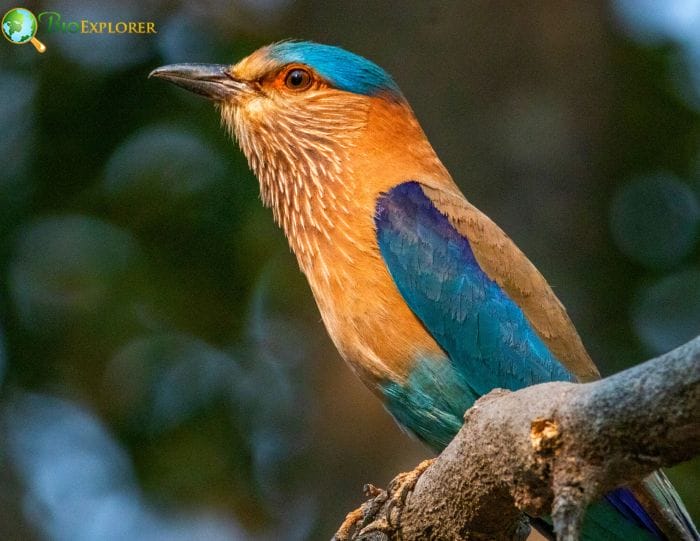
- The Indian roller was classified as Corvus benghalensis. It is not closely related to the true crows and now sits in Coracias.
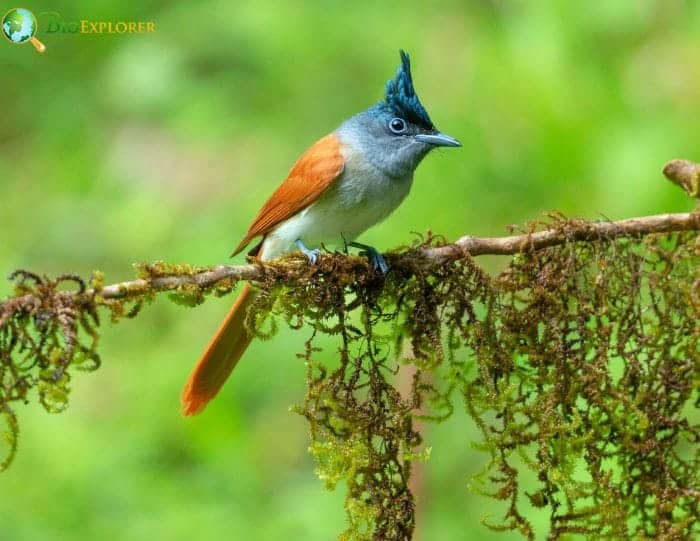
- The paradise flycatcher was named Corvus paradisi by Linnaeus in 1758. This colorful Indian bird is not a corvid, and its accepted name is Terpsiphone paradisi.
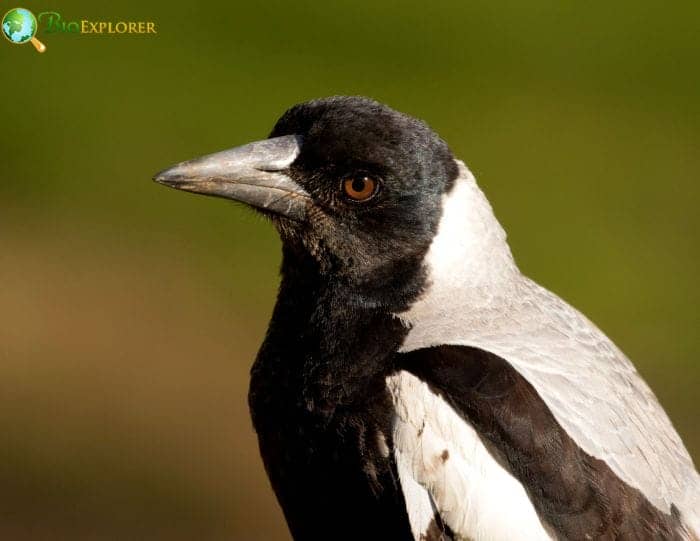
- The Australian magpie-lark was described as Corvus cyanoleucus by John Latham in 1801 and later moved to Grallina. Its accepted name is Grallina cyanoleuca.
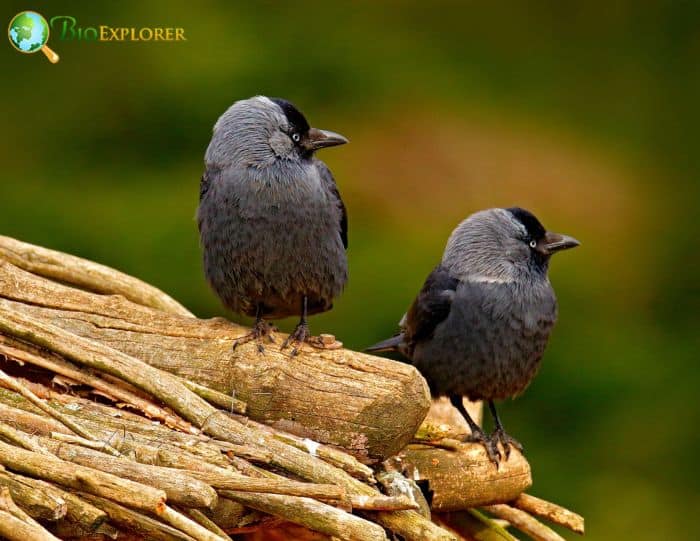
- The Eurasian jackdaw and the Daurian jackdaw were held in Corvus as Corvus monedula and Corvus dauuricus. Both now sit in Coloeus.
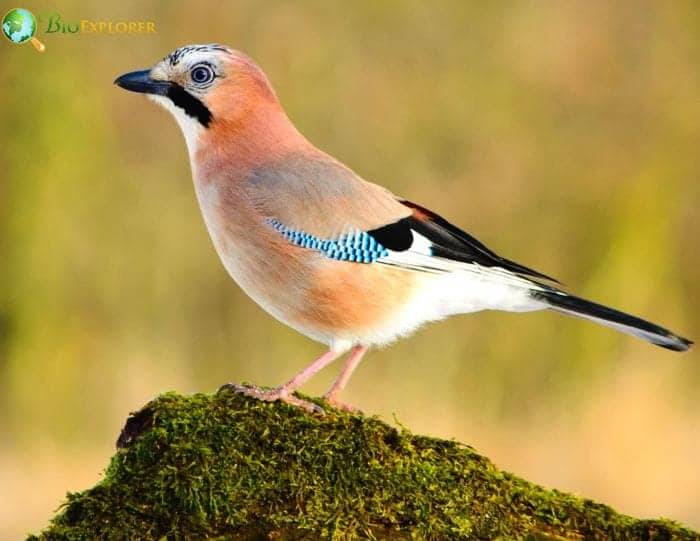
- The Eurasian jay was Corvus glandarius in the tenth edition of Linnaeus’s Systema Naturae, 1758. It is now Garrulus glandarius.
The Northwestern Crow is the most recent case, absorbed into the American Crow in 2020, though that decision is disputed in the literature. See its entry above.
Sources: IOC World Bird List: Corvidae · Molecular Ecology 2020: hybridization between ancient lineages of American crows
Crows by Year of Taxonomy Classification
Linnaeus described four Corvus species in 1758: the Carrion Crow, Hooded Crow, Rook and Common Raven. The earliest name in the table below is the Fish Crow, described by Alexander Wilson in 1812; the most recent is the Sinaloa Crow, separated by L. Irby Davis in 1958 on the basis of its voice.
| Common Name | Scientific Name | Year | Taxonomist | Country of Origin |
|---|---|---|---|---|
| Carrion Crow | Corvus corone | 1758 | Carl Linnaeus | Sweden |
| Hooded Crow | Corvus cornix | 1758 | Carl Linnaeus | Sweden |
| Rook | Corvus frugilegus | 1758 | Carl Linnaeus | Sweden |
| Common Raven | Corvus corax | 1758 | Carl Linnaeus | Sweden |
| Pied Crow | Corvus albus | 1776 | Statius Müller | Germany |
| Jamaican Crow | Corvus jamaicensis | 1788 | Johann Friedrich Gmelin | Germany |
| White-necked Raven | Corvus albicollis | 1790 | John Latham | England |
| White-necked Crow | Corvus leucognaphalus | 1800 | François Marie Daudin | France |
| Fish Crow | Corvus ossifragus | 1812 | Alexander Wilson | USA |
| House Crow | Corvus splendens | 1817 | Louis Jean Pierre Vieillot | France |
| Slender-billed Crow | Corvus enca | 1821 | Thomas Horsfield | UK |
| American Crow | Corvus brachyrhynchos | 1822 | Christian Ludwig Brehm | Germany |
| Cape Crow | Corvus capensis | 1823 | Martin Hinrich Lichtenstein | Germany |
| Cuban Crow | Corvus nasicus | 1826 | Coenraad Jacob Temminck | Netherlands |
| Australian Raven | Corvus coronoides | 1827 | Nicholas Aylward Vigors & Thomas Horsfield | UK |
| Grey Crow | Corvus tristis | 1827 | René Primevère Lesson & Prosper Garnot | France |
| Large-billed Crow | Corvus macrorhynchos | 1827 | Johann Georg Wagler | Germany |
| New Caledonian Crow | Corvus moneduloides | 1831 | René Primevère Lesson | France |
| Brown-necked Raven | Corvus ruficollis | 1831 | René Primevère Lesson | France |
| Eastern Jungle Crow | Corvus levaillantii | 1831 | René Primevère Lesson | France |
| Collared Crow | Corvus torquatus | 1831 | René Primevère Lesson | France |
| Indian Jungle Crow | Corvus culminatus | 1832 | William Henry Sykes | UK |
| Hispaniolan Palm Crow | Corvus palmarum | 1835 | Duke Paul Wilhelm of Württemberg | Germany |
| Thick-billed Raven | Corvus crassirostris | 1836 | Eduard Rüppell | Germany |
| Hawaiian Crow | Corvus hawaiiensis | 1849 | Titian Peale | USA |
| Long-billed Crow | Corvus validus | 1850 | Charles Lucien Bonaparte | France |
| Violet Crow | Corvus violaceus | 1850 | Charles Lucien Bonaparte | France |
| Torresian Crow | Corvus orru | 1850 | Charles Lucien Bonaparte | France |
| Cuban Palm Crow | Corvus minutus | 1852 | Juan Gundlach | Germany |
| Piping Crow | Corvus typicus | 1853 | Charles Lucien Bonaparte | France |
| Philippine Jungle Crow | Corvus philippinus | 1853 | Charles Lucien Bonaparte | France |
| Chihuahuan Raven | Corvus cryptoleucus | 1854 | Darius Nash Couch | USA |
| Northwestern Crow (subspecies under IOC) | Corvus caurinus | 1858 | Spencer Fullerton Baird | USA |
| Brown-headed Crow | Corvus fuscicapillus | 1859 | George Robert Gray | UK |
| Palawan Crow | Corvus pusillus | 1878 | Arthur Hay, Marquess of Tweeddale | UK |
| Mariana Crow | Corvus kubaryi | 1885 | Anton Reichenow | Germany |
| White-billed Crow | Corvus woodfordi | 1887 | William Robert Ogilvie-Grant | UK |
| Samar Crow | Corvus samarensis | 1890 | Joseph Beal Steere | USA |
| Flores Crow | Corvus florensis | 1894 | Johann Büttikofer | Switzerland |
| Somali Crow | Corvus edithae | 1895 | Lort Phillips | UK |
| Banggai Crow | Corvus unicolor | 1900 | Walter Rothschild & Ernst Hartert | UK |
| Little Crow | Corvus bennetti | 1901 | Alfred John North | Australia |
| Bismarck Crow | Corvus insularis | 1903 | Oskar Heinroth | Germany |
| Bougainville Crow | Corvus meeki | 1904 | Walter Rothschild | UK |
| Forest Raven | Corvus tasmanicus | 1912 | Gregory Mathews | Australia |
| Little Raven | Corvus mellori | 1912 | Gregory Mathews | Australia |
| Fan-tailed Raven | Corvus rhipidurus | 1918 | Ernst Hartert | Germany |
| Tamaulipas Crow | Corvus imparatus | 1929 | James Lee Peters | USA |
| Sulawesi Crow | Corvus celebensis | 1936 | Erwin Stresemann | Germany |
| Sinaloa Crow | Corvus sinaloae | 1958 | L. Irby Davis | USA |
Telling them apart by voice
For a surprising number of these birds, sound is not a nice extra. It is the identification, and in several cases it is the evidence the species was split on in the first place. Look-alike pairs that cannot be reliably separated in the hand are separated the moment one of them calls.
Three more are worth hearing simply because they do not sound like crows at all. The Cuban Crow bubbles, rings and screeches closer to a parrot. The Jamaican Crow produces a rapid garbled chatter unlike any other bird on the island. The Long-billed Crow yelps like a small dog.
| 🔍︎ Confusion | 👁️ What you see | 👂What you hear |
|---|---|---|
| American Crow vs Fish Crow | Near identical where they overlap on the US east coast | Clear caw against a nasal two-note waw-waw or a rapid ark-ark-ark. Researchers have needed mitochondrial DNA to separate specimens |
| Sinaloa Crow vs Tamaulipas Crow | Visually inseparable | A high jay-like call against a lower croak. Voice and coastline are the whole distinction |
| Common Raven vs Carrion Crow | Size, tail shape, throat hackles | A deep hollow cronk against a sharp caw. The most useful single cue in the crow-versus-raven question |
| Common Raven vs Chihuahuan Raven | Hidden white neck bases, longer nasal bristles, both hard to see | Same call shape, noticeably higher pitch in the Chihuahuan |
| Large-billed Crow vs Indian Jungle and Philippine Jungle | Broadly similar across the complex | These were split out of the Large-billed Crow largely on voice. eBird still treats the Indian form as a subspecies group, IOC as a full species |
| Slender-billed Crow vs Sulawesi Crow | Both black, both Indonesian | Separated on vocal and genetic differences |
Types of Storks: All 20 Species (With Pictures)
FAQs
Forty-nine, following the IOC World Bird List v15.2. The number moves as genetic work splits and merges populations faster than new birds are found: the Northwestern Crow was removed in 2020, absorbed into the American Crow, while the Bismarck, Palawan, Samar and Sulawesi Crows were promoted out of existing species in the other direction. Other authorities count differently, and the genus occurs on every continent except Antarctica and South America.
Wingspan is the clearest measure: up to 120 cm in the Common Raven against 99 cm in the American Crow. The raven also has a thicker, more curved bill, a wedge-shaped rather than fan-shaped tail, and shaggy throat hackles. Ravens are usually alone or in pairs; American Crows form flocks that reach into the thousands at winter roosts.
Taxonomically, yes. Every raven is a Corvus species, the same genus as the crows, including the Common, Thick-billed and White-necked Ravens. The split is a matter of common naming rather than classification, and it broadly tracks size.
The Thick-billed Raven of the Ethiopian, Eritrean and Somali highlands, averaging 64 cm across a 60 to 70 cm range and about 1.15 kg in females and 1.5 kg in males. On weight it is the heaviest living passerine of any family, not merely the heaviest corvid. On length it is level with the Common Raven, so the two share the title of largest.
The Sinaloa Crow of western Mexico at 34-38 cm. The Little Crow of arid Australia is comparable at 38-45 cm.
The Hawaiian Crow is Extinct in the Wild, though five birds were released on Maui in November 2024. The Banggai Crow is Critically Endangered at roughly 500 individuals, and the Mariana Crow is also Critically Endangered, down to fewer than 55 breeding pairs on Rota. The Flores Crow is Endangered, and the Collared Crow and White-necked Crow are both Vulnerable. Island endemics dominate the list, which is the usual pattern for birds.
The Hawaiian Crow, declared Extinct in the Wild in 2002, with a captive population that has recovered from fewer than 20 birds in the late 1990s to more than 110. Among species still established in the wild, the Banggai Crow is rarest.
Jackdaws sat in Corvus until genetic analysis moved the Western and Daurian Jackdaws into Coloeus. They are smaller than most crows, with grey napes and pale, almost white eyes, and they nest in cavities rather than building open cup nests. They remain corvids. They are no longer Corvus.
Size, head, and flight. Crows are much smaller, feathered on the head, and carry a straight sharp omnivore’s bill. Vultures are large, usually bald on head or neck, with a hooked bill for tearing carrion. Crows flap continuously in direct flight; vultures soar on thermals with broad flat wings and few wingbeats.
Crows are omnivores with unusually wide diets: earthworms, insects, small reptiles, grain, fruit, nuts, eggs and carrion. They shift with availability rather than specializing, which is much of why the genus has done well alongside people. Urban populations rely heavily on food waste.
They behave in ways that read as mischievous. Crows steal food from other animals, cache surpluses and remember the locations, and harass other birds and mammals without obvious feeding motive. Groups gather around a dead crow in what are sometimes called crow funerals, which researchers interpret as learning to associate a place with danger rather than as mourning.
Several, and the best-documented cases are stranger than the folklore. Carrion Crows can control how many calls they produce, counting up to four. Torresian Crows learned to flip cane toads onto their backs and eat only the organs, spreading the technique culturally within two years of the toads arriving. New Caledonian Crows manufacture two distinct types of hooked tool. Hawaiian Crows use sticks and leaves to extract insects, a discovery made only after the species had left the wild.
Constantly across most of their range. American Crows learn the face of a person who has threatened them and continue to respond to it for at least 2.7 years, and the brain regions involved have been imaged. In cities they forage largely on human waste. Reports of crows leaving small objects for people who feed them are common, though the behavior is anecdotal rather than experimentally established.
Habitat loss, hunting and poisoning from agricultural pest control affect the genus broadly. West Nile Virus caused steep American Crow declines from 2002, with one studied population losing 72% of its members in a single year. Owls, hawks and eagles take crows as prey. Island species face the sharpest threat from introduced predators: the brown tree snake removed the Mariana Crow from Guam entirely.
Between two and four years old, though most delay breeding until they hold a territory. Most pair for life, and both parents build the nest and feed the young. Offspring from earlier broods often stay to help raise later ones, a cooperative breeding system particularly well documented in the American Crow.
Seven to eight years is typical in the wild, varying by species. The oldest recorded wild American Crow reached 17 years. Captive birds live far longer, with Common Ravens passing 40 years in managed care, and Hawaiian Crows reaching close to 30. Food supply, predation and disease are the main determinants.
The American Crow uses more than 20 distinct call types, including alarm, assembly and flight calls, and the repertoire varies by species, context and individual. A long caw followed by short repeated caws is used to locate separated flock members or flag a threat. Posture, feather position and bill movement carry information alongside the calls. Carrion Crows can additionally control the number of calls they produce to match a learned cue.
Not to people, with one seasonal exception. During nesting, from spring through early summer, crows dive at anyone approaching a nest and call loudly. The behavior is defensive and stops once the young fledge. Crows carry West Nile Virus but present less disease risk to humans than pigeons or gulls.
Taxonomy on this page follows the IOC World Bird List v15.2 (Gill, Donsker & Rasmussen, eds., 13 April 2026). Where another authority disagrees, most often the American Ornithological Society, the disagreement is stated in the entry rather than resolved silently.
Every species account links its sources directly beneath the entry. Those sources are peer-reviewed journals, research-institution databases and primary taxonomic literature: Science, Nature, PNAS, Proceedings of the Royal Society B, Molecular Ecology, Scientific Reports, Nature Communications, Journal of Neuroscience, Ethology, Animal Behaviour, Animal Cognition, Learning & Behavior, Oecologia, Ornithological Applications, Ibis, Emu, Biological Conservation, Veterinary Pathology, Journal of Wildlife Diseases, Journal of Wildlife Management, Genes, Bulletin of the British Ornithologists’ Club, Australian Field Ornithology, Behavioral Ecology and Sociobiology, Journal of Caribbean Ornithology, alongside Cornell Lab Birds of the World, eBird, GBIF, IRMNG, the Biodiversity Heritage Library, Avibase, BirdLife DataZone, USGS, the US Fish and Wildlife Service and NatureServe.
Several species in this genus have no published field study at all. Where that is the case the entry says so plainly and stays short, rather than filling the gap with plausible-sounding detail. The Brown-headed, Bismarck, Eastern Jungle, Violet, White-billed, Palawan, Samar and Sulawesi Crows are all in that position.
About the author

Cite this page
BioExplorer. (2026, October 4). Types of Crows. https://www.bioexplorer.net/animals/birds/crows/
Your photo for the Australian magpie-lark shows a different bird, which I think is the pied crow Corvus albus from Africa (the first entry in this article). The magpie-larks are Australian and smaller. Magpie-lark is Grallina cyanleuka.
I lived in Australia for 5 years. The birds are spectacular!
The magpies in Australia have a large white patch on the upper back and nape,but the breast is black. They are distantly related to the corvids, and resemble them is shape, size, and behavior. Terrific memories, great problem solvers. Other related families in Australia include the butcher birds and currawongs (larger than crows). Magpie refers to black-and-white coloration (pied). The American magpies (black-billed and yellow-billed) have very long tails. They are a big larger than jays. Magpies, jays, and crows are all classed in the corvid family.
The Australian magpies are distantly related to the corvids (different family) but resemble them in shape, size, and behavior. Terrific memories, great problem solvers. Other sort-of related families in Australia include the butcher birds and currawongs (larger than crows). Butcher birds and magpies there sing two notes at once–magical sounds! Magpie refers to black-and-white coloration (pied).
The American magpies have black and white bodies, very long tails, iridescent green. They are a big larger than jays. Magpies, jays, and crows are all classed in the corvid family.