
Frugivorous Monkeys

Frugivore monkeys thrive mostly on raw fruits or succulent fruit-like produce of plants such as roots, shoots, nuts and seeds. About 7 monkey species and 1 ape within the primate order consume fruit as their primary diet. Frugivores are highly reliant on the abundance and nutritional composition of fruits.
Frugivorous Monkeys
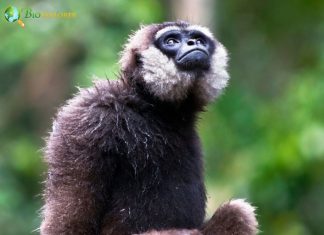
Agile Gibbon
Agile gibbons, also known as dark-handed or black-handed gibbons, are arboreal monkeys; they are always in the trees. Agile gibbons belong to the great ape family. However, they are categorized as lesser apes because they are smaller than great apes.
Read more
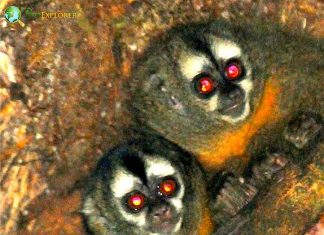
Andean Night Monkey
Andean night monkeys are a genus Aotus, commonly known as nocturnal monkeys or the Peruvian night monkey. Species in this genus are the only truly nocturnal monkeys in the world. Andean night monkeys are not sexually dimorphic as males and females look very similar.
Read more

Ashy Black Titi
The Ashy black titi is a species initially described in 1823 as Callicebus cinerascens. Ashy black titi monkeys live in small families comprising a monogamous pair and their young. Adult males tend to carry their infants unless the mother is nursing.
Read more
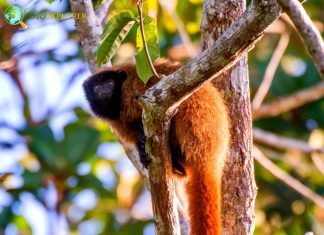
Atlantic Titi
The Atlantic titi, also known as the masked titi, inhabits the rainforests of the Atlantic coast of Brazil east of the Andes in the states of Bahia, Espírito Santo, northwest of Minas Gerais, north of Rio de Janeiro, and São Paulo. This species, found nowhere else in the world, inhabit the tropical forests of Brazil's Atlantic coast east of the Andes.
Read more
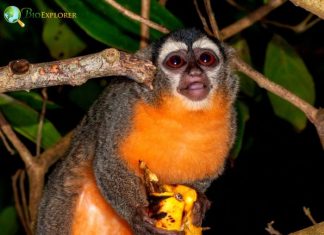
Azara’s Night Monkey
Azara's night monkeys, also known as southern night monkeys and Azara's owl monkeys, are native to the Gran Chaco region of South America, a vast area with many different ecosystems, from savannas to grasslands to dry spiny forests and gallery forests. Genetic testing has shown that the males of this species mated pairs are the fathers of the babies they care for.
Read more
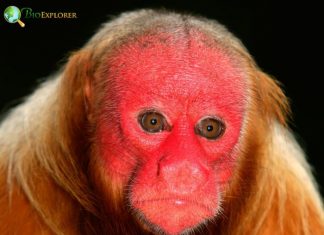
Bald Uakari
The obscure Bald Uakari (Cacajao Calvus) is an acrobatic Amazonian monkey with a flaming red face uniquely adapted to periodically flooded forests. Surprising insights on its taxonomy, specialized seed-based diet, unusual social life, habitat flexibility, and urgent need to conserve diminishing flooded forest habitat across the Amazon Basin.
Read more

Banded Langur
The Banded langur, also known as the Raffles' banded langur or banded leaf monkey, is a primate species in the Cercopithecidae family. Like other Colobin monkeys, whose young typically have lighter-colored fur than adults, Banded langur infants have white or tan fur until it darkens around 6 months.
Read more
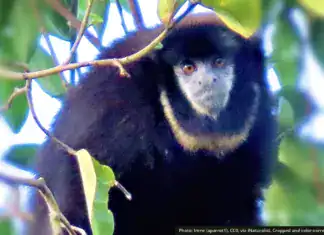
Black Titi
The black titi is a small, dark titi of the northern Amazon in Colombia, Venezuela and Brazil. Its 16 chromosomes are the fewest known in any primate.
Read more
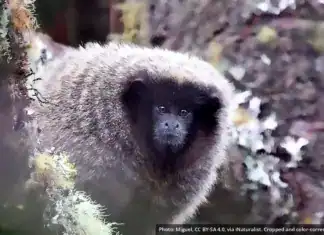
Black-fronted Titi
The black-fronted titi is a black-masked monkey of the Atlantic Forest of southeastern Brazil. It eats mostly fruit, and its alarm call sequences differ by predator type and place. The IUCN lists it as Near Threatened.
Read more
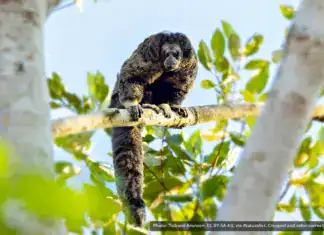
Burnished Saki
The burnished saki is a shaggy black saki of Peru’s Ucayali basin, with a pale, tan to off-white face. Spix named it the burnt saki in 1823.
Read more
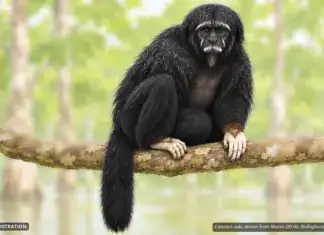
Cazuza’s Saki
Cazuza’s saki is a black saki with a loose white arch around its face. Named in 2014 from three specimens, it lives only in Brazil and is Data Deficient.
Read more
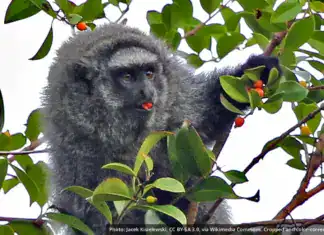
Coastal Black-handed Titi
The coastal black-handed titi is a grizzled gray monkey with blackish hands and feet, found only in the coastal Atlantic Forest of eastern Brazil. The IUCN lists it as Vulnerable.
Read more
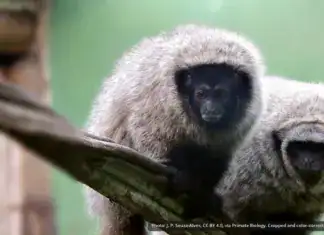
Coimbra Filho’s Titi
Coimbra-Filho’s titi is an Endangered titi monkey found only in Atlantic Forest fragments of Sergipe and northeastern Bahia, Brazil.
Read more

Gray-bellied Night Monkey
The gray-bellied night monkey (Aotus lemurinus) is a rare nocturnal primate found in the cloud forests of Colombia and Ecuador. Recognizable by its red eyes, gray underbelly, and woolly coat, it thrives in dense canopies where it feeds on fruits, insects, and nectar. Its nocturnal habits reduce competition and help it evade predators like owls and snakes. As both seed disperser and prey, it plays a key ecological role—yet habitat loss continues to threaten its survival.
Read more
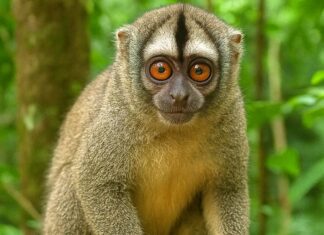
Gray-handed Night Monkey
The gray-handed night monkey (Aotus griseimembra) is a small, nocturnal primate native to Colombia, Venezuela, and Panama. Known for its large owl-like eyes and gray limbs, this tree-dwelling monkey thrives in rainforest canopies and plays a vital role as a seed disperser. Monogamous and family-oriented, it relies on both parents—especially the father—for infant care. Though adaptable, habitat loss, hunting, and the pet trade threaten its survival, earning it a Vulnerable status on the IUCN Red List. Conservation efforts are crucial to preserve this unique night-dweller and its forest ecosystem.
Read more
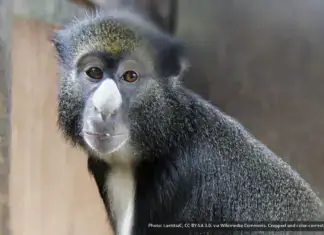
Greater Spot-Nosed Monkey
The greater spot-nosed monkey is a large guenon of West and Central African forests with a bulbous white nose. Its males combine pyow and hack alarm calls. It is listed as Near Threatened.
Read more
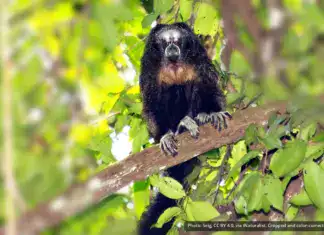
Isabel’s Saki
Isabel’s saki is a black saki with a short rusty-orange ruff. Named in 2014, it lives only in northeastern Peru, between the Marañón and Ucayali rivers.
Read more
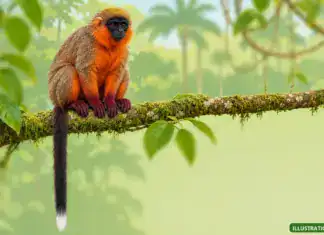
Madidi Titi
The Madidi titi is a golden-crowned titi monkey of northwestern Bolivia and southeastern Peru, named in 2006 through a charity auction. The IUCN lists it as Least Concern.
Read more
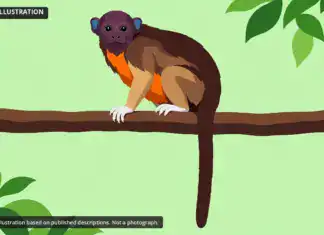
Martins’ Tamarin
Martins’ tamarin is a bare-faced tamarin found only in Brazil, north of the Amazon. It is brownish above and orange below, eats mostly fruit, and is listed as Near Threatened.
Read more
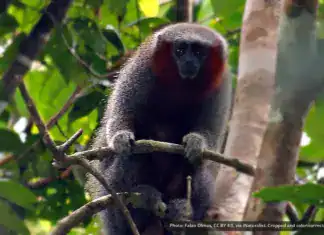
Milton’s Titi
Milton’s titi is a gray titi monkey with a light orange tail. It lives only between the Roosevelt and Aripuanã rivers in Brazil. It was named in 2014.
Read more
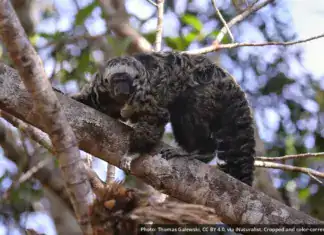
Mittermeier’s Tapajós Saki
The Mittermeier’s Tapajós saki is a shaggy monkey found only in Brazil, between the Madeira and Tapajós rivers. The IUCN lists it as Vulnerable.
Read more
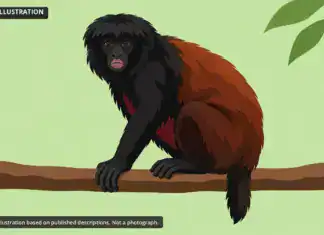
Neblina Uakari
The Neblina uakari is a mostly black uakari found north of the Rio Negro, in Brazil and Venezuela. It eats mostly seeds. The IUCN lists it as Vulnerable.
Read more
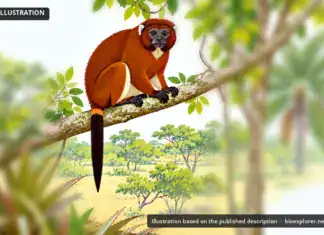
Olalla Brothers’ Titi
The Olalla brothers’ titi is a small monkey found only in Bolivia. It is Critically Endangered. Its known range covers just 383.4 km² of forest along the Yacuma River.
Read more
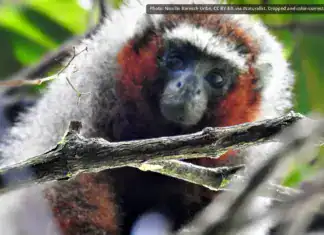
Ornate Titi
The ornate titi is a white-blazed, red-cheeked titi monkey found only in Colombia’s Meta lowlands. The IUCN lists it as Vulnerable.
Read more
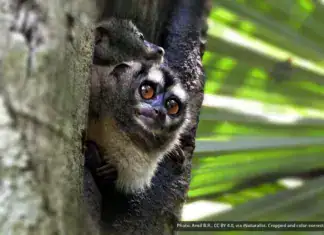
Panamanian Night Monkey
The Panamanian night monkey is a nocturnal monkey of Panama and northwest Colombia. After the first week, the father carries the baby. It is listed as Near Threatened.
Read more
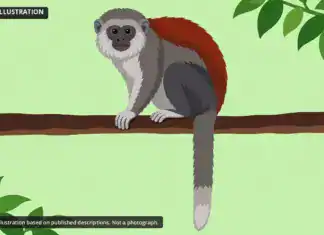
Parecis Titi
The Parecis titi is a gray titi with a reddish back from southwestern Brazil. Reported in 1914, it was described as a new species in 2019. The IUCN lists it as Near Threatened.
Read more
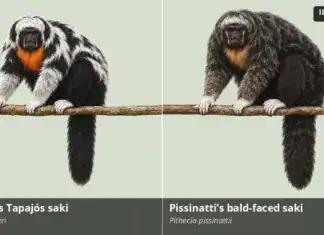
Pissinatti’s Bald-faced Saki
Pissinatti’s bald-faced saki is a shaggy black saki found only in Brazil, between the Purus and Madeira rivers. Males wear orange ruffs; females have white-haired faces.
Read more
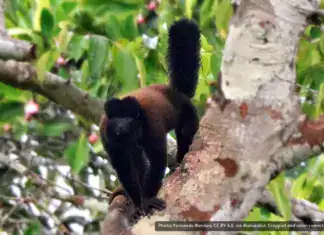
Red-backed Bearded Saki
The red-backed bearded saki is a seed-cracking monkey of the Guianas and northern Brazil, with an orange to reddish-brown back and groups of up to 65.
Read more
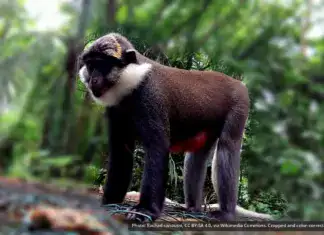
Red-bellied Monkey
The red-bellied monkey is an Endangered guenon of Benin, Nigeria and Togo. It has a white throat ruff, and its nominate subspecies has a rusty-red belly.
Read more
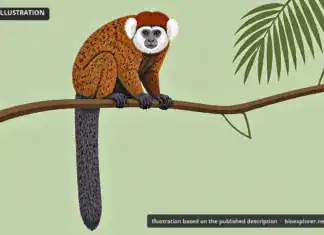
Rio Beni Titi
The Rio Beni titi is an Endangered titi monkey found only in the forest islands of Bolivia’s Beni savannas, one of just two primates endemic to Bolivia.
Read more
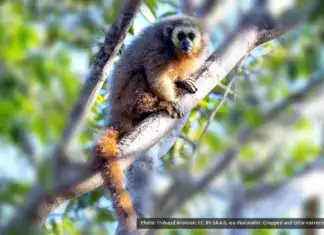
Rio Mayo Titi
The Rio Mayo titi is a Critically Endangered monkey found only in Peru’s San Martín region. It survives mostly in small forest fragments among farms.
Read more
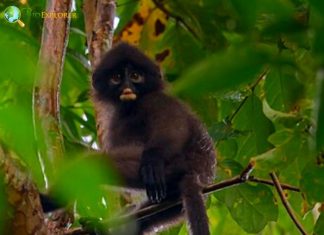
Robinson’s Banded Langur
Robinson's banded langur (Presbytis robinsoni), also known as Robinson's banded surili, is a monkey species in the Cercopithecidae family. Robinson Banded Langurs are generally shy and alert creatures, rarely leaving the comfort of the canopy.
Read more
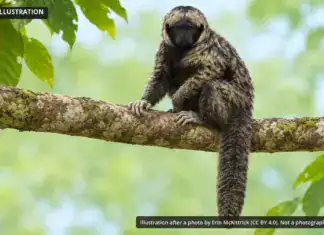
Ryland’s Bald-faced Saki
The Ryland’s bald-faced saki is a large saki of Bolivia and Peru with a bare black face. Older males turn almost white. The IUCN lists it as Vulnerable.
Read more
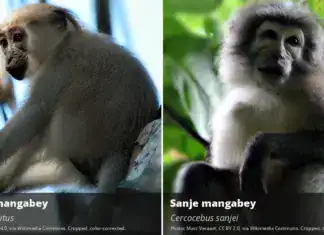
Sanje Mangabey
The Sanje mangabey is an Endangered, pale-faced mangabey found only in two forests of Tanzania’s Udzungwa Mountains.
Read more
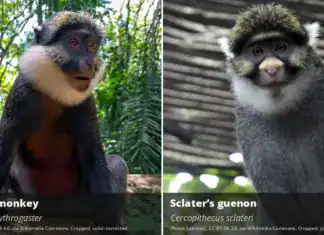
Sclater’s Guenon
Sclater’s guenon is an Endangered monkey found only in southern Nigeria. It was feared extinct until 1988, and taboos protect it in a few villages.
Read more
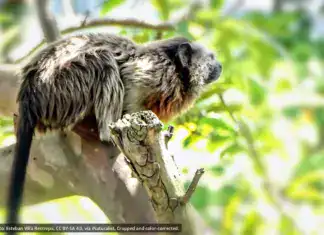
Silvery Brown Bare-face Tamarin
The silvery-brown bare-face tamarin is a small monkey found only in north-central Colombia. It eats mostly fruit. The IUCN lists it as Vulnerable.
Read more
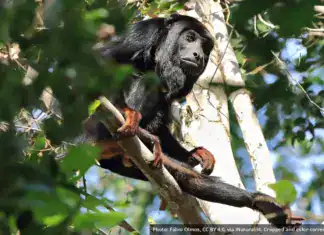
Spix’s Red-handed Howler
Spix’s red-handed howler is a dark howler with rust-red hands, found only in Brazil between the Tapajós and Xingu rivers. The IUCN lists it as Vulnerable.
Read more
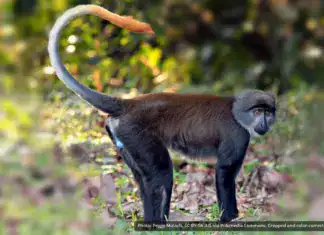
Sun-Tailed Monkey
The sun-tailed monkey is a shy guenon found only in central Gabon. Named for its bright orange-yellow tail tip, it was first seen in 1984 and is listed as Near Threatened.
Read more
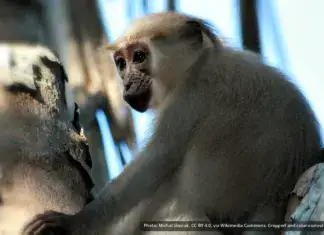
Tana River Mangabey
The Tana River mangabey is a Critically Endangered, ground-foraging monkey found only in forests along the lower Tana River in Kenya.
Read more
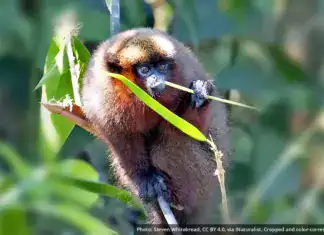
Toppin’s Titi
Toppin’s titi is a red-cheeked, pair-living titi monkey of southeastern Peru, western Brazil and northern Bolivia. The IUCN lists it as Least Concern.
Read more
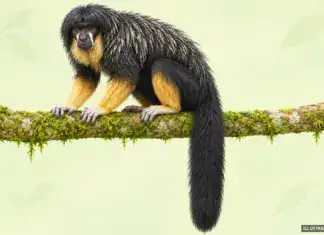
Vanzolini’s Bald-faced Saki
Vanzolini’s bald-faced saki is a black saki with yellowish-buff limbs. Known for decades only from museum skins, it was seen alive in western Brazil in 2017.
Read more
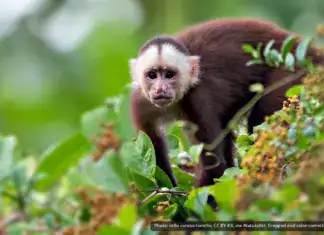
Varied White-fronted Capuchin
The varied white-fronted capuchin is an Endangered capuchin found only in Colombia. It lives in the middle Magdalena River valley, where most of its forest is gone.
Read more
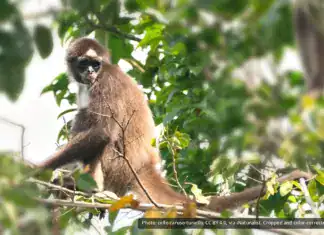
Variegated Spider Monkey
The variegated spider monkey is a Critically Endangered spider monkey found only in northern Colombia and northern Venezuela. It eats mostly ripe fruit and breeds slowly.
Read more
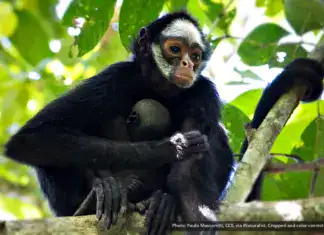
White-cheeked Spider Monkey
The white-cheeked spider monkey is an Endangered black spider monkey with a white brow. It lives only in Brazil, between the Tapajós and Xingu rivers.
Read more
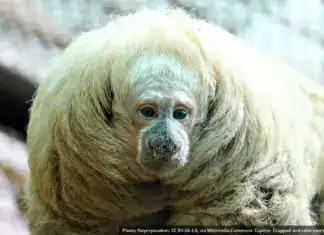
White-footed Saki
The white-footed saki is an orange-blonde monkey with a black back and tail and off-white hands and feet. It lives only in Brazil, south of the Rio Solimões.
Read more
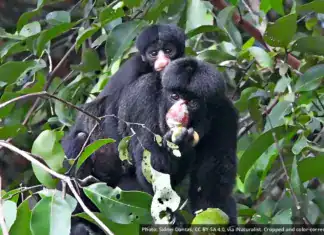
White-nosed Saki
The white-nosed saki is a black bearded saki of Brazil’s southern Amazon with a bright red nose. The IUCN lists it as Vulnerable.
Read more
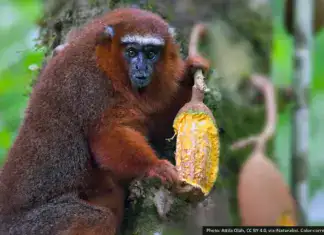
White-tailed Titi
The white-tailed titi is a rusty-red titi with a white brow from the upper Amazon of Colombia, Ecuador and Peru. Pairs sing dawn duets, and fathers carry the babies.
Read more
Cite this page
BioExplorer. (2026, November 20). Frugivorous Monkeys. https://www.bioexplorer.net/animals/mammals/monkeys/frugivorous/