
Types of Otters: All 14 Species Explained
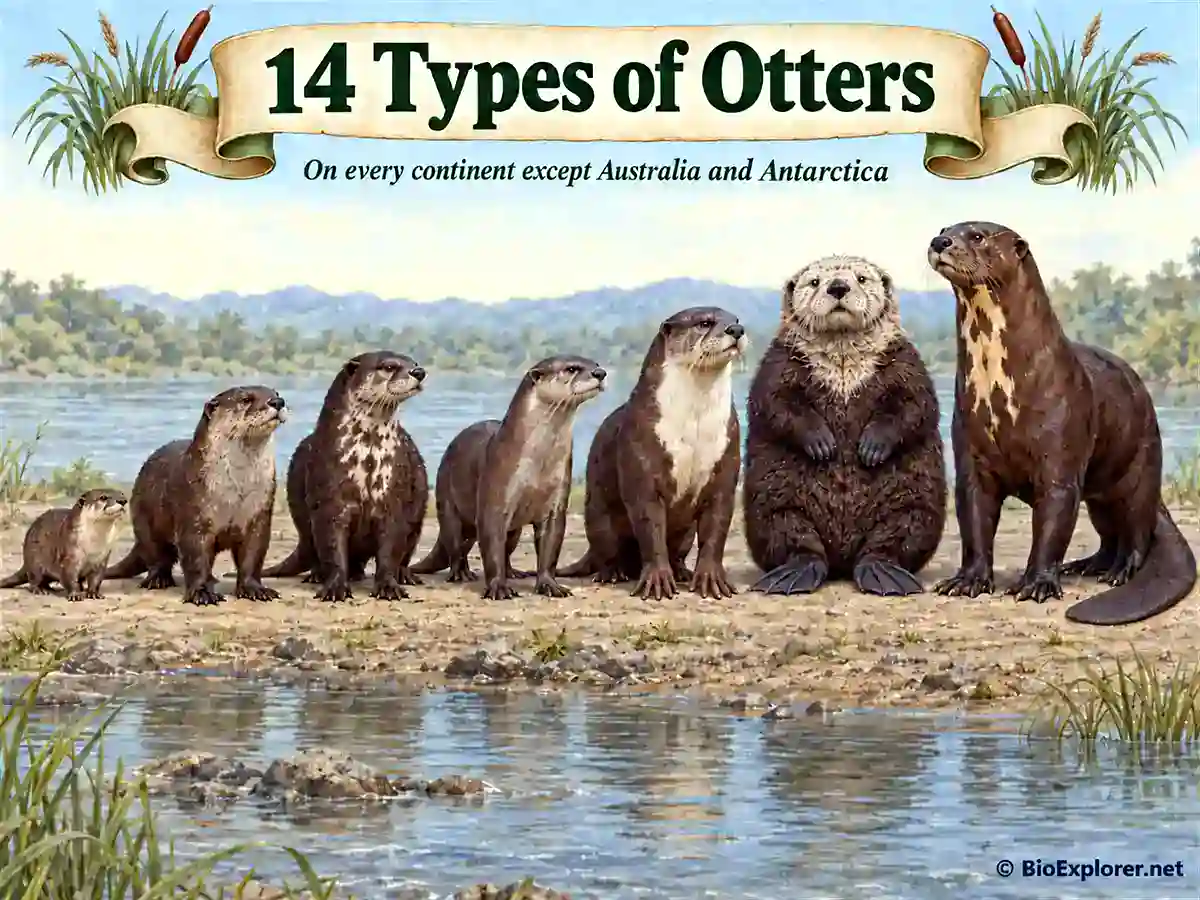
Otters find and handle their prey underwater with their forepaws, which almost no other carnivore does. There are 14 living species, they turn up on every continent except Australia and Antarctica, and they range from an animal the size of a house cat to one longer than a person is tall.
This guide covers all 14 types of otters. For each one you will find a picture, where it lives, how big it gets and one fact worth remembering. You will also learn why the count changed from 13 to 14 in 2024, why the sea otter has to eat a quarter of its body weight every day, and what happened when otters came back to a California salt marsh.
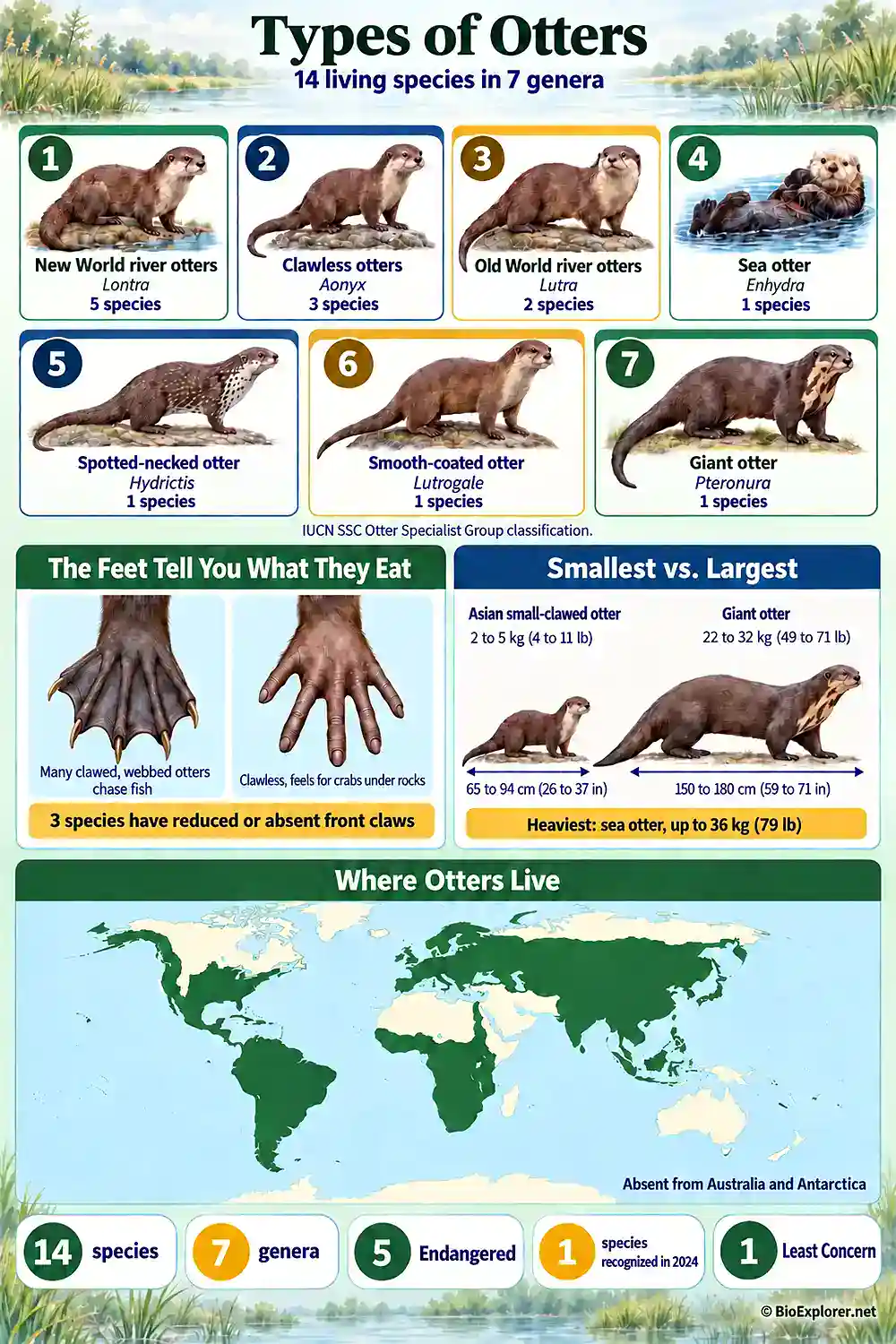
There are 14 living species of otters, all in the subfamily Lutrinae of the weasel family. The IUCN SSC Otter Specialist Group sorts them into 7 genera. Many older or not-yet-updated sources still say 13. The 14th was recognized in 2024, when genome-wide data showed that the Neotropical otter was really two species.
Types of Otters Guide:
- How Many Types of Otters?
- The 14th Otter Species
- What Is an Otter?
- River Otter vs Sea Otter
- Clawless Otters (Aonyx)
- New World Otters (Lontra)
- Old World Otters (Lutra)
- The Sea Otter (Enhydra)
- The Other Three Otters
- Otters in the US
- Sea Otters and Kelp
- Otter Size Comparison
- What Do Otters Eat?
- Where Do Otters Live?
- Otter Classification Timeline
- Are Otters Endangered?
- Otters as Pets
- More Mammal Guides
- Otter FAQs
How Many Types of Otters?
Scientists now recognize 14 living species of otters. The IUCN SSC Otter Specialist Group lists all 14, and the Mammal Diversity Database, maintained by the American Society of Mammalogists, recognizes the newest one.
Many older or not-yet-updated sources still say 13, and some of them contradict themselves. ITIS, the US government taxonomic database, has not adopted the change. Neither has the IUCN Red List, which has never assessed the new species at all.
| Genus | Common name of the group | Species |
|---|---|---|
| Lontra | New World river otters | 5 |
| Aonyx | Clawless otters | 3 |
| Lutra | Old World river otters | 2 |
| Enhydra | Sea otter | 1 |
| Hydrictis | Spotted-necked otter | 1 |
| Lutrogale | Smooth-coated otter | 1 |
| Pteronura | Giant otter | 1 |
| Total | 7 genera | 14 |
How those 14 species are grouped depends on whose classification you follow. This article uses the IUCN SSC Otter Specialist Group arrangement of 14 species in 7 genera. The Mammal Diversity Database recognizes the same 14 species but sorts them into 5 genera, following a 2022 phylogenomic study that folded Aonyx and Lutrogale into Lutra.
The 14th Otter Species
For most of the last century the Neotropical otter was treated as one species stretching from Mexico to Argentina, with three subspecies inside it. One of those subspecies was named annectens by Charles Forsyth Major back in 1897.
In March 2024, a team led by Vanessa de Ferran published genome-wide data from 29 Neotropical otters across the whole range. The result was awkward for the old arrangement: the species was paraphyletic. Some of its populations turned out to be more closely related to the marine otter and the southern river otter than to the rest of their own species.
Broadly, the Andes mark the split. Populations west and north of the mountains became Lontra annectens, and the rest stayed Lontra longicaudis, though the exact boundary in Ecuador and Peru is still uncertain. The name was not new. What changed was its rank, from subspecies to species, which is how a 13-species roster quietly became a 14-species one.
The IUCN SSC Otter Specialist Group lists 14 species and gives the new one its own page. The Mammal Diversity Database recognizes it too. ITIS still does not, and the IUCN Red List has no assessment for it, so its official conservation status is Not Evaluated. Databases update at different speeds, and this is what the gap looks like.
What Is an Otter?
An otter is a semiaquatic or marine member of the weasel family, built long and low with dense fur, webbed or partly webbed feet, small ears and a thick tapering tail. All 14 species belong to the subfamily Lutrinae, inside the family Mustelidae, one of the largest families among the types of mammals, alongside weasels, badgers and wolverines. If you have ever wondered what weasels eat, the otter menu is the aquatic version of the same carnivore diet.
Claws Tell You What an Otter Eats
The quickest way to read an otter is to look at its feet. Clawed, heavily webbed species like the Eurasian otter and the giant otter are built to chase fish. Webbing drives them through the water and claws hold on to something slippery.
The three Aonyx otters went the other way. They have dexterous forepaws with reduced webbing and reduced or absent claws, which are less suited to grasping fish but excellent for feeling under a rock for a crab. The two African species lack claws on the front feet, and the African clawless otter also has an opposable thumb. The Asian one keeps small claws that do not reach past the finger pads. The African clawless otter has less webbing between its toes than any other otter, and crabs make up between 42 and 65 percent of its freshwater diet.
That difference lets two otters share one river. On African lakes the spotted-necked otter chases fish with fully webbed feet and sharp claws, while the African clawless otter feels for crabs beside it.
The Densest Fur of Any Animal
Otters have no blubber worth speaking of. They stay warm by trapping air in their fur, and otter fur is extraordinarily dense. The sea otter carries up to around a million hairs per square inch, more than any other animal. A human head has about 100,000 hairs in total.
The consequence is that the insulation only works while the coat is clean and groomed, because it is the trapped air doing the job rather than the hair itself. This is why oil spills kill sea otters that a blubbered seal would survive, and why even a Scottish otter living on the sea has to come ashore to a freshwater pool to rinse the salt out of its coat.
The Sea Otter Is the Odd One Out
Thirteen otters live in or beside fresh water and vary in how much time they spend in the sea. One does not. The sea otter has broad, webbed, flipper-like hind feet quite unlike any other otter’s paws, blunt shell-crushing teeth, and the ability to live its entire life without touching land.
It also pays for that. Holding a body temperature near 100 degrees F (38 degrees C) in cold water with no blubber costs so much energy that a sea otter must eat about a quarter of its own body weight every day. For a 150-pound person that would be roughly 35 to 40 pounds of food.
River Otter vs Sea Otter
The two get confused constantly, especially on the California coast where both live. The comparison below uses the North American river otter as the reference, because the 13 other otters differ enormously among themselves. The giant otter grows longer, but the more compact sea otter is heavier, and the clawless otters have unwebbed front paws and crushing teeth.
| Feature | North American river otter | Sea otter |
|---|---|---|
| Hind feet | Webbed paws | Broad, webbed and flipper-like |
| Comes ashore | Yes, to rest and den | Not necessarily, ever |
| Swims | Belly down | Often on its back |
| Weight | 4.5 to 15 kg (10 to 33 lb) | 23 to 36 kg (51 to 79 lb) |
| Teeth | Sharp, for fish | Blunt, for crushing shells |
| Uses tools | Not recorded | Yes, rocks as anvils |
| Tail | Long and tapering, about a third of the length | Short and flattened |
No. Beavers are rodents. Otters are carnivores in the weasel family, so their closest relatives are weasels, badgers, martens and wolverines. The resemblance is down to both animals earning a living in the same water.
Clawless Otters (Aonyx)
The 3 Aonyx otters have dexterous forepaws with reduced webbing and reduced or absent claws. The two African species lack claws on the front feet, and the African clawless otter also has an opposable thumb. The Asian one keeps small claws that do not reach past the finger pads, which is where its name comes from. All three hunt by feel, groping under rocks and into mud for crabs, shellfish and worms.
Two live in Africa and one in Asia. The Asian one is the smallest otter in the world.
African Clawless Otter
| Kingdom | Order | Family | Genus | Species |
|---|---|---|---|---|
| Animalia | Carnivora | Mustelidae | Aonyx | Aonyx capensis |
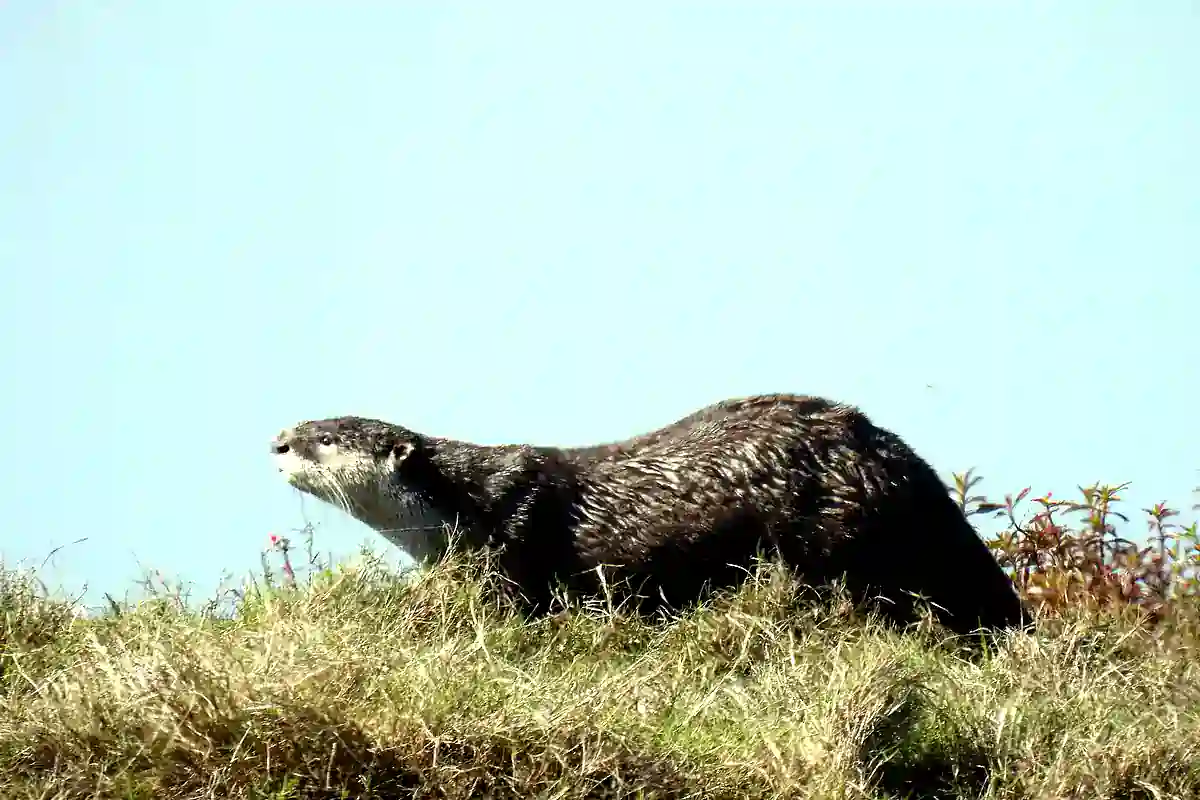
The African clawless otter is the most widespread otter in Africa. It lives from Senegal across to Ethiopia and south to the Cape, in every major river system, and it also works rocky sea coasts. The one gap in its range is the Congo basin rainforest, which belongs to its close relative.[8]
It is a big otter, 115 to 160 cm (45 to 63 in) nose to tail and 12 to 19 kg (26 to 42 lb). The face, throat, chest and belly are white against dark brown fur. The front paws have no claws at all and no webbing, and the thumb is opposable, so they work like small bare hands.
It has less webbing between its toes than any other otter, and that is the point. Where a fish-chasing otter needs paddles, this one needs fingers. Crabs make up between 42 and 65 percent of its freshwater diet, and it finds them by feel, groping under rocks and into mud.
Heinrich Rudolf Schinz, a Swiss naturalist working in Zurich, described it in 1821.
Asian Small-Clawed Otter
| Kingdom | Order | Family | Genus | Species |
|---|---|---|---|---|
| Animalia | Carnivora | Mustelidae | Aonyx | Aonyx cinereus |
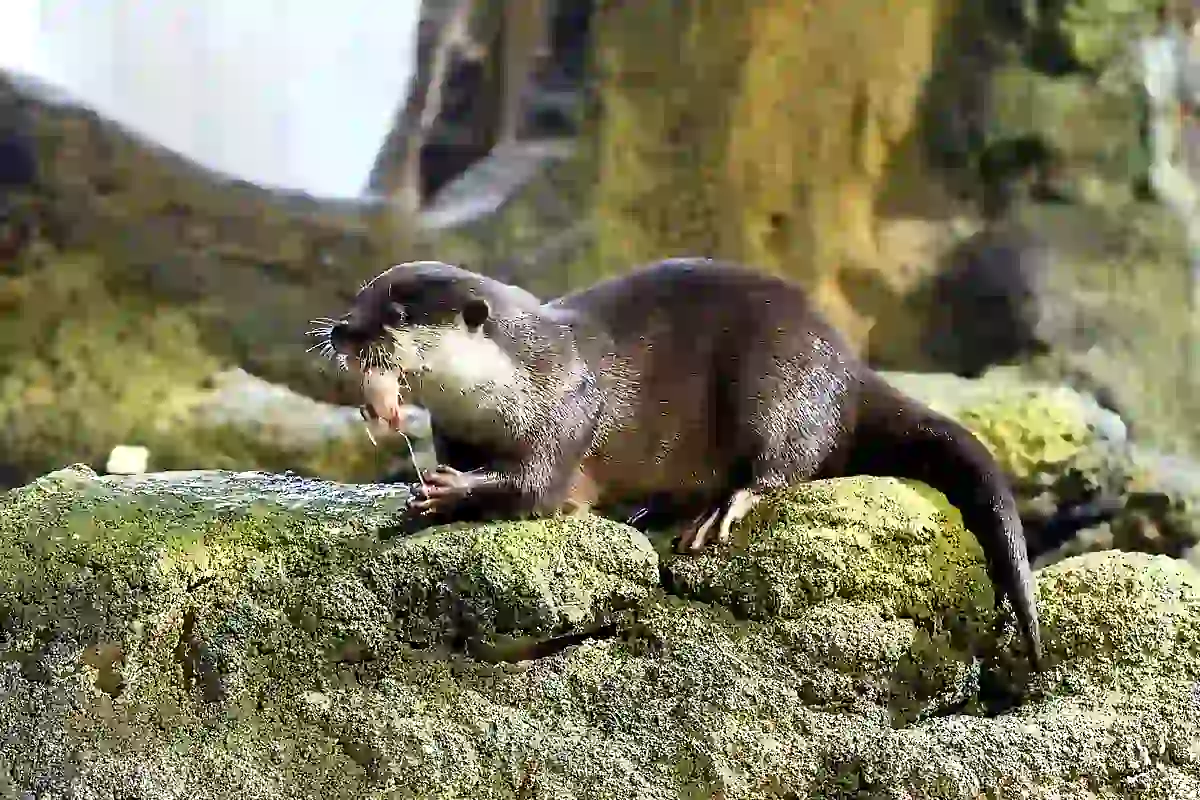
The Asian small-clawed otter is the smallest otter in the world, 65 to 94 cm (26 to 37 in) long and just 2 to 5 kg (4 to 11 lb). It ranges from southern India and southern China through Southeast Asia into Indonesia and the Philippines, and it takes readily to rice paddies and mangroves as well as wild streams.[15]
Its claws do not reach past the pads of its fingers, and the webbing between the toes is incomplete. The fur is dark brown above and paler below, often with grey or cream markings on the face and throat. It lives in extended family groups built around one breeding pair, sometimes 15 to 20 animals across several generations.
It hunts with its hands rather than its mouth. Sensitive pads on the fingers let it feel under rocks and into murky sediment for crabs and shellfish, which is why the claws got smaller and the fingers got better. Almost no other carnivore feeds this way.
Johann Karl Wilhelm Illiger, the German naturalist who became the first director of Berlin’s Zoological Museum, described it in 1815.
Congo Clawless Otter
| Kingdom | Order | Family | Genus | Species |
|---|---|---|---|---|
| Animalia | Carnivora | Mustelidae | Aonyx | Aonyx congicus |
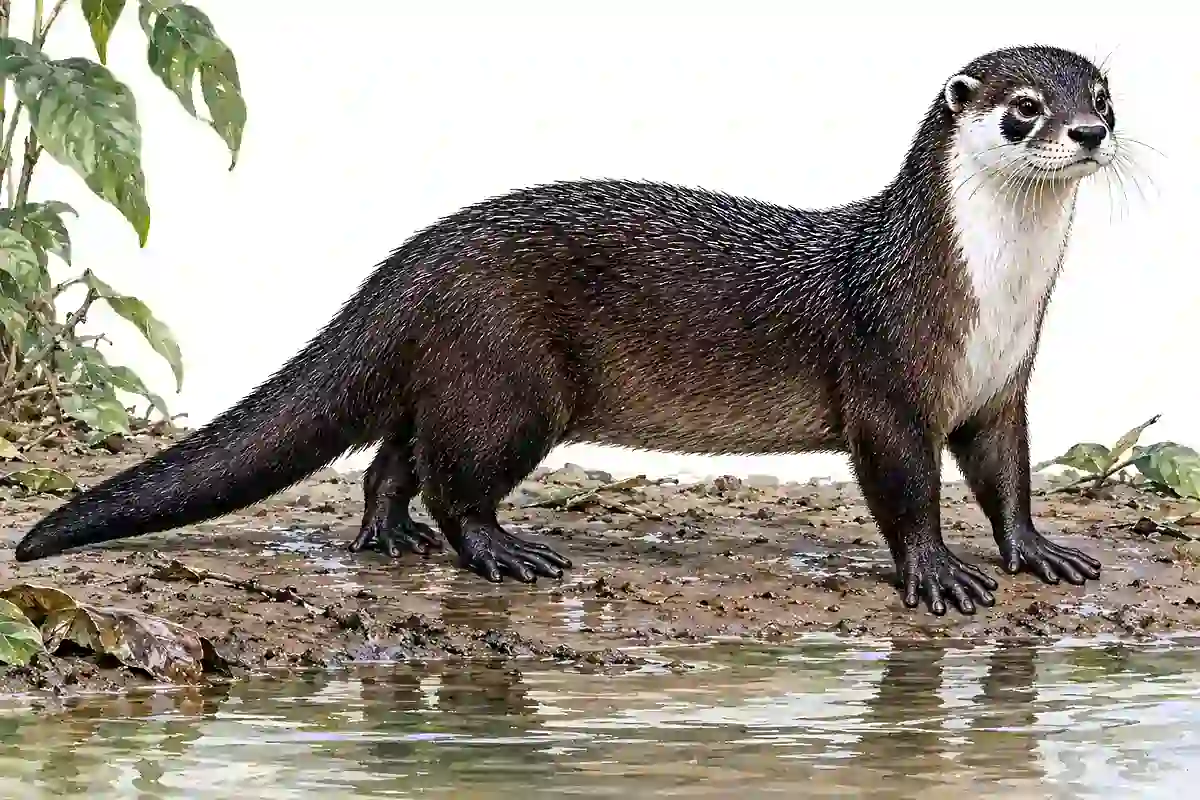
The Congo clawless otter lives in the rainforests and swamps of the Congo basin, and almost nobody has seen one. It is recorded from Gabon, both Congos, Equatorial Guinea, southern Cameroon, the Central African Republic, northern Angola, Rwanda and Uganda, up to 2,200 m (7,200 ft) on the Kahuzi Massif.[13]
It measures 110 to 150 cm (43 to 59 in) and weighs 12 to 17 kg (26 to 37 lb), so it is slightly smaller than the African clawless otter and noticeably finer in the head and neck. Its front paws are bare and clawless like its relative’s. What separates the two is the face: a four-sided black patch between the eye and the nose, ringed cleanly in white, plus white ear margins and a silver-frosted head.
It hunts worms with its eyes turned away. At Mbeli Bai in the Republic of Congo, almost all observed feeding was on earthworms, located by pushing both forepaws deep into soft mud and feeling through it with the toes while the gaze is averted. Parents pass worms to their cubs mouth to mouth.
Einar Lonnberg, a Swedish zoologist, described it in 1910. Some researchers have treated it as a subspecies of the African clawless otter rather than a species of its own.
New World Otters (Lontra)
The 5 Lontra otters are the river otters of the Americas, from Alaska to Tierra del Fuego. All are clawed and webbed, built to chase fish.
This is where the species count changed. One of these 5 was recognized only in 2024.
North American River Otter
| Kingdom | Order | Family | Genus | Species |
|---|---|---|---|---|
| Animalia | Carnivora | Mustelidae | Lontra | Lontra canadensis |
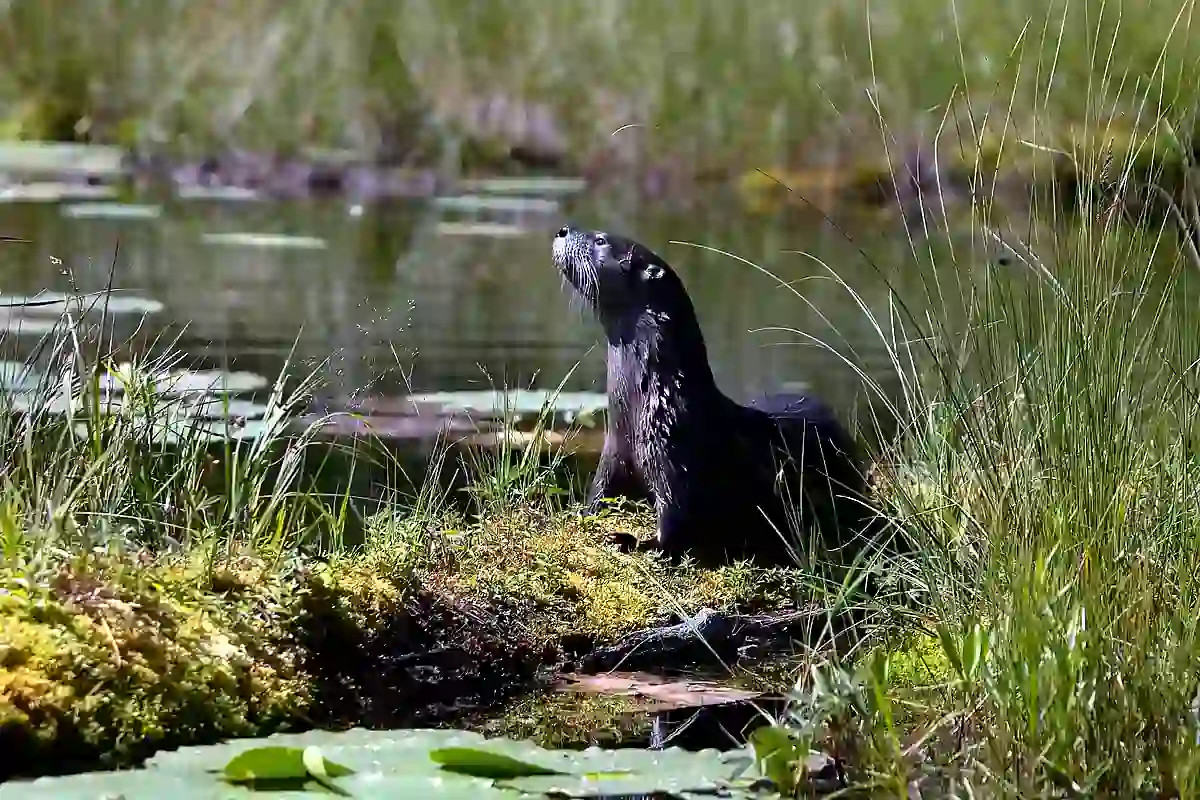
The North American river otter is the most American otters will ever see. It once lived in nearly every major drainage in North America, was trapped and polluted out of much of that range, and has been put back across a large part of it. Home ranges run from 8 to 78 sq km (3 to 30 sq mi) of river and lake.[18]
Adults measure 89 to 120 cm (35 to 47 in) in total length and weigh 4.5 to 15 kg (10 to 33 lb), with females a little smaller than males. The coat is dark brown above and pale brown to silver grey below, the ears are small and round, the muzzle is broad, and the tail tapers to a point over roughly a third of the animal’s length. The hind feet are strongly webbed and every toe has a claw.
It is neither solitary nor social, which makes it hard to categorize. Home ranges overlap heavily rather than being defended as exclusive territories, family groups are a female and her young, and unrelated otters still gather and play together. Social patterns vary from region to region. A single animal may travel 16 to 29 km (10 to 18 mi) in a night’s foraging.
Johann Christian Daniel von Schreber, a German naturalist, described it in 1777.
Northern Neotropical Otter
| Kingdom | Order | Family | Genus | Species |
|---|---|---|---|---|
| Animalia | Carnivora | Mustelidae | Lontra | Lontra annectens |
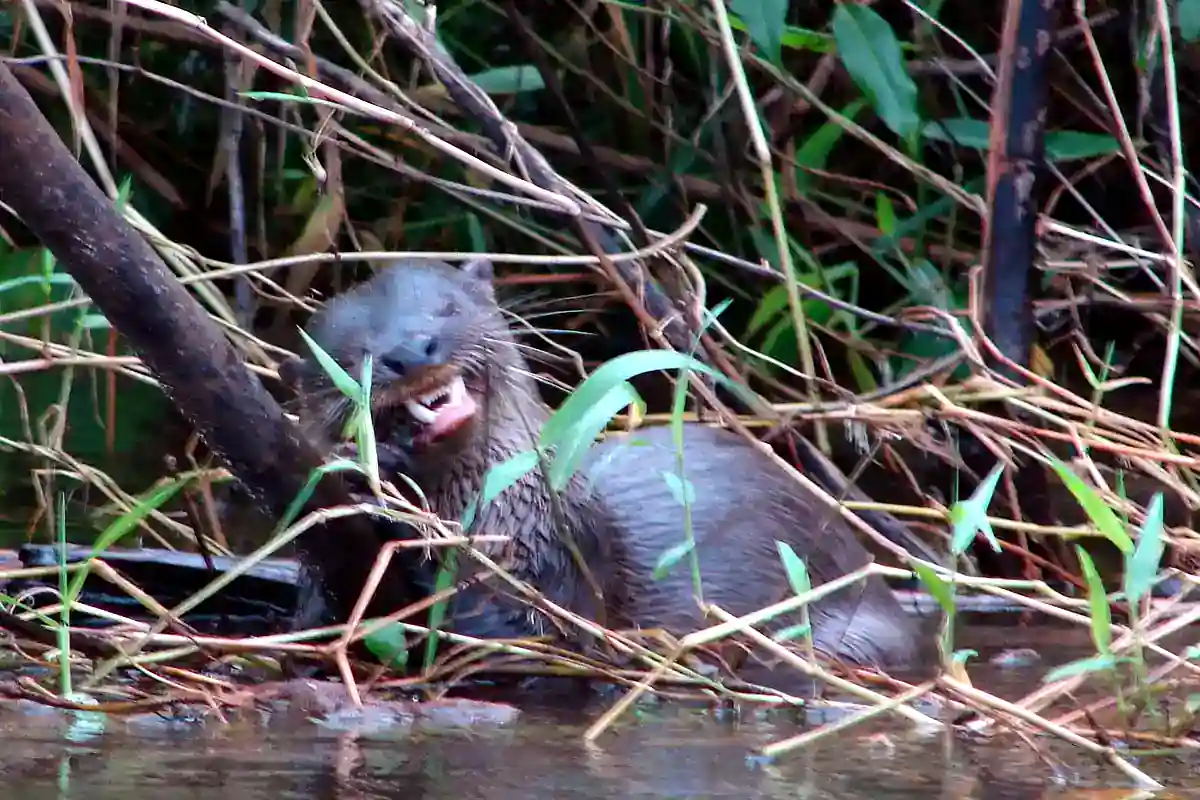
The Northern neotropical otter is the newest otter species, and it was separated on genetic evidence rather than on any single feature you could point to in the field. It lives from Mexico through Belize, Guatemala, Honduras, El Salvador, Nicaragua, Costa Rica and Panama into Colombia and Venezuela, north and west of the Andes. Records from Ecuador and Peru are listed as uncertain.[2]
It measures 90 to 150 cm (35 to 59 in) and weighs 8 to 15 kg (18 to 33 lb). The two Neotropical otters are not reliably told apart in the field by any simple external character, though earlier work did find measurable differences in skull and body measurements. Geography is the practical test: west and north of the Andes is annectens, the rest of South America is longicaudis. The exact southern boundary is still unsettled.
For more than a century this animal was treated as a subspecies or a synonym, until a 2024 study sequenced genome-wide markers from 29 otters and found the old Neotropical otter was not a natural group at all. Some of its populations turned out to be closer to the marine otter and the southern river otter than to each other.
Charles Immanuel Forsyth Major, a Swiss-born naturalist who worked in Britain, first applied the name in 1897. It was raised to full species rank in 2024.
Neotropical Otter
| Kingdom | Order | Family | Genus | Species |
|---|---|---|---|---|
| Animalia | Carnivora | Mustelidae | Lontra | Lontra longicaudis |
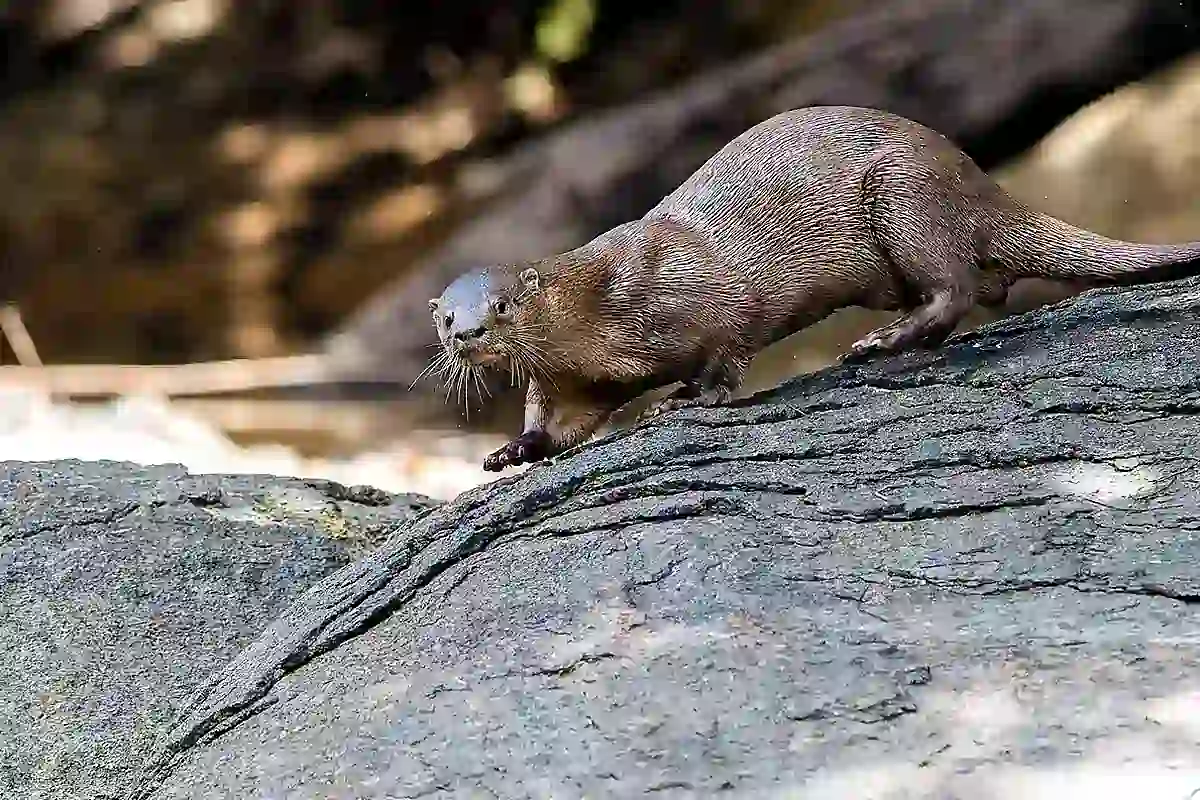
Since the 2024 split, the Neotropical otter is a South American animal. It ranges east and south of the Andes, from Colombia and the Guianas through the Amazon and Parana basins to northern Argentina, in both fresh water and along the coast.[22]
Adults measure 90 to 136 cm (35 to 54 in) and weigh 10 to 14 kg (22 to 31 lb). The coat is short, dense and brown, the ears and nostrils are small and the nostrils close underwater, and the muscular tail works as a rudder. The legs are short and the feet webbed and clawed.
It is usually found alone, rarely even in pairs. Activity varies by population rather than following one pattern: studies have recorded it active by day, at dawn and dusk, and at night, depending on the river and the region.
Ignaz von Olfers, a German naturalist and diplomat, described it in 1818.
Marine Otter
| Kingdom | Order | Family | Genus | Species |
|---|---|---|---|---|
| Animalia | Carnivora | Mustelidae | Lontra | Lontra felina |
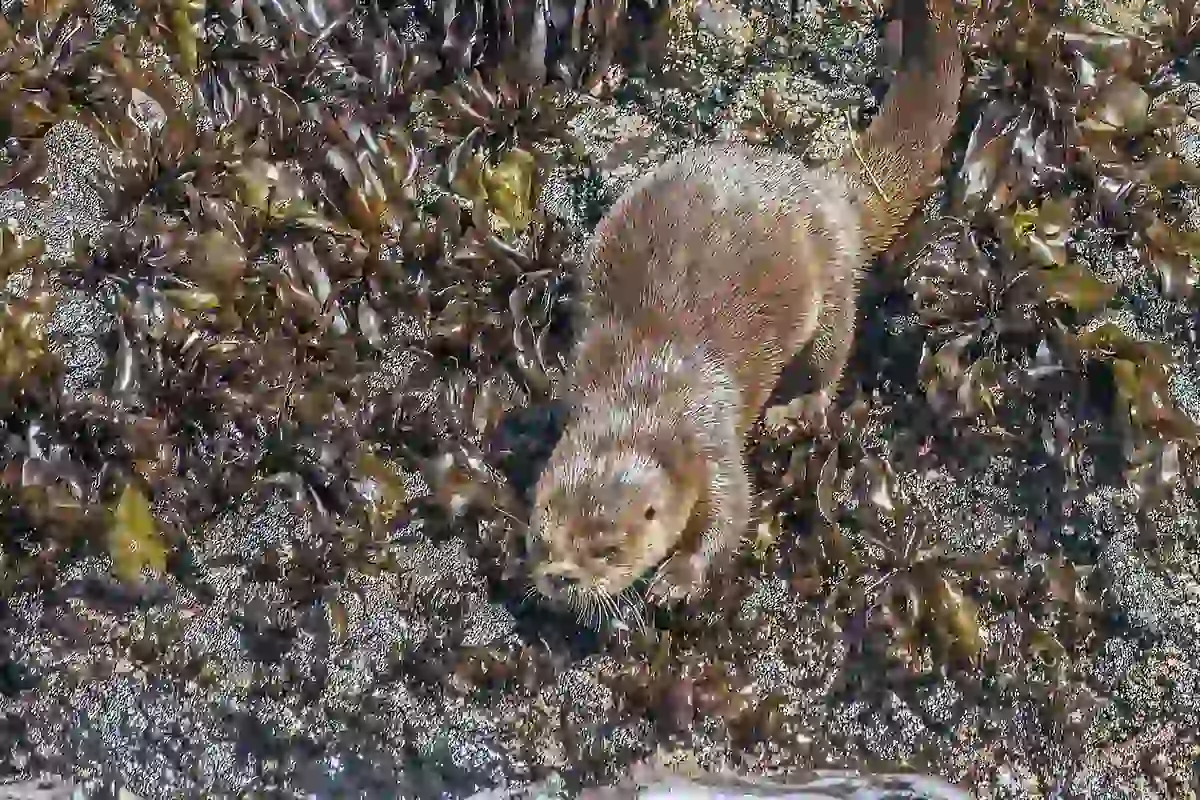
The marine otter lives on the Pacific coast of Peru and Chile, on exposed rocky shores where it shelters in sea caves. Its habitat is described as extremely fragmented, which is part of why it is Endangered.[20]
It is the smallest otter in the Americas, 87 to 115 cm (34 to 45 in) and only 3 to 6 kg (7 to 13 lb). The coat is dark and the whiskers are long. Unlike the sea otter it shares an ocean with, it is a clawed, webbed marine specialist in the genus Lontra, and it comes ashore to den.
Several otters forage along sea coasts, but only this one and the sea otter specialize in exposed ocean shores, and it does it at about a tenth the weight of a male sea otter. It hunts crustaceans, octopus and molluscs by day. In Spanish it is the chungungo, and in Chile it is sometimes called the sea cat.
Juan Ignacio Molina, a Chilean Jesuit priest and naturalist, described it in 1782.
Southern River Otter
| Kingdom | Order | Family | Genus | Species |
|---|---|---|---|---|
| Animalia | Carnivora | Mustelidae | Lontra | Lontra provocax |
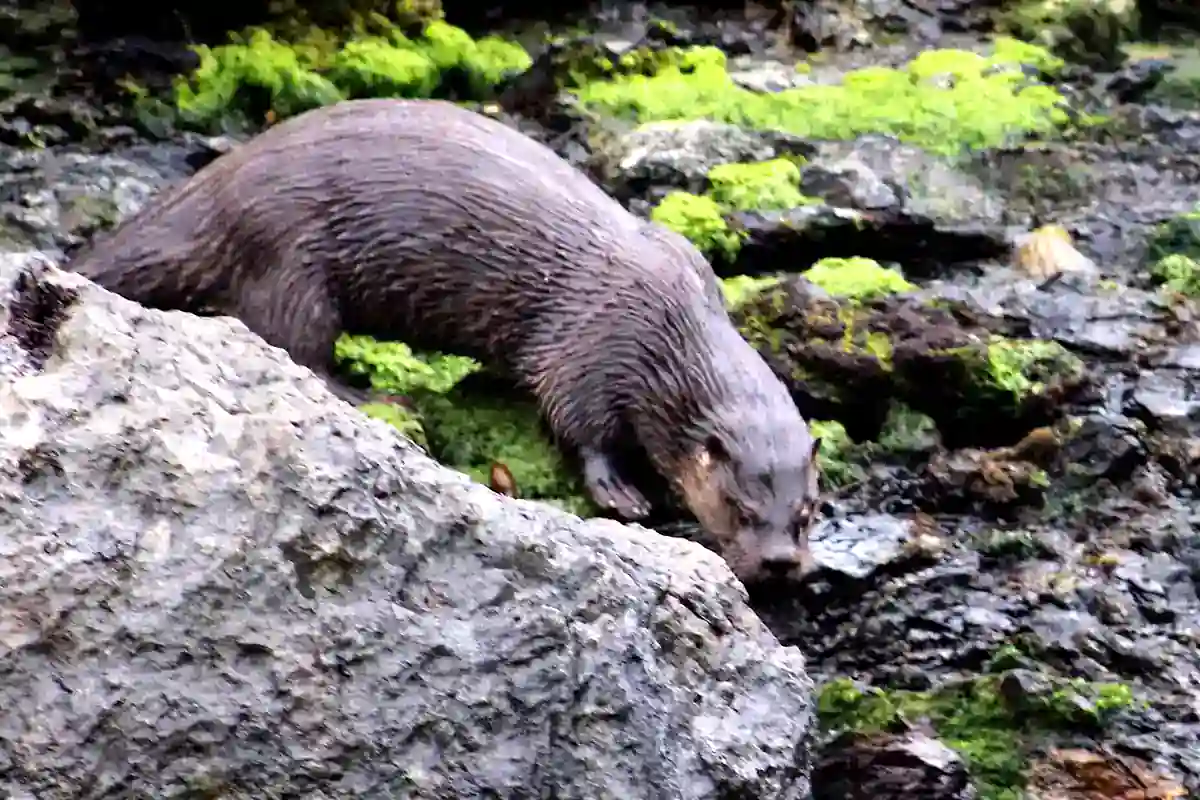
The southern river otter lives in Chile and Argentina, and it leads two lives. One set of populations occupies Patagonian lakes and rivers with heavy bankside cover. Another lives on rocky marine coasts. Its range in Argentina has been severely reduced.[21]
It measures 100 to 116 cm (39 to 46 in) and weighs 5 to 10 kg (11 to 22 lb). It is a clawed, webbed otter like the rest of its genus, and there is no reliable way to tell it from the Neotropical otter by looks alone. Geography does the work: this is the otter of the far south.
Locally it is the huillin, and one of its old names translates as little Patagonian wolf. It is never found far from fresh water even when it lives in the sea, and it avoids fishing villages and stretches of shore with no cover to hide in.
Oldfield Thomas, a British zoologist at the Natural History Museum in London, described it in 1908.
Old World Otters (Lutra)
The 2 Lutra otters cover an enormous range between them, from Ireland to Japan. One is the most widespread otter alive and the other is one of the rarest in Asia.
Eurasian Otter
| Kingdom | Order | Family | Genus | Species |
|---|---|---|---|---|
| Animalia | Carnivora | Mustelidae | Lutra | Lutra lutra |
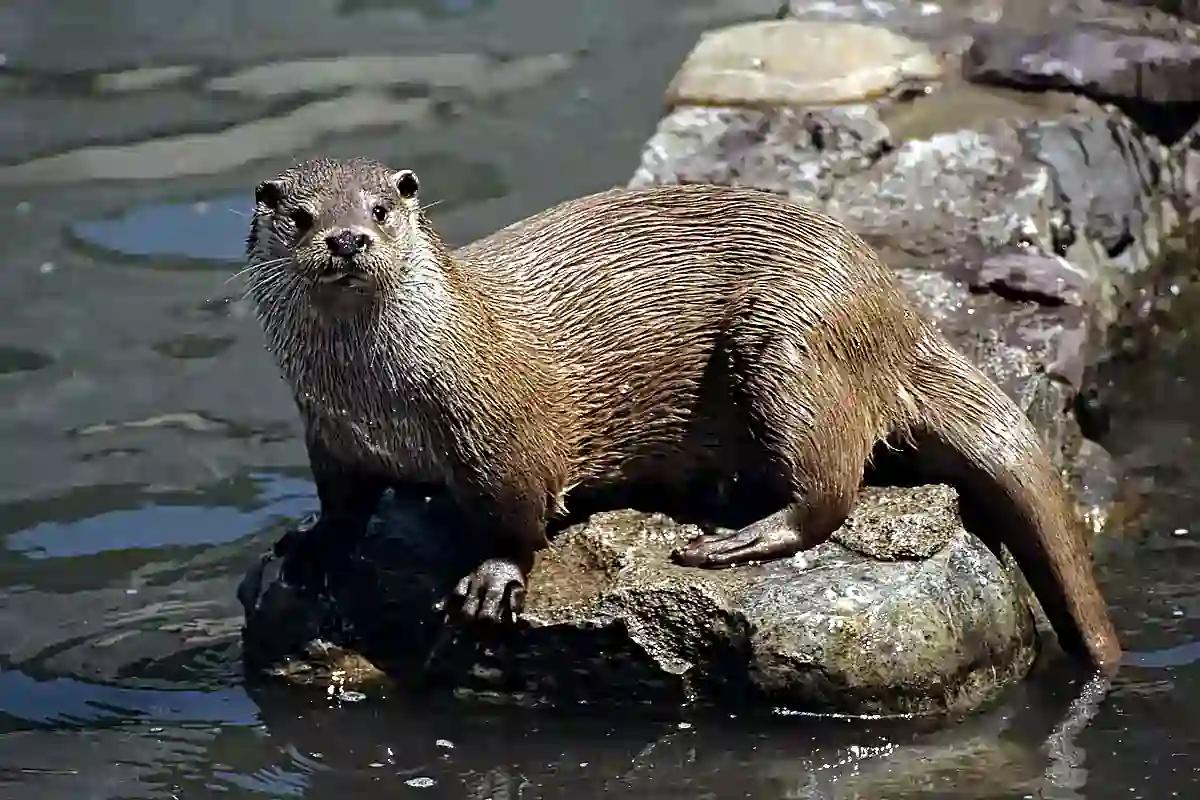
The Eurasian otter covers more ground than any other otter, from Ireland and Portugal across Europe and Asia and into North Africa. In Britain it disappeared from central and southern England and has since returned to most of the country. In Scotland a large share of the population lives on the coast.[24]
Adults measure 102 to 138 cm (40 to 54 in) and weigh 4 to 11 kg (9 to 24 lb), males larger than females. The fur is thick and grey-brown with a pale chest, belly and throat. The eyes sit high on the head for watching the surface, the nose is broad, the ears are small, and the feet are webbed and clawed.
On the Scottish coast it is effectively a sea otter that never became one. In all but one surveyed area, fish made up more than 90 percent of the diet. But its fur insulates by trapping air, and salt water ruins that, so a coastal otter still has to come ashore to a stream or pool to rinse its coat.
Carl Linnaeus, the Swedish naturalist behind modern scientific naming, described it in 1758.
Hairy-Nosed Otter
| Kingdom | Order | Family | Genus | Species |
|---|---|---|---|---|
| Animalia | Carnivora | Mustelidae | Lutra | Lutra sumatrana |
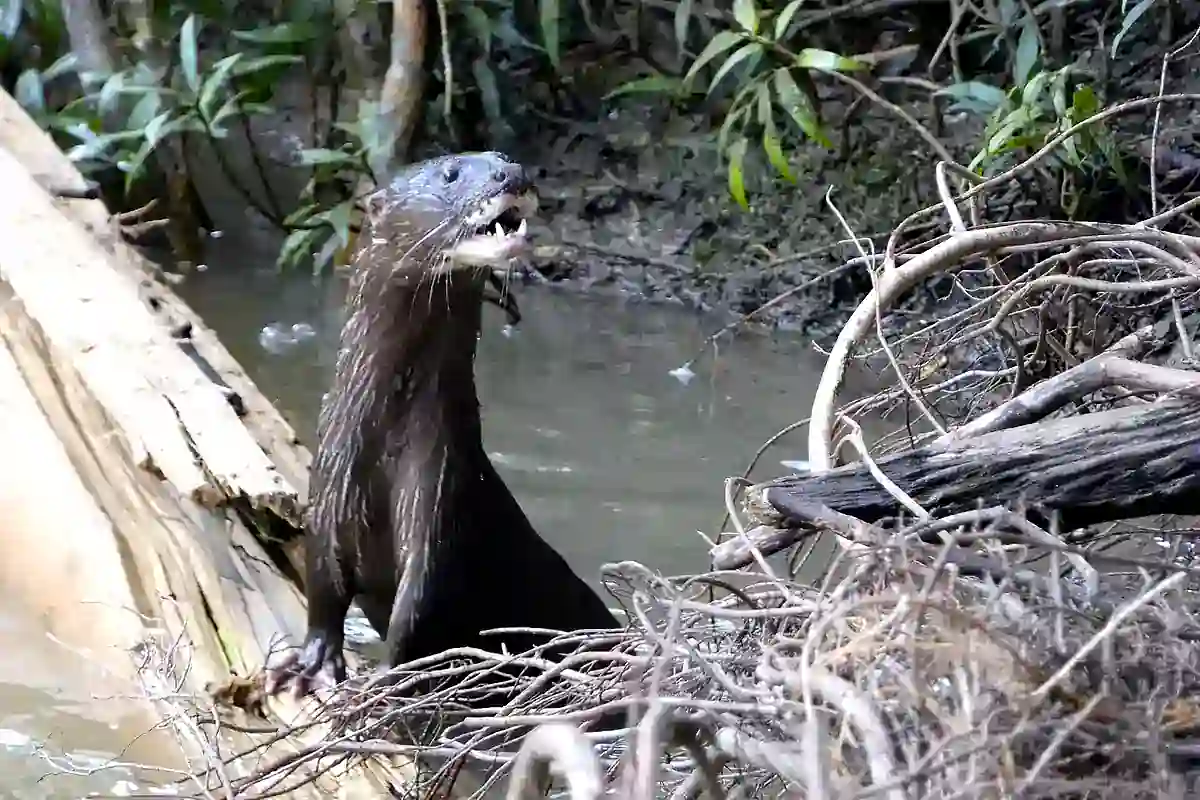
The hairy-nosed otter is one of the rarest otters in the world and was widely believed extinct in the late 1990s. It was then found again, mostly by camera trap, at a handful of sites: peat swamps in southern Thailand, U Minh Thuong in Vietnam, Tonle Sap and the Cardamom Mountains in Cambodia, and single records from Sumatra.[26]
It measures 105 to 113 cm (41 to 44 in) and weighs 5 to 8 kg (11 to 18 lb). The body is long and snaky, the fur dark chocolate brown, and the upper lip, chin and front of the throat are sharply white. The paws are fully webbed with strong claws.
Its nose gives it away. Every other otter has a bare, leathery nose pad. On this one the whole nose is covered in short dark fur, leaving only the top rim of the nostrils bare. It is the only otter in the world built that way.
John Edward Gray, an English zoologist who ran the British Museum’s zoology department, described it in 1865.
The Sea Otter (Enhydra)
The sea otter sits alone in its genus, and for good reason. It is the only otter that lives entirely at sea, the heaviest of them all, and the only one known to use tools routinely, which for some animals is a matter of survival.
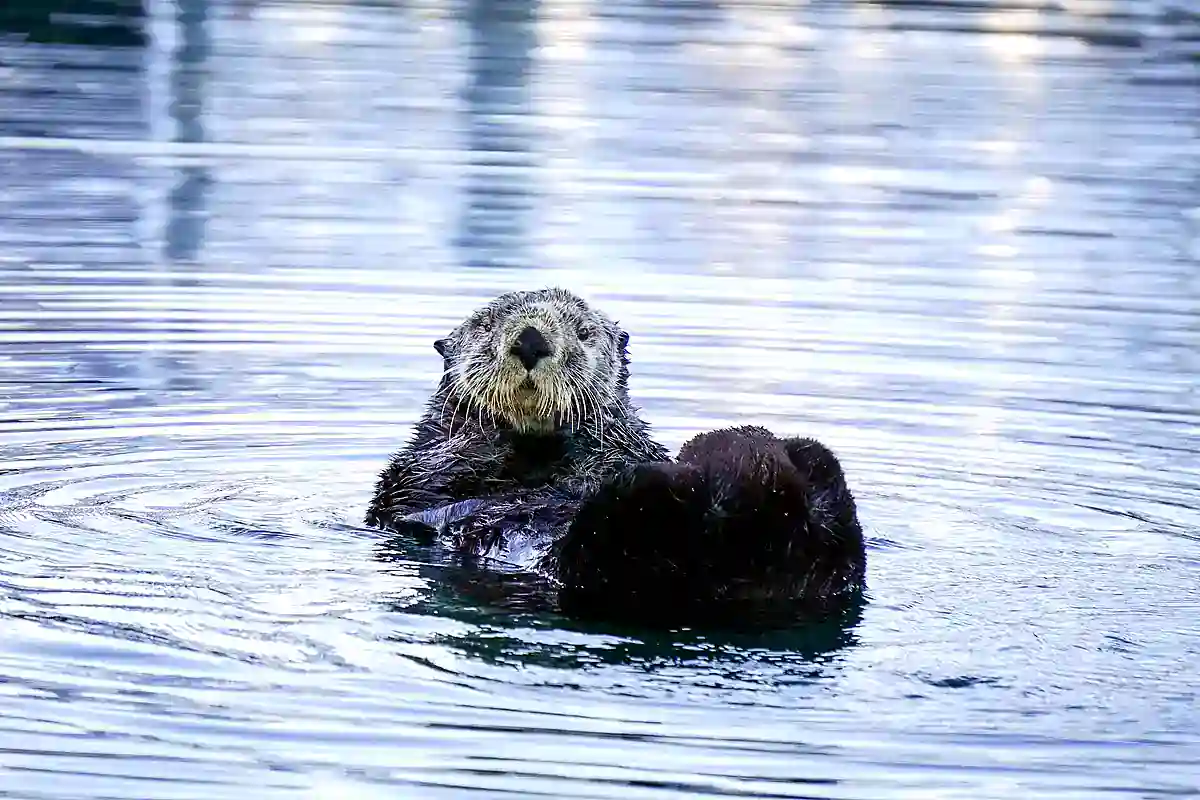
Sea Otter
| Kingdom | Order | Family | Genus | Species |
|---|---|---|---|---|
| Animalia | Carnivora | Mustelidae | Enhydra | Enhydra lutris |
The sea otter is the only otter that lives entirely in the ocean, and it can spend its whole life without coming ashore. It survives along the North Pacific rim in Russia, Alaska, British Columbia, Washington and California.[27]
It is the heaviest otter by a wide margin, 23 to 36 kg (51 to 79 lb), with males reaching 41 kg (90 lb). The hind feet are broad, webbed and flipper-like, quite unlike a river otter’s paws, the forefeet are short and stiff, and the teeth are blunt and molar-heavy for crushing shells. Older animals go silver about the head, which earned the nickname old man of the sea.
It has the densest fur of any animal, up to around a million hairs per square inch, and no blubber at all. Insulation comes from air trapped in that fur, which is why grooming is not vanity and why oil spills kill sea otters that a seal would survive. Holding a body temperature near 100 degrees F in cold water costs so much that it has to eat about a quarter of its own weight every day.
Carl Linnaeus described it in 1758. The genus name Enhydra comes from Greek elements meaning in water, and lutris comes from the Latin for otter.
The Other Three Otters
The last 3 otters each sit alone in their own genus: the spotted-necked otter of African lakes, the smooth-coated otter of southern Asia, and the giant otter of the Amazon.
Spotted-Necked Otter
| Kingdom | Order | Family | Genus | Species |
|---|---|---|---|---|
| Animalia | Carnivora | Mustelidae | Hydrictis | Hydrictis maculicollis |
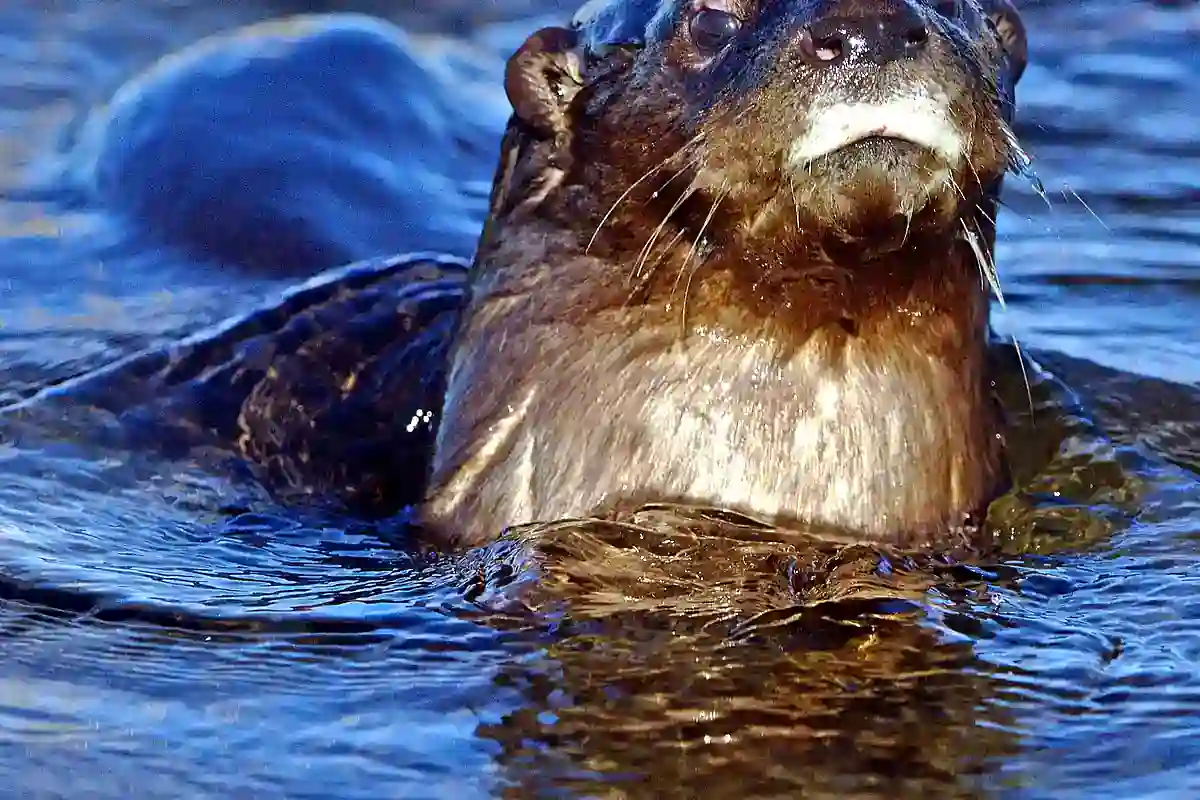
The spotted-necked otter needs big, clear, permanent water. It lives on large rivers, lakes and swamps across Africa south of about 10 degrees north, and it depends on shoreline cover, either dense vegetation or large boulders, and on plenty of fish.[9]
It measures 95 to 115 cm (37 to 45 in) and weighs 4 to 7 kg (9 to 15 lb), so it is far smaller than the African clawless otter it often shares a river with. The coat is chocolate to reddish brown, and the throat and upper chest carry blotchy white or cream markings that give the species its name.
It is built exactly opposite to the clawless otters beside it. Every toe is fully webbed and every digit carries a sharp claw about 10 mm long. One catches fish by chasing them down, the others feel for crabs in the mud, and that is how two otters share one river.
Martin Lichtenstein, a German zoologist who ran the Berlin Zoological Museum, described it in 1835.
Smooth-Coated Otter
| Kingdom | Order | Family | Genus | Species |
|---|---|---|---|---|
| Animalia | Carnivora | Mustelidae | Lutrogale | Lutrogale perspicillata |
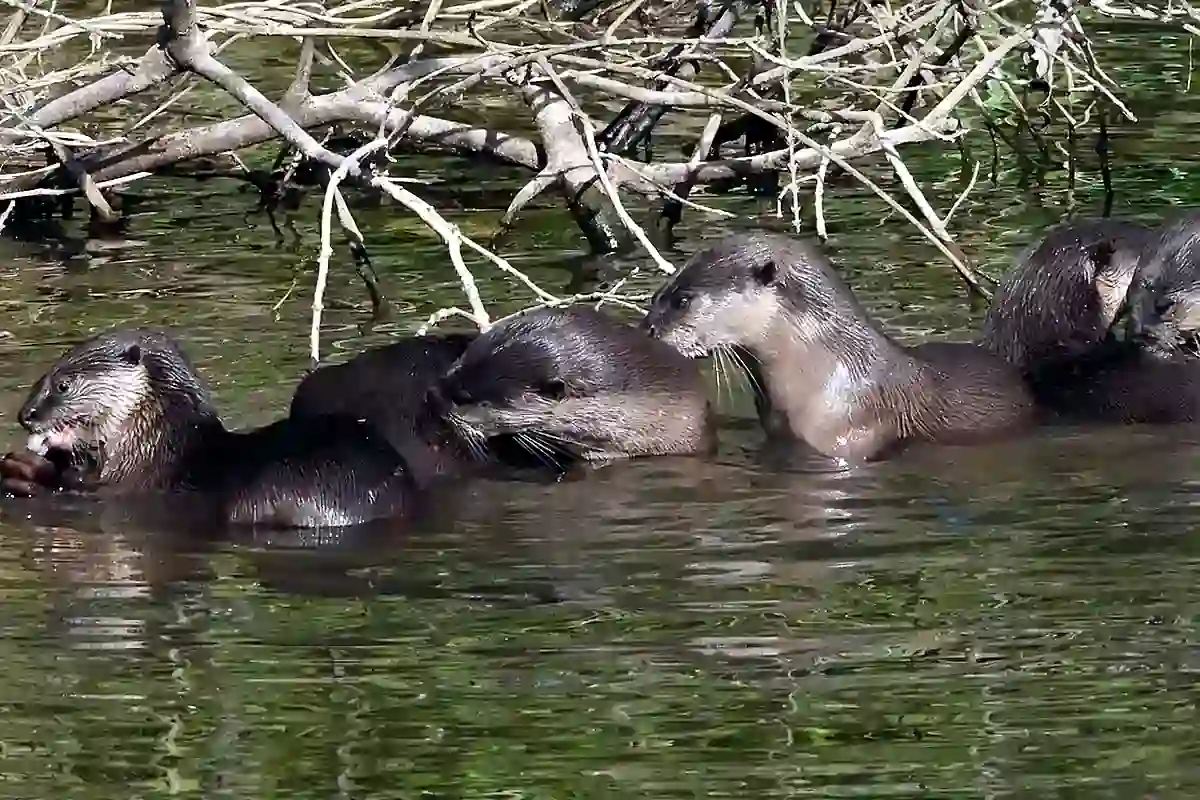
The smooth-coated otter is the largest otter in Southeast Asia and essentially a lowland animal. It ranges from Pakistan and India through Nepal, Bangladesh, Myanmar, Thailand, Laos, Cambodia, Vietnam and southern China down to Malaysia and Indonesia, and it has taken to city waterways in Singapore.[17]
It measures 106 to 130 cm (42 to 51 in) and weighs 7 to 10 kg (15 to 22 lb). The fur is short, sleek and velvety, brown above and buff below, with a creamy throat and neck. The tail is noticeably flattened, the toes fully webbed and the claws prominent. It lives in family groups, usually around four or five animals.
One population lives thousands of kilometers from all the others, in the marshes of southern Iraq. That is the otter of Gavin Maxwell’s Ring of Bright Water, and it is treated as its own subspecies, Lutrogale perspicillata maxwelli.
Isidore Geoffroy Saint-Hilaire, a French zoologist, described it in 1826.
Giant Otter
| Kingdom | Order | Family | Genus | Species |
|---|---|---|---|---|
| Animalia | Carnivora | Mustelidae | Pteronura | Pteronura brasiliensis |
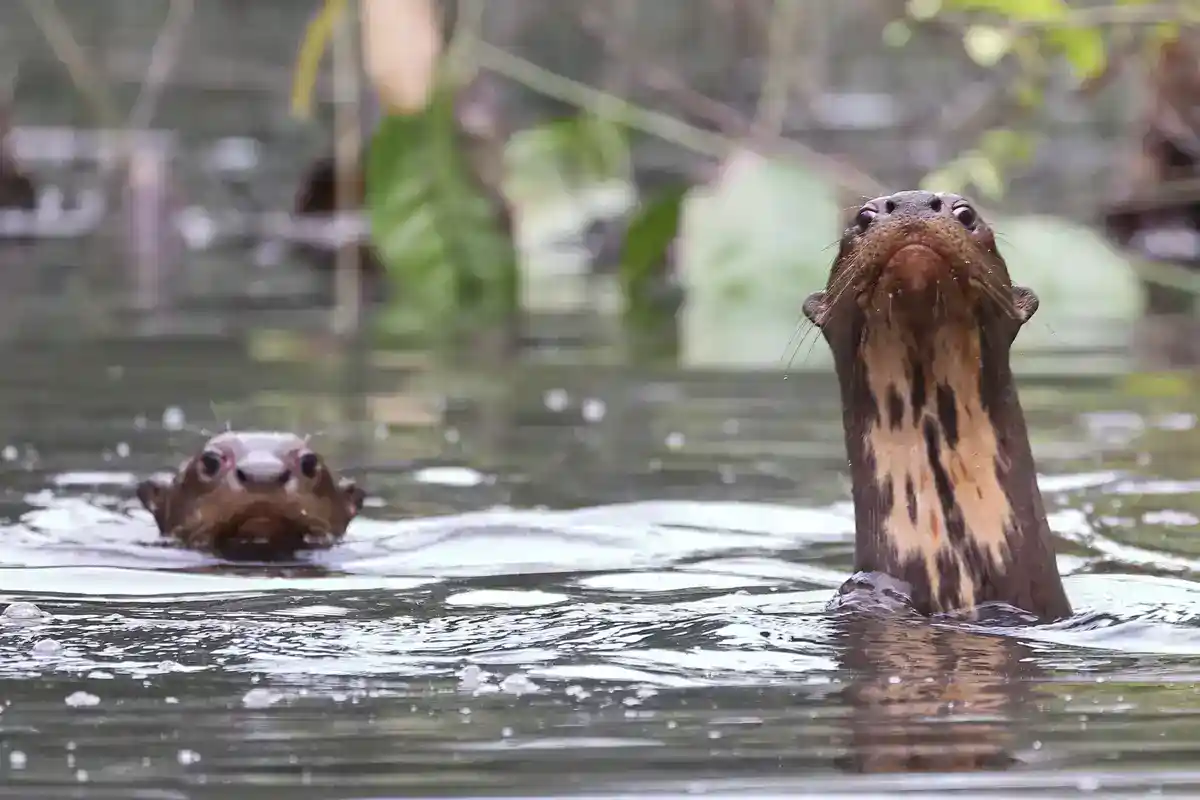
The giant otter is the longest otter in the world, 150 to 180 cm (59 to 71 in) from nose to tail tip, weighing 22 to 32 kg (49 to 71 lb). It lives in the Amazon, Orinoco and La Plata systems, in slow rivers, flooded forest and the oxbow lakes Amazonians call cochas.[45]
The fur is dark brown and, oddly for the biggest otter, the shortest of any. A white or cream patch runs from the jawline down the chest. The tail is broad and wing-like, the feet fully webbed, and the teeth are large and sharp. Groups are a breeding pair and several generations of their young, sometimes up to 20 animals.
Every giant otter’s throat patch is unique, and researchers use it the way police use fingerprints to tell wild individuals apart. The animals seem to use it too, holding their heads up out of the water at each other in a behavior called periscoping.
Eberhard August Wilhelm von Zimmermann, a German zoologist and geographer, described it in 1780.
Otters in the US
Two otters live in the United States. One is doing well almost everywhere. The other is one of the best known conservation stories in the country and still is not finished.
The River Otter Came Back
The North American river otter once lived in nearly every major drainage on the continent. Trapping, water pollution and habitat loss removed it from large parts of that range by the middle of the twentieth century.
From the 1970s onward, state wildlife agencies ran reintroduction programs across the country, and the species is now listed as Least Concern and considered stable. Otters sit near the top of freshwater food chains, which is exactly where biological magnification concentrates waterborne contaminants.
The Sea Otter Is Still Recovering
Before the maritime fur trade there were somewhere between 150,000 and 300,000 sea otters around the North Pacific rim, from northern Japan to Baja California. About 150 years of hunting nearly ended that. When the International Fur Seal Treaty gave them protection in 1911, probably fewer than 2,000 animals survived, scattered across 13 remnant colonies.
Two of those remnants, in the Queen Charlotte Islands and at San Benito Island, died out anyway. Every sea otter alive today descends from the rest, which is why the species carries low genetic diversity.
The southern sea otter of California is listed as Threatened under the US Endangered Species Act, a listing the Fish and Wildlife Service reaffirmed in 2023 after a petition to remove it. The 2003 recovery plan had set a preliminary threshold for considering delisting, more than 3,090 animals averaged over three consecutive years. That number was reached in 2018. In 2023 the Fish and Wildlife Service concluded the old criteria were not an appropriate measure of recovery, and the population still occupies only about 13 percent of the historical range.
The sea otter is Endangered on the global IUCN Red List and Threatened under US law. These are different systems measuring different things. The IUCN assesses the whole species worldwide. The Endangered Species Act listing covers the southern sea otter population in California. Neither is wrong.
Bringing Sea Otters Back to Oregon
The largest gap left in the sea otter’s range runs from San Francisco Bay north through Oregon. Congress directed the Fish and Wildlife Service to study filling it in 2020, and the resulting 2022 assessment found reintroduction biologically and legally feasible, at a cost of 26 to 43 million dollars over 13 years. The factor with the greatest uncertainty was not biology but whether coastal communities would accept it.
There is no formal proposal yet. The momentum is tribally led: the Confederated Tribes of Siletz Indians have federal funding to develop a regional plan, and the Elakha Alliance projects that planning could finish around 2028 with any translocation starting no earlier than 2030. A 1970s attempt to put otters back in Oregon failed, which is part of why this one is being done slowly.
Sea Otters and Kelp
In 1974 James Estes and John Palmisano compared Aleutian islands that had sea otters with islands that did not. Where otters were present there were kelp forests. Where they had been hunted out, sea urchins had eaten the kelp down to bare rock, leaving what ecologists now call urchin barrens. Sea otters became the textbook example of a keystone species, and their dense fur, tool use and surface feeding are among the clearest ocean animal adaptations in any mammal.
The effect is still measurable. A 2024 study of California kelp found that statewide coverage looks almost unchanged since 1910, but the average hides the real pattern: kelp is down 63 percent in northern California and 52 percent in the south, and up nearly 58 percent in central California. Central California is where the southern sea otters live.
There is a newer result that is stranger and better. At Elkhorn Slough, where sea otters fully recovered, the erosion of tidal creek banks slowed by an average of 69 percent. The mechanism runs through crabs. Marsh crabs burrow into the banks and eat the roots that hold the sediment together, and otters eat the crabs. Fewer crabs means denser root mats, and denser root mats means banks that hold against rising seas.
A 2024 study tracking 196 radio-tagged southern sea otters found that animals that use rocks as anvils get access to larger and harder-shelled prey and suffer less tooth damage doing it. Females benefit most. The authors describe tool use as a necessity for the survival of some otters where preferred prey have been depleted, not a charming quirk.
Work like this is marine biology in its most literal form. Estes and Palmisano counted animals on two sets of islands, and the state of the whole seafloor turned on the answer. The Aleutian study is still taught as a standard case in marine ecology, so if tracing a chain from otter to urchin to kelp sounds like the kind of problem worth a career, we keep a roundup of the best marine biology colleges.
Otter Size Comparison
The table is ordered by weight, lightest first. Lengths are total, from the nose to the tip of the tail, as published by the IUCN SSC Otter Specialist Group.
| Otter | Total length | Weight | Claws |
|---|---|---|---|
| Asian Small-Clawed Otter | 65 to 94 cm (26 to 37 in) | 2 to 5 kg (4.4 to 11 lb) | Small, not past the finger pads |
| Marine Otter | 87 to 115 cm (34 to 45 in) | 3 to 6 kg (6.6 to 13.2 lb) | Yes |
| Spotted-Necked Otter | 95 to 115 cm (37 to 45 in) | 4 to 7 kg (8.8 to 15.4 lb) | Yes |
| Hairy-Nosed Otter | 105 to 113 cm (41 to 44 in) | 5 to 8 kg (11 to 17.6 lb) | Yes |
| Southern River Otter | 100 to 116 cm (39 to 46 in) | 5 to 10 kg (11 to 22 lb) | Yes |
| Eurasian Otter | 102 to 138 cm (40 to 54 in) | 4 to 11 kg (8.8 to 24.3 lb) | Yes |
| Smooth-Coated Otter | 106 to 130 cm (42 to 51 in) | 7 to 10 kg (15.4 to 22 lb) | Yes |
| North American River Otter | 89 to 120 cm (35 to 47 in) | 4.5 to 15 kg (9.9 to 33.1 lb) | Yes |
| Northern Neotropical Otter | 90 to 150 cm (35 to 59 in) | 8 to 15 kg (17.6 to 33.1 lb) | Yes |
| Neotropical Otter | 90 to 136 cm (35 to 54 in) | 10 to 14 kg (22 to 30.9 lb) | Yes |
| Congo Clawless Otter | 110 to 150 cm (43 to 59 in) | 12 to 17 kg (26.5 to 37.5 lb) | None on the front feet |
| African Clawless Otter | 115 to 160 cm (45 to 63 in) | 12 to 19 kg (26.5 to 41.9 lb) | None on the front feet |
| Giant Otter | 150 to 180 cm (59 to 71 in) | 22 to 32 kg (48.5 to 70.5 lb) | Yes |
| Sea Otter | 67 to 163 cm (26 to 64 in) | 23 to 36 kg (50.7 to 79.4 lb) | Yes |
The smallest otter is the Asian small-clawed otter at 65 to 94 cm (26 to 37 in) and 2 to 5 kg (4 to 11 lb). The longest is the giant otter at up to 180 cm (71 in). The heaviest is the sea otter at 23 to 36 kg (51 to 79 lb), with big males reaching 41 kg (90 lb). Longest and heaviest are not the same animal.
What Do Otters Eat?
All otters are carnivores, and the feet predict the menu. For a species-by-species look at what otters eat, see our companion guide. Many clawed, webbed otters take mostly fish. On the Scottish coast, fish made up more than 90 percent of the Eurasian otter’s diet in all but one surveyed area. The giant otter adds crabs, snakes and even young caimans and anacondas, and can eat about 4 kg (9 lb) a day in the flooded forests of the rainforests of the world.
The clawless otters eat what fingers can find. Crabs dominate the African clawless otter’s freshwater diet. The Asian small-clawed otter takes crustaceans and molluscs. The Congo clawless otter, at one studied site in the Republic of Congo, ate almost nothing but earthworms.
The sea otter is the specialist among specialists, cracking urchins, clams, crabs and abalone with blunt molars and, when that fails, with a rock.
Where Do Otters Live?
Otters live on every continent except Australia and Antarctica. The sea otter is fully marine, and it and the marine otter are the two species specialized for exposed ocean coasts.
| Otter | Scientific name | Where it lives | Habitat |
|---|---|---|---|
| African Clawless Otter | Aonyx capensis | Sub-Saharan Africa, from Senegal east to Ethiopia and south to South Africa, but absent from the Congo basin | Rivers, wetlands and rocky sea coasts, including farm dams and seasonal streams |
| Asian Small-Clawed Otter | Aonyx cinereus | Southern India and southern China through Southeast Asia to Indonesia and the Philippines | Small streams, marshes, rice paddies, mangroves and sea coasts |
| Congo Clawless Otter | Aonyx congicus | The Congo basin: Gabon, both Congos, Equatorial Guinea, Cameroon, Central African Republic, Angola, Rwanda and Uganda | Rainforest rivers and swamps, including forest clearings, from sea level to 2,200 m |
| Eurasian Otter | Lutra lutra | Europe and Asia to North Africa, the widest range of any otter | Rivers, streams, lakes, canals and sea coasts, always near fresh water |
| Giant Otter | Pteronura brasiliensis | South America, in the Amazon, Orinoco and La Plata river systems | Slow rivers, flooded forest, swamps and Amazonian oxbow lakes |
| Hairy-Nosed Otter | Lutra sumatrana | Southern Thailand, southern Vietnam, Cambodia, Peninsular Malaysia, Sumatra and Borneo | Peat swamp forest and flooded swamp forest with seasonal inundation |
| Marine Otter | Lontra felina | The Pacific coast of South America, in Peru and Chile | Exposed rocky sea coasts with caves for shelter, occasionally fresh water |
| Neotropical Otter | Lontra longicaudis | South America east and south of the Andes, from Colombia and the Guianas to northern Argentina | Rivers, streams and coastal waters, sheltering along the banks |
| North American River Otter | Lontra canadensis | Canada and the United States, in most major drainages, following reintroductions across much of its former range | Rivers, streams, lakes, marshes and coastal estuaries with deep pools and shoreline cover |
| Northern Neotropical Otter | Lontra annectens | Mexico south through Central America to Colombia and Venezuela, north and west of the Andes; records from Ecuador and Peru uncertain | Rivers and streams, from lowlands into foothills |
| Sea Otter | Enhydra lutris | The North Pacific: Russia, Alaska, British Columbia, Washington and California | Shallow coastal sea, especially kelp beds; the only otter that never needs land |
| Smooth-Coated Otter | Lutrogale perspicillata | Pakistan and India east through Southeast Asia to Indonesia, plus an isolated population in Iraq | Large rivers, lakes, peat swamps, mangroves, estuaries and rice fields |
| Southern River Otter | Lontra provocax | Chile and Argentina, in Patagonian lakes, rivers and rocky coasts | Freshwater lakes and rivers with dense bankside vegetation, and rocky marine coasts |
| Spotted-Necked Otter | Hydrictis maculicollis | Africa south of about 10 degrees north, from Liberia and Sudan to the Eastern Cape | Large rivers, lakes and swamps with open water, clear enough to hunt by sight |
Otter Classification Timeline
The table below shows when each otter was first described and by whom. Carl Linnaeus named two of them in the same 1758 volume. Note that this is the year the name was published, which is not always the year the animal was accepted as a full species.
| Otter | Scientific name | Year | Described by | Profession |
|---|---|---|---|---|
| Eurasian Otter | Lutra lutra | 1758 | Carl Linnaeus | Swedish naturalist |
| Sea Otter | Enhydra lutris | 1758 | Carl Linnaeus | Swedish naturalist |
| North American River Otter | Lontra canadensis | 1777 | Johann Christian Daniel von Schreber | German naturalist |
| Giant Otter | Pteronura brasiliensis | 1780 | Eberhard August Wilhelm von Zimmermann | German zoologist |
| Marine Otter | Lontra felina | 1782 | Juan Ignacio Molina | Chilean priest and naturalist |
| Asian Small-Clawed Otter | Aonyx cinereus | 1815 | Johann Karl Wilhelm Illiger | German naturalist |
| Neotropical Otter | Lontra longicaudis | 1818 | Ignaz von Olfers | German naturalist |
| African Clawless Otter | Aonyx capensis | 1821 | Heinrich Rudolf Schinz | Swiss naturalist |
| Smooth-Coated Otter | Lutrogale perspicillata | 1826 | Isidore Geoffroy Saint-Hilaire | French zoologist |
| Spotted-Necked Otter | Hydrictis maculicollis | 1835 | Martin Lichtenstein | German zoologist |
| Hairy-Nosed Otter | Lutra sumatrana | 1865 | John Edward Gray | English zoologist |
| Northern Neotropical Otter | Lontra annectens | 1897 | Charles Immanuel Forsyth Major | Swiss and British naturalist |
| Southern River Otter | Lontra provocax | 1908 | Oldfield Thomas | British zoologist |
| Congo Clawless Otter | Aonyx congicus | 1910 | Einar Lonnberg | Swedish zoologist |
Note: If you are looking for 2024 on this list, it is not there, and that is correct. The name Lontra annectens was published by Charles Forsyth Major in 1897. Under the rules of zoological nomenclature the author and year stay attached to the name even when a subspecies is later raised to full species, so 2024 changed the rank, not the name. By date of description the newest otter is still the Congo clawless otter, named in 1910.
Are Otters Endangered?
Otters are in more trouble than most people realize. Five of the 14 species are Endangered, two more are Vulnerable, and five are Near Threatened. Only one, the North American river otter, is listed as Least Concern, and the newest species has never been assessed at all.
The giant otter is a good illustration of why. Habitat loss and exploitation are thought to have cut the population by more than half in 15 years, only a quarter to a third of the animals breed, and the species occupies less than 5 percent of any given watershed. As the IUCN assessment puts it, its conspicuous behavior and social nature make it easy to wipe out locally.
The hairy-nosed otter was widely believed extinct in the late 1990s and then found again at a handful of Southeast Asian sites, mostly by camera trap. It is rare enough that captive breeding is being considered.
| IUCN status | Species | Otters |
|---|---|---|
| Endangered | 5 | Giant Otter, Hairy-Nosed Otter, Marine Otter, Sea Otter, Southern River Otter |
| Vulnerable | 2 | Asian Small-Clawed Otter, Smooth-Coated Otter |
| Near Threatened | 5 | African Clawless Otter, Congo Clawless Otter, Eurasian Otter, Neotropical Otter, Spotted-Necked Otter |
| Least Concern | 1 | North American River Otter |
| Not Evaluated | 1 | Northern Neotropical Otter |
Otters as Pets
Videos of small otters being fed by hand have driven real demand for them as pets, particularly in Japan and Southeast Asia, and that demand is supplied partly by taking animals from the wild.
In 2019 the parties to CITES responded by moving both the Asian small-clawed otter and the smooth-coated otter to Appendix I, the strictest category, which bans commercial international trade in wild-caught animals. CITES governs trade between countries, not what a person may legally own at home, and those rules vary by country and by state. Both species are also listed as Vulnerable by the IUCN.
Beyond the legality, these are not tame animals. The Asian small-clawed otter lives in family groups of up to 20 built around a bonded breeding pair, it is loud, it is active, and it uses water constantly. Many otters in the pet trade are wild-caught or of uncertain origin, and an otter kept as a pet is an animal living alone in a house.
More Mammal Guides
If you like working through a whole group species by species, three more of our illustrated mammal and bird guides follow the same format. The types of sloths guide covers all 7 species, including the one recognized in 2022. The armadillo species guide runs to 21, from the pink fairy armadillo to the giant. And the stork species guide covers all 20, if you want to see how a different branch of the tree solved the same wetlands problem.
Otter FAQs
There are 14 living species of otters, in 7 genera under the IUCN SSC Otter Specialist Group classification. Many older or not-yet-updated sources still say 13, because the 14th was only recognized in 2024 when genome-wide data split the Neotropical otter into two species.
It depends what you measure. The giant otter of South America is the longest at up to 180 cm (71 in). The sea otter is the heaviest at 23 to 36 kg (51 to 79 lb), with large males reaching 41 kg (90 lb).
The Asian small-clawed otter, at 65 to 94 cm (26 to 37 in) and 2 to 5 kg (4 to 11 lb). It is also the one most often seen in zoos.
Yes, two species. The North American river otter lives across most of the country after decades of reintroductions. The sea otter survives in Alaska, Washington and along the central California coast, and its range also reaches Russia and British Columbia.
It is Endangered on the global IUCN Red List. Under US law the southern sea otter of California is listed as Threatened, a separate assessment covering a single population. Both statements are correct.
A sea otter has broad, webbed, flipper-like hind feet, blunt shell-crushing teeth, and can live its whole life without coming ashore. The other 13 otters always come out of the water to rest and den. Most have webbed feet and sharp teeth for catching fish, though the clawless otters have reduced webbing and use their fingers to feel for crabs and shellfish instead.
Because they eat, groom, rest and raise pups at the surface. They have no blubber, so grooming the fur to keep air trapped in it is constant work, and floating on the back is the working position for it.
Sea otters do, routinely, using rocks to break open shells. A 2024 study of 196 tagged otters found tool users reach larger and harder prey and damage their teeth less, and described the behavior as necessary for the survival of some otters where easy prey has run out.
Two: the African clawless otter and the Congo clawless otter, which have no claws at all on the front feet. The third member of the genus, the Asian small-clawed otter, does have claws, but they are so short they do not reach past the finger pads.
The hairy-nosed otter of Southeast Asia is among the rarest. It was widely believed extinct in the late 1990s, then found again at a handful of sites, mostly by camera trap. It is the only otter with a furred rather than bare nose.
You should not. CITES moved the Asian small-clawed otter and the smooth-coated otter to Appendix I in 2019, which bans commercial international trade in wild-caught animals, though CITES governs trade between countries rather than what you may own where you live, and local rules differ. The welfare case is simpler: otters are loud, highly social and need constant access to water, and many otters in the pet trade are wild-caught or of uncertain origin.
No. Beavers are rodents. Otters are carnivores in the weasel family, so their nearest relatives are weasels, badgers, martens and wolverines.
Remove the otters and a kelp forest does not simply thin out. In the places where this has been watched closely, the urchins take over and the kelp goes.
Cite this page
BioExplorer. (2026, September 25). Types of Otters: All 14 Species Explained. https://www.bioexplorer.net/animals/mammals/otters/
About the author