
Biotechnology Glossary
Explore this biotechnology glossary to find clear definitions for the tools and techniques used to study, modify, and apply biological systems. With 75+ entries covering terms such as CRISPR, Agrobacterium, Gene Therapy, Transgenic Organism, and Pharmacogenomics, each definition is paired with a real-world example and a common misconception, particularly useful in a field where popular coverage frequently conflates distinct concepts.
On This Page:
- Biotechnology A–Z: Explore by Letter
- About Biotechnology: Applying Biology to Solve Real-World Problems
- Recombinant DNA and Gene Editing
- Agricultural and Medical Biotechnology
- Industrial Biotechnology and Synthetic Biology
- Foundations in Genetics and Molecular Biology
- Biotechnology Glossary FAQs
- Explore Other Domain Glossaries
Biotechnology A–Z: Explore by Letter
About Biotechnology: Applying Biology to Solve Real-World Problems
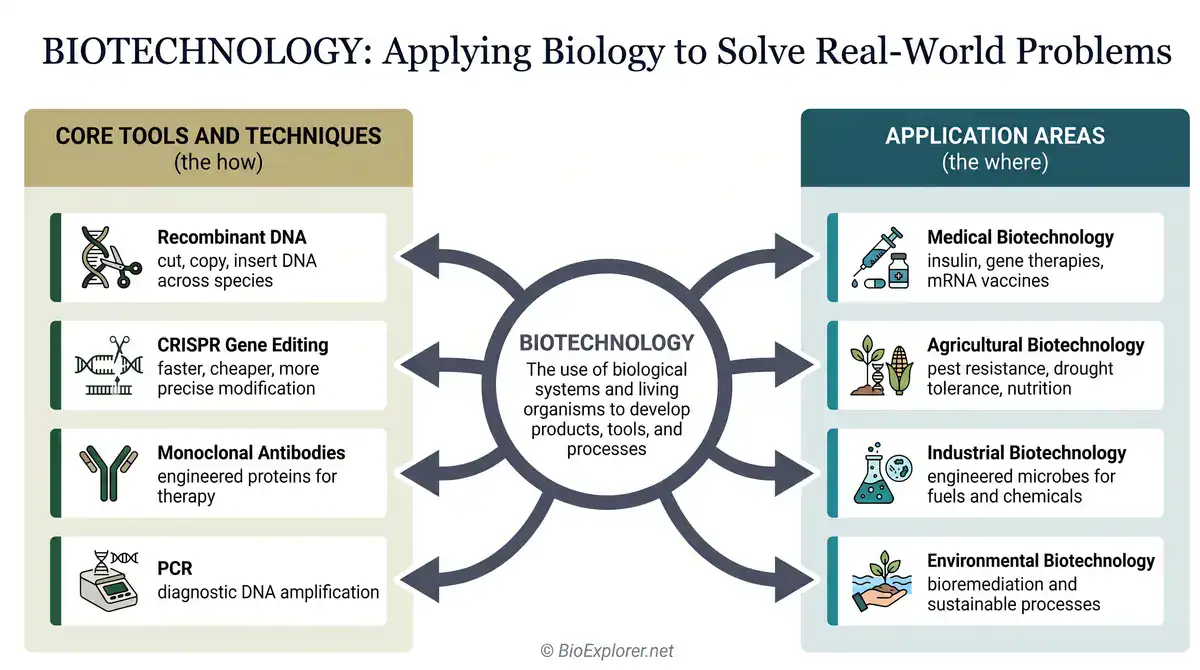
Biotechnology is the use of biological systems, living organisms, or their components to develop products, tools, and processes that serve human needs. Its roots go back thousands of years to fermentation, including bread-making, brewing, and cheese production. In the history of biotechnology, the 1970s marked a major turning point because scientists gained the ability to manipulate genetic material directly, a capability that has been accelerating ever since.
Recombinant DNA and Gene Editing
Recombinant DNA technology made it possible to cut, copy, and insert DNA sequences, even across species boundaries. One of the first practical results was human insulin made by engineered E. coli. Before this, insulin was extracted from pig and cow pancreases on a large scale. Engineered bacteria made insulin cheaper, more reliable, and less likely to cause immune reactions linked to animal-derived insulin.
Decades later, CRISPR-Cas9 made gene editing faster, cheaper, and easier to use. Work that once required years of specialized effort could often be done in weeks, which made precise genetic modification available to many more laboratories.
Agricultural and Medical Biotechnology
In agriculture, Bt crops engineered to express Bacillus thuringiensis toxins have reduced insecticide use on cotton and maize across millions of hectares. Golden Rice was engineered to produce beta-carotene in the grain endosperm, addressing vitamin A deficiency in populations where white rice is a dietary staple.
Medical biotechnology has moved well beyond recombinant proteins: monoclonal antibody drugs like trastuzumab (Herceptin) target specific cancer cells, gene therapies for sickle cell disease and inherited blindness have received regulatory approval, and mRNA vaccine technology, commercialized rapidly during COVID-19, is now being applied to influenza, cancer, and HIV.
Industrial Biotechnology and Synthetic Biology
Industrial biotechnology engineers microorganisms to produce fuels, biodegradable plastics, and industrial enzymes through fermentation rather than petroleum chemistry.
- Engineered yeast: Some yeast strains have been engineered to produce artemisinin, an important antimalarial compound.
- Better supply: This reduced dependence on extracting artemisinin from Artemisia annua plants, helping stabilize supply and price.
- Synthetic biology: This field goes further by designing genetic circuits and metabolic pathways from scratch instead of only modifying existing ones.
- Bioethical issues: Many modern biotechnology debates now focus on the difference between using biology and designing biology.
Foundations in Genetics and Molecular Biology
Biotechnology draws on genetics, molecular biology, and cell biology for its mechanistic foundation, but the direction of influence now runs both ways; tools developed for biotechnology applications have transformed how basic research is done.
Whole-genome sequencing costs have dropped from $3 billion for the first human genome to under $1,000 today, and that change is a product of biotechnology investment in sequencing chemistry and instrumentation.
The National Human Genome Research Institute at NIH provides fact sheets on biotechnology and its applications in genomic research and medicine.
Biotechnology Glossary FAQs
CRISPR-Cas9 is a gene editing tool adapted from a natural defense mechanism found in bacteria. A guide RNA directs the Cas9 protein to a specific DNA sequence, where it cuts both strands of the double helix. The cell then repairs the break, and researchers can use this process to disable a gene, correct a mutation, or insert a new sequence at a precise location in the genome.
Biotechnology has produced insulin made by engineered bacteria, monoclonal antibodies used to treat cancer and autoimmune diseases, vaccines developed using recombinant DNA techniques, and gene therapies that correct inherited conditions at the DNA level. Diagnostic tools like PCR, which became widely known during the COVID-19 pandemic, are also products of biotechnology.
A genetically modified organism is any organism whose genetic material has been altered using biotechnology, which includes techniques ranging from traditional selective breeding to precise gene editing. A transgenic organism is a specific type of GMO in which genes from one species have been transferred into another species, such as bacteria engineered to produce human insulin. All transgenic organisms are GMOs, but not all GMOs are transgenic.
Gene therapy is a medical approach that treats or prevents disease by altering the genetic material inside a patient’s cells. In some cases this means delivering a functional copy of a gene to cells where the natural copy is missing or defective; in others it means disabling a gene that is causing harm. Early gene therapies used viral vectors to deliver DNA into cells. More recent approaches use CRISPR-based editing to make precise changes directly in the patient’s genome. Approved gene therapies now exist for conditions including inherited blindness, sickle cell disease, and certain cancers.
Biotechnology is the broad field of applying biological systems or organisms to develop products and processes; it includes fermentation, cell culture, and the use of enzymes, as well as genetic manipulation. Genetic engineering is a specific subset of biotechnology that involves directly altering an organism’s DNA, whether by inserting new genes, deleting existing ones, or editing specific sequences. Traditional brewing and antibiotic production are biotechnology but not genetic engineering; CRISPR editing and recombinant protein production are both.