
Pedigree Analyzer
A pedigree analyzer is an interactive genetics tool that traces how a trait passes through multiple generations of a family and identifies the most likely inheritance pattern.
Pedigree Analyzer
Mark individuals across generations, then click Analyze to identify the most likely inheritance pattern. The tool ranks autosomal dominant, autosomal recessive, X-linked dominant, and X-linked recessive inheritance by confidence score.
Set each individual’s status
Click any square or circle to cycle through unaffected (empty), affected (filled green), and carrier (half-filled).Analyze inheritance pattern
Click Analyze Pedigree to rank AD / AR / XLD / XLR by confidence score.Pedigree
Inheritance Analysis
How to Use the Pedigree Analyzer

- Pick a template from the dropdown above. We’ve provided 5 common inheritance pattern templates to get you started.
- Click on individuals to toggle their affected status. Filled symbols (green) indicate affected individuals.
- Click “Analyze Pedigree” to see which inheritance pattern best fits your pedigree, ranked by confidence score.
How to Read a Pedigree
A pedigree is a genetic family tree that shows how traits are inherited across generations. Understanding pedigree symbols is essential for genetic analysis:
- Squares represent males
- Circles represent females
- Horizontal lines connecting two people indicate mating or partnership
- Vertical lines descending from a couple indicate offspring
- Filled symbols (shaded green) represent individuals affected by the trait
- Half-filled symbols usually represent carriers, such as heterozygous individuals who can pass on a recessive allele without showing the trait.
- Roman numerals (I, II, III) indicate generations
- Arabic numerals (1, 2, 3) identify individuals within each generation
Modes of Inheritance We Test
Autosomal Dominant
Autosomal dominant traits are controlled by genes on autosomes, which are non-sex chromosomes, and one altered copy of the gene can be enough to affect the phenotype.
Common Characteristics:
- Affected individuals often appear in every generation.
- Affected individuals usually have at least one affected parent.
- The trait can affect males and females.
- Under a simple complete-penetrance model, two unaffected parents usually do not have an affected child, although real pedigrees can be complicated by new mutations or reduced penetrance.
- Examples include Huntington’s disease, Marfan syndrome, and achondroplasia.
Autosomal Recessive
Autosomal recessive traits usually require two copies of a recessive allele to be expressed.
Common Characteristics:
- The trait can affect males and females.
- The trait can skip generations.
- Two unaffected carrier parents can have an affected child, with a 25% chance for each pregnancy.
- Affected children often appear among the offspring of unaffected carrier parents.
- Examples include cystic fibrosis, sickle cell anemia, and Tay-Sachs disease.
X-Linked Recessive
X-linked recessive traits are controlled by genes on the X chromosome and are more commonly expressed in males because males have only one X chromosome.
Common Characteristics:
- The trait affects males much more frequently than females.
- The trait can skip generations through carrier females.
- Affected males do not pass the trait to their sons because sons inherit the father’s Y chromosome.
- All daughters of an affected male inherit his affected X chromosome and are typically carriers if their other X chromosome carries a normal allele.
- Examples include Hemophilia A, Duchenne muscular dystrophy, and red-green color blindness.
X-Linked Dominant
X-linked dominant traits are controlled by genes on the X chromosome, and one altered copy can be enough to affect the phenotype.
Common Characteristics:
- The trait can affect both males and females.
- The trait often appears in every generation.
- Affected fathers pass the trait to all daughters but no sons.
- Affected mothers can pass the trait to 50% of their children, regardless of sex.
- Examples include Rett syndrome and X-linked hypophosphatemia, also called vitamin D-resistant rickets.
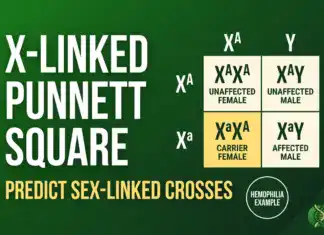
X-Linked Punnett Square Calculator
How Our Pedigree Analyzer Works
This tool uses a pattern-matching algorithm to evaluate your pedigree against four major inheritance patterns: autosomal dominant, autosomal recessive, X-linked recessive, and X-linked dominant. Each pattern is scored based on characteristic features:
- Sex distribution: Are males and females affected equally? (autosomal) or disproportionately? (X-linked)
- Generation pattern: Does the trait appear in every generation? (dominant) or skip generations? (recessive)
- Affected parent patterns: Do affected individuals have affected parents? (dominant) or unaffected carrier parents? (recessive)
- Male-to-male transmission: Present (autosomal) or absent (X-linked)
The tool returns a ranked list of inheritance patterns with confidence scores, helping you identify the most likely mode of inheritance for your pedigree.
Examples of Pedigree Analysis
Example 1: Huntington's Disease (Autosomal Dominant)
A 35-year-old man develops progressive movement disorders. His father had similar symptoms starting at age 40. His paternal grandmother died in a psychiatric institution. His two sisters (ages 32 and 30) are asymptomatic but concerned about their risk.
Analysis: The pattern shows affected individuals in three consecutive generations (grandmother, father, son), both sexes can be affected, and every affected person has an affected parent. This strongly suggests autosomal dominant inheritance. Each child of an affected parent has a 50% chance of inheriting the condition.
Example 2: Cystic Fibrosis (Autosomal Recessive)
Two healthy parents have a child diagnosed with cystic fibrosis. They have no family history of the condition. A second child is also healthy.
Analysis: The appearance of an affected child from two unaffected parents suggests autosomal recessive inheritance. Both parents must be carriers (heterozygous), and the affected child inherited both recessive alleles. Each subsequent child has a 25% chance of being affected, 50% chance of being a carrier, and 25% chance of being unaffected and not a carrier.
Example 3: Hemophilia A (X-Linked Recessive)
A woman has a brother with hemophilia and an uncle (maternal) with hemophilia. Her son is also diagnosed with hemophilia. Her daughter appears healthy.
Analysis: The pattern shows the trait affecting males across multiple generations, transmitted through unaffected females. The mother must be a carrier. Her son has a 50% chance of being affected, and her daughter has a 50% chance of being a carrier.
Limits of Pedigree Analysis
While pedigree analysis is a powerful tool for understanding inheritance patterns, it has limitations:
- Incomplete penetrance: Some individuals with a disease-causing genotype may not show symptoms
- Variable expressivity: The same genotype can produce different severity of symptoms
- New mutations: Some affected individuals may have no family history due to spontaneous mutations
- Reduced penetrance: Not all individuals with a genotype will express the phenotype
- Complex inheritance: Many traits involve multiple genes (polygenic) or gene-environment interactions
- Mitochondrial inheritance: This tool does not currently analyze mitochondrial DNA inheritance patterns
- Consanguinity: If parents are related, patterns may not follow standard Mendelian ratios
For clinical decision-making, always consult with a genetic counselor or medical geneticist.
The Pedigree Analyzer does not currently evaluate mitochondrial inheritance. If the variant is in mitochondrial DNA and your question concerns maternal heteroplasmy, use the Mitochondrial Inheritance Calculator. It models the probability that an offspring's simulated heteroplasmy exceeds a selected comparison value under a simplified sampling model.
Related Genetics Resources

Punnett Square Calculator
What is Genetic Determinism?
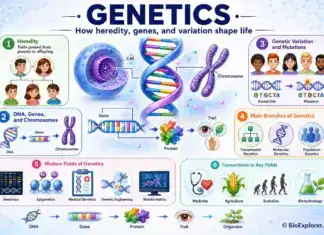
Branches of Genetics
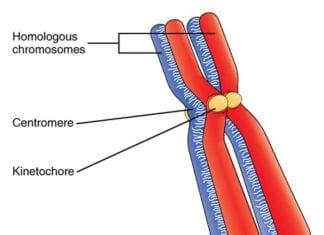
What Is A Homologous Chromosome?
The History of Genetics: A Complete Timeline from Ancient Greece to 2026
Genetics Glossary
Overview of Chromosomal Mutations, Types & Examples
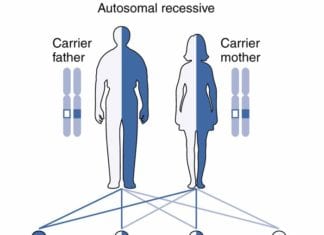
Autosomal Recessive Inheritance: Principles, Patterns, & Associated Disorders

6 Major Disadvantages of Genetically Modified Foods

Biology Glossary
Frequently Asked Questions
A pedigree analyzer is a genetic tool that helps you determine the most likely mode of inheritance for a trait based on a family tree. By marking which family members are affected, the tool analyzes patterns to identify whether a trait is autosomal dominant, autosomal recessive, X-linked dominant, or X-linked recessive.
Pedigree analysis predictions are based on statistical patterns and Mendelian inheritance principles. They are highly reliable for clear patterns (multiple affected individuals across generations) but can be less definitive for small pedigrees or when incomplete penetrance is involved. For clinical decisions, always consult a genetic counselor.
Yes. Our pedigree analyzer works best with 2-3 generations of data. The more complete your family tree, the more accurate the analysis. We recommend including grandparents, parents, and children when possible.
Autosomal dominant inheritance requires only one copy of the disease allele to show symptoms, while autosomal recessive inheritance requires two copies (one from each parent). Dominant traits typically appear in every generation, while recessive traits can skip generations.
X-linked inheritance refers to traits controlled by genes on the X chromosome. Because males have only one X chromosome, X-linked recessive traits affect males more frequently. X-linked dominant traits affect both sexes but often more severely in males.
Yes, in autosomal recessive inheritance. If both parents are carriers (heterozygous), they have a 25% chance of having an affected child with each pregnancy, even though both parents are unaffected.
Our pedigree analyzer is designed for educational purposes and basic pattern recognition. Professional genetic counseling software includes additional features like risk calculation, Bayesian analysis, and integration with genetic databases. For clinical use, consult a qualified genetic counselor.
This free online pedigree analyzer is part of BioExplorer’s suite of genetics education tools. It uses pattern-matching algorithms based on classical Mendelian inheritance principles to help students, educators, and curious individuals understand how traits are inherited across generations. Whether you’re studying for a genetics exam, working on a family tree project, or simply curious about inheritance patterns, this tool provides immediate visual feedback and analysis.
Last updated: July 1, 2026
Cite this page
BioExplorer. (2026, September 30). Pedigree Analyzer. https://www.bioexplorer.net/pedigree-analyzer/