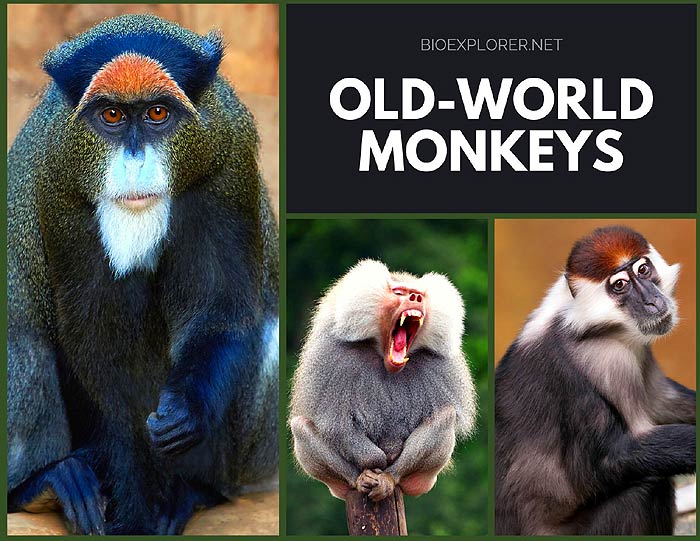
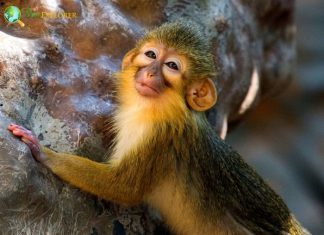
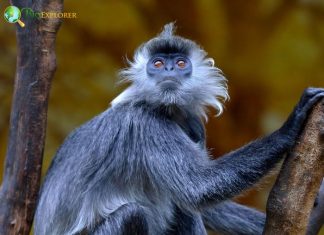
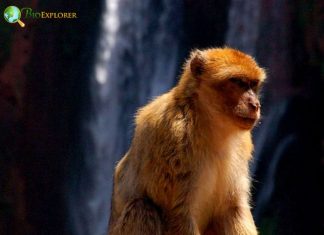
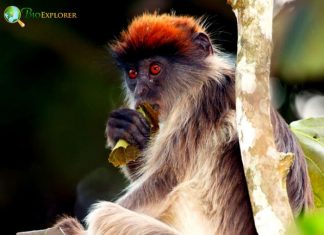
Old World monkeys are the family Cercopithecidae. The family holds 166 living species in 23 genera. They range across Africa and Asia, with one species in Europe. Counts here follow Mammal Diversity Database v2.5, released July 2026.[1]
Two subfamilies divide the family evenly. Cercopithecinae holds 83 species in 13 genera. These are the cheek-pouch monkeys, and most eat a mixed diet. Colobinae holds 83 species in 10 genera. These are the leaf eaters, with a chambered stomach that ferments foliage.[2]
Baboons, macaques and guenons are the familiar faces here. The family also holds the colobus monkey group. Counts for every group appear on the monkey species list.
Species are spread very unevenly across the genera. Macaca alone holds 25 species, more than any other. Cercopithecus follows with 19 and Trachypithecus with 22. At the other end, six genera hold a single species each.
Genus
Common name
Species
Macaca
Macaques
25
Cercopithecus
Guenons
19
Cercocebus
White-eyelid mangabeys
7
Chlorocebus
Vervets and allies
7
Lophocebus
Crested mangabeys
6
Papio
Baboons
6
Allochrocebus
Terrestrial guenons
3
Erythrocebus
Patas monkeys
3
Mandrillus
Mandrill and drill
2
Miopithecus
Talapoins
2
Allenopithecus
Allen’s swamp monkey
1
Rungwecebus
Kipunji
1
Theropithecus
Gelada
1
Trachypithecus
Lutungs and langurs
22
Presbytis
Surilis
20
Piliocolobus
Red colobus
16
Semnopithecus
Gray langurs
8
Colobus
Black-and-white colobus
6
Rhinopithecus
Snub-nosed monkeys
5
Pygathrix
Doucs
3
Nasalis
Proboscis monkey
1
Procolobus
Olive colobus
1
Simias
Simakobu
1
The first 13 rows are Cercopithecinae and the last 10 are Colobinae. Both subfamilies land on exactly 83 species. That balance is a coincidence of current taxonomy, not a rule.
All 166 Species
Every living species in the family is listed below. Each card carries a photograph, the scientific name and a profile. The list follows Mammal Diversity Database v2.5.[1]
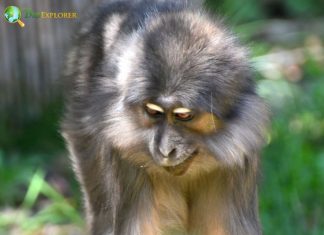
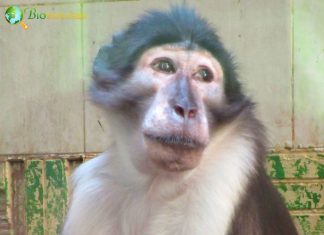
The Agile Mangabey is another Old-World monkey of the White-Eylid Mangabey group mainly found in swampy forests. Due to habitat loss, mangabeys are now listed as endangered, both male and female.
Allen’s swamp monkeys are small, stocky monkeys with gray to brown fur and long tails. These highly social primates live in the swamp forests of central Africa, where they mostly spend their time in the trees. It was named after Joel Asaph Allen, an American zoologist.
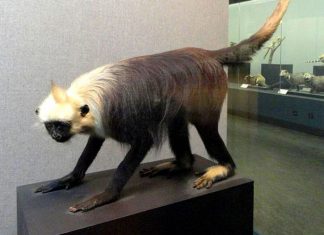
The Angolan Colobus is a conspicuously-patterned monkey with a very long tail that helps it maintain its balance as it moves quickly through the trees. Although the species is named after Angola, it’s rare in this country.
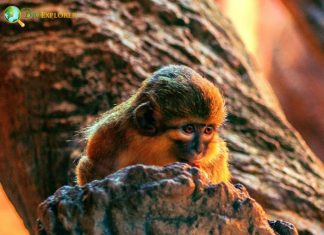
Also known as the Southern talapoin, Angolan talapoin is a primate species in the Cercopithecidae family. Tail color varies from grayish-black to brownish-black above and is yellow or yellowish-gray below. The Angolan talapoin monkeys are among the smallest species of Old-World monkeys.
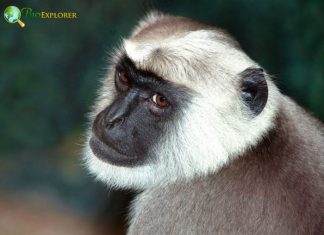
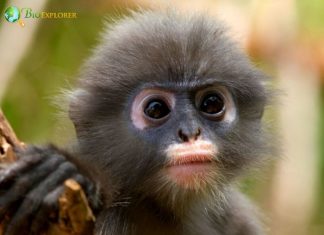
The Annamese langur is another Old-World monkey in the subfamily Colobinae. Annamese langurs are covered in thick, gray fur. They have dark faces, and the space around the eyes is pale and forms a ring, often in the flesh. Trachypithecus margarita is a monotypic species as it has no subspecies.
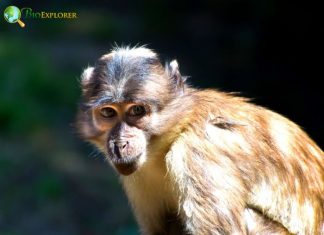
The Arunachal macaque is a comparatively sizeable brown primate with a relatively short tail. Arunachal macaques were first classified into Cercopithecidae’s taxonomy in 2005 by primatologists Madhusudan and Mishra.
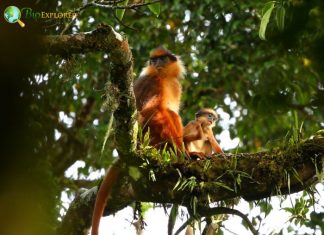
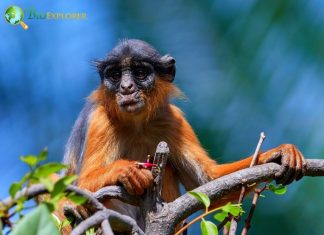
The Ashy-red Colobus or Ugandan red Colobus is an endangered species of red Colobus endemic to Eastern Africa. Like other colobus monkeys, Ashy Red has small thumbs that allow it to comfortably grip branches and swing nimbly through the canopy. In 2001, the ashy-red Colobus was recognized as a separate species.
The Assam macaque, also known as Assamese macaque, is a macaque of the Old-World monkey family endemic to South and Southeast Asia. Assam is another state in India. Eating everything from fruits to 55 types of flowers, leaves, seeds, and bark, these macaque monkeys adapt their diet to suit their habitat.
The Bale monkey, also called the Bale Mountain Vervet, is an endangered, forest-dwelling arboreal primate restricted to a small range in the southern highlands of Ethiopia. The bale monkey depends primarily on a single species of bamboo (Arundinaria Alpina) and favors a bamboo forest habitat. These African primates feature small round heads, and their bodies are covered with a layer of dark-brown fur.
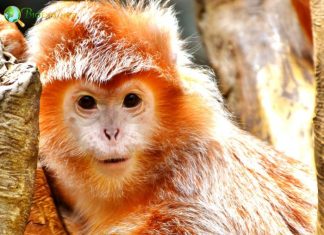
The Banded langur, also known as the Raffles’ banded langur or banded leaf monkey, is a primate species in the Cercopithecidae family. Like other Colobin monkeys, whose young typically have lighter-colored fur than adults, Banded langur infants have white or tan fur until it darkens around 6 months.
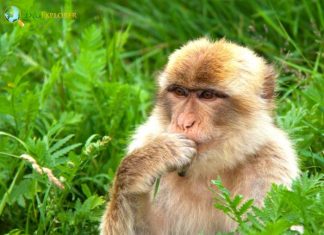
The Barbary macaque, also called the Magot macaque, is a macaque endemic to the Atlas Mountains in Morocco and Algeria and a small introduced population in Gibraltar. Before the Ice Age, they inhabited the Mediterranean coasts and most of Europe, as far away as the British Isles and Germany.
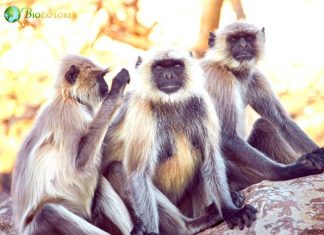
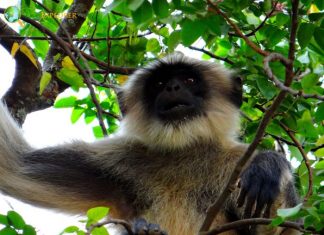
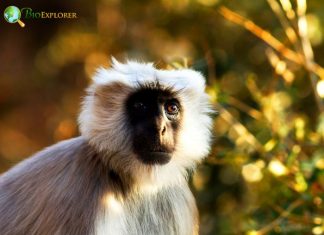
The Bengal sacred langur, also known as Hanuman’s langur and the northern plains gray langur, is a primate species in the Cercopithecidae family. The Bengal sacred langurs are often referred to as “Hanuman’s langurs”, named after Lord Hanuman – the Hindu god.
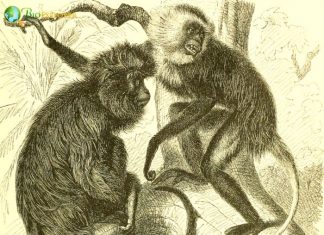
The black-and-white langur is a primate species in the Cercopithecidae family. It was formerly thought to be a subspecies of the Presbytis melalophos (black-crested Sumatran langur). Still, the genetic analysis indicated they were separate species.
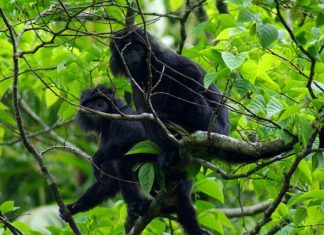
The black colobus, also known as satanic black colobus, is a species of Old-World monkey in the Colobus genus. The black colobus is the oldest of the 5 recognized species in the genus Colobus and is said to have diverged 3 to 4 million years ago.
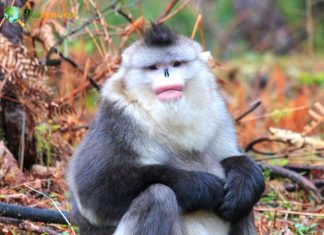
The black-and-white snub-nosed monkey, also called the Yunnan snub-nosed monkey, is a large black-and-white primate living only in Yunnan Province in southern China, where it is known to the local population as the Yunnan golden-haired monkey. The species gets the “snub-nosed” part of its name due to its lack of nasal bones.
The black Sumatran langur is a species of monkey in the Cercopithecidae family that is endemic to Indonesia’s Sumatra Island. Presbytis sumatrana was once considered a subspecies of Sumatran Surili. Still, genetic analysis has shown it to be a distinct species.
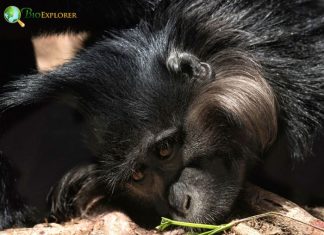
Black-crested mangabeys, also known as black mangabeys, are endemic to central Africa, occupying the Democratic Republic of the Congo, south of the Congo River (formerly known as the Zaire River), and likely extinct in Angola. They are mainly found in primary and secondary tropical forests, gallery forests, and swamps. Locals nicknamed these primates “baboon mangabeys” due to their resemblance to the baboon species.
The black-crested Sumatran langur (Presbytis melalophos), also called the Mitred leaf monkey, is a primate species in the Cercopithecidae family. The black-crested Sumatran langur, Raffles’ banded langur, Sarawak surili, and black-and-white langur were formerly considered subspecies of Presbytis melalophos.
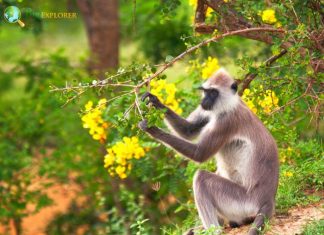
The black-footed gray langur is an Old-World monkey, one of the langur species. Like other gray langurs, this species is a leaf-eating monkey in southern India. The black-footed gray langur is distributed throughout southwestern India (Kerala, Karnataka, and Goa) but is concentrated in the Western Ghats.
One of three species of Douc langur (the gray-footed and the red-footed are the other two), the black-shanked douc langur is only found in southwestern Vietnam and eastern Cambodia, inhabiting primary monsoon forests as well as secondary and tropical forests.
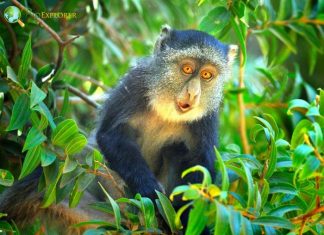
The blue monkey is a species of Old-World monkey endemic to east and central Africa, ranging from the upper Congo Basin east to the East African Rift Valley and south to Zambia and northern Angola.
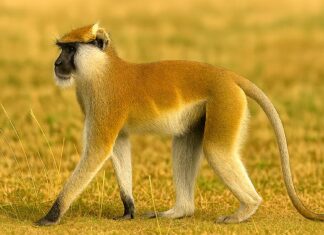
The Blue Nile patas monkey, also known as Heuglin’s patas monkey, is an Old-World monkey endemic to Africa along the Blue Nile Valley in Sudan, Ethiopia, and possibly South Sudan. Blue Nile patas monkeys are one of the fastest land monkeys, reaching speeds of around 34 miles per hour.
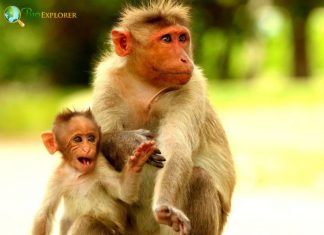
The Bonnet Macaque, also called Zati, is a species of macaque native to southern India. Bonnet macaques get their common name from a unique feature: a hood-like tuft of hair that extends from the top of their head, much like a tuft of dry grass. Their marble-round eyes look out into the world with a very expressive forehead.
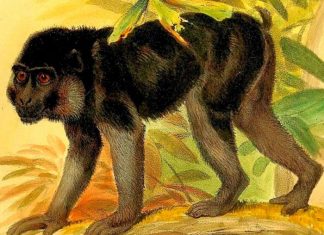
The booted macaque is a macaque native to Indonesia’s Sulawesi Island. This Old-World monkey is diurnal, spending most of the day in trees. A booted macaque monkey’s body mass is determined by its sex, with males significantly larger than females.
Bouvier’s Red Colobus was rediscovered in 2015 in the Republic of Congo after four decades without confirmed sightings. These African primates live in the swampy forests surrounding the Congo River, between the mouths of the Oubangui and Alima rivers.
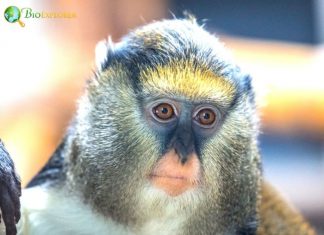
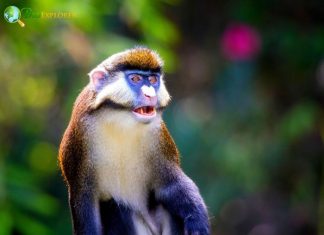
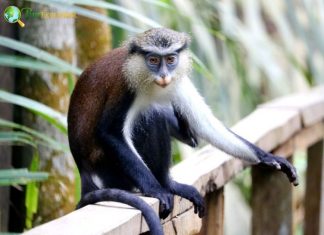
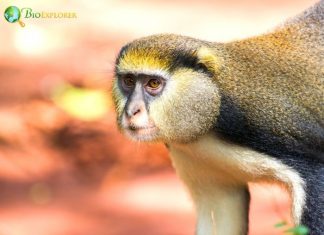
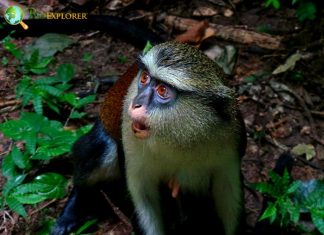
Campbell’s Mona monkey, also called the Campbell’s monkey or Campbell’s guenon is a primate species in the Cercopithecidae family. The species was named after Henry Dundas Campbell in 1838.
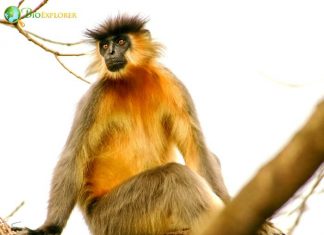
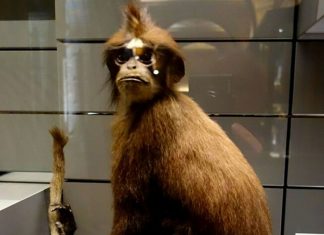
The capped langur is a type of monkey in the Cercopithecidae family. These langurs can vary in appearance. This Asian primate gets its name from the thick hairs on the top of the head, typically gray or black.
The white-headed langur, also called the Cat Ba langur, is an endangered species of langur native to Guangxi, China. Cat Ba langurs are comfortable in trees or ground but prefer steep cliffs where humans can’t set foot.
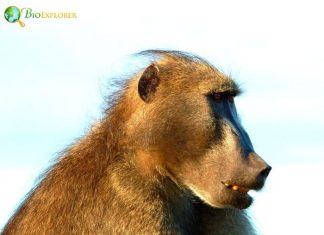
Like all other baboons, the Chacma baboon, the Cape baboon, belongs to the Old-World monkey family. Chacma baboons have a habit of flipping over rocks in search of food. So, it’s pretty easy to spot where a group of Chacmas once foraged.
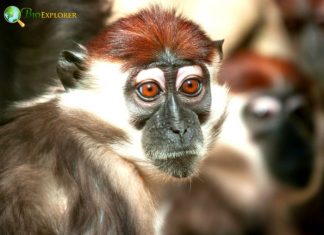
The collared mangabey, also called the white-collared mangabey or red-capped mangabey, is an Old-World monkey endemic to the Atlantic coast of central and west Africa. Its distinctive chestnut-red cap gives the species the name red-capped mangabey, and its white collar gives it the names white-collared and collared mangabey.
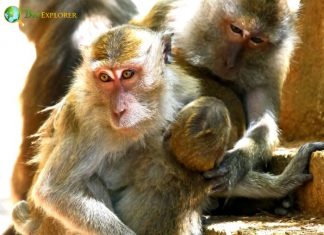
The crab-eating macaque also called the long-tailed macaque and known in laboratories as the cynomolgus monkey, is a primate monkey endemic to Southeast Asia. Crab-eating macaque macaques live in multi-male groups comprising around 30 members.
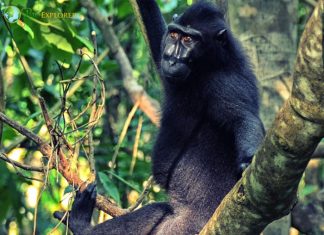
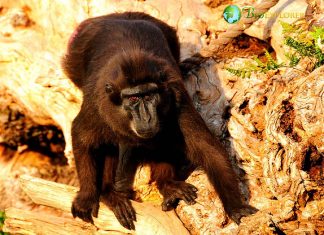
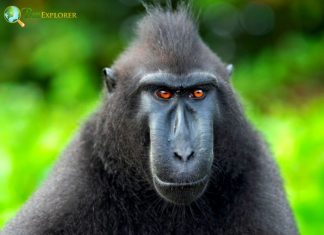
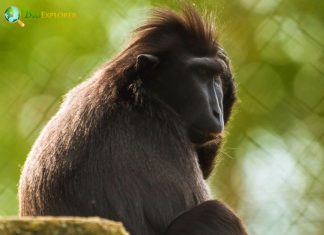
The Crested Black Macaque, also called the Sulawesi Crested Macaque or Celebes Crested Macaque is an Old World monkey native to the Tangkoko Game Reserve in the extreme northeast of the Indonesian island of Celebes (Sulawesi) and neighboring islets.
The crested mona monkey, also called the golden-bellied monkey, golden-bellied guenon, or crowned guenon, is a species of African primate in the Cercopithecidae family in west-central Africa. Like many species of Cercopithecus, the crested mona monkey has large cheek pouches that it fills with seeds and fruit while foraging for food.
The Sarawak surili, also known as Cross-marked Langur, is a monkey species in the Cercopithecidae family. The Sarawak surili was once considered widespread but has declined significantly due to habitat and loss persecution.
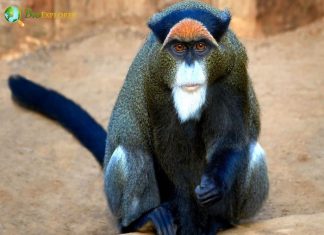
De Brazza’s monkey is an Old-World primate native to central Africa’s swamp and riverine forests. It is the largest species of the guenon family and one of the most widespread African arboreal primates.
The Delacour’s langur, also known as Delacour’s Lutung, is an endangered Lutung native to northern Vietnam. The species is named after Jean Théodore Delacour, a French-American ornithologist.
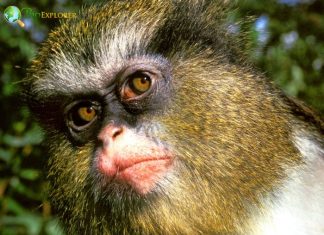
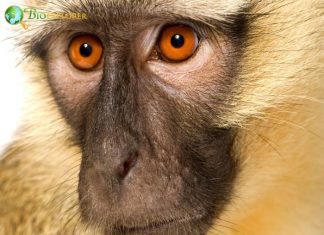
The expressive face of Dent’s mona monkey is characterized by golden eyes; a flat, long, dark nose; and a pink chin and mouth. Dent mona monkeys are often found in the company of other primate species.
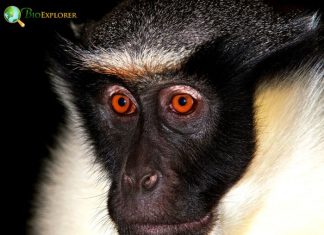
The Diana monkey is an Old-World primate found in the high-canopy forests of Liberia, Sierra Leone, and the western Ivory Coast. Diana monkeys get their name from the white crescent-shaped headband that resembles the crescent moon on the forehead of the Roman goddess Diana, protector of woodlands and wildlife.
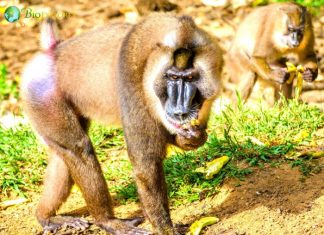
The Drill is a primate in the Cercopithecidae family (Old-World monkeys), related to baboons and even more closely to mandrills. Like mandrills, drills are highly social animals that live in groups of around 20 individuals with multiple males and females, with one male dominating reproductive decisions.
The Dryas monkey, also called the Salonga monkey, Inoko, or Ekele is a little-known Old World primate only found in the Congo Basin and restricted to the Congo River’s left bank. Unlike guenon monkeys, which make loud leaps and resounding calls, dryas monkeys move silently.
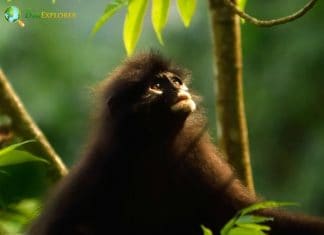
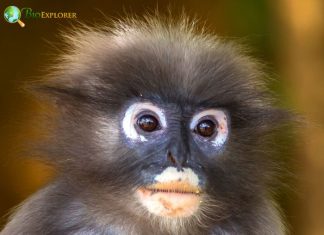
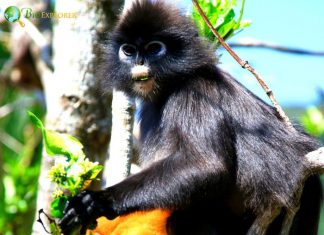
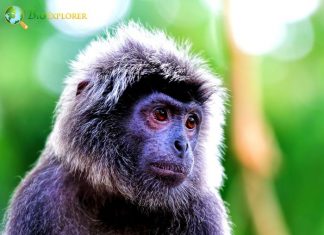
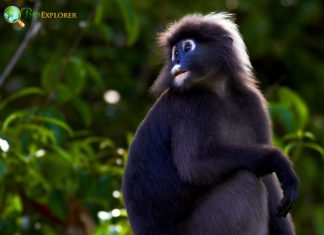
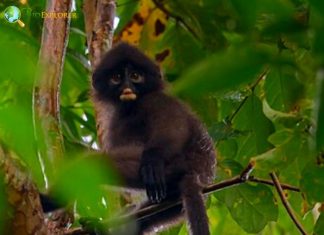
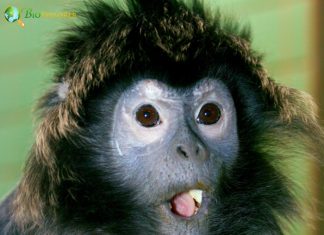
Dusky langurs also known as spectacled langurs, spectacled leaf monkeys, and dusky leaf monkeys, are primarily found in the Malay Peninsula in Asia. White rings surrounding the deep, dark eyes give the species its alternative name, the spectacled monkey or spectacled langur, for a “bespectacled” look.
The East Javan langur, also called the Javan lutung, Javan langur, or ebony langur is an Old-World primate in the subfamily Colobinae. As with all langurs, the East Javan langur is a social animal, living in groups of about 7 individuals, with 1 or 2 adult males in the group.
The East Sumatran banded langur also called the East Sumatran banded surili are primarily found in the fragmented landscape of pulp and rubber plantations. These surilis are shy and alert creatures, rarely leaving the comfort of their canopies.
Foa’s Red Colobus or Central African red colobus is endemic to the Democratic Republic of the Congo. Generally, these African primates are found in large groups of 20 to 90 individuals.
The Formosan rock macaque also called the Taiwanese macaque, or Formosan rock monkey, is a macaque native to the island of Taiwan. Aside from humans, Formosan rock macaques are the only native primates living in Taiwan.
The François langur, also called the white side-burned black langur, François leaf monkey, or Tonkin leaf monkey is a species of Lutung and the type species of its species group. The François langur is among the least studied langur species.
The Gabon talapoin, also called the northern talapoin, is a small species of African primate endemic to riverine habitats in Gabon, Equatorial Guinea, Cameroon, the far western Democratic Republic of the Congo, and the western Republic of the Congo.
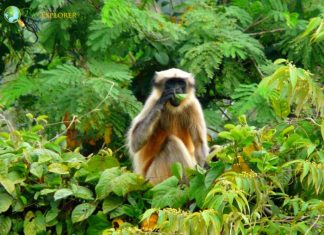
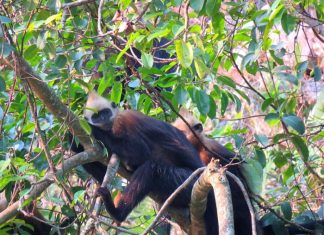
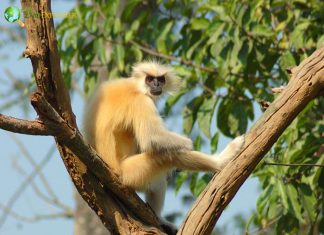
Gee’s golden langur, also known simply as the golden langur, is an Old-World primate found in a small area of western Assam, India, and in the nearby foothills of the Black Mountains of Bhutan. Gee’s golden langur was officially discovered in 1953 by Edward Pritchard Gee, an amateur naturalist and tea planter in Assam, India.
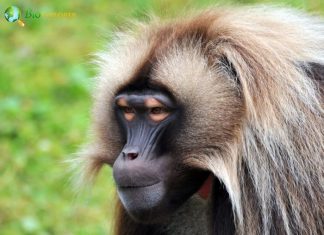
The gelada often called the gelada baboon, or the bleeding-heart monkey, is an Old-World monkey found only in the Ethiopian highlands. Geladas aren’t territorial, and it is not unusual to find congregations of separate groups foraging together when conditions are favorable.
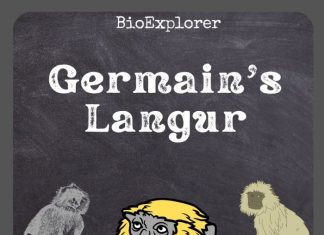
Germain’s Langur is a lutung species endemic to Thailand, Vietnam, Laos, Cambodia, and Burma. Germain’s langur is a terrestrial tree-dwelling species occasionally found in lowlands.
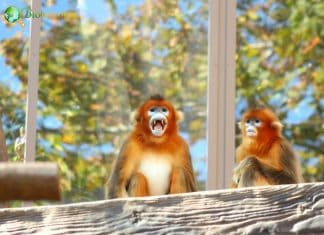
The golden snub-nosed monkey (Rhinopithecus roxellana) is an Old World monkey of the subfamily Colobinae. Golden snub-nosed monkeys are highly social animals that exhibit group behaviors known as fission and fusion.
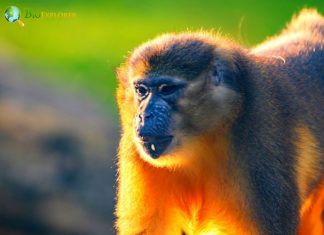
The golden-bellied mangabey (Cercocebus chrysogaster) is a gregarious Old-World monkey found in humid, swampy forests south of the Congo River. Golden-bellied mangabeys are a migratory and social species, moving in groups of 8 to 30 members.
The Gorontalo macaque (Macaca nigrescens), also called the Dumoga-bone macaque, is a species of the primate of the Cercopithecidae family. It is native to the Sulawesi Island of Indonesia.
The gray snub-nosed monkey (Rhinopithecus brelichi), also called Guizhou golden monkey, Brelich’s snub-nosed monkey, and Guizhou snub-nosed monkey is a species of primate in the Cercopithecidae family. The confirmed range of the gray snub-nosed monkey is endemic to China (Fanjingshan National Nature Reserve in Wuling Mountains of Guizhou Province).
The gray-cheeked mangabey is a long-tailed crested monkey of the Congo Basin canopy. It holds five countries west of the Ubangi River. Males wear a pale shoulder mantle and call with a whoop-gobble that carries over a kilometer. Older sources list it in Nigeria and Uganda, but current taxonomy places those populations in separate species.
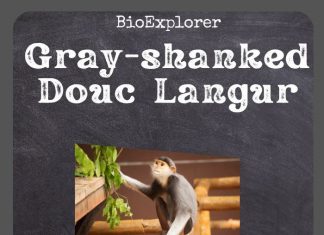
The gray-shanked douc langur (Pygathrix cinerea) is a species of douc endemic to the Vietnamese provinces of Gia Lai, Quảng Ngãi, Kon Tum, Bình Định, and Quảng Nam. Genetically, Gray-shanked douc langurs are similar to Red-shanked douc langurs (Pygathrix nemaeus).
The greater spot-nosed monkey (Cercopithecus nictitans), also called the greater white-nosed monkey, putty-nosed monkey, and white-nosed guenons, is among the smallest Old-World monkeys. Great spot-nosed monkeys have a polygamous mating system in which a resident adult male coexists with multiple adult females and their young.
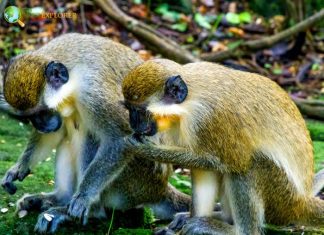
The green monkey (Chlorocebus sabaeus), also called the sabaeus monkey, is an Old World monkey with golden-green fur, pale feet, and hands. Green monkeys’ locomotion varies little, regardless of substrate or habitat. In nearly all circumstances, they move quadrupedally in the treetops or on the ground.
The Grivet monkey (Chlorocebus aethiops) is an Old World monkey with long tufts of white fur on the sides of its face. Grivet monkeys are very social animals. They travel in small groups and are among the few species to have groups with multiple males.
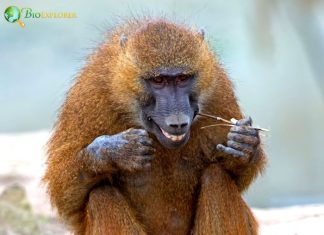
The Guinea baboon (Papio papio) is a baboon of the Old World monkey family. When walking, these baboons support their weight on the bottom of their toes in front and on the entire sole of their feet.
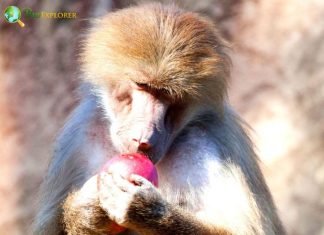
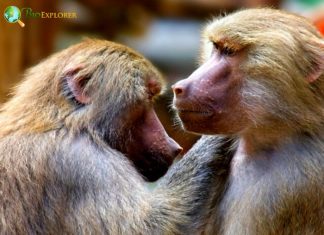
The Hamadryas baboon (Papio hamadryas) is a baboon species in the Old World monkey family. The Hamadryas baboon was a sacred animal to the ancient Egyptians. It appeared in various roles in ancient Egyptian religion, hence its alternative common name, “sacred baboon”.
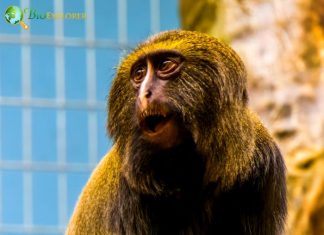
The Hamlyn’s monkey (Cercopithecus hamlyni), also called the owl-faced monkey, is an Old World monkey inhabiting the Congo’s bamboo and primary rain forests. Hamlyn’s monkeys have unique feet and hands in elongated phalanges.
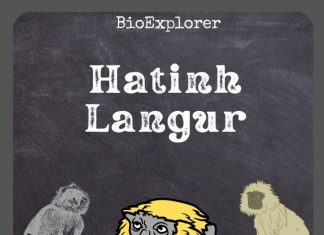
The Hatinh langur (Trachypithecus hatinhensis) is a critically endangered Old World monkey found in the limestone forests of Vietnam, particularly in Quảng Bình province. Contrary to their common name, the Hatinh langur is not known from the province of Hà Tĩnh.
The Heck’s Macaque (Macaca hecki) is a macaque native to Sulawesi, Indonesia. This Old-World monkey is diurnal. Due to their frugivorous diet, Heck’s macaques will likely act as seed dispersers throughout their habitat.
The kipunji (Rungwecebus kipunji), also called the highland mangabey, is an Old World monkey inhabiting the upland forests of Tanzania. Kipunji is active during the day and mostly confine their activity to trees and rarely reach the ground.
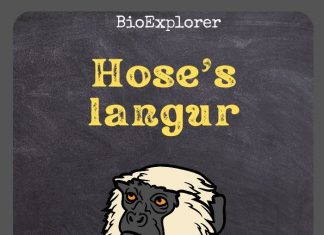
The Hose’s langur (Presbytis hosei) is a primate species in the Cercopithecidae family native to the island of Borneo, which includes Brunei, Kalimantan (Indonesia), and eastern Malaysia. The species was first identified in 1985 in Sangkulirang Peninsula and Kutai National Park in East Kalimantan, Indonesia.
The Indochinese black langur (Trachypithecus selbstus) is a little-known Lutung endemic to Laos and neighboring Vietnam. Because they live in dense forests and rarely venture outside, observing them in the wild can be difficult.
The Indochinese gray langur (Trachypithecus crepusculus) is a species of Lutung native to Southeast and East Asia. This species was once thought to be conspecific with the Phayre’s leaf monkey (Trachypithecus phayrei).
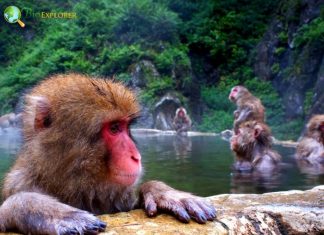
The Japanese macaque (Macaca fuscata), also called the snow monkey, is a terrestrial Old World species of monkeys endemic to Japan. Japanese macaques from southern regions generally weigh less than those in northern regions of higher altitudes, where there is more snow during the winter months.
The Javan fuscous langur is a near-black leaf monkey found only on the volcanoes of Central Java. Indonesians call it the rekrekan. Between 5,000 and 17,000 survive in four to eight isolated forest patches, and only one of those populations sits inside a national park.
The grizzled surili (Presbytis comata) is a threatened species of Old World monkey native to the western half of Java, Indonesia, a biodiversity hotspot. The grizzled surili engages in 3 to 4 foraging and feeding fights throughout the day.
Johnston’s mangabey is the crested mangabey of the forests east of the Ubangi River, reaching western Rwanda and western Burundi along the Albertine Rift. It is the middle piece of a three-part puzzle, with the gray-cheeked mangabey to the west and the black crested mangabey across the Congo. It has become scarce in several protected areas because of civil war and armed occupation of its forests.
The Kashmir gray langur is an Old-World monkey, one of the species of langurs. The Kashmiri gray langur derives its scientific name, Semnopithecus ajax, from a character in the ancient Greek poem – The Iliad – set during the Trojan War.
The Kinda baboon (Papio kindae) is a species of baboon found in the Miombo forests of Angola, Zambia, the Democratic Republic of the Congo, and possibly western Tanzania. The species is named after the town in the southern Democratic Republic of the Congo.
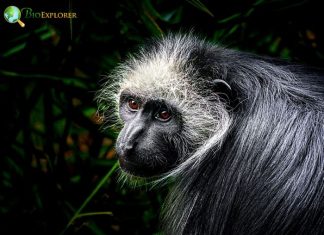
The king colobus (Colobus polykomos), also called the western black and white colobus is a species of Old World monkey found in lowland and montane rainforests.
The L’Hoest monkey (Allocrocebus lhoesti), or mountain monkey, is a vervet monkey found in the upper eastern Congo Basin. L’Hoest monkeys live in relatively small groups, are dominated by females, and have only one male.
Lang’s red colobus (Piliocolobus langi) is another species of red colobus monkey. Historically, it was treated as a subspecies of the Central African red colobus (Piliocolobus foai). Still, more recent taxonomies generally treat it as a distinct species.
The Laotian langur (Trachypithecus laotum), also known as white-browed black langur, is another primate species that nest in small limestone caves and holes that shelter from predators, rain, and cold.
The lesser spotted-nosed monkey, lesser spotted monkey, or lesser white-nosed monkey (Cercopithecus petaurista) is a primate species in the Cercopithecidae family. The lesser spotted-nosed monkey is diurnal, arboreal, and cryptic.
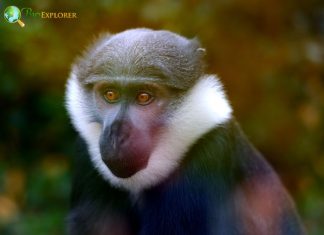
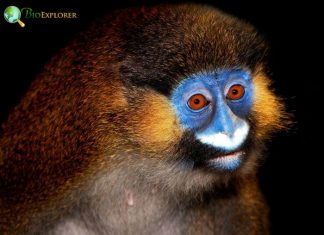
The lesula (Cercopithecus lomamiensis) is a species of Old-World monkey occurring in the Lomami Basin of the Congo. This monkey is described as having human eyes and a blue bottom.
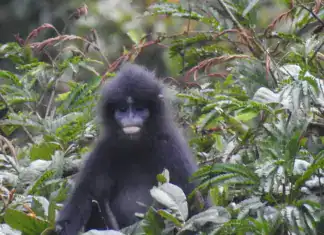
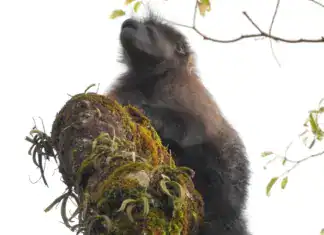
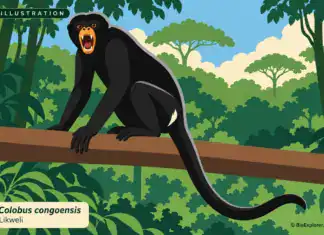
The Likweli is a black colobus monkey named in July 2026, and the fifth new African monkey species described in 75 years. It lives in a single 1,700 square kilometer pocket of the Democratic Republic of Congo, bounded by a river on one side and nutrient-poor white sand on the other. Its closest relative lives 1,200 kilometers away.
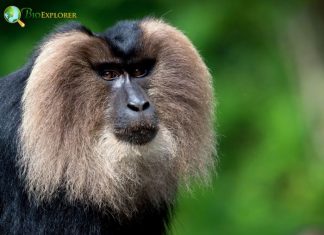
The lion-tailed macaque (Macaca silenus), also known as the wanderoo, is an Old World monkey native to the Western Ghats of South India. Lion-tailed macaques are diurnal and arboreal.
The Lomami red colobus (Piliocolobus parmentieri) is native to central Africa. The Lomani red colobus monkey has a restricted range in the lowland rainforest between the Lomani River and the Lualaba River in the central Democratic Republic of the Congo.
Lowe’s Mona monkey (Cercopithecus lowei) is an Old-World monkey in the Cercopithecidae family found from Ghana to the Ivory Coast. Lowe’s Mona monkeys generally consist of one male and several females.
The Malbrouck (Chlorocebus cynosuros) is an Old-World primate from Africa that belongs to the Chlorocebus genus. The species is sometimes classified as a subspecies of the green monkey (Chlorocebus pygerythrus) or the common grivet (Chlorocebus aethiops).
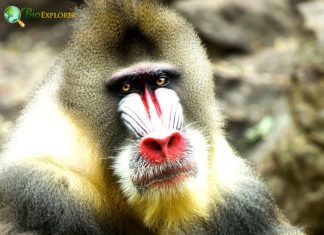
The mandrill (Mandrillus sphinx) is a primate of the Old-World monkey family (Cercopithecidae). It is among the two species in the Mandrillus genus and drill. Groups of mandrills can vary from a few individuals to 50 individuals.
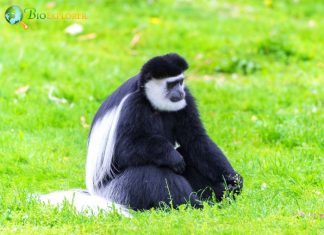
The mantled guereza (Colobus guereza), also known as the guereza, Abyssinian black-and-white colobus, or eastern black-and-white colobus, is a black-and-white colobus, a species of Old World monkey. The mantled guerezas are typically diurnal.
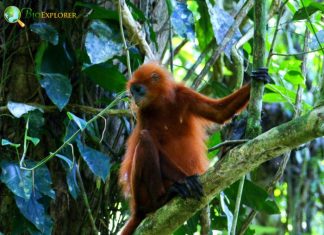
Endemic to the jungles of Borneo in Indonesia and Malaysia, red leaf monkeys get their name from their shaggy reddish-maroon fur. They are also known as maroon-leaf monkeys and maroon langurs.
Mentawai Langur is also called the Long-Tailed Langur, and it is native to the Mentawai Islands in Indonesia. The pelage of Mentawai langur is medium length, longer on the back of the shoulders and anterior of the flanks and shorter on the face, neck, abdomen, and under the thighs.
Miller’s Langur (Presbytis canicrus), also called the Kutai Gray Langur, is the rarest of the four Hosei subspecies, all of which are native to the island of Borneo. One of the world’s most endangered primates, Miller’s langur, was once considered extinct until it was rediscovered in 2013.
Miss Waldron’s red colobus (Piliocolobus waldronae) is endemic to West Africa. Miss Waldron’s red colobus was discovered in December 1933 by Willoughby P. Lowe, a collector at the British Museum (Natural History).
The mitered langur has brown or gray fur on its back, darker, while it is even darker on its belly and the arms, legs, and tail. These Indonesian primates live in groups of 1 male with 5 to 17 females.
The Mona monkey (Cercopithecus mona) is an Old World monkey living between Cameroon and Ghana in West Africa. Mona monkeys live in large groups of 5 to 50 individuals.
The moor macaque (Macaca maura) is a brown/black haired macaque with a pale rump and bare pink rump skin. Moor macaques appear to be a relatively tolerant macaque species, showing low levels of aggression between group members.
The mustached monkey or moustached guenon (Cercopithecus cephus) is a primate species in the Cercopithecidae family. Moustached monkeys take regular paths through the branches, with each monkey following the next along the same path.
The Muna-Buton macaque is a brown-black, nearly tailless monkey found only on Buton and Muna islands in Southeast Sulawesi. It eats mostly fruit, raids sweet potato gardens, and is rated Vulnerable as logging and mining shrink its forest. Taxonomists still argue over whether it is a full species or a form of the booted macaque.
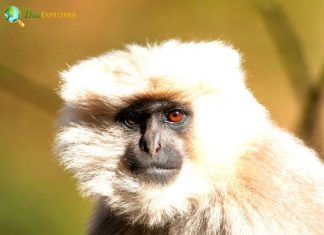
The Myanmar snub-nosed monkey or black snub-nosed monkey (Rhinopithecus strykeri) is an endangered Colobino monkey species discovered in northern Burma (Myanmar) in 2010. These Asian primates’ tails are relatively long, usually around 1.4 times their body length.
The Natuna Island Surili (Presbytis natunae) is a primate species in the Cercopithecidae family. The species is native to the Indonesian island of Natuna Besar. The species is native to the Indonesian island of Natuna Besar.
The Nepal gray langur (Semnopithecus schistaceus) is a gray langur native to the Himalayas of Nepal, extreme southwestern Tibet, northern Pakistan, northern India, Bhutan, and possibly Afghanistan. The Nepal gray langur is both terrestrial and arboreal.
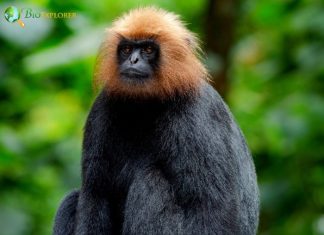
The Niger Delta red colobus (Piliocolobus epieni) is a critically endangered colobus native to the western part of the Niger Delta in southern Nigeria. The scientific name of the Niger Delta red colobus, Piliocolobus epieni, comes from the local Ijaw language word for the species, “epieni”.
The Nilgiri langur (Semnopithecus johnii), also called the black-leaf monkey, John’s langur, and Indian hooded leaf monkey is a langur (a species of Old-World monkey) found in the Nilgiri foothills of the Western Ghats in southern India.
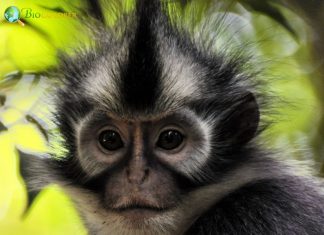
The North Sumatran leaf monkey (Presbytis thomasi), also called Thomas’s langur, is a primate species in the Cercopithecidae family. The North Sumatran leaf monkeys spend most of the day in groups resting, moving, or feeding.
The northern pig-tailed macaque (Macaca leonina) is a macaque species in the Cercopithecidae family. Typical of this group of Old World monkeys, northern pig-tailed monkeys are gregarious, living in social groups of 9-81 individuals.
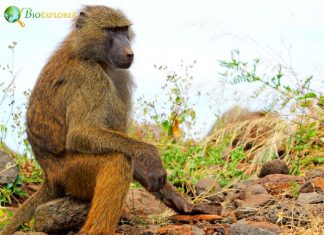
The Olive baboon (Papio anubis), also called the Anubis baboon, is a species of the Cercopithecidae family of Old-World monkeys. The name comes from the Egyptian god Anubis.
The olive colobus (Procolobus verus), also called the Van Beneden’s colobus or green colobus is a primate species in the Cercopithecidae family. It is the smallest specimen of all the Colobine monkeys. It is rarely seen in its natural habitat due to its secretive nature and cryptic coloration.
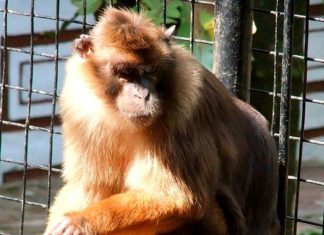
(Piliocolobus oustaleti) is another species of red colobus that lives in various forest types in the southern Central African Republic, southern South Sudan, northern Democratic Republic of the Congo, and northeastern Congo.
The Pagai island macaque (Macaca pagensis), also called the Pagai or Bokkoi macaque is an Old-World monkey native to the Mentawai Islands on the west coast of Sumatra. Groups of Pagai Island macaques consist of approximately 5 to 25 individuals.
The pale-thighed surili (Presbytis siamensis), also called the white-thighed langur, is a primate species in the Old World monkey family (Cercopithecidae). Pale-thighed langurs are savvy herbivores; it’s fun to say they only eat plants and have a fussy palate, with a preference for young leaves, seeds, and fruits.
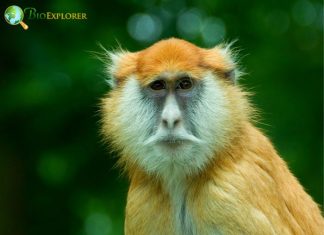
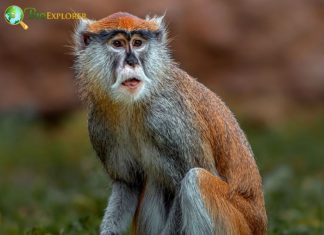
The Patas Monkey (Erythrocebus patas), also called the Hussar Monkey or Wadi Monkey is a terrestrial monkey distributed in semi-arid areas of West and East Africa. The patas monkey lives in multi-female groups of about 60 individuals (although much larger aggregations have been reported).
Pennant’s Colobus or Pennant’s Red Colobus (Piliocolobus pennantii) is a species of arboreal primate in the Cercopithecidae family. Like other red colobus monkeys, the Pennant’s red colobus lives in flocks that may consist of 12 to 80 individuals occupying a territory of 25 to 150 hectares.
Phayre’s leaf monkey (Trachypithecus phayrei), also called the Phayre’s langur, is a species of Lutung endemic to South and Southeast Asia. The name commemorates the late Sir Arthur Purves Phayre, a lieutenant general in the British Indian Army and commissioner of the entire province of former British Burma.
The pig-tailed langur (Simias concolor), monotypic in the Simias genus, is a great Old-World monkey native to several small islands off Sumatra, Indonesia. Adult pig-tailed langurs have black faces and small, turned-up noses.
Popa langur (Trachypithecus popa) is a primate species in the Cercopithecidae family. It occurs exclusively in Myanmar. The species is named after Mount Popa, where a population of 100 monkeys lives.
The Preuss’s monkey (Allochrocebus preussi) also called the Preuss’s guenon is a diurnal primate that inhabits terrestrial montane forests (up to 2,500 meters) in eastern Nigeria, western Cameroon, and Bioko in Equatorial Guinea.
Preuss’s red colobus (Piliocolobus preussi) is native to the Cross-Sanaga Rivers eco-region. These old-world monkeys are restricted to small areas in Cameroon and Nigeria but once occupied a much larger area.
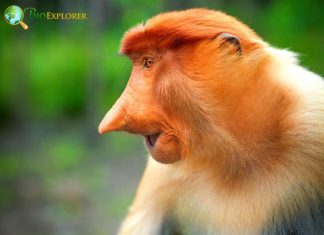
The proboscis monkey (Nasalis larvatus) is an Old World arboreal species with an unusually large nose, reddish-brown skin color, and a long tail. The proboscis monkey is a large species and one of the largest old-world monkey species native to Asia.
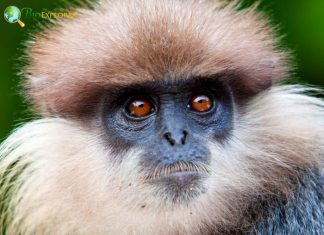
The purple-faced langur (Semnopithecus vetulus), also called the purple-faced leaf monkey, is an Old World species native to Sri Lanka. The purple-faced langur is found in the closed forests of Sri Lanka’s mountains and in the southwestern part of the country known as the ‘wetland’.
The red-bellied monkey (Cercopithecus erythrogaster), also called the red-bellied guenon or white-throated guenon is a diurnal primate living in the trees of tropical rainforests or tropical areas in Benin and Nigeria. The red-bellied monkey was once considered extinct due to constant hunting for fur on its unique red belly and white front legs.
The red-eared guenon (Cercopithecus erythrotis), also called the russet-eared guenon or red-eared monkey is endemic to the tropical and subtropical lowland rainforests of Nigeria, Equatorial Guinea, and Cameroon.
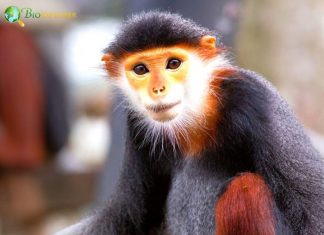
The red-shanked douc langur is an Old-World monkey species that is one of the most colorful primates. Red-shanked douc langurs are genetically similar to gray-shanked douc langurs; however, they are considered a different species due to their different biological characteristics.
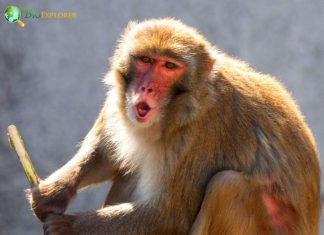
The rhesus macaque (Macaca mulatta), commonly known as the rhesus monkey, is a species of Old-World monkey. Rhesus monkeys are diurnal animals, both arboreal and terrestrial.
Robinson’s banded langur (Presbytis robinsoni), also known as Robinson’s banded surili, is a monkey species in the Cercopithecidae family. Robinson Banded Langurs are generally shy and alert creatures, rarely leaving the comfort of the canopy.
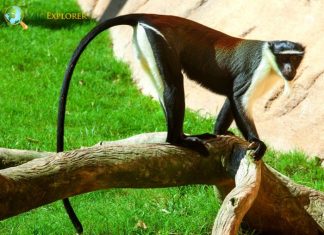
Roloway monkeys (Cercopithecus roloway), also called Roloway guenons, are Old World monkeys native to Ghana and the Ivory Coast. Roloway monkeys resemble Diana monkeys in appearance, a species with which they were once confused.
The rusty-mantled mangabey is a crested monkey of west-central Cameroon and southeastern Nigeria, named for the rust-colored cape across its shoulders. The Handbook of the Mammals of the World calls it the least known of the crested mangabeys. Its feeding has never been studied in the wild, nothing is published on its breeding or social life, and four authorities disagree on whether it is a species at all.
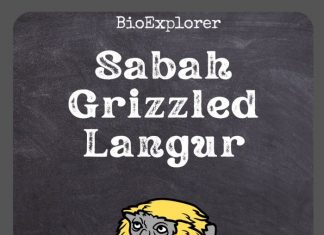
Saban Grizzled Langur was once thought to be a subspecies of the Hose’s langur, Presbytis hosei (as Presbytis hosei sabana). The Saban grizzled langur is endemic to the island of Borneo in the Malaysian province of Sabah, with part of its range in Indonesia.
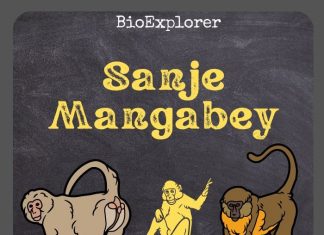
Sanje mangabey, also called the Sanje crested mangabey and Sanje River mangabey, are Old World monkeys endemic to Tanzania, a sovereign state in East Africa. Some Sanje mangabeys prefer their own company to that of others and live alone.
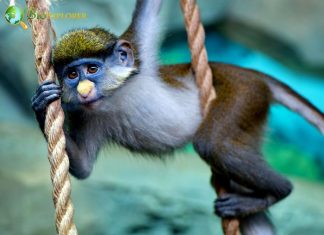
The Schmidt’s red-tailed monkey, also called the red-tailed guenon, Schmidt’s guenon, or black-cheeked white-nosed monkey is a primate species in the Cercopithecidae family. The Schmidt’s red-tailed monkey is named for its red coloration on the underside of its tail, as well as the bicolor coloration of its tail as the reddish color increases from the base to the tip.
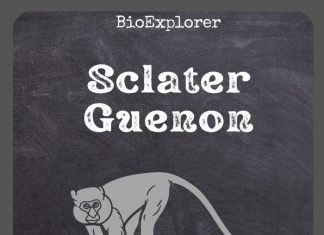
(Cercopithecus sclateri), also called the Sclater monkey and Nigerian monkey is an Old-World monkey. Sclater’s guenon is an Old-World monkey first described by Reginald Innes Pocock in 1940 and named for zoologist and ornithologist Philip Sclater.
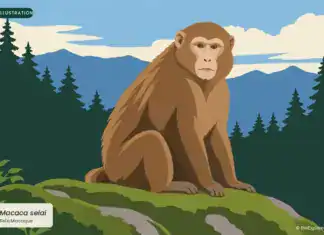
The Sela macaque is a monkey of the Eastern Himalayas, named in 2022 by seven scientists of the Zoological Survey of India. It was split from the Arunachal macaque on mitochondrial DNA, after Sela Pass kept the two apart for about 1.96 million years. Its holotype is a photographed specimen rather than a preserved one, and the GBIF backbone still does not carry the name.
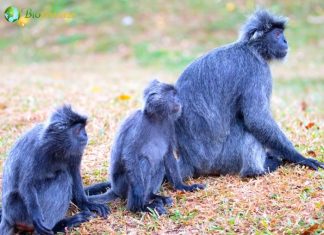
The Selangor silvered langur (Trachypithecus selangorensis) is a leaf monkey living on the west coast of the Malay Peninsula. Like most leaf monkeys, the Selangor silvered langur usually lives in groups of a single adult male and several adult females and their young offspring.
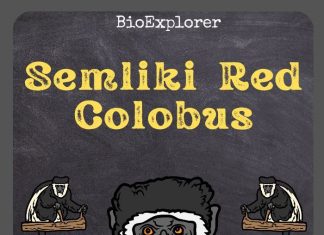
The Semliki red colobus (Piliocolobus semlikiensis) is native to central Africa. The Semliki red colobus lives in the ironwood forest of the northeastern Democratic Republic of the Congo between the Rwenzori Mountains and the Semliki River valley.
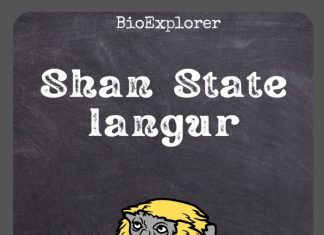
Shan State Langur was generally considered a subspecies or a synonym of Phayre’s leaf monkey (Trachypithecus phayrei) until Roos et al. elevated it to species status in 2020.
The Shortridge’s capped langur (Trachypithecus shortridgei) is a colobine primate inhabiting low to medium evergreen and semi-evergreen forests east of the Chindwin River in northeastern Myanmar and southwestern Myanmar, China, in the Nu and Dulong valleys.
Siberut langurs are native to the islands of North Pagai, South Pagai, and Sipora. Siberut langurs spend over 80 percent of their time resting and foraging and only a tiny portion traveling and socializing.
The Siberut macaque (Macaca siberu) is an endangered macaque species native to the island of Siberut in Indonesia. It was previously thought to be conspecific with the Pagai Island macaque (Macaca pagensis), which is paler overall, but this arrangement was polyphyletic.
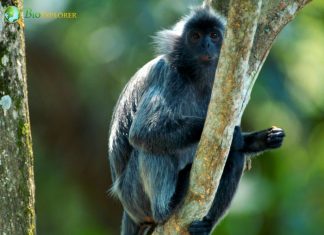
The silvery Lutung (Trachypithecus cristatus), also called the silvery langur or silvered leaf monkey is an Old-World monkey. Silvery Lutungs primarily live in trees.
The sooty mangabey, also called the white-collared or white-crowned mangabey is a predominantly terrestrial Old-World monkey. Sooty mangabeys remember the location of the fallen fruit and can tell whether or not a tree is bearing fruit.
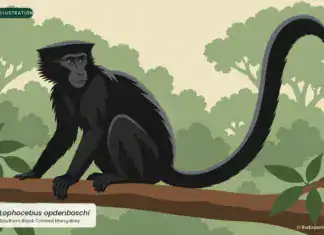
The southern black crested mangabey is an all black monkey of the forests along the Kwilu, Wamba and Kwango rivers in southwestern DR Congo, reaching into northern Angola. Henri Schouteden named it in 1944 from a single holotype. Its feeding has never been studied, nothing is known of its social life, and it is not known to occur in a single protected area anywhere in its range.
The Southern Patas Monkey (Erythrocebus baumstarki), native to Tanzania, is a critically endangered primate known for its speed, elusive nature, and striking coloration. Once widespread, its population now teeters between 100–200 individuals due to habitat loss and human threats. Inhabiting open acacia woodlands, these ground-dwelling monkeys play a vital ecological role in seed dispersal and insect control. Conservation efforts are urgently needed to protect this rare species and restore its shrinking habitat range.
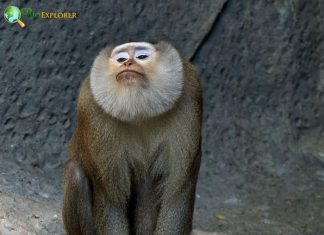
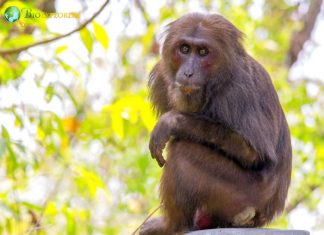
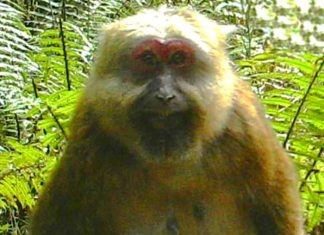
The stump-tailed macaque, also known as the bear macaque, is an Old World monkey endemic to Cambodia, northeastern India, southwestern China, Myanmar, and Laos, from northwestern Peninsular Malaysia, Vietnam, and Thailand.
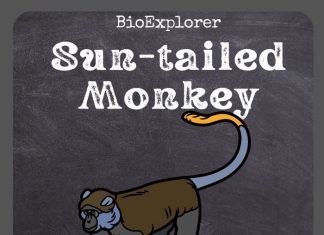
The sun-tailed monkey (Allocrocebus solatus) is among the most understudied primates in its habitat. Discovered as a new species in 1988, it is classified as a guenon, a member of the Cercopithecus genus, but later moved to the Allochrocebus genus.
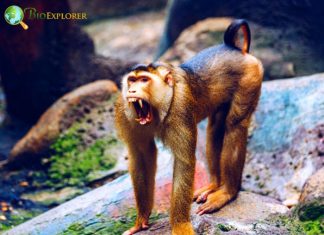
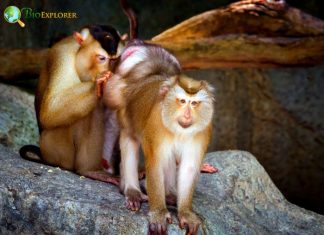
The pig-tailed macaque (Macaca nemestrina), also called the Sundaland pig-tailed macaque and Sunda pig-tailed macaque is a medium-sized macaque native to southern Thailand, Indonesia, and Malaysia. Pig-tailed macaques also have long legs and hairless snouts.
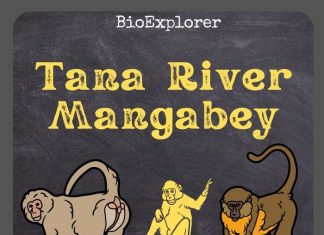
Tana River Mangabeys are medium-sized monkeys with long, light gray hair covering most of their bodies. Tana River Mangabeys are highly social animals, living in multi-female social groups averaging 27 individuals in size.
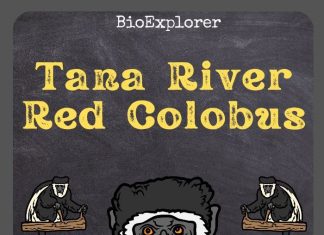
The Tana River red colobus (Piliocolobus rufomitratus), also called the eastern red colobus, is a critically endangered primate species in the Cercopithecidae family. The Tana River red colobus monkeys are the only one of 18 species of red colobus that do not live in the tropical rainforest.
The tantalus monkey (Chlorocebus tantalus) is an Old World monkey endemic to Africa, ranging from Ghana to Sudan. It was initially described as a subspecies of Grivet (Chlorocebus aethiops). Tantalus monkeys are very similar to vervet monkeys but are smaller in size.
The Tarai gray langur (Semnopithecus hector) is an Old-World monkey and was once thought to be a subspecies of the northern plains gray langur. The Latin name for Tarai gray langurs is inspired by Hector, the prince of Troy.
Tenasserim lutung (Trachypithecus barbei) is a species of lutung. It occurs in Thailand and Myanmar. The species derived its common name from the Tenasserim Hills.
The Thollon’s red colobus (Piliocolobus tholloni), also called the Tshuapa red colobus, is native to the Democratic Republic of the Congo and the Lower Republic of the Congo. It was recognized as a separate species by Dandelot in 1974, followed by Groves in 2001.
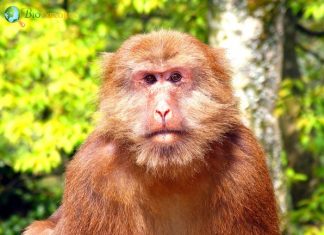
The Tibetan macaque (Macaca thibetana), also called the Chinese stump-tailed macaque is a macaque native to eastern Tibet, eastern Guangdong, and northern Shaanxi in China. Tibetan macaques are the largest of the macaques and have a strong, muscular build with dense fur that ranges in color from gray to brown.
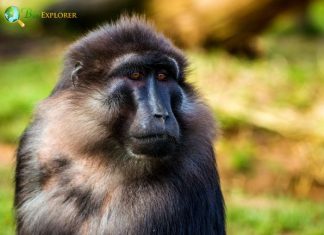
Tonkean macaques also known as Tonkean black macaques, are endemic to the central part of the island of Sulawesi and the neighboring Togian Islands in Indonesia. Tonkea macaques are pretty intelligent and creative.
The Tonkin snub-nosed monkey, also known as the Dollman’s snub-nosed monkey (Rhinopithecus avunculus), is a slender-bodied Old World arboreal monkey native to northern Vietnam.
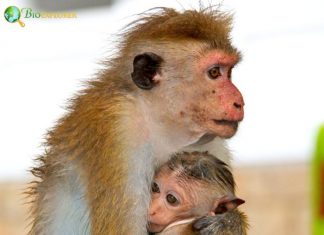
The toque macaque (Macaca sinica) is a red-brown Old World monkey endemic to Sri Lanka, known as the rilewa or rilawa. Its common name refers to the strand of hair on its head that resembles a brimless hat.
The tufted gray langur (Semnopithecus priam), also called the Coromandel sacred langur and the Madras gray langur, is an Old-World monkey, one of the langur species. These langurs are generally shy and only descend when there is no visible danger.
The Ugandan crested mangabey is a forest monkey of Uganda, with one population in northwest Tanzania. It is probably the smallest of the crested mangabeys. Kibale Forest National Park sits inside its range, so most famous research on gray-cheeked mangabeys describes this animal under an older name. The IUCN has never assessed it as a species.
The white-thighed colobus (Colobus vellerosus), also known as ursine colobus, white-thighed black-and-white colobus, and Geoffroy’s black-and-white colobus, is a species of primate in the Cercopithecidae family.
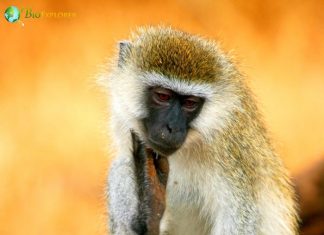
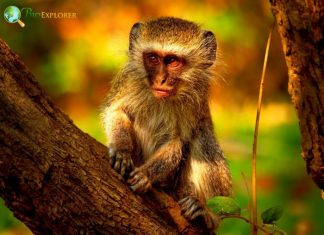
The vervet monkey (Chlorocebus pygerythrus) is an Old World monkey of the Cercopithecidae family endemic to southern and eastern Africa. Not only can vervet monkeys skilfully navigate through the treetops, but they can also swim.
The West Javan langur (Trachypithecus mauritius) is an Old-World monkey of the Colobinae subfamily. It was previously considered a subspecies of Trachypithecus auratus until Roos and Groves raised it to its own species.
The western red colobus (Piliocolobus badius), also called the Upper Guinean red colobus, rust red colobus, or bay red colobus is a species of Old-World monkey found in the forests of West Africa, from Senegal to Ghana.
The white-cheeked macaque (Macaca leucogenys) is found only in Medog County in southeastern Tibet and the Arunachal Pradesh state of India. The species was first discovered and described by Chinese primatologists Peng-Fei Fan, Cheng Li, and Chao Zhao in the American Journal of Primatology in 2015.
The white-fronted surili (Presbytis frontata) is a primate species in the Cercopithecidae family, the Old World monkeys. This species prefers to eat immature leaves than more mature leaves.
The white-headed langur (Trachypithecus leucocephalus) is an endangered species of langur native to Guangxi, China. As the common name suggests, a tuft of white fur covers this primate’s head.
Cercocebus atys lunulatus now Cercocebus lunulatus, is commonly known as the white-naped, white-headed, or white-necked mangabey (confusing with the collared mangabey). These mangabeys can also distinguish between fruiting and non-fruiting trees and are more likely to approach fruiting trees.
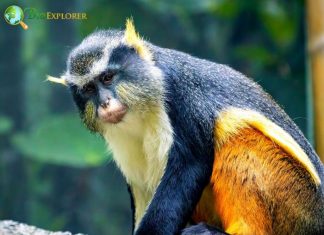
The Wolf’s mona monkey (Cercopithecus wolfi), also called the wolf monkey, is a colorful Old-World monkey in the Cercopithecidae family. Wolf’s mona monkeys have huge cheek pouches.
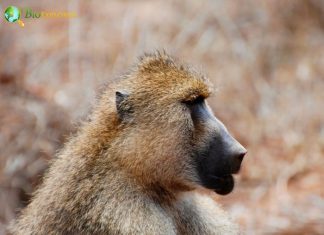
The yellow baboon (Papio cynocephalus) is another baboon species in the group of Old World monkeys. They resemble the Chacma baboon but are slightly smaller and have a less elongated snout. Yellow baboons also have white fur on internal surfaces, such as their cheeks and limbs, similar to the color of the human forearm.
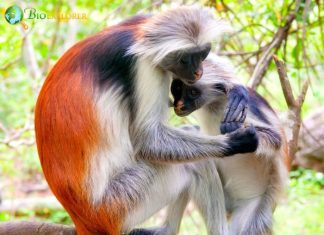
The Zanzibar red colobus (Piliocolobus kirkii) is endemic to Unguja, the main island of the Zanzibar archipelago off the coast of Tanzania. The Zanzibar red colobus, often referred to as Kirk’s red colobus is named after Sir John Kirk, the British resident of Zanzibar who first spotted these creatures.
There are 166 living species, placed in 23 genera. Cercopithecinae holds 83 and Colobinae holds 83. The figure follows Mammal Diversity Database v2.5, released July 2026. Totals move as taxonomists split, merge and describe species.
What is the difference between Old World and New World monkeys?
Nostrils are the quickest test. Old World monkeys have narrow nostrils facing down. New World monkeys have broad nostrils facing sideways. No Old World monkey can grip with its tail. Several New World groups can. Old World monkeys also carry cheek pouches or a chambered stomach.
Are baboons Old World monkeys?
Yes. Baboons are the genus Papio, with six species. They sit in the subfamily Cercopithecinae. They are among the largest and most terrestrial monkeys in the family.
Are apes Old World monkeys?
No. Apes and Old World monkeys are sister groups inside Catarrhini. An ape is not a kind of monkey. The tail settles it. Every Old World monkey has one. No ape does.
Which Old World monkey is the largest?
The mandrill. Adult males reach roughly 55 pounds. The smallest are the talapoins, at about 2 to 3 pounds. Males are notably larger than females across most of the family.
Where do Old World monkeys live?
Across sub-Saharan Africa and South and Southeast Asia. Habitats run from rainforest to savanna, mountains and cities. The Barbary macaque reaches North Africa and Gibraltar. That makes it the only monkey living wild in Europe.
Cite this page
BioExplorer. (2026, October 12). Old World Monkeys: All 166 Species. https://www.bioexplorer.net/animals/mammals/monkeys/old-world/
Avian biology writer and wildlife photographer at BioExplorer.net. Completed Ornithology: Comprehensive Bird Biology from the Cornell Lab of Ornithology (10.0 CEUs, 93% average). Pursuing HBSc at University of Toronto Mississauga.