
Gorontalo Macaque
Primate Profile
Gorontalo Macaque
Macaca Macaca nigrescens · Also known as Dumoga-bone Macaque
Kingdom
Animalia
Phylum
Chordata
Class
Mammalia
Order
Primates
Family
Cercopithecidae
Genus
Macaca
Species
nigrescens
Authority
(Temminck, 1849)
Photo
VU
IUCN STATUSVulnerable
- Common NamesGorontalo Macaque, Dumoga-bone Macaque
- Taxonomy Classification Year1849
- Monkey Size44.5 to 57 cm (17.52 to 22.44 in)
- Skin Color(s)Black
- HabitatRainforest, mountains
- DietOmnivorous
- Native CountriesNorthern Sulawesi Islands of Indonesia
Gorontalo Macaque Distribution
Countries
Indonesia ( )
)
)Gorontalo Macaque Characteristics
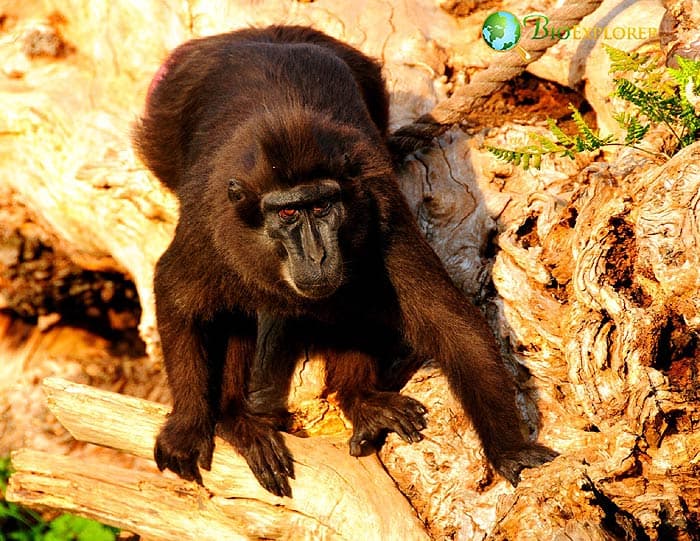
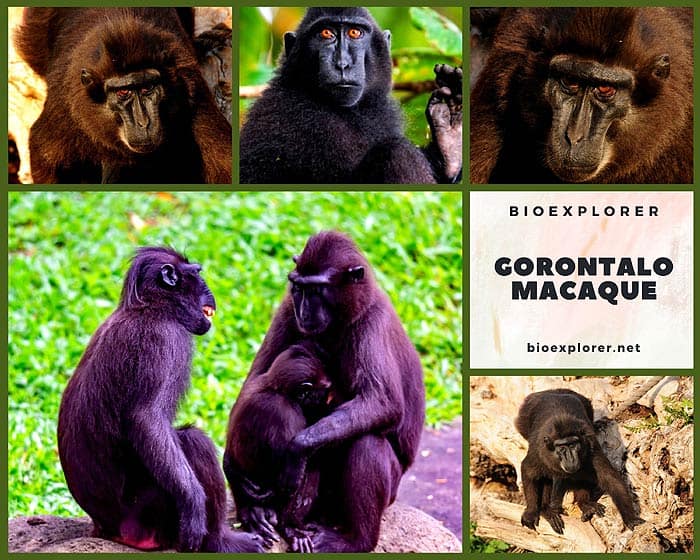
The Gorontalo macaque[1] (Macaca nigrescens), also called the Dumoga-bone macaque, is a species of the primate of the Cercopithecidae family.
- Dumoga-bone Macaques are native to the Northern Sulawesi Island of Indonesia. Gorontalo macaques are large diurnal primates with black bodies and faces.
- Their faces are black and sparsely covered with fur, and their fur is coarse, dense, and shaggy.
- Juvenile Gorontalo macaques are paler than adults and appear brown instead of black. In addition, juveniles have black fur where the crest develops.
- As adult male species age, their hair turns grizzled and gray, most noticeable on the upper body; it also sometimes occurs in the arms of younger men.
Gorontalo Macaque Facts
- Gorontalo macaques are diurnal, spending 59 percent[2] of their waking time moving, feeding, and foraging.
- Female species have an egalitarian social structure, while men form a linear and transitive domination hierarchy.
- Groups are typically tolerant, characterized by displays of appeasement, minimal aggression (biting), and “symmetry in conflict“.
- Male Gorontalo macaques exhibit a wide range of signals to indicate aggression: open-mouth stares, closed-mouth grins, yawning, swinging, and chasing.
- They usually gather in the morning, rest in the afternoon, and roost in trees.
Suggested Reading: Different Kinds of Monkeys
Cite this page
BioExplorer. (2026, August 26). Gorontalo Macaque. https://www.bioexplorer.net/animals/mammals/monkeys/gorontalo-macaque/
Hello,
I just found the page on the Gorontalo macaque.
First, I think the picture is one of a Macaca nigra (black-crested) and not a Macaca nigrescens (Gorontalo, without crest)
And for the distribution, it can only be found in a small part in North Sulawesi, not in all Indonesia.
Thanks !
Thanks for stopping by Adam. The details have been corrected.