
Red-Shanked Douc Langur
| Kingdom | Order | Family | Genus | Species |
|---|---|---|---|---|
| Animalia | Primates | Cercopithecidae | Pygathrix | Pygathrix nemaeus |
- Common Name: Douc langur
- Taxonomy Classification Year: 1771
- Monkey Size: 61 to 76.2 cm (24.02 to 30.00 in)
- Skin Color(s): Gray
- Habitat: Rainforest
- Diet: Herbivorous
- Native Countries: Vietnam, Cambodia, China

Douc langur Distribution
Countries
Vietnam ( )
)
)
Cambodia ( )
)
)
China ( )
)
)Red-Shanked Douc Langur Characteristics
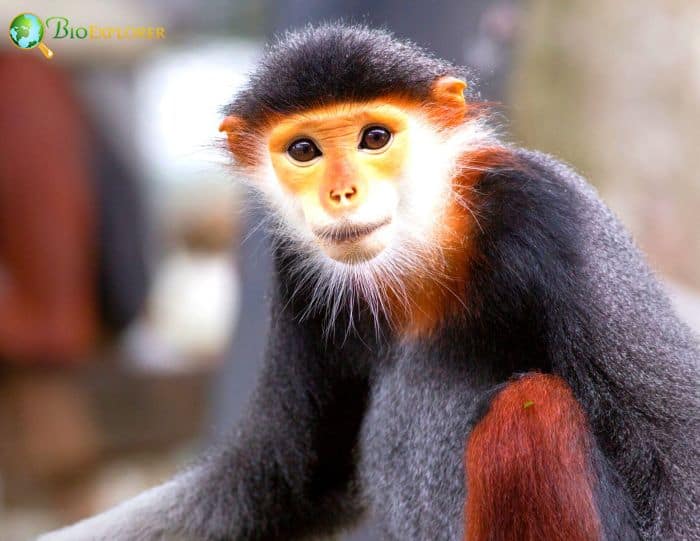
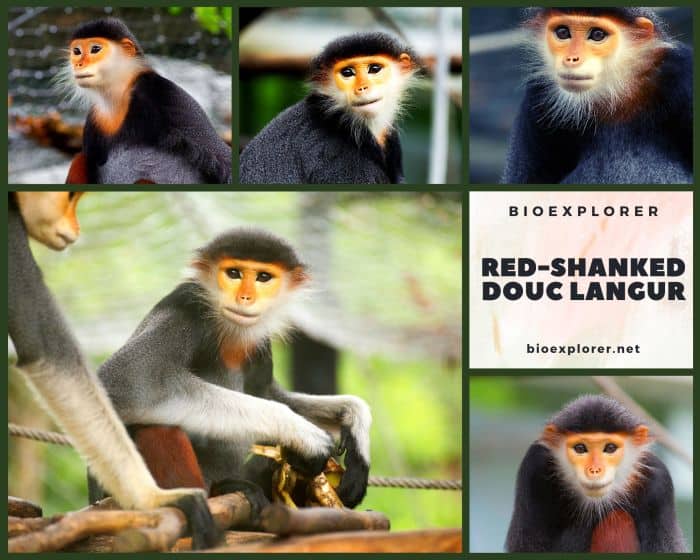
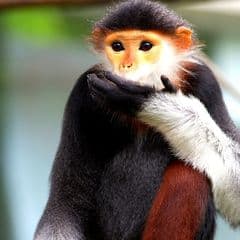
The red-shanked douc langur[1] is an Old-World monkey species that is one of the most colorful primates.
- Different Douc langur species can be distinguished by the color of their shanks or legs.
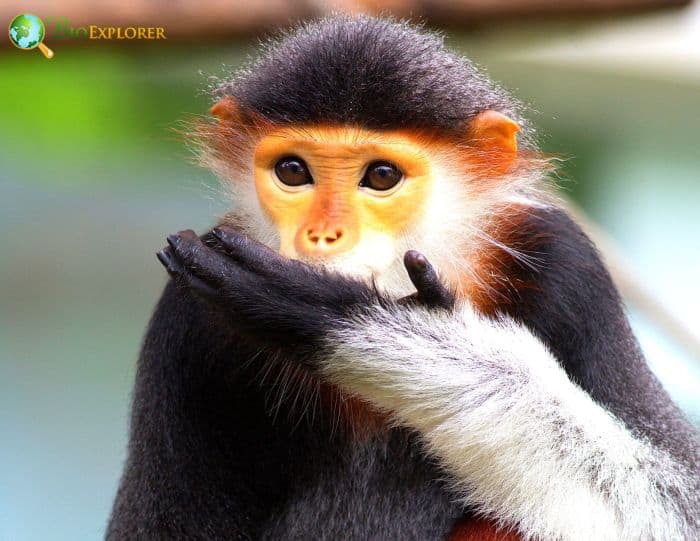
- Sometimes called “the costumed monkey, ” the red-shanked douc langur is one of the most colorful primates.
- The monkey’s orange and yellow face and ears are dusted with theatrical makeup, and the eyelids are dusted with light blue eyeshadow.
- Dark almond eyes see the world, and small nostrils inhale the scent of the forest habitat from a modest nose.
- Long, white whiskers (more prominent in males) adorn the chin and frame the alien face of the monkey. A wide black stripe runs across the monkey’s forehead.
Red-Shanked Douc Langur Facts
- Red-shanked douc langurs are genetically similar to gray-shanked douc langurs; however, they are considered a different species due to their different biological characteristics.
- Like other douc langur species, red-shanked douc langurs leap from branch to branch, pushing off with their legs and landing their feet-first on the next branch.
- The red-shanked Douc langur has a multi-chambered stomach and breaks down its food with bacteria through a process known as fermentation.
- Adult males take the lead in foraging in a group, females and babies take the middle position, and young males in the group follow at the back.
- In terms of mating, males and females “stare” at each other by thrusting their jaws forward, lowering and raising their eyebrows, and shaking their heads.
Suggested Reading: Different Species of Monkeys
Cite this page
BioExplorer. (2026, August 26). Red-Shanked Douc Langur. https://www.bioexplorer.net/animals/mammals/monkeys/red-shanked-douc-langur/