
Barbary Macaque
Primate Profile
Barbary Macaque
Macaca Macaca sylvanus
Kingdom
Animalia
Phylum
Chordata
Class
Mammalia
Order
Primates
Family
Cercopithecidae
Genus
Macaca
Species
sylvanus
Authority
(Linnaeus, 1758)
Photo
EN
IUCN STATUSEndangered
- Common NameBarbary Macaque
- Taxonomy Classification Year1758
- Monkey Size55 to 70 cm (21.6 to 27.6 inches)
- Skin Color(s)Light yellowish brown
- HabitatMountains, Forests
- DietOmnivorous
- Native CountriesAlgeria, Morocco, Gibraltar
Barbary Macaque Distribution
Countries
Algeria ( )
)
)
Morocco ( )
)
)
Gibraltar ( )
)
)Barbary Macaque Characteristics
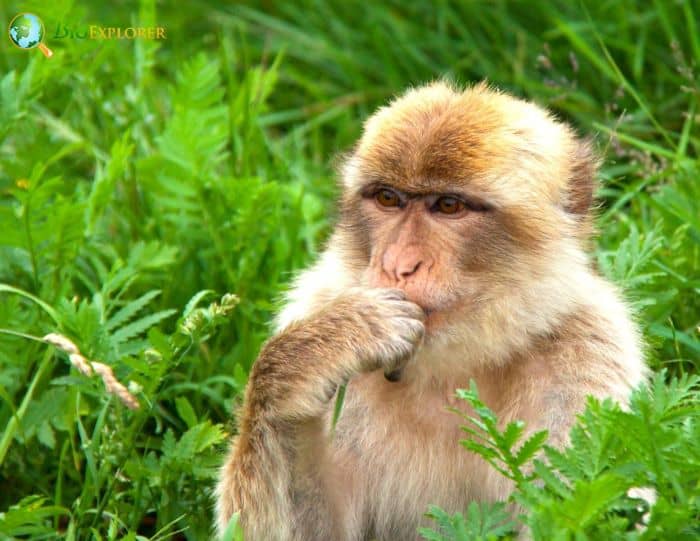
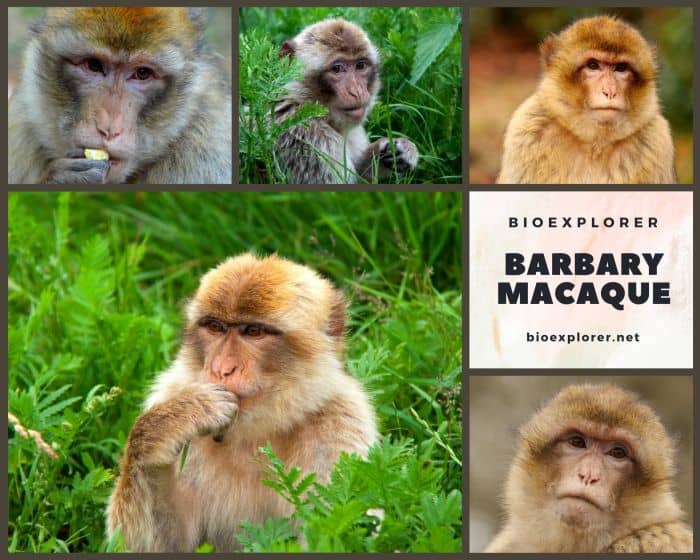
The Barbary macaque[1], also called the Magot macaque, is a macaque endemic to the Atlas Mountains in Morocco and Algeria and a small introduced population in Gibraltar.
- A thick, silky layer of yellowish-brown to gray fur covers the Barbary macaque’s body; its lower part is lighter.
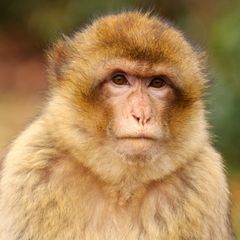
- Their narrow nose and deep pink face are devoid of fur.
- Like all macaques, the species has long canines, powerful jaws, and cheek pouches (storing snacks).
- The front limbs of these old-world monkeys are relatively more extended than the hind legs.
Barbary Macaque Facts
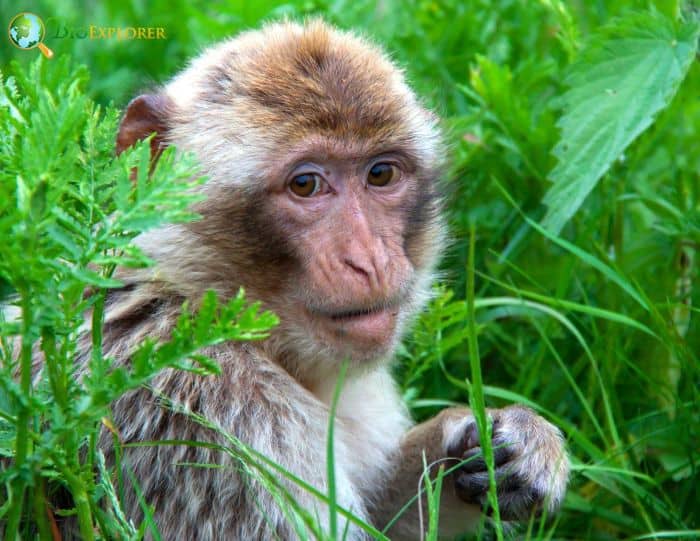
- The species’ lack of a viable tail (officially known as a vestigial tail, meaning that evolution has seen fit to make it a useless tail) has led to their mischaracterization as Barbary apes. However, all Barbary macaques are monkeys, not apes.
- Before the Ice Age, they inhabited the Mediterranean coasts and most of Europe, as far away as the British Isles and Germany.
- Social and outgoing, Barbary macaques live in mixed groups (called troops) of 12 to over 60 animals with an average of 24 members.
- To warn troop members of potential danger, particularly predators, Barbary macaques employ alarm calls of varying loudness and pitch.
- Like other primates, these macaque monkeys spend much time grooming themselves, a hobby that helps build strong social bonds.
Suggested Reading: The Different Types of Monkeys
Cite this page
BioExplorer. (2026, September 30). Barbary Macaque. https://www.bioexplorer.net/animals/mammals/monkeys/barbary-macaque/