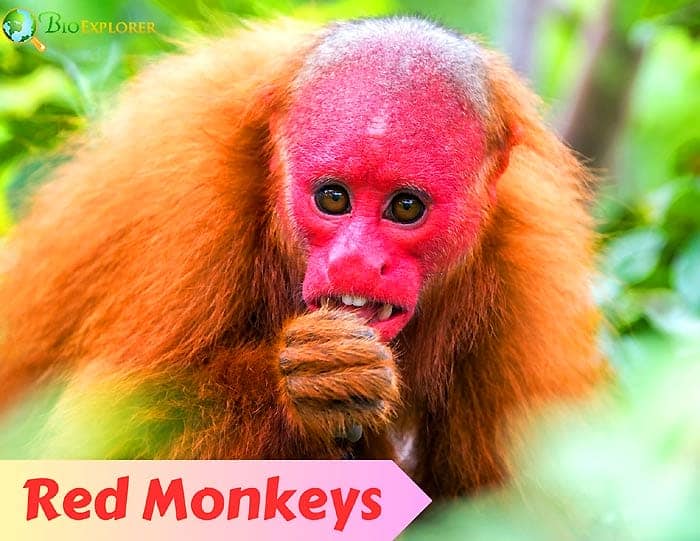
Red monkeys refer to various Old World and New World Monkey species from Africa, Asia, and South America with reddish fur or skin on parts of their bodies. The red coloration is quite unique among primates across these regions.
So, what exactly defines a red monkey?
They are monkeys that have reddish-brown, chestnut, orange, or even deep crimson fur or skin on their limbs, tails, faces, or rears. This red coloring provides camouflage, social communication, and thermoregulation benefits.
Some physical traits of red monkeys include:
Small to medium-sized bodies measuring 12 to 28 inches.
Long tails used for grasping branches (in Old World species).
Varied facial shapes and muzzle lengths.
Expressive eyes with white rims around the Iris.
Dexterous hands with fingerprints and flat nails.
Habitats of red monkeys
Red monkeys live in many forested habitats across equatorial Africa, South Asia, Southeast Asia, and the Amazon. This includes:
The Old World species thrive in tall trees, while New World species occupy middle and lower forest layers. Most spend their entire lives amongst the vegetation.
Over 50 known species of monkeys worldwide exhibit red coloration on parts of their bodies. The reddish hues range from vivid crimson reds to more subtle chestnut browns. The coverage area also varies – some have red only on their limbs or tails, while others have full red faces.
Where is the red coloring found?
The red appearance in most red monkey species arises from a pigment called eumelanin. This pigment also brings darker black or brown tones to the hair. The specific amount and distribution of eumelanin create rosy hues in red monkeys’ coarse fur or facial skin. Typically, the reddest areas are on the monkey’s rear, inner thighs, cheeks, head crown, or tail.
Now let’s overview some of the major red monkey species across continents:
The Alta Floresta titi is a distinct but unnamed form of titi (Plecturocebus) rediscovered in 2019 in Chapada dos Parecis, a plateau in the far south of the Brazilian state of Rondônia. This species lives exclusively between the Teles-Pires and Juruena rivers in Mato Grosso.
The Aracá uakari, also called the Ayres black uakari, is a newly described monkey species endemic to the northwestern Brazilian Amazon. The species was found by Jean-Philippe Boubli of the University of Auckland after following local Yanomamo Indians on their hunts along the Aracá River, a northern tributary of the Negro River.
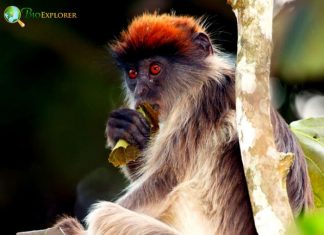
The Ashy-red Colobus or Ugandan red Colobus is an endangered species of red Colobus endemic to Eastern Africa. Like other colobus monkeys, Ashy Red has small thumbs that allow it to comfortably grip branches and swing nimbly through the canopy. In 2001, the ashy-red Colobus was recognized as a separate species.
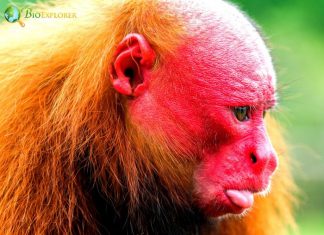
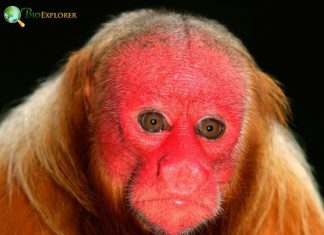
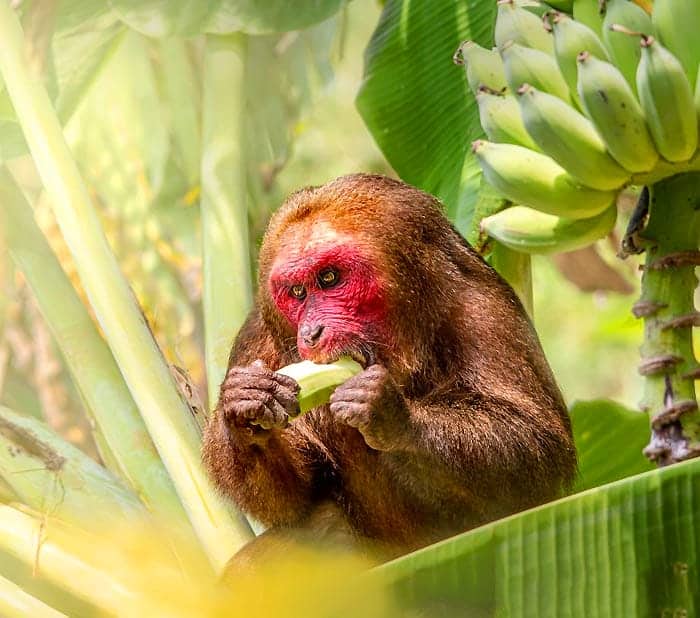
The obscure Bald Uakari (Cacajao Calvus) is an acrobatic Amazonian monkey with a flaming red face uniquely adapted to periodically flooded forests. Surprising insights on its taxonomy, specialized seed-based diet, unusual social life, habitat flexibility, and urgent need to conserve diminishing flooded forest habitat across the Amazon Basin.
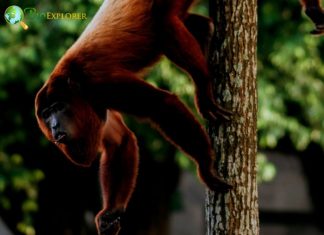
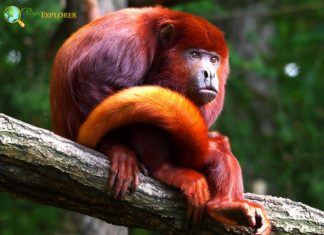
The Bolivian red howler monkey is a New-World monkey species native to neotropical South America. The Bolivian red howlers live in groups of 1 to 3 males and 2 to 7 females. Males in bachelor groups try to dominate the female group by wrestling the lead male.
Bouvier's Red Colobus was rediscovered in 2015 in the Republic of Congo after four decades without confirmed sightings. These African primates live in the swampy forests surrounding the Congo River, between the mouths of the Oubangui and Alima rivers.
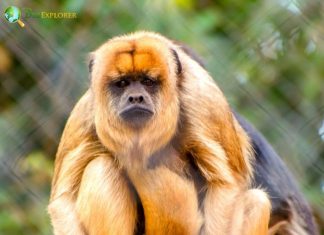
The brown howler monkey, also called the brown howler monkey, is a species of New World monkey that lives in the forests of southeastern Brazil and northeastern Argentina. Despite the common name "brown howler", its color is remarkably variable, with some individuals mainly appearing black or reddish-orange.
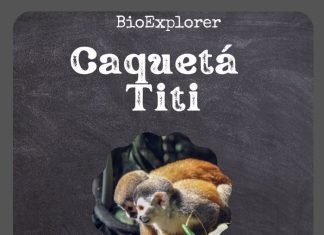
The caquetá titi also called the bushy-bearded titi or red-bearded titi, is a species of titi monkey native to Colombia in the Caquetá region. Dr. Marta Bueno, Thomas Defler, and their student Javier García of the National University of Colombia are credited with the 2008 discovery of the Caquetá-Titi monkey.
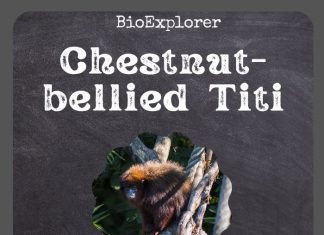
The chestnut-bellied titi monkey is a New World primate species native to Brazil. The Chestnut-bellied Titi monkeys live in family groups consisting of father, mother, and baby monkeys ranging in size from three to seven with other affiliates.
The collared titi, also called the widow monkey, or yellow-handed monkey inhabits the lush rainforests of the Amazon and is typically found south of Río Negro and north of Río Solimões. Titi monkeys are often known to "duet" with each other, either between an adult female and an adult male, an adult female and her son, or an adult male and his daughter.
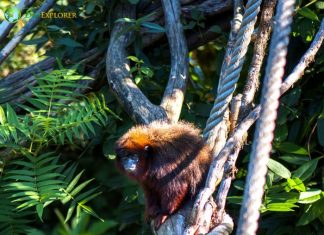
The coppery titi, or the red titi, is a species of titi, a type of New-World monkey native to South America. Coppery titi monkeys have dense fur that covers most of the body except for the face.
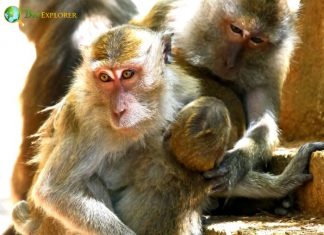
The crab-eating macaque also called the long-tailed macaque and known in laboratories as the cynomolgus monkey, is a primate monkey endemic to Southeast Asia. Crab-eating macaque macaques live in multi-male groups comprising around 30 members.
The Cruz Lima saddleback tamarin is a species of saddleback tamarin, a small monkey native to South America. The Cruz Lima saddleback tamarins were formerly thought to be a subspecies of the brown-mantled tamarin (Leontocebus fuscicollis).
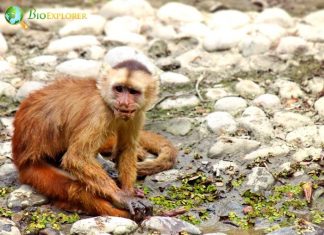
The Ecuadorian capuchin, also known as the Ecuadorian white-fronted capuchin, is a species of a graceful capuchin monkey in the Cebidae family. The highest-ranking female dominates all group members except the highest-ranking male.
The Equatorial Saki, also known as the red-bearded Saki, is a species of saki monkey and New World monkey. They are most common in riparian, seasonally flooded, and swampy forests but have also been seen in terra firme forests.
Foa's Red Colobus or Central African red colobus is endemic to the Democratic Republic of the Congo. Generally, these African primates are found in large groups of 20 to 90 individuals.
The Guyanan red howler monkey (Alouatta macconnelli) also known as Guianan Red Howler, is a New World monkey native to Guyana, Suriname, Trinidad, Venezuela, and Brazil. Each troop has a hierarchy consisting of a single dominant alpha male, sometimes with 1 or 2 subadult males. The rests are females and their young.
The Lomami red colobus (Piliocolobus parmentieri) is native to central Africa. The Lomani red colobus monkey has a restricted range in the lowland rainforest between the Lomani River and the Lualaba River in the central Democratic Republic of the Congo.
Lucifer Titi (Cheracebus lucifer) is a species of Titi, a New World monkey endemic to South America. It is found in Peru, Ecuador, Colombia, and Brazil. This yellow-handed Titi was described as Callicebus lucifer in 1914.
The Maranhão red-handed howler (Alouatta ululata) is native to forests (e.g., Babaçu forests) in the northeastern Brazilian states of Piauí, Maranhão, and Ceará. Red-handed howler monkeys are among the least studied species of all howler monkeys.
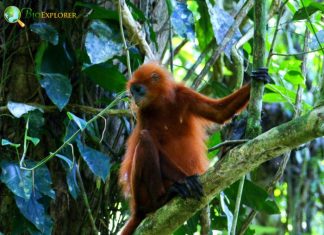
Endemic to the jungles of Borneo in Indonesia and Malaysia, red leaf monkeys get their name from their shaggy reddish-maroon fur. They are also known as maroon-leaf monkeys and maroon langurs.
(Piliocolobus oustaleti) is another species of red colobus that lives in various forest types in the southern Central African Republic, southern South Sudan, northern Democratic Republic of the Congo, and northeastern Congo.
The Panamanian night monkey or Chocoan night monkey (Aotus zonalis) is a species of night monkey formerly considered a subspecies of the grey-bellied night monkey in the Aotidae family. Panamanian night monkeys are sympatric with other species. They do not compete for resources with other animals in their range due to their alternate schedules.
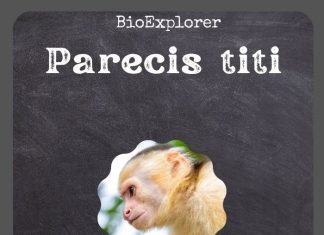
The Parecis titi (Plecturocebus parecis) is a species of titi, a New World monkey native to Brazil. The range of the new species is in the deforestation arc of the Amazon, where large tracts of forest are being destroyed for timber, settlements, and industrial agriculture.
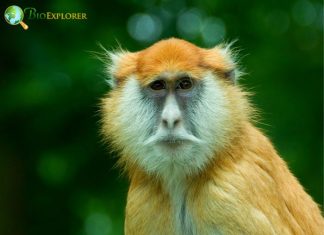
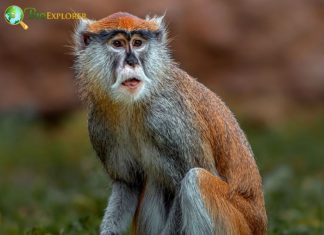
The Patas Monkey (Erythrocebus patas), also called the Hussar Monkey or Wadi Monkey is a terrestrial monkey distributed in semi-arid areas of West and East Africa. The patas monkey lives in multi-female groups of about 60 individuals (although much larger aggregations have been reported).
Prince Bernhard's Titi (Plecturocebus bernhardi) is a species of titi in the subfamily Callicebinae. It is a species of New World monkey native to Brazil. The species is named after Prince Bernhard of the Netherlands, a naturalist who established the Order of the Golden Ark to honor conservationists worldwide.
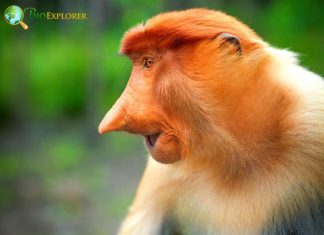
The proboscis monkey (Nasalis larvatus) is an Old World arboreal species with an unusually large nose, reddish-brown skin color, and a long tail. The proboscis monkey is a large species and one of the largest old-world monkey species native to Asia.
The Colombian red howler or Venezuelan red howler is a South American species of howler monkey, a New World species of monkey found in the western Amazon basin. Colombian red howler monkeys live in relatively large social groups composed of around 10 individuals, with just one or possibly two of the individuals being male.
The red-backed bearded saki (Chiropotes chiropotes), also known as Guianan Bearded Saki, is a New World monkey native to South America. They live in groups of about 40 members of both sexes, sometimes separated into groups when traveling or foraging, their primary occupation.
The red-bellied monkey (Cercopithecus erythrogaster), also called the red-bellied guenon or white-throated guenon is a diurnal primate living in the trees of tropical rainforests or tropical areas in Benin and Nigeria. The red-bellied monkey was once considered extinct due to constant hunting for fur on its unique red belly and white front legs.
The Red-bellied titi (Plecturocebus moloch) is a marmoset species of New World monkey native to Brazil. It lives in thickets and forests. Like other titis, red-bellied titi is territorial and emits vocal cries to mark its territory and scare other animals.
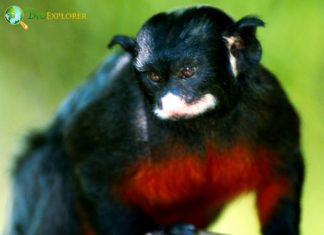
The Red-chested mustached tamarin (Saguinus labiatus), also known as Red-bellied Tamarin, is a tamarin that lives in the Amazon region of Brazil, Peru, and Bolivia. The red belly of these New World monkeys is their most striking external feature.
The red-eared guenon (Cercopithecus erythrotis), also called the russet-eared guenon or red-eared monkey is endemic to the tropical and subtropical lowland rainforests of Nigeria, Equatorial Guinea, and Cameroon.
The red-handed howler monkey (Alouatta belzebul) is an endangered species of howler monkey, a New World species. Red-handed howler monkeys are diurnal, although they spend most of the day (up to 80%) sleeping on tree branches with members of their squad.
The red-headed titi (Cheracebus regulus) (also known as Juruá Collared Titi) is a marmoset species of New World monkey endemic to Brazil. Red-headed titi monkeys are diurnal and arboreal, waking up and sleeping with the sun.
The Red-mantled saddleback tamarin (Leontocebus lagonotus) is a species of saddleback tamarin, a species of small South American monkey. The Red-mantled saddle-back tamarin lives in Peru and Ecuador, and its type locality is in Peru, near the confluence of the Amazon and Napo.
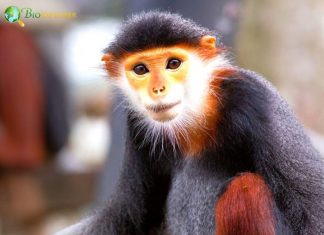
The red-shanked douc langur is an Old-World monkey species that is one of the most colorful primates. Red-shanked douc langurs are genetically similar to gray-shanked douc langurs; however, they are considered a different species due to their different biological characteristics.
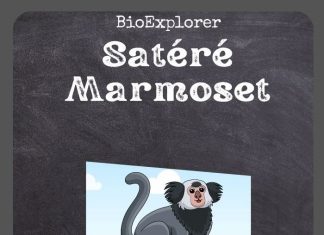
The Satéré marmoset (Mico saterei) is native to Brazil and its genus is characterized by claw-like nails rather than the flat nails of other primates, long lower incisors, a specialized caecum, and squirrel-like movements in trees.
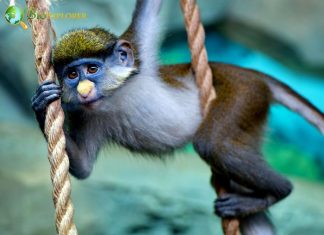
The Schmidt's red-tailed monkey, also called the red-tailed guenon, Schmidt's guenon, or black-cheeked white-nosed monkey is a primate species in the Cercopithecidae family. The Schmidt's red-tailed monkey is named for its red coloration on the underside of its tail, as well as the bicolor coloration of its tail as the reddish color increases from the base to the tip.
The Semliki red colobus (Piliocolobus semlikiensis) is native to central Africa. The Semliki red colobus lives in the ironwood forest of the northeastern Democratic Republic of the Congo between the Rwenzori Mountains and the Semliki River valley.
Spix's Red-Handed Howler (Alouatta discolor) is a species of howler monkey endemic to the southeastern Amazon in Brazil. Spix's Red-headed Howler is currently on the International Union for Conservation of Nature's Endangered Species List based on a population decline of more than 30% over the last 3 generations, mainly due to habitat loss.
Toppin's Titi (Plecturocebus toppini) is a species of Titi, a species of New World monkey endemic to Bolivia, Peru, and Brazil. It got its name from Captain Toppin, who collected the type specimen of this species near the Tahuamanu River in Peru.
The Ulindi River red colobus (Piliocolobus lulindicus) is native to the Democratic Republic of the Congo. This Red Colobus species is named after the Ulindi River.
The Ursine howler (Alouatta arctoidea) is a species of howler monkey endemic to Venezuela and possibly Colombia. These howlers are famous for their "morning chorus".
Uta Hick's Bearded Saki (Chiropotes utahicki) is an endangered species of bearded saki, a New World monkey species. It was named after Uta Hick, a German primatologist who cared for bearded sakis at Cologne Zoo.
The Varied white-fronted capuchin (Cebus versicolor) is a species of gracile capuchin monkey endemic to Colombia. The Varied white-fronted capuchin lives in the lowland rainforests and palm swamps of the Magdalena River Valley in northern Colombia.
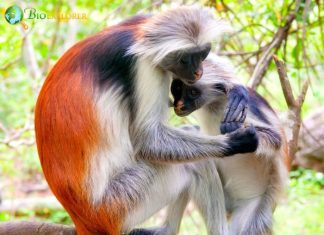
The Zanzibar red colobus (Piliocolobus kirkii) is endemic to Unguja, the main island of the Zanzibar archipelago off the coast of Tanzania. The Zanzibar red colobus, often referred to as Kirk's red colobus is named after Sir John Kirk, the British resident of Zanzibar who first spotted these creatures.
Red monkeys consume various food types, owing to their status as omnivores. Their diets center around ripe fruits, seeds, nuts, leaves, flowers, and stems but occasionally contain insects, bird eggs, smaller mammals, and fungi.
The different red monkey species have varied adaptations and foraging behaviors to obtain meals:
Fruit specialists: Uakaris have shaggy coats, short tails, and powerful jaws to feast on hard fruits other monkeys can’t open.
Leaf lovers: Colobus monkeys have multichambered stomachs to digest leaf toxins and get nutrition.
Tree sap drinkers: Certain primates like the Bengal slow loris tap tree bark to lap up gushing sap using their long tongues.
Insect eaters: Tamarins and marmosets use claw-like nails to scratch tree bark and sniff out camouflaged insects.
Seed predators: Baboons, Mandrills, and drills use impressive canine teeth to crack into tough pods and nuts.
Nectar fans: Long-snouted monkeys plunge their muzzles into flowers to drain the sweet nectar.
The diverse diets provide balanced nutrition, while the varied foraging methods reduce interspecies feeding competition in shared habitats. Availability of preferred foods ultimately impacts red monkey health, reproduction rates, and population sizes. Their keystone seed dispersion and pollination roles also shape tropical forest ecology.
Reproduction and Red Monkey Babies
Red monkeys inhabit some of the most biodiverse ecosystems on Earth and exhibit intriguing reproductive behaviors adapted to their environments.
Breeding seasons: Mating is often seasonal based on ripe fruit abundance. This ensures enough nutrition for pregnancy and newborns. Some species, like mandrills, breed year-round.
Gestation periods: The embryo incubation duration typically lasts 5-6 months. For smaller monkeys, it’s less, while great apes like orangutans gestate over 9 months.
Baby development: Infants are born with full fur, eyes open, and strong grasping reflexes to cling to their mothers. Larger apes are more helpless at birth.
Parenting roles: Mothers care for the young, but some species like titis and gibbons have fathers and siblings helping babysit new arrivals!
Lifespans: On average, red monkeys live 15-25 years, depending on the species. Smaller primates have shorter lives, while orangutans can survive 40+ years protected in forests.
Baby red monkeys are raised within complex social structures. Their bright coloring helps them stay visible to parents and troop members in dense rainforest canopies and jungle networks. Vibrant red patches thus serve both camouflage and communication purposes!
Role of Red Monkeys in Local Ecosystems
While small in stature, red monkeys play invaluable roles in maintaining healthy tropical forests across Africa, Asia, and the Americas.
Seed dispersers: By ingesting fruits and nuts, red monkeys distribute vital seeds through their droppings as they traverse miles across their home ranges daily. This seed dispersal helps regenerate forests.
Pollination partners: Red monkeys also inadvertently pollinate tropical plants as they collect nectar and pollen adheres to their snouts and fur. They spread crucial pollen between distant same-species plants, leading to plant fertilization.
Prey species: Although red monkeys are primarily vegetarians, carnivorous predators like eagles, wild cats, and snakes prey on young or sick monkeys, especially more vulnerable species like tamarins, tarsiers, and pottos. This shapes complex food chains.
Soil fertilizers: Through foraging, digesting, and defecating, red monkeys transfer nutrients from one area and plant type to another, “replanting” them. Their manure acts as natural forest fertilizer.
Conserving endangered red monkey populations through habitat protection and anti-poaching initiatives ensures they fulfill these forest regeneration services.
Red monkeys comprise over 50 primate species from all major land masses besides Europe that exhibit signature reddish coloration on parts of their fur or skin. The red hues likely evolved as camouflage against forest backdrops of rust, copper, and cinnamon coloring while also serving social communication roles.
Some interesting highlights about these passionately pigmented primates include:
The varieties of red monkeys convey nature’s artistic genius through arresting interplays of texture, shape, and tone. Yet habitat destruction for farms, mining, and poaching for meat or trophies threatens many red monkey populations, especially endemic species with limited ranges.