

the red flower - search results
If you're not happy with the results, please do another search

Rose
Loved by many, the rose (Rosa spp.) is a popular garden flower. Its features, including its precious fragrance and shape, make it easy to recognize. Roses have been grown for millennia and have a long history that goes back thousands of years.

Order Nymphaeales / Water Lilies
Order Nymphaeales is composed of water lily flowers. It contains 3 families (Hydatellaceae, Cabombaceae, and Nymphaceae). The example flower species include Europian white water lily, Dotleaf water lily, Blue lotus, Amazon water lily, Fanwort, Green Cobomba, and more.
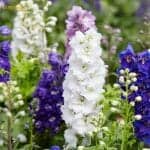
Delphinium
Delphinium is a famous ornamental plant that adds height and a pop of color to commercial and home gardens. Usually, its flowers come in gorgeous shades of blue and purple. Still, other cultivars showcase more yellow, red, white, or pink.
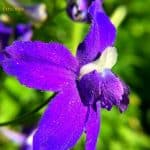
Little Larkspur
Delphinium bicolor is a perennial plant of the Buttercup (Ranunculaceae) family. The stems of the Little Larkspur have a height of 4-24 inches. The Little Larkspur plants can absorb toxic substances, like herbicides, pesticides, and pollutants.

Pua Kala
Anyone with a sunny and dry spot on their property could consider planting the native Hawaiian plant known as Pua Kala (Argemone glauca). The genus has about 30 members and belongs to the plant family Papaveraceae (poppy family).

Shirley Poppy
The Shirley poppy is the name of a group of annual ornamental varieties from the Papaver rhoeas (European wild poppy). There are more than 120 species of poppies in the genus Papaver of the Papaveraceae family. The Shirley Poppy was first produced in 1880 by Reverend William Wilks, pastor of the Shirley parish in England.

Poppy
The Poppy is a flowering herbaceous plant of the Papaveroideae subfamily in the Papaveraceae family. Papaver somniferum is the source of narcotic opium, which contains potent medicinal alkaloids and has been used as an analgesic and medicinal and recreational anesthetic since ancient times.
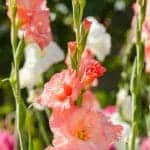
Gladiolus
Gladiolus (plural Gladioli) belongs to a genus of around 260 bulbous plants primarily native to South Africa but found in East Africa, Northwest Africa, the Arabian Peninsula, and the Mediterranean. There is a wide variety of floral colors, including green, lavender, pink, red, orange, yellow, cream, and white.
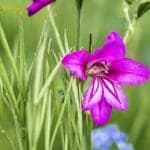
Miniature Gladiolus
Miniature Gladiolus (Gladiolus nanus) is sometimes referred to as dwarf Gladiolus. It is actually a smaller growing variety than the more popular varieties. Miniature Gladiolus produces fantastic two-tone spikes of pink flowers with a hint of white on its throat.

Marsh Gladiolus
Gladiolus palustris is a perennial herb of the Iridaceae family and is native to Central and NW Europe. This species can grow to a height of 12-24 inches. The genus Gladiolus is a Latin word that means "a sword". The specific name palustris is a Latin word that means "growing in marshes" the plant's environment.
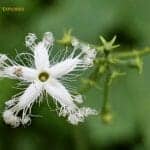
Japanese Snake Gourd
Trichosanthes is a perennial vine native to Japan. These thread-like flowers are aromatic and bloom from summer to early fall. The Trichosanthes cucumerina tangled with other plants or trees.

Japanese Morning Glory
Japanese morning glory is a climber plant with 5 meters. It has been a widely cultivated ornamental garden plant. In addition, growing Ipomoea nil is part of the curriculum of Japanese elementary students.

Helenium
Give your landscape a glorious late-season color with Helenium, a light-demanding perennial that offers long-lasting blooms from mid to late summer to fall every year. It features daisy-like flower clusters (2-inches in diameter) with distinctive pale yellow wedge-shaped rays and dome-shaped, dull yellow central discs.
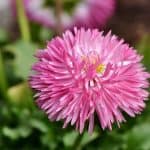
China Aster
Callistephus chinensis, commonly known as the China aster and annual aster, is a popular annual plant that produces conspicuous, 3 to 5 inches diameter flowers from early summer through fall. The colors of the cultivars include shades ranging from white to pink, yellow, purple, red, and blue.

Marigold
Marigold (Tagetes erecta), known in Mexico as Cempasúchil, holds immense cultural significance. Its vibrant orange and yellow blooms are central to Día de los Muertos (Day of the Dead) celebrations, where the flowers are used to decorate altars and graves.
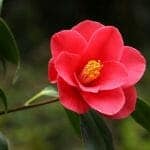
Japanese Camellia
While many flowering shrubs (Camellia japonica) peak in Summer, the Camellia flower is endemic to Japan and it is unique because it mainly blooms in early spring and late winter. There are nearly 300 species of Camellia, the color of which includes white, pink, and red.
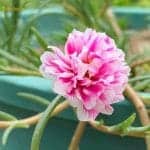
Peony
Peony is a Japanese easy-care flowering plant in the genus Paeonia of the Paeoniaceae family. The genus consists of approximately 32 species of wild peonies primarily native to Europe, Asia, and western North America. The flowers range in color from pink and purple to red, yellow, or white. The flowers bloom from late spring to early summer.
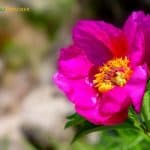
Common Peony
Paeonia officinalis is a perennial herb native to the mountainous regions of Southern Europe. The Common Peony plants belong to the order Saxifragales and the family Paeoniaceae. The genus Paeonia comes from the Greek name Paeon meaning a god’s physician.

Mums
Mums are available in various flower colors, including red, orange, pink, yellow, white, salmon, cream, burgundy, and bi-colors. Mums are the Chrysanthemum genus flowering plants in the Asteraceae family, native to northeastern Europe and eastern Asia. There are 40 known species and thousands of cultivars of chrysanthemums.

White Cockatoo
Discover the breathtaking beauty of the White Cockatoo (Cacatua Alba), their characteristics, diet and several interesting fun facts about them here.

Hortensia
Known for its lush foliage and beautiful flowers, Hortensia is the epitome of the summer months. With the common name hydrangea, Hortensia is a genus of more than 75 species of flowering plants native to the Americas and Asia. The flower color ranges from blue to pink, through all shades of lavender, purple to violet, as well as white and green.

Carnation
Carnations were originally peach and pale pink in color. Still, the flowers are now available in various hues, including shades of green, purple, white, red, and yellow. The carnation is revered for many reasons, three of which are its disheveled appearance, its clove smell, and its incredibly long flowering period.

Speedwell
Veronica, also known as Speedwell, is an easy-to-grow, carefree perennial with long spikes of tiny white, pink, blue, or purple petals. With around 500 species, Veronica is the largest genus in the Plantaginaceae family of flowering plants. The precise origin of this plant cannot be exactly determined.

Lilac
Known as "Queen of the Shrubs", lilac is one of the most challenging and most fragrant flowering shrubs in many gardens today. You may recognize them as a flower in your grandmother's garden. Its stem flowers are usually available in white, blue, purple, and pink colors, adding height and softness to any garden.

Hibiscus Varieties
Dive into the vibrant world of hibiscus! Explore 25+ stunning varieties, from rare native species to popular garden favorites. Learn about their unique characteristics, care tips, and fascinating facts. Perfect for gardeners and flower enthusiasts alike. Discover the beauty and diversity of these tropical treasures!
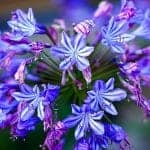
Agapanthus
Commonly known as the African lily (or the lily of the Nile in Britain) and the flower of love, the Agapanthus is native to southern Africa. It grows mainly in shady areas where it's protected from the heat of the African sun.

Hepatica
Hepatica is a genus of the Ranunculaceae family indigenous to regions in the Northern Hemisphere. This genus comprises around 7 species of herbaceous plants. This spring-flowering perennial is also known as liverwort or liverleaf. The ½-1-inch-wide flowers have numerous elongated blue, purple, lavender, pink, or white sepals (no petals) surrounding many central stamens with yellowish anther tips.

Lobelia
Colorful lobelias are an excellent choice for garden design around streams and ponds, anywhere the soil is constantly moist. The plant produces showy flower spikes in all shades of white, blue, red, and pink. The two upper lobes can be upright, while the three lower lobes can be extended.

Forget-Me-Not
Forget-Me-Not (Myosotis sylvatica - State Flower of Alaska) is a perennial plant native to the provinces and northwestern states of Canada and the United States. The radially symmetrical blooms are light blue with vibrant yellow centers. They are usually arranged in rounded and divergent racemes along the branch.

Top 15 Evolutionary Biology News of 2022
This series of evolutionary biology news of 2022 gives us a detailed overview of the recent development in this field. Commencing with the evolution of plant colonization on land, the new approach of Neo Darwinism gained importance and more.

Top 15 Botany News of 2022
Botany News of 2022: Explore the latest advancements in plant science, including methane emissions by trees, epigenetic changes, wearable sensors for transpiration detection, and more.

Top 15 Biotechnology News of 2022
The 2022 biotechnological innovations paved the way for stem cell therapies, cannabinoid trichomes' roles in plant defense mechanisms, inventory methods to utilize human waste, the role of quick mRNA vaccines and more.

Types of Trees
Discover the diverse types of trees, from deciduous to evergreen. Enjoy vivid pictures, and learn their roles in ecosystems and their conservation efforts.

Rook
The Rook is a large, sociable black bird native to Europe and Asia, easily recognized by its bare, pale-grey face and cone-shaped head. It forms noisy colonies called rookeries, nesting high in tall trees near farmland, villages, or parks. Rooks forage in flocks, probing fields for grubs, worms, seeds, and grain, but also eat insects, small mammals, and carrion. Highly intelligent, they use tools and have excellent memories. Unlike crows, adult rooks show a whitish patch at the bill’s base. Some rookeries have been used for over a century.

Eurasian Jackdaw
The Eurasian Jackdaw is a small, social member of the crow family, instantly recognized by its charcoal-black plumage, silvery-gray nape, and striking pale eyes. Native to Europe, western Asia, and North Africa, it thrives in a variety of habitats, from woodlands and farmland to cities and coastal cliffs. Jackdaws are highly gregarious, often seen in flocks performing acrobatic flights or gathering at communal roosts. They nest in cavities, chimneys, or cliffs and are known for their intelligence and curiosity, sometimes collecting shiny objects. Their varied diet includes insects, seeds, fruit, carrion, and even human refuse.
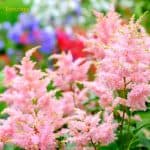
Astilbes
Discover the vibrant world of Astilbes, perennial flowering plants that thrive in the shade. Learn about their unique characteristics, astilbe varieties, care tips, and how they can add a touch of elegance and color to your garden.

Costa Rica Monkeys: A Journey into the Rich Biodiversity!
Explore the diverse world of Costa Rica's monkeys in our comprehensive guide. Learn about the four unique species, their habitats, threats, and conservation efforts. Discover tips for monkey spotting during your visit to this biodiversity hotspot.

Top 11 Animals With Super Sensors
While it is known that humans have developed brains, here are 10 animals with the best sensors (seeing, smelling, hearing, tasting, and feeling) and the corresponding anatomical structures that allow them to have so.

Drummond’s Phlox
Phlox drummondii is a showy annual flowering plant under the order Ericales. The Drummond’s Phlox can grow to 6-12 inches. Drummonds Phlox is considered one of Texas’ most beautiful wildflowers. In addition, it has been valued as an “exotic” cultivated garden flower in Europe for nearly 150 years.

African Flame Lily
Gloriosa superba is a climbing herb that belongs to the order Liliales. It can grow to a height of 1 meter. The plant is considered a danger to livestock because it has poisonous properties. All parts of G. superba are toxic, especially the tubers. This may cause fatality when eaten.

Royal Bluebell
Wahlenbergia gloriosa is a perennial herb from the Family Campanulaceae. The leaves of the Royal Bluebell are small, opposite, and dark green. Leaves have oblong wavy edges that become broad towards the apex.

Wild Foxglove
Ceratotheca triloba is an annual plant that belongs to the family Pedaliaceae. They can grow to a height of 1.5 to 2 meters. Ceratotheca triloba is the only species of the genus Ceratothica that is found in South Africa.

Waling-Waling
Vanda sanderiana is an endemic orchid growing wild only in the rainforests of the Philippines. However, it is now grown and cultivated all over the world. This plant belongs under the order Asparagales. The Waling-Waling orchid was discovered in 1882.

Mulla Mulla
Ptilotus exaltatus is an annual herb endemic to Australia. This plant is a member of the order Caryophyllales. Ptilotus has about 100 species. All of the species, except 1, are endemic to Australia. For example, the beautiful colored flowered P. exaltatus is native to Australia.
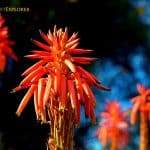
Krantz Aloe
Aloe arboresens is a perennial succulent of the order Asparagales. It can grow to a height of 2-3 meters. The bitter juice of the Aloe arborescens has medicinal uses. For example, the burn victims of WWII were treated with the concoctions of Aloe.
Qantuta
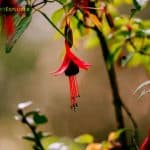
Cantua buxifolia is an evergreen shrub of the order Ericales. This plant can grow to a height of 13 feet and is a native of the high valleys of the Yungas and Andes mountains in western South America.

Wreath Lechenaultia
Lechenaultia macrantha is a small herbaceous plant from the Goodeniaceae family. It usually grows 150 mm or less. The Wreath Lechenaulta flowers, when viewed from above, show an attractive wreath-like form.

Top 15 Immunology News of 2021
The 2021 discoveries in Immunology showcase the recent developments and their relevance during the upsurge of COVID-19 cases. This treatise describes the development of immunology as a scientific discipline focused on its foundation. Let us glance at these 2021 research outcomes from a broader perspective.

Herbivorous Monkeys
Herbivorous monkeys dine solely on plant matters, including leaves, fruits, stems, nuts, and flowers. Here is the full listing of all herbivore Old-world and New-world monkeys (133 kinds of monkeys), including Bolivian Red Howler, Atlantic Titi, Javan Surili, Mount Kilimanjaro Guereza, and more.

Top 15 Botany News of 2021
Top botany news of 2021 give us a deep insight into our latest advancement in botany and plant science related to the evolutionary aspect, conservation of endemic species, global warming, and the mechanism to fight against them.

Top 15 Ecology News of 2021
This series of 2021 ecology news gives us a detailed overview of the recent development in this field. Commencing with climate change, global warming, alternative ways for renewable energy resources, the role played by scavengers in our society, and other global aspects of management and nature-dependent climate solutions.

Rondon’s Marmoset
Rondon's Marmoset (Mico rondoni), also called the Rondônia marmoset, is a small species of monkey in the Callitrichidae family found in the southwestern Amazon of Brazil. Rondon's marmoset was only described in 2010, and its name refers to the famous Amazon explorer Cândido Rondon.

Lucifer Titi
Lucifer Titi (Cheracebus lucifer) is a species of Titi, a New World monkey endemic to South America. It is found in Peru, Ecuador, Colombia, and Brazil. This yellow-handed Titi was described as Callicebus lucifer in 1914.

Toppin’s Titi
Toppin's Titi (Plecturocebus toppini) is a species of Titi, a species of New World monkey endemic to Bolivia, Peru, and Brazil. It got its name from Captain Toppin, who collected the type specimen of this species near the Tahuamanu River in Peru.

Panamanian White-faced Capuchin
The Panamanian white-faced capuchin (Cebus mimic), also called the Panamanian white-headed capuchin or the Central American white-faced capuchin is a mid-sized New World monkey in the Cebidae family. Native to Central American forests, the Panamanian white-faced capuchin is vital to rainforest ecology for its role in seed and pollen dispersal.

Panamanian Night Monkey
The Panamanian night monkey or Chocoan night monkey (Aotus zonalis) is a species of night monkey formerly considered a subspecies of the grey-bellied night monkey in the Aotidae family. Panamanian night monkeys are sympatric with other species. They do not compete for resources with other animals in their range due to their alternate schedules.

Equatorial Saki
The Equatorial Saki, also known as the red-bearded Saki, is a species of saki monkey and New World monkey. They are most common in riparian, seasonally flooded, and swampy forests but have also been seen in terra firme forests.

Coimbra Filho’s Titi
or Coimbra titi is a species of titi, a New World primate native to the forests of the Brazilian states of Sergipe and Bahia. It is named in honor of Adelmar F. Coimbra-Filho, founder and former director of the Rio de Janeiro Primate Center, for his Brazilian biology and primatology work.

Chacoan Titi Monkey
The Chacoan Titi Monkey is a species of titi (also called White-coated Titi), a type of New World monkey native to South America. These diurnal monkeys are stealthy and hard to spot as they navigate the canopy. They move between branches and trees by walking or jumping on four limbs.

Black-fronted Titi
The black-fronted titi is a New-World monkey native to Brazil. Black-fronted titi monkeys have short faces, fluffy bodies, long legs, and long fluffy tails. The black-fronted titi monkey is listed as Near Threatened by the IUCN due to extensive habitat loss and fragmentation in the remnant Atlantic Forest in southeastern Brazil.