Types of Flowers
Types of Flowers: Explore the beauty & diversity of colorful flowers and intriguing botanical properties for all orders of flowering plants.

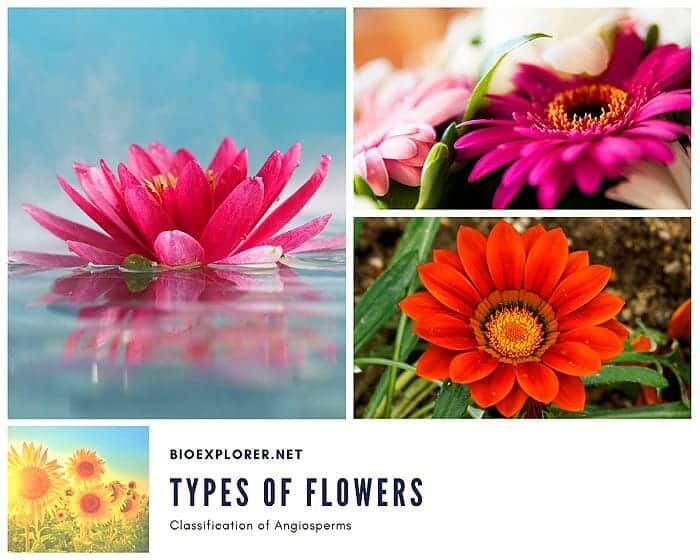
Types of Flowers: Explore the beauty & diversity of colorful flowers and intriguing botanical properties for all orders of flowering plants.
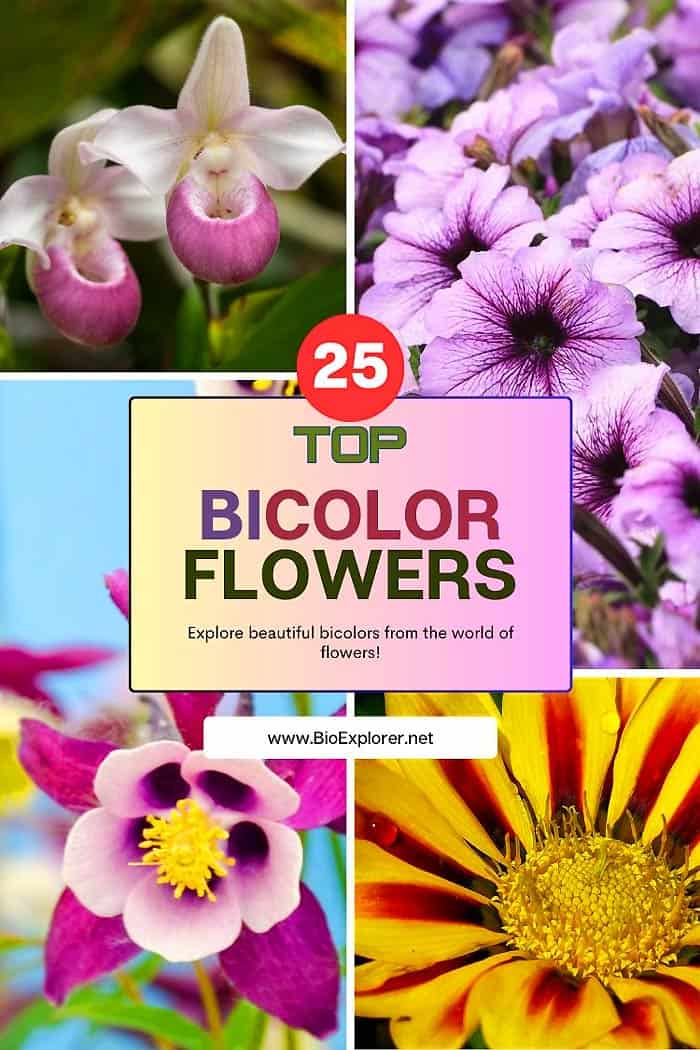
Discover 25 stunning bicolor flowers, from rare orchids to common garden favorites. Learn about their habitats, care tips, and unique features in this guide.
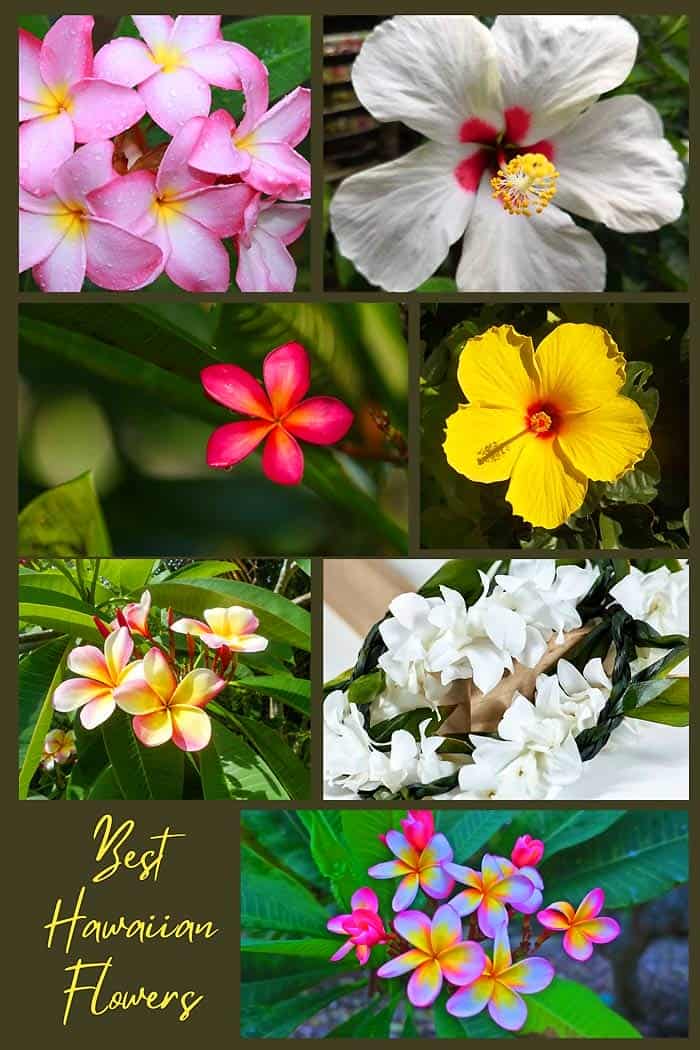
Explore the top 26 unique Hawaiian flowers exclusive to Hawaii’s archipelago. Dive into the world of these beautiful species, their interesting facts, and their significance in Hawaii’s ecosystem.
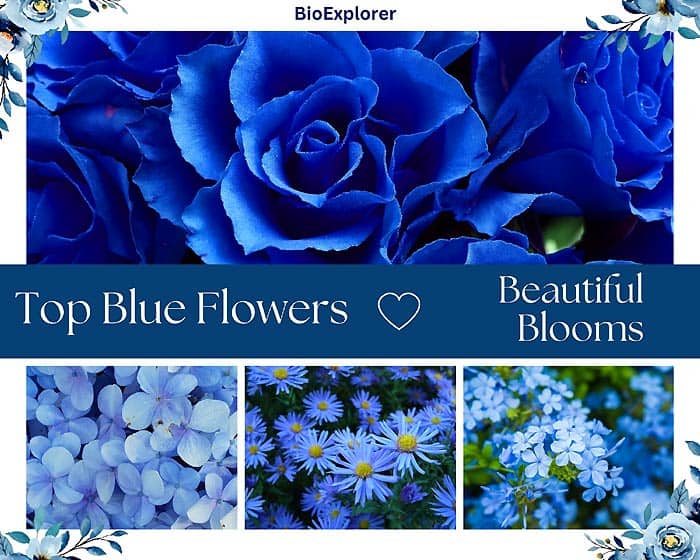
Discover the hidden secrets of 43 types of blue flowers in our captivating blog post. Explore the rarity of natural blue pigments in flowers and symbolism and meanings of blue flowers.
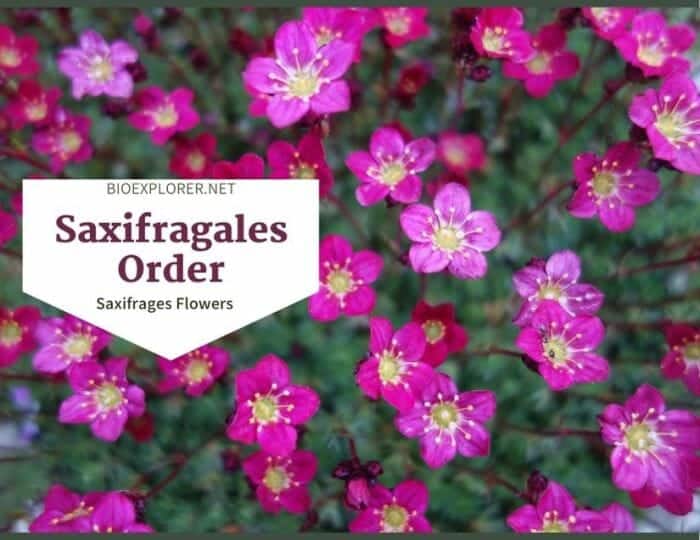
Saxifragales is a morphologically diverse dicotyledonous order of flowering plants worldwide. Saxifragales plants have hypanthium, glandular leaf teeth, serrate lamina margins, free petals, and small seeds. Most Saxifragales flowers are radially symmetrical and bisexual. The example species of Saxifragales are the Irish rose, campfire plant, and gum vine.
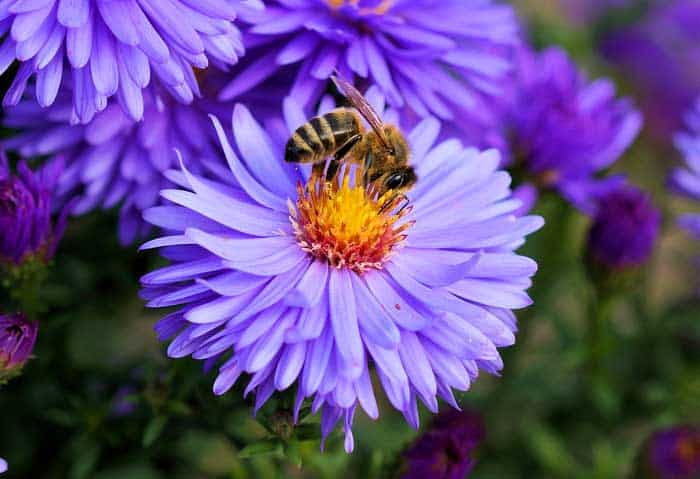
Are you looking for cute purple flowers to plant in your garden, or want to learn about them from a botany perspective? Here are the 50+ top pretty purple flowers and their names.
Texas is a large state with its own floristic region, having more than 5,000 species of native flowering plants. Because of its diverse landforms, Texas offers many famous blooms for visitors and residents. Explore the top 25 Texas flowers and their characteristics.
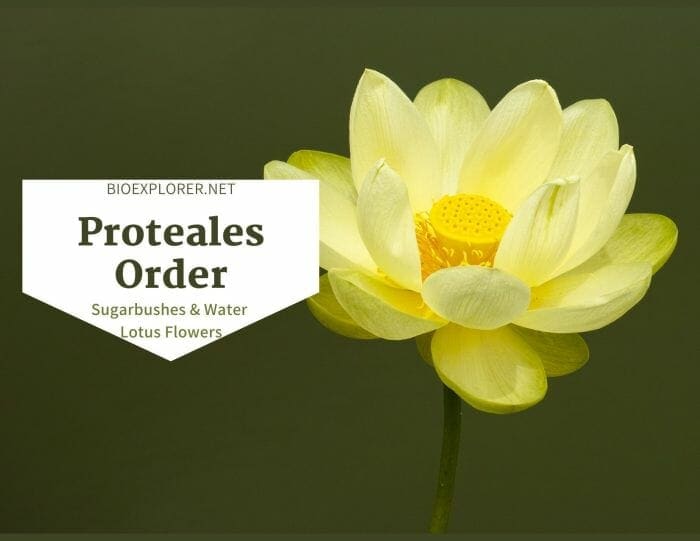
Proteales is a part of peripheral eudicots classified together only recently. The Proteales flowers are small or large and unisexual or bisexual. The American lotus, the Indian lotus, the London plane tree, Wagon tree and large-nut sugar bush are examples of Proteales.
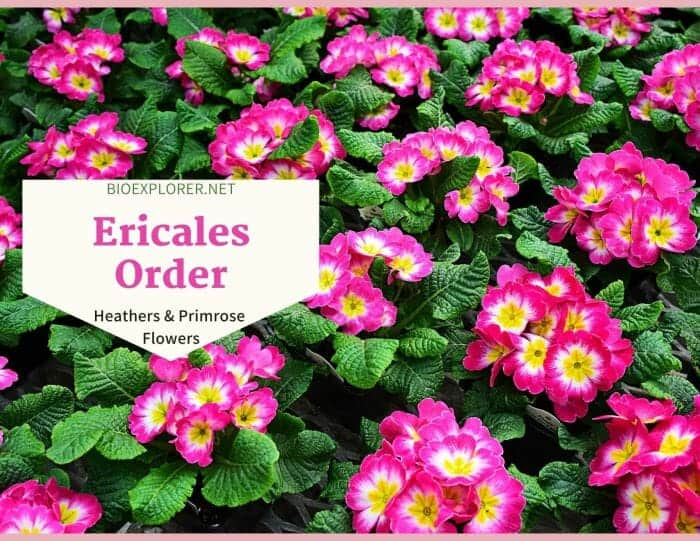
Ericales is comprised many economically important flowering plants like Brazil nuts, kiwifruit, and primrose. Ericales is very diverse, involving chiefly trees and terrestrial shrubs that are cosmopolitan in distribution. Some families of Ericales possess the ability for aluminum accumulation. Hardy kiwi, Orange jewelweed, wand plant, lama tree, and Octotillo flowers are some examples of Ericales.
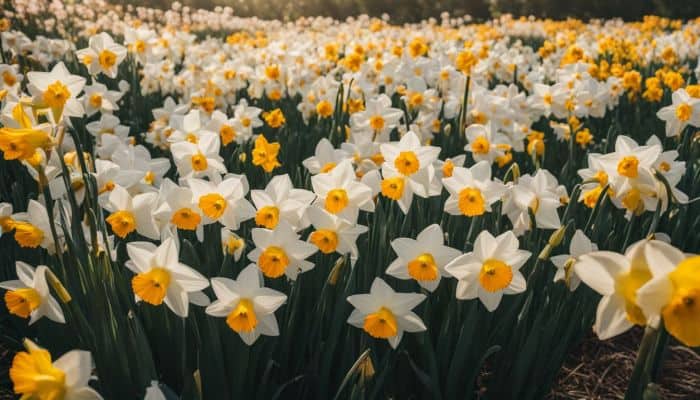
Explore the mesmerizing world of Narcissus Flowers with our detailed guide. Dive into the top 25 daffodil varieties, from the classic Trumpet to the exotic Pheasant’s Eye.
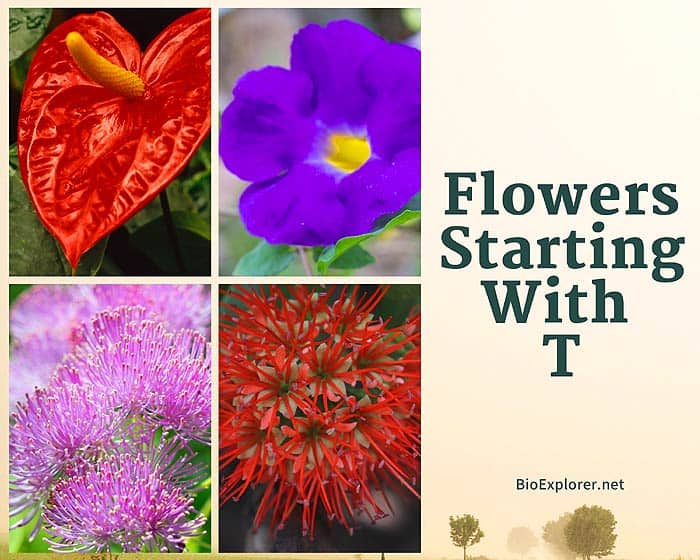
There are many types of flowers starting with T such as Tassel flower, Tares, Tansy, Throatwort, Tiger lily, and more. Explore all flower names beginning with T and their descriptions here.
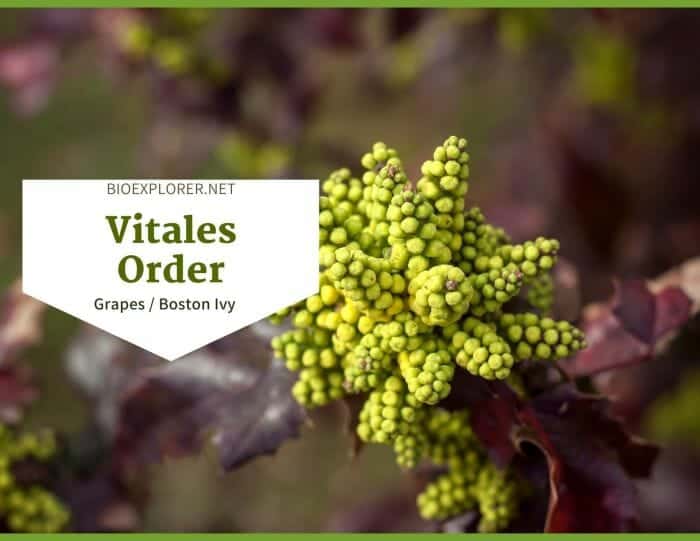
Members of Vitales have small flowers and simple, pinnate, or palmate leaves. The tendrils and the inflorescences are opposite to the leaves. The grapes, Boston ivy, and Chinese Virginia creeper are the example species of the order Vitales.
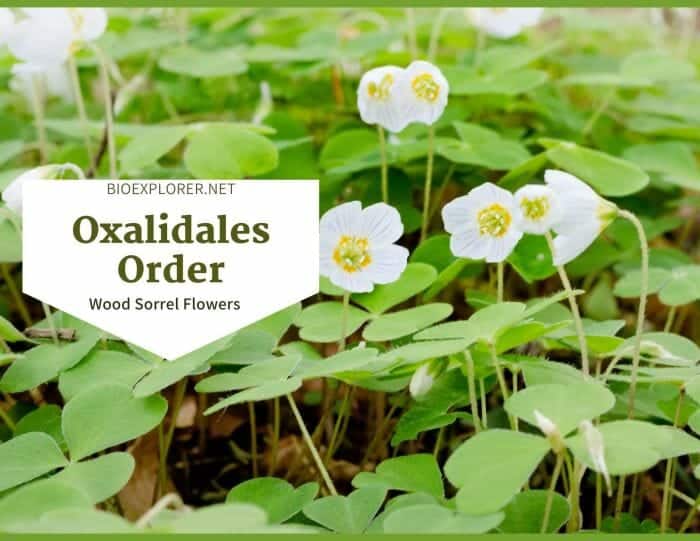
Oxalidales (Wood sorrel) order of flowering plants is annuals, perennial herbs, lianas, shrubs, and trees distributed in temperate and tropical regions. Oxalidales plants have compound leaves, actinomorphic and bisexual flowers, usually 4-5 sepals and petals.
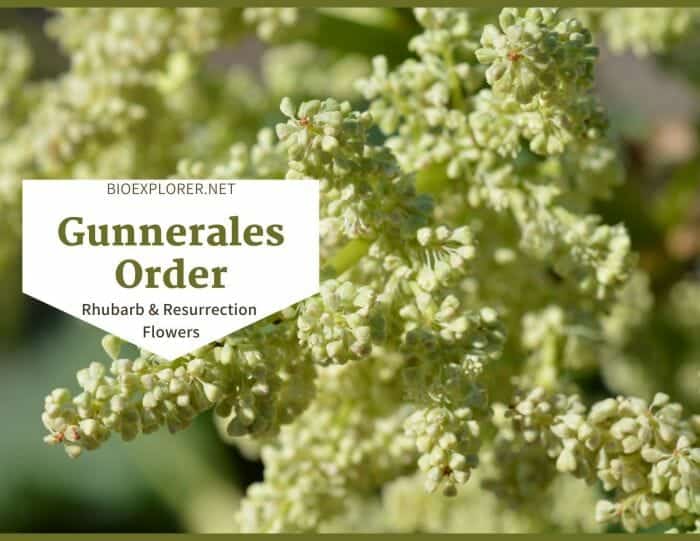
Gunnerales order includes flowers with ellagic acids, abundant plastids in their phloem cells, hydathodal teeth in the lamina margins of the leaf, and small flowers. The Gunnerales plants are dioecious and generally pollinated via wind. The giant rhubarb and the resurrection plants are found under the Gunnerales order.
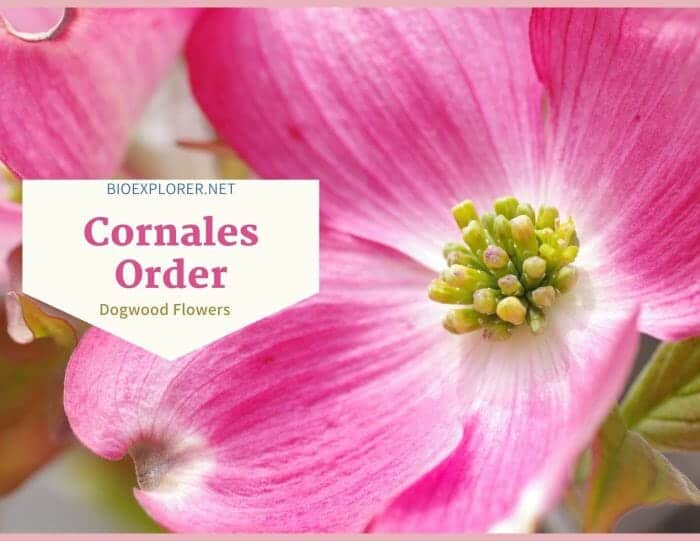
The dogwood order of flowers, Cornales, is basal among asterids. Cornales is relatively small, but members are morphologically diverse and are cosmopolitan in distribution. Cornales plants are mostly woody with simple or compound leaves, small flowers, floral parts in multiples of four, and generally bisexual. Many of the species of Cornales, like the flowering dogwood and Lindley’s blazing star are of ornamental value.

Flowers provide us with so much joy. The bright colors, the intoxicating scents – it’s no wonder they’re one of the most popular gifts for all occasions. Flowers starting with G are Gardenias, Gerberas, Gladioli, Garden Phlox. The list goes on and on!
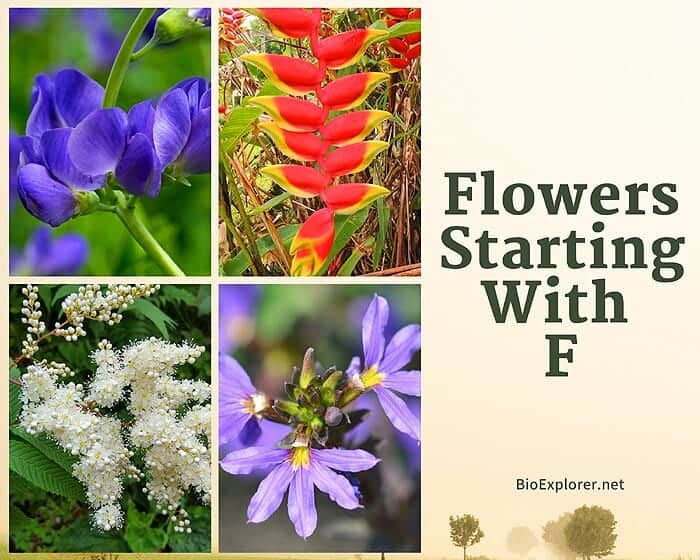
In a way, flowers have always been the perfect example of the beautiful things in life. False spirea, Farewell-to-Spring, Fig Marigold, Forget-me-not, Four-O-Clock, and Foxglove flowers are some of the gorgeous flowers starting with F.
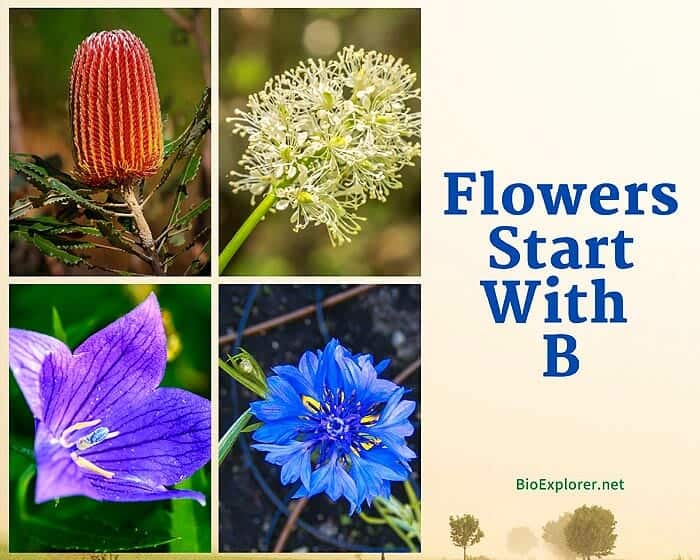
Here is a list of flowers that start with B to make things easier for you the next time you head out into your backyard to plant your first flower garden.
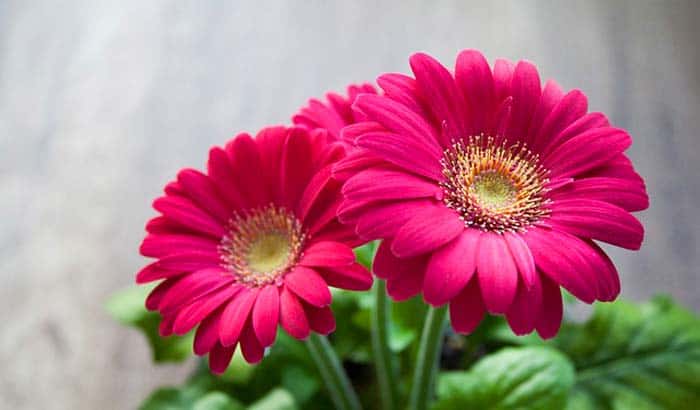
Exotic plants, when introduced to a foreign place, have the tendency to overgrow and dominate. Listed are the 25 most known exotic flowering plant species.

Accipitriformes are daytime birds of prey that evolved into powerful hunters through millions of years of adaptation. This guide explores their ancient origins, evolutionary traits, major families, hunting tools, global spread, and how modern challenges continue to shape hawks, eagles, and ospreys today.
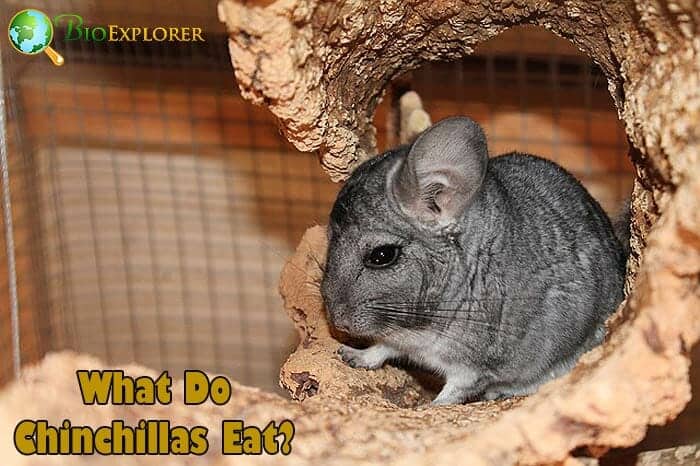
Chinchillas are attractive little rodents famed for the fluffy appearance that sets them apart from other animals. What do Chinchillas eat, diet patterns & more.
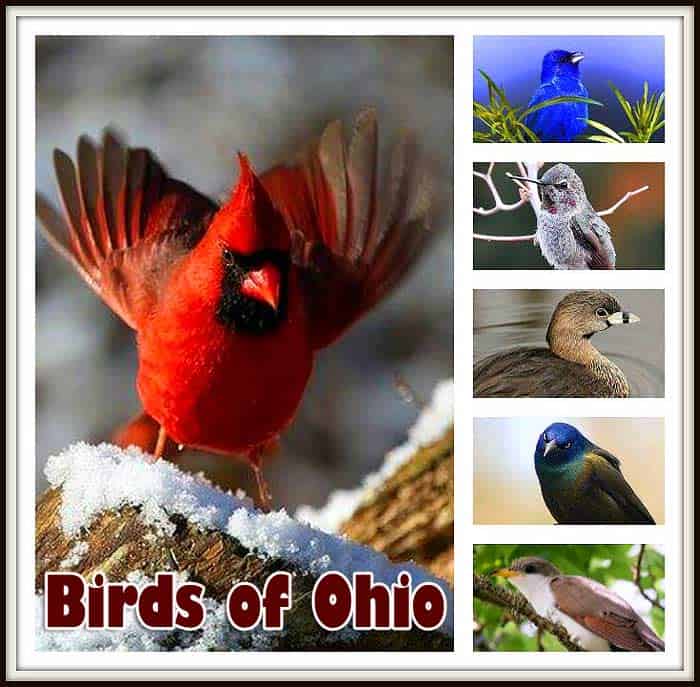
At present, Ohio has 5 distinct geographical regions from Lake & Till Plains to Appalachian Plateau and Bluegrass Region. Find 15 Best Birds of Ohio here.

Explore the overview of 26 must-see top Washington Birds species including facts on goldfinches, owls, hawks, finches and more. This comprehensive guide will help with identification of birds of Washington.

Squirrels are in the same family as marmots, prairie dogs, and chipmunks. Explore what do squirrels eat, squirrel’s diet by types, what eats squirrels & more.

Kangaroos are marsupials that can only be found in Australia. Kangaroos are mostly herbivores. Explore what do kangaroos eat in detail by their types & more.
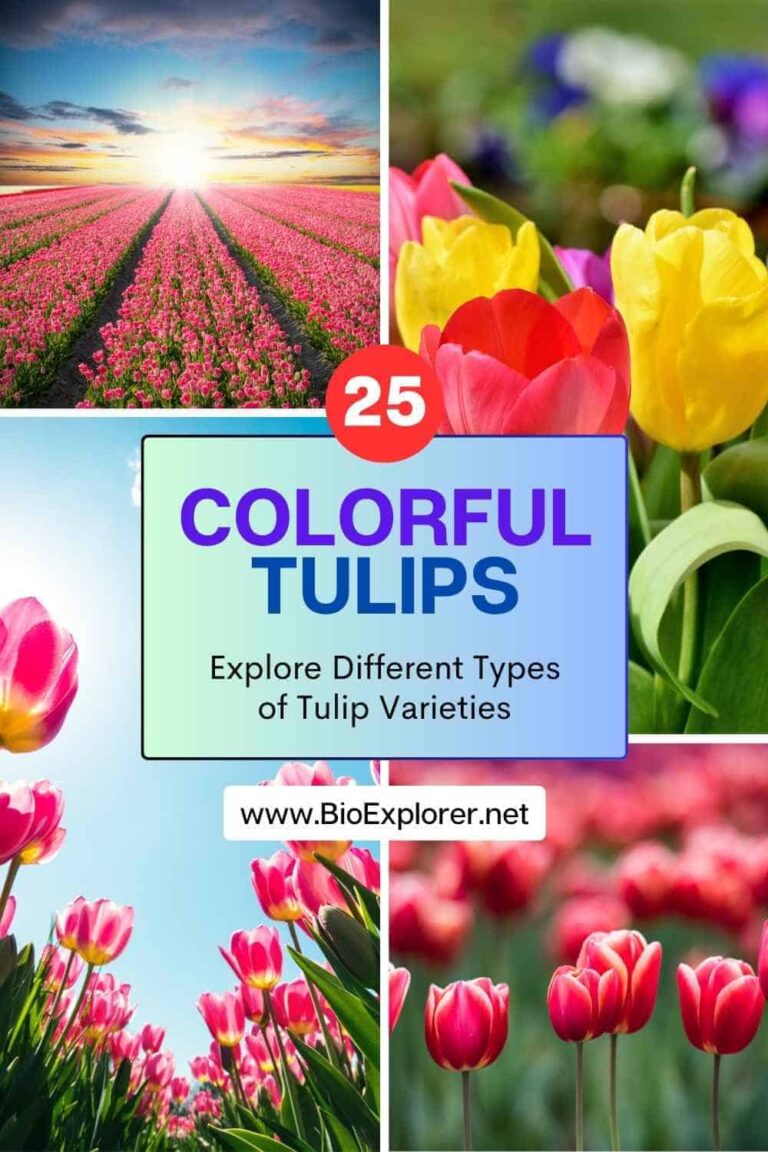
Explore 25 colorful tulip s, from classic hybrids to rare species. Learn how to design, plant, and fun facts for a colorful spring garden.
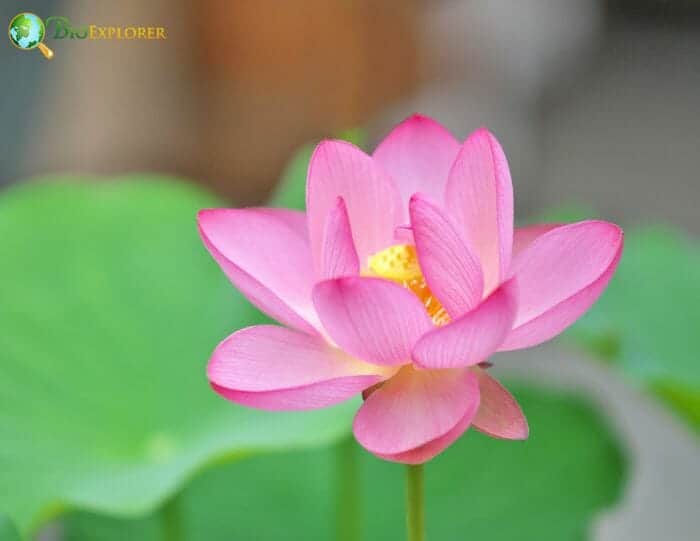
The lotus (Nelumbo nucifera) is an emergent aquatic plant that grows with its roots at the bottom of the water source and its flowers and leaves on its surface. The lotus, sometimes mistakenly referred to as a water lily, is available in shades from bright pink to white. The plant has 2 round leaves that typically float on the water.
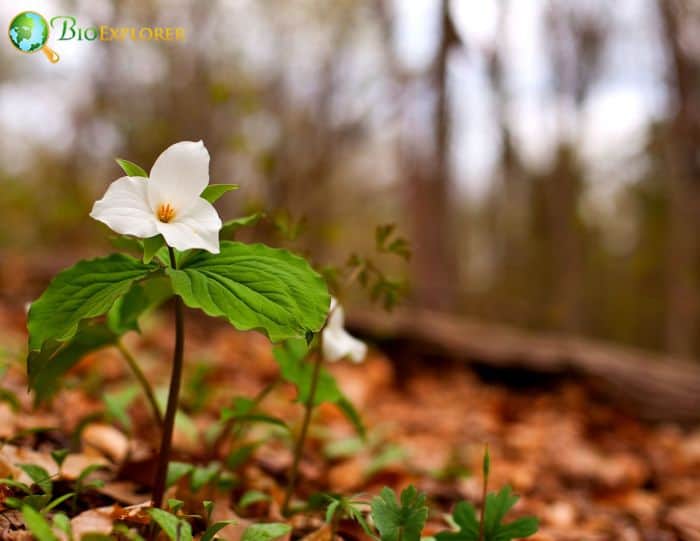
White Trillium is a perennial herb that belongs to the family Melanthiaceae. This species is native to Eastern North America and can grow to 1 to 1.5 feet. Trillium grandiflorum is used in a study to determine the negative impact of deer on the herb population.
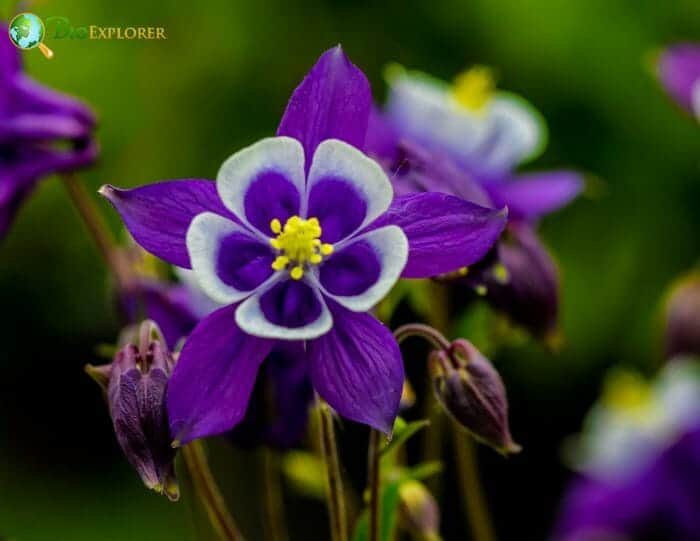
Columbine, also known as Aquilegia and Grandmother’s Cape, is a genus of around 60 to 70 species of grassland perennial plants native to temperate climates in North America, Europe, and Asia. Columbine is a common garden flower in many colors, including purple, pink, white, red, and yellow.
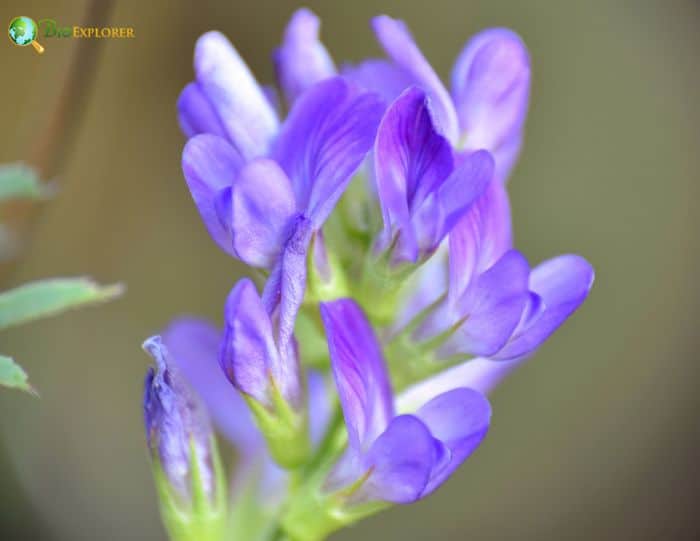
Learn about alfalfa (Medicago sativa), its flower characteristics, cultivation practices, environmental benefits, and economic importance in this comprehensive guide.
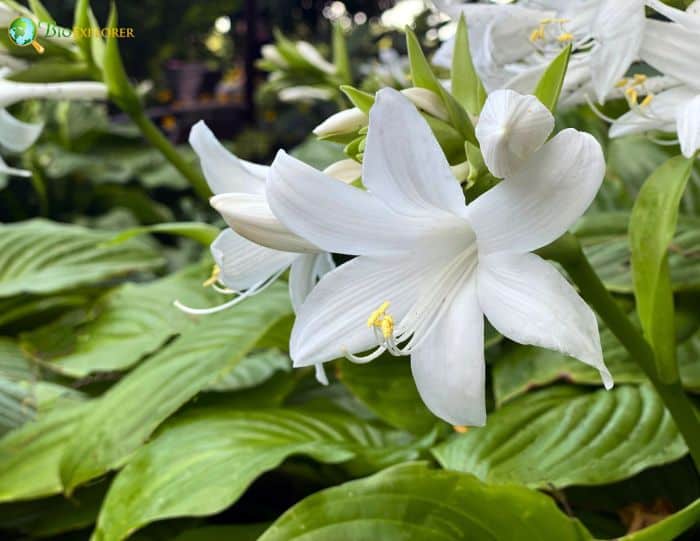
Discover the August Lily (Hosta plantaginea): a perennial with fragrant white flowers, medicinal properties, and ecological benefits, perfect for shaded gardens and borders.
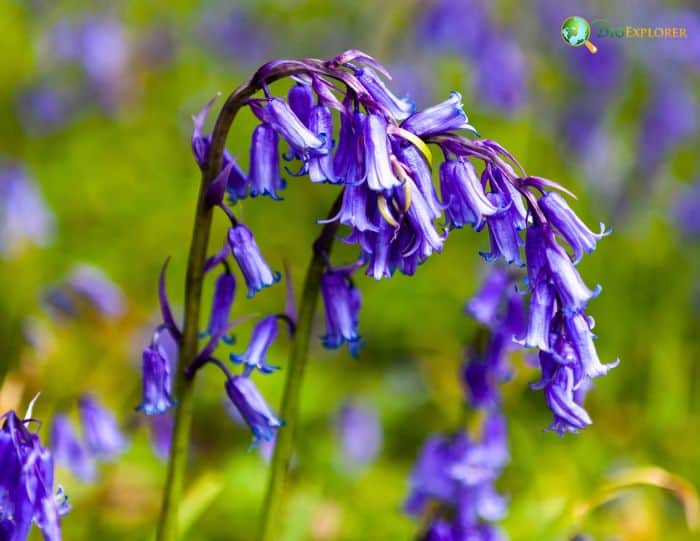
Explore the enchanting Bluebell flower (Hyacinthoides non-scripta), its vibrant violet-blue blooms, ecological significance, different types of bluebells and fun facts in this comprehensive guide.
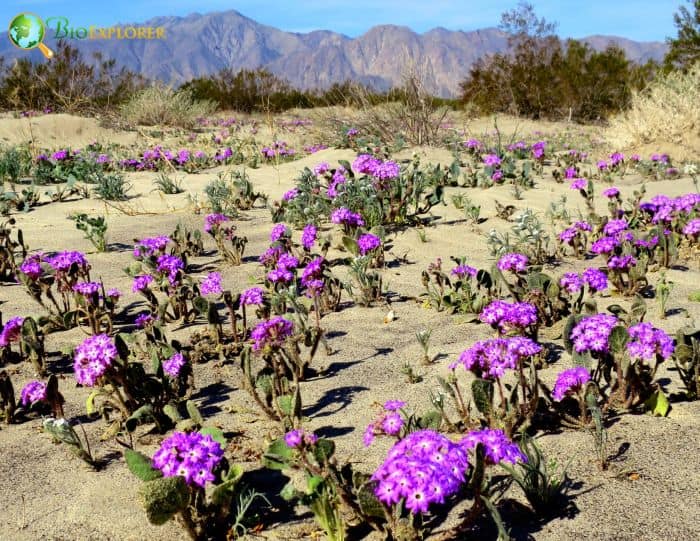
The Desert Sand Verbena is a native species of the southwestern United States and Northern Mexico, growing in the sandy areas of the desert. The flowers are trumpet-shaped. The flowers are fragrant with 5 lobes.
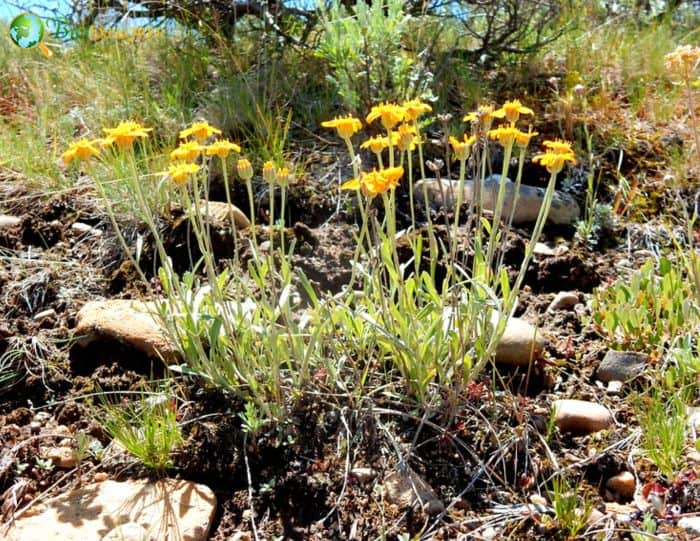
Hymenoxys lemmonii is a perennial herb of the Asterceae family. The plant can grow to a height of 15-20 inches. The plants of the genus Hymenoxys contain sesquiterpene lactone hymenoxon, which is toxic to sheep.
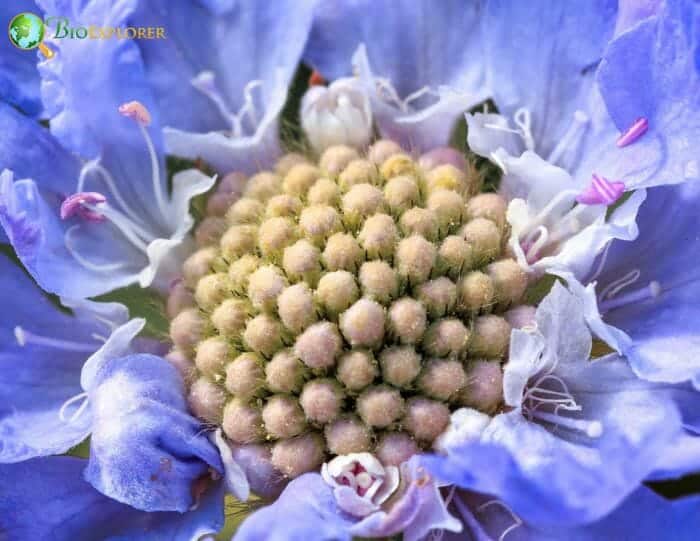
Native to Africa, Asia, Europe, and the Caucasus, Scabiosa includes around 70 species of small annual and perennial herbaceous plants that belong to the Caprifoliaceae (honeysuckle) family. These plants are mainly recognized by their unique appearance and genus name.
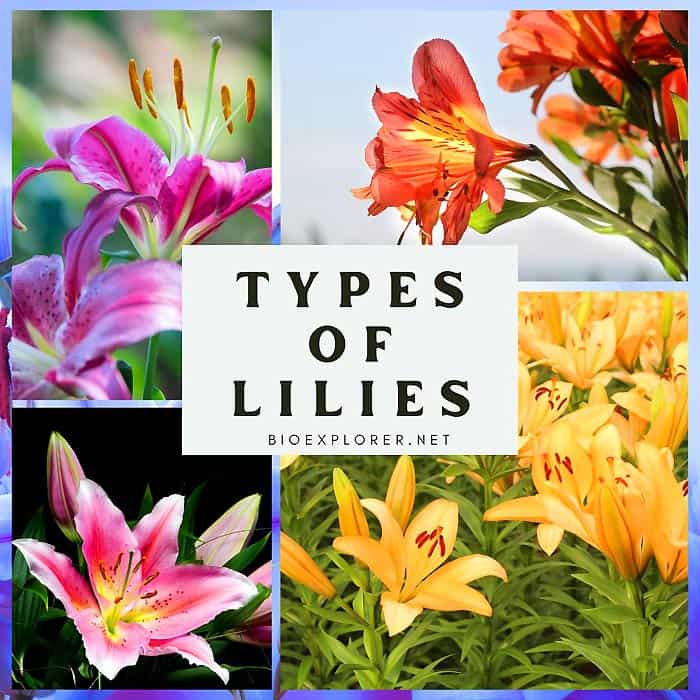
Discover the stunning beauty of different types of lilies. From oriental hybrids to unique lily species, learn about the diverse world of lily varieties.
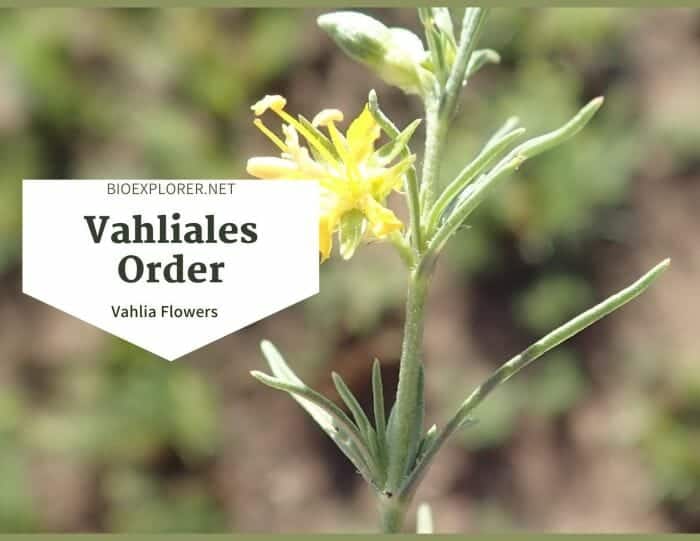
Order Vahliales are erect, branched herbs distributed in Africa and Madagascar to India. The Vahliales plants have simple, opposite, exstipulate leaves, bisexual and paired flowers, pentamerous floral parts, an inferior ovary, and numerous seeds. The Vahliales order only has a sole family, 1 genus, and 5 species.
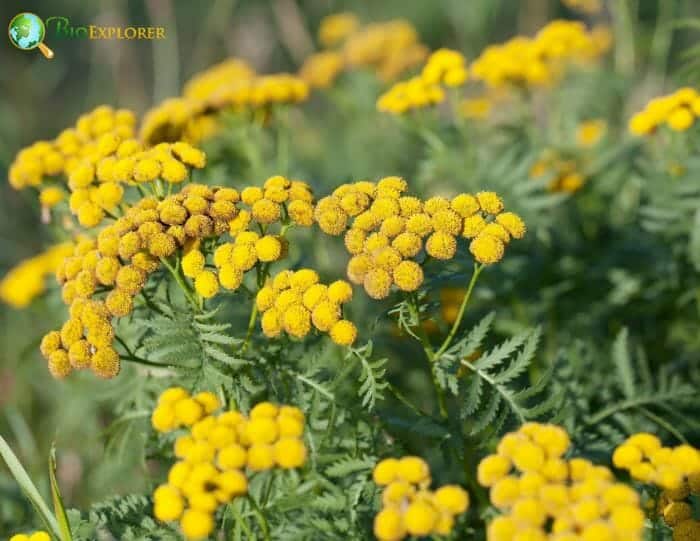
The tansy (Tanacetum vulgare) is a perennial herbaceous plant of the Tanacetum genus in the Asteraceae family, native to temperate areas of Asia and Europe. Tansy is a flowering plant with finely serrated compound leaves and yellow button-shaped flowers.
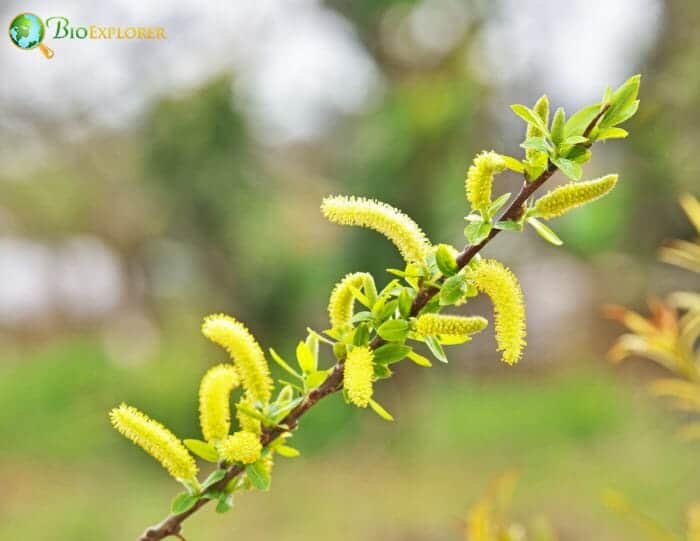
The Salix genus’s trees, shrubs, and willows in the Salicaceae family are mainly native to northern temperate zones. The Salix genus includes about 400 species of deciduous shrubs and trees.
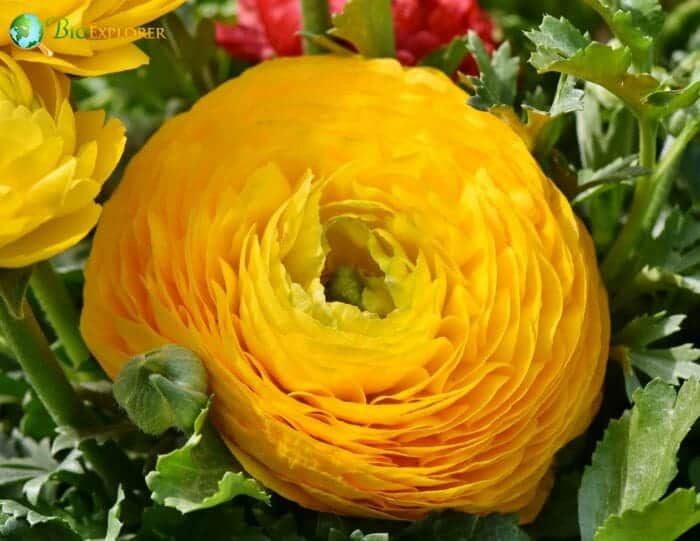
Ranunculus japonicas is a perennial herb of the family Ranunculaceae. It is a wild grass native to Japan. Ranunculus flowers add beauty and vibrancy to any garden. These perennial herbaceous plants, best known for their fragile rose-shaped petals, produce long-lasting cut flowers.
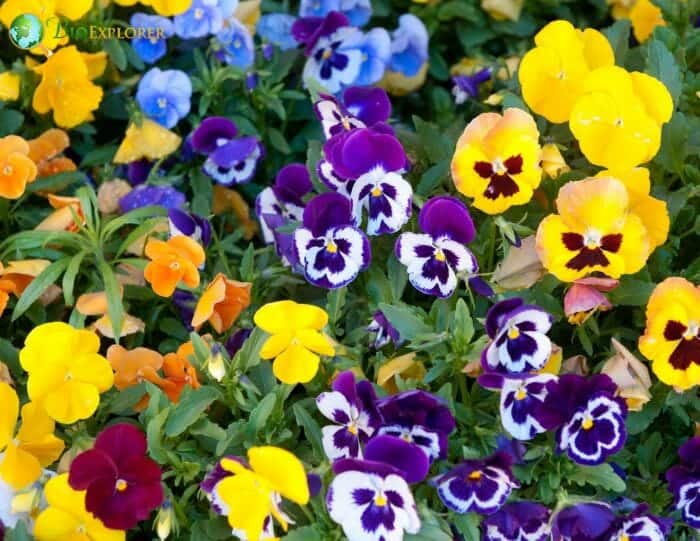
Pansy is one of the first heralds of spring in gardens, but its ability to thrive in cold climates makes it a staple for fall planting and garden beds. Garden pansy (Viola × wittrockiana) is a large-flowered hybrid plant grown as a garden flower.
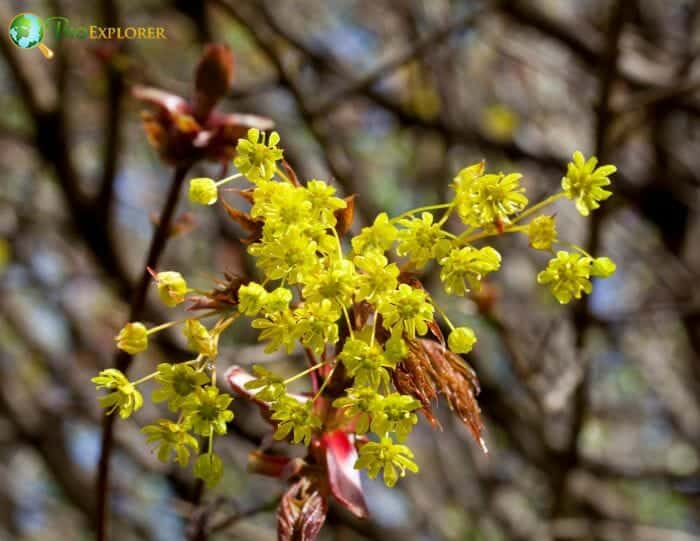
Maple is the common name for all members of the Acer flower genus, a group of around 132 primarily deciduous tree and shrub species. Most maples originate from Asia, but some species are also found in Europe, North Africa, and North America. Typically, Maple flowers are red, orange, green, or yellow.
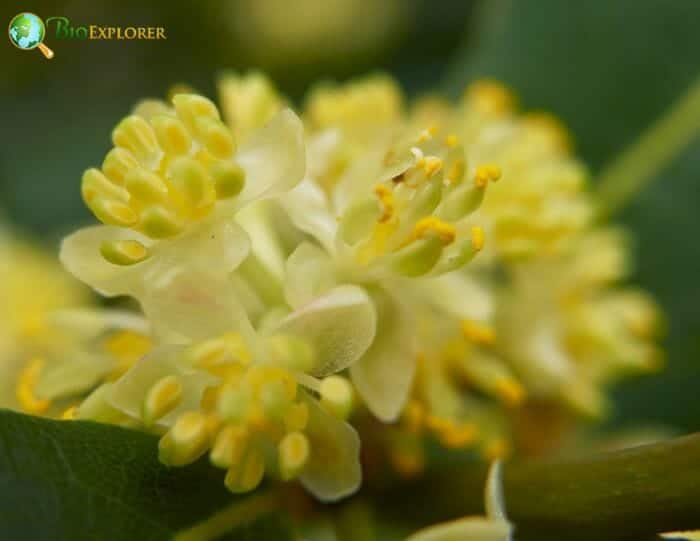
The laurel (Laurus nobilis) is one of the most emblematic trees in history. Hailing from the Mediterranean region, it is a famous symbol of stateliness and strength. The small inconspicuous flowers are greenish-white or yellowish in color.
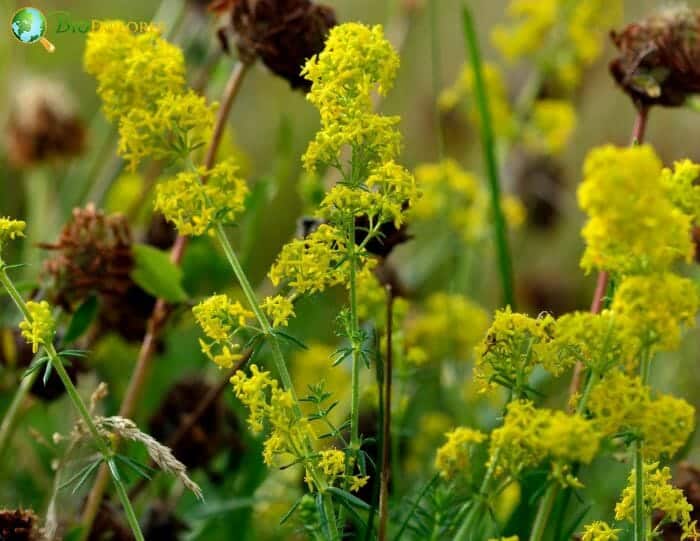
Lady’s Bedstraw (Galium verum), also known as the yellow bedstraw and cheese rennet, is a somewhat herbaceous rhizomatous perennial in the Rubiaceae family. In summer (July to September), four-petaled, bright yellow, fragrant flowers bloom in clustered, dense panicles.
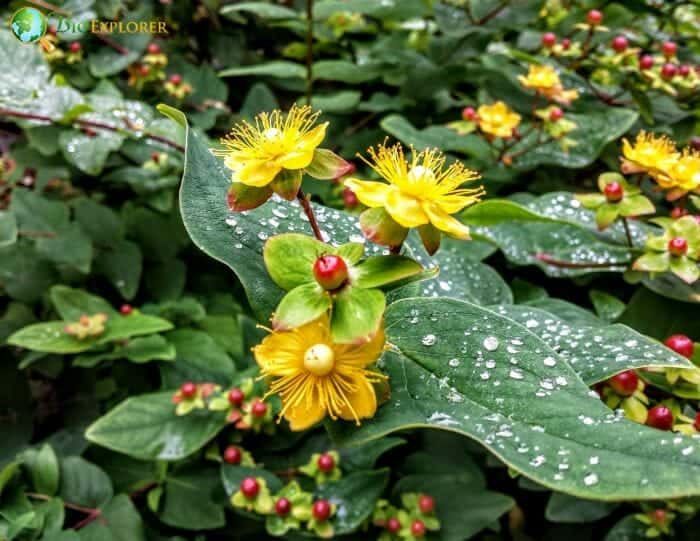
Hypericum Berries are very variable and occur as shrubs, trees, perennials, and annuals. Hypericum is a genus of plants in the Hypericaceae family. Hypericum berries are available in various colors, including red, pink, green, and white. It has bright yellow five-petalled flowers with prominent stamens that bloom in midsummer.
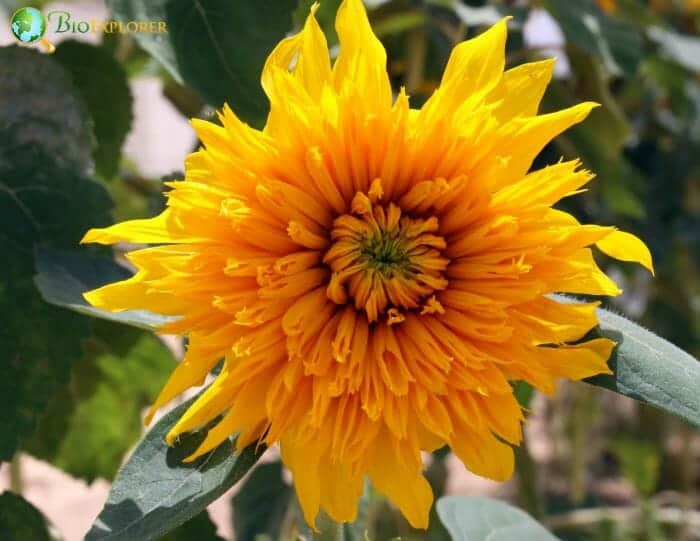
Sunflower is the common name of one of the plants in the Helianthus genus in the flowering Asteraceae family (known as the asters, daisies, or sunflower family). The inflorescence is a large disc with a 10 to 30 cm diameter and consists of 16 to 30 golden yellow florets.
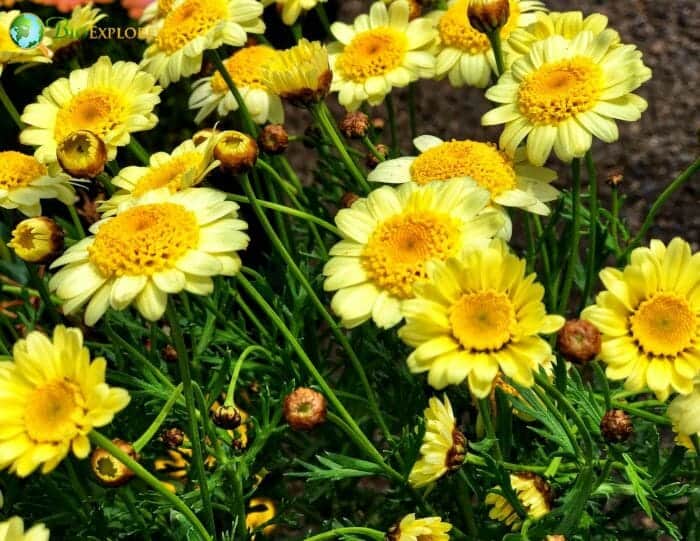
Also known as yellow chamomile, the Golden Marguerite (Anthemis tinctoria) is a species of field chamomile (Anthemis) in the Asteraceae (sunflower) family. There are about a hundred species in the Anthemis genus. The cup-shaped flowers, primarily golden yellow, with hemispherical heads, appear from June to August.
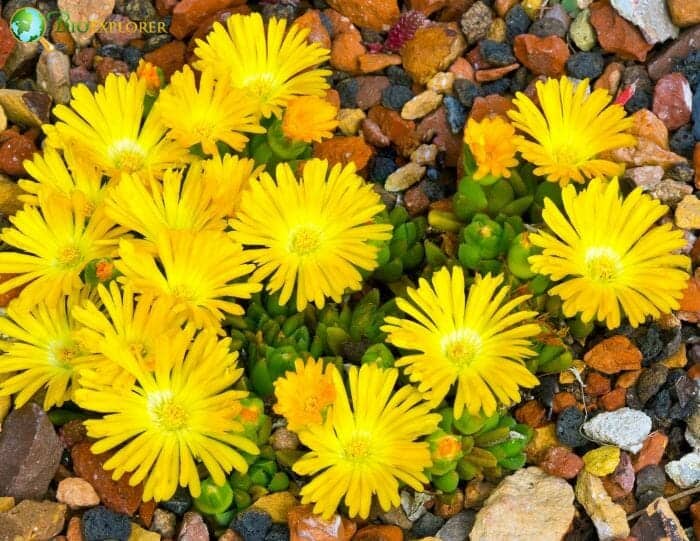
The Fig Marigold (Carpobrotus edulis), native to South Africa, is a semi-hardy perennial from the Aizoaceae family, one of 30 species in the Carpobrotus genus. The large, conspicuous yellow flowers (7 to 8.5 cm wide) stand individually at the end of short side branches (i.e., individually and at the end of side branches).
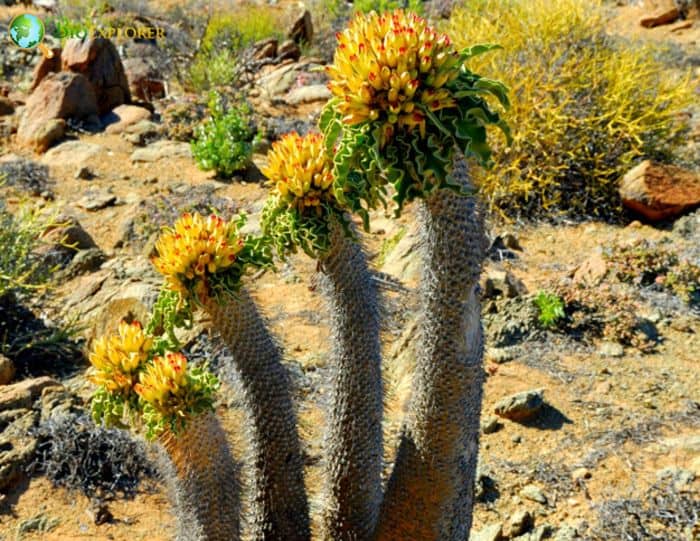
Pachypodium namaquanum is a sought-after popular succulent of the Apocynaceae family. These Namib desert flowers are large succulents from Northern Cape and southern Namibia. Elephant trucks are also called “halfmens” because they appear half Tree and half-human.
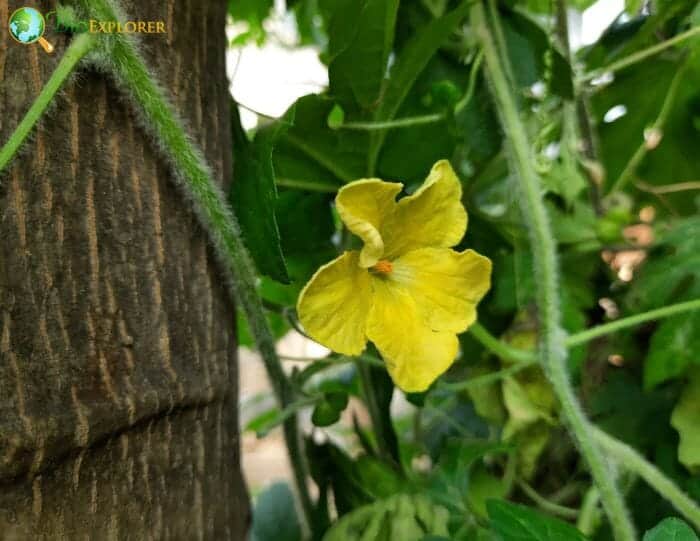
Elastic Momordica is an annual, climbing, or extensive perennial, monoecious herbaceous plant, 2 to 3 meters tall. It can be slightly hairy or hairless. The golden-yellow flowers are erect individually in the axils of the upper leaves on stems 2-10 cm long.
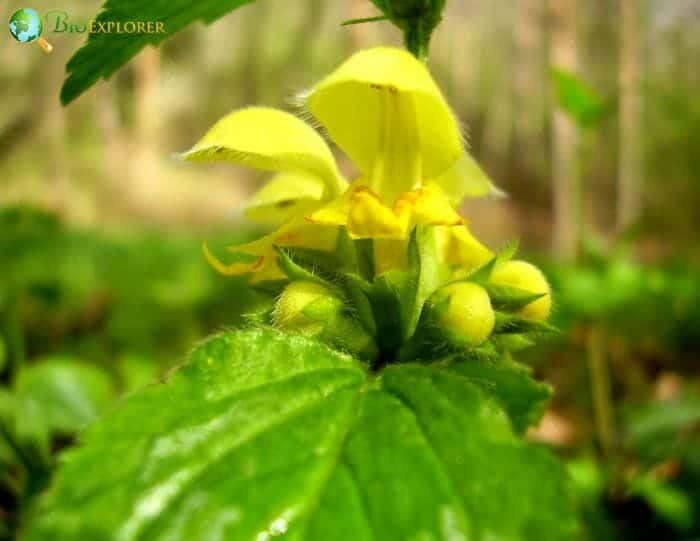
Dead Nettle is among the most famous wild herbaceous plants and is known for its sweet flowers. Originally, The Dead nettle is a perennial grass of 30-50 cm in height. It is native to Europe, China, Korea, and Japan. The most popular variety of dead Nettle has white flowers, but those with reddish and yellowish flowers.
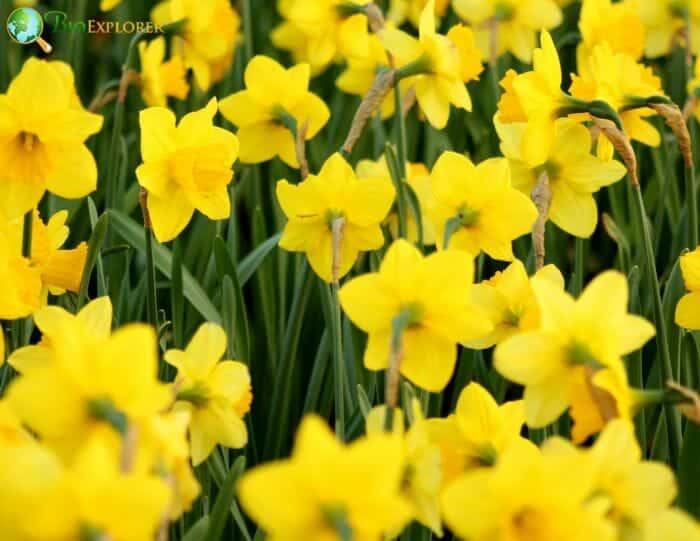
Daffodils herald spring and the awakening of nature with their trumpet-shaped blooms. They are among the few plant species that can successfully grow in snow. Daffodils are typically golden in color. However, there are new varieties of daffodils in pink, green, orange, yellow, and white.
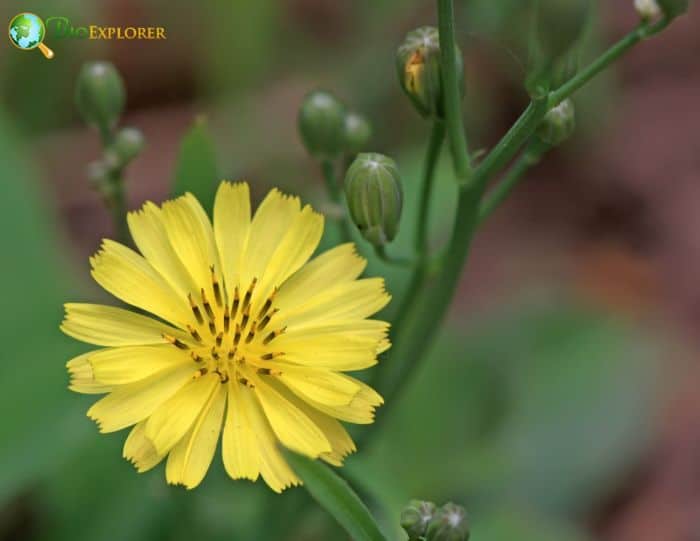
The creeping lettuce is a flowering plant of the Asteraceae family. It is a widespread species in Japan. Being perennial, this plant grows to 0.2 meters by 0.5 meters. Ixeris stolonifera prefers moist soil and grows well in semi-shade or no shade.
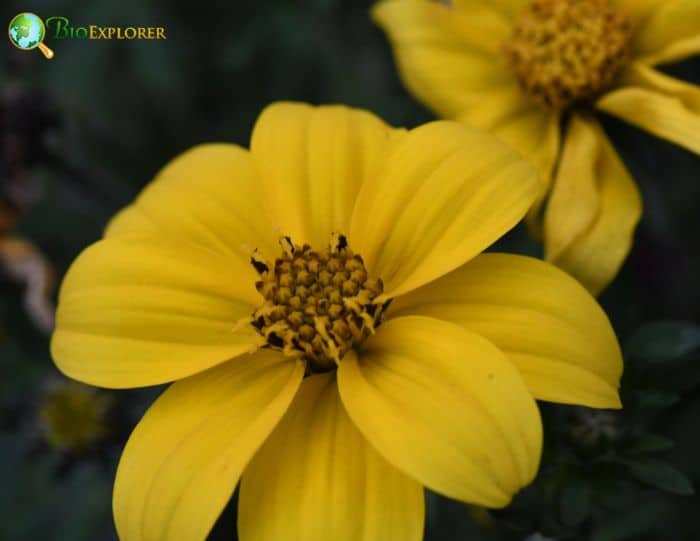
Bidens cosmoides, commonly called Cosmosflower beggarticks, is a species of flowering plant in the Asteraceae (sunflower) family. There are about 19 species in the Bidens genus.
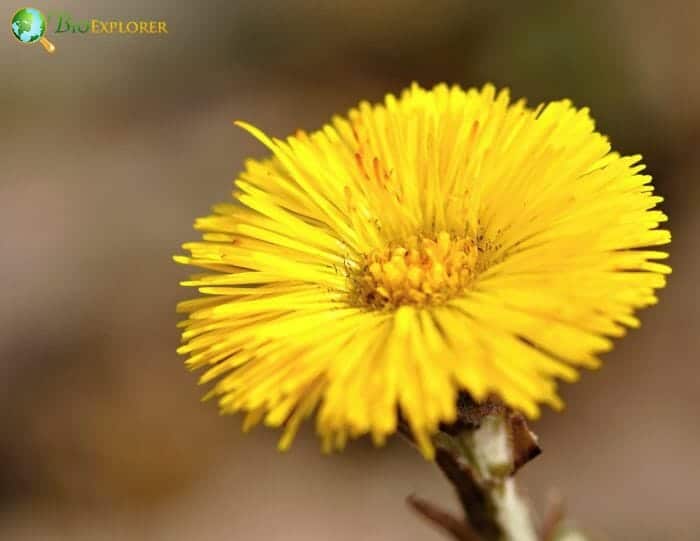
Coltsfoot (Tussilago farfara) is a perennial herb in the Asteraceae (sunflower) family native to North Africa, Europe, and parts of Asia. Coltsfoot is the only recognized species in the Tussilago genus. The bright yellow flowers appear in early spring before the leaves appear.
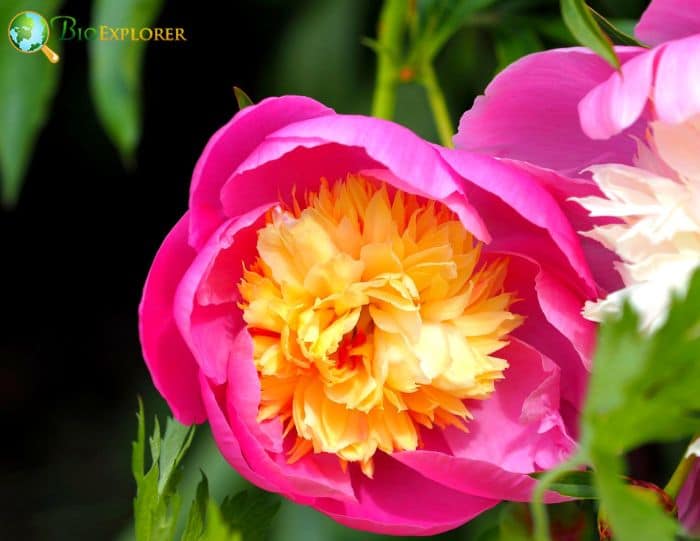
Paeonia lactiflora is a flowering plant that can grow 20-28 inches tall. The Chinese Peony is a perennial herb of the family Paeoniaceae. Peony is named after Paeon, the Greek god of medicine and healing.
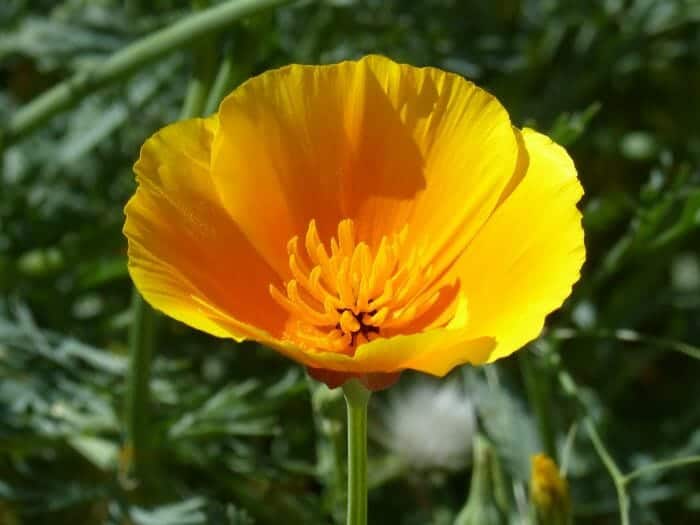
The California Poppy (Eschscholtzia californica) became California’s official state flower on March 2, 1903. The four-petal desert flowers, borne on stems 8 to 12 inches (20 to 30 cm) long, are typically cream, orange, or pale yellow. Still, cultivars are white and in a variety of pinks and reds.
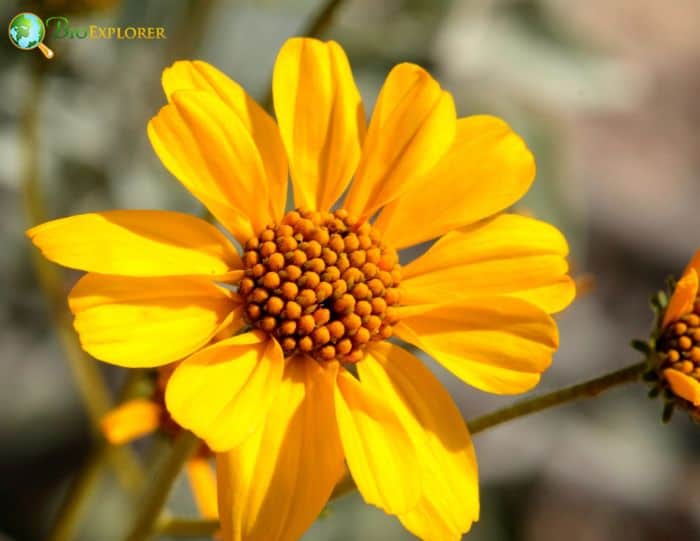
Brittlebush is a common desert shrub under the family Asteraceae. The plant can grow up to 1-5 feet tall and 4 feet wide. Research showed that the Encelia farinosa intrinsic water-use efficiency manifested strong responses to climate change.
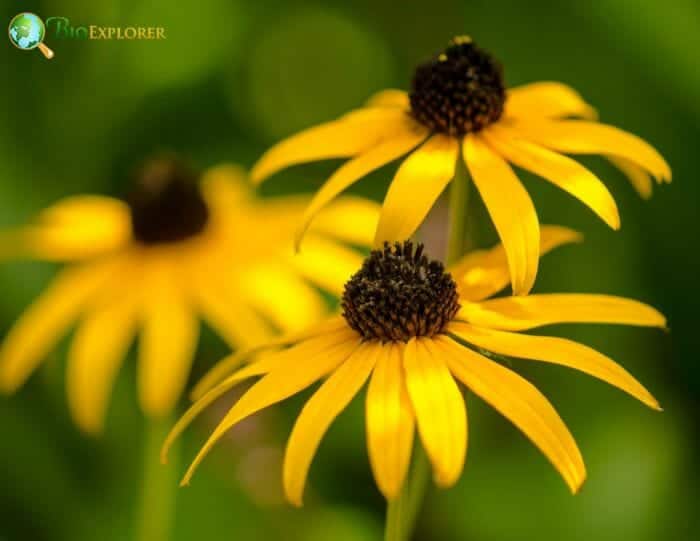
Black-eyed Susan flowers (Rudbeckia hirta) originate from North America and are the most well-known wildflowers cultivated today. Black-eyed Susan flowers are available in orange-yellow, gold, red, and bronze and bloom from June through October. There are more than 40 different species of black-eyed Susans.
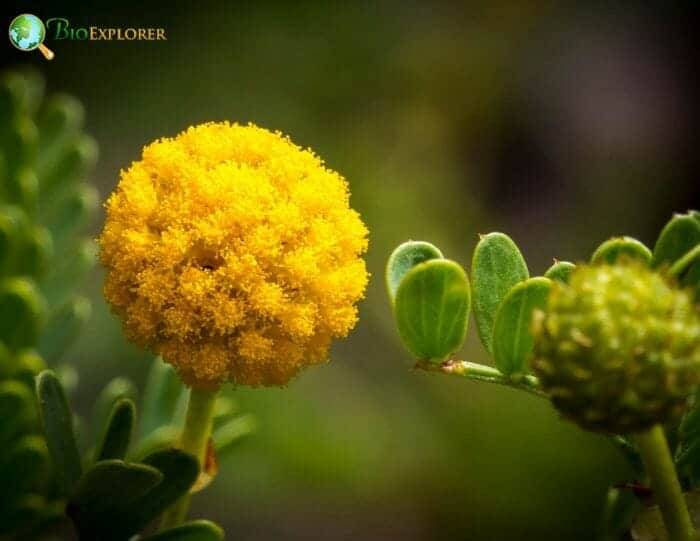
Billy buttons, a perennial herb native to New Zealand and Australia, have many names, including drumsticks, woolly heads, Billy balls, and Craspedia, all of which refer to the plant’s original appearance. The genus belongs to the Asteraceae family and includes around 23 species.