
What Do Tigers Eat? Explore Tiger Diets, Hunting & Eating Habits
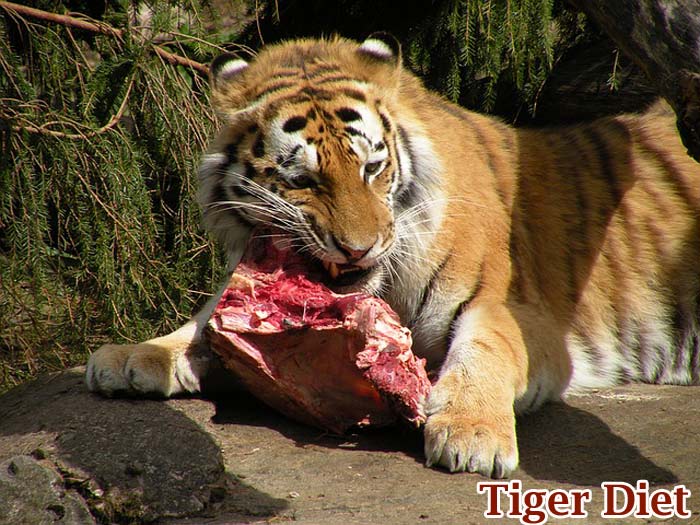
Tigers are obligate carnivores that hunt alone and by ambush. Their typical prey is a large ungulate weighing 130 to 550 pounds (60 to 250 kg), and sambar, chital and wild boar make up the bulk of the diet across most of their range.
But “what tigers eat” has no single answer. An Amur tiger in a Russian winter, a Bengal tiger in Indian grassland and a Sumatran tiger in dense rainforest hunt different prey, at different sizes, with different success rates.
This page breaks the diet down by subspecies, season and habitat.
Tigers Diet Guide:
- What Do Tigers Eat?
- How Tigers Hunt
- Do Tigers Eat Humans?
- Tiger Food Chain Diagram
- Tiger Diet By Species
- Tigers' Diet: Ecological Role and Importance
- Comparison of Tiger Diets with Other Big Cats
- Seasonal and Habitat-related Variations in Tiger Diet
- Unusual or Surprising Prey of Tigers
- Captive Tiger Diets
- Hunting Success Rates and Strategies of Tigers
- Scavenging Behavior in Tigers
- Cub Dietary Needs and Development of Tigers
- Impact of Climate Change and Conservation Efforts on Tiger Diet
- Frequently Asked Questions
- Jump to comments
What Do Tigers Eat?
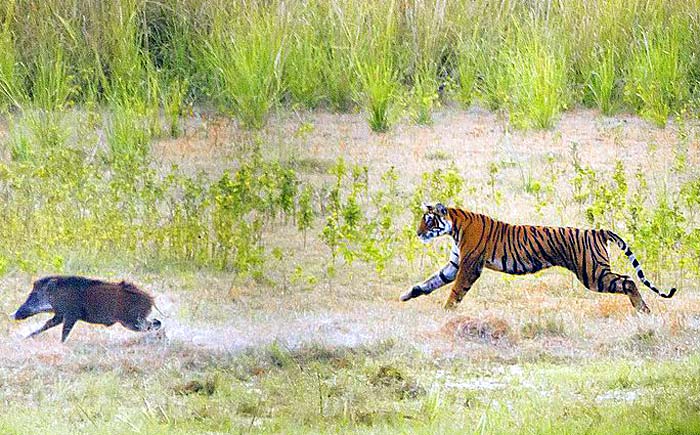
Deer and pigs are the staple, but the recorded prey list is far wider. Documented kills run from gaur weighing more than 1,000 lbs (450 kg) down to mouse deer under 20 lbs (9 kg), and include animals rarely associated with a big cat.
- Deer: Sambar, chital (spotted deer), sika deer, barasingha, hog deer and muntjac. Sambar and chital account for most of the meat a tiger eats across India and Nepal.
- Wild pigs: Wild boar throughout the range, bearded pig in Sumatra and Malaysia. In the Russian Far East, wild boar is the winter staple.
- Wild cattle and antelope: Gaur, banteng, water buffalo and nilgai. Tigers usually take calves and sub-adults of the largest of these. An adult gaur bull can exceed 2,000 pounds (900 kg).
- Large mammals taken less often: Rhino calves in Chitwan and Kaziranga, Ussuri brown bear and Asiatic black bear in the Russian Far East, sun bear, Malayan tapir, and elephant calves in rare documented cases.
- Other predators: Leopards, dholes, and on occasion crocodiles and pythons.
- Small prey, when large prey is scarce: Hares, rodents, porcupines, crocodiles, monkeys such as langurs, birds, fish, snakes, lizards, frogs, and even termites.
- Not prey: Tigers eat grass, which is thought to help clear hair and parasites from the gut. As obligate carnivores they get no nutrition from it.
How Tigers Hunt
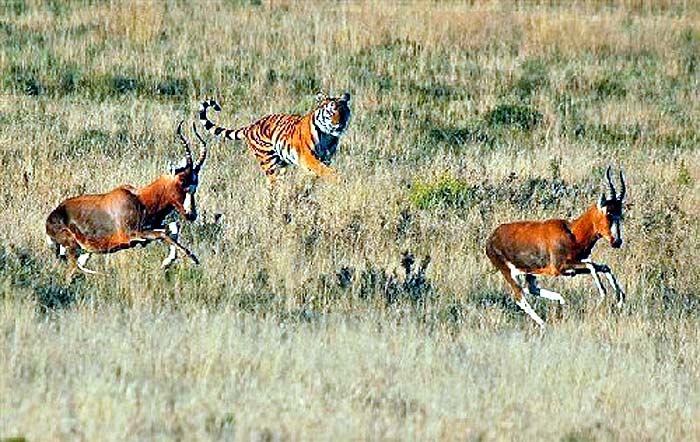
A tiger hunts alone. It closes the distance on foot, kills at contact range, and fails far more often than it succeeds. What follows covers the approach, the kill, the timing, and how often it works.
When the tiger cubs are a few months old, the tiger mother involves them in hunting, so they get trained at a very young age. They get proteins from the animal fat. Here are some tiger facts and information on hunting.
- Tigers rely on their sight rather than the smell of the prey. They use their dark striped skin as an effective camouflage to disguise themselves in the hideouts, especially among the long grass, resembling the vertical pattern of light and shade. This allows them to get very close to their prey without being detected before launching an attack.
- Tigers sit for a long time in absolute silence and then pounce on the prey when it is unexpected.
- It is estimated that tigers make at least 20 attempts before killing their prey.
- Tigers furiously run from a complete stand-still position to 50 mph speed in short sprints.
- Hunting sometimes takes its toll on tigers. Tigers could get seriously injured during the process too if the prey attacks them back (such as crocodiles, porcupines or heavy buffaloes).
- Male and female tigers hunt differently. Female tigers hunt only within their territories, while males hunt anywhere and anytime.
How Much and How Often Tigers Eat
A tiger can eat up to 40 kg (88 lb) of meat in one sitting, then go two to three days without feeding again. Over a year that works out to roughly 50 deer-sized kills, about one a week.
Body size sets the ceiling. A male Bengal tiger averages around 220 kg (480 lb) and a female around 140 kg (300 lb). Amur males, the largest of any subspecies, reach 300 kg (660 lb), while Sumatran males top out near 120 kg (265 lb). A tiger does not need 40 kg every day. It needs it after a kill, and then it waits.
How Do Tigers Kill Their Prey

Tigers use their front claw which has the built-in expand/retract mechanism as needed while grabbing its prey.
- They attack the animal either on the side or from the back so the prey cannot move away quickly. The first powerful bite would be on the neck to break its neck bone and then rip the throat out.
- Once killed, the tiger would drag the dead animal to a secluded area for a peaceful and quiet meal.
- Tiger prey suffers the quickest and least stressful death.
At What Times Do Tigers Hunt?

If tigers are really hungry and the prey is on sight, they would hunt right away. Generally, tigers prefer hunting on cool or cloudy days. Also, the sunset would be a good time for tigers to go for a kill when the animals wind down after a long day of grazing. Studies show that a tiger’s night vision is six times better than a human’s.
Do Tigers Eat Humans?
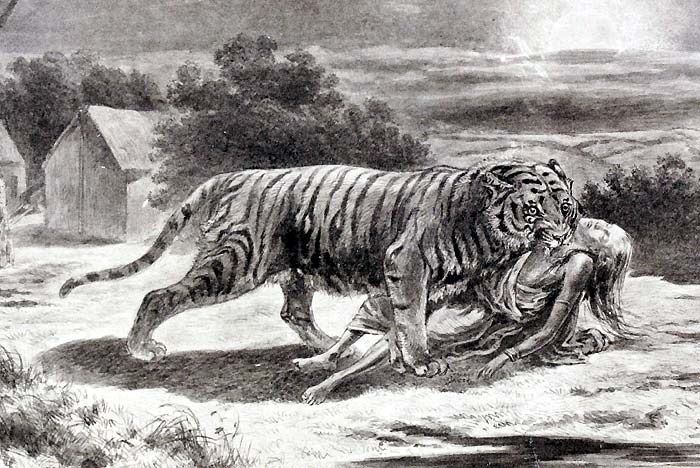
Of course! They do.
- There were many incidents in the past where these big cats pounced on humans & killed them for meat. Even these days, we hear horror stories on the news from zoos and in villages where tigers invade due to loss of habitats and in search of food.
- In 1903, Calcutta (now Kolkotta) witnessed the monster man-eater in a zoo that supposedly took more than 200 human lives.
- Even now, the human-tiger conflict continues.
Tiger Food Chain Diagram
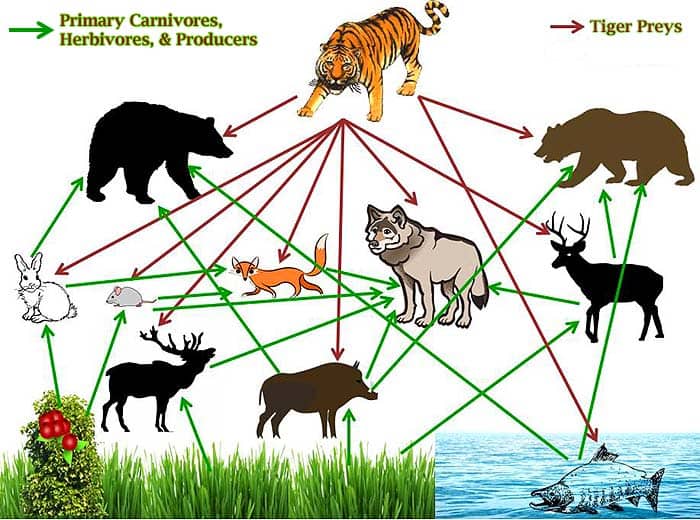
- The above diagram shows that the tiger sits at the top of the food chain in the ecosystem with no predators and feeds on the primary carnivores and herbivores directly.
- The second layer represents the primary carnivores, such as foxes and wolves, which feed on the herbivores.
- The third layer represents the herbivores such as deer, elks, and boars, which feed on the producers – vegetation such as trees, berries, and grass.
Tiger Diet By Species
Each type of tiger has a different diet based on its location. We have tabulated each known tiger species and what they eat in the wild below:
Siberian Tiger
| Kingdom | Order | Family | Genus | Species |
|---|---|---|---|---|
| Animalia | Carnivora | Felidae | Panthera | P. t. altaica |
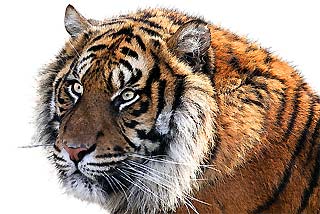
Siberian tigers also referred as Amur tigers. Now, they are mainly found in the Primorye Province of Russia. Let’s explore what Siberian tigers eat below.
However, due to their endangered status and declining population, there is a threat of creating a significant imbalance in the ecosystem where the wolf population could triple in size while the deer/elk species count could decline as well to force them into endangered status.
In the cold terrain, Siberian tigers eat red deer, wild boar, Manchurian elk, and sika deer. Also, tigers attack and eat grizzly bears and black bears.
Amur tigers are at the top of the food chain in the Siberian ecosystem and have no natural predators.
South China Tiger
| Kingdom | Order | Family | Genus | Species |
|---|---|---|---|---|
| Animalia | Carnivora | Felidae | Panthera | P. t. amoyensis |
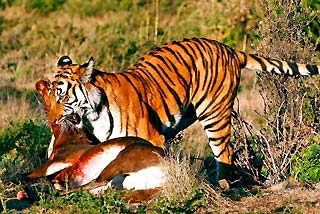
The South China tiger is also called “Chinese Tiger” or “Amoy Tiger”, and it is considered critically endangered by the IUCN. Explore why tigers became endangered here.
They eat serow, tufted deer, sambar deer, muntjac deer, and wild boars. South China tigers can eat around 40-80 lbs of meat at a given time. Being on top of the ecological pyramid, only humans are their predators.
Indochinese Tiger
| Kingdom | Order | Family | Genus | Species |
|---|---|---|---|---|
| Animalia | Carnivora | Felidae | Panthera | P. t. corbetti |
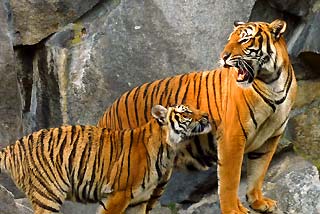
Indochinese tigers are mostly found in Burma, Thailand, Lao PDR, Vietnam, Cambodia and southern China. They are enlisted as endangered by the IUCN.
When food is scarce, Indochinese tigers even go after porcupines, hog badgers (Arctonyx collaris), macaques, monkeys, and muntjac deer.
Their main diet includes sambar deer, antelope, wild pigs, buffalos, serow, young gaur, baby rhinos, turtles, fishes and baby elephants.
Malayan Tiger
| Kingdom | Order | Family | Genus | Species |
|---|---|---|---|---|
| Animalia | Carnivora | Felidae | Panthera | P. t. jacksoni |
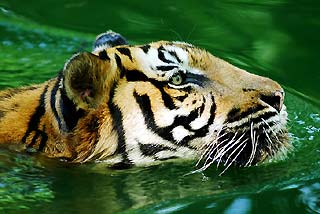
Malayan tigers are found in the peninsula of Malay. In 2015, they were officially announced as critically endangered tiger species.
Interestingly, Malayan tigers also hunt at night (Nocturnal) to find their prey. As the food chain leader, there is no natural enemy other than humans.
Malayan tigers’ diet includes deer species (sambar and barking), wild boar, bearded pigs, and serow. Malayan tigers also prey on sun bears (Helarctos malayanus), young elephants, and rhino calves. Due to human encroachment, livestock such as domestic cattle become prey to these tigers.
Sumatran Tiger
| Kingdom | Order | Family | Genus | Species |
|---|---|---|---|---|
| Animalia | Carnivora | Felidae | Panthera | P. t. sondaica |
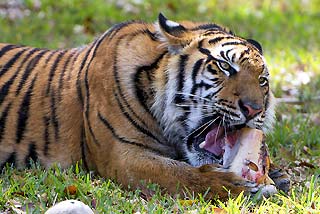
In 2008, the IUCN declared that the Sumatran tigers from Sumatran islands and Indonesia as critically endangered species. What do Sumatran tigers eat?
They are patient hunters and usually stalk the prey for 1/2 hour before attacking. Sumatran tigers have an interesting habit – once the meal is over, they would cover the carcass with grass using their paws to snack on the leftovers later!
Sumatran Tigers eat fishes, monkeys, crocodiles, fowl birds, wild pigs, and deer.
Bengal Tiger
| Kingdom | Order | Family | Genus | Species |
|---|---|---|---|---|
| Animalia | Carnivora | Felidae | Panthera | P. t. tigris |
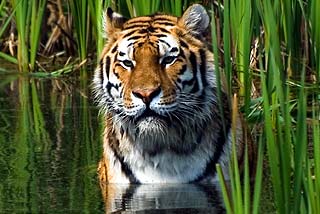
Being the resident of India, Bangladesh, Nepal, and Bhutan, what do Bengal tigers eat?
Due to humans invading their habitats, Bengal tigers also prey on domestic cattle and get killed by furious people. We hear this news from India very frequently.
Bengal tigers prefer hunting large mammals such as deer (chital, sambar, gaur, barasingha), water buffalo, nilgai/blue bull, serow (goat-like), and takin (gnu goat).
On the medium-sized species list, they frequently kill a wild boar, rarely hog deer, muntjac deer, and grey langur (black-faced monkeys).
When Bengal tigers encounter small prey species such as porcupines, hares, or peafowl, they kill them for snacks.

Top 16 Animals with the Best Hearing
Solitary Hunting
Tigers are solitary hunters, unlike other big cats that may hunt in groups. This behavior reduces competition for food and allows them to cover larger territories. Solitary hunting also means that tigers rely on stealth and surprise rather than the brute force of a group attack.
Ambush Tactics
Tigers are masterful ambush predators. They use the cover of vegetation to approach their prey silently. Once within striking distance, they launch a rapid, powerful attack, often aiming for the neck or throat to subdue their prey quickly. This method of hunting is highly effective and minimizes the risk of injury to the tiger.
Tigers’ Diet: Ecological Role and Importance
Tigers play a crucial role in maintaining the balance of their ecosystems. As apex predators, they help control the populations of herbivores, preventing overgrazing and promoting biodiversity. Their presence is an indicator of a healthy, functioning ecosystem.
Controlling Herbivore Populations
By preying on large herbivores such as deer and wild boar, tigers help to keep these populations in check. This predation pressure prevents overgrazing, which can lead to habitat degradation and loss of plant species. This balance supports the ecosystem’s overall health and ensures resource availability for other species.
Promoting Biodiversity
The presence of tigers can promote biodiversity in their habitats. Regulating prey populations creates opportunities for various plant and animal species to thrive. This biodiversity is essential for the resilience and sustainability of ecosystems, particularly in the face of environmental changes and human impacts.
Trophic Cascade
Removing tigers from an ecosystem can lead to a trophic cascade, where the populations of prey species increase unchecked, leading to overgrazing and habitat destruction. This can result in the decline of other species and a reduction in biodiversity.
Tigers help maintain a balance by keeping herbivore populations in check, which protects vegetation and supports a healthy ecosystem.
Human-Tiger Interactions
The relationship between humans and tigers is complex, with positive and negative interactions influencing conservation efforts and local economies.
Ecological Benefits to Farmers
In regions like the eastern Himalayas, the presence of tigers has been found to reduce crop and livestock losses. This is because tigers help control the populations of herbivores that would otherwise damage crops. Thus, tigers indirectly support agricultural productivity and local livelihoods.
Conservation and Livelihoods
The presence of tigers can also boost ecotourism, providing economic benefits to local communities. Effective conservation strategies that involve local populations can lead to sustainable livelihoods while protecting tiger habitats.
Case Study: Sumatran Tigers
In Bukit Barisan Selatan National Park, research has shown that the abundance of tigers and their prey is significantly influenced by human activities such as hunting and habitat loss.
In areas with low human population density, tiger and prey populations were significantly higher, highlighting the importance of conservation efforts to reduce human impact and protect these vital predators.
Comparison of Tiger Diets with Other Big Cats
Tigers are one of the animal kingdom’s largest and most powerful predators. Understanding their diet and comparing it with other big cats provides insight into their ecological roles and strategies to thrive in their environments.
This section explores the dietary habits of tigers. It compares them with those of other big cats like leopards, lions, and cheetahs, highlighting the unique adaptations and prey preferences that differentiate these magnificent predators.
Tigers vs. Leopards
Tigers and leopards often share habitats, but their dietary preferences help reduce competition. Tigers typically prey on larger animals, while leopards hunt smaller prey like deer and monkeys.
A study in the Bandipur Tiger Reserve, India, found that while both tigers and leopards hunt chital deer, tigers also consume larger prey like gaur, which leopards generally avoid due to the risk and their smaller size.
| Species | Common Prey | Biomass Contribution | Typical Prey Size |
|---|---|---|---|
| Tiger | Sambar, Wild Boar, Chital | 60-250 kg | Large (60-250 kg) |
| Leopard | Chital, Langur, Small Deer | 20-70 kg | Medium (20-70 kg) |
Tigers vs. Lions
Lions, unlike tigers, often hunt in groups, allowing them to take down very large prey such as buffalo and giraffes. This social hunting strategy enables lions to target a broader range of large prey compared to the solitary hunting strategies of tigers.
However, both tigers and lions prefer medium to large ungulates, although lions in pride can tackle prey that would be too dangerous for a lone tiger.
| Species | Common Prey | Hunting Strategy | Typical Prey Size |
|---|---|---|---|
| Tiger | Sambar, Wild Boar, Chital | Solitary | Large (60-250 kg) |
| Lion | Buffalo, zebra, Wildebeest | Group (prides) | Very Large (100-300 kg) |
Tigers vs. Cheetahs
Cheetahs specialize in speed and typically hunt smaller and faster prey like gazelles. Unlike tigers, which rely on strength and stealth, cheetahs use their incredible acceleration to outrun prey. This difference in hunting strategy is reflected in their diet, with cheetahs consuming smaller, fleet-footed animals that are less accessible to tigers.
| Species | Common Prey | Hunting Strategy | Typical Prey Size |
|---|---|---|---|
| Tiger | Sambar, Wild Boar, Chital | Ambush | Large (60-250 kg) |
| Cheetah | Gazelles, Impalas | High-speed pursuit | Small to Medium (20-60 kg) |
Regional Variations
Tigers’ diets can vary significantly depending on their habitat. For instance, the diet of Amur tigers in the Russian Far East heavily relies on wild boar and deer species. In contrast, Bengal tigers in India and Nepal primarily consume different species of deer and wild pigs.
Seasonal and Habitat-related Variations in Tiger Diet
Tigers, being apex predators, exhibit remarkable adaptability in their dietary habits to cope with seasonal changes and different habitats. Their diet varies significantly depending on prey availability, environmental conditions, and competition with other predators. This section explores how tigers adjust their feeding patterns seasonally and across various habitats.
Seasonal Variations in Diet
Seasonal changes significantly impact the availability of prey, leading to variations in the diet of tigers. During different seasons, tigers adapt by targeting different prey species that are more abundant or easier to hunt at that time.
Winter vs. Summer Diets
Amur tigers have distinct seasonal dietary patterns in colder regions like the Russian Far East. In winter, these animals become the primary diet when prey such as wild boar and deer are more concentrated and easier to locate due to snow cover. Conversely, during summer, the prey base becomes more diverse as animals disperse, and tigers may include smaller mammals and birds in their diet.
| Season | Primary Prey | Secondary Prey |
|---|---|---|
| Winter | Wild boar, Sika deer | Roe deer, small mammals |
| Summer | Diverse ungulates | Birds, small mammals, fish |
Dry vs. Wet Seasons
In tropical regions, such as the Indian subcontinent, the diet of tigers also changes between the dry and wet seasons. During the dry season, water sources are limited, and prey animals tend to congregate around these areas, making them easier targets for tigers.
In contrast, during the wet season, prey dispersion due to abundant water sources results in tigers needing to cover larger areas to find food.
Habitat-Related Variations
A tiger’s habitat influences its diet due to differences in prey availability, vegetation cover, and human presence. Tigers inhabit various environments, from dense tropical forests to open grasslands and mangrove swamps.
Forested Habitats
Tigers in dense forests, such as those in India and Nepal, primarily prey on large ungulates like sambar deer and chital. The dense vegetation provides cover for ambush hunting, a key strategy for tigers in these areas.
Grasslands and Savannas
In more open habitats, such as the grasslands and savannas of Central India, tigers adapt their hunting strategies to account for less cover. They often hunt during dawn or dusk when visibility for prey is lower. Prey species in these areas include wild boar, buffalo, and deer.
Mangrove Swamps
The Sundarbans mangrove forest presents a unique habitat where tigers primarily prey on species like spotted deer and occasionally fish and crabs. The challenging terrain of the mangroves requires tigers to be adept swimmers, and their diet here reflects the availability of prey in this aquatic environment.
Adaptive Strategies
Tigers exhibit a high degree of adaptability in their feeding strategies. During periods of prey scarcity, they may travel greater distances or shift their diet to include less preferred prey, such as smaller mammals or birds. This flexibility is crucial for their survival in diverse and changing environments.
Case Study: Amur Tigers in Northeast China
A study on Amur tigers in Northeast China revealed that wild boar had the highest annual and seasonal consumption frequencies. The seasonal variation showed that tigers adapted their diet based on prey availability, with roe deer and sika deer being more frequently preyed upon in certain seasons.
Unusual or Surprising Prey of Tigers
Tigers, known for their preference for large ungulates, have occasionally been documented preying on unexpected or unusual animals. These instances provide intriguing insights into these apex predators’ adaptability and opportunistic feeding behavior. Below, we explore some surprising prey choices of tigers, supported by research findings.
Predation on Primates

While tigers typically hunt large herbivores, there have been instances where they have preyed on primates. For example, in the forests of India, common langurs (Presbytis entellus) have been documented as part of the tiger’s diet.
Although these primates are not a primary food source, tigers occasionally hunt them, especially in regions where their preferred prey is scarce.
Consuming Small Mammals and Birds
Tigers have been known to target smaller mammals and birds without larger prey. Studies in the Sundarbans, a unique mangrove habitat, revealed that tigers occasionally prey on birds like pheasants and smaller mammals such as rodents and even monkeys. These findings highlight the tiger’s ability to adapt its hunting strategy based on prey availability.
Predation on Domestic Animals
Tigers living near human settlements sometimes prey on domestic livestock, including cattle, goats, and dogs. This behavior is often a result of habitat encroachment and depletion of wild prey. A study in the Russian Far East noted that Amur tigers preyed on domestic animals when wild prey was scarce, illustrating the tiger’s opportunistic hunting behavior.
Aquatic Prey
In some regions, tigers have been observed preying on aquatic animals. In the Sundarbans, for example, tigers have been known to catch fish and crabs. This behavior is particularly noteworthy given the tigers’ adaptations for hunting on land. The unique environment of the Sundarbans, with its vast network of waterways, necessitates such dietary flexibility.
Predation on Other Predators
In rare instances, tigers have been documented preying on other predators. An Amur tiger preying on a lynx in the Russian Far East is a notable case. Such events are rare and typically occur when the tiger desperately needs food or defending its territory.
Captive Tiger Diets

Feeding captive tigers involves carefully balancing their nutritional needs to maintain their health and well-being. Unlike their wild counterparts, captive tigers often face a diet that differs significantly in composition and texture. This section explores the various aspects of feeding practices for captive tigers, highlighting the nutritional considerations, common health issues related to diet, and the impact of diet on their overall health.
Common Tiger Feeding Practices
Captive tigers are usually fed a diet that primarily consists of raw meat. This is designed to replicate the nutritional content of their natural diet as closely as possible.
Types of Meat
The most commonly used meats in captive tiger diets include beef, chicken, horse, and sometimes whole prey items. A survey of 32 zoological facilities revealed that commercial raw meat diets were the predominant feeding choice, with horse meat being the most frequently provided protein source.
| Type of Meat | Frequency of Use |
|---|---|
| Beef | High |
| Chicken | High |
| Horse | Most Common |
| Whole Prey | Occasional |
Tiger Nutritional Considerations
Captive tigers require a diet that meets their specific nutritional needs, which include adequate protein, fat, vitamins, and minerals. However, providing a diet that matches the complexity of their natural intake can be challenging.
Protein and Fat Content
Raw meat diets for tigers must ensure high protein content and appropriate fat levels. For example, a study evaluating nutrient digestibility in exotic felids, including tigers, found that raw beef-based diets provided the necessary macronutrients efficiently.
| Nutrient | Requirement (% of Diet) | Source |
|---|---|---|
| Protein | 80-90% | Raw meat |
| Fat | 5-10% | Raw meat |
| Calcium | 0.6-1% | Bone content, supplements |
| Phosphorus | 0.5-0.8% | Bone content, supplements |
Health Issues Related to Diet
The diet of captive tigers can significantly impact their gastrointestinal, oral, and overall physical health.
Tiger’s Gastrointestinal Health
A study examining gastrointestinal health in captive tigers indicated that frequent feeding of muscle meat and chicken was associated with increased vomiting and diarrhea. Conversely, including long bones in the diet appeared to reduce these issues.
Oral Health
Captive tigers fed solely on ground meat diets often suffer from dental issues due to the lack of mechanical chewing required to process their food. This can lead to dental calculus, periodontal disease, and even morphological changes in their cranial structure due to reduced masticatory effort.
Improving Captive Diets
Efforts to improve the diets of captive tigers focus on mimicking the natural feeding behaviors and nutritional profiles of wild tigers as closely as possible.
Inclusion of Whole Prey
Feeding whole prey items, such as rabbits or deer, can provide nutritional benefits and engage tigers in natural hunting and chewing behaviors, which is beneficial for their psychological health and oral hygiene.
Balancing Nutrients
Supplementing raw meat diets with essential vitamins and minerals is crucial to prevent deficiencies. For instance, ensuring an adequate balance of calcium and phosphorus is vital for bone health, and addressing deficiencies in fatty acids or other essential nutrients is necessary for overall well-being.
Hunting Success Rates and Strategies of Tigers
As apex predators, tigers rely on their exceptional hunting skills to sustain themselves in the wild. Understanding their hunting success rates and strategies provides valuable insights into their behavior and ecology, essential for effective conservation efforts.
Hunting Success Rates
Tigers’ hunting success rates vary widely depending on prey availability, habitat type, and individual skill. Studies have shown that tigers generally have a success rate of about 5-10% per hunting attempt, which is relatively low but sufficient for survival given their solitary hunting strategy.
Success Rates in Different Habitats
In the Huai Kha Khaeng Wildlife Sanctuary in Thailand, a study of eight female radio-collared tigers identified 11 mammalian species from 150 kill sites. The tigers’ hunting success was influenced by the availability of stalking cover, with higher kill rates observed in areas with abundant cover.
| Habitat Type | Hunting Success Rate |
|---|---|
| Dense Forest | Higher |
| Open Grasslands | Lower |
Hunting Strategies
Tigers employ various hunting strategies, primarily ambush and stalking, to capture their prey. These strategies are finely tuned to their physical capabilities and their hunting environments.
Ambush Predation
Ambush predation involves tigers using their stealth to get as close as possible to their prey before launching a sudden attack. This method is highly effective in dense forests and areas with plenty of cover, where tigers can remain hidden until the last moment.
Stalking
In more open habitats, tigers rely on stalking, which involves carefully and quietly approaching their prey. This method requires immense patience and skill, as the tiger must avoid detection until it is within striking distance. The effectiveness of this strategy depends heavily on the tiger’s ability to move silently and blend into the surroundings.
Factors Influencing Hunting Success
Several factors influence the hunting success of tigers, including prey density, environmental conditions, and the individual skills of the tiger.
Prey Density and Availability
Higher prey density typically results in higher hunting success rates. Tigers can afford to be more selective in areas where prey is abundant and expend less energy on each hunting attempt. Conversely, in areas with low prey density, tigers may have to travel greater distances and make more frequent hunting attempts to secure food.
Environmental Conditions
Environmental conditions such as weather, terrain, and vegetation cover play a significant role in hunting success. Dense vegetation provides cover for ambush tactics, while open areas may favor stalking strategies. Additionally, weather conditions like rain or snow can affect the visibility and scent trails of prey, impacting the tiger’s ability to hunt effectively.
Case Study: South China Tigers
A study on the hunting performance of captive-born South China tigers reintroduced to the wild assessed their ability to hunt free-ranging prey. The tigers showed a wide range of kill rates, from one blesbuck every 3.14 days to no successful hunts, demonstrating significant individual variation. The presence of stalking cover significantly improved hunting success, highlighting the importance of habitat structure in hunting strategies.
Scavenging Behavior in Tigers
While tigers are predominantly known for their prowess as hunters, they are also opportunistic feeders who engage in scavenging behavior when the opportunity arises. This ability to scavenge can provide crucial dietary supplements, particularly when prey is scarce. Understanding the scavenging habits of tigers offers insights into their ecological adaptability and survival strategies.
Instances of Scavenging
Scavenging by tigers has been documented in various studies, highlighting their adaptability and opportunistic feeding habits. These instances often occur when fresh kills are scarce, and scavenging provides an alternative source of nutrition.
Documented Cases
- Scavenging on Domestic Livestock: Tigers have been observed scavenging on livestock carcasses in regions where human-tiger conflicts are prevalent. This behavior is often a consequence of habitat encroachment and depletion of natural prey, forcing tigers to resort to scavenging to meet their dietary needs.
- Natural Prey: Tigers have also been documented scavenging on the carcasses of naturally deceased animals. This includes large herbivores that succumb to natural causes, disease, or injuries from other predators.
Cub Dietary Needs and Development of Tigers
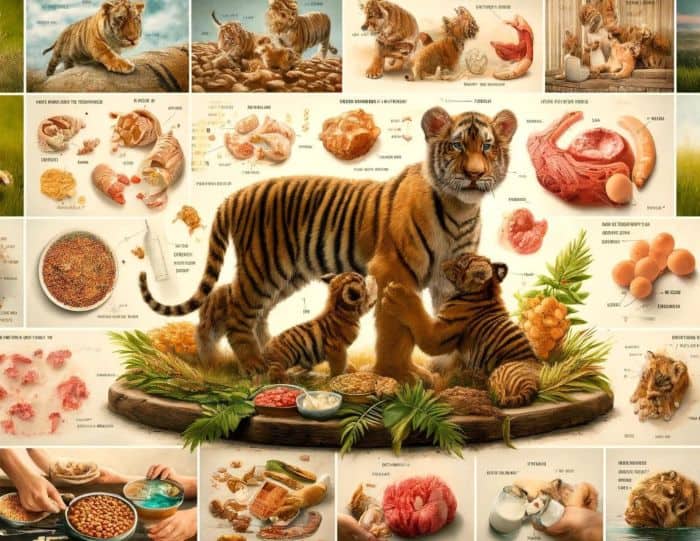
The dietary needs of tiger cubs are critical for their healthy development and long-term survival. Proper nutrition during the early stages of life ensures robust growth, strengthens the immune system, and prevents developmental disorders. This section explores the nutritional requirements, common dietary practices, and challenges in feeding tiger cubs.
Nutritional Requirements
Tiger cubs require a protein, fat, vitamins, and minerals diet to support their rapid growth and development. Milk from the mother provides the essential nutrients during the initial weeks. Still, as they grow, the introduction of solid food becomes necessary.
Milk and Weaning
During the first few weeks of life, tiger cubs rely exclusively on their mother’s milk, which is rich in essential nutrients. Studies have shown that milk replacers used in captive settings must closely mimic the nutritional profile of natural tiger milk to ensure proper growth and development.
- Protein: Essential for muscle and tissue development.
- Fat: Provides a concentrated source of energy.
- Calcium and Phosphorus: Critical for bone development.
In a study on South China tiger cubs, those fed with KMR (Kitten Milk Replacer) showed normal digestion and growth rates comparable to those naturally nursed by their mothers.
Transition to Solid Food
As tiger cubs grow, their diet transitions from milk to solid food. This process typically begins around the age of 8-10 weeks.
Meat-based Diet
A meat-based diet is introduced gradually, ensuring that the cubs receive a balanced intake of nutrients. The diet usually includes:
- Raw Meat: Beef, chicken, and occasionally whole prey.
- Supplements: Calcium and vitamin supplements to prevent deficiencies.
A case of a tiger cub suffering from nutritional secondary hyperparathyroidism due to an unbalanced meat-only diet highlights the importance of dietary supplements. The cub significantly improved after switching to a more balanced diet with added calcium and vitamins.
Common Health Issues
Improper nutrition can lead to several health issues in tiger cubs, affecting their growth and overall health.
Nutritional Deficiencies
- Rickets and Osteomalacia: Caused by deficiencies in calcium and vitamin D, leading to weak bones and skeletal deformities. This was observed in a study where a Siberian tiger cub developed ataxia and osteodystrophy changes due to an imbalanced diet lacking calcium and vitamins.
- Eye and Skin Conditions: In artificial milk formulas, cataracts, and strabismus have been linked to deficiencies in essential amino acids like taurine, arginine, and histidine. Affected cubs showed significant health improvements after dietary adjustments.
Case Study: Nutritional Management in Captive Tigers
A comprehensive study on the nutrient and apparent digestibility of the diet of South China Tigers and Bengal Tigers highlighted the importance of balanced nutrition. The study found high protein, fat, and energy digestibility rates, ensuring optimal growth and health.
| Nutrient | Digestibility Rate |
|---|---|
| Protein | 97 ± 0.7% |
| Fat | 98 ± 1.0% |
| Energy | 97 ± 1.3% |
Impact of Climate Change and Conservation Efforts on Tiger Diet
Climate change and conservation efforts significantly affect tiger diets by altering their habitats, prey availability, and interaction with human populations. These changes pose challenges and opportunities for tiger conservation, demanding adaptive strategies to ensure survival.
Climate Change Effects on Habitat and Prey
Climate change impacts tiger habitats in various ways, influencing the distribution and abundance of prey species and the availability of suitable hunting grounds.
Habitat Loss and Fragmentation
Climate change exacerbates habitat loss and fragmentation, which directly affects tiger populations. In the Russian Far East, the Amur tiger faces a dramatic reduction in suitable habitats due to climate change, leading to increased fragmentation and potential population decline.
- Suitable habitats are projected to expand northward but become more fragmented.
- Under severe climate scenarios, tiger populations may decline sharply due to habitat loss.
Changes in Prey Distribution
In regions like the Sundarbans mangrove forest, climate change leads to rising sea levels and increased salinity, negatively affecting prey species’ habitats. This, in turn, impacts tiger diets, forcing them to adapt to new prey or migrate to new areas, increasing human-tiger conflicts.
- Significant decline in suitable habitats for Bengal tigers.
- Increased tiger-human conflicts due to habitat encroachment and prey migration.
Frequently Asked Questions
Tigers mainly eat large ungulates like deer and wild boar, but they are known to eat a variety of prey, big or small, depending on their geographical location.
Unlike lions, tigers are solitary hunters. This means they tend to hunt alone, stalking their prey slowly before pouncing on them at high speeds. Tigers can reach up to 40-50 miles per hour in short bursts.
Tigers usually eat between 18-20 pounds of meat at one time, but they can consume up to 88 pounds if they are especially hungry.
Though they prefer larger prey, tigers are adaptable predators known to eat smaller prey when larger game is scarce. They can also eat smaller mammals and birds if necessary.
Both male and female tigers are solitary hunters, but males have been known to hunt larger game than females. Female tigers reach their full hunting maturity earlier than males and often hunt smaller game.
Yes, some tiger subspecies have preferred types of prey. Bengal tigers, for instance, favor ungulates like deer and wild boar. However, they are adaptable hunters and can eat a variety of prey if required.<
As solitary hunters, tigers require significant prey to sustain their populations. Recent declines in their favored prey species due to habitat loss and fragmentation have contributed to a drop in tiger populations, especially in Southeast Asia.
The tiger is the largest of all big cats in the world. They are solitary, usually hunt alone, and are adapted to bring down prey much larger than themselves. They have a high success rate in hunting due to their strength and agility.
Tigers are obligate carnivores and get no nutrition from plants. They do sometimes eat grass, which is thought to help clear hair and parasites from the gut, but it is not food.
Tigers’ solitary nature, their ability to run up to 50 miles per hour, their strength that allows them to take down prey larger than themselves, their sharp retractable claws, and their recognizable black stripes for camouflage make them a formidable and successful predator.
Cite this page
BioExplorer. (2026, August 26). What Do Tigers Eat? Explore Tiger Diets, Hunting & Eating Habits. https://www.bioexplorer.net/what-do-tigers-eat.html/




This is great!
I love this text so much and it helped me in school for my school work!
Good luck Michael.