Congo Monkeys: The Democratic Republic of the Congo, the second-largest African country, is known for its vast biodiversity and natural resources.
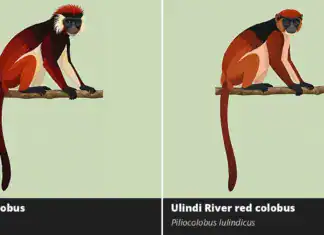
Congo is also home to 35 Old World monkeys, with 18 endemic species. Some examples of these endemic species include the golden-bellied mangabey (Cercocebus chrysogaster), the wolf's monkey (Cercopithecus wolfi), and the Ulindi river red colobus (Piliocolobus lulindicus).
In 2007, a new species of medium-sized monkey–the lesula (Cercopithecus lomamiensis) was discovered in Congo[1]. It is believed that the species had evaded all scientific radar until then due to its remote habitat (the forests in the middle Lomami Basin)[2].
Interestingly, the lesula was just the second new African monkey species to be discovered in over twenty-eight years[3].
Congo Monkeys
Here are the monkeys living in the Democratic Republic of the Congo.
The Agile Mangabey is another Old-World monkey of the White-Eylid Mangabey group mainly found in swampy forests. Due to habitat loss, mangabeys are now listed as endangered, both male and female.
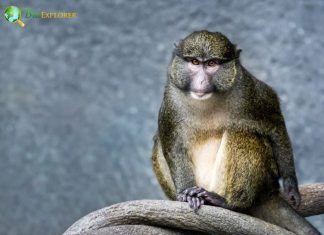
Allen’s swamp monkeys are small, stocky monkeys with gray to brown fur and long tails. These highly social primates live in the swamp forests of central Africa, where they mostly spend their time in the trees. It was named after Joel Asaph Allen, an American zoologist.
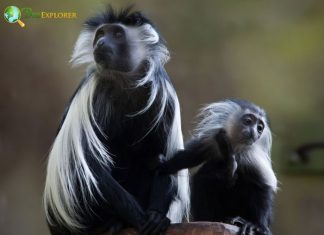
The Angolan Colobus is a conspicuously-patterned monkey with a very long tail that helps it maintain its balance as it moves quickly through the trees. Although the species is named after Angola, it’s rare in this country.
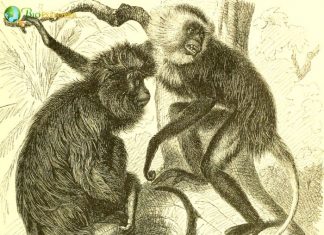
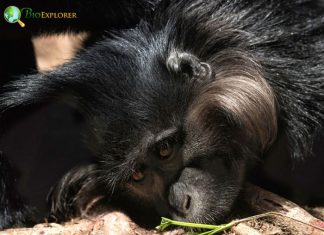
The black colobus, also known as satanic black colobus, is a species of Old-World monkey in the Colobus genus. The black colobus is the oldest of the 5 recognized species in the genus Colobus and is said to have diverged 3 to 4 million years ago.
Black-crested mangabeys, also known as black mangabeys, are endemic to central Africa, occupying the Democratic Republic of the Congo, south of the Congo River (formerly known as the Zaire River), and likely extinct in Angola. They are mainly found in primary and secondary tropical forests, gallery forests, and swamps. Locals nicknamed these primates “baboon mangabeys” due to their resemblance to the baboon species.
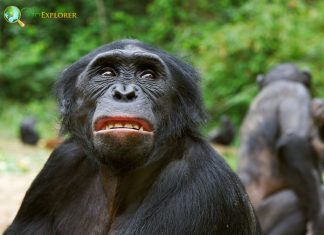
The bonobo (Pan paniscus) is a great ape in danger of extinction. It is one of two species that make up the Pan genus, the other being Pan troglodytes – the common chimpanzee. Bonobos are both arboreal and terrestrial. Most floor movements are characterized by knuckle quadrupedal walking.
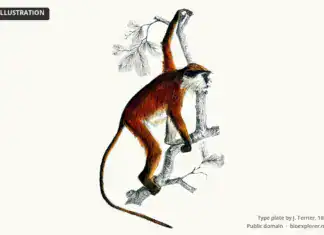
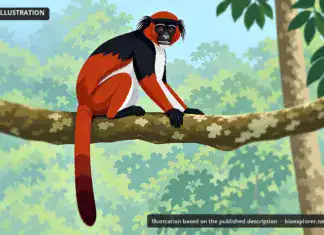
Bouvier's red colobus is an Endangered monkey found only in the Republic of the Congo. Feared extinct as recently as 2007, it was photographed in 2015.
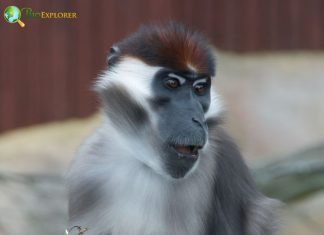
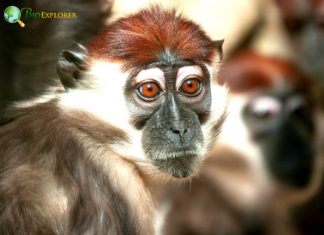
The collared mangabey, also called the white-collared mangabey or red-capped mangabey, is an Old-World monkey endemic to the Atlantic coast of central and west Africa. Its distinctive chestnut-red cap gives the species the name red-capped mangabey, and its white collar gives it the names white-collared and collared mangabey.
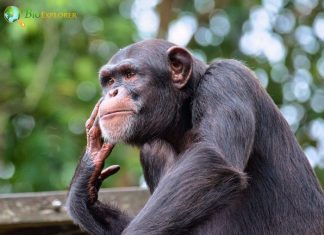
The chimpanzee, also known simply as the chimp, is a species of great ape native to the forests and savannas of tropical Africa. Chimpanzees and humans are thought to have a common ancestor that lived about eight million years ago.
The crested mona monkey, also called the golden-bellied monkey, golden-bellied guenon, or crowned guenon, is a species of African primate in the Cercopithecidae family in west-central Africa. Like many species of Cercopithecus, the crested mona monkey has large cheek pouches that it fills with seeds and fruit while foraging for food.
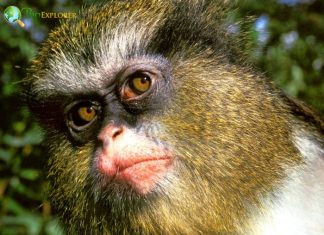
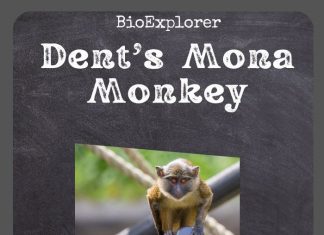
The expressive face of Dent’s mona monkey is characterized by golden eyes; a flat, long, dark nose; and a pink chin and mouth. Dent mona monkeys are often found in the company of other primate species.
The Dryas monkey, also called the Salonga monkey, Inoko, or Ekele is a little-known Old World primate only found in the Congo Basin and restricted to the Congo River’s left bank. Unlike guenon monkeys, which make loud leaps and resounding calls, dryas monkeys move silently.
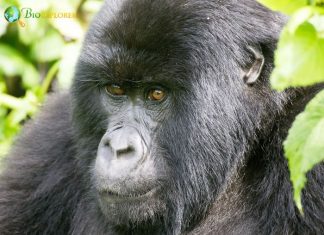
The eastern gorilla is an endangered species of the Gorilla genus and the largest living primate, with an average length of 150 cm for females and 185 cm for males. Eastern gorillas live in stable and cohesive family groups led by a dominant silverback male.
The Gabon talapoin, also called the northern talapoin, is a small species of African primate endemic to riverine habitats in Gabon, Equatorial Guinea, Cameroon, the far western Democratic Republic of the Congo, and the western Republic of the Congo.
The golden angwantibo is a strepsirrhine primate of the Lorisidae family. Bärenmaki, meaning “lemur bear,” is the German name for the golden angwantibo due to its bear-like appearance. However, we see no resemblance.
The golden-bellied mangabey (Cercocebus chrysogaster) is a gregarious Old-World monkey found in humid, swampy forests south of the Congo River. Golden-bellied mangabeys are a migratory and social species, moving in groups of 8 to 30 members.
The greater spot-nosed monkey (Cercopithecus nictitans), also called the greater white-nosed monkey, putty-nosed monkey, and white-nosed guenons, is among the smallest Old-World monkeys. Great spot-nosed monkeys have a polygamous mating system in which a resident adult male coexists with multiple adult females and their young.
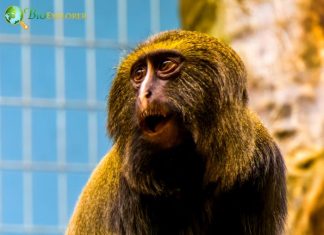
The Hamlyn’s monkey (Cercopithecus hamlyni), also called the owl-faced monkey, is an Old World monkey inhabiting the Congo’s bamboo and primary rain forests. Hamlyn’s monkeys have unique feet and hands in elongated phalanges.
Johnston’s mangabey is the crested mangabey of the forests east of the Ubangi River, reaching western Rwanda and western Burundi along the Albertine Rift. It is the middle piece of a three-part puzzle, with the gray-cheeked mangabey to the west and the black crested mangabey across the Congo. It has become scarce in several protected areas because of civil war and armed occupation of its forests.
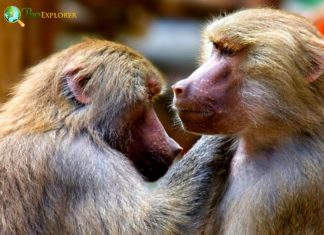
The Kinda baboon (Papio kindae) is a species of baboon found in the Miombo forests of Angola, Zambia, the Democratic Republic of the Congo, and possibly western Tanzania. The species is named after the town in the southern Democratic Republic of the Congo.
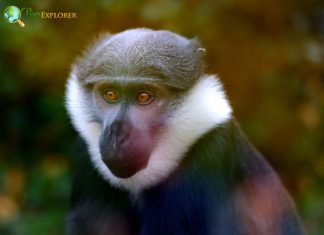
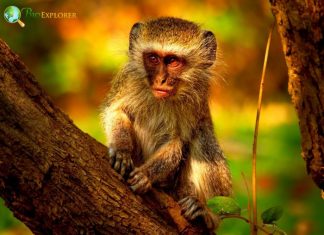
The L’Hoest monkey (Allocrocebus lhoesti), or mountain monkey, is a vervet monkey found in the upper eastern Congo Basin. L’Hoest monkeys live in relatively small groups, are dominated by females, and have only one male.
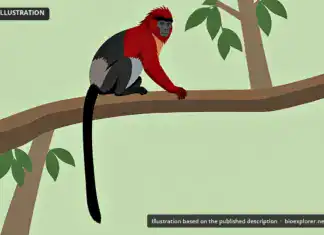
Lang's red colobus is an Endangered two-toned monkey, brick red in front and gray behind, found only in the rainforests around Kisangani in the DR Congo.
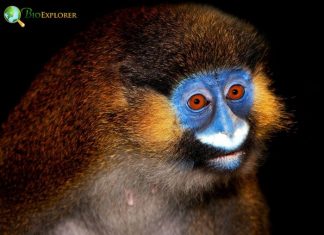
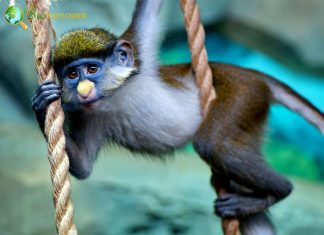
The lesula (Cercopithecus lomamiensis) is a species of Old-World monkey occurring in the Lomami Basin of the Congo. This monkey is described as having human eyes and a blue bottom.
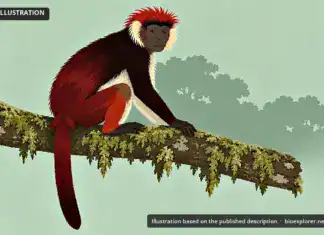
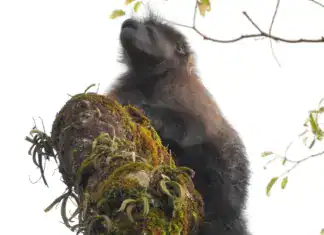
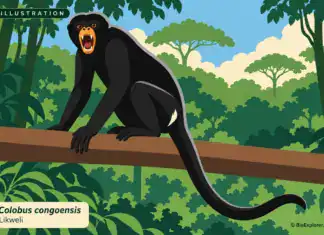
The Likweli is a black colobus monkey named in July 2026, and the fifth new African monkey species described in 75 years. It lives in a single 1,700 square kilometer pocket of the Democratic Republic of Congo, bounded by a river on one side and nutrient-poor white sand on the other. Its closest relative lives 1,200 kilometers away.
The Lomami red colobus is an Endangered monkey found only between the Lomami and Lualaba rivers in DR Congo. Named in 1987, it has had no dedicated field study.
The Malbrouck (Chlorocebus cynosuros) is an Old-World primate from Africa that belongs to the Chlorocebus genus. The species is sometimes classified as a subspecies of the green monkey (Chlorocebus pygerythrus) or the common grivet (Chlorocebus aethiops).
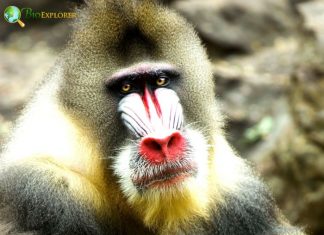
The mandrill (Mandrillus sphinx) is a primate of the Old-World monkey family (Cercopithecidae). It is among the two species in the Mandrillus genus and drill. Groups of mandrills can vary from a few individuals to 50 individuals.
The mustached monkey or moustached guenon (Cercopithecus cephus) is a primate species in the Cercopithecidae family. Moustached monkeys take regular paths through the branches, with each monkey following the next along the same path.
(Piliocolobus oustaleti) is another species of red colobus that lives in various forest types in the southern Central African Republic, southern South Sudan, northern Democratic Republic of the Congo, and northeastern Congo.
The Schmidt’s red-tailed monkey, also called the red-tailed guenon, Schmidt’s guenon, or black-cheeked white-nosed monkey is a primate species in the Cercopithecidae family. The Schmidt’s red-tailed monkey is named for its red coloration on the underside of its tail, as well as the bicolor coloration of its tail as the reddish color increases from the base to the tip.
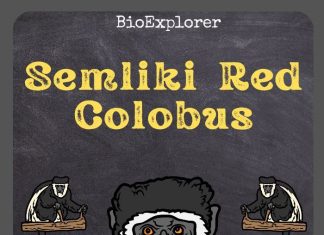
The Semliki red colobus (Piliocolobus semlikiensis) is native to central Africa. The Semliki red colobus lives in the ironwood forest of the northeastern Democratic Republic of the Congo between the Rwenzori Mountains and the Semliki River valley.
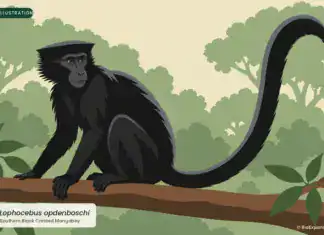
The southern black crested mangabey is an all black monkey of the forests along the Kwilu, Wamba and Kwango rivers in southwestern DR Congo, reaching into northern Angola. Henri Schouteden named it in 1944 from a single holotype. Its feeding has never been studied, nothing is known of its social life, and it is not known to occur in a single protected area anywhere in its range.
The tantalus monkey (Chlorocebus tantalus) is an Old World monkey endemic to Africa, ranging from Ghana to Sudan. It was initially described as a subspecies of Grivet (Chlorocebus aethiops). Tantalus monkeys are very similar to vervet monkeys but are smaller in size.
The Thollon’s red colobus (Piliocolobus tholloni), also called the Tshuapa red colobus, is native to the Democratic Republic of the Congo and the Lower Republic of the Congo. It was recognized as a separate species by Dandelot in 1974, followed by Groves in 2001.
Western gorillas also known as lowland gorillas, are herbivorous, primarily terrestrial apes that inhabit equatorial Africa’s tropical rainforests. Like humans, western gorillas do not have a set breeding season, and female species menstruate every 28 days.
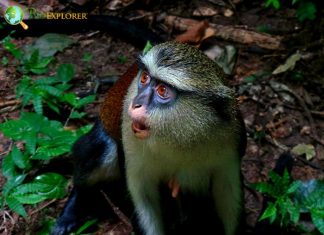
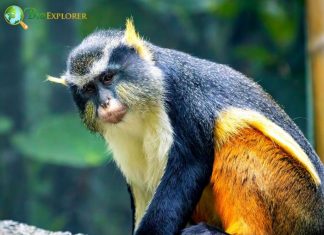
The Wolf’s mona monkey (Cercopithecus wolfi), also called the wolf monkey, is a colorful Old-World monkey in the Cercopithecidae family. Wolf’s mona monkeys have huge cheek pouches.
[1] – “In Congo, a rare find — a new species of monkey | YaleNews”. Accessed August 28, 2022. Link.
[2] – “Lesula: A New Species of Cercopithecus Monkey Endemic to the Democratic Republic of Congo and Implications for Conservation of Congo's Central Basin | PLOS ONE”. Accessed August 28, 2022. Link.
[3] – “Lesula: A New Species of Cercopithecus Monkey Endemic to the Democratic Republic of Congo and Implications for Conservation of Congo's Central Basin – PMC”. Accessed August 28, 2022. Link.