Bolivia is a South American landlocked country; known as the most isolated country on the continent, around 60% of its population comprises Indigenous Peoples[1].
The nation is also home to 25 species of New-World monkeys, though just two are endemic to it: the Beni titi monkey (Plecturocebus modestus) and the Ollala Brothers' titi (Plecturocebus olallae).
The latter, an endangered species, is known for its energy-conserving behavior—during drier seasons, it will move around less to get food, and, instead of scouring for particular fruits as it usually does, it will settle for consuming more common foods, such as seeds and fungi[2].
This efficient dietetic strategy helps the Ollala Brothers' titi to suitably live in the Llanos de Moxos wetland of the Amazon Rainforest.
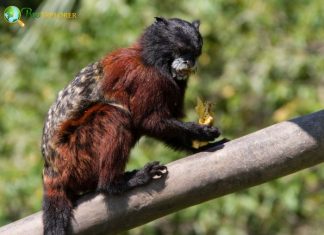
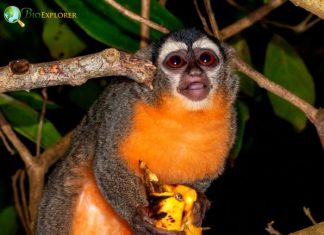
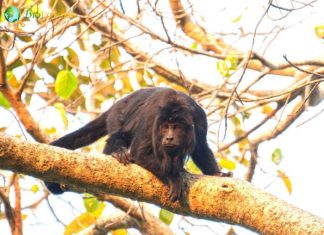
Other common monkey species in Bolivia include the saddleback tamarin (Leontocebus fuscicollis), the Bolivian red howler monkey (Alouatta sara), and the black-headed night monkey (Aotus nigriceps).
The Andean saddle tamarin, also known as the saddleback tamarin (formerly known as the brown-mantled tamarin), is a New World monkey species. Andean saddleback monkeys are considered “phyletic dwarfs,” meaning their small size is related to their evolutionary development.
Azara’s night monkeys, also known as southern night monkeys and Azara’s owl monkeys, are native to the Gran Chaco region of South America, a vast area with many different ecosystems, from savannas to grasslands to dry spiny forests and gallery forests. Genetic testing has shown that the males of this species mated pairs are the fathers of the babies they care for.
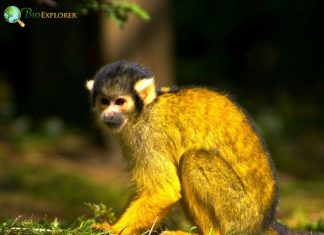
The bare-eared squirrel monkey also called the golden-backed squirrel monkey, is a subspecies of the Saimiri sciureus group native to the tropical forests and jungles of South and Central America. The bare-eared squirrel monkey differs from other species because it does not have ear tufts.
Alouatta caraya is found in the tropical rain forests of central South America, extending through eastern Bolivia, Paraguay, southern Brazil, and northern Argentina. Alouatta Caraya monkeys are sexually dimorphic, with males weighing an average of 6.7 kg and females an average of 4.4 kg.
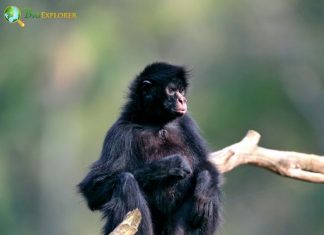
Ateles paniscus, the black spider monkey, is one of three sub-species of spider monkeys. Aside from the face, feet, and hands, they are covered in jet-black hair longer than a typical primate. Of all the Ateles species, Ateles paniscus is the largest.
The black-capped squirrel monkey is a New-World primate species endemic to the upper Amazon basin in Bolivia, eastern Peru, and western Brazil. Primarily, black-capped squirrel monkeys are arboreal and found in native and plantation forests and some managed areas close to running water.
The black-headed night monkey is a nocturnal monkey species native to South America. The monkeys are small primates about the size of a small squirrel. The black-headed night monkeys in Peru have mainly inhabited degraded areas.
The black-tailed marmoset is a New-World monkey species native to central South America. It is distributed from south-central Amazonia in Brazil to the Chaco far north of Paraguay. Black-tailed marmosets are arboreal and diurnal, using their claws for tree climbing.
The Bolivian red howler monkey is a New-World monkey species native to neotropical South America. The Bolivian red howlers live in groups of 1 to 3 males and 2 to 7 females. Males in bachelor groups try to dominate the female group by wrestling the lead male.
The brown titi is another species of titi, a New World monkey native to South America. It was initially described in 1842 as Callicebus brunneus and transferred to the new genus Plecturocebus in 2016.
The brown-mantled tamarin also called the Spix’s saddleback tamarin, is a species of saddleback tamarin native to South America. The species are considered “phyletic dwarfs,” meaning their small size is linked to their evolutionary development.
The Chacoan Titi Monkey is a species of titi (also called White-coated Titi), a type of New World monkey native to South America. These diurnal monkeys are stealthy and hard to spot as they navigate the canopy. They move between branches and trees by walking or jumping on four limbs.
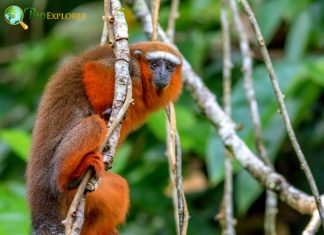
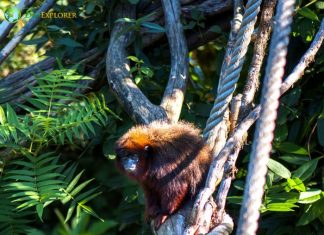
The coppery titi, or the red titi, is a species of titi, a type of New-World monkey native to South America. Coppery titi monkeys have dense fur that covers most of the body except for the face.
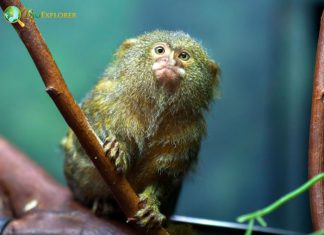
The eastern pygmy marmoset is a species of marmoset, a tiny New World monkey found in the southwestern Amazon rainforest. Notably, at just over 100 grams (3.5 ounces), the eastern pygmy marmoset is the smallest monkey and among the smallest primates in the world.
The Emperor Tamarin is a species of tamarin named for its resemblance to the German Kaiser Wilhelm II. It lives in the states of Acre and Amazonas, western Brazil, and the southwestern Amazon basin.
Goeldi marmoset or Goeldi monkey is a small South American New-World monkey living in the upper Amazon basin region of Brazil, Bolivia, Ecuador, Colombia, and Peru. Goeldi marmosets generally stay less than 5 meters from the forest floor, moving to higher elevations for fruit.
Gray’s Bald-faced Saki (Pithecia irrorata), also known as Rio Tapajós saki, is a New World monkey native to South America. These monkeys are renowned for being reclusive because they avoid humans and quiet nature.
The Azaras capuchin or hooded capuchin (Sapajus cay) is a robust capuchin species. It is found in northern Argentina, southeastern Bolivia, eastern Paraguay, and Brazil. Its habitat consists of humid, subtropical, semi-deciduous, gallery forests and forests in the Pantanales.
Humboldt’s white capuchins, also known as white-fronted capuchins, are a species of New-World monkeys and one of the smallest capuchin groups. Humboldt's squirrel monkeys are usually led by a dominant male and female.
Humboldt’s woolly monkey, common woolly monkey, or brown woolly monkey (Lagothrix lagothricha) is a woolly monkey endemic to South America. Humboldt’s woolly monkeys can show subtle mood swings and intentions with various facial expressions.
The Madidi titi also called the Golden Palace monkey, is a titi, a New World species of monkey discovered in 2004 in Madidi National Park in western Bolivia. The species got its name, Golden Palace, from an online casino after an auction.
The Ollala Brothers’ titi (Plecturocebus olallae) is a marmoset species of New World monkeys native to Bolivia. Like all Neotropical primates (except Aotus), the Ollala brothers’ titi monkeys are highly diurnal.
Peruvian spider monkeys, like other Ateles species, have a prehensile tail that can be used to facilitate brachiation. Typically, Peruvian spider monkeys have completely black fur and complexions, unlike the lighter red-faced black spider monkey.
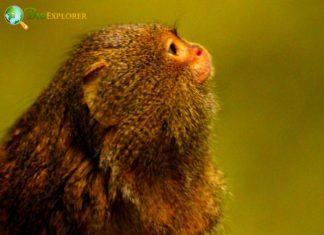
The pygmy marmoset (smallest monkey), genus Cebuella (also known as Finger Monkey), is a small genus of New-World monkeys endemic to the tropical rainforests of the western Amazon Basin in South America. Pygmy marmosets are also highly territorial, using scent glands to mark territories of up to 100 hectares.
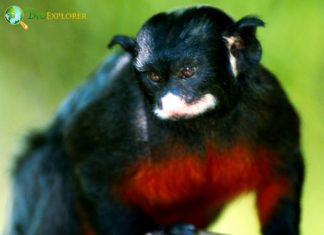
The Red-chested mustached tamarin (Saguinus labiatus), also known as Red-bellied Tamarin, is a tamarin that lives in the Amazon region of Brazil, Peru, and Bolivia. The red belly of these New World monkeys is their most striking external feature.
The Rio Beni tití is a New World monkey species belonging to the genus Callicebus of the family Pitheciidae. It is native to Bolivia and is found mainly in the eastern parts of Bolivia in the upper basins of the Mamoré and Grande rivers.
The Ryland’s Bald-Faced Saki (Pithecia rylandsi) is a controversial species of saki monkey, a New World monkey species. It is one of the largest sakis. This South American monkey was named after Brazilian primatologist Anthony Rylands, a former professor of vertebrate zoology at the Federal University of Minas Gerais and founding editor of the journal Neotropical Primates.
The shock-headed capuchin (Cebus cuscinus) is a gracile capuchin monkey native to Peru and Bolivia. This New-world monkey was previously classified as a subspecies of the Humboldt’s capuchin (Cebus albifrons), but in 2013 Rylands and Mittermeier raised it to a separate species, following genetic studies done by Boubli et al. in 2012, and Lynch Alfaro et al. in 2010.
Spix’s White-fronted Capuchin (Cebus unicolor) is a species of a gracile capuchin monkey. The species is widespread in the upper Amazon basin in Peru and Brazil. It is also present in northern Bolivia. According to the genetic studies by Boubli et al., Ryland and Mittermeier elevated it to a distinct species.
Toppin’s Titi (Plecturocebus toppini) is a species of Titi, a species of New World monkey endemic to Bolivia, Peru, and Brazil. It got its name from Captain Toppin, who collected the type specimen of this species near the Tahuamanu River in Peru.
The Weddell’s saddle-back tamarin (Leontocebus weddelli) is a species of saddle-back tamarin, a species of small South American monkey. Weddell’s saddle-back tamarins are tree dwellers. As such, they are phenomenal climbers with sharp claws that allow them to cling to the sides of trees.