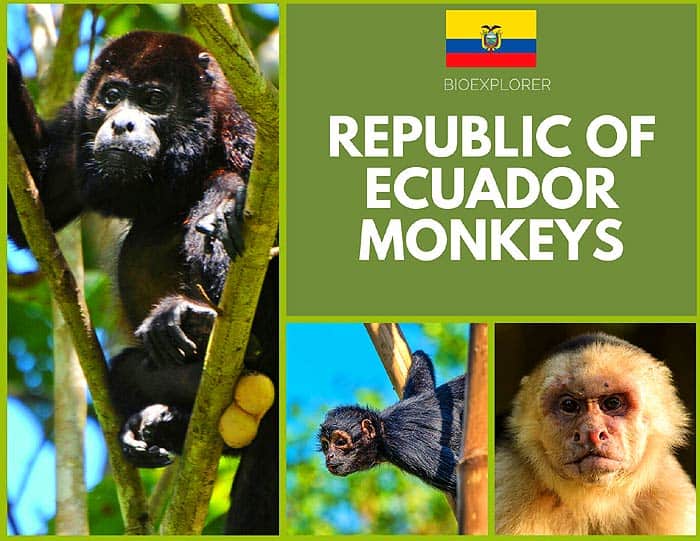
Ecuador Monkeys: Ecuador, officially known as the Republic of Ecuador, is a nation in western South America; it is infamous for its incredible biodiversity and beautiful tourist destinations.
Ecuador is home to 21 species of New-World monkeys, though none are endemic to the country. Some examples of these monkey species include the red titi monkey (Plecturocebus discolor), the Colombian white-throated capuchin (Cebus capucinus), and the saddleback tamarin (Leontocebus fuscicollis).
Interestingly, in early 2022, Ecuador's High Court made a landmark decision involving wild animals (including monkeys). Specifically, in 2019, a woman's wooly monkey (which she removed from the wild) was taken away from her by government officials and put in a zoo, where it died just a month later; before the woman knew that her pet was dead, she filed an official complaint to get it back [1].
In the end, however, the court ruled that all wild animals have the right not to be exploited by humans in any way (suggesting that both the woman and the government officials were in the wrong[1]).
Ecuadorian Monkeys
Here are the monkeys from the Republic of Ecuador.
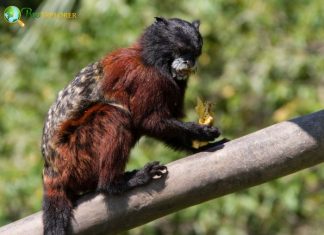
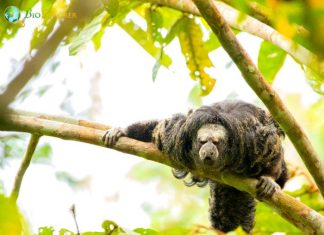
The Andean saddle tamarin, also known as the saddleback tamarin (formerly known as the brown-mantled tamarin), is a New World monkey species. Andean saddleback monkeys are considered “phyletic dwarfs,” meaning their small size is related to their evolutionary development.
The black-headed spider monkey (Ateles fusciceps) is a species of New-World monkey native to Central and South America. The species name “Ateles” is derived from the Greek word “ateleia” meaning imperfect or incomplete. It was likely chosen because these monkeys do not have a thumb. There are 2 additional sub-species of black-headed spider monkey namely Brown-headed spider monkey (Ateles fusciceps fusciceps) and Colombian spider monkey (Ateles fusciceps rufiventris).
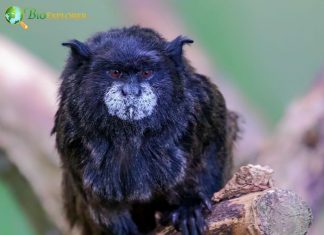
The black-mantled tamarin is a saddleback tamarin native to northwestern Amazonia in far western Brazil, eastern Ecuador, southeastern Colombia, and northeastern Peru. Leontocebus nigricollis live in small multi-male and multi-female social groups of 4 to 12 and occupy 30 to 50 hectares.
The Bolivian red howler monkey is a New-World monkey species native to neotropical South America. The Bolivian red howlers live in groups of 1 to 3 males and 2 to 7 females. Males in bachelor groups try to dominate the female group by wrestling the lead male.
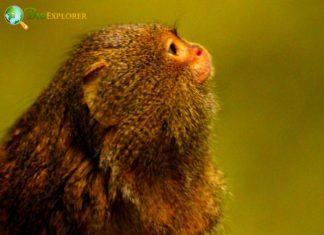
The eastern pygmy marmoset is a species of marmoset, a tiny New World monkey found in the southwestern Amazon rainforest. Notably, at just over 100 grams (3.5 ounces), the eastern pygmy marmoset is the smallest monkey and among the smallest primates in the world.
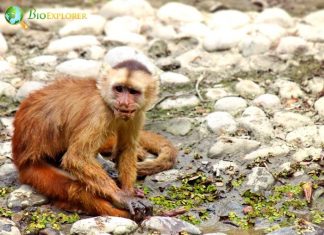
The Ecuadorian capuchin, also known as the Ecuadorian white-fronted capuchin, is a species of a graceful capuchin monkey in the Cebidae family. The highest-ranking female dominates all group members except the highest-ranking male.
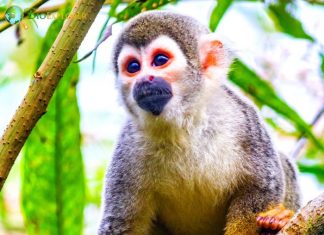
The Ecuadorian squirrel monkey is a species of the squirrel monkey. Although it occasionally ventures to the ground to play or feed, the Ecuadorian squirrel monkey is strictly an arboreal primate.
The Equatorial Saki, also known as the red-bearded Saki, is a species of saki monkey and New World monkey. They are most common in riparian, seasonally flooded, and swampy forests but have also been seen in terra firme forests.
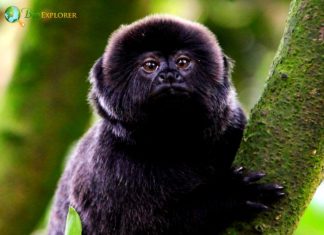
Goeldi marmoset or Goeldi monkey is a small South American New-World monkey living in the upper Amazon basin region of Brazil, Bolivia, Ecuador, Colombia, and Peru. Goeldi marmosets generally stay less than 5 meters from the forest floor, moving to higher elevations for fruit.
The golden-mantled tamarin (Leontocebus tripartius) is native to South America. The golden-mantled tamarin is an arboreal, diurnal species that leaps and walks quadrupedally through the undergrowth.
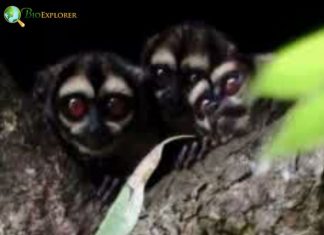
The gray-bellied night monkey (Aotus lemurinus) is a rare nocturnal primate found in the cloud forests of Colombia and Ecuador. Recognizable by its red eyes, gray underbelly, and woolly coat, it thrives in dense canopies where it feeds on fruits, insects, and nectar. Its nocturnal habits reduce competition and help it evade predators like owls and snakes. As both seed disperser and prey, it plays a key ecological role—yet habitat loss continues to threaten its survival.
Humboldt’s squirrel monkey (Saimiri cassiquiarensis) is a species of squirrel monkey found in South America’s tropical rainforests, except for the coastal forests of southeastern Brazil.
Humboldt’s white capuchins, also known as white-fronted capuchins, are a species of New-World monkeys and one of the smallest capuchin groups. Humboldt's squirrel monkeys are usually led by a dominant male and female.
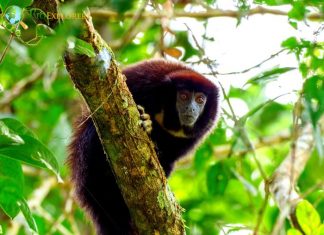
Humboldt’s woolly monkey, common woolly monkey, or brown woolly monkey (Lagothrix lagothricha) is a woolly monkey endemic to South America. Humboldt’s woolly monkeys can show subtle mood swings and intentions with various facial expressions.
Lucifer Titi (Cheracebus lucifer) is a species of Titi, a New World monkey endemic to South America. It is found in Peru, Ecuador, Colombia, and Brazil. This yellow-handed Titi was described as Callicebus lucifer in 1914.
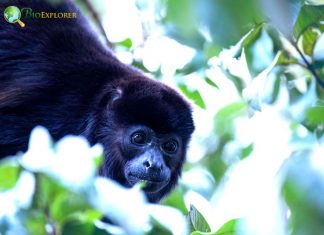
The Mantled howler monkey (Alouatta palliata) is a species of howler monkey, a New World monkey native to South and Central America. The species gets its name “mantled” from the long, protective hairs on its sides.
Miller’s Saki (Pithecia milleri), also called Miller’s monk saki, is a species of the saki family, a type of New World monkey. Miller’s sakis are diurnal and quadrupedal leapers. They usually move on all fours but can be seen swinging bipedally on large branches before leaping to another tree.
The Napo saki (Pithecia napensis), also called the Napo monk saki, is a species of saki monkey, a type of New World monkey. The species’ common name is derived from the Napo River in its locality.
The Peruvian white-fronted capuchin or Marañón white-fronted capuchin (Cebus yuracus) is a species of gracile capuchin monkey native to the upper Amazon basin. Peruvian white-fronted capuchin monkeys live in multi-male, multi-female groups of 5 to 18 individuals, with approximately equal numbers of males and females.
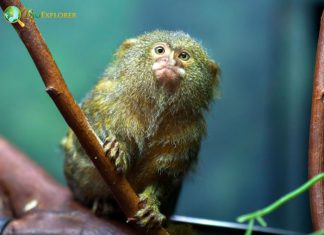
The pygmy marmoset (smallest monkey), genus Cebuella (also known as Finger Monkey), is a small genus of New-World monkeys endemic to the tropical rainforests of the western Amazon Basin in South America. Pygmy marmosets are also highly territorial, using scent glands to mark territories of up to 100 hectares.
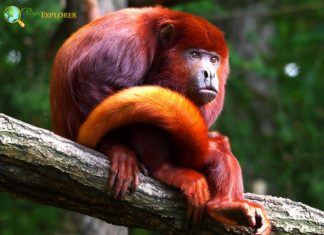
The Colombian red howler or Venezuelan red howler is a South American species of howler monkey, a New World species of monkey found in the western Amazon basin. Colombian red howler monkeys live in relatively large social groups composed of around 10 individuals, with just one or possibly two of the individuals being male.
The Red-mantled saddleback tamarin (Leontocebus lagonotus) is a species of saddleback tamarin, a species of small South American monkey. The Red-mantled saddle-back tamarin lives in Peru and Ecuador, and its type locality is in Peru, near the confluence of the Amazon and Napo.
The Spix’s night monkey (Aotus vociferans), also called the Spix’s owl monkey, Colombian gray nocturnal monkey, and noisy night monkey is a species of night monkey native to South America.
The white-bellied spider monkey (Ateles belzebuth), also called the long-haired or white-fronted spider monkey, is an endangered species of spider monkey, a species of New-World monkey. These arboreal monkeys spend most of their time in the canopy. They rarely go down. When they do, they drink water, eat dirt, traverse a treeless area, or run away from an aggressive opponent.
White-tailed titi monkeys, also called red titi monkeys or red-crowned titis and not to be confused with coppery titi (Callicebus cupreus), also commonly known as red titi, are endemic to the dense rainforest and gallery forests of Peru and Ecuador.
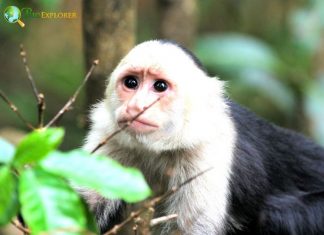
White-throated capuchins, also called the white-headed capuchins, Colombian white-throated capuchins, and white-faced capuchins, are New World monkeys native to the tropical rainforests of western Colombia, Ecuador, and Panama.