The Domain Archaea: Finding Life’s Extremists
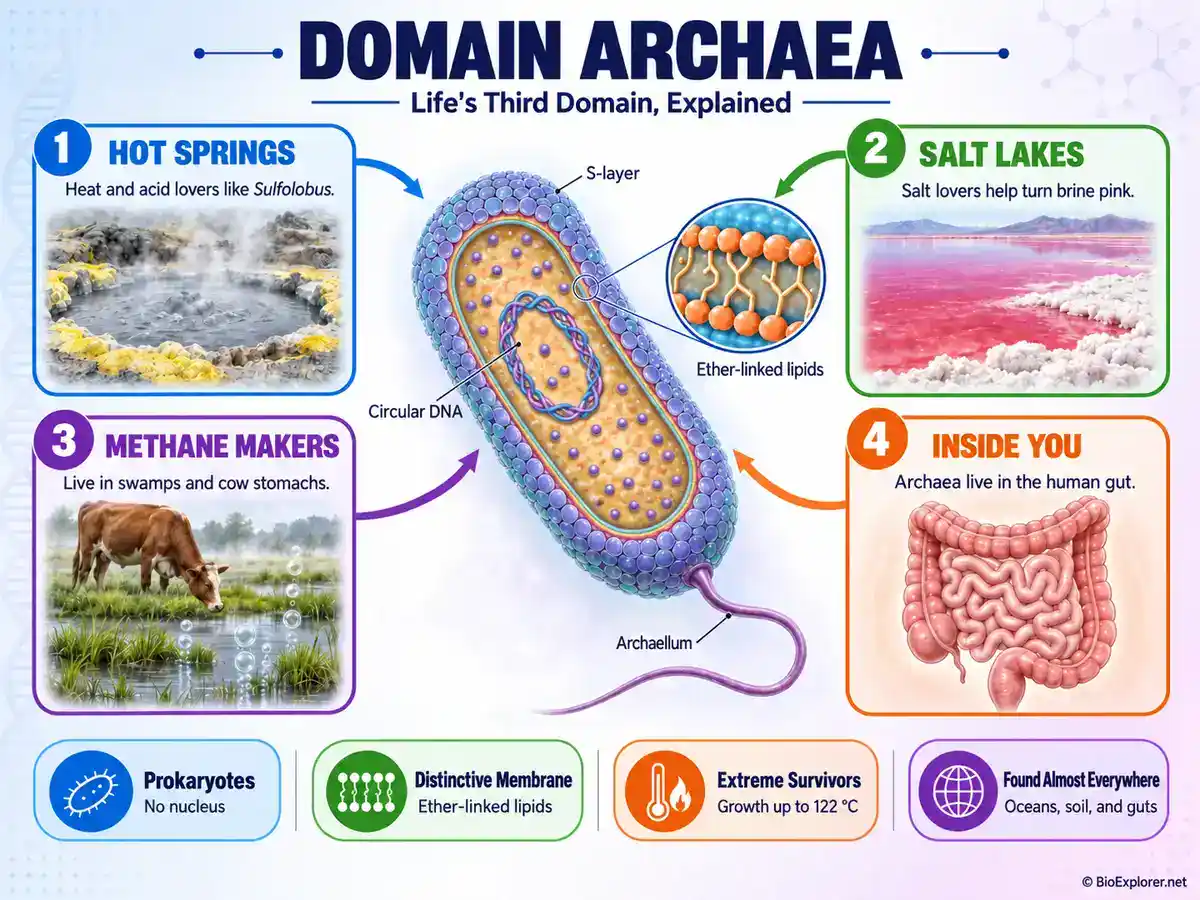
Archaea are tiny single-celled microbes. Under a microscope, they look a lot like bacteria. Inside, they are very different. The difference runs so deep that archaea have their own branch on the tree of life, called the domain Archaea.[1]
You may know them by their older name, archaebacteria. Many archaea live in places that would kill most living things. Think boiling hot springs, salt lakes, and acid pools. But archaea also live in the ocean, in soil, and even in your gut.[2]
This guide covers what archaea are, how they were discovered, where they live, the main types, and why they matter.
Archaea are prokaryotes. They are single cells with no nucleus. They form one of the three domains of life, alongside Bacteria and Eukarya. Their genes, cell membranes, and cell walls set them apart from bacteria.
Domain Archaea Guide:
- Archaea at a Glance
- What Are Archaea?
- History of the Domain Archaea
- Characteristics of Archaea
- Archaea vs. Bacteria vs. Eukarya
- Where Do Archaea Live?
- Three Types of Archaebacteria
- Modern Archaeal Classification
- Archaea and Our Own Origins
- Importance of Archaea
- Common Myths About Archaea
- Frequently Asked Questions
- Key Takeaways
Archaea at a Glance
| Feature | Archaea |
|---|---|
| Domain | Archaea, one of the three domains of life |
| Older name | Archaebacteria |
| Cell type | Prokaryotic (no nucleus) |
| Typical size | About 0.7 to 4 micrometers; some are much smaller |
| Cell membrane | Distinctive lipids joined by ether bonds |
| Cell wall | No bacterial peptidoglycan (murein); most have a protein S-layer |
| Reproduction | Asexual: binary fission, budding, or fragmentation |
| Habitats | Extreme places, plus oceans, soil, wetlands, and animal guts |
| Human disease | No archaeal species is a confirmed primary human pathogen |
| Well-known examples | Sulfolobus, Halobacterium salinarum, Methanobrevibacter smithii |
What Are Archaea?
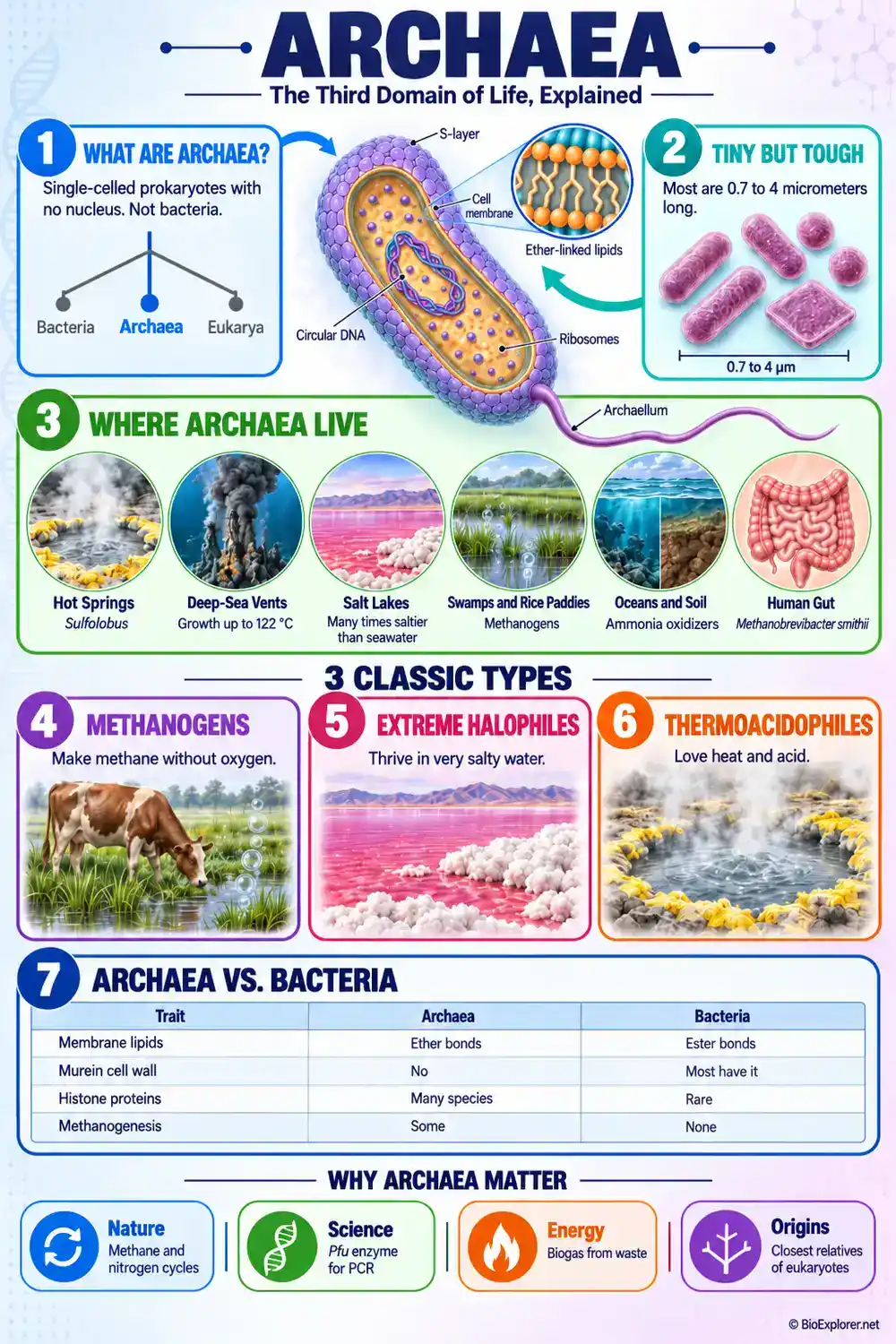
Archaea (say ar-KEE-uh) are microscopic organisms made of a single cell. One cell is called an archaeon.
Archaea are prokaryotes. Their cells have no nucleus and generally no membrane-bound organelles.[3] Bacteria are prokaryotes too. For a refresher, see our guide to the difference between prokaryotic and eukaryotic cells.
So why aren’t archaea just a kind of bacteria? Their chemistry and genes are too different. The University of California Museum of Paleontology puts it simply. Biochemically and genetically, archaea are as different from bacteria as you are.[4]
The name comes from the Greek word archaios, which means “ancient.”[5] Early scientists thought these microbes might be very old forms of life. The name stuck. But living archaea are not “primitive.” They have been evolving just as long as every other living thing.
Archaea or Archaebacteria?
Both names describe the same group. “Archaebacteria” is the older name. Scientists dropped it because these organisms are not bacteria.[4] You will still see the old name in many school textbooks.
Are Archaea Animals?
No. Animals, plants, and fungi are all eukaryotes. Archaea are single cells without a nucleus. Some archaea do live inside animals, though. For example, methane-making archaea are among the most common microbes in a cow’s stomach.[6]
History of the Domain Archaea
For most of the 20th century, biologists split living things into two big groups. There were prokaryotes and eukaryotes. Every prokaryote was treated as a kind of bacteria.[7]
That changed in 1977. Carl Woese and George Fox worked at the University of Illinois Urbana-Champaign. They compared ribosomal RNA from many microbes. Every cell has ribosomal RNA, so it works like a family record written in molecules.[8]
One group of methane-making microbes did not fit with the bacteria. Their ribosomal RNA was too different. Woese and Fox called this new group the archaebacteria.[9]
In 1990, Woese, Otto Kandler, and Mark Wheelis went further. They proposed a new top rank in classification, called the domain. Life would have three domains: Bacteria, Archaea, and Eucarya.[1]
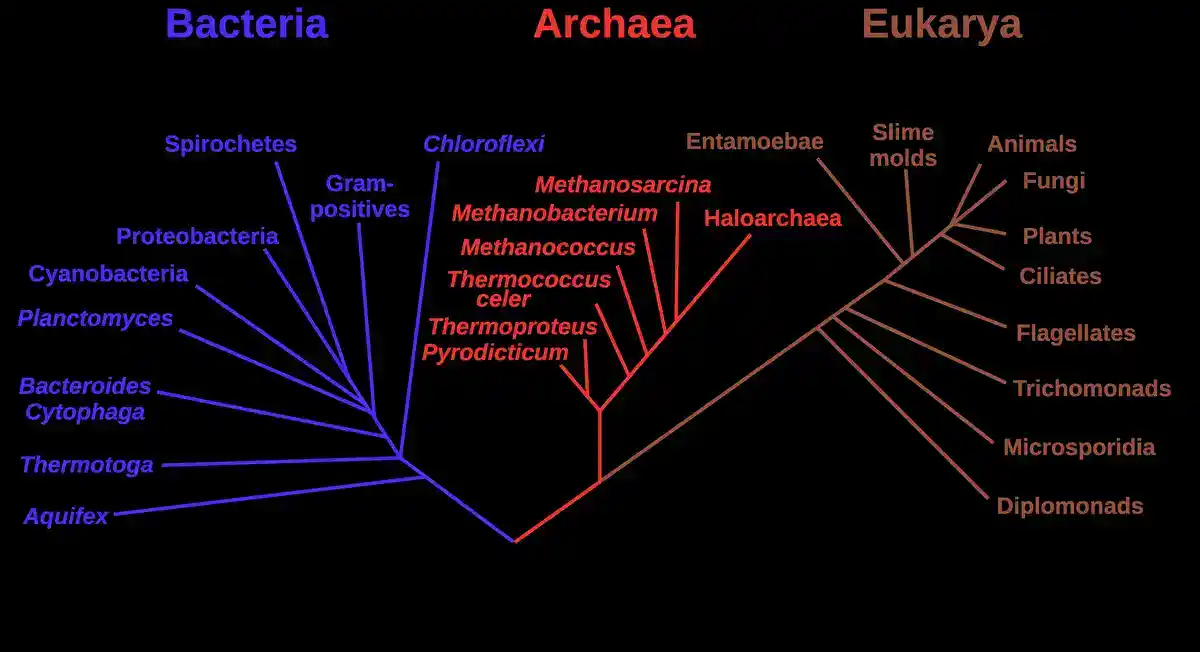
In 1996, scientists read the full genome of a methane-making archaeon, Methanococcus jannaschii (now called Methanocaldococcus jannaschii). Many of its genes were unlike any seen before. The results backed the idea of a third main branch of life.[10]
Suggested Reading:
History of Cell Biology

History of Ecology
Key Moments in Archaea Research
| Year | What happened |
|---|---|
| 1977 | Woese and Fox identify archaebacteria using ribosomal RNA |
| 1990 | The three-domain system is proposed and the name “Archaea” is adopted |
| 1996 | The complete genome of Methanococcus jannaschii is published |
| 2005 | Scientists grow the first ammonia-oxidizing archaeon, taken from a Seattle Aquarium tank |
| 2015 | The first Asgard archaea are described from seafloor mud near the Loki’s Castle vents |
| 2020 | The first Asgard archaeon is grown in a lab after 12 years of work |
| 2021 | Official naming rules begin to cover phyla, and major archaeal groups get new names |
| 2023 | A large study places eukaryotes inside the Asgard archaea |
| 2024 | The NCBI Taxonomy database groups archaea into four kingdom-rank groups |
| 2025 | A new study places the eukaryote branch deeper within the Asgard archaea |
Characteristics of Archaea
Archaea come in many shapes and lead many lifestyles. Still, they share a set of core traits.
Size and Shape
Most archaeal cells are about 0.7 to 4 micrometers long. You need a microscope to see them. Some are far smaller. Nanopusillus acidilobi measures only 100 to 300 nanometers, making it one of the smallest known living organisms.[11] At the other end, some round archaeal cells reach about 15 micrometers across.[12]
Archaea come as spheres, rods, discs, and more. One salt-loving species, Haloquadratum walsbyi, is shaped like a flat square. Its cells are 2 to 5 micrometers wide but only 0.1 to 0.2 micrometers thick.[13] Compare this with the common shapes of bacteria.
Many archaea swim with a whip-like tail called an archaellum. It looks like a bacterial flagellum. But it is built differently, and it runs on ATP.[14]
A Distinctive Cell Membrane
Every cell membrane is built from lipids. In bacteria and eukaryotes, fatty acid chains attach to glycerol through ester bonds. In archaea, branched chains called isoprenoids attach through ether bonds. Archaea even use a mirror-image form of the glycerol backbone.[15]
Many heat-loving archaea go one step further. Some of their lipids stretch across the whole membrane. This forms a single layer instead of the usual double layer. Scientists think this stiffens the membrane at high temperatures.
A Different Kind of Cell Wall
Most bacterial cell walls contain murein, the classic bacterial peptidoglycan. Archaea lack murein. Instead, nearly all archaea have an S-layer. That is a tight, crystal-like coat of protein on the cell surface.[16]
Two groups of methane makers, the Methanobacteria and Methanopyri, build walls from pseudomurein. It is chemically very different from murein. Some researchers still count it as a type of archaeal peptidoglycan.[17]
This difference has a practical side. Penicillin and other beta-lactam drugs block the building of bacterial peptidoglycan. Archaea do not have that target, so these drugs generally do not inhibit them.[18]
How Archaea Reproduce
Archaea reproduce asexually. Many split in two by binary fission. Others use multiple fission, budding, or fragmentation.[19] Learn more about asexual organisms.
The way some archaea divide is surprising. Sulfolobus splits using proteins related to the ESCRT-III system found in eukaryotic cells.[20]
Archaea are not known to reproduce sexually through meiosis. Still, some have mating-like systems that swap and mix DNA. Salt-loving archaea, for example, can fuse cells and exchange DNA.[21]
How Archaea Get Energy
Archaea do not eat the way animals do. They take in chemicals from their surroundings. Different archaea use very different fuels.
- Hydrogen and carbon dioxide. Many methanogens combine them to make methane and gain energy.[22] Others use acetate or methanol.
- Sulfur. Sulfolobus oxidizes sulfur into sulfate or sulfuric acid.[23]
- Ammonia. Ammonia-oxidizing archaea turn ammonia into nitrite.[24]
- Organic matter and light. Halobacterium salinarum can respire, ferment the amino acid arginine, and capture light energy.[25]
Archaea are not known to use chlorophyll. Their light-powered systems work differently from plant photosynthesis.[26]
Archaea vs. Bacteria vs. Eukarya
This table shows how archaea compare with the other two domains.
| Trait | Bacteria | Archaea | Eukarya |
|---|---|---|---|
| Nucleus | No | No | Yes |
| Membrane lipids | Fatty acids, ester bonds | Isoprenoids, ether bonds | Fatty acids, ester bonds |
| Murein (bacterial peptidoglycan) | Most have it | None; a few have pseudomurein | None |
| Histone proteins on DNA | Rare | Many species | Yes |
| RNA polymerase | One type, with fewer parts | One complex type, like eukaryotic RNA polymerase II | Several complex types |
| Introns in genes | Rare | Present, mostly in tRNA genes | Common |
| Inhibited by penicillin | Many species | Generally no | No |
| Methanogenesis (making methane for energy) | No | Methanogens do | No |
| Chlorophyll photosynthesis | Some, such as cyanobacteria | None known | Plants and algae |
| Confirmed primary human pathogens | Many | None | Some fungi, protists, and parasitic worms |
| Examples | E. coli, Thermus aquaticus | Sulfolobus, Halobacterium | Humans, oak trees, yeast |
The Eukarya domain has its own guide: Domain Eukarya overview.
A Mix of Traits
Archaea share some traits with bacteria and others with eukaryotes. That mix is one reason they puzzled scientists for so long.
Traits shared with bacteria
- No nucleus and generally no membrane-bound organelles.
- Most archaea carry one circular chromosome.[27]
- Ribosomes are the same size as bacterial ribosomes. Their structure is different, though.[18]
Do Bacteria Have Nucleus?
Traits shared with eukaryotes
- Many archaea wrap their DNA around Histone proteins. These have the same basic fold as eukaryotic histones.[28]
- Some, like Sulfolobus, copy their chromosome from several starting points at once.[27]
- The archaeal RNA polymerase looks like eukaryotic RNA polymerase II. It uses helper proteins that match eukaryotic ones.[29]
- The proteins that start protein building are also related to eukaryotic versions.[30]
- Some genes contain Introns, mainly tRNA genes. Special enzymes cut them out.[31]
Characteristic archaeal traits
- Membrane lipids built from isoprenoid chains joined by ether bonds.
- Making methane as a way to get energy. Every known methanogen is an archaeon.[32]
- The archaellum, a swimming tail unlike the bacterial flagellum.
Where Do Archaea Live?
Archaea live almost everywhere on Earth. They are famous for extreme places like hot springs, deep-sea vents, salt lakes, and acid pools. They also live in oceans, soil, wetlands, mud, oil reservoirs, and inside animals and people.
Scientists first found archaea in a few harsh places. For years, they were seen as a narrow group of extreme specialists.[33] That view is out of date. Today, scientists no longer think of archaea as just extremophiles living in niche habitats.[2]
| Habitat | Conditions | Example archaea |
|---|---|---|
| Hot springs | Hot and often acidic | Sulfolobus |
| Deep-sea hydrothermal vents | Above 100 °C under high pressure | Methanopyrus kandleri |
| Salt lakes and salt ponds | Many times saltier than seawater | Halobacterium, Haloquadratum |
| Soda lakes | Salty and alkaline | Natronomonas pharaonis |
| Swamps, rice paddies, landfills | No oxygen | Methanogens |
| Human and animal guts | No oxygen | Methanobrevibacter smithii |
| Open ocean and soil | Ordinary conditions | Ammonia-oxidizing archaea |
| Antarctic lakes | Near freezing | Methanococcoides burtonii |
| Oil reservoirs | Deep underground | Methane-making archaea |
Hot Springs and Deep-Sea Vents
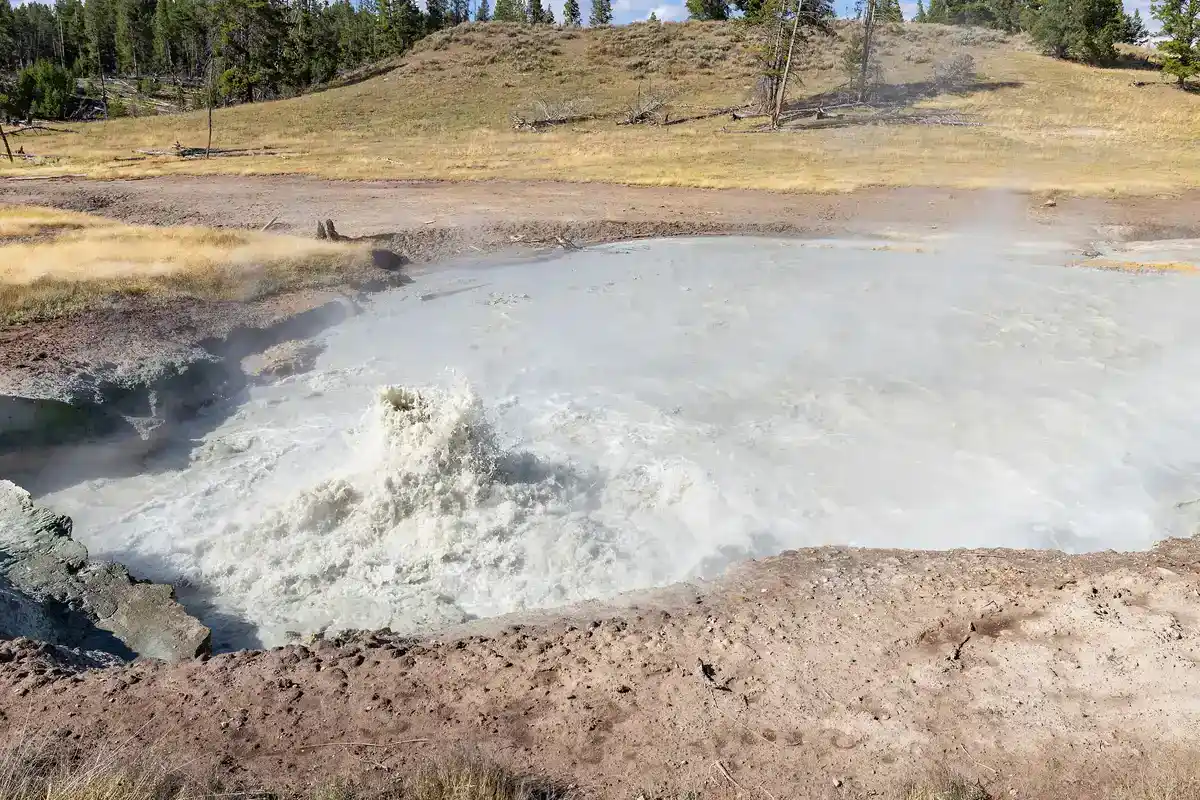
Visit Yellowstone National Park and you can see archaea at work. A hot, muddy, acidic spring there is probably full of Sulfolobus. It turns sulfur into sulfuric acid, which helps break rock down into mud.[23]
Deep-sea hydrothermal vents are even hotter. Methanopyrus kandleri strain 116 holds the record. It grew at 122 °C (252 °F) under high pressure.[34] Another archaeon, known as Strain 121, doubled its numbers in 24 hours at 121 °C. That is the temperature of an autoclave, the machine labs use to sterilize tools.[35]
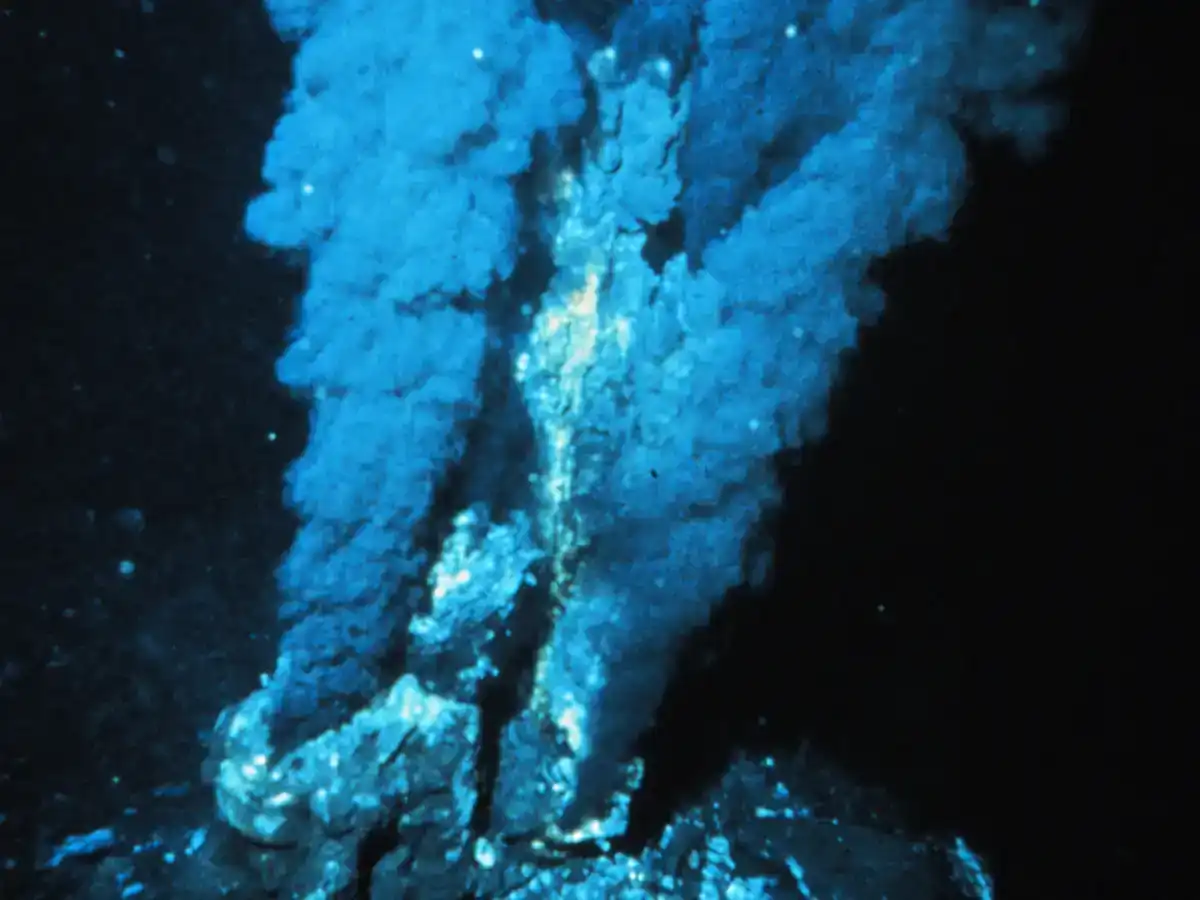
Heat-loving microbes are called thermophiles. Those that grow above 80 °C (176 °F) are called hyperthermophiles.[34]
Salt Lakes and Salt Ponds
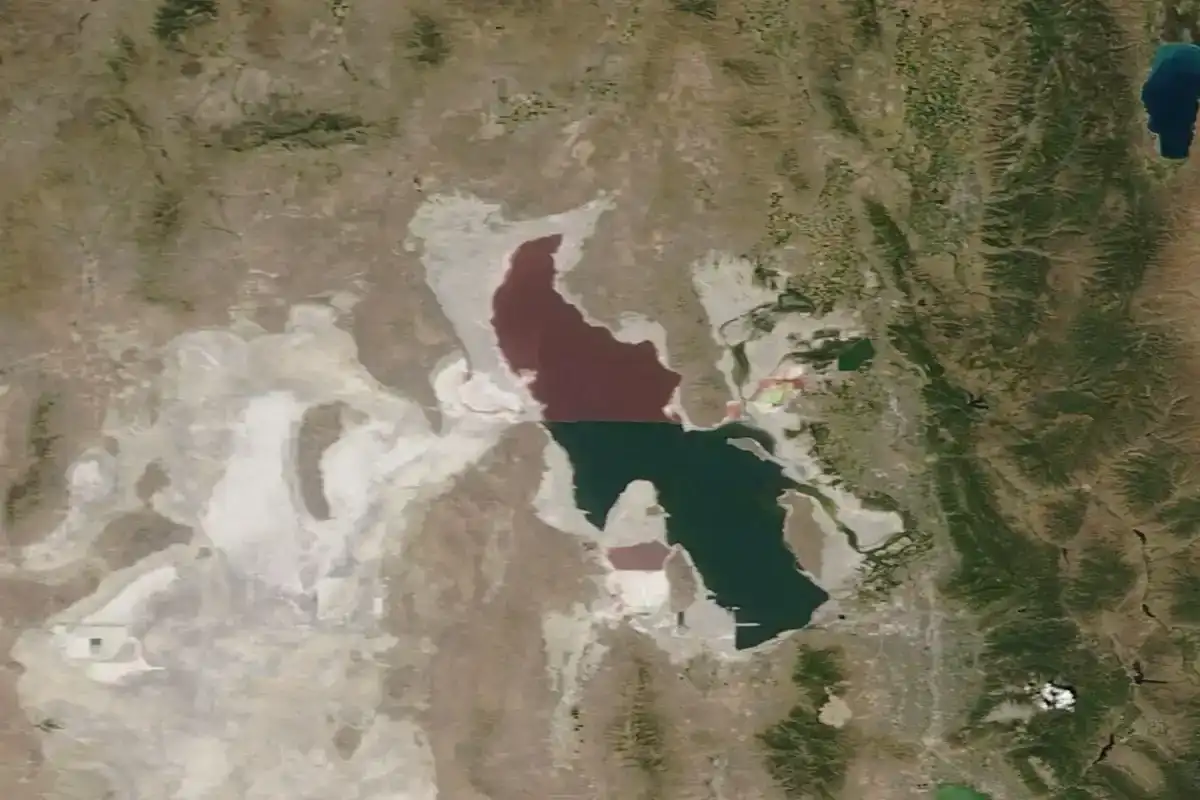
Salt-loving archaea are called extreme halophiles. Utah’s Great Salt Lake can be up to 8 times as salty as seawater. The north arm is the saltiest part.[36]
Halobacterium lives in huge numbers in the salt ponds at the south end of San Francisco Bay.[37] Halophilic archaea give many salt lakes and ponds their pink, red, and orange colors. A pigment called bacterioruberin is a big part of that color.[38]
The Dead Sea is home to halophiles too. Haloferax volcanii, a lab favorite, was first described from Dead Sea samples.[39]
How do they survive? They fill their cells with potassium chloride. This balances the salt outside, so water does not rush out of the cell.[40]
Acid Pools and Soda Lakes
Picrophilus torridus is one of the most acid-loving organisms known. It can grow around pH 0 and does best at pH 0.7 and 60 °C.[41] For comparison, human stomach fluid is about pH 1.5 to 3.5.[42]
Other archaea like the opposite extreme. Natronomonas pharaonis lives in soda lakes. It grows best near pH 8.5 and stays alive up to about pH 11.[43]
Mud, Swamps, and Oil Fields
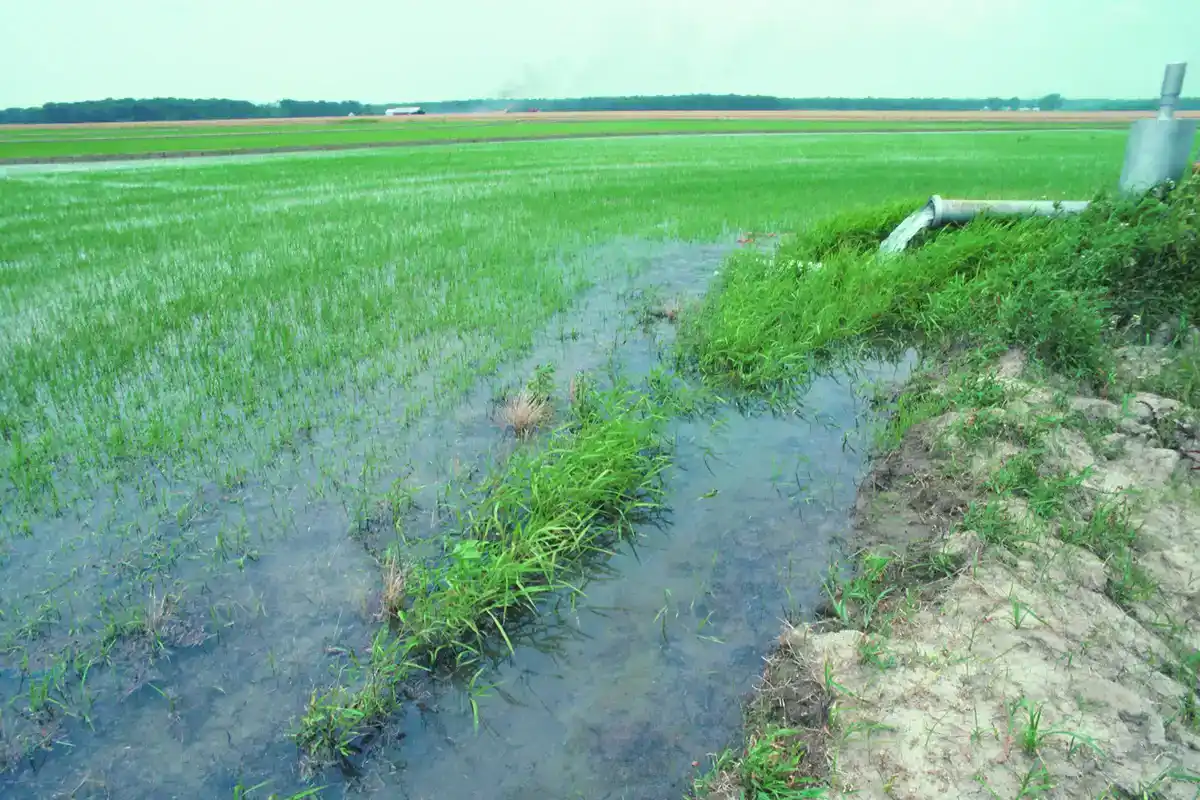
Methanogens cannot grow where there is oxygen. They live in wetlands, rice paddies, lake and ocean sediments, soil, landfills, and animal guts.[32]
Archaea also live deep underground. Studies of oil reservoirs found methane-making archaea in samples taken from hundreds to thousands of meters below the surface.[44]
Oceans, Soil, and Icy Waters
The Open ocean holds huge numbers of archaea. By one estimate, they make up more than 20 percent of the ocean’s prokaryotic cells. In the deep ocean, one group of archaea makes up about 35 percent of microbial cells.[45]
Soil is another major home. Ammonia-oxidizing archaea are common in many soils and in the ocean. In many places they far outnumber ammonia-oxidizing bacteria.[24]
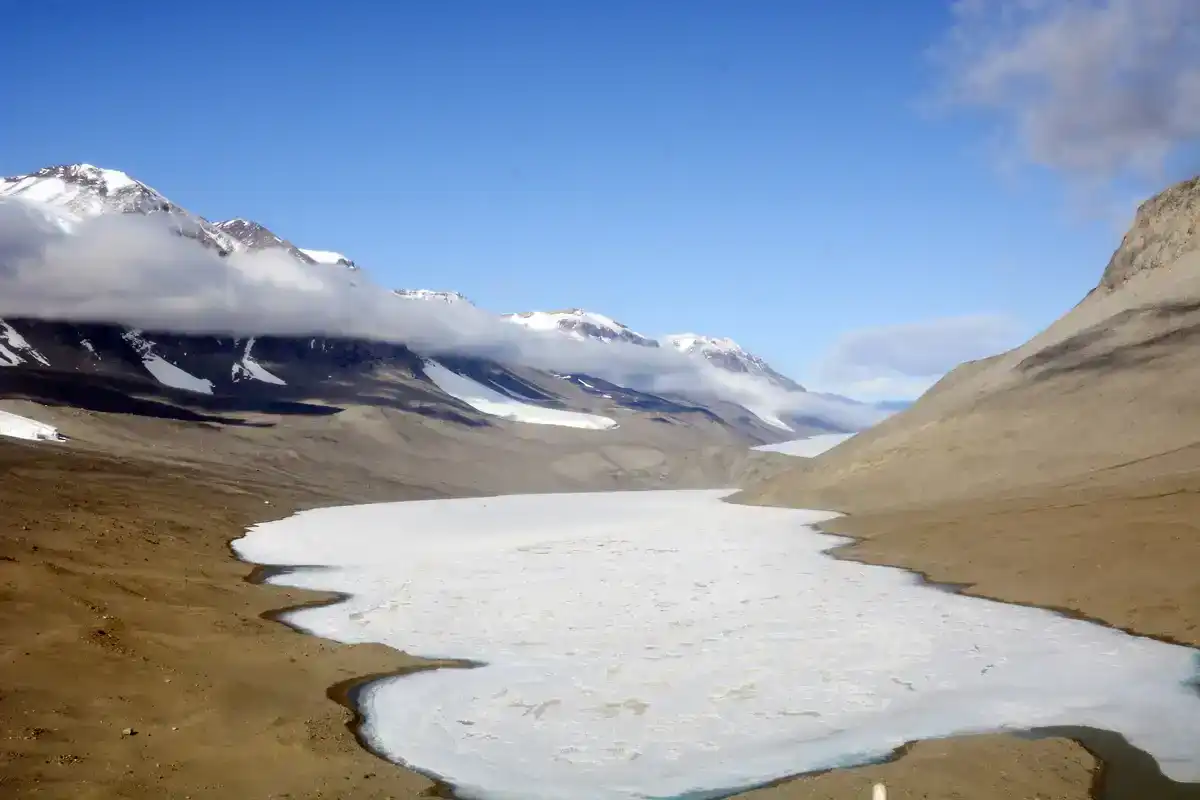
Some archaea love the cold. Methanococcoides burtonii comes from Ace Lake in Antarctica. Its home water stays at just 1 to 2 °C (34 to 36 °F).[46]
Inside the Human Body
Yes, archaea live in you. Methanobrevibacter smithii is usually the main methane-making archaeon in the human gut.[32]
Archaea have also been detected in the nose, in the lungs, and on the skin.[47] Scientists know much less about them than about the bacteria in your digestive system.
Three Types of Archaebacteria
Textbooks often sort archaea into three groups: methanogens, extreme halophiles, and thermoacidophiles. It is a handy way to learn them.
These groups describe how and where archaea live. They are not official branches of the family tree. Scientists now classify archaea by their genes, as the next section explains.
| Group | Meaning | Where they live | Energy source | Example |
|---|---|---|---|---|
| Methanogens | Methane makers | Swamps, rice paddies, sediments, animal guts | Often hydrogen and carbon dioxide, releasing methane | Methanobrevibacter smithii |
| Extreme halophiles | Salt lovers | Salt lakes, salt ponds, the Dead Sea | Organic compounds, with help from light | Halobacterium salinarum |
| Thermoacidophiles | Heat and acid lovers | Hot, acidic, sulfur-rich springs | Often sulfur | Sulfolobus acidocaldarius |
The groups can overlap. For example, Methanopyrus kandleri is a methanogen that also lives at record-breaking heat.
- Methanogens
Methanogens are archaea that make methane gas. They need oxygen-free conditions to grow. All known methanogens belong to the domain Archaea.[32]
Many methanogens use this reaction:
4H2 + CO2 → CH4 + 2H2O[22]
In plain words, four hydrogen molecules and one carbon dioxide molecule make one methane molecule and two water molecules.
Cows are a classic example. Methanogenic archaea are among the most common microbes in a cow’s rumen. The methane they make leaves the cow mostly through belching.[6]
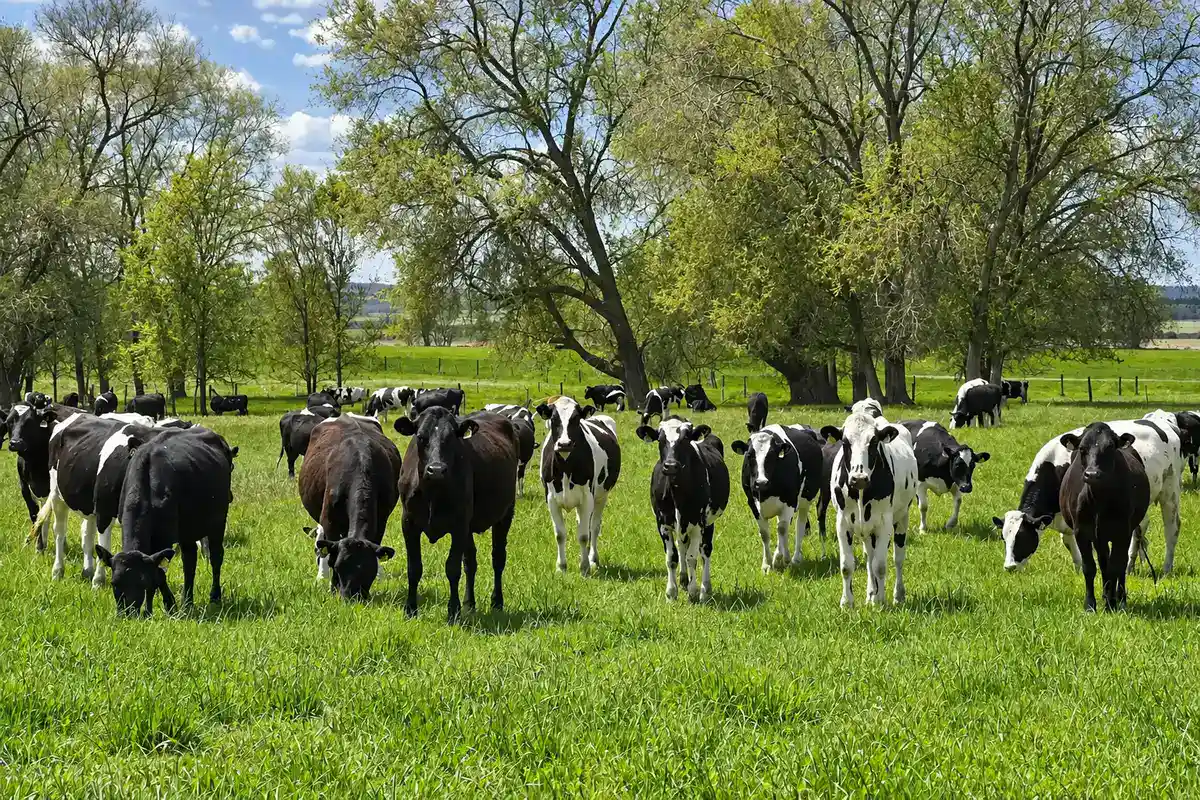
Methane is a powerful greenhouse gas. The U.S. Environmental Protection Agency (EPA) estimates its warming effect at 27 to 30 times that of carbon dioxide over 100 years.[48] Natural wetlands are the largest natural source of methane. In the United States, agriculture is the largest human-related source of methane.[49]
Well-known methanogens include Methanobrevibacter smithii, Methanopyrus kandleri, and Methanococcus jannaschii.
- Extreme Halophiles
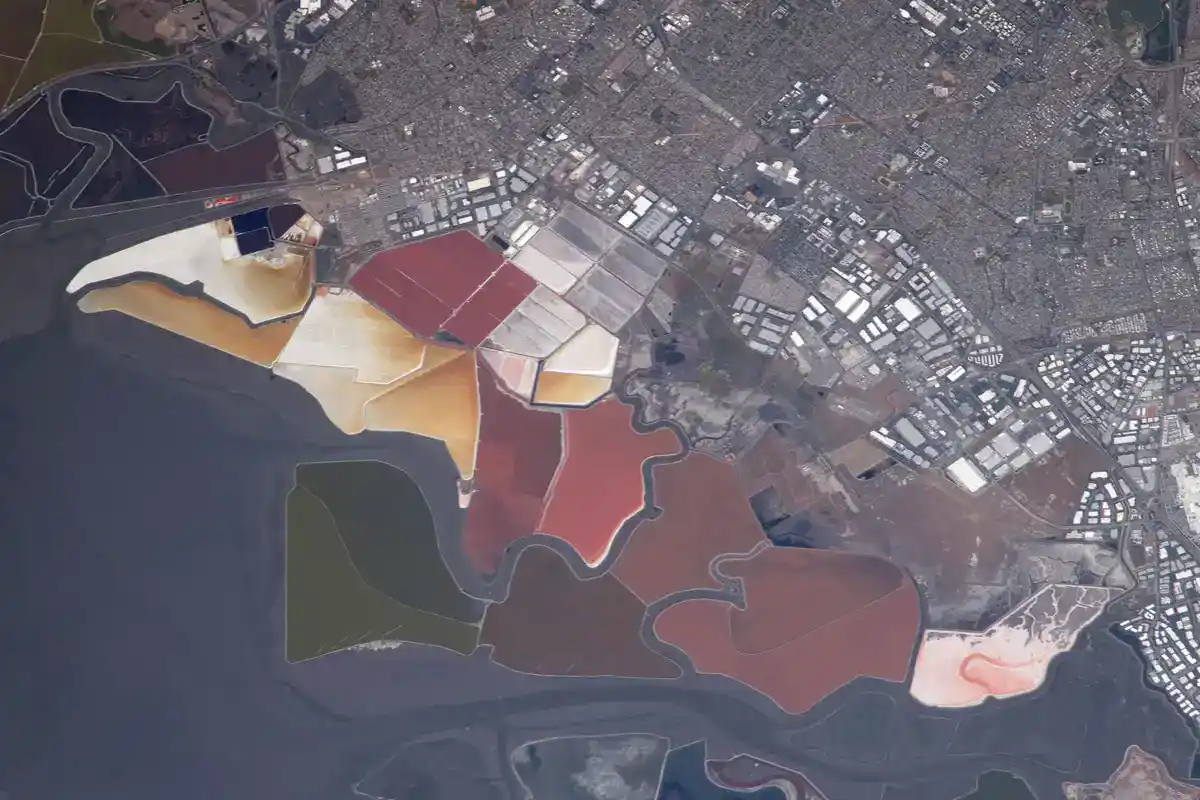
Extreme halophiles are archaea that need very salty water. Halobacterium salinarum thrives at salt levels of 4 moles per liter or higher. It lives in salt lakes and solar salt ponds.[25]
Many halophiles carry a purple protein called bacteriorhodopsin. It uses light to pump protons out of the cell. The cell then uses that proton flow to make ATP.
This is not photosynthesis the way plants do it. Bacteriorhodopsin uses no chlorophyll, and it does not turn carbon dioxide into sugar.[26]
Here is a surprising claim. Several kinds of halophilic archaea have reportedly been grown from tiny pockets of fluid trapped inside ancient salt crystals.[50] These reports are debated. Some scientists question whether the microbes are truly ancient or modern contaminants.[51]
Salt-loving life is not unique to archaea. Halophiles are found in all three domains of life.[34]
- Thermoacidophiles
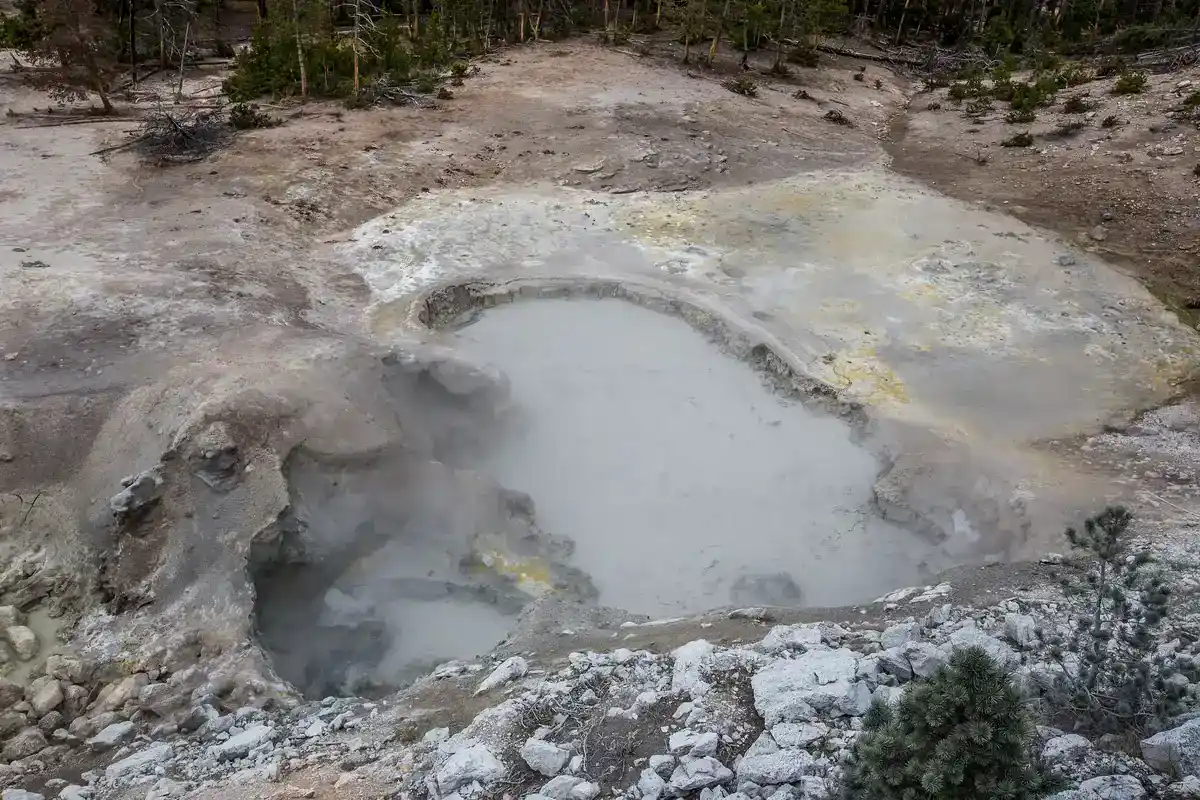
Thermoacidophiles are archaea that need both heat and acid. They are common in hot springs rich in sulfur.
Sulfolobus acidocaldarius is the best-known example. It grows best at about 70 to 80 °C (158 to 176 °F) and pH 2 to 3.[52] It was first isolated from Locomotive Spring in Yellowstone National Park. It can grow from about 55 °C to 80 °C (131 to 176 °F).[53]
How do these cells handle the acid? Their tough membrane helps keep the harsh outside world apart from the inside of the cell.[23] Most acid lovers keep their insides far less acidic than their surroundings. Picrophilus torridus is unusual. It lives near pH 0 outside, and its inside stays acidic too, at about pH 4.6.[41]
Modern Archaeal Classification
Archaeal classification is still changing as genome studies uncover new groups. Scientists now group archaea by comparing their genes. In 2021, the official naming rules for prokaryotes began to cover phylum names. Several large archaeal groups got new names as a result.[54]
In late 2024, the NCBI Taxonomy database arranged archaea into four kingdom-rank groups.[55] This is one widely used database arrangement, not a single agreed family tree. NCBI itself says its database is not an authoritative source for classification.[56] You do not need to memorize these names. But it helps to recognize them.
| NCBI kingdom-rank group | Informal or older name | Includes | Examples |
|---|---|---|---|
| Methanobacteriati | Much of the former Euryarchaeota | Methanobacteriota, Halobacteriota, Thermoplasmatota, and other lineages | Methanobrevibacter, Halobacterium |
| Thermoproteati | TACK group | Thermoproteota (formerly Crenarchaeota), Nitrososphaerota (formerly Thaumarchaeota), and others | Sulfolobus, Nitrosopumilus |
| Promethearchaeati | Asgard group | The closest known relatives of eukaryotes | Promethearchaeum syntrophicum |
| Nanobdellati | DPANN group | Nanobdellota (formerly Nanoarchaeota) and others | Nanoarchaeum |
What about the old “kingdom Archaebacteria”? Many school courses still teach six kingdoms. In that system, Archaebacteria is the one kingdom inside the domain Archaea.[57] The NCBI Taxonomy database now splits the domain into four kingdom-rank groups instead.
Archaea and Our Own Origins
Archaea may hold the key to where our own cells came from.
In 2015, scientists described a new archaeal group from DNA found in deep-sea mud. The mud came from near hydrothermal vents called Loki’s Castle.[58] These Asgard archaea carry many genes for proteins once thought to exist only in eukaryotes.[59]
Growing them was hard. The first Asgard archaeon to be grown in a lab took 12 years to isolate.[60]
Today, Asgard archaea are seen as the closest known living relatives of eukaryotes.[61] Leading models propose that eukaryotes arose through a partnership between two cells. One was an Asgard-related archaeal host. The other was a bacterium related to the alphaproteobacteria.[62]
Its descendant became the mitochondrion.[63] If these models are right, your cells carry two kinds of ancestry. The host cell was archaeal, and the mitochondria were bacterial. Scientists are still working out the exact host lineage and the order of events.
In 2023, a large study found that eukaryotes sit inside the Asgard group. Think of how birds are one group within the dinosaurs.[64] Exactly where eukaryotes branch off is still debated. A 2025 study placed the eukaryote branch deeper within Asgard archaea, outside the Heimdallarchaeia subgroup that earlier work had pointed to.[65]
Three Domains or Two?
The three-domain system remains a widely used way to classify life, especially in textbooks and classrooms. But family trees built from genes can tell a slightly different story.
If eukaryotes grew out of the archaea, the tree of life has just two main trunks: Bacteria and Archaea. This is called the two-domain tree. Scientists have argued about the two models for a long time. Newer genome data and better methods have boosted support for the two-domain tree.[66]
For exams, use the three-domain system unless your course says otherwise.
Importance of Archaea
Archaea shape Earth’s chemistry. They also give us useful tools for science and industry.
In Nature
- Methane cycle: Methanogens make methane in wetlands, rice paddies, animal guts, and landfills. By one estimate, they produce about 1 billion metric tons of methane a year. Other microbes use up about 60 percent of it before it reaches the air.[67]
- A methane filter on the seafloor: Some archaea eat methane in ocean sediments. They work together with sulfate-reducing bacteria. This teamwork consumes an estimated 90 percent of the methane made in those sediments before it escapes.[68]
- Nitrogen cycle: Ammonia-oxidizing archaea carry out the first step of nitrification, turning ammonia into nitrite. The first one grown in a lab came from a Seattle Aquarium tank in 2005.[69]
- Shaping landscapes: In Yellowstone, acid made by Sulfolobus helps turn rock into mud.
In Science and Industry
- DNA copying: Pfu DNA polymerase comes from the archaeon Pyrococcus furiosus. It proofreads its work, so it makes fewer copying errors than Taq polymerase in the lab technique called PCR.[70]
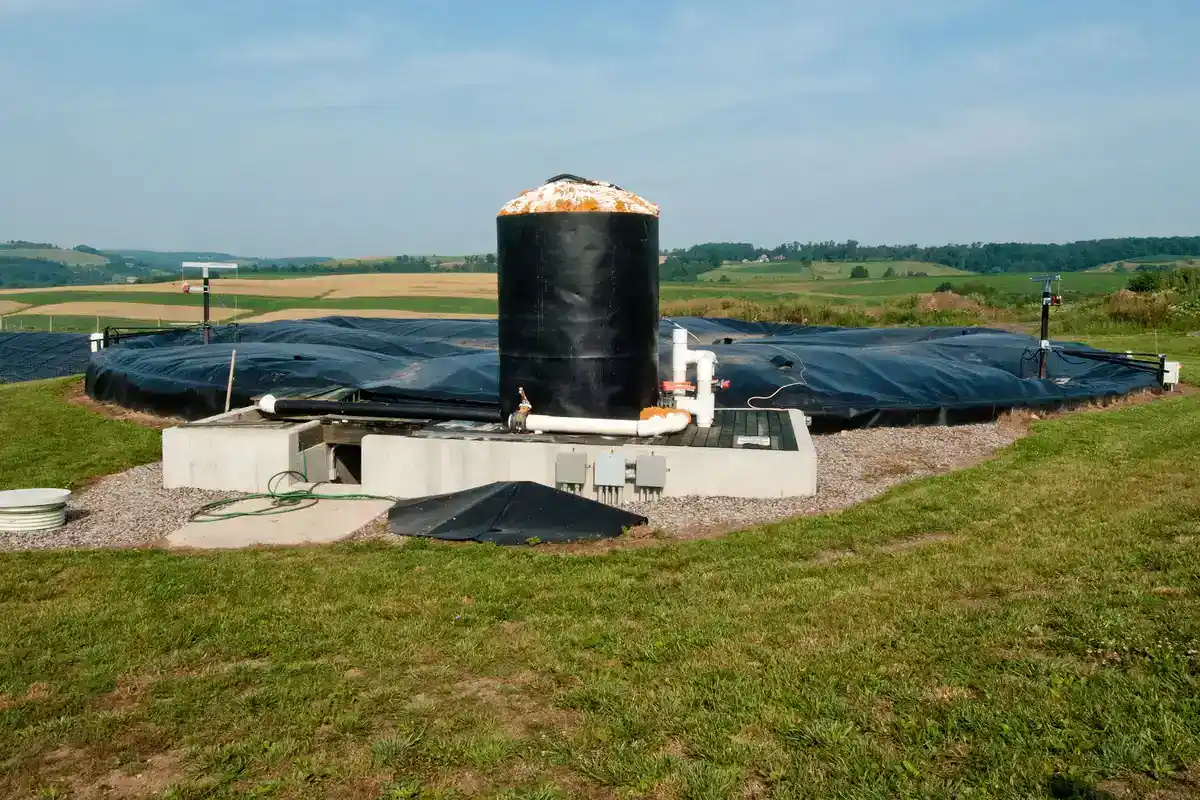
- Biogas: Anaerobic digesters use microbes to break down manure, sewage sludge, and food waste.[71] Methanogenic archaea make the methane at the final step.[72] Explore the top biomass energy pros and cons here.
- Heat-proof enzymes: Enzymes from extremophiles keep working in harsh industrial conditions.[73] Starch-digesting enzymes from Pyrococcus species work best at 100 °C or hotter.[74]
- Mining and cleanup: Some Sulfolobus species can dissolve metals such as copper, zinc, and uranium out of solid material. This is called bioleaching.[75] Archaea are well suited to cleanup work in very salty or acidic places.[76]
- Vaccine research: Tiny fat bubbles made from archaeal lipids, called archaeosomes, have boosted immune responses in lab studies.[77]
- Brain research: A light-driven pump from the archaeon Halorubrum sodomense is used to switch off nerve cells in optogenetics experiments.[78]
- The search for life in space: Salt-loving archaea are studied as models for life that might survive in salty places on Mars.[79]
In Human Health
Archaea are part of the normal human microbiome. No archaeal species has been conclusively identified as a primary mammalian pathogen.[80] In simple terms, researchers have not confirmed any archaeal species as a primary cause of disease in people or other mammals.
Some are linked to health conditions, though. Methanobrevibacter oralis is associated with gum disease. Higher gut methane is associated with constipation.[32] Scientists are still studying what causes what.
Common Myths About Archaea
| Myth | Fact |
|---|---|
| Archaea are a type of bacteria. | Archaea are a separate domain of life. |
| Archaea only live in extreme places. | They also live in oceans, soil, wetlands, and the human body. |
| Only archaea can survive extreme habitats. | Many bacteria are extremophiles too. Thermus aquaticus is a bacterium that thrives at 65 to 70 °C in Yellowstone hot springs.[81] |
| Taq polymerase for PCR comes from an archaeon. | Taq comes from the bacterium Thermus aquaticus.[82] The best-known archaeal PCR enzyme is Pfu. |
| Salt-loving archaea photosynthesize like plants. | They use light-driven pumps, not chlorophyll. The pumps make ATP but do not turn carbon dioxide into sugar. |
| Archaea cause infections. | No archaeal species has been conclusively identified as a primary human pathogen. Some are linked to conditions like gum disease. |
| Thermoacidophiles live in acid as strong as concentrated sulfuric acid. | Most thrive around pH 2 to 3, closer to stomach acid. A few, like Picrophilus, grow near pH 0. |
| Archaea are primitive. | The name means “ancient,” but living archaea are highly adapted. Some are the closest known relatives of eukaryotes. |
Frequently Asked Questions
Archaebacteria live almost everywhere. Famous homes include hot springs, deep-sea vents, salt lakes, and acidic pools. They also live in oceans, soil, swamps, rice paddies, oil reservoirs, and the guts of animals and humans.
The three classic types are methanogens, extreme halophiles, and thermoacidophiles. Methanogens make methane in places without oxygen. Extreme halophiles live in very salty water. Thermoacidophiles live in hot, acidic springs. These are lifestyle groups, not official taxonomic groups.
Archaebacteria belong to the domain Archaea. It is one of three domains of life, along with Bacteria and Eukarya. In the six-kingdom system taught in many schools, Archaebacteria is the only kingdom in that domain. The NCBI Taxonomy database now splits it into four kingdom-rank groups.
Archaebacteria are prokaryotic. Their cells have no nucleus. Even so, some of their genetic machinery is more like that of eukaryotes than bacteria.
Archaea that live in extremely salty places like the Dead Sea are called extreme halophiles. Haloferax volcanii is one example first described from the Dead Sea.
Heat-loving archaea are called thermophiles. Those that grow above 80 °C are hyperthermophiles. Archaea that need both heat and acid are called thermoacidophiles.
Many archaea live without oxygen. The best known are methanogens. They cannot grow where oxygen is present, and they produce methane gas. They live in swamps, rice paddies, sediments, landfills, and the digestive tracts of cattle and other animals.
Archaebacteria take in chemicals instead of food. Many methanogens use hydrogen and carbon dioxide. Others use acetate or methanol. Sulfolobus uses sulfur. Some ocean and soil archaea use ammonia. Many salt lovers break down organic compounds and can also capture light energy.
Archaea drive key parts of the methane and nitrogen cycles. They help control how much methane escapes from the seafloor. People use them for biogas, heat-stable enzymes such as Pfu polymerase, and research on vaccines and life in space.
The biggest difference is the cell membrane. Archaea build it from isoprenoid chains joined by ether bonds. Bacteria use fatty acids joined by ester bonds. Archaea also lack bacterial peptidoglycan, and parts of their genetic machinery resemble those of eukaryotes.
No archaeal species has been conclusively identified as a primary human pathogen. Some are linked to conditions like gum disease and constipation. Any role they play may be indirect, and scientists are still studying it.
Key Takeaways
- Archaea are single-celled prokaryotes that form their own domain of life.
- “Archaebacteria” is the old name. Archaea are not bacteria.
- Carl Woese and George Fox identified them in 1977 by comparing ribosomal RNA.
- Their membrane lipids, built with ether bonds, are the clearest trait that sets them apart.
- They share some traits with bacteria and others with eukaryotes.
- They live in extreme places, but also in oceans, soil, wetlands, and the human body.
- The three classic types are methanogens, extreme halophiles, and thermoacidophiles.
- Archaea matter for the methane and nitrogen cycles, for biotechnology, and for understanding where complex cells came from.
- Asgard archaea are the closest known living relatives of eukaryotes.
- No archaeal species has been conclusively identified as a primary human pathogen.
Cite this page
BioExplorer. (2026, September 16). The Domain Archaea: Finding Life’s Extremists. https://www.bioexplorer.net/domain-archaea-archaebacteria.html/