The Allure of Black Flowers: Unveiling the Top 21 Darkest Blooms
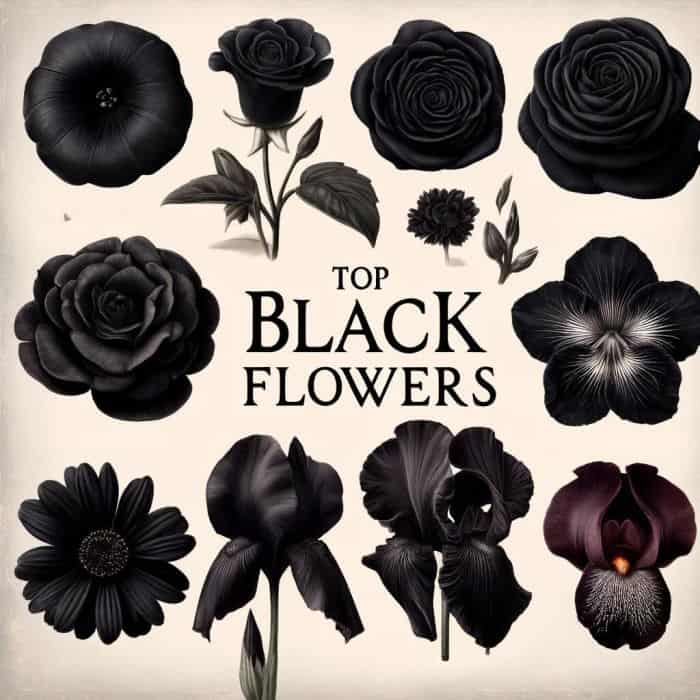
In the vast floriculture world, black flowers hold a special place, captivating enthusiasts with their enigmatic beauty and rarity. These deep, dark blooms are not truly black but are usually very deep shades of purple, maroon, or red. High concentrations of anthocyaninWhat is anthocyanin?Anthocyanin is a type of pigment found in plants, responsible for the red, purple, and blue colors in fruits, vegetables, and flowers. It also plays a role in protecting plants against ultraviolet radiation and extreme temperatures. pigments create the illusion of Black, which absorbs light across the visible spectrum, making the flowers appear strikingly dark.
The allure of black flowers extends beyond their visual appeal. They often symbolize mystery, elegance, and sophistication. Black blooms are associated with deep emotions, spirituality, and even mourning in various cultures. Gardeners and floral designers prize them for their ability to add depth, contrast, and a touch of the unexpected to their creations.
Despite their popularity, true black flowers are elusive in nature. Most “black” varieties are the result of selective breeding and cultivation. Horticulturists and plant geneticists have worked tirelessly to develop darker and darker cultivars, pushing the boundaries of what’s possible in the realm of flower color.
This article explores the top 21 darkest blooms, delving into their unique characteristics, growing requirements, and fascinating facts. Each of these varieties, from the classic Black Dahlia to the exotic Black Bat Flower, has a story to tell. We’ll also discuss the science behind their coloration and provide tips for incorporating these stunning flowers into your garden or floral arrangements.
So, let’s embark on a journey into the captivating world of black flowers and discover the allure of these enigmatic blooms.
Jump to:
- Are Flowers Truly Black?
- Top Black Flowers
- 1. Black Dahlia (Dahlia 'Arabian Night')
- 2. Black Rose (Rosa 'Black Baccara')
- 3. Black Hollyhock (Alcea rosea 'Nigra')
- 4. Black Tulip (Tulipa 'Queen of Night')
- 5. Black Pansy (Viola 'Bowles Black')
- 6. Black Velvet Petunia (Petunia 'Black Velvet')
- 7. Black Iris (Iris 'Before the Storm')
- 8. Black Calla Lily (Zantedeschia 'Black Star')
- 9. Black Viola (Viola tricolor 'Molly Sanderson')
- 10. Black Orchid (Coelogyne pandurata)
- 11. Black Iris (Iris nigricans)
- 12. Black Hellebore (Helleborus niger)
- 13. Black Barlow Columbine (Aquilegia vulgaris 'Black Barlow')
- 14. Black Knight Scabiosa (Scabiosa atropurpurea 'Black Knight')
- 15. Black Prince Snapdragon (Antirrhinum majus 'Black Prince')
- 16. Black Gamecock Iris (Iris louisiana 'Black Gamecock')
- 17. Dark Red Trillium (Trillium erectum)
- 18. Black Cosmos (Cosmos atrosanguineus)
- 19. Black Bat Flower (Tacca chantrieri)
- 20. Black Cranesbill (Geranium phaeum 'Samobor')
- 21. Black Poppy (Papaver somniferum 'Black Peony')
- More Black Blooms
- Conclusion
Are Flowers Truly Black?
True black flowers, in the strictest sense, are extremely rare. What many consider “black” flowers are usually very deep shades of purple, red, or blue, which appear black to the human eye, especially under certain lighting conditions. Most of the “black” flowers, including some of those listed below, result from selective breeding (cultivars) to deepen and darken their natural hues.
In nature, without human intervention through selective breeding or cultivation, finding a completely black flower is a challenge. Plant pigments (primarily anthocyanins) do not typically produce true black colors. Instead, these deep colors are often strategies to attract specific pollinators or absorb more heat in certain environments.
While the quest for a truly black flower in the wild might be elusive, the appeal of dark-hued flowers remains high, leading to a continued interest in breeding and selecting for ever-darker blossoms in Gardens and floral arrangements.

Top Black Flowers
1. Black Dahlia (Dahlia ‘Arabian Night’)
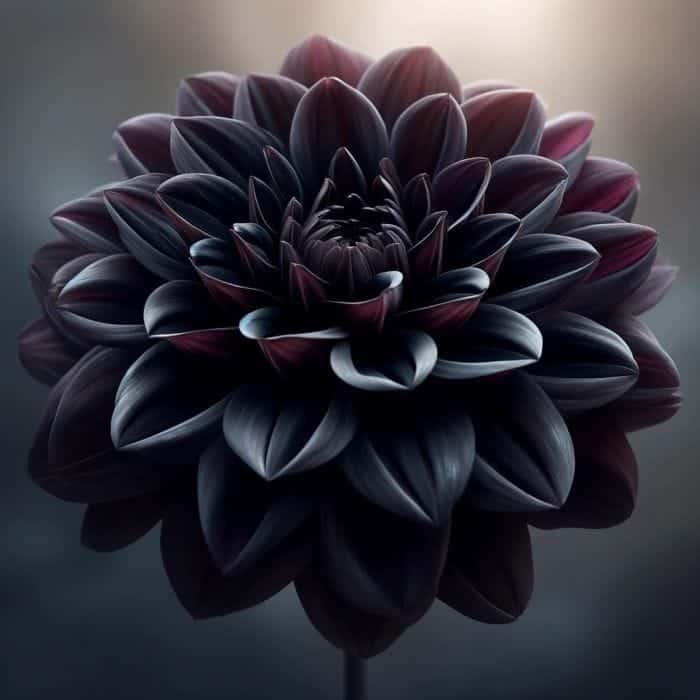
The Black Dahlia, specifically the ‘Arabian Night’ cultivar, is a breathtaking flower that captivates with its deep, velvety maroon petals. At first glance, the blooms appear to be a true black. Still, upon closer inspection, rich shades of burgundy and purple reveal themselves. The flower’s mesmerizing color is attributed to a high concentration of anthocyanins, which are pigments that absorb most of the visible light spectrum, creating an illusion of blackness.
What sets the Black Dahlia apart is not just its color but also its form. The ‘Arabian Night’ cultivar boasts large, fully double blooms with tightly packed petals, giving the flower a lush, almost ruffled appearance. The stems are sturdy, holding impressive blooms aloft, making them a favorite among floral designers for dramatic arrangements.
The Black Dahlia’s allure lies in its unique color and form, which result from careful breeding and cultivation by horticulturists who seek to create the darkest bloom possible. The high concentration of anthocyanins combined with a reduced presence of flavones contributes to the flower’s distinctly dark appearance, making it a true standout in any garden or floral arrangement.
Zone Information: Black Dahlias thrive best in USDA Hardiness Zones 8 through 11. They prefer well-draining soil and full sun exposure to encourage healthy growth and vibrant blooms. In cooler zones, dahlias can be grown annually or lifted and stored during winter to protect the tubers from frost damage.
Fun Facts:
- Black Dahlias like ‘Arabian Nights’ are rare among the 20,000 cultivars of garden dahlias due to their unique biochemical makeup that emphasizes the accumulation of anthocyanins over flavones.
- The intense coloration in Black Dahlias results from the pigments present and the suppression of certain enzymes like flavone synthase, making the black-red tints more prominent.
- Despite their dramatic appearance, Black Dahlias do not naturally have any fragrance. This is a unique characteristic given the usual expectation of scented roses and other similarly deep-colored flowers.
Sources

- J. Thill, Silvija Miosic, Romel Ahmed, K. Schlangen, G. Muster, K. Stich and H. Halbwirth. “‘Le Rouge et le Noir’: A decline in flavone formation correlates with the rare color of black dahlia (Dahlia variabilis hort.) flowers.” BMC Plant Biology, 12 (2012): 225 – 225. https://doi.org/10.1186/1471-2229-12-225
- A. Deguchi, S. Ohno, M. Hosokawa, F. Tatsuzawa and M. Doi. “Endogenous post-transcriptional gene silencing of flavone synthase resulting in high accumulation of anthocyanins in black dahlia cultivars.” Planta, 237 (2013): 1325 – 1335. https://doi.org/10.1007/s00425-013-1848-6
2. Black Rose (Rosa ‘Black Baccara’)
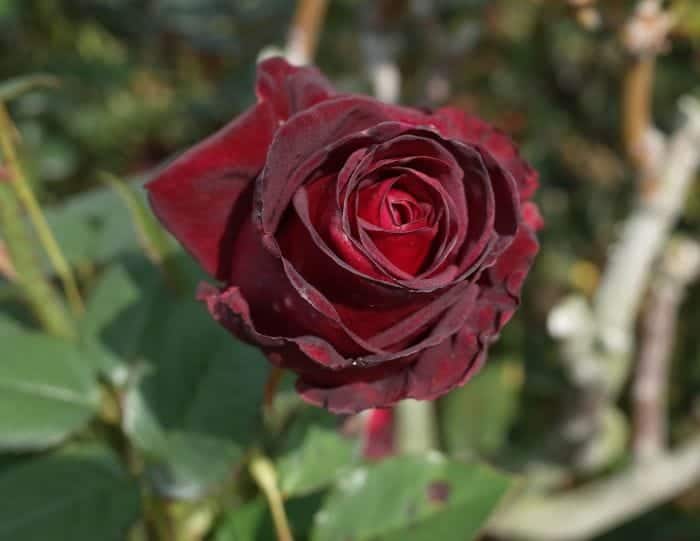
The Black Rose, particularly the ‘Black Baccara’ variety, is an enchanting flower that exudes an air of mystery and sophistication. Its petals are a deep, velvety maroon, so dark that they appear nearly black. This stunning coloration results from a high concentration of anthocyanins, the pigments responsible for flowers’ red, purple, and blue hues.
What makes the ‘Black Baccara’ rose truly special is its ability to maintain its dark color throughout the blooming season. Unlike other dark roses that may fade or change color as they age, ‘Black Baccara’ remains consistently dark, even under the intense summer sun. This steadfast color, combined with the rose’s classic shape and lush, full petals, makes it a favorite among floral designers and gardeners.
The ‘Black Baccara’ rose is a hybrid tea rose, prized for its large, single blooms atop long, sturdy stems. This makes it an ideal choice for cut flower arrangements, where its dark, dramatic color can add depth and contrast to any bouquet. This rose creates a striking focal point in the garden, drawing the eye and captivating the imagination with its mysterious beauty.
Zone Information: The ‘Black Baccara’ rose thrives in USDA Hardiness Zones 5 through 9. It prefers full sun to partial shade and well-draining soil. Regular watering and fertilizing are essential to maintain the plant’s health and encourage abundant blooms. Like most hybrid tea roses, ‘Black Baccara’ benefits from regular pruning to promote healthy growth and flowering.
Fun Facts:
- Despite its dark color, the ‘Black Baccara’ rose has no strong fragrance. This is because the breeding process focused on creating the darkest possible color, often at the expense of the rose’s scent.
- ‘Black Baccara’ roses are part of a collection that includes some of the darkest roses available on the market. They were initially bred for the cut flower industry due to their unique appearance and long vase life.
- Despite its dark petals, ‘Black Baccara’ is susceptible to common rose diseases like black spots. Regular monitoring and treatment are necessary to keep the plant healthy and thriving.
Sources
- D. Zlesak, R. Nelson, D. Harp, Barbara Villarreal, Nicholas P. Howell, J. Griffin, G. Hammond and S. George. “Performance of landscape roses grown with minimal input in the north-central, central, and south-central United States..” Horttechnology, 27 (2017): 718-730. https://doi.org/10.21273/HORTTECH03681-17
- T. Debener. “The Beast and the Beauty: What Do We Know about Black Spot in Roses?.” Critical Reviews in Plant Sciences, 38 (2019): 313 – 326. https://doi.org/10.1080/07352689.2019.1665778
- J. Mangandi and N. Peres. “Black Spot of Rose.” EDIS (2009). https://doi.org/10.32473/edis-pp268-2009
3. Black Hollyhock (Alcea rosea ‘Nigra’)
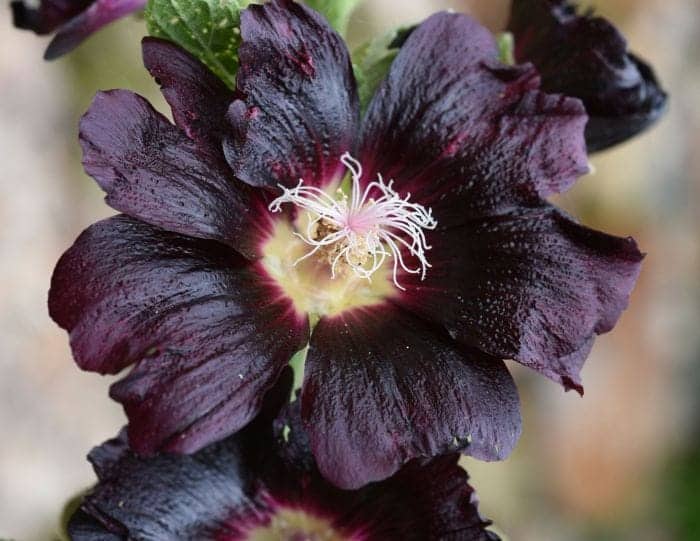
The Black Hollyhock, scientifically known as Alcea Rosea ‘Nigra’, is a striking flower that commands attention with its tall, majestic spires adorned with deep, dark blooms. The flowers, not truly black but a very deep shade of maroon or purple, appear black from a distance, creating a dramatic effect in the garden.
The large, single flowers of the Black Hollyhock are densely arranged along the sturdy, upright stems, which can reach impressive heights of 6 to 8 feet. The blooms, measuring up to 3 inches in diameter, are slightly ruffled, with delicate, overlapping petals that reveal a subtle sheen in the sunlight. The contrast between the dark flowers and the plant’s large, lobed leaves is particularly striking, making this variety a standout in any garden setting.
One of the most appealing aspects of the Black Hollyhock is its old-world charm. This heirloom variety has been cherished by gardeners for generations, prized for its simple beauty and reliability. It is a classic cottage garden flower, often found gracing the borders of traditional English gardens, where its tall spires create a stunning backdrop for other Plants.
Zone Information: Black Hollyhocks are hardy in USDA Hardiness Zones 3 through 8, making them suitable for gardens in various climates. They prefer full sun to partial shade and well-draining soil rich in organic matter. These plants are biennials or short-lived perennials, meaning they typically bloom in their second year and may continue to bloom for a few years before needing to be replaced.
Fun Facts:
- Black Hollyhocks have a long history of use in herbal medicine. The flowers and leaves have been used to treat various ailments, including inflammation and respiratory issues. The flowers are also edible and can be used to make tea or garnish in salads.
- The dark petals of the Black Hollyhock have been used historically as a natural dye for fabrics and cosmetics. This practice dates back to medieval times when the flower’s rich, dark hue was highly prized.
- Although Black Hollyhocks are biennials or short-lived perennials, they tend to self-seed prolifically. This means that once established in the garden, they will often appear year after year as new plants grow from the seeds shed by the previous generation.
Sources
- Yi Zhang, Lijun Jin, Qiu Chen, Zhi-zhen Wu, Yongzhe Dong, Lifeng Han and Tao Wang. “Hypoglycemic activity evaluation and chemical study on hollyhock flowers..” Fitoterapia, 102 (2015): 7-14 . https://doi.org/10.1016/j.fitote.2015.02.001
- Yue-Yun Wang, Sheng Zhao, Peng-yin Chen, Yongkang Liu, Zhi-gang Ma, W. Malik, Zheng Zhu, Z. Peng, Haorong Lu, Yanli Chen and Yuxiao Chang. “Genetic Diversity and Population Structure Analysis of Hollyhock (Alcea rosea Cavan) Using High-Throughput Sequencing.” Horticulturae (2023). https://doi.org/10.3390/horticulturae9060662
4. Black Tulip (Tulipa ‘Queen of Night’)
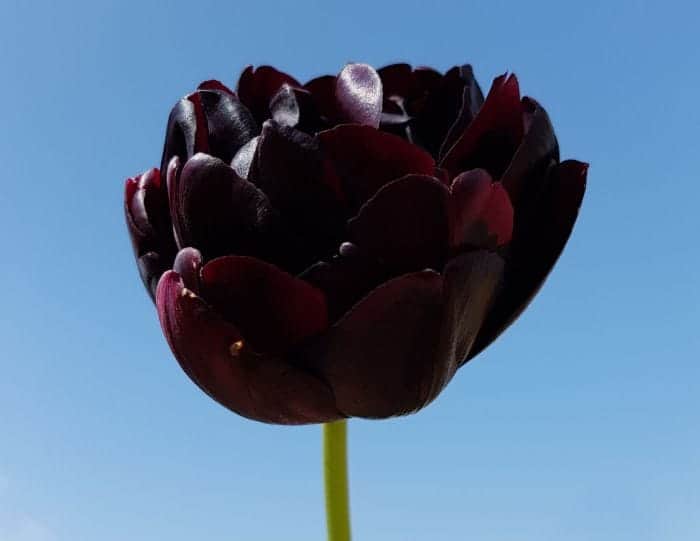
The Black Tulip, specifically the ‘Queen of Night’ cultivar, is a breathtaking flower with mystery and sophistication. Its deep, velvety maroon petals are so dark that they appear almost black, creating a striking visual impact in any garden or floral arrangement. This unique coloration results from a high concentration of anthocyanin pigments, which absorb most of the visible light spectrum, giving the flower its dark, sultry appearance.
The ‘Queen of Night’ tulip features large, single blooms held atop sturdy stems, reaching heights up to 24 inches. The flowers are classically shaped, with smooth, rounded petals with a slight sheen, adding to their allure. As the blooms mature, they may reveal subtle hints of deep purple or burgundy, adding depth and dimension to their dark color.
One of the most appealing aspects of the ‘Queen of Night’ tulip is its versatility. It can create stunning monochromatic displays, showcasing its dark blooms en masse for a dramatic effect. Alternatively, it can be paired with lighter-colored flowers, such as white or pale pink tulips, to create a striking contrast that highlights its unique beauty.
Zone Information: ‘Queen of Night’ tulips are hardy in USDA Hardiness Zones 3 through 8, making them suitable for gardens in various climates. They prefer well-draining soil and full sun exposure, although they can tolerate some light shade. Like most tulips, they bloom in the spring, typically in April or May, depending on the climate.
Fun Facts:
- The ‘Queen of Night’ tulip is often used in “moon gardens”, designed to be enjoyed in the evening. The dark petals of the flower contrast beautifully with lighter-colored blooms and foliage, creating a stunning visual display in the moonlight.
- This tulip cultivar was first introduced in 1944. It has remained popular among gardeners and floral designers for its unique color and elegant form. It is often associated with luxury and sophistication, making it a popular choice for high-end floral arrangements.
- The dark color of the ‘Queen of Night’ tulip is so intense that it can appear to be different shades of purple or black, depending on the lighting conditions. This unique characteristic makes it a favorite subject for photographers and artists drawn to its moody, mysterious appearance.
Sources
- Xueying Guo, Xu Fu, Xin Li, and Dongqin Tang. “Effect of Flavonoid Dynamic Changes on Flower Coloration of Tulipa gesneiana’ Queen of Night’ during Flower Development.” Horticulturae (2022). https://doi.org/10.3390/horticulturae8060510
5. Black Pansy (Viola ‘Bowles Black’)
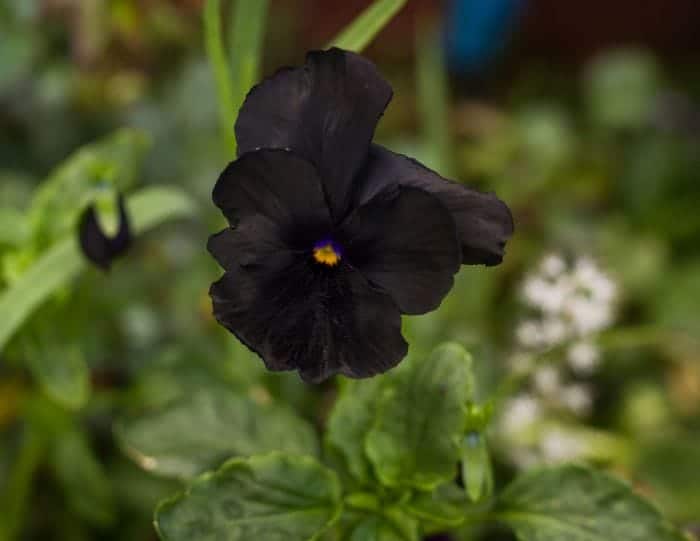
The Black Pansy, specifically the ‘Bowles Black’ cultivar, is a captivating flower that enchants with its deep, velvety petals that appear almost black. The blooms are not truly black but are a very deep shade of purple, so intense that they seem to absorb all light, creating a mesmerizing visual effect.
What sets the ‘Bowles Black’ pansy apart is the richness and consistency of its color. Unlike some other dark flowers that may have a red or maroon undertone, this pansy maintains its deep, inky hue throughout the blooming season. The flowers are medium-sized, with slightly ruffled petals that have a matte finish, adding to their air of mystery and sophistication.
The ‘Bowles Black’ pansy is a versatile flower that can be used in a variety of garden settings. It is particularly striking when planted en masse, creating a sea of dark, velvety blooms that draw the eye and create a focal point in the landscape. It can also be used as an accent plant, providing a dramatic contrast when paired with lighter-colored flowers or foliage.
Zone Information: ‘Bowles Black’ pansies are hardy in USDA Hardiness Zones 4 through 8, making them suitable for gardens in a wide range of climates. They prefer cool weather and can be grown as annuals in most regions, planted in the fall for spring blooms or in the early spring for summer flowers. They thrive in well-draining soil and prefer partial shade, especially in hot climates.
Fun Facts:
- The ‘Bowles Black’ pansy is named after E. A. Bowles, a British horticulturist and plant breeder known for his work with pansies and violas. He developed this cultivar in the early 1900s, and it has remained popular among gardeners and plant enthusiasts ever since.
- Pansies, including the ‘Bowles Black’ cultivar, are known for their ability to withstand cold temperatures. They can survive light frosts and continue to bloom even in cool, damp weather, making them a reliable choice for fall and spring gardens.
- The dark color of the ‘Bowles Black’ pansy is not just for show; it also serves a practical purpose. The deep purple hue helps the flower absorb more heat from the sun, which can be beneficial in cool climates, allowing the plant to grow and bloom even in less-than-ideal conditions.
- Pansies like ‘Bowles Black’ can “self-clean, ” meaning that the spent flowers will naturally drop off the plant, eliminating the need for deadheading and encouraging continuous blooming throughout the season.
Sources
- Richard O. Kelly, Z. Deng, B. Harbaugh and R. Schoellhorn. “Evaluation of Pansy Cultivars as Bedding Plants to Select the Best-of-class.” Horttechnology, 15 (2005): 706-715. https://doi.org/10.21273/HORTTECH.15.3.0706
6. Black Velvet Petunia (Petunia ‘Black Velvet’)
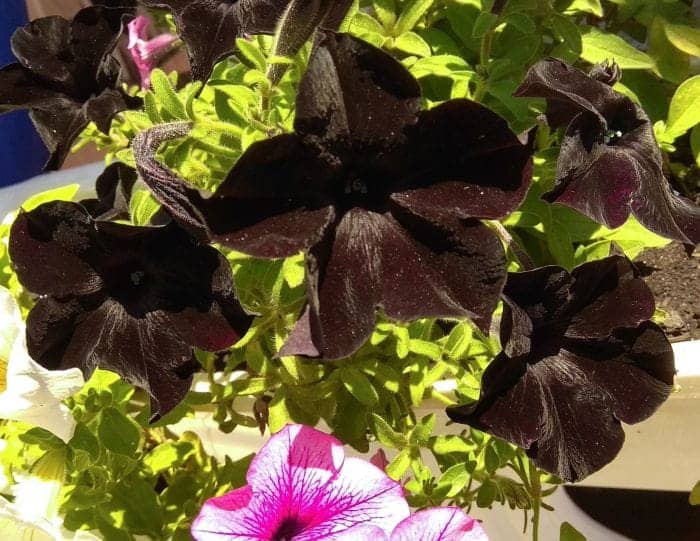
The Black Velvet Petunia (Petunia ‘Black Velvet’) is a stunning and unique flower that adds a touch of dark sophistication to any garden or container planting. This distinctive cultivar of petunia features deep, rich purple-black blooms that are sure to make a bold statement wherever they are displayed.
The flowers of the Black Velvet Petunia are truly a marvel, with large, velvety petals that can span up to 4 inches across. The petals are a deep, rich purple-black with a slightly glossy sheen that catches the light and adds depth and dimension to the color. The blooms are borne on compact, mounding plants that typically reach a height of 10-12 inches and a spread of 12-18 inches, making them a perfect choice for containers, hanging baskets, or as a border plant in the garden.
In addition to its stunning flowers, the Black Velvet Petunia is also prized for its ease of care and versatility. The plant is relatively low-maintenance, requiring only regular watering and occasional deadheading to keep it looking its best. It is also heat and drought-tolerant, making it a great choice for hot, sunny locations or gardeners looking to conserve water.
Zone Information: The Black Velvet Petunia is best suited to USDA Hardiness Zones 9-11, where it can be grown as a tender perennial. In cooler zones, it is typically grown annually and is best planted in the spring after all danger of frost has passed. The plant prefers full sun to partial shade and well-draining soil rich in organic matter.
Fun Facts:
- The Black Velvet Petunia is a relatively new cultivar, introduced to the market in 2010 by the Japanese company Suntory. It was developed using advanced breeding techniques to create a flower with a deep, rich color, unlike any other petunia on the market.
- In addition to its ornamental value, the Black Velvet Petunia has also been shown to have some unique environmental benefits. A study by researchers at the University of Illinois found that the dark color of the flower’s petals helps absorb air pollutants like nitrogen oxides and volatile organic compounds, making it a potentially valuable tool for improving air quality in urban environments.
- The Black Velvet Petunia has been used in a variety of creative ways by gardeners and designers. Its dark, sultry color makes it a popular choice for gothic or Halloween-themed gardens, while its compact size and ease of care make it a great option for urban balcony or patio gardens. Some creative gardeners have even used the flower to create living “black walls” or vertical gardens that make a dramatic statement in any space.
Sources
- Yufang Guo and R. Warner. “Dissecting genetic diversity and genomic background of Petunia cultivars with contrasting growth habits..” Horticulture research, 7 1 (2020): 155 . https://doi.org/10.1038/s41438-020-00373-2
7. Black Iris (Iris ‘Before the Storm’)
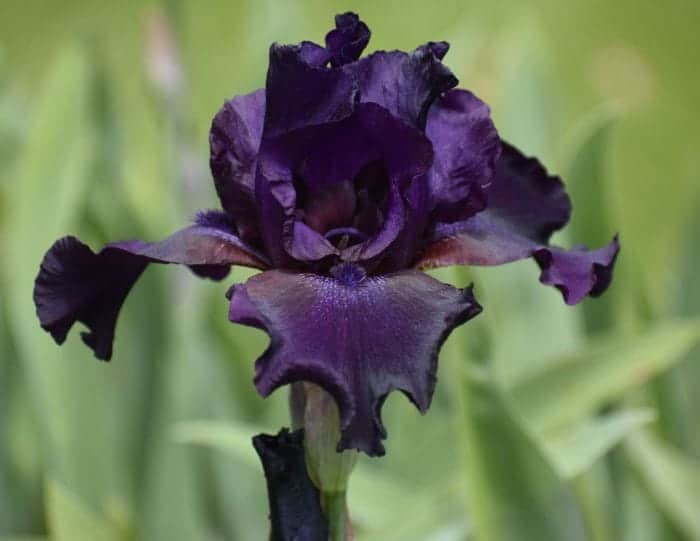
The Black Iris, specifically the ‘Before the Storm’ cultivar, is a stunning flower that commands attention with its deep, mysterious color and elegant form. At first glance, the blooms appear to be a true black, but upon closer inspection, they reveal a rich, deep purple hue that seems to shift and change with the light, creating an enchanting visual effect.
What sets the ‘Before the Storm’ iris apart is the intensity and depth of its color. The falls (the lower petals of the flower) are a uniform, deep shade of purple that is so dark it appears almost black. In contrast, the standards (the upper petals) are a slightly lighter purple, providing a subtle contrast that adds depth and dimension to the bloom. The petals have a smooth, satiny texture that catches the light, creating a mesmerizing play of shadows and highlights.
The ‘Before the Storm’ iris is a tall bearded iris, which means it has a distinctive fuzzy “beard” on the falls of the flower. This beard is typically a dark purple or black color, adding to the overall dramatic effect of the bloom. The flowers are large and showy, measuring up to 5 inches in diameter, and are held aloft on sturdy stems that can reach up to 3 feet in height.
Zone Information: ‘Before the Storm’ irises are hardy in USDA Hardiness Zones 3 through 9, making them suitable for gardens in a wide range of climates. They prefer well-draining soil and full sun exposure, although they can tolerate some light shade, especially in hot climates. Irises should be planted in mid to late summer, allowing the rhizomes to establish themselves before the first frost.
Fun Facts:
- The ‘Before the Storm’ iris was introduced in 1989 by the renowned iris breeder Schreiner’s Iris Gardens. The cultivar quickly gained popularity among iris enthusiasts for its unique color and strong growth habit.
- Irises have a long and rich history, with references to the flower dating back to ancient Greek mythology. In fact, the name “iris” comes from the Greek word for “rainbow, ” referring to the wide range of colors found in the genus.
- The dark color of the ‘Before the Storm’ iris is not just an aesthetic feature but also a practical purpose. The deep purple hue helps the flower absorb more heat from the sun, which can be beneficial in cool climates, allowing the plant to emerge earlier in the spring.
- Irises are relatively low-maintenance plants that are easy to grow and care for. They are resistant to most pests and diseases and require minimal fertilization and watering once established. This makes them a popular choice for both novice and experienced gardeners alike.
Sources
- Reference:“Fossil landslide dams and their exploitation for hydropower in the Italian Dolomites”. Accessed April 18,2024. Link.
8. Black Calla Lily (Zantedeschia ‘Black Star’)
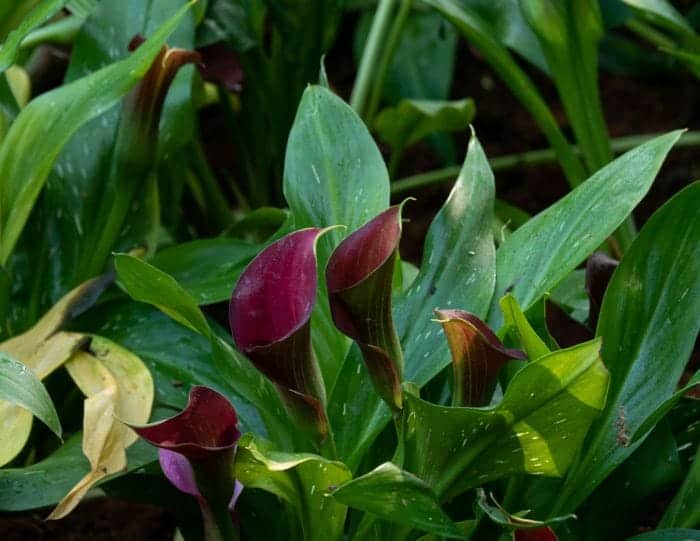
The Black Calla Lily, specifically the ‘Black Star’ cultivar, is a striking and exotic flower that exudes an air of mystery and elegance. At first glance, the blooms appear to be a deep, dark black, but upon closer inspection, they reveal a rich, velvety purple hue that seems to absorb light, creating a captivating visual effect.
What sets the ‘Black Star’ calla lily apart is its blooms’ unique shape and texture. The flower comprises a single, large spathe (a modified leaf) that wraps around a central spadix (a fleshy spike). The spathe is a deep, dark purple color that appears almost black. At the same time, the spadix is a slightly lighter shade of purple, providing a subtle contrast that adds depth and interest to the bloom. The texture of the spathe is smooth and velvety, with a slight sheen that catches the light and creates a mesmerizing play of shadows and highlights.
The ‘Black Star’ calla lily is a medium-sized plant with flowers that typically measure 4 to 5 inches in length and 2 to 3 inches in width. The blooms are held aloft on sturdy stems that rise above the lush, dark green foliage, creating a striking contrast that draws the eye and commands attention.
Zone Information: ‘Black Star’ calla Lilies are hardy in USDA Hardiness Zones 8 through 10, making them suitable for gardens in warm climates. In cooler regions, they can be grown as annuals or as container plants that can be brought indoors during winter. Calla lilies prefer rich, well-draining soil and partial shade. However, they can tolerate some full sun exposure in cooler climates.
Fun Facts:
- The ‘Black Star’ calla lily is not a true lily; it belongs to the Araceae family, including other popular houseplants such as philodendrons and peace lilies. The name “calla” comes from the Greek word for “beautiful, ” referring to the striking appearance of the flower.
- Calla lilies have a long history of cultural significance, particularly in ancient Egyptian art and mythology. The flower was associated with the goddess Isis and was often depicted in hieroglyphics and other artwork.
- The dark color of the ‘Black Star’ calla lily is not just an aesthetic feature; it also serves a practical purpose. The deep purple hue helps the flower absorb more heat from the sun, which can be beneficial in cool climates, allowing the plant to grow and bloom more quickly.
- Calla lilies are popular cut flowers, prized for their long vase life and striking appearance. The ‘Black Star’ cultivar is particularly sought after for its unique color and velvety texture, making it a standout in floral arrangements and bouquets.
Sources
- V. Naor, J. Kigel and M. Ziv. “Hormonal control of inflorescence development in plantlets of calla lily (Zantedeschia spp.) grown in vitro.” Plant Growth Regulation, 42 (2004): 7-14. https://doi.org/10.1023/B:GROW.0000014889.16196.f7
9. Black Viola (Viola tricolor ‘Molly Sanderson’)
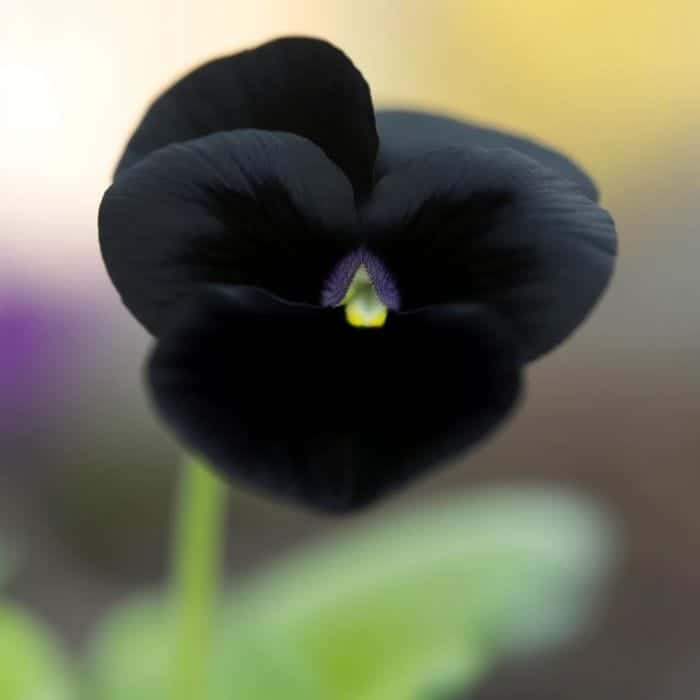
The Black Viola, also known as Viola tricolor ‘Molly Sanderson’, is a charming and unique flower that adds a touch of darkness and mystery to any garden or floral arrangement. At first glance, the blooms appear to be a deep, velvety black, but upon closer inspection, they reveal a subtle hint of dark purple, adding depth and intrigue to the color.
Its delicate yet striking appearance sets the ‘Molly Sanderson’ viola apart. The flowers are small, typically measuring about an inch in diameter. Still, they make up for their size with their bold color and dainty, heart-shaped petals. Each bloom features a bright yellow center, which contrasts the dark, almost black petals, creating a mesmerizing visual effect that draws the eye and captures the imagination.
The ‘Molly Sanderson’ viola is a low-growing plant with a compact and mounding habit that makes it perfect for borders, rock gardens, and containers. It typically reaches a height of 4 to 6 inches. It spreads up to 8 inches wide, creating a lush, vibrant carpet of dark, velvety blooms that adds texture and interest to any garden or landscape.
Zone Information: ‘Molly Sanderson’ violas are hardy in USDA Hardiness Zones 4 through 9, making them suitable for gardens in a wide range of climates. They prefer well-draining soil and partial shade, although they can tolerate some full sun exposure in cooler climates. Violas are typically planted in the spring or fall. They will bloom throughout the growing season, providing a long-lasting display of color and charm.
Fun Facts:
- The ‘Molly Sanderson’ viola is named after the famous English plantswoman and garden writer Molly Sanderson, known for her love of dark and unusual flowers. The cultivar was introduced in the early 1900s and has been a favorite among gardeners and plant enthusiasts ever since.
- Violas have a long history of cultural significance, particularly in ancient Greek mythology. The flower was associated with the goddess Persephone. It was often depicted in artwork and literature as a symbol of beauty, love, and fertility.
- The dark color of the ‘Molly Sanderson’ viola is not just an aesthetic feature; it also serves a practical purpose. The deep purple hue helps the flower absorb more heat from the sun, which can be beneficial in cool climates, allowing the plant to grow and bloom more quickly.
- Violas are edible flowers often used as a garnish or decoration in culinary dishes. The ‘Molly Sanderson’ cultivar is particularly popular for its unique color and delicate flavor, described as slightly sweet and reminiscent of grapes or berries.
Sources
- Reference: “Fossil landslide dams and their exploitation for hydropower in the Italian Dolomites”. Accessed April 18,2024. Link.
10. Black Orchid (Coelogyne pandurata)
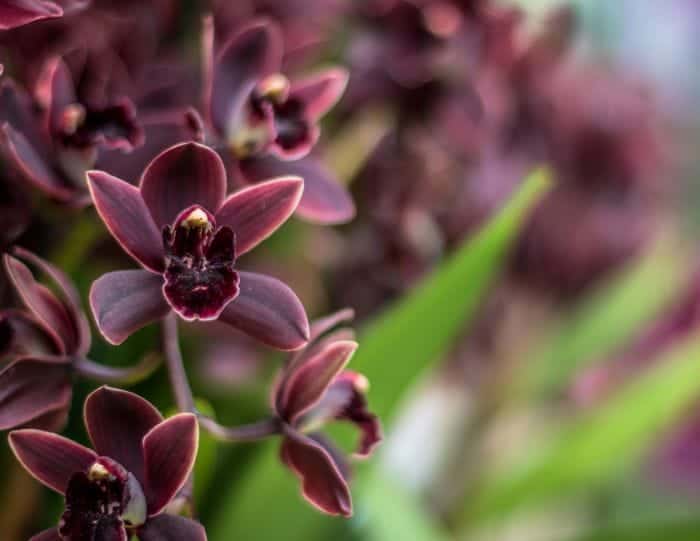
The Black Orchid, scientifically known as Coelogyne pandurata, is an exotic and highly sought-after flower with its unique appearance and alluring charm. Native to the Tropical Rainforests of Southeast Asia, particularly Borneo, this orchid species is renowned for its striking, almost black flowers that are unlike anything else in the orchid world.
What sets the Black Orchid apart is its large, showy flowers that can measure up to 8-10 cm in width. The blooms feature a distinctive, elongated lip that is a deep, velvety black color, often with subtle green veining. The petals and sepals are typically a lighter shade of green or yellow-green, providing a stunning contrast to the dark lip. The overall effect is a flower that appears almost entirely black, with a hint of green to add depth and dimension.
The Black Orchid is an epiphytic plant that grows on other plants or Trees in its natural habitat. It has long, slender stems that can reach up to 50 cm long, with lance-shaped leaves that are a deep green. The plant typically blooms in the spring or early summer, producing a cluster of 5-10 flowers on each stem.
Zone Information: As a tropical orchid species, the Black Orchid is best suited to USDA Hardiness Zones 11-12, which can be grown outdoors year-round. It is typically grown as an indoor or greenhouse plant in cooler climates, requiring warm temperatures, high humidity, and filtered light to thrive. The plant prefers a well-draining orchid mix and should be watered regularly, allowing the mix to dry out slightly between waterings.
Fun Facts:
- The Black Orchid is one of the few species producing a truly black flower. While many other orchids may have dark purple or maroon blooms, the Black Orchid’s flowers are a deep, velvety black unmatched in the orchid world.
- In its native habitat, the Black Orchid is pollinated by a specific species of bee attracted to the flower’s unusual color and shape. The bee enters the flower through the elongated lip, collecting nectar & pollen and pollinating the plant.
- The Black Orchid is considered an endangered species in the wild due to Habitat Loss and over-collection for the ornamental plant trade. Conservation efforts are underway to protect the species and ensure its survival for future generations.
- In addition to its ornamental value, the Black Orchid has been used in traditional medicine in some Southeast Asian cultures. The plant is believed to have anti-inflammatory and analgesic properties. It has been used to treat various ailments, including headaches, fever, and rheumatism.
Sources
- I. Astarini, V. Claudia, N. A. Adi, S. K. Sudirga and Ni Putu Adriani Astiti. “IN VITRO PROPAGATION AND ACCLIMATIZATION OF BLACK ORCHID (COELOGYNE PANDURATE LINDL.).” (2015): 155-158. https://doi.org/10.17660/ACTAHORTIC.2015.1078.21
11. Black Iris (Iris nigricans)
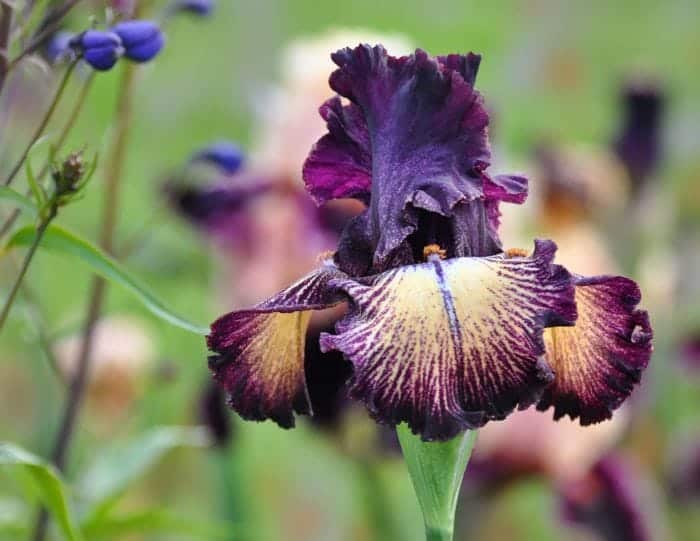
The Black Iris (Iris nigricans), also known as the Black Iris or the Oncocyclus Iris, is a stunning and unique flower native to the Middle East, particularly Jordan and Israel. This exotic bloom is renowned for its deep, rich color and velvety texture, which sets it apart from other iris species.
The Black Iris features large, dramatic flowers measuring up to 6 inches in diameter. The petals are a deep, dark purple-black color that appears almost black in certain lighting conditions. The falls (lower petals) are adorned with a striking black beard, adding to the flower’s dramatic appearance. The standards (upper petals) are slightly lighter in color, often with a purple or maroon tinge.
One of the most striking features of the Black Iris is its texture. The petals have a soft, velvety feel, which adds depth and dimension to the flower’s appearance. This texture is due to small, hair-like structures on the petals, which help absorb light and create a matte finish.
Zone Information: Black Irises are best suited to USDA Hardiness Zones 4-9, where they can be grown as perennials. They prefer well-draining soil and full sun to partial shade. These irises are relatively drought-tolerant once established but benefit from regular watering during their active growing season in the spring and summer. They are also relatively low-maintenance plants, requiring little fertilization or pruning.
Fun Facts:
- The Black Iris is Jordan’s national flower, known as “The Flower of Jordan” or “The Royal Iris. ” It is a symbol of strength, resilience, and beauty.
- In addition to its ornamental value, the Black Iris has been used in traditional medicine for centuries. The rhizomes of the plant contain compounds shown to have anti-inflammatory and analgesic properties.
- The dark color of the Black Iris is an adaptation that helps the flower to absorb more heat, which can be beneficial in the cool, rocky habitats where it grows naturally. This adaptation allows the flower to bloom earlier in the spring than other iris species.
Sources
- R. Shibli. “Cryopreservation of black iris (Iris nigricans) somatic embryos by encapsulation-dehydration..” Cryo letters, 21 1 (2000): 39-46
12. Black Hellebore (Helleborus niger)
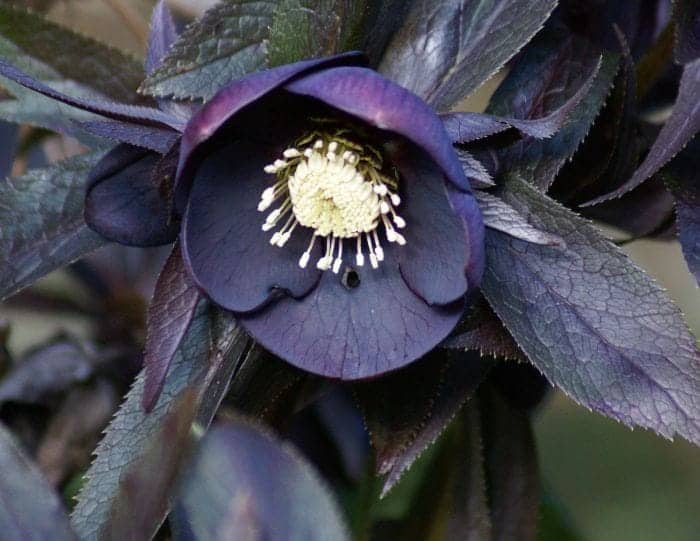
The Black Hellebore (Helleborus niger), also known as the Christmas Rose or the Lenten Rose, is a unique and stunning flower that blooms in the depths of winter. Despite its name, the Black Hellebore is not black but a deep, rich shade of purple or maroon that can appear almost black in certain lighting conditions.
One of the most striking features of the Black Hellebore is its large, cup-shaped flowers that can measure up to 3 inches in diameter. The petals are thick and waxy, with a glossy sheen that adds to their elegance and beauty. The center of the flower is adorned with a ring of bright yellow stamens, which provides a stunning contrast to the dark petals.
The foliage of the Black Hellebore is also noteworthy, with large, leathery leaves that are deeply lobed and serrated. The leaves are evergreen, providing interest in the garden even when the plant is not blooming. The leaves may have a purplish tinge or silver veining in some cultivars, adding to their overall appeal.
Zone Information: Black Hellebores are best suited to USDA Hardiness Zones 3-8, where they can be grown as perennials. They prefer partial to full shade and well-draining, humus-rich soil. These plants are relatively low-maintenance, requiring little fertilization or pruning. They are also deer-resistant and can tolerate a range of soil types, making them a versatile addition to any garden.
Fun Facts:
- The Black Hellebore has a long history of use in traditional medicine, dating back to ancient Greece. The plant treated various ailments, from paralysis and gout to insanity and melancholy. However, all parts of the plant are toxic if ingested, so it should never be used for medicinal purposes without the guidance of a qualified healthcare professional.
- Despite its common name of Christmas Rose, the Black Hellebore is not actually a member of the rose family (Rosaceae). Instead, it belongs to the Buttercup family (Ranunculaceae), which includes other notable plants such as anemones, Clematis, and Delphinium.
- The Black Hellebore has been associated with various superstitions and beliefs in folklore and mythology. In some cultures, it was believed to have the power to purify and protect against evil spirits. In contrast, it was associated with witchcraft and dark magic in others.
Sources
- Reference: Maria do Sameiro Barroso. “The Hellebore, the Plant beloved by the Greeks: the Reasons behind a Myth. .” Vesalius: acta internationales historiae medicinae, 21 2 (2015): 30-7
13. Black Barlow Columbine (Aquilegia vulgaris ‘Black Barlow’)
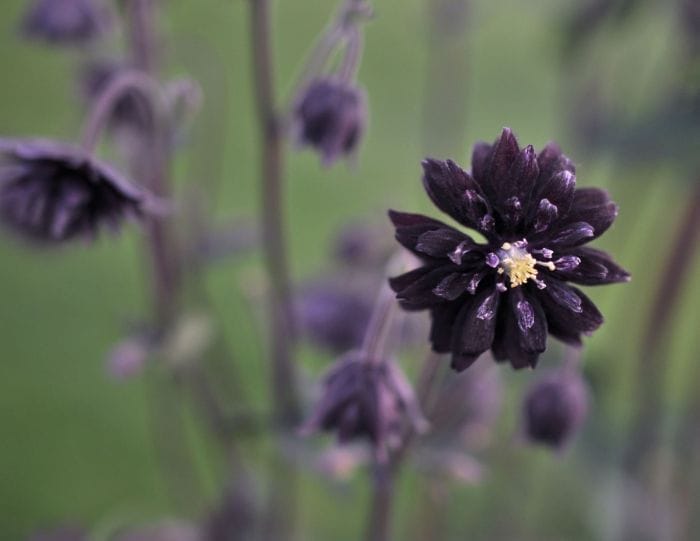
The Black Barlow Columbine (Aquilegia Vulgaris ‘Black Barlow’) is a mesmerizing and unique flower that adds a touch of gothic charm to any garden. This striking cultivar of the classic columbine features double flowers in a deep, rich purple-black hue, creating a dramatic and eye-catching display that will surely envy any garden enthusiast.
The flowers of the Black Barlow Columbine are truly spectacular, with layer upon layer of delicate, ruffled petals that give the blooms a full, lush appearance. The petals are a deep, velvety purple-black with a slightly glossy sheen that catches the light and adds depth and dimension to the color. The flowers are high above the foliage on slender, graceful stems, creating a stunning contrast against the plant’s delicate, fern-like leaves.
In addition to its stunning blooms, the Black Barlow Columbine is also prized for its compact, mounding growth habit. The plant typically reaches a height of 1-2 feet and has a spread of 1-1.5 feet, making it a perfect choice for the front of a border or as a container plant. The foliage is attractive in its own right, with delicate, lobed leaves that add texture and interest to the plant even when it is not in bloom.
Zone Information: The Black Barlow Columbine is best suited to USDA Hardiness Zones 3-8, which can be grown as a perennial. It prefers partial to full shade and well-draining soil rich in organic matter. Columbines are known for their self-seeding ability, so they may spread and naturalize over time if the conditions are right.
Fun Facts:
- The Black Barlow Columbine is a relatively new cultivar introduced in the early 2000s. It was bred specifically for its unique, double-flowered form and dark, rich color, which set it apart from other columbine varieties.
- Columbines have a long history of symbolism and mythology, with various cultures associating them with different meanings and attributes. Columbines were often associated with foolishness and frivolity in medieval Europe due to their resemblance to a court jester’s cap. In Native American traditions, columbines were seen as a symbol of strength and endurance due to their ability to thrive in harsh, rocky environments.
- In addition to their ornamental value, columbines have been used in traditional medicine for centuries. The roots and seeds of the plant have been used to treat various ailments, from headaches and fever to heart problems and epilepsy. However, it should be noted that columbines can be toxic if ingested in large quantities, so they should never be used for medicinal purposes without the guidance of a qualified healthcare professional.
14. Black Knight Scabiosa (Scabiosa atropurpurea ‘Black Knight’)
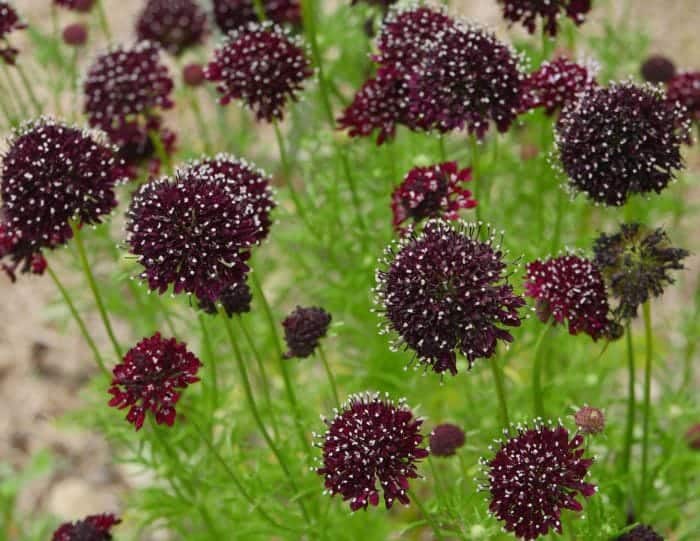
The Black Knight Scabiosa (Scabiosa atropurpurea ‘Black Knight’) is a striking and sophisticated flower that adds a touch of drama to any garden or floral arrangement. This unique cultivar of the classic Pincushion Flower features rich, deep purple-black blooms that captivate and enchant all who behold them.
The flowers of the Black Knight Scabiosa are truly a sight to behold, with a distinctive, domed shape that resembles a pincushion. The outer petals are a deep, velvety purple-black, while the center of the flower is made up of a cluster of tiny, dark florets that give the bloom a textured, almost fuzzy appearance. The flowers are borne on tall, sturdy stems that rise above the foliage, making them perfect for cutting and arranging in bouquets or vases.
In addition to its stunning blooms, the Black Knight Scabiosa is also prized for its attractive, mounded foliage. The leaves are a deep, rich green with a slightly lobed shape that adds texture and interest to the plant even when it is not blooming. The plant has a compact, bushy growth habit, typically reaching a height of 2-3 feet and a spread of 1-2 feet, making it a perfect choice for the middle or back of a border.
Zone Information: The Black Knight Scabiosa best suits USDA Hardiness Zones 3-7, which can be grown as a hardy annual or a short-lived perennial. It prefers full sun and well-draining soil that is moderately fertile. Scabiosas are relatively low-maintenance plants, requiring only occasional deadheading to encourage continuous blooming throughout the summer and fall.
Fun Facts:
- The Black Knight Scabiosa is a favorite among pollinators, particularly Bees and butterflies. The dark, rich color of the blooms is especially attractive to these beneficial insects, making it a great choice for a pollinator garden.
- Scabiosas has a long history of use in traditional medicine, with various parts of the plant used to treat various ailments. The plant’s roots, leaves, and flowers have been used to treat skin conditions, respiratory issues, and digestive problems, among other things. However, more research is needed to confirm the safety and efficacy of these traditional uses.
- The name “scabiosa” comes from the Latin word for “scaly, ” which refers to the rough, scaly texture of the plant’s stem. Scabiosas are often associated with love, purity, and mourning in the language of flowers, making them a popular choice for Victorian-era bouquets and floral arrangements.
Sources
- D. Pinto, Naima Rahmouni, N. Beghidja and Artur M. S. Silva. “Scabiosa Genus: A Rich Source of Bioactive Metabolites.” Medicines, 5 (2018). https://doi.org/10.3390/medicines5040110
15. Black Prince Snapdragon (Antirrhinum majus ‘Black Prince’)
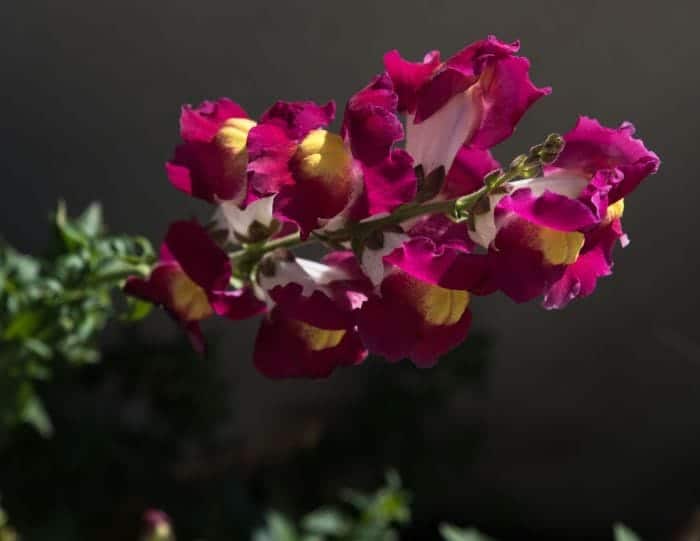
The Black Prince Snapdragon (Antirrhinum Majus ‘Black Prince’) is a captivating and dramatic flower that adds a touch of dark elegance to any garden or floral arrangement. This unique cultivar of the classic snapdragon features deep, rich purple-black blooms that will turn heads and capture the imagination.
The flowers of the Black Prince Snapdragon are truly stunning, with a distinctive trumpet-like shape reminiscent of a dragon’s mouth. The petals are a deep, velvety purple-black with a slightly glossy sheen that catches the light and adds depth and dimension to the color. The blooms are densely packed along tall, sturdy stems that can reach heights up to 3 feet, creating a striking vertical accent in the garden.
In addition to its gorgeous flowers, the Black Prince Snapdragon is also prized for its attractive, lush foliage. The leaves are a deep, rich green with a slightly glossy texture that complements the dark blooms beautifully. The plant has a compact, upright growth habit, typically reaching a height of 2-3 feet and a spread of 1-1.5 feet, making it a perfect choice for the middle or back of a border.
Zone Information: The Black Prince Snapdragon is best suited to USDA Hardiness Zones 7-10, which can be grown as a hardy annual or a short-lived perennial. It prefers full sun to partial shade and well-draining, moderately fertile soil. Snapdragons are relatively low-maintenance plants, requiring only occasional deadheading to encourage continuous blooming throughout the summer and fall.
Fun Facts:
- The Black Prince Snapdragon is a favorite among pollinators, particularly bees and Hummingbirds. The deep, rich color of the blooms is especially attractive to these beneficial creatures, making it a great choice for a pollinator garden.
- Snapdragons have a long history of use in traditional medicine, with various parts of the plant being used to treat a range of ailments. The leaves and flowers of the plant have been used to treat skin conditions, respiratory issues, and digestive problems, among other things. However, more research is needed to confirm the safety and efficacy of these traditional uses.
- The name “snapdragon” comes from the unique shape of the flower, which resembles a dragon’s mouth that snaps shut when squeezed. In the language of flowers, snapdragons are often associated with deception, presumption, and graciousness, depending on the color of the bloom. The dark, rich color of the Black Prince Snapdragon is often associated with mystery, elegance, and sophistication.
16. Black Gamecock Iris (Iris louisiana ‘Black Gamecock’)
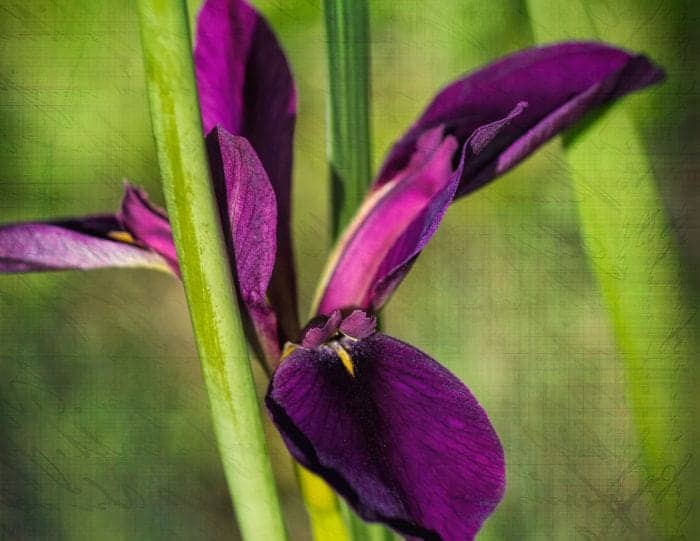
The Black Gamecock Iris (Iris louisiana ‘Black Gamecock’) is a stunning and exotic flower that adds a touch of drama and intrigue to any garden or landscape. This unique cultivar of the Louisiana iris features deep, rich purple-black blooms that will captivate and enchant all who behold them.
The flowers of the Black Gamecock Iris are truly a sight to behold, with large, flaring petals that can span up to 6 inches across. The petals are a deep, velvety purple-black, with a slightly ruffled edge that adds to their exotic appearance. The center of the flower features a bright yellow signal patch, which provides a striking contrast to the dark petals and adds to the overall visual impact of the bloom. The flowers are on tall, sturdy stems that can reach heights of up to 4 feet, making them a commanding presence in the garden.
In addition to its magnificent blooms, the Black Gamecock Iris is also prized for its attractive, sword-like foliage. The leaves are a deep, rich green with a slightly glossy texture that complements the dark flowers beautifully. The plant has a clumping growth habit, typically reaching a height of 2-3 feet and a spread of 1-2 feet, making it a perfect choice for the middle or back of a border or as a focal point in a water garden.
Zone Information: The Black Gamecock Iris is best suited to USDA Hardiness Zones 6-9, where it can be grown as a perennial. It prefers full sun to partial shade and moist, well-draining soil rich in organic matter. Louisiana irises are known for their love of water, often used in bog gardens, water gardens, or near ponds and streams.
Fun Facts:
- The Black Gamecock Iris is a relatively new cultivar, introduced in the 1980s by the renowned iris breeder Frank Chowning. It has become a favorite among iris enthusiasts for its unique color and striking appearance.
- Louisiana irises are native to the swamps and wetlands of the southeastern United States, where they have adapted to thrive in moist, boggy conditions. They are named for Louisiana, where they are abundant and designated as the official state wildflower.
- In addition to their ornamental value, Louisiana irises have also been used in traditional medicine by Native American tribes. The rhizomes of the plant were used to treat a variety of ailments, including skin conditions, digestive issues, and fever. However, more research is needed to confirm the safety and efficacy of these traditional uses.
17. Dark Red Trillium (Trillium erectum)
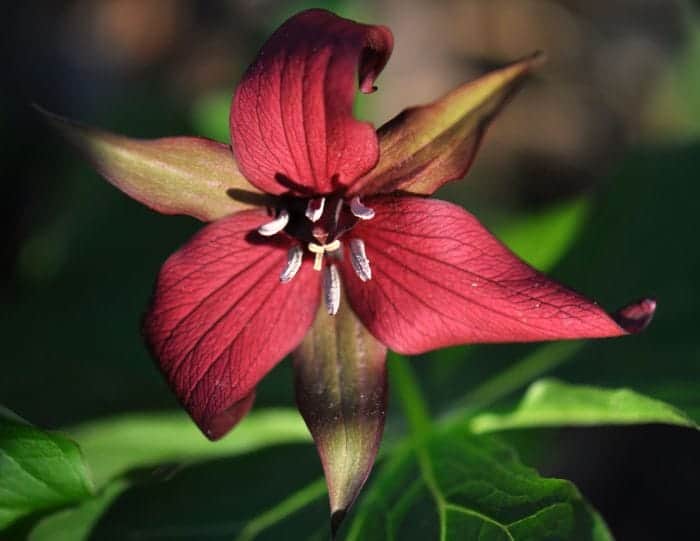
The Dark Red Trillium (Trillium erectum) is a captivating and mysterious wildflower that adds a touch of gothic beauty to any woodland garden or natural landscape. This unique trillium species features deep, rich, maroon-red blooms that will enchant and intrigue all who encounter them.
The flowers of the Dark Red Trillium are truly a sight to behold, with three large, triangular petals that can span up to 4 inches across. The petals are deep, velvety maroon-red, with a slightly wavy edge that adds to their exotic appearance. The center of the flower features a cluster of six stamens, which are typically a bright yellow or green color that provides a striking contrast to the dark petals. The flowers are borne on a single, sturdy stem that rises above a whorl of three large, oval-shaped leaves.
In addition to its stunning blooms, the Dark Red Trillium is also prized for its unique foliage. The leaves are a deep, rich green, with prominent veins and a slightly waxy texture that adds to their visual interest. The plant has a low-growing, clumping habit, typically reaching a height of 12-18 inches and a spread of 6-12 inches, making it a perfect choice for a woodland understory or a shaded border.
Zone Information: The Dark Red Trillium best suits USDA Hardiness Zones 4-7, which can be grown as a perennial. It prefers partial to full shade and moist, well-draining soil rich in organic matter. Trilliums are known for their love of cool, shaded conditions, so they are often found growing in woodlands, forests, and along streams and rivers.
Fun Facts:
- The Dark Red Trillium has a long history of use in traditional medicine. Various Native American tribes used the plant to treat a variety of ailments, including menstrual cramps, labor pains, and digestive issues. However, it should be noted that trilliums contain toxic compounds and should never be ingested without the guidance of a qualified healthcare professional.
- Trilliums are known for their slow growth and long lifespan. It can take up to seven years for a trillium plant to mature and produce its first flower, and individual plants can live for up to 25 years or more.
- The presence of Dark Red Trillium in a woodland area often indicates a healthy, undisturbed ecosystem. Trilliums are sensitive to disturbance and are often among the first species to disappear when a forest is logged or developed. As such, they are sometimes used as indicator species to assess the ecological health of a given area.
Sources
- H. Chauhan, A. Bisht, I. Bhatt, A. Bhatt and D. Gallacher. “Trillium – toward Sustainable Utilization of a Biologically Distinct Genus Valued for Traditional Medicine.” The Botanical Review (2019): 1-21. https://doi.org/10.1007/s12229-019-09211-0
18. Black Cosmos (Cosmos atrosanguineus)
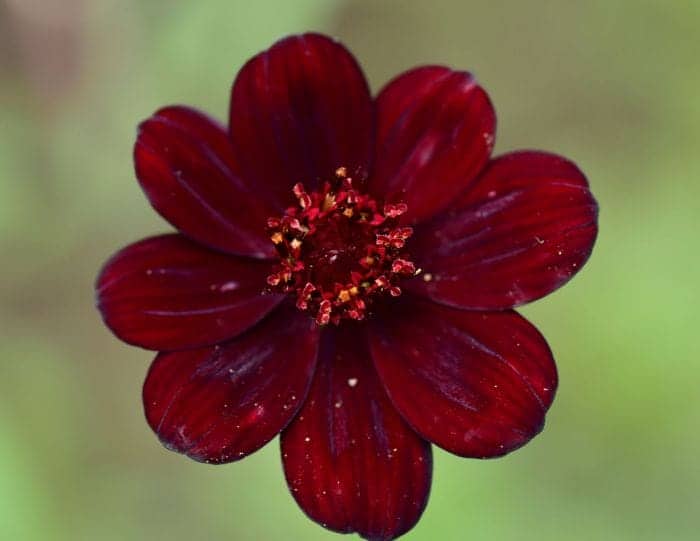
The Black Cosmos (Cosmos atrosanguineus), also known as the Chocolate Cosmos, is a rare and exotic flower that adds a touch of dark mystery to any garden or landscape. This unique cosmos species features deep, rich maroon-brown blooms that will captivate and intrigue all who encounter them.
The flowers of the Black Cosmos are truly a sight to behold, with a distinctive, cup-shaped form that resembles a single dahlia bloom. The petals are a deep, velvety maroon-brown with a slightly iridescent sheen that catches the light and adds depth and dimension to the color. The center of the flower is made up of a cluster of dark, chocolate-colored stamens that give the bloom its common name and add to its rich, sultry appearance. The flowers are on tall, slender stems that can reach heights of up to 3 feet, making them a perfect choice for cut flower arrangements or as a dramatic accent in the garden.
In addition to its stunning blooms, the Black Cosmos is also prized for its delightful fragrance, described as a mix of vanilla and chocolate. The scent is most pronounced in the evening and early morning, making it a perfect choice for a moon garden or a romantic outdoor seating area.
Zone Information: The Black Cosmos is best suited to USDA Hardiness Zones 7-10, where it can be grown as a tender perennial. In cooler zones, it is typically grown annually and is best planted in the spring after all danger of frost has passed. The plant prefers full sun to partial shade and well-draining soil rich in organic matter.
Fun Facts:
- The Black Cosmos is a relatively rare flower, with only a few cultivars available. The most well-known cultivar is ‘Chocamocha’, introduced in the early 2000s. It has since become a favorite among gardeners and floral designers.
- Despite its exotic appearance, the Black Cosmos is relatively easy to grow from seed. It is a great choice for novice gardeners or those looking to add a unique touch to their landscape. The seeds should be started indoors about 6-8 weeks before the last frost date and transplanted outdoors once the weather has warmed up.
- In addition to its ornamental value, the Black Cosmos has been used in traditional medicine in some South American countries. The leaves and flowers of the plant have been used to treat a variety of ailments, including skin conditions, digestive issues, and menstrual cramps. However, more research is needed to confirm the safety and efficacy of these traditional uses.
Sources
- Emmanouil Kanellos and S. Pearson. “Environmental regulation of flowering and growth of Cosmos atrosanguineus (Hook.) Voss..” Scientia Horticulturae, 83 (2000): 265-274. https://doi.org/10.1016/S0304-4238(99)00081-3
19. Black Bat Flower (Tacca chantrieri)
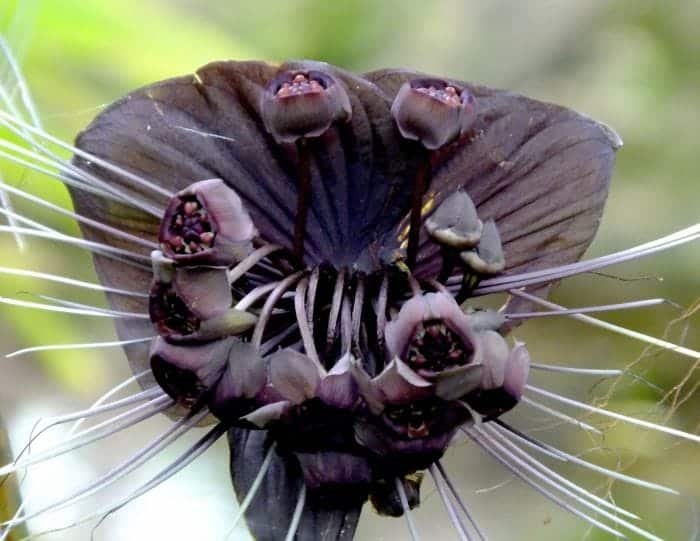
The Black Bat Flower (Tacca chantrieri), the Devil Flower or Cat’s Whiskers, is an exotic and otherworldly plant that will make a statement in any garden or indoor space. This unusual species features large, distinctive flowers that resemble the face of a bat or a demon, complete with long, trailing whiskers that can reach up to 28 inches in length.
The Black Bat Plant’s flowers are unique, with a large, triangular bract that can span up to 12 inches across. The bract is a deep, dark purple-black color. It is covered in a network of distinctive veins that add to its unusual appearance. From the center of the bract emerges a cluster of long, thin whiskers that can be black, dark purple, or even white, depending on the cultivar. These whiskers can grow up to 28 inches long and trail gracefully from the flower, adding to its dramatic and otherworldly appearance.
In addition to its stunning flowers, the Black Bat Plant is also prized for its large, glossy leaves that span up to 2 feet. The leaves are a deep, rich green with a slightly waxy texture that adds to their visual interest. The plant has a clumping growth habit and can reach heights of up to 3 feet, making it a perfect choice for a large container or a statement plant in the garden.
Zone Information: The Black Bat Plant is best suited to USDA Hardiness Zones 10-11, which can be grown as a tender perennial. It is typically grown as a houseplant or a summer annual in cooler zones. It is best planted in a container that can be moved indoors during winter. The plant prefers partial to full shade and well-draining soil rich in organic matter. It also requires high humidity and consistent moisture to thrive, making it a great choice for a terrarium or a bathroom with a window.
Fun Facts:
- The Black Bat Plant is native to the tropical rainforests of Southeast Asia, where it grows as an understory plant in the dappled shade of the forest canopy. It is pollinated by flies and insects attracted to its unusual appearance and putrid scent.
- Despite its exotic appearance, the Black Bat Plant is relatively easy to grow from seed, making it a great choice for adventurous gardeners or those looking to add a unique touch to their indoor jungle. The seeds should be started in a warm, humid environment and can take several months to germinate.
- In some Southeast Asian cultures, the Black Bat Plant is believed to have spiritual or medicinal properties. The leaves and flowers of the plant have been used in traditional medicine to treat a variety of ailments, including fever, digestive issues, and skin conditions. However, more research is needed to confirm the safety and efficacy of these traditional uses.
Sources
- Krisantini, N. Wiendi and E. R. Palupi. “Evaluation of horticultural traits and seed germination of Tacca chantrieri’ André.” Agriculture and Natural Resources, 51 (2017): 169-172. https://doi.org/10.1016/J.ANRES.2016.12.006
20. Black Cranesbill (Geranium phaeum ‘Samobor’)
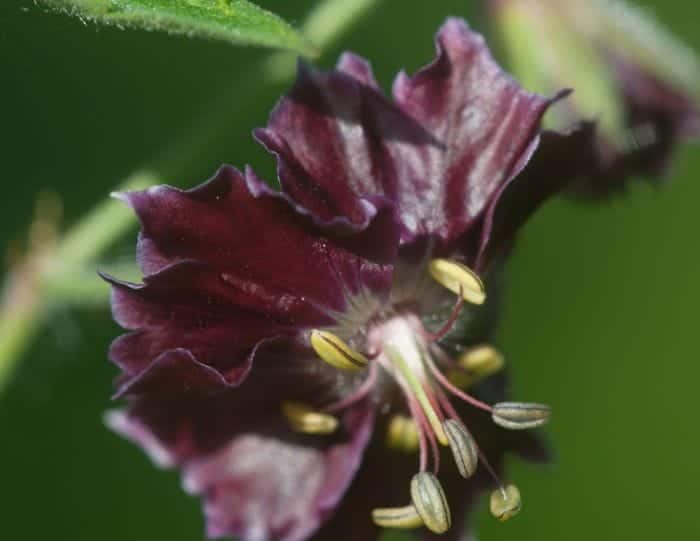
The Black Cranesbill (Geranium phaeum ‘Samobor’) is a striking and elegant plant that adds a touch of dark sophistication to any garden or landscape. This distinctive cultivar of the classic Cranesbill Geranium features deep, rich purple-black foliage and delicate, nodding flowers that will surely capture the attention of all who see them.
The leaves of the Black Cranesbill are truly a work of art, with a deeply lobed and dissected shape that resembles a bird’s foot or a crane’s bill, hence the plant’s common name. The foliage is a rich, dark purple-black, often mottled or marbled with shades of green or silver, adding to its visual interest and depth. The leaves are also slightly reflexed, meaning they curve downward at the edges, giving the plant a graceful and flowing appearance.
In late spring to early summer, the Black Cranesbill produces a profusion of small, nodding flowers that emerge from the center of the plant on slender, arching stems. The flowers are a deep, dark purple-black and have a delicate, papery texture that catches the light and adds to their ethereal beauty. Each flower comprises 5 slightly reflexed petals, revealing a cluster of dark stamens at the center.
Zone Information: The Black Cranesbill best suits USDA Hardiness Zones 4-8, which can be grown as a hardy perennial. It prefers partial to full shade and well-draining soil rich in organic matter. The plant is relatively low-maintenance and can tolerate a range of soil types and moisture levels, making it a great choice for various garden settings.
Fun Facts:
- The Black Cranesbill is native to Europe and Asia, where it grows in woodlands, meadows, and along streams and rivers. It has been cultivated in gardens for centuries. It has a long history of use in traditional medicine, with the roots and leaves of the plant being used to treat a variety of ailments, including digestive issues, skin conditions, and menstrual cramps.
- In the language of flowers, geraniums are often associated with gentility, determination, and friendship. The dark, sultry color of the Black Cranesbill adds an air of mystery and sophistication to these traditional meanings, making it a popular choice for gothic or romantic-themed gardens.
- Despite its delicate appearance, the Black Cranesbill is a relatively tough and resilient plant that can tolerate various growing conditions. It is also deer-resistant and can help deter other garden pests, making it a great choice for a low-maintenance or naturalistic garden setting.
21. Black Poppy (Papaver somniferum ‘Black Peony’)
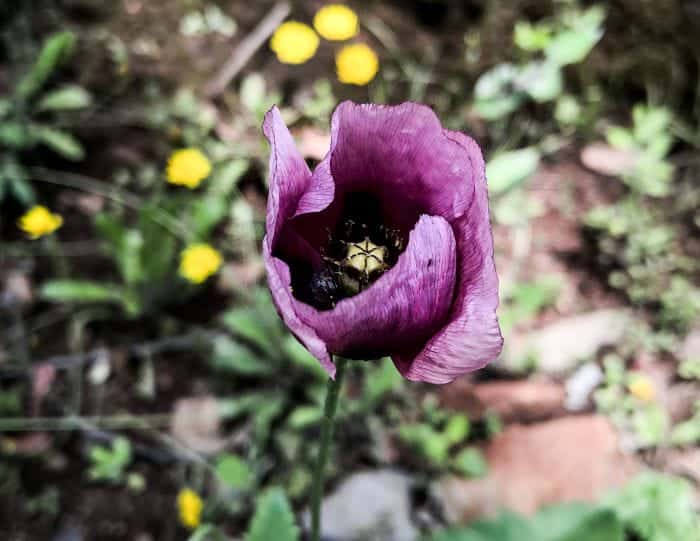
The Black Poppy (Papaver Somniferum ‘Black Peony‘) is a striking and unusual flower that adds a touch of dark beauty to any garden or landscape. This unique cultivar of the opium poppy features large, double blooms in a deep, rich shade of purple-black that will turn heads and capture the imagination.
The flowers of the Black Poppy are truly spectacular, with densely layered petals that give the blooms a full, peony-like appearance. Each flower can span up to 5 inches in diameter and comprises dozens of delicate, crinkled petals with a slightly glossy sheen. The color of the petals is a deep, dark purple-black that appears almost iridescent in the sunlight, with subtle undertones of red and maroon that add depth and complexity to the hue.
In addition to its stunning flowers, the Black Poppy is also prized for its distinctive foliage and seed pods. The leaves are a soft, grayish-green color and have a slightly fleshy texture, with deeply lobed edges that give them a lacy, almost feathery appearance. After the flowers fade, the plant produces large, rounded seed pods that are a deep, dark purple-black color with a slightly papery texture. These pods are often used in dried flower arrangements or as a decorative element in the garden.
Zone Information: The Black Poppy is best suited to USDA Hardiness Zones 3-9, which can be grown as a hardy annual. It prefers full sun to partial shade and well-draining, moderately fertile soil. The plant is relatively low-maintenance and can tolerate a range of soil types and moisture levels. Still, it may require staking or support to keep its tall stems upright in windy or exposed locations.
Fun Facts:
- The Black Poppy is a member of the Papaveraceae family, which includes many other popular garden plants like California poppies, Icelandic poppies, and oriental poppies. However, the Black Poppy is unique among its relatives for its dark, peony-like blooms and its mystery and unknown associations.
- Despite its beauty, the Black Poppy is a controversial plant due to its association with the opium trade. The seeds of the plant contain small amounts of opium alkaloids, which have been used for medicinal and recreational purposes for thousands of years. However, the cultivation and use of opium poppies are strictly regulated in most countries, and the Black Poppy is grown primarily for ornamental purposes.
- In the language of flowers, poppies are often associated with sleep, oblivion, and the afterlife. The dark, mysterious color of the Black Poppy adds an additional layer of symbolism to these traditional meanings, making it a popular choice for gothic or romantic-themed gardens and floral arrangements.
Sources
- N. Sharghi and I. Lalezari. “Papaver bracteatum Lindl., a Highly Rich Source of Thebaine.” Nature, 213 (1967): 1244-1244. https://doi.org/10.1038/2131244A0
- L. Ziska, Sini X. Panicker and Heidi L. Wojno. “Recent and projected increases in atmospheric carbon dioxide and the potential impacts on growth and alkaloid production in wild poppy (Papaver setigerum DC.).” Climatic Change, 91 (2008): 395-403. https://doi.org/10.1007/S10584-008-9418-9
More Black Blooms
Black-eyed Susan
Honeyflower
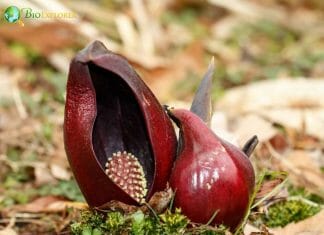
Skunk Cabbage
Conclusion
From the velvety darkness of the Black Velvet Petunia to the haunting allure of the Black Bat Flower, the world of black flowers is captivating and mysterious. These unique blooms offer a stunning addition to any garden or floral arrangement with their deep, rich hues and intriguing histories.
Throughout this article, we have explored 21 of the most beautiful and unusual black flowers, delving into their distinctive features, growing requirements, and cultural significance. We have discovered the science behind their mesmerizing coloration and how they have captured people’s imaginations across time and cultures.
Whether you are drawn to the Black Dahlia’s gothic elegance or the Black Orchid’s exotic charm, these dark and enigmatic blooms are sure to add a touch of drama and sophistication to any setting. So why not embrace the beauty of the dark side and explore the alluring world of black flowers yourself?
What’s your favorite black flower in this list?
Cite this page
BioExplorer. (2026, August 26). The Allure of Black Flowers: Unveiling the Top 21 Darkest Blooms. https://www.bioexplorer.net/black-flowers.html/