Search Results for: insect

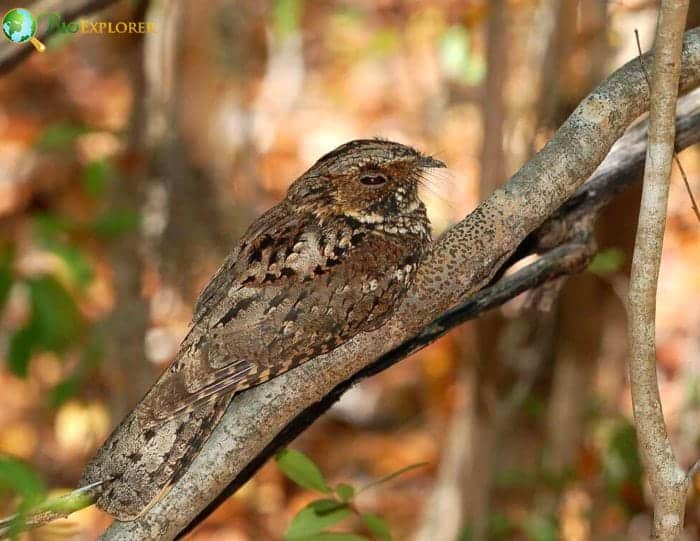
  • Puerto Rican Nightjar

    Rediscover a ghostly lost species – the Puerto Rican Nightjar – emerging phantom-like from rapidly vanishing subtropical dry forests still echoed by its mysterious calls. Learn about the nocturnal insectivore’s distinctions, specialized habitat needs, threats from encroaching human activity, and why protecting this specialized niche remains essential to ensure the shy bird’s continued existence.
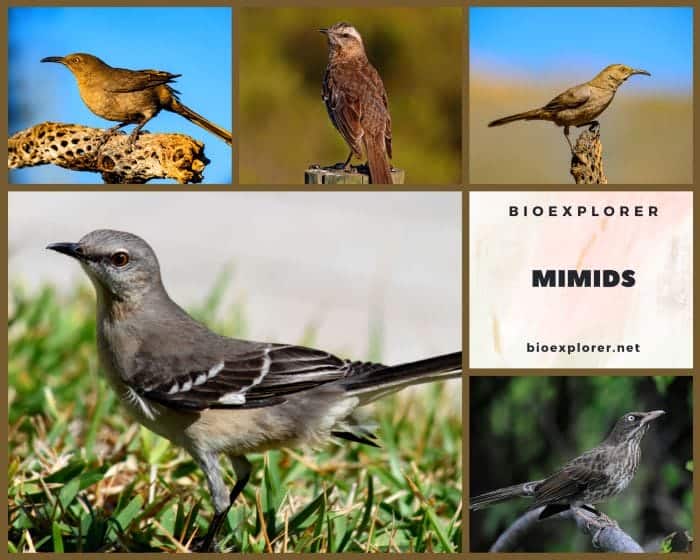

  • Mimids

    The fabulously playful Mimidae family of Mimids – the mockingbirds, catbirds, thrashers & tremblers of the Americas – is overviewed with facts on evolution, vocal mimicry abilities, behavior, life histories and cultural symbolism of these often supremely talented songsters.

  • Gibraltar Monkeys

    Gibraltar’s iconic Barbary macaques have roamed here 300+ years now, delighting visitors. Explore the history of Gibraltar monkeys on the Rock, their social behavior, role as a conservation priority species with ties to Britain’s fate.

  • Crowned Lemur

    Learn about the endangered crowned lemur (Eulemur coronatus) – this medium-sized rainforest-dwelling primate from N. Madagascar has dense black & white fur and a distinctive orange arrowhead crown marking on its forehead.

  • Mongoose Lemur

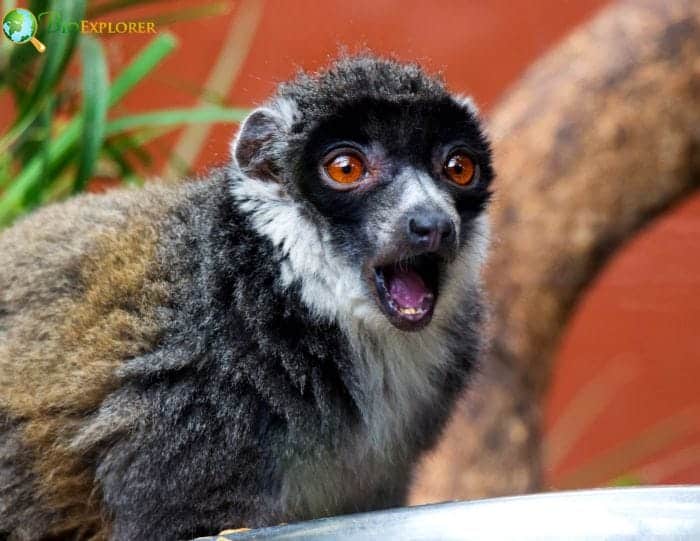
    Learn about the endangered mongoose lemur (Eulemur mongoz), a small Madagascar primate with red beards and bushy tails. Get fascinating facts on their rainforest habits, unique behaviors, seed dispersal ecology, and major threats driving their worrying decline.

  • Blue-Eyed Black Lemur

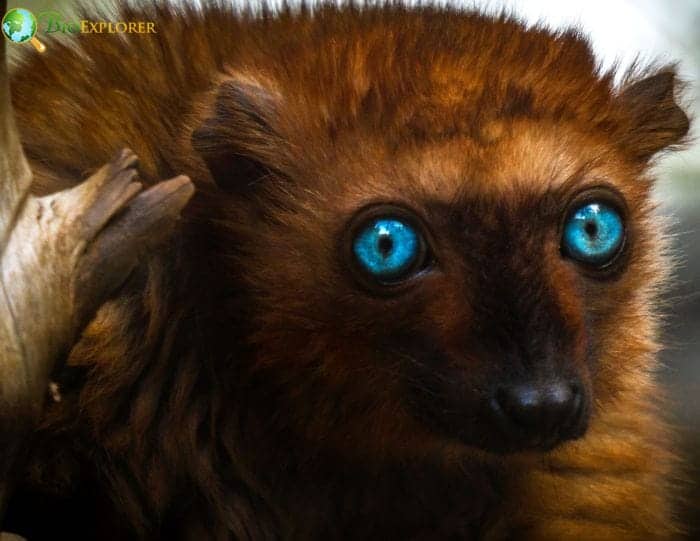
    Discover the mysterious blue-eyed black lemur, a rare primate found only in the tropical forests of northwestern Madagascar. With striking blue eyes and mostly black fur, they are agile tree-dwellers feeding on fruits, leaves, and insects. Read about their lifestyle, endangered status, and the threats they face.

  • Marmoset Monkeys

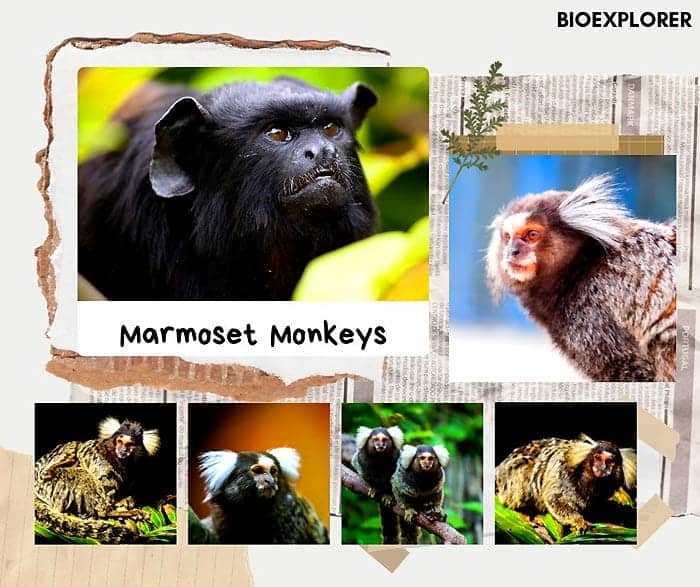
    From the lush Amazon rainforests to the arid caatinga scrubs of northeastern Brazil, miniature marmoset monkeys swing through diverse New World landscapes. Explore all 24 species of marmoset monkeys here.

  • Yellow Monkeys

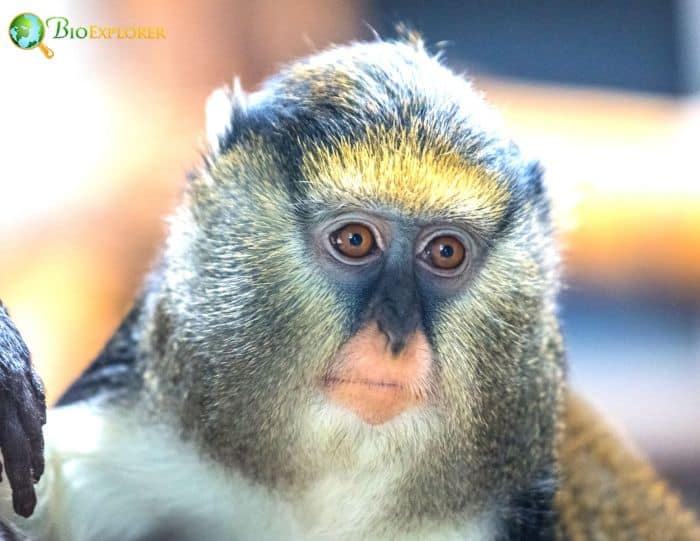
    Yellow Monkeys: Monkeys exhibit a dazzling array of fur colors and patterns, but a select group stands out for their unique yellowish hues blending into tropical forest backdrops. Yellow monkeys include both New World primates like spider monkeys and capuchins and Old World species such as macaques, langurs and gibbons.

  • Goodman’s Mouse Lemur

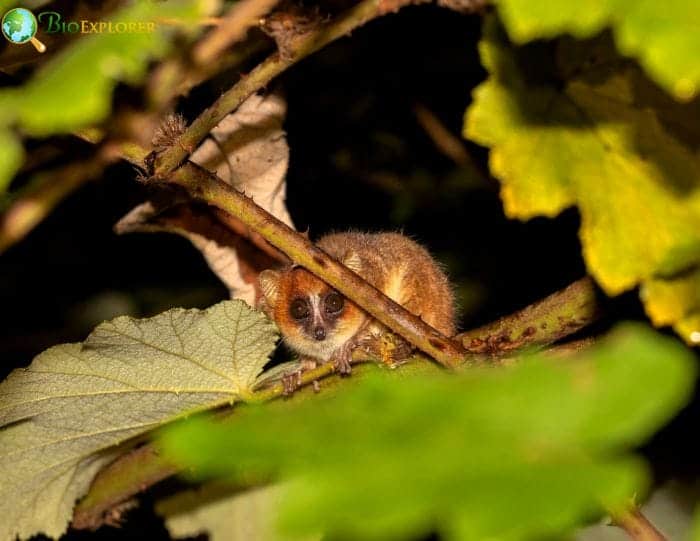
    Explore the world of Goodman’s Mouse Lemur (Microcebus lehilahytsara), a unique Madagascar primate, revealing its survival strategies, social behaviors, and conservation needs.

  • Types of Crows

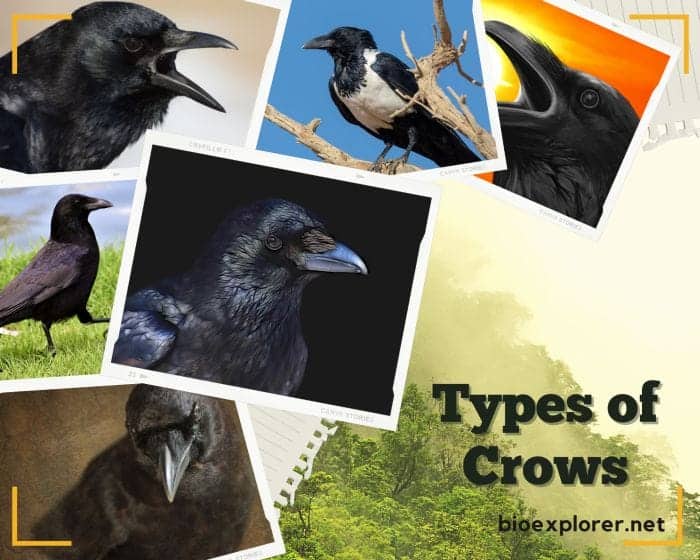
    The Corvidae family, renowned for its intelligence and adaptability, includes crows, ravens, rooks, jackdaws, magpies, and jays. Within this family, the genus Corvus encompasses the “true crows” – a group of 43 recognized crow species found on every continent except South America and Antarctica. These birds are characterized by their robust build, all-black or mostly black plumage, strong bills, and remarkable problem-solving abilities. Crows occupy diverse habitats, from forests and grasslands to cities and islands. Many species are highly social, form complex social structures, and display advanced tool use and vocal mimicry. Their ecological roles range from scavengers to seed dispersers, making them vital to many ecosystems.

  • Cassin’s Finch

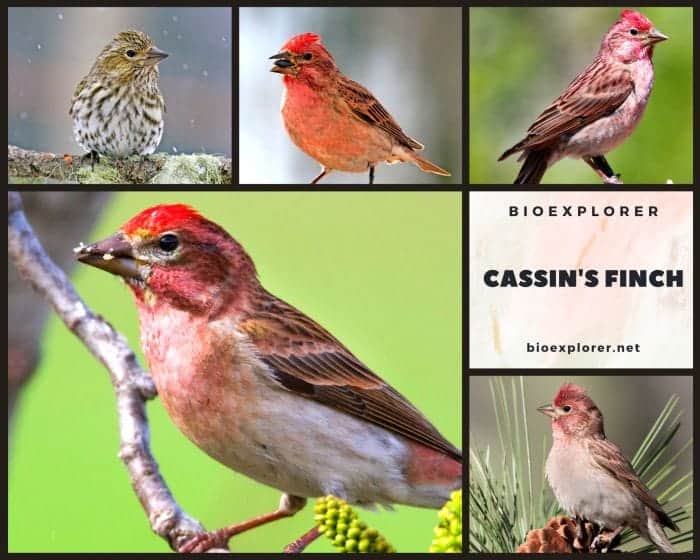
    Learn about the Cassin’s Finch, a unique songbird of western North American mountain forests. This adaptable finch has complex songs, nomadic habits, and thrives across diverse coniferous habitats. Gain insights into this little-known species’ ecology and importance.
  • Yellow-winged Blackbird

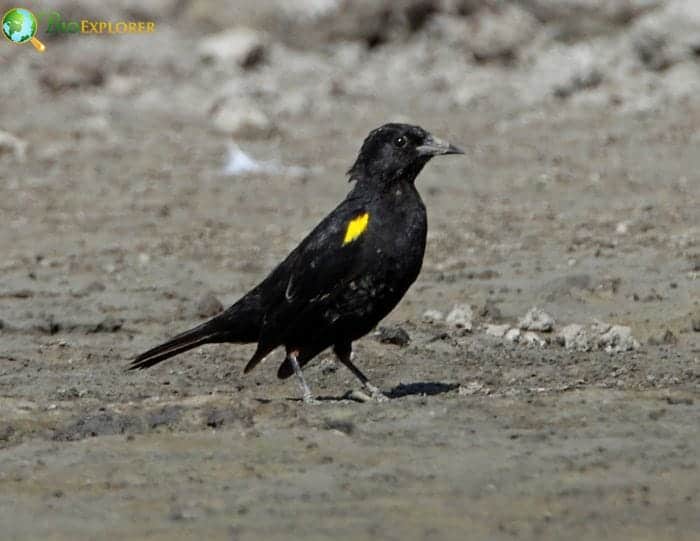
    The Yellow-winged Blackbird is a striking, stocky bird found in wetlands and reed beds across South America. Males are glossy black with bold yellow shoulder patches that are most visible in flight, while females are brown and streaked with a pale eyebrow. These blackbirds are rarely far from water, often forming small flocks and breeding colonially in reeds. They forage mainly on the ground for seeds, fruits, and insects, sometimes following livestock or farm machinery to catch disturbed prey. Fun fact: males perform acrobatic display flights and flocks will mob predators to drive them away.

  • Order Myrtales / Myrtle Flowers

    Myrtales, the myrtle order, are trees, shrubs, herbs, and lianas primarily distributed in the tropics and warmer regions worldwide. Myrtales members have phloem tissue on each xylem side, 4 or 5 sepals, 4 or 5 petals, mostly bisexual flowers, and often non-endospermic seeds. Known species of Myrtales are myrtles, evening primroses, Fuschia, and Eucalyptus.

  • Order Ericales / Heathers and Primrose Flowers

    Ericales is comprised many economically important flowering plants like Brazil nuts, kiwifruit, and primrose. Ericales is very diverse, involving chiefly trees and terrestrial shrubs that are cosmopolitan in distribution. Some families of Ericales possess the ability for aluminum accumulation. Hardy kiwi, Orange jewelweed, wand plant, lama tree, and Octotillo flowers are some examples of Ericales.

  • Order Rosales / Garden Roses, Apples, Strawberries

    Rosales is commonly called the rose order that contains dicotyledonous flowering plants. Explore their characteristics, families, distribution, and example species. Apart from a wide variety of roses, other products of Rosales include apples, cherries, peaches, plums, pears, raspberries, strawberries, and figs.

  • Beach Rose

    The beach rose is a deciduous Japanese shrub with a multi-stem. It is native to Japan and is widely used as an ornamental plant. The beautiful beach rose is pollinated by insects and birds. Rosa rugosa is a strong symbol of Love and adoration.

  • Order Nymphaeales / Water Lilies

    Order Nymphaeales is composed of water lily flowers. It contains 3 families (Hydatellaceae, Cabombaceae, and Nymphaceae). The example flower species include Europian white water lily, Dotleaf water lily, Blue lotus, Amazon water lily, Fanwort, Green Cobomba, and more.

  • Order Garryales / Silk Tassels Flowers

    The Silk tassel order, Garryales are trees or shrubs distributed in North America and Asia. The members of the Garryales have opposite and exstipulate leaves, distinct male and female plants aggregated in catkins, usually sepaline perianth, and endospermic seeds. The larkspur, Japanese laurel, and silk tassels are the example species of the Garryales order.

  • Miniature Gladiolus

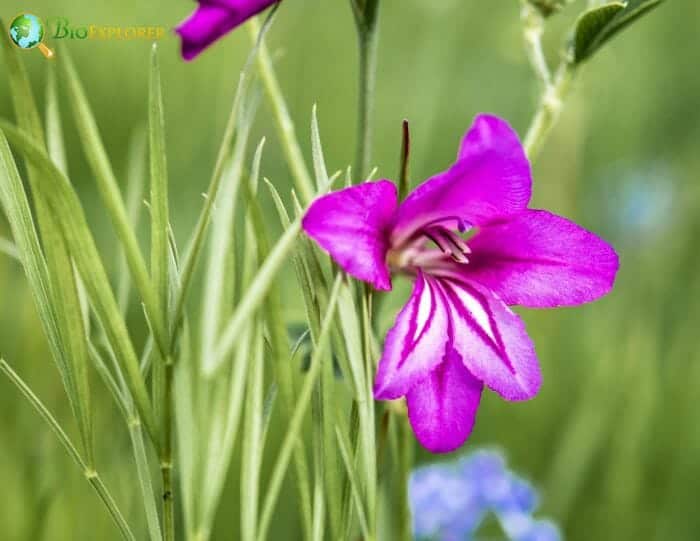
    Miniature Gladiolus (Gladiolus nanus) is sometimes referred to as dwarf Gladiolus. It is actually a smaller growing variety than the more popular varieties. Miniature Gladiolus produces fantastic two-tone spikes of pink flowers with a hint of white on its throat.

  • Order Solanales / Potatoes & Nightshade Flowers

    Solanales or the potato/nightshade order of the flowers belong to the core asterid clade, manifesting a global distribution. The plants of Solanales possess root stalks or tubers, simple, alternate, and exstipulate leaves, showy flowers, and typically 5-merous floral parts. The Solanales plants are monoecious, andromonoecious, or dioecious. Example species under Solanales order involve the highly cultivated flora of morning glory, potato, eggplant, and tomato.

  • Marigold

    Marigold (Tagetes erecta), known in Mexico as Cempasúchil, holds immense cultural significance. Its vibrant orange and yellow blooms are central to Día de los Muertos (Day of the Dead) celebrations, where the flowers are used to decorate altars and graves.
  • February Birth Flowers

    Discover the beauty and symbolism of February’s birth flowers: violets and primroses. Dive into their rich history, meanings, and unique facts.

  • November Birth Flowers

    Delve into the world of November birth flowers – chrysanthemums and peonies. From symbolism to stunning arrangements, find inspiration today!

  • White Cockatoo

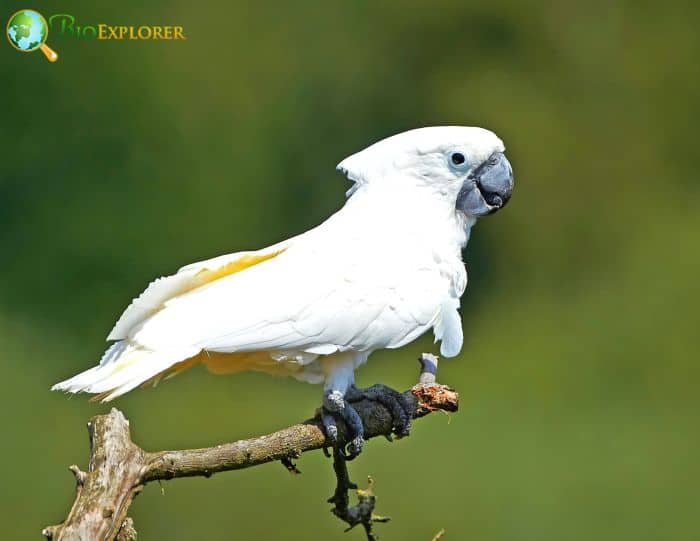
    Discover the breathtaking beauty of the White Cockatoo (Cacatua Alba), their characteristics, diet and several interesting fun facts about them here.
  • Order Gentianales / Gentian Flowers

    The Gentianales (Gentians) is an order of flowering plants involving herbs, shrubs, undershrubs, lianas, and small trees primarily distributed worldwide. Plants of Gentianales mostly have opposite leaves, interpetiolar stipules, bisexual flowers, mostly fused sepals and petals, 4-5 stamens, and 2 carpels. Important species under Gentianales are coffee, periwinkle, oleander, and gentian.

  • Order Lamiales / Acanthus & Mint Flowers

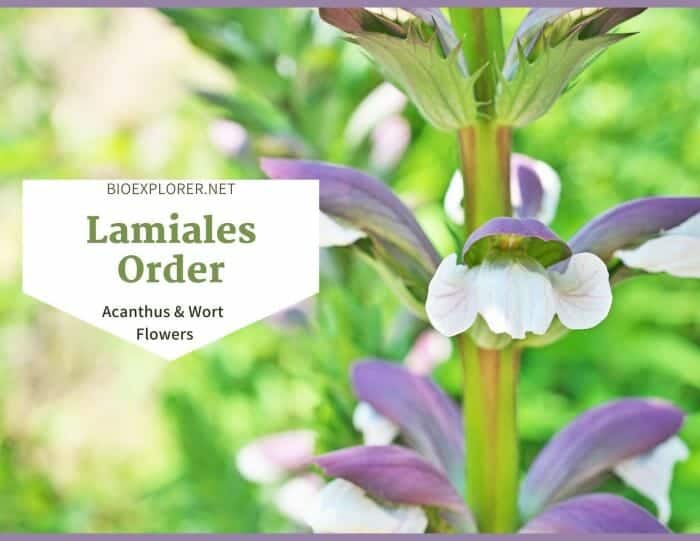
    Lamiales is an ordering of flowering plants with most members found worldwide. The species of the Lamiales usually have opposite leaves, bilaterally symmetrical and often bilabiate corolla, five petals fused into a tube, four or fewer fertile stamens, and a superior ovary with fused carpels. The mints, olive, bladderworts, and plantain are plants under the Lamiales order.

  • Order Boraginales / Forget-me-not & Comfrey Flowers

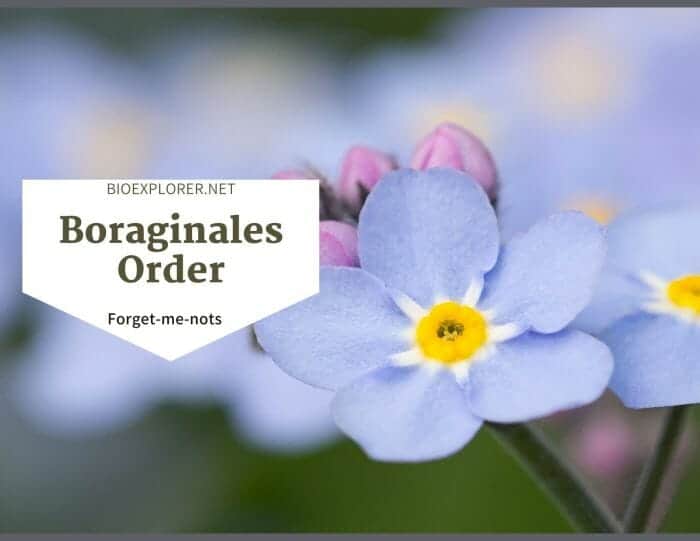
    Boraginales is an order of flowering plants consisting of herbs, shrubs, or trees worldwide. The forget-me-nots, comfrey, and borage are ornamental plants under Boraginales. Boraginaceae (120 genera and 2000 species) are found in temperate and tropical regions.

  • Types of Wildflowers

    Wildflowers are flowering plants that grow and bloom naturally in the wild. With their vibrant colors and sweet fragrances, these wildflowers provide beauty and so much life to the habitat where they thrive. The variety of wildflowers is impressive, providing many colors, sizes, and types.

  • Rufous Hornero

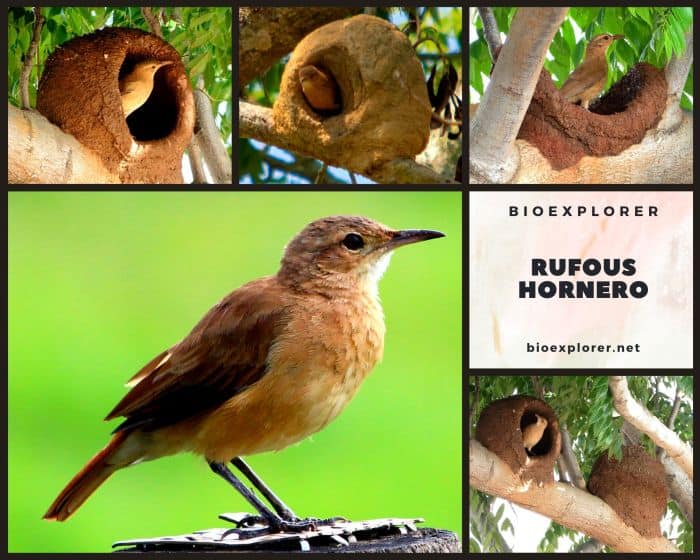
    Explore the Rufous Hornero, South America’s avian marvel. Dive into its unique habits, cultural significance, and conservation efforts. A birdwatcher’s delight!

  • Top 15 Biochemistry News of 2022

    Biochemistry News of 2022: This series of biochemistry news gives us a detailed account of the recent development in this field, including two proteins (Elastase and histone H2A) in defense against COVID-19 and more.

  • Types of Trees

    Discover the diverse types of trees, from deciduous to evergreen. Enjoy vivid pictures, and learn their roles in ecosystems and their conservation efforts.

  • Great Eared Nightjar

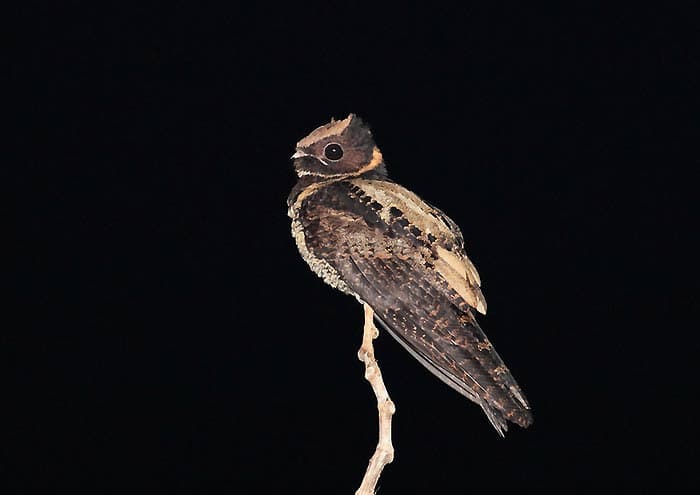
    In the heart of the night, when the world seems to hold its breath, the Great Eared Nightjar takes flight. This nocturnal bird, known scientifically as Lyncornis macrotis, is a captivating creature that has long intrigued ornithologists and nature enthusiasts.

  • Yellow-billed Magpie

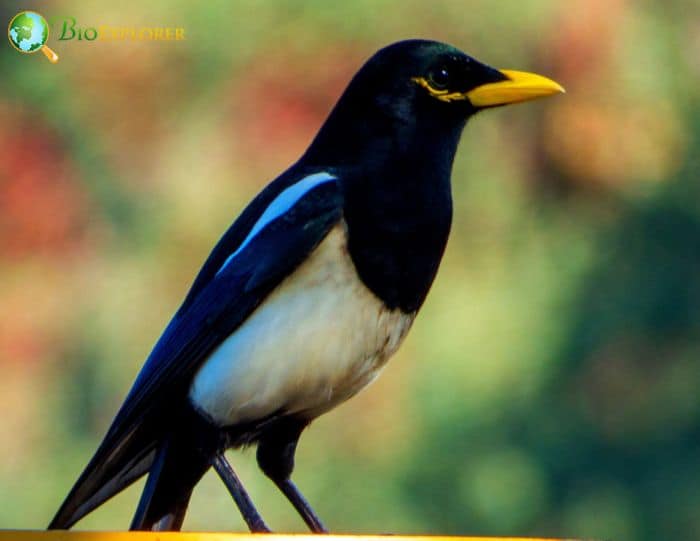
    The Yellow-billed Magpie is a striking, large black-and-white bird with shimmering blue-green wings and tail, and a distinctive bright yellow bill and eye ring. Endemic to California’s Central Valley and nearby foothills, it thrives in open oak woodlands, farmlands, and orchards. Highly social, these magpies nest in loose colonies and build dome-shaped nests high in trees. Their varied diet includes insects, acorns, grains, fruit, carrion, and even garbage. Known for their intelligence, they can mimic sounds and sometimes hold “funerals” for dead flockmates. The species is vulnerable due to habitat loss and West Nile virus.

  • Hooded Crow

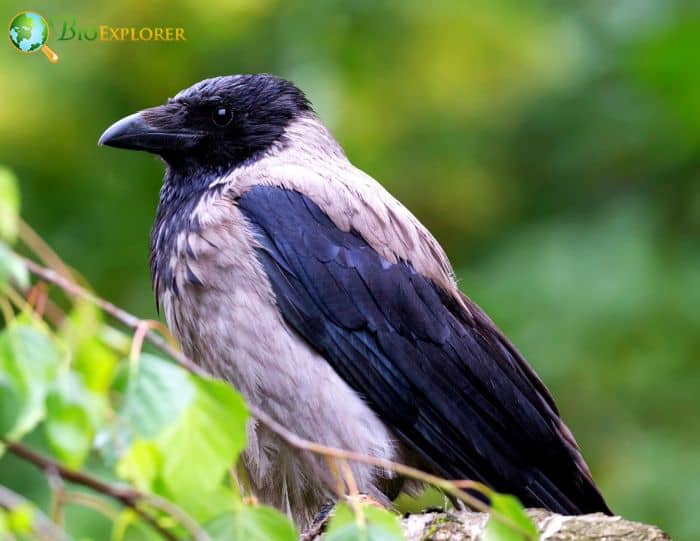
    The Hooded Crow is a medium-sized, two-toned corvid with a pale grey body and contrasting black head, wings, tail, and thigh feathers. Found across northern and eastern Europe and parts of the Middle East, it adapts well to woodlands, farmland, coasts, and cities. Hooded Crows are highly intelligent, known for using tools and dropping shells or nuts from heights to crack them open. Their omnivorous diet includes insects, small animals, grains, carrion, and human scraps. Hooded Crows often pair for life, and their harsh “kraa” call is a familiar sound in their range.

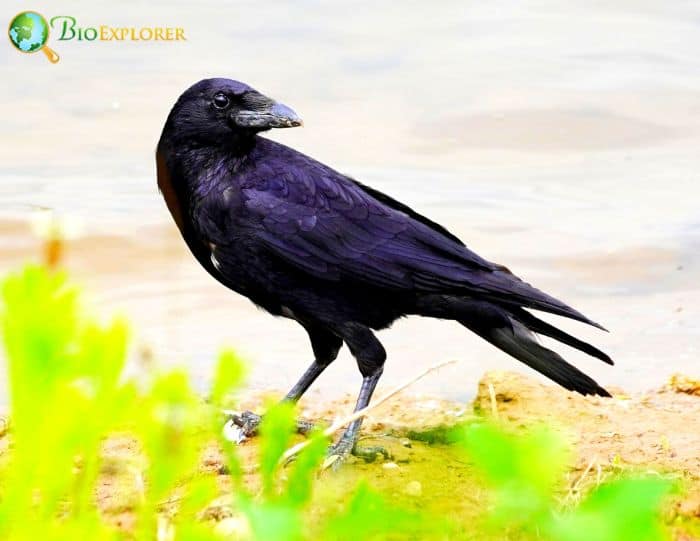
  • Fish Crow

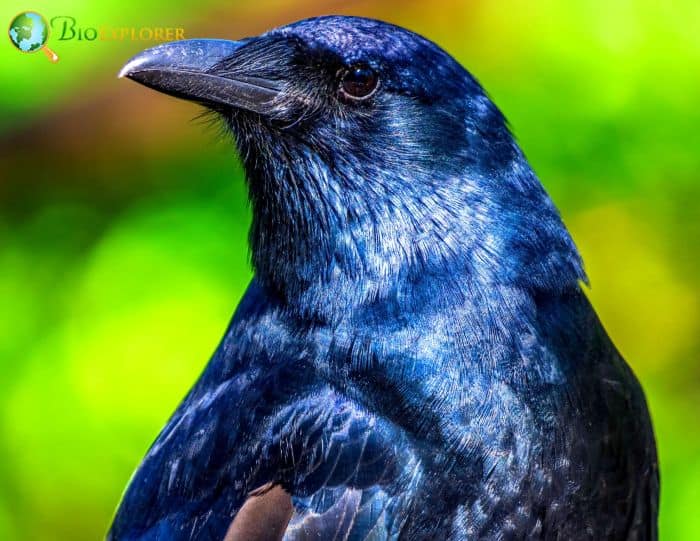
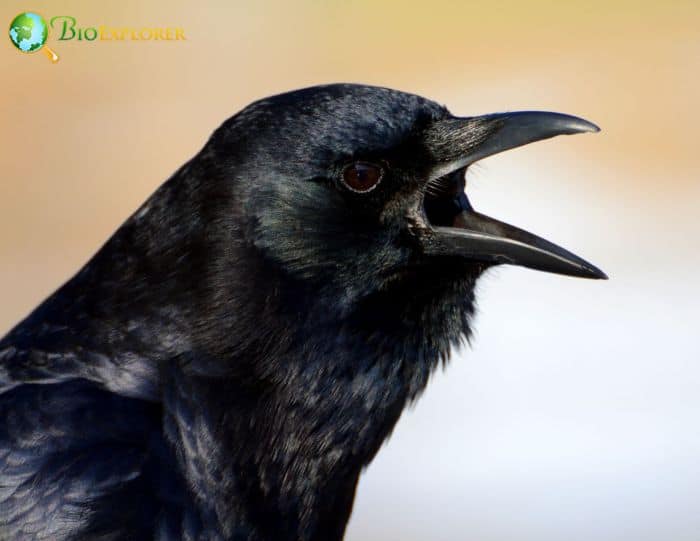
    The Fish Crow is a medium-sized, all-black bird with a subtle green-purple sheen, nearly identical in appearance to the American Crow but best distinguished by its nasal “uh-uh” call. Native to the eastern United States, Fish Crows are most often found near water-coasts, rivers, lakes, and marshes-but have expanded inland along river systems. Highly adaptable, they thrive in urban, suburban, and agricultural areas. Omnivorous and opportunistic,
    Fish Crows eat everything from carrion and garbage to bird eggs, fruit, and small animals. These black birds often cache surplus food and are known for mobbing predators in groups.

  • Sooty Tern

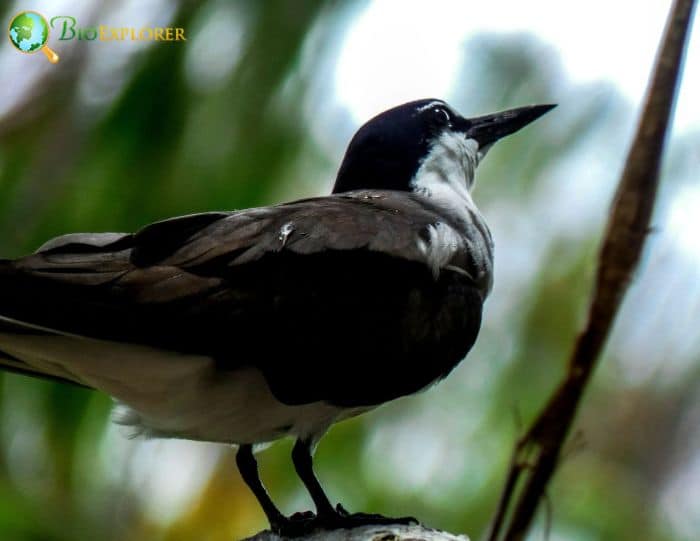
    The Sooty Tern is a large, striking seabird with black upperparts, white underparts, a white forehead, and a deeply forked tail. Found across tropical oceans worldwide, it spends most of its life at sea, sometimes remaining airborne for 3 to 10 years without landing, as it cannot float due to a lack of waterproofing oil in its feathers. Sooty Terns feed by skimming fish and squid from the ocean’s surface and rarely come to land except to breed in dense colonies on remote islands. Their loud, piercing calls and aerial courtship displays are characteristic of their nesting grounds.

  • Carrion Crow

    The Carrion Crow is a medium-sized, glossy black bird native to Europe and Asia, recognized for its deep, guttural “kraa” call and solitary habits. Adaptable to a wide range of habitats-including woodlands, farmland, moors, coastal cliffs, and urban areas-it often perches in high places to survey its surroundings. Highly intelligent, Carrion Crows use tools, recognize human faces, and even cooperate with each other to hunt or defend territory. Their diet is varied, consisting of carrion, insects, seeds, fruit, and small animals. Offspring from previous years sometimes help parents feed new chicks.

  • Black Scoter

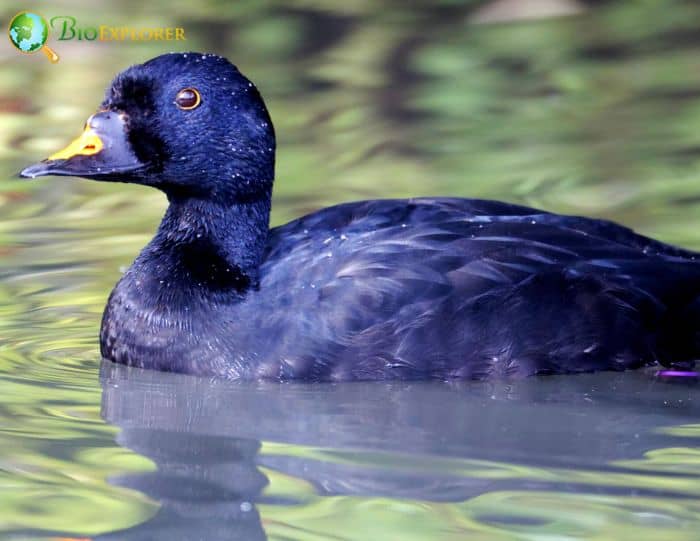
    The Black Scoter is a chunky sea duck, with males easily recognized by their all-black plumage and a distinctive swollen yellow knob at the base of the bill. Females are dark brown with pale cheeks and throat. They breed in remote northern lakes and wetlands, mostly in Alaska and northern Canada, and winter along both Atlantic and Pacific coasts of North America. Black Scoters dive for food, feeding mainly on aquatic insects in freshwater and mollusks like clams and mussels in marine habitats. Black Scoters are monogamous, and their winter flocks can number in the thousands.

  • Anhinga

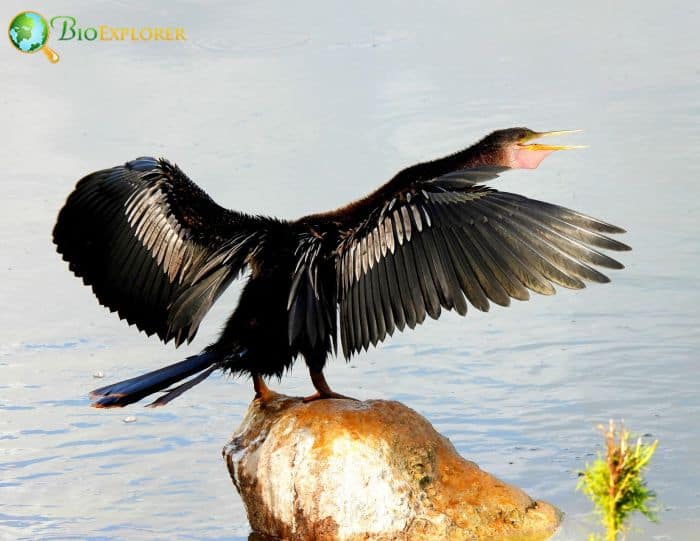
    The Anhinga, also called the “snake bird” for its long, slender neck, is a large, mostly black water bird with a pointed yellow bill and silvery wing patches. Males have darker, glossy plumage, while females show a paler head and neck. Found in freshwater swamps, lakes, marshes, and slow-moving rivers from the southeastern U.S. to South America, Anhingas are expert divers, swimming underwater with only their head and neck exposed. Unlike most birds, they lack waterproofing oils, so they must spread their wings to dry after diving. Anhingas spear fish with their sharp bills and swallow them headfirst.

  • Double-Crested Cormorant

    The Double-Crested Cormorant is a large, black waterbird with a long neck and orange-yellow facial skin. During breeding season, adults display two curly black or white crests on their heads. Found across North America in both freshwater and coastal habitats, they are highly adaptable, nesting in trees, on the ground, or even on artificial structures. These social birds often gather in colonies and are expert divers, feeding mainly on fish but also taking insects, crustaceans, and amphibians. After diving, cormorants are often seen perched with wings outstretched to dry, as their feathers are not fully waterproof.

  • American Crow

    The American Crow is a large, glossy black bird recognized by its distinctive “caw” and confident walk. Common throughout North America, it thrives in a variety of habitats including forests, fields, towns, and cities. These birds are highly social, often living in family groups and gathering in large communal roosts during winter. American Crows are omnivorous and opportunistic, eating insects, seeds, small animals, carrion, and human food scraps. Notably intelligent, they are skilled problem solvers and quick learners. American Crows are curious, cooperative breeders, and adapt well to both urban and rural environments.

  • Rook

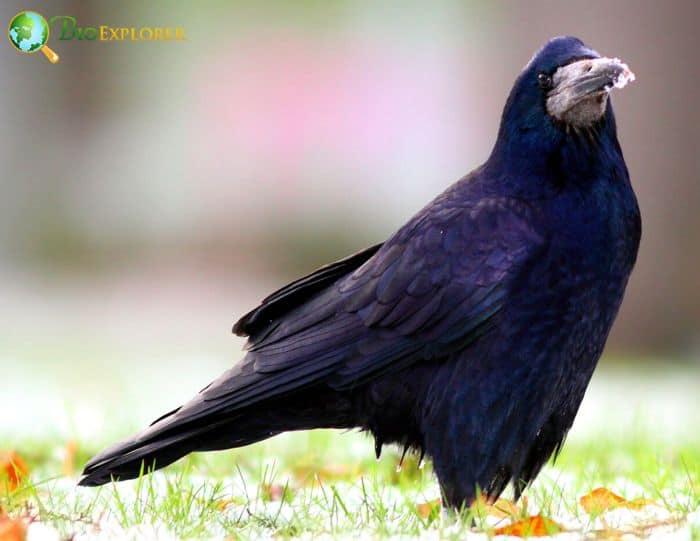
    The Rook is a large, sociable black bird native to Europe and Asia, easily recognized by its bare, pale-grey face and cone-shaped head. It forms noisy colonies called rookeries, nesting high in tall trees near farmland, villages, or parks. Rooks forage in flocks, probing fields for grubs, worms, seeds, and grain, but also eat insects, small mammals, and carrion. Highly intelligent, they use tools and have excellent memories. Unlike crows, adult rooks show a whitish patch at the bill’s base. Some rookeries have been used for over a century.

  • Eurasian Jackdaw

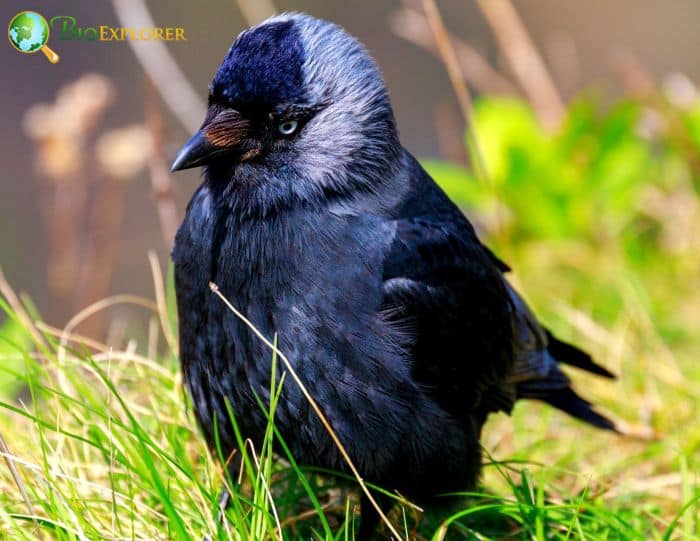
    The Eurasian Jackdaw is a small, social member of the crow family, instantly recognized by its charcoal-black plumage, silvery-gray nape, and striking pale eyes. Native to Europe, western Asia, and North Africa, it thrives in a variety of habitats, from woodlands and farmland to cities and coastal cliffs. Jackdaws are highly gregarious, often seen in flocks performing acrobatic flights or gathering at communal roosts. They nest in cavities, chimneys, or cliffs and are known for their intelligence and curiosity, sometimes collecting shiny objects. Their varied diet includes insects, seeds, fruit, carrion, and even human refuse.

  • Astilbes

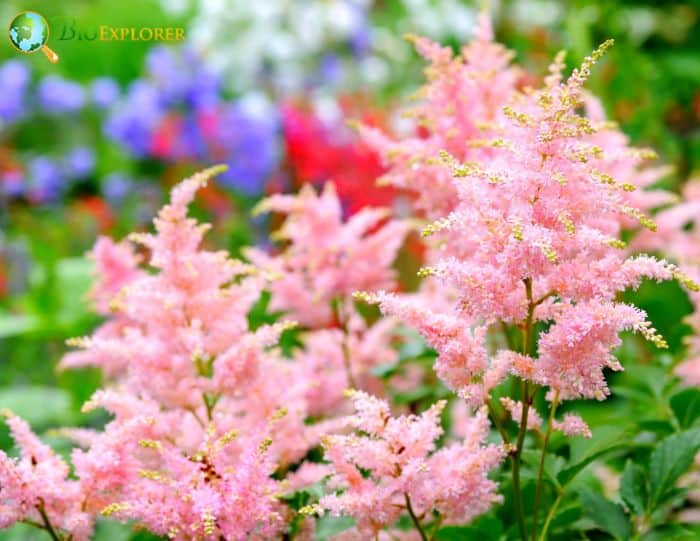
    Discover the vibrant world of Astilbes, perennial flowering plants that thrive in the shade. Learn about their unique characteristics, astilbe varieties, care tips, and how they can add a touch of elegance and color to your garden.

  • Costa Rica Monkeys: A Journey into the Rich Biodiversity!

    Explore the diverse world of Costa Rica’s monkeys in our comprehensive guide. Learn about the four unique species, their habitats, threats, and conservation efforts. Discover tips for monkey spotting during your visit to this biodiversity hotspot.

  • 16 Immortal Animals Who Defy Death

    While all cells grow, age, and die eventually, here is a list of the 16 amazing immortal animals for whom this rule does not seem to apply.

  • Carnivorous Monkeys

    Carnivorous monkeys strictly dine on animal matters, including birds, insects, other monkey species, and small mammals. Explore all carnivore monkeys here.

  • Top 15 Botany News of 2021

    Top botany news of 2021 give us a deep insight into our latest advancement in botany and plant science related to the evolutionary aspect, conservation of endemic species, global warming, and the mechanism to fight against them.

  • Top 15 Cell Biology News of 2021

    This news series in cell biology 2021 gives us a detailed overview of the recent advancements. Let’s explore the top 15 cell biology news of 2021.

  • Top 15 Ecology News of 2021

    This series of 2021 ecology news gives us a detailed overview of the recent development in this field. Commencing with climate change, global warming, alternative ways for renewable energy resources, the role played by scavengers in our society, and other global aspects of management and nature-dependent climate solutions.

  • Top 15 Microbiology News of 2021

    These topics focus on the discoveries and developments in Microbiology in 2021. Research and developments on various topics, such as engineered bacteria, oil-degrading bacteria, and symbiotic relationship between root colonizing bacteria and host plants, have been included here.

  • Sierra De Perijá White-fronted Capuchin

    The Sierra de Perijá white-fronted capuchin monkey (Cebus leucocephalus) is a species of gracile capuchin monkey native to Venezuela and Colombia. The Sierra de Perijá white-fronted capuchin range is restricted to northwestern Venezuela and northern Colombia forests.

  • Shock-headed Capuchin

    The shock-headed capuchin (Cebus cuscinus) is a gracile capuchin monkey native to Peru and Bolivia. This New-world monkey was previously classified as a subspecies of the Humboldt’s capuchin (Cebus albifrons), but in 2013 Rylands and Mittermeier raised it to a separate species, following genetic studies done by Boubli et al. in 2012, and Lynch Alfaro et al. in 2010.

  • Satéré Marmoset

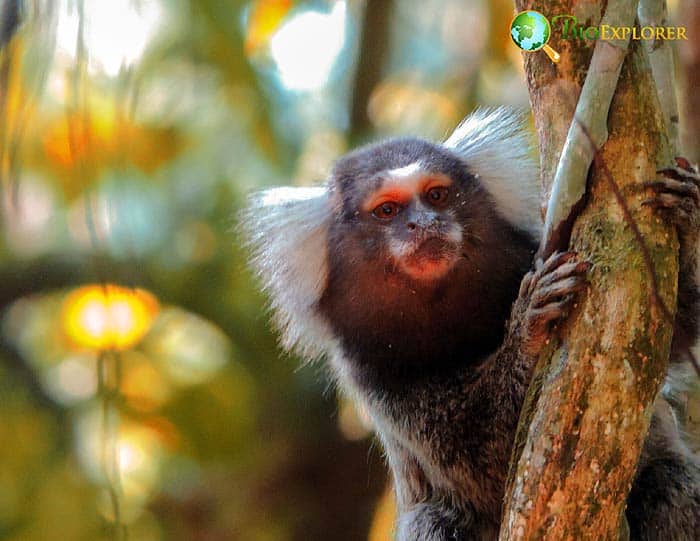
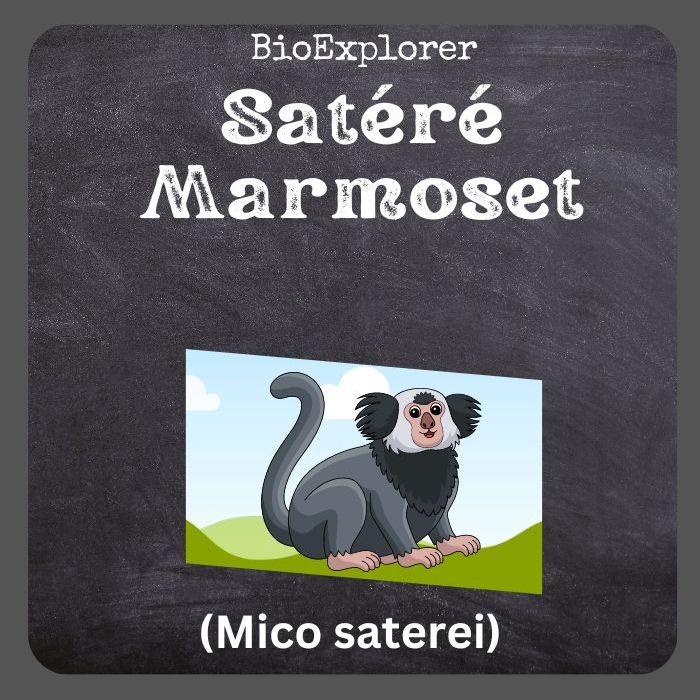
    The Satéré marmoset (Mico saterei) is native to Brazil and its genus is characterized by claw-like nails rather than the flat nails of other primates, long lower incisors, a specialized caecum, and squirrel-like movements in trees.

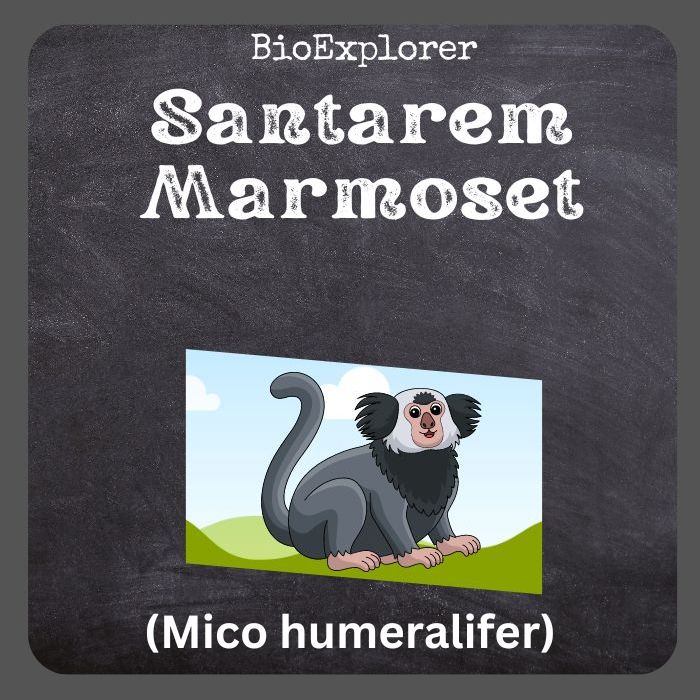
  • Santarem Marmoset

    The Santarem marmoset (Mico humeralifer), also called the black-and-white tassel marmoset, is a marmoset native to the Amazon and Pará states of Brazil. Santarem marmosets make long cries with their rapidly vibrating tongue, designed to sound like a cricket, and shorter chirps.

  • Weeping Capuchin

    The Weeping capuchin, also known as the chestnut capuchin and chestnut weeper capuchin (Cebus castaneus), is a capuchin monkey endemic to northeastern Brazil, southern Guyana, French Guiana, and Suriname. This primate is also known as Wedge-capped capuchin.

  • Weddell’s Saddle-Back Tamarin

    The Weddell’s saddle-back tamarin (Leontocebus weddelli) is a species of saddle-back tamarin, a species of small South American monkey. Weddell’s saddle-back tamarins are tree dwellers. As such, they are phenomenal climbers with sharp claws that allow them to cling to the sides of trees.

  • Varied White-fronted Capuchin

    The Varied white-fronted capuchin (Cebus versicolor) is a species of gracile capuchin monkey endemic to Colombia. The Varied white-fronted capuchin lives in the lowland rainforests and palm swamps of the Magdalena River Valley in northern Colombia.

  • Spix’s White-fronted Capuchin

    Spix’s White-fronted Capuchin (Cebus unicolor) is a species of a gracile capuchin monkey. The species is widespread in the upper Amazon basin in Peru and Brazil. It is also present in northern Bolivia. According to the genetic studies by Boubli et al., Ryland and Mittermeier elevated it to a distinct species.

  • Golden Angwantibo

    The golden angwantibo is a strepsirrhine primate of the Lorisidae family. Bärenmaki, meaning “lemur bear,” is the German name for the golden angwantibo due to its bear-like appearance. However, we see no resemblance.