
Rainforests of the World: 18 Famous Rainforests and Where They Grow
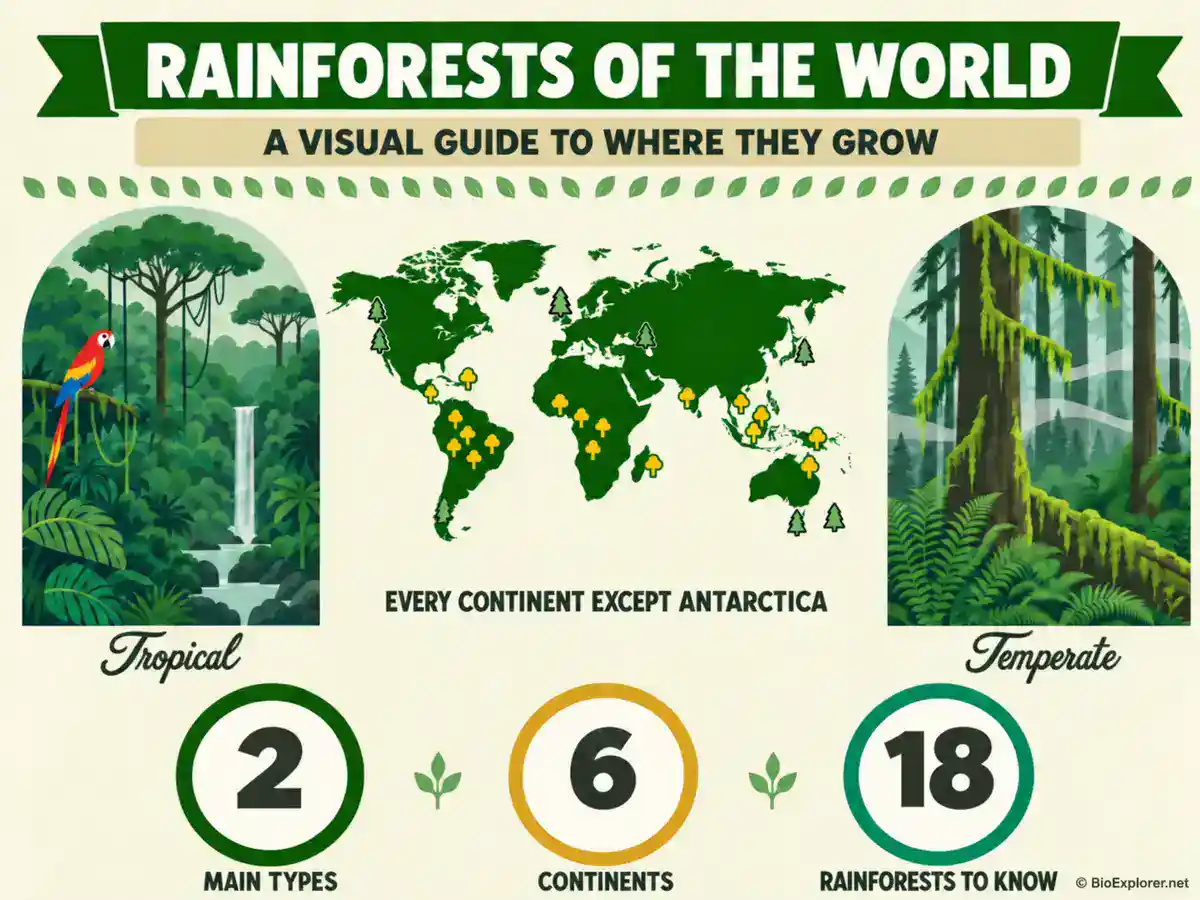
A rainforest is a tall, thick forest that gets a lot of rain each year. Rainforests grow on every continent except Antarctica.[1]
Most people think of the Amazon first. But you can also find rainforests in Africa, Asia, Australia, Europe, and North America.
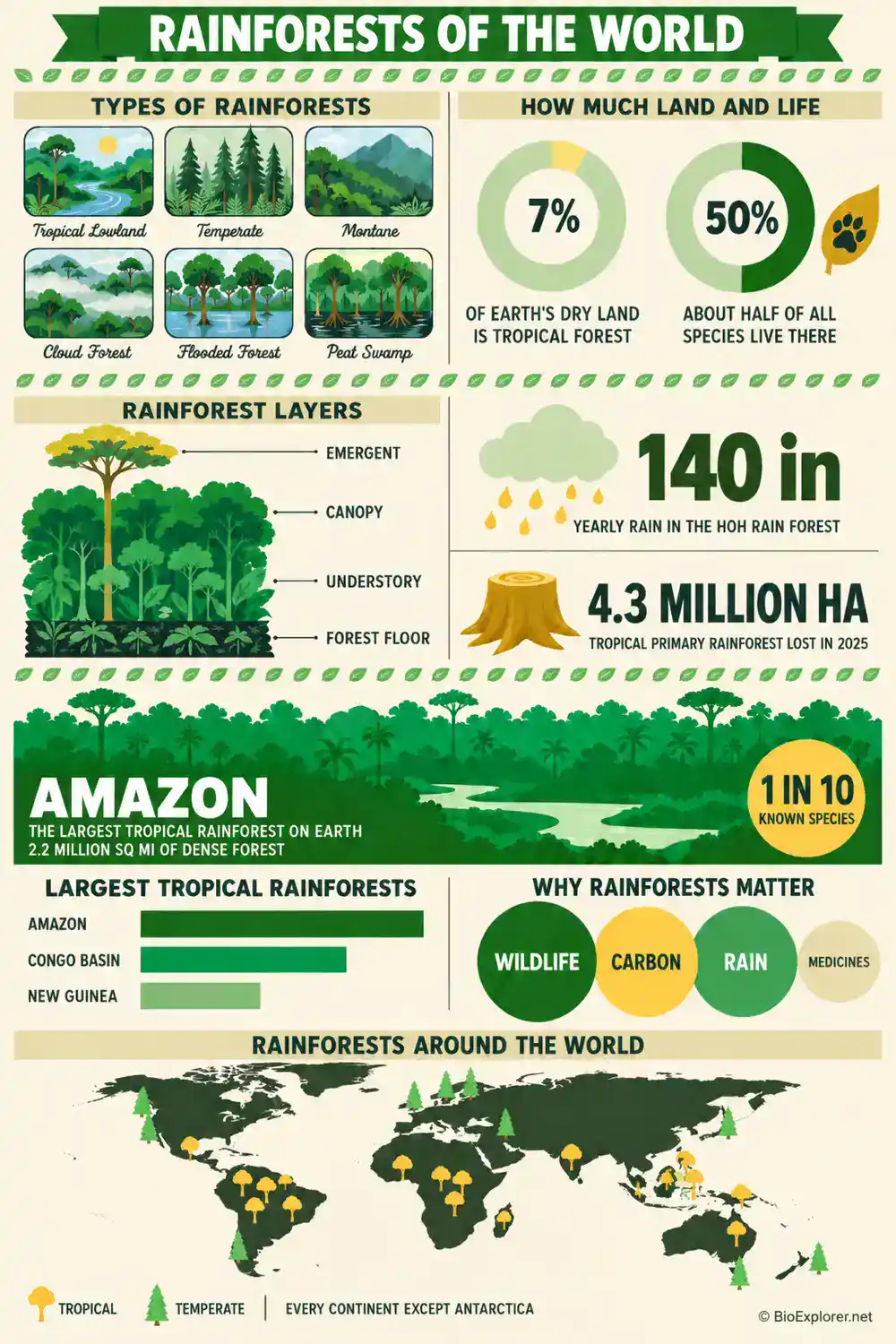
Tropical forests cover only about 7 percent of Earth’s dry land. Yet they probably hold about half of all species on the planet.[2]
This guide explains what a rainforest is and how it differs from a jungle. You will learn how many rainforests there are, where they grow, and which are the largest. Then we tour 18 notable rainforests, continent by continent.
There is no official count of rainforests in the world. Scientists group them into regions instead. Tropical rainforests form three major regions: the Americas, Africa, and Asia with the Pacific islands. Temperate rainforests grow in smaller patches along cool, wet coasts. The three largest tropical rainforests are the Amazon, the Congo Basin, and New Guinea.
World's Top Rainforests Guide:
What Is a Rainforest?
A rainforest is an area of tall, mostly evergreen trees that gets a high amount of rainfall. Its trees grow close together. Their tops form a thick roof of leaves called the canopy.
Rain does not always fall evenly. Many tropical rainforests have a short season with less rain. In monsoon areas, there is a real dry season, but heavy rain the rest of the year makes up for it.[3]
How much rain makes a rainforest? Sources give slightly different numbers.
NASA says a typical rainforest gets 79 to 394 inches (2,000 to 10,000 mm) of rain a year.[4] For temperate rainforests, National Geographic uses at least 55 inches (140 cm) a year as a general benchmark.
Tropical rainforests are warm all year. Temperatures usually stay between 64 °F and 85 °F (18 °C and 30 °C). There is no cold winter to slow plants down.
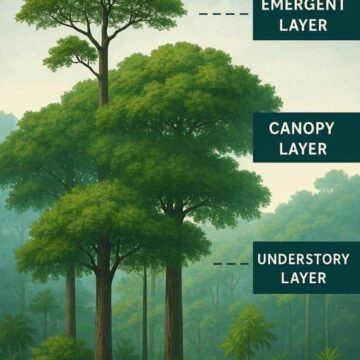
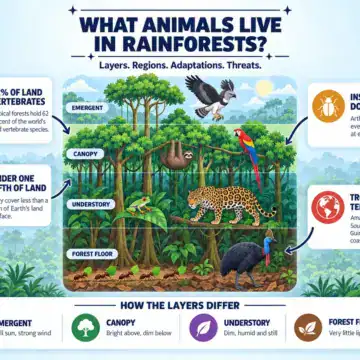
Most rainforests have four layers. From top to bottom, they are the emergent layer, the canopy, the understory, and the forest floor.
Each layer gets a different amount of sunlight, so each has its own plants and animals. See our full guide to the Layers of the Rainforest.
Rainforest vs. Jungle
People often use the words jungle and rainforest as if they mean the same thing. They are related, but they are not identical.
A jungle is the thick, tangled growth you would have to cut your way through.
It forms where lots of sunlight reaches the ground. That happens in gaps where big trees have fallen, and especially along rivers.[5] Jungles may line rivers because light can reach every layer of the forest there.
Deep inside a mature rainforest, things look different. The canopy blocks most of the light. The forest floor is shady, and there is little low growth.
| Feature | Rainforest | Jungle |
|---|---|---|
| What it is | A forest with high rainfall | An informal term for dense, tangled plant growth |
| Sunlight at ground level | Low, because the canopy blocks it | High, so plants crowd in |
| Where you find it | Tropical and temperate regions | Along rivers, forest edges, and gaps |
| Easy to walk through? | Varies. Mature forest floors can be fairly open, but dense undergrowth also occurs | No, it is hard to get through |
So when someone searches for the jungles of the world, they usually mean tropical rainforests. Jungle is an informal term, usually used for dense, tangled tropical plant growth. Rainforest is the more precise ecological term for forests with high rainfall.
How Many Rainforests Are There?
This is one of the most common questions about rainforests. The honest answer is that nobody keeps an official count.
Why not? Rainforests do not have neat borders. One giant forest can cross many countries.
The Amazon alone spreads across eight countries and French Guiana.[6] Scientists also split forests into regions in different ways, so any total depends on the system you use.
A clearer way to think about it looks like this:
- Three major tropical rainforest regions. These are in the Americas, Africa, and Southeast Asia with nearby Pacific islands such as New Guinea.
- Several temperate rainforest regions. These grow on cool, wet coasts. Examples include the Pacific Northwest, Chile, the United Kingdom, Norway, Japan, New Zealand, and southern Australia.
- Hundreds of named forests and parks inside those regions. The 18 in this guide are notable examples.
Where Are Rainforests Located?
Tropical Rainforests
Tropical rainforests grow in a belt around the middle of the Earth. Most lie between the Tropic of Cancer (23.5°N) and the Tropic of Capricorn (23.5°S).
The belt stays warm all year, and yearly rainfall is high. Some rainforests still have distinct wetter and drier seasons.
You will find tropical rainforests in these places:
- Central and South America
- Western and central Africa
- Western India
- Southeast Asia
- The island of New Guinea
- Australia
Some islands have them too. Madagascar has rainforests along its eastern side.[7] Puerto Rico has El Yunque, a tropical rainforest in the U.S. National Forest System.[8]
Temperate Rainforests
Temperate rainforests grow farther from the equator. They are much cooler than tropical rainforests. Most sit on coasts where wet ocean air meets mountains.
The largest area runs along the Pacific coast of North America, from California north into Alaska.[9] Other temperate rainforests grow in:
- Southern Chile and Argentina
- New Zealand and southern Australia, including Tasmania[10]
- Japan and Korea
- Norway, Great Britain, Ireland, and Iceland, in small patches
- Georgia, on the Black Sea coast[11]
Rainforests by Continent
| Continent | Main rainforest types | Examples in this guide |
|---|---|---|
| North America | Temperate, plus tropical in the Caribbean | Pacific Temperate Rainforest, Hoh, Tongass, El Yunque |
| South America | Mostly tropical, plus temperate in Chile | Amazon, Central Suriname, Iguazú and Iguaçu |
| Africa | Tropical | Congo Basin, Sapo, Atsinanana |
| Europe | Temperate | Colchic Rainforests (Georgia), Celtic rainforest (UK) |
| Asia | Mostly tropical, plus temperate in Japan and Korea | Borneo, Sumatra, Khao Sok, Western Ghats |
| Australia and Oceania | Tropical and temperate | New Guinea, Tasmania, Daintree |
| Antarctica | None | None |
Types of Rainforests
There are two main types of rainforest: tropical and temperate. Scientists also name smaller forest types based on where they grow. Some lists give seven or more types of rainforest, but the exact list varies.
| Type | Where it grows | What makes it special |
|---|---|---|
| Tropical lowland rainforest | Warm, low land near the equator | Tall trees and huge numbers of species |
| Temperate rainforest | Cool, wet coasts farther from the equator | Giant conifers, mosses, and ferns |
| Montane rainforest | Tropical mountain slopes | Cooler air at higher elevation |
| Cloud forest | Mountains often wrapped in cloud and mist | Gets water directly from clouds |
| Flooded forest | River floodplains, as in the Amazon | Stands in floodwater for part of the year |
| Peat swamp forest | Waterlogged lowlands, as in Borneo | Grows on deep, soggy peat soil |
In the Amazon, about 90 percent of the region is covered by rainforest that never floods. The rest includes flooded forests called várzea and igapó. They grow along rivers and flood for part of each year.[12]
Montane forests grow at higher elevations than lowland forests.[13] Cloud forests are a special kind of mountain forest. Their plants depend on direct contact with clouds.
Cloud forests grow in more than 60 countries.[14] They are rare, making up no more than 2.5 percent of the world’s tropical forests.[15] Costa Rica’s Monteverde cloud forest is a famous example.
Monteverde’s golden toad is now extinct. The toad’s disappearance coincided with an exceptionally dry spell caused by the 1986 to 1987 El Niño. Many amphibian extinctions have been blamed on climate combined with a deadly pathogen.[16]
Mangrove forests sometimes show up on these lists, but they are not a type of rainforest. Mangroves are trees and shrubs defined by where they live: the coastal intertidal zone. They grow only at tropical and subtropical latitudes because they cannot survive freezing temperatures.[17]
Largest Rainforests in the World
| Rank | Rainforest | Where | Approximate size |
|---|---|---|---|
| 1 | Amazon | South America (eight countries and French Guiana) | About 2.2 million sq mi of dense forest |
| 2 | Congo Basin | Central Africa (six countries) | About 500 million acres, larger than Alaska |
| 3 | New Guinea | Island of New Guinea | Third largest rainforest in the world |
The Amazon is the largest tropical rainforest on Earth. Its dense forest covers about 2.2 million square miles.
The Congo Basin holds the second largest. Its forests span around 500 million acres.[18] New Guinea comes third.[19]
Why do size numbers vary so much? Some sources measure only dense forest. Others measure a whole river basin.
NASA, for example, says the Amazon basin covers at least 6 million square kilometers, nearly twice the size of India.[20]
The largest temperate rainforest is the Pacific coast rainforest of North America.[21] Within it, Alaska’s Tongass National Forest is the world’s largest intact temperate rainforest.[22]
Top Rainforests in the World
Here are 18 notable rainforests, grouped by continent. Each one shows a different side of rainforest life.
| # | Rainforest | Location | Type |
|---|---|---|---|
| 1 | Pacific Temperate Rainforest | USA and Canada | Temperate |
| 2 | Hoh Rain Forest | Washington, USA | Temperate |
| 3 | Tongass National Forest | Alaska, USA | Temperate |
| 4 | El Yunque National Forest | Puerto Rico, USA | Tropical |
| 5 | Amazon Rainforest | South America | Tropical |
| 6 | Central Suriname Nature Reserve | Suriname | Tropical |
| 7 | Iguazú and Iguaçu National Parks | Argentina and Brazil | Subtropical |
| 8 | Congo Basin Rainforest | Central Africa | Tropical |
| 9 | Sapo National Park | Liberia | Tropical |
| 10 | Rainforests of the Atsinanana | Madagascar | Tropical |
| 11 | Colchic Rainforests | Georgia | Temperate |
| 12 | Borneo Lowland Rainforest | Borneo | Tropical |
| 13 | Sumatra Rainforests | Indonesia | Tropical |
| 14 | Khao Sok National Park | Thailand | Tropical |
| 15 | Western Ghats and Mollem | India | Tropical |
| 16 | New Guinea Rainforest | New Guinea | Tropical |
| 17 | Tasmanian Temperate Rainforest | Australia | Temperate |
| 18 | Daintree Rainforest | Australia | Tropical |
1. Pacific Temperate Rainforest
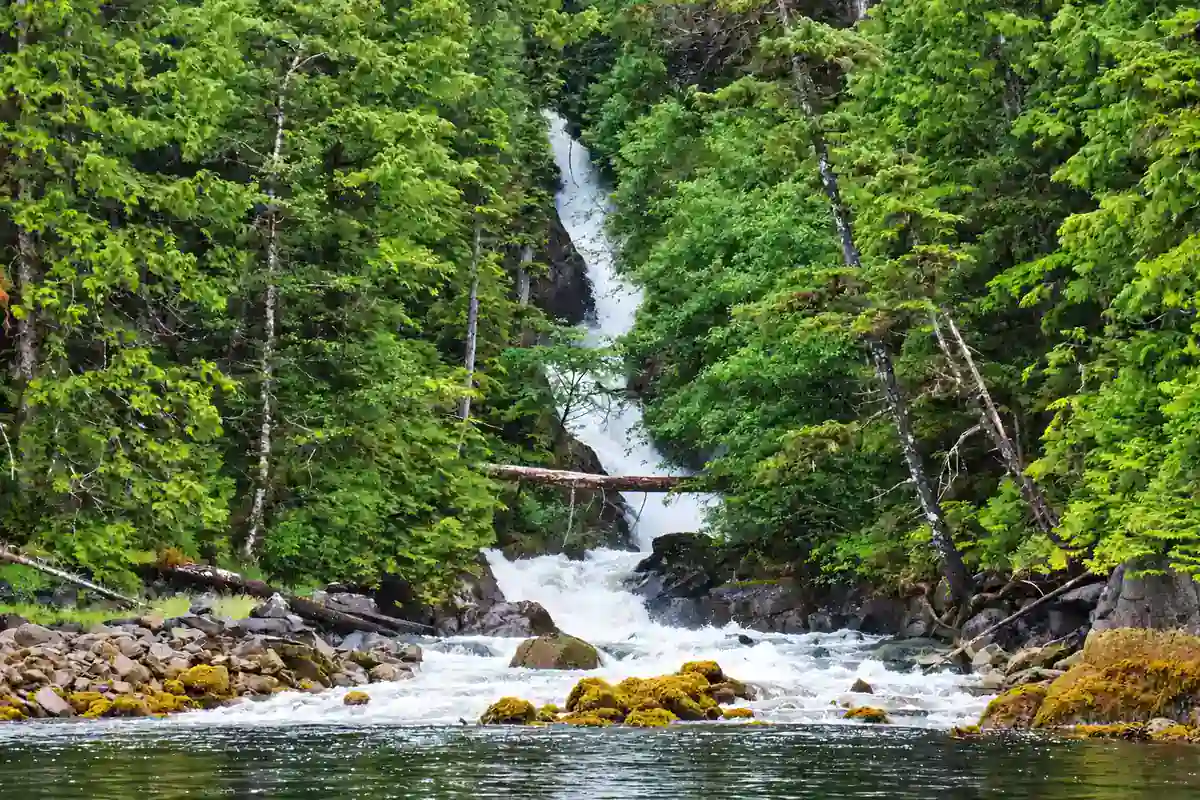
Where: Pacific coast of the USA and Canada
Type: Temperate rainforest
This is the largest temperate rainforest on the planet. It runs for more than 2,000 miles along North America’s northwest coast. It stretches from Prince William Sound in Alaska to a little south of San Francisco Bay.
Giant conifers rule this forest. Common trees include western hemlock, western red cedar, and Douglas fir. Coast redwoods grow only in the warm southern part, from near the California and Oregon border south.
2. Hoh Rain Forest
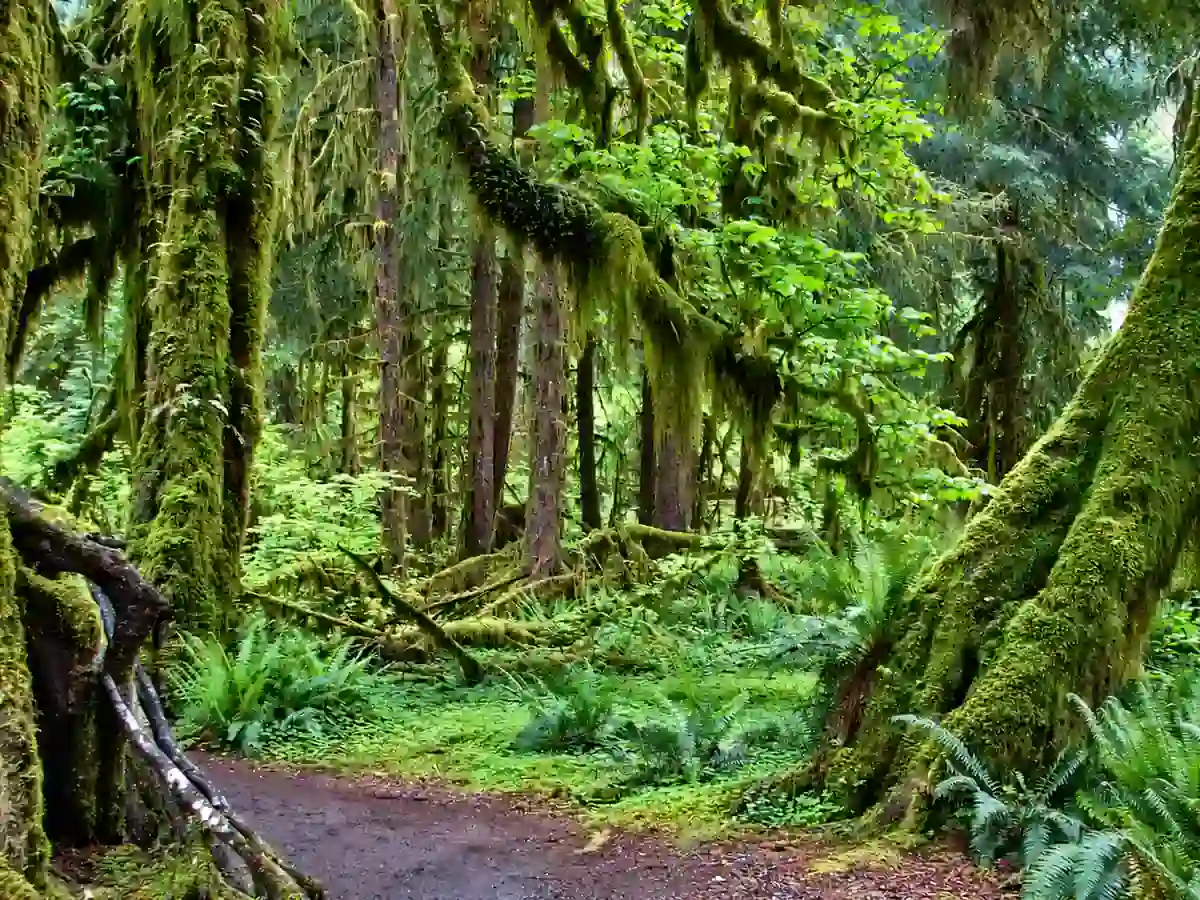
Where: Olympic National Park, Washington, USA
Type: Temperate rainforest
The Hoh Rain Forest is on Washington’s Olympic Peninsula. It gets about 140 inches (3.55 m) of rain a year on average.[23] That is roughly 12 feet of water.
Sitka spruce and western hemlock are the main trees. Mosses, spike mosses, ferns, and lichens drape their trunks and branches.[24] Visitors may also spot bigleaf maples and Roosevelt elk.
Sitka spruce rain forests like the Hoh once stretched from southern Oregon to southeast Alaska. Little remains outside protected areas. Olympic National Park became a UNESCO Biosphere Reserve in 1976.[25]
The park became a World Heritage Site in 1981. UNESCO calls it one of the world’s largest stands of virgin temperate rainforest.[26]
3. Tongass National Forest
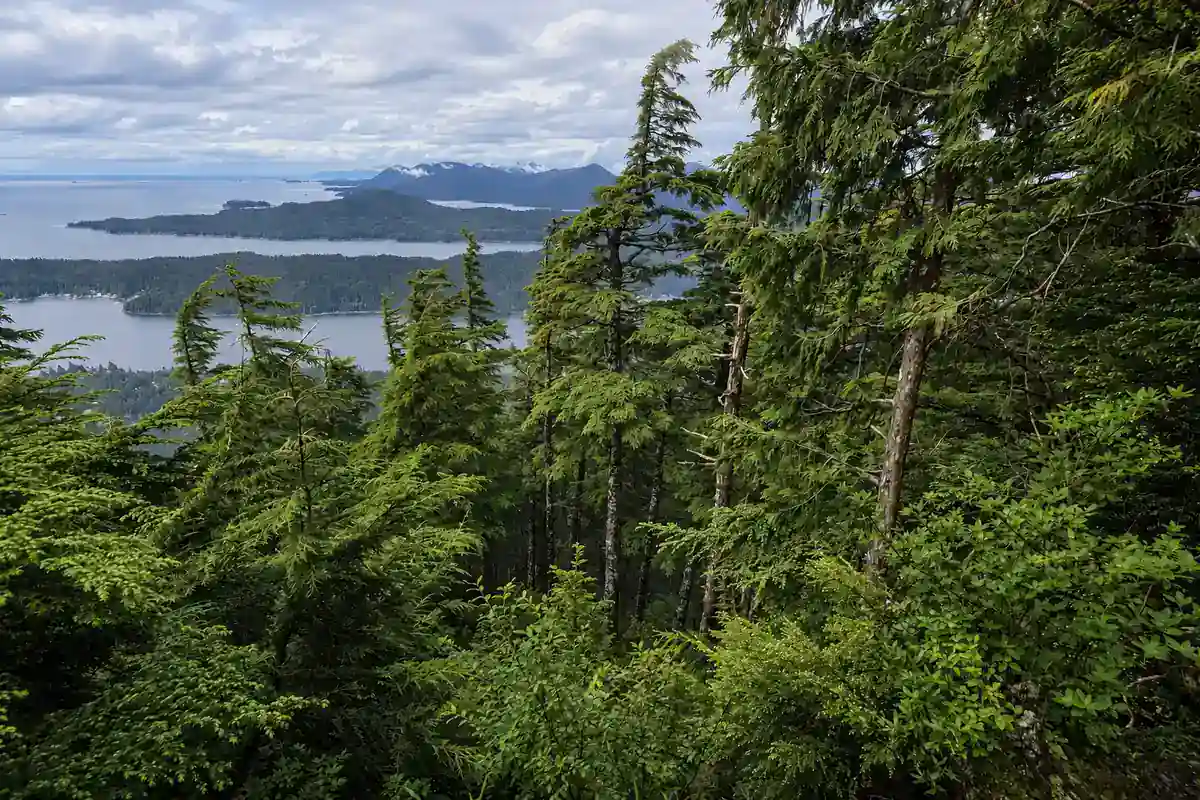
Where: Southeast Alaska, USA
Type: Temperate rainforest
Tongass is the largest national forest in the United States. It covers nearly 17 million acres. That is about the size of West Virginia.[27]
The USDA Forest Service calls it the world’s largest intact temperate rainforest.
Salmon streams run all through the forest. Visitors come to watch eagles, bears, and spawning salmon.[28]
A special wolf, the Alexander Archipelago wolf, lives mainly in the Tongass. It dens under old-growth trees and eats deer and salmon.[29]
4. El Yunque National Forest
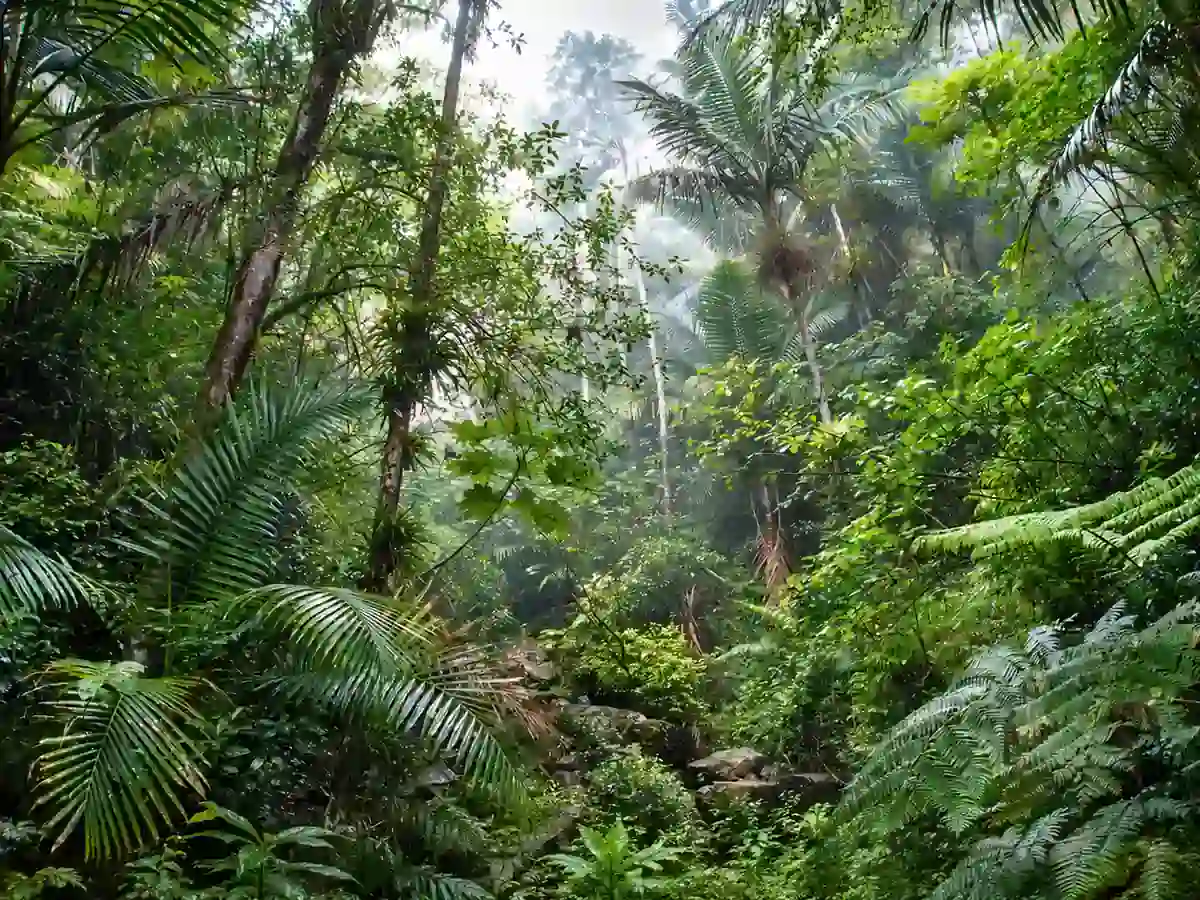
Where: Puerto Rico, USA
Type: Tropical rainforest
El Yunque is the only tropical rainforest in the U.S. National Forest System. At nearly 29,000 acres, it is one of the smallest national forests. It is also one of the most biologically diverse.
About 250 kinds of trees grow here.[30] High-elevation sites average more than 4,000 mm (about 157 inches) of rain a year.[31]
El Yunque is famous for its tiny tree frogs called coquís. It is home to 13 of the 17 coquí species native to Puerto Rico.[32]
El Yunque is also an important recovery site for the endangered Puerto Rican Amazon, better known as the Puerto Rican parrot. El Yunque holds the oldest of the parrot’s three wild population groups.[33]
5. Amazon Rainforest
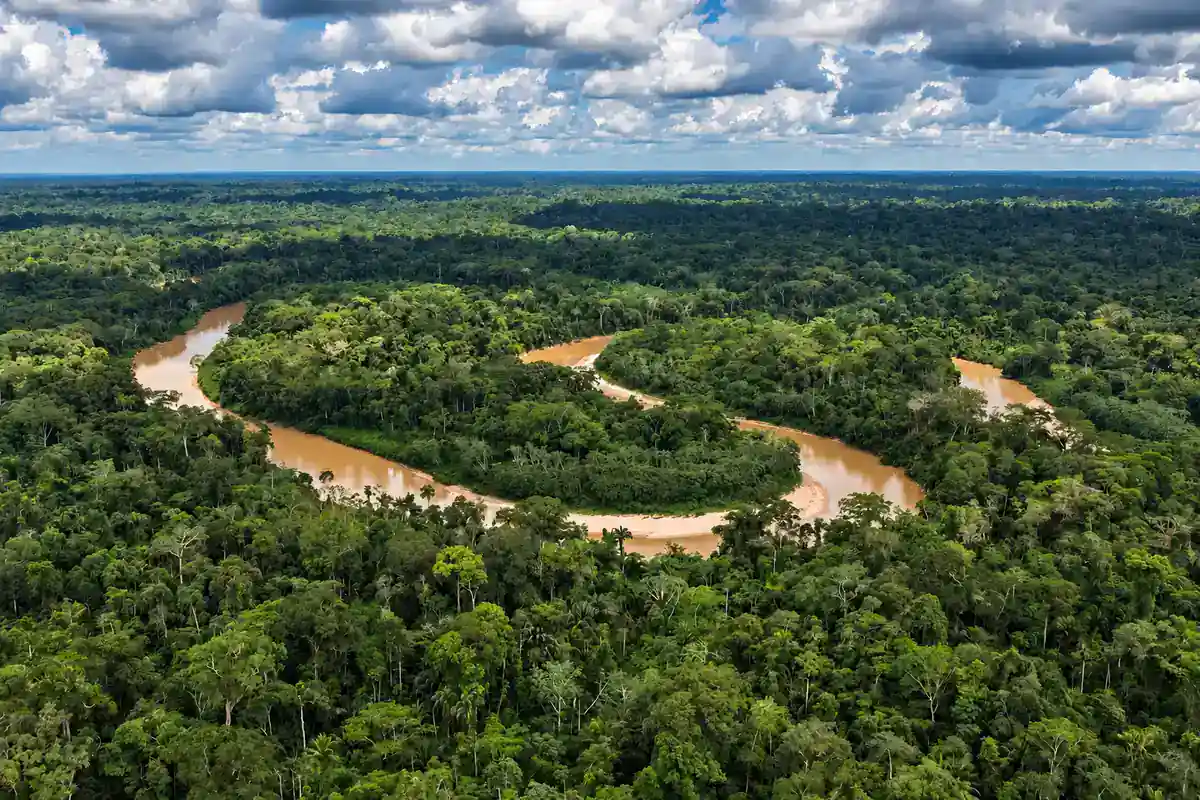
Where: Northern South America
Type: Tropical rainforest
The Amazon is the largest tropical rainforest in the world. Its dense forest covers about 2.2 million square miles. The whole Amazon basin is nearly twice the size of India.
The forest spans eight countries and French Guiana. The countries are Brazil, Bolivia, Peru, Ecuador, Colombia, Venezuela, Guyana, and Suriname.
Life here is astonishing. About one in 10 known species on Earth lives in the Amazon.
Nearly 50,000 plant species grow there. Learn about some of them in our guide to Amazon Rainforest Plants.
The Amazon also helps make its own rain. Enough moisture rises from the forest to feed huge flying rivers in the sky. It supplies about half of the rain that falls back on the region.
6. Central Suriname Nature Reserve
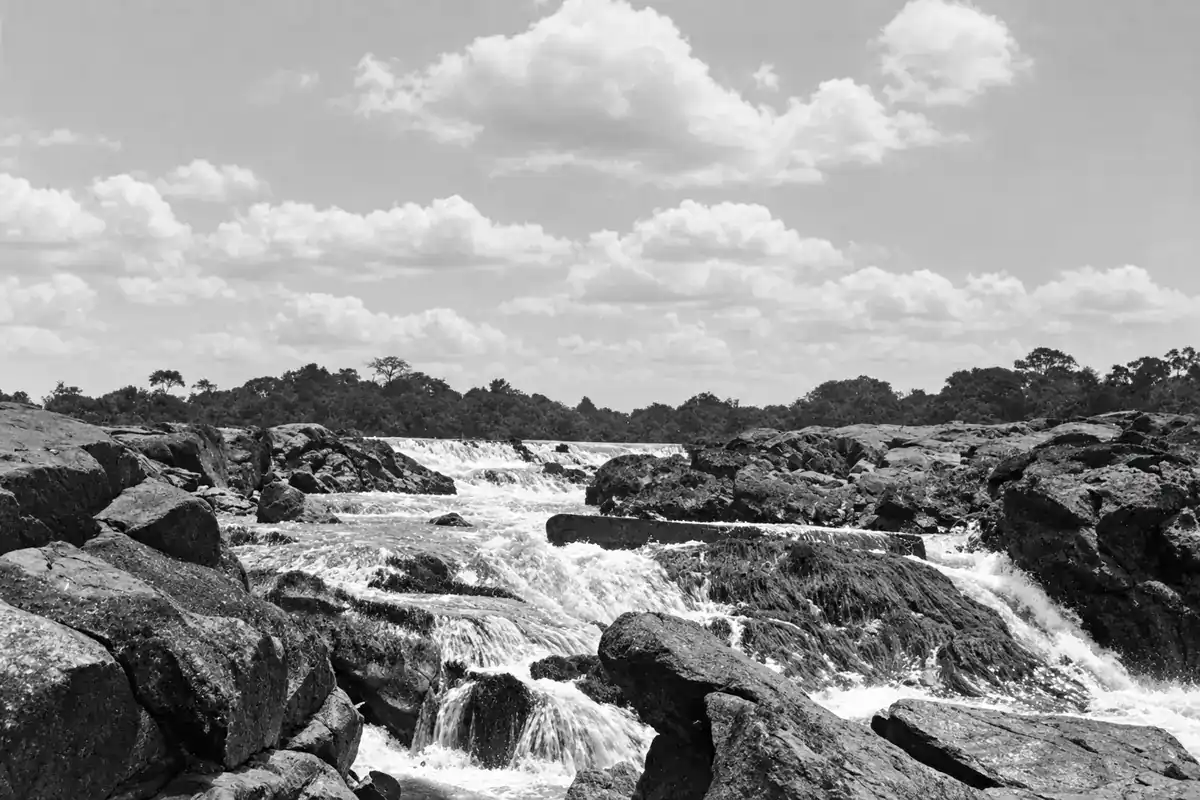
Where: Suriname, South America
Type: Tropical rainforest
This reserve protects 1.6 million hectares (about 6,200 square miles) of primary tropical forest. It became a UNESCO World Heritage Site in 2000.[34]
Almost 5,000 kinds of vascular plants have been collected here so far. About 400 bird species live here, including the harpy eagle. Mammals include jaguars, giant armadillos, giant river otters, lowland tapirs, and sloths.
The reserve protects the upper Coppename River watershed. Its land climbs from lowland and swamp forest to 1,230 meters at Juliana Top, Suriname’s highest point. Granite domes and a flat-topped tepui mountain rise above the trees.
7. Iguazú and Iguaçu
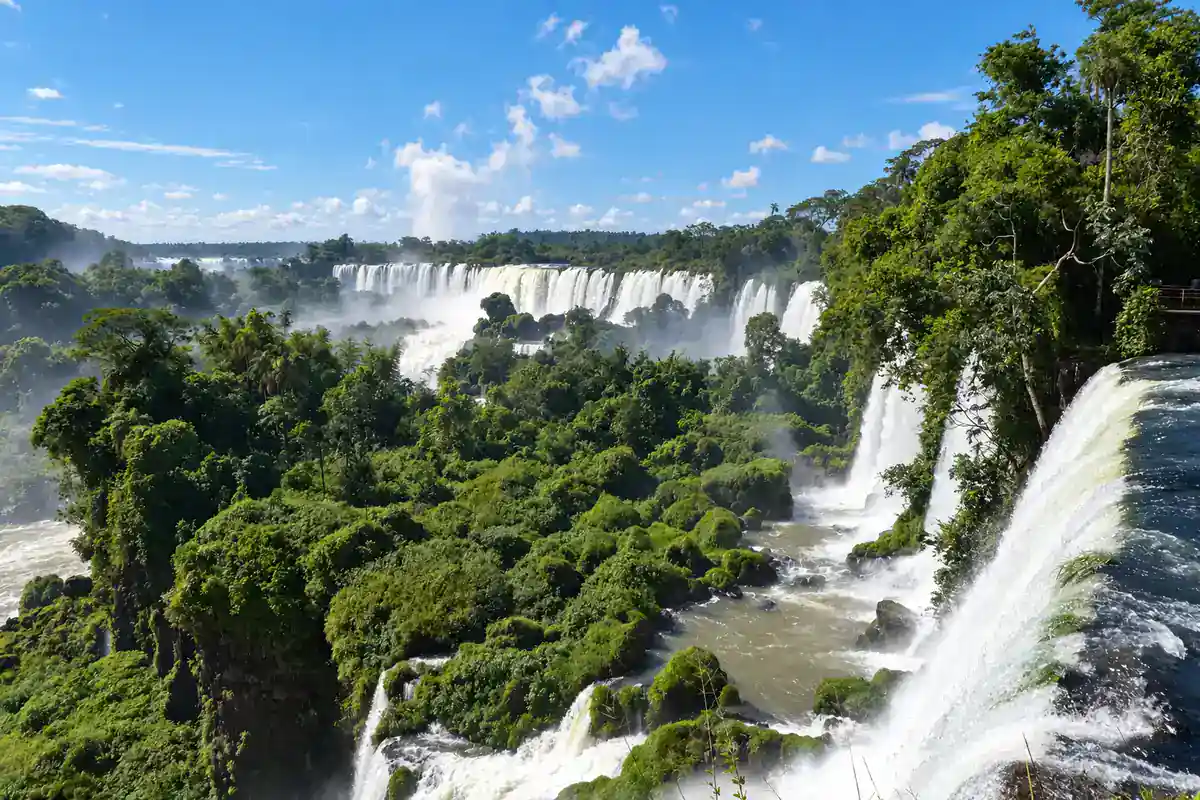
Where: Border of Argentina and Brazil
Type: Subtropical rainforest
Two national parks sit side by side here. Iguazú National Park is in Misiones Province, Argentina. It became a World Heritage Site in 1984.[35]
Iguaçu National Park is in Paraná State, Brazil. It was listed in 1986.[36]
Between them roar the Iguazú Falls. The falls stretch across some 2,700 meters (about 1.7 miles).
Together, the two parks form the largest single protected remnant of the Paranaense subtropical rainforest, part of the Atlantic Forest. The Argentine park holds over 2,000 plant species and 400 bird species.
Jaguars, ocelots, tapirs, and howler monkeys live here. Meet more Rainforest Monkeys in our guide.
These parks matter because the Atlantic Forest has shrunk so much. Only about 12 percent of the original forest in Brazil is left.[37]
8. Congo Basin Rainforest
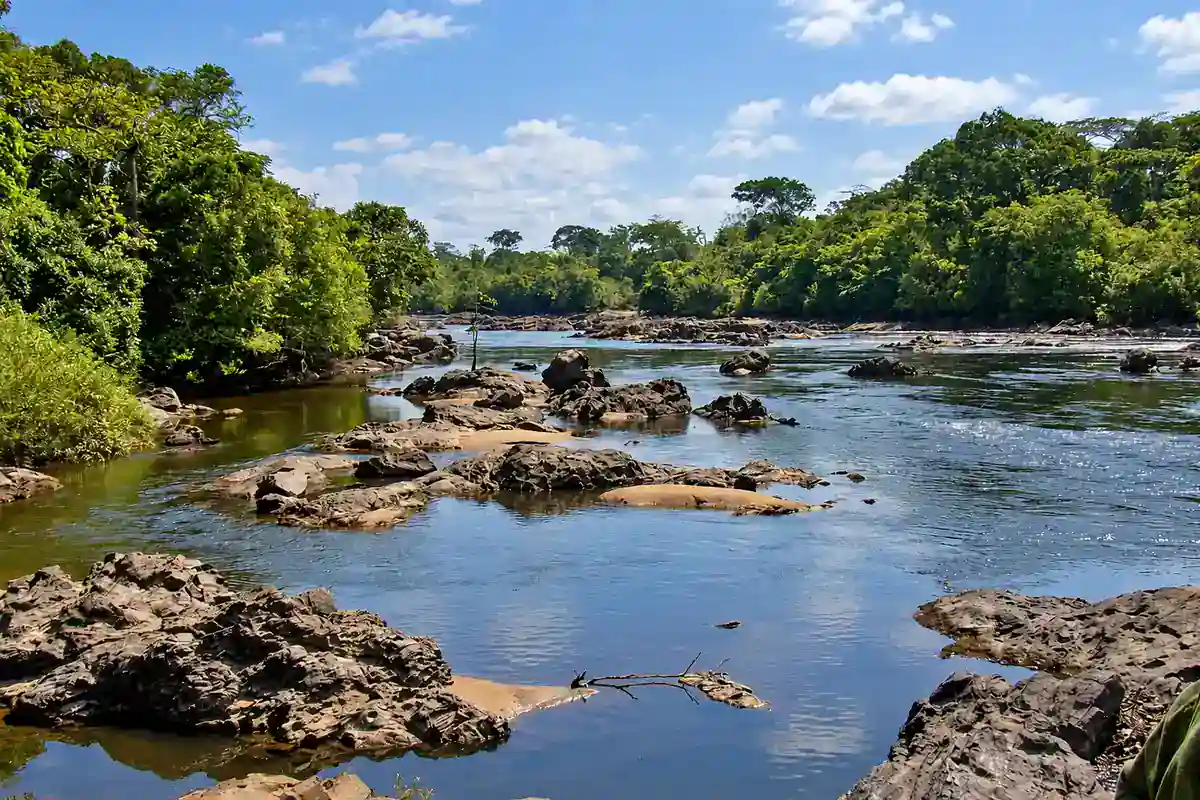
Where: Central Africa
Type: Tropical rainforest
The Congo Basin holds the world’s second largest tropical forest, after the Amazon. Its forests span around 500 million acres, an area larger than Alaska. USAID put the rainforest at nearly 1.8 million square kilometers.[38]
The forest covers six countries. They are Cameroon, the Central African Republic, the Democratic Republic of the Congo, the Republic of Congo, Equatorial Guinea, and Gabon.
More than 400 species of mammals live here.[39] They include gorillas, bonobos, chimpanzees, forest elephants, okapi, and leopards.[40]
Bonobos and okapi are found only in the Congo River Basin. See the Congo Monkeys that share the same forest.
9. Sapo National Park
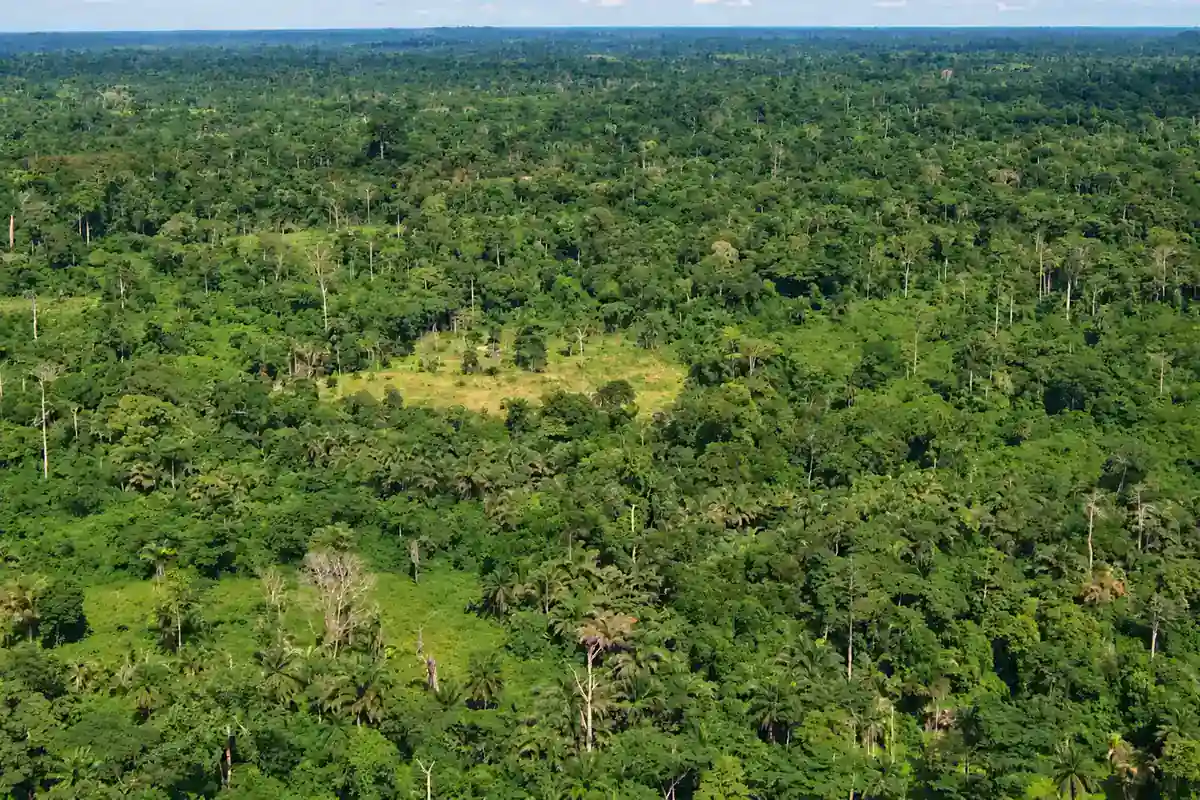
Where: Liberia, West Africa
Type: Tropical rainforest
Sapo is Liberia’s oldest and largest protected area. It was set up in 1983.[41] It covers about 1,800 square kilometers (about 700 square miles).[42]
Sapo holds the second largest area of primary tropical rainforest in West Africa. Only Taï National Park in Côte d’Ivoire has more.[43]
The park is home to West African chimpanzees, forest elephants, and pygmy hippos.[44]
About 80 percent of Sapo lies in Sinoe County. Rain was measured at Gbason Town, 4 km (2.5 miles) south of the park headquarters. In the 1980s, it averaged about 2,600 mm (100 inches) a year.
The park is home to more than 200 bird species and six kinds of monkeys. Camera traps suggest it is a crucial stronghold for the endangered pygmy hippo.
10. Rainforests of the Atsinanana
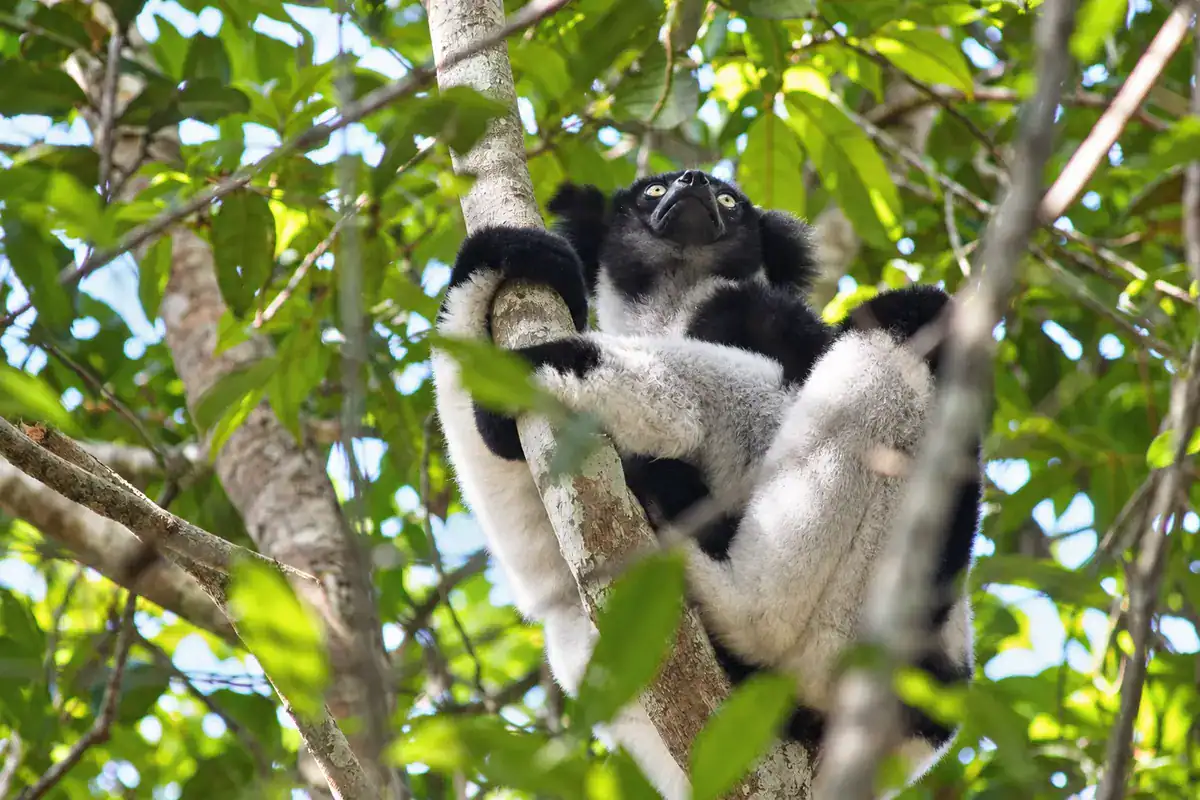
Where: Eastern Madagascar
Type: Tropical rainforest
This World Heritage Site links six national parks along the eastern part of Madagascar. It was listed in 2007.
Madagascar’s long isolation made its wildlife unique. In this site, about 80 to 90 percent of the species in every group are endemic. That means they live nowhere else.
At least 25 types of lemurs live in these forests.
Illegal logging put the site on UNESCO’s danger list in 2010. In July 2025, UNESCO took it off that list. Illegal logging and lemur poaching had fallen to their lowest levels in a decade.[45]
11. Colchic Rainforests
Where: Black Sea coast of Georgia
Type: Temperate rainforest
Yes, Europe has rainforests.
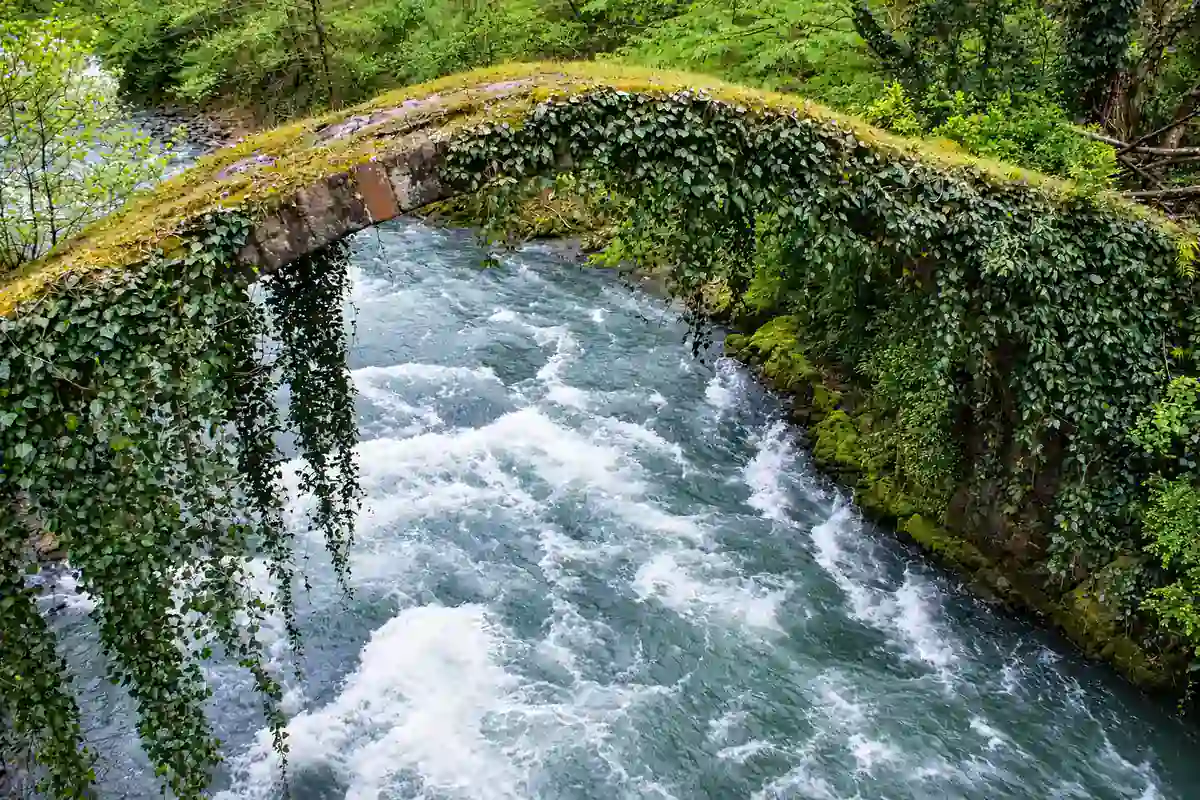
Georgia sits where Europe meets Asia. Its Colchic Rainforests and Wetlands line the warm and extremely humid eastern coast of the Black Sea. UNESCO listed them in 2021.
These are among the oldest temperate broad-leaved forests on Earth. They survived the ice ages, so many ancient species still live here. The site has about 1,100 plant species and almost 500 species of vertebrates.
Western Britain has scraps of temperate rainforest too. People call it Celtic rainforest or Atlantic woodland.
The Celtic rainforest once covered a fifth of the UK. Today, its fragments cover just 1 percent.[46]
Perućica, in Sutjeska National Park in Bosnia and Herzegovina, is also often mentioned. It is a primeval forest of beech, fir, and spruce, with many trees over 300 years old. It is on UNESCO’s Tentative List.[47]
12. Borneo Lowland Rainforest
Where: Borneo (Brunei, Indonesia, and Malaysia)
Type: Tropical rainforest
Borneo is the world’s third largest island.[48] It holds at least 15,000 plant species, and 6,000 of them grow nowhere else.[49]
The lowland forest is hot and wet all year. Temperatures range from 27 °C to 32 °C (81 °F to 90 °F).
The forest gets over 4,000 mm (157 inches) of rain a year.[50] Every month gets more than 200 mm (about 8 inches) of rain.[51]
Tall dipterocarp trees tower over the canopy. Up to 80 percent of the emergent trees are dipterocarps.
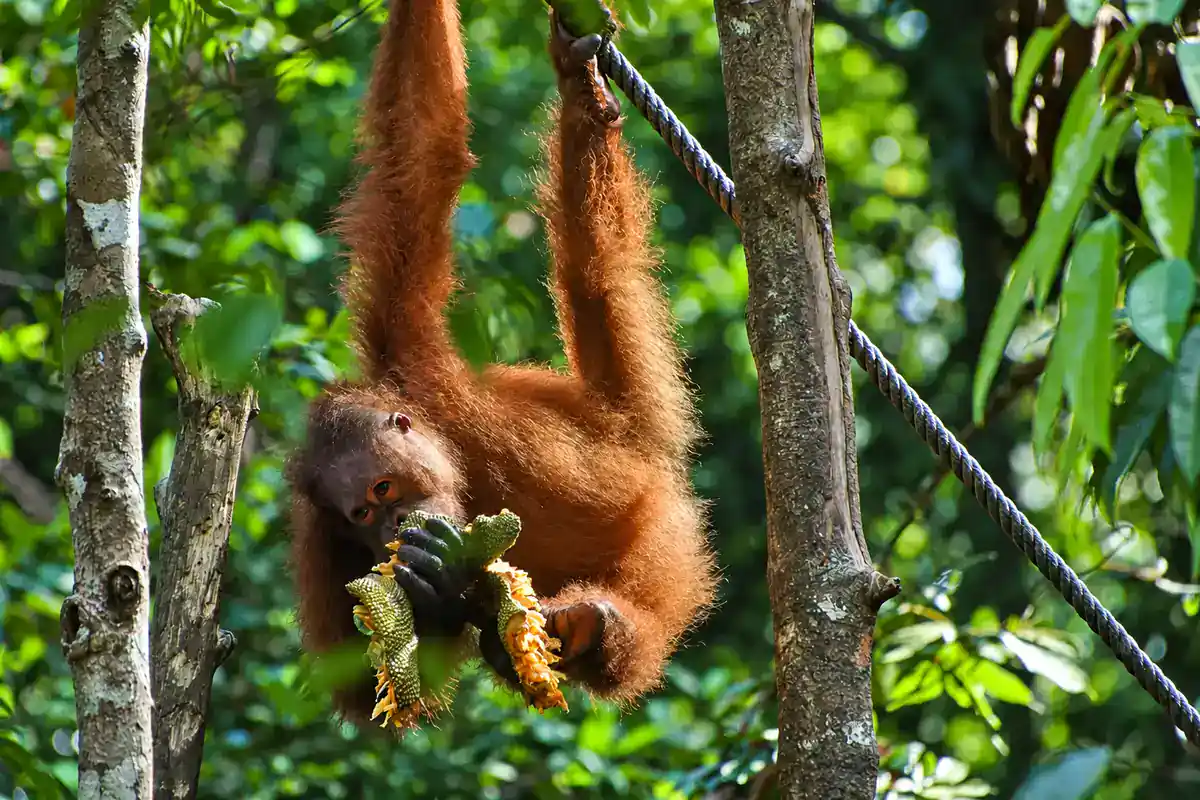
Borneo also has more than 3,000 tree species and 2,000 colorful orchid species. The Bornean Orangutan lives here, along with proboscis monkeys and other Borneo Monkeys.
Wetter lowlands hold peat swamp forests. Their waterlogged peat can be more than 20 meters deep.[52] Tanjung Puting National Park in Central Kalimantan, Indonesia, is a well-known example.[53]
About half of the primary forest in Borneo’s lowland rainforest has been cleared or degraded. Oil palm, rubber, and pulp plantations, logging, and hunting are major threats.
13. Sumatra Rainforests
Where: Sumatra, Indonesia
Type: Tropical rainforest
Three national parks on the island of Sumatra form this World Heritage Site. Together they cover about 2.6 million hectares. It was listed in 2004.[54]
An estimated 10,000 plant species grow here. They include Rafflesia arnoldii, which has the world’s largest flower.
Another giant is the titan arum, Amorphophallus titanum. Its tiny flowers group into the world’s largest unbranched inflorescence. That flowering structure can reach 3 meters (about 10 feet) tall.[55]
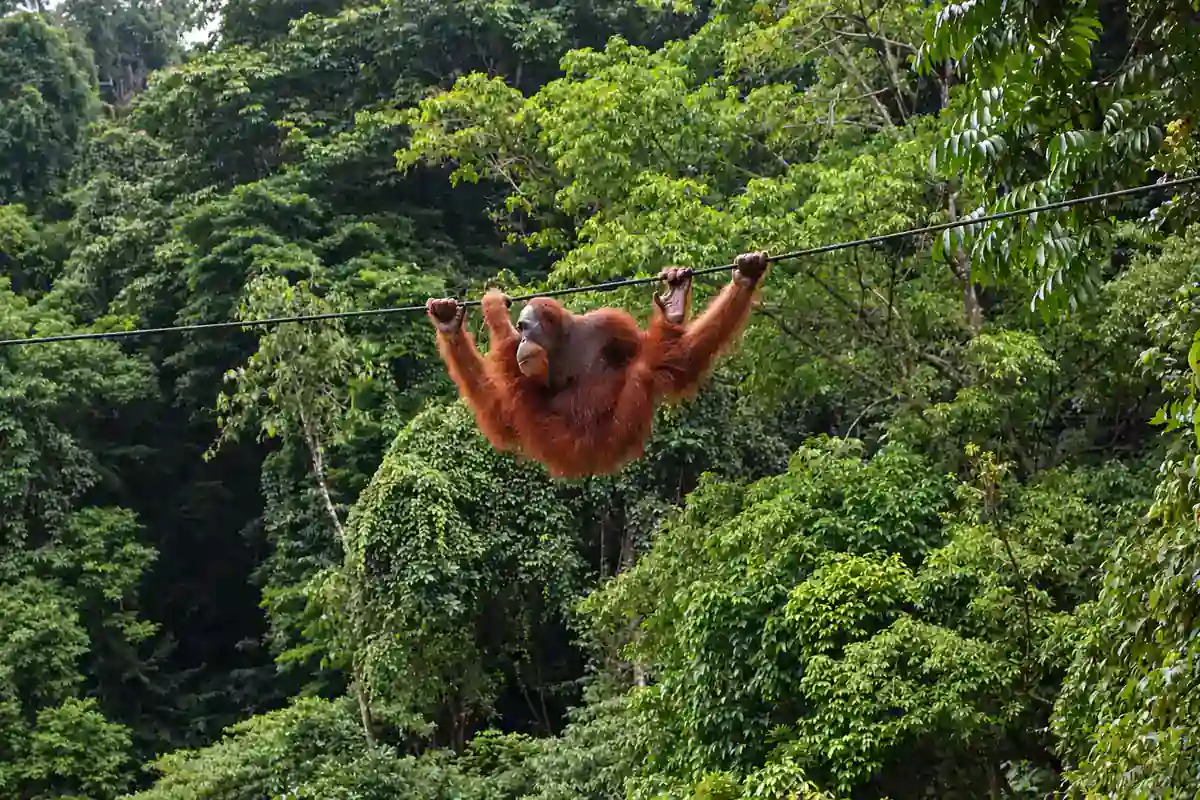
The forests shelter the Sumatran Orangutan, Sumatran tiger, rhino, and elephant. A third orangutan species, the Tapanuli Orangutan, lives farther south in Sumatra. Sadly, the site has been on UNESCO’s List of World Heritage in Danger since 2011.
14. Khao Sok National Park
Where: Southern Thailand
Type: Tropical rainforest
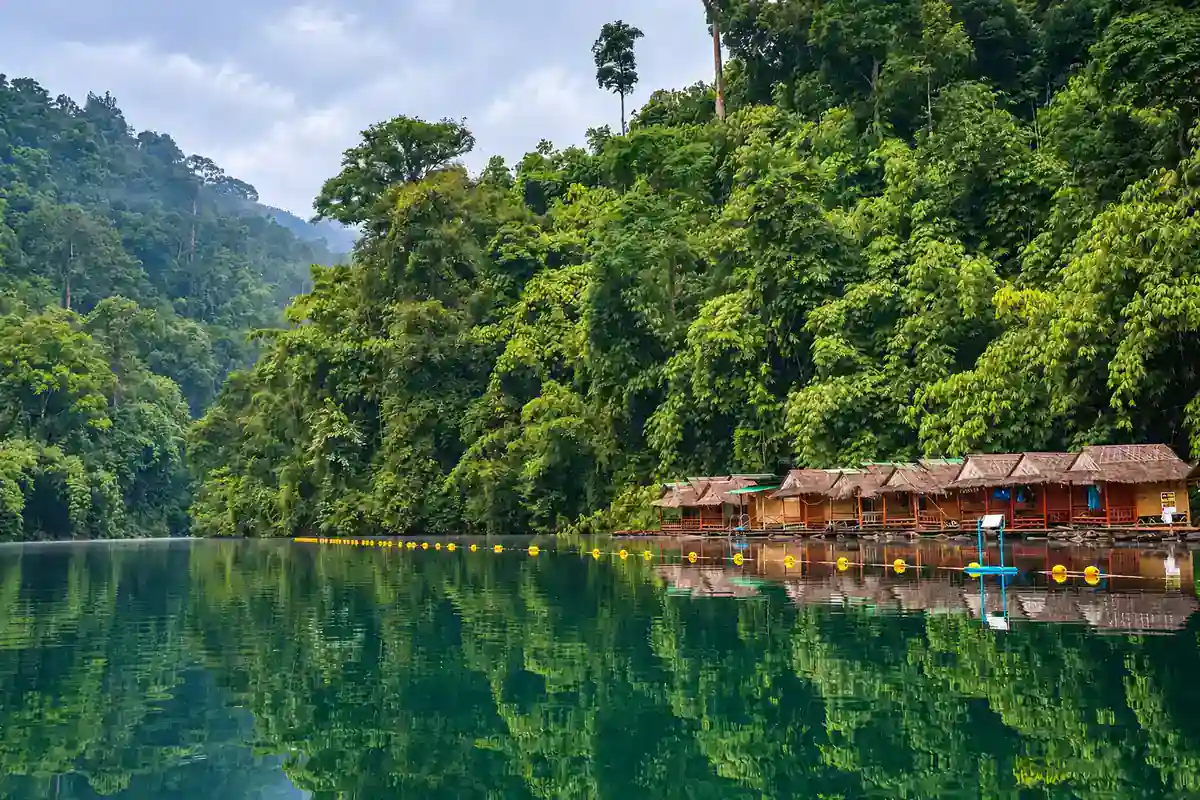
Khao Sok became a national park in 1980. It covers about 660 square kilometers (255 square miles).
Moist evergreen forest covers around 65 percent of the park. A reservoir fills about a quarter of it, and limestone karst covers about 9 percent.[56]
The park has recorded 95 mammal species and 296 bird species. Asian elephants, Malayan tapirs, and the critically endangered helmeted hornbill live here. A rare giant flower, Rafflesia kerrii, grows here too.
Scientists have also recorded 96 reptile, 46 amphibian, and 118 fish species here. Sunda pangolins and the Lar Gibbon live in the forest. The park is part of a larger forest complex of 14 protected areas.
15. Western Ghats and Mollem
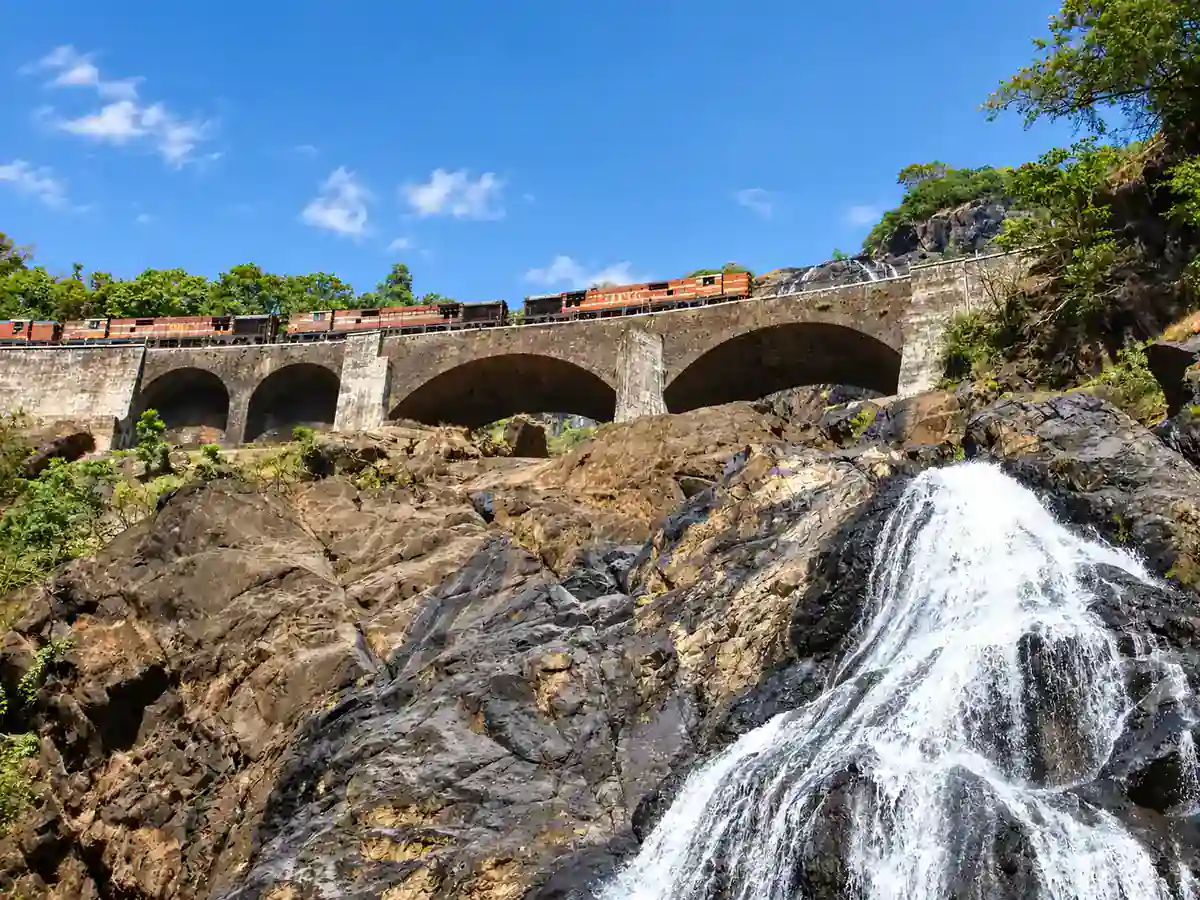
Where: West coast of India
Type: Tropical evergreen and semi-evergreen forest
The Western Ghats are a mountain chain along India’s west coast. They are older than the Himalaya mountains.
UNESCO calls them one of the world’s eight hottest hotspots of biological diversity. They became a World Heritage Site in 2012.[57]
Many species here are endemic. Of nearly 650 tree species, 352 (54 percent) grow nowhere else.
In Goa, Bhagwan Mahavir (also spelled Mahaveer) Wildlife Sanctuary and Mollem National Park protect part of these forests. Together they cover 240 square kilometers, the largest contiguous wildlife protected area in Goa. The forest is mostly semi-evergreen and evergreen.
Large mammals include tigers, leopards, sloth bears, gaur, sambar, and barking deer.[58] Great pied hornbills live here too.[59]
16. New Guinea Rainforest
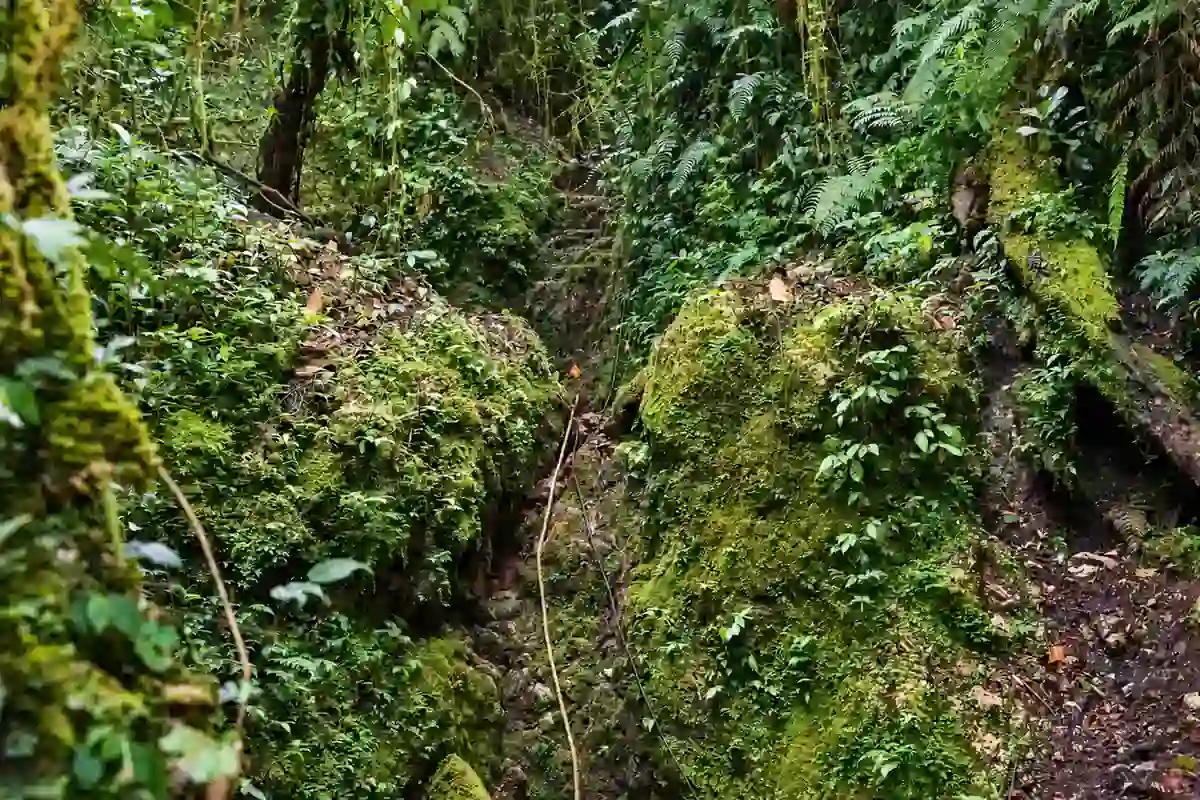
Where: Island of New Guinea (Papua New Guinea and Indonesia)
Type: Tropical rainforest
After the Amazon and the Congo, New Guinea has the third largest rainforest in the world. The island covers less than 1 percent of the world’s land. But it holds at least 5 percent of its animal and plant species.
In 2020, scientists counted 13,634 plant species on New Guinea. That makes it the most plant-rich island in the world. About 68 percent of those plants grow nowhere else.[60]
New Guinea is also famous for its birds-of-paradise. This bird family has more than 40 species, known for their spectacular mating dances.[61]
17. Tasmanian Temperate Rainforest
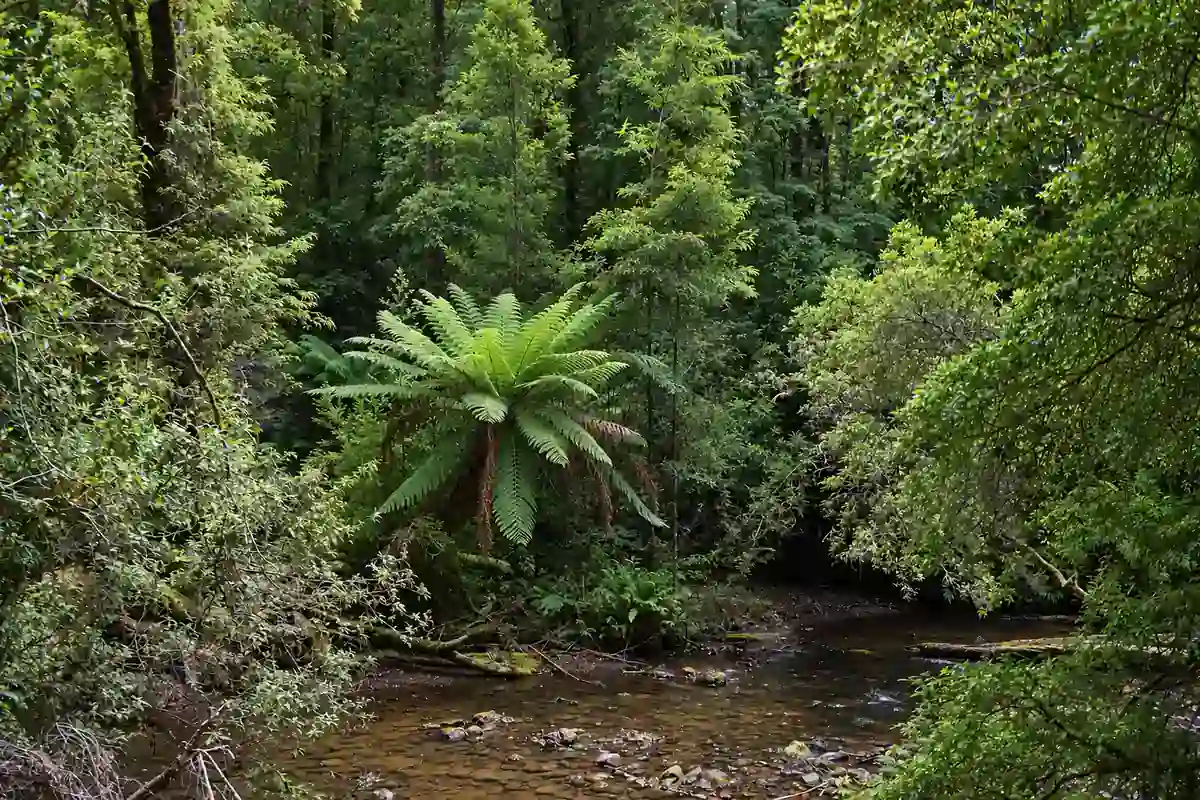
Where: Tasmania, Australia
Type: Cool temperate rainforest
Tasmania has Australia’s largest tracts of cool temperate rainforest. It covers around 10 percent of the state. Common trees include myrtle, leatherwood, celery-top pine, sassafras, and Huon pine.
Many of these plants have ancient roots. Myrtle beech, deciduous beech, King Billy pine, and pencil pine all have Gondwanan ancestry.[62] Gondwana was an ancient supercontinent.
Much of this forest lies in the Tasmanian Wilderness World Heritage Area. UNESCO calls it one of the last expanses of temperate rainforest in the world. Some Huon pines there are more than 2,000 years old.[63]
18. Daintree Rainforest
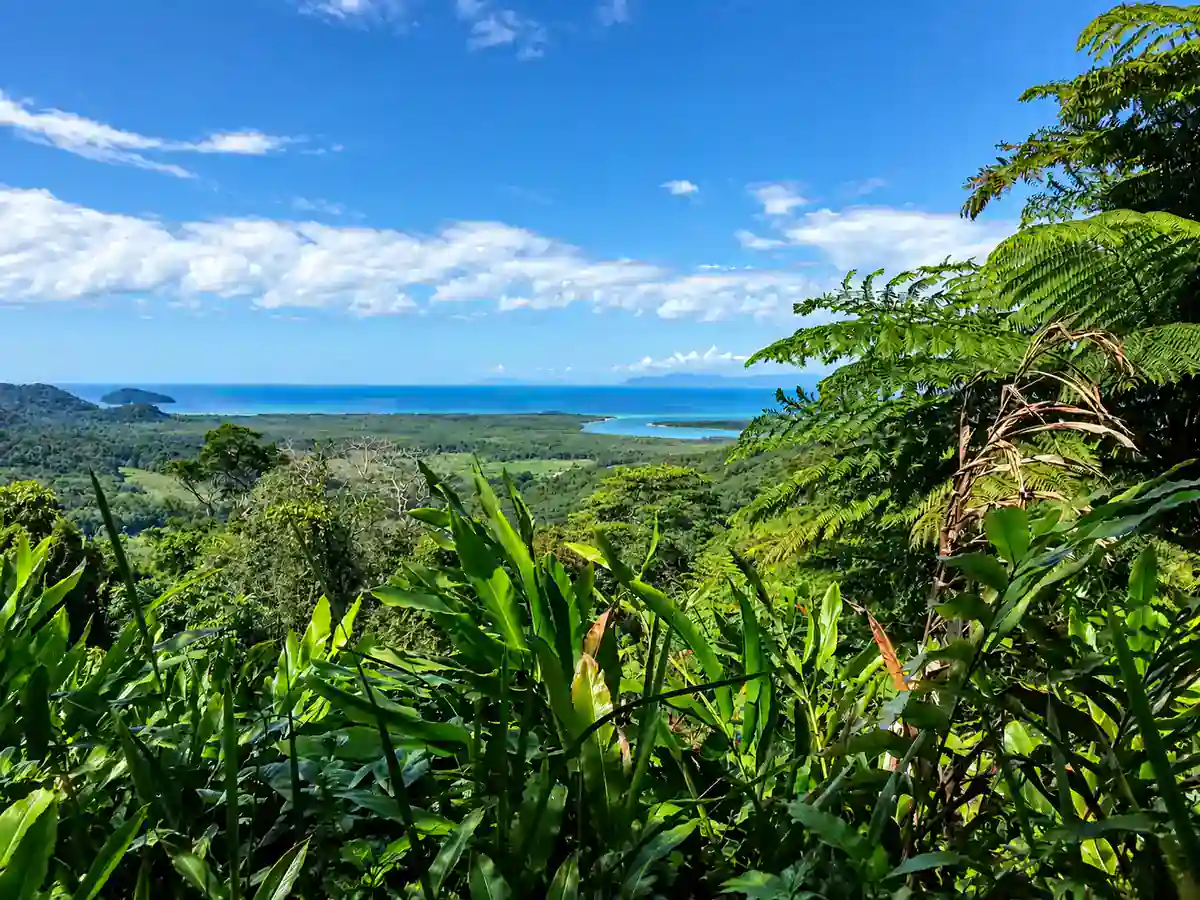
Where: Far north Queensland, Australia
Type: Tropical rainforest
The Daintree is part of the Wet Tropics of Queensland World Heritage Area. It was listed in 1988. Between the Daintree River and Cedar Bay, tropical rainforest meets white sandy beaches and offshore coral reefs.[64]
These are some of the oldest continuously surviving tropical rainforests on Earth.[65] They hold relicts of the great Gondwanan forest that once covered Australia and part of Antarctica.
The Wet Tropics World Heritage Area covers only 0.12 percent of Australia. Yet it is home to 40 percent of Australia’s bird species and 30 percent of its mammal species.
The area also has over 2,800 vascular plant species.[66] Look for the flightless cassowary, one of the largest birds in the world.
Why Rainforests Matter
- They hold much of Earth’s life. Tropical forests probably hold about half of all species on Earth. Explore What Animals Live in Rainforests? and Tropical Rainforest Animal Adaptations.
- They store carbon. Rainforests store huge amounts of carbon in their trees and soils. When forests are cleared or damaged, they release carbon instead of holding it. Peatlands, including peat swamp forests, store twice as much carbon as all the world’s forests.[67] See how the Carbon Cycle Steps work.
- They make rain. Up to 30 percent of the rain in tropical forests is water the forest has recycled. In the Amazon, moisture from the forest supplies about half of the rain that falls on the region.
- They may hold future medicines. Tropical forests hold enormous genetic diversity. Undiscovered plants, animals, fungi, and bacteria may hold cures for cancer and other diseases. Natural products already play a major role in medicine. More than half of all cancer drugs and antibiotics are estimated to have come from compounds found in natural products. The National Cancer Institute has collected more than 100,000 plant and marine samples from 25 tropical and subtropical countries.[68]
The Lungs of the Planet Myth
You may have heard that the Amazon makes 20 percent of Earth’s oxygen. That claim is based on a misunderstanding.[69] Rainforest plants do make a lot of oxygen.
But insects, microbes, other living things, and fires use up nearly all of it. The net oxygen production of forests is very close to zero. Rainforests matter for other big reasons: wildlife, carbon, and rain.
Threats to Rainforests
Tropical rainforests are still shrinking. In 2025, the world lost 4.3 million hectares (10.6 million acres) of tropical primary rainforest. That is an area about the size of Denmark.[70]
There is some good news. That loss was 36 percent lower than the record high of 2024. Brazil cut its non-fire primary forest loss to the lowest level on record.
But the problem is far from solved. Loss is still 46 percent higher than a decade ago. Primary forests are disappearing at a rate of 11 soccer fields every minute.
The main threats include:
- Farming. Agricultural expansion is still the leading driver of tree cover loss.
- Plantations and logging. In Borneo, oil palm, rubber, and pulp plantations and commercial logging put forests at risk.
- Fire. Fires caused 42 percent of all tree cover loss worldwide in 2025.
- Illegal logging and poaching. Illegal logging put Madagascar’s Atsinanana rainforests on UNESCO’s danger list. The site came off the list in 2025 after logging and lemur poaching fell.
Losing rainforest also means losing species. Read more about the biggest Threats to Biodiversity.
Frequently Asked Questions
There is no official count, so scientists group rainforests into regions instead. There are three major tropical rainforest regions: the Americas, Africa, and Southeast Asia with nearby Pacific islands. Smaller temperate rainforests grow along cool, wet coasts in places like the Pacific Northwest, Chile, Norway, Japan, and New Zealand.
The Amazon is the largest rainforest in the world. Its dense forest covers about 2.2 million square miles across eight countries and French Guiana. Brazil, Peru, and Colombia are among the countries it covers.
The three largest are the Amazon in South America and the Congo Basin in Central Africa. The rainforest on the island of New Guinea ranks third.
Jungles are found in tropical rainforest regions. These include Central and South America, western and central Africa, Southeast Asia, western India, New Guinea, and northeastern Australia. Jungle growth is thickest along rivers and in gaps where sunlight reaches the ground.
A rainforest is a forest with high rainfall. Jungle is an informal term for thick, tangled growth that forms where lots of light reaches the ground, such as along rivers. Inside a mature rainforest, the canopy blocks much of that light, so the floor is often shady and more open.
Every continent except Antarctica has rainforests. North America, South America, Africa, Asia, Europe, and Australia all have them.
Yes. The Hoh Rain Forest in Washington and Tongass National Forest in Alaska are temperate rainforests. El Yunque in Puerto Rico is the only tropical rainforest in the U.S. National Forest System.
Yes, Europe has temperate rainforests. Small patches grow in Norway, Great Britain, Ireland, and Iceland. The Colchic Rainforests grow on Georgia’s Black Sea coast, where Europe meets Asia.
The two main types are tropical and temperate rainforests. Tropical rainforests grow near the equator and stay warm all year. Temperate rainforests grow in cooler regions, often near coasts, where National Geographic uses at least 55 inches (140 cm) of rain a year as a general benchmark.
There is no single agreed answer. Australia’s Wet Tropics, which include the Daintree, are some of the oldest continuously surviving tropical rainforests on Earth. Georgia’s Colchic Rainforests are among the oldest temperate broad-leaved forests in the world.
In the Americas, they include Brazil, Peru, Colombia, Suriname, Chile, Canada, and the United States. In Africa, they include the Democratic Republic of the Congo, Gabon, Liberia, and Madagascar. In Asia and Oceania, they include India, Thailand, Indonesia, Malaysia, Papua New Guinea, and Australia.
No. Rainforest plants make lots of oxygen, but insects, microbes, other living things, and fires use up almost all of it. The net oxygen the forest adds to the air is close to zero. The claim that the Amazon makes 20 percent of Earth’s oxygen is a myth.
Key Takeaways
- A rainforest is a tall, dense forest with high rainfall.
- There is no official count of rainforests. There are three major tropical regions, plus temperate rainforests on cool coasts.
- The two main types are tropical and temperate rainforests.
- Tropical rainforests grow mostly between the Tropic of Cancer and the Tropic of Capricorn.
- Jungle is an informal term for thick growth where light reaches the ground. It is not the same as a mature rainforest.
- The three largest rainforests are the Amazon, the Congo Basin, and New Guinea.
- Rainforests grow on every continent except Antarctica, including Europe and the United States.
- Tropical forests cover about 7 percent of Earth’s dry land but probably hold about half of all species.
- Tropical primary rainforest loss fell in 2025, but it is still 46 percent higher than a decade ago.
Cite this page
BioExplorer. (2026, September 20). Rainforests of the World: 18 Famous Rainforests and Where They Grow. https://www.bioexplorer.net/world-rainforests.html/
About the author


We do need more effort and awareness as well as protection to ensure our precious Rainforest is to be safeguarded and no more exploitation and deforestation should be allowed.
Malaysian government needs to enact and enforce much stricter laws and penalties against any invaders and poachers, the current jurisdiction is not enough and poorly executed, hence , ppl are lawless and ruthless and fearless in continuing in doing harm to our national heritage! We must take full pride as it is one of the best gifts God has blessed us with, and our rainforest may not be one of the largest but certainly one of the most outstanding and impressive one for sure!