
Branches of Genetics
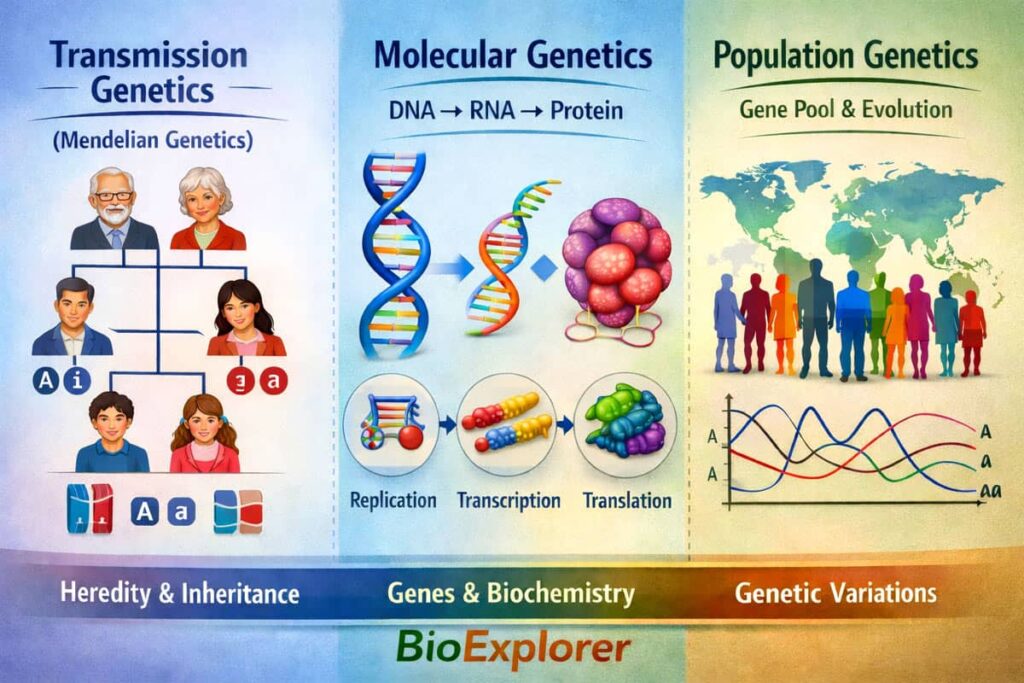
Think about it – When cuddling an adorable infant, do you often go wow about the baby's appearance and make statements like his hair is just as good as his mother’s or her eyes are identical to her father’s? Well, these statements are absolutely true. Due to the transmission of genes, offspring develop a few traits similar to their parents.
Jump to:
What is Genetics?
Genetics is a branch of science that deals with the study of information on heredity, DNA control functions, genes, biological functions of cells, and expression patterns of genes, also known as 'Microarray Technology' and molecular biology. Geneticists focus on areas like evolution, population, and bioinformatics.

History of Genetics
3 Primary Branches of Genetics
Genetics is the study of how traits are passed from parents to offspring. To study this effectively, scientists look at how genes move through individuals, how they work inside cells, and how they change in large groups.
A) Transmission Genetics
Often called “Mendelian Genetics” after Gregor Mendel, this classical genetics branch focuses on the individual and how traits are passed from one generation to the next. It is the study of heredity and family trees.
- What it studies: Dominant and recessive traits, how chromosomes separate during reproduction, and how to predict the physical traits of offspring.
- Why it matters: This is the foundation for understanding why children look like their parents and identifying the risk of inherited conditions like color blindness.
Autosomal Recessive Inheritance: Principles, Patterns, & Associated Disorders
B) Molecular Genetics
Molecular genetics zooms in to look at the chemical nature of the gene itself. This branch is concerned with the “coding” of life—how DNA is copied, how it gets damaged (chromosomal mutations), and how it gives instructions to the cell.
- What it studies: The structure of DNA, RNA, and proteins. It looks at the molecular processes of replication, transcription, and translation.
- Why it matters: By understanding the molecular “typos” in our DNA, scientists can develop gene therapies to fix the underlying causes of diseases like Cystic Fibrosis or the “Big C”.
Central Dogma of Molecular Biology

In the world of genetics, the flow of genetic information from DNA to RNA to Protein is famously known as the “Central Dogma.” It is the universal rule for how life translates “instructions” (DNA) into “action” (Proteins).
From mRNA To Protein: Overview of Translation Biology
C) Population Genetics
Population genetics zooms out to look at large groups of individuals. Instead of looking at one family, it studies how the frequency of certain genes changes over time across an entire city, country, or species.
- What it studies: Genetic variation, evolution, and how factors like migration or natural selection change the “gene pool“.
- Why it matters: This branch helps us understand how humans migrated across the globe and why certain populations are more or less susceptible to specific health conditions.
How To Become An Epidemiologist?
Modern & Applied Branches
As our technology has advanced into 21st century, several specialized fields have become vital:
- Genomics: The study of an organism’s entire set of DNA (the genome), rather than just single genes.
- Epigenetics: Investigates how your behaviors and environment (like diet or stress) can cause changes that affect the way your genes work without changing the DNA sequence itself.
- Cytogenetics: The study of chromosomes under a microscope to detect large-scale abnormalities (like an extra chromosome).
Genetics Curriculum Overview
To become literate in the subject of Genetics, you will have to gain insight into a variety of subjects. Some of them include:
- Introductory information on genetics. Its concept and meaning.
- Facts on DNA Anatomy and how to do it.
- Limelight on the basics of population genetics.
- An idea about Genotyping.
- Relations and correlations between Genotype and Phenotype.
- Description of terminologies, methodologies, and technologies related to the study of modern genetics.
- Concepts about trait genetics. How to study and understand the complexity of traits and their patterns?
Genetics Articles
12 Pros and Cons of Genetic Testing

13 Important Genetic Engineering Pros And Cons

6 Major Disadvantages of Genetically Modified Foods

Albino Bats

Albino Crows

Albino Deer: A Rare and Fascinating Genetic Mutation
Albino Ferrets

Albino Monkeys

Can Animals Have Down Syndrome?

Designer Babies Pros and Cons
Exploring Your Genes: The Best DNA Testing Service

Mechanisms Of Evolutionary Change: The Founder Effect
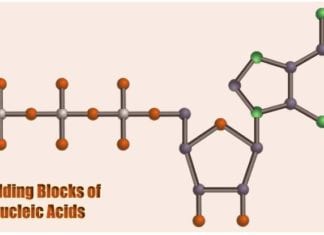
Nucleotides: Building Blocks of Nucleic Acids
Top 10 BEST Genetics Discoveries of 2019
Top 10 Genetics News of 2020

Top 12 Best Genetics Textbooks

Top 15 Pros and Cons of Cloning
Top 25 Most Recent Genetic Discoveries in 2018

Top 34 Gene Therapy Pros and Cons
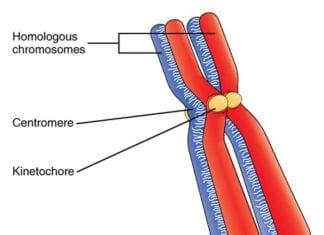
What Is A Homologous Chromosome?
What is Genetic Determinism?
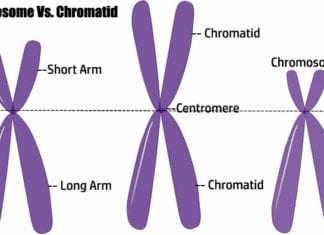
What is the Difference Between Chromosome and Chromatid?

Woolly Mammoth Clone Project: Can It Be Resurrected?
Resources
Department of Energy Human Genome Program
The Human Genome Program of the Department of Energy is focused on reaching the goals of the U.S. Human Genome Project in cooperation with the extramural division of the National Human Genome Research Institute of the National Institutes of Health. Link
ECOGENICS GmbH – molecular marker services
ECOGENICS develops molecular tools for the genetic analysis of fungi, plants, and animals. We provide custom-made solutions to facilitate research projects. Link
GEENOR
Articles and software related to genetic engineering and genetics. Link
Genetics Division of the WWW VL Biosciences
The WWW Virtual Library has a comprehensive list of genetic resource links categorized by species. Link
Genetics Education Center
The Genetics Education Center is for educators interested in human genetics and the human genome project. Resources on the human genome project, curricula, lesson plans, books, videotapes, and other resources are included, as well as information on a mentor network, genetic conditions, genetic careers, and glossaries. The site is maintained by Medical Genetics, University of Kansas Medical Center. Link
GENETICS OF FITNESS AND PHYSICAL PERFORMANCE
Do genes determine champions? Genetic information about athletes’ predisposition to illness and injury. Genetic engineering to create “super-athletes”. Gene therapy and tissue engineering in sports medicine. Link
GenomeWeb
The GenomeWeb is the authoritative collection of the best genome-related sites on the Web. Link
Genomics and Bioinformatics Group
The Genomics & Bioinformatics Group (GBG) website offers useful bioinformatic program packages, microarray data analysis information, and molecular databases for genomic and proteomic research. Link
Human Genome Project Information
The main homepage for Human Genome Project information –what the project is; its progress, history, and goals; what issues are associated with genome research; frequently asked questions, the science behind the project; who its sponsors are. Link
KEGG
Kyoto Encyclopedia of Genes and Genomes (KEGG) is an effort to computerize current knowledge of molecular and cellular biology regarding the information pathways that consist of interacting molecules or genes and to provide links from the gene catalogs produced by genome sequencing projects. The KEGG project is being undertaken at the Institute for Chemical Research, Kyoto University as part of the Japanese Human Genome Program. Link
Magpie
A list of current genome sequencing projects with links to their research facility. Link
Maize Genetics COOP Stock Center
A repository for maize mutants utilized by scientists conducting biological research. Order genetic stocks and obtain information about maize mutants. Link
The DNA Learning Center web
The DNA Learning Center web page contains various online DNA resources and information on our many workshops, field trips, courses, and products. Link
The Euro-MRX consortium: groundbreaking research into Mental Retardation
The Euro-MRX Project researches the genetic causes of X-linked mental retardation. The goal is to identify new genes associated with MRX and to improve diagnostic techniques. Link
The Interactive Fly
Website maintained by the Society of Developmental Biology containing information regarding Drosophila genes and their roles in development. Link
TIGR Microbial Database
A listing of microbial genomes and chromosomes completed and in progress. Link
Cite this page
Bio Explorer. (2026, January 27). Branches of Genetics. https://www.bioexplorer.net/divisions_of_biology/genetics/