
White Monkeys
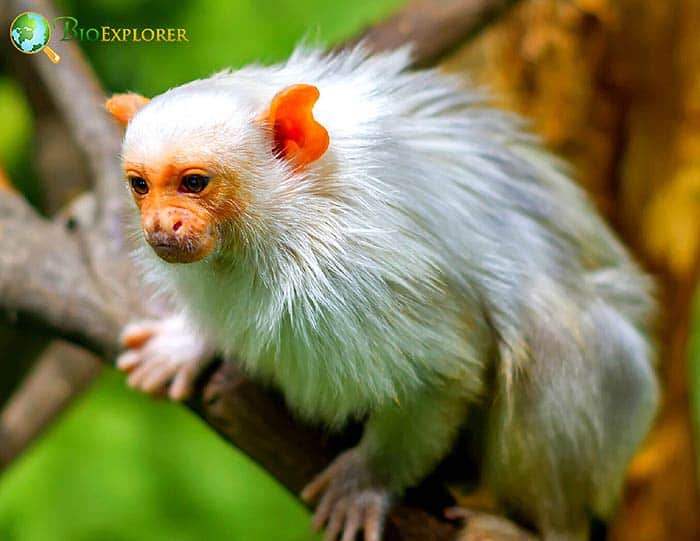
Here are the types of white monkeys from both Old-world and New-world types. Some of these monkeys typically have other fur color coats, such as black or orange, to make them appear very colorful.
Types of White Monkeys

Ashy Black Titi
The Ashy black titi is a species initially described in 1823 as Callicebus cinerascens. Ashy black titi monkeys live in small families comprising a monogamous pair and their young. Adult males tend to carry their infants unless the mother is nursing.
Read more

Black and White Langur
The black-and-white langur is a primate species in the Cercopithecidae family. It was formerly thought to be a subspecies of the Presbytis melalophos (black-crested Sumatran langur). Still, the genetic analysis indicated they were separate species.
Read more
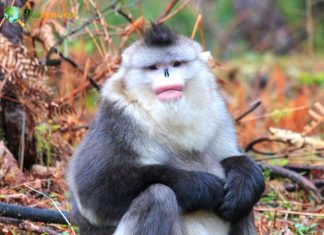
Black Snub-nosed Monkey
The black-and-white snub-nosed monkey, also called the Yunnan snub-nosed monkey, is a large black-and-white primate living only in Yunnan Province in southern China, where it is known to the local population as the Yunnan golden-haired monkey. The species gets the "snub-nosed" part of its name due to its lack of nasal bones.
Read more
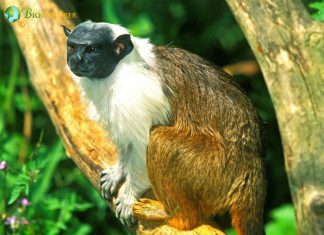
Brazilian Bare-Faced Tamarin
The pied tamarin, also known as the pied bare-faced tamarin or Brazilian bare-faced tamarin, has one of the smallest home ranges of any primate in the world, located in and around the port city of Manaus.
Read more
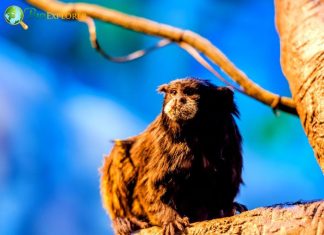
Brown-mantled Tamarin
The brown-mantled tamarin also called the Spix's saddleback tamarin, is a species of saddleback tamarin native to South America. The species are considered "phyletic dwarfs," meaning their small size is linked to their evolutionary development.
Read more
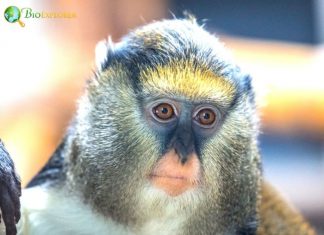
Campbell’s Mona Monkey
Campbell's Mona monkey, also called the Campbell's monkey or Campbell's guenon is a primate species in the Cercopithecidae family. The species was named after Henry Dundas Campbell in 1838.
Read more

Chacoan Titi Monkey
The Chacoan Titi Monkey is a species of titi (also called White-coated Titi), a type of New World monkey native to South America. These diurnal monkeys are stealthy and hard to spot as they navigate the canopy. They move between branches and trees by walking or jumping on four limbs.
Read more
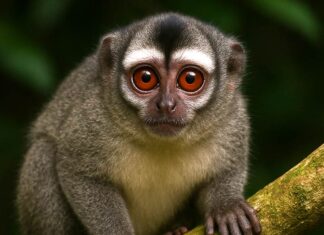
Gray-bellied Night Monkey
The gray-bellied night monkey (Aotus lemurinus) is a rare nocturnal primate found in the cloud forests of Colombia and Ecuador. Recognizable by its red eyes, gray underbelly, and woolly coat, it thrives in dense canopies where it feeds on fruits, insects, and nectar. Its nocturnal habits reduce competition and help it evade predators like owls and snakes. As both seed disperser and prey, it plays a key ecological role—yet habitat loss continues to threaten its survival.
Read more

Hershkovitz’s Marmoset
The Hershkovitz marmoset (Mico intermedia), also called the Aripuanã marmoset, is endemic to the Amazon rainforest of south-central Brazil. The common name references Philip Hershkovitz, an American zoologist.
Read more
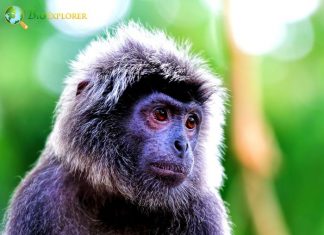
Javan Surili
The grizzled surili (Presbytis comata) is a threatened species of Old World monkey native to the western half of Java, Indonesia, a biodiversity hotspot. The grizzled surili engages in 3 to 4 foraging and feeding fights throughout the day.
Read more

Mantled Guereza
The mantled guereza (Colobus guereza), also known as the guereza, Abyssinian black-and-white colobus, or eastern black-and-white colobus, is a black-and-white colobus, a species of Old World monkey. The mantled guerezas are typically diurnal.
Read more
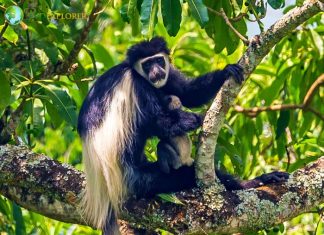
Mount Kilimanjaro Guereza
The Mount Kilimanjaro guereza (Colobus caudatus) is one of the 7 subspecies of the mantled guereza. It is found in Kenya and Tanzania in the forests surrounding Mount Meru and Mount Kilimanjaro.
Read more
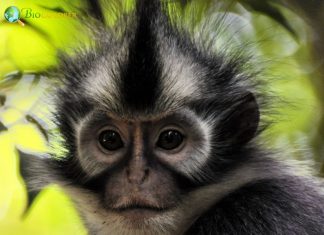
North Sumatran Leaf Monkey
The North Sumatran leaf monkey (Presbytis thomasi), also called Thomas's langur, is a primate species in the Cercopithecidae family. The North Sumatran leaf monkeys spend most of the day in groups resting, moving, or feeding.
Read more

Ornate Titi
The ornate titi (Plecturocebus ornatus) is a species of titi and the smallest member of the Pitheciidae family, including the uakari and saki monkeys. Ornate titis have a monogamous mating system. A couple has a strong bond and stays together for years.
Read more

Rio Acari Marmoset
The Rio Acari marmoset (Mico acariensis) is endemic to Brazil. It was first described in the year 2000. These Brazilian monkeys use their specialized claws to forcefully grip tree trunks and gnaw small holes in the bark with their lower incisors and canines.
Read more

Ryland’s Bald-faced Saki
The Ryland's Bald-Faced Saki (Pithecia rylandsi) is a controversial species of saki monkey, a New World monkey species. It is one of the largest sakis. This South American monkey was named after Brazilian primatologist Anthony Rylands, a former professor of vertebrate zoology at the Federal University of Minas Gerais and founding editor of the journal Neotropical Primates.
Read more
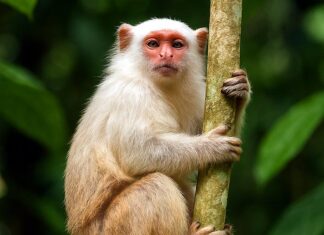
Schneider’s Marmoset
Schneider’s marmoset (Mico schneideri) is a tiny Amazonian monkey discovered only in 2021. Endemic to Brazil’s Mato Grosso forests, it lives in one of the most threatened rainforest regions. With a diet of fruits, insects, and flowers, it plays key ecological roles. Social and territorial, this marmoset breeds within tight-knit groups. Unfortunately, rampant deforestation threatens its survival. Urgent conservation is needed to protect this rare species and the rapidly vanishing habitat it calls home.
Read more

Tonkin Snub-Nosed Monkey
The Tonkin snub-nosed monkey, also known as the Dollman's snub-nosed monkey (Rhinopithecus avunculus), is a slender-bodied Old World arboreal monkey native to northern Vietnam.
Read more

Udzungwa Red Colobus
The Udzungwa red colobus (Piliocolobus gordonorum), also called the Iringa red colobus or the Uzungwa red colobus is endemic to Tanzania.
Read more

White Marmoset
The white marmoset (Mico leucippe), also called the golden-white bare-eared marmoset, is an endangered marmoset native to the Amazon rainforest of Pará, Brazil.
Read more

White-footed Saki
The white-footed Saki, also called the white Saki or buff saki, is a species of saki monkey, a New World species native to western Brazil. They hang from branches and hold on with their hind legs while eating seeds and fruits.
Read more
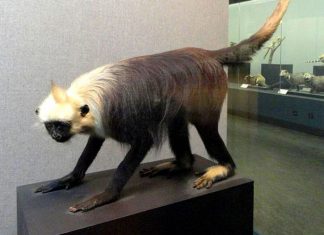
White-headed Langur
The white-headed langur (Trachypithecus leucocephalus) is an endangered species of langur native to Guangxi, China. As the common name suggests, a tuft of white fur covers this primate's head.
Read more
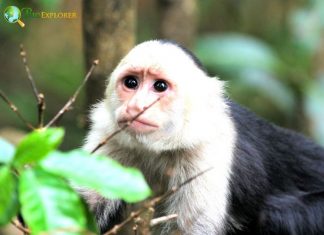
White-Throated Capuchin
White-throated capuchins, also called the white-headed capuchins, Colombian white-throated capuchins, and white-faced capuchins, are New World monkeys native to the tropical rainforests of western Colombia, Ecuador, and Panama.
Read more
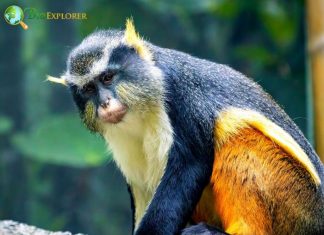
Wolf’s Mona Monkey
The Wolf's mona monkey (Cercopithecus wolfi), also called the wolf monkey, is a colorful Old-World monkey in the Cercopithecidae family. Wolf's mona monkeys have huge cheek pouches.
Read more
Recommended Readings: Black Monkeys | Brown Monkeys | Green Monkeys | Red Monkeys | Orange Monkeys | Gray Monkeys
Suggested Reading:
Albino Monkeys
Albino monkeys, also known as monkeys with albinism, lack pigmentation in their skin, hair, and eyes. Discover more about these unique creatures and their genetic condition.
Read more