European Starling

European Starling

KingdomOrderFamilyGenusSpecies
AnimaliaPasseriformesSturnidaeSturnusSturnus vulgaris

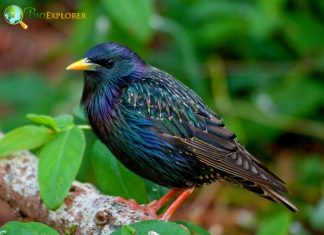
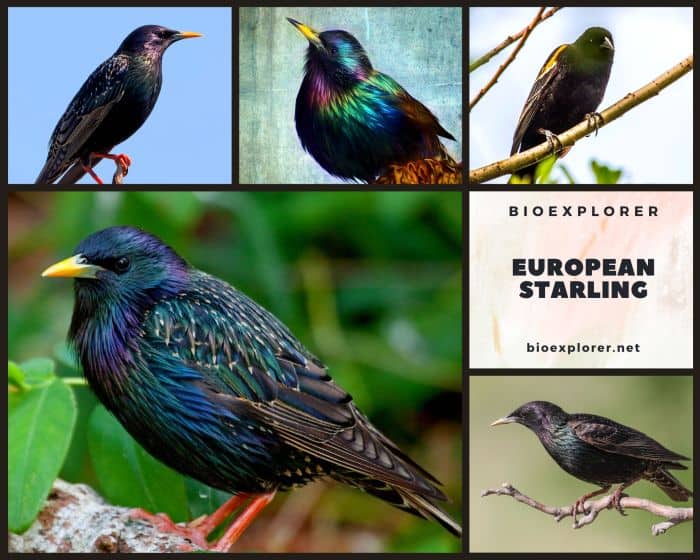
European Starlings (Sturnus vulgaris), first introduced to North America by Shakespeare enthusiasts in the nineteenth century, are now among the continent’s most common songbirds. They have short tails, triangular wings, and long, pointed bills. They are stocky black birds.

European Starling

Jump to:

European Starling Physical Characteristics
European Starling Physical Characteristics

In the 1890s, European Starlings were deliberately introduced to North America.

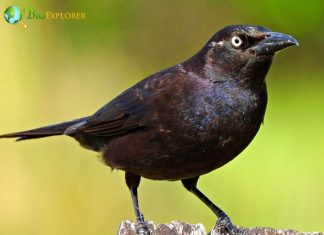
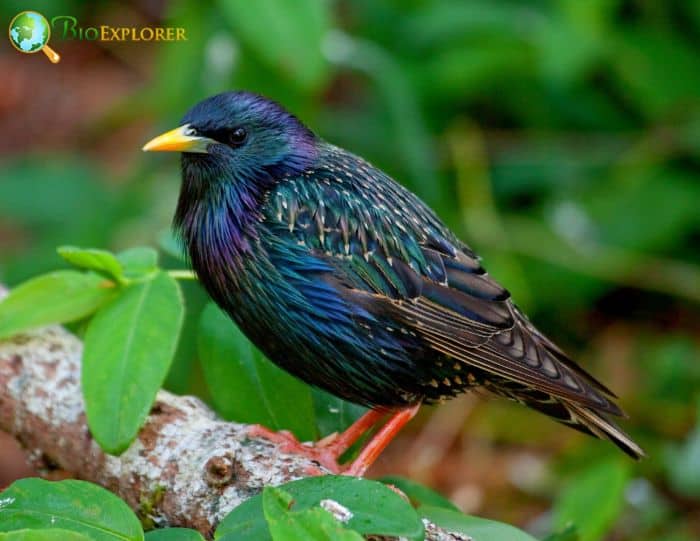
  • The European starling is a small, black songbird with a short tail, short, triangular wings, and speckled plumage.
  • They have a pointed, yellow bill that turns dark in the autumn and are about six inches long, about the same size as an American Robin.
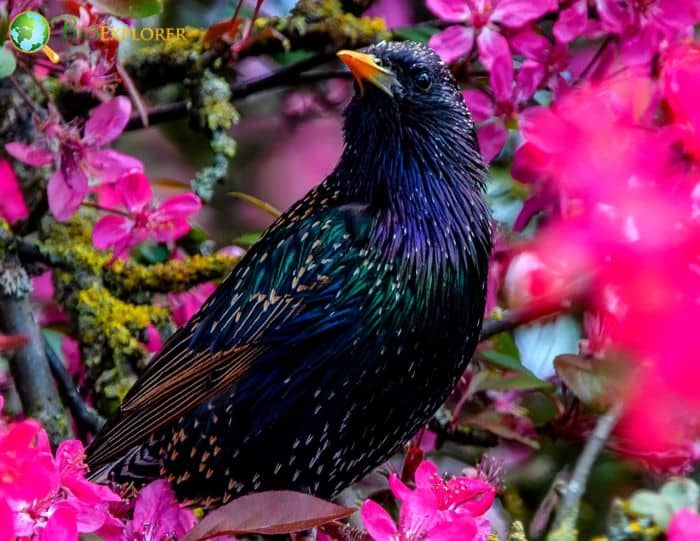
  • The starling has incredibly vibrant feathers. The head and chest have a purplish-black iridescence.
  • The color of the wings is green, but the end of the wings is brownish black. Every part of their body is covered in pale markings. Legs are a pinkish-red color.

European Starling changes its appearance every season
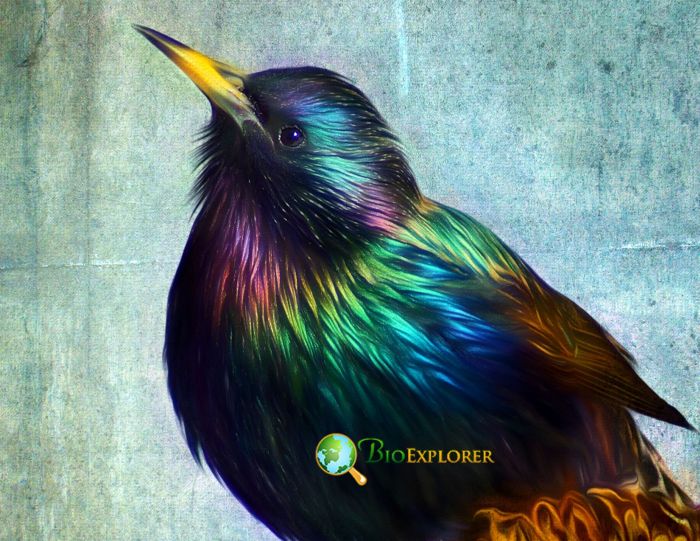
European Starling Changes Its Appearance Every Season

The stocky body of a European Starling has distinctive white spots in the winter.

  • The bird’s body color, except the upper wings, darkens and shimmers as summertime approaches.
  • In addition, the bird’s shorter tail remains short while its less pointed wings change into a triangle shape while in flight.
  • The bird’s long, sharp beaks change from grey to yellow as winter approaches.
  • A European Starling weighs between 55 and 101 grams and measures 7-9 inches long in size and length.

European Starlings communicate loudly
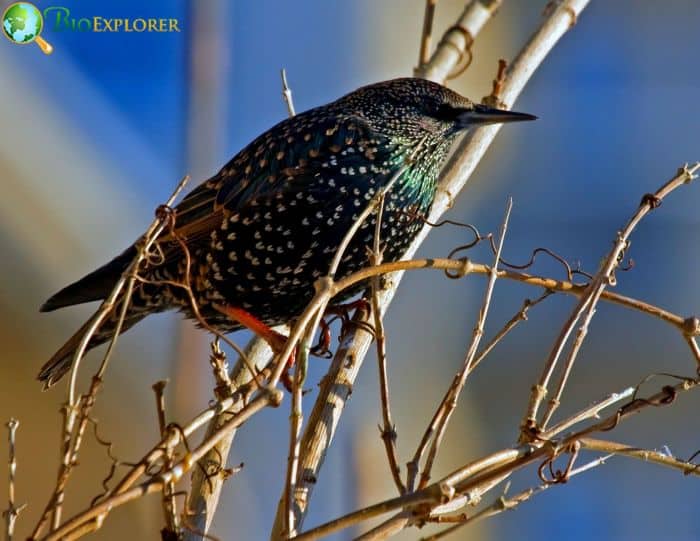
European Starlings Communicate Loudly

European Starlings are among the loudest birds on Earth.

  • They are very talkative and only go silent when molding. The warbling, gurgling, and creaking noises male birds make are their favorite.
  • Birds enjoy making chattering, whistling, rattles, and liquid noises. European Starlings can accurately mimic the sounds of other birds and are skilled mimics.
  • They use a variety of tones and pitches to produce warning sounds when they need to make a call[1].

European Starling can cause infestation
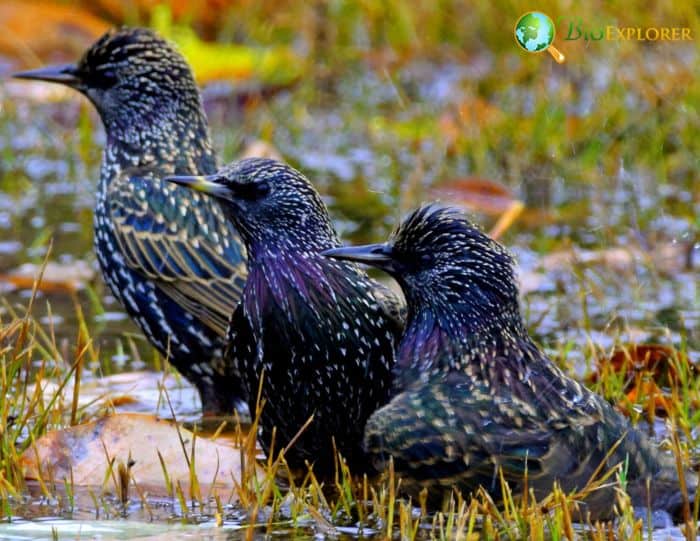
European Starling Can Cause Infestation

These birds appear to be innocent, but they are perfectly suited to spread infestation.

    • If you notice them flying around your property, it is time to take action because they view human homes as the ideal location to build their nest.
    • Unfortunately, these birds’ droppings contain fungi that can be extremely hazardous to your health.
    • Over time, these droppings can damage the structure of your building. Therefore, if you see a nest close to your home, it is best to take action to remove it because the birds may be planning to take over.

gradually

European Starling undergoes a process of molting
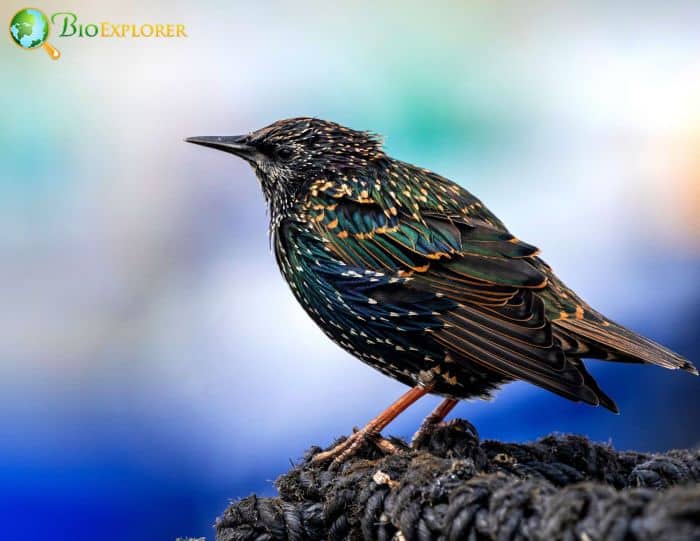
European Starling Undergoes A Process Of Molting

Each year, starlings shed none of their feathers as they transition from being spotted and white to glossy and dark.

  • Their spots are created by the prominent white tips on the new feathers that they grow in the autumn.
  • These tips have disappeared by spring, leaving behind a dark, iridescent brown feather. Scientists refer to this peculiar act of changing as a “wear molt.”
  • Thus, the European Starling is a very social bird that does not defend territory beyond its nest site, but because of its rapid spread, it is held responsible for the extinction of many Bird Species.

More Black Birds
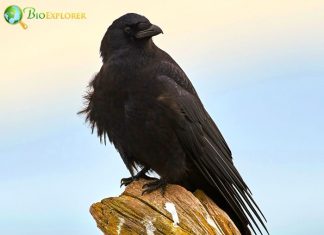
American Crow
American Crow

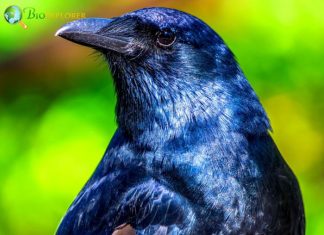
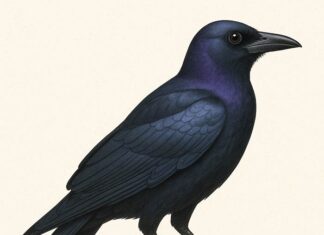
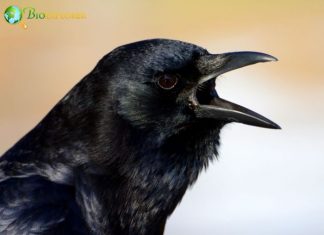
The American Crow is a large, glossy black bird recognized by its distinctive “caw” and confident walk. Common throughout North America, it thrives in a variety of habitats including forests, fields, towns, and cities. These birds are highly social, often living in family groups and gathering in large communal roosts during winter. American Crows are omnivorous and opportunistic, eating insects, seeds, small animals, carrion, and human food scraps. Notably intelligent, they are skilled problem solvers and quick learners. American Crows are curious, cooperative breeders, and adapt well to both urban and rural environments.
Read more
Anhinga

Anhinga

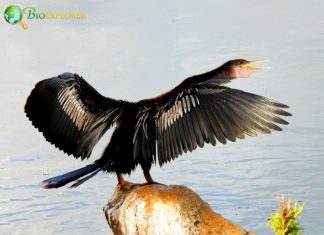
The Anhinga, also called the “snake bird” for its long, slender neck, is a large, mostly black water bird with a pointed yellow bill and silvery wing patches. Males have darker, glossy plumage, while females show a paler head and neck. Found in freshwater swamps, lakes, marshes, and slow-moving rivers from the southeastern U.S. to South America, Anhingas are expert divers, swimming underwater with only their head and neck exposed. Unlike most birds, they lack waterproofing oils, so they must spread their wings to dry after diving. Anhingas spear fish with their sharp bills and swallow them headfirst.
Read more
Black Scoter

Black Scoter

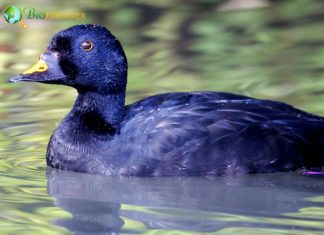
The Black Scoter is a chunky sea duck, with males easily recognized by their all-black plumage and a distinctive swollen yellow knob at the base of the bill. Females are dark brown with pale cheeks and throat. They breed in remote northern lakes and wetlands, mostly in Alaska and northern Canada, and winter along both Atlantic and Pacific coasts of North America. Black Scoters dive for food, feeding mainly on aquatic insects in freshwater and mollusks like clams and mussels in marine habitats. Black Scoters are monogamous, and their winter flocks can number in the thousands.
Read more
Black Vulture

Black Vulture

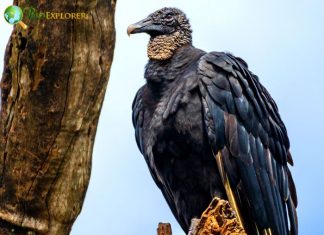
The Black Vulture is a large, stocky bird with sooty black plumage, a bare black head, and striking white patches near the wingtips. Found year-round in the eastern and southern U.S. through Central and South America, it thrives in open areas, woodlands, and even around towns. Black Vultures are highly social, often roosting and foraging in large flocks. They feed mainly on carrion, using keen eyesight to locate food, and sometimes follow Turkey Vultures to carcasses. Black Vultures mate for life, care for their young for months, and help clean the environment by consuming dead animals.
Read more
Black-billed Magpie

Black-billed Magpie

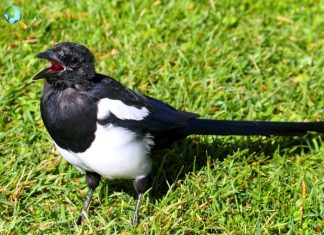
The Black-billed Magpie is a striking, medium-sized bird with a long iridescent tail, black head and back, and bold white patches on its wings and belly. Found in western North America, it thrives in open habitats like meadows, grasslands, and near human settlements. Magpies are highly social and intelligent, often seen in noisy flocks and known for their complex social displays. They build large, domed nests and mate for life. Notably, magpies sometimes gather around deceased companions in a behavior likened to a “funeral.” Black-billed Magpies can recognize themselves in mirrors, a rare trait among birds.
Read more
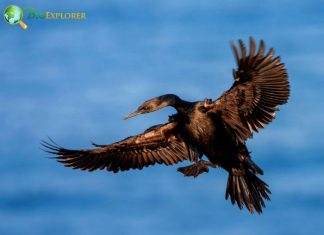
Brandt’s Cormorant

Brandt’s Cormorant

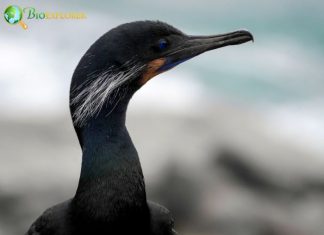
Brandt’s Cormorant is a large, black seabird found along the Pacific coast from Alaska to Baja California. It is recognized by its thick neck, long body, and, during breeding season, a striking cobalt-blue throat patch and wispy white facial plumes. These dark-feathered birds nest in colonies on rocky islands and coastal cliffs, often building large nests from seaweed and debris. Brandt’s Cormorants are excellent divers, capable of reaching depths over 200 feet to catch fish such as anchovies and herring. These black birds often forage in groups, working together to herd schools of fish for easier hunting.
Read more
Cape Crow

Cape Crow

The Cape crow is a glossy black, intelligent bird native to eastern and southern Africa. Known for its large curved bill and deep "krrah" call, this corvid thrives in open grasslands, savannas, and farmlands. It plays a vital role in the ecosystem as both a predator and scavenger, helping control pests and recycle nutrients. Though sometimes viewed as a pest, it demonstrates advanced problem-solving, tool use, and social intelligence, making it a fascinating species among Africa’s many types of birds.
Read more
Carrion Crow

Carrion Crow

The Carrion Crow is a medium-sized, glossy black bird native to Europe and Asia, recognized for its deep, guttural “kraa” call and solitary habits. Adaptable to a wide range of habitats-including woodlands, farmland, moors, coastal cliffs, and urban areas-it often perches in high places to survey its surroundings. Highly intelligent, Carrion Crows use tools, recognize human faces, and even cooperate with each other to hunt or defend territory. Their diet is varied, consisting of carrion, insects, seeds, fruit, and small animals. Offspring from previous years sometimes help parents feed new chicks.
Read more
Chihuahuan Raven

Chihuahuan Raven

The Chihuahuan raven (Corvus cryptoleucus) is an intelligent desert-dwelling bird found in the southwestern U.S. and Mexico. Slightly smaller than the common raven, it features all-black plumage and hidden white neck feathers. Adapted to arid grasslands and scrub, it thrives as both a predator and scavenger. Known for its deep "kraaa" call and playful flight displays, this raven plays a vital ecological role and demonstrates impressive social behavior and adaptability in harsh environments.
Read more
Common Grackle

Common Grackle

The Common Grackle is a large, long-tailed blackbird with striking iridescent plumage-males shimmer with purple, green, or blue gloss, while females are duller and browner. Found across eastern North America, grackles thrive in a wide range of habitats, from wetlands and fields to suburbs and city parks. Highly social, they often gather in massive flocks outside the breeding season. Their varied diet includes insects, seeds, grains, and even small animals. Grackles are known for their harsh, rusty-gate calls, and their communal roosts can number in the millions.
Read more
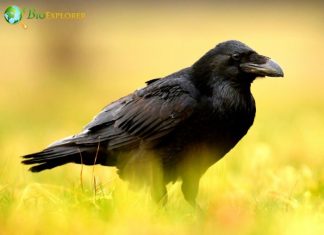
Common Raven

Common Raven

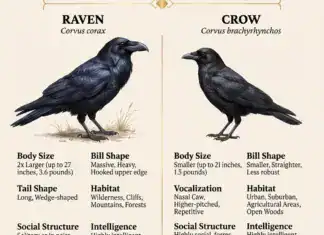
The Common Raven is one of the largest and most widespread black songbirds, easily recognized by its all-black plumage, thick neck, shaggy throat feathers, and wedge-shaped tail. Found across the Northern Hemisphere, it thrives in diverse habitats-from forests and mountains to deserts and coastlines, and even near human settlements. Ravens are highly intelligent, known for problem-solving, tool use, and playful behaviors like aerial acrobatics and object games. They are omnivorous, eating everything from carrion and small animals to grains and human food scraps. Ravens can mimic sounds, including human speech, and often cache food for later use.
Read more
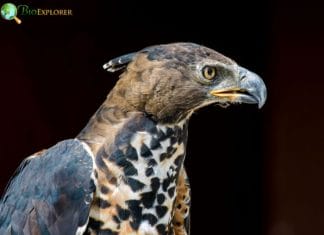
Crowned Eagle

Crowned Eagle

The Crowned Eagle, also known as the African Crowned Eagle, is a powerful raptor native to sub-Saharan Africa, favoring dense forests and woodlands. Recognizable by its striking dark crest and intense yellow eyes, this eagle boasts a wingspan of 5–6 feet and is considered Africa’s most powerful eagle pound for pound. Its massive talons and strong legs allow it to hunt large prey, primarily monkeys, small antelope, and hyraxes, though it occasionally takes birds and reptiles. Crowned Eagles build enormous nests high in emergent trees, sometimes reusing them for over a decade. Their courtship includes dramatic aerial displays and prey offerings.
Read more
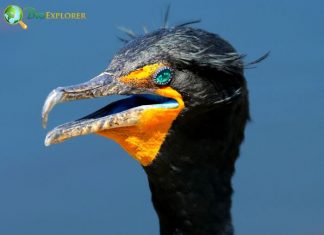
Double-Crested Cormorant

Double-Crested Cormorant

The Double-Crested Cormorant is a large, black waterbird with a long neck and orange-yellow facial skin. During breeding season, adults display two curly black or white crests on their heads. Found across North America in both freshwater and coastal habitats, they are highly adaptable, nesting in trees, on the ground, or even on artificial structures. These social birds often gather in colonies and are expert divers, feeding mainly on fish but also taking insects, crustaceans, and amphibians. After diving, cormorants are often seen perched with wings outstretched to dry, as their feathers are not fully waterproof.
Read more
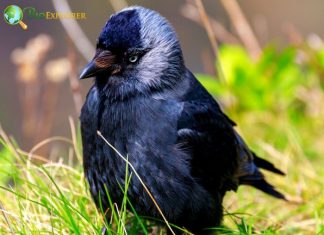
Eurasian Jackdaw

Eurasian Jackdaw

The Eurasian Jackdaw is a small, social member of the crow family, instantly recognized by its charcoal-black plumage, silvery-gray nape, and striking pale eyes. Native to Europe, western Asia, and North Africa, it thrives in a variety of habitats, from woodlands and farmland to cities and coastal cliffs. Jackdaws are highly gregarious, often seen in flocks performing acrobatic flights or gathering at communal roosts. They nest in cavities, chimneys, or cliffs and are known for their intelligence and curiosity, sometimes collecting shiny objects. Their varied diet includes insects, seeds, fruit, carrion, and even human refuse.
Read more
European Starling

European Starling

The European Starling is a medium-sized, black songbird with short, triangular wings, a short tail, and striking iridescent plumage speckled with white, especially in winter. During breeding season, adults display a yellow bill and a purple-green sheen. Native to Europe, Asia, and North Africa, starlings were introduced to North America in the 1890s and now number over 200 million. Highly social, they form enormous flocks and perform mesmerizing aerial displays called murmurations. Starlings are accomplished mimics, able to imitate other birds and even human sounds. They are aggressive cavity nesters, often outcompeting native species for nesting sites.
Read more
Fish Crow

Fish Crow

The Fish Crow is a medium-sized, all-black bird with a subtle green-purple sheen, nearly identical in appearance to the American Crow but best distinguished by its nasal "uh-uh" call. Native to the eastern United States, Fish Crows are most often found near water-coasts, rivers, lakes, and marshes-but have expanded inland along river systems. Highly adaptable, they thrive in urban, suburban, and agricultural areas. Omnivorous and opportunistic, Fish Crows eat everything from carrion and garbage to bird eggs, fruit, and small animals. These black birds often cache surplus food and are known for mobbing predators in groups.
Read more
Great Cormorant

Great Cormorant

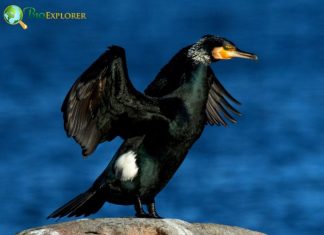
The Great Cormorant is a large, heavyset waterbird with glossy black plumage, a thick neck, and a stout, hooked bill. Adults display a yellow throat patch and, during breeding season, develop white thigh patches and short white plumes on the head and neck. Found across Europe, Asia, Africa, and coastal North America, they inhabit rocky sea coasts, islands, and large inland lakes and rivers. Great Cormorants are expert divers, propelling themselves underwater with their feet to catch fish. After diving, they’re often seen perched with wings spread to dry. They nest in dense colonies, sometimes numbering thousands of pairs.
Read more
Great-tailed Grackle

Great-tailed Grackle

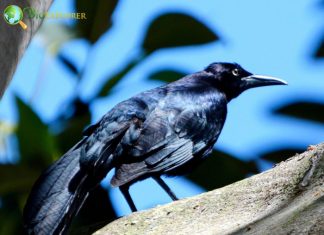
The Great-tailed Grackle is a large, striking blackbird known for its glossy, iridescent males with long, keel-shaped tails and bright yellow eyes. Females are noticeably smaller and brown with darker wings and tails. Native to the Americas, these highly social birds thrive in open areas near water, including farmland, city parks, and suburban lawns, and have rapidly expanded their range across North America in recent decades. Great-tailed Grackles are famous for their raucous flocks and wide variety of vocalizations, from whistles to harsh rattles. They are highly flexible and persistent problem-solvers, able to adapt quickly to new environments and even solve complex puzzles.
Read more
Greater Antillean Grackle

Greater Antillean Grackle

The Greater Antillean Grackle is a glossy black songbird native to the Caribbean’s Greater Antilles, including Cuba, Jamaica, Hispaniola, and Puerto Rico. Males reach about 27 cm (11 in) with a distinctive keel-shaped, "rudder-like" tail, while females are slightly smaller and less glossy. Its most striking feature is its bright yellow eye, the only non-black part of its body. These bold, noisy black birds thrive in open habitats near humans-towns, farms, mangroves, and pastures-and often form large, social flocks. Opportunistic eaters, they consume insects, fruit, seeds, small animals, and even human scraps.
Read more
Hawaiian Crow

Hawaiian Crow

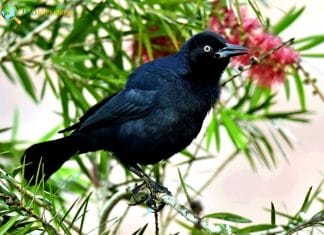
The Hawaiian Crow, or ʻAlalā, is a critically endangered bird endemic to Hawaii, now extinct in the wild but surviving in captive breeding programs. About 19–20 inches (48–50 cm) long, it sports soft, brownish-black plumage, a thick bill, and bristly throat feathers. ʻAlalā once inhabited dry and mesic forests on the slopes of Mauna Loa and Hualālai, playing a vital role in seed dispersal and pest control. Highly intelligent, Hawaiian Crows use sticks as tools-a rare trait among birds-and have a complex repertoire of over 20 vocalizations. In Hawaiian culture, the ʻAlalā is revered as an ‘aumakua, or family guardian spirit.
Read more
Hooded Crow

Hooded Crow

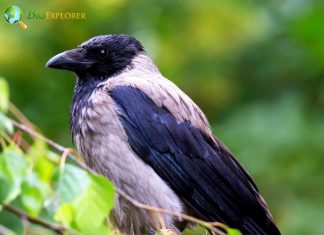
The Hooded Crow is a medium-sized, two-toned corvid with a pale grey body and contrasting black head, wings, tail, and thigh feathers. Found across northern and eastern Europe and parts of the Middle East, it adapts well to woodlands, farmland, coasts, and cities. Hooded Crows are highly intelligent, known for using tools and dropping shells or nuts from heights to crack them open. Their omnivorous diet includes insects, small animals, grains, carrion, and human scraps. Hooded Crows often pair for life, and their harsh "kraa" call is a familiar sound in their range.
Read more
Little Cormorant

Little Cormorant

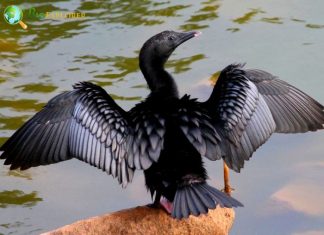
The Little Cormorant is a compact, all-black waterbird, typically 50–55 cm long, found across the Indian subcontinent and Southeast Asia. In breeding season, adults have glossy black plumage, sometimes with white facial spots and a small crest; in non-breeding season, plumage is browner with a white throat patch. This species thrives in wetlands, lakes, rivers, and estuaries, where it’s often seen diving for fish-its main food. Little Cormorants are highly social, roosting and nesting in colonies, sometimes alongside herons and egrets. After diving, Little Cormorants often perch with wings spread to dry.
Read more
Northwestern Crow

Northwestern Crow

The Northwestern Crow is a mid-sized, all-black bird native to the Pacific coast from southern Alaska to northern Washington. It thrives in coastal habitats, intertidal zones, forest edges, and even urban areas, often foraging on beaches for clams, invertebrates, eggs, and carrion. Known for their intelligence, these crows use tools-dropping clams on rocks to break them open-and perform aerial acrobatics. They are highly social, forming large flocks in winter and engaging in noisy mobbing of predators. Northwestern Crows mate for life, nest in trees or shrubs, and young remain dependent on parents for several weeks.
Read more
Pelagic Cormorant

Pelagic Cormorant

The Pelagic Cormorant is the smallest and most slender cormorant along the Pacific Coast, recognized by its long, thin neck and all-black plumage, with breeding adults showing white flank patches and short crests on the crown. Found from Alaska to Baja California and the Asian Pacific coast, it inhabits rocky shorelines, bays, and coastal cliffs, rarely venturing far from land. This species dives to depths over 130 feet to catch small fish and invertebrates, often foraging alone. Nests are built on narrow cliff ledges and reused for years.
Read more
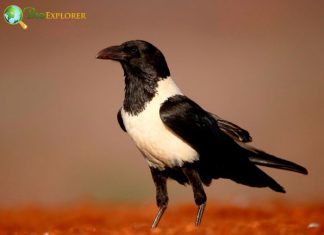
Pied Crow

Pied Crow

The Pied Crow is a striking black-and-white corvid native to sub-Saharan Africa and nearby islands. Easily recognized by its glossy black head, wings, and tail contrasted with a broad white chest and belly, it is slightly larger than the Carrion Crow and has a robust, slightly hooked bill. Highly adaptable, Pied Crows thrive in open savannas, grasslands, farmlands, and urban areas, often seen in pairs or small groups but sometimes gathering in large flocks. Exceptionally intelligent, they use tools, cache food, and mimic sounds. Their omnivorous diet includes insects, small animals, fruit, carrion, and human scraps.
Read more
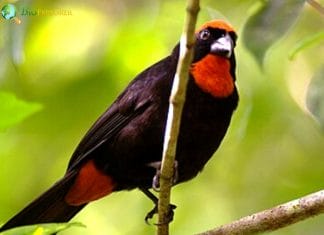
Puerto Rican Bullfinch

Puerto Rican Bullfinch

The Puerto Rican Bullfinch, or comeñame, is a stocky, black songbird with bright orange patches above the eyes, around the throat, and under the tail. Endemic to Puerto Rico, it inhabits dense forests and coffee plantations, foraging for fruit, seeds, insects, and spiders. Measuring 17–19 cm, it’s often heard before seen, thanks to its loud whistles and trills. Nests are spherical with a side entrance, usually placed low in trees or shrubs; clutches contain two to three greenish eggs.
Read more
Puerto Rican Oriole

Puerto Rican Oriole

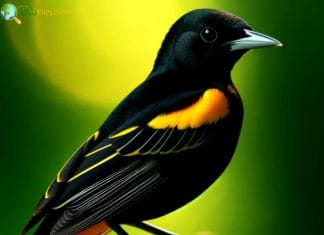
The Puerto Rican Oriole is a striking black songbird with bold yellow patches on its lower belly and shoulders. Endemic to Puerto Rico, it inhabits forests, mangroves, plantations, and especially areas with palm trees, where it weaves hanging basket nests beneath palm leaves. Both sexes look alike and sing, producing complex songs made of up to 27 different notes. Omnivorous, it forages for insects, fruit, lizards, nuts, and grains in dense vegetation. Family groups often remain together after breeding. Threats include habitat loss and nest parasitism by shiny cowbirds, but the species is still classified as Least Concern.
Read more
Puerto Rican Woodpecker

Puerto Rican Woodpecker

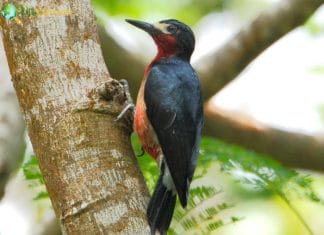
The Puerto Rican Woodpecker is the only woodpecker endemic to Puerto Rico, easily recognized by its glossy black body, bright red throat and breast, and a white band across the forehead. Males are slightly larger and have more vivid red coloring than females. This species thrives in forests, mangroves, coffee plantations, parks, and gardens across the main island, feeding mainly on insects but also enjoying fruit and occasionally small vertebrates. Its loud "wek-wek-wek" call is a common sound in Puerto Rican woodlands. Old nest cavities are often reused by other native birds.
Read more
Red-billed Oxpecker

Red-billed Oxpecker

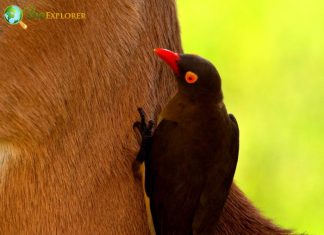
The Red-billed Oxpecker is a medium-sized, olive-brown bird easily recognized by its vivid red bill and yellow eye-ring. Native to the savannas of sub-Saharan Africa, it forms a remarkable mutualistic relationship with large mammals like buffalo, giraffe, and rhino, feeding on ticks and other parasites from their skin. Specialized claws and stiff tail feathers help it cling to moving hosts. Highly social, oxpeckers communicate with sharp, hissing calls and may even alert hosts to predators. Their diet also includes earwax and blood from wounds, sparking debate over whether they are always helpful. Nests are built in tree cavities lined with animal hair.
Read more
Rook

Rook

The Rook is a large, sociable black bird native to Europe and Asia, easily recognized by its bare, pale-grey face and cone-shaped head. It forms noisy colonies called rookeries, nesting high in tall trees near farmland, villages, or parks. Rooks forage in flocks, probing fields for grubs, worms, seeds, and grain, but also eat insects, small mammals, and carrion. Highly intelligent, they use tools and have excellent memories. Unlike crows, adult rooks show a whitish patch at the bill’s base. Some rookeries have been used for over a century.
Read more
Sooty Tern

Sooty Tern

The Sooty Tern is a large, striking seabird with black upperparts, white underparts, a white forehead, and a deeply forked tail. Found across tropical oceans worldwide, it spends most of its life at sea, sometimes remaining airborne for 3 to 10 years without landing, as it cannot float due to a lack of waterproofing oil in its feathers. Sooty Terns feed by skimming fish and squid from the ocean’s surface and rarely come to land except to breed in dense colonies on remote islands. Their loud, piercing calls and aerial courtship displays are characteristic of their nesting grounds.
Read more
Torresian Crow

Torresian Crow

The Torresian crow (Corvus orru) is a smart, adaptable bird native to northern and western Australia, as well as nearby regions in Papua New Guinea and Indonesia. Known for its glossy black feathers and white eyes, it thrives in rainforests, farmlands, and cities. An opportunistic omnivore, it feeds on everything from insects to carrion. Remarkably, it has learned to eat toxic cane toads safely—a skill passed down culturally within crow populations.
Read more
Types of Crows

Types of Crows

The Corvidae family, renowned for its intelligence and adaptability, includes crows, ravens, rooks, jackdaws, magpies, and jays. Within this family, the genus Corvus encompasses the "true crows" - a group of 43 recognized crow species found on every continent except South America and Antarctica. These birds are characterized by their robust build, all-black or mostly black plumage, strong bills, and remarkable problem-solving abilities. Crows occupy diverse habitats, from forests and grasslands to cities and islands. Many species are highly social, form complex social structures, and display advanced tool use and vocal mimicry. Their ecological roles range from scavengers to seed dispersers, making them vital to many ecosystems.
Read more
Violet Crow

Violet Crow

The violet crow (Corvus violaceus) is a medium-sized, glossy black bird with a distinctive purplish sheen, found only on Seram Island in Indonesia. Formerly a subspecies of the slender-billed crow, it is now recognized as a unique species. Adapted to tropical forests, plantations, and farmland, the violet crow is omnivorous and exhibits solitary or small-group foraging behavior. Its stable population and ecological role in seed dispersal and pest control make it vital to Seram’s biodiversity. With striking plumage and limited range, it captivates ornithologists and conservationists alike.
Read more
White-necked Raven

White-necked Raven

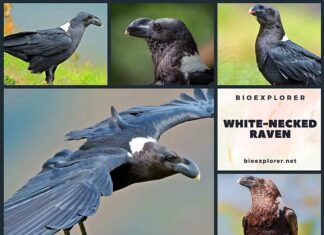
The white-necked raven is a large, intelligent bird native to the highlands of eastern and southern Africa. Recognizable by its white nape and glossy black plumage, this adaptable corvid thrives in mountainous terrain, open savannas, and even urban settings. It feeds on everything from insects and carrion to human scraps, often displaying clever foraging tactics like dropping nuts on rocks. Monogamous pairs build sturdy nests on cliffs or tall trees. As both scavenger and predator, it plays a vital ecological role while showcasing striking social and problem-solving behaviors.
Read more
Yellow-billed Magpie

Yellow-billed Magpie

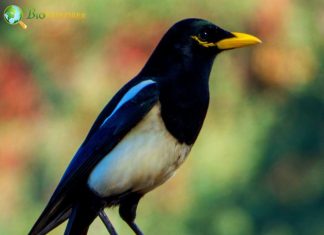
The Yellow-billed Magpie is a striking, large black-and-white bird with shimmering blue-green wings and tail, and a distinctive bright yellow bill and eye ring. Endemic to California’s Central Valley and nearby foothills, it thrives in open oak woodlands, farmlands, and orchards. Highly social, these magpies nest in loose colonies and build dome-shaped nests high in trees. Their varied diet includes insects, acorns, grains, fruit, carrion, and even garbage. Known for their intelligence, they can mimic sounds and sometimes hold "funerals" for dead flockmates. The species is vulnerable due to habitat loss and West Nile virus.
Read more
Yellow-shouldered Blackbird

Yellow-shouldered Blackbird

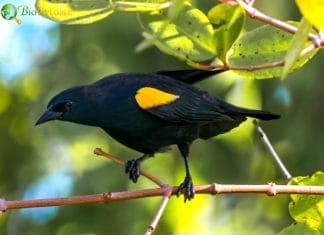
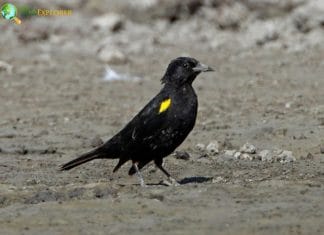
The Yellow-shouldered Blackbird is a glossy black songbird with a distinctive yellow patch on its "shoulders" outlined by a narrow white margin. Endemic and endangered in Puerto Rico, it inhabits mangroves, arid scrublands, and coastal forests. Males and females look alike, though males are slightly larger. These birds are primarily insectivorous but also eat some plant material, like cactus fruits. Nests are built in tree cavities, palm fronds, or cliff crevices, often in small colonies. Habitat loss and nest parasitism threaten the species. Their bright yellow epaulets set them apart from the similar red-winged blackbird.
Read more
Yellow-winged Blackbird

Yellow-winged Blackbird

The Yellow-winged Blackbird is a striking, stocky bird found in wetlands and reed beds across South America. Males are glossy black with bold yellow shoulder patches that are most visible in flight, while females are brown and streaked with a pale eyebrow. These blackbirds are rarely far from water, often forming small flocks and breeding colonially in reeds. They forage mainly on the ground for seeds, fruits, and insects, sometimes following livestock or farm machinery to catch disturbed prey. Fun fact: males perform acrobatic display flights and flocks will mob predators to drive them away.
Read more

What Do European Starlings Eat?

The European Starling consumes several organic matters including but not limited to[¶]:

  • Northern Spicebush (Lindera benzoin).
  • Asian Bittersweet (Celastrus orbiculatus).
  • Bullbriar (Smilax rotundifolia)
  • Chinese Honeysuckle (Lonicera japonica).
  • Eastern Poison Ivy (Toxicodendron radicans).
  • Flowering Dogwood (Cornus florida).
  • Fig (Ficus)
  • Common Juniper (Juniperus communis).
  • Dwarf Elder (Sambucus ebulus).
  • Blackthorn (Prunus spinosa)
  • Sicilian Sumac (Rhus coriaria).
  • Asparagus (Asparagusus officinalis)
  • Wild Asparagus (Asparagus acutifolius).
  • Phoenician Juniper (Juniperus phoenicea).
  • Mahaleb Cherry (Prunus mahaleb).
  • English Holly (Ilex aquifolium).
  • Oneseed Hawthorn (Crataegus monogyna).
  • Dog Rose (Rosa canina).
  • Buckthorn (Rhamnus)
  • Wayfaring Tree (Viburnumum lantana).
  • Bitter Nightshade (Solanumum dulcamara).
  • European Privet (Ligustrum vulgare).
  • American Black Nightshade (Solanum americanum).
  • Etruscan Honeysuckle (Lonicera etrusca).
  • European Hackberry (Celtis australis).
  • European Spindletree (Euonymus europaeus).
  • Alpine Currant (Ribes alpinum).
  • Bloodtwig Dogwood (Cornus sanguinea).
  • Black Elderberry (Sambucus nigra).
  • Servicetree (Sorbus domestica)
  • Rough bindweed (Smilax aspera).
  • Hairy Nightshade (Solanum villosum).
  • Cyprus Turpentine (Pistacia terebinthus).
  • Mastic Tree (Pistacia lentiscus).
  • Chess-Apple (Sorbus aria)
  • Common Fig (Ficus carica).
  • Italian Buckthorn (Rhamnus alaternus).
  • Checkertree (Sorbus torminalis)
  • Strawberry Tree (Arbutusus unedo).
  • English Ivy (Hedera helix).
  • Cornejo Macho (Cornus mas).
  • Laurustinus (Viburnum tinus)
  • Woodland Strawberry (Fragaria vesca).
  • Sweet Bay (Laurus nobilis).
  • Cade Juniper (Juniperus oxycedrus).
  • Creeping Mirrorplant (Coprosma repens).
  • Whitey Wood (Melicytus ramiflorus).
  • Matai (Prumnopitys taxifolia)
  • Totara (Podocarpus totara)
  • Pepper Tree (Piperer excelsum).
  • European Blackberry (Rubus vestitus).
  • Ngaio Tree (Myoporum laetum).
  • Miro (Prumnopitys ferruginea)
  • Common Crabapple (Malus domestica).
  • Tawhiwhi (Pittosporumum tenuifolium)
  • Darwin’s Berberis (Berberis darwinii).
  • Australian Cheesewood (Pittosporum undulatum).
  • Fox Grape (Vitis vulpina).
  • American Ivy (Parthenocissus quinquefolia).
  • Bristly Greenbrier (Smilax tamnoides).
  • Olive (Olea europaea)
  • American Pokeweed (Phytolacca americana).
  • Earleaf Nightshade (Solanum mauritianum).
  • Largeleaf Lantana (Lantana camara).
  • Canadian Moonseed (Menispermum canadense).
  • European Mountain-Ash (Sorbus aucuparia).
  • English Yew (Taxus baccata).
  • European Plum (Prunus domestica).
  • European Bird Cherry (Prunus padus).
  • Dwarf Honeysuckle (Lonicera xylosteum).
  • Alder Buckthorn (Rhamnus frangula).
  • Sweet Cherry (Prunus avium).
  • European Cranberrybush (Viburnum opulus).
  • Cretan Bryony (Bryonia cretica).
  • European Red Elder (Sambucus racemosa).
  • Common Pear (Pyrus communis).
  • English Hawthorn (Crataegus laevigata).
  • Hollyberry Cotoneaster (Cotoneaster bullatus).
  • Carolina Buckthorn (Rhamnus cathartica).
  • Graybark Grape (Vitis cinerea).
  • Angelicatree (Aralia spinosa)
  • Black Cherry (Prunus serotina).
  • Sassafras (Sassafras albidum)
  • European Mistletoe (Viscum album).
  • European Honeysuckle (Lonicera periclymenum).
  • Italian Woodbine (Lonicera caprifolium).
  • Cuckoo Pint (Arum maculatum).
  • European Black Currant (Ribes nigrum).
  • American Red Raspberry (Rubus idaeus).
  • European Crab Apple (Malus sylvestris).
  • February Daphne (Daphne laureola).
  • Cabbage Tree (Cordyline australis).
  • Himalayan Honeysuckle (Leycesteria formosa).
  • Three Kings Titoki (Alectryon excelsus).
  • Passionflower (Passiflora)
  • Arthropodes (Arthropoda)
  • Anelídeo (Annelida)
  • Hexapoda (Insecta)
  • Jewelled Lizard (Timon lepidus).
  • Fringe-Fingered Lizard (Acanthodactylus erythrurus).
  • Sundevall’s Jird (Meriones crassus).
  • European Frog (Rana temporaria).
  • Anatolian Rock Lizard (Anatololacerta anatolica).
  • Alpine Newt (Ichthyosaura alpestris).
  • House Mouse (Mus musculus).
  • Subalpine Warbler (Sylvia cantillans).
  • Beyşehir Frog (Pelophylax caralitanus).
  • Tavas Frog (Rana tavasensis).
  • Meadow Pipit (Anthus pratensis).
  • Southern Banded Newt (Ommatotriton vittatus).
  • Eurasian Rock Pipit (Anthus petrosus).
  • Pool Frog (Pelophylax lessonae).
  • Brandt’s Persian Lizard (Iranolacerta brandtii).
  • Troodos Wall Lizard (Phoenicolacerta troodica).
  • Algerian Psammodromus (Psammodromus algirus).
  • Macedonian Mouse (Mus macedonicus).
  • Central Asian Racerunner (Eremias velox).
  • Armenian Lizard (Darevskia armeniaca).
  • Sharp-Snouted Rock Lizard (Dalmatolacerta oxycephala).
  • Dalmatian Wall Lizard (Podarcis melisellensis).
  • Aralo-Caspian Racerunner (Eremias persica).
  • Rosy Starling (Pastor roseus).
  • Lebanon Lizard (Phoenicolacerta laevis).
  • Erhard’s Wall Lizard (Podarcis erhardii).
  • Skyros Wall Lizard (Podarcis gaigeae).
  • European Tree Frog (Hyla arborea).
  • Rana Patilarga (Rana iberica).
  • Albanian Water Frog (Pelophylax shqipericus).
  • Strauch’s Racerunner (Eremias strauchi).
  • Palmate Newt (Lissotriton helveticus).
  • Corsica Painted Frog (Discoglossus montalentii).
  • Tyrrhenian Painted Frog (Discoglossus sardus).
  • Brusa Frog (Rana macrocnemis).
  • Green Toad (Bufotes viridis).
  • Cyprus Warbler (Sylvia melanothorax).
  • Rüppell’s Warbler (Sylvia ruppeli).
  • Pyrenean Rock Lizard (Iberolacerta bonnali).
  • Rock Lizard (Darevskia saxicola).
  • Balkan Water Frog (Pelophylax kurtmuelleri).
  • Common Wall Lizard (Podarcis muralis).
  • Dahl’s Jird (Meriones dahli).
  • Eastern Broad-Toothed Field Mouse (Apodemus mystacinus).
  • Greek Keeled Lizard (Algyroides moreoticus).
  • Zagrosian Lizard (Timon princeps).
  • Striped Field Mouse (Apodemus agrarius).
  • Alpine Field Mouse (Apodemus alpicola).
  • Caucasian Toad (Bufo verrucosissimus).
  • Vinogradov’s Jird (Meriones vinogradovi).
  • Marbled Newt (Triturus marmoratus).
  • Canaryan Cylindrical Skink (Chalcides viridanus).
  • Western Mediterranean Mouse (Mus spretus).
  • Graceful Prinia (Prinia gracilis).
  • European Toad (Bufo bufo).
  • Gorrión Casero (Passer domesticus).
  • Italian Wall Lizard (Podarcis siculus).
  • Antelope Rat (Tatera indica).
  • Red-Bellied Lizard (Darevskia parvula).
  • Pyrenean Brook Salamander (Calotriton asper).
  • Southern Crested Newt (Triturus karelinii).
  • Caucasus Field Mouse (Apodemus ponticus).
  • Sand Lizard (Lacerta agilis).
  • Dead Sea Sparrow (Passer moabiticus).
  • Olive Tree-Pipit (Anthus hodgsoni).
  • Bruant Zizi (Emberiza cirlus).
  • White-Bellied Lizard (Darevskia unisexualis).
  • Common Field Mouse (Apodemus sylvaticus).
  • Spanish Psammodromus (Psammodromus hispanicus).
  • Lavandera Blanca (Motacilla alba).
  • Iberian Wall Lizard (Podarcis hispanicus).
  • Common Starling (Sturnus vulgaris).
  • Van Lizard (Darevskia sapphirina).
  • Smooth Newt (Lissotriton vulgaris).
  • Wagner’s Dipodil (Dipodillus dasyurus).
  • Carpathian Newt (Lissotriton montandoni).
  • Italian Newt (Lissotriton italicus).
  • Sharp-Ribbed Salamander (Pleurodeles waltl).
  • Black Redstart (Phoenicurus ochruros).
  • Cyren’s Rock Lizard (Iberolacerta cyreni).
  • Lesser Whitethroat (Sylvia curruca).
  • Italian Agile Frog (Rana latastei).
  • Great Crested Newt (Triturus cristatus).
  • Bosca’s Newt (Lissotriton boscai).
  • Twin-Striped Skink (Ablepharus bivittatus).
  • Iberian Three-Toed Skink (Chalcides striatus).
  • Balkan Emerald Lizard (Lacerta trilineata).
  • Galan’s Rock Lizard (Iberolacerta galani).
  • Mound-Building Mouse (Mus spicilegus).
  • Iberian Emerald Lizard (Lacerta schreiberi).
  • Gran Canaria Skink (Chalcides sexlineatus).
  • Clarks’ Lizard (Darevskia clarkorum).
  • Bosc’s Fringe-Toed Lizard (Acanthodactylus boskianus).
  • Sicilian Wall Lizard (Podarcis waglerianus).
  • Montseny Brook Newt (Calotriton arnoldi).
  • Harvest Mouse (Micromys minutus).
  • Marsh Frog (Pelophylax ridibundus).
  • Southern Marbled Newt (Triturus pygmaeus).
  • Stripeless Treefrog (Hyla meridionalis).
  • Ajarian Lizard (Darevskia mixta).
  • Bisbita Garganta Roja (Anthus cervinus).
  • Cyprus Spiny Mouse (Acomys nesiotes).
  • Iberian Midwife Toad (Alytes cisternasii).
  • Mosor Rock Lizard (Dinarolacerta mosorensis).
  • Sapo Partero Común (Alytes obstetricans).
  • Prokletije Rock Lizard (Dinarolacerta montenegrina).
  • Cylindrical Skink (Chalcides chalcides).
  • Hyrcanian Field Mouse (Apodemus hyrcanicus).
  • Medium Lizard (Lacerta media).
  • Great Gerbil (Rhombomys opimus).
  • Karpathos Frog (Pelophylax cerigensis).
  • Bendimahi Lizard (Darevskia bendimahiensis).
  • Perez’s Frog (Pelophylax perezi).
  • Spectacled Warbler (Sylvia conspicillata).
  • Common Spadefoot (Pelobates fuscus).
  • European Greenfinch (Chloris chloris).
  • Western Spadefoot (Pelobates cultripes).
  • Peloponnese Wall Lizard (Podarcis peloponnesiacus).
  • Caspian Green Lizard (Lacerta strigata).
  • Barred Warbler (Sylvia nisoria).
  • Spanish Keeled Lizard (Algyroides marchi).
  • Persian Jird (Meriones persicus).
  • Milos Wall Lizard (Podarcis milensis).
  • Zitting Cisticola (Cisticola juncidis).
  • Fuerteventura Skink (Chalcides simonyi).
  • Menetries’s Warbler (Sylvia mystacea).
  • Crimean Wall Lizard (Podarcis tauricus).
  • Brown Tree-Pipit (Anthus trivialis).
  • Pyrenean Frog (Rana pyrenaica).
  • Wagtails (Motacilla)
  • Yellow-Necked Field Mouse (Apodemus flavicollis).
  • Charnali Lizard (Darevskia dryada).
  • Giant Fringe-Fingered Lizard (Acanthodactylus grandis).
  • Snake-Eyed Lizard (Ophisops elegans).
  • Rock Sparrow (Petronia petronia).
  • Greenbelly Lizard (Darevskia chlorogaster).
  • Vaucher’s Wall Lizard (Podarcis vaucheri).
  • Danube Crested Newt (Triturus dobrogicus).
  • Italian Sparrow (Passer italiae).
  • Agile Frog (Rana dalmatina).
  • Jirds (Meriones)
  • Filfola Wall Lizard (Podarcis filfolensis).
  • Lilford’s Wall Lizard (Podarcis lilfordi).
  • Greek Rock Lizard (Hellenolacerta graeca).
  • Tyrrhenian Wall Lizard (Podarcis tiliguerta).
  • Bocage’s Wall Lizard (Podarcis bocagei).
  • Syrian Spadefoot (Pelobates syriacus).
  • Bedriaga’s Frog (Pelophylax bedriagae).
  • European Common Lizard (Zootoca vivipara).
  • Western Green Lacerta (Lacerta bilineata).
  • Greek Stream Frog (Rana graeca).
  • Dagestan Lizard (Darevskia daghestanica).
  • Eurasian Blackcap (Sylvia atricapilla).
  • Spanish Sparrow (Passer hispaniolensis).
  • Little Chinese Jird (Meriones meridianus).
  • Anatolian Lizard (Apathya cappadocica).
  • Tawny Pipit (Anthus campestris).
  • Aurelio’s Rock Lizard (Iberolacerta aurelioi).
  • Snake-Eyed Skink (Ablepharus budaki).
  • Caucasian Lizard (Darevskia caucasica).
  • Chardonneret Élégant (Carduelis carduelis).
  • African Green Toad (Bufotes boulengeri).
  • Pleske’s Racerunner (Eremias pleskei).
  • Iberian Mountain Lizard (Iberolacerta monticola).
  • Canaries (Serinus)
  • Greek Snake Skink (Ophiomorus punctatissimus).
  • Common Stonechat (Saxicola torquatus).
  • Water Pipit (Anthus spinoletta).
  • Racerunner (Eremias arguta)
  • Epirus Water Frog (Pelophylax epeiroticus).
  • Sardinian Tree Frog (Hyla sarda).
  • Moor Frog (Rana arvalis).
  • Spotless Starling (Sturnus unicolor).
  • Uzzell’s Lizard (Darevskia uzzelli).
  • Aralo-Caspian Racerunner (Eremias intermedia).
  • Italian Stream Frog (Rana italica).
  • Horvath’s Rock Lizard (Iberolacerta horvathi).
  • Steppe Field Mouse (Apodemus witherbyi).
  • Sardinian Warbler (Sylvia melanocephala).
  • Eastern Green Lizard (Lacerta viridis).
  • Eurasian Sparrow (Passer montanus).
  • Rostombekow’s Lizard (Darevskia rostombekowi).
  • Dwarf Lizard (Parvilacerta parva).
  • Tamarisk Gerbil (Meriones tamariscinus).
  • Cretan Frog (Pelophylax cretensis).
  • Northern Banded Newt (Ommatotriton ophryticus).
  • Danford’s Lizard (Anatololacerta danfordi).
  • Meadow Lizard (Darevskia praticola).
  • Italian Crested Newt (Triturus carnifex).
  • Gray Wagtail (Motacilla cinerea).
  • Libyan Jird (Meriones libycus).
  • Madeira Wall Lizard (Teira dugesii).
  • Berthelot’s Pipit (Anthus berthelotii).
  • Ibiza Wall Lizard (Podarcis pityusensis).
  • Citrine Wagtail (Motacilla citreola).
  • Italian Pool Frog (Pelophylax bergeri).
  • Italian Tree Frog (Hyla intermedia).
  • Martinez-Rica’s Rock Lizard (Iberolacerta martinezricai).
  • Tracheophytes (Tracheophyta)
  • Animal (Animalia)
  • Borboleta (Lepidoptera)
  • Gongolo (Diplopoda)
  • Charançons (Curculionidae)
  • Crickets (Orthoptera)
  • Beetles (Coleoptera)
  • Scarab Beetles (Scarabaeidae)
  • Graminées (Poaceae)
  • Carabes (Carabidae)
  • Common Hackberry (Celtis occidentalis).
  • Cicadellids (Cicadellidae)
  • Flat Bark Beetles (Cucujidae).
  • Caracol (Gastropoda)
  • Hollies (Ilex)
  • Clown Beetles (Histeridae)
  • Wolf spiders (Lycosidae)
  • Milkpea (Galactia)
  • Crickets (Gryllidae)
  • Blister Beetles (Meloidae)
  • Blackberry (Rubus)
  • Click Beetles (Elateridae)
  • Arpenteuses (Geometridae)
  • Coccinelles (Coccinellidae)
  • Robber Flies (Asilidae)
  • Darkling Beetles (Tenebrionidae)
  • Ants (Formicidae)
  • Cutworms (Noctuidae)
  • Black Gum (Nyssa sylvatica).
  • Notodontid Moths (Notodontidae)
  • Grasshoppers (Acrididae)
  • Admirals (Nymphalidae)
  • Katydids (Tettigoniidae)
  • Bess Beetles (Passalidae)
  • Blueberries (Vaccinium)
  • Tent Caterpillar Moths (Lasiocampidae).
  • Orbweavers (Araneidae)
  • Crab Spiders (Thomisidae)
  • Checkered Beetles (Cleridae)
  • Chinese Tallow (Triadica sebifera).
  • Narrow-Winged Damselflies (Coenagrionidae)
  • Syrphes (Syrphidae)
  • Barley (Hordeum)
  • Barata (Blattodea)
  • American Cockroaches (Blattidae)
  • Common Skimmers (Libellulidae)
  • Common Sawflies (Tenthredinidae)
  • Molluscs (Mollusca)
  • Midges (Chironomidae)
  • Chrysomèles (Chrysomelidae)
  • Hophornbeam (Ostrya)
  • False Pennyroyal (Hedeoma)
  • Bristlegrass (Setaria)
  • Pentatomes (Pentatomidae)
  • Knotweed (Polygonum)
  • Aphids (Aphididae)
  • Damselflies (Odonata)
  • Braconid wasps (Braconidae)
  • Grape (Vitis)
  • Gnats (Diptera)
  • Abelha (Hymenoptera)
  • Corn (Zea)
  • Brome (Bromus)
  • Araignées (Araneae)
  • Longlegged Flies (Dolichopodidae)
  • Aranha Bode (Opiliones)
  • Digger Wasps (Sphecidae)
  • Bulrush (Scirpus)
  • Oat (Avena)
  • Rye (Secale)
  • Wheat (Triticum)
  • Goosegrass (Eleusine)
  • Crabgrass (Digitaria)
  • Pokeweed (Phytolacca)
  • Water Horehound (Lycopus)
  • Corn (Zea mays)
  • Chêne (Quercus)
  • Canada Cocklebur (Xanthium strumarium).
  • Eastern Red-Cedar (Juniperus virginiana).
  • Sumac (Rhus)
  • Centipedes (Chilopoda)
  • Staghorn Sumac (Rhus typhina).
  • Climbing Euonymus (Euonymus fortunei).
  • Marsh Crabs (Grapsidae)
  • Japanese Persimmon (Diospyros kaki).
  • Multiflora Rose (Rosa multiflora).
  • Persimmons (Diospyros)
  • Apple (Malus)
  • Ténébrion Meunier (Tenebrio molitor).
  • Ivy Palm (Schefflera actinophylla).
  • European Earwig (Forficula auricularia).
  • Insects Ailés (Pterygota)
  • Pear (Pyrus)
  • Algerita (Berberis)

What Eats European Starlings?

European Starlings have several natural enemies including but limited to[§]:

  • Eurasian Sparrowhawk (Accipiter nisus).
  • Caracaras (Falconidae)
  • Wild Cat (Felis silvestris).
  • Black-Shouldered Kite (Elanus caeruleus).
  • Red Kite (Milvus milvus).
  • Black Kite (Milvus migrans).
  • Pallid Harrier (Circus macrourus).
  • Common Buzzard (Buteo buteo).
  • Aguililla Ártica (Buteo lagopus).
  • Busard Saint-Martin (Circus cyaneus).
  • Harriers (Circus)
  • Autour Des Palombes (Accipiter gentilis).
  • Falcão-Peregrino (Falco peregrinus)
  • Booted Eagle (Hieraaetus pennatus).
  • Bonelli’s Eagle (Aquila fasciata).
  • Alcotán Europeo (Falco subbuteo).
  • Cernícalo Vulgar (Falco tinnunculus).
  • Eleonora’s Falcon (Falco eleonorae).
  • Faucon Sacre (Falco cherrug).
  • Alfaneque (Falco biarmicus)
  • Esmerejón (Falco columbarius)
  • Arctic Skua (Stercorarius parasiticus).
  • Labbe À Longue Queue (Stercorarius longicaudus).
  • Labbe Pomarin (Stercorarius pomarinus).
  • Alcaide (Stercorarius skua)
  • Barn Owl (Tyto alba).
  • Tawny Owl (Strix aluco).
  • Little Owl (Athene noctua).
  • Eurasian Wryneck (Jynx torquilla).
  • Eurasian Scops Owl (Otus scops).
  • Syrian Woodpecker (Dendrocopos syriacus).
  • Ural Owl (Strix uralensis).
  • Middle Spotted Woodpecker (Dendrocopos medius).
  • Chouette Épervière (Surnia ulula).
  • Pallid Scops Owl (Otus brucei).
  • Great Spotted Woodpecker (Dendrocopos major).
  • Iberian Grey Shrike (Lanius meridionalis).
  • Búho Cara Café (Asio otus).
  • Chouette Lapone (Strix nebulosa).
  • Eurasian Pygmy Owl (Glaucidium passerinum).
  • Búho Cuerno Corto (Asio flammeus).
  • Red-Backed Shrike (Lanius collurio).
  • Eurasian Jay (Garrulus glandarius).
  • Great Grey Shrike (Lanius excubitor).
  • Black-Billed Magpie (Pica pica).
  • Woodchat Shrike (Lanius senator).
  • Choucas Des Tours (Coloeus monedula).
  • Carrion Crow (Corvus corone).
  • Common Raven (Corvus corax).
  • Rook (Corvus frugilegus)
  • Eurasian Golden Jackal (Canis aureus).
  • Asian Garden Dormouse (Eliomys melanurus).
  • Jungle Cat (Felis chaus).
  • Garden Dormouse (Eliomys quercinus).
  • Forest Dormouse (Dryomys nitedula).
  • Gray wolf (Canis lupus).
  • Woolly Dormouse (Dryomys laniger).
  • Common Starling (Sturnus vulgaris).
  • Arctic fox (Vulpes lagopus).
  • Common Genet (Genetta genetta).
  • Egyptian Mongoose (Herpestes ichneumon).
  • Sable (Martes zibellina)
  • Steppe Polecat (Mustela eversmanii).
  • Fat Dormouse (Glis glis).
  • Beech Marten (Martes foina).
  • Common Dormouse (Muscardinus avellanarius).
  • European Pine Marten (Martes martes).
  • Eurasian Red Squirrel (Sciurus vulgaris).
  • Siberian Flying Squirrel (Pteromys volans).
  • Siberian Chipmunk (Tamias sibiricus).
  • Tree squirrels (Sciurus)
  • Marbled Polecat (Vormela peregusna).
  • Red Fox (Vulpes vulpes).
  • Steppes Ratsnake (Elaphe dione).
  • Corsac Fox (Vulpes corsac).
  • Four-Lined Ratsnake (Elaphe quatuorlineata).
  • Collared Dwarf Racer (Platyceps collaris).
  • Ladder Snake (Zamenis scalaris).
  • Horseshoe Snake (Hemorrhois hippocrepis).
  • Dark Green Snake (Hierophis viridiflavus).
  • Balkan Racer (Hierophis gemonensis).
  • Western Green Lacerta (Lacerta bilineata).
  • Eastern Green Lizard (Lacerta viridis).
  • Jewelled Lizard (Timon lepidus).
  • Montpellier Snake (Malpolon monspessulanus).
  • Cyclades Blunt-Nosed Viper (Macrovipera schweizeri).
  • Levantine Viper (Macrovipera lebetina).
  • Caucasus Viper (Montivipera raddei).
  • Coastal Viper (Montivipera xanthina).
  • Dahl’s Whip Snake (Platyceps najadum).
  • Desert Monitor (Varanus griseus).
  • European Cat Snake (Telescopus fallax).
  • European Glass Lizard (Pseudopus apodus).
  • Adder (Vipera berus)
  • Mountain Viper (Montivipera albizona).
  • Nose-Horned Viper (Vipera ammodytes).
  • Mount Bulgar Viper (Montivipera bulgardaghica).
  • Dinnik’s Viper (Vipera dinniki).
  • Portugese Viper (Vipera seoanei).
  • Algerian Whip Snake (Hemorrhois algirus).
  • Large Whip Snake (Dolichophis jugularis).
  • Large Whip Snake (Dolichophis caspius).
  • Asian Racer (Hemorrhois nummifer).
  • Lataste’s Viper (Vipera latastei).
  • East-Four-Lined Ratsnake (Elaphe sauromates).
  • Black-Headed Snake (Telescopus nigriceps).
  • Diadem Snake (Spalerosophis diadema).
  • Spotted Whip Snake (Hemorrhois ravergieri).
  • Red-Bellied Racer (Dolichophis schmidti).
  • Tecolote Occidental (Megascops kennicottii).
  • Búho Cornudo (Bubo virginianus).
  • Falcão-Das-Pradarias (Falco mexicanus)
  • Eastern Screech Owl (Megascops asio).
  • Northern Grey Shrike (Lanius Borealis).
  • Aguililla De Swainson (Buteo swainsoni).
  • American Kestrel (Falco sparverius).
  • Aguililla Cola Roja (Buteo jamaicensis).
  • Cooper’s Hawk (Accipiter cooperii).
  • Águila Cabeza Blanca (Haliaeetus leucocephalus).
  • Brown Bear (Ursus arctos).
  • Aguililla Pecho Rojo (Buteo lineatus), Epervier Brun (Accipiter striatus).

The Biggest Types of Eagles, such as the Harpy Eagle, can capture European Starlings with ease despite their smaller size.

Cite this page

Bio Explorer. (2026, January 7). European Starling. https://www.bioexplorer.net/animals/birds/european-starling/

Key References

  • [1]“European Starling”. Accessed June 28, 2023. Link.
  • [¶] – Fricke, E.C., Svenning, J. Accelerating homogenization of the global plant-frugivore meta-network. Nature 585, 74-78 (2020). https://doi.org/10.1038/s41586-020-2640-y.
  • [¶] – Seltzer, Carrie; Wysocki, William; Palacios, Melissa; Eickhoff, Anna; Pilla, Hannah; Aungst, Jordan; Mercer, Aaron; Quicho, Jamie; Voss, Neil; Xu, Man; J. Ndangalasi, Henry; C. Lovett, Jon; J. Cordeiro, Norbert (2015): Plant-animal interactions from Africa. figshare. https://dx.doi.org/10.6084/m9.figshare.1526128. De Boer, W.F. and Ntumi, C.P. and Correia, A.U. and Mafuca, J.M., 2000. Diet and distribution of elephants in the Maputo Elephant Reserve; Mozambique. African Journal of Ecology, 38(3), pp.188-201. https://ndownloader.figshare.com/files/2231424
  • [¶] – Myers, P., Espinosa,…26cb4abc9cf6d64e10e7799e5cab8afd
  • [¶] – Maiorano, L., Montemaggiori, A., Ficetola, G.F., O’Connor, L. & Thuiller, W. (2020), Data from Tetra-EU 1.0: a species-level trophic meta-web of European tetrapods, Dryad, Dataset, https://doi.org/10.5061/dryad.jm63xsj7b. https://datadryad.org/stash/downloads/file_stream/375180
  • [¶] – hurlbertlab/dietdatabaseMartin, A. C., Zim, H. S., and Nelson, A. L. 1961. American Wildlife & Plants: a guide to wildlife food habits: the use of Trees, shrubs, weeds, and Herbs by Birds and Mammals of the United States. Dover Publications, New York, 500 pp.
  • [¶] – hurlbertlab/dietdatabaseCapinera, J. 2011. Insects and wildlife: arthropods and their relationships with wild vertebrate animals. John Wiley & Sons.
  • [¶] – hurlbertlab/dietdatabaseRussell, D. N. 1971. Food habits of the starling in eastern Texas. Condor 73:369-372.
  • [¶] – hurlbertlab/dietdatabaseWilliams, R. E. and W. B. Jackson. 1981. Dietary comparisons of Red-winged Blackbirds, Brown-headed Cowbirds, and European Starlings in north-central Ohio. Ohio Journal of Science 81:217-225.
  • [¶] – hurlbertlab/dietdatabaseWhite, S. B., R. A. Dolbeer, and T. A. Bookhout. 1985. Ecology, bioenergetics, and agricultural impacts of a winter-roosting population of blackbirds and starlings. Wildlife Monographs 93:1-42.
  • [¶] – hurlbertlab/dietdatabaseRobertson, R. J., P. J. Weatherhead, F. J. S. Phelan, G. L. Holroyd, and N. Lester. 1978. On assessing the economic and ecological impact of winter blackbird flocks. Journal of Wildlife Management 42:53-60.
  • [¶] – hurlbertlab/dietdatabaseDolbeer, R. A., P. P. Woronecki, A. R. Stickley, Jr., and S. B. White. 1978. Agricultural impact of a winter population of blackbirds and starlings. Wilson Bulletin 90:31-44.
  • [¶] – ZekeMarshall/ZMBioticInteractionsHageneder, F. (2007). Yew: a history. United Kingdom: Sutton.
  • [¶] – millerse/Pollination-CollectionStiebel, H. and Bairlein, F., 2008. Frugivorie mitteleuropäischer Vögel I: Nahrung und Nahrungserwerb. Vogelwarte, 46, pp.1-23.
  • [¶] – AgentschapPlantentuinMeise/ashForestInteractions10.3120/0024-9637-57.1.1
  • [§] – Species Connect. https://speciesconnect.com. Female Sparrowhawk with Starling #isleofman shared in Twitter by @manxmannin
  • [§] – Myers, P., Espinosa,…26cb4abc9cf6d64e10e7799e5cab8afd
  • [§] – Maiorano, L., Montemaggiori, A., Ficetola, G.F., O’Connor, L. & Thuiller, W. (2020), Data from Tetra-EU 1.0: a species-level trophic meta-web of European tetrapods, Dryad, Dataset, https://doi.org/10.5061/dryad.jm63xsj7b. https://datadryad.org/stash/downloads/file_stream/375180
  • [§] – hurlbertlab/dietdatabaseSmith, D. G. and C. R. Wilson. 1971. Notes on the winter food of screech owls in central Utah. Great Basin Nat. 31:83-84.
  • [§] – hurlbertlab/dietdatabaseMarti, C. D. 1976. A review of prey selection by the Long-eared Owl. Condor 78:331-336.
  • [§] – hurlbertlab/dietdatabaseMarks, J. S. 1984a. Feeding ecology of breeding Long-eared Owls in southwestern Idaho. Can. J. Zool. 62:1528-1533.
  • [§] – hurlbertlab/dietdatabaseBoyce, Jr., D. A. 1985. Prairie Falcon prey in the Mojave Desert, California. Raptor Res. 19:128-134.
  • [§] – hurlbertlab/dietdatabaseCahn, A. R., & Kemp, J. T. 1930. On the food of certain owls in east-central Illinois. The Auk, 47: 323-328.
  • [§] – hurlbertlab/dietdatabaseKnight, R. L. and R. E. Jackman. 1984. Food-niche relationships between Great Horned Owls and Common barn owls in eastern Washington. Auk 101:175-179.
  • [§] – hurlbertlab/dietdatabaseArtuso, C. 2010. The diet of the Eastern Screech-Owl, Megascops asio, at the northern periphery of its range. Canadian Field-Naturalist 124(2): 122-133.
  • [§] – hurlbertlab/dietdatabaseAtkinson, E. C. and T. J. Cade. 1993. Winter foraging and diet of Northern Shrikes in Idaho. Condor 95:528-535.
  • [§] – hurlbertlab/dietdatabaseFitzner, R. E. 1978. Behavioral Ecology of Swainson’s Hawk in Southeastern Washington. Washington State University, Pullman. Ph.D Dissertation.
  • [§] – hurlbertlab/dietdatabaseMarquiss, M. and I. Newton. 1982. The goshawk in Britain. British Birds 75:243-260.
  • [§] – hurlbertlab/dietdatabaseSmith, D. G. and J. R. Murphy. 1973. Breeding ecology of raptors in the eastern Great Basin of Utah. Brigham Young University Science Bulletin, Biological Series 18(3):1-76.
  • [§] – hurlbertlab/dietdatabaseRoth II, T. C. and S. L. Lima. 2006. Predatory Behavior and Diet of Wintering Male Cooper’s Hawks in Rural Habitat. Journal of Raptor Research 40(4):287-290.
  • [§] – hurlbertlab/dietdatabaseRoth II, T. C. and S. L. Lima. 2003. Hunting behavior and diet of Cooper’s Hawks: an urban view of the small-bird-in-winter paradigm. Condor 105(3):474-483.
  • [§] – hurlbertlab/dietdatabaseReynolds, R. T. and E. C. Meslow. 1984. Partitioning of food and niche characteristics of coexisting Accipiter during breeding. Auk 101:761-777.
  • [§] – hurlbertlab/dietdatabaseMillsap, B. A. 1981. Distributional status of falconiformes in west-central Arizona with notes on ecology, reproductive success, and management. Technical Note No. 355. U.S. Department of the Interior, Bureau Land Management, Denver, CO.
  • [§] – hurlbertlab/dietdatabaseHamerstrom, F. N. Jr. and F. Hamerstrom. 1951. Food of Young Raptors in the Edwin S. George Reserve. Wilson Bulletin 63(1): 16-25.
  • [§] – hurlbertlab/dietdatabaseMersmann, T. J. 1989. Foraging ecology of Bald Eagles on the northern Chesapeake Bay with an examination of techniques used to study Bald Eagle food habits. Master’s Thesis. Virginia Polytechnic Institute and State University Blacksburg.
  • [§] – hurlbertlab/dietdatabaseBosakowski, T. and D. G. Smith. 1992. Comparative diets of sympatric nesting raptors in the eastern deciduous forest biome. Canadian Journal of Zoology 70:984-992.
  • [§] – hurlbertlab/dietdatabaseCava, J. A., A. C. Stewart, and R. N. Rosenfield. 2012. Introduced Species Dominate the Diet of Breeding Urban Cooper’s Hawks in British Columbia. Wilson Journal of Ornithology 124(4): 775-782.
  • [§] – diatomsRcool/yellowstone_grizzlyKNIGHT, R., B.M. BLANCHARD, K.C. KENDALL, AND L. E. OLDENBURG. 1980. Yellowstone grizzly bear investigations: Annual report of the Interagency Study Team, 1978 and 1979. U.S. Department of the Interior, National Park Service, Bozeman, Montana, USA.
  • [§] – AgentschapPlantentuinMeise/ashForestInteractionshttps://www.researchgate.net/profile/Michal-Ciach/publication/266875893_Seasonal_Changes_in_the_Avian_Diet_of_Breeding_Sparrowhawks_Accipiter_nisus_How_to_Fulfill_the_Offspring%27s_Food_Demands/links/544cf1cb0cf2d6347f45bf63/Seasonal-Changes-in-the-Avian-Diet-of-Breeding-Sparrowhawks-Accipiter-nisus-How-to-Fulfill-the-Offsprings-Food-Demands.pdf

Leave a Reply

Your email address will not be published. Required fields are marked *