
Monkeys Starting with W

Weddell’s Saddle-Back Tamarin
The Weddell’s saddle-back tamarin (Leontocebus weddelli) is a species of saddle-back tamarin, a species of small South American monkey. Weddell’s saddle-back tamarins are tree dwellers. As such, they are phenomenal climbers with sharp claws that allow them to cling to the sides of trees.
Read more

Weeping Capuchin
The Weeping capuchin, also known as the chestnut capuchin and chestnut weeper capuchin (Cebus castaneus), is a capuchin monkey endemic to northeastern Brazil, southern Guyana, French Guiana, and Suriname. This primate is also known as Wedge-capped capuchin.
Read more
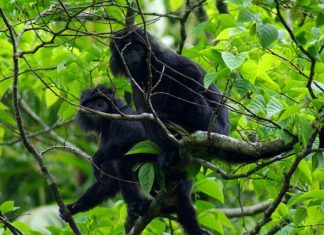
West Javan Langur
The West Javan langur (Trachypithecus mauritius) is an Old-World monkey of the Colobinae subfamily. It was previously considered a subspecies of Trachypithecus auratus until Roos and Groves raised it to its own species.
Read more
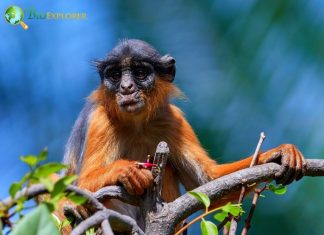
Western Red Colobus
The western red colobus (Piliocolobus badius), also called the Upper Guinean red colobus, rust red colobus, or bay red colobus is a species of Old-World monkey found in the forests of West Africa, from Senegal to Ghana.
Read more

White Marmoset
The white marmoset (Mico leucippe), also called the golden-white bare-eared marmoset, is an endangered marmoset native to the Amazon rainforest of Pará, Brazil.
Read more

White-bellied Spider Monkey
The white-bellied spider monkey (Ateles belzebuth), also called the long-haired or white-fronted spider monkey, is an endangered species of spider monkey, a species of New-World monkey. These arboreal monkeys spend most of their time in the canopy. They rarely go down. When they do, they drink water, eat dirt, traverse a treeless area, or run away from an aggressive opponent.
Read more
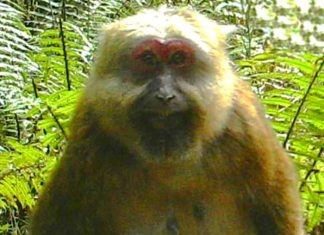
White-Cheeked Macaque
The white-cheeked macaque (Macaca leucogenys) is found only in Medog County in southeastern Tibet and the Arunachal Pradesh state of India. The species was first discovered and described by Chinese primatologists Peng-Fei Fan, Cheng Li, and Chao Zhao in the American Journal of Primatology in 2015.
Read more

White-cheeked Spider Monkey
The white-cheeked spider monkey (Ateles marginatus), also known as the white-whiskered spider monkey, is a New World monkey native to the Amazon Basin of central Brazil.
Read more
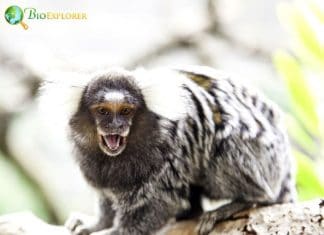
White-eared Titi
The white-eared Titi, Plecturocebus donacophilus, also known as the Bolivian gray Titi or Bolivian Titi, is a marmoset species, a New World monkey endemic to eastern Bolivia and a region of western Brazil.
Read more

White-footed Saki
The white-footed Saki, also called the white Saki or buff saki, is a species of saki monkey, a New World species native to western Brazil. They hang from branches and hold on with their hind legs while eating seeds and fruits.
Read more

White-fronted Langur
The white-fronted surili (Presbytis frontata) is a primate species in the Cercopithecidae family, the Old World monkeys. This species prefers to eat immature leaves than more mature leaves.
Read more
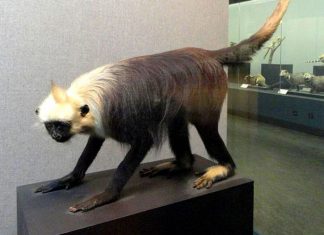
White-headed Langur
The white-headed langur (Trachypithecus leucocephalus) is an endangered species of langur native to Guangxi, China. As the common name suggests, a tuft of white fur covers this primate’s head.
Read more
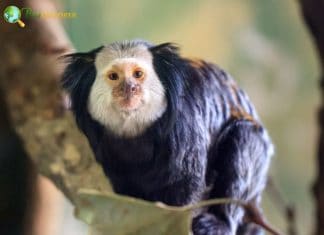
White-Headed Marmoset
The Geoffroy’s marmoset, also called Geoffrey’s marmoset, white-headed marmoset, or tufted-ear marmoset is a marmoset native to the forests of eastern Brazil, where it is native to Minas Gerais, Espírito Santo, and Bahia. Geoffroy’s marmosets are said to follow swarms of army ants to catch insects expelled by the ants.
Read more
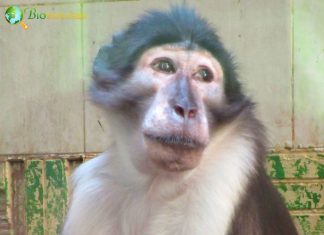
White-naped Mangabey
Cercocebus atys lunulatus now Cercocebus lunulatus, is commonly known as the white-naped, white-headed, or white-necked mangabey (confusing with the collared mangabey). These mangabeys can also distinguish between fruiting and non-fruiting trees and are more likely to approach fruiting trees.
Read more

White-nosed Saki
The white-nosed saki (Chiropotes albinasus) is bearded, a New World monkey species native to the Amazon rainforest of south-central Brazil. White-nosed sakis are sometimes found in large social groups of 18-30 individuals. Their main reason for traveling is the food search.
Read more

White-tailed Titi
White-tailed titi monkeys, also called red titi monkeys or red-crowned titis and not to be confused with coppery titi (Callicebus cupreus), also commonly known as red titi, are endemic to the dense rainforest and gallery forests of Peru and Ecuador.
Read more
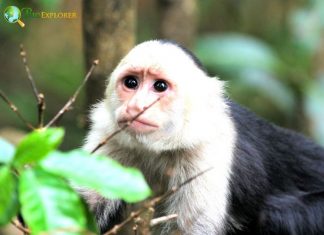
White-Throated Capuchin
White-throated capuchins, also called the white-headed capuchins, Colombian white-throated capuchins, and white-faced capuchins, are New World monkeys native to the tropical rainforests of western Colombia, Ecuador, and Panama.
Read more

Wied’s Marmoset
The Wied’s marmoset (Callithrix kuhlii), also called the Wied’s black-tufted-ear marmoset, is a New World monkey that lives in the tropical and subtropical forests of eastern Brazil. Unlike other common marmosets, Wied’s marmosets live in groups consisting of 4 or 5 females and 2 or 3 males (plus juveniles).
Read more
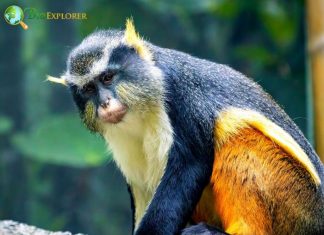
Wolf’s Mona Monkey
The Wolf’s mona monkey (Cercopithecus wolfi), also called the wolf monkey, is a colorful Old-World monkey in the Cercopithecidae family. Wolf’s mona monkeys have huge cheek pouches.
Read more
Cite this page
BioExplorer. (2026, September 28). Monkeys Starting with W. https://www.bioexplorer.net/animals/mammals/monkeys/w/