
Branches of Microbiology
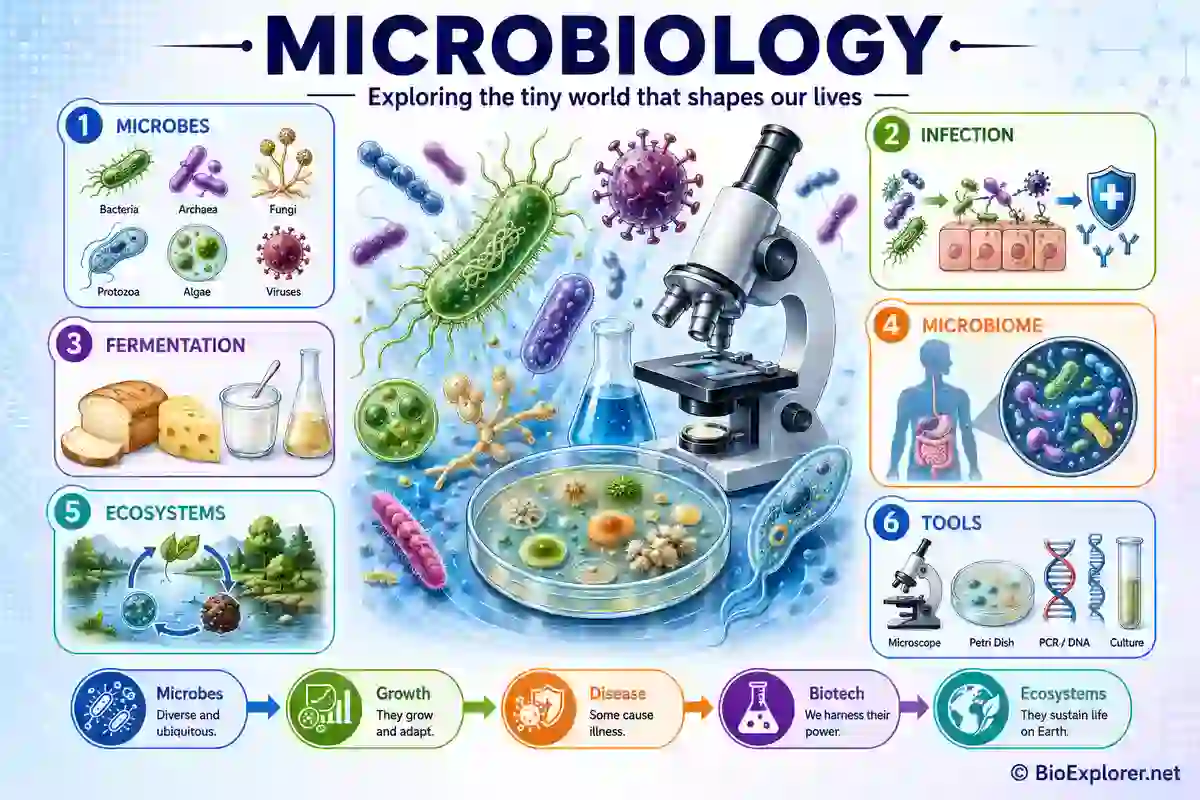
Microbiology is the branch of biology that studies microorganisms, including bacteria, archaea, fungi, protozoa, algae, viruses, and other microscopic life forms or infectious agents. It explains how microbes grow, reproduce, evolve, cause disease, support ecosystems, recycle nutrients, and help humans in medicine, food production, biotechnology, and environmental science.
Microbiology connects closely with immunology, genetics, molecular biology, biochemistry, biotechnology, ecology, medicine, agriculture, food science, and public health. It helps scientists understand infection, immunity, antibiotics, fermentation, microbiomes, vaccines, microbial evolution, and the hidden microbial world around us.
Explore the Microbiology Glossary for clear definitions of bacteria, archaea, viruses, fungi, protozoa, biofilms, pathogens, antibiotics, fermentation, microbiomes, sterilization, culture media, and other key microbiology terms. You can also browse the full Biology Glossary for related terms across immunology, genetics, cell biology, molecular biology, and biotechnology.
Microbiology Definition and Meaning
Microbiology is the scientific study of microbes. Microbes are organisms or biological agents that are usually too small to be seen clearly without a microscope. Some microbes are single-celled organisms, some form colonies or filaments, and some, such as viruses, are acellular agents that require host cells to reproduce.
A microbiologist studies the structure, growth, metabolism, genetics, classification, ecology, evolution, and effects of microbes. Some microbiologists study disease-causing microbes, while others study useful microbes in food, medicine, agriculture, biotechnology, and ecosystems.
Microbiology is not only about germs and disease. Most microbes do not cause disease. Many microbes help digest food, produce oxygen, recycle nutrients, ferment foods, protect ecosystems, and support life on Earth.
What Does Microbiology Study?
Microbiology studies microbes at many levels. A microbiologist may examine a bacterial cell, a viral infection, a fungal colony, a microbial community in soil, a food fermentation process, or the genes that help microbes resist antibiotics.
Microbial Structure
Microbial structure includes cell walls, membranes, capsules, flagella, pili, spores, ribosomes, genetic material, and other features that help microbes survive. These structures help scientists identify microbes and understand how they move, attach, reproduce, and interact with hosts or environments.
Microbial Growth and Reproduction
Microbiologists study how microbes grow, divide, and reproduce. Bacteria often divide by binary fission. Yeasts can reproduce by budding. Fungi may produce spores. Viruses do not divide like cells. They replicate only after entering a suitable host cell.
Microbial Metabolism
Microbial metabolism explains how microbes obtain energy and nutrients. Some microbes use oxygen, while others live without it. Some break down organic matter, some produce methane, some perform photosynthesis, and others help cycle nitrogen, sulfur, carbon, and other elements through ecosystems.
Microbial Genetics
Microbial genetics studies DNA, genes, plasmids, mutations, gene transfer, genome organization, and microbial evolution. This field helps explain antibiotic resistance, viral evolution, bacterial adaptation, genetic engineering, and the use of microbes in biotechnology.
Microbes and Disease
Medical microbiology studies microbes that cause disease. These include pathogenic bacteria, viruses, fungi, protozoa, and other infectious agents. It also studies diagnosis, infection control, vaccines, antimicrobial drugs, and how the immune system responds to infection.
Microbes in the Environment
Environmental microbiology studies microbes in soil, water, air, sediments, plants, animals, and extreme environments. Microbes decompose dead material, recycle nutrients, support food webs, clean pollutants, and help maintain healthy ecosystems.
Types of Microorganisms
Microbiology studies several major groups of microbes and microscopic biological agents. These groups differ in cell structure, size, reproduction, metabolism, and ecological role.
| Microbe Type | What It Means | Example Topics |
|---|---|---|
| Bacteria | Single-celled prokaryotes found in soil, water, food, the human body, and many other habitats. | Bacterial shapes, pathogens, antibiotics, biofilms, gut bacteria, fermentation. |
| Archaea | Single-celled prokaryotes that are genetically and biochemically different from bacteria. | Methanogens, extremophiles, hot springs, salty environments, microbial evolution. |
| Fungi | Eukaryotic organisms that include yeasts, molds, and microscopic fungal forms. | Yeast, molds, fungal infections, decomposition, bread, cheese, antibiotics. |
| Protozoa | Single-celled eukaryotes that often move using flagella, cilia, or pseudopodia. | Amoebas, ciliates, malaria parasites, freshwater microbes, host interactions. |
| Microscopic Algae | Photosynthetic organisms that may live in freshwater, marine, or moist environments. | Phytoplankton, oxygen production, harmful algal blooms, aquatic food webs. |
| Viruses | Acellular infectious agents that replicate only inside host cells. | Virology, viral replication, vaccines, bacteriophages, emerging infections. |
| Prions and Viroids | Very small infectious agents studied in specialized areas of microbiology and molecular biology. | Protein misfolding, plant pathogens, infectious disease mechanisms. |
Every branch of microbiology runs on its own bench techniques. Virology’s include infectivity assays, nucleic acid amplification, antigen detection, serology and genome sequencing. An interactive selector helps match the method to your research or diagnostic question.
Major Branches of Microbiology
Microbiology has many branches because microbes can be studied by organism type, habitat, disease role, molecular process, or practical use.
| Branch of Microbiology | What It Studies | Example Topics |
|---|---|---|
| Bacteriology | Bacteria and their structure, growth, genetics, classification, and roles in disease or ecosystems. | Bacterial diseases, bacterial shapes, biofilms, antibiotic resistance, gut bacteria. |
| Virology | Viruses and how they infect cells, replicate, evolve, and spread between hosts. | Viral replication, vaccines, bacteriophages, influenza, HIV, coronavirus biology. |
| Mycology | Fungi, including yeasts, molds, mushrooms, and fungal pathogens. | Yeast, mold, fungal infections, decomposition, fermentation, antibiotics. |
| Parasitology | Parasites and their relationships with hosts. | Protozoan diseases, helminths, malaria, host-parasite interactions. |
| Phycology | Algae, especially microscopic and aquatic forms. | Phytoplankton, algal blooms, photosynthesis, aquatic food webs. |
| Microbial Genetics | Genes, DNA transfer, mutation, and inheritance in microbes. | Plasmids, horizontal gene transfer, antibiotic resistance, microbial evolution. |
| Medical Microbiology | Microbes that affect human health and disease. | Pathogens, diagnosis, infection control, antimicrobial treatment, vaccines. |
| Environmental Microbiology | Microbes in soil, water, air, sediments, and natural ecosystems. | Nutrient cycling, decomposition, bioremediation, extremophiles, microbial ecology. |
| Food Microbiology | Microbes in food production, preservation, spoilage, and safety. | Fermentation, yogurt, cheese, foodborne illness, food preservation. |
| Industrial Microbiology | Using microbes to make useful products at scale. | Antibiotics, enzymes, biofuels, fermentation, biotechnology products. |
Why Is Microbiology Important?
Microbiology is important because microbes affect almost every part of life. They influence health, disease, digestion, immunity, soil fertility, food production, water quality, climate, decomposition, biotechnology, and medicine.
Microbes are also essential to ecosystems. They recycle nutrients, break down dead organisms, support plant growth, produce oxygen in aquatic environments, and help maintain soil and water systems. Without microbial activity, many natural cycles would slow or collapse.
Microbiology is also central to public health. It helps scientists understand infections, design vaccines, develop antibiotics, monitor outbreaks, improve sanitation, and track antimicrobial resistance.
Examples of Microbiology in Real Life
Microbiology is not limited to laboratories. It appears in food, medicine, farms, homes, hospitals, ecosystems, and industry.
- Food production: Yeasts and bacteria help make bread, yogurt, cheese, vinegar, pickles, and fermented foods.
- Medicine: Microbiology helps scientists understand infections, antibiotics, vaccines, and diagnostic tests.
- Human health: The human microbiome includes microbes that help digestion, immunity, and normal body functions.
- Agriculture: Soil microbes support plant growth, nutrient cycling, nitrogen fixation, and composting.
- Biotechnology: Microbes can produce enzymes, insulin, antibiotics, biofuels, and other useful products.
- Environmental science: Microbes can break down pollutants and help clean contaminated environments.
- Disease prevention: Microbiology supports sterilization, hygiene, food safety, water treatment, and infection control.
Careers in Microbiology
Microbiology can lead to careers in research, medicine, public health, food safety, biotechnology, pharmaceuticals, agriculture, environmental science, education, diagnostics, and quality control.
- Microbiologist: Studies microbes, their biology, and their effects on humans, animals, plants, or environments.
- Medical microbiologist: Studies microbes that cause disease and supports diagnosis, treatment, and infection control.
- Virologist: Studies viruses, viral replication, viral diseases, vaccines, and antiviral strategies.
- Bacteriologist: Studies bacteria, including bacterial growth, classification, disease, genetics, and ecology.
- Mycologist: Studies fungi, including yeasts, molds, fungal diseases, and useful fungal products.
- Food microbiologist: Studies microbes in food production, food spoilage, fermentation, and food safety.
- Environmental microbiologist: Studies microbes in soil, water, air, sediments, and ecosystems.
- Industrial microbiologist: Uses microbes to produce antibiotics, enzymes, fuels, chemicals, and other products.
- Public health microbiologist: Helps detect, monitor, and control infectious diseases and outbreaks.
Related Biology Fields
Microbiology overlaps with many other branches of biology. Immunology studies how the immune system responds to microbes and infections. Genetics explains microbial inheritance, mutation, gene transfer, and antibiotic resistance.
Molecular biology studies DNA, RNA, proteins, gene expression, and molecular processes in microbes. Biochemistry explains microbial enzymes, metabolism, fermentation, and energy use. Biotechnology uses microbes and microbial genes to make useful products and tools.
Ecology studies microbes in ecosystems, nutrient cycles, soil, water, and microbial communities. Cell biology helps explain microbial cell structure and function.
BioExplorer Microbiology Articles and Resources
Use these BioExplorer resources to go deeper into microbiology concepts, history, microbes, diseases, courses, and archived discovery roundups.
Core Microbiology Resources
- History of Microbiology
- E. coli
- Yeast
- How Are Viruses Different From Bacteria?
- Diseases Caused by Protozoa
- Bacterial Diseases
- Shapes of Bacteria
- Fermentation Biology
- Best Microbiology Textbooks
- Online Microbiology Courses
Archived Microbiology Discovery Roundups
These year-wise articles are archived roundups of microbiology discoveries, virology research, microbial biotechnology updates, and microbiology news from previous years.
- Top Microbiology News in 2017
- Microbiology and Virology Discoveries in 2018
- Latest Discoveries in Microbiology 2019
- Top Microbiology News of 2020
- Top Microbiology News of 2021
- Top Microbiology News of 2022
Recommended Microbiology Resources
These trusted external resources can help readers explore microbiology, microbes, bacteria, viruses, fungi, microbial genetics, infectious disease, antimicrobial resistance, microbial taxonomy, and microbiology research tools in more detail.
Microbiology Learning Resources
- OpenStax Microbiology
A free microbiology textbook covering microbial cell structure, metabolism, genetics, viruses, bacteria, fungi, parasites, disease, immunity, and applied microbiology. - Microbiology Society: What Is Microbiology?
A clear overview of microbes, why they matter, and how microbiology connects to health, ecosystems, food, and industry. - American Society for Microbiology
A major professional society for microbial sciences, with resources on microbiology research, education, public health, and microbial applications. - NCBI Bookshelf: Medical Microbiology
A detailed textbook-style reference covering bacteriology, virology, mycology, parasitology, pathogenesis, diagnosis, and antimicrobial treatment.
Microbial Taxonomy and Databases
- LPSN: List of Prokaryotic Names with Standing in Nomenclature
A trusted resource for bacterial and archaeal names, taxonomy, nomenclature, and classification. - BacDive: The Bacterial Diversity Metadatabase
A database with strain-linked information on bacterial and archaeal biodiversity, taxonomy, morphology, physiology, and environmental origin. - National Center for Biotechnology Information
A major NIH resource for biomedical literature, genomes, genes, sequences, taxonomy, proteins, and molecular biology data. - NCBI GenBank
A public genetic sequence database useful for microbial genomes, DNA sequences, RNA sequences, and molecular microbiology research.
Infectious Disease and Antimicrobial Resistance
- CDC: About Antimicrobial Resistance
A clear public health resource explaining how germs can develop resistance to drugs designed to kill them. - WHO: Antimicrobial Resistance
A global overview of antimicrobial resistance, why it matters, and how resistant bacteria, viruses, fungi, and parasites affect treatment.
FAQs
Microbiology is the branch of biology that studies microorganisms, including bacteria, archaea, fungi, protozoa, microscopic algae, viruses, and other infectious agents.
A microbiologist studies microbes, including their structure, growth, metabolism, genetics, classification, ecology, evolution, and effects on health, food, industry, and the environment.
Viruses are studied in microbiology, especially virology, but they are acellular infectious agents rather than cellular living organisms.
The main groups studied in microbiology include bacteria, archaea, fungi, protozoa, microscopic algae, viruses, prions, and viroids.
Major branches of microbiology include bacteriology, virology, mycology, parasitology, phycology, microbial genetics, medical microbiology, food microbiology, environmental microbiology, and industrial microbiology.
Microbiology is important because microbes affect health, disease, digestion, immunity, food production, agriculture, ecosystems, biotechnology, nutrient cycling, and public health.
No. Microbiology includes disease-causing microbes, but many microbes are helpful or essential in digestion, food fermentation, oxygen production, nutrient cycling, soil health, and biotechnology.
Microbiology careers include microbiologist, medical microbiologist, virologist, bacteriologist, mycologist, food microbiologist, environmental microbiologist, industrial microbiologist, and public health microbiologist.
Cite this page
BioExplorer. (2026, August 26). Branches of Microbiology. https://www.bioexplorer.net/divisions_of_biology/microbiology/