
Branches of Immunology
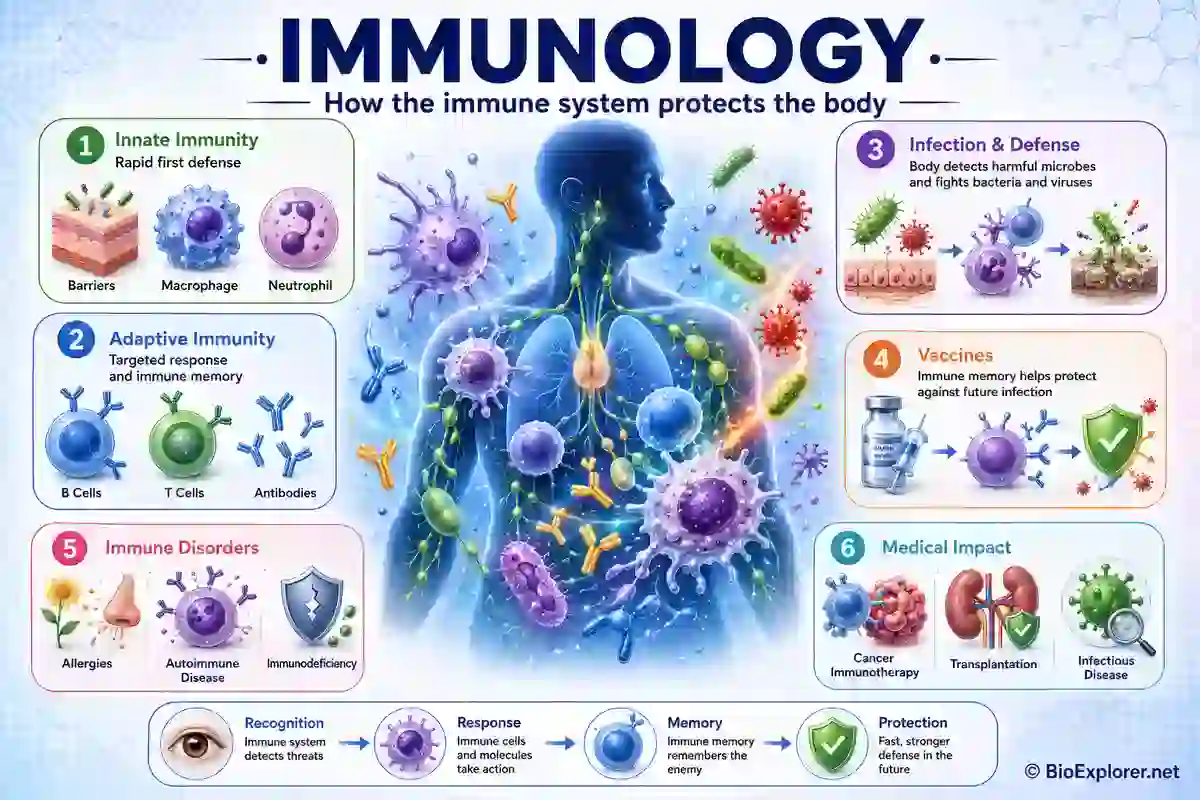
Immunology is the branch of biology that studies the immune system. It explains how the body recognizes harmful microbes, responds to infection, remembers past exposures, repairs damaged tissue, and avoids attacking its own healthy cells.
This field connects basic biology with medicine because the immune system touches nearly every part of health. Immunology helps scientists understand vaccines, allergies, autoimmune diseases, inflammation, cancer immunotherapy, organ transplantation, infectious diseases, and immune disorders.
Explore the Immunology Glossary for clear definitions of antibodies, antigens, cytokines, lymphocytes, inflammation, hypersensitivity, immune memory, and other key immune system terms. You can also browse the full Biology Glossary for related terms across cell biology, genetics, microbiology, and molecular biology.
Immunology Guide:
- Immunology Definition and Meaning
- History of Immunology
- What Does Immunology Study?
- Immune Cells and Lymphoid Organs
- Innate and Adaptive Immunity
- Antigens, Antibodies, and Immune Memory
- Inflammation and Immune Signaling
- Immune Disorders
- Vaccines and Immunotherapy
- Major Branches of Immunology
- Why Immunology Matters
- Important Immunology Concepts
- Examples of Immunology in Real Life
- Related Biology Fields
- Immunology Articles and Resources
- Archived Immunology Discovery Roundups
- Immunology FAQs
- Recommended Immunology Resources
Immunology Definition and Meaning
Immunology is the study of how living organisms defend themselves against disease while maintaining balance inside the body. In humans and other animals, the immune system uses physical barriers, immune cells, signaling molecules, antibodies, and lymphoid organs to detect and respond to threats.
A good immune response does more than attack invaders. It must also limit damage to healthy tissue. That balance is what makes immunology so important. Too little immune activity can leave the body vulnerable to infection. Too much or misdirected immune activity can contribute to allergy, chronic inflammation, autoimmune disease, or transplant rejection.
Immunology is often taught alongside medicine, but it is also a core biological science. It depends on ideas from cell biology, molecular biology, microbiology, genetics, and biochemistry.

Adjuvant Mixing Calculator
History of Immunology
The history of immunology grew from early observations that people who survived certain infections were often protected from getting the same disease again. Later work on vaccination, antibodies, phagocytic cells, antitoxins, blood groups, transplantation, and immune tolerance turned those observations into a scientific field.
Modern immunology expanded rapidly as scientists learned how B cells, T cells, antibodies, antigen presentation, cytokines, and immune memory work. Today, the field includes vaccine design, monoclonal antibodies, allergy testing, autoimmune disease research, transplant matching, immune deficiency diagnosis, and cancer immunotherapy.
What Does Immunology Study?
Immunology studies the parts of the immune system and the decisions they make. The immune system must identify danger, communicate quickly, destroy or contain threats, remember some encounters, and then calm down after the response. That process involves many cells, tissues, and molecular signals working together.
Immune Cells and Lymphoid Organs
Important immune cells include neutrophils, macrophages, dendritic cells, natural killer cells, B cells, T cells, plasma cells, mast cells, eosinophils, and basophils. These cells do different jobs. Some engulf microbes, some present antigens to lymphocytes, some kill infected cells, and others produce antibodies or signaling molecules.
The immune system also depends on lymphoid organs and tissues. Bone marrow and thymus are primary lymphoid organs because they support the production and maturation of key lymphocytes. Lymph nodes, spleen, tonsils, and mucosa-associated lymphoid tissues help immune cells meet antigens and coordinate immune responses.
Innate and Adaptive Immunity
The immune system has two broad layers: innate immunity and adaptive immunity. Innate immunity responds quickly and uses general defense mechanisms such as skin barriers, inflammation, phagocytosis, natural killer cells, and complement proteins.
Adaptive immunity is slower at first but more specific. It uses B cells, T cells, antigen receptors, antibodies, and immune memory. This is why a later encounter with the same pathogen can trigger a faster and stronger response.
Antigens, Antibodies, and Immune Memory
An antigen is a molecule or molecular pattern that the immune system can recognize. An antibody is a protein made by plasma cells that binds to a specific antigen. This difference matters because students often confuse the target with the molecule that binds the target.
BioExplorer has a separate comparison guide on the differences between antigen and antibody, along with a guide to the types of antibodies in blood.
Immune memory allows the adaptive immune system to respond more efficiently after a previous exposure. Vaccines use this principle by preparing the immune system to recognize a pathogen or toxin without requiring the person to experience the full disease first.
Inflammation and Immune Signaling
Inflammation is a protective response to injury, infection, or harmful stimuli. It brings immune cells, fluid, and signaling molecules to affected tissues. Short-term inflammation can help the body heal. Long-lasting or misdirected inflammation can damage tissues and contribute to disease.
Cytokines, chemokines, complement proteins, antibodies, and cell-surface receptors help immune cells communicate. These signals tell immune cells where to move, when to activate, when to multiply, and when to slow down.
Immune Disorders
Immunology also studies what happens when immune responses fail or become harmful. Immunodeficiency occurs when parts of the immune system do not work well enough. Autoimmune disease occurs when immune responses target the body’s own tissues. Allergy occurs when the immune system reacts strongly to a normally harmless substance.
Other immune-related problems include chronic inflammation, hypersensitivity reactions, transplant rejection, immune responses to cancer, and immune complications caused by some infections or treatments.
Vaccines and Immunotherapy
Vaccines are one of the most important practical applications of immunology. They help the immune system build recognition and memory against specific pathogens or toxins.
Immunotherapy uses the immune system, or immune system molecules, to treat disease. Examples include monoclonal antibodies, checkpoint inhibitors in cancer therapy, allergy immunotherapy, and immune-based treatments for inflammatory or autoimmune conditions.
Major Branches of Immunology
Immunology has many branches because the immune system affects infection, tissue repair, cancer, reproduction, the nervous system, genetics, and medicine. These areas often overlap.
| Branch of Immunology | What It Studies | Example Topics |
|---|---|---|
| Classical Immunology | Basic immune responses involving antigens, antibodies, and immune memory. | Antibody production, antigen recognition, vaccination, immune protection |
| Cellular Immunology | Immune cells that detect threats, communicate, attack, regulate, and remember. | T cells, B cells, macrophages, dendritic cells, natural killer cells |
| Molecular Immunology | Molecules and signaling pathways that control immune responses. | Immune receptors, cytokines, antibodies, complement proteins |
| Clinical Immunology | How immune system knowledge is used to diagnose and treat disease. | Allergies, immunodeficiency, autoimmune disease, immune testing |
| Immunopathology | How immune responses cause tissue damage or contribute to disease. | Chronic inflammation, hypersensitivity, autoimmune damage |
| Vaccine Immunology | How vaccines trigger protective immunity and immune memory. | Vaccine design, boosters, antibody responses, T cell memory |
| Cancer Immunology | How the immune system recognizes tumors and how cancers avoid immune attack. | Tumor antigens, checkpoint inhibitors, CAR T cells |
| Transplant Immunology | How the immune system responds to transplanted organs, tissues, or cells. | Tissue matching, graft rejection, immune suppression, immune tolerance |
| Mucosal Immunology | Immune defenses at mucosal surfaces such as the gut, airways, and reproductive tract. | Gut immunity, respiratory immunity, microbiome interactions |
| Developmental Immunology | How immune cells, lymphoid organs, and immune functions develop over time. | Bone marrow, thymus, lymphocyte development, early-life immunity |
| Comparative Immunology | How immune systems differ across animals and other organisms. | Evolution of immunity, invertebrate immunity, vertebrate immune systems |
| Neuroimmunology | Interactions between the immune system and nervous system. | Brain inflammation, neuroimmune signaling, neuroimmune disorders |
| Immunogenetics | How genes influence immune responses, immune variation, and disease risk. | MHC genes, inherited immunodeficiencies, transplant compatibility |
Why Immunology Matters
Immunology matters because immune responses influence survival, disease risk, medicine, and public health. The field explains why some infections become severe, why vaccines work, why allergies happen, why autoimmune diseases can damage organs, and why some cancers respond to immune-based treatment.
It also helps researchers design better diagnostics and therapies. Antibody tests, vaccine platforms, allergy treatments, transplant matching, immune-suppressing drugs, and cancer immunotherapies all depend on immunology.
At a broader level, immunology helps connect the microscopic world of cells and molecules with real health outcomes. It explains how a single immune cell can recognize a molecular signal and how millions of immune cells can coordinate a whole-body response.
Important Immunology Concepts
Several ideas appear again and again in immunology. Learning these concepts makes the rest of the field easier to understand.
- Self vs. non-self: The immune system must distinguish the body’s own cells from foreign or abnormal targets.
- Antigen recognition: Immune cells detect specific molecules or patterns linked to microbes, toxins, allergens, or damaged cells.
- Antibody specificity: Antibodies bind particular antigens, which helps neutralize threats or mark them for immune clearance.
- Clonal selection: B cells and T cells with useful antigen receptors multiply after activation.
- Immune memory: Some adaptive immune cells remain after an exposure and respond faster during future encounters.
- Inflammation: The body recruits immune activity to affected tissues, but the response must stay controlled.
- Immune tolerance: The immune system learns to avoid attacking normal body tissues and many harmless exposures.
- Antigen presentation: Cells display antigen fragments to T cells so the adaptive immune system can make targeted decisions.
- Major histocompatibility complex: MHC molecules help present peptide fragments to T cells and play a major role in transplant compatibility.
- Hypersensitivity: Some immune reactions become exaggerated or harmful, as seen in allergies and certain immune-mediated diseases.
Examples of Immunology in Real Life
Immunology is not just a laboratory subject. It explains familiar biological and medical events.
- Vaccination: A vaccine prepares immune memory so the body can respond more quickly to a future exposure.
- Allergies: The immune system reacts to a normally harmless substance such as pollen, food proteins, or animal dander.
- Autoimmune disease: Immune cells or antibodies mistakenly target the body’s own tissues.
- Wound healing: Immune cells help clean damaged tissue, fight infection, and support repair.
- Transplant rejection: The immune system may recognize transplanted tissue as foreign unless doctors control the response.
- Cancer immunotherapy: Treatments may help immune cells recognize or attack tumor cells more effectively.
- Infectious disease: Immune defenses respond differently to bacteria, viruses, fungi, parasites, and toxins.
Related Biology Fields
Immunology overlaps with many other branches of biology. Microbiology studies bacteria, viruses, fungi, protozoa, and other microbes that often trigger immune responses. Cell biology explains how immune cells move, divide, communicate, and kill infected cells. Molecular biology explains immune receptors, antibody genes, signaling pathways, and gene expression.
Genetics helps explain immune variation, inherited immunodeficiencies, and tissue compatibility. Biochemistry explains antibodies, complement proteins, enzymes, cytokines, and molecular binding. Anatomy helps students locate the lymph nodes, spleen, thymus, bone marrow, tonsils, skin, and mucosal tissues involved in immune defense.
Immunology Articles and Resources
Use these BioExplorer resources to go deeper into immunology topics, careers, methods, and related learning paths.
- History of Immunology
- Differences Between Antigen and Antibody
- Types of Antibodies in Blood
- Immune System Fun Facts
- How to Become an Immunologist
- Immunology Methods and Protocols
- Immunology Journals
Archived Immunology Discovery Roundups
These year-wise articles are archived roundups of notable immunology discoveries and research news from previous years.
- Top 12 Immunology News In 2017
- Top 15 Immunology News in 2018
- Top Discoveries in Immunology (2019)
- Top 10 Immunology News of 2020
- Top 15 Immunology News of 2021
- Top Immunology News of 2022
Immunology FAQs
Immunology is the branch of biology that studies the immune system, including immune cells, antibodies, inflammation, immune memory, vaccines, allergies, autoimmunity, and immune disorders.
An immunologist studies how the immune system recognizes threats, fights infection, builds memory, controls inflammation, avoids attacking healthy tissues, and sometimes causes disease.
Innate immunity responds quickly using general defenses such as barriers, inflammation, phagocytes, natural killer cells, and complement. Adaptive immunity is more specific and uses B cells, T cells, antibodies, and immune memory.
An antigen is a target the immune system can recognize. An antibody is a protein made by plasma cells that binds to a specific antigen.
Vaccines are based on immunology because they train the adaptive immune system to recognize a pathogen or toxin and build immune memory before a dangerous exposure occurs.
Autoimmune diseases occur when the immune system mistakenly targets the body’s own tissues, which can cause inflammation, tissue damage, and long-term disease.
Immunology is both a biological science and a medical field. It studies immune system biology and applies that knowledge to infection, allergy, autoimmunity, transplantation, vaccines, and cancer therapy.
Immunology connects strongly with microbiology, cell biology, molecular biology, genetics, biochemistry, anatomy, physiology, developmental biology, and medicine.
Recommended Immunology Resources
These trusted external resources can help readers explore immunology, immune system biology, vaccines, antibodies, and immunotherapy in more detail.
- British Society for Immunology: What Is Immunology? A clear overview of immunology, the immune system, innate and adaptive immunity, immune dysfunction, vaccines, allergy, cancer, and transplantation.
- NIAID: Overview of the Immune System A reliable government resource explaining immune cells, immune defense, and how the immune system helps protect the body from infection.
- NIAID: Features of an Immune Response Useful for understanding how immune responses are organized and how innate and adaptive immunity differ.
- National Cancer Institute: Immunotherapy to Treat Cancer Explains how immunotherapy helps the immune system fight cancer and introduces major treatment types.
- National Cancer Institute: Monoclonal Antibodies A strong resource explaining monoclonal antibodies from a medical authority.
Cite this page
BioExplorer. (2026, September 30). Branches of Immunology. https://www.bioexplorer.net/divisions_of_biology/immunology/