
Cone-Shaped Flowers
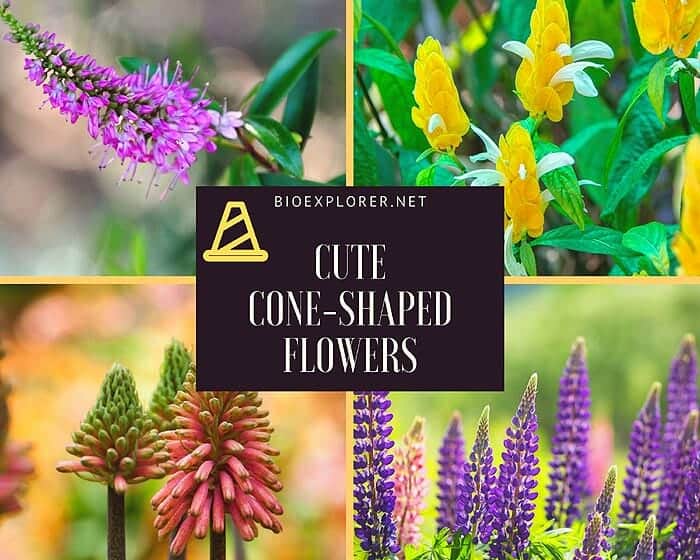
Cone-shaped flowers are three-dimensional blooms that narrow evenly from the bottom to the apex of the flower to form a cone-shaped appearance.
Many perennials develop cone-shaped blossoms during the spring and summer months. Typically, these flowers die out in the winter months and then come back to life in spring.
Like bell-shaped flowers, cone shape flowers give your gardens or landscape a unique geometrical element.
Cone-Shaped Flowers
Here is a collection of all conical shaped flowers.
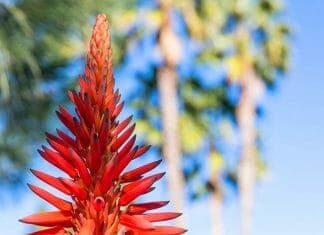
Aloe Succotrina
Aloe succotrina grows high on the cliffs and ledges of the mountains of the Western Cape and southwestern South Africa. It's an attractive aloe that thrives in Strandveld and Fynbos gardens.
Read more
Buddleia
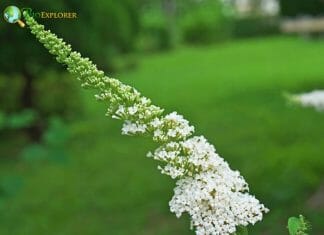
Commonly referred to as a butterfly bush, Buddleia davidii is a deciduous shrub native to forest clearings, limestone outcrops, mountain slopes, and Rocky River banks in America, Africa, and Asia. Buddleia (orth. Var. Buddleja) is a genus with over 140 flowering plant species in the Scrophulariaceae (figwort) family. Many named varieties have been introduced over the years, expanding the flower range colors to include pink, yellow, white, and red.
Read more
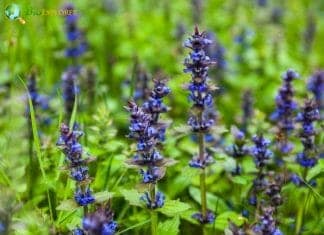
Bugleweed
Ajuga reptans, commonly known as Bugleweed, are perennial, broad-leaved, evergreen to semi-evergreen herbaceous groundcover of the mint family (Lamiaceae). The genus includes around 40 species of plants. Spikes of small bluish-purple flowers appear in mid to late spring, protruding up to 10-inches above the foliage.
Read more
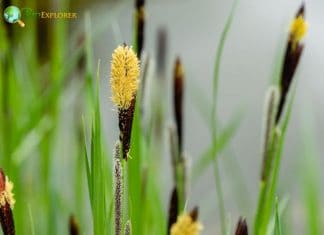
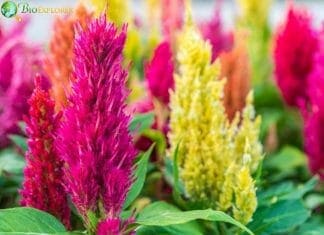
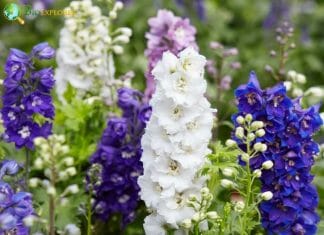
Delphinium
Delphinium is a famous ornamental plant that adds height and a pop of color to commercial and home gardens. Usually, its flowers come in gorgeous shades of blue and purple. Still, other cultivars showcase more yellow, red, white, or pink.
Read more
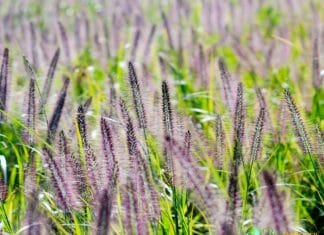
Fountain Grass
Like many herbs, Fountain Grass (Pennisetum setaceum) looks spectacular when lit by the setting or rising sun. However, fountain grass also sends out beautiful, fluffy bloom plumes in late summer. The red, pink, or white plumes (depending on the variety) continue into autumn and give the plantings a casual and relaxed look.
Read more
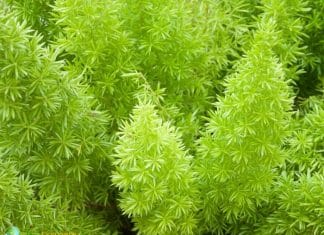
Foxtail Fern
Foxtail fern is a hardy and easily recognizable perennial herb that grows in many indoor containers and gardens. Foxtail fern has a tall, fuzzy, loop-like appearance. It produces small white flowers followed by vibrant red fruits in summer.
Read more
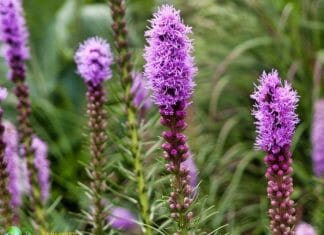
Gayfeather
Gayfeather (Liatris spicata), commonly known as the Blazing Star, Marsh Blazing Star, or Dense Blazing Star, is a tall, erect, lumpy perennial native to low-lying wetlands, grasslands, and marsh edges. It has terminal ends (6 to 12" long) of stalkless, round, downy, dark purple buds (up to 3/4" wide each) that appear on stiff, upright, leafy pedicels.
Read more
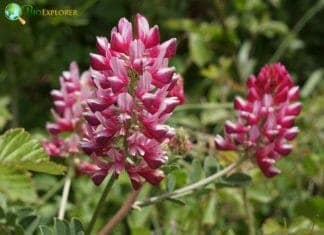
Hedysarum
Hedysarum coronarium, commonly known as sulla clover, sulla, or French honeysuckle, is a perennial or biennial herbaceous plant that generally grows up to 3 feet tall is equal in width. The bright red, extremely fragrant, pea-like flowers bloom from the end of spring to the beginning of summer in dense axillary clusters on upright flower stalks.
Read more
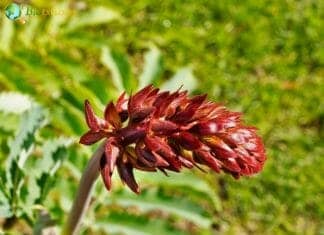
Honeyflower
Honeyflower (Melianthus major) is a strikingly large subshrub in the Melianthaceae family. Its leaves are alternately arranged and are made up of several leaflets with strongly serrated edges. Its flowers have a claw-like appearance with 4 dark brown to rust-red petals of various sizes.
Read more
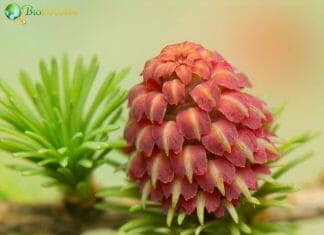
Larch
If you like the effect of a coniferous plant and a deciduous tree's bright color, you can have both with the Larch tree (Larix spp.). Nestled between the needles, you'll find pink flowers that will eventually turn into cones. The cones start out yellow or red and turn brown as they ripen.
Read more
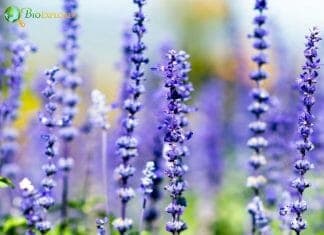
Lavandula
Lavandula angustifolia is undoubtedly amongst the most popular herbaceous plants. With its purple flowers, the fragrant plant adorns many window sills, gardens, and balconies. Lavandula typically blooms between late May and mid-September. There it forms purple flowers, rarely white, which are arranged in pseudo-whorls.
Read more
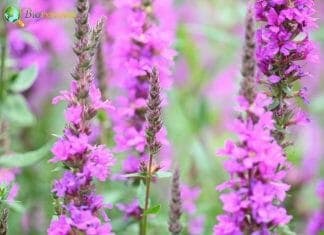
Loosestrife
Purple loosestrife (Lythrum salicaria) is a flowering plant in the Lythraceae family. It is a large family of plants with over 150 species of evergreen and herbaceous perennials. The sessile leaves are alternate or opposite on the stalk. The purple loosestrife inflorescence consists of many showy, white, magenta, or reddish-purple flowers found in racemes.
Read more

Lupine
If you are looking for an eye-catching perennial with summer flowers that will stand out from the crowd, lupine (Lupinus polyphyllus) is a favorite. The flowers open from the bottom up and sometimes feature over one color on the same plant, in shades ranging from soft pastels to violet blues and deep reds.
Read more
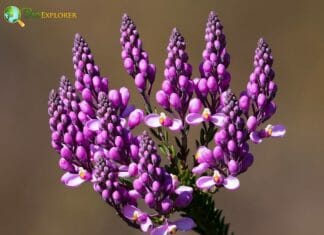
Milkwort
Milkwort (Polygala vulgaris) might not have the most endearing name. Still, it's one of the stars of the early-fall summer show in Europe. The flowers are usually dark blue to light blue, but they can also be pink, purple, and white. The flowers have small petals surrounded by a pair of flat-top sepals that look like petals.
Read more
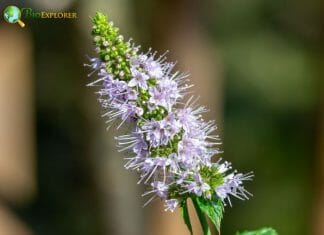
Peppermint
Peppermint (Mentha × piperita, also called Mentha balsamea) is a hybrid mint, a cross of spearmint and watermint. Native to the Middle East and Europe, the plant is now widespread and grown in many parts of the world. The axis of the stem is usually hairy and usually highly branched. Peppermint flowers can be purple, pink, and sometimes white.
Read more
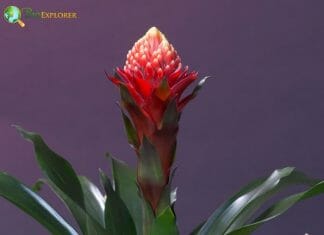
Quesnelia
Quesnelia is a genus of flowering plants in the Bromeliaceae family, a subfamily of the Bromelioideae. The genus consists of about 20 species of plants that are native to southeastern and eastern Brazil. Quesnelia is a perfect landscaping bromeliad with its vibrant flower in various colors.
Read more
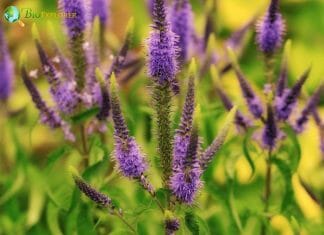
Speedwell
Veronica, also known as Speedwell, is an easy-to-grow, carefree perennial with long spikes of tiny white, pink, blue, or purple petals. With around 500 species, Veronica is the largest genus in the Plantaginaceae family of flowering plants. The precise origin of this plant cannot be exactly determined.
Read more
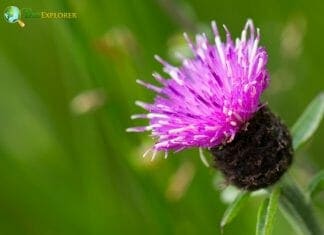
Teasel
Teasel (Dipsacus spp.) is a genus of plants from the Caprifoliaceae (honeysuckle) family. Members of this genus are typically known as teazle or teazle. The flowers are white, purple, lavender, or dark pink. Dipsacus species are endemic to North Africa, Asia, and Europe. The genus name Dipsacus is a Greek word meaning thirst.
Read more
Cite this page
BioExplorer. (2026, August 26). Cone-Shaped Flowers. https://www.bioexplorer.net/plants/flowers/cone-shaped/