Thailand, officially known as the Kingdom of Thailand, is a Southeast Asian country located above the equator. The nation's economy is significantly backed by the agriculture and tourism industries.
Thailand is home to 13 species of monkeys, though none of them are endemic to the country; quite a few can be found across Southern Asia.
Interestingly, the Thai city of Lopburi annually holds an official Monkey Buffet Festival during which thousands of long-tailed macaques (Macaca fascicularis) are given an abundance of fruits and vegetables to feast on[1].
In addition to attracting tourists, this event is a way for city locals to honor monkeys, considered sacred animals in Thai Other examples of common monkey species in Thailand include the Indochinese silvered langur (Trachypithecus germaini), the northern pig-tailed macaque (Macaca leonina) and the rhesus Monkey (Macaca mulatta).
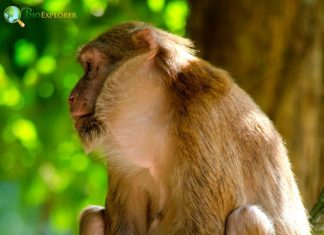
The Assam macaque, also known as Assamese macaque, is a macaque of the Old-World monkey family endemic to South and Southeast Asia. Assam is another state in India. Eating everything from fruits to 55 types of flowers, leaves, seeds, and bark, these macaque monkeys adapt their diet to suit their habitat.
The Banded langur, also known as the Raffles’ banded langur or banded leaf monkey, is a primate species in the Cercopithecidae family. Like other Colobin monkeys, whose young typically have lighter-colored fur than adults, Banded langur infants have white or tan fur until it darkens around 6 months.
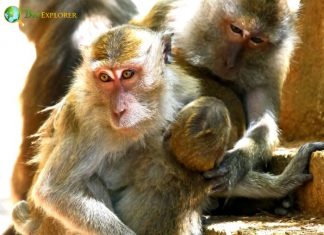
The crab-eating macaque also called the long-tailed macaque and known in laboratories as the cynomolgus monkey, is a primate monkey endemic to Southeast Asia. Crab-eating macaque macaques live in multi-male groups comprising around 30 members.
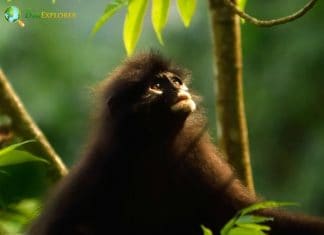
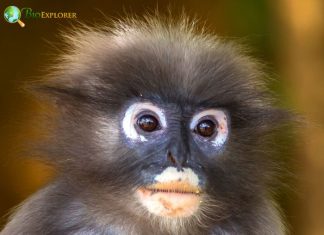
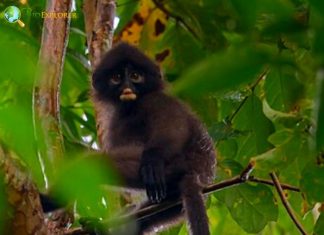
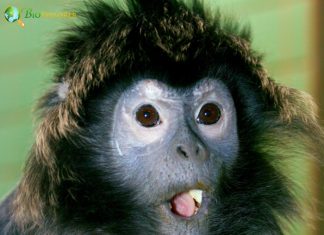
Dusky langurs also known as spectacled langurs, spectacled leaf monkeys, and dusky leaf monkeys, are primarily found in the Malay Peninsula in Asia. White rings surrounding the deep, dark eyes give the species its alternative name, the spectacled monkey or spectacled langur, for a “bespectacled” look.
Germain’s Langur is a lutung species endemic to Thailand, Vietnam, Laos, Cambodia, and Burma. Germain’s langur is a terrestrial tree-dwelling species occasionally found in lowlands.
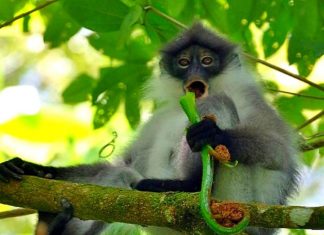
The Indochinese gray langur (Trachypithecus crepusculus) is a species of Lutung native to Southeast and East Asia. This species was once thought to be conspecific with the Phayre’s leaf monkey (Trachypithecus phayrei).
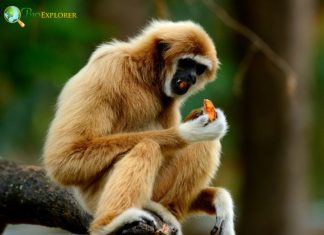
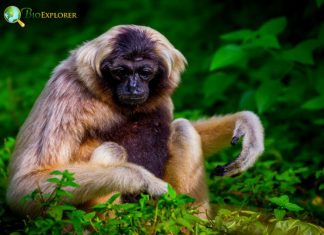
The lar gibbon (Hylobates lar), also called the white-handed gibbon, is another endangered mammal in the gibbon family, Hylobatidae. It is among the best-known gibbons and is occasionally kept in captivity. Lar gibbons have a two-tone coat.
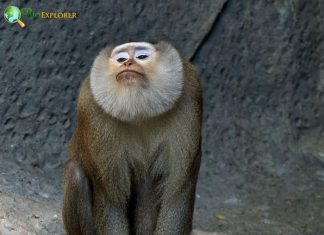
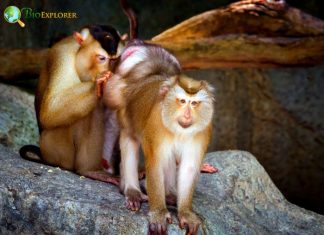
The northern pig-tailed macaque (Macaca leonina) is a macaque species in the Cercopithecidae family. Typical of this group of Old World monkeys, northern pig-tailed monkeys are gregarious, living in social groups of 9-81 individuals.
The pale-thighed surili (Presbytis siamensis), also called the white-thighed langur, is a primate species in the Old World monkey family (Cercopithecidae). Pale-thighed langurs are savvy herbivores; it’s fun to say they only eat plants and have a fussy palate, with a preference for young leaves, seeds, and fruits.
The pileated gibbon (Hylobates pileatus) is a primate in the gibbon family, Hylobatidae. Pileated gibbons are monogamous and typically found in only around 3 percent of mammals.
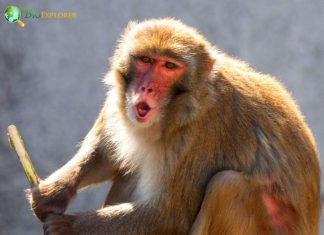
The rhesus macaque (Macaca mulatta), commonly known as the rhesus monkey, is a species of Old-World monkey. Rhesus monkeys are diurnal animals, both arboreal and terrestrial.
Robinson’s banded langur (Presbytis robinsoni), also known as Robinson’s banded surili, is a monkey species in the Cercopithecidae family. Robinson Banded Langurs are generally shy and alert creatures, rarely leaving the comfort of the canopy.
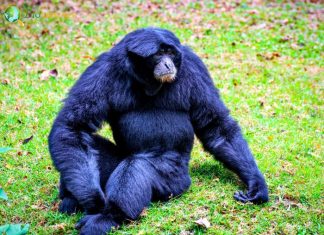
The siamang gibbon (Symphalangus syndactylus) is a black-coated arboreal gibbon endemic to the forests of Thailand, Malaysia, and Indonesia. It is the only species in the genus Symphalangus. The siamang’s body is perfectly adapted to a life of swinging from branch to branch (also called brachiation).
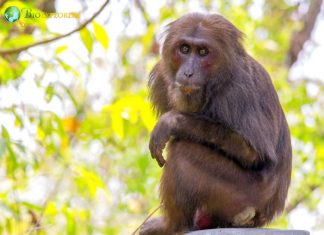
The stump-tailed macaque, also known as the bear macaque, is an Old World monkey endemic to Cambodia, northeastern India, southwestern China, Myanmar, and Laos, from northwestern Peninsular Malaysia, Vietnam, and Thailand.
The pig-tailed macaque (Macaca nemestrina), also called the Sundaland pig-tailed macaque and Sunda pig-tailed macaque is a medium-sized macaque native to southern Thailand, Indonesia, and Malaysia. Pig-tailed macaques also have long legs and hairless snouts.
Tenasserim lutung (Trachypithecus barbei) is a species of lutung. It occurs in Thailand and Myanmar. The species derived its common name from the Tenasserim Hills.