
Monkeys Starting with R
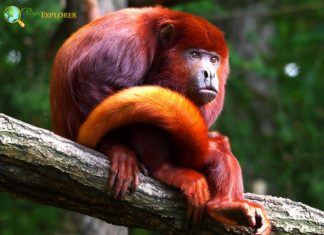
Red Howler Monkey
The Colombian red howler or Venezuelan red howler is a South American species of howler monkey, a New World species of monkey found in the western Amazon basin. Colombian red howler monkeys live in relatively large social groups composed of around 10 individuals, with just one or possibly two of the individuals being male.
Read more

Red-backed Bearded Saki
The red-backed bearded saki (Chiropotes chiropotes), also known as Guianan Bearded Saki, is a New World monkey native to South America. They live in groups of about 40 members of both sexes, sometimes separated into groups when traveling or foraging, their primary occupation.
Read more

Red-bellied Monkey
The red-bellied monkey (Cercopithecus erythrogaster), also called the red-bellied guenon or white-throated guenon is a diurnal primate living in the trees of tropical rainforests or tropical areas in Benin and Nigeria. The red-bellied monkey was once considered extinct due to constant hunting for fur on its unique red belly and white front legs.
Read more

Red-bellied Titi
The Red-bellied titi (Plecturocebus moloch) is a marmoset species of New World monkey native to Brazil. It lives in thickets and forests. Like other titis, red-bellied titi is territorial and emits vocal cries to mark its territory and scare other animals.
Read more
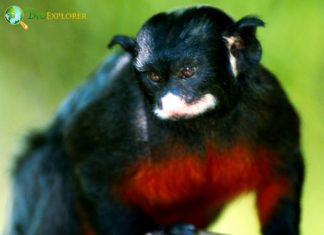
Red-Chested Mustached Tamarin
The Red-chested mustached tamarin (Saguinus labiatus), also known as Red-bellied Tamarin, is a tamarin that lives in the Amazon region of Brazil, Peru, and Bolivia. The red belly of these New World monkeys is their most striking external feature.
Read more
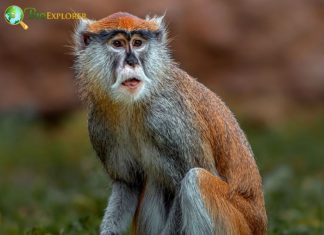
Red-eared Guenon
The red-eared guenon (Cercopithecus erythrotis), also called the russet-eared guenon or red-eared monkey is endemic to the tropical and subtropical lowland rainforests of Nigeria, Equatorial Guinea, and Cameroon.
Read more

Red-handed Howler
The red-handed howler monkey (Alouatta belzebul) is an endangered species of howler monkey, a New World species. Red-handed howler monkeys are diurnal, although they spend most of the day (up to 80%) sleeping on tree branches with members of their squad.
Read more

Red-headed Titi
The red-headed titi (Cheracebus regulus) (also known as Juruá Collared Titi) is a marmoset species of New World monkey endemic to Brazil. Red-headed titi monkeys are diurnal and arboreal, waking up and sleeping with the sun.
Read more

Red-mantled Saddle-Back Tamarin
The Red-mantled saddleback tamarin (Leontocebus lagonotus) is a species of saddleback tamarin, a species of small South American monkey. The Red-mantled saddle-back tamarin lives in Peru and Ecuador, and its type locality is in Peru, near the confluence of the Amazon and Napo.
Read more
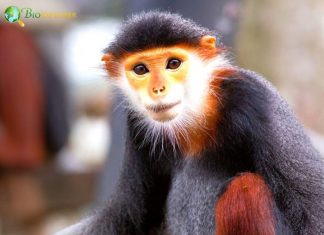
Red-Shanked Douc Langur
The red-shanked douc langur is an Old-World monkey species that is one of the most colorful primates. Red-shanked douc langurs are genetically similar to gray-shanked douc langurs; however, they are considered a different species due to their different biological characteristics.
Read more
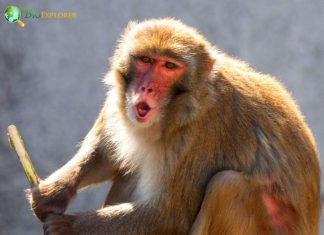
Rhesus Macaque
The rhesus macaque (Macaca mulatta), commonly known as the rhesus monkey, is a species of Old-World monkey. Rhesus monkeys are diurnal animals, both arboreal and terrestrial.
Read more
Rio Acari Marmoset
The Rio Acari marmoset (Mico acariensis) is endemic to Brazil. It was first described in the year 2000. These Brazilian monkeys use their specialized claws to forcefully grip tree trunks and gnaw small holes in the bark with their lower incisors and canines.
Read more

Rio Beni Titi
The Rio Beni tití is a New World monkey species belonging to the genus Callicebus of the family Pitheciidae. It is native to Bolivia and is found mainly in the eastern parts of Bolivia in the upper basins of the Mamoré and Grande rivers.
Read more

Río Cesar White-fronted Capuchin
The Río Cesar white-fronted capuchin (Cebus cesarae) is a gracile capuchin monkey native to the Cesar River Valley in northern Colombia. Like other monkeys of the genus Cebus, the Río Cesar white-fronted capuchin is named after the order of the Friar Capuchins because the crests of these friars closely resemble the coloring of the monkey's head.
Read more

Rio Mayo Titi
The Río Mayo titi (Plecturocebus oenanthe), also known as the San Martín titi, is native to the San Martín region of Peru and is considered Peru's most endangered primate. Río Mayo titis have been described as somewhat temperamental and hesitant and don't tend to be inquisitive.
Read more
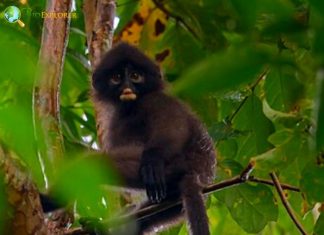
Robinson’s Banded Langur
Robinson's banded langur (Presbytis robinsoni), also known as Robinson's banded surili, is a monkey species in the Cercopithecidae family. Robinson Banded Langurs are generally shy and alert creatures, rarely leaving the comfort of the canopy.
Read more
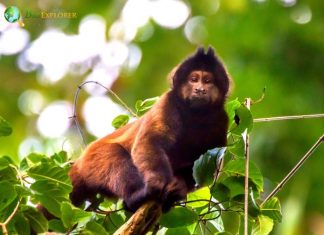
Robust Capuchin Monkey
Robust capuchin monkeys, also called crested capuchin monkeys, are capuchin monkeys of the Sapajus genus. Some crested capuchin species are known to use stone tools in the wild. These are used to crack nuts and other seeds, dried fruits, and even oysters.
Read more
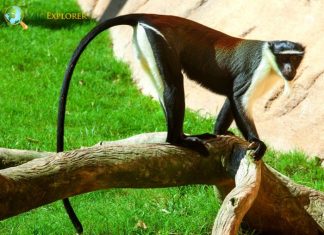
Roloway Monkey
Roloway monkeys (Cercopithecus roloway), also called Roloway guenons, are Old World monkeys native to Ghana and the Ivory Coast. Roloway monkeys resemble Diana monkeys in appearance, a species with which they were once confused.
Read more

Rondon’s Marmoset
Rondon's Marmoset (Mico rondoni), also called the Rondônia marmoset, is a small species of monkey in the Callitrichidae family found in the southwestern Amazon of Brazil. Rondon's marmoset was only described in 2010, and its name refers to the famous Amazon explorer Cândido Rondon.
Read more

Roosmalens’ Dwarf Marmoset
The Roosmalens dwarf marmoset, also called the black-crowned pygmy marmoset or black-crowned dwarf marmoset, is a New-World monkey endemic to the Amazon rainforest.
Read more

Ryland’s Bald-faced Saki
The Ryland's Bald-Faced Saki (Pithecia rylandsi) is a controversial species of saki monkey, a New World monkey species. It is one of the largest sakis. This South American monkey was named after Brazilian primatologist Anthony Rylands, a former professor of vertebrate zoology at the Federal University of Minas Gerais and founding editor of the journal Neotropical Primates.
Read more

Suggested Reading: Common Monkey Species