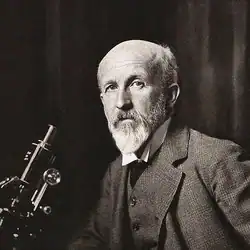
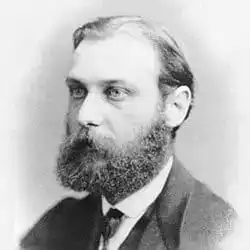
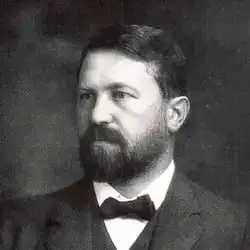
Genetics is the science of heredity and variation. Heredity is the passing of genetic information from parents to offspring. Variation is the difference in genes and alleles found within and between populations, and it is the reason no two individuals are quite alike. The basic unit of both is the gene, a stretch of DNA carrying the instructions for a functional product.
The word heredity comes from the Latin hereditas, meaning heirship or inheritance. It entered English in the 1530s with a purely legal sense, describing property passing to an heir. The biological meaning we use today is much younger. It arrived in the 1860s, borrowed from the French heredite, at exactly the moment scientists began to suspect that traits, like estates, might follow rules of succession.
That timing is the whole story in miniature. Heredity was an old question with no science behind it until the middle of the nineteenth century. In the 160 years since, it has become the discipline that reads and rewrites genomes. What follows is that transformation in order, arranged into seven eras and running from roughly 400 BCE to the present day, across 94 documented milestones. For the science itself rather than its history, see our guide to the subject of genetics.
How to read this timeline
Each entry records a dated, verifiable turning point: a first observation, a first isolation, a published proof, a method that changed what was possible, or an approval that put a discovery into clinical practice.
Where a discovery and its publication or its Nobel recognition fall in different years, we date the entry to the work itself and give the later date in the text. That distinction matters more than it looks. Several errors that circulate widely in published genetics timelines come from filing a discovery under the year its author collected a prize, or under the year a paper appeared rather than the year the experiment was done.
Where a claim is commonly misreported, the entry says so and gives the correct version. Darwin and Wallace did not write On the Origin of Species together. Ernst Haeckel did not prove that heredity lives in the nucleus. Thomas Hunt Morgan’s white-eyed fly is a 1910 result, not a 1905 one. DNA replication was not discovered in 1953. The human genome was declared complete in 2003 and actually completed in 2022.
Every entry cites one primary or institutional source: a university, a government research agency, a national library, a research institute, a scientific society or a Nobel Prize record. Full citations appear in the References section below.
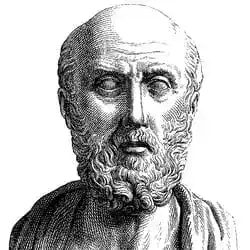
Hippocrates, Unidentified engraver, public domain, via Wikimedia Commons Writers in the Hippocratic tradition proposed that tiny particles are shed from every part of the body and gathered into the reproductive material, so that each body part is represented in the seed. The theory explains rather neatly why a child might have a father’s nose and a mother’s hands. It also predicted, wrongly, that the children of injured parents would inherit the injury. This is the first systematic theory of inheritance in the Western record, and it proved remarkably durable. Charles Darwin was still proposing a version of it in 1868.[1]
c. 350 BCE:
Aristotle argues against pangenesis
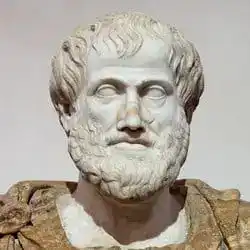
Aristotle, After Lysippos, public domain, via Wikimedia Commons In Generation of Animals, Aristotle attacks the particle theory with objections that still hold up. People inherit traits from grandparents whose particles they never received. Mutilations are not passed on. Traits such as hair color appear in parts of the body that could not plausibly have contributed seed. His alternative was that what passes to the offspring is not a sample of the parent’s body but a set of formative instructions, with the embryo built up progressively out of unorganized material. That position, later called epigenesis, is closer to the truth than anything proposed for the next two millennia.[2]
1665:
Robert Hooke names the cell
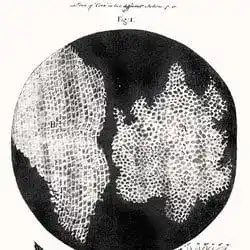
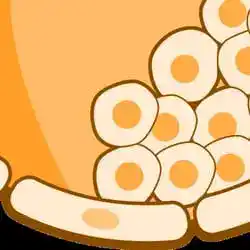
Cork cells drawn by Robert Hooke in Micrographia, Robert Hooke (1635-1707), public domain, via Wikimedia Commons Hooke published Micrographia, a book of engravings drawn from his own microscope work. Describing a thin slice of cork, he noted that it was divided into a honeycomb of tiny compartments, and called them cells after the small rooms occupied by monks. He was looking at dead plant cell walls and had no idea what cells did. He had nevertheless given biology its fundamental unit, and heredity cannot be located in cells until somebody knows that cells exist.[3]
1677:
Leeuwenhoek observes spermatozoa
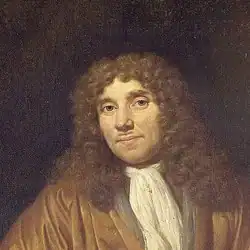
Antonie van Leeuwenhoek, Jan Verkolje, public domain, via Wikimedia Commons Antonie van Leeuwenhoek, a draper from Delft with a gift for grinding lenses, described swimming “animalcules” in semen. His observation set off a century of argument between spermists, who believed a fully formed miniature organism lay folded inside each sperm, and ovists, who placed it in the egg. Both camps were preformationists and both were wrong. But the dispute pulled the question of inheritance out of philosophy and into the range of observation, where it could eventually be settled.[4]
1809:
Lamarck and the inheritance of acquired characteristics
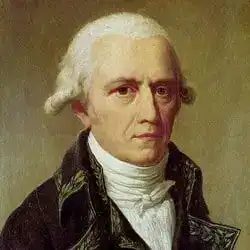
Jean-Baptiste Lamarck, Charles Thévenin, public domain, via Wikimedia Commons Jean-Baptiste Lamarck published Philosophie Zoologique, arguing that organisms change during their lifetimes through use and disuse, and that those changes pass to their offspring. The giraffe stretching for high leaves is the example everyone remembers. The mechanism was wrong, and Lamarck is now mostly cited as a cautionary tale, which is a little unfair to him. He was the first to argue seriously that species transform over time and that heredity is the vehicle by which they do it. That is the frame Darwin inherited and Mendel eventually filled in.[5]
1831-1833:
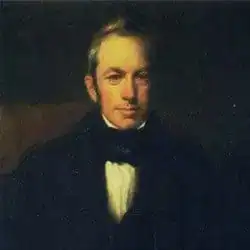
Robert Brown, public domain, via Wikimedia Commons Studying orchid tissue, the Scottish botanist Robert Brown noticed a dense, consistent body inside every cell and named it the nucleus, from the Latin for kernel. He did not know what it did. Within fifty years it would be the leading suspect for the seat of heredity.[6]
1838 – 1839:
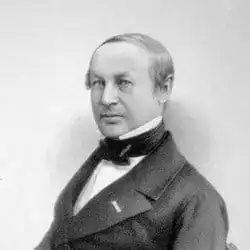
Theodor Schwann, Rudolph Hoffmann, public domain, via Wikimedia Commons Matthias Schleiden concluded in 1838 that all plant tissue is built from cells. Theodor Schwann extended the claim to animals the following year. Cell theory established that every living thing is made of the same kind of unit, which gave heredity an address. Whatever passes between generations must be carried in cells and by cells.[7]
1855:
Virchow says every cell comes from a cell
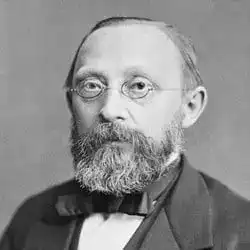
Rudolf Virchow, public domain, via Wikimedia Commons Rudolf Virchow finished cell theory with the phrase omnis cellula e cellula. Spontaneous generation was out. In its place came an unbroken material continuity running from any living cell back through every one of its ancestors, and that continuity is exactly what a theory of heredity has to account for.[8]
1856:
Mendel begins the pea experiments
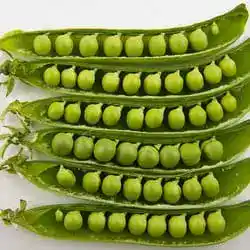
Pisum sativum, Bill Ebbesen, CC BY-SA 3.0, via Wikimedia Commons Gregor Mendel started a program of controlled crosses in the garden of the Augustinian abbey at Brünn, now Brno in Czechia. Over eight years he grew and scored roughly 28,000 pea plants across seven characters, each chosen because it came in two clean and unmistakable forms: seed shape, seed color, flower color, pod shape, pod color, flower position and stem length. Choosing binary traits, then counting offspring in the thousands and analyzing them statistically, is what separated Mendel from every hybridizer who came before him. Others had crossed plants. Nobody had counted like that. In under sixty years heredity acquired everything a science needs. A physical basis in the chromosome. A mathematics in the Hardy-Weinberg principle. A working method in the fruit fly. And a vocabulary, including the words “genetics” and “gene” themselves. It starts with two naturalists having a paper read to an unimpressed learned society, and it ends with a textbook.[9]
The Chromosome and the Gene (1858 to 1915)
1858:
The Darwin and Wallace joint paper
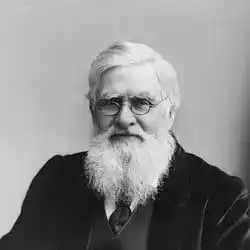
Alfred Russel Wallace, London Stereoscopic and Photographic Company (active 1855-1922), public domain, via Wikimedia Commons On July 1, 1858 the Linnean Society of London heard a paper titled “On the Tendency of Species to form Varieties; and on the Perpetuation of Varieties and Species by Natural Means of Selection”, jointly authored by Charles Darwin and Alfred Russel Wallace and read in the absence of both men. Darwin had been sitting on his theory for twenty years. Wallace, working in the Malay Archipelago, arrived at the same idea independently and posted it to Darwin, which forced the issue. Their joint work was this paper, not the book that followed. It landed with a thud. The Society’s president reported at the end of the year that 1858 had not been marked by any of those striking discoveries which at once revolutionize a department of science.[10]
1859:
Darwin publishes On the Origin of Species
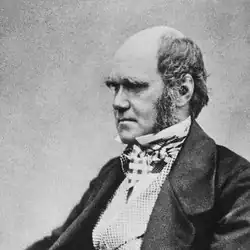
Charles Darwin, Maull & Fox, public domain, via Wikimedia CommonsOn the Origin of Species by Means of Natural Selection appeared on November 24, 1859, written and published by Darwin alone. Wallace co-authored the 1858 paper, not the book. The distinction matters, and it is frequently misreported. The book sets out descent with modification and the mechanism of natural selection, drawing on evidence gathered during the voyage of HMS Beagle between 1831 and 1836. That included five weeks in the Galápagos in 1835, twenty-four years before publication, and the finches played a far smaller role in Darwin’s thinking than the popular version of the story suggests. Two other details are commonly misreported. “Survival of the fittest” is not Darwin’s phrase. Herbert Spencer coined it in 1864, and Darwin only adopted it in the fifth edition of 1869, at Wallace’s suggestion. And the theory had a hole in the middle of it: natural selection requires that variation be inherited, and Darwin had no working account of how inheritance operates. That gap is what Mendel’s paper would eventually fill, seven years later and thirty-four years too early for anyone to notice.[11]
1865 – 1866:
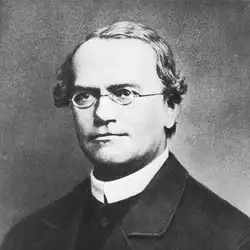
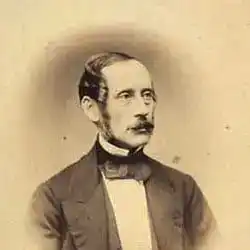
Gregor Mendel, public domain, via Wikimedia Commons Mendel read his paper to the Natural Science Society in Brünn across two sittings, on February 8 and March 8, 1865, and published it as Versuche über Pflanzenhybriden, or “Experiments in Plant Hybridization”, in the Society’s proceedings the following year. He worked first from monohybrid crosses of his seven characters, then from dihybrid and trihybrid crosses, and concluded that inheritance is carried by discrete paired factors rather than by any blending of parental fluids. Three principles came out of it. Some factors are dominant and mask others, which are recessive, so a plant can carry a trait it does not display. The two factors for a character segregate, so that each gamete receives only one of them. And factors for different characters assort independently during gamete formation, a rule that later work showed holds only for genes on different chromosomes, or far apart on the same one. Most modern textbooks give segregation and independent assortment as Mendel’s two laws and treat dominance as a principle rather than a law. Mendel himself numbered and named nothing. One myth is worth killing. Mendel’s paper did not go missing. It was printed, sent to well over a hundred libraries and learned societies, and cited a handful of times before 1900. It was simply not understood. Nobody in 1866 was looking for a mathematical, particulate theory of inheritance, so the paper sat there waiting thirty-four years for readers who were. Mendel died in 1884, and the title “Father of Genetics” was given to him by a discipline whose name had not yet been invented.[12]
1866:
Haeckel proposes that the nucleus carries heredity
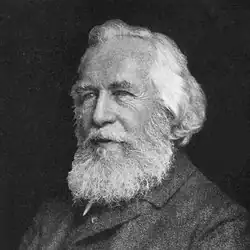
Ernst Haeckel, public domain, via Wikimedia Commons In Generelle Morphologie der Organismen, Ernst Haeckel suggested that the cell nucleus is responsible for transmitting inherited characteristics. It is worth being clear about what that was. Haeckel offered a hypothesis with no experimental support. He ran no experiments on the question and proved nothing. He happened to guess correctly, and the experimental case for the nucleus was built over the following two decades by Hertwig, Flemming and Boveri. The guess and the proof belong to different people and different years, and the two are often conflated.[13]
1868:
Darwin’s pangenesis, a wrong turn worth recording
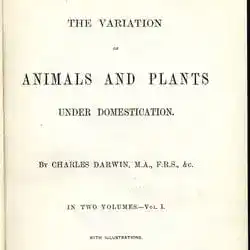
Title page of Darwin’s The Variation of Animals and Plants under Domestication, Charles Darwin, public domain, via Wikimedia Commons In The Variation of Animals and Plants under Domestication, Darwin offered what he called a provisional hypothesis of pangenesis. Every cell in the body sheds minute particles, which he named gemmules; these circulate through the organism and collect in the reproductive organs. It was a revival of the Hippocratic idea from more than two thousand years earlier, and it was wrong. Darwin’s cousin Francis Galton tested it by transfusing blood between differently colored rabbits and found nothing at all. The failure is a good measure of the size of the gap that Mendel’s paper, published two years earlier and sitting unread on library shelves, had already closed.[14]
1869:
Miescher isolates nuclein, the first isolation of DNA
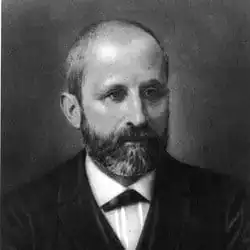
Friedrich Miescher, public domain, via Wikimedia Commons Friedrich Miescher, a young Swiss physician working in Felix Hoppe-Seyler’s laboratory in the vaults of a castle at Tübingen, set out to study the chemistry of white blood cells. His raw material was pus-soaked surgical bandages collected from a nearby clinic. From the nuclei of those cells he extracted an acidic, phosphorus-rich substance unlike any protein, and named it nuclein. He later found it in salmon sperm and other tissues, which established it as a general component of cells. Publication waited until 1871. Hoppe-Seyler found the result so unlikely that he insisted on repeating the experiments himself before letting it into print. Two caveats belong with this entry. Nuclein was not pure DNA but a DNA and protein complex. And Miescher never suggested it carried heredity. Seventy-five years passed before anyone demonstrated that.[15]
1876:
Hertwig shows that fertilization is the fusion of two nuclei
Oscar Hertwig, Nicola Perscheid, public domain, via Wikimedia Commons Oscar Hertwig watched fertilization happen in transparent sea urchin eggs and reported what it consists of: a single sperm nucleus entering the egg and fusing with the egg’s own nucleus. This was the first hard evidence that the nucleus, rather than the cytoplasm or some vital fluid, is what each parent contributes to the next generation. It is the observation Haeckel had only speculated about ten years earlier.[16]
1879-1882:
Flemming describes chromatin and mitosis
Walther Flemming, public domain, via Wikimedia Commons Using newly available aniline dyes, Walther Flemming found a material in the nucleus that took up stain intensely, and named it chromatin after the Greek word for color. Following stained cells through division, he worked out the whole sequence. Chromatin condenses into threads. Each thread splits lengthwise. The halves are drawn to opposite ends of the cell, so both daughter cells receive an identical set. He called the process mitosis. That lengthwise splitting is the visible mechanism by which hereditary material gets copied and handed on intact, and it was the strongest argument yet that chromatin is what heredity is made of.[17]
1883-1890:
Meiosis and chromosome individuality
Theodor Boveri, public domain, via Wikimedia Commons Édouard van Beneden, working on the parasitic worm Ascaris, showed that egg and sperm each carry half the usual number of chromosomes, so that fertilization restores the full complement. That is the first description of what would be called meiosis, and it explains how sexual reproduction avoids doubling the chromosome count every generation. Theodor Boveri then demonstrated that chromosomes are individual, persistent bodies which keep their identity through cell division instead of dissolving and re-forming, and that an embryo needs a complete set to develop normally. Between them, the physical machinery Mendel’s abstract factors would require was now visible under a microscope. This was fourteen years before anybody read Mendel.[18]
1900:
Mendel rediscovered, and genetics begins
Hugo de Vries, public domain, via Wikimedia Commons Three botanists working independently arrived at Mendel’s ratios in their own breeding experiments and, on searching the literature, found Mendel’s 1866 paper waiting for them: Hugo de Vries in the Netherlands, Carl Correns in Germany and Erich von Tschermak in Austria. All three published in 1900 and all three credited Mendel. William Bateson read de Vries on a train to London, was converted before he arrived, and became Mendelism’s chief advocate in the English-speaking world. This rediscovery is the real beginning of genetics as a discipline, and it is the single most important date missing from most short histories of the subject. Without it, the thirty-four year silence between Mendel and the twentieth century makes no sense. It also started a fight. The Mendelians treated inheritance as discrete and particulate. The biometricians studied continuous variation statistically and regarded Mendel’s clean ratios as a special case of no general importance. The quarrel ran for two decades before it became clear that many small Mendelian factors acting together produce precisely the continuous variation the biometricians had been measuring all along.[19]
1902:
The Sutton and Boveri chromosome theory of heredity
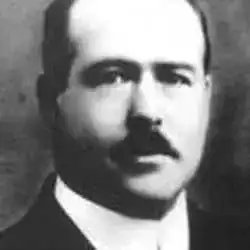
Walter Sutton, public domain, via Wikimedia Commons Walter Sutton, studying sperm formation in grasshoppers, and Theodor Boveri, working on sea urchin embryos, independently noticed that chromosomes behave exactly as Mendel’s factors would have to. They come in matched pairs. The members of each pair separate during gamete formation. Different pairs separate independently of one another. Sutton stated the conclusion plainly: chromosomes are the physical carriers of the hereditary factors. Acceptance was not immediate. Chromosomes were few and traits were many, and critics pointed out that no specific trait had been tied to any specific chromosome. That objection stood for eight years, until Morgan’s fruit flies answered it.[20]
1902:
Garrod and the inborn errors of metabolism
Archibald Garrod, CC BY 4.0, via Wikimedia Commons The English physician Archibald Garrod studied alkaptonuria, a rare condition in which urine turns black on contact with air. He observed that it clustered in families, that it was unusually common among the children of first cousin marriages, and that its pattern matched what Mendel predicted for a recessive trait. It is the first human disease traced to Mendelian inheritance. Garrod went further than the inheritance pattern. He proposed that the cause was a missing enzyme in a metabolic pathway, and coined the phrase “inborn errors of metabolism.” That connects a hereditary factor to a specific chemical function four decades before anyone proved the principle experimentally. Almost nobody noticed at the time.[21]
1905:
Stevens and Wilson identify the sex chromosomes
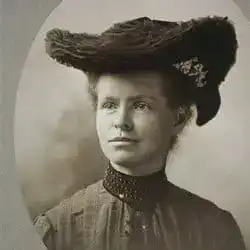
Nettie Stevens, Carnegie Institution of Washington, public domain, via Wikimedia Commons Nettie Stevens, in Studies in Spermatogenesis published by the Carnegie Institution, showed that the mealworm Tenebrio molitor produces two kinds of sperm, one carrying a large chromosome and one a small one, and that this difference determines the sex of the offspring. Edmund Beecher Wilson reached a closely related conclusion independently in the same year. Sex had been attributed to nutrition, to temperature, and to the relative vigor of the parents. It turned out to be chromosomal. This was also the first case of a specific visible trait tied to a specific chromosome, which made it the first real support for the Sutton and Boveri theory.[22]
1905-1906:
Bateson coins “genetics” and finds linkage without explaining it
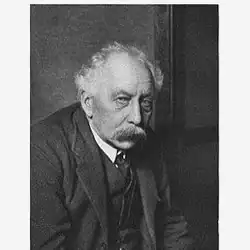
William Bateson, public domain, via Wikimedia Commons William Bateson used the word “genetics“, from the Greek genesis meaning origin or source, in a letter to the zoologist Adam Sedgwick dated April 18, 1905. He introduced it publicly the following year at the Third International Conference on Hybridization and Plant Breeding in London, proposing it as the name for the new science of heredity and variation. It stuck at once. Around the same time Bateson, Edith Saunders and Reginald Punnett, whose square is still taught in every introductory course, found that certain characters in sweet peas were inherited together far more often than independent assortment allows. They described the effect accurately and called it coupling and repulsion. It is what we now call genetic linkage. Their explanation was wrong. They proposed a reduplication theory involving unequal production of gamete types. The correct account, that linked genes sit on the same chromosome, came out of Morgan’s laboratory five years later. Bateson also coined the term epistasis in 1907, for cases where one gene masks or modifies the effect of another.[23]
1908:
The Hardy-Weinberg principle
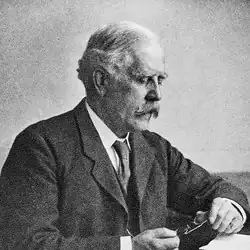
G. H. Hardy, A mathematician’s apology, public domain, via Wikimedia Commons A serious objection to Mendelism held that dominant alleles ought to increase in frequency each generation until recessive traits vanished. Since they plainly do not vanish, Mendelism must be incomplete. The mathematician G. H. Hardy and the physician Wilhelm Weinberg independently showed the objection to be simply false. In a large, randomly mating population with no selection, mutation or migration, allele and genotype frequencies stay constant indefinitely. Dominance governs which allele is expressed, not how common it is. The principle did more than win an argument. It gave population genetics its null hypothesis. Any measured departure from Hardy-Weinberg equilibrium is a signal that something is acting on the population, whether selection, drift, migration, mutation or non-random mating, and the size of the departure is a way of measuring it.[24]
1909:
Johannsen coins “gene”, “genotype” and “phenotype”
Wilhelm Johannsen, Jens Petersen, public domain, via Wikimedia Commons The Danish botanist Wilhelm Johannsen introduced the word gene for the unit of inheritance in Elemente der exakten Erblichkeitslehre. He chose it deliberately as a term free of theoretical baggage, and explicitly declined to say what a gene was made of or how it worked. That piece of restraint is why the word survived every later revolution in what genes turned out to be. In the same book he separated genotype, the genetic constitution an organism carries, from phenotype, the characteristics it actually displays. The distinction explains how a trait can skip a generation, why identical genotypes in different environments produce different outcomes, and why what you can see is never a full guide to what is being inherited. All three words are still in daily use, unchanged.[25]
1910:
Morgan’s white-eyed fly
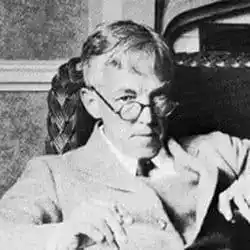
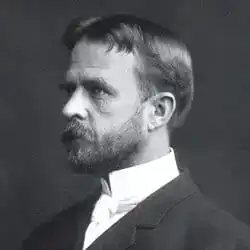
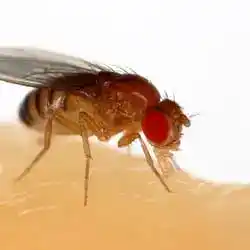
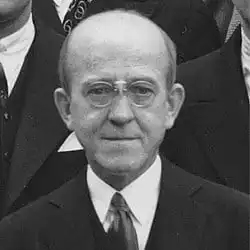
Thomas Hunt Morgan, public domain, via Wikimedia Commons In a cramped, banana-scented laboratory at Columbia University that everyone called the fly room, Thomas Hunt Morgan found a single white-eyed male among thousands of red-eyed Drosophila melanogaster. Morgan had been skeptical of both Mendelism and the chromosome theory, and had been breeding flies in the hope of finding large mutations that would support a rather different account of evolution. The white-eyed fly changed his mind. Bred to red-eyed females, the mutant produced only red-eyed offspring. Those offspring crossed with each other produced white-eyed flies, and every one of them was male. The trait was tracking the X chromosome. Published as “Sex Limited Inheritance in Drosophila” in July 1910, it was the first assignment of a specific gene to a specific chromosome, and it turned the Sutton and Boveri theory from a plausible inference into a demonstrated fact. Morgan received the Nobel Prize in Physiology or Medicine in 1933. This event is very commonly misdated to 1905.[26]
1911:
Fruit flies confirm the chromosome theory
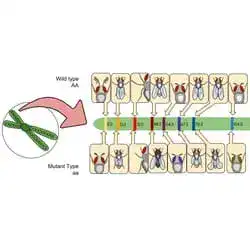
Drosophila melanogaster, Sanjay Acharya, CC BY-SA 4.0, via Wikimedia Commons Morgan’s group established that genes lie in a linear order along chromosomes, and in doing so explained what Bateson and Punnett could not. Genes on the same chromosome tend to be inherited together, which is linkage. The association is not absolute, because chromosomes physically exchange segments during meiosis in an event called crossing over. And the frequency with which two linked genes are separated is proportional to how far apart they lie. Linkage, crossing over and recombination frequency turned out to be three faces of one mechanism.[27]
1913:
Sturtevant draws the first genetic map
A Drosophila gene linkage map of the kind Sturtevant first drew, Twaanders17, CC BY-SA 4.0, via Wikimedia Commons Alfred Sturtevant, an undergraduate in Morgan’s laboratory, saw the implication of the recombination rule. If separation frequency is proportional to distance, then frequency is a measure of distance, and the genes can be laid out in order along a line. He took the laboratory’s data home and, by his own account, spent the night on it and neglected his homework. What he produced was a linear map of six sex-linked genes on the Drosophila X chromosome. Gene mapping was born that night, along with the unit of map distance still called the centimorgan after Sturtevant’s supervisor. Every genetic map since, including the human maps that made the Human Genome Project feasible, uses the method a nineteen-year-old invented in an evening.[28]
1915:
The Mechanism of Mendelian Heredity
Calvin Bridges, Los Angeles Times, CC BY 4.0, via Wikimedia Commons Morgan, Sturtevant, Calvin Bridges and Hermann Muller published the book that fused Mendelian inheritance and the chromosome theory into one coherent framework. Classical genetics now had a textbook, a model organism, a mapping method and a physical mechanism. The argument that began with the rediscovery of Mendel in 1900 was over. The next question, what a gene is actually made of, became the field’s central problem for the following four decades. By 1915 genes were real, mappable and heritable, and nobody knew what substance they were. Most biologists assumed proteins, which come in twenty varieties and seemed complex enough to encode anything. DNA has only four building blocks and was widely written off as a structural molecule, a sort of scaffolding for the interesting stuff. Correcting that assumption took twenty-five years, three landmark experiments and, at the end, an X-ray photograph.[29]
What Genes Are Made Of (1927 to 1953)
By 1915 genes were real, mappable and heritable, and nobody knew what substance they were. Most biologists assumed proteins, which come in twenty varieties and seemed complex enough to encode anything. DNA has only four building blocks and was widely written off as a structural molecule, a sort of scaffolding for the interesting stuff. Correcting that assumption took twenty-five years, three landmark experiments and, at the end, an X-ray photograph.
1927:
Muller induces mutations with X-rays
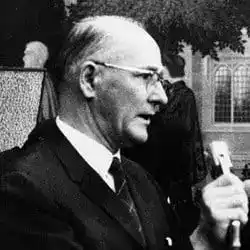
Hermann Joseph Muller, Alfred De Bat, public domain, via Wikimedia Commons Hermann Muller showed that X-rays raise the mutation rate in Drosophila more than a hundredfold. Two consequences followed. Mutation, previously a rare event a researcher could only wait for, became something produced on demand, which changed the pace of genetic research completely. And genes became physical objects, because radiation can damage them. Muller received the Nobel Prize in 1946 and spent much of his later career warning about the genetic hazards of radiation, from medical X-rays as well as from nuclear testing.[30]
1928:
Griffith’s transforming principle
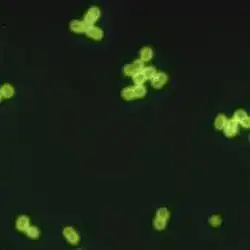
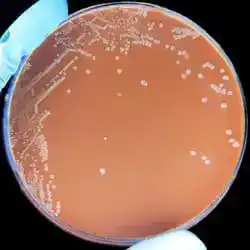
Streptococcus pneumoniae, Photo Credit: Content Providers(s): CDC/Dr. M.S. Mitchell, public domain, via Wikimedia Commons Frederick Griffith, a British public health bacteriologist studying pneumonia, made an accidental discovery with enormous consequences. Mice injected with harmless rough-coated pneumococci survived. Mice injected with heat-killed virulent smooth-coated pneumococci survived. Mice injected with both died, and living virulent smooth bacteria could be recovered from their bodies, breeding true through subsequent generations. Something had passed from the dead bacteria into the living ones and been permanently incorporated. Griffith called it the transforming principle and had no idea what it was. Working out its identity became the central problem of the next sixteen years.[31]
1931:
Creighton and McClintock watch crossing over happen
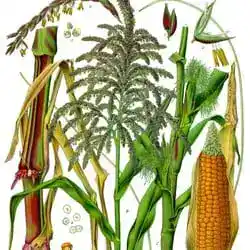
Maize, Franz Eugen Köhler, Köhler’s Medizinal-Pflanzen, public domain, via Wikimedia Commons Crossing over had been inferred from breeding ratios for twenty years. Nobody had actually seen chromosomes exchange material. Harriet Creighton and Barbara McClintock worked with maize chromosomes that carried visible physical abnormalities, a knob at one end and an extra segment at the other, and showed that when the genetic markers recombined, the physical features recombined with them. The inference became an observation. It has been called one of the great experiments of modern biology, and it was published by two women at a time when very few women held research positions at all.[32]
1941:
Beadle and Tatum, one gene one enzyme
George Beadle, Danny Lyon (b. 1942), public domain, via Wikimedia Commons George Beadle and Edward Tatum irradiated the bread mold Neurospora crassa and screened for mutants that could no longer synthesize a particular nutrient and had to be supplied with it. Every mutant turned out to have lost a single enzyme catalysing a single step in a metabolic pathway. One gene, one enzyme. It is the first clear statement of what a gene does, as opposed to how it gets transmitted, and it vindicated Archibald Garrod’s neglected 1902 intuition thirty-nine years late. The formulation was later refined to one gene, one polypeptide, once it became clear that many enzymes are assembled from several separately encoded protein chains. Beadle and Tatum shared the 1958 Nobel Prize with Joshua Lederberg.[33]
1944:
Avery, MacLeod and McCarty show the transforming principle is DNA
Oswald Avery, public domain, via Wikimedia Commons At the Rockefeller Institute, Oswald Avery, Colin MacLeod and Maclyn McCarty spent years purifying Griffith’s transforming principle and then testing what would destroy it. They eliminated candidates one at a time. Enzymes that digest protein left transformation intact. Enzymes that digest RNA left it intact. Enzymes that digest DNA abolished it completely. The hereditary material is DNA. The reception was cool. Four bases seemed far too monotonous to encode the diversity of life, and many biologists assumed some trace protein contaminant was doing the real work. General acceptance had to wait for Hershey and Chase in 1952. Avery was 67 when the paper appeared and wrote with characteristic understatement, and he never received a Nobel Prize, which remains one of the most frequently cited omissions in the prize’s history.[34]
1944-1950:
McClintock discovers jumping genes
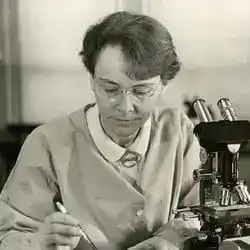
Barbara McClintock, Smithsonian Institution/Science Service; Restored by Adam Cuerden, public domain, via Wikimedia Commons Barbara McClintock, tracking the mottled color patterns of maize kernels across generations, concluded that certain genetic elements can move from one chromosomal location to another, switching neighboring genes on and off as they go. Genomes are not the fixed maps that thirty years of fruit fly work had implied. Parts of them move. The claim sat so far outside orthodoxy that it was met mostly with silence. McClintock stopped publishing on the subject in the mid-1950s and carried on with the work anyway. Transposable elements were rediscovered in bacteria during the 1960s and 1970s, and she received an unshared Nobel Prize in 1983, the only woman ever to win an unshared prize in Physiology or Medicine. Transposons are now known to make up roughly half of the human genome.[35]
1950:
Chargaff’s rules
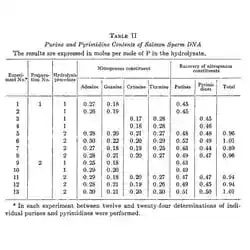
Chargaff’s base ratio data from salmon DNA, Erwin Chargaff et al, public domain, via Wikimedia Commons Erwin Chargaff analyzed DNA from many species and established two facts. In every organism, the amount of adenine equals the amount of thymine, and the amount of guanine equals the amount of cytosine. And the ratio between the two pairs varies from one species to another. Both mattered. The first is the base pairing rule at the heart of the double helix, though Chargaff did not recognize it as such. The second killed off the prevailing tetranucleotide hypothesis, which held that DNA was a monotonous repeating polymer, and showed instead that DNA composition carries species-specific information. That is exactly what a hereditary molecule would need to do.[36]
1952:
The Hershey and Chase blender experiment
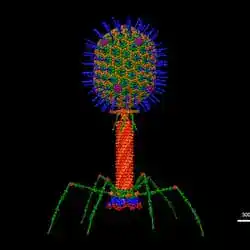
A bacteriophage, CC BY-SA 4.0, via Wikimedia Commons Alfred Hershey and Martha Chase designed an experiment of unusual elegance. Bacteriophages consist of protein and DNA and nothing else. Sulfur occurs in protein but not in DNA. Phosphorus occurs in DNA but not in protein. They grew two batches of phage, one labeled with radioactive sulfur and one with radioactive phosphorus, let each infect bacteria, then stripped the spent phage coats off the cell surfaces in an ordinary kitchen blender and separated the cells in a centrifuge. The radioactive phosphorus went inside the bacteria. The radioactive sulfur stayed outside. What the virus injects, the material that directs the production of hundreds of new viruses, is DNA. Eight years of resistance to Avery’s result collapsed inside a year.[37]
1952:
Franklin and Gosling take Photograph 51
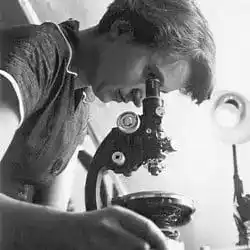
Rosalind Franklin, MRC Laboratory of Molecular Biology, CC BY-SA 4.0, via Wikimedia Commons At King’s College London, Rosalind Franklin and her doctoral student Raymond Gosling produced an X-ray diffraction image of the hydrated B form of DNA. Known afterward as Photograph 51, it shows a distinct X-shaped cross of reflections, which is the unambiguous signature of a helix, and from which the helix’s pitch and diameter can be read almost directly. Franklin’s unpublished analysis went further. From crystallographic reasoning she established that the sugar and phosphate backbones must lie on the outside of the molecule with the bases turned inward. Both the photograph and an internal report containing her measurements were shown to Watson and Crick without her knowledge or consent, and both were essential to the model they built the following spring.[38]
1953:
The double helix
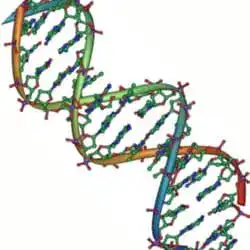
The DNA double helix, Jerome Walker,Dennis Myts, public domain, via Wikimedia Commons James Watson and Francis Crick published a paper of just over a page in Nature, describing DNA as two antiparallel strands wound around a common axis in a double helix, with the sugar and phosphate backbones on the outside and the bases paired on the inside. Adenine always with thymine, guanine always with cytosine. The structure showed at once how genetic information is stored and how it could be copied. Separate the two strands and each one specifies its partner exactly. The model rested on Franklin and Gosling’s diffraction data, on Maurice Wilkins’s parallel work at King’s, and on Chargaff’s base ratios. Watson, Crick and Wilkins shared the Nobel Prize in Physiology or Medicine in 1962. Rosalind Franklin had died of ovarian cancer in 1958 at the age of 37, and the Nobel Prize is not awarded posthumously. One point gets garbled constantly, so it is worth stating plainly. 1953 was not the year DNA replication was discovered. Watson and Crick proposed a copying mechanism, in a single famously understated closing sentence. Working out how replication actually happens took another five years. The double helix also underpinned much of what followed in cell biology and biotechnology.[39]
Cracking the Genetic Code (1956 to 1970)
With the structure settled, the questions changed. How is DNA copied? How does a sequence of bases become a protein? And how does a cell decide which of its genes to use? All three were answered inside fifteen years, and human cytogenetics grew up alongside them.
1956:
Kornberg isolates DNA polymerase
Arthur Kornberg, public domain, via Wikimedia Commons Arthur Kornberg purified the enzyme that assembles new DNA strands against a template, and used it to synthesize DNA in a test tube. Copying was no longer a hypothesis tucked into the last paragraph of a Nature paper. It was a reaction you could run on a bench. Kornberg shared the Nobel Prize in 1959 with Severo Ochoa.[40]
1956:
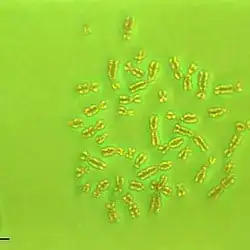
Humans have 46 chromosomes, not 48
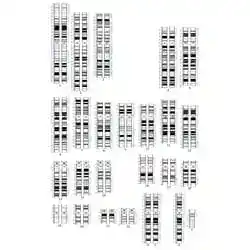
A human karyotype showing 46 chromosomes, Doc. RNDr. Josef Reischig, CSc, CC BY-SA 3.0, via Wikimedia Commons Joe Hin Tjio and Albert Levan, using better culture and spreading techniques, counted 46 chromosomes in human cells. The textbook figure had been 48 since 1921. Nobody had challenged it for thirty-five years, partly because researchers who counted 46 assumed they had miscounted and looked for the missing pair. It is a useful reminder of how much an accepted number can distort what people believe they are seeing. Accurate human cytogenetics starts here.[41]
1958:
Meselson and Stahl show replication is semiconservative
Matthew Meselson, Janet Montgomery, CC BY-SA 4.0, via Wikimedia Commons Matthew Meselson and Franklin Stahl grew E. coli in a medium containing heavy nitrogen, shifted the culture to light nitrogen, and separated the resulting DNA by density in a centrifuge. After one round of replication every molecule was intermediate in weight. After two rounds, half were intermediate and half were light. That pattern can only mean one thing. Each daughter molecule keeps one parental strand and builds one new one, exactly as Watson and Crick had proposed five years earlier. It is often described as the most beautiful experiment in biology, and it is the actual discovery of how DNA replication works.[42]
1959:
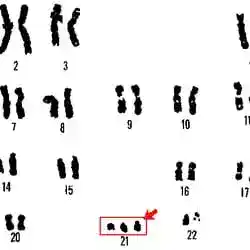
Down syndrome traced to an extra chromosome
The karyotype of trisomy 21, U.S. Department of Energy Human Genome Program, public domain, via Wikimedia Commons Jérôme Lejeune, Marthe Gautier and Raymond Turpin found three copies of chromosome 21 in people with Down syndrome. It was the first human condition shown to be caused by a chromosomal abnormality rather than a single gene. Within months, trisomies 13 and 18 and the sex chromosome aneuploidies followed. Clinical genetics turned into a diagnostic discipline almost overnight.[43]
1961:
Messenger RNA identified
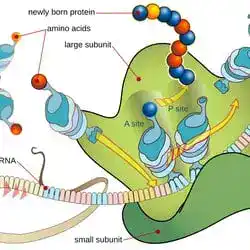
Messenger RNA carrying the genetic message to the ribosome, LadyofHats, public domain, via Wikimedia Commons Work by Sydney Brenner, François Jacob and Matthew Meselson, and independently by James Watson’s group, established that a short-lived RNA copy carries the message from a gene in the nucleus out to the ribosomes where protein is assembled. The missing link between DNA and protein finally had a name and a molecule.[44]
1961:
Jacob and Monod describe the operon
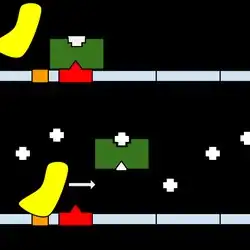
The lac operon, T A RAJU, CC BY-SA 3.0, via Wikimedia Commons François Jacob and Jacques Monod, studying how E. coli digests lactose, worked out the first mechanism of gene regulation. A cluster of related genes sits under a shared control region. A repressor protein binds that region and keeps the genes switched off until an inducer molecule turns up and releases it. This is the first mechanistic account of how a cell turns genes on and off, and it underlies everything later understood about development, cell differentiation and cancer. Jacob and Monod shared the 1965 Nobel Prize with André Lwoff.[45]
1961:
Nirenberg and Matthaei read the first codon
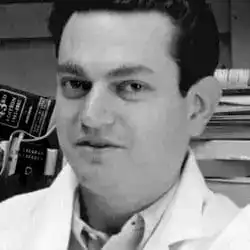
Marshall Nirenberg, Hecht, Gerald V. (National Institutes of Health), public domain, via Wikimedia Commons Marshall Nirenberg and Heinrich Matthaei added a synthetic RNA made entirely of uracil to a cell-free extract, and got out a protein made entirely of phenylalanine. UUU means phenylalanine. That is the first word of the genetic code, and more importantly it showed that the code could be read experimentally rather than deduced from theory. It set off a five-year race to assign the rest. This is worth stating carefully, because it is frequently compressed. 1961 is the year the first codon was read, not the year the code was cracked.[46]
1961:
Mary Lyon proposes X inactivation
A calico cat, Ellisn95, CC BY-SA 4.0, via Wikimedia Commons Mary Lyon proposed that in female mammals one X chromosome in each cell is randomly switched off early in development, which equalizes gene dosage between the sexes. The hypothesis explains why calico cats are almost always female, and why a woman carrying a mutation on one X can show the condition in patches of tissue rather than uniformly.[47]
1966:
The genetic code is completed
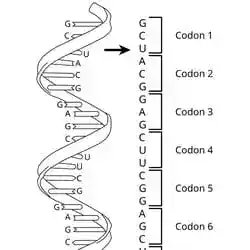
The genetic code, all 64 codons, Sverdrup, vectorized by VectorVoyager, public domain, via Wikimedia Commons Five years after the first codon, all 64 triplets had been assigned. Sixty-one specify amino acids and three signal stop. The work was shared between Nirenberg’s group, Har Gobind Khorana’s synthetic chemistry and Robert Holley’s determination of a transfer RNA sequence, and the three shared the Nobel Prize in 1968. The most striking result was not any individual assignment but the fact that the code is very nearly universal. Bacteria, yeast, maize and humans all read DNA the same way, which is strong evidence that every living thing descends from a common ancestor that had already settled on it.[48]
1968-1970:
Restriction enzymes, the molecular scissors
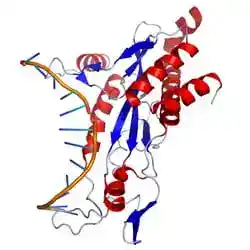
The restriction enzyme EcoRI bound to DNA, Ramin Herati, public domain, via Wikimedia Commons Werner Arber predicted their existence, and Hamilton Smith and Daniel Nathans then isolated them and put them to work: bacterial enzymes that cut DNA wherever a specific short sequence occurs. For the first time DNA could be cut reproducibly at chosen positions instead of being sheared at random. Every cloning experiment for the next forty years depended on this. The three shared the Nobel Prize in 1978.[49]
1970:
Reverse transcriptase breaks the central dogma
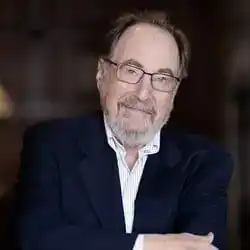
David Baltimore, Christopher Michel, CC BY-SA 4.0, via Wikimedia Commons Howard Temin with Satoshi Mizutani, and David Baltimore working independently, published back to back papers describing an enzyme in RNA tumor viruses that copies RNA into DNA. Information could flow backward, from RNA to DNA. That directly contradicted the central dogma as it was then stated, and it was a genuine shock to the field. The enzyme also handed biology a practical tool, since it allows complementary DNA to be made from messenger RNA, and decades later it became the target of the first effective HIV drugs. Temin and Baltimore shared the 1975 Nobel Prize with Renato Dulbecco.[50]
Reading and Rewriting DNA (1972 to 1989)
Recombinant DNA, sequencing, PCR and disease gene hunting turned genetics from an observational science into something closer to an engineering discipline. The field also had to write its own safety rules for the first time, and to work out what it thought about patents, privacy and evidence in court.
1972:
The first recombinant DNA molecule
Paul Berg, public domain, via Wikimedia Commons Paul Berg’s group at Stanford joined DNA from the monkey virus SV40 to DNA from a bacterial virus, producing the first molecule that combined genetic material from two different species. Berg then voluntarily halted his own follow-up experiments because he was worried about the safety of putting a tumor virus gene into a bacterium that lives in the human gut. That decision led directly to the Asilomar conference three years later. He received the Nobel Prize in Chemistry in 1980.[51]
1973:
Cohen and Boyer clone and express a gene
A bacterial plasmid, this image is ediated by miss gauri, CC BY-SA 4.0, via Wikimedia Commons Stanley Cohen and Herbert Boyer inserted foreign DNA into a bacterial plasmid, put the plasmid into E. coli, and showed that the bacteria copied and expressed it. They then repeated the trick with a gene taken from a frog, which proved the method was not limited to bacterial DNA. Genetic engineering became a routine laboratory procedure, and the biotechnology industry had its founding technique.[52]
1975:
The Asilomar conference
Asilomar Conference Grounds, CC BY-SA 3.0, via Wikimedia Commons Around 140 scientists, lawyers and journalists met at Asilomar in California to agree how recombinant DNA work should be regulated, following a voluntary moratorium the researchers had imposed on themselves. What came out was a framework of containment levels matched to risk, along with a short list of experiments nobody should attempt. Asilomar has been the reference point for every subsequent debate about self-regulation in biology, invoked again in 2015 and 2018 when human germline editing became a live question. Whether it is a model to copy is still argued about, but nothing has replaced it.[53]
1977:
DNA sequencing, and the first complete genome
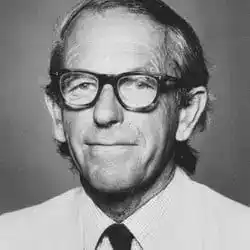
Frederick Sanger, public domain, via Wikimedia Commons Two methods appeared in the same year. Frederick Sanger published the chain termination technique, and Allan Maxam and Walter Gilbert published a chemical cleavage technique. Sanger’s proved easier to scale and dominated for the next thirty years. Sanger’s group then sequenced the entire 5,386 base genome of bacteriophage phiX174, the first complete genome of any organism ever read. Sanger and Gilbert shared the 1980 Nobel Prize in Chemistry with Paul Berg. It was Sanger’s second. A note on terminology, since this one is often misstated: a genome is an organism’s complete DNA content, not merely its set of genes. In humans, protein coding sequence accounts for under two percent of the total.[54]
1977:
Introns discovered
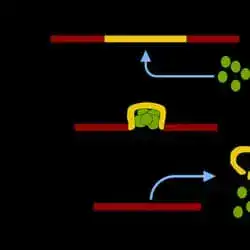
RNA splicing, Original: Iinaba Vector: Masumrezarock100, CC BY-SA 4.0, via Wikimedia Commons Richard Roberts and Phillip Sharp independently found that genes in higher organisms are not continuous. Coding stretches, called exons, are interrupted by non-coding stretches, called introns, which are cut out of the RNA transcript before it is translated. This broke an assumption carried over from bacteria, where genes really are uninterrupted runs of sequence. It also opened up alternative splicing, in which one gene yields several different proteins depending on which exons are kept. Roberts and Sharp shared the Nobel Prize in 1993.[55]
1976-1982:
Genetic engineering reaches the pharmacy
Crystals of human insulin, NASA, public domain, via Wikimedia Commons Genentech was founded in 1976, the first company built on recombinant DNA. Human insulin was cloned and expressed in bacteria in 1978, and in 1982 recombinant human insulin became the first genetically engineered medicine approved for human use. Until then, insulin came from pig and cow pancreases collected at slaughterhouses. Supply was tied to meat production and some patients reacted badly to the animal protein. This is the point where genetics stopped being purely academic and started showing up in pharmacies.[56]
1981-1982:
The first transgenic animals
Researchers injected foreign DNA into fertilized mouse eggs and produced mice that carried the new gene in every cell and passed it to their offspring. Transgenic mice became the standard tool for working out what an individual gene does in a whole living animal, and they remain the most used method in disease genetics.[57]
1982:
GenBank opens
DNA sequence data of the kind deposited in GenBank, Sjef, public domain, via Wikimedia Commons The United States established GenBank, a public and freely accessible database of DNA sequences. The decision that sequence data belongs in the open, rather than in the private files of whoever generated it, is what later made comparative genomics possible at all. It is one of the quieter entries in this timeline and one of the most consequential.[58]
1983:
Huntington’s disease mapped to chromosome 4
Human chromosome 4, National Center for Biotechnology Information, public domain, via Wikimedia Commons Using DNA markers and a large affected family in Venezuela, researchers localized the Huntington’s disease gene to chromosome 4. It was the first human disease gene mapped with no prior knowledge of the protein involved. The strategy, later called positional cloning, became the standard route to disease genes, and it formed a large part of the argument for sequencing the whole human genome. If you could find genes this way with a handful of markers, a complete map would let you find almost any of them.[59]
1983:
Mullis conceives the polymerase chain reaction
Kary Mullis, Dona Mapston, CC BY-SA 3.0, via Wikimedia Commons Kary Mullis had the idea for PCR in 1983: repeated cycles of heating, cooling and enzymatic copying that turn a single DNA segment into millions of identical copies within a few hours. The method was published by Saiki and colleagues in 1985 and described fully in 1986 and 1987. Using a heat-stable polymerase from a hot spring bacterium made the whole thing automatable. PCR sits underneath forensic testing, prenatal diagnosis, ancient DNA work and the diagnostic tests used worldwide during COVID-19. Mullis received the Nobel Prize in Chemistry in 1993. The distinction between conceiving the method in 1983 and publishing it in 1985 is worth keeping, since sources differ on the date.[60]
1983:
McClintock’s Nobel Prize
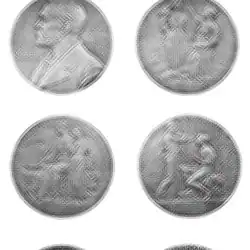
The Nobel Prize medal, awarded to Barbara McClintock in 1983, Popular Science Monthly Volume 70, public domain, via Wikimedia Commons Barbara McClintock received an unshared Nobel Prize in Physiology or Medicine for transposable elements, forty years after the work and long after the field had stopped listening to her about it. She was 81.[61]
1984:
Jeffreys invents DNA fingerprinting
Alec Jeffreys, Jane Gitschier, CC BY 2.5, via Wikimedia Commons Alec Jeffreys, examining repeated sequences in human DNA at the University of Leicester, realized the pattern was individually distinctive and could identify a person or establish a family relationship. He has described the moment of recognition as taking about five minutes on a Monday morning in September. Within two years the technique had been used to settle an immigration case, and then in a criminal investigation where it first exonerated an innocent suspect and afterward convicted the actual murderer. Genetics entered the courtroom, and the modern argument about genetic privacy began at roughly the same moment.[62]
1987:
The first human genetic linkage map
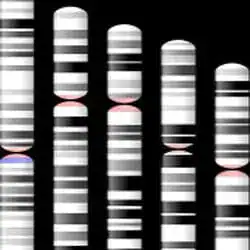
A banded map of the human chromosomes, Mikael Haggstrom, CC0, via Wikimedia Commons Researchers published a map of over 400 markers spanning all 23 human chromosome pairs. It is the scaffold that made systematic disease gene hunting practical, and a direct precondition for the Human Genome Project.[63]
1989:
The cystic fibrosis gene identified
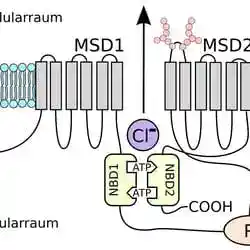
The CFTR protein, Kuebi = Armin Kübelbeck, CC BY-SA 3.0, via Wikimedia Commons Francis Collins, Lap-Chee Tsui and John Riordan identified CFTR on chromosome 7, along with the common deletion now known as delta F508, using positional cloning and no prior knowledge of the protein. Cystic fibrosis was the showcase case. It is common, serious and well characterized clinically, and finding its gene proved the method worked on the diseases people actually cared about. Thirty years later the same gene became the target of the modulator drugs that transformed cystic fibrosis care.[64]
The Genome Era (1990 to 2003)
An international public project set out to read a complete human genome and finished ahead of schedule. Along the way came the first authorized gene therapy, the first cloned mammal, and the genomes of the organisms biologists had been using as stand-ins for humans for decades.
1990:
The first authorized human gene therapy
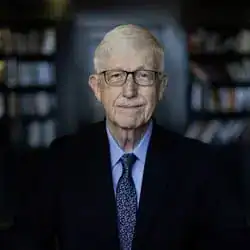
Francis Collins, Cmichel67, CC BY-SA 4.0, via Wikimedia Commons On September 14, 1990 a four year old named Ashanti DeSilva received an infusion of her own white blood cells, modified outside her body to carry a working copy of the adenosine deaminase gene, at the NIH Clinical Center. She had ADA-SCID, an inherited immune deficiency that leaves children unable to fight ordinary infections. It was the first federally approved human gene therapy anywhere. The field then went through a difficult decade, including the death of a young trial participant in 1999 which halted much of the work, before recovering. Every gene therapy now on the market traces back to this trial.[66]
1990:
The Human Genome Project launches
The NIH Clinical Center, Masm2016, CC BY-SA 4.0, via Wikimedia Commons On October 1, 1990 an international consortium, led in the United States by the National Institutes of Health and the Department of Energy, began a fifteen year effort budgeted at roughly three billion dollars to map and sequence the entire human genome. All three billion base pairs of it, coding and non-coding alike. A parallel program on the ethical, legal and social implications of the work was funded from the start, taking a fixed share of the budget. It was the first time a large science project had set aside money to study its own consequences before producing any results.[65]
1995:
The first genome of a free-living organism
Haemophilus influenzae, Stefan Walkowski, CC BY-SA 4.0, via Wikimedia Commons Craig Venter and Hamilton Smith’s team sequenced the 1.8 million base genome of the bacterium Haemophilus influenzae using whole genome shotgun sequencing, in which the genome is broken into random fragments, read, and reassembled computationally. It was the first complete genome of any free-living organism, and it proved the shotgun approach could scale. A second bacterial genome followed in the same year.[67]
1996:
Dolly the sheep is born
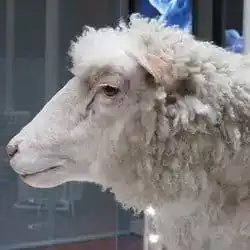
Dolly the sheep, M J Richardson, CC BY-SA 2.0, via Wikimedia Commons Dolly was born at the Roslin Institute near Edinburgh on July 5, 1996, cloned by Ian Wilmut, Keith Campbell and colleagues from a mammary gland cell taken from a six year old ewe, using somatic cell nuclear transfer. The achievement was announced in February 1997, which is why the two dates both circulate. What mattered was not the copy but the reprogramming. A fully differentiated adult cell nucleus turned out to retain every instruction needed to build an entire animal, and could be reset to use them. That result is the direct ancestor of induced pluripotent stem cells a decade later.[68]
1996:
The first eukaryotic genome, brewer’s yeast
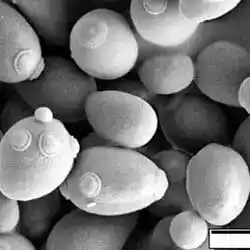
Saccharomyces cerevisiae, Mogana Das Murtey and Patchamuthu Ramasamy, CC BY 3.0, via Wikimedia Commons An international consortium completed the genome of Saccharomyces cerevisiae, the first eukaryote sequenced. Roughly a third of its genes have recognizable human counterparts, which made yeast an immediate proxy for studying what human genes do.[69]
1998:
The first animal genome, C. elegans
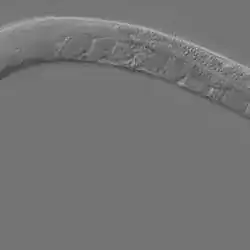
Caenorhabditis elegans, CC BY-SA 2.5, via Wikimedia Commons The roundworm Caenorhabditis elegans became the first multicellular animal with a complete genome sequence, around 97 million bases and 19,000 genes. It served as the dress rehearsal for the human sequence. The worm has an unusual advantage: its body is built from exactly 959 cells and the lineage of every one of them has been mapped. That is why programmed cell death was first understood in C. elegans, and why RNA interference and microRNAs were found there too.[70]
1998:
RNA interference discovered
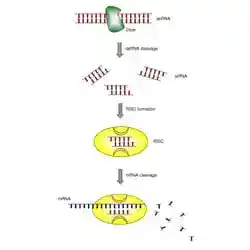
The mechanism of RNA interference, Simone Mocellin and Maurizio Provenzano, CC BY 2.0, via Wikimedia Commons Andrew Fire and Craig Mello showed that double-stranded RNA introduced into C. elegans silences the matching gene, and does it with far greater potency than anyone expected. This was a natural regulatory mechanism, not a laboratory artifact. RNA interference became a standard method for switching genes off experimentally, and later the basis of an approved class of drugs. Fire and Mello received the Nobel Prize in 2006, only eight years after the paper, which is unusually fast.[71]
2000:
The working draft of the human genome announced
The June 2000 announcement of the working draft of the human genome, National Human Genome Research Institute (NHGRI), public domain, via Wikimedia Commons In June 2000 the public International Human Genome Sequencing Consortium and the private company Celera Genomics jointly announced a working draft covering about 90 percent of the genome. The joint announcement was a truce in a race that had turned openly hostile, with the public project committed to daily data release and Celera pursuing a commercial model. The truce mattered: it kept the sequence in the public domain.[72]
2001:
The draft human genome published
A printed representation of the human genome sequence, Russ London, CC BY-SA 3.0, via Wikimedia Commons In February 2001 the consortium and Celera published their analyses. The biggest surprise was the gene count. Predictions had run to 100,000 protein coding genes, and some sweepstakes entries went higher. The answer was somewhere between 20,000 and 25,000, barely more than a roundworm has. Complexity, it turned out, comes from regulation, splicing and the interaction of gene products, not from owning more genes than a nematode.[73]
2003:
The Human Genome Project declared complete
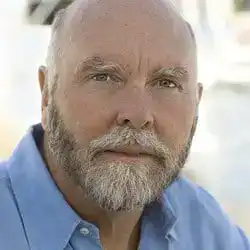
J. Craig Venter, Article by Liza Gross, but no photo credit given, CC BY 2.5, via Wikimedia Commons In April 2003, timed to the fiftieth anniversary of the double helix, the consortium declared the project complete, two years early and under budget. The finished sequence was published in October 2004. One caveat belongs with this entry, and it is not a minor one. The 2003 sequence covered the euchromatic portion of the genome, about 92 percent. The remaining eight percent, which includes centromeres, the short arms of the acrocentric chromosomes and long stretches of repetitive sequence, could not be assembled with the technology of the time. It stayed unresolved for another nineteen years.[74]
Genomics at Scale and the Editing Age (2004 to 2026)
Sequencing costs collapsed, which changed what questions were worth asking. Then CRISPR arrived, and gene editing went from a paper in 2012 to an approved medicine in 2023 and a therapy built for one named child in 2025.
2004:
The finished human genome sequence published
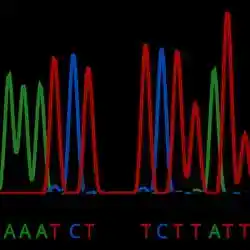
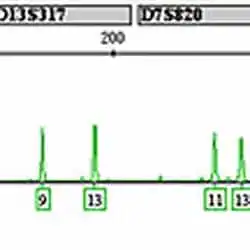
A DNA sequencing electropherogram, National Institute of Standards and Technology, public domain, via Wikimedia Commons On October 20, 2004 the consortium published the finished sequence, closing hundreds of gaps left in the draft and revising the gene count downward once more, to around 20,000 to 25,000.[75]
2005:
HapMap, and the arrival of next generation sequencing
A next-generation DNA sequencing instrument, Scotted400, CC BY 3.0, via Wikimedia Commons The International HapMap Consortium published the first haplotype map of the human genome, cataloging more than a million common variants and, importantly, which ones travel together in blocks. That made genome-wide association studies possible, since you can survey a whole genome by typing a manageable subset of markers. The same year, the first commercial massively parallel sequencers reached the market. The cost of a human genome fell from roughly 100 million dollars to under a thousand within about a decade, considerably faster than computing costs were falling over the same period.[76]
2006:
Yamanaka makes induced pluripotent stem cells
Shinya Yamanaka, 日本学士院, CC BY 4.0, via Wikimedia Commons Shinya Yamanaka showed that introducing just four genes into an ordinary adult mouse skin cell reprograms it into a cell with the properties of an embryonic stem cell, able to become any tissue type. Human versions followed in 2007. This answered the question Dolly had raised about how reprogramming works, and it offered a route to patient-specific cells without using embryos. Yamanaka shared the 2012 Nobel Prize with John Gurdon, whose frog experiments in the 1960s had first suggested that differentiation might be reversible.[77]
2010:
The first cell with a synthetic genome
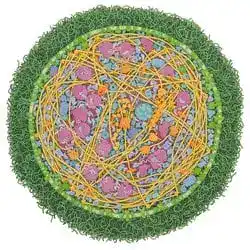
Mycoplasma mycoides, David Goodsell, CC BY 4.0, via Wikimedia Commons Craig Venter’s institute chemically synthesized the complete genome of a bacterium, transplanted it into a recipient cell whose own DNA had been removed, and watched the cell start up under the new instructions and divide. Reading genomes had been possible for decades. Writing an entire one from chemicals and having it run a living cell was new, and it is the practical beginning of synthetic biology.[78]
2012:
CRISPR-Cas9 turned into a programmable editing tool
Jennifer Doudna, Christopher Michel, CC BY-SA 4.0, via Wikimedia Commons Emmanuelle Charpentier and Jennifer Doudna, with Martin Jinek and colleagues, showed that Cas9, an enzyme from a bacterial immune system, can be directed to cut any chosen DNA sequence simply by supplying a matching guide RNA. Editing tools already existed. Zinc finger nucleases and TALENs both worked, but each new target required engineering a new protein, which took months and specialist expertise. CRISPR needs only a new stretch of RNA, which is cheap to order and arrives in days. That is the whole difference, and it turned gene editing from a specialist craft into something any molecular biology lab could do.[79]
2012:
ENCODE maps the functional genome
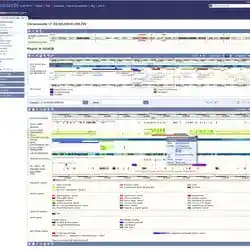
A genome browser showing functional elements, Ensembl, CC0, via Wikimedia Commons The Encyclopedia of DNA Elements consortium published a systematic catalog of switches, promoters and regulatory regions across the human genome, reporting biochemical activity in a large majority of it. The claim that most of the genome is functional was contested immediately and the argument about what “functional” should mean is still running. What is not disputed is that ENCODE ended the era in which non-coding DNA could be waved away as junk.[80]
2013:
CRISPR works in human cells, and human genes are ruled unpatentable
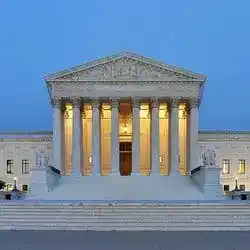
The United States Supreme Court, Joe Ravi, CC BY-SA 3.0, via Wikimedia Commons In January 2013, groups led by Feng Zhang and by George Church independently demonstrated CRISPR-Cas9 editing in living human cells, which opened the therapeutic path. Five months later, in Association for Molecular Pathology v. Myriad Genetics, the United States Supreme Court ruled unanimously that naturally occurring human DNA sequences cannot be patented. The decision invalidated Myriad’s claims over BRCA1 and BRCA2 and opened up competitive breast cancer testing almost overnight, with prices falling sharply within weeks.[81]
2015:
The 1000 Genomes Project completed
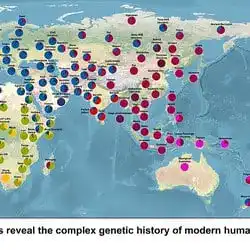
A map of human population genetic diversity, Wikiuser1314, CC BY-SA 4.0, via Wikimedia Commons The project published whole genome data from more than 2,500 people across 26 populations, producing the most detailed public catalog of human genetic variation available at the time. It also set an expectation, still imperfectly met, that reference data should represent human diversity rather than a handful of individuals of mostly European ancestry.[82]
2016:
Base editing, changing one letter without cutting
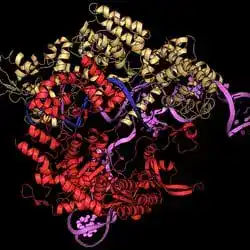
Cas9 bound to DNA, Nishimasu, Ishitani and Nureki, CC0, via Wikimedia Commons David Liu’s laboratory built base editors by fusing a disabled Cas9 to a chemical enzyme, allowing one DNA letter to be converted directly into another without cutting both strands of the double helix. This matters for two reasons. Most known disease-causing variants are single letter changes. And double strand breaks are the main source of the unintended edits that make therapeutic CRISPR risky. Avoiding the break avoids much of the risk.[83]
2017:
The first gene therapies approved in the United States
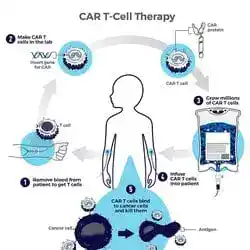
A chimeric antigen receptor T cell, National Cancer Institute (NCI), public domain, via Wikimedia Commons The Food and Drug Administration (FDA) approved Kymriah, a CAR-T cell therapy in which a patient’s own T cells are genetically reprogrammed to recognize and attack leukemia, and then Luxturna, which delivers a working copy of the RPE65 gene into the retina to treat an inherited form of blindness. Twenty-seven years after Ashanti DeSilva, gene therapy became a licensed medical product rather than an experiment.[84]
2018:
The CRISPR babies
A human embryo at the stage edited in the 2018 experiment, Courtesy of NIAID Ryan Kissinger, public domain, via Wikimedia Commons The Chinese researcher He Jiankui announced the birth of twin girls whose embryos he had edited at the CCR5 gene, claiming to confer resistance to HIV. The work was condemned worldwide. The edits were imprecise and did not reproduce the protective variant found in nature. There was no medical need, since established methods already prevent transmission of HIV from parent to child. The consent process was inadequate, and the ethical review was later found to be irregular. He was sentenced to three years in prison in 2019. The episode hardened the international consensus against heritable human genome editing and prompted new governance frameworks from the World Health Organization and from national academies of science. It is also why the distinction between somatic editing, which affects only the treated patient, and germline editing, which is passed to descendants, now appears in every serious discussion of the technology.[85]
2019:
Prime editing
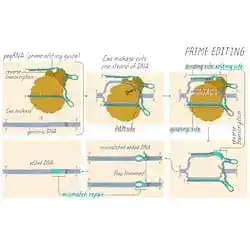
Prime editing, explorebiology, CC BY 4.0, via Wikimedia Commons Liu’s group published prime editing, which writes a specified new sequence directly into a target site without double strand breaks and without a donor DNA template. In principle it can correct the large majority of known pathogenic variants, covering insertions, deletions and all twelve possible base-to-base changes. It is the most versatile editing method described so far, and it has moved into clinical trials considerably faster than earlier techniques did.[86]
2020:
The Nobel Prize for genetic scissors
Emmanuelle Charpentier, Bianca Fioretti, Hallbauer & Fioretti, CC BY-SA 4.0, via Wikimedia Commons Emmanuelle Charpentier and Jennifer Doudna received the Nobel Prize in Chemistry for developing CRISPR-Cas9 genome editing. It came eight years after the founding paper, one of the shortest intervals in the prize’s history, and it was the first science Nobel awarded to two women with no male co-recipient.[87]
2021:
The first CRISPR editing inside the human body
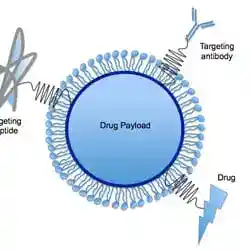
A lipid nanoparticle, Andrea Trementozzi, CC BY-SA 3.0, via Wikimedia Commons Trial results showed CRISPR-Cas9 delivered intravenously in lipid nanoparticles reaching the liver and durably knocking down the disease-causing TTR protein in patients with transthyretin amyloidosis. Until then, therapeutic editing had meant taking cells out of the body, editing them in a dish, and putting them back. This was editing carried out inside a living person from a single infusion, which is a much simpler procedure and a much harder technical problem.[88]
2022:
The genuinely complete human genome
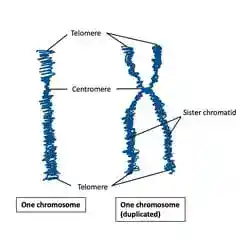
A chromosome from one telomere to the other, Ultrabem, CC0, via Wikimedia Commons The Telomere-to-Telomere consortium published the first gapless human genome sequence: 3.055 billion bases with no missing regions. It added nearly 200 million bases and around 2,000 genes that the 2003 sequence had not been able to resolve. The new material includes centromeres and long repeat arrays that short-read technology simply could not assemble, and it was made possible by long-read sequencing methods that did not exist when the Human Genome Project finished. This is the entry that puts the 2003 milestone in its proper context. The human genome was declared complete in 2003 and actually completed in 2022.[89]
2023:
The first human pangenome reference
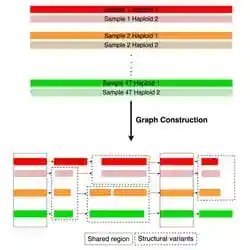
A pangenome graph representing many genomes at once, Mahdi-asmae, CC BY-SA 4.0, via Wikimedia Commons The Human Pangenome Reference Consortium released a reference built from 47 genetically diverse individuals, replacing a standard that had been drawn largely from a single donor since 2003. A single reference genome systematically misses variation carried by people who do not resemble the donor, which affects how reliably variants are detected in those populations. The pangenome improves variant detection and addresses one of the field’s clearest and longest-acknowledged equity failures.[90]
2023:
The first CRISPR medicine approved
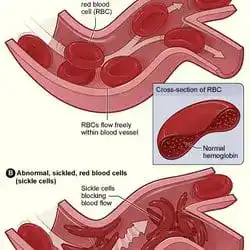
Sickled red blood cells, The National Heart, Lung, and Blood Institute (NHLBI), public domain, via Wikimedia Commons In December 2023 the Food and Drug Administration approved Casgevy, or exagamglogene autotemcel, for sickle cell disease. It was the first CRISPR based therapy licensed anywhere in the world, following approval in the United Kingdom the previous month. The approach is indirect and rather elegant. Rather than repairing the faulty adult hemoglobin gene, Casgevy edits a patient’s own blood stem cells to switch fetal hemoglobin back on, which compensates for the defect. Lyfgenia, a lentiviral gene therapy for the same disease, was approved on the same day. Eleven years passed between the founding CRISPR paper and an approved medicine.[91]
2024:
The Nobel Prize for microRNA
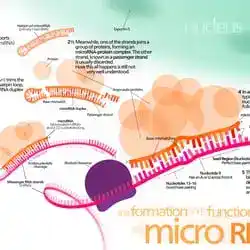
MicroRNA, Kelvinsong, CC BY 3.0, via Wikimedia Commons Victor Ambros and Gary Ruvkun received the Nobel Prize in Physiology or Medicine for discovering microRNA and its role in regulating genes after transcription. These are very short RNA molecules, first found in a roundworm and initially treated as a curiosity peculiar to that species. They are now known to regulate a large fraction of human genes. The prize is also the clearest demonstration that a gene does not have to encode a protein to matter, which is why the old definition of a gene as a protein-coding sequence no longer holds.[92]
2025:
A gene editing therapy built for one child
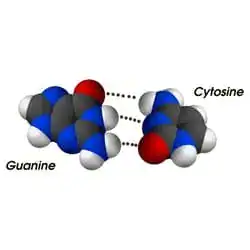
A guanine and cytosine base pair, public domain, via Wikimedia Commons A team at Children’s Hospital of Philadelphia and Penn Medicine designed, manufactured and administered a bespoke base editing therapy for an infant named KJ Muldoon, born with severe CPS1 deficiency. It is a urea cycle disorder that is usually fatal in infancy, and it is far too rare to support a conventional drug development program. From diagnosis to first dose took roughly six months. It is the first time a gene editing treatment has been custom-built for one patient’s specific mutation, and it points toward a route for the thousands of genetic diseases that will never have enough patients to justify a standard trial.[93]
2026:
CRISPR therapy reaches young children, and platform trials begin
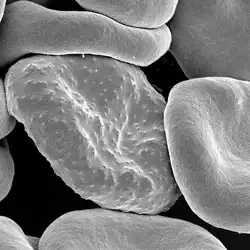
A red blood cell, Rick Fairhurst and Jordan Zuspann, NIAID, public domain, via Wikimedia Commons On July 1, 2026 the Food and Drug Administration expanded approval of Casgevy to children as young as two with sickle cell disease or transfusion-dependent beta thalassemia. It had previously been licensed only from age twelve. Treating earlier matters because much of the organ damage in sickle cell disease accumulates through childhood. In parallel, the Philadelphia team behind the 2025 bespoke therapy launched an umbrella trial agreed with the FDA, enrolling patients with any of seven urea cycle disorders caused by variants in any of seven genes, with every version of the therapy regulated as a single platform product rather than as separate drugs. It is the first serious attempt to turn one-patient gene editing into a repeatable regulatory pathway instead of a one-off.[94]
FAQs
Who is considered the father of genetics?
Gregor Mendel. He worked out the basic rules of inheritance from pea plants between 1856 and 1863 and published them in 1866. The title was applied posthumously, since Mendel died in 1884 and the word “genetics” was not coined until 1905. William Bateson, who coined the word and championed Mendel’s work after 1900, is sometimes called the father of genetics as a discipline.
When did genetics begin as a science?
In 1900, when Hugo de Vries, Carl Correns and Erich von Tschermak independently rediscovered Mendel’s paper. Mendel’s own work was published in 1866 but had almost no influence for thirty-four years, so the discipline effectively starts with the rediscovery rather than with the original experiments.
Who discovered DNA?
Three separate discoveries are often merged into one. Friedrich Miescher isolated the molecule in 1869 and called it nuclein. Oswald Avery, Colin MacLeod and Maclyn McCarty showed in 1944 that DNA carries hereditary information. Watson and Crick determined its double helix structure in 1953, working from X-ray diffraction data produced by Rosalind Franklin and Raymond Gosling and from Maurice Wilkins’s work at King’s College London.
Did Darwin and Wallace write On the Origin of Species together?
No. Darwin was the sole author of the book, published on November 24, 1859. Darwin and Wallace jointly authored a paper, “On the Tendency of Species to form Varieties”, read at the Linnean Society of London on July 1, 1858. The two are frequently confused.
Why was Mendel’s work ignored for so long?
Not because it was lost. The paper was printed in the proceedings of the Brünn natural science society, distributed to well over a hundred institutions, and cited a few times before 1900. It was ignored because nobody in the 1860s was looking for a mathematical, particulate theory of inheritance, and the statistical style of the argument was unfamiliar to naturalists of the period.
When was the human genome finished?
Twice, depending on what you mean. The Human Genome Project was declared complete in April 2003, with the finished sequence published in October 2004, but that covered about 92 percent of the genome. The first gapless sequence, including centromeres and repetitive regions the earlier technology could not assemble, was published by the Telomere-to-Telomere consortium in 2022.
What was the first gene therapy?
The first federally authorized human gene therapy was given to four year old Ashanti DeSilva on September 14, 1990 at the NIH Clinical Center, for ADA-SCID. The first gene therapies approved as licensed products in the United States were Kymriah and Luxturna, both in 2017.
When was CRISPR invented?
CRISPR sequences were first noticed in bacteria in the late 1980s and their function as a bacterial immune system was worked out in the 2000s. The key moment for genetics is 2012, when Charpentier, Doudna and colleagues showed Cas9 could be programmed with a guide RNA to cut any chosen DNA sequence. Charpentier and Doudna received the Nobel Prize in Chemistry in 2020, and the first CRISPR based medicine was approved in 2023.
Cite this page
BioExplorer. (2026, September 4). The History of Genetics: A Complete Timeline from Ancient Greece to 2026. https://www.bioexplorer.net/history_of_biology/genetics/
Key References
All sources come from universities, government research agencies, national libraries, research institutes, scientific societies and Nobel Prize records. Each of the 94 timeline entries cites one source, and no source appears twice. Last verified August 31, 2026.
This article was last reviewed and fact-checked on August 31, 2026. Entries are included where a specific year, a named investigator or institution, and an institutional source could all be verified. Where a discovery and its recognition fall in different years, the entry is dated to the work.
Anastasiia Nesterenko holds an MSc in Genetics and Cytology and spent sixteen years as a research assistant at the Mechnikov Institute for Microbiology and Immunology. She has written for BioExplorer since 2016, from genetics and immunology to primates, insects, plants and flowers.