What Do Rolly Pollies Eat?
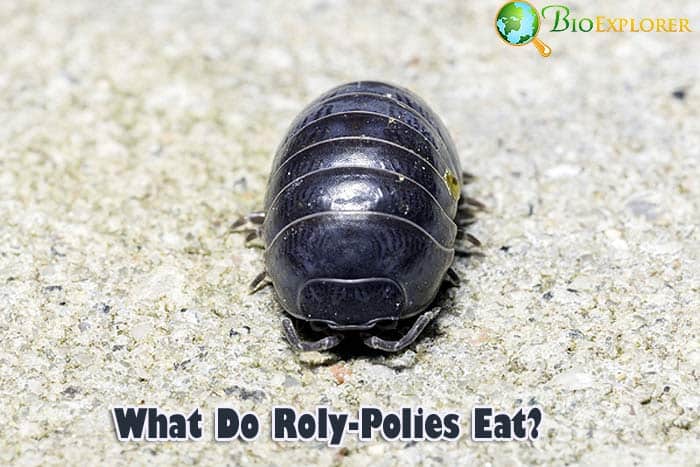
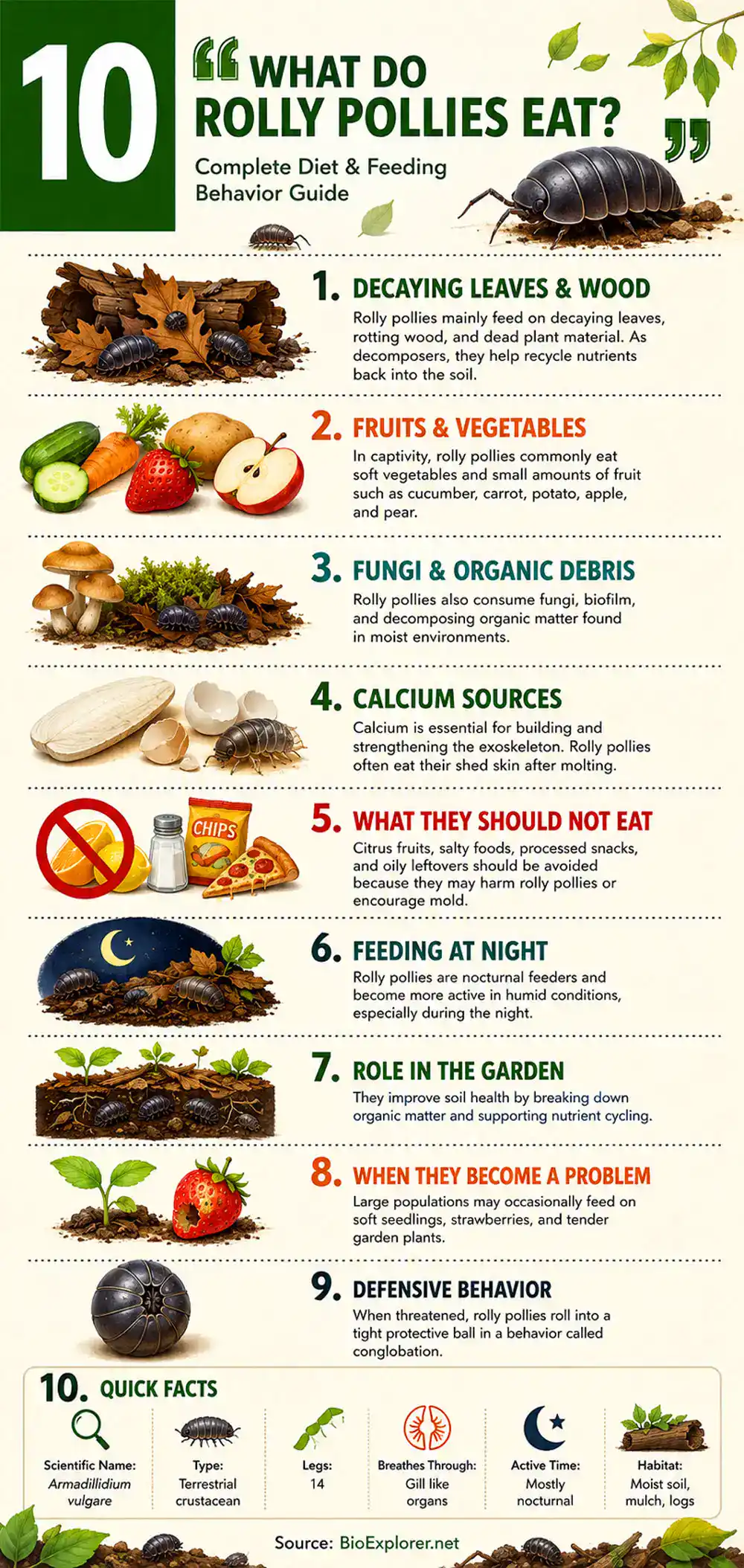
Rolly pollies (also called pill bugs or Armadillidium vulgare) are omnivorous detritivores that eat primarily decaying organic matter. Their diet includes decomposing leaves, rotting wood, fungi, algae, fallen fruit, and dead plant material. In captivity, they eat cucumber, carrot, apple, and leaf litter. They rarely eat living plants and pose no real threat to healthy gardens.
Rolly Pollies Diet: A Complete Guide
- What Are Rolly Pollies?
- Rolly Pollies Habitats
- What Do Rolly Pollies Eat?
- What Do Rolly Pollies Eat in Captivity / As Pets?
- What Do Pill Bugs Eat in The Wild?
- Are Rolly Pollies Good for Your Garden?
- Are Pill Bugs Poisonous?
- Do Rolly Pollies Eat Dog Poop?
- Do Rolly Pollies Eat Strawberries?
- How Do Rolly Pollies Hunt?
- When Do Rolly Pollies Eat?
- How Often Do Rolly Pollies Eat?
- What Eats Rolly Pollies?
- Where Do Rolly Pollies Fit in the Animal Food Chain?
- FAQs
What Are Rolly Pollies?
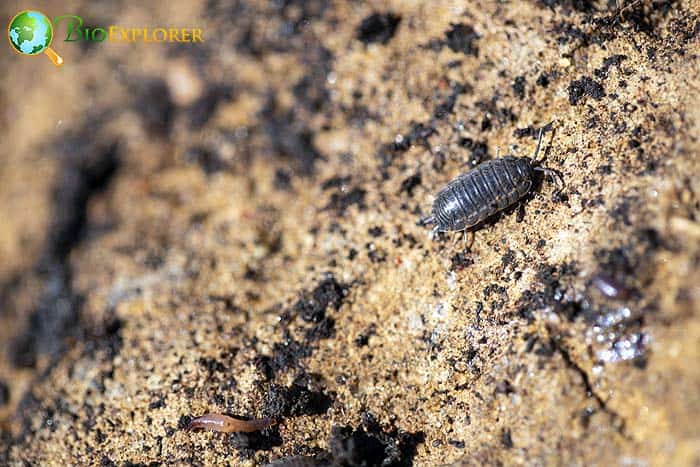
Rolly pollies, also called pill bugs, are small land dwelling crustaceans best known for curling into a tight ball when disturbed. Their scientific name is Armadillidium vulgare, and despite their bug-like appearance, they are not insects. They belong to the isopod family Armadillidiidae within the order Isopoda, making them closer relatives of crabs, shrimp, and lobsters than ants or beetles.
Unlike insects, rolly pollies have 14 legs arranged in seven pairs. They also breathe through specialized gill-like organs called pleopods that must stay moist, which is why these creatures thrive in damp environments such as under rocks, logs, mulch, and leaf litter.
Although many people use the names "rolly polly," "pill bug," "sowbug," “doodlebug“, “potato bug“, “woodlice“, and "woodlouse" interchangeably, there are important differences between rolly polly and sowbug.
| Feature | Rolly Polly (Pill Bug) | Sowbug |
|---|---|---|
| Scientific Name | Armadillidium vulgare | Porcellio scaber |
| Can Roll Into a Ball? | Yes | No |
| Body Shape | Rounded and compact | Flatter body |
| Defensive Behavior | Rolls into a tight ball | Runs or hides |
| Common Habitat | Damp soil and mulch | Rotting wood and leaf litter |
Both rolly pollies and sowbugs are types of woodlice, which is the common name for terrestrial isopod crustaceans.
Rolly Pollies Habitats
The rolly-pollies inhabit the soil or earth surface, and they are found in abundance in moist regions or damp soils.
- These organisms are found in wide distribution in areas with the Mediterranean climate.
- The rolly-pollies can also be located in agroecosystems that are in temperate regions.
- Other data indicate that rolly-pollies can be found in Japan’s subarctic and subtropical regions.
Their preferred habitats are those with an abundant supply of decomposing organic material, moderate to high levels of humidity, reduced illumination, and moderate temperature levels.
What Do Rolly Pollies Eat?
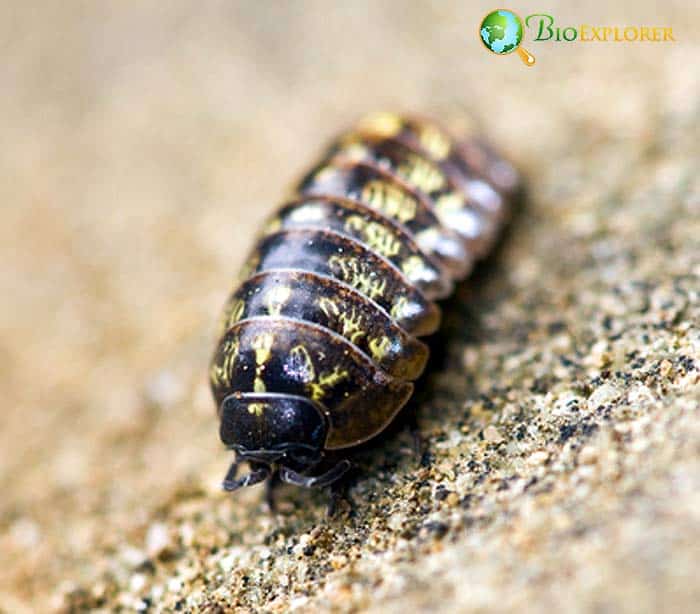
Rolly-pollies are mostly detritivores, consuming decomposing organic matter drawn from both plants and animals.
- During drought periods, rolly-pollies display scavenger behavior.
- Additionally, herbivory behavior has been evidenced in rolly-pollies, where they have been shown to feed on carrots and some fruits (strawberries).
- Carnivory tendencies have also been described in rolly-pollies, where these organisms feed on meat.
- Some members of this species have been shown to display cannibalism. In this case, the more energetic individuals feed on, the weaker members of the group.
- Also, rolly-pollies engage in self-coprophagy. These organisms obtain 10% of their nutrients from eating their fecal matter.
What Do Rolly Pollies Eat in Captivity / As Pets?
A proper rolly polly pet diet should closely resemble what these isopods eat in nature. In captivity, they thrive on a mixture of leaf litter, decaying wood, vegetables, and calcium rich foods. Because rolly pollies are decomposers, they prefer soft plant matter and moist organic material.
Best Foods for Pet Rolly Pollies
| Food | Safe for Rolly Pollies? | Notes |
|---|---|---|
| Leaf litter | Yes | Main part of their diet; oak and maple leaves work well |
| Rotting wood | Yes | Provides fiber and beneficial microorganisms |
| Cucumber | Yes | Hydrating but should be fed in moderation |
| Carrot | Yes | Good vegetable source; remove leftovers quickly |
| Potato | Yes | Commonly accepted by captive isopods |
| Sweet potato | Yes | Nutritious and softer than regular potato |
| Apple | Yes | Offer occasionally because of sugar content |
| Pear | Yes | Best as a small treat |
| Cuttlebone | Yes | Excellent calcium source for exoskeleton health |
| Eggshell powder | Yes | Another safe calcium supplement |
Foods Rolly Pollies Should NOT Eat
| Food | Why It Should Be Avoided? |
|---|---|
| Citrus fruits | High acidity may irritate isopods and disrupt enclosure conditions |
| Salty foods | Salt can dehydrate and kill rolly pollies |
| Processed foods | Contain preservatives, oils, and artificial ingredients |
| Spicy foods | Can irritate sensitive mouthparts and digestive systems |
| Sugary snacks | Encourage mold and harmful bacteria growth |
| Oily leftovers | Can foul the enclosure quickly |
Why Calcium Matters?
Rolly pollies need plenty of calcium to maintain their hard outer shell, known as an exoskeleton. Calcium becomes especially important during molting, when they shed and rebuild their shell. Without enough calcium, isopods may develop weak exoskeletons or experience molting problems.
Feeding Tips for Pet Rolly Pollies
- Keep the enclosure slightly moist, not soaking wet
- Remove uneaten fresh food within 24 to 48 hours
- Always provide leaf litter as a constant food source
- Feed fruits only in small amounts to reduce mold growth
- Avoid pesticide treated leaves or vegetables
What Do Pill Bugs Eat in The Wild?
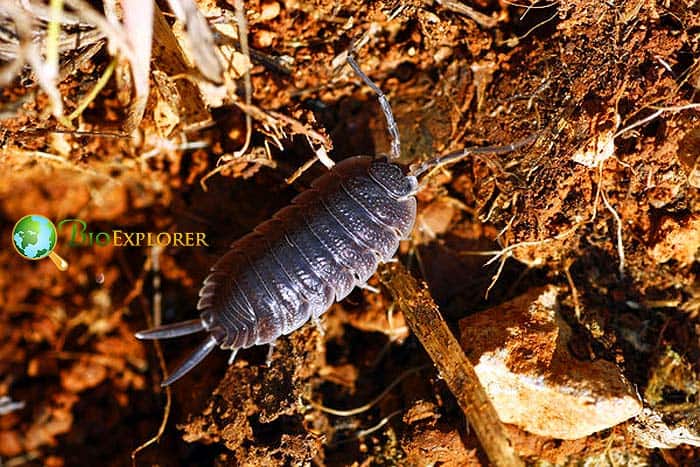
Rolly pollies are omnivorous decomposers that feed mostly on decaying organic material found in damp environments. In forests, gardens, compost piles, and under logs or rocks, they help break down dead matter and recycle nutrients back into the ecosystem. Although they mainly prefer decomposing material, they may occasionally nibble on living plants when food is limited or moisture levels are extremely high.
Common Foods Rolly Pollies Eat in the Wild
| Food Source | Why Rolly Pollies Eat It? |
|---|---|
| Decaying leaves | Their primary food source; rich in decomposing plant material and microorganisms |
| Rotting wood and bark | Provides cellulose, fungi, and microbes that aid digestion |
| Dead grass and weeds | Soft decomposing vegetation is easy to consume and recycle |
| Fungi and mushrooms | Supply nutrients and moisture in damp habitats |
| Algae and biofilm | Thin microbial layers provide easily digestible organic matter |
| Leaf litter | Offers both shelter and a steady source of decomposing food |
| Fallen fruit | Provides sugars and moisture, especially in forest floors and gardens |
| Dead insects and animal remains | Add protein and minerals to their diet |
| Animal droppings | Contain partially digested organic matter and nutrients |
| Roots and root tips | Occasionally eaten when populations are high or food is scarce |
| Soft seedlings and tender plants | Sometimes consumed in overcrowded or very damp conditions |
| Moss and decaying plant fibers | Help supplement organic material intake |
| Compost material | Rich mixture of decomposing matter and microorganisms |
| Soil particles, sand, and clay | May help provide minerals such as calcium needed for exoskeleton health |
| Their own shed exoskeleton | Recycled after molting because it contains valuable calcium |
Rolly pollies play an important ecological role as detritivores, organisms that feed on dead and decomposing material. By consuming organic debris, they help speed up decomposition, improve soil structure, and support nutrient cycling in natural ecosystems.
Are Rolly Pollies Good for Your Garden?
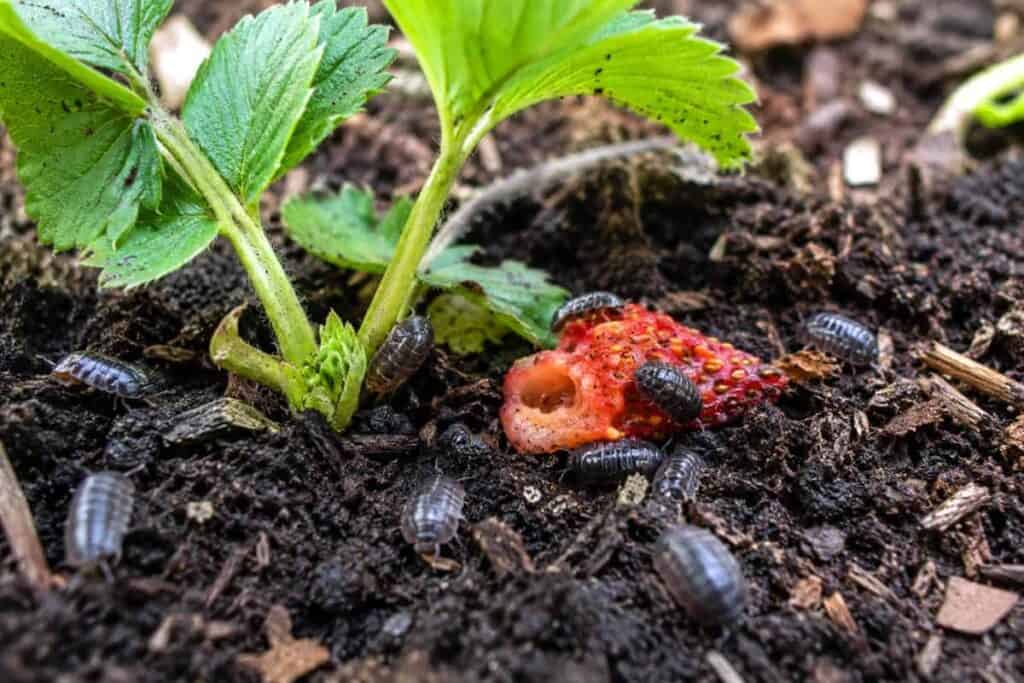
In most cases, rolly pollies are beneficial for gardens because they act as natural decomposers. These small terrestrial crustaceans feed mainly on dead plant material, decaying leaves, rotting wood, fungi, and organic debris, helping break down waste into nutrients that enrich the soil.
As rolly pollies consume decomposing matter, they help speed up nutrient cycling, making important minerals more available to plants. Their movement through the upper soil layer can also help improve soil aeration and support healthier microbial activity. For compost piles and mulch beds, they are usually considered helpful organisms rather than pests.
However, rolly pollies can become a problem when their population grows excessively or when food sources are limited. During very damp conditions, large numbers may begin feeding on soft seedlings, young roots, ripening strawberries, fallen fruits, tender vegetables, and low growing plants. Seedlings are especially vulnerable because their tissues are softer and easier to chew.
A few rolly pollies in the garden rarely cause noticeable damage. Problems usually develop when there is:
- Excess moisture
- Thick mulch or heavy organic debris
- Overwatering
- Large amounts of decaying material
- Dense rolly polly populations
If rolly pollies start damaging plants, reducing moisture levels, removing excess mulch, and cleaning up decaying vegetation often helps bring their numbers back under control naturally without pesticides.
Are Pill Bugs Poisonous?
Pill bugs are not poisonous as they don’t sting, bite, or carry any harmful diseases.
World’s Top 15 Poisonous Caterpillars
Do Rolly Pollies Eat Dog Poop?
Yes, indeed, they do. rolly-pollies eat all kinds of feces. Also, they eat their own excretion, which is known as self-coprophagy.
Do Rolly Pollies Eat Strawberries?
Yes, indeed, pill bugs love to eat them. rolly-pollies are pests for gardeners.
- Pillbugs make holes in strawberries while eating them.
- To stop them from destroying the crops, farmers spray liquids such as vinegar, boric acid, or apple cider to keep them at bay.
How Do Rolly Pollies Hunt?
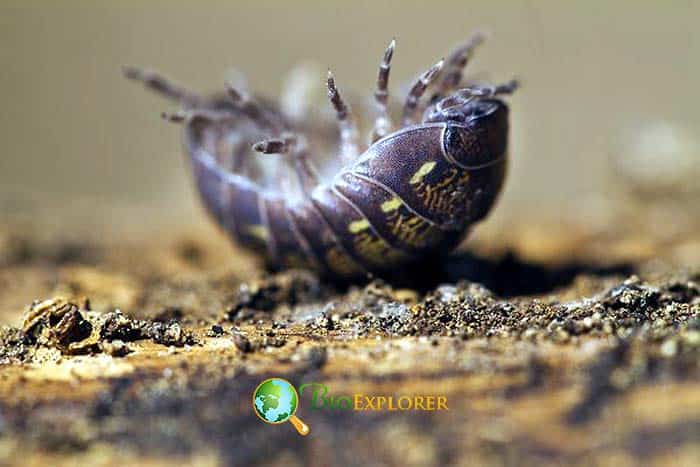
Rolly-pollies have been observed to engage in cannibalism.
- Often, the younger individuals or weaker members are targeted by the adult rolly-pollies.
- These newborns and weaklings are captured by the more potent and powerful adult rolly-pollies and are then eaten.
- In other scenarios, cannibalism can take the form where the deceased bodies of rolly-pollies are fed on by other live members.
- This can also be described as scavenging.
- Other studies have linked the cannibalistic behavior of these terrestrial isopods to the spread of bacteria from an infected prey to an uninfected predator/host.
- The bacterium that has been shown to be transferred in this manner is Wolbachia pipientis.
When Do Rolly Pollies Eat?
Rolly-pollies mostly display nocturnal tendencies.
- They tend to look for food and eat at night.
- During the day, rolly-pollies are inactive and are thus likely to be found hiding in dark and humid areas, which are often under logs, rocks, or fallen leaves.
How Often Do Rolly Pollies Eat?
Rolly pollies are mostly nocturnal feeders, meaning they are most active and feed primarily at night. During the daytime, they usually hide under rocks, mulch, logs, or leaf litter to avoid drying out. Higher humidity levels often trigger increased feeding activity because their gill-like respiratory organs require moisture to function properly.
- Unlike animals that eat large meals at set times, rolly pollies tend to feed continuously whenever food is available. In moist environments with abundant organic matter, they may graze frequently on decaying leaves, wood, fungi, and other decomposing material throughout the night.
- Feeding behavior also changes after molting, when rolly pollies shed their exoskeleton. After molting, they commonly eat their own shed skin because it contains valuable calcium and minerals needed to harden the new exoskeleton.
- Their feeding activity can vary seasonally as well. Rolly pollies are generally more active during warm and humid months and less active during colder or dry conditions.
- When food becomes scarce, rolly pollies may reduce their feeding rate and sometimes display unusual survival behaviors, including cannibalism or feeding on weaker individuals and juveniles during periods of extreme resource limitation.
What Eats Rolly Pollies?
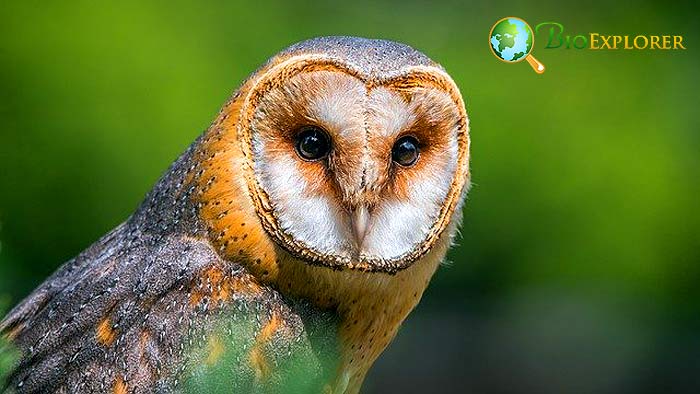
Rolly-pollies are a significant source of nutrition to organisms like the shrew. Other creatures like centipedes, owls, foxes, toads, frogs, some ants, and spiders find rolly-pollies to be a great source of food.
Where Do Rolly Pollies Fit in the Animal Food Chain?
Rolly-pollies play an essential role in the animal food chain.
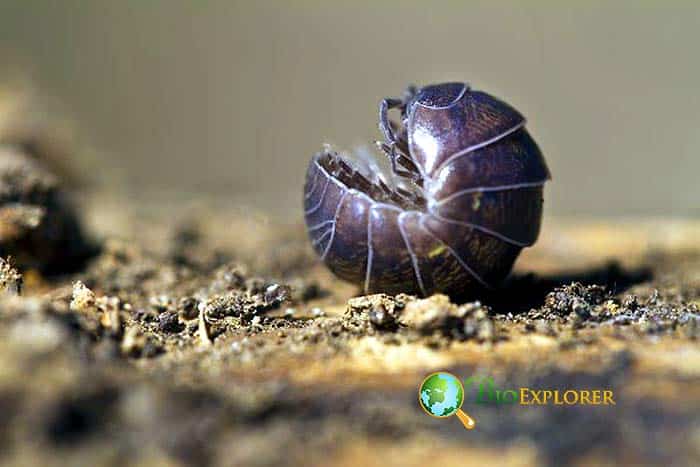
- Rolly-pollies are notable decomposers, and they play an imperative task in the digestion of decaying matter from both animals and plants.
- As a result of this action, rolly-pollies return more nutrients to the soil, thus playing a part in ensuring other animals have an environment where they can propagate and thrive.
- Thanks to their sensitivity to changes that occur in the environment, rolly-pollies are excellent indicators of the ecosystem’s health.
- Their presence in the environment means the ecosystem is thriving.
- In addition to this role, pill bugs are a great source of nutrition to other animals that rely on them for food.
- Examples of the organisms that feed on pill bugs include but are not limited to some ant and spider species.
FAQs
Rolly pollies mainly prefer decaying plant matter such as dead leaves, rotting wood, and decomposing organic material. In captivity, many also readily eat soft vegetables like cucumber, potato, and carrot. Their diet helps recycle nutrients back into the soil.
Yes, rolly pollies can eat small amounts of fruit such as apple, pear, strawberry, and banana. However, fruit should only be offered occasionally because high sugar content can promote mold growth inside their enclosure. Remove uneaten fruit quickly to maintain healthy conditions.
Most rolly pollies primarily feed on dead and decaying material rather than healthy plants. However, when populations become very large or conditions are extremely damp, they may chew on tender seedlings, soft roots, strawberries, or low growing vegetables. Serious garden damage is uncommon unless their numbers are excessive.
Baby rolly pollies, called mancae, eat the same general foods as adults but prefer softer decomposing material. They commonly feed on moist leaf litter, biofilm, decaying wood, and organic debris inside the habitat. Calcium rich material is also important as they grow and molt.
Rolly pollies can survive for several days without fresh food if moisture is available and organic material remains in their environment. In natural habitats and bioactive enclosures, they often continue feeding on leaf litter and decomposing matter even when supplemental food is absent. Prolonged food shortages can weaken them and reduce successful molting.
Rolly pollies do not usually drink standing water like mammals or insects. Instead, they absorb moisture through their gill-like respiratory structures and obtain water from damp environments and moist foods. They require consistently humid conditions to survive.
No, rolly pollies are harmless to humans and pets. They do not bite, sting, spread disease, or damage household structures. In most gardens, they are considered beneficial decomposers.
Rolly pollies avoid dry, hot, and sunny environments because they lose moisture easily. They also dislike excessive salt, chemical pesticides, and acidic conditions. Dry soil and reduced moisture are common ways gardeners naturally discourage large populations.
Rolly pollies may nibble on bread, but it is not a healthy or recommended food source. Bread can quickly grow mold and encourage harmful bacteria inside the enclosure. Natural foods such as leaf litter and vegetables are much safer choices.
Rolly pollies roll into a tight ball as a defensive behavior called conglobation. This helps protect their softer underside from predators and reduces moisture loss in dry conditions. Not all woodlice species can perform this behavior.
Cite this page
BioExplorer. (2026, August 26). What Do Rolly Pollies Eat?. https://www.bioexplorer.net/what-do-rolly-pollies-eat.html/