Scientists Found a Land Crab Inside a Parrot Nest, Next to Two Dead Chicks
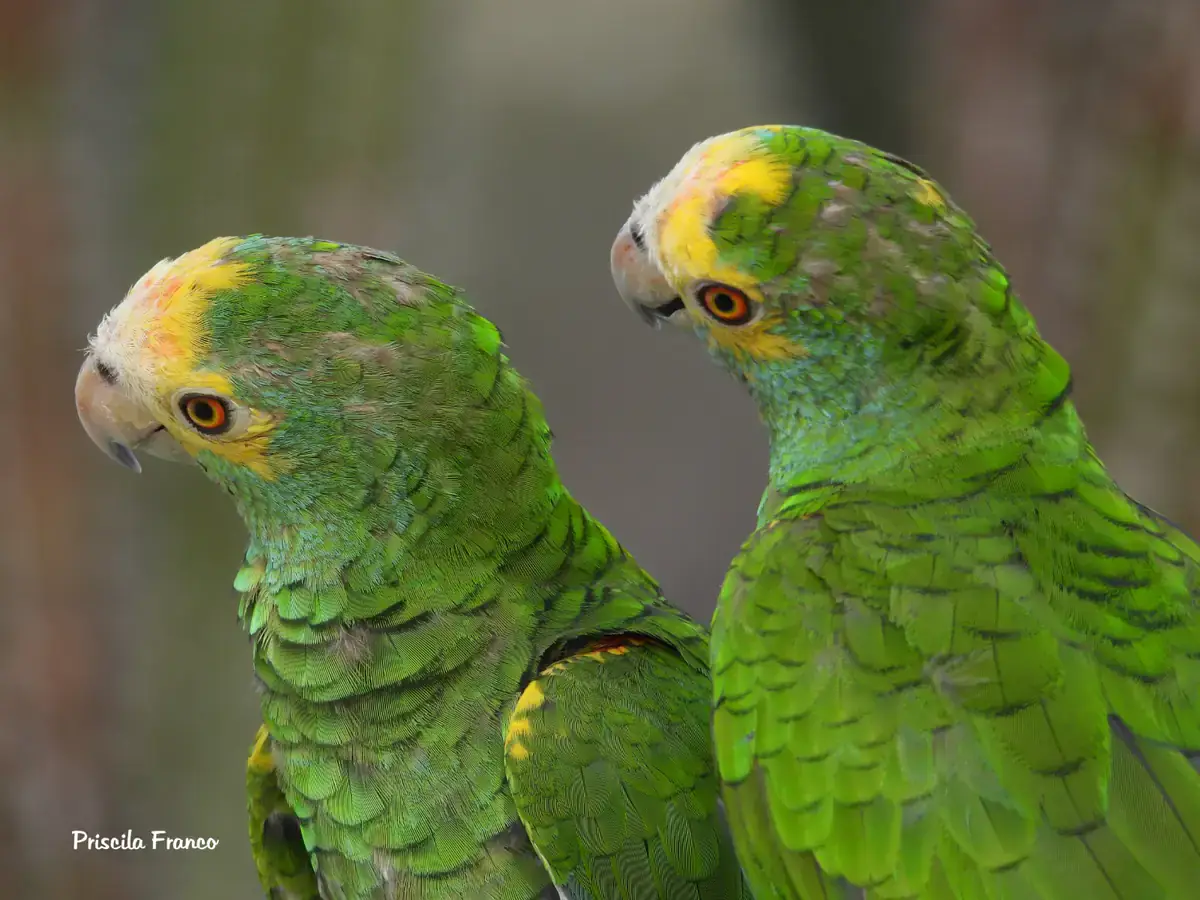
On the Caribbean island of Bonaire, researchers checking parrot nests found something no one had recorded before. A black land crab was sitting inside the nest of a yellow-shouldered amazon, right next to a dead chick. It is the first documented case of a land crab likely preying on parrot chicks.
Jack Haines and Marcela Priscila Franco-Ochoa of the World Parrot Trust described the find on October 23, 2026, in the Journal of Caribbean Ornithology. They think the parrots’ unusual nesting habits on Bonaire may have exposed the chicks to this new risk.
Franco-Ochoa spoke with BioExplorer about how the team worked out what happened.
Possibly. In 2023, two yellow-shouldered amazon chicks died in a rock nest on Bonaire, and a black land crab was in the nest both times. The wounds and timing point to predation rather than scavenging, but no one saw the crab attack, so it remains a strong suspicion.
A Parrot of Rock Nests
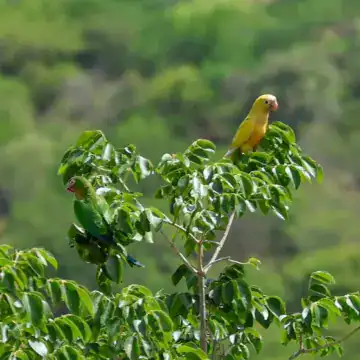
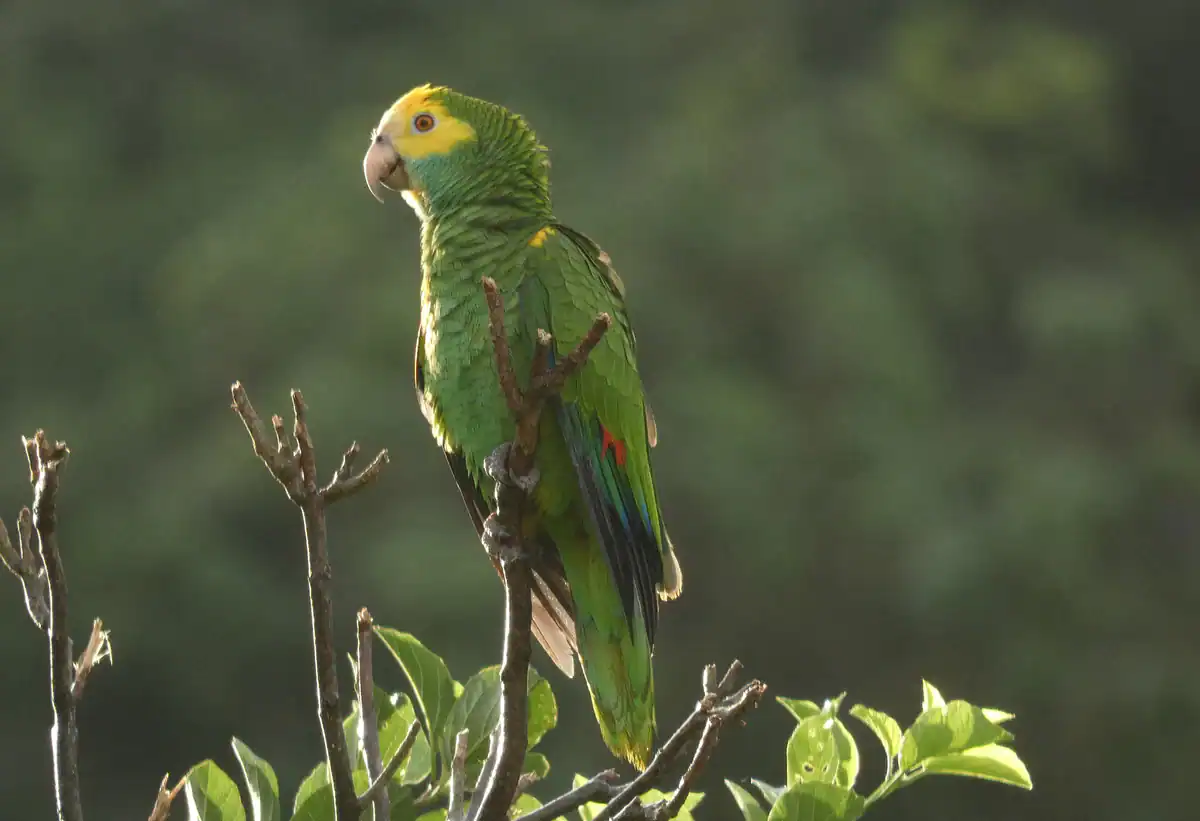
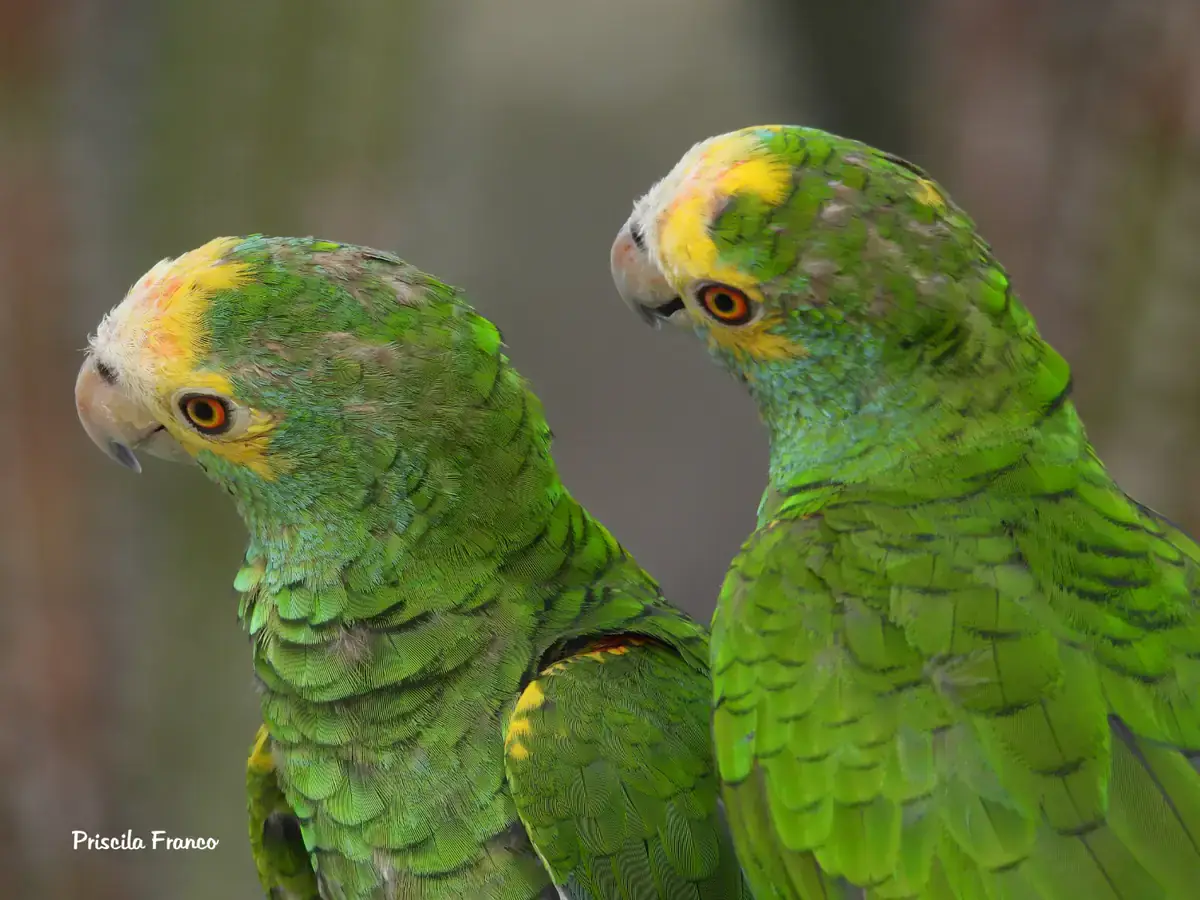
Parrots are some of the most colorful birds, and the yellow-shouldered amazon (Amazona barbadensis) is no exception, with a green body, a yellow face and yellow shoulders. It lives along the northern coast of Venezuela, on the Venezuelan islands of Margarita and La Blanquilla, and on Bonaire. A small population has also been reintroduced to Aruba, after the species suffered extirpation, or local extinction, there.
Its yellow feathers get their color from pigments made only by parrots. We explored those pigments in our story on flavism in birds.
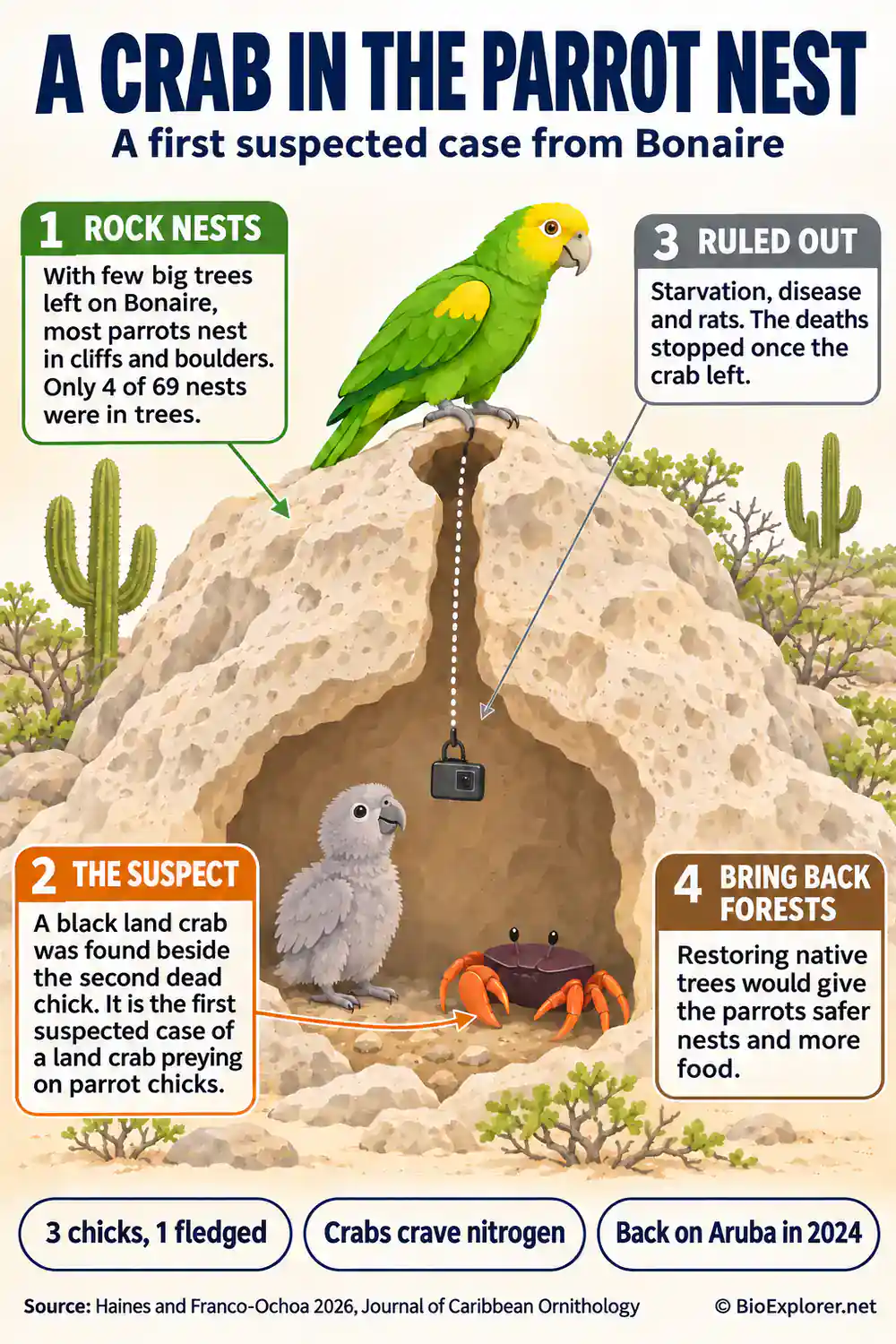
On Bonaire, the parrots live in dry forest full of cacti and thorn scrub. Elsewhere, they usually nest in hollows in large trees, like many other cavity-nesting types of birds. On Bonaire, most nest in holes in cliffs and big boulders instead.
Franco-Ochoa said the team believes the shift traces back to habitat loss, as centuries of farming, logging and grazing cleared Bonaire’s large trees. Between 2021 and 2023, the team recorded 69 nests on the island. Only four of them were in trees.
The Nest in the Boulder
From May to September 2023, the team monitored 37 nest cavities. One nest sat in a narrow tube on top of a limestone boulder about 7 meters (23 feet) tall. The tube was 60 to 80 centimeters deep and opened into a wider chamber at the bottom.
To see inside, the team lowered a camera into the chamber on a strap and recorded video. By June 19, the nest held three healthy chicks.
On June 30, the camera showed one chick dead. Its crop, a pouch in the throat that stores food, was torn open and empty. It also had wounds on its left wing and left leg.
The Crab Revealed
At first, the team assumed a rat had killed the chick. Introduced rats were the usual suspects for nest predation on Bonaire. They planned to move the two surviving chicks to other nests for safety.
When they returned on July 1, a second chick was dead. A black land crab (Gecarcinus ruricola) was in the nest, right beside its body.
Initially, we suspected that a rat might have been responsible for the death of the first chick, so finding a terrestrial crab next to the second dead chick was unexpected and led us to reconsider what had happened. Our main concern was to protect the surviving chick and try to understand what was causing these deaths.
Marcela Franco-Ochoa, World Parrot Trust
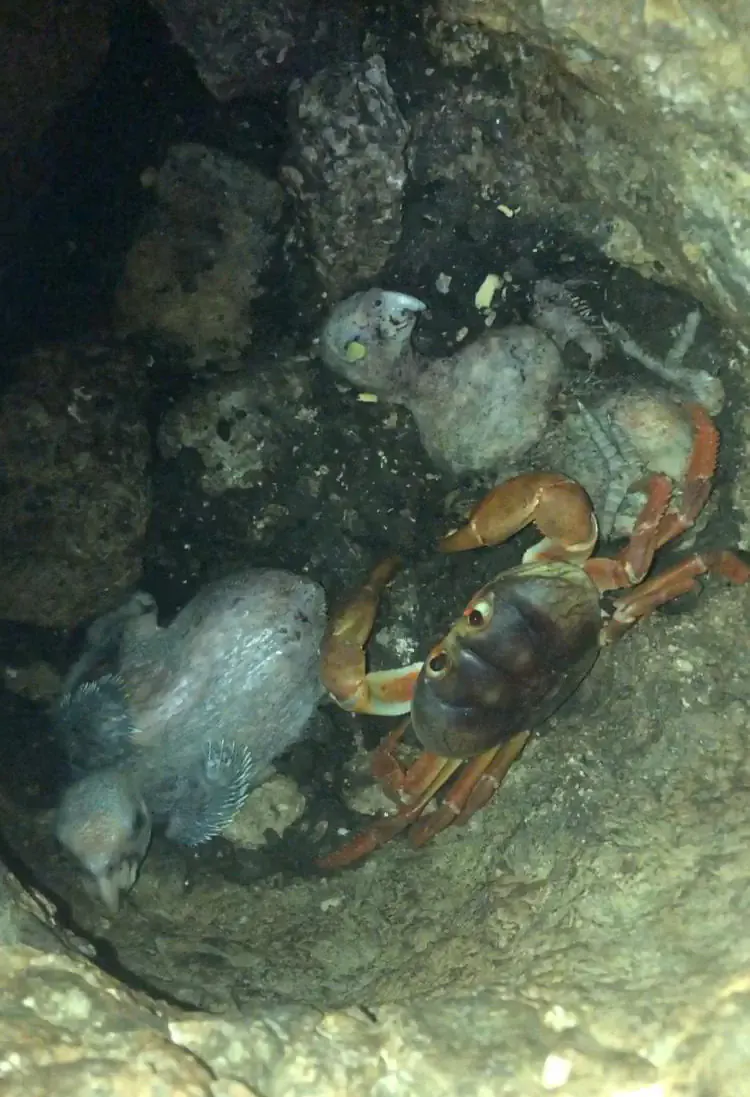
The researchers tried for three hours to remove the crab or the last chick. The cavity was too deep and twisting, and they stopped at nightfall to avoid hurting the chick. By the next morning, the crab was gone.
Weighing the Suspects
Later, the team rewatched the June 30 video. The crab was visible in the background of several frames, so it was likely in the nest when both chicks died.
Franco-Ochoa told BioExplorer that the team weighed three other possible causes of death and judged each less likely:
- Starvation. A weak chick might have died and then been eaten by a scavenger. But the chicks were in good body condition.
- Disease. The other chicks looked alert and healthy, and the third one later fledged.
- A rat. The team found no rat droppings in the nest, and the wounds lacked the marks of rodent teeth.
The first chick’s leg wound offered a key clue. According to Franco-Ochoa, the bruising and swelling around it suggest the injury happened while the chick was still alive. She added that the torn crop fits the work of a crab’s claws, which can grip and tear delicate tissue.
Taken together, the characteristics of the injuries, their possible mechanism of occurrence, the documented presence of the crab during both mortality events, and the fact that, after its disappearance from the nest cavity, the third chick remained healthy and eventually fledged, constitute evidence supporting the hypothesis of active predation by Gecarcinus ruricola rather than scavenging.
Marcela Franco-Ochoa, World Parrot Trust
Still, no one saw the crab attack a chick. In the paper, the authors stress that the evidence is circumstantial and comes from a single nest. They call for wider monitoring to learn whether this is a one-off or a real threat.
Why a Crab Would Do It
The black land crab is a crustacean that lives mostly on land. It mostly eats plants, but it is an opportunist that also eats carrion, insects and animal droppings.
Other land crab species have been documented attacking seabird chicks and eggs, as well as newly hatched sea turtles.
The authors suggest the crab may have been after nitrogen. Plant-based diets are low in nitrogen, and crabs need it, especially when they molt.
A New Risk From Old Damage
The authors see this as a possible new threat created by people. They suspect that historic forest loss pushed Bonaire’s parrots into rock cavities, though the causes are still being studied. These nests may expose chicks to predators they rarely faced in trees.
Although these cavities may provide protection against certain threats, their location, depth, and accessibility can expose chicks to other animals. Our findings suggest that terrestrial crabs could represent one of these previously unrecognized predation risks associated with the change in nesting sites.
Marcela Franco-Ochoa, World Parrot Trust
Invasive species are among the biggest threats to biodiversity on islands. On Bonaire, introduced cats and rats appear to limit parrot breeding.
A 2016 study found that alien species are the most common threat linked to vertebrate extinctions since 1500. Many of the world’s extinct birds once lived on islands.
Bringing Back Forests
For Franco-Ochoa, the answer starts with trees.
The protection and restoration of native forests are fundamental to the conservation of Amazona barbadensis, as they help restore suitable feeding and nesting sites.
Marcela Franco-Ochoa, World Parrot Trust
She added that nest monitoring and tackling threats such as predators and the illegal wildlife trade are also essential. The World Parrot Trust has supported work on this parrot since 2002, in Bonaire and Venezuela and more recently Aruba. Its projects include surveys, nest monitoring, forest restoration, and rescuing birds from the pet trade, all core tools of conservation biology.
One success came in January 2024. According to Franco-Ochoa, 25 parrots confiscated from the illegal wildlife trade in 2022 were released in Arikok National Park on Aruba. She said the species had been gone from the island for 76 years.
The Aruba National Park Foundation continues to monitor the released birds. Like the Puerto Rican amazon, the yellow-shouldered amazon is a Caribbean parrot of conservation concern that is getting a second chance.
At a Glance
| Detail | Finding |
|---|---|
| Parrot | Yellow-shouldered amazon (Amazona barbadensis) |
| Suspected predator | Black land crab (Gecarcinus ruricola) |
| Place | Bonaire, southern Caribbean |
| When | June 30 and July 1, 2023 |
| Nest | Rock cavity on top of a limestone boulder |
| Chicks | 3 hatched, 2 died, 1 fledged |
| Considered less likely | Starvation, disease and rats |
| Status of claim | First documented potential case, predation inferred |
FAQs
It appears so, at least occasionally. On Bonaire in 2023, a black land crab was in a yellow-shouldered amazon nest when two chicks died, and was found beside the second one. The evidence points to predation, but no attack was directly seen.
The yellow-shouldered amazon (Amazona barbadensis) is a green parrot with a yellow face and shoulders, listed as Near Threatened by the IUCN. It lives in northern Venezuela, on nearby islands, and on Bonaire, with a reintroduced group on Aruba.
Bonaire lost most of its large trees after centuries of logging, farming and grazing. With few tree hollows left, most parrots now nest in cavities in cliffs and boulders.
They considered starvation, disease and rats less likely. The first chick’s wounds suggest it was injured while still alive, and the deaths stopped once the crab left the nest.
Black land crabs eat mostly plants, but they also eat carrion, insects and animal droppings. They favor nitrogen-rich foods, which may explain an attack on a chick.
Restoring native forests on Bonaire would give the parrots more nesting and feeding sites. Nest monitoring and fighting the illegal pet trade also help, as the 2024 reintroduction to Aruba shows.
Cite this page
BioExplorer. (2026, November 5). Scientists Found a Land Crab Inside a Parrot Nest, Next to Two Dead Chicks. https://www.bioexplorer.net/land-crab-yellow-shouldered-amazon.html/
About the author