
Proboscis Monkey
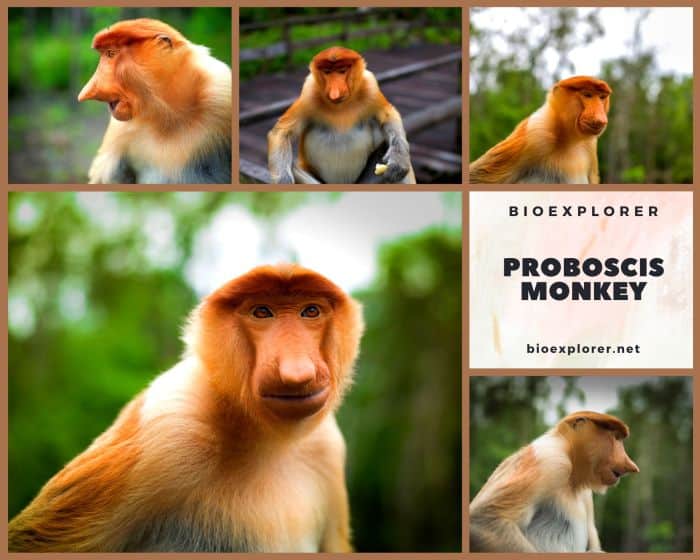
Primate Profile
Proboscis Monkey
Nasalis Nasalis larvatus · Endemic to Borneo Islands
Kingdom
Animalia
Phylum
Chordata
Class
Mammalia
Order
Primates
Family
Cercopithecidae
Genus
Nasalis
Species
larvatus
Authority
(van Wurmb, 1787)
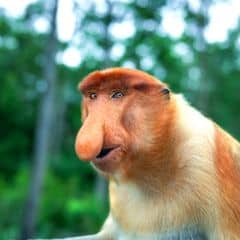
Photo
EN
IUCN STATUSEndangered
- Common NameProboscis Monkey
- Taxonomy Classification Year1787
- Monkey Size60 to 70 cm (23.62 to 27.56 in)
- Skin Color(s)Reddish-brown
- HabitatRainforest
- DietOmnivorous
- Native CountriesBorneo
Proboscis Monkey Distribution
Range
Borneo (

 )
)
)Proboscis Monkey Characteristics
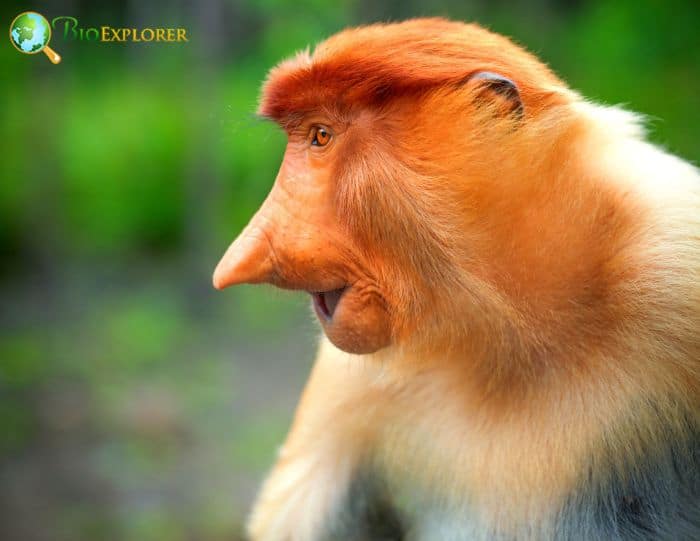
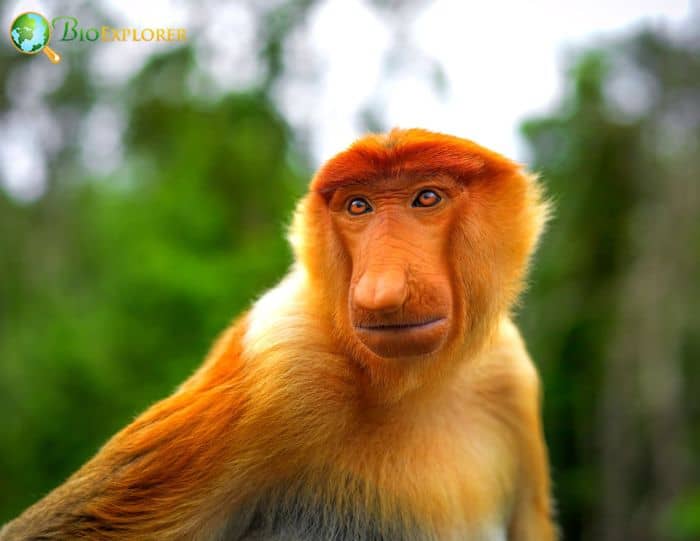
The proboscis monkey[1] (Nasalis larvatus) is an Old-World arboreal species with an unusually large nose, reddish-brown skin color, and a long tail.
- This long-nosed monkey is native to the island of Borneo in Southeast Asia, mainly found in the island’s mangrove forests and coastal areas.
- The proboscis monkey has long fur; the fur on the back is reddish brown, bright orange, tawny, or brick red.
- The undercoat is light gray, yellowish, or grayish to light orange. This is because babies are born with blue face that turns gray by 2.5 months.
- At 8.5 months, the face has become cream-colored like that of adults.
- Both sexes have bulging bellies, giving monkeys the appearance of a potbelly. Most of the monkey’s toes are webbed.
- Males have a broad, protruding nose that enhances resonant vocalizations. The female’s nose is smaller.
What Do Proboscis Monkeys Eat?
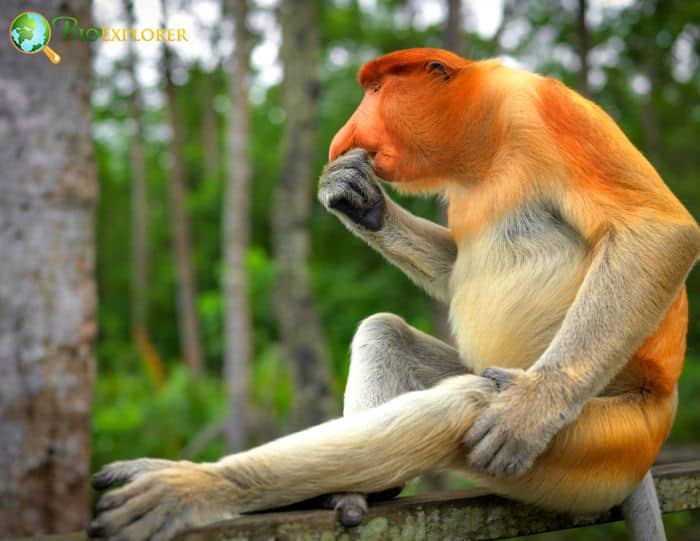
In the wild, the Proboscis Monkey nourishes on[¶]:
- Hexapoda (Insecta)
- Fig (Ficus)
- Breadfruit (Artocarpus)
- Common Fig (Ficus carica).
- Clustertree (Ficus racemosa)
- Combretums (Combretaceae)
What Eats Proboscis Monkeys?
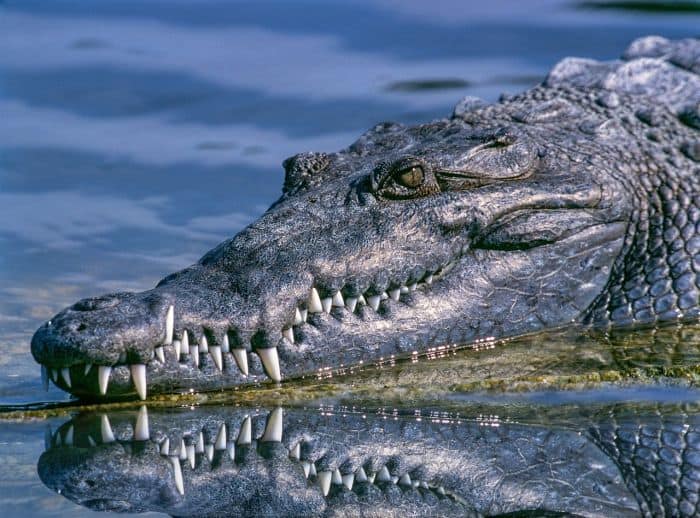
Crocodiles (Crocodylidae) and Leopards (Panthera pardus) predate Proboscis Monkeys[§].
Proboscis Monkey Facts
- The proboscis monkey is a large species and one of the largest Old-World monkey species native to Asia. Only the Tibetan macaque and some gray langurs can match its size.
- They usually live in groups consisting of an adult male, a few adult females, and their young.
- These monkeys live in overlapping home ranges with little territoriality in a fission-fusion society where groups congregate at roosting sites by nightfall.
- Probosci monkeys are diurnal and prefer to be active from late afternoon to dusk.
- Proboscis monkeys meet during the day and travel together, but individuals only groom and play with their own group.
Suggested Reading: All Monkey Species
Cite this page
BioExplorer. (2026, August 26). Proboscis Monkey. https://www.bioexplorer.net/animals/mammals/monkeys/proboscis-monkey/