
Hamadryas Baboon
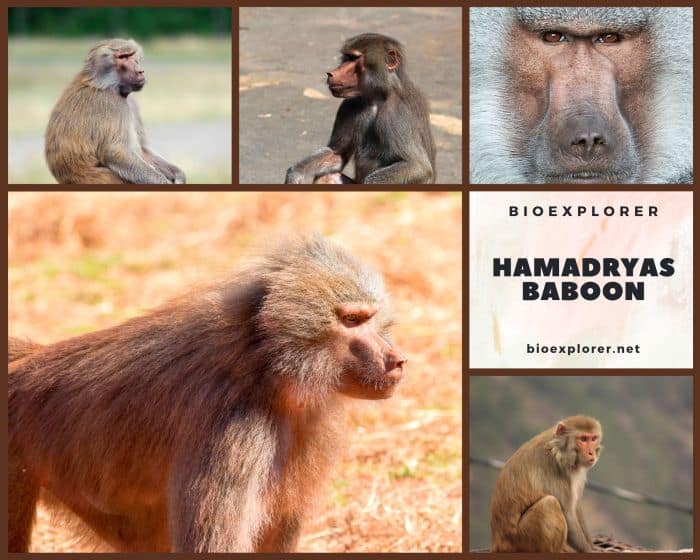
Primate Profile
Hamadryas Baboon
Papio Papio hamadryas
Kingdom
Animalia
Phylum
Chordata
Class
Mammalia
Order
Primates
Family
Cercopithecidae
Genus
Papio
Species
hamadryas
Authority
(Linnaeus, 1758)
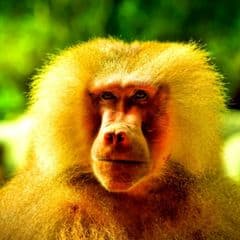
Photo
LC
IUCN STATUSLeast Concern
- Common NameHamadryas Baboon
- Taxonomy Classification Year1758
- Monkey Size61.0 to 76.2 cm (24.02 to 30.00 in)
- Skin Color(s)Grayish-brown to olive-brown
- HabitatDesert or dune, savanna or grassland, mountains
- DietOmnivorous
- Native CountriesEthiopia, Somalia, Eritrea
Hamadryas Baboon Distribution
Countries
Ethiopia ( )
)
)
Somalia ( )
)
)
Eritrea ( )
)
)Hamadryas Baboon Characteristics
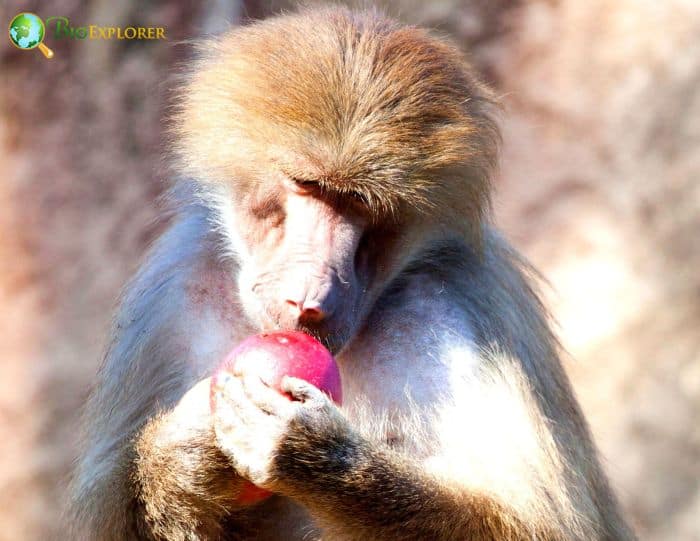
The Hamadryas baboon[1] (Papio hamadryas) is a baboon species in the Old World monkey family.
- It’s the northernmost of all baboons and is native to the Horn of Africa and the southwestern region of the Arabian Peninsula.
- These species are highly sexually dimorphic in size and fur character. Adult males weigh about 21.5 kg and females approximately 9.4 kg.
- The coat of the males is grayish, mainly brown, with the belly colored like the back or darker.
- The cheek hair is lighter and forms “whiskers” that merge into a distinct, fluffy silver mane.
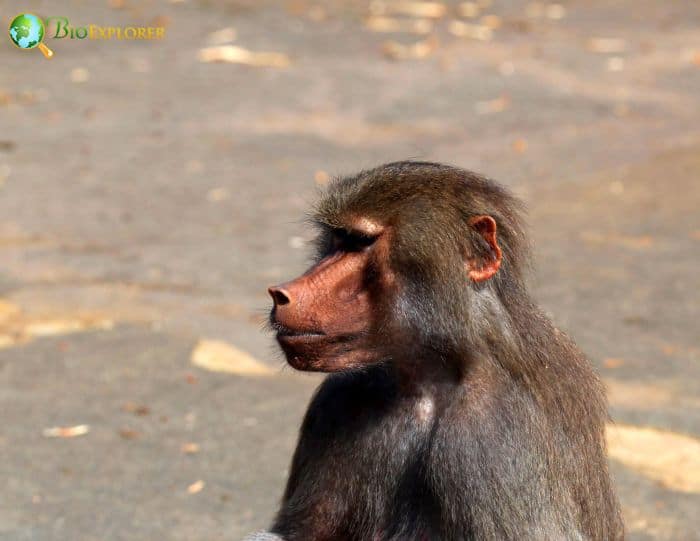
- The long back hair is wavy. Females are solid olive-brown. The skin can be highly colored in some individuals.
- In both male and female species, the skin surrounding the ischial callosities is bright red or pink.
- Males have a similar fur color on the face and muzzle, while females have dull, grayish-brown faces.
- The tail is long and curved, with an elegant arch at the base.
- The natal coat is black, although it sheds around 6 months of age when it is replaced by olive-brown fur like that of the adult female.
What Eats Hamadryas Baboons?
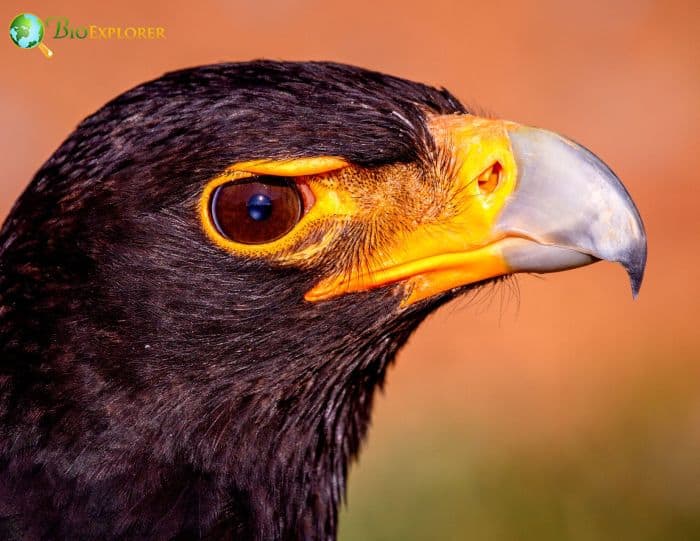
Verreaux’s Eagle (Aquila verreauxii), Leopards (Panthera pardus) and Caracals (Caracal caracal) are the predators of Hamadryas Baboons[§] in the wild.
Hamadryas Baboon Facts
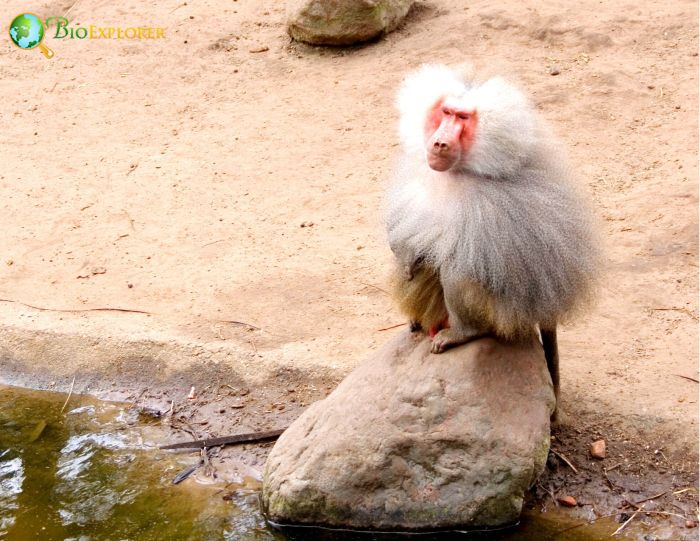
- The Hamadryas baboon was a sacred animal to the ancient Egyptians. It appeared in various roles in ancient Egyptian religion, hence its alternative common name, “sacred baboon“.
- They are very social animals, displaying a complex, multi-level social structure.
- Groups of Hamadryas baboons appear to play an essential role in enabling baboons to compete for roosting and access to watering holes.
- Males seem to bond with kin throughout their lives. In this respect, Hamadryas baboons differ from other representatives of the Papio genus.
- All hamadryas baboons except infants grunt rhythmically when approaching another animal to indicate intentions of an affiliation.
Suggested Reading: Various Types of Monkeys
Cite this page
BioExplorer. (2026, September 30). Hamadryas Baboon. https://www.bioexplorer.net/animals/mammals/monkeys/hamadryas-baboon/