
History of Biotechnology
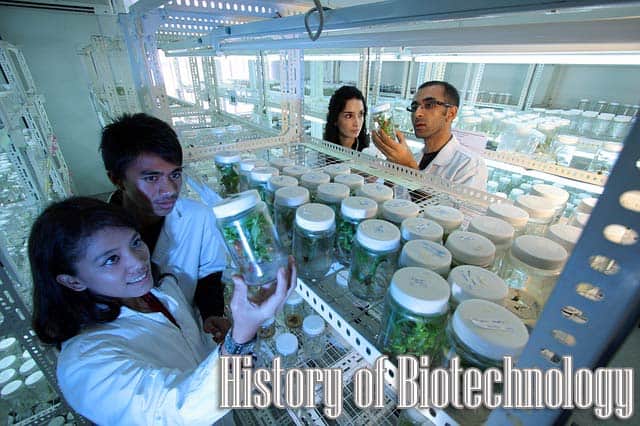
Biotechnology is the merging of the knowledge obtained in biology with scientific methods and practices in technology. With the knowledge of cellular and molecular processes, biotechnology deals with modifying products and crops to suit specific applications and engineering them to make them more useful (Organization 2016).
Jump to:
The probability and possibilities behind this kind of interest in biotechnology lie behind its boundless potential and promising approaches to serve and benefit every aspect of man's life. Inventions and innovations in this field include food, health, and animal life (Ashish Swarup Verma 2011). Refer to the detailed history of biochemistry and history of genetics here.
History of Biotechnology
DURING THE PRE-18TH CENTURY
-
Around 7000 B.C.E:
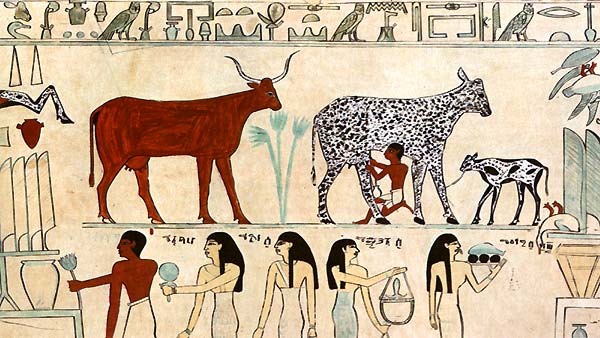
The domestication of wild animals began the observation and applications of animal breeding in the daily life of man. Certainly, this endeavor was the initial period of the evolution of farming (Coley 2016).
This paved the way for other needs like developing food preservation methods and storage.
Man made new observations and invented food products like cheese and curd. In history, the invention of cheese can be considered one of the first direct products of biotechnology.
The exploitation of yeast in various products like making bread, producing vinegar, and fermenting products was done largely for human benefit. The discovery of yeast also paved the way for producing alcoholic beverages like wine, whiskey, and beer.
- Most of the inventions and developments in these periods are termed “discoveries” or “developments”. Such inventions were based on common observations about nature, which could be put to the test for the betterment of human life then (Berkeley 2012).
- During ancient times, man, to meet the basic need for food, explored the possibilities of making food available and accessible by growing them near their shelters.
DURING THE 18TH CENTURY
DURING THE 19TH CENTURY
-
1859:
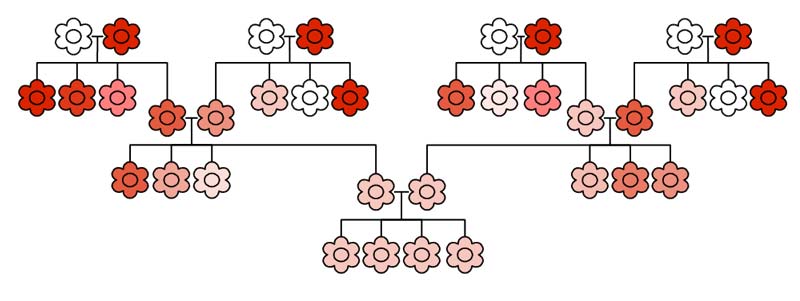
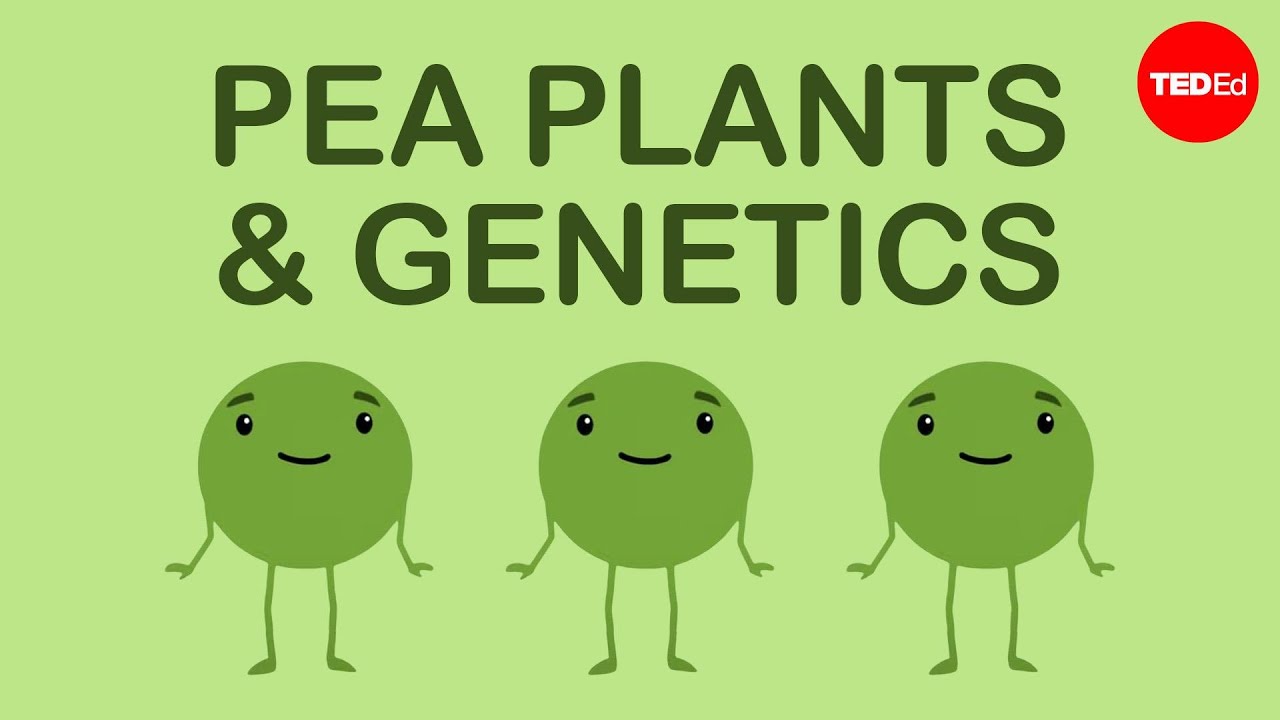
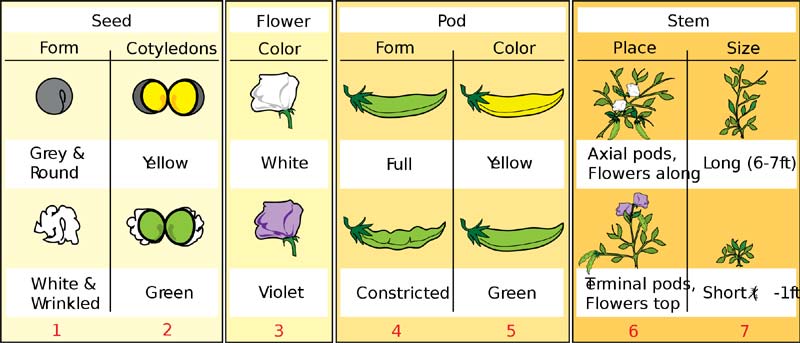
 A monk named Gregor Mendel performed experiments on the inheritance among pea plants. Because of his contributions, Gregor Mendel became the "Father of Genetics" (Bagley 2013).
 -
1865:
The results of Mendel’s experiments in 1865 showed that parents must pass unique physical factors which serve as the code of information to their offspring at conception. The offspring then gets one unit for each trait from their parents.
-
1866:
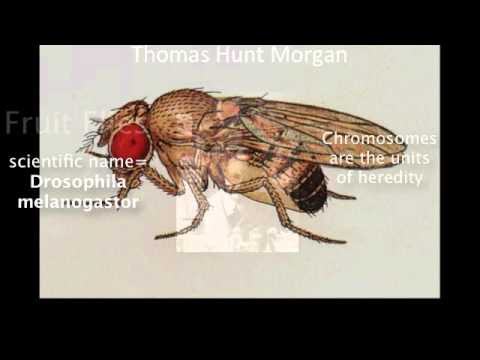
After a year, Mendel proposed the Theory of Inheritance with three different principles: dominant expression, recessive expression, and independent assortment of traits. He also discovered that traits appear in twos; separate independently in the sex cells; combine again in pairs in the offspring (kenyon.edu 2016). However, sometime after their release, Mendel’s works were lost.
-
1869:
 Friedrich Miescher first recognized the “nuclein” inside the nuclei of human leukocytes (white blood cells) (Coley 2016).
 -
1871:
 Ernst Haeckel suggested that the genetic material can be found in the nucleus. Later, his experiments proved this claim to be true.
Chromosomes as units that carry genetic information were discovered. In the same year, Joseph Lister experimented with Penicillium glaucium and its antibacterial action on human tissue (Ashish Swarup Verma 2011). Refer to the book on Penicillium glaucium here.
DURING THE 20TH CENTURY TILL CURRENT
 Early 20th Century During this time, Mendel's principles were found again after being lost for a long time.
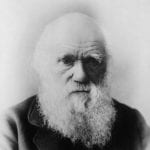
Mendel’s work was ignored for such a long time because at the same time, Charles Darwin’s Theory of Evolution was so consuming that it out-shined the significance of Mendel's work (Berkeley 2012).
-
1919:
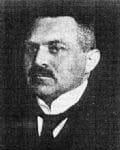 Scientist Karl Ereky have foreseen a time when biology could be used for turning raw materials into useful products. He later coined the term biotechnology to describe the integration of biology with technology.
 -
1921:
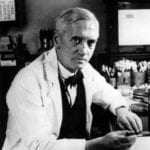 Alexander Fleming defined new horizons for modern antibiotics with his discoveries of enzyme lysozyme (Coley 2016).
 -
1928:
Alexander Fleming discovered penicillin, an antibiotic substance.
-
1940s:
The Second World War became a major hindrance to the emergence of scientific discoveries. After the end of the war, some very crucial discoveries were reported. Such paved the path for modern biotechnology and to its current status.
-
1953:
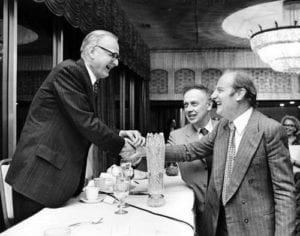 Utilizing all discoveries before the James Watson and Francis Crick were able to obtain the double helical and 3D model of the DNA (Pray 2009). DNA replication process was also discovered.
 -
1977:
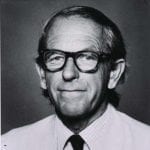 The process of sequencing was first done by scientist Frederick Sanger and the first ever organism to have its genome sequenced is a bacteriophage.
 -
1983:
 Kary Mullis invented the Polymerase Chain Reaction. This technique is used to amplify a single copy of a segment of a DNA hence making millions of copies in just a short time (Utah.edu 2016).
 -
1996:
 A sheep named Dolly was successfully cloned. An international research effort called the Human Genome Project was started. The goal of this project is to sequence and map the genome of man. It was completed in 2003; interestingly, the results showed the complete genetic blueprint for building a human being (USA.gov 2015).
Top 10 Biotechnology News In 2017
15 Wonderful Biotechnology Inventions In 2018
Top 10 Biotechnology Discoveries in 2019
Top 10 Biotechnology News of 2020

Top Biotechnology News of 2021
Top 15 Biotechnology News of 2022
Cite this page
BioExplorer. (2026, September 30). History of Biotechnology. https://www.bioexplorer.net/history_of_biology/biotechnology/