
History of Biochemistry
Jump to:
Biochemistry is the study of the chemical composition of the living matter and the biochemical processes that govern life activities throughout growth and maintenance[1]. It comes from the words “bio” meaning “life” and chemistry, thus the "chemistry of life". Unlike other fields, it focuses on the processes that occur at the molecular level by studying how the structure of a molecule relates to its function. As a result, it allows the prediction of how molecules will act[2]. Here is the history of biochemistry chronologically from its inception until today.
Biochemistry is important in the development of a wide range of scientific disciplines, which include microbiology, cell and molecular biology, botany, genetics, forensics, and medicine[1]. The emergence of Biochemistry as a discipline is arguable and remains unclear, even at present. However, most scientists believe that it started from the ancient Greeks, who dwelled on the structure, composition, and different processes that occur within living organisms[3].
History of Biochemistry
DURING THE 17TH CENTURY
-
1665:
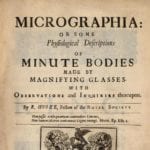 Robert Hooke had successfully invented the microscope. Because of this discovery, Robert Hooke was the first to examine what a cell appears to be close to. His description of these cells was published in Micrographia. However, the cell walls observed by Hooke did not indicate the nucleus and other organelles found in most living cells.
 -
1674:
Anton van Leeuwenhoek witnessed a live cell (plant) under a microscope.
DURING THE 18TH CENTURY
-
1775:
Antoine Lavoisier first proposed a mechanism for photosynthesis, a process wherein plants take in carbon dioxide and release oxygen. Lavoisier was also the first to investigate cell respiration in animals[4].
-
1777-83:
Chemistry became dominated by the phlogiston theory or the hypothetical principle of fire wherein all the combustible material was partly composed. In this principle, burning (oxidation) was caused by liberating phlogiston, with ash as the dephlogisticated substance [4].
DURING THE 19TH CENTURY
-
1836:
The proponent of the cell theory in Biology, Theodore Schwann, proposed that the process of fermentation is solely limited to living yeast cells in 1836. Liebig did not agree with this; instead, he proposed another alternative fermentation theory.
-
1856:
Louis Pasteur opposed Liebig's chemical theory. His experiment showed that fermentation depends highly on the physiological functions of bacteria and living yeast cells. This work of Pasteur in 1856 received general recognition [4].
-
1860s:
The view on the chemistry of life highly different from the chemistry of nonliving things. During this period, the view is that the gelatinous and homogenous form of matter in organisms, more commonly known as the protoplasm, carries out all the intracellular processes. These include respiration, biosynthesis of molecules, and the breakdown of matter [5].
-
1869:
Friedrich Miescher first identified what he called “nuclein” inside the nuclei of human white blood cells[4].
20th CENTURY UP TO THE PRESENT
-
1900s:
One of the most important events that happened during this period is the experiment done by Eduard Buchner. He prepared a cell-free extract of yeast which he called the zymase. It fermented glucose and produced carbon dioxide and ethanol. In this way, Buchner then introduced the concept of an "enzyme". This discovery by Buchner debunked the previous theory of protoplasm [5].Furthermore, the distinction between catalysis by hydrolytic extracellular enzymes and by intracellular enzymes disappeared.
-
1903:
The term "Biochemistry" was officially coined by the German chemist Carl Neuber.
-
1919:
Phoebus Levene, a Russian physician, and chemist, first discovered the order of the three major components of a single nucleotide (phosphate, pentose sugar, and nitrogenous base). He was also the first to discover the carbohydrate component of RNA (ribose) and the carbohydrate component of DNA (deoxyribose). Years later, Levene finally identified how DNA and RNA molecules are put together [4].
-
1937:
Hans Krebs discovered the process of the Citric Acid Cycle (also known as Krebs cycle, in honor to him), which a series of chemical reactions that occur during cellular respiration. Glucose and oxygen convert to water, carbon dioxide, and energy. The advancement in molecular biology, a field of biology that focuses on the physiological organization of living organisms at the molecular level, is indeed a great help in the progress of biochemistry. Somehow, it is quite difficult to distinguish between molecular biology and biochemistry since both of them are concerned with intermolecular and intercellular transformations[3]. It was then theorized that proteins were composed of linear chains of amino acids. This, however, happened even before the identification of the amino acid constituents of amino acids.
-
1944:
While working on bacterial samples, Oswald Avery first suggested in 1944 that the genetic material of the cell was possibly the deoxyribonucleic acid.
-
1950:
A scientist named Erwin Chargaff began to challenge Levene's previous conclusions. He noted that the nucleotide composition of DNA differs among species and does not repeat in the same order reaching two major conclusions [6]. Chargaff concluded that almost all DNA, regardless of organism or tissue type, still maintains certain properties, even as its composition varies. He postulated the "Chargaff's Rule," which says that the amount of cytosine is equal to the amount of guanine, and the amount of thymine is equal to the amount of adenine. In short, the total amount of pyrimidines (thymine and cytosine) approximates the number of purines (adenine and guanine). Utilizing all discoveries before James Watson and Francis Crick were able to derive the three-dimensional and double-helical model of the DNA in 1953[6]. After that, the process of replicating the DNA was suggested.
-
1958:
The theory was only confirmed after Frederick Sanger discovered the first and complete protein structure in 1958. The protein that was first identified is insulin.
-
1961:
After the discovery of the genetic material, the next achieved milestone was the cracking of the genetic code. It was discovered in 1961 that the genetic code comprises specific triplets of DNA bases that encode for particular amino acids.
-
1977:
Sixteen years after the discovery of the triplets of the DNA, Fred Sanger had successfully sequenced the genome of a bacteriophage which contained more than 5000 nucleotides. Not long after, he was able to sequence the DNA of the human mitochondrial genome, which consisted of more than 16 000 nucleotides [4]In the present time, Biochemistry has promised to the world of science in the development of new path-breaking research and coming times would surely prove these promises to be fulfilled. The development of new technology such as X-ray diffraction, chromatography, radioisotopic labeling, electron microscopy, and molecular dynamics paved the way for many other discoveries in Biochemistry. Such technologies will also further open other new endeavors in the future.
Top 14 Biochemistry News, Innovations & Breakthroughs In 2017
Top 15 Biochemistry Discoveries in 2018
Top 15 Biochemistry Discoveries of 2019
Top 10 Biochemistry News of 2020 – A Round-Up

Top 15 Biochemistry News of 2021

Top 15 Biochemistry News of 2022
Cite this page
BioExplorer. (2026, August 26). History of Biochemistry. https://www.bioexplorer.net/history_of_biology/biochemistry/
The correct name of the German scientist who apparently coined the term “biochemistry” was Carl NEUBERG. Why is he credited for this? Do you happen to have a citation where he first used this term?
Hi Chris, thanks for leaving the comment. Here is the citation link from NIH on who coined the term – Biochemistry. Hope it helps.