
Pagai Island Macaque
Species Profile
Pagai Island Macaque
Macaca Macaca pagensis
Kingdom
Animalia
Phylum
Chordata
Class
Mammalia
Order
Primates
Family
Cercopithecidae
Genus
Macaca
Species
pagensis
Authority
(Miller, 1903)
Photo
CR
IUCN STATUSCritically Endangered
- Common NamePagai Island Macaque
- Taxonomy Classification Year1903
- Monkey Size40 to 55 cm (15.75 to 21.65 in)
- Skin Color(s)Dark brown
- HabitatForest, Rainforest
- DietHerbivorous
- Native CountriesIndonesia
Pagai Island Macaque Distribution
Countries
Indonesia ( )
)
)
Explore Other Monkeys
Browse the entire collection of Indonesian Monkeys here.
Pagai Island Macaque Characteristics
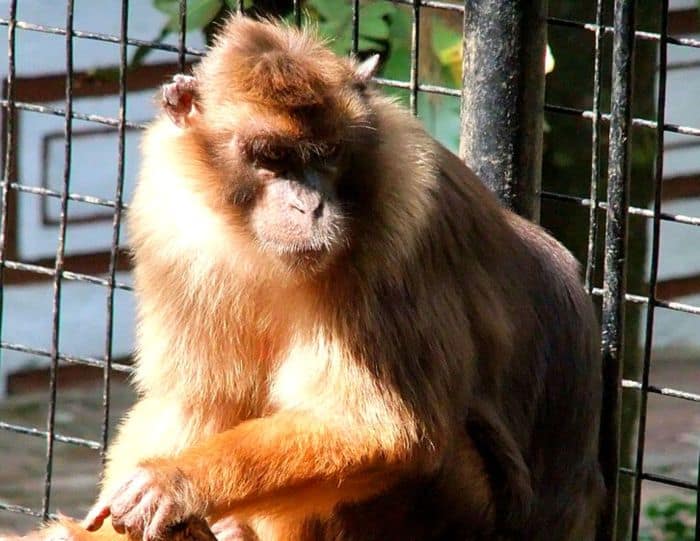
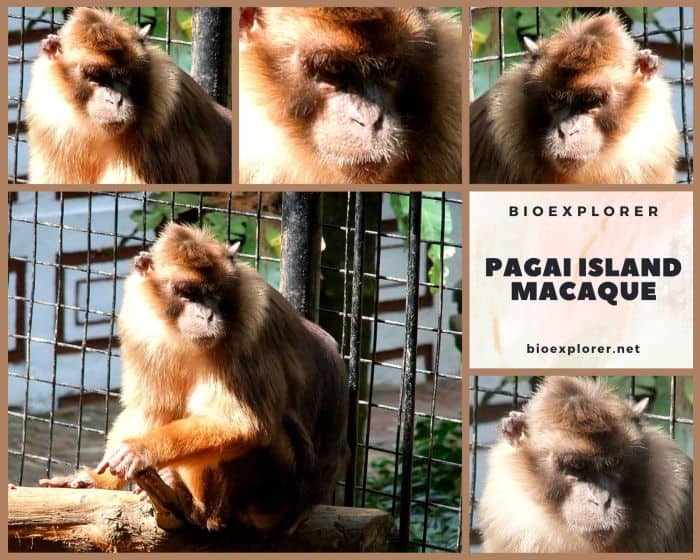
The Pagai island macaque[1] (Macaca pagensis), also called the Pagai or Bokkoi macaque is an Old-World monkey native to the Mentawai Islands on the west coast of Sumatra.
- Male Pagai Island macaques are generally larger than females. The body length of males is 45 to 55 cm, and females are about 40 to 45 cm.
- Tail length is 13 to 16 cm in males and 10 to 13 cm in females. Males are also heavier, weighing between 6 and 9 kg, while females weigh between 4.5 and 6 kg.
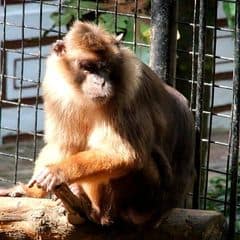
- Their back is dark brown and chestnut to light brown on the sides of the neck, front of the shoulders, and underside of this species.
- The legs are brown, and the arms are reddish brown. Mentawai macaques’ faces are hairless, and they have black skin and brown eyes.
Pagai Island Macaque Facts
- They live above the forest floor in the canopy, forage between 24 and 36 meters, and can perch up to 45 meters high.
- Groups of Pagai Island macaques consist of approximately 5 to 25 individuals. A troop generally contains 1 alpha adult male and several females and their young.
- The male is the ultimate authority on where the troop forages and communicates it to the rest of the group with high-pitched calls.
- Solitary, roaming Pagai Island macaques challenge the dominant male for his position, resulting in aggressive fights.
- If they detect predators, these macaques will notify the rest of the group with a short, harsh bark.
Suggested Reading: All Monkey Species
Cite this page
BioExplorer. (2026, August 26). Pagai Island Macaque. https://www.bioexplorer.net/animals/mammals/monkeys/pagai-island-macaque/