
Alta Floresta Titi
| Kingdom | Class | Order | Family | Phylum | Species |
|---|---|---|---|---|---|
| Animalia | Mammalia | Primates | Pitheciidae | Chordata | Plecturocebus grovesi |
- Common Name(s): Alta Floresta titi, Groves’s titi monkey
- Binomial/scientific name: Plecturocebus grovesi
- Monkey Dimensions: 23 to 46 cm (9.1 to 18.1 inches) in length; approximately 2.2 pounds (1kilogram) in weight
- Skin Color(s): Agouti dorsal parts, bright red-brown venter, entirely black tail with white tip, light-yellow/orange fur on cheeks
- Habitat: Rainforest between the Teles-Pires and Juruena rivers in Mato Grosso, Brazil. Explore the world’s top rainforests.
- Diet: Omnivorous, primarily fruit-eating with supplemental leaves, seeds, and insects
- Native Countries: Brazil (specifically in the municipality of Alta Floresta in Mato Grosso state)
- Taxonomy Classification Year: 2019
- Who classified: Boubli et al.

Alta Floresta titi Distribution
Alta Floresta Titi Characteristics
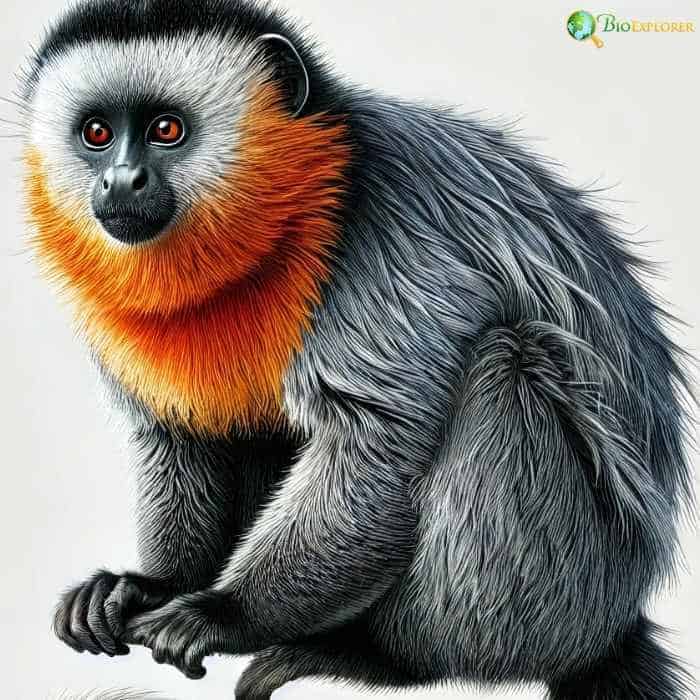
The Alta Floresta titi displays several distinctive physical features that help distinguish it fromother closely related species. Its body is covered in predominantly greyish agouti fur on thedorsal parts, creating a speckled appearance that provides effective camouflage in the dappled-light of forest environments.
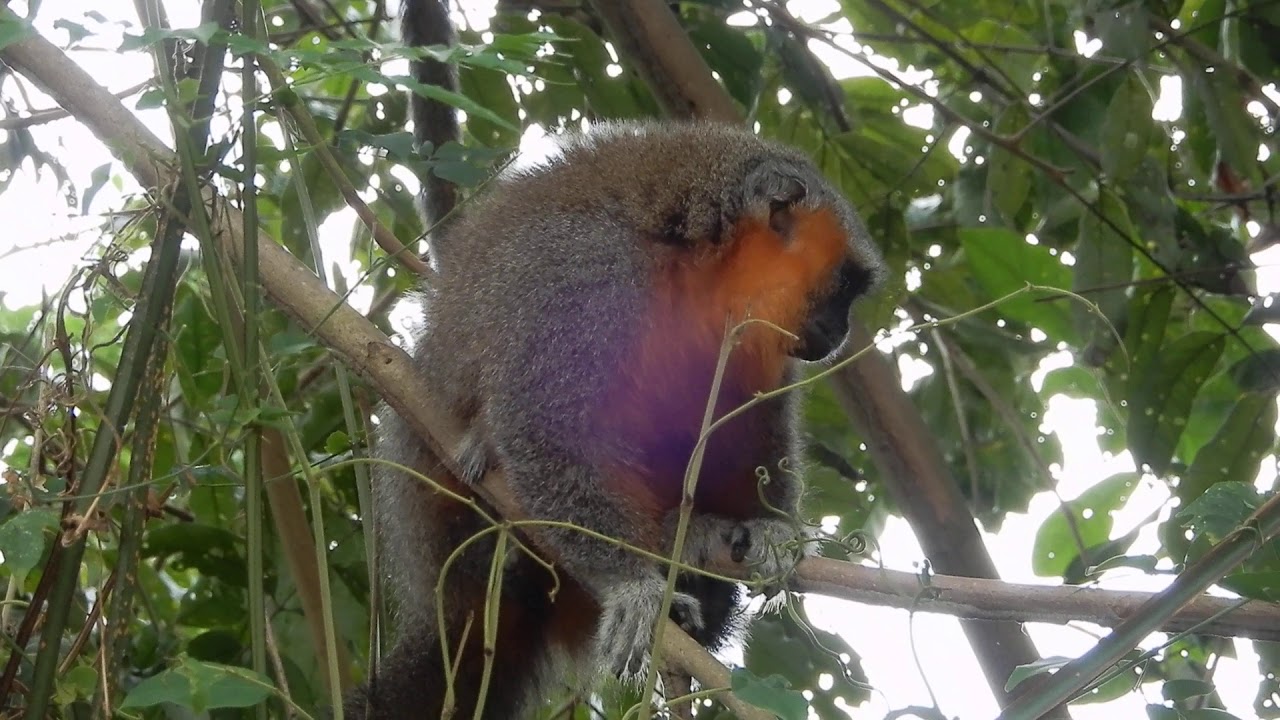
- The limbs exhibit a color gradient, appearing gray on the outside surfaces while transitioning to off-white on the inside, with similar grayish-white coloration extending to the chest, neck, and sideburn areas.
- A particularly notable characteristic is the bright red-brown coloration of the venter (abdomen), which creates a striking contrast with the more subdued tones of its upper body.
- The species possesses an entirely black tail that terminates in a distinctive white tip, a feature that aids in identification.
- Another key identifying trait is the light yellow fur covering the cheeks, which stands out against the bright auburn hair on the sides of the face.
- These distinctive color patterns help researchers distinguish the Alta Floresta titi from other members of the Plecturocebus moloch group that share its geographic range and general appearance.
Like other titi monkeys, the Alta Floresta titi has a relatively small body size, with total head and body length ranging from 23 to 46 centimeters (9.1 to 18.1 inches).
While specific data for this species is limited, titi monkeys generally weigh around 1 kilogram (2.2 pounds), positioning the mamong the smaller New World primates.
Alta Floresta Titi Facts
- Recent Discovery: The Alta Floresta titi was formally described only in 2019, making it one of the most recently classified primate species. This Eastern Amazon clade monkey is closely related to P. moloch and P. vieirai.
- Unique Coloration: This species can be distinguished by its agouti dorsal parts, bright red-brown venter, entirely black tail with a white tip, and light yellow fur on the cheeks.
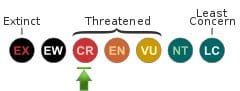
- Critically Endangered: The Alta Floresta titi is projected to lose up to 86% of its forest habitat under typical deforestation rates, classifying it as Critically Endangered on the IUCN Red List.
- Limited Range: It is found exclusively between the Teles-Pires and Juruena rivers in Mato Grosso, Brazil.
- Arc of Deforestation: The species’ habitat is part of the “Arc of Deforestation”, a region in the southern Amazon experiencing significant forest loss.
- Evolutionary Relationships: It belongs to the Eastern Amazonian clade of the red-bellied titi group and is considered a sister taxon to the clade containing the red-bellied titi and Vieira’s titi monkey.
- Urban Proximity: Surprisingly, this new species was discovered near urban areas and Alta Floresta, an easily accessible location previously visited by numerous researchers.
- Specific Habitat: The southernmost record of their presence is approximately at 10 degrees south latitude, with their range likely limited by the transition from Amazon forest to Cerrado ecosystem.
- Tail Behavior: Like other titi monkeys, the Alta Floresta titi exhibits tail intertwining behavior, a sign of closeness between individuals, usually seen in couples or between parents and offspring.
- Conservation Challenge: Currently, the Alta Floresta titi monkey is known to exist in only six municipalities in Mato Grosso: Paranaíta, Alta Floresta, Juara, Nova Bandeirante, Apiacás, and Sinop.
Cite this page
Bio Explorer. (2026, January 28). Alta Floresta Titi. https://www.bioexplorer.net/animals/mammals/monkeys/alta-floresta-titi/