4 Different Types of Reptiles

Types of Reptiles

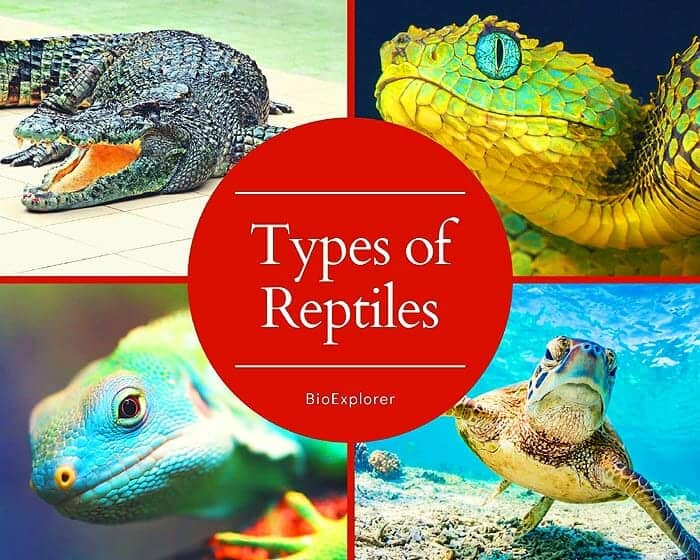
Reptiles (from the Late Latin, neuter of reptilis, meaning ‘creeping‘) are cold-blooded (ectothermic) vertebrates of the class Reptilia. They are often found in every kind of habitat, including grasslands, swamps, forests, deserts, oceans, and other arid environments. Over 11,500 vertebrate species currently recognized and classified as reptiles constitute the dominant terrestrial vertebrate group.

Jump to:

World’s Oldest Reptile

The oldest known reptile that lived about 315 million ago was Hylonomus lyelli during the Late Carboniferous period. It was also the first animal known to have fully acclimated to live on dry land. According to several fossil strata found in Nova Scotia, this small lizard-like creature was about 8 to 12 inches long and had numerous sharp teeth indicating an insectivorous diet.
Marine Iguana

Marine Iguana

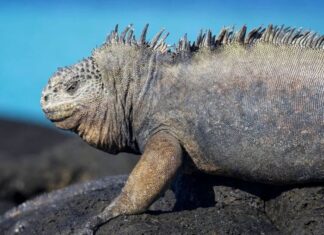
A comprehensive guide to the Galápagos marine iguana (Amblyrhynchus cristatus) – the world’s only seagoing lizard. Learn all about their taxonomy, adaptations for life in coastal habitats, feeding behaviors, social dynamics, threats to survival, and conservation status of this iconic species endemic to the Galápagos Islands of Ecuador.
Read more

World’s Newest Reptile

In 2021, the German-Madagascan expedition team discovered a new chameleon species (Brookesia nana) in the northern Madagascar rainforest. This nano-chameleon is about a size of a sunflower seed. You can fit this smallest reptile on the top of a finger. This male nano-chameleon is about 22 mm (from nose to tail), whereas the female nano-chameleon is slightly larger at 29 mm. It is believed that this smallest reptile is closely related to larger Brookesia micra.

Characteristics of Reptiles

1. Reptiles are cold-blooded.
1. Reptiles are cold-blooded.

All reptiles are cold-blooded animals, which means they are incapable of regulating their own body temperature. Unlike mammals, reptiles use their surroundings to keep warm, which is why they are often found in hot or warm habitats. For example, reptiles tend to bask under the sun on and off to keep their body temperature regulated.
2. Reptiles are vertebrates.

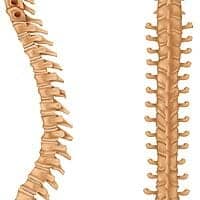
2. Reptiles are vertebrates.

Reptiles show characteristics of other vertebrates such as mammals, birds, and some amphibians. All reptiles have spinal cords that support their body structure from the base of the head to the tail. This bony endoskeleton protects the inner tissues and helps in body movement. In the reptilia class, crocodiles have the most extensive body structures.
3. Reptiles have horny/rough scales.
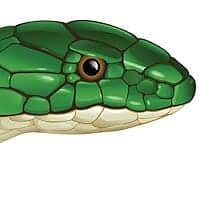
3. Reptiles have horny/rough scales.

The reptile body is covered with scutes or horny layers of scales and bony plates. These scales are made of alpha- and beta-keratin and originate from the epidermis layer, unlike the dermis layer in mammals. As a result, reptile skin is thinner than you might expect. Explore different types of skin cells here.
4. Reptiles lay eggs.

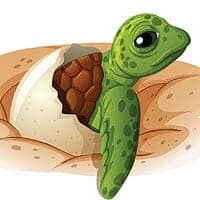
4. Reptiles lay eggs.

Some snake and lizard species give birth to live young (viviparous), such as the Eurasian lizard, but most reptiles are oviparous, meaning they produce eggs, like crocodiles, turtles, and many snakes. A study of European pond turtles determined that incubation temperature influences sex: temperatures above 30°C produced all females, whereas temperatures below 25°C produced all males, showing soil temperature plays a major role in sex determination in reptiles.
5. Reptiles have 1 or 2 developed lungs.

5. Reptiles have 1 or 2 developed lungs.

Because reptiles have dry, scaly skin, they rely entirely on their lungs for breathing. Air enters through the nasal passage or mouth and passes into the lungs. All terrestrial reptiles have two well-developed lungs, whereas some large snakes have only one functional lung and the other is atrophied. Explore the cellular respiration equation here.
6. Reptiles have chemoreceptors.

6. Reptiles have chemoreceptors.

To locate prey, some reptiles use a lining on their nose and the roof of the mouth to absorb chemicals in the air. This phenomenon is called chemoreception, and it is especially common in squamate snakes and lizards.
7. Reptile have two different digestion methods.
7. Reptile have two different digestion methods.

From a dietary perspective, there are two types of reptiles: carnivorous reptiles, such as snakes and many lizards in the order Squamata, and herbivorous reptiles, such as tortoises. Carnivorous reptiles have shorter guts for breaking down meat efficiently but digest food more slowly than mammals. Herbivorous reptiles cannot grind food to speed up digestion, so they swallow rocks and pebbles to help crush it. Explore what do reptiles eat by different species here.
8. All reptiles undergo skin-shedding.

8. All reptiles undergo skin-shedding.

All reptiles shed their skin as they grow and throughout their life. Improper or incomplete shedding can occur due to mites, incorrect humidity or handling, malnutrition, dermatitis, or trauma. As shedding begins, the skin looks dull as the old and new layers separate. Shedding also helps remove parasites or other material attached to the skin. Turtles and lizards shed in several pieces, whereas snakes often shed in one piece, and the shedding cycle varies by species.

Types of Reptiles

A) Crocodilia

A) Crocodilia

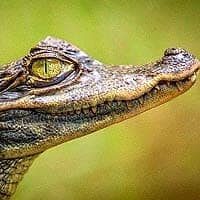
As the name indicates, this reptile order contains reptiles such as crocodiles, alligators, caimans, and gavials. These mostly giant, predatory, semiaquatic reptiles are also known as crocodilians. They first appeared about 95 million years ago in the Late Cretaceous period and are the closest relatives to birds. There are three different families and 23 different species listed under Crocodilia.
B) Rhynchocephalia

B) Rhynchocephalia

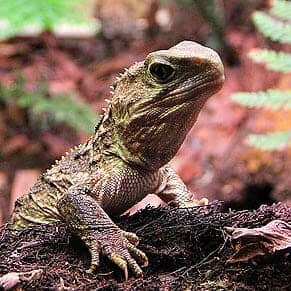
This reptile order contains just one family and only one living species named Tuataras, and they are endemic to New Zealand. The oldest fossil recording of this reptile goes back to the Middle Triassic, around 240 million years ago. Most reptiles in this order are extinct now. Albert Günther of England, in 1867, proposed this reptile order Rhynchocephalia (means “beak head“) for the Tuatara and their fossil counterparts after observing its features similar to birds, turtles, and crocodiles.
C) Squamata

C) Squamata

The word Squamata originates from the Latin meaning “having scales“. This reptile order contains worm lizards (aka amphisbaenians), lizards, and snakes. According to May 2021 statistics, about 71 families and over 11,500 reptile species were identified and classified under Squamata.
D) Testudines

D) Testudines

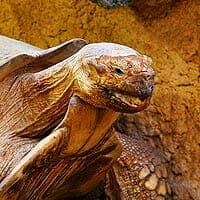
Chelonia is an alternate name for Testudines. The word ‘Testudines‘ is based on the Latin word for tortoise – testudo. This reptile order contains turtles, terrapins, and tortoises. All species under this order have a hard carapace (cartilaginous shell) covering their bodies. There are 14 families and 335 species of reptiles classified under this reptile order.

Types of Crocodiles

Types of Crocodiles

Crocodilia is one of the reptile orders dedicated to large, lizard-shaped, and predatory reptiles. Explore 23 types of crocodiles by water bodies, regions, and taxonomy classification year.
Read more

Cite this page

Bio Explorer. (2026, January 28). 4 Different Types of Reptiles. https://www.bioexplorer.net/animals/reptiles/

Key References
  • “Earliest Evidence For Reptiles / Scientific Frontline®”. Accessed September 06, 2021. Link.
  • “Extreme miniaturization of a new amniote vertebrate and insights into the evolution of genital size in chameleons | Scientific Reports”. Accessed September 06, 2021. Link.
  • “Environmental Sex Determination – Developmental Biology – NCBI Bookshelf”. Accessed September 06, 2021. Link.
  • “The evolution of chemoreception in squamate reptiles: a phylogenetic approach – PubMed”. Accessed September 06, 2021. Link.
  • “Shedding in Reptiles” by Padma Yadlapalli, Purdue University. Accessed September 06, 2021. Link.
  • “Macroevolutionary patterns in Rhynchocephalia: is the tuatara (Sphenodon punctatus) a living fossil? – Herrera‐Flores – 2017 – Palaeontology – Wiley Online Library”. Accessed September 06, 2021. Link.
  • “Integration of molecules and new fossils supports a Triassic origin for Lepidosauria (lizards, snakes, and tuatara)”. Accessed September 06, 2021. Link.
  • “Species Statistics Aug 2019”. Accessed September 06, 2021. Link.
  • “Charlton T. Lewis, Charles Short, A Latin Dictionary,testūdo”. Accessed September 06, 2021. Link.

Leave a Reply

Your email address will not be published. Required fields are marked *