
Olive Baboon
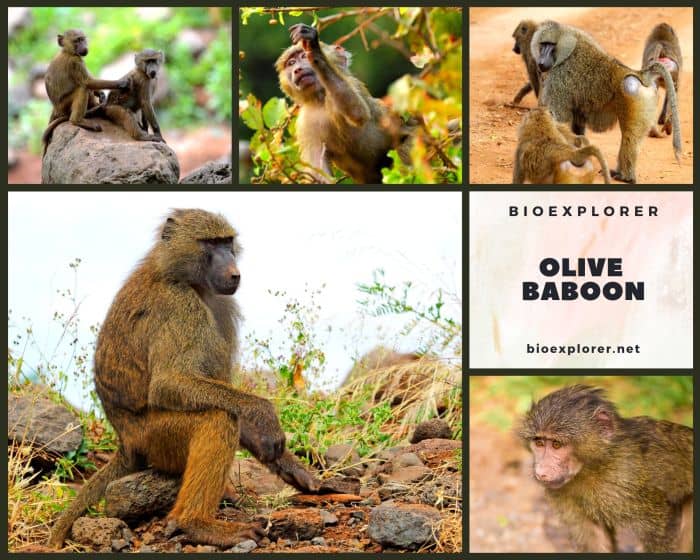
Primate Profile
Olive Baboon
Papio Papio anubis
Kingdom
Animalia
Phylum
Chordata
Class
Mammalia
Order
Primates
Family
Cercopithecidae
Genus
Papio
Species
anubis
Authority
(Lesson, 1827)
Photo
LC
IUCN STATUSLeast Concern
- Common NamesOlive Baboon, Anubis Baboon
- Taxonomy Classification Year1827
- Monkey Size48 to 76 cm (18.90 to 29.92 in)
- Skin Color(s)Olive Green
- HabitatDesert or dune, savanna or grassland, forest, rainforest, and scrub forest
- DietOmnivorous
- Native CountriesMali, Ethiopia, Tanzania
Olive Baboon Distribution
Countries
Mali ( )
)
)
Ethiopia ( )
)
)
Tanzania ( )
)
)Olive Baboon Characteristics
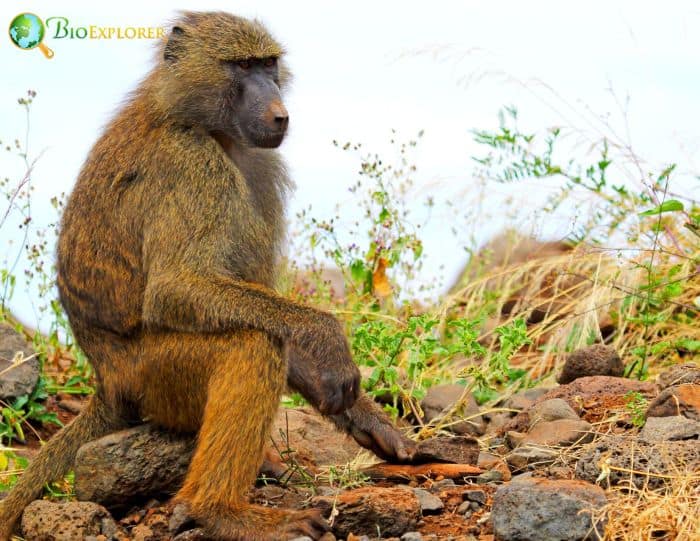
The Olive baboon[1] (Papio anubis), also called the Anubis baboon, is a species of the Cercopithecidae family of Old-World Monkeys.
- The species is the most widespread of all baboons, native to 25 countries in Africa and ranging east from Mali to Ethiopia & Tanzania.
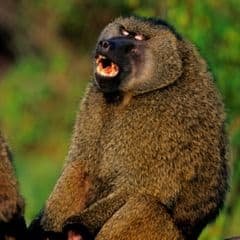
- Olive baboons also have some isolated populations in Sahara mountainous regions. The olive baboon gets its name from its fur, a greenish-gray hue from a distance.
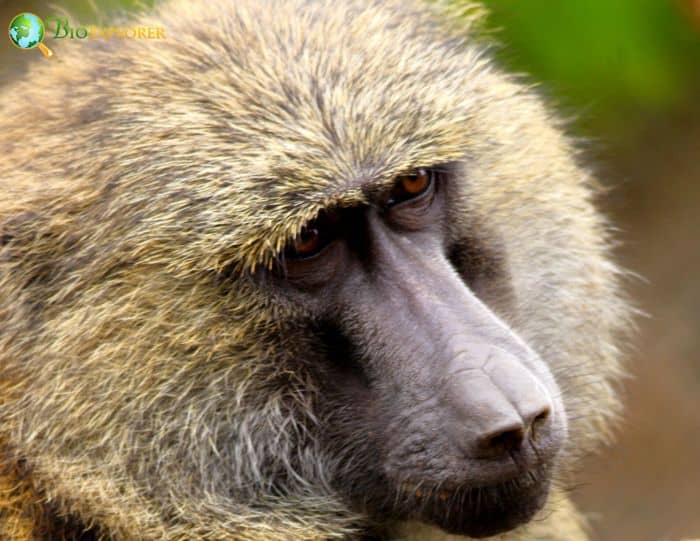
- Up close, its fur is multi-colored due to the tan and black rings in the hair. Olive baboon’s facial hair is coarser, ranging from dark gray to black.
- Although males have longer hair, this skin coat coloration is common to both sexes.
- Like other baboon species, Olive baboons exhibit sexual dimorphism in terms of weight, build, and canine size; Males average 70 cm (28 in) when standing, and females are 60 cm (24 in).
What Eats Olive Baboons?
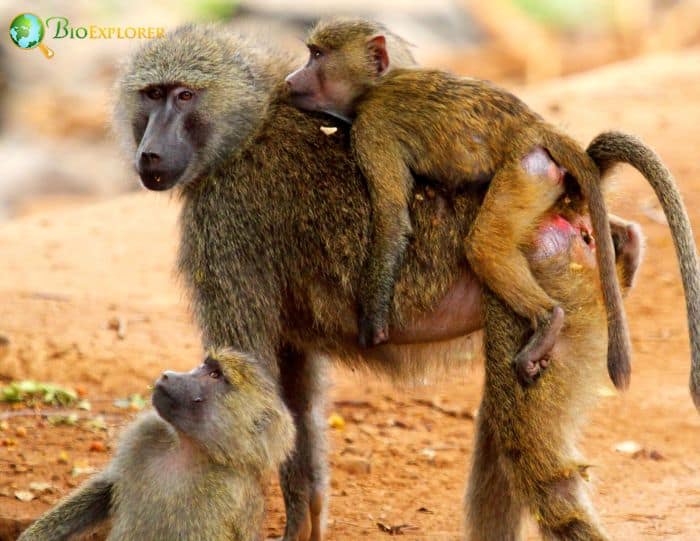
The primary predators of Olive baboons are Leopards (Panthera pardus), Chimpanzees (Pan troglodytes), Lions (Panthera leo), African Hunting Dogs (Lycaon pictus) and Spotted Hyenas (Crocuta crocuta)[§].
Olive Baboon Facts
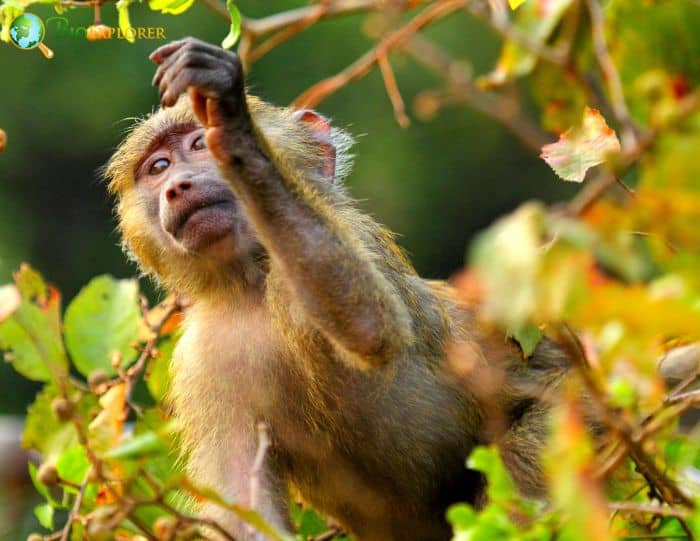
- Its alternate name – Anubis baboon – comes from the Egyptian god Anubis, who was often depicted with a dog’s head that resembled the baboon’s dog-like snout.
- The Olive baboon is one of the largest monkey species; only the Chacma baboon and the Mandrill reach similar sizes.
- Female dominance is hereditary, daughters rank almost on a par with their mothers, and adult females form the core of the social system.
- Groups can often break apart when they grow so large that competition for resources becomes problematic, but even then, members of the matrilines tend to stick together.
- Although the species are hierarchical, they appear to be “democratic” when setting the direction of the collective movement. However, troop members are more likely to follow when multiple decision-makers agree on the direction to follow rather than simply following dominant individuals.
Suggested Reading: Different Kinds of Monkeys and apes
Cite this page
BioExplorer. (2026, August 26). Olive Baboon. https://www.bioexplorer.net/animals/mammals/monkeys/olive-baboon/