
Tapanuli Orangutan
| Kingdom | Order | Family | Genus | Species |
|---|---|---|---|---|
| Animalia | Primates | Hominidae | Pongo | Pongo tapanuliensis |
- Common Name: Tapanuli Orangutan
- Taxonomy Classification Year: 2017
- Monkey Size: 110 to 137 cm (43 to 54 in)
- Skin Color(s): Orange
- Habitat: Forest, rainforeest
- Diet: Omnivorous
- Native Countries: Indonesia

Tapanuli Orangutan Distribution
Countries
Indonesia ( )
)
)Tapanuli Orangutan Characteristics
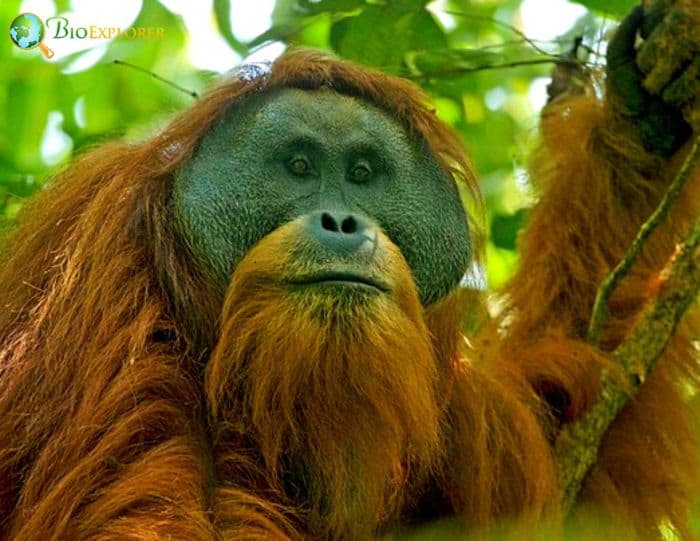
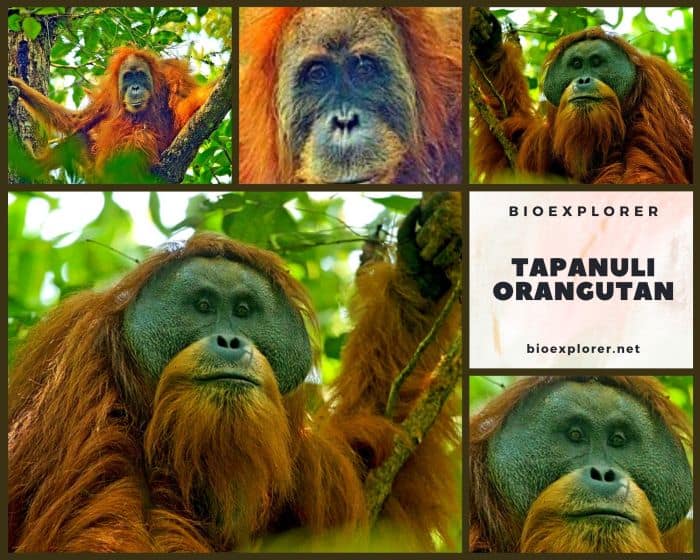
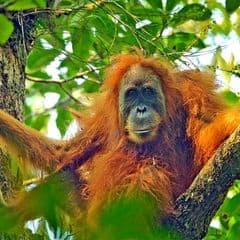
The Tapanuli orangutan[3] (Pongo tapanuliensis) is an orangutan species restricted to the southern Tapanuli on the island of Sumatra in Indonesia.
- It is one of three (3) known orangutan species, along with the Sumatran orangutan (Pongo abelii), which is found further north-west of the island, and the Bornean orangutan (Pongo pygmaeus).
- It was described as a distinct species in 2017. The three species of orangutans can be difficult to tell apart.
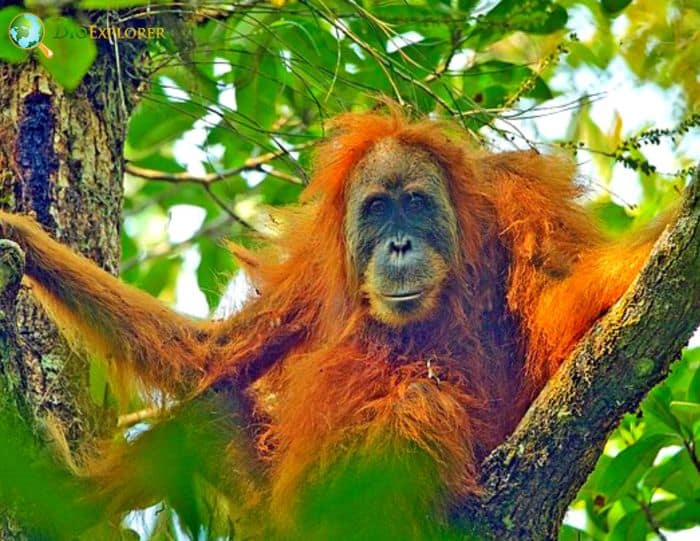
- These new orangutan species have striking orange fur covering their torsos and limbs. But, aside from their unique proportions, their faces and bodies are eerily similar to ours.
- Unusually long arms and stocky legs make them appear heavy and unbalanced. In their tree environment, however, they are impeccable acrobats.
- To a trained eye, Tapanuli orangutans have specific characteristics that set them apart from other species.
- For example, their smaller and differently shaped skulls were what initially prompted researchers to take a closer look at their genes and led to their distinction as a unique species.
- Tapanuli orangutans can be identified with the naked eye by their thicker, curlier fur. In addition, flanged male species have other distinguishing features.
- They grow a mustache and beard that Borneo and Sumatran orangutans do not have, and their cheeks are flatter and covered with a thin layer of blond hair.
Tapanuli Orangutan Facts
- The male Tapnuli orangutan’s long-distance call has a maximum frequency and is sustained longer than Sumatran Orangutans. The voice has more pulses than Eastern orangutans.
- Conifer cones and caterpillars are the most desired food items for Tapanuli orangutans.
- In the 3000-hour observation by scientists, it was determined that Tapanuli orangutans are believed to live exclusively in trees, and researchers have not seen them descend to the ground during the study. This might probably be because of Sumatran tigers in the region.
- Its other main enemies are crocodiles, Sumatran dholes, and clouded leopards.
- Tapanuli orangutans have slow reproductive rates, which is a population increase problem.
Suggested Reading: All Ape Species
Cite this page
BioExplorer. (2026, August 26). Tapanuli Orangutan. https://www.bioexplorer.net/animals/mammals/apes/tapanuli-orangutan/