
White-headed Langur
| Kingdom | Order | Family | Genus | Species |
|---|---|---|---|---|
| Animalia | Primates | Cercopithecidae | Trachypithecus | Trachypithecus leucocephalus |
- Common Name: White-headed Langur
- Taxonomy Classification Year: 1955
- Monkey Size: 52.7 to 68.9 cm (20.75 to 27.13 in)
- Skin Color(s): Black and white
- Habitat: Forest, rainforest
- Diet: Herbivorous
- Native Countries: China

White-headed Langur Distribution
Countries
China ( )
)
)White-Headed Langur Characteristics
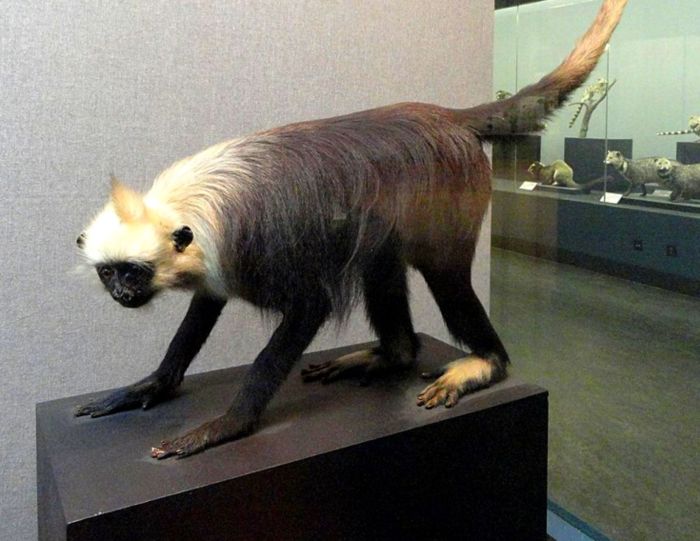
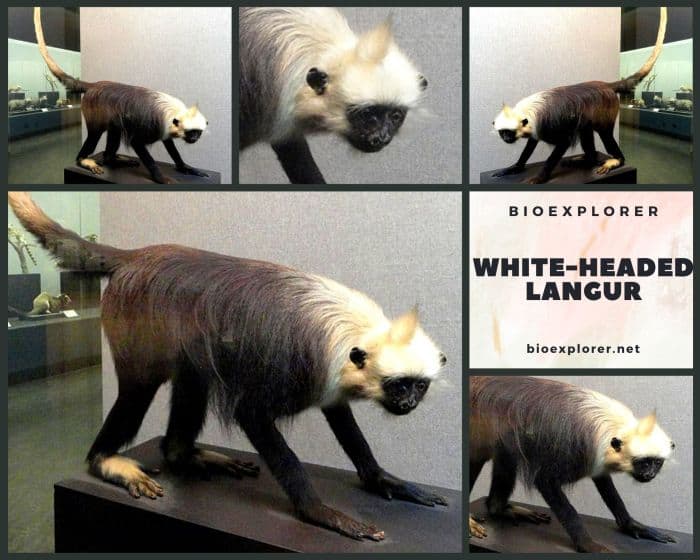
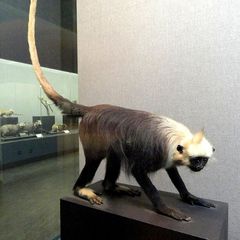
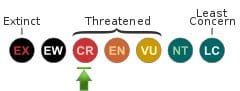
The white-headed langur[1] (Trachypithecus leucocephalus) is an endangered species of langur native to Guangxi, China. It was once thought to be a subspecies of the Cat Ba Langur (Trachypithecus poliocephalus), now considered native to Vietnam.
- As the common name suggests, a tuft of white fur covers this primate’s head. The hair is lifted straight from the parting for a crazy hairstyle reminiscent of “Is that hair gel? ” scene from the romantic comedy.
- There’s Something About Mary starring Ben Stiller and Cameron Diaz. (Google it!) Other strands of white hair stuck out wildly from the sides of the head, framing a hairless, dark-hued face characterized by dark eyes, a modest nose, and thin lips.
- The dark ears are wrinkled on either side of the head. White goatee hairs blend into a white ruff, stopped by a thick layer of fur that covers the monkey’s entire body, including its long limbs, in a blackish hue. The fur is long and thick.
- Black fur covers half to three-quarters of the total length of its long tail before giving way to white hairs.
- The hands are black, and the feet are primarily black with gray accents. Mother Nature’s color palette allows these rare primates to blend into their limestone and karst habitat.
- At birth, white-headed langurs appear to be an entirely different species of monkeys. Mother Nature has covered these babies in a glossy, fluffy, golden-orange fur layer.
- Some wildlife biologists have speculated that this colorful coat helps mothers better track and care for their babies.
- By about a year of age, babies’ coats resemble those of adults, initially turning gray before turning black. The ultimate furry punctuation mark in adulthood is the crazy white hairdo.
White-Headed Langur Facts
- These leaf-eating primates are active during the day (making them diurnal) and most active at dawn and dusk (making them crepuscular).
- White-headed langurs live in groups (called “troops“) of 9-12 individuals. Group size varies with habitat quality.
- At the end of each day, the monkeys leave as a group. Although they choose a large tree as a roost for the night, they prefer crevices or caves.
- White-headed langurs have large salivary glands that break down plant cellulose, lubricate food passage, and moisten the digestive system.
- The characteristic of Old-World Monkeys is that the buttocks of white-headed langurs have thick, calloused pads called “ischial calluses” that provide the monkeys with comfort when seated.
Suggested Reading: Types of Monkeys In The World
Cite this page
BioExplorer. (2026, August 26). White-headed Langur. https://www.bioexplorer.net/animals/mammals/monkeys/white-headed-langur/