
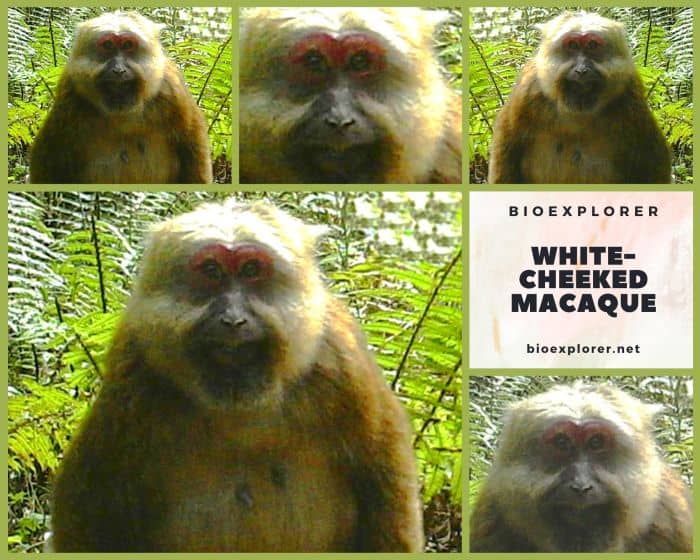
White-Cheeked Macaque
| Kingdom | Order | Family | Genus | Species |
|---|---|---|---|---|
| Animalia | Primates | Cercopithecidae | Macaca | Macaca leucogenys |
- Common Name: White-cheeked Macaque
- Taxonomy Classification Year: 2015
- Monkey Size: 38 to 71 cm (14.96 to 27.95 in)
- Skin Color(s): Light to dark brown and dark chocolate
- Habitat: Forest, rainforest, mountains, grasslands
- Diet: Herbivorous
- Native Countries: India, China

White-cheeked Macaque Distribution
Countries
India
China
White-Cheeked Macaque Characteristics
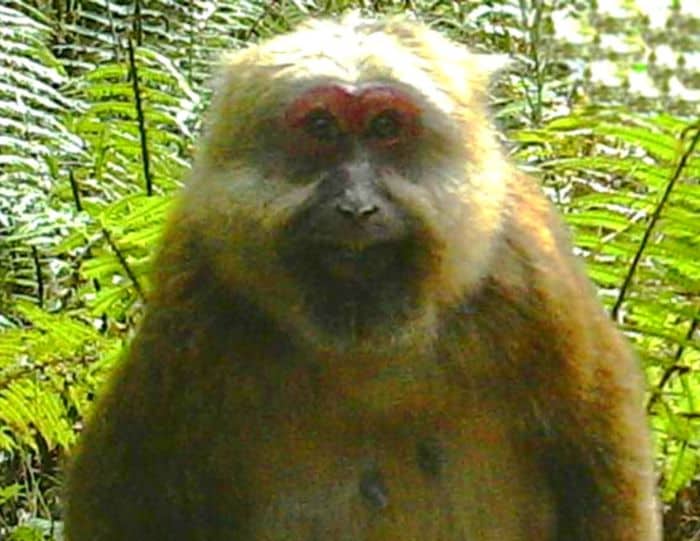
The white-cheeked macaque[1] (Macaca leucogenys) is found only in Medog County in southeastern Tibet and Arunachal Pradesh state of India.
- The white-cheeked macaque lives in forested habitats ranging from rainforests to primary and secondary evergreen forests and mixed deciduous and coniferous forests.
- White whiskers radiating from the cheeks and chin give this new monkey its common name. Their whiskers grow when the monkeys reach adulthood, and their facial skin darkens.
- When barnacle macaques are adults, their faces, and even their ears, are covered in dense, hairy jungle.
- Only the brown muzzle and the pink eyelids escape this hairy encroachment. Then, as a finishing touch, nature painted a thin strip of dark skin that started at the outer corner of the monkey’s eye or upper cheek and extended to each ear.
- As with other macaques, the coloring of their pelage (coat) varies. Shades of light to dark brown and dark chocolate cover their powerful bodies.
- In most individuals, the color of the fur on their beautifully ruffled belly (underside) is lighter than the uniform fur that covers their back (back).
- The short, hairless tail of the white-cheeked macaque demands no attention. Instead, a thick, shaggy ruff is worn around the neck like a scarf and is a distinctive feature of the species.
- The genital distinction between the white-cheeked macaque (white testicles) and its similar cousin (Assam Macaque) helped convince wildlife researchers that they were looking at a new species. Fortunately, caution prevailed in giving these primates their common name, white-cheeked macaques.
White-Cheeked Macaque Facts
- The species was first discovered and described by Chinese primatologistsPeng-Fei Fan, Cheng Li, and Chao Zhao in the American Journal of Primatology in 2015.
- Barnacle macaques live in multi-male and multi-female groups (known in the primate world as “squads“), consisting of a pair of breeding adults and their young.
- Adult white-cheeked macaques emit high-pitched alarm calls that cover a distance of 1 to 2 km. Monkeys make these urgent calls when they are afraid of human intruders.
- Mutual grooming sessions seem essential to white-cheeked macaques’ days. They are necessary for establishing family bonds between them.
- As herbivores, white-cheeked macaques disperse the seeds of the plants they eat through their droppings, helping to regenerate new growth in their forest habitat.
Suggested Reading: Types of Monkeys In The World
Cite this page
Bio Explorer. (2026, January 28). White-Cheeked Macaque. https://www.bioexplorer.net/animals/mammals/monkeys/white-cheeked-macaque/