
Purple-faced Langur
| Kingdom | Order | Family | Genus | Species |
|---|---|---|---|---|
| Animalia | Primates | Cercopithecidae | Semnopithecus | Semnopithecus vetulus |
- Common Name: Purple-faced Langur
- Taxonomy Classification Year: 1777
- Monkey Size: 44.7 to 67.1 cm (17.6 to 26.4 in)
- Skin Color(s): Black to gray
- Habitat: Forest, mountains
- Diet: Herbivorous
- Native Countries: Sri Lanka

Purple-faced Langur Distribution
Countries
Sri Lanka ( )
)
)Purple-faced Langur Characteristics
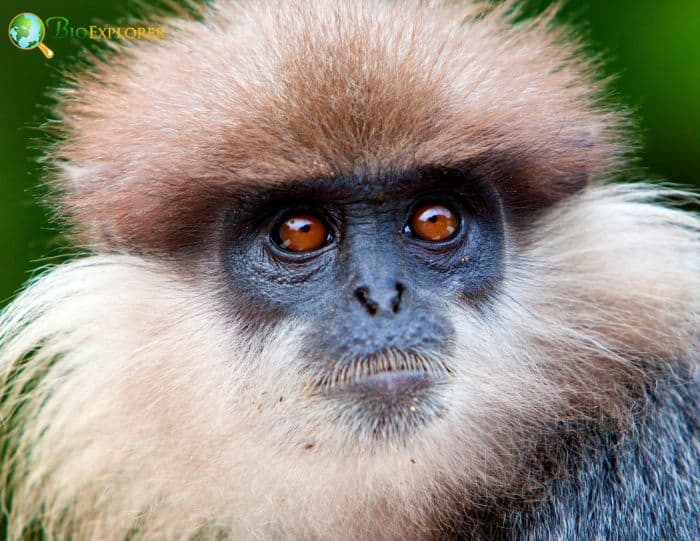
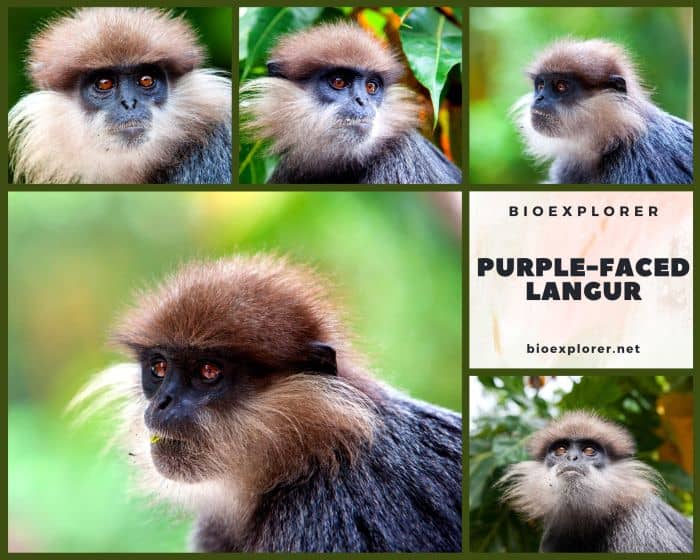
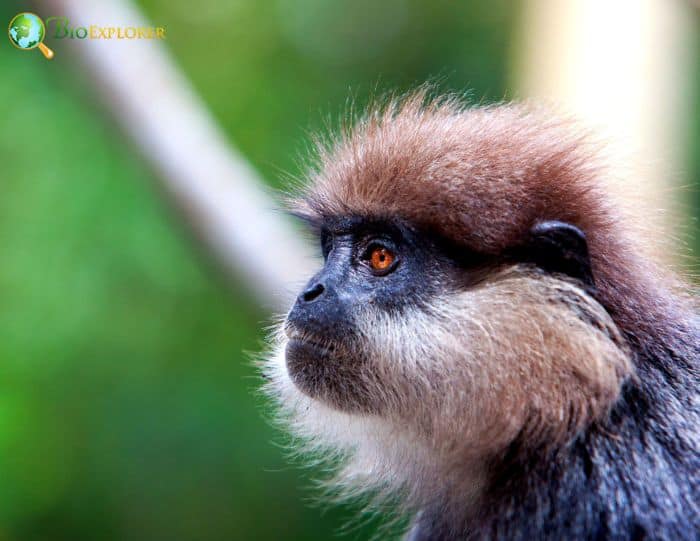
The purple-faced langur[1] (Semnopithecus vetulus), also called the purple-faced leaf monkey, is an Old World species native to Sri Lanka.
- The fur can generally vary from blackish to grayish. The species tends to have short “pants” whitish to gray, rounded off by purplish-black faces with white sideburns.
- Part of the back is raped in cream-colored fur, and the tail is also covered in a mix of black and white colors.
- Feet and hands are also purple-black. The size varies depending on the subspecies. Adults typically weigh between 3.1 and 11.4 kilograms (6.8 and 25.1 pounds), with an average of 7.08 kilograms (15.6 pounds).
- The smallest subspecies (S. v. nestor) usually weigh between 3.8 and 6 kilograms (8.4 and 13.2 pounds).
- Other subspecies have recorded average weights of up to 7.8 kilograms (17 pounds) in females and 8.5 kilograms (19 pounds) in males, with exceptionally large langurs weighing up to 18 kilograms (40 pounds).
- Purple-faced langurs have a pure white or off-white rump.
What Do Purple-faced Langurs Eat?
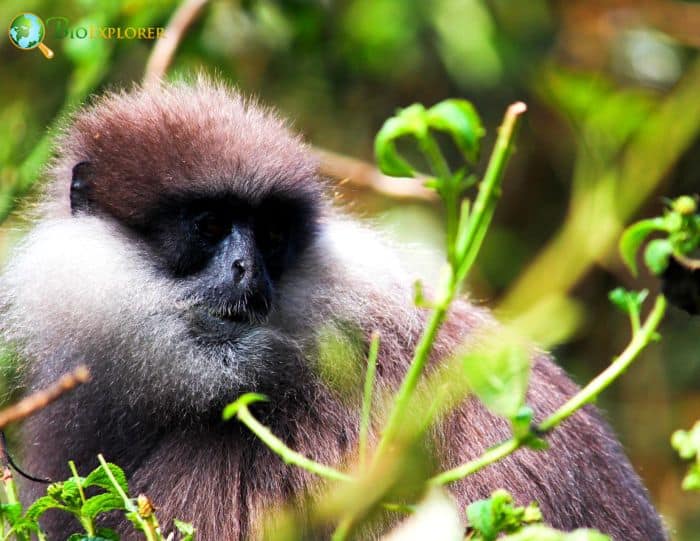
The Purple-faced Langur eats several plant matters but not limited tosup>[¶]:
- Jackfruit (Artocarpus heterophyllus)
- Duhat (Syzygium cumini)
- Indian Ash tree (Lannea coromandelica).
- Golden Shower (Cassia fistula).
- Tamarind (Tamarindus indica)
- Chastetree (Vitex)
- Roxburgh’s Cassia (Cassia roxburghii).
- Indian Banyan (Ficus benghalensis).
- Lac Tree (Schleichera oleosa).
- Mahua (Madhuca longifolia)
- Hazel Sterculia (Sterculia foetida).
- Clustertree (Ficus racemosa)
- Horn Of Plenty (Datura metel).
Purple-Faced Langur Facts
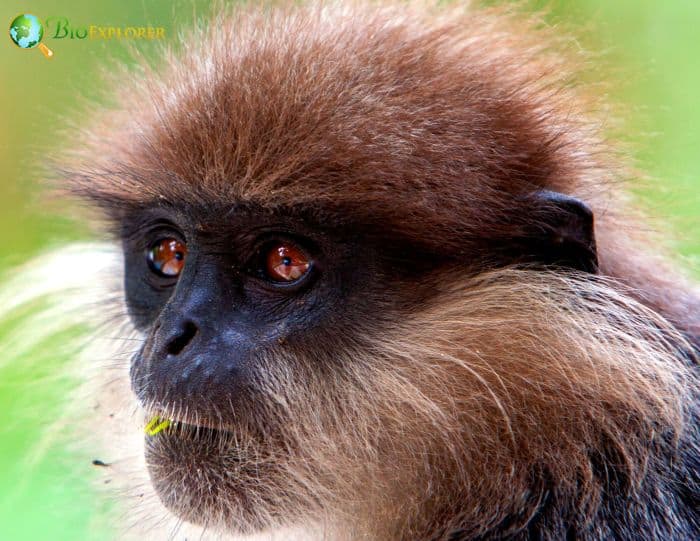
- The purple-faced langur is found in the closed forests of Sri Lanka’s mountains and in the southwestern part of the country known as the ‘wetland’.
- These langurs are primarily leaf-eating but will also feed on fruits, seeds, and flowers.
- The loud barking call, especially of the highland subspecies, can be confused with the roar of a predator such as a leopard.
- In mixed feeding groups, Purple-faced langurs were found to be dominated by gray-tufted langurs.
- Defense calls are also accompanied by intense visual and locomotor displays.
Suggested Reading: Best Purple Flowers
Suggested Reading: All Kinds of Monkeys
Cite this page
BioExplorer. (2026, September 24). Purple-faced Langur. https://www.bioexplorer.net/animals/mammals/monkeys/purple-faced-langur/