
Moustached Guenon
| Kingdom | Order | Family | Genus | Species |
|---|---|---|---|---|
| Animalia | Primates | Cercopithecidae | Cercopithecus | Cercopithecus cephus |
- Common Name: Moustached Guenon
- Taxonomy Classification Year: 1758
- Monkey Size: 52 to 52 cm (20.47 to 20.47 in)
- Skin Color(s): Blackish-brown
- Habitat: Rainforest
- Diet: Herbivorous
- Native Countries: Angola, Cameroon, Central African Republic, Democratic Republic of Congo, Equatorial Guinea, Gabon

Moustached Guenon Distribution
Countries
Angola ( )
)
)
Cameroon ( )
)
)
Central African Republic ( )
)
)
Democratic Republic of Congo ( )
)
)
Equatorial Guinea ( )
)
)
Gabon ( )
)
)Moustached Guenon Characteristics
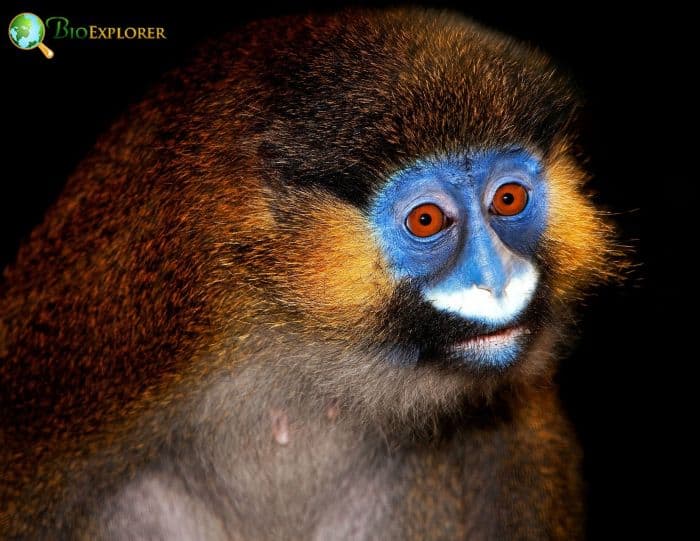
The mustached monkey[1] or moustached guenon (Cercopithecus cephus) is a primate species in the Cercopithecidae family.
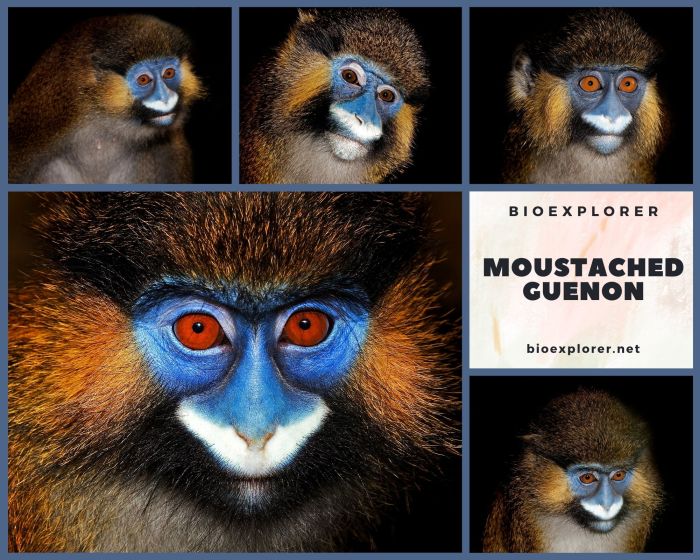
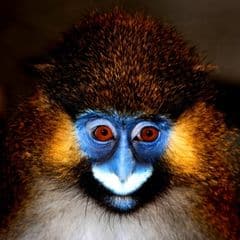
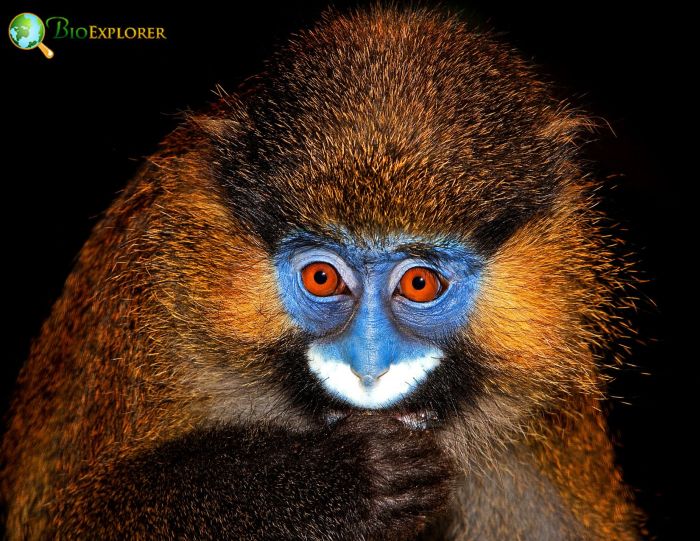
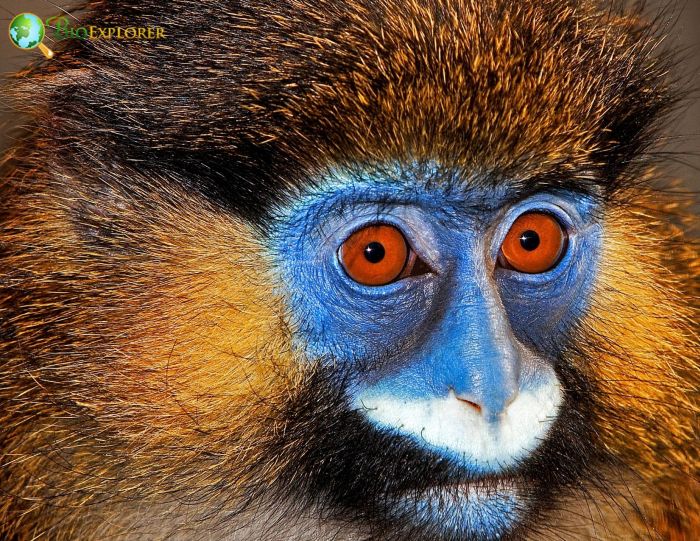
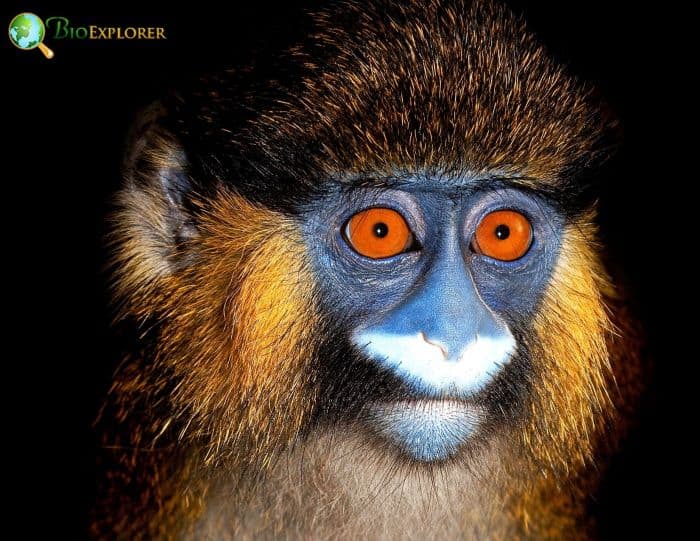
- It has a colorful blue-to-purple face with a bluish-white crescent-shaped stripe below the bare nose.
- Underneath this “mustache” are black hairs at the edge of the upper lip and bushy bright yellow sideburns on either side of the face.
- The ears are black, and the rest of the head is covered with black-brown hair.
- This black-brown hair extends dorsally and laterally, and the ventral region has ash-gray hair.
- The tail, longer than the rest of the body, is non-prehensile and draped in copper-red fur.
What Do Moustached Guenons Eat?
The Moustached Guenon feeds on these plant sources[¶]:
- African Nutmeg (Pycnanthus angolensis).
- Butter Tree (Pentadesma butyracea).
- Boleko Nut (Ongokea gore).
- African Oil Palm (Elaeis guineensis).
- African Teak (Milicia excelsa).
- African Mammee-Apple (Mammea africana).
- Umbrella Tree (Musanga cecropioides).
- Boarwood (Symphonia globulifera)
- Treebind (Cissus)
- Trichilia (Trichilia)
- Moambé Jaune (Annickia chlorantha).
- Tallow Tree (Allanblackia floribunda).
- Emien (Alstonia boonei)
- Olon Tendre (Zanthoxylum heitzii).
- Fig (Ficus)
- Rattan Palm (Eremospatha macrocarpa).
- Velvet Tamarind (Dialium guineense).
- Umbrella-Tree (Maesopsis)
- Tropical Almond (Terminalia)
- Aframomum (Aframomum)
- Djave (Baillonella toxisperma)
- Inoi Nut (Poga oleosa).
- Red-Fruited Stinkwood (Celtis mildbraedii).
- Raffia Palm (Raphia)
- Tail Grape (Artabotrys)
- Leaf Flower (Phyllanthus)
- Animal (Animalia)
- Callingcard Vine (Entada)
What Eats Moustached Guenons?
In the wild, the primary predators of Moustached guenons are Leopards (Panthera pardus)[§]
Moustached Guenon Facts
- Moustached monkeys take regular paths through the branches, with each monkey following the next along the same path.
- Their sure-footedness through arboreal habitats in rapid flight makes them remarkable tree-to-tree jumpers.
- If the females in a group are unhappy with a male or female intrusion, they will defend the group and chase the lone intruder away.
- The moustached monkey uses a soft trill that oscillates in a descending pitch.
- They use gazing as a threat display. In this case, a monkey fixes its gaze on another individual with eyebrows raised, scalp pulled back, and facial skin pulled back.
Suggested Reading: All Types of Monkeys
Cite this page
BioExplorer. (2026, August 26). Moustached Guenon. https://www.bioexplorer.net/animals/mammals/monkeys/moustached-guenon/