Guianan Squirrel Monkey

Guianan Squirrel Monkey
KingdomOrderFamilyGenusSpecies
AnimaliaPrimatesCebidaeSaimiriSaimiri sciureus

Common Squirrel Monkey
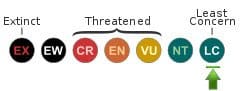
IUCN Status: Least-Concern
  • Common Name: Common Squirrel Monkey
  • Taxonomy Classification Year: 1758
  • Monkey Size: 25 to 37 cm (9.8 to 14.6 in)
  • Skin Color(s): Gray
  • Habitat: Forest, rainforest
  • Diet: Omnivorous
  • Native Countries: Guianas, Venezuela, Brazil

Common Squirrel Monkey Distribution

Author: Al MacDonald Editor: Fritz Lekschas License: CC BY-SA 3.0 ID: ISO 3166-1 or "_[a-zA-Z]" if an ISO code is not available United Arab Emirates Afghanistan Albania Armenia Angola Argentina Austria Australia Azerbaijan Bosnia and Herzegovina Bangladesh Belgium Burkina Faso Bulgaria Burundi Benin Brunei Darussalam Bolivia (Plurinational State of) Brazil Bahamas Bhutan Botswana Belarus Belize Canada Democratic Republic of Congo Central African Republic Congo Switzerland Côte d'Ivoire Chile Cameroon China Colombia Costa Rica Cuba Cabo Verde Cyprus Czechia Germany Denmark Djibouti Dominica Dominican Republic Algeria Ecuador Estonia Egypt Eritrea Spain Ethiopia Finland Falkland Islands (Malvinas) France Gabon United Kingdom of Great Britain and Northern Ireland Georgia Ghana Greenland Gambia Guinea Equatorial Guinea Greece Guatemala Guinea-Bissau Guyana Honduras Croatia Haiti Hungary Indonesia Ireland Israel India Iraq Iran (Islamic Republic of) Iceland Italy Jamaica Jordan Japan Kenya Kyrgyzstan Cambodia Comoros Korea (Democratic People's Republic of) Korea, Republic of Kuwait Kazakhstan Lao People's Democratic Republic Lebanon Saint Lucia Sri Lanka Liberia Lesotho Lithuania Luxembourg Latvia Libya Morocco Moldova, Republic of Montenegro Madagascar North Macedonia Mali Myanmar Mongolia Mauritania Malta Mauritius Maldives Malawi Mexico Malaysia Mozambique Namibia New Caledonia Niger Nigeria Nicaragua Netherlands Norway Nepal New Zealand Oman Panama Peru Papua New Guinea Philippines Pakistan Poland Puerto Rico Portugal Paraguay Qatar Romania Serbia Russian Federation Rwanda Saudi Arabia Solomon Islands Seychelles Sudan Sweden Singapore Slovenia Slovakia Sierra Leone Senegal Somalia Suriname South Sudan Sao Tome and Principe El Salvador Syrian Arab Republic Eswatini Chad Togo Thailand Tajikistan Turkmenistan Tunisia Turkey Trinidad and Tobago Taiwan, Province of China Tanzania, United Republic of Ukraine Uganda United States of America Uruguay Uzbekistan Saint Vincent and the Grenadines Venezuela (Bolivarian Republic of) Viet Nam Vanuatu Yemen South Africa Zambia Zimbabwe
Countries
Venezuela
Brazil

Guianan Squirrel Monkey Characteristics
Guianan Squirrel Monkey

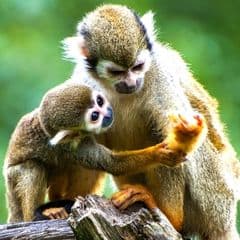
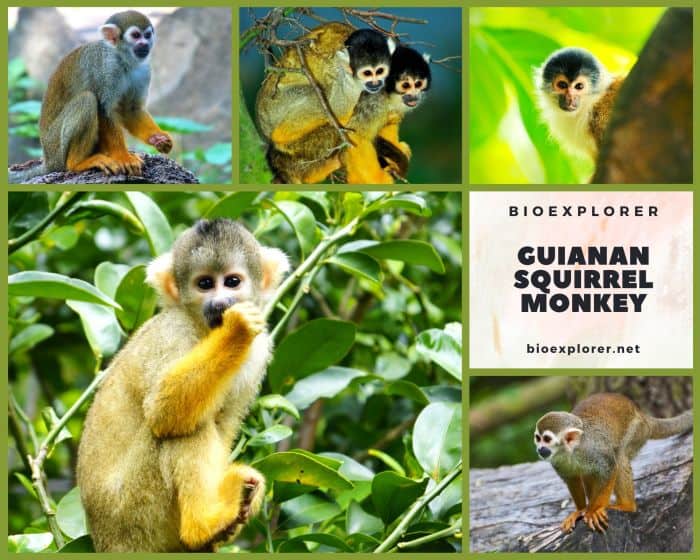
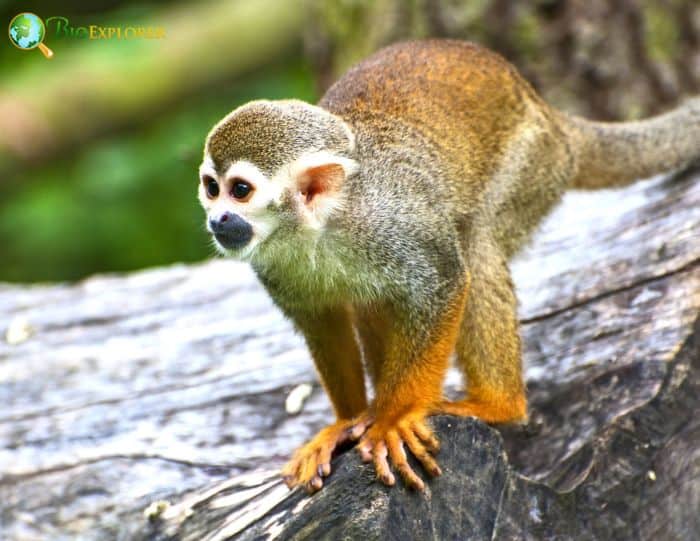
The Guianan squirrel monkey[1], also called the South American squirrel monkey, is a squirrel monkey found in Guiana, Brazil, and Venezuela.

  • The Guianan squirrel monkeys are about 12.5 inches long (body length), with a tail of around 16 inches.
  • They have a slender, agile build, short grayish fur, and bright yellow legs. Their tail often curls over a shoulder when resting.
  • These South American monkeys have 36 teeth, and interestingly their teeth are sexually dimorphic as males have large upper canines.
  • Guianan squirrel monkeys have fingernails instead of claws and have been called “nervous little primates “. They are the smallest primates of the Cebidae family.

What Do Common Squirrel Monkeys Eat?
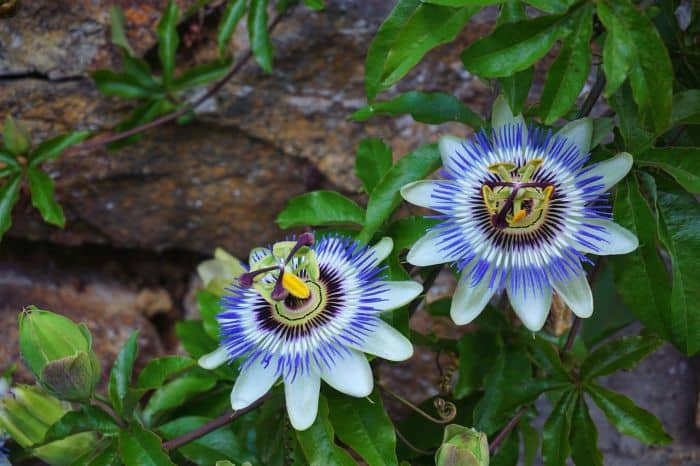
What Do Guianan Squirrel Monkeys Eat?

The Common Squirrel Monkey nourishes on these food sources[¶]:

  • Matchwood (Schefflera morototoni)
  • Scarlet Passionflower (Passiflora coccinea).
  • Bara (Guatteria longicuspis)
  • Seasonvine (Cissus verticillata)
  • Black Manwood (Minquartia guianensis).
  • Poroto Shimbillo (Inga brachyrhachis).
  • Pachiuba (Socratea exorrhiza)
  • Amarillo (Guatteria punctata)
  • American Muskwood (Guarea guidonia).
  • Rabo De Ranton (Casearia aculeata).
  • Caucho Rubber (Castilla ulei).
  • Cuero De Rana (Laetia procera).
  • Chalahuite (Inga acrocephala)
  • Maraximbé (Trichilia tuberculata)
  • Fig (Ficus)
  • Abiu (Pouteria caimito)
  • Hogplum (Spondias mombin)
  • Icecreambean (Inga edulis)
  • Trichilia (Trichilia)
  • Breadnut (Brosimum alicastrum)
  • Guiana Brosimum (Brosimum guianense).
  • Guamo (Inga acreana)
  • Figueira-Acreana (Ficus sphenophylla)
  • Pacae Colorado (Inga alba).
  • Sweetwood (Nectandra membranacea)
  • Hinchahuevos (Sapium laurifolium)
  • Maripa Palm (Attalea maripa).

What Eats Common Squirrel Monkeys?
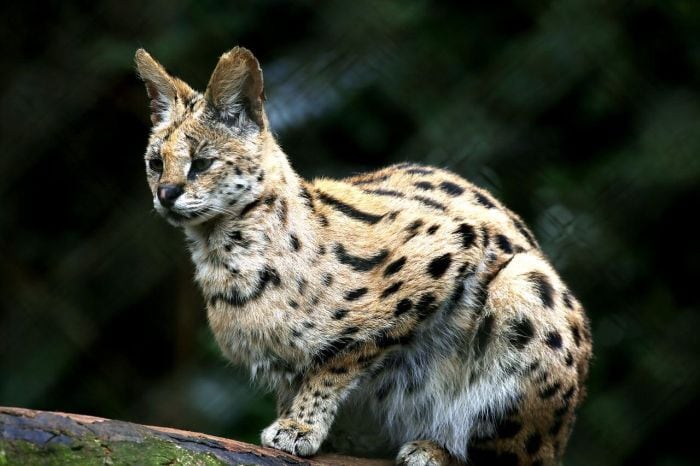
What Eats Guianan Squirrel Monkeys?

Ocelots (Leopardus pardalis) are the main predators of Common Squirrel Monkeys in the wild[§].

Guianan Squirrel Monkey Facts
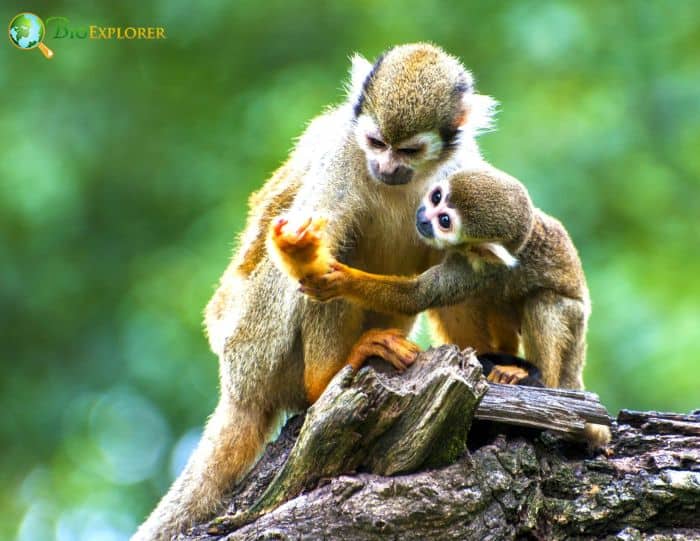
Guianan Squirrel Monkeys

  • Saimiri sciureus was once thought to belong to the Collins’ squirrel monkey and the Humboldt’s squirrel monkey. Still, genetic research in 2009 and 2015 showed they were different species.
  • Female squirrel monkeys nurse and groom their young until they are independent. The male species do not participate in the raising of infants.
  • They are incredibly agile and sometimes run through the forest on branches.
  • Guianan squirrel monkeys exhibit female dominance, with females forming the central core of the troop or group.
  • These monkeys are diurnal, and their activities are typically centered around a water source.

Suggested Reading: Monkey Names List

Cite this page

Bio Explorer. (2026, January 28). Guianan Squirrel Monkey. https://www.bioexplorer.net/animals/mammals/monkeys/guianan-squirrel-monkey/

Key References

  • [1]“Oakland Zoo | Squirrel Monkey”. Accessed August 27, 2022. Link.
  • [¶] – Fricke, E.C., Svenning, J. Accelerating homogenization of the global plant-frugivore meta-network. Nature 585, 74-78 (2020). https://doi.org/10.1038/s41586-020-2640-y.
  • [¶] – fgabriel1891/Palm-Frugivore_Interactions_Neo-AfrotropicsFranco-Quimbay, July; Rojas-Robles, Rosario. 2015. Frugivor�a y dispersi�n de semillas de la palma Oenocarpus bataua en dos regiones con diferente estado de conservaci�n. Actualidades Biol�gicas. 273-285
  • [¶] – fgabriel1891/Palm-Frugivore_Interactions_Neo-Afrotropicsde Freitas, Cintia Gomes; Capellotto Costa, Flavia Regina; Svenning, Jens-Christian; Balslev, Henrik. 2012. Topographic separation of two sympatric palms in the central Amazon – does dispersal play a role?. Acta Oecologica-International Journal of Ecology. 128-135
  • [¶] – fgabriel1891/Palm-Frugivore_Interactions_Neo-AfrotropicsCorrea, Sandra Bibiana; Costa-Pereira, Raul; Fleming, Theodore; Goulding, Michael; Anderson, Jill T.. 2015. Neotropical fish-fruit interactions: eco-evolutionary dynamics and conservation. Biological Reviews. 1263-1278
  • [¶] – fgabriel1891/Palm-Frugivore_Interactions_Neo-AfrotropicsZona, S. & Henderson, A. (1989) A review of animal mediated seed dispersal of palms. Selbyana, 11, 6-21. Online Update 2006 ((http://www.virtualherbarium.org/palms/psdispersal.html).
  • [§] – Middleton, O.S, Svensson, H, Scharlemann, J.P.W, Faurby, S, Sandom, C.J. CarniDIET 1.0: A database of terrestrial carnivorous mammal diets. Global Ecology and Biogeography. https://doi.org/10.1111/geb.13296. Craig, Christie A., Eleanor I. Brassine, and Daniel M. Parker. “A record of cheetah (Acinonyx jubatus) diet in the Northern Tuli Game Reserve, Botswana.”�African Journal of Ecology55.4 (2017): 697-700.

Leave a Reply

Your email address will not be published. Required fields are marked *