
Aenigmatorhynchus rarus: An Extinct Eocene Bird With a Mysterious Beak
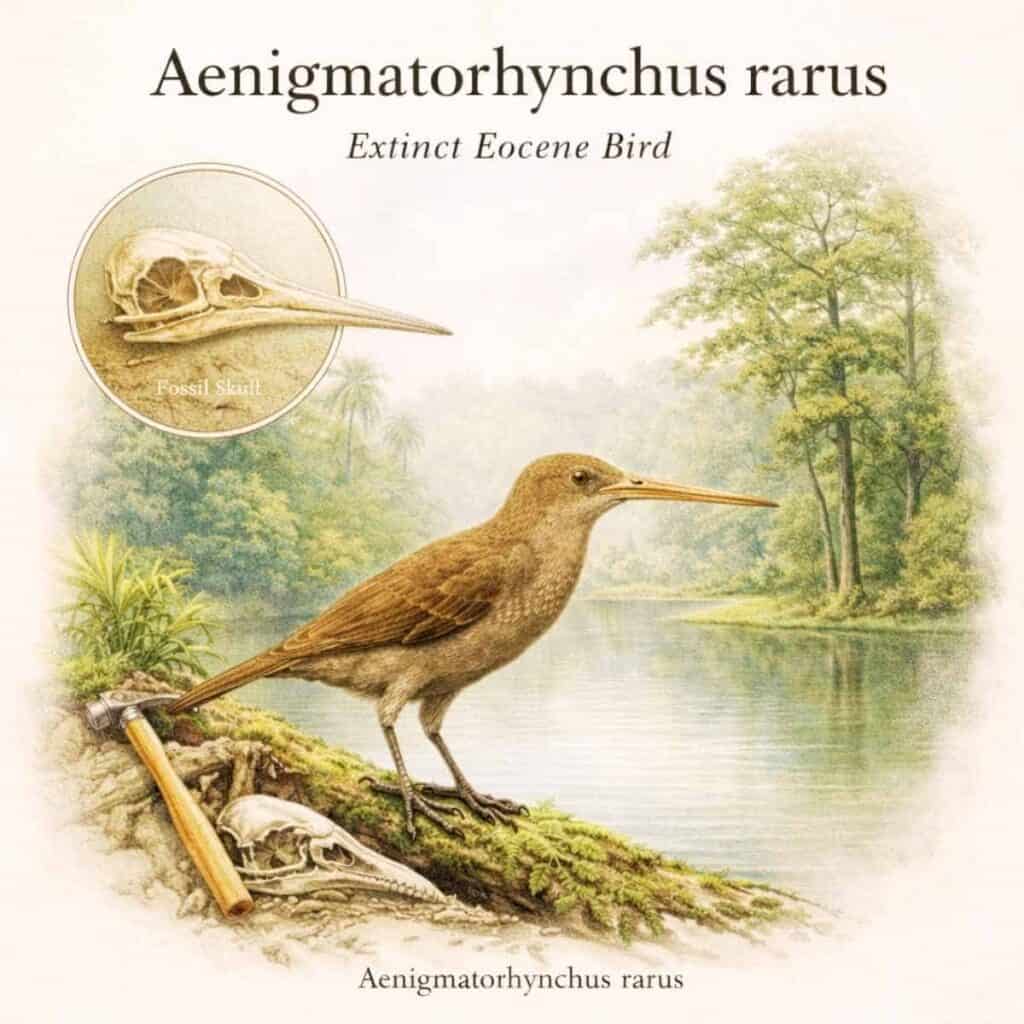
Aenigmatorhynchus rarus is an extinct bird that lived millions of years ago during the Eocene period. Scientists know about this bird from a fossil skull found in Germany. What makes this bird special is its long and unusual beak. The beak looks different from the beaks of any birds alive today.
This bird matters because it helps scientists understand how birds evolved in the past. During the Eocene, many bird species tried new body shapes and ways of feeding. Some of these birds survived and led to modern birds. Others, like Aenigmatorhynchus rarus, disappeared. Studying this fossil helps explain how diverse bird life once was and why some ancient birds have no living relatives today.
On this page:
- What Makes Aenigmatorhynchus rarus Unique?
- When and Where This Bird Lived?
- The Fossil Evidence We Have
- The Beak That Puzzled Scientists
- What the Beak Suggests — and What It Doesn't?
- How This Bird Fits Into Eocene Bird Evolution?
- Comparisons With Living Birds
- Why Scientists Created a New Genus?
- Why Aenigmatorhynchus rarus Matters Today?
- How This Species Connects to Other Extinct Birds?
Quick Facts About Aenigmatorhynchus rarus

Time period: Eocene period, about 48 million years ago
Location: Messel fossil site, Germany
Known material: A well-preserved fossil skull; no body, wing, or leg bones have been found
Scientific status: Extinct bird described as a new genus and species (gen. et sp. nov.)
What Makes Aenigmatorhynchus rarus Unique?
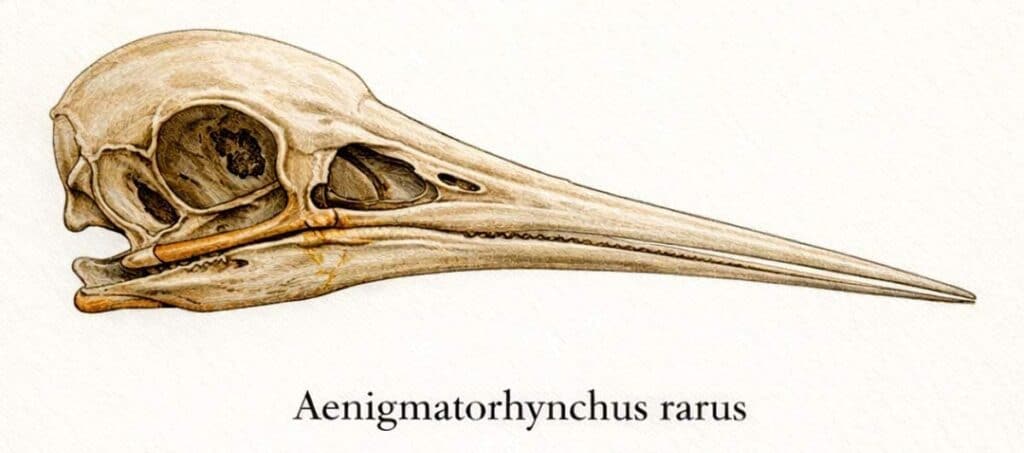
This bird stands out because of its beak. The beak is long, straight, and narrow. It only looks a little like the beaks of some living birds, and important details are different. Because of this, scientists could not place the fossil into any known major bird group.
Several features make this species unusual:
- The beak makes up most of the skull's length
- The lower jaw has shapes not seen in modern birds
- The skull does not clearly match shorebirds, wading birds, or other groups
Because these traits did not fit existing bird groups, scientists created a new genus for this fossil. A genus is a group used to classify closely related species. Creating a new genus means the bird is different enough that it does not belong in any known group.
The name Aenigmatorhynchus means "mysterious beak". This name reflects how hard it is to explain what the beak was used for. The species name rarus means "rare", placing this bird among the world's rare birds, because very few fossils of this species are known.
Together, these features show that this bird followed a unique evolutionary path that did not survive into modern times.
When and Where This Bird Lived?
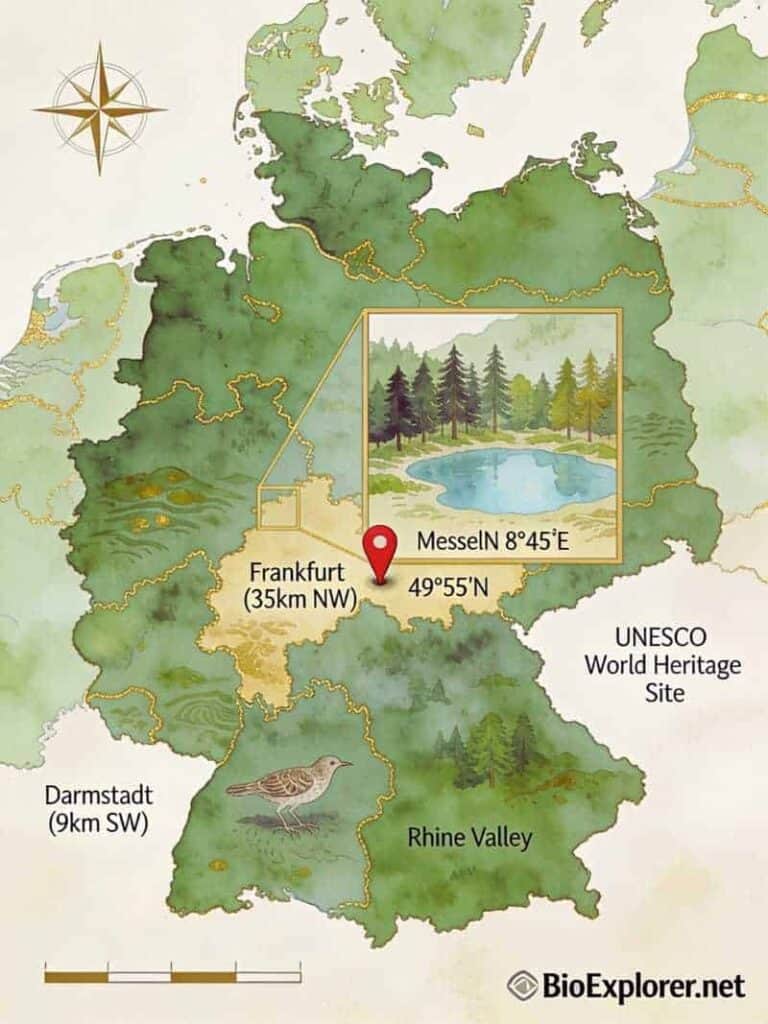
Aenigmatorhynchus rarus lived during the Eocene period, around 48 million years ago. The Eocene was a warm time in Earth's history. Forests covered much of the land, and many early birds and mammals were evolving into new forms.
he fossil was found at the Messel fossil site in Germany. This site is famous for its unusually well-preserved fossils. Many types of animals and types of plants from the Eocene have been found there, often with fine details still visible.
Messel was once a deep lake surrounded by forest. When animals died and sank to the lake bottom, they were quickly covered by mud. This helped protect their remains from decay. Because of this, Messel fossils give scientists a clear look at life millions of years ago.
Finding Aenigmatorhynchus rarus at Messel is important. It places the bird in a rich and well-studied ecosystem. It also allows scientists to compare it with other extinct birds that lived at the same time.
The Fossil Evidence We Have
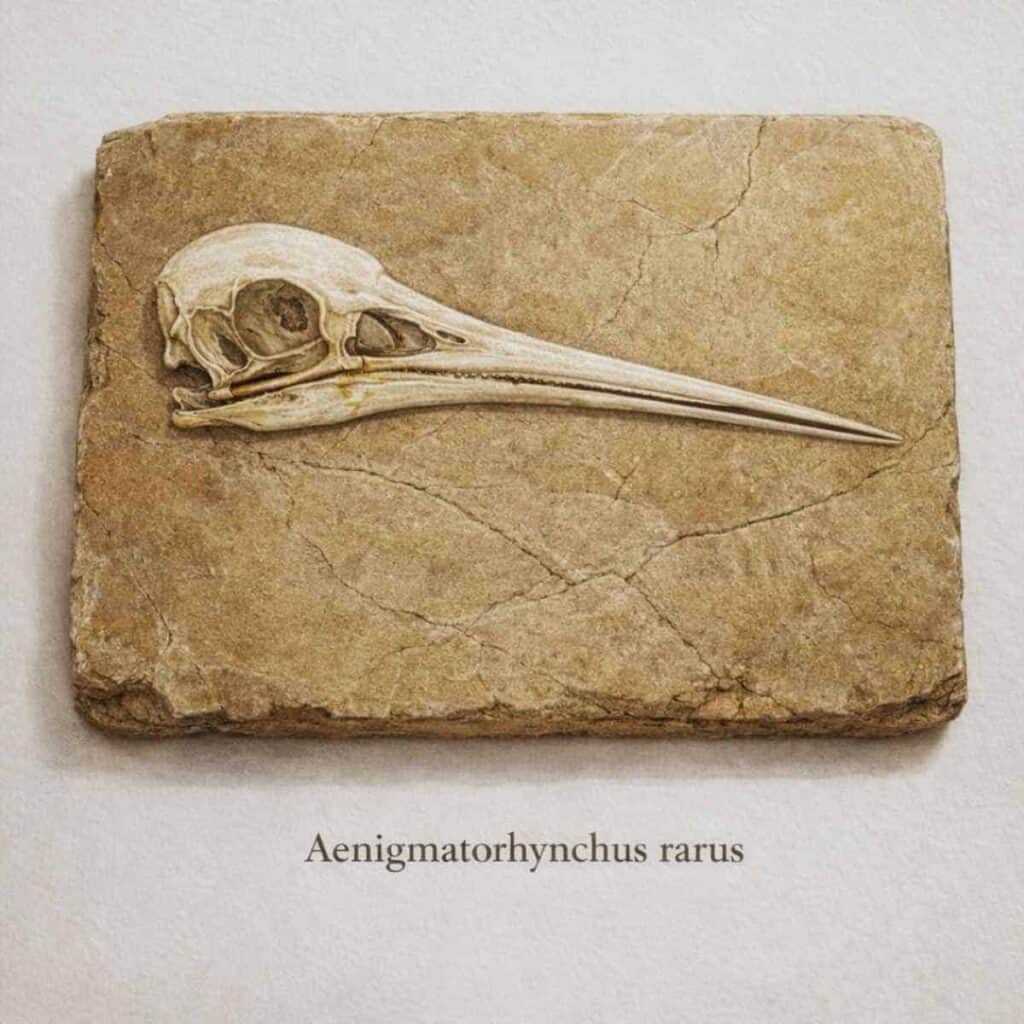
Scientists know Aenigmatorhynchus rarus from a fossil skull. Like many dinosaur fossils, the skull is well preserved and shows clear details of the beak and jaw. This fossil is the main source of information about the bird.
Here is what the fossil includes:
- Most of the skull
- A long, narrow beak
- Clear features of the lower jaw
However, many parts are missing:
- No wings
- No legs
- No body bones
Because of this, scientists cannot be sure how large the bird was or how it moved. They also cannot tell whether it flew long distances or stayed mostly on the ground.
Even with these limits, the skull alone is very valuable. In birds, the skull and beak often reveal how the animal fed and lived. The unusual shape of this skull is the reason scientists paid special attention to this fossil.
The Beak That Puzzled Scientists
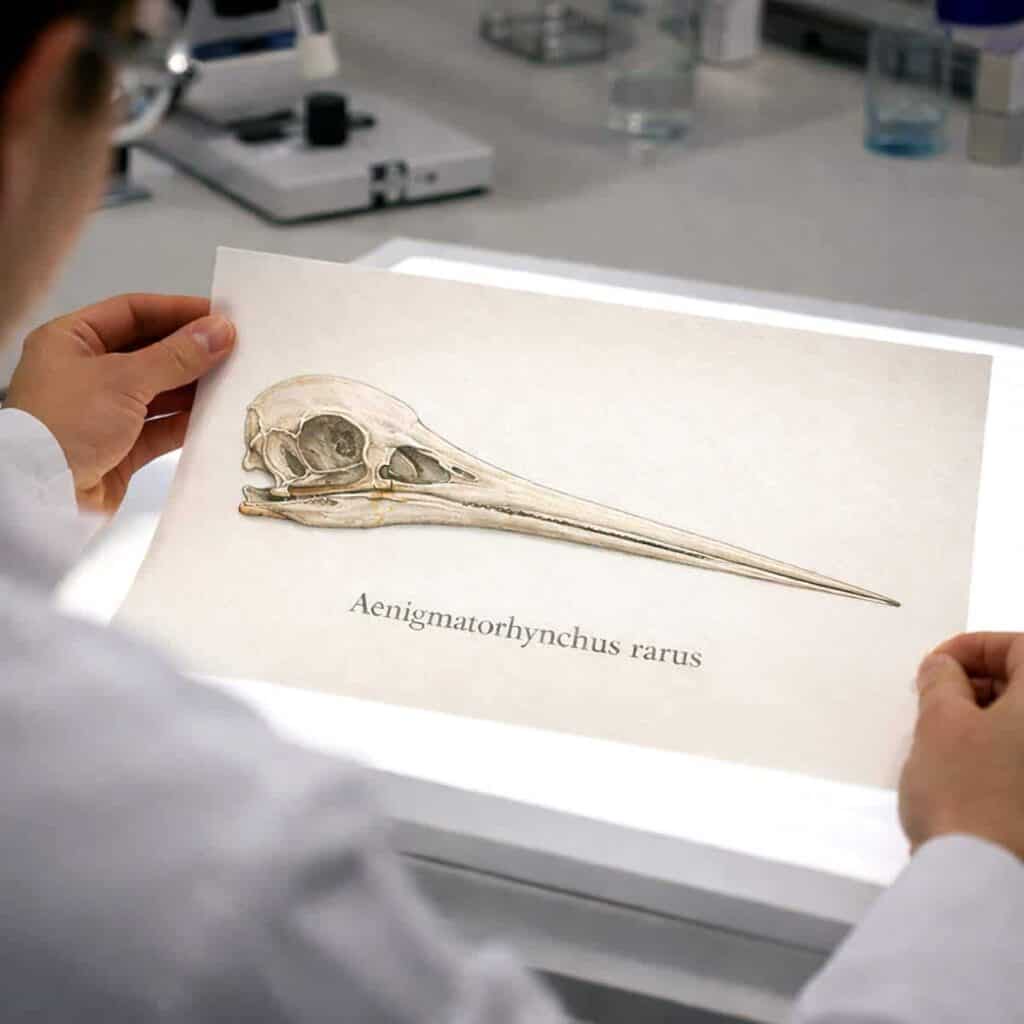
The beak of Aenigmatorhynchus rarus is the most unusual part of the fossil. It is long, straight, and very narrow. The beak makes up most of the skull's length, which is uncommon in birds.
Scientists noticed several strange features:
- The beak is much longer than expected for a bird of this size
- The lower jaw has strong attachment points for muscles
- The jaw shape does not match that of known bird groups
Because of these traits, scientists could not link the bird to shorebirds, wading birds, or other long-beaked birds alive today. Even birds with similar-looking beaks use them in very different ways.
This beak does not clearly show what the bird ate. It also does not clearly show how the bird fed. This uncertainty is why the species is considered "enigmatic", meaning difficult to explain.
The beak shows that ancient birds experimented with many shapes and functions. Some of these experiments led to modern birds. Others, like this one, ended without living descendants.
What the Beak Suggests — and What It Doesn't?
The shape of the beak gives scientists some clues, but it does not give clear answers. From the fossil, researchers can suggest possible ways the bird may have fed. However, none of these ideas can be confirmed.
What the beak may suggest:
- It could have been used to probe into soil, mud, or soft material
- It may have helped the bird reach food in narrow spaces
- The strong jaw muscles suggest the beak was used actively, not gently
What the beak does not tell us:
- It does not match the feeding style of any living bird
- It does not prove what the bird ate
- It does not show whether the bird lived near water or on land
Because only the skull is known, scientists must be careful. They cannot test these ideas against other body parts, such as legs or wings. For this reason, all ideas about how it fed remain educated guesses based on the skull. This careful approach helps avoid wrong conclusions and keeps the science accurate.
How This Bird Fits Into Eocene Bird Evolution?

The Eocene period was a time of rapid change for birds. Many new bird forms appeared during this time. Some developed body shapes and feeding styles that still exist today. Others followed paths that later disappeared.
Aenigmatorhynchus rarus belongs to this second group. Its unusual beak shows that early birds experimented with many designs. These designs did not always lead to branches of the bird family tree that lasted a long time.
This fossil shows that bird evolution was not a straight line. Instead, it involved many trials. Successful traits spread and survived. Less successful ones vanished, even if they were well adapted at the time.
Because this bird does not fit into any modern bird group, it helps scientists see how much diversity has been lost. It also reminds us that the birds we see today represent only a small part of the variety that once existed.
Comparisons With Living Birds
The beak of Aenigmatorhynchus rarus may look similar to the beaks of some living birds. However, these similarities do not mean the birds are closely related. Scientists use these comparisons only to help understand possible function, not ancestry.
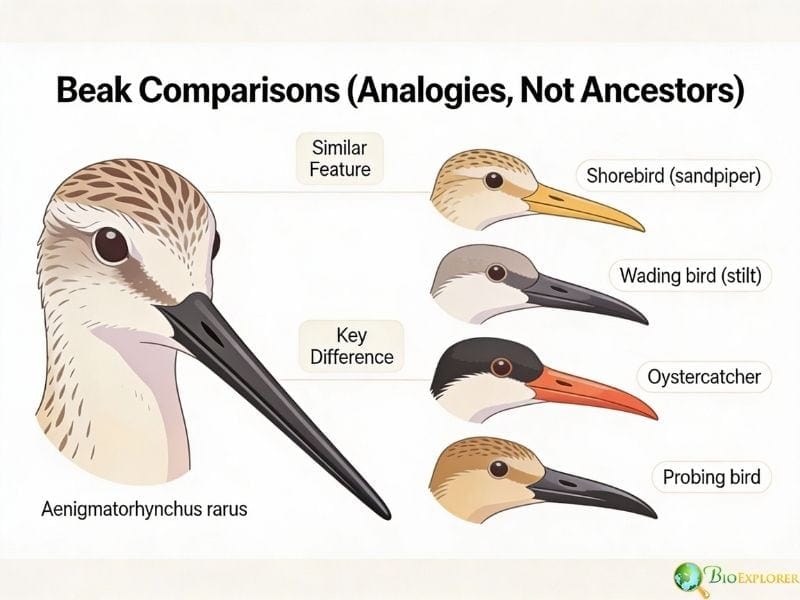
| Living Bird Group | Similar Feature | Key Difference | What This Comparison Shows |
|---|---|---|---|
| Shorebirds (such as sandpipers) | Long, narrow beak | Shorebirds have flexible beaks and known feeding habits | Shape alone does not explain feeding style |
| Wading birds (such as stilts) | Straight beak | Wading birds have long legs and different skull structure | Similar beaks can serve different roles |
| Oystercatchers | Strong beak | Oystercatchers have thick, heavy beaks | Strength can exist without similar diet |
| Probing birds | Beak length | Probing birds show clear wear patterns | No wear evidence is known for this fossil |
These comparisons help narrow down possibilities. They also show the limits of using modern birds as models. Aenigmatorhynchus rarus likely used its beak in a way not seen in birds alive today.
Why Scientists Created a New Genus?
When scientists study a fossil, they first try to place it into an existing group. In this case, that was not possible. The skull of Aenigmatorhynchus rarus did not match the defining features of any known bird genus.
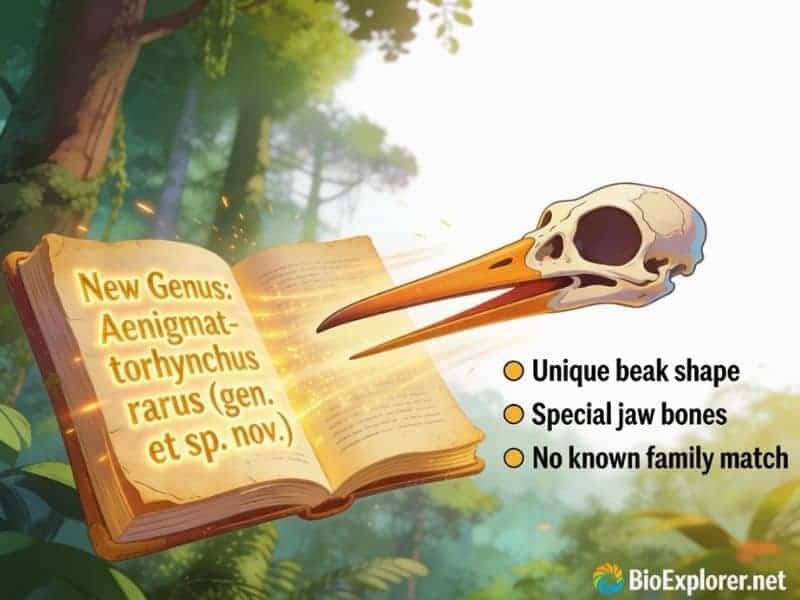
A genus is a category used to group closely related species. Creating a new genus is a serious decision. It is done only when a fossil shows clear differences that cannot be explained as variation within a known group.
Scientists created a new genus for this bird because:
- The beak shape is unlike that of any known bird group
- The jaw bones have unique features not seen together before
- The skull does not fit the patterns of modern or extinct bird families
The term "gen. et sp. nov." means "new genus and new species". This label tells other scientists that the fossil represents a completely new branch of the bird family tree.
By creating a new genus, researchers highlight how distinct this bird was. It also shows that many ancient bird lineages existed that have no living descendants today.
Why Aenigmatorhynchus rarus Matters Today?

This bird matters because it shows how different the past was from the present. The birds alive today are only a small part of all the bird forms that once existed. Aenigmatorhynchus rarus represents a type of bird that evolved, lived, and disappeared without leaving modern descendants.
The fossil also helps scientists understand limits in classification. Not every extinct animal fits neatly into modern groups. Some lineages were unique and short-lived. This bird is a clear example of that.
Studying this species also highlights the importance of fossil sites like Messel. Without well-preserved fossils, unusual species like this would remain unknown. Each discovery adds to a more complete picture of life's history.
In simple terms, Aenigmatorhynchus rarus reminds us that evolution explores many paths. Only some of those paths continue into the present, while others end in extinction.
How This Species Connects to Other Extinct Birds?
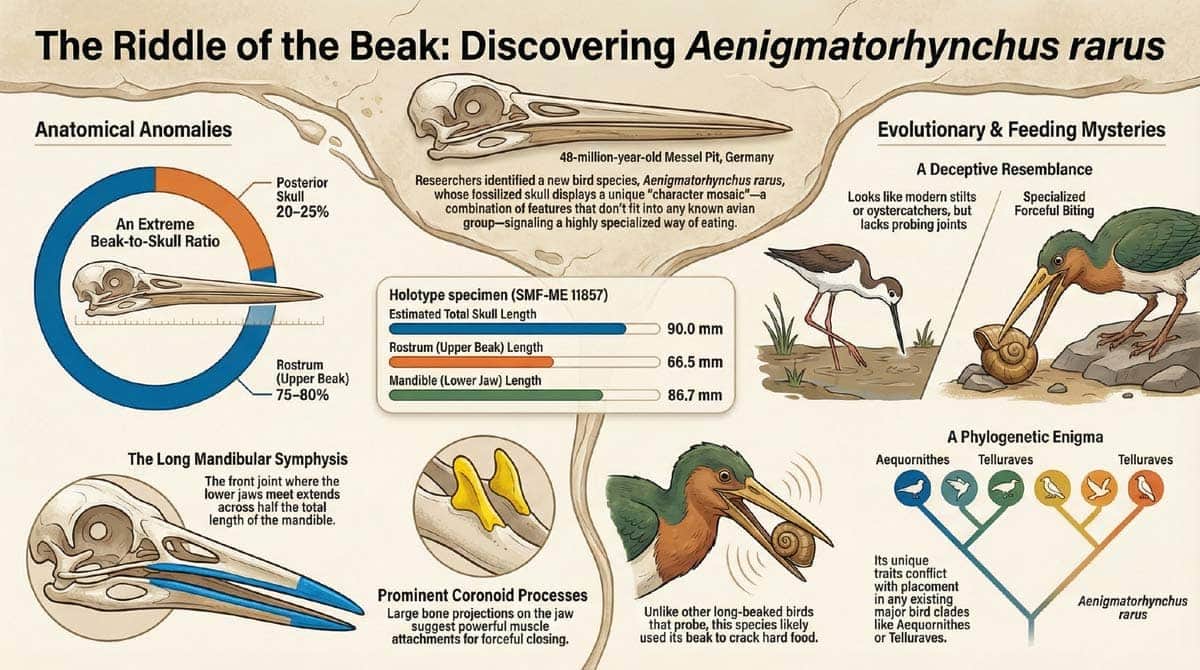
Aenigmatorhynchus rarus is part of a larger story about extinct birds. During the Eocene, many bird species lived that looked very different from birds today. Some belonged to early forms of modern groups. Others, like this species, formed separate branches that later disappeared.
Fossils from the Messel site show that bird life at the time was highly diverse. Birds filled many roles in the ecosystem. Some hunted, some waded, and others likely fed in ways we do not fully understand.
Aenigmatorhynchus rarus adds to this picture by showing a beak design not seen in other fossil birds from the same site.
By linking this species to other extinct birds, scientists can compare patterns. These comparisons help explain which traits became common and which were lost. Together, extinct bird fossils reveal that modern birds are the result of survival, not the full range of past diversity.
This species belongs with other Eocene birds that show many different body shapes and ways of feeding. Studying these birds as a group helps scientists understand how bird evolution unfolded over time.
Cite this page
Bio Explorer. (2026, January 27). Aenigmatorhynchus rarus: An Extinct Eocene Bird With a Mysterious Beak. https://www.bioexplorer.net/animals/birds/aenigmatorhynchus-rarus/