Types of Owls


Types of Owls

Types of Owls: Owls are extraordinary birds of prey that thrive at night meaning they are nocturnal. There are 244 known species of owls and 22 of them live in North America!

Most of them have an enormous head, very good vision, excellent hearing, feathers aerodynamically adapted for silent flying, and sharp talons. All owl species are in the order “Strigiformes” and they are divided into 2 different families namely Strigidae and Tytonidae. The first family mentioned consists of true owls and the latter consists of barn owls.

The true owls have round faces and the barn owls have heart-shaped faces. There are 224 species in Strigidae, and 20 species in Tytonidae. Owls can be found in any continent except for Antarctica because it is too cold for them. No species of owls can digest bones, hair, or teeth so they regurgitate that part of their prey in the form of pellets.

Types of Owls
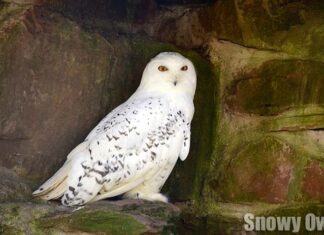
Snowy Owl

Snowy Owl

Snowy Owl is one of the largest owls and they are found in the Arctic tundra of North America and Eurasia. Find its anatomy, diet, lifespan & more here.
Read more
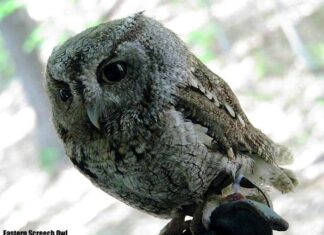
Eastern Screech Owl

Eastern Screech Owl

Eastern Screech Owl can be found in the eastern part of North America and is part of Strigidae (True owls). Learn about its diet, lifespan, predators & more.
Read more
Puerto Rican Owl

Puerto Rican Owl

Discover a versatile nocturnal raptor, the Puerto Rican Owl (Gymnasio nudipes), stealthily ruling the island’s forests and urban areas under cover of night. Follow its prowess capturing large insects and small vertebrates to sustain viable populations. Understand how this savvy Screech owl’s adaptability across wooded to developed areas enables its continued success.
Read more
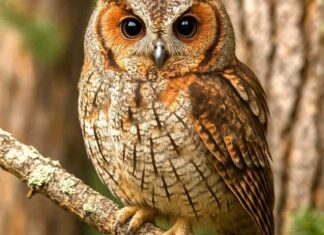
Flammulated Owl

Flammulated Owl

The flammulated owl (Psiloscops flammeolus) is a small, nocturnal bird native to western North America, renowned for its flame-marked plumage and soft, deep calls. Favoring mature coniferous forests, this elusive owl nests in tree cavities and feeds almost exclusively on insects like moths and beetles. Despite its broad range, it remains hard to spot due to its camouflaged appearance and secretive habits. As a key insect predator and indicator of healthy forests, the flammulated owl plays an essential role in maintaining ecological balance across its habitat.
Read more

Cite this page

Bio Explorer. (2026, January 28). Types of Owls. https://www.bioexplorer.net/types-of-owls/

Leave a Reply

Your email address will not be published. Required fields are marked *